It is dangerous to be right when the government is wrong, cautioned the French writer and philosopher François-Marie Arouet (1694 – 1778), better known by his pen name, Voltaire.
Thankfully, men and women with the courage of their conviction regularly disagree with the establishment (whether political or academic). Societies move forward largely thanks to them.
A case in point is organic farming in Sri Lanka, sustained by a handful of committed individuals and groups while the full resources and might of the state promoted the opposite.
Half a century ago, Sri Lanka adopted the Green Revolution’s approach of high external input farming. It policy favoured hybrid seeds along with the widespread use of chemical fertilisers, weedicides and pesticides. These boosted yields, for sure, but there was…
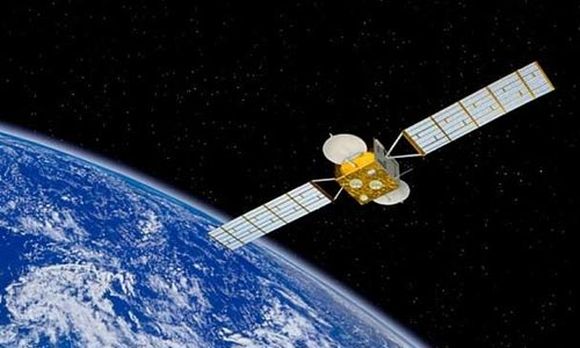
New opportunities for South Asian collaboration in space technologies can help reduce poverty and promote sustainable development.
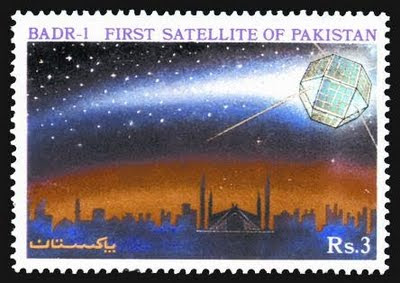
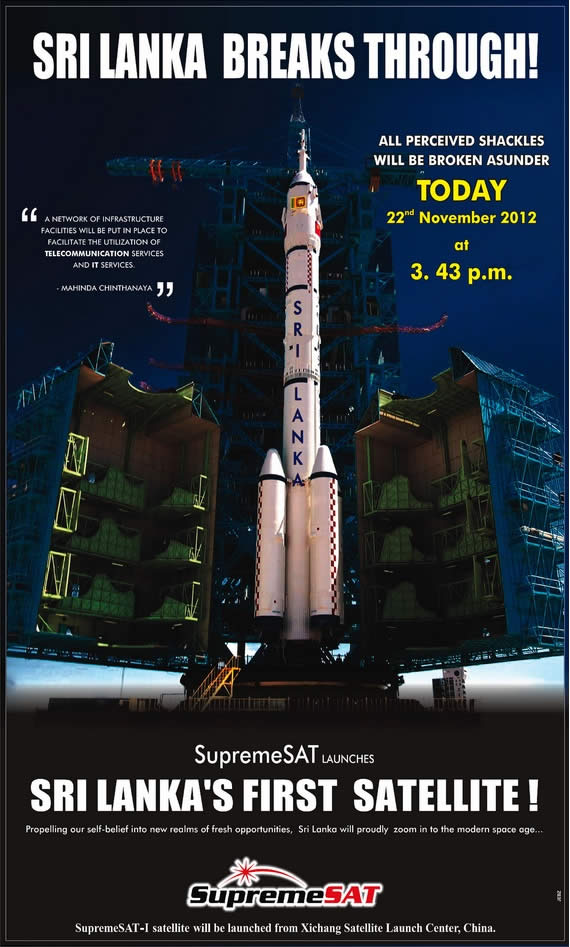
Both China and India are keen to enhance links with smaller Asian countries in using satellites for communications, weather services, land use monitoring and navigation. They have also realised the value of ‘space diplomacy’, or using space related technical cooperation for strengthening foreign relations.
In this week’s Ravaya column (in Sinhala), I look at South Asian countries investing in space technologies, and discuss the prospects for a common South Asian satellite, an idea recently revived by the Indian Prime Minister.
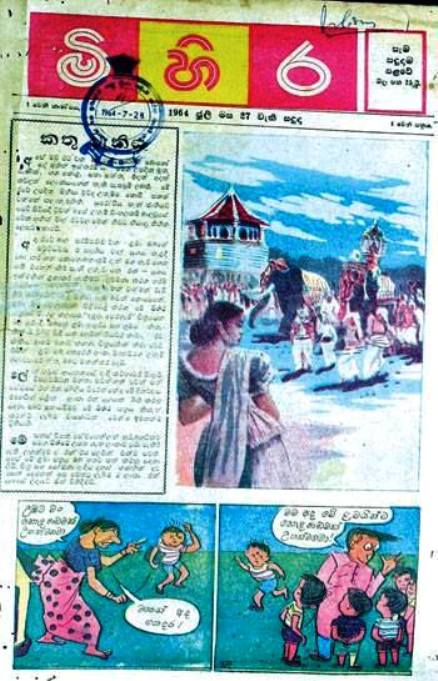
Mihira children’s newspaper first issue – 27 July 1964
Sinhala children’s weekly newspaper Mihira has just completed 50 years of publication. The paper holds nostalgic memories for those of us who grew up in the 1960s and 1970s with limited access to reading material.
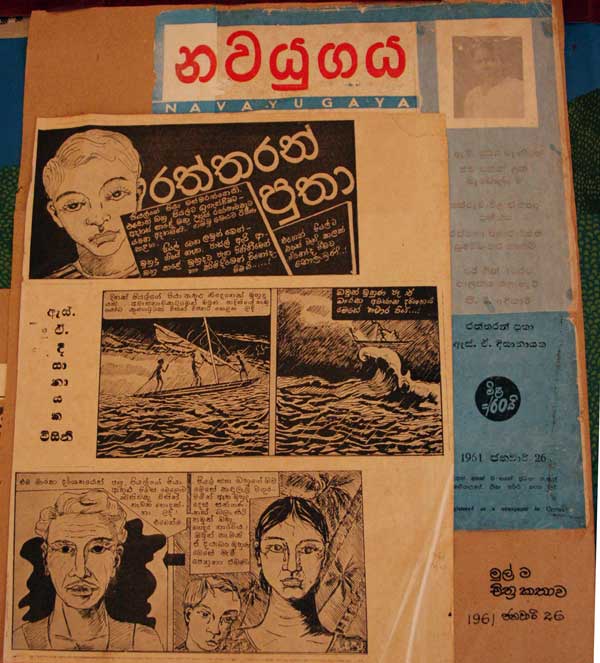
The tabloid was launched by Associated Newspapers of Ceylon Limited (ANCL, or Lake House) on 27 July 1964. Its founder editor was veteran journalist Srilal Hikkaduwa Liyanage (who was also founder editor of Tharunee women’s newspaper and Navayugaya informative newspaper from the same publishing house).
I wasn’t even born when Mihira came out. Sometime in 1969, when I was a precocious three-year-old, my father bought me my first copy. I was hooked: for the next dozen years, I eagerly awaited the arrival of each week’s issue on Mondays.
In the early years, Mihira carried a mix of stories, comics, articles and verse. While many were produced by talented writers and artists who understood the child’s mind, some were actually children’s own contributions.
In fact, Mihira is where I first got myself into print. As a school boy of 9 years, I submitted several of my (Sinhala) verses to Mihira (at the suggestion of my Grade 3 class teacher). One of them, on my perception of an animated clock, was printed in one issue of October 1975. I was thrilled to bits – that clipping is somewhere at the bottom of my personal archives…
Funnily enough, thousands of printed pieces later, I still get an enormous kick each time a newspaper publishes my writing.
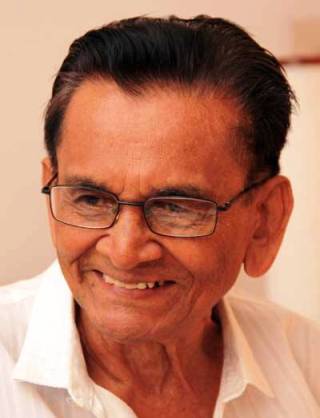
S A Dissanayake, comics artist
To me (and many others of my generation), the most memorable part of Mihira were extraordinary comics written and drawn by S A Dissanayake. He drew a long-running comic (chitra katha) called Onna Babo (‘ඔන්න බබො’), which chronicled the adventures of three intrepid kids (‘බූ – බබා’, ‘තුල්සි’) and involved a wicked witch (බටකොළ ආච්චි), wizards and other characters. For us entertainment starved kids, ඔන්න බබො was Harry Potter of the 1960s and 70s. All these years later, some sub-plots are still clearly etched in my memory…
S A Dissanayake also drew the more comical Yodaya (‘‘යෝධයා’’) about a good-hearted village giant and a learned but wicked man (‘‘යෝධයා සහ පඬිතුමා”), as well as several other popular comics.
When some teachers and parents condemn all comics as polluting children’s minds, I always remind them of the glorious exceptions created by S A Dissanayake. Some feel his stories paved the way for the enormous popularity of TinTin comics and animations in Sri Lanka later on.
I just read that Dissanayake (who was a school teacher by profession) still draws children’s comics for Mihira – a rare feat (world record?) of a comic artist drawing for the same publication for half a century.
Text of my ‘When Worlds Collide’ column published in Ceylon Today newspaper on 8 August 2014
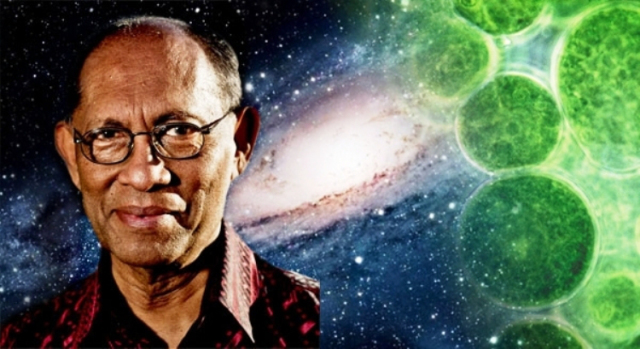
Dr Chandra Wickramasinghe
At 75, astronomer Dr Chandra Wickramasinghe is still very much the scientific maverick that he has been for several decades. He loves to challenge orthodoxy even if that means taking on much of the establishment.
The Lankan-born, UK-based mathematician and physicist now prefers to call himself an astrobiologist – one studying the origin, evolution and distribution of life in the universe.
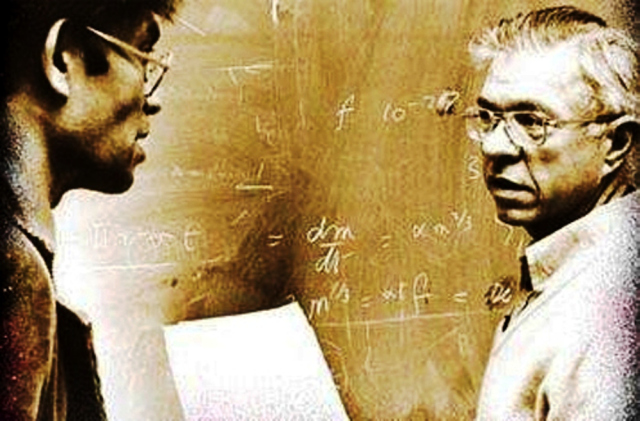
He started researching cosmic dust in the early 1960s, first at the University of Cambridge and later at Cardiff University. He was mentored by Sir Fred Hoyle (1915 – 2001), an iconic theoretical astronomer who championed many an unorthodox idea himself.
Chandra Wickramasinghe (left) and Fred Hoyle during their collaboration days
Together, Hoyle and Wickramasinghe stirred up more controversies than most scientists during the last century. In the 1980s, they…
In this week’s Ravaya column (in Sinhala), I look at how to prevent death and disability caused by drowning in Sri Lanka.
Around 1,200 people die every year in Sri Lanka from drowning — several times the number of deaths from dengue fever, but this distributed tragedy gets much less public and media attention.
Most victims are children and young adults, and some die while trying to save another from drowning. Most of these deaths are preventable – if only adequate safety precautions are taken.
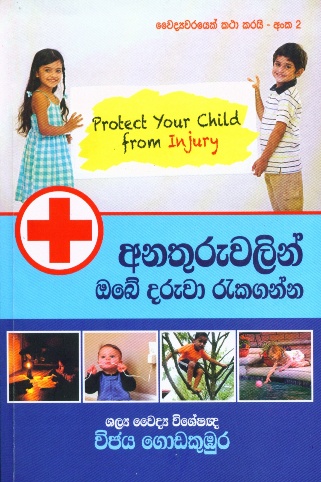
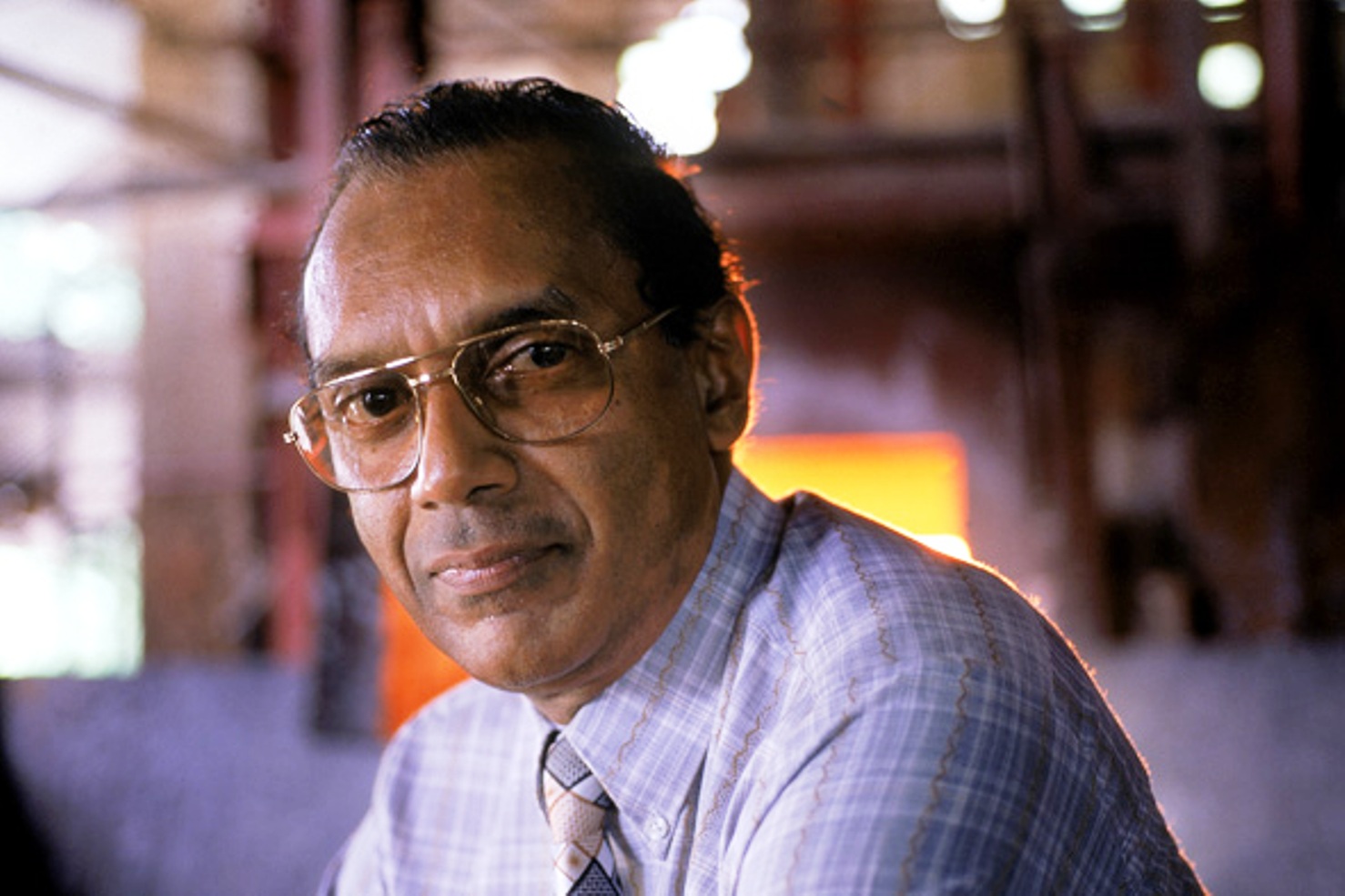
I quote extensively from a Sinhala book (Protect Your Children from Accidents) written by consultant surgeon Dr. Wijaya Godakumbura.
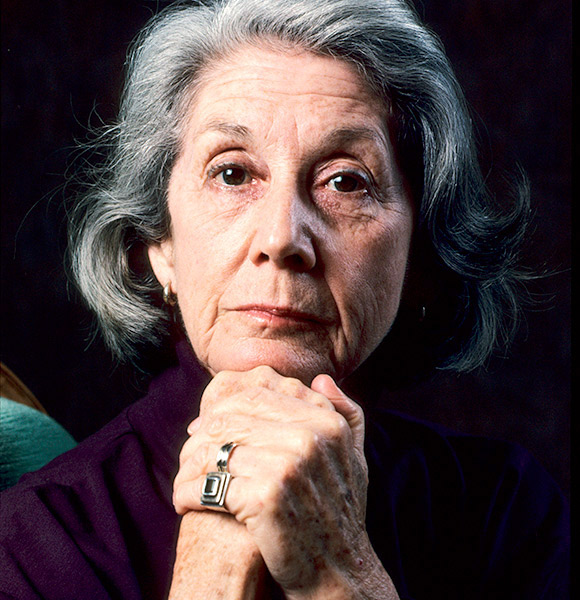
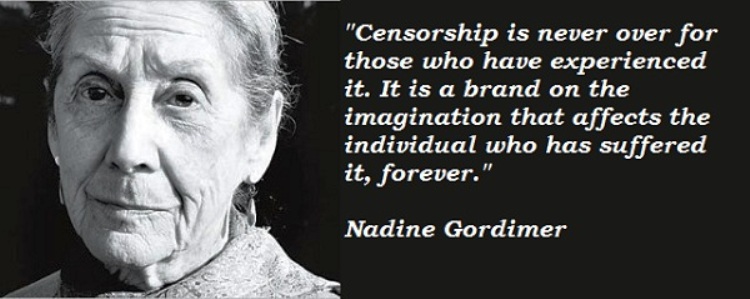
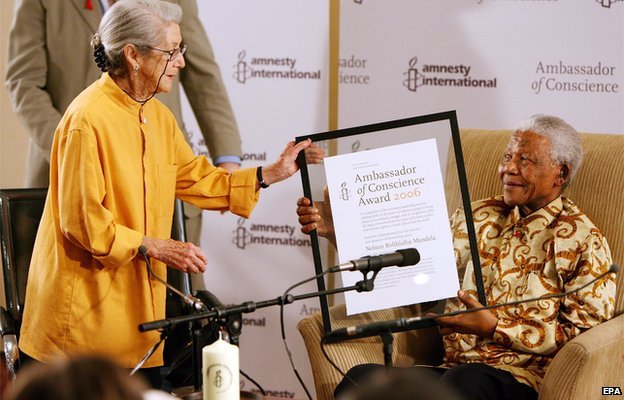
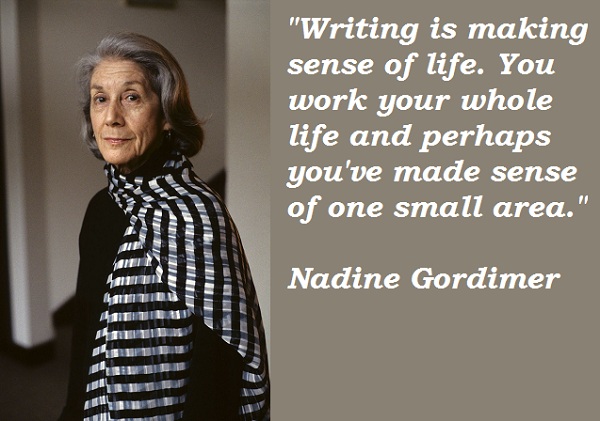
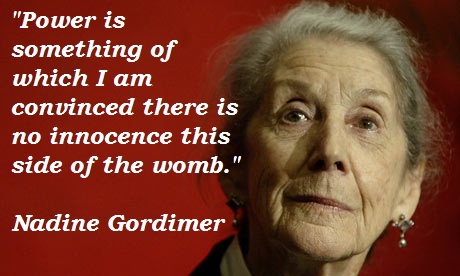
In this week’s Ravaya column (in Sinhala), I pay tribute to South African writer and social activist Nadine Gordimer (1923-2014). I focus on how she never hesitated to speak out for justice, fairness and equality even when that elicited ridicule and harassment from her own government that quickly labeled her a ‘traitor’.
I also recall how I once listened to her speak, during the recording of a TV debate in Johannesburg in mid 2002, and how she later marched the streets with activists from all over the world demanding land rights for the poor.
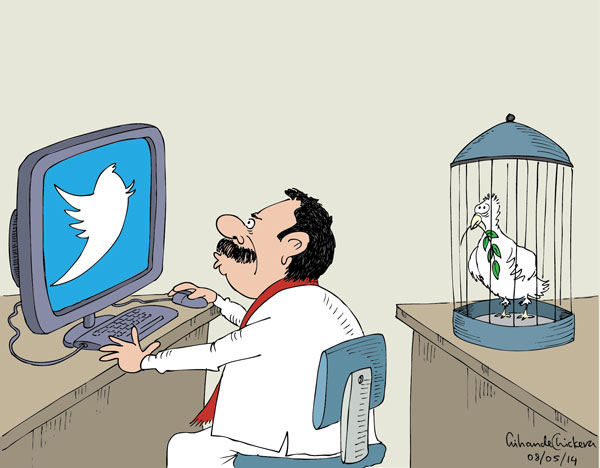
In this week’s Ravaya column (in Sinhala), I revisit the on-going debate on social media and social accountability, this time from the perspective of freedom of expression.
Unless a user takes consistent precautions, everything published online is ultimately traceable to the point of origin. However, for most practical purposes, options of anonymity and pseudonymity are still available on the web – and widely used by users, for a variety of reasons. Contrary to what some misinformed people say, there is nothing legally or morally wrong with this practice.
Of course, the facilities can be misused, most notably in spreading hate speech and deliberate falsehoods. But this reality, by itself, is not a sufficient argument against online anonymity or pseudonymity. Indeed, as I argue in this column, being able to conceal one’s real identity is a safe way for social activists and public intellectuals to express their views living in countries with repressive regimes and/or intolerant societies.
While I myself have always expressed my views online under my own name — and sometimes received vitriol and threats as a result — I defend the right for anyone to remain anonymous or use pseudonyms.
Text of my ‘When Worlds Collide’ column published in Ceylon Today newspaper on 18 July 2014
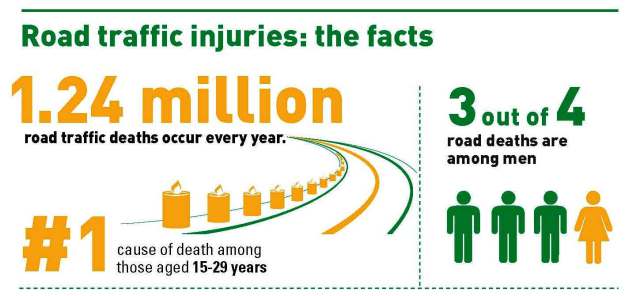
Road safety infographic – courtesy WHO
The Apollo 8 space mission, which lasted from 21 to 27 December 1968, was the first time that a manned spacecraft left Earth orbit, travelled to the Moon and returned after taking a close look.
They didn’t land, but tested many procedures for the actual landing six months later. When they were heading back, a ground controller’s son wanted to know who was driving the spacecraft. Astronaut Bill Anders, replied: “I think Isaac Newton is doing most of the driving now.”
That witty summing up of celestial mechanics is one of the finest quotes of the entire Apollo space program. It comes to mind when I ask myself who — or what — is driving on our chaotic Lankan roads. My own answer: lots of testosterone
In this week’s Ravaya column (in Sinhala), I return to the oft-discussed topic of social media in today’s Lankan society.
If media mirror the realities of its land and times, don’t social media reflect its society as well? And if some among us don’t like what is expressed by fellow citizens using social media platforms, could it be that many inconvenient issues and questions – excluded in the mainstream media – are being raised?
Yes, we need to discuss the social, cultural and political implications of growing social media use. However, that debate will not be served by insular and insecure mindsets that see every aspect of globalization as a threat or conspiracy.
Text of my ‘When Worlds Collide’ column published in Ceylon Today newspaper on 11 July 2014
Last time the FIFA World Cup was approaching its climax in mid July 2010, I did my bit for interstellar cooperation (or conquest).
If you’re an alien planning to invade the Earth, choose the day of the Cup Final, I said in an op-ed published on both sides of the Palk Strait. Chances are that our planet will offer little or no resistance, I predicted.
Well, no aliens took my unsolicited advice (such spoilsports!). But if any such race is still interested, another chance comes up this Sunday, July 13. That’s when World Cup 2014 will culminate at Estádio Maracanã in Rio de Janeiro, Brazil.
On that day, a sizeable proportion of the 7.2 billion members of the Earth’s dominant species – Homo sapiens, or humans — will be fully preoccupied with 22 able-bodied…

 Image courtesy Good Market website, http://www.goodmarket.lk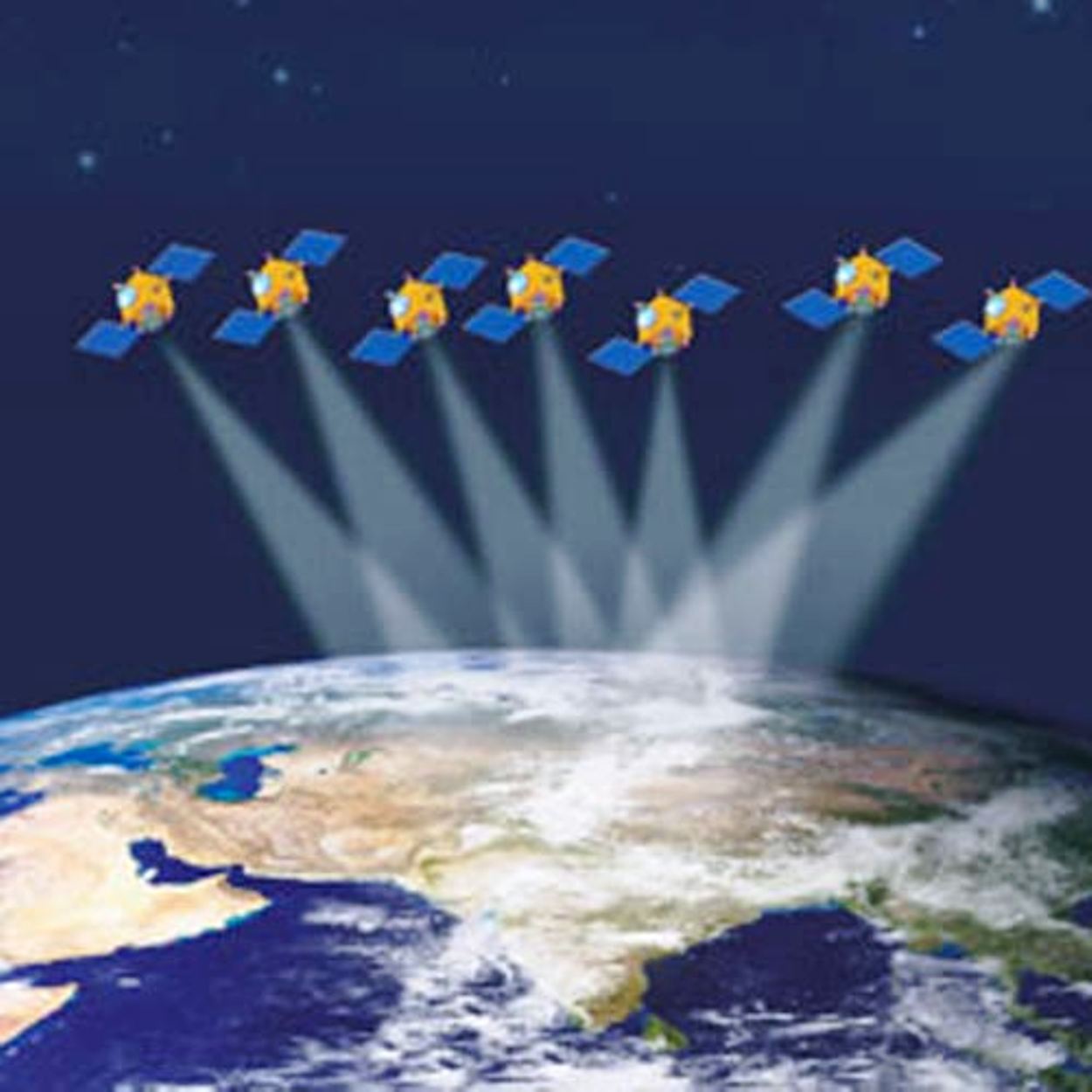






 Open Minds!