Earlier this week, United Nations Climate Change Conference 2009 (COP15) in Copenhagen opened with an apocalyptic video showing the world torn asunder from a variety of disasters.
As one reviewer wrote: “The portrayal sought to play up on the fears of the world should a worst case scenario develop from global warming. The entire video is reminiscent of the recent disaster movie blockbuster, 2012that was released in movie theatres in recent months.
I haven’t yet seen 2012, now showing in a theatre close to me, so I can’t comment on the comparison. But here’s the video, now playing on COP15 channel on YouTube:
In the video, a child goes to sleep peacefully but wakes to find herself in a desert wasteland. As she sets out to explore, the very land on which she stands begins to crack open and she flees. The girl doesn’t make it far before she looks up to see the world’s largest tornado tearing a city apart and flood waters approaching. The child leaps to a tree branch as the waters overtake her and she screams. It is then that she wakes from what is only a dream and decides to make a home video saying, “Please help the world.”
Will the bickering and myopic leaders of the world heed this call? We shall know in the next few days.
Meanwhile, here are the credits for this film:
Director: Mikkel Blaabjerg Poulsen
Producers: Stefan Fjeldmark and Marie Peuliche
Cinematographer: Dan Laustsen
Production designer: Peter de Neergaard
Editor: Morten Giese
Composer: Davide Rossi
Sound design: Carl Plesner
Production company: Zentropa RamBuk
Advisory consultants: Mogens Holbøll, Bysted A/S and Christian Søndergaard, Attention Film ApS.
Mekong River flows through 6 countries, nurturing 65 million Asians The Mekong is one of Asia’s major rivers, and the twelfth longest in the world. Sometimes called the ‘Danube of the East’, it nurtures a great deal of life in its waters – and in the wetlands, forests, towns and villages along its path.
The Mekong’s long journey begins in the Tibetan highlands. It flows through China’s Yunan province, and then across Burma, Thailand, Laos and Cambodia…before entering the sea from southern Vietnam. It’s a journey of nearly 5,000 kilometres, or some 3,000 miles.
The Mekong River Basin is the land surrounding all the streams and rivers that flow into it. This covers a vast area roughly the size of France and Germany combined.
On its long journey across 6 countries, the Mekong provides a life-line to over 65 million people. They share Mekong waters for drinking, farming, fishing and industry. Along the way, the river also generates electricity for South East Asia’s emerging economies.
Naturally, these teeming millions who share the river feel differently about how best to manage the river waters in their best interests. The Mekong River Commission (MRC) tries to nurture cooperation among the Mekong river countries, but differences still remain.
Some of these surfaced during the Mekong Media Forum being held in the northern Thai city of Chiang Mai from 9 to 12 December 2009. As IPS reporter Marwaan Macan-Markar reported, “A heated debate about the future of the Mekong River at a media conference in this northern Thai city exposed a fault line triggered by the regional giant China’s plans to build a cascade of dams on the upper stretches of South-east Asia’s largest waterway.”
At the centre of this debate was Pipope Panitchpakdi, my Thai film-maker friend who recently made the documentary Mekong: The Untamed. He is both an outstanding journalist and an outspoken media activist.
He told the Forum: “The most important issue for people who live along the banks (of the lower stretches) of the Mekong are the dams and how these affect them. They cannot see the river as a pretty sight.”
Mekong: The Untamed chronicles the journey of Suthichai Yoon, a leading Thai media personality, from the headwaters of the Mekong River in Tibet to the Mekong Delta in Vietnam. The question he seeks to answer through his travels is how the planned Chinese dams affect communities who live along the banks of the river.
“My Mekong journey goes to the heart of Asia’s complexities,” says the narrator as he makes his way from China’s southern province of Yunnan to the north-eastern Thai town of Chiang Khong. The scenes he passes range from the raging waters of the Mekong and hills swathed with mist to riverside communities being torn apart by a building frenzy. “I wonder if the Chinese realise what the people who are impacted by the dam feel?” Suthichai asks at one point.
According to Pipope, another documentary film about the Mekong made by Chinese filmmakers overlooks some serious issues: “There was nothing about a lot of villages disappearing, that there are floods and the doubts people have about the Chinese dams.”
This second film, also showcased at the Mekong Media Forum, is a 20-episode series titled Nourished by the Same River, and has been made by China Central Television (CCTV).
A Chinese journalist on the panel conceded that the planned development targeting the Mekong would provoke a range of responses. “It is natural that different people will have different perspectives on similar issues,” said Zhu Yan, a senior editor at the national broadcaster China Central Television. “In China there is a debate (around the question) of environment or dams.”
The Mekong is both a mighty river and a massive bundle of issues for any film or film series to tackle. And given the multitude of countries, interests and viewpoints involved, it’s unlikely that there will be consensus.
But it’s good that films are sparking off discussion and debate…just what we need for more informed choices to be made in the future.
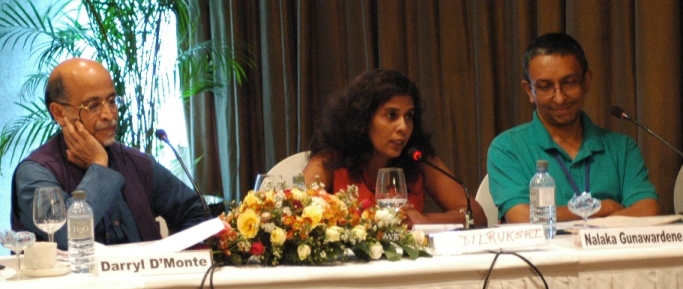
L to R - Darryl D'Monte, Dilrukshi Handunnetti, Nalaka Gunawardene Who’s afraid of Pee and Poop?
That’s the innocent but slightly provocative question I posed to a South Asian Conclave on sanitation that I addressed today at the Colombo Hilton.
My audience was a group of South Asians – drawn mainly from Bangladesh, India, Pakistan and Sri Lanka – working in government, mainstream media or development agencies, all sharing an interest in water supply and sanitation (wat-san) issues.
I was asked to speak about Telling the Sanitation Story using Moving Images. But after listening to the fairly staid and often technocratic discussions preceding my presentation, I changed it. In doing so, I said that especially in broadcast television, the window of opportunity to attract the viewer is a tight one – it used to be 45 seconds, but these days more likely 30 seconds.
Sanitation is both an issue that is both urgent and important. As I noted on World Toilet Day marked on 19 Nov 2009, 2.5 billion people do not have somewhere safe, private or hygienic to go to the toilet.
And as C. Ajith Kumar of the Water and Sanitation Program (WSP) – convenors of the Conclave – reminded us at the outset, South Asia is where most of these people live. Lacking any alternative, more than a billion (yes, 1,000 million) South Asians defecate in the open on a daily basis.
That’s a lot of poop, folks — and it’s completely untreated, uncovered and responsible for too many preventable illnesses and deaths.
Despite this dire emergency at individual and society levels, officials and activists concerned with wat-san issues continue to tip-toe around this poop. Or so it seemed to me — after two days, not once had the words poop or shit been mentioned in discussions. Instead, everyone was using the more politically correct terms such as faeces, excreta and excrement.
“Most of those billion people pooping in the open are not going to understand the lofty terms used in the charmed development circle,” I said. “You’ve got to talk in a language that ordinary, real people can and will understand – that’s the first step in effective communication.”
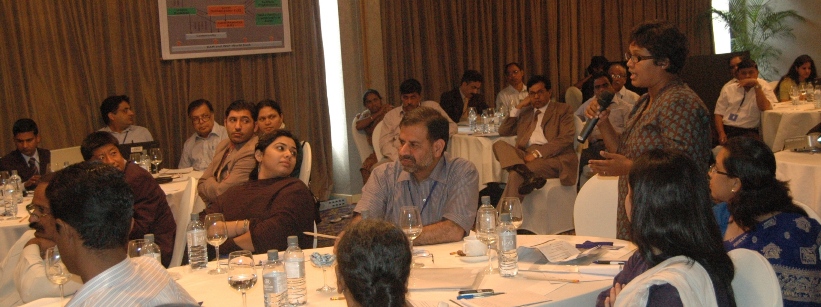
South Asian Conclave on Sanitation in Colombo, 8 Dec 2009The meeting had already acknowledged that improving sanitation involved a lot more than providing running water or building toilets. The development experience in the past three decade shows that infrastructure alone does not, automatically, lead to better sanitation. The biggest challenge remains in promoting hygienic practices among all – and that requires behaviour change, a slow and gradual process in any society.
I reminded everyone that when it comes to sanitation, the command-and-control approach that our South Asian governments are so used to adopting just won’t work. There are at least three aspects of life where choices and conduct are strictly personal: what happens in the bed room, bath room (toilet) and the shrine room.
As I summed it up in these words that I asked my audience to reflect on: Governments don’t defecate; people do.
“Please remember this if you really want to reach out and engage ordinary people who are living, breathing and pooping everyday in the real, harsh world.”
More of my presentation will be shared on this blog in the coming days.
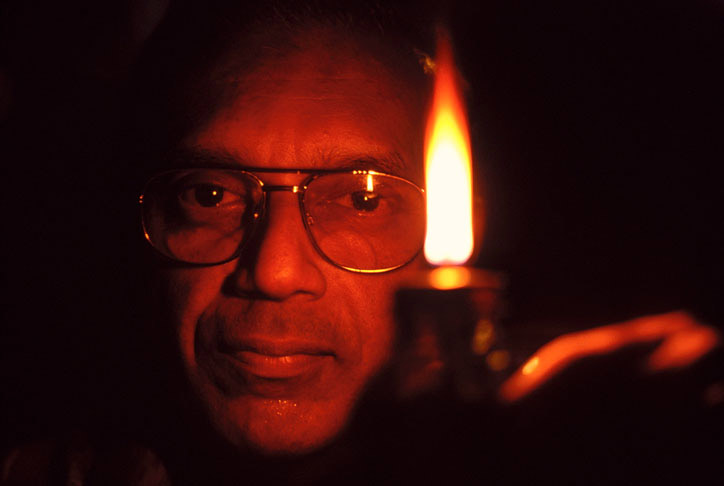
Dr Wijaya Godakumbura holding his invention - Photo courtesy Rolex Awards/Tomas Bertelsen
It’s easy to curse the darkness, and many among us regularly do. Only a few actually try to light even a small candle to fight it. Dr Wijaya Godakumbura of Sri Lanka is one of them – he literally lights lamps, thousands of them, against the darkness of ignorance and poverty.
But his lamps are different, and a great deal safer compared to normal lamps and kerosene, which can start fires risking life and property of users. The design is simple yet effective, inspired in part by the Marmite bottle known the world over: it’s small and squat, with two flat sides – equipped with a safe metal screw cap to hold the wick. It’s quite stable and hard to topple.
Surgeon turned inventor and social activist, Dr Godakumbura founded and runs the Safe Bottle Lamp Foundation which distributes safe, virtually unbreakable kerosene lamps to those who can’t afford electricity. For these untiring efforts that have saved hundreds of lives, the good doctor and his organisation have just been selected the overall global winner in the 5th annual World Challenge awards conducted jointly by BBC World News and Newsweek, together with Shell.
The Safe Bottle Lamp Foundation received a $20,000 grant from Shell to invest in the future of the project. The winner and runners-up were felicitated at an awards ceremony in the City of The Hague on 1 December 2009.
Now in its fifth year, World Challenge 2009 is a global competition aimed at finding projects or small businesses from around the world that have shown enterprise and innovation at a grass roots level. World Challenge is brought to you by BBC World News and Newsweek, in association with Shell, and is about championing and rewarding projects and business which really make a difference.
A record breaking 900 plus nominations were received this year and from these, twelve finalists were chosen by a panel of expert judges. BBC World News viewers and Newsweek readers then selected their favourite from these dozen unique and inspiring entries by casting more than 127,800 votes at http://www.theworldchallenge.co.uk.
Watch short film featuring the Safe Bottle Lamp when it emerged a finalist this year:
BBC/Shell World Challenge series producer is my former colleague Robert Lamb, who has blazed many new trails in broadcast television and development communication. He specialises in telling complex environmental stories in engaging terms using moving images, and now runs his own independent film production company One Planet Pictures in the UK.
At the beginning of the World Challenge 2009 process, Robert wrote in the producer’s blog: “World Challenge is now in its fifth year. Over that time we have received thousands of nominations. Sadly, we have only been able to film a small selection. But it’s enough to know that there are millions of points of light out there. Watching the news is easy to forget that the vast majority of people go about their lives peacefully and productively.
“Our aim In World Challenge is briefly to bring stories of modest scale sustainable enterprise to the screens. Every year has thrown up big surprises. The diverse ways that ordinary people go about making a living without taxing the Earth’s resources is uplifting. This year we feature the most diverse crop of stories yet…And the really good news is that they are still going strong and proving that ‘sustainable’ is a term with a lot of meaning.”
Tony Fontes
As my Australian diver friend Valerie used to say, the trouble with many of us land-lubbers is that we have ‘no idea what’s going on in the sea that covers three quarters of our planet’.
Yet what we do – and don’t do – affects the fate of the sea and all its creatures and systems. That’s a big problem.
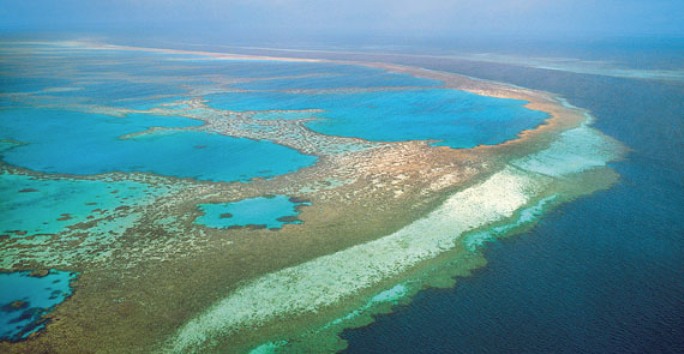
Take, for example, roral reefs. Among the most biologically diverse ecosystems on our planet, they are sometimes called rainforests of the sea. And these rich and colourful habitats are now under siege from multiple pressures, ranging from indiscriminate fishing and tourism practices to global warming.
Yet, the coral reefs haven’t attracted the same kind of public concern and outcry as has the destruction of tropical rainforests. How come?
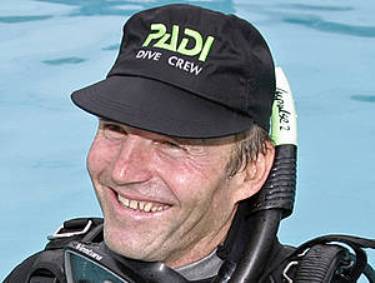
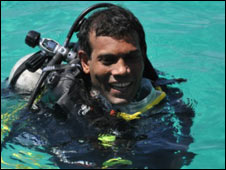
Is this a case of out of sight and out of mind for a majority of the world’s land-lubbers? This is what I asked Australian diver Tony Fontes, who has been a diver and dive instructor for 30 years, much of it at the largest reef of all – the Great Barrier Reef off the north-eastern coast of Australia.
“It sure is – and ideally, everyone should become a diver, so we can all see and feel the wonders of the reef,” he replied.
He added: “At a minimum, we have to do lots of awareness raising. This is why we need to bring back Jacques-Yves Cousteau!”
This year’s theme is ‘Climate is changing: stories, facts and people’, and Tony was one of 10 Climate Witnesses who travelled to the central Italian city from far corners of the world to share their stories of ground level changes induced by climate change. Climate Witness is a global programme by WWF International to enable grassroots people to share their story of how climate change affects their lives and what they are doing to maintain a clean and healthy environment. All Climate Witness stories have been authenticated by independent scientists.
Great Barrier Reef: A planetary treasure under siege
Tony lives and works in Airlie Beach (Whitsundays) in Queensland, Australia. It’s a small seaside community right in the heart of the Great Barrier Reef. Most of his time is spent underwater on training dives – he has clocked over 10,000 hours of professional diving. He generally dives many of the same sites over and over again.
This long and deep immersion in the marine realm gives him uncommon insights into the state of the reef – and it’s not a healthy or pretty picture.
He says: “Through personal observations as well as those by other divers, I have noted changes to the (marine) environment hat are most likely climate induced.”
Increase in coral bleaching is the most noticeable change. From a rare occurrence in the 1980s, it went on to become a regular summer event by the mid 1990s. The past decade has witnessed the largest coral bleaching events on record. And unlike in the past, these have led to large scale coral death and decay.
“Many popular dive sites have lost their lustre due to coral bleaching,” he says, pointing out that the reefs need up to 10 years to fully recover.
He adds: “However, with more bleaching events occurring every year, I wonder if the reefs will ever recover. Without the postcard reef scenes, many visitors are disappointed in their reef experience and are not likely to return.”
It’s not just warmer seas that affects the Great Barrier Reef. Occasional outbreaks of crown-of-thorns starfish, marine pests who eat up the healthy reef, add pressure on the reef. In recent years, scientists have identified another threat – sediments, fertilisers and pesticides from agricultural run-off. This was investigated in Sally Ingleton’s 2003 film, Muddy Waters: Life and Death on the Great Barrier Reef.
Listening to Tony reminded me of Muddy Waters, which journeys to the sugarcane plantations of northern Queensland and into an underwater world to find out what’s killing the reef and what can be done to save it. I was on the international jury of Japan Wildlife Film Festival 2003 when we voted it for the Best Environment and Conservation Award.
“It’s hard to get farmers to change their ways,” says Tony, who works with three local initiatives aimed at reef conservation and related educational outreach. This includes Project AWARE, a non-profit environmental organisation that encourages divers to take action and protect the environment.
The clown fish who moved the worldGlobal warming now threatens to nullify all these efforts. “If the coral reefs of the world are to survive, we cannot afford the predicted 2 – 3 degree increase in ocean temperature. But we also need to…reduce all impacts on the Great Barrier Reef. This would include improving the water quality of the reef.”
Tony comes across as a man of few, carefully chosen words. His answers are brief and precise. But his passion for the reef and the ocean is clearly evident.
He had a simple, emphatic message to the world’s leaders and activists meeting soon in Copenhagen for the UN Climate Summit: “How are we going to explain to our children and their children that we lost the Great Barrier Reef?”
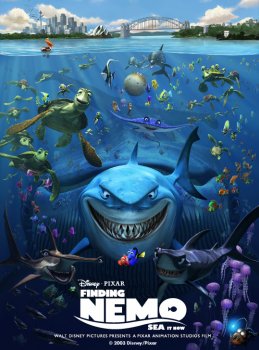
Perhaps we need not only the next generation of Jacques Cousteaus, but also every kind of communicator who can take the marine conservation messages through factual and entertainment media formats. It’s encouraging to note that Finding Nemo, the 2003 Disney-Pixar animation movie set in the Great Barrier Reef, is the highest selling DVD of all time – more than 40 million copies, and counting.
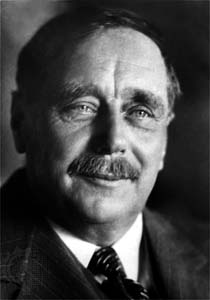
Wells: Visionary and cautionary“Human history becomes more and more a race between education and catastrophe,” said H G Wells, British writer and social activist (1866 – 1946).
This is one of my all time favourite quotes. With amazing economy of words, the author of science fiction classics such as The Time Machine and War of the Worlds has summed up the story of human civilisation.
For much of history, our race has managed to outrun and outsmart an assortment of perils – and sometimes winning with only a wafer thin margin. Individual civilisations that lost the race were doomed to extinction, and now live only in history books and archaeological ruins.
As a whole, however, our species has managed to outlive famines, plagues, ice ages and nuclear weapons. But how are we going to fare with the latest peril – global climate change?
Coping with this phenomenon may well be the Ultimate Race to save our species and our planet. To increase our chances, we need to invest more on education — in its broadest sense.
This is the point I’ve been making in recent weeks, when giving talks about the role of information, education and communication (IEC as its practitioners call it) in preparing communities and societies to live with inevitable climate change. I have addressed diverse groups – from academics and science students to science journalists and civil society activists. Often, my audiences have been multi-cultural and multi-disciplinary.
Fortunately, I didn’t find anyone disagreeing with me – but some were uncertain on methods and means to unleash education on an unprecedented scale.
There are no easy answers or quick fixes. Education for Sustainable Development is an attempt to strengthen humanity’s prospects in the Ultimate Race.
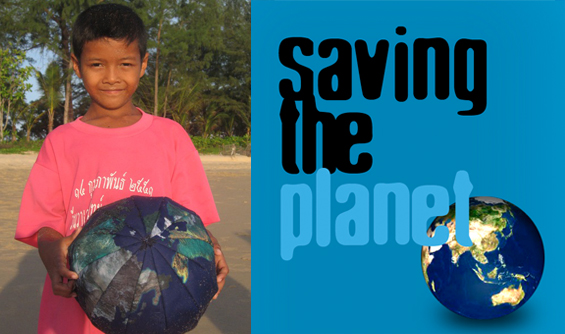
TVE Asia Pacific’s latest Asian TV series, modestly named Saving the Planet, brings some dispatches from the frontier of that race. It shows how some people are working quietly and relentlessly to spread knowledge, understanding and attitudes that inspire action to live in harmony with the planet.
Increase our winning chances in the Ultimate Race!
Dilrukshi Handunnetti: Making wavesMy good friend Dilrukshi Handunnetti, a leading investigative journalist in Sri Lanka, is currently on a Jefferson Fellowship traveling in the United States. She is one of a dozen journalists from the Asia Pacific who have been competitively chosen to participate in this prestigious programme, which in 2009 is focusing on the theme, The Right Climate for Confronting Climate Change?
I finished my latest climate film, Small Islands – Big Impact, only the day before Dilrukshi left for Hawaii, her first stop in the multi-destination, intensive programme. Given her long standing coverage of the Maldivian political affairs as well as Asian/global environmental issues, I gave her a DVD of the film to take along.
I’m delighted to hear that she has been showing Small Islands – Big Impact in various presentations, often producing a…big impact wherever it was shared. It’s always good to have such feedback — here’s an excerpt from an email she has just sent me from Boulder, Colorado:
“I liked presenting your short film and the response it generated. The film generated a discussion on promoting the concept of (climate) adaptation as a human right – just as I felt it would be such a catch phrase here. I also had the (media coverage of) the underwater Cabinet meeting with me. So Maldives got a lot of attention despite not having a Maldivian here.
“Several wanted to know about the actual risk level of the Maldives and the possibility of the islands being submerged. They also asked about purchasing land elsewhere and whether the Maldives had the financial capability to do that. Others wanted to know about depleting fish catch President Nasheed spoke about as this was a common concern to Indonesia, Southern India and Vietnam.
President Nasheed: Stop pointing fingers, extend a helping hand...“Some queried whether President Nasheed was going to Copenhagen to state his case. Two others asked whether lobby groups were behind his thinking. Several found, including American, Chinese and Indian participants, that President Nasheed’s call to end the blame game should be heeded by all. There was collective agreement that others’ behaviour impacted on the likes of President Nasheed and vulnerable communities.
“Interestingly, everyone found his interview a STORY. Something that they would want to report on in their respective media. We continue to discuss the same on our tours and walkathons from venue to venue for various meetings. In fact, I had the American participant asking our resource persons (IPCC types, no less!) whether they were willing to acknowledge the concept of climate refugees directly in relation to the Maldives.
“I think the movie served a great purpose of awakening the minds of many to the threat level faced by some communities on low lying coastal nations – like the pacific Islands and the Maldives. A senior broadcaster from the Tonga Broadcasting Corporation personally thanked me for wanting to highlight their plight as a small island nation.”
You can watch Small Islands – Big Impact online here:
A journalist for over 17 years, Dilrukshi Handunnetti has extensively covered politics, the environment, culture, and history and gender issues. In her current role, she writes the parliamentary column for the newspaper in addition to writing and editing investigative stories carried in her publication. Dilrukshi has also covered the ethnic conflict from a non-military perspective and written extensively on issues of good governance, graft and corruption. Dilrukshi is the recipient of many national journalism awards in Sri Lanka, including: the Young Reporter of the Year 2001, Best Environment Reporter of the year 2002, Best Environment Reporter of the year 2003, Best English Journalist of the Year 2004 (Merit) Award and D B Dhanapala Award for the Best English Journalist of the Year 2005, all presented by the Editors’ Guild of Sri Lanka.
In this extract from our 2005 film Deep Divide, Dilrukshi talks about Sri Lanka’s coastal resource development challenges before and after the 2004 Asian Tsunami:
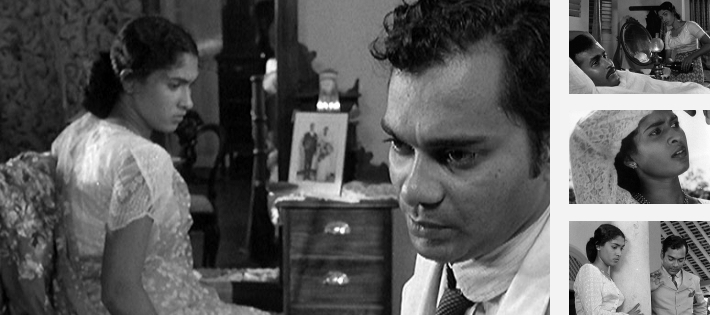
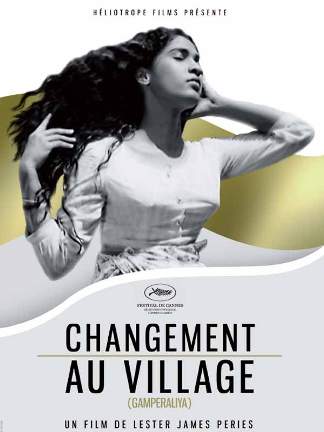
Gamperaliya (1964): A Sri Lankan film classicLast evening, at the gala opening of the European Film Festival in Colombo, I sat two rows in front of a living treasure of the Asian cinema and watched his recently restored 1964 cinematic masterpiece, a cultural treasure in its own right.
The doyen of the Lankan cinema, Lester James Peries, made Gamperaliya (Changes in the Village, 35mm, 108 minutes) based on the Sinhala novel of the same name, written by Martin Wickremasinghe, himself a leading light of Lankan literature during the 20th century.
The movie was groundbreaking in Sinhala cinema, and was shot entirely outside of a studio using one lamp and hand held lights for lighting (at a time when most films were still being made within studios). Although not an immediate commercial success, it was critically and internationally acclaimed, and won the Golden Peacock at the Grand Prix International Film Festival in India and the Golden Head of Palenque in Mexico, both in 1965. It was one of the first Lankan films to be internationally recognised.
Lester: 20 feature films in a 50-year career...Gamperaliya was the first independent film made in Sri Lanka. There was no film studio involvement, and the film maker and friends invested Lankan Rupees 170,000 to make it (roughly USD 30,000 at the time, although today the same amount of the much weaker Rupee converts to less than USD 1,500).
Critic David Chute wrote: “Gamperaliya launched a revolution, not only in the way films were made but also in content…[director] Peries sought an alternative to the Bollywood-influenced melodramas that dominated commercial cinema…With an elegant narrative style comparable to Satyajit Ray’s Apu Trilogy, [the film’s] aesthetic choices also have a moral dimension.”
Gamperaliya is two years older than myself, and although I’d watched it on television, I had never seen it in a cinema on a large screen with proper sound. It was a real treat. For nearly two hours, I was transported back to two periods of recent history: the newly independent Dominion of Ceylon (not yet renamed Sri Lanka) in the early 1960s when the film was made, and the early 20th century colonial Ceylon where the actual story takes place. To engage in such time travel in the company of the maestro film maker himself was a unique experience.
However, it was sobering to reflect how many who were involved in the creative effort to make Gamperaliya are no longer with us. Among them are screenplay writer Regi Siriwardena, actor Gamini Fonseka and co-producer Anton Wickremasinghe. It was only a few months ago that Tissa Abeysekera, who started his long and colourful association with the Lankan cinema by working as a dialogue writer and assistant director in Gamperaliya, abruptly departed.
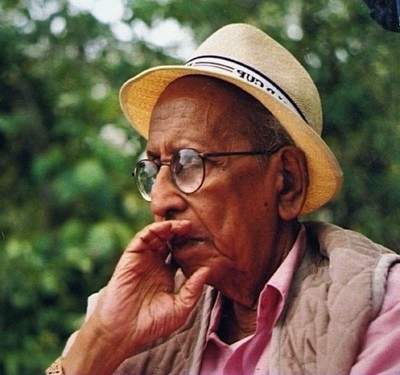
Lester, who turned 90 in April 2009, was making a rare public appearance. We were told that this is only the second time he has ventured out since he retired from film-making two years ago. He looked a bit frail, but walked up and down the isle supported by his wife Sumitra Peries, his partner both in life and cinema.
In some ways, cine film is even more prone to the decay of elements than humans. Gamperaliya was almost totally lost. Last evening’s celebrated reunion of the master and his masterpiece was the outcome of a major restoration that involved substantial efforts and investments by concerned cinephiles on both sides of the Atlantic.
Gamperaliya was rescued from the brink of disaster. A few years ago, UNESCO launched a project to collate a World Heritage of cinema and selected another film of Lester’s, Nidhanaya (Treasure, 1972) as a work of art that should be preserved for future generations. But when Lester and UNESCO representatives went to the Sarasavi studio in Dalugama, north of Colombo, where almost all the films made in Lankan cinema are kept, they found that the master Negative (the Mother Copy from which fresh copies could be made) was burnt due to vinegar syndrome – a condition when negatives start deteriorating.
“This was not due to the failure of anybody in Dalugama studio or the National Film Corporation but due to the failure of all governments that came to power since 1956. The late journalist Ajith Samaranayake and many others fought for a film archive but we were not able to persuade any government,” the disappointed film maker was quoted as saying at the time.
Gamperaliya French poster
This news reached Pierre Rissient, a French national and a guardian of Lankan cinema who is attached to ‘Pathe’ one of the biggest film companies in the world. He urged Lester to help restore the equally important film Gamperaliya, which was also in a state of decay but could still be salvaged.
In one email, Rissient wrote to Lester: “Dear Lester you made a great masterpiece, not only of the cinematography of your country but also universally. It is your duty to make possible this restoration; it is not for your friend Pierre, but for the world.”
So Pierre Rissient pursued this and arranged for it to be carried out at the film restoration unit of the University of California in Los Angeles (UCLA). The UCLA Film and Television Archive is the largest university-based collection of film and television materials in the world,
Some 14 sound reels and 14 picture reels of Gamperaliya, weighing 60 kilos, were couriered to UCLA in May 2007. The film was restored to the visual and audio perfection by Rob Stone and Jere Guldin. The restoration with latest digital sound and visual quality will enable the film to be shown all over the world after 45 years.
In May 2008, the restored Gamperaliya was screened at the Cannes Film Festival under the section ‘Restored Classics’.
At the time, Lester wrote to Pierre Rissient: “It is a tremendous campaign that made it possible for Gamperaliya to survive and your incredible faith in our film that made this miracle possible. We do hope and pray that there is no serious deterioration that will destroy any chances of a glorious restoration. Sumithra and I thank you and are joined by the Sri Lanka film industry for your valiant effort.”
And all of us movie lovers in Sri Lanka and across the world join them in this gratitude, for saving the cultural treasure that is Gamperaliya.
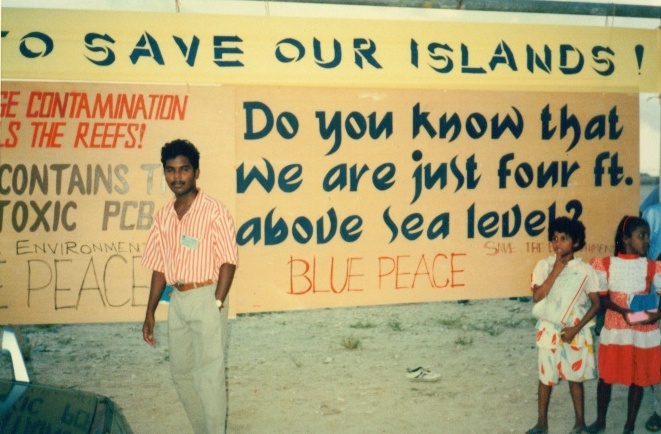
Bluepeace was vocal, even at 2 months. Photo by Nalaka Gunawardene: Male, November 1989
I’m not a professional photographer, but as a journalist I often carry a camera and take photos of what interests me. So I’m very glad to have captured that historic bill board as a journalist covering the conference. Bluepeace still uses it in their records, always with acknowledgement.
Ali Rilwan, Bluepeace co-founder whom I photographed as a young man, says: “Twenty years later, we need not ask the same question, as the world is well-aware of the dangers Maldives faces. However, we face the urgent need to talk and work with the rest of the world to find solutions.”
Now, Bluepeace is actively using photographs as part of their climate advocacy.
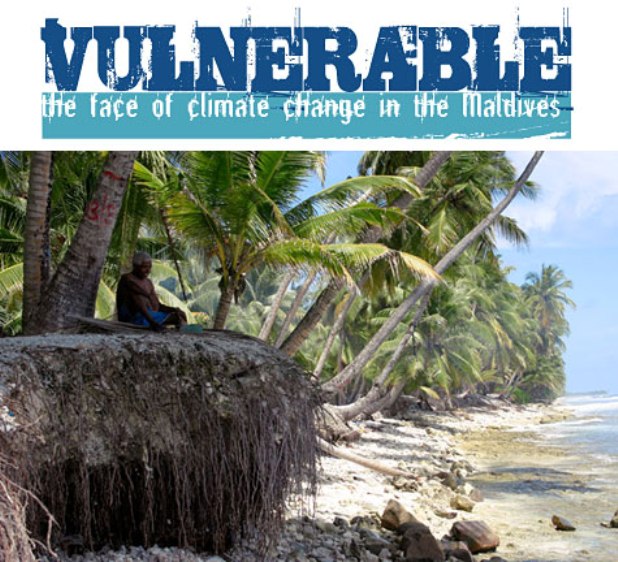
Images from the frontlines of climate impact...
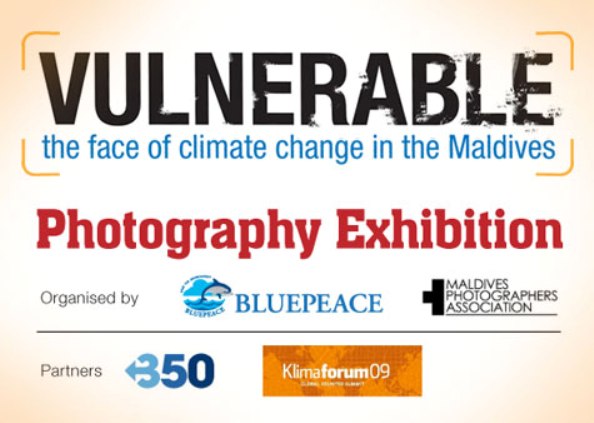
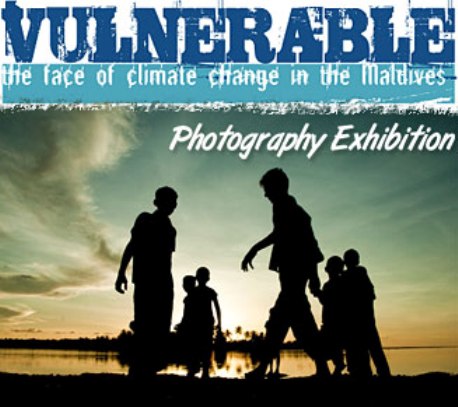
VULNERABLE is a photo exhibition organised by Bluepeace. To celebrate the 20th anniversary of Bluepeace, and to join the global environmental movement bringing attention to the dangers of climate change in the run up to United Nations Conference on Climate Change (COP15), Bluepeace presents VULNERABLE, which showcases the face of climate change in the Maldives. The exhibition documents the vulnerability of the fragile coral islands of the Maldives to climate change, through pictures from talented Maldivian photographers. It depicts a nation under threat, as it tries to safeguard an age-old culture and lifestyle that could be erased with rising seas and climate change.
VULNERABLE was launched online on October 24, the International Day of Climate Action organised by 350.org, which calls for a reduction of global carbon emissions below 350 parts per million.
In the coming weeks and months the exhibition will move to different locations in the Maldives and other countries, including Copenhagen in December 2009, where it will be hosted by Klimaforum09, an alternate climate summit with participation from global environmental movements and civil society organisations.
I can’t wait to see the exhibit in a physical display, which is more powerful than viewing it online. For now, here are some glimpses…
Now she's green inside and out! I always thought Tinker Bell was a bit green — with envy, that is. Peter Pan’s faithful fairy sidekick was far too possessive of him: every time another female appeared to get close, Tink would try to chase her away. She typifies the Jealous Female.
The announcement came just prior to a screening at UN Headquarters in New York of the world premiere of the Walt Disney animated film, “Tinker Bell and the Lost Treasure.”
In the new movie, being released on DVD and BluRay on 27 October 2009, the feisty fairy first seen in 1953’s Peter Panclassic animation movie finally gets a makeover for her journey away from the magical land of Pixie Hollow.
The new and improved Tink looks more tomboyish: more of her body is covered in clothes, yet she still retains her curvy figure. “We wanted to make Tink as real as possible in Lost Treasure,” says director Klay Hall. “It made sense she was going to put on a jacket, leggings and boots. This is sort of a new phase for Tink, and the look brings her up to the current feeling we are trying to convey,” such as the belt she uses to carry items she needs.
“We’re delighted Tinker Bell has agreed to be our Honorary Ambassador of Green,” said Kiyo Akasaka, Under-Secretary-General for Communications and Public Information. “This beloved animated character can help us inspire kids and their parents to nurture nature and do what they can to take care of the environment.”
The UN event was intended to promote environmental awareness in the lead-up to the UN climate change conference in Copenhagen in December, where countries will aim to ‘seal the deal’ on a new global agreement to curb greenhouse gas emissions.
Protecting the environment is an underlying theme of the Tinker Bell movies, according to the UN Department of Public Information (DPI), which finds that the Walt Disney Company uses its storytelling to inspire a love of nature and spirit of conservation in its audience.
In the latest film, Tinker Bell’s greatest adventure takes place in autumn, as the fairies in Pixie Hollow are busy changing the colours of the leaves, tending to pumpkin patches and helping geese fly south for the winter. When Tinker Bell accidentally puts all of Pixie Hollow in jeopardy, she must venture out on a secret quest to set things right.
Tinker Bell Director Klay Hall, Producer Sean Lurie and cast members Mae Whitman (Tinker Bell) and Raven Symoné (Iridessa) were among those attending the premiere, hosted by DPI as part of the Secretary-General’s Creative Community Outreach Initiative.
The Initiative links the UN and producers, directors, writers and new media professionals seeking a working relationship with the world body with the goal of raising awareness of critical global issues.
Well, I can think of one Big Challenge for the creative community worldwide: find some way, any way, to ‘animate’ (i.e. bring to life!) the chronically dull and dour Ban Ki-Moon, Secretary General of the UN, who in his own admission is often invisible!
But hey, some feats are beyond even the most creative people! So just enjoy these two online videos…







 “We’re delighted Tinker Bell has agreed to be our Honorary Ambassador of Green,” said Kiyo Akasaka, Under-Secretary-General for Communications and Public Information. “This beloved animated character can help us inspire kids and their parents to nurture nature and do what they can to take care of the environment.”
 Open Minds!
