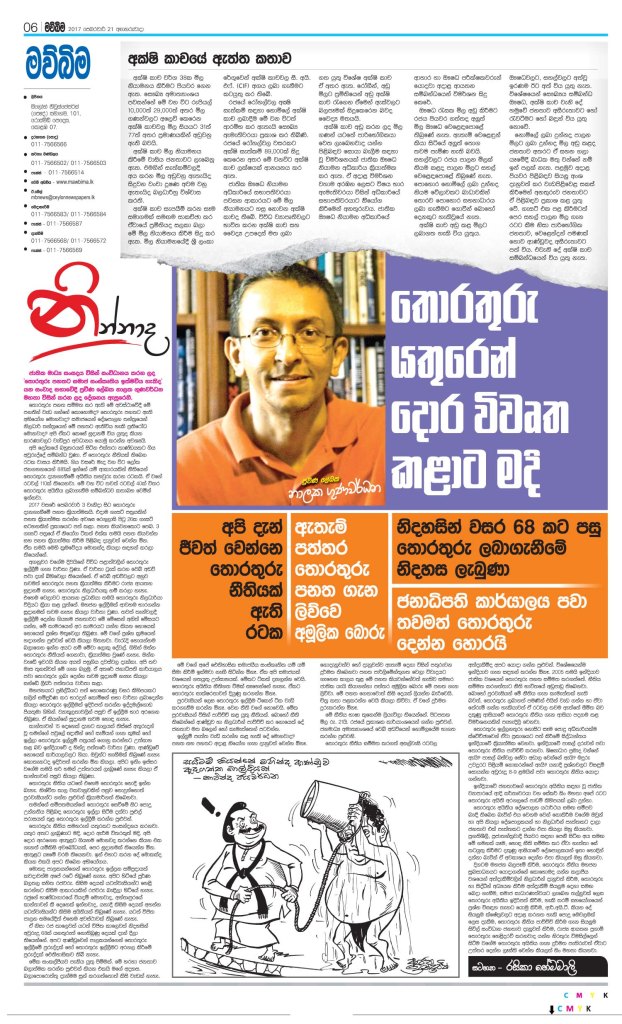
April Fools All Year Round? Op-ed by Nalaka Gunawardene, Weekend Express, 7 April 2017
April Fools, All Year Round?
By Nalaka Gunawardene
April 1 is observed in many countries as a day for fooling people with practical jokes and harmless fabrications. This aspect of popular culture can be traced back to the times of ancient Greece.
There is now a new twist to this tradition. Every day is beginning to feel like April Fools’ Day in the age of Internet pranks, clever satire and fake news!
Sadly, many among us who apply some measure of skepticism on April 1 are not as vigilant for the rest of the year.
Ah, how I miss the time when intentional misleading was largely confined to just one day. I’m old enough to remember how some Lankan newspapers used to carry elaborate – and seemingly plausible – stories on their front pages on April Fools’ day. The now defunct Sun and Weekend excelled in that delightful art of the tall tale. Of course, they owned up the following day, poking fun at readers who were fooled.
During the past two decades, our media landscape has become a great deal more diverse. Today we have 24/7 SMS news services, all-news TV channels, numerous websites and, of course, millions using social media to spread information (or misinformation) instantaneously.
But does more necessarily mean better? That is a highly debatable question. We seem to have too much media, but not enough journalism! At least journalism of the classical kind where facts are sacred and comment is free (yet informed).
That kind of journalism still exists, but along with so much else. Today’s global cacophony has democratized the media (which is to be celebrated). At the same time, it spawned veritable cottage industries of fake news, conspiracy theories and gossip peddlers.
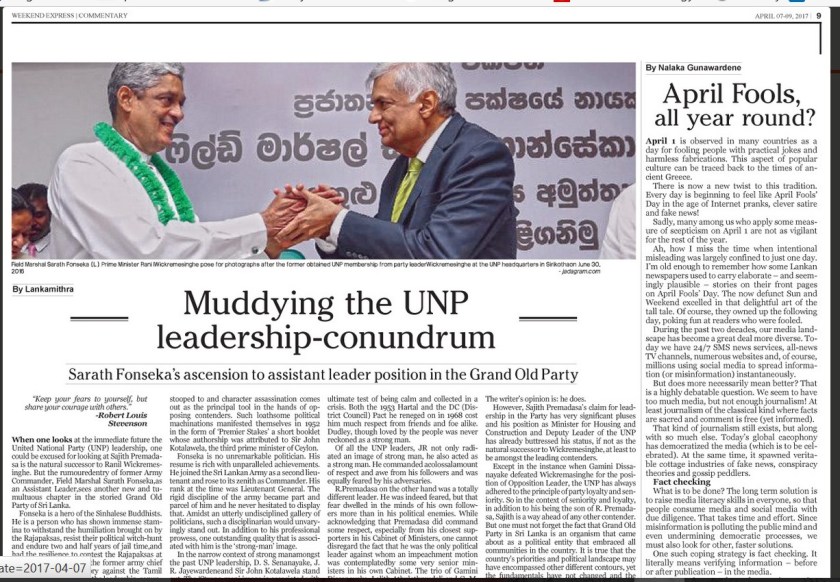
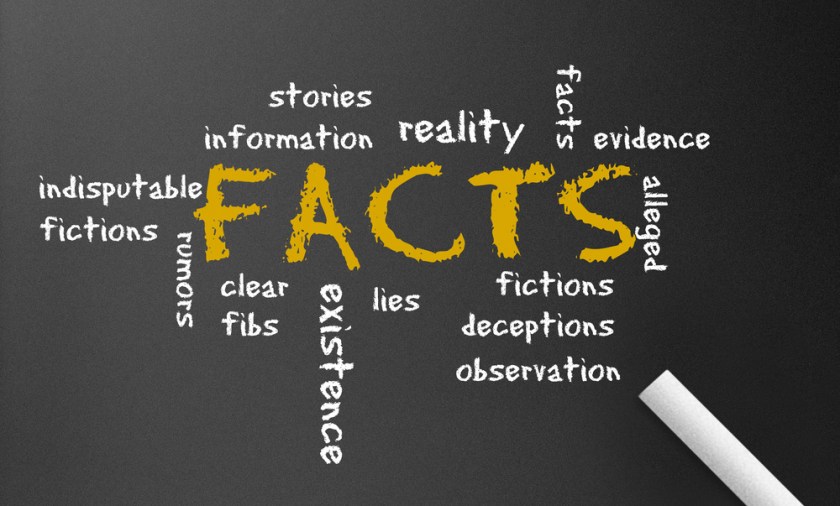
Image source – American Journalism Review, 21 April 2015
Fact checking
What is to be done? The long term solution is to raise media literacy skills in everyone, so that people consume media and social media with due diligence.
That takes time and effort. Since misinformation is polluting the public mind and even undermining democratic processes, we must also look for other, faster solutions.
One such coping strategy is fact checking. It literally means verifying information – before or after publication – in the media.
In a growing number of countries, mainstream media outlets practise fact checking as an integral part of their commitment to professionalism. They seek to balance accuracy with speed, which has been made more challenging by the never-ending news cycle.
In other cases, independent researchers or civil society groups are keeping track of news media content after publication. In the United States, where the practice is well developed, several groups are devoted to such post-hoc fact checking. These include FactCheck, PolitiFact, and NewsTrust’s Truth Squad. They fact check the media as well as statements by politicians and other public figures.
In 2015, fact checking organisations formed a world network and this year, they observed the inaugural International Fact Checking Day.
The initiative is a collaboration by fact checkers and journalism organisations from around the world, “with a goal to enlist the public in the fight against misinformation in all its forms.”
“International Fact Checking Day is not a single event but a rallying cry for more facts — and fact checking — in politics, journalism and everyday life,” says Alexios Mantzarlis, director of the International Fact-Checking Network at the Poynter Institute for Media Studies in the US.
Oops!
Pinocchios
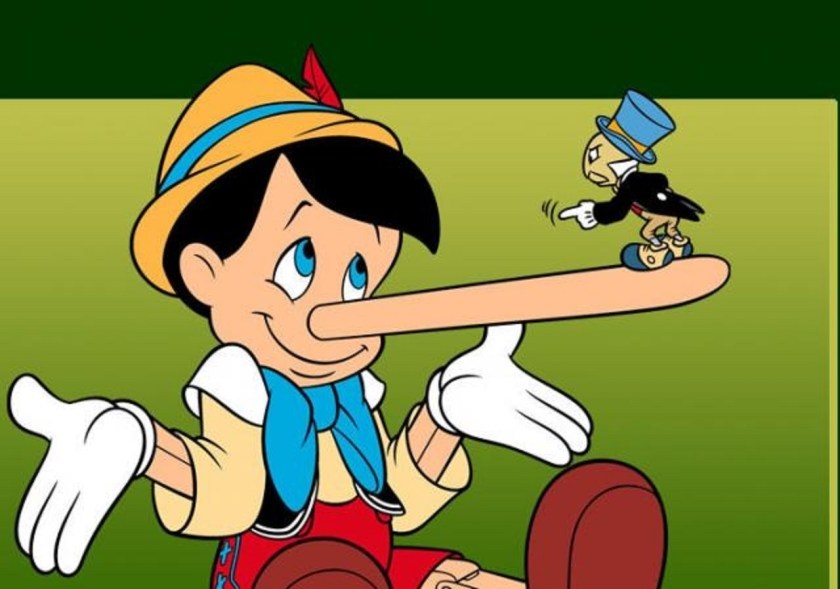
One visual icon for the Fact-Checking Day is Pinocchio, the fictional puppet character whose nose grew long each time he uttered a lie.
We in Sri Lanka urgently need a professional, non-partisan fact checking service to save us from the alarming proliferation of Pinocchios in public life. Not just our politicians, but also many academics and activists who peddle outdated statistics, outlandish claims or outright conspiracy theories.
Take, for example, the recent claim by a retired professor of political science that 94 Members of Parliament had not even passed the GCE Ordinary Level exam. Apparently no one asked for his source at the press conference (maybe because it fed a preconceived notion). Later, when a (rare?) skeptical journalist checked with him, he said he’d “read it in a newspaper some time ago” — and couldn’t name the publication.
A simple Google search shows that an MP (Buddhika Pathirana) had cited this exact number in September 2014 – about the last Parliament!
Given the state of our media, which often takes down dictation rather than asks hard questions, fact checking is best done by a research group outside the media industry.
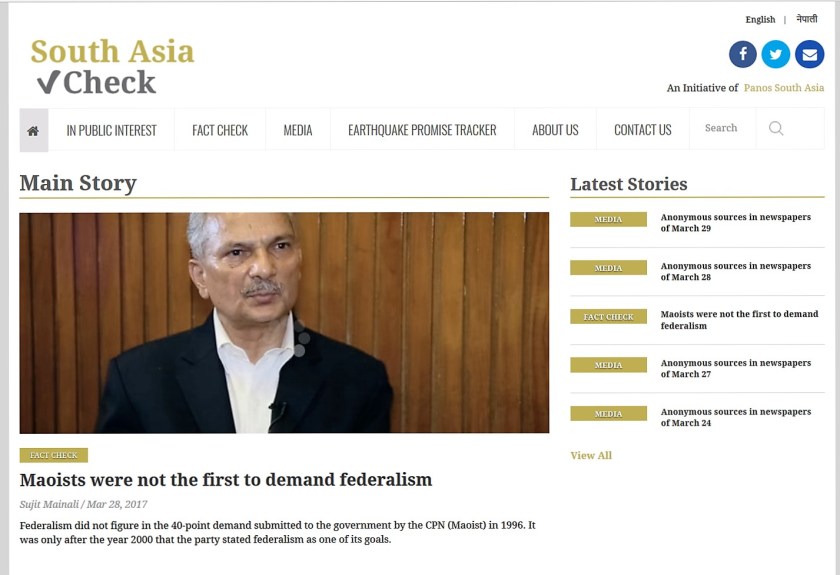
A useful model could be South Asia Check, an independent, non-partisan initiative by Panos South Asia anchored in Kathmandu. It “aims to promote accuracy and accountability in public debate” by examining statements and claims made by public figures in Nepal and occasionally, across South Asia (http://southasiacheck.org).
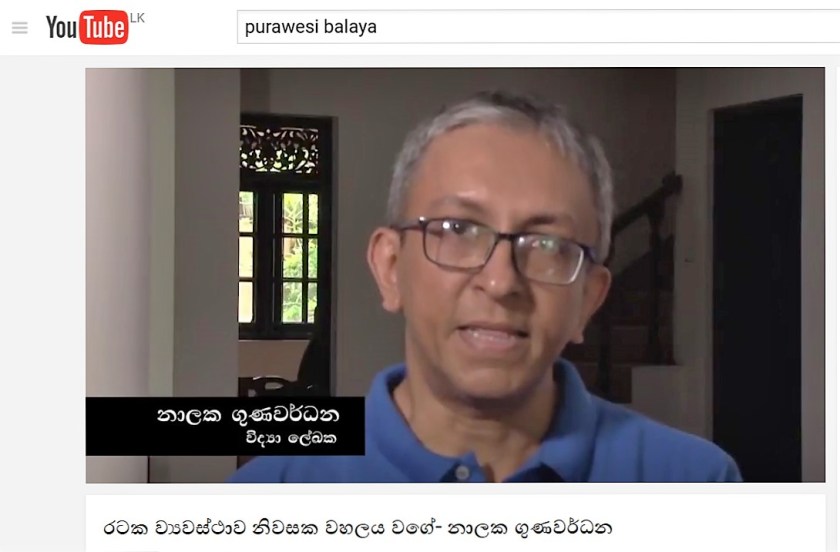
Nalaka Gunawardene sums up why a new Constitution is needed for Sri Lanka. Purawesi Balaya video, April 2017
I have just recorded a short (3.5 min) video for Purawesi Balaya (Citizen Power) advocacy group as part of their citizens’ campaign demanding a new Constitution for Sri Lanka to replace the existing one adopted in 1978.
Here is what I say (not a verbatim transcript, but an approximation):
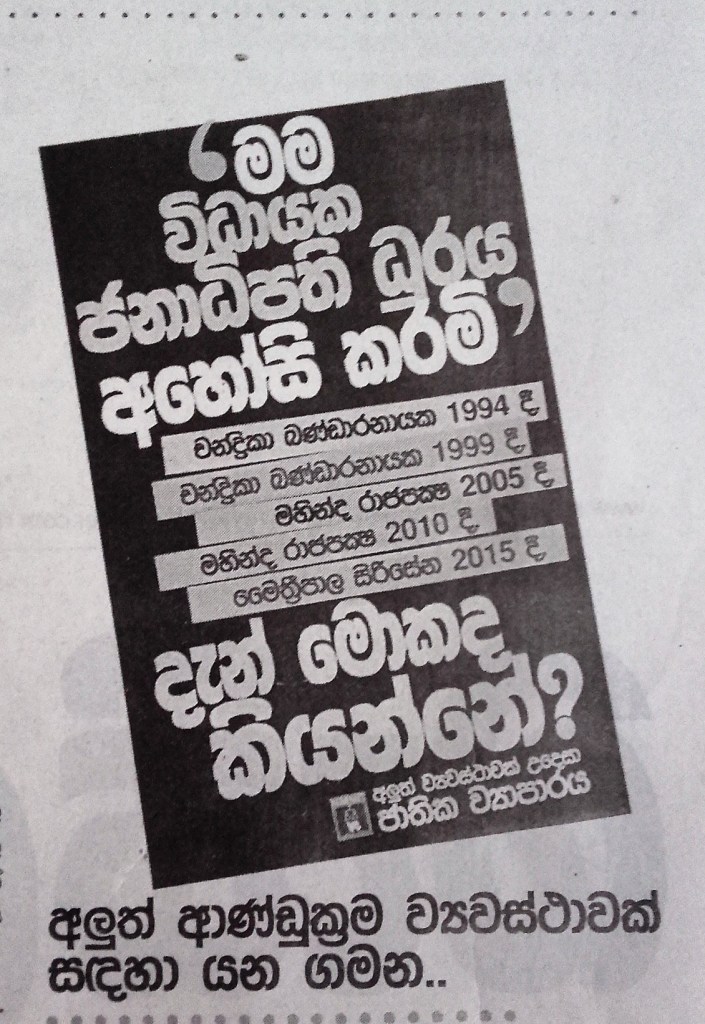
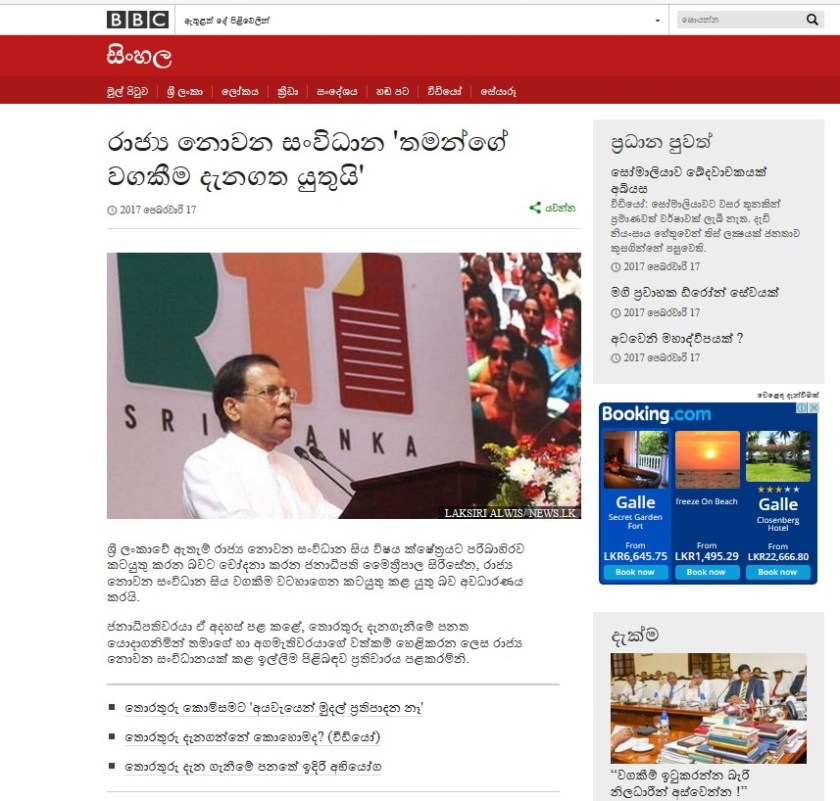
Incumbent Maithripala Sirisena is the 5th president of Sri Lanka who has given an election pledge to abolish Executive Presidency, says Purawesi Balaya (Citizen Power), March 2017
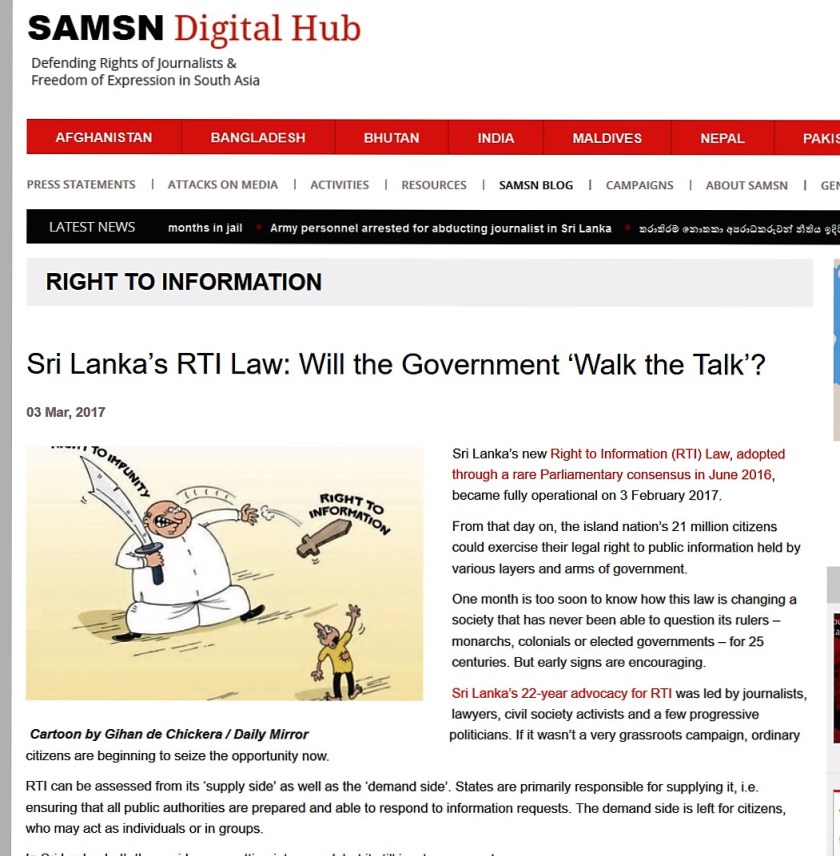
From that day, the island nation’s 21 million citizens can exercise their legal right to public information held by various layers and arms of government.
One month is too soon to know how this law is changing a society that has never been able to question their rulers – monarchs, colonials or elected governments – for 25 centuries. But early signs are encouraging.
Sri Lanka’s 22-year advocacy for RTI was led by journalists, lawyers, civil society activists and a few progressive politicians. If it wasn’t a very grassroots campaign, ordinary citizens are beginning to seize the opportunity now.
RTI can be assessed from its ‘supply side’ as well as the ‘demand side’. States are primarily responsible for supplying it, i.e. ensuring that all public authorities are prepared and able to respond to information requests. The demand side is left for citizens, who may act as individuals or in groups.
In Sri Lanka, both these sides are getting into speed, but it still is a bumpy road.
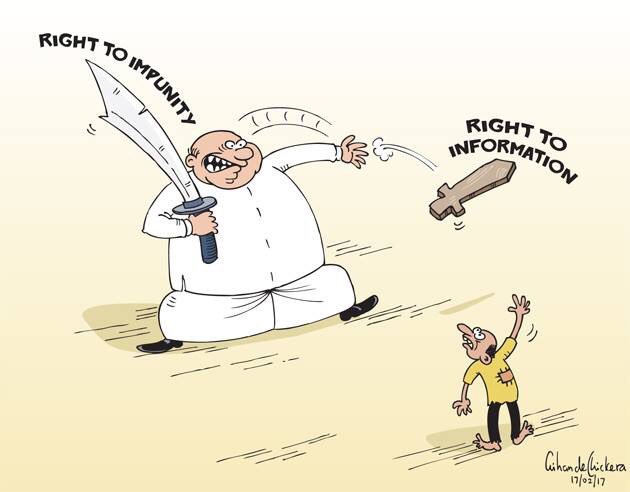
Cartoon by Gihan de Chickera, Daily Mirror
During February, we noticed uneven levels of RTI preparedness across the 52 government ministries, 82 departments, 386 state corporations and hundreds of other ‘public authorities’ covered by the RTI Act. After a six month preparatory phase, some institutions were ready to process citizen requests from Day One. But many were still confused, and a few even turned away early applicants.
Such teething problems are not surprising — turning the big ship of government takes time and effort. We can only hope that all public authorities, across central, provincial and local government, will soon be ready to deal with citizen information requests efficiently and courteously.
Some, like the independent Election Commission, have already set a standard for this by processing an early request for audited financial reports of all registered political parties for the past five years.
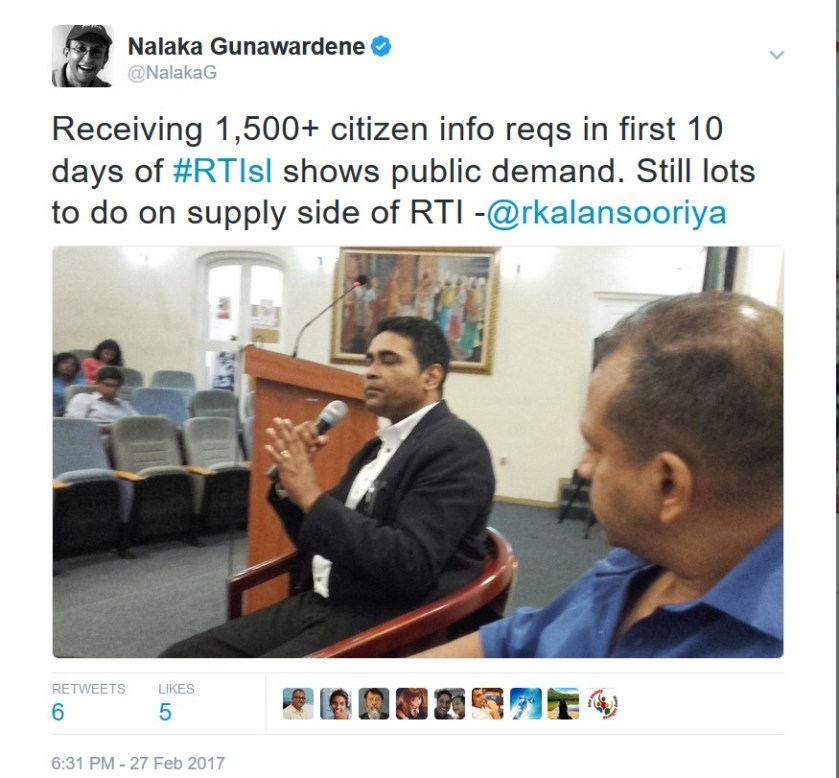
On the demand side, citizens from all walks of life have shown considerable enthusiasm. By late February, according to Dr Ranga Kalansooriya, Director General of the Department of Information, more than 1,500 citizen RTI requests had been received. How many of these requests will ultimately succeed, we have to wait and see.
Reports in the media and social media indicate that the early RTI requests cover a wide range of matters linked to private grievances or public interest.
Under the RTI law, public authorities can’t play hide and seek with citizens. They must provide written answers in 14 days, or seek an extension of another 21 days.
To improve their chances and avoid hassle, citizens should ask their questions as precisely as possible, and know the right public authority to lodge their requests. Civil society groups can train citizens on this, even as they file RTI requests of their own.
That too is happening, with trade unions, professional bodies and other NGOs making RTI requests in the public interest. Some of these ask inconvenient yet necessary questions, for example on key political leaders’ asset declarations, and an official assessment of the civil war’s human and property damage (done in 2013).
Politicians and officials are used to dodging such queries under various pretexts, but the right use of RTI law by determined citizens can press them to open up – or else.
The Right to Information Commission will play a decisive role in ensuring the law’s proper implementation. “These are early days for the Commission which is still operating in an interim capacity with a skeletal staff from temporary premises,” it said in a media statement on February 10.
The real proof of RTI – also a fundamental right added to Constitution in 2015 – will be in how much citizens use it to hold government accountable and to solve their pressing problems. Watch this space.
Science writer and media researcher Nalaka Gunawardene is active on Twitter as @NalakaG. Views in this post are his own.
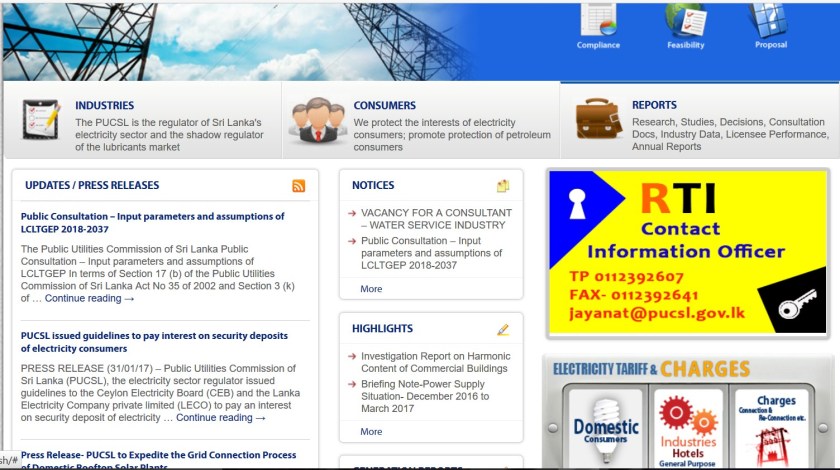
One by one, Sri Lanka public agencies are displaying their RTI officer details as required by law. Example: http://www.pucsl.gov.lk saved on 24 Feb 2017
Nurturing the demand side of Right to Information (RTI) in Sri Lanka: What can be done?What more can be done to promote RTI demand side in Sri Lanka – ideas by Nalaka Gunawardene
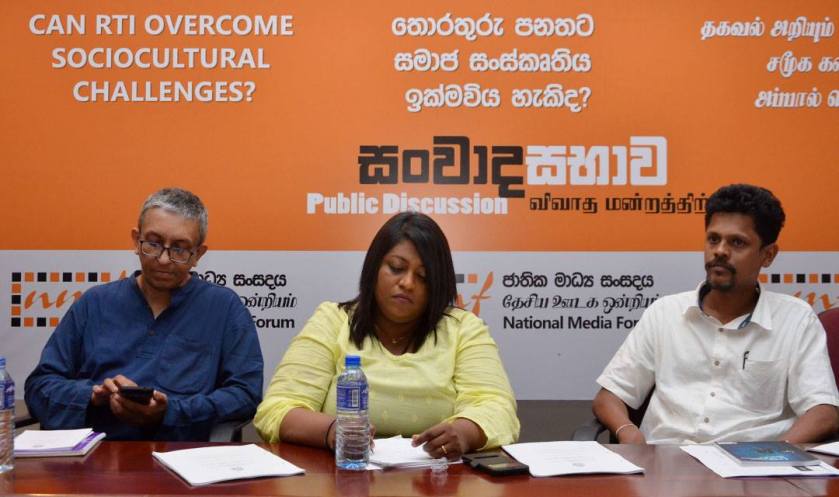
Nalaka Gunawardene speaks at public forum on Sri Lanka’s new Right to Information (RTI) law. Colombo, 15 Feb 2017
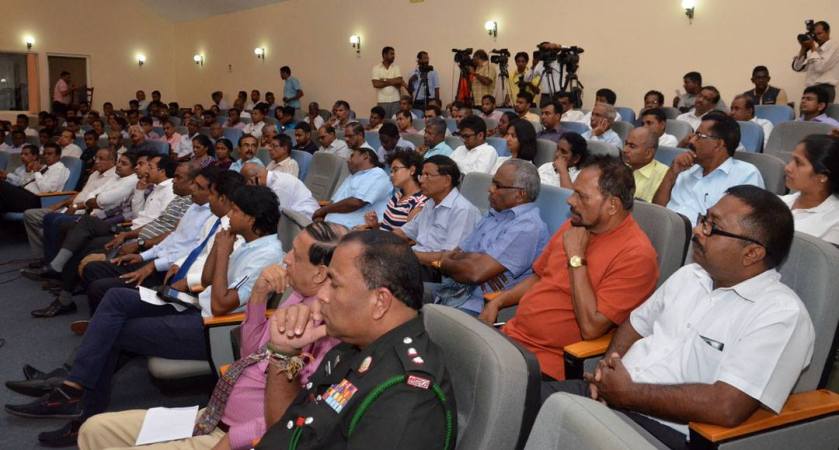
On 15 February 2017, I served as main speaker at a public forum in Colombo on Sri Lanka’s newly operational RTI law and its wider socio-cultural and political implications. The event, organized by the National Media Forum (NMF), was attended by a large number of journalists, social activists, lawyers, government officials and other citizens.
Nalaka Gunawardene speaks at public forum in Colombo on Sri Lanka’s newly operational RTI law. 15 February 2017 (Photo courtesy Lanka News Web)
Sri Lanka’s new Right to Information (RTI) law became operational on 3 February 2017. Marking the culmination of an advocacy effort sustained by social activists and journalists for over 20 years, the new law enables citizens to ask for, and be assured of information held in all government entities (as well as some private and non-profit entities).
The law being new, there still are apprehensions, misconceptions as well as skepticism on whether such transparency could work in a semi-feudal society like Sri Lanka’s.
On 15 February 2017, I served as main speaker at a public forum in Colombo on Sri Lanka’s newly operational RTI law and its wider socio-cultural and political implications. The event, organized by the National Media Forum (NMF), was attended by a large number of journalists, social activists, lawyers, government officials and other citizens.
L to R – Nalaka Gunawardene, Mandana Ismail Abeywickrema, Priyantha Wedamulla and Narada Bakmeewewa (Photo courtesy Lanka News Web)
In my presentation, I said the right to ask questions from rulers is very new, and there is no historical precedent for it in Sri Lanka. Subjects had no rights whatsoever and could not ask any questions from the absolute monarchs of Lanka who ruled the island for 20 centuries. The Portuguese, Dutch and British did not grant that right in their colony of Ceylon, and neither did any of our own governments elected since independence in 1948.
Citizens are typically intimidated by politicians and officials, and unless we overcome this wide-spread subservience, we cannot derive benefits from RTI, I argued. The new law gives an unprecedented right to all 21 million Lankans – of all walks of life and of all ages – but to exercise it well we need a political vision, tenacity and imagination.
Nurturing these qualities is the big challenge on the DEMAND side of RTI in Sri Lanka, now that the government has done an appreciable amount of work on the SUPPLY side – by keeping its 2015 election pledge and giving us both the fundamental right to information (through the 19th Amendment to the Constitution) and the law that operationalises it (Right to Information Act No 12 of 2016).
I quoted Dr Rajesh Tandon, founder and head of the Society for Participatory Research in Asia (PRIA), a voluntary organisation providing support to grassroots initiatives in India on the Indian experience of RTI. Since the RTI law was introduced in 2005, India has seen a marked improvement in governance, dissemination of information and involvement of civil society in the governance process, he says.
At the same time, he points out that some challenges remain at the implementation level. Certain states in India have been more active in creating a culture of information sharing and open government. As Indians found out, it isn’t easy to shake off centuries of misplaced state secrecy and mistrust in the public. “Old rules and procedures continue to co-exist as new laws and methods are invented. Official Secrecy Act and Right to Information Act co-exist, just as written precedent and e-governance co-exist.” (Watch my full interview with Rajesh Tandon here: https://vimeo.com/118544161).
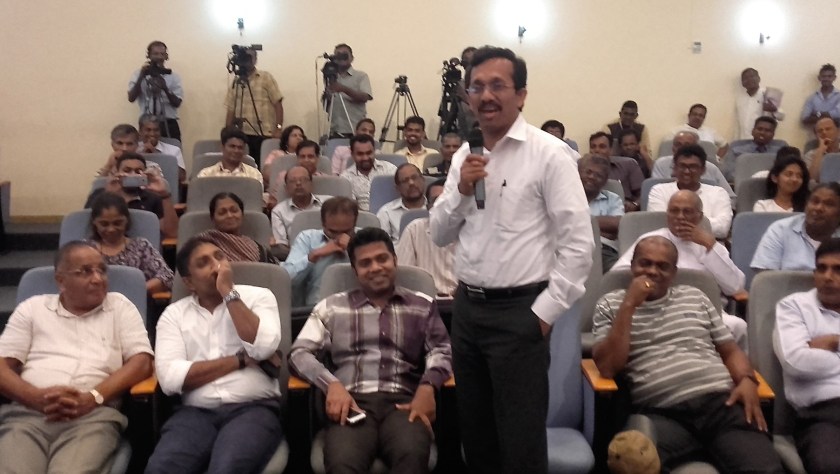
Sunil Handunnetti, JVP (opposition) Member of Parliament, speaks during RTI Forum in Colombo, 15 Feb 2017
I also summarized India’s RTI lessons shared with me recently by Shekhar Singh, Founder of India’s National Campaign for People’s Right to Information (NCPRI) and a former member of the State Council for RTI, New Delhi. Chief among them:
Be well aware of political realities and complexities when promoting RTI
Don’t get into ‘Us and Them’ style confrontation with govt (reality always more nuanced)
Work with progressive elements (MPs, officials, advisors) within govt who share RTI ideals
South Asian politicians know they can pass many laws and then ignore them: only sustained citizen pressure will make them implement RTI fully
Document how RTI has led to social justice and social development in other South Asian countries, and the positive uses of RTI in Sri Lanka from now onward; Share these widely with officials, politicians and civil society activists to inspire them.
RTI cuts across all sectors (education, health, child rights, labour rights, environment, etc.): NGOs, trade unions and other elements of civil society need to see value of RTI-generated info for their own work and the greater good
Civil society should not isolate RTI as a separate movement. Integrate RTI into all public interest work in all sectors.
Insist that ALL layers, arms and branches of govt obey the RTI law fully (and use appeal process when any public authority is not cooperating)
Image courtesy: Health Education Bureau, Ministry of Health, Sri Lanka
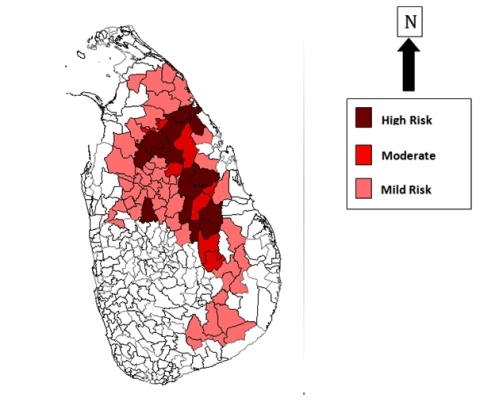
Beginning in the 1990s, thousands of people in Sri Lanka’s Dry Zone – heartland of its rice farming — developed kidney failure without having diabetes or high blood pressure, the common causative factors. Most affected were men aged 30 to 60 years, who worked as farmers. As numbers rose, puzzled doctors and other scientists started probing possible causes for what is now named Chronic Kidney Disease of unknown etiology (abbreviated as CKDu).
CKDu has become a fully-fledged public health crisis and humanitarian emergency, affecting thousands of people and their families – most of them subsistence farmers. Investigating causes of this ailment — still not pinned down to a specific cause or factor — has proven difficult. While scientists follow rigorous scientific methods, some ultra-nationalists and opportunistic politicians are trying to hijack the issue for their own agenda setting.
Sadly, some journalists and media outlets have added fuel to the fire with sensationalist reporting and unwarranted fear-mongering. For several years, I have documented the kind of misinformation, myths and pseudo-science uncritically peddled by Lankan media on CKDu.
In late 2012, speaking at an Asian science communication workshop held in Colombo, I first coined the phrase: Mass Media Failure is complicating Mass Kidney Failure. In December 2015, I revisited and updated this analysis, arguing that there are many reasons for systemic media failure in Sri Lanka that has allowed ultra-nationalists and certain environmental activists to pollute the public mind with half-truths and conspiracy theories. These need media industry level reform. Meanwhile, for improving the CKDu information flow in society, I proposed some short, medium and long term recommendations.
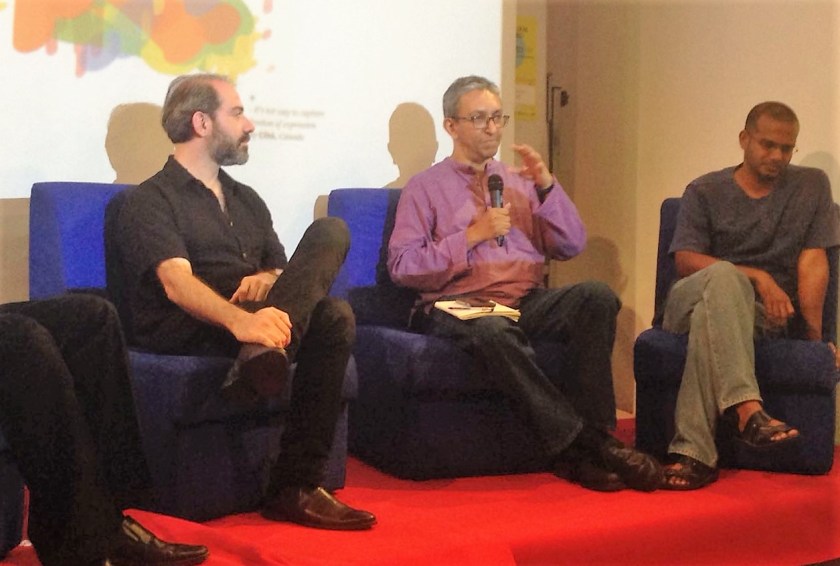
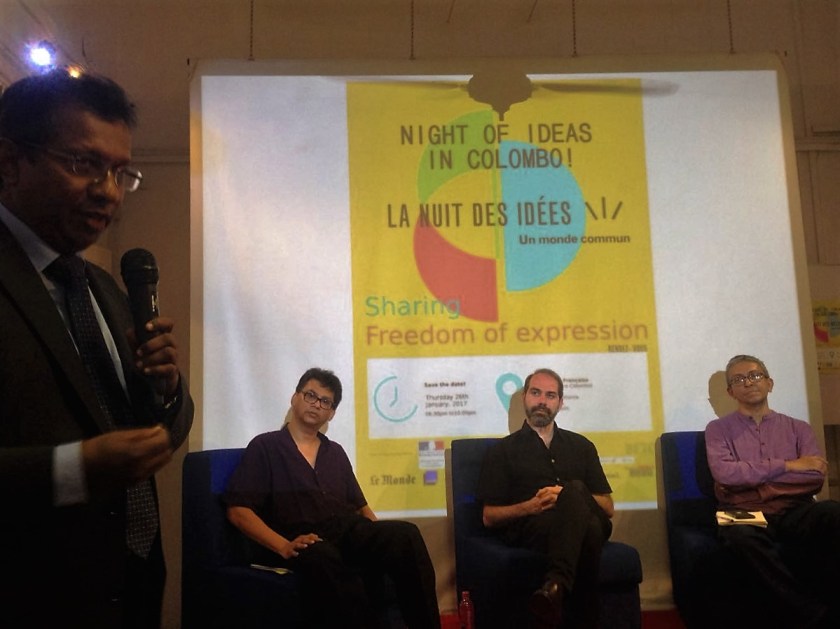
L to R – Kianoush Ramezani, Nalaka Gunawardene, Gihan de Chickera at Night of Ideas in Colombo, 26 January 2017
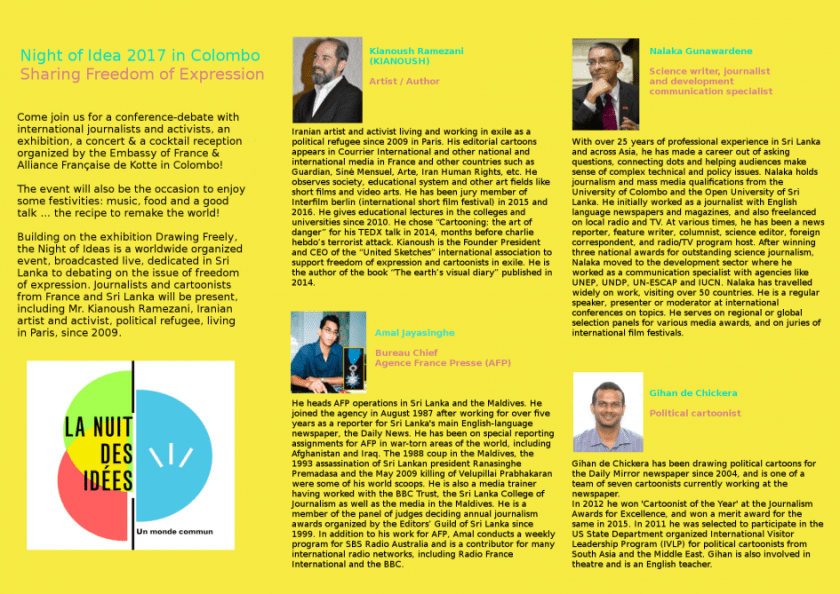
On 26 January 2017, the Alliance Française de Kotte with the Embassy of France in Sri Lanka presented the first ever “Night of Ideas” held in Colombo. During that event, participants were invited to engage in discussions on ‘‘A World in common – Freedom of Expression (FOE)” in the presence of French and Sri Lankan cartoonists, journalists and intellectuals.
I was part of the panel that also included: Kianoush Ramezani, Founder and President of United Sketches (Paris), an Iranian artist and activist living and working in Paris since 2009 as a political refugee; and Gihan de Chickera, Political cartoonist at the Daily Mirror newspaper in Sri Lanka. The panel was moderated by Amal Jayasinghe, bureau chief of Agence France Presse (AFP) news agency.
Human Rights Lawyer and activist J C Weliamuna opens the Night of Ideas in Colombo, 26 January 2017
In my opening remarks, I paid a special tribute to Sri Lanka’s cartoonists and satirists who provided a rare outlet for political expression during the Rajapaksa regime’s Decade of Darkness (2005-2014).
I referred to my 2010 essay, titled ‘When making fun is no laughing matter’ where I had highlighted this vital aspect of FOE. Here is the gist of it:
A useful barometer of FOE and media freedom in a given society is the level of satire that prevails. Satire and parody are important forms of political commentary that rely on blurring the line between factual reporting and creative license to scorn and ridicule public figures.
Political satire is nothing new: it has been around for centuries, making fun of kings, emperors, popes and generals. Over time, satire has manifested in many oral, literary and theatrical traditions. In recent decades, satire has evolved into its own distinctive genre in print, on the airwaves and online.
Satire offers an effective – though not always fail-safe – cover for taking on authoritarian regimes that are intolerant of criticism, leave alone any dissent. No wonder the former Soviet Union and Eastern Bloc inspired so much black humour.
This particular dimension to political satire and caricature that isn’t widely appreciated in liberal democracies where freedom of expression is constitutionally guaranteed.
In immature democracies and autocracies, critical journalists and their editors take many risks in the line of work. When direct criticism becomes highly hazardous, satire and parody become important — and sometimes the only – ways for journalists get around draconian laws, stifling media regulations or trigger-happy goon squads…
Little wonder, then, that some of Sri Lanka’s sharpest political commentary is found in satire columns and cartoons. Much of what passes for political analysis in the media is actually gossip.
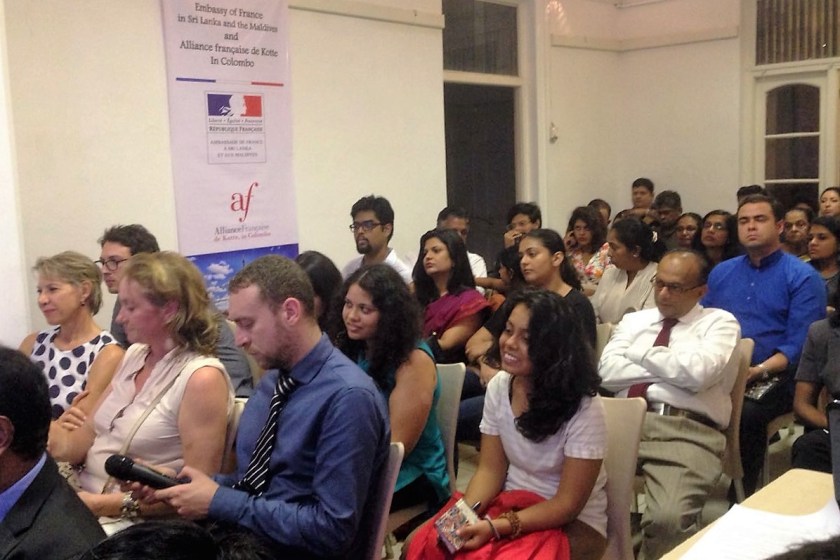
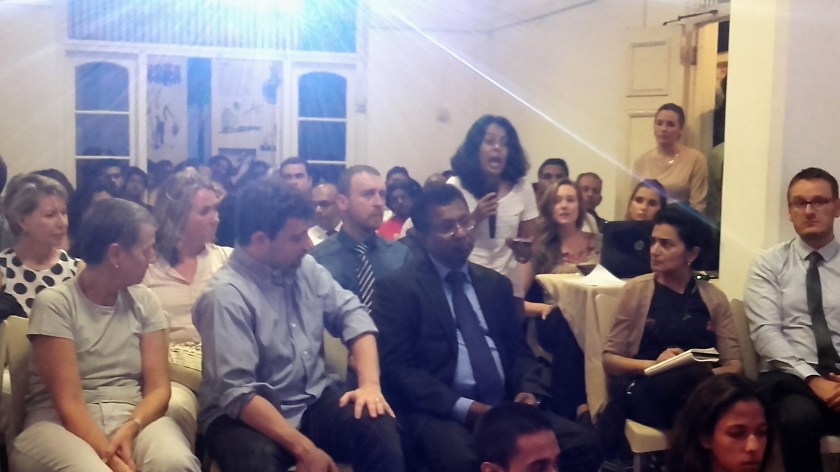
Part of the audience for Night of Ideas at Alliance Française de Kotte, 26 Jan 2017Audience engages the panel during Night of Ideas at Alliance Française de Kotte, 26 Jan 2017Night of Ideas in Colombo – promotional brochure
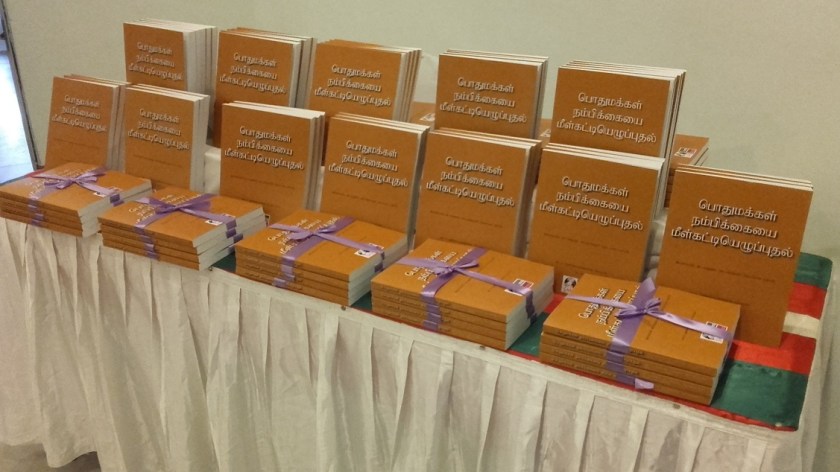
Rebuilding Public Trust: Tamil version copies displayed at the launch in Jaffna, 24 Jan 2017
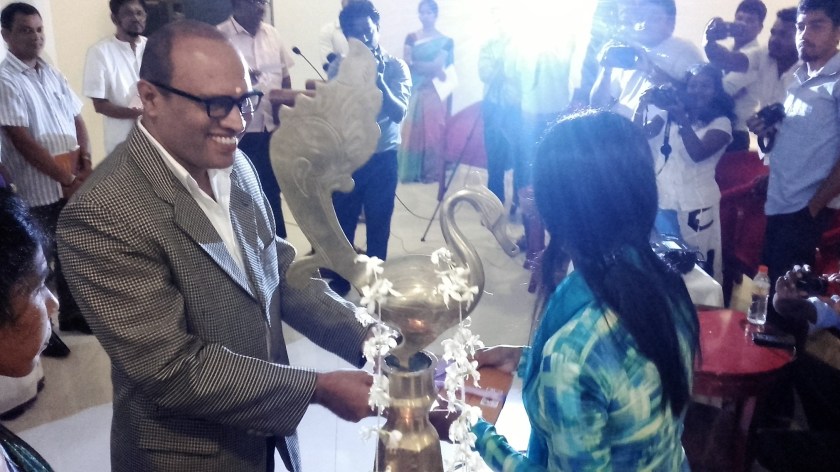
Journalists, academics, politicians and civil society representatives joined the launch of Tamil language version of Sri Lanka’s Media Development Indicators (MDI) Report in Jaffna on 24 January 2017.
The report, for which I served as overall editor, is the outcome of a 14-month-long consultative process that involved media professionals, owners, managers, academics and relevant government officials. It offers a timely analysis, accompanied by policy directions and practical recommendations.
Students of Jaffna University Media Studies programme with its head, Dr S Raguram, at the launch of MDI Sri Lanka Tamil version, Jaffna, 24 January 2017
Reginald Cooray, Governor of the Northern Province, in a message said: “I am sure that the elected leaders and the policy makers of this government of Good governance will seize the opportunity to make a professionally ethical media environment in Sri Lanka which will strengthen the democracy and good governance.”
He added: “The research work should be studied, appreciated and utilised by the leaders and the policy makers. Everyone who was involved in the work should be greatly thanked for their research presentation with clarity.”
Lars Bestle of International Media Support (IMS) speaks at Sri Lanka MDI Report’s Tamil version launch in Jaffna, 24 January 2017
Speaking at the event, Sinnadurai Thavarajah, Leader of the Opposition of the Northern Provincial Council, urged journalists to separate facts from their opinions. “Media freedom is important, but so is unbiased and balanced reporting,” he said.
Lars Bestle, Head of Department for Asia and Latin America at International Media Support (IMS), which co-published the report, said: “Creating a healthy environment for the media that is inclusive of the whole country is an essential part of ensuring democratic transition.”
He added: “This assessment points the way forward. It is now up to the local actors – government, civil society, media, businesses and academia – with support from international community, to implement its recommendations.”
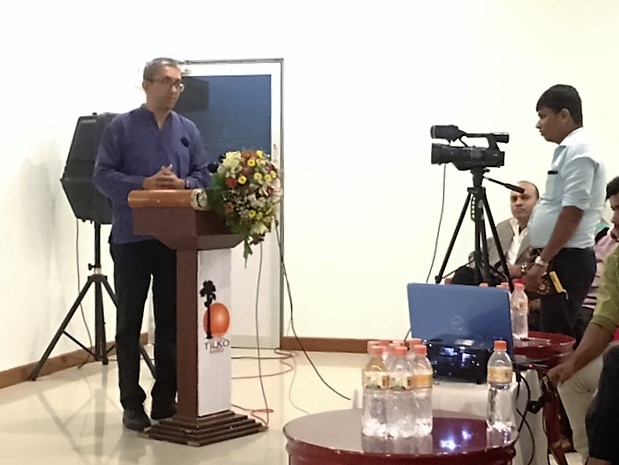
Nalaka Gunawardene, Consultant Editor of Sri Lanka Media Development Indicators (MDI) Report, speaks at the launch of Tamil version in Jaffna on 24 Jan 2017
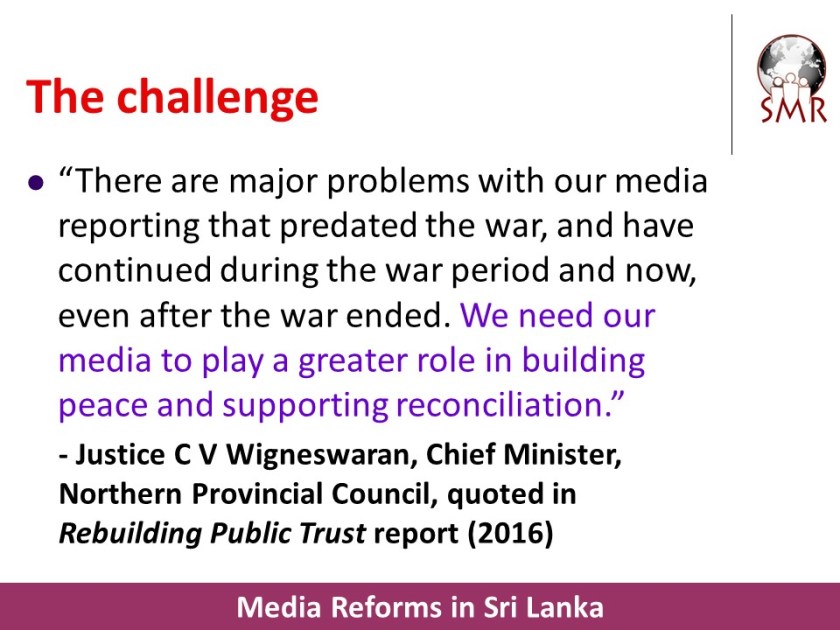
I introduced the report’s key findings and recommendations. In doing so, I noted how the government has welcomed those recommendations applicable to state policies, laws and regulations and already embarked on law review and regulatory reforms. In sharp contrast, there has been no reaction whatsoever from the media owners and media gatekeepers (editors).
Quote from ‘Rebuilding Public Trust’ – State of Sri Lanka’s media report
Dr S Raguram, Head of Media Studies at the University of Jaffna (who edited the Tamil version) and Jaffna Press Club president Ratnam Thayaparan also spoke.
The report comes out at a time when the country’s media industry and profession face multiple crises stemming from an overbearing state, unpredictable market forces and rapid technological advancements.
Balancing the public interest and commercial viability is one of the media sector’s biggest challenges today. The report says: “As the existing business models no longer generate sufficient income, some media have turned to peddling gossip and excessive sensationalism in the place of quality journalism. At another level, most journalists and other media workers are paid low wages which leaves them open to coercion and manipulation by persons of authority or power with an interest in swaying media coverage.”
Notwithstanding these negative trends, the report notes that there still are editors and journalists who produce professional content in the public interest while also abiding by media ethics. Unfortunately, their work is eclipsed by media content that is politically partisan and/or ethnically divisive.
The result: public trust in media has been eroded, and younger Lankans are increasingly turning to entirely web-based media products and social media platforms for information and self-expression. A major overhaul of media’s professional standards and ethics is needed to reverse these trends.
MDI Sri Lanka – Tamil version being presented to stakeholders in Jaffna, 24 Jan 2017MDI Sri Lanka – Tamil version being presented to stakeholders in Jaffna, 24 Jan 2017
The Tamil report is available for free download at:











 Open Minds!