So you think you can be a Hot-shot? Go right ahead…

A few days ago, commenting on cartoons on climate change, I wrote: “So how do we capture climate change’s multiplicity in visual forms? Photographers go for the evidence and authenticity. Film makers work on both current impacts and future scenarios…”

Now here comes a chance for photographers everywhere to bear witness to the climate crisis slowly unfolding all around us.

The Deutsche Welle Global Media Forum 2010 has started an online photo competition called Hot Shots, to bring attention to the effects that climate change is having on people all over the world.

As the website says, “Hot Shots is…designed to create a visual record of these personal impressions by and for people around the world. The focus is not only on spectacular events, but also on climate change from people’s own, personal perspective.”

Send your photos to hotshots@dw-world.de and show how climate change and global warming are affecting your personal environment. Click here for details on participating and information about prizes.

TV Will Save the World, says Charles Kenny in TIME’s ’10 ideas for next 10 years’

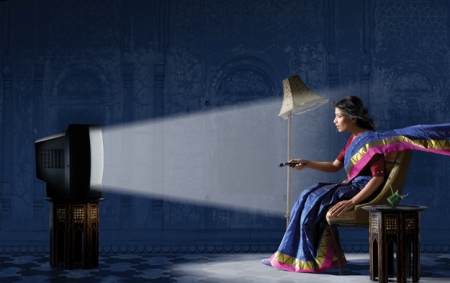
Photo by Reza Deghati

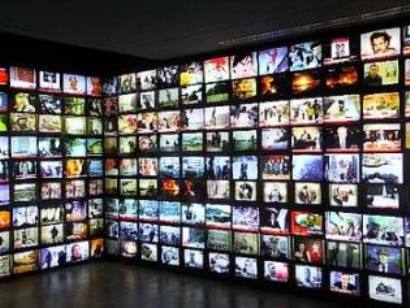
This is one of my favourite photos in media and development. It was taken by Reza Deghati, the renowned Iranian-French photojournalist (who works under the name Reza). I don’t know the story behind this photo, but even without a single word of annotation, it says a great deal.

I like this photo partly because it symobolises the enduring appeal of broadcast television in much of the developing world. For long years, the old-fashioned, boxy TV set used to be the top-selling consumer electronic item in the world — until the mobile phone came along. But even now, the much-maligned idiot box hasn’t lost its appeal to a significant section of humanity, never mind what the jaded academics and geeks might say.

So I was intrigued to read, in the latest issue of TIME Magazine, development economist Charles Kenny, reminding us that television is still the most influential medium around. In this gizmo-ridden new media age, it takes much courage to say so in public.

In a powerful short essay titled ‘TV Will Save the World’, he writes: “Forget Twitter and Facebook, Google and the Kindle. Forget the latest sleek iGadget. Television is still the most influential medium around. Indeed, for many of the poorest regions of the world, it remains the next big thing — poised, finally, to attain truly global ubiquity. And that is a good thing, because the TV revolution is changing lives for the better.”

Across the developing world, he says, some 60% of the households had their own TV set in 2005 — up from 45% in 1995. He adds: “Five million more households in sub-Saharan Africa will get a TV over the next five years. In 2005, after the fall of the Taliban, which had outlawed TV, 1 in 5 Afghans had one. The global total is another 150 million by 2013 — pushing the numbers to well beyond two-thirds of households.”

He ends his essay with these words that strongly resonate with me: “Too much TV has been associated with violence, obesity and social isolation. But TV is having a positive impact on the lives of billions worldwide, and as the spread of mobile TV, video cameras and YouTube democratize both access and content, it will become an even greater force for humbling tyrannical governments and tyrannical husbands alike.”

As Sir Arthur C Clarke, inventor of the communications satellie whose second death anniversary we mark this week, told me in a 2003 interview: “I’m not impressed by the attacks on television because of some truly dreadful programmes. I believe that every TV programme has some educational content. The cathode ray tube – and now the plasma screen – is a window to the world. Often it may be a very murky window, but I’ve slowly come to the conclusion that, on balance, even bad TV is preferable to no TV at all.”

Kenny’s essay is one of 10 ideas for the next 10 years that TIME has put together for its annual innovation issue.

Image courtesy Foreign Policy
The TIME essay is a much compacted version of what he wrote in November 2009 issue of Foreign Policy magazine, titled Revolution in a Box. That article noted the continuing global spread of television sets and an explosion of viewer choice driven by cable, satellite and digital technologies. It suggested this is a good thing, pointing to evidence that access to competitive television can improve womens’ standing in the home, increase girls schooling, reduce fertility rates, lower drug use, improve governance and (possibly) help foster global peace.

The editors of Foreign Policy ran the following blurb: “It’s not Twitter or Facebook that’s reinventing the planet. Eighty years after the first commercial broadcast crackled to life, television still rules our world. And let’s hear it for the growing legions of couch potatoes: All those soap operas might be the ticket to a better future after all.”

The full essay is well worth a careful read. At a time when I have been questioning many of the founding premises of my own work at TVE Asia Pacific, he has provided conceptual clarity and sharper focus.

Where are all the women cartoonists hiding?

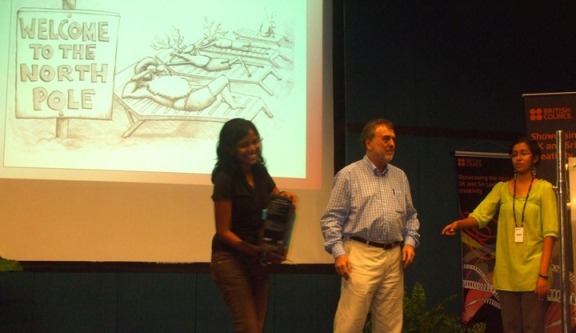
Shamanthi Rajasingham receiving her first prize in climate cartoon contest Sri Lanka

“So how many women cartoonists are working in our newspapers?”

My daughter Dhara, 13, asked me this simple question earlier this month when I was involved in judging Sri Lanka’s first contest of cartoons on climate change, organised by the British Council and the Ken Sprague Fund of UK.

I tried to come up with an answer, and couldn’t think of a single woman cartoonist who works for a print or online media outlet in Sri Lanka. That, despite my long association with the media and also being a great admirer (and collector) of good cartoons.

Later that day, at the awards ceremony for winning and commended climate cartoonists, I posed the same question to leading Lankan cartoonists Wasantha Siriwardena, Winnie Hettigoda and Dharshana Karunatilleke. They too couldn’t name one immediately; later, a single name was mentioned but it’s not one I recognised.

Clearly, cartooning is still a very male dominated profession — but that might soon change, going by the active participation of young women in the climate change cartoon contest.

Shamanthi Rajasingham
In fact, the first and third prize winners were both women — respectively Shamanthi Rajasingham and W M D Nishani. They beat close to 200 other contestants to get there.

Additionally, there were 6 women among the 22 commended cartoonists, and one woman among those 11 who were highly commended — judged on four criteria. See all winning and commended entries.

W M D Nishani
Okay, the four judges were all male (among us, two professional cartoonists). But during this entire judging process, the identity of artists was withheld and we only knew each entry by a number. In fact, we discovered the names (and gender) of artists only at the awards ceremony.

This would be encouraging news to Dhara and all other aspiring young girls and women who want to pursue careers in media. Let’s hope at least some of the women contestants in the climate cartoons contest would end up being more than just hobby cartoonists…

Meanwhile, it’s not just Sri Lanka that has a shortage of women engaged in cartooning, and awareness of their contribution is lacking. A quick Google search brought up a book titled “The Great Women Cartoonists” by Trina Robbins (Watson-Guptill Publications, 2001). Reviewing it in TIME, Andrew D Arnold wrote: “Name three women cartoonists who worked from 1900 to 1950. Okay, just name one. Couldn’t do it? Neither could I until reading a new, invaluable book…”

Long Live Siribiris – and his creator Camillus Perera!

Nalaka Gunawardene (L) with cartoonist Camillus Perera - photo by Malaka Rodrigo

In January 2009, writing a tearful farewell to the slain newspaper editor and investigative journalist Lasantha Wickrematunga, I invoked the memory of Siribiris. I wrote: Goodbye, Lasantha – and long live Siribiris!

Last weekend, I finally met the ‘father of Siribiris’ and was delighted to salute him in public.

Let me explain. Siribiris is an iconic cartoon character well known to two generations of Lankan newspaper readers. He is a creation of Camillus Perera, a veteran Lankan political cartoonist who has been in this uncommon profession for nearly 45 years.

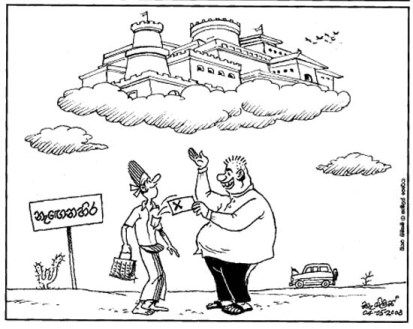
Camillus started drawing cartoons in newspapers in 1966 with the Observer newspaper and the film magazine of the same publishing group, Lake House (then privately owned and under state control since 1973). He draws pocket cartoons, political cartoons as well as satirical comic strips. His most enduring accomplishment has been the creation of a set of regular characters who have developed a loyal following over the years. Among them are the wily Siribiris, prankster Gajaman, fashionable young lady Dekkoth Pathmawathie, smart alec kid Tikka and sporty Sellan Sena.

These and other characters are very ordinary and very real, and they inhabit an undefined yet familiar place in the cartoon universe that most Lankan newspaper readers can easily relate to — it’s a bit like R K Narayan’s fictitious village of Malgudi.

puncturing egos for 40 years
Siribiris (left): puncturing egos for 40 years
My own favourite, Siribiris, is really Everyman personified: long-suffering, taken for granted by politicians, exploited by businessmen, hoodwinked by corrupt officials, and always struggling to simply stay alive. He is down but not yet out. The only way that poor, unempowered Siribiris can get back at all those who take advantage of him is to puncture their inflated egos and ridicule them at every turn. And boy, does he excel in that!

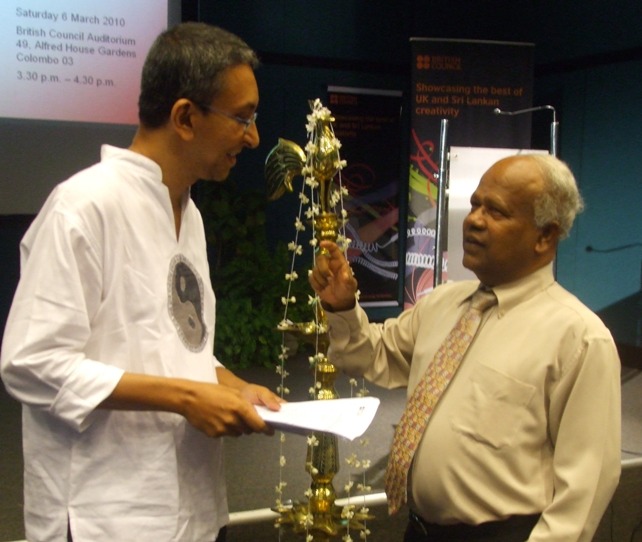
I grew up enjoying Camillus cartoons in various newspapers meant for children, youth and general readers. I had occasionally seen him being interviewed on TV. But I’d never seen or met him in person — until now. It happened when the British Council Sri Lanka invited Camillus as chief guest at their awards ceremony in the climate change cartoon contest they organised, which I helped judge with three others.

As the master of ceremonies, I announced: “It’s a great pleasure and honour for me to introduce Camillus Perera, the senior-most cartoonist in Sri Lanka who is still professionally active. Indeed, he has been drawing cartoons for as long as I have been alive — for he started his long innings in the same year I was born!”

Cartoon universe of Camillus Perera
Camillus, a small made and pleasant man, spoke briefly and thoughtfully. (As I keep saying, we writers just can’t beat cartoonists in the economy of words!). He recalled how he’d used the British Council Library for visual references for years before the web made it much easier to search. He congratulated all those who won prizes or commendations in the contest.

Many years ago, I privileged to count senior cartoonist W R Wijesoma as a senior colleague when we both worked for The Island newspaper. Now I have finally met Camillus Perera, another hero of mine still practising his craft and drawing regularly for Rivira Sunday newspaper, as well as The Catholic Messenger and Gnanartha Pradeepaya. My only regret is that I don’t follow any of these newspapers on a regular basis, even though I try hard to keep up with Siribiris on the web…

There is a bit more than childhood idol worship involved here. Satire is one of the last domains we are left with when freedom of expression comes under siege.

As I wrote in July 2009in a blog post on news wrapped up in laughter: “There is another dimension to satirising the news in immature democracies as well as in outright autocracies where media freedoms are suppressed or denied. When open dissent is akin to signing your own death warrant, and investigative journalists risk their lives on a daily basis, satire and comedy becomes an important, creative – and often the only – way to comment on matters of public interest. It’s how public-spirited journalists and their courageous publishers get around draconian laws, stifling regulations and trigger-happy goon squads. This is precisely what is happening right now in countries like Kenya and Sri Lanka, and it’s certainly no laughing matter.“

Taken in that light, Camillus Perera is not just a popular and entertaining cartoonist adorning Sri Lanka’s newspaper industry. He is a gentle giant in the world of journalism — a man of few words whose sharp wit and keystrokes are more piercing than any number of words that we writers and journalists can churn out. He is a living cultural treasure.

So long live both Siribiris — and Camillus Perera!

So you want to help develop the media? Read this first!

Some weeks ago, I wrote a post about How to become a global publisher or broadcaster in just 100 minutes! That was compiled by my British media activist friend David Brewer , who showed how it could be done using free tools that can be downloaded and activated in minutes.

This week, David has brought out another handy guide — this time aimed at those involved in media development. UNESCO defines it in lofty, technocratic terms, but it basically means strengthening the media institutions, media people (practitioners and managers) and media consumers so that the media can best serve the public interest.

Everyone seems to have their own recipe for media development, and that’s part of the media’s huge diversity. Media Helping Media asked a number of people who have benefited from media development projects what they felt needs to change in the year ahead. The replies have so far come from The Russian Federation, Indonesia, Azerbaijan, Sri Lanka, Lebanon, Macedonia, Ukraine, Bhutan and Nepal. They make up a challenging list of tips for those who try to help media in need.

Its introduction says: “You have as much to learn as you have to give. That’s the message to those offering media assistance in transition and post-conflict countries from some of those on the receiving end.”

Here’s my own contribution to this interestingly crowd-sourced distillation. David had asked for three key points, but you can see below why I was never very good in arithmetic…

Media operate as a business, not charity: All media have a social responsibility, but that must be balanced with commercial viability. This is so with state, corporate or community owned media. Bankrupt media can’t serve any public interest.

‘Media’ is a plural: Media is a basket term for entities with enormous diversity and variability. One size does not fit all, no matter how well intended. It’s crucial to understand before engaging any media.

Follow the eyeballs: If you want the biggest bang for your limited buck, start with the mass market end of media such as FM radio, tabloid newspapers and music TV channels. Leave your broadsheet/classical prejudices out of investment decisions.

Take it easy: Audiences need entertainment as much as information and education. Supporting quality entertainment in the media is just as important for the public good as nurturing investigative journalism or advocating media freedom.

Sparks of hope: Real world is not an all-or-nothing game. Find oases of innovation and resilience, and nurture them to survive and grow in turbulent times. Back media underdogs of today who can become fierce watchdogs of tomorrow.

In responding to David’s request last month, I’d added this covering sentence which sums up my thinking: “All this is common sense that is often uncommon. I really wish media development organisations would listen and reflect more, and also step beyond their comfort zones and romanticised little bubbles.”

The entire collection is well worth reading, for it distills decades of ground level experience and insight. This guide will help many well-meaning organisations (UN agencies, philanthropic foundations, CSR arms of media companies and others) to be more focused, sensitive and ultimately more effective in developing the media.

Read the related 12 tips for international media trainers

‘Avatar’ unfolds in the Amazon: Find out the Real Price of Oil!

This is no Avatar: It's Real!
A few days ago, reviewing the blockbuster movie Avatar, I wrote: “Film critics and social commentators around the world have noticed the many layers of allegory in the film. Interestingly, depending on where you come from, the movie’s underlying ‘message’ can be different: anti-war, pro-environment, anti-Big Oil, anti-mining, pro-indigenous people, and finally, anti-colonial or anti-American. Or All of the Above…”

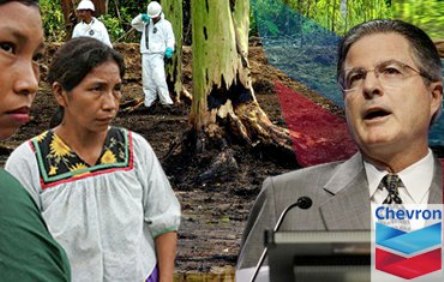
Indeed, an Avatar-like struggle is unfolding in the Amazon forest right now. The online campaigning group Avaaz have called it a ‘Chernobyl in the Amazon’. According to them: “Oil giant Chevron is facing defeat in a lawsuit by the people of the Ecuadorian Amazon, seeking redress for its dumping billions of gallons of poisonous waste in the rainforest.”

From 1964 to 1990, Avaaz claims, Chevron-owned Texaco deliberately dumped billions of gallons of toxic waste from their oil fields in Ecuador’s Amazon — then pulled out without properly cleaning up the pollution they caused.

In their call to action, they go on to say: “But the oil multinational has launched a last-ditch, dirty lobbying effort to derail the people’s case for holding polluters to account. Chevron’s new chief executive John Watson knows his brand is under fire – let’s turn up the global heat.”

Avaaz have an online petition urging Chevron to clean up their toxic legacy, which is to be delivered directly to the company´s headquarters, their shareholders and the US media. I have just signed it.

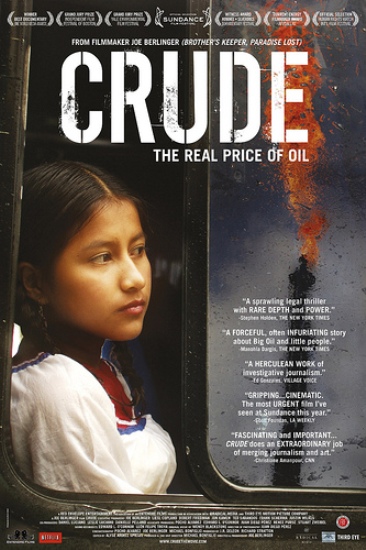
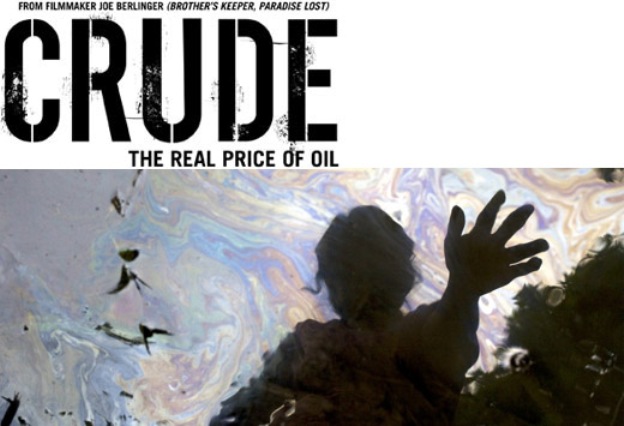
Others have been highlighting this real life struggle for many months. Chief among them is the documentary CRUDE: The Real Price of Oil, made by Joe Berlinger.

The award-winning film, which had its World Premiere at the 2009 Sundance Film Festival, chronicles the epic battle to hold oil giant Chevron (formerly Texaco) accountable for its systematic contamination of the Ecuadorian Amazon – an environmental tragedy that experts call “the Rainforest Chernobyl.”

Here’s the official blurb: Three years in the making, this cinéma-vérité feature from acclaimed filmmaker Joe Berlinger is the epic story of one of the largest and most controversial legal cases on the planet. An inside look at the infamous $27 billion Amazon Chernobyl case, CRUDE is a real-life high stakes legal drama set against a backdrop of the environmental movement, global politics, celebrity activism, human rights advocacy, the media, multinational corporate power, and rapidly-disappearing indigenous cultures. Presenting a complex situation from multiple viewpoints, the film subverts the conventions of advocacy filmmaking as it examines a complicated situation from all angles while bringing an important story of environmental peril and human suffering into focus.

Watch the official trailer of Crude: The Real Price of Oil

According to Amazon Watch website: “With key support from Amazon Watch and our Clean Up Ecuador campaign, people are coming together to promote (and see) this incredible film, and then provide ways for viewers to support the struggle highlighted so powerfully by the film.”

They go on to say: “A victory for the Ecuadorian plaintiffs in the lawsuit will send shock waves through corporate boardrooms around the world, invigorating communities fighting against injustice by oil companies. The success of our campaign can change how the oil industry operates by sending a clear signal that they will be held financially liable for their abuses.”

While Avatar‘s story unfolds in imaginary planet Pandora — conjured up by James Cameron’s imagination and created, to a large part, with astonishing special effects, the story of Crude is every bit real and right here on Earth. If one tenth of those who go to see Avatar end up also watching Crude, that should build up much awareness on the equally brutal and reckless conduct of Big Oil companies.

Civilisation's ultimate addiction?

Others have been making the same point. One of them is Erik Assadourian, a Senior Researcher at Worldwatch Institute, whom I met at the Greenaccord Forum in Viterbo, Italy, in November 2009.

He recently blogged: “The Ecuadorians aren’t 10-feet tall or blue, and cannot literally connect with the spirit of the Earth (Pachamama as Ecuadorians call this or Eywa as the Na’vi call the spirit that stems from their planet’s life) but they are as utterly dependent—both culturally and physically—on the forest ecosystem in which they live and are just as exploited by those that see the forest as only being valuable as a container for the resources stored beneath it.”

Erik continues: “Both movies were fantastic reminders of human short-sightedness, one as an epic myth in which one of the invading warriors awakens to his power, becomes champion of the exploited tribe and saves the planet from the oppressors; the other as a less exciting but highly detailed chronicle of the reality of modern battles—organizers, lawyers, and celebrities today have become the warriors, shamans, and chieftains of earlier times.”

Open Moment, Closed Minds: New essay to mark 250 days of ‘Peace’ in Sri Lanka

Today marks exactly 250 days since Sri Lanka’s civil war officially ended on 18 May 2009.

In a new op ed essay — titled ‘Open Moment’, Closed Minds! — just published on Groundviews.org, I look back and ask some hard questions.

Here’s an excerpt:

“We all knew the hard-won peace had to be nurtured and consolidated. We also realised just how formidable the challenges of healing and rebuilding were. But could anyone have imagined the dramatic turn of political events since?

“Who would have thought that the victors of the war would soon be engaged in a nasty battle for personal glory and power? Who expected the historical feud between ‘lions’ and ‘tigers’ to be replaced so swiftly by a showdown between self-proclaimed ‘patriots’ and ‘traitors’?”

I raise these questions in the context of a fiercely contested presidential election scheduled for 26 January 2010. I note: “The two main contenders both claim to hold a mutually exclusive key to a better future for our land and people. Their dizzy campaigns bombard us with lofty claims and counter-claims 24/7 delivered through broadcast, broadband, mobile and other media.”

I ask whether either of the leading candidates has the open mind needed to seize the historic ‘open moment’ since the war ended. I recall how we completely missed the last such open moment created by the tsunami of December 2004.

I write: “Having missed the tsunami’s open moment, we cannot afford to bungle again. Rebuilding a nation of lasting peace, pluralism and prosperity will require many sections of society to change their mindset. This is especially and urgently needed in our media, much of which has become uncritical cheerleaders for patriotism and tribalism in recent years.”

Despite the many disappointments of the past 250 days, I still remain cautiously optimistic. But for how long?

The origins of this essay can be traced back to a blog post I wrote on 19 May 2009: Us and Them: Sri Lanka’s first landmine on the road to peace…

Read the full essay, and join the conversation at Groundviews.org

Why do we still go to the movies in the 21st Century?

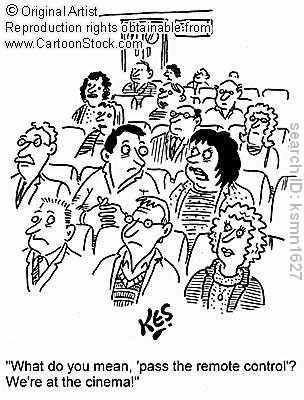
Going to the movies has been a shared cultural activity for at least four generations. In that time, technology has marched forward in leaps and bounds — but the core experience remains the same. And we still keep going to the movies, at the cinema, even though we now have other ways of seeing the same films. Why?

On the penultimate day of 2009, I went to the local cinema to see 2012, Roland Emmerich’s latest depiction of the mother of all disasters. For 158 gripping minutes, I willingly suspended disbelief and allowed the myth-makers of Hollywood to thoroughly scare me out of my wits. As did, it seemed, the few hundred other people watching it on wide screen with surround sound. There is no way the literally earth-shattering scenes of this movie would seem and feel remotely realistic anywhere else…

But cinemas are far from perfect – for instance, we had put up with a bunch of screaming brats whose parents had unwisely brought them for the wrong kind of movie. I’ve sat through far more noisy and boorish behaviour at cinemas: notable among them is watching Titanic at a massive, packed cinema in downtown Mumbai sometime in 1998 — and discovering how ‘interactive’ Indian movie-goers can get. (After the initial irritation wears off, I became almost oblivious to the distractions, thanks to James Cameron’s superb story telling.)

I just refuse to see such blockbusters on a small screen. (Ok, I might watch movies on long flights when I get tired of reading, but I have never been able to bring myself to watching a movie on an ipod…)

In fact, the movie industry is as much caught up in the digital wave as all other aspects of media. As Manohla Dargis of the New York Times noted in a perceptive essay this week: “How much our world of moving-image entertainment has changed in the past decade! We now live in a world of the 24-Hour Movie, one that plays anytime and anywhere you want (and sometimes whether you want it to or not). It’s a movie we can access at home by pressing a few buttons on the remote (and agreeing to pay more for it than you might at the local video store) or with a few clicks of the mouse. The 24-Hour Movie now streams instead of unspools, filling our screens with images that, more and more, have been created algorithmically rather than photographically.”

Yet, unlike in other media experiences, the changes in the movie industry have gone largely unnoticed by ordinary viewers. As Dargis writes: “Film is profoundly changing — or, if you believe some theorists and historians, is already dead — something that most moviegoers don’t know. Yet, because the visible evidence of this changeover has become literally hard to see, and because the implications are difficult to grasp, it is also understandable why the shift to digital has not attracted more intense analysis outside film and media studies.”

Dargis is probably right: by adapting and evolving with the times, the cinema has survived for over a century. As Donald Clarke noted in The Irish Times at the beginning of December 2009: “Television failed to kill movies. Video failed to kill movies. Internet piracy – not to mention all the other diversions available online – has also failed to annihilate this most stubbornly resilient of art forms. Film-makers will, it is true, tell you that it is now more difficult than ever to negotiate financing for movies that cost between $3 million and $15 million. But you couldn’t say that the current recession has crippled the movie business.”

All this makes me wonder what movie-going might be like in another decade or two. 3D and IMAX are no longer so uncommon or special, and the entertainment industry is working hard to relate to not just our seeing and hearing, but other senses as well. (Did you know that, as long ago as 1960, they tried to introduce smelling movies? Smell-O-Vision was a system that released odors during the projection of a film so that the viewer could “smell” what was happening in the movie. The technique injected 30 different smells into a movie theater’s seats when triggered by the film’s soundtrack. For some reason, it never caught on…)

Perhaps it’s not simply a matter of money or technology. There is also a whole sociology of movie going and movie watching – many of us go to the cinema (not nearly often enough in my case) not just for the personal sensory experience of a celluloid dream, but also for the shared experience of it. I like bumping into friends at cinemas. At a premiere or special screening, I also get to steal a few glimpses of the glitterati of the film world.

Have you been to a film musical and had the uncontrollable urge to burst into song? London’s Prince Charles Cinema not only allows, but encourages viewers to do just this — though only on certain days of the month. Their most famous offering is Sing-a-long-a Sound of Music: a few years ago, I joined several hundred other assorted ‘nuns’, von Trapp family members and Julie Andrews look-a-likes in such a memorable experience. I have the digitally remastered DVD of the 1965 movie, an ever-green title in my household. But watching it at home can’t compare with the sense of community that one feels when the lyrics for all the songs appear on the movie screen, giving the audience every reason to sing their hearts out…

I’m not sure how popular (or even acceptable) such community movie watching would be in different cultures. But going to the movies retains its charm and appeal in this digital age, even if we have come a long way since the glorious days of movie going as captured in this wonderful and memorable song from the musical Annie (1982) – Let’s Go To The Movies

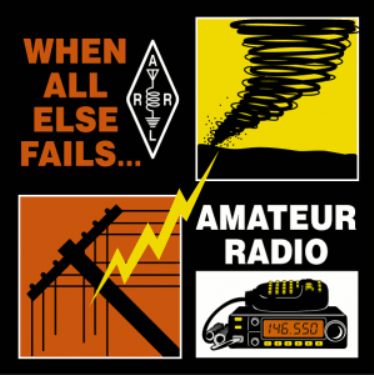
Who’s Afraid of Amateur Radio? And why do our babus fear it?

When I was in my early teens (back in the early 1980s), I developed a great interest in radio. Not just in listening to radio broadcasts, which I did regularly while growing up in a country that had no television, but also in building a radio that could both receive and transmit signals.

My school teacher father, who encouraged me in many of my diverse pursuits, bought transistors, condensers and other ‘building blocks’ for a basic radio set. With the help of an amateur radio handbook, and through trial and error, he and I actually built a functional transmitter. It was exhilarating to listen to local and shortwave broadcasts on a home-made radio set, but even more exciting to be able to transmit rudimentary signals.

Even as a kid, I was not contented in being a passive recipient of information; I wanted to give out as much as I received…

That particular fancy didn’t last long: I soon moved on to other challenges, and never persisted with being a serious amateur radio enthusiast (or ‘radio ham’), but it left a lasting impression. A few years later, after leaving high school, I became a regular freelancer at the local radio station. By age 23, I was hosting my own weekly show on national radio, and my association with the radio medium would last for much of my 20s.

The humble low tech that saved the day...
My interest in amateur radio lay dormant — until five years ago, when I read reports about how radio hams helped revive emergency communications in the immediate aftermath of the Indian Ocean Tsunami.

The decades old practice was hailed as the ‘low tech’ miracle that literally helped save lives. Where electricity and telephone services — both fixed and mobile — had been knocked down, radio hams restored the first communication links. They were at the forefront of relief efforts, for example, in the Andaman and Nicobar Islands in India, and in Hambantota in southern Sri Lanka.

This intrigued Sir Arthur C Clarke, inventor of the communications satellite and long time resident of Sri Lanka. Shortly afterwards, he wrote in Wired magazine: “We might never know how many lives they saved and how many minds they put at ease, but we owe a debt to Marconi’s faithful followers.”

If Sir Arthur were alive, he would have been dismayed to find what has happened since. Notwithstanding their celebrated role after the tsunami, radio hams have been sidelined in Sri Lanka. Their very hobby is being frowned upon by the state on the grounds of…national security.

Looking back, it seems like the public-spirited radio hams were given their 15 minutes of fame and then soundly ignored. Worse, the short-lived prominence may have attracted new bureaucratic hurdles.

This is the thrust of my last op ed essay for 2009, published on 31 December 2009 on Groundviews.org under the title: Who’s Afraid of Amateur Radio? Tsunami’s heroic technology has few backers in Sri Lanka

“As the applause died away, everything was forgotten,” I quote Victor Goonetilleke, one time President and current Secretary of the Radio Society of Sri Lanka, which networks amateur radio practitioners in the country.

One reason for this bureaucratic fear and negativity, I argue, may be simple ignorance of what amateur radio really is — reflecting the disturbingly low levels of media literacy in Sri Lanka.

Read the full essay, and join the conversation on Groundviews, or on this blog.

Essay republished on AMIC Alternative Media Portal

TWTYTW: Our own (very subjective) list of best and worst of 2009…

All journalism is subjective; it’s just that some of us are better at disguising it! As we head for the end of 2009, we at Moving Images blog take one last fleeting, impressionistic, judgemental and, yes, darn too opinionated look at the past 365 days. That Was The Year That Was…and here’s our list of superlatives!

Best news and biggest relief (national): Sri Lanka’s nearly three decades long and brutal civil war finally ended in mid May 2009 – and not a moment too soon. It rightly created headlines around the world, and also made it to TIME’s top 10 news of the year. Within 24 hours of that much-awaited news, I wrote and published one of my most emotionally charged essays ever, Memories of War, Dreams of Peace. I probably spoke for a whole generation of Lankans: “As we stand on the threshold of peace, I am overwhelmed with memories of our collective tragedy. I hope we can once again resume our long suspended dreams for a better today and tomorrow.” With the hindsight of seven months, I still want to believe every word…although it’s become increasingly hard to cling on to such ideals.

Biggest disappointment (national): Ending the Lankan war entailed tremendous effort, cost and sacrifice, and we all knew that consolidating peace and restoring normalcy were going to be even harder – delivering peace dividends is no mean task. As weeks became months, our cautious optimism slowly turned into disappointment and dismay: it became clear that the triumphalist government was treating the historic ‘open moment’ simply as as blank cheque to do pretty much what it wanted. My May 19 essay on Dreams of Peace had ended with a question that resonated with millions: “Would our leaders now choose the Mandela Road or the Mugabe Road for the journey ahead?” Can we please ask that question again…? Hello, anybody listening?
Most evocative piece of writing: Without competition, that distinction goes to The Last Editorial by Lasantha Wickrematunga, the courageous investigative journalist (and de facto leader of the political opposition) in Sri Lanka, who was brutally slain on January 8 while on his way to work. That editorial, which appeared post-humously in his newspaper The Sunday Leader on 11 January 2009, embodies the best of Lasantha’s liberal, secular and democratic views. Nearly a year after the dastardly daylight crime, his killers have not been caught and independent media remains under siege even in post-war Sri Lanka.

Most memorable quote: While people like Lasantha articulated our cherished dreams for a truly pluralistic society, our billion+ neighbours in India have been building it for over six decades. It’s still a work in progress, and the ideals need occasional reiteration. This is precisely what classical dancer Mallika Sarabhai did when she ran as an independent candidate when India conducted the world’s largest democratic election in April-May. She lost, but wrote one of the most insightful pieces on what it means to live amidst the huge cultural, social and political diversity in India: “We are a salad-like melange of cultures and not a soup where all variations get reduced to a homogeneous pulp—this, to me, is our greatest strength.” (She inspired my own essay: Sri Lanka – Spice Island or Bland Nation?)

Biggest disappointment (global):
The UN climate conference in Copenhagen, held in December and officially dubbed COP15, ended up in what many activists felt was a cop-out. Greenpeace echoed the frustration of many when they said at the end of what was, at its start, billed as the ’14 days to seal seal history’s judgment on this generation‘: “Don’t believe the hype, there is nothing fair, ambitious or legally binding about this deal. The job of world leaders is not done. Today they shamefully failed to save us all from the effects of catastrophic climate change.” I was glad I wasn’t part of the mega event — I’ve burnt enough aviation fuel this year, but almost all events I participated in on three continents were more productive than the Danish debacle…

Biggest Under-achiever: If the world laboured a mountain and delivered a mouse in Copenhagen, the mid-wife of that process must surely have been the current UN chief Ban Ki Moon. More secretary than general, Ban is, in his own admission, the UN’s Invisible Man. All the top speech writers and PR agents in the world can’t animate this the perennially dull and dour diplomat. Not ideal change-maker when the world is racing against catastrophe. Kofi Annan, we miss you!
Most moving work of moving images: The world’s rich are having a party, and millions living in poverty are the ones footing the bill. This is the premise of Indian journalist and activist Pradip Saha’s latest film, MEAN Sea Level, which looks at the impact of climate change on the inhabitants of Ghoramara and Sagar islands in the the Sundarban delta region in the Bay of Bengal. I found it both deeply moving and very ironic. With minimal narration, he allows the local people to tell their own story. As it turned out, these testimonies were lost on the bickering politicians in Copenhagen…
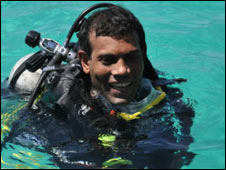
Best media stunts: We are a bit divided here. At a time of ever-shrinking attention spans, it takes much creativity and guts to grab the cacophonous media’s attention, especially for a good cause. Two very different men succeeded where many have failed. In February Bill Gates, the world’s top geek now working for its meek, released some mosquitoes at the TED 2009 conference to highlight the continuing grip that malaria has on the developing world, especially Africa. In October, climate crusader President Mohamed Nasheed of the Maldives held the world’s first underwater cabinet meeting to remind everyone of the watery future that awaits low lying island nations like his when climate change rises sea levels.

Biggest Irony: NASA announced in November that an unmanned space probe that was intentionally crashed on the Moon had discovered the presence of ‘significant amounts’ of water there. That bit of scientific evidence cost US$79 million to obtain…and was not the most comforting news for a planet that rapidly running short of usable freshwater. In the wake of the Apollo Moon landings in the late 1960s, misguided voters in Sri Lanka elected a government that promised ‘to bring rice even from the Moon’. When might we hear politicians promise us water from the Moon?

Well, that’s it folks — the highs and lows of 2009 according to the Blogger-in-Chief and his team of elves here at the Moving Images Media Empire. We’ve waded through our several dozen blog posts to come up with the above, and make no claims for being fair, balanced or comprehensive…

Indeed, we hope you don’t agree with all our picks, and invite you to express alternative – even dissenting – views. All comments that are not outright libellous or blatantly self-promotional will be published.

We take this opportunity to thank each and everyone who read our posts over the year — and especially those who left comments, sometimes radically disagreeing with our views. We also reiterate our pledge to frustrate those few persistent detractors who keep demanding to see our nationalistic, religious or other credentials…

May the cacophony continue and intensify in 2010!