සිවුමංසල කොලූගැටයා #46: තොරතුරු ගලනයේ වේලි බිදී යයි!

In December 2003, on the eve of the World Summit on the Information Society (WSIS), I did a wide-ranging interview with Sir Arthur Clarke on satellite TV, internet, censorship and other challenges of emerging information societies. It was published in One World South Asia on 5 December 2003.

I adapted into Sinhala parts of that interview for my Ravaya Sunday newspaper column last week (18 Dec 2011),making the point that much of what he said about satellite TV at the time is now equally relevant to the rapid spread of the Internet.

For this week’s column, appearing in the print edition for 25 Dec 2011, I have adapted more segments of that interview covering topics such as: violence in society and media’s role; educational potential of television; does satellie TV spread cultural imperialism; and how technology – not politicians or generals – now determine the free flow of information across borders. This cartoon, drawn by David Granlund a year ago, aptly captures that last point!

A welcome dam breach, this one! - cartoon by Dave Granlund

See also my essay of 19 Dec 2010: Living in the Global Glass House: An Open Letter to Sir Arthur C Clarke

ප්‍රබලව මතුව එන තොරතුරු තාක්ෂණ හා සන්නිවේදන අභියෝගයන්ට ප්‍රශස්තව මුහුණ දෙන සැටි අන්තර් රාජ්‍ය මට්ටමින් සාකච්ඡා කළ තොරතුරු සමාජය පිළිබඳ පළමුවන ලෝක සමුළුව (World Summit on the Information Society, WSIS-1) 2003 දෙසැම්බරයේ ජිනීවා නුවර පවත්වනු ලැබුවා. මේ සමුළුවට දින කිහිපයකට පෙර ශ්‍රීමත් ආතර් සී ක්ලාක් සමග මා කළ දීර්ඝ සාකච්ඡාවක් (ඉන්දියාවෙන් සංස්කරණය කැරෙන) One World South Asia ජාත්‍යන්තර වෙබ් අඩවිය පළ කළා. එහි අරමුණ වූයේ අද තොරතුරු සමාජයේ පෙර ගමන්කරුවෙකු වූ ක්ලාක් එවකට දැකිය හැකි අළුත් ප්‍රවණතා සහ අභියෝග ගැන දරණ විද්වත් අදහස් ලෝකය සමග ඛෙදා ගැනීමයි.

පසුගිය සතියේ (2011 දෙසැම්බර් 18) ඒ සාකච්ඡාවෙන් කොටස් කිහිපයක් මා සිංහලට අනුවාදය කළා. අද එහි ඉතිරි කොටස.

නාලක: භූස්ථාවර කක්ෂයේ (Geostationary orbit) රදවන ලද පණිවුඩ චන්ද්‍රිකා මගින් ලෝක ව්‍යාප්ත සන්නිවේදන ජාලයක් ඇති කළ හැකි යයි ඔබ මුල් වරට පෙන්වා දී වසර 50ක් ගත වී තිඛෙනවා. මේ අඩ සියවස ගැන ඔබේ අදහස් මොනවා ද?

ක්ලාක්: තාක්ෂණික දියුණුව කෙසේ සිදු වේද යන්නත්, එය කෙතරම් ඉක්මනින් සිදු විය හැකි ද යන්නත් ගැන අනාවැකි කීම ඉතා අපහසුයි. 1945දී මා Wireless World සගරාවේ ලිපිය ලියන කාලයේ සිතුවේ පණිවුඩ චන්ද්‍රිකා සැබැවින් නිර්මාණය වී උඩුගුවනට යන්නට අඩු තරමින් වසර 50ක්වත් ගත වනු ඇති කියායි. එමෙන් ම ඒවා මහා පරිමාණයේ අභ්‍යවකාශ මධ්‍යස්ථාන වේ යයි ද, ඒවා නඩත්තුවට කක්ෂගත වූ කාර්මික පිරිස් සිටිනු ඇතැයි ද මා සිතුවා. එහෙත් (1948 දී නිපද වූ) ට්‍රාන්සිස්ටරය හා 1950 ගණන්වල සිදු වූ ක්ෂුද්‍ර ඉලෙක්ට්‍රොනික නිපදවීම් නිසා 1940 ගණන්වල අප දැන සිටි තාක්ෂණ මට්ටමට වඩා ඛෙහෙවින් සංකීර්ණ, සංයුක්ත හා ස්වයංක්‍රීය වූ චන්ද්‍රිකා නිපදවීමට හැකියාව ලැබුණා. මේ නිසා චන්ද්‍රිකා තාක්ෂණය ලොකු ඉදිරි පිම්මක් පනින්නට සමත් වුණා. මගේ ලිපිය පළ වී වසර 20ක් ගෙවී ගිය තැන – 1965දී – මුල් ම වාණිජමය පණිවුඩ චන්ද්‍රිකාව (Early Bird) උඩුගුවන් ගත කළා. ට්‍රාන්සිස්ටරය නිපදවූයේ නැතිනම් සමහර විට චන්ද්‍රිකා තාක්ෂණය මෙන් ම අභ්‍යවකාශ තරණයේ සෙසු ජයග්‍රහණත් මීට වඩා වෙනස් වන්නට ඉඩ තිබුණා.

පණිවුඩ චන්ද්‍රිකා අධ්‍යාපනික වශයෙන් වැදගත් ටෙලිවිෂන් වැඩසටහන් විකාශය කිරීමට යොදා ගත යුතු බව ඔබ කලක සිට විශ්වාස කරනවා. අද වන විට ව්‍යාප්තව ඇති චන්ද්‍රිකා ටෙලිවිෂන් සේවාවන් මේ කාර්යය හරි හැටි ඉටු කරනවා ද?

අද ලෝකයේ සිටින ප්‍රධානතම මාධ්‍ය හිමිකරුවන් දෙදෙනකු වන රූපර්ට් මර්ඩොක් සහ (CNN ආරම්භක) ටෙඩ් ටර්නර් සමග චන්ද්‍රිකා මාර්ගයෙන් සම්බන්ධ වන්නට මෑත අවස්ථා දෙකකදී මට හැකි වුණා. එහිදී මා ඔවුන් දෙදෙනාට චන්ද්‍රිකා ටෙලිවිෂන් මාධ්‍යය හොදට හා නරකට යොදා ගැනීම පිළිබ`දව අවවාද කිහිපයක් දුන්නා. මා මුලින් ම සිහිපත් කළේ බ්‍රිතාන්‍යයේ පුවත්පත් හිමිකරුවන් සම්බන්ධයෙන් කලකට ඉහත බ්‍රිතාන්‍ය අගමතිවරයකු කී කථාවක්. ඔහු කීවේ පුවත්පත් හිමිකරුවන් වගකීමකින් තොර වූ බලයක් නතු කර ගෙන එය හසුරුවන බවත් ඉතිහාසය මුළුල්ලේ මෙබඳු තැනක් හිමි කර ගෙන සිටියේ ගණිකාවන් පමණක් බවත් (“The privilege of the harlot throughout the ages: power without responsibility.”)

මෑතක් වන තුරු මුද්‍රිත මාධ්‍යය හිමි කර ගෙන සිටි බලයටත් වඩා විශාල බලයක් අද ටෙලිවිෂන් මාධ්‍යය ලබා ගෙන තිඛෙනවා. මෙසේ මිනිස් සිතුම් පැතුම්, චර්යාවන් හා ජීවන රටාවන් සම්බන්ධයෙන් ඉමහත් බලපෑමක් එල්ල කළ හැකි මාධ්‍යයක් වන ටෙලිවිෂනයට, ඒ හා සමානුපාතික වූ ඉමහත් වගකීමක් ද අනිවාර්යෙන් ම පැවරෙන බව මා මේ දෙපළට කියා සිටියා.

දියුණු වන ලෝකයේ රටවල ටෙලිවිෂන් මාධ්‍යයේ තවමත් සැළකිය යුතු ප්‍රමාණයකින් බටහිර වැඩසටහන් දැකිය හැකියි. මේ ගැන ඔබේ අදහස් මොනවා ද?

යම් මට්ටමකින් ‘විද්‍යුත් අධිරාජ්‍යවාදයක්’ ලෝකයේ සිදු වන බව අප පිළිගත යුතුයි. පවතින වෙළඳපොළ ආර්ථීක රටාව තුළ මෙය මුළුමනින් නතර කිරීමට හෝ අධික ලෙස පාලනය කිරීම අපහසුයි. අනෙක් අතට මෙබඳු ප්‍රවණතා නිසා සිදු වන්නේ සමාජයේ නිරායාසයෙන් ම සිදු වන්නට නියමිත විපර්යාසයන් වඩාත් ඉක්මනින් සිදු වීමයි.

සුබවාදීව බලන විට තාක්ෂණය හා බද්ධ වූ නව සන්නිවේදන මාධ්‍ය මඟින් අපේ සංස්කෘතික දායාදයන්, උරුමයන් හා සිරිත් විරිත් අනාගත පරම්පරාවලට දැක බලා ගත හැකි පරිදි සංරක්ෂණය කර තැබීමට අවස්ථා ලැඛෙනවා. සමහර විට සැබෑ ලෝකයේ ක්‍රමයෙන් තුරන් වී ගෙන යන ඇතැම් ජන කලා හා සංස්කෘතික අංග අපේ දූ දරුවන්ට දැක බලා ගත හැකි වනු ඇත්තේ ටෙලිවිෂන්, ඉන්ටර්නෙට් හා CD බඳු මාධ්‍ය තුළින් පමණක් විය හැකියි. ඉතිහාසවේ මීට පෙර වකවානුවල පැවැති වටිනා කලා ශිල්ප හෝ සාංස්කෘතික අංග එසේ සුරකින්නට හැකියාවක් තිබුණේ නැහැ.

නිදහසේ තොරතුරු ගලායාම (free flow of information) මින් ඉදිරියට තීරණය කරන්නේ ඉංජිනේරුවන් විසින් මිස දේශපාලකයන් හෝ නිලධාරීන් හෝ විසින් නොවන බව ඔබ කියන්නේ ඇයි?

එළඹෙන දශකය තුළ වඩ වඩාත් මාධ්‍යවේදීන්, ව්‍යාපාරිකයන් හා සංචාරකයන් ජංගම දුරකථන ලෝක ව්‍යාප්ත මට්ටමින් භාවිතා කරනු ඇති. එමෙන් ම කටහ`ඩ සන්නිවේදනයට පමණක් සීමා නොවී, ඔවුන්ට හ`ඩ හා රූප දෙක ම සන්නිවේදනය කළ හැකි වනු ඇති. ඒ ස`දහා පහසුවෙන් අතේ ගෙන යා හැකි, ජංගම සන්නිවේදන කට්ටල භාවිතයට එනවා. මේවා පණිවුඩ හුවමාරු කරන්නේ පොළව මත ඇති විදුලි සංදේශ රැහැන් පද්ධති හරහා නොව, පණිවුඩ චන්ද්‍රිකා හරහායි. මෙම කට්ටල වඩාත් ලාබදායී වන විට රට රටවල් අතර සංචාරයේ යෙදෙන හැම දෙනකු ම පාහේ මේවා භාවිතා කරන්නට පටන් ගනීවි. එවිට දේශීය මට්ටමේ දුරකථන හා අනෙකුත් සන්නිවේදන සේවා මත ඔවුන්ට යැපෙන්නට සිදු වන්නේ නැහැ.

මෙහි ප්‍රතිඵලය සිතා බලන්න. තමන්ගේ රටේ ජනතාවගේ මානව හිමිකම් කඩකරමින් රජය, හමුදා හෝ අන් පාක්ෂිකයන් විසින් සිදු කරන අපරාධ හෝ සමූල ඝාතන බදු කිසිවක් පිටස්තර ලෝකයෙන් තව දුරටත් වසන් කරන්නට රටකට හැකි වන්නේ නැහැ. මෙබදු නව සන්නිවේදන තාක‍ෂණයන් හා ඒවා හො`ද හැටි භාවිතා කරන කැපවීමකින් යුතු මාධ්‍යවේදීන් සිටින විට අකටයුතුකම් කිරීමෙන් වැළකී සිටීමට රාජ්‍ය පාලකයන් හා වෙනත් බල කණ්ඩායම් මත ලොකු බලපෑමක් ඇති කෙරෙනවා.

සමහරුන් අද දවසේ ප්‍රචලිත ප්‍රචණ්ඩත්වය තාක්ෂණයේ අතුරු ඵලයක් යැයි කියනවා. ඔබ මේ තර්කයට එකඟ වනවාද?

ප්‍රචණ්ඩත්වය යනු පරිනාමීය ඉතිහාසය මුළුල්ලේ මානව වර්ගයා සතුව තිබු ලක්ෂණයක්. මේ නිසා එය තාක්ෂණයෙන් ඉස්මතු වූවා යැයි කීම වැරදියි. තාක්ෂණය සිදු කර ඇත්තේ ප්‍රචණ්ඩත්වය ප්‍රකාශ කළ හැකි මාර්ග හා අවස්ථා ප්‍රමාණ වැඩි කිරීමයි. තාක්ෂණය මෙසේ අනිසි හා අයහපත් ලෙස යොදා ගැනීම මිනිස් මනසේ වරදින් සිදුවන දෙයක්.

මා විශ්වාස කරන්නේ ඕනෑ ම ශිෂ්ටාචාරයක ඉදිරි ගමනට තාක්ෂණික දියුණුව සමඟ අත්වැල් බැඳ ගෙන ආධ්‍යාත්මික හා සදාචාරාත්මක දියුණුවක් සමාන්තරව සිදු විය යුතු බව. එසේ සිදු නොවී, තාක්ෂණය පමණක් කඩිමුඩියේ ඉදිරියට ගිය හොත් වැඩි දුර යන්නට කලින් ස්වයං විනාශයක් සිදු වෙනවා. අපේ වර්ගයා මුහුණ දී තිඛෙන ලොකු ම අන්තරාය මෙයයි.

මා සිතන්නේ අද සමාජයේ ප්‍රබල ප්‍රශ්නයක් බවට පත්ව ඇති ප්‍රචණ්ඩත්වය සඳහා යම් තාක් දුරට වගකීම ටෙලිවිෂන් මාධ්‍යය භාර ගත යුතු බවයි. (එහෙත් ප්‍රචණ්ඩත්වය ප්‍රවර්ධනය කරන එක ම මාර්ගය මෙය නොවෙයි.) සිය ගණන් අහිංසක මිනිසුන්ට, දරුවන්ට මරු කැඳවන, නැතහොත් ඔවුන් සදාකාලිකව ආබාධිත කරවන බෝම්බ, වෙඩි තැබීම් හා වෙනත් ප්‍රචණ්ඩ ක්‍රියා සඳහා යම් තරමක හෝ දායකත්වයක් ශ්‍රව්‍ය-දෘශ්‍ය මාධ්‍යයෙන් ලැඛෙනවා. බොහෝ විට චිත්‍රපට හා ටෙලිවිෂන් වෘතාන්ත කථාවල පෙන්නුම් කරන දෙයක් නම් යුක්තිය, සාධාරණත්වය හෝ සත්‍යය සඳහා සටන් කරන අයට ඕනෑ තරම් ප්‍රචණ්ඩ ක්‍රියා කළ හැකි බව. මෙය ළමා හා තරුණ මනසට ව්‍යාකූල හා වැරදි අදහස් ඇතුළු කරන්නට පුළුවන්.

ටෙලිවිෂන් මාධ්‍යයේ නියැලී සිටින සමහරුන් කියන්නේ හොලිවුඩ් හා බොලිවුඩ් වෙතින් එන ඇතැම් චිත්‍රපට තමන්ගේ නිෂ්පාදනවලටත් වඩා පහත මට්ටමක් පවතින බවයි.

මෙය පිළිගත හැකි සංසන්දනයක් නොවෙයි. චිත්‍රපටවල හා ටෙලිවිෂන් වැඩසටහන්වල නිරූපනය වන ප්‍රචණ්ඩත්වය සාධාරණීකරණය කරන තවත් තර්කයක් නම් ඇතැම් මිනිසුන් තුළ සහජයෙන් පැන නඟින ප්‍රචණ්ඩ සිතුවිලි මෙබඳු නිර්මාණ නැරඹීම නිසා අවිහිංසක ලෙස පහ වී යන බවත් (catharsis), ඒ නිසා සැබෑ ලෝකයේ ප්‍රචණ්ඩකම් කිරීමට ඔවුන් නොපෙළඹෙන බවත්. මෙය ද පිළිගත හැකි තර්කයක් නොවෙයි. චිත්‍රපට හා ටෙලිවිෂන් ඇත්තට ම මිනිස් චර්යාවන්ට ප්‍රබල බලපෑමක් එල්ල නොකරනවා නම්, කෝටි ගණන් මුදල් වැය කරමින් ටෙලිවිෂන් දැන්වීම් පෙන්වන්නට වෙළඳ ආයතන ක්‍රියා කරයි ද?

ප්‍රතිපත්තියක් හැටි මා මාධ්‍ය වාරණයට විරුද්ධයි. එහෙත් අද දවසේ සමහර ටෙලිවිෂන් නාලිකා විකාශය කරන බාල මට්ටමේ, හරසුන් වැඩසටහන් ගැන සිතන විට යම් තරමක හෝ විනයක්, වගකීමක් මාධ්‍ය තූළින් මතු නොවන්නේ ඇයිදැයි ප්‍රශ්න කරන්නට සිදු වනවා.

සිවුමංසල කොලූගැටයා #45: තොරතුරු සමාජයේ මාධ්‍ය භාවිතය හා වාරණය

As I have often said on this blog, Television used to be the favourite whipping boy of those who love to criticise communication technologies and consumer gadgets — until the Internet and mobile phones came along.

When it finally arrived in Asia in 1991, direct TV broadcasting by satellite scared the daylights out of many Asian governments and self-appointed guardians of culture and public morals. How can the unexposed (i.e. ‘unspoilt’) hundreds of millions of Asians cope with massive volumes of information and entertainment beaming down from the skies, they asked. Their real concern was the loss of control over what the public watched, which governments and ruling elites had tightly controlled for decades since radio and TV emerged as mass media.

So, for much of that decade, we witnessed howls of protests from them — but their worst fears never materialised. Satellite TV found its niche alongside terrestrial transmissions, and Asian broadcasters soon mastered the medium. Today, global broadcasters like CNN, BBC and Al Jazeera compete with hundreds of Asian satellite TV channels and the audiences have a far greater choice.

As I wrote in September 2008: “In 1990, most Asian viewers had access to an average of 2.4 TV channels, all of them state owned. This has changed dramatically — first with the advent of satellite television over Asia in 1991, and then through the gradual (albeit partial) broadcast liberalisation during the 1990s. Asian audiences, at last freed from the unimaginative, propaganda-laden state channels, exercised their new-found choice and quickly migrated to privately owned, commercially operated channels.”

Sir Arthur Clarke was the man who triggered this satellite communication revolution. In 1945, while still in his late 20s, he was the first to propose the concept of using a network of satellites in the geo-synchronous orbit for television and telecommunications. His vision became a reality in the mid 1960s, and within a generation, humankind has come to rely critically on the network of comsats placed, in what is now called the Clarke Orbit, some 22,300 miles above the earth.

In December 2003, on the eve of the World Summit on the Information Society (WSIS) and days before his 86th birthday, I did a wide-ranging interview with Sir Arthur Clarke on satellite TV, internet, censorship and other challenges of information societies. It was published in One World South Asia on 5 December 2003.

For my Ravaya column this week (18 Dec 2011), I have adapted parts of that interview into Sinhala, making the point that much of what he said about satellite TV at the time is now equally relevant to the rapid spread of the Internet. It’s also a nice way to mark his 94th birth anniversary this week.

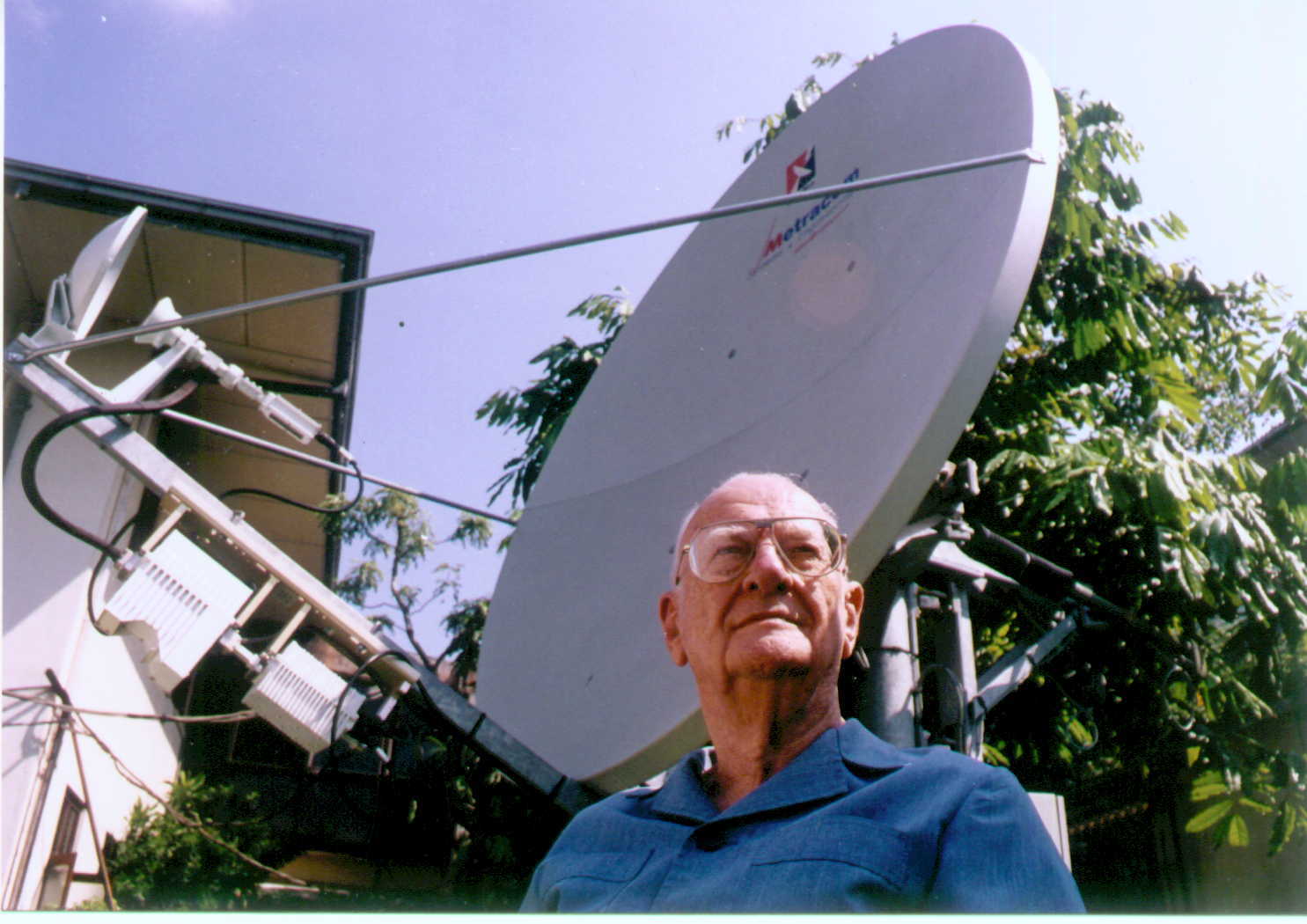
Sir Arthur C Clarke: Opened up the heavens as part of information superhighway...

අතට හසු නොවන, මනසට අළුත් හා නුහුරු ඉන්ටර්නෙට් ගැන ඇතැම් දෙනා බිය සැක උපදවා ගැනීම පුදුමයක් නොවෙයි. 2011 නොවැම්බර් 20දා මා කීවේ වසර 16ක් ගත වීත් ලක් සමාජය තවමත් ඉන්ටර්නෙට් සමග බද්ධ වන්නේ යම් චකිතයක්, සැකයක් හා දෙගිඩියාවක් සමග බවයි.

ඉන්ටර්නෙට් ආගමනයට කලින් මේ අයුරින් ම බය හා සැක ඇති කළ මාධ්‍ය ප්‍රවණතාවක් වූයේ කෘත්‍රිම චන්ද්‍රිකා හරහා ටෙලිවිෂන් විකාශයන් විසුරුවා හැරීමයි. (direct broadcasting by satellite)’ ආසියා කලාපයේ මෙය ඇරඹුණේ 1991දී. AsiaSat චන්ද්‍රිකාව BBC, CNN හා STAR TV නාලිකාවල උඩුගුවනින් එන ටෙලිවිෂන් සංඥා, අඩු වියදමකින් තනා ගන්නා දීසි ආකාරයේ ඇන්ටෙනාවකින් හසු කර ගත හැකි වුණා.

රාජ්‍ය දේශ සීමා ගැන තැකීමක් නොකර නිදහසේ පාවී එන මේ විකාශ ගැන එවකට ආසියානු රජයන් සලිත වූ සැටි මට මතකයි. වර්තමානයේ ඉන්ටර්නෙට් මාධ්‍යයට එරෙහිව නගන චෝදනාවලට සමාන චෝදනා ගොන්නක් 1990 දශකය පුරා අපේ පණ්ඩිතයෝ චන්ද්‍රිකා හරහා එන ටෙලිවිෂන් විකාශයන්ටත් එල්ල කළා. එය ආසියානු රටවල දේශපාලන ස්ථාවරත්වයට, සංස්කෘතීන්ට හා ජන සමාජයන්ට බරපතල අහිතකර බලපෑම් ඇති කළ හැකි යයි ඇතැම් උගතුන් හා ‘සංස්කෘතික බහිරවයන්’ අනතුරු ඇගවීම් ද කළා.

එහෙත් එබන්දක් සිදු වූයේ නැහැ! නොබෝ කලකින් ආසියානු නාලිකා තම ප්‍රේක්ෂකයන්ට වඩාත් අදාල හා ප්‍රයෝජනවත් වැඩසටහන් විකාශය කරන්නටත් ඒ චන්ද්‍රිකා තාක‍ෂණය ම යොදාගත්තා. මේ වන විට ලෝක ටෙලිවිෂන් නාලිකා, ආසියානු නාලිකා හා දේශීය නාලිකා තුන ම අපේ ටෙලිවිෂන් යන්ත්‍ර හරහා බලා ගත හැකියි.

හාස්‍යජනක කරුණක් නම් මේ දැඩි විවේචනවල යෙදෙන ඇතැම් දෙනා එකී මාධ්‍ය දැක හෝ භාවිතා කර නැති අය වීමයි! එහෙන් මෙහෙන් අහුලාගත් කොටස් මත පදනම් වී කරන මේ විවේචන පිළි ගන්නා රාජ්‍ය නිලධාරීන් හා ප්‍රතිපත්ති සම්පාදකයන් ද සිටීම තමා අපේ ඛේදවාචකය. විෂය දත්තවුන් නිහඩව සිටින මේ දූපතේ, කුමන්ත්‍රණවාදීන් හැම දෙයක් ම නොපිටට හරවා ගන්නවා. (විකිලීක්ස් හා විකිපීඩියා දෙක පටලවා ගැනීම පිළිබද මගේ විග්‍රහය බලන්න: 2011 ජූලි 10)

වඩාත් ප්‍රබලව මතුව එන තොරතුරු තාක‍ෂණ හා සන්නිවේදන අභියෝගයන්ට ප්‍රශස්තව මුහුණ දෙන සැටි අන්තර් රාජ්‍ය මට්ටමින් සාකච්ඡා කළ තොරතුරු සමාජය පිළිබඳ පළමුවන ලෝක සමුළුව (World Summit on the Information Society, WSIS-1) 2003 දෙසැම්බරයේ ජිනීවා නුවර පවත්වනු ලැබුවා. එයට මුල් වුයේ යුනෙස්කෝ සංවිධානය, ලෝක විදුලි සංදේශ සංගමය (ITU) හා එක්සත් ජාතීන්ගේ සංවර්ධන වැඩසටහන (UNDP) යන ආයතන ත්‍රිත්වයයි. මේ සමුළුවට දින කිහිපයකට පෙර ශ්‍රීමත් ආතර් සී ක්ලාක් සමග මා කළ දීර්ඝ සාකච්ඡාවක් (ඉන්දියාවෙන් සංස්කරණය කැරෙන) One World South Asia ජාත්‍යන්තර වෙබ් අඩවිය පළ කළා.

මගේ ඉලක්කය වූයේ තොරතුරු සමාජයේ පෙර ගමන්කරුවෙකු වු ක්ලාක් එවකට දැකිය හැකි වු අළුත් ප්‍රවණතා සහ අභියෝග ගැන දරණ විද්වත් අදහස් ඒ තීරණාත්මක මොහොතේ ලෝකය සමග ඛෙදා ගැනීමයි. ක්ලාක්ගේ 94 වන ජන්ම සංවත්සරය (2011 දෙසැම්බර් 16) සැමරෙන මේ සතියේ ඒ සාකච්ඡාවෙන් කොටස් කිහිපයක් මා සිංහලට අනුවාදය කළා.

එදා චන්ද්‍රිකා ටෙලිවිෂන් ගැන ක්ලාක් කී බොහෝ දේ අද ඉන්ටර්නෙට් සඳහා ද වලංගූයි. නමුත් එක් ප්‍රබල වෙනසක් නම් චන්ද්‍රිකා හරහා ටෙලිවිෂන් විකාශ කිරීමට තාක්ෂණය හා වත්කම තිබුණේ ප්‍රධාන පෙළේ මාධ්‍ය සමාගම්වලට පමණක් වුවත් ඉන්ටර්නෙට් හරහා ලොවට සන්නිවේදනය කිරීමේ හැකියාව ලොකු පොඩි කාටත් එක සේ උදා වී තිබීමයි. දැවැන්ත මාධ්‍ය සමාගම් අතළොස්සක් නීතිමය හා නීතියට පරිබාහිර උපක්‍රමවලින් හැසිරවීමේ අත්දැකීම් ඇති ලෝකයේ ආණ්ඩුවලට, කුඩා පරිමාණයේ පුරවැසි මාධ්‍යවේදීන් සිය දහස් ගණනක් සමග කුමන ආකාරයෙන් ගනුදෙනු කළ හැකි ද යන්න විශාල අභියෝගයක් වී තිඛෙනවා. ක්ලාක් අප අතර නැතත්, වසර අටකට පෙර ඔහු පළ කළ අදහස් අදටත් අදාලයි.

නාලක: චන්ද්‍රිකා ටෙලිවිෂන් නාලිකා ඔස්සේ එන වැඩසටහන්වල අන්තර්ගතය ගැන කිසිදු රජයකට පාලනයක් නැහැ. රටක පවතින මාධ්‍ය නීති රීති හෝ සාරධර්ම ඒ අයුරින් ම පිළිපැදිය යුතු යැයි චන්ද්‍රිකා ටෙලිවිෂන්වලට බලපෑම් කරන්නටත් බැහැ. මේ පසුබිම තුළ මෙම මාධ්‍යය වඩාත් තදින් හැසිරවිය යුතු යැයි ඔබ සිතනවාද?

ක්ලාක්: පෘථීවියට ඉහළ කක‍ෂගතව තිඛෙන පණිවුඩ චන්ද්‍රිකාවලින් එන ටෙලිවිෂන් විකාශයන් පාලනය කිරීමට හෝ තහනම් කිරීමට හෝ කිසිදු ආණ්ඩුවකට හැකි වේ යැයි මා සිතන්නේ නැහැ. කෙසේ වෙතත් මාධ්‍යයක් තහනම් කිරීම, නීති විරෝධී කිරීම හෝ වාරණය කිරීම ප්‍රගතශීලි පියවරක් ලෙස මා පිළිගන්නේත් නැහැ. අපි මේ තත්ත්වය පුළුල් දෘෂ්ටි කෝණයකින් විග්‍රහ කළ යුතුයි. මෙබඳු ප්‍රශ්න ගැන කථාබහ කරන අප බොහෝ දෙනකුට තොරතුරු හා විනෝදාස්වාදය ලබා ගත හැකි මාර්ග ගණනාවක් තිඛෙනවා. බොහෝ විට අප සිටින්නේ තොරතුරු අධිපෝෂණය නැතහොත් තොරතුරු දූෂණය (information pollution) නමැති තත්ත්වයේයි. මේ නිසා එහි ප්‍රතිවිරුද්ධ තත්ත්වයල එනම් තොරතුරු සාගතය (information starvation) ගැන අපට හරි වැටහීමක් නැහැ.

මට සිතෙන්නේ චන්ද්‍රිකා ටෙලිවිෂන් වැඩසටහන්වලින් ජන ජීවිතයට, සංස්කෘතියට හෝ සභ්‍යත්වයට හානි සිදුවේ යැයි කෑ මොර ගසන උදවිය තමන්ගේ බුද්ධියේ ප්‍රමාණයට වඩා වැඩි අධ්‍යාපනයක් ලැබීම නිසා බක පණ්ඩිතයන් වී සිටින අය බවයි. සමාජයේ බහුතරයකගේ සිතුම් පැතුම් හෝ රුචි අරුචිකම් හෝ ගැන මේ ‘කල්චරල් අප්පුලාට’ හැඟීමක් හෝ තැකීමක් නැහැ. ඔවුන් සිතන්නේ ඔවුන් ටික දෙනෙකුගේ අභිමතය හා අභිරුචිය මත සියලූ දෙනාගේ කියැවීමේ පුරුදු හෝ ටෙලිවිෂන් නැරඹීමේ රටා සකස් විය යුතුයි කියායි. බටහිර සභ්‍යත්වයට හෝ ජාත්‍යන්තර ප්‍රවාහයන්ට අනාවරණය නොවු ගැමි ජනයා සදහට ම එම තත්ත්වයේ තබා ගත යුතු බවත්, චන්ද්‍රිකා ටෙලිවිෂන් හා ඉන්ටර්නෙට් බඳු මාධ්‍ය මඟින් මේ ජනයාගේ මනස දූෂණය වන බවත් මෙකී පණ්ඩිතයෝ කියනවා. එසේ කියමින් ඔවුන් තමන්ගේ පවුල්වල පාවිච්චියට මේ හැම නවීන තාක‍ෂණයක් ම යොදා ගන්නවා. (මෙය හරියට රටේ බහුතරයකට ස්වභාෂාවලින් වැඩ කරන්නට යැයි කියමින් ටික දෙනෙකු ඉංගිරිසිය දිගට ම භාවිත කිරීම වැනි ක්‍රියාවක්!) මෙබඳු ආත්මාර්ථකාමී, වංක විද්වතුන්ගෙන් රටට හා සමාජයට වන යහපතට වඩා හානිය වැඩියි.

චන්ද්‍රිකා ඔස්සේ එන ටෙලිවිෂන් විකාශයන් මෙන් ම පොළව මත පිහිටි සම්ප්‍රේෂණාගාරවලින් ඛෙදා හැරෙන (terrestrial) ටෙලිවිෂන් විකාශයන් ඔස්සේත් හොඳ-නරක දෙයාකාරයේ ම වැඩසටහන් අපට හමු වෙනවා. අප කළ යුතුව ඇත්තේ ක්‍රමානුකූලව ප්‍රේක‍ෂකයන් වඩාත් දැනුවත් හා නැණවත් පිරිසක් බවට පත් කිරීමෙන් මේ ගුණාගුණ තෝරා බේරා ගන්නට හැකි පිරිසක් බවට ඔවුන් පත් කිරීමයි. දිගු කලක් තිස්සේ ටෙලිවිෂන් මාධ්‍යය හා සම්බන්ධව ක්‍රියා කිරීමෙන් පසුව මා තීරණය කර ඇත්තේ මෙයයි: ගුණාත්මක බවින් අඩු ටෙලිවිෂන් වැඩසටහන් පවා, කිසියම් වටිනාකමකින් යුක්තයි. (Even bad TV is better than no TV!). අප කළ යුත්තේ ටෙලිවිෂන් යන්ත්‍ර නිවා දැමීම හෝ විකාශ තහනම් කිරීම හෝ නොවේ. ගුණාත්මක පැත්ත වර්ධනය කර ගන්නට වෙර දැරීමයි.

ස්වාධීනව පාලනය කැරෙන, ස්වාධීනව අදහස් දක්වන මාධ්‍ය ආයතන – විශේෂයෙන් ටෙලිවිෂන් ආයතන – කෙරෙහි බොහෝ ආණ්ඩු දක්වන්නේ අයහපත් ආකල්පයක් නේද?

එයට හේතුව නිදහසේ තොරතුරු හා අදහස් ගලා යාම හරහා සිවිල් සමාජය ශක්තිමත් වන නිසායි. එවිට ඒකාධිපති පාලකයන්ට හා ආණ්ඩුවලට එය තර්ජනයක් වෙනවා. පසුගිය දශක දෙක පමණ කාලය තුළ තමයි චන්ද්‍රිකා ඔස්සේ විකාශය වන ටෙලිවිෂන් සේවාවන් ප්‍රචලිත වී ඇත්තේ. ඊට පෙර සියලූ ටෙලිවිෂන් විකාශයන් මහ පොළොව මත පිහිටි සම්ප්‍රේෂණයන් හරහායි සිදු කෙරුණේ. ඒ යුගයේ මෙම මාධ්‍යය මීට වඩා පාලනය කිරීමට ආණ්ඩුවලට හැකි වුණා. කොටින් ම කිවහොත් මේ මාධ්‍යයට බිය වූ ඇතැම් පාලකයෝ තමන්ගේ රටවල ජාතික ටෙලිවිෂන් සේවාවන් ඇරඹීම වසර ගණන් ප්‍රමාද කළා.

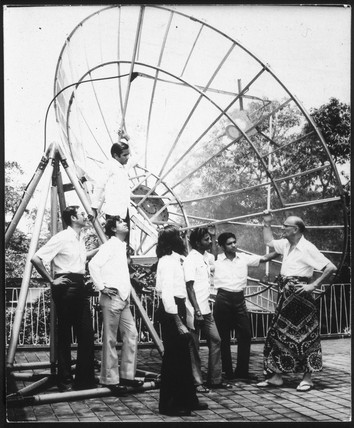
Arthur C Clare (extreme right) with Indian ISRO engineers who installed satellite antenna at his Colombo home, in 1975
හොඳම උදාහරණය ලැඛෙන්නේ දකුණු අප්‍රිකාවෙන්. 1960 දශකය වන විට ලෝකයේ ඉසුරුබර රාජ්‍යයන් අතුරෙන් ටෙලිවිෂන් සේවාවක් අරඹා නොතිබූ එක ම රට වූයේ දකුණු අපිකාවයි. එවකට එහි පැවති සුදු පාලකයන්ගේ රජයේ සන්නිවේදන අමාත්‍යවරයා එරට ටෙලිවිෂන් සේවාවක් ඇරඹීමට කිසිසේත් එකග වූයේ නැහැ. ‘ටෙලිවිෂන් තමයි අප්‍රිකාවේ සුදු මිනිසාගේ පාලනය හමාර කරන්නේ’ යයි ඔහු කළ ප්‍රකාශයෙහි ලොකු අරුතක් ගැබ් වී තිබුණා. ^‘Television will mean the end of the white man in Africa.’)

ඔහුගේ දෘෂ්ටිකෝණයෙන් විග්‍රහ කළ විට ඔහු කී දේ හරියට ම හරි! පසු කලෙක වර්ණභේදවාදයට විරුද්ධව ගෙන ගිය අරගලයට ටෙලිවිෂන් මාධ්‍යයේ බලපෑම හා දායකත්වය ලැබුණා. කඩුවට වඩා පෑන බලවත් බව අප අසා තිඛෙනවා. ඔය දෙකට ම වඩා ටෙලිවිෂන් කැමරාව බලවත්. මේ නිසා ලෝකයේ හැම ආකාරයේ ආණ්ඩුවක්ම – ප්‍රජාතාන්ත්‍රවාදී වේවා, ඒකාධිපති වේවා – මේ මාධ්‍යය හසුරුවන්නට අඩු වැඩි පමණින් උත්සාහ කිරීම පුදුමයක් නොවෙයි.

මාධ්‍ය හා පුවත් වාරණය (media censorship) ගැන ඔබ සිතන්නේ කුමක්ද?

මාධ්‍ය වාරණය යනු සංකීර්ණ ක්‍රියාදාමයක්. ඒ ගැන සරලව හා පොදුවේ අදහස් දැක්වීමට අපහසුයි. මාධ්‍ය වාරණයට මා එක`ග නැති වුවත්, ඇතැම් අවස්ථාවල යම් යම් සුවිශේෂී තත්ත්වයන් යටතේ ටික කලකට මාධ්‍ය වාරණය කිරීමට අවශ්‍ය වන බව මා පිළිගන්නවා. බහුතරයකගේ යහපත සදහා. ඒ වාගේ ම කාගේත් යහපත උදෙසා මාධ්‍යවලින් පිටු දැකිය යුතු හා තුරන් කළ යුතු අංග ද තිඛෙනවා. උදාහරණ නම් ලිංගික වශයෙන් විකෘති අදහස් ඉදිරිපත් කරන රූප හා තොරතුරු, සහ ජාති-ආගම් භේද අවුස්සමින් ප්‍රචන්ඩත්වයට දායක විය හැකි ආකාරයේ ලියකියවිලි.

නමුත් යම්කිසි තොරතුරක්, විග්‍රහයක් හෝ අදහසක් සමාජයට හිතකර ද නැත් ද යන්න නිර්ණය කිරීම ලෙහෙසි නැහැ. එය විවිධ පුද්ගලයන් විසින් විවිධාකාරයෙන් විනිශ්චය කළ හැකියි නේද?

ඇත්තෙන්ම ඔව්. මේ ප්‍රශ්නය සම්බන්ධයෙන් මැදහත්, අපක‍ෂපාතී පුද්ගලයන් පවා බොහෝ විට එකග වන්නේ නැහැ. මහජනයාට ඉදිරිපත් කළ යුත්තේ කුමක් ද? වසන් කළ යුත්තේ කුමක් ද යන්න තෝරා බේරා ගැනීම ඉතා අසීරුයි. එහෙත් රජයන් හා පාලකයන්ගේ පැත්තෙන් බැලු විට මෙන්න මෙසේ කිව හැකියි. දූෂණ, අක්‍රමිකතා, වංචා සහ බලය අනිසි ලෙස භාවිතා කිරීම් ආදිය පිළිබද මාධ්‍ය මගින් කැරෙන අනාවරණයන් පාලකයන් බොහෝ විට බලවත් අපහසුතාවයට පත් කරන බව ඇත්ත. එහෙත් එය ඔවුන්ට ඉතා ප්‍රයෝජනවත් හා වැදගත් වන්නට ද පුළුවන්.

තමන්ගේ රටේ සැබැවින් ම සිදු වන්නේ කුමක්දැයි හරිහැටි දැන ගන්නට නිසි අවකාශ තිබුණා නම් බොහෝ පාලකයන්ට තමන්ගේ බලය – ඇතැම්විට ජීවිතය පවා – මීට වැඩි කාලයක් රැක ගන්නට තිබුණා යයි අපට කිව හැකියි. ඕනෑ ම පාලකයකු වටා ඒකරාශී වන වන්දිභට්ටයන් පිරිස ඉදිරිපත් කරන පක‍ෂග්‍රාහී විග්‍රහයට වඩා ඔබ්බට ගොස් තොරතුරු දැනගැනීමේ උපක්‍රමයක් හැම පාලකයකුට ම අවශ්‍යයි. මේ නිසා තමයි එක් බටහිර ප්‍රජාතන්ත්‍රවාදී රටක නායකයකු වරක් කියා සිටියේ නිදහස් මාධ්‍ය පාලකයන්ට මහත් හිසරදයක් විය හැකි වූවත්, බොහෝ විට ඔවුන්ගේ හිස රැක ගන්නත් ඒ නිදහස් මාධ්‍ය ම දායක වන බව.

මෙය ටෙලිවිෂන් ප්‍රවෘත්ති වාර්තාකරණය පැත්තෙන් බැලු විට මුද්‍රිත මාධ්‍යයටත් වඩා ප්‍රබල සත්‍යයක්. විශේෂයෙන්ම චන‍ද්‍රිකා සන්නිවේදන තාක‍ෂණය නිසා අද ටෙලිවිෂන් ඔස්සේ ප්‍රවෘත්ති විකාශය කිරීම බොහෝ විට සජීවී ලෙසින් සිදු කැරෙනවා. මේ නිසා අළුතෙන් යමක් සිදුවන විට ඒ මොහොතේම ලොව හැමතැනටම එය දැක බලාගත හැකියි. මෙය කිරීමේදී ඉමහත් වගකීමකින් යුතුව ක්‍රියා කිරීමට ටෙලිවිෂන් ආයතන හා මාධ්‍යවේදීන්ට සිදුවෙනවා.

සන්නිවේදනයේ මීළඟ වසර 50 ගැන නෙතඟ බැල්මක් හෙළිය හැකි ද?

පුළුල්ව කිව හොත්, සන්නිවේදනයේ අපට රිසි ඕනෑ ම දෙයක් කළ හැකි තත්ත්වයට අද අප පත්ව සිටිනවා. මේ ඉදිරි ගමන සීමා කරන්නේ තාක්ෂණික හෝ ඉංජිනේරුමය හෝ සාධක නොවේ. එය සිදු වන්නේ නීතිමය, මූල්‍යමය හා දේශපාලනික සාධක මගින්. මෙකී සාධකල තාක්ෂණයේ ප්‍රගමනය තරම් වේගවත්ව හා කාලානුරූපව හැඩ ගැසී නැහැ.

මාධ්‍ය මත බල පෑ රාජ්‍යමය හා අනෙකුත් සීමාකාරී සාධක එකින් එක බිද වැටෙන විට මාධ්‍යවල බලය හා මාධ්‍ය අනිසි ලෙස පරිහරණය කිරීමේ ඉඩකඩ ද ඒ හා සමානුපාතිකව වැඩි විය හැකි බව අප සිහි තබා ගත යුතුයි. ජන සමාජයට හා රටට අහිතකර ප්‍රවාහයන් නූතන සන්නිවේදන මාධ්‍යයන් හරහා ඒමට එරෙහිව ගත හැකි හොද ම ආරක‍ෂක විධි විධානය ලෙස මා දකින්නේ අධ්‍යාපනයයි. මේ රටේ ප්‍රධානතම ප්‍රමුඛතාවයක් විය යුත්තේ ඉදිරි සියවසට ගැලපෙන හා විශ්ව ගම්මානයේ අභියෝගවලට මුහුණදිය හැකි ආකාරයේ ජනතාවක් බිහි කරන අධ්‍යාපන රටාවක් ගොඩ නැගීමයි.

Sarvodaya Leader A T Ariyaratne at 80: Conscience of a Bruised Nation

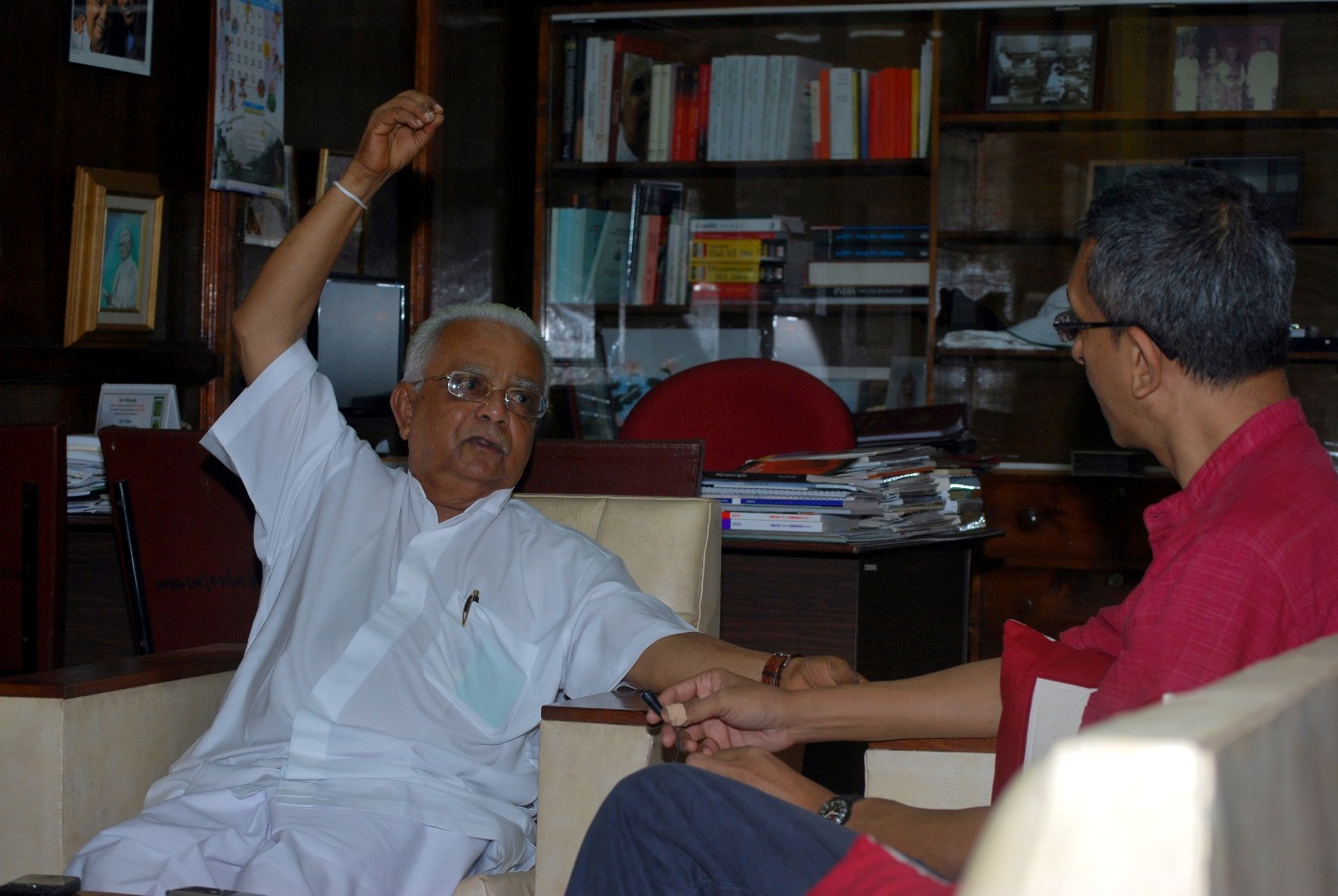
Dr A T Ariyaratne (left) in an expressive moment with Nalaka Gunawardene

When Dr A T Ariyaratne, founder and president of the Sarvodaya Shramadana Movement of Sri Lanka, turned 80 years on 5 November 2011, felicitations poured in from all over the world. This spontaneous act was an indication — if any were needed — of how much and how widely he has touched the lives of millions.

Ari is also our elder statesman of inclusive development. For over half a century, he and Sarvodaya have advocated a nuanced approach to overcoming poverty, illiteracy and various social exclusions. Unlike some die-hard activists, Ari doesn’t ask us to denounce materialism or revert to pre-industrial lifestyles. Instead, he seeks a world without extreme poverty or extreme affluence.

Suddenly, his quest for social justice and equality is resonating all over the world. In fact, Ari has been speaking out for the 99 per cent of less privileged people decades before a movement by that name emerged in the West. In a sense, those occupying Wall Street and other centres of affluence are all children of Sarvodaya.

While Ari shares their moral outrage, his own strategy has been quite different. He didn’t occupy physical spaces in his struggle; he went straight to the fount of all injustice – our minds.

* * * * *

Thus opens my personalised tribute, published on Groundviews.org as Ari of Sarvodaya: Conscience of a Bruised Nation.

In this 2,400-word essay, I salute a hero of mine who continues to speak truth to power, and makes a difference to millions of people in his land and elsewhere. For doing this, he has been ridiculed, harassed and vilified by small minds and the state. He continues undaunted, and shows no sign of slowing down after turning 80.

Here’s another excerpt:

In Ari, we find elements of Mahatma Gandhi (non-violent pursuit of the greater good); the Dalai Lama (interpreting Buddhist philosophy for the modern world); Martin Luther King, Jr. (struggling for the rights and dignity of marginalised people); Nelson Mandela (nurturing democracy and healing society); and Jimmy Carter (globalism with a humanitarian agenda).

“Yet Ari is more than the sum of these noble parts; he is his own unique visionary. And an adroit ‘remixer’ who constantly blends the best of East and West. He adapts our civilisational heritage to tackle the Twenty First Century’s anxieties and uncertainties. Thankfully, though, he doesn’t peddle simplistic solutions to today’s complex problems.

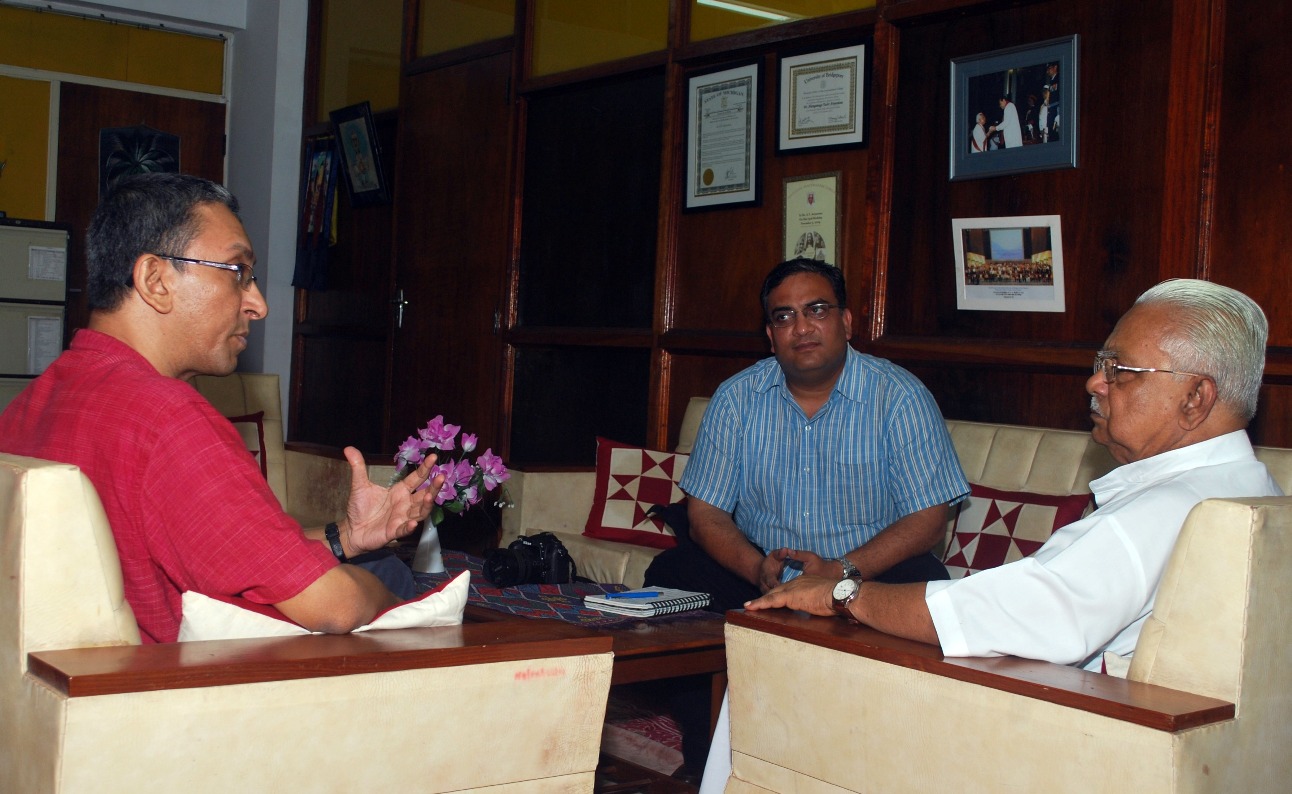
I also recall my first encounter with Ari, in early 1991, when a tyrant leader of Sri Lanka had virtually declared ‘war’ on this unarmed, non-violent small man. I have interviewed him several times since then – the most recent was in March 2011, when I accompanied my journalist friend Aditya Batra from India to talk to Ari (photo, below).

Read the full essay on Groundviews.org: Ari of Sarvodaya: Conscience of a Bruised Nation

Read a compact version of the essay on Light Millennium website (New York)

Read a compact version on Down to Earth magazine (New Delhi): Sri Lanka’s Gandhi Turns 80

L to R - Nalaka Gunawardene, Aditya Batra & Dr A T Ariyaratne of Sarvodaya, March 2011

සිවුමංසල කොලූගැටයා #34: අන්නා හසාරේ පුවත් මාරුතයෙන් ඔබ්බට…

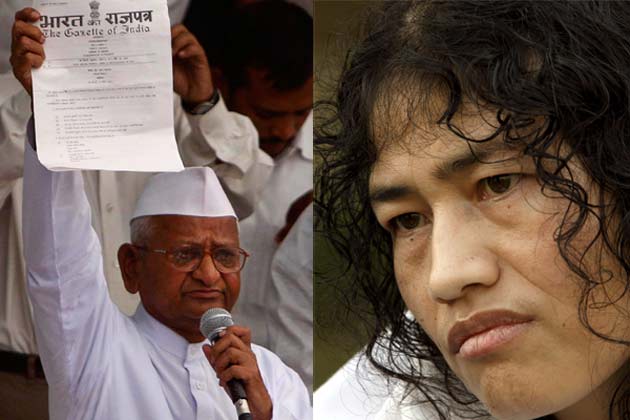
Fasting for a personal or public interest cause is a very old tradition in India. Today, social activists of all colours and hue resort to fasting — but not everyone evokes the same interest and coverage in the media. In a previous column, I looked at how and why the anti-corruption activist Anna Hazare has become the darling of the Indian media. In my latest Ravaya column published on 2 October 2011, I look at two other fasts: one by Swami Nigamananda, who died in June calling for a stop to sand-mining in the Ganges River, and woman activist Irom Sharmila in Manipur who is engaged in the longest fast in the world, 11 years and counting…

Anna Hazare (left) and Irom Sharmila - two very different fasts...

යම් අරමුණක් ඉටුකර ගැනීම සදහා ආහාර පාන ගැනීමෙන් වැළකී උපවාස කිරීම ඉන්දියාවේ ඉපැරණි සම්ප්‍රදායක්. මේ ගැන ක්‍රිස්තු පූර්ව 750 දක්වා අතීතයට දිවෙන සදහන් එරට හමුවෙනවා. දින 3ක් නිරාහාරව සිටීමේ හැකියාව නිරෝගී බොහෝ දෙනකුට ඇතත්, ඉන් පසු ටිකෙන් ටික ශරීර ක්‍රියාකාරකම් අඩපණ වන්නට පටන් ගන්නවා. ආහාර නොගත්තත් වතුර පානය කිරීමෙන් තොරව ශරීරයට ජීව ක්‍රියා පවත්වාගන්නට නොහැකියි.

සමාජයීය හෝ දේශපාලනමය හෝ ඉල්ලීම් දිනා ගැනීමට උපවාස කිරීම අදත් ඉන්දියාවේ බහුලව දැකිය හැකියි. එයට වඩාත් ම ප්‍රකට මෑත උදාහරණය නම් දූෂණයට එරෙහි ජන ක්‍රියාකාරික අන්නා හසාරේ 2011 අප්‍රේල් හා අගෝස්තු මාසවල කළ උපවාසයන්.

ඉන්දියාවේ ටෙලිවිෂන් නාලිකා අති බහුතරයක් පෞද්ගලික හිමිකරුවන් විසින් පවත්වා ගෙන යන වාණිජ මට්ටමේ නාලිකායි. ඒ නිසා බලයේ පවතින රජය නිර්දය ලෙස විවේචනය කිරීමටත්, රාජ්‍ය ප්‍රතිපත්ති විවෘතව සංවාදයට ලක් කරන්නටත් ඉඩ තිඛෙනවා. මේ නාලිකා අතර ප්‍රේක‍ෂකයන් ඇද ගන්නට දැඩි තරගයක් පවතිනවා. හැම නාලිකාවක් ම උත්සාහ කරන්නේ සිද්ධීන් උලූප්පා දක්වමින්, හැම සිදුවීමක් ම ‘Breaking News’ බවට පත් කර ගන්නටයි. එවැන ප්‍රවෘත්ති හැමදාමත් හමු නොවන නිසා ඉ`දහිට මතුව එන හසාරේ වැනි නිර්දේශපාලනීය චරිතයක් වඩා ටෙලිවිෂන් වාර්තාකරුවෝ ඉක්මනින් රොක් වෙනවා. ටික දිනකින් එබදු ජන හිතකාමී චරිත කරන කියන හැම දෙයක් ම පුවත් බවට පත් කර ගන්නවා. මේ තත්ත්වය දිගු කලක් නොපැවතුනත් අද වන විට ඉන්දියාවේ අතිශය තරගකාරී හා බහුවිධ ටෙලිවිෂන්, රේඩියෝ හා වෙබ් අඩවිවලට පුවත් මවන ජනප්‍රියතම ‘පුවත් මාරුතය’ බවට අන්නා හසාරේ පත්ව සිටිනවා.

එහෙත් ඔහුගේ උපවාසයන්ට ලැබුණු ඉමහත් මාධ්‍ය වාර්තාකරණය නොලද පොදු අරගල සදහා සිදු කැරෙන තවත් උපවාසයන් රැසක් ඉන්දියාවේ තිඛෙනවා. උදාහරණ දෙකක් හරහා මේ ගැන කථා කළ හැකියි.

පළමුවන උදාහරණයට අදාල පුද්ගලයා හින්දු පූජකයෙක්. ස්වාමි නිග්මානන්ද (Swami Nigamananda) සිය උපවාසය ඇරඹුවේ 2011 පෙබරවාරි 19 වනදා. එයට නිමිත්ත වූයේ උතුරු ඉන්දියාවේ උත්තරාකන්ද් ප්‍රාන්තයේ හරිද්වාර් (Haridwar) නගරය අසලින් ගලා යන ගංගා නදියේ නීති විරෝධී ලෙස වැලි ගොඩ දැමීම නතර කරන ලෙස ඉල්ලීම. හිමාලයෙන් ඇරඹී ගලා ගෙන එන ගංගා නදිය ඉන්දු-ගංගා තැන්නට මුල්වරට ප්‍රවේශ වන්නේ හරිද්වාරයේදී. ඒ නිසා එහිදී ග`ගට කරන පාරිසරික හානිය කිලෝමීටර් 2,525ක් දිග නදියේ ගලා යාමට අතිශයින් බලපානවා. හරිද්වාරයේ මෛත්‍රී සදාන් ආශ්‍රමයේ නේවාසික වූ මේ පරිසර හිතකාමී ස්වාමීවරයා සිය සාධාරණ ඉල්ලීම ඉටු කරන ලෙස බලධාරීන්ගෙන් මෙන් ම වැලි ගොඩ දැමීමේ නිරත වූවන්ගෙන් ද මහත් ඕනෑකමින් ඉල්ලා සිටියා. නමුත් ඔවුන් ඒ ඉල්ලීම ගැන තැකීමක් කළේ නැහැ. ප්‍රාන්තයේ හා ජාතික මට්ටමේ මාධ්‍යවලින් ද මේ ගැන අවධානයක් යොමු වුණේ නැහැ. අප්‍රේල් 30 වනදා ප්‍රාන්ත බලධාරීන් ඔහුව බලහත්කාරයෙන් රෝහල් ගත කළත් එහිදීත් ඔහු කිසිවක් ආහාරයට ගැනීම ප්‍රතිෙක‍ෂ්ප කළා. ඔහුගේ අධිෂ්ඨාන ශක්තිය වෙනස් වූයේ නැහැ. දින 115ක උපවාසය අවසන් වූයේ ජුනි 14 වනදා ඔහු මිය යාමෙන්.

ඔහුගේ මරණය ඉන්දියානු ටෙලිවිෂන් මාධ්‍යයන්ට ප්‍රවෘත්තියක් වූවත් එය සුළු වේලාවකට පමණයි. ඒ වන විට ඔවුන් (අන්නා හසාරේට අමතරව) ව්‍යාපාරික මට්ටමින් මහා පරිමාණයෙන් යෝග ව්‍යායාම් පුහුණු කරන බාබා රාම්දේව (Baba Ramdev) නම් තවත් හින්දු ස්වාමිවරයකුගේ උපවාසයකට මුල් තැන දෙමින් සිටියා. දූෂණයට එරෙහිව නැගී සිටින චරිතයක් බවට පත්වීමට බාබා රාම්දේව් ප්‍රබල උත්සාහයක් ගත්තත් ඔහුගේ සැබෑ අරමුණු ගැනත් පෙර ක්‍රියාකලාපය ගැනත් මාධ්‍යවලට යම් සැකයක් තිබුණා. ඔහුගේ උපවාසය දින 9කින් නිමා කළ අතර ඉන් පසු ඔහු ගැන මාධ්‍ය වාර්තාකරණය එතරම් උත්සන්න වූයේ නැහැ.

හැම නිර්ව්‍යාජ උපවාසයක් ම පුවත් මාරුතයක් බවට පත් වන්නේත් නැහැ. අන්නා හසාරේ ගැන අධ්‍යයනය කරන මාධ්‍ය පර්යේෂකයන් සොයා යන්නේ වෙනත් සාධාරණ උපවාසයන්ට වඩා හසාරේගේ අරගලයට මෙතරම් මාධ්‍ය අවධානයක් යොමුවන්නේ ඇයි ද යන්නයි. මෙයට එක් ප්‍රධාන හේතුවක් අපි සැප්තැම්බර් 18 වනදා කොලමින් විග්‍රහ කළා. අන්නා හසාරේට සූක‍ෂම ලෙස උපදෙස් දෙන මාධ්‍ය උපදේශකයන් සිටිනවා. ඔවුන් වෙළදපොල මාධ්‍ය සමග හොදහැටි ගනුදෙනු කරන්නට දන්නවා. එහෙත් උතුම් අරමුණක් පමණක් නිමිති කර ගෙන, උපක්‍රමශීලි නොවී උපවාස කරන බොහෝ අයට එබදු මාධ්‍ය හැසිරවිමේ හා මාධ්‍යවලට බද්ධවීමේ හැකියාව නැහැ. බැලු බැල්මට මෙය අසාධාරණයක් ලෙස පෙනී යතත් සැබෑ තත්ත්වය එයයි.

මේ ගැන හොද උදාහරණයක් ජ්‍යෙෂ්ඨ ඉන්දියානු මාධ්‍යවේදිනියක හා “ර්‍ද හින්දු” පුවත්පතේ හිටපු නියෝජ්‍ය කතුවරියක වන කල්පනා ශර්මා (Kalpana Sharma) ගෙන හැර දක්වනවා. ඒ තමයි ඉරෝම් ශර්මිලාගේ (Irom Sharmila) දශකයකට වැඩි කලක් පවතින උපවාසය.

ඉරෝම් ශර්මිලා චානුගේ වයස 39 යි. ඇය ඉන්දියාවේ ඊසානදිග ප්‍රාන්තයක් වන මනිපූරයේ මානව හිමිකම් හා දේශපාලන කි්‍රයාකාරිකයෙක්. එමෙන් ම කිවි`දියක්. මිලියන 2.7 ක ජනගහනයක් සිටින, බුරුම දේශසිමාවේ පිහිටි මනිපුරයේ කලක සිට දේශපාලන නොසන්සුන් බවක් හා ප්‍රචන්ඩකාරී ස්වභාවයක් පවතිනවා. ඉන්දීය රජය මේ තත්ත්වය පාලනය කරන්නට හමුදා විශේෂ බලතල නීතියක් (Armed Forces Special Powers Act, 1958) යටතේ දැඩි මර්දනකාරී ප්‍රතිපත්තියක් ගෙන යනවා. මධ්‍යම රජය මේ ප්‍රාන්තයේ ප්‍රශ්න විග්‍රහ කරන්නේ කරදරකාරීන් පිරිසකගේ අනවශ්‍ය අරගලයක් හැටියටයි. එහෙත් මනිපූර් වැසියන්ට සිය ප්‍රශ්නවලට සාධාරණ විස`දුම් දිගු කලක් තිස්සේ ලැබී නැතුවා පමණක් නොවෙයි දරද`ඩු පරිපාලයක් යටතේ දිවි ගෙවන්නට සිදුව තිඛෙනවා.

මේ නිසා හමුදාවලට දැඩි බලතල දෙන නීතිය නතර කරන ලෙස ඉල්ලා ඉරෝම් ශර්මිලා උපවාසයක් ඇරඹුවේ 2000 නොවැම්බරයේ. එය ඇරඹී දින කිහිපයකට පසු ‘සිය දිවි නසා ගන්නට තැත් කිරීමේ’ චෝදනා මත පොලිස් අත්අඩංගුවට ගනු ලැබුවා. මනිපුරයේ ප්‍රාන්ත අගනගරය වන ඉම්ෆාල් නුවර මහජන රෝහලේදී ඇයට බලහත්කාරයෙන් ආහාර කවනු ලැබුවා. (හින්දු ස්වාමි කෙනකුට වඩා ග‘හි කාන්තාවකට බලෙන් කෑම දීමට සෞඛ්‍ය සේවකයන් ද පෙරට එනවාෟ) මාස ගණනක් මෙසේ අත් අඩංගුවේ රෝහල්ගතව බලෙන් ආහාරපාන දීමට ලක්වන ඇය ඉන් පසු නිදහස් වෙනවා. එවිගස ම ඇය නැවතත් ප්‍රසිද්ධියේ උපවාස කිරීම අරඹනවා. එවිට දින කිහිපයකින් යළිත් අත් අඩංගුවට පත් වන ඇය රෝහල් ගත කොට බලෙන් කෑම බීම ලබා දීමට ලක් වනවා. මේ සිදුවීම් මාලාව චක්‍රාකාරව වසර 11ක් පුරා නොනැවතී ඉදිරියට යන බවත්, ඒ නිසා මෙය ලෝකයේ වැඩි ම කාලයක් පවතින උපවාසය බවත් කල්පනා ශර්මා කියනවා.

Arundhati Roy: "I'd Rather Not be Anna!"

එහෙත් ඉරෝම් ශර්මිලාගේ අරමුණ ගිනස් වාර්තා පිහිටුවීම නොවෙයි. 2004දී හින්දු මූලධර්මවාදී BJP රජය පරාජය වී කොංග්‍රස් ප්‍රමුඛ සභාග රජයක් ඉන්දියාවේ බලයට පත් වුණා. නව රජය හිටපු ශ්‍රේෂ්ඨාධිකරණ විනිසුරුවරයකුගේ ප්‍රධානත්වයෙන් කොමිටියක් පත් කළා. මේ කමිටුව කරුණු ගවේෂණයෙන් පසු නිර්දේශ කළේ මනිපුරයේ ගෙන යන දරදඩු පරිපාලනය ලිහිල් කොට හමුදා බලතල සීමා කළ යුතු බවයි. එහෙත් මේ නිර්දේශයෙන් වසර 6කට පසුත් එය ක්‍රියාත්මක කර නැහැ. ඒ නිසා ඉරෝම් ශර්මිලා සිය උපවාසය දිගට ම කරගෙන යනවා.

“මනිපුරයේ ජනතාවත් ඉන්දියානු රටවැසියෝ. එහෙත් සෙසු රටවැසියන්ට ආණ්ඩුක්‍රම ව්‍යවස්ථාවෙන් සහතික කැරෙන මූලික අයිතිවාසිකම් බොහොමයක් මනිපුර ජනතාවට දිගු කලක සිට ලැඛෙන්නේ නැහැ. මේ දැඩි අසාධාරණය ගැන සෙසු ඉන්දියාවේ අපට එතරම් හැගීමක් හෝ අවබෝධයක් හෝ නැතිවීම ඉතා කණගාටුදායකයි” කල්පනා සිය ලිපියේ එසේ කියනවා.

ඉරෝම් ශර්මිලාගේ තිරසාර අධිෂ්ඨාන ශක්තිය ගැන ගෞරව පූර්වකව මාධ්‍යවල කථා කරන තවත් කෙනෙක් සම්මානනීය ලේඛිකා අරුන්දතී රෝයි (Arundhati Roy). අන්නා හසාරේගේ අරගලය ගැන අරුන්දතී දැඩි විවේචනයක් කරනවා. දූෂණය හා වංචාව පිටු දැකීමට නම් ඉන්දියානු සමාජය පුරා දරුණු ලෙස මුල් බැස තිඛෙන ඇති-නැති පරතරය අඩු කළ යුතු බව ඇය කියනවා. බොහෝ විට දූෂණ හා වංචාවලට මුල් වන්නේ, උල්පන්දම් දෙන්නේ අන්ත දුප්පතුන් නොව අතමිට සරු අය බවත්, ඒ අය සමාජ අසාධාරණකම් දිගට ම පවත්වා ගැනීම හරහා අයථා ප්‍රයෝජන හා වරප්‍රසාද ලබන බවට උදාහරණ සහිතව තර්ක කරනවා.

අරුන්දතී රෝයි ඉන්දියානු රාජ්‍යයේ (state) හෝ බලයේ පවතින රජයේ (government) හිතවතකු නොවෙයි. ඉන්දියානු රාජ්‍යයේ විෂමතා ගැන බරපතල විවේචන ඇය ප්‍රසිද්ධියේ ලියනවා. එබදු දැඩි විවේචකයන්ට ද ඉඩකඩ පැවතීම ඉන්දියාවේ පරිනත ප්‍රජාතන්ත්‍රවාදයේ හොද ලක‍ෂණයක්. චතුර ලෙස කථා කරන්නට හා සූක‍ෂම ලෙස තර්ක කරන්නට හැකි වීම නිසා ඉන්දියානු විද්්‍යුත් මාධ්‍ය ද ඇයට තැනක් හා කාලයක් දෙනවා. මෙවර සිදු වී ඇත්තේ ඉන්දියන් ටෙලිවිෂන් නාලිකා බහුතරයක අළුත් ම වීරයා බවට පත්ව සිටින අන්නා හසාරේගේ ක්‍රමවේදයන් එම නාලිකාවල ම ජනප්‍රිය චරිතයක් හා පුවත් මවන්නියක වන අරුන්දතී රෝයිගේ නිර්දය විවේචනයට හසුවීමයි!

2011 අගෝස්තු 22 දා The Hindu පුවත්පතේ ලිපියක් ලියමින් ඇරුන්දතී රෝයි අනතුරු ඇගවීමක් කළා. අන්නා හසාරේගේ යෝජිත නීති කෙටුම්පත හා නිර්දේශිත සැළසුම් ඉදිරියට ගියොත් ඉන්දියාවේ දුගී දුප්පතුන්ට තවත් නිලධාරීවාදයකට කර ගසන්නට සිදු විය හැකි බවට. සමාජයක ව්‍යුහාත්මක වෙනස්කම් ඇති නොකොට පැලැස්තර විස`දුම් දීම තුළින් දූෂණය පිටු දැකිය නොහැකි බවත්, වැඩියෙන් ම හඩ නගන අරගලකරුවාට පමණක් සවන්දීම සාර්ථක විසදුම් සොයා යාමේ ප්‍රවේශයක් නොවන බවත් ඈ කියනවා.
ර්‍
“අද දූෂණ හා වංචා සිදුවන්නේ රාජ්‍ය තන්ත්‍රය තුළ පමණක් නොවෙයි. ව්‍යාපාර ආයතනල රාජ්‍ය නොවන ආයතන මෙන් ම මාධ්‍ය ආයතනවලත් විශාල වශයෙන් දූෂණ සිදුවනවා. ඒ ගැන කිසි අවධානයක් යොමු නොකර රාජ්‍ය ෙක‍ෂත්‍රයේ දූෂණය ගැන පමණක් නීතිරීති තද කිරීම හසාරේ ඇතුළු පිරිසගේ උත්සාහයයි. මෙයින් ඉන්දියානු සමාජයේ දූෂණ පිටු දකින්නට බැහැ.” අරුන්දතී තර්ක කරනවා.

ඉන්දියානු සමාජය හා මාධ්‍ය ෙක‍ෂ්ත්‍රය ගැන නෙත් යොමා සිටින මට පෙනෙන්නේ ආවේගශීලි නොවී ප්‍රතිපත්තිමය හා තාර්කික පදනමකින් ප්‍රශ්න විග්‍රහ කිරීමේ හැකියාව අන්නා හසාරේට වඩා අරුන්දතී රෝයිට වැඩි බවයි. මේ දෙදෙනාගේ ම පාරිශ=ද්ධභාවය ගැන කිසිදු විවාදයක් නැහැ. එහෙත් වඩාත් ප්‍රායෝගික විසදුම් සෙවීම කළ හැක්කේ කාට ද යන්න ඉක්මනින් ම තෝරා ගන්නට ඉන්දියානු සමාජයට හා මාධ්‍යවලට සිදු වනවා.

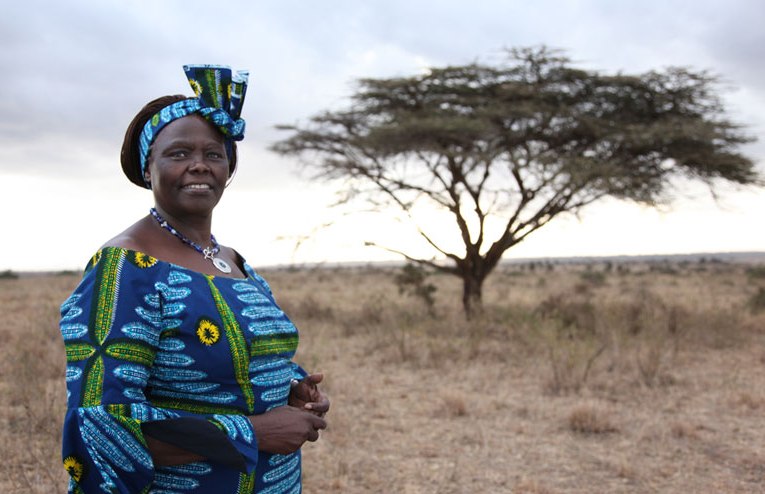
Wangari Maathai (1940 – 2011): Tree planter, activist, visionary and mother

Wangari Muta Maathai (1 April 1940 – 25 September 2011)

“We are very fond of blaming the poor for destroying the environment. But often it is the powerful, including governments, that are responsible.”

That was a typical remark by Wangari Muta Maathai, the Kenyan environmental and political activist who has just died.

In the 1970s, Maathai founded the Green Belt Movement, an environmental non-governmental organisation focused on the planting of trees, environmental conservation, and women’s rights.

In 2004, she became the first African woman to receive the Nobel Peace Prize for “her contribution to sustainable development, democracy and peace.”

The Green Belt Movement in a profile about their founder counted the many roles she played: environmentalist; scientist; parliamentarian; founder of the Green Belt Movement; advocate for social justice, human rights, and democracy; elder; and Nobel Peace Laureate.

“”It is the people who must save the environment. It is the people who must make their leaders change. And we cannot be intimidated. So we must stand up for what we believe in,” Wangari Maathai kept saying.

As a tribute, I have assembled a few links to interesting online videos featuring her.

Taking Root, a long format documentary, tells the dramatic story of Wangari Maathai whose simple act of planting trees grew into a nationwide movement to safeguard the environment, protect human rights, and defend democracy—a movement for which this charismatic woman became an iconic inspiration.

TAKING ROOT: The Vision of Wangari Maathai Trailer on PBS YouTube channel:

Wangari Maathai & The Green Belt Movement, short film by StridesinDevelopment:

Riz Khan’s One on One: Wangari Maathai: Part 1
Interview with Al Jazeera English first broadcast on 19 Jan 2008

“I will be a hummingbird” – Wangari Maathai

Two more memorable quotes from her to inspire us all:

“I have always believed that, no matter how dark the cloud, there is always a thin, silver lining, and that is what we must look for.”

“We cannot tire or give up. We owe it to the present and future generations of all species to rise up and walk!”

සිවුමංසල කොලූගැටයා #25: “බටහිර විද්‍යාව”, “සාම්ප්‍රදායික දැනුම” සහ දකුණු අප‍්‍රිකාවේ බිහිසුනු HIV/AIDS මංමුලාව

In my Ravaya column (in Sinhala) for 31 July 2011, I look back at South Africa’s HIV/AIDS misadventure under President Thabo Mbeki, who refused to accept the well-established scientific consensus about the viral cause of AIDS and the essential role of antiretroviral drugs in treating it. Instead, he and his health minister embarked on a highly dubious treatment using garlic, lemon juice and beetroot as AIDS remedies — all in the name of ‘traditional knowledge’.

It turned out to be a deadly experiment, and one of the worst policy debacles in the history of public health anywhere in the world. In 2008,  A study by Harvard researchers estimated that the South African government could have prevented the premature deaths of 365,000 people if it had provided antiretroviral drugs to AIDS patients and widely administered drugs to help prevent pregnant women from infecting their babies.

There are lessons for all governments addressing complex, technical issues: do not allow a vocal minority to hijack the policy agenda, ignoring well established science and disallowing public debate on vital issues.

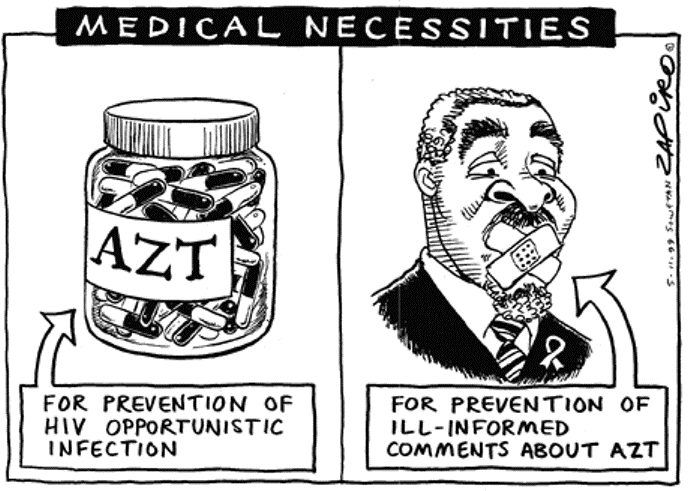
South African cartoonist  Zapiro lampooned President Mbeki's HIV folly
South African cartoonist Zapiro lampooned President Mbeki’s HIV folly

AIDS රෝගය මුලින් ම වාර්තා වී වසර තිහක් ගත වී තිබෙනවා. අමෙරිකාවේ මුල් වරට මේ රෝග ලක්ෂණ සහිතව රෝගීන් වාර්තා වන්නට පටන් ගත්තේ 1981දී. එයට හේතුව HIV නම් වයිරසය බව සොයා ගත්තේ ඊට දෙවසරකට පසුව.

අද HIV/AIDS ලෝක ව්‍යාප්ත වසංගතයක් හා ලෝකයේ ප්‍රධාන පෙළේ සංවර්ධන අභියෝගයක් බවට පත්ව තිබෙනවා. අළුත් ම සංඛ්‍යා ලේඛනවලට අනුව 2009 වන විට HIV ශරීරගත වී ජීවත්වන සංඛ්‍යාව මිලියන් 33ක්. අළුතෙන් ආසාදනය වන සංඛ්‍යාව වසරකට මිලියන් 2.6ක්. HIV ආසාදන උත්සන්න අවස්ථාවේ AIDS රෝගය ඇති වී මිය යන සංඛ්‍යාව වසරකට මිලියන් 2ට වැඩියි.

HIV/AIDS ගැන විවිධ කෝණවලින් විග්‍රහ කළ හැකියි. දුගී දුප්පත්කම, බලශක්ති අර්බුද, පරිසර දූෂණය හා ගැටුම්කාරී තත්ත්වයන්ට මුහුණ දෙන දියුණුවන ලෝකයේ බොහෝ රටවලට ගෙවී ගිය දශක තුන තුළ HIV/AIDS නම් අමතර අභියෝගයට ද මුහුණ දීමට සිදු වුණා. එයින් දැඩි සේ පීඩාවට පත් දකුණු අප්‍රිකාවේ HIV/AIDS ප්‍රතිපත්තිය වසර ගණනක් අයාලේ ගිය කථාවයි අද විග්‍රහ කරන්නේ. මෑතදී මා නැවතත් දකුණු අප්‍රිකාවට ගිය අවස්ථාවේ මගේ දැනුම අළුත් කර ගන්නට ලැබුණු නිසායි.

ලෝකයේ වැඩි ම HIV ආසාදිත ජන සංඛ්‍යාවක් සිටින රට දකුණු අප්‍රිකාවයි. 2007 දී HIV සමග ජීවත් වන දකුණු අප්‍රිකානුවන් සංඛ්‍යාව මිලියන් 5.7 ක් පමණ වුණා. එනම් මුළු ජනගහනය මිලියන් 48න් සියයට 12ක්. එය එරට සෞඛ්‍ය අර්බුදයක් පමණක් නොව සමාජයීය හා ආර්ථීක ප්‍රශ්නයක් ද වෙනවා.

ජනාධිපති නෙල්සන් මැන්ඩෙලාගේ 1994-99 ධූර කාලයේ HIV/AIDS පිළිබඳව දකුණු අප්‍රිකාවේ සෞඛ්‍ය ප්‍රතිපත්ති සකස් වූයේ ලොව පිළිගත් වෛද්‍ය දැනුම හා උපදෙස් මතයි. HIV සමග ජීවත් වන අයට හැකි තාක් කල් නීරෝගීව දිවි ගෙවන්නට ඖෂධ සපයන අතරේ වයිරසය පැතිරයාම වැළැක්වීමේ දැනුවත් කිරීම් හා මහජන අධ්‍යාපන ව්‍යාපාරයක් දියත් වුණා.

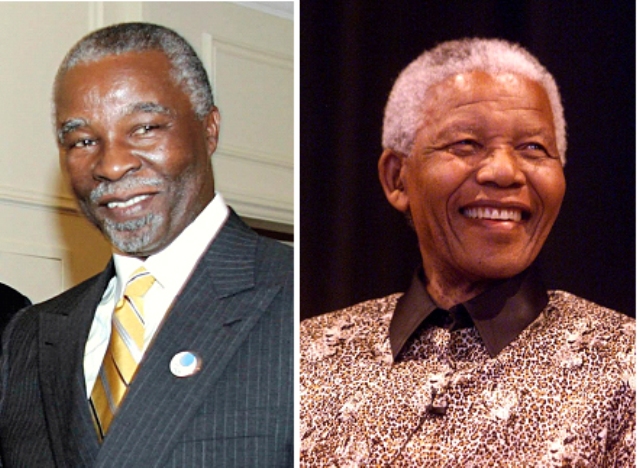
Thabo Mbeki (left) succeeded Nelson Mandela

එහෙත් ඔහුගෙන් පසු ජනාධිපති වූ තාබෝ එම්බෙකි (Thabo Mbeki) මේ ගැන ප්‍රධාන ප්‍රවාහයේ වෛද්‍ය විද්‍යාත්මක දැනුම ප්‍රශ්න කරන්නට පටන් ගත්තා. වෛද්‍ය විශේෂඥ දැනුමක් නොතිබුණත් තියුණු බුද්ධියකින් හෙබි එම්බෙකි, මෙසේ අසම්මත ලෙස සිතන්නට යොමු වුණේ HIV/AIDS ගැන විකල්ප මතයක් දරන ටික දෙනකුගේ බලපෑමට නතු වීම නිසයි.

මේ අයට ඉංග්‍රීසියෙන් AIDS Denialists කියනවා. ඔවුන්ගේ තර්කය AIDS රෝගය හට ගන්නේ HIV වයිරසය නිසා නොව දුප්පත්කම, මන්ද පෝෂණය වැනි සමාජ ආර්ථීක සාධක ගණනාවක ප්‍රතිඵලයක් ලෙසින් බවයි.

එම්බෙකිගේ සෞඛ්‍ය ඇමතිනිය (1999-2008) ලෙස ක්‍රියා කළ මාන්ටෝ ෂබලාලා සිමැංග් (Manto Tshabalala Msimang) මේ අවුල තවත් ව්‍යාකූල කළා. HIV ආසාදනය පාලනය කරන බටහිර වෛද්‍ය විද්‍යාවේ ඖෂධ වෙනුවට සම්ප්‍රදායික අප්‍රිකානු දැනුමට අනුව සුදුළුෑනු, දෙහි සහ බීට්රූට් යුෂ ගැනීම සෑහෙන බවට ඇය ප්‍රසිද්ධියේ ප්‍රකාශ කළා!

මේ නිසා HIV වයිරසයට ප්‍රහාර එල්ල කිරීම වෙනුවට දුප්පත්කම පිටුදැකීම කළ යුතු යයි ස්ථාවරයකට එම්බෙකි යොමු වුණා. HIV මර්දන සෞඛ්‍ය කටයුතු අඩපණ කරන්නටත්, මහජන සෞඛ්‍ය සේවා හරහා ඖෂධ ලබා දීම නතර කිරීමටත් එම්බෙකි රජය පියවර ගත්තා.

HIV සමග ජීවත්වන බහුතරයක් දකුණු අප්‍රිකානුවන්ට AIDS රෝග ලක්ෂණ පහළ වී නැහැ. HIV ශරීරගත වීමෙන් පසු වසර හෝ දශක ගණනක් ජීවත්වීමේ හැකියාව අද වන විට වෛද්‍ය විද්‍යාත්මකව ලබා ගෙන තිබෙනවා. එහෙත් ඒ සඳහා නිතිපතා Anti-Retroviral (ARV) ඖෂධ ගැනීම අවශ්‍යයි.

බොහෝ දියුණු වන රටවල අඩු ආදායම් ලබන HIV ආසාදිතයන්ට මේ ඖෂධ ලබා දෙන්නේ රජයේ වියදමින්. HIV ආසාදිත කාන්තාවන්ට ARV ඖෂධ නිසි කලට ලැබුණොත් ඔවුන් බිහි කරන දරුවන්ට මවගෙන් HIV පැතිරීම වළක්වා ගත හැකියි. එහෙත් එම්බෙකි රජය HIV වයිරසය ගැන විශ්වාස නොකළ නිසා ප්‍රජනන වියේ සිටින HIV ආසාදිත කාන්තාවන්ට එම ඖෂධ දීමත් නතර කළා.

දකුණු අප්‍රිකාව ජාතීන්, භාෂා හා දේශපාලන පක්ෂ රැසක සම්මිශ්‍රණයක්. එමෙන් ම 1994 සිට නීතියේ ආධිපත්‍යය හා රාජ්‍යයේ බල තුලනය පවතින රටක්. ප්‍රජාතන්ත්‍රවාදී සම්ප්‍රදායයන් හා ආයතන ප්‍රබල කරන්නට සැබෑ උත්සාහ ගන්නා රටක්.

මෙබඳු රටක වුවත් වසර කිහිපයක් පුරා ජනාධිපතිවරයාට හා සෞඛ්‍ය ඇමතිනියට මෙබඳු ප්‍රබල ප්‍රශ්නයකදී මේ තරම් අයාලේ යන්නට ඉඩ ලැබුණේ කෙලෙසදැයි මා එරට විද්‍යාඥයන් හා මාධ්‍යවේදීන් කිහිප දෙනකුගෙන් ඇසුවා. ඔවුන් දුන් පිළිතුරුවල සම්පිණ්ඩනය මෙයයි.

තාබෝ එම්බෙකි යනු වර්ණභේදවාදයට එරෙහිව දශක ගණනක් අරගලයක යෙදුණු,  පාලක ANC පක්ෂයේ ප්‍රබල චරිතයක්. ඔහුගේ දේශපාලන කැපවීම පිළිබඳව විවාදයක් නැහැ. මැන්ඩෙලා 1994දී ජනාධිපති වන විට එම්බෙකි උප ජනාධිපති වුණා.

1994-99 කාලය තුළ එරට ආර්ථීක වර්ධනයට හා සමාජ සංවර්ධනයට නායකත්වය සැපයූ ඔහු අප්‍රිකානු කලාපයේ දක්ෂ රාජ්‍ය තාන්ත්‍රිකයකු ලෙස නමක් දිනා ගත්තා. මැන්ඩෙලා එක් ධූර කාලයකින් පසු කැමැත්තෙන් විශ්‍රාම ගිය විට එම්බෙකි ANC ජනාධිපති අපේක්ෂකයා වී ජයග්‍රහණය කළා.

පරිණත දේශපාලකයකු රටේ ජනාධිපති ලෙස මහජන ඡන්දයෙන් තේරී පත්ව සිටින විටෙක, වැරදි උපදෙස් නිසා එක් වැදගත් ප්‍රශ්නයක් සම්බන්ධයෙන් ඔහු නොමග යාමට අභයෝග කරන්නේ කෙසේ ද? දකුණු අප්‍රිකාවේ වෛද්‍යවරුන් හා අනෙක් විද්වතුනට තිබූ ප්‍රශ්නය එයයි. සාම්ප්‍රදායික දැනුම එක එල්ලේ හෙළා නොදැක, එහි සීමාවන් ඇති බව පෙන්වා දෙමින්, රටේ නායකයා හා සෞඛ්‍ය ඇමති සමග හරවත් සංවාදයක යෙදෙන්නට සීරුවෙන් හා සංයමයෙන් කටයුතු කරන්නට ඔවුන්ට සිදු වුණා.

South African cartoonist Zapiro ridicules HIV denialist health minister 'Madam Beetroot'
South African cartoonist Zapiro ridicules HIV denialist health minister ‘Madam Beetroot’

ANC පක්ෂය තුළ ම එම්බෙකිගේ HIV/AIDS ස්ථාවරය ගැන ප්‍රශ්න මතු වුණා. එහෙත් මැන්ඩෙලා මෙන් විකල්ප අදහස් අගය කිරීමේ හැකියාවක් එම්බෙකිට නොතිබූ නිසාත්, ජනාධිපති හැටියට වඩා ඒකමතික පාලනයක් ඔහු ගෙන යන්නට උත්සාහ කළ නිසාත් පක්ෂය ඇතුළෙන් දැඩි ප්‍රතිරෝධයක් ආවේ නැහැ.

2002 දී පැවති ANC පක්ෂ රැස්වීමකදී මැන්ඩෙලා මේ ගැන සාවධානව අදහස් දැක් වූ විට එම්බෙකි හිතවාදියෝ ‘ජාතියේ පියා’ හැටියට අවිවාදයෙන් සැළකෙන මැන්ඩෙලාට වාචිකව ප්‍රහාර එල්ල කළා. එයින් පසු මැන්ඩෙලා ද තම අනුප්‍රාප්තිකයාගේ HIV/AIDS ප්‍රතිපත්ති ප්‍රසිද්ධියේ ප්‍රශ්න කිරීමෙන් වැළකුණා.

එම්බෙකි හිතවාදියෝ එතැනින් නතර වුණේ නැහැ. සිය නායකයාගේ අසම්මත HIV/AIDS න්‍යායට එරෙහිව කථා කරන විද්‍යාඥයන් හා වෛද්‍යවරුන්ට මඩ ප්‍රහාර දියත් කළා. දකුණු අප්‍රිකාවේ සිටින ලොව පිළිගත් ප්‍රතිශක්තිවේදය පිළිබඳ විශේෂඥයකු වූ මහාචාර්ය මක්ගොබා (Prof Malegapura Makgoba) ජනාධිපතිගෙන් ඉල්ලා සිටියා ලොව හිනස්සන මේ න්‍යායෙන් අත් මිදෙන ලෙස.

මේ මහාචාර්යවරයා බටහිර විද්‍යාවට ගැතිකම් කරන, අප්‍රිකාවේ සාම්ප්‍රදායික දැනුම හෙළා දකින්නකු ලෙස ජනාධිපති කාර්යාලය විසින් හදුන්වනු ලැබුවා. සුදු ජාතික හෝ ඉන්දියානු සම්භවය සහිත විද්වතකු ජනාධිපති මතවාද ගැන ප්‍රශ්න කළ විට එය ‘කළු ජාතික නායකයාට අවමන් කිරීමේ’ සරල තර්කයකට ලඝු කරනු ලැබුවා.

මේ මඩ ප්‍රහාර හා රාජ්‍ය යාන්ත්‍රණයට එරෙහිව හඬක් නැගූ සුදු හා කළු ජාතික දකුණු අප්‍රිකානුවන් ටික දෙනකු ද සිටියා. ඔවුන් විද්‍යා ක්‍ෂෙත‍්‍රයෙන් පමණක් නොව සාහිත්‍ය, කලා සහ සාමයික ක්‍ෂෙත‍්‍රවලින් ද මතුව ආවා.

එහිදී  දැවැන්ත කාර්ය භාරයක් ඉටු කළේ කේප්ටවුන්හි ආච්බිෂොප් ඩෙස්මන්ඩ් ටූටූ. වර්ණභේදවාදයට, අසාධාරණයට හා දිළිඳුබවට එරෙහිව දශක ගණනක් තිස්සේ අරගල කරන, 1984 නොබෙල් සාම ත්‍යාග දිනූ ඔහු, මුළු ලෝකය ම පිළිගත් චරිතයක්. 1994න් පසු ඡන්දයෙන් බලයට පත් හැම රජයක ම හොඳ දේ අගය කරන අතර වැරදි ප්‍රතිපත්ති නොබියව විවේචනය කරන්නෙක්.

ඩෙස්මන්ඩ් ටූටූ මුලදී පෞද්ගලිකවත් පසුව මහජන සභාවලත් එම්බෙකිගේ HIV/AIDS මංමුලාව ගැන කථා කළා. මහජන උන්නතියට ඍජුව ම බලපාන මෙබඳු ප්‍රශ්න සම්බන්ධයෙන් විවෘත සංවාදයක් පැවතිය යුතු බවත්, බහුතර විද්වත් මතයට ගරු කිරීම ප්‍රජාතන්ත්‍රවාදී රජයක වගකීම බවත් ඔහු අවධාරණය කළා.

2004 දී එක් ප්‍රසිද්ධ දේශනයකදී ඔහු කීවේ: “සුදු පාලකයන්ට එරෙහිව අරගල කරන සමයේ අපි ඉතා ප්‍රවේශමෙන් කරුණු ගවේෂණය කර, තර්කානුකූලව ඒවා ඉදිරිපත් කළා. දැන් ටිකෙන් ටික ඒ වෙනුවට එහෙයියන්ගේ හා ප්‍රෝඩාකාරයන්ගේ සම්ප්‍රදායක් ඉස්මතු වෙමින් තිබෙනවා. HIV/AIDS ගැන ජනාධිපති එම්බෙකිගේ විශ්වාස මීට වඩා බෙහෙවින් විවාදයට ලක් කළ යුතුයි. අභියෝග හා විවාදවලට ලක් කිරීමෙන් සත්‍යයට හානි වන්නේ නැහැ. එය වඩාත් නිරවුල් වෙනවා. මෙසේ ප්‍රශ්න කිරීම නිසා මා ජනාධිපතිගේ හතුරකු වන්නේ නැහැ. ජනසම්මතවාදී සමාජවල නායකයා කියූ පළියට යමක් පරම සත්‍යය වන්නේ නැහැ. එය තර්කානුකූල හා සාක්ෂි මත පදනම් වී ඇත්දැයි විවාදාත්මකව විග්‍රහ කිරීම අත්‍යවශ්‍යයි.”

1991 නොබෙල් සාහිත්‍ය ත්‍යාගය දිනූ සුදු ජාතික දකුණු අප්‍රිකානු ලේඛිකා නැඩීන් ගෝඩිමර් ද මේ සංවාදයට එක් වුණා. 2004 දී ඇය ප්‍රසිද්ධ ප්‍රකාශයක් කරමින් කීවේ ජනාධිපති එම්බෙකීගේ අනෙක් සියළු ප්‍රතිපත්ති තමා අනුමත කරන නමුත් HIV/AIDS ගැන ඔහුගේ ස්ථාවරය පිළි නොගන්නා බවයි.

දකුණු අප්‍රිකාවේ ස්වාධීන ජනමාධ්‍ය ද ජනාධිපති හා ඇමතිනියන්ගේ HIV/AIDS මනෝ විකාර දිගට ම විවේචනය කළා. ඇමතිනියට Madam Beetroot හෙවත් ‘බීට්රූට් මැතිනිය’ යන විකට නාමය දෙනු ලැබුවා. එහෙත් මේ දෙපළ දිගු කලක් තම වැරදි මාර්ගයෙන් ඉවත් වූයේ නැහැ. විවේචකයන්ගේ දේශපාලන දැක්ම, ජාතිය හා සමේ වර්ණය අනුව යමින් මේවා හුදෙක් ‘විරුද්ධවාදීන්ගේ කඩාකප්පල්කාරී වැඩ’ ලෙස හඳුන්වා දුන්නා.

2002 වන විට ANC පක්ෂය තුළින්, රට තුළින් හා ජාත්‍යන්තර විද්වත් සමූහයා වෙතින් මතුව ආ ප්‍රබල ඉල්ලීම් හමුවේ ජනාධිපති එම්බෙකි එක් පියවරක් ආපස්සට ගත්තා. එනම් ආන්දෝලනයට තුඩු දුන් HIV/AIDS ප්‍රතිපත්ති ගැන මින් ඉදිරියට ප්‍රසිද්ධියේ කිසිවක් නොකීමට. ජනාධිපති මෙසේ මුනිවත රැක්කත් සෞඛ්‍ය ඇමතිනියගේ අයාලේ යාම තවත් කාලයක් සිදු වුණා.

2003 දී විශ්‍රාමික අමෙරිකානු ජනාධිපති බිල් ක්ලින්ටන් එම්බෙකි හමු වී පෞද්ගලික ආයාචනයක් කළා. නොමග ගිය දකුණු අප්‍රිකානු HIV/AIDS ප්‍රතිපත්ති නැවත හරි මඟට ගන්නට ක්ලින්ටන් පදනම විද්වත් හා මූල්‍ය ආධාර දීමට ඉදිරිපත් වූ විට එම්බෙකි එය පිළි ගත්තා. (මෙය ප්‍රසිද්ධ වූයේ වසර ගණනාවකට පසුවයි.)

එහෙත් එරට HIV/AIDS ප්‍රතිපත්ති යළිත් ප්‍රධාන ප්‍රවාහයට පැමිණීම එම්බෙකිගේ ධූර කාලය හමාර වන තුරු ම හරිහැටි සිදුවුණේ නැහැ. 2008 සැප්තැම්බරයේ ඔහු තනතුරින් ඉල්ලා අස් වූ පසු කෙටි කලකට ජනාධිපති වූ කලේමා මොට්ලාතේ තනතුරේ මුල් දිනයේ ම එම්බෙකිගේ සෞඛ්‍ය ඇමතිනිය ඉවත් කළා. ඒ වෙනුවට HIV/AIDS සම්බන්ධයෙන් කාගේත් විශ්වාසය දිනාගත් බාබරා හෝගන් සෞඛ්‍ය ඇමති ලෙස පත් කළා. ඇය ප්‍රතිපත්ති හරි මගට ගන්නට හා ARV ප්‍රතිකාර ව්‍යාප්ති කරන්නට ඉක්මන් පියවර ගත්තා.

එහෙත් ඒ වන විට අතිවිශාල හානියක් සිදු වී හමාරයි. 2008 නොවැම්බරයේ අමෙරිකාවේ හාවඩ් සරසවියේ පර්යේෂකයෝ ගණන් බැලීමක් කළා. 2002-2005 වකවානුවේ නොමග ගිය HIV/AIDS ප්‍රතිපත්ති නිසා ප්‍රතිකාර හා සෞඛ්‍ය පහසුකම් අහිමි වූ දකුණු අප්‍රිකානුවන් සංඛ්‍යාව පිළිබඳව. ඍජු හෝ වක්‍ර වශයෙන් 365,000ක් දෙනා මේ අවිද්‍යාත්මක ප්‍රතිපත්ති නිසා අකාලයේ මිය ගිය බව ඔවුන්ගේ නිගමනයයි. (ක්‍රමවේදය සඳහා බලන්න: http://www.hsph.harvard.edu/news/magazine/spr09aids/)

මේ ජීවිත හානි වලට වගකිව යුත්තේ කවුද?

දිවි සුරකින දැනුම සම්බන්ධයෙන් සෙල්ලම් කරන්නට යාමේ අවදානම හා එහි භයානක ප්‍රතිඵලවලට දකුණු අප්‍රිකාවේ HIV/AIDS මංමුලාව මතක හිටින පාඩමක්.

‘Cheque-book development’: BBC World News editorial air time being sold to development agencies?

The BBC Trust – an independent body which safeguards the values of the publicly funded British Broadcasting Corporation – recently faulted the BBC Panorama series for faking child labour footage in India, apologised to the corporate house falsely implicated, and returned a prestigious TV award won by the 2008 programme concerned.

This was certainly a welcome move. But there is much more that the guardian of BBC values can and should investigate, among them the conduct of the BBC’s global TV broadcasting arm currently branded as BBC World News (earlier called BBC World TV). In this context, I want to draw attention to an op-ed essay I wrote in August 2007 that flagged an on-going practice where publicity-hungry development agencies were paying intermediaries who are apparently selling editorial coverage on BBC World. This is unethical and possibly illegal. I called it ‘Cheque-book development’.

The essay originally appeared in MediaChannel.org, an outspoken media-watch website produced from New York by the highly respected ‘News Dissector’ and media activist Danny Schechter. MediaChannel.org has since experienced funding difficulties and their online archive is currently not accessible. My op-ed also appeared, in full, at Asia Media Forum where it is still available.

Excerpts of the essay were featured in my blog post of 15 August 2007: ‘Cheque-book Development’: Paying public media to deliver development agency logos

I am reproducing the full text of my op-ed essay without any changes so it is more widely available. Despite expressions of dismay from fellow media watchers, there was no reaction of any kind from the BBC at the time. Let us hope the BBC Trust will now consider it worth looking into.

‘Cheque-book development’ corrupting the media?

By Nalaka Gunawardene (August 2007)

BLURB: In their ceaseless efforts to keep their organisations in the media spotlight, spin doctors of development agencies are distorting news values and corrupting the media, turning issue-based communication products into ‘logo delivery mechanisms’.

There is a new kind of ‘tout’ accosting development and humanitarian agency officials at international meetings.

These smart and well-heeled persons are not looking for a supply contract. In the age of spin, they are offering agencies ‘product placement’ – in the globalised news media.

“I can get your agency on BBC World,” is a common claim. In some quarters now, Al Jazeera International (AJI) is also being mentioned.

This is not an over-enthusiastic journalist looking for a scoop. These intermediaries are peddling the jealously-guarded access to highly visible news and current affairs TV channels.

Some are freelancers or stringers, while others are film production company executives. Their media access is hard earned: they all have track records of producing TV news features or documentaries to international broadcast standards.

There is only one problem: they are not supposed to sell this media access to the highest bidder.

But it happens more frequently than we suspect.

I have personally witnessed this kind of offer being made. Worryingly, the development community does not find anything ethically or morally wrong with this practice.

One possible reason: the competition among development and humanitarian organisations for public recognition has intensified in the past decade. Their communication officers are under tremendous pressure to raise the profile of their organisations -– and in some cases, of egotistic bosses.

So when a cash-for-media coverage opportunity comes along, it is too good to be missed.

The obvious question is hardly raised: how come access to a trusted news outlet is being marketed? Instead, many development professionals simply ask: how much?

The answer depends on how many precious seconds of air time, on which broadcast outlet and for what kind of story. But we are not talking about small change: some of these deals involve fifty or hundred thousand US dollars.

And those funds are drawn from the already tight communication budgets of development and humanitarian agencies.

At Asia Media Summit 2006 in Kuala Lumpur, the regional communication chief of a leading UN agency told me how she’d worked with such an ‘access peddler’ to get a post-tsunami story on BBC World TV. The few minutes of coverage almost drained her budget – but the agency management was highly pleased with their ‘few minutes of fame’.

I found that it was not a BBC staffer but a freelancer who was involved. Money had exchanged hands, though I didn’t find out how much, or on what kind of contractual arrangement it was done.

This is not an isolated incident. As development organisations compete more intensely for external funding, they are increasingly adopting desperate strategies to gain higher media visibility for their names, logos and bosses.

Communication officers in some leading development and humanitarian organisations have been reduced to publicists. When certain UN agency chiefs tour disaster or conflict zones, their spin doctors precede or follow them. Some top honchos now travel with their own ’embedded journalists’ – all at agency expense.

In this publicity frenzy, these agencies’ communication products are less and less on the issues they stand for or reforms they passionately advocate. Instead, the printed material, online offerings and video films have become ‘logo delivery mechanisms’.

The access peddlers know this weakness very well, and have turned it into a veritable cottage industry.

It’s not just the development sector’s vanity that fuels this process. Many 24/7 news channels are struggling to fill their hours inexpensively. Some turn a blind eye to ethical sourcing as long as they can have a steady supply of subsidised content.

Some media outlets are harder to penetrate than others. CNN International regulations prevent access peddling by its staff or intermediaries. The Public Broadcasting System (PBS) in the United States does not allow interviews with representatives of any entity sponsoring the production or broadcast of a programme.

Sadly, not every broadcaster is as careful.

This practice is wrong on two counts. One, allowing intermediaries to sell access to the airwaves is a form of corruption. Two, every time this happens, it siphons off tax-payer supported development funds intended for combating poverty and suffering in the majority world.

It is the reverse of cheque-book journalism, where some media organisations pay celebrity or other sources for exclusive access to their stories. When development agencies are paying sections of the media to get promotional or favourable stories aired, we must call it ‘cheque-book development’.

Some practitioners might argue that the end justifies the means. But beyond narcissism, the development benefit of logo-delivery media coverage is highly debatable.

Journalistic stories, whether on development, humanitarian or any other topic, must earn their place in the media on their intrinsic value. Despite greater corporatisation of the media, a good story can still stand up on its own.

Attaching cash to a development story seriously distorts those news values, making it harder for other development players to get rightful media coverage for their stories.

The origins of this unhealthy trend dates back to at least the 1970s, when the World Bank and some UN agencies started buying air time on public television networks to broadcast promotional films. Throwing money was a lot easier than working with producers to generate sustained coverage on issues of public interest. This spoilt the chances for others who were not willing or able to buy airtime but had public interest content to offer.

Paradoxically, the same development agencies take to the moral high ground on transparency and corruption in the global south. But as they broker more cash-for-media coverage deals behind the scenes, we are left gasping at the hypocrisy of it all.

Nalaka Gunawardene writes on media, development and society. The views in this essay are entirely his own. He can be reached on and he blogs at https://movingimages.wordpress.com

‘Amazing Grace’ movie: Story of William Wilberforce, the Model Campaigner

One man, one resolve -- and history is changed!
“When people speak of great men, they think of men like Napoleon – men of violence. Rarely do they think of peaceful men. But contrast the reception they will receive when they return home from their battles. Napoleon will arrive in pomp and in power, a man who’s achieved the very summit of earthly ambition. And yet his dreams will be haunted by the oppressions of war. William Wilberforce, however, will return to his family, lay his head on his pillow and remember: the slave trade is no more.”

Those words are uttered by the character Lord Charles Fox in the British House of Commons towards the end of the 2006 movie Amazing Grace. They sum up the singular accomplishment of William Wilberforce (1759 – 1833), British politician, philanthropist and leader of the movement to abolish the slave trade.

The movie, based on his true story, is not just a well-made period drama. It also offers dramatic insights into one of the most successful – and consequential – social justice campaigns in history. It reminds us that a determined man or woman can, indeed, make a difference in our complex world.

Inspired by a recent visit to Yorkshire, where Wilberforce hailed from, I’ve just watched the movie — and am amazed to find how many such striking parallels there are to evidence-based policy change and law reform in a very different world of ours more than two centuries later.

But first, here’s the storyline from the Internet Movie Database (IMDb):

“In 1797, William Wilberforce, the great crusader for the British abolition of slavery, is taking a vacation for his health even while he is sicker at heart for his frustrated cause. However, meeting the charming Barbara Spooner, Wilberforce finds a soulmate to share the story of his struggle. With few allies such as his mentor, John Newton, a slave ship captain turned repentant priest who penned the great hymn, “Amazing Grace,” Prime William Pitt, and Olaudah Equiano, the erudite former slave turned author, Wilberforce fruitlessly fights both public indifference and moneyed opposition determined to keep their exploitation safe. Nevertheless, Wilberforce finds the inspiration in newfound love to rejuvenate the fight with new ideas that would lead to a great victory for social justice.”

A detailed plot synopsis on IMDB

Wikipedia has a good summary of how Wilberforce and his few determined friends sustained a campaign against this inhuman yet highly lucrative trade.

Wilberforce was every bit the resolute campaigner: used every trick in the book, and then some. He diligently amassed incriminating evidence about the mass-scale abuse of human rights taking place in far-away Africa and on the high seas transporting captured African slaves. He wrote and spoke extensively using facts and figures as well as appeals to human emotions. He collected eye witness testimonials, and gathered over 300,000 signatures in a petition from ordinary people calling for abolition of slavery — which countered the political argument that people didn’t care.

William Wilberforce by Karl Anton Hickel, circa 1794
Wilberforce must have been among the first to realise the power of collective consumer action. On his urging, conscientious consumers in Britain boycotted sugar grown in the Caribbean with slave labour. One of the most sucessful campaigns the Abolition Movement was responsible for was the Sugar Boycott. According to one source: “In 1791 the society distributed leaflets encouraging the public, and especially women, not to buy or use sugar produced in the West Indies by slaves. As a result about 300,000 people boycotted sugar and sales began to drop. In an effort to increase sales, some shops stocked only sugar imported from India, which had not been produced by slaves, and goods were labelled to show this.”

He also worked on and with influential religious and political connections. He surrounded himself with a few trustworthy friends who stay the course despite multiple setbacks, ridicule and character assassination. He was passionate to the point of being obsessive. Yet he also knew when to speak and when to make a tactical retreat. His timing was impeccable as were his patience and commitment.

He wasn’t successful with every social justice campaign he took up. First elected to Parliament in 1780, he campaigned unsuccessfully for penal and electoral reform. It was in 1787, at the encouragement of William Pitt the Younger — his long-long friend and Prime Minister — that he took up the cause of abolition at Westminster. But his humanitarian and ethical arguments had to meet the economic interests of those who had made vast fortunes from the slave trade or the use of slave labour. Many of his fellow Parliamentarians had deep vested interests that wanted to see the status quo continue. Others were in the pay of slave traders.

It was not until 1807 — full 20 years after Wilberforce first started his campaign — that the Abolition Bill was finally passed. Just before that, Wilberforce wrote his famous ‘Letter on the Abolition of the Slave Trade, Addressed to the Freeholders and Other Inhabitants of Yorkshire’, justifying his preoccupation with abolition against claims that he was neglecting their local interests at Westminster, and setting out all his arguments against the slave trade.

Then, as now, elected people’s representatives have to perform this difficult balancing act — between their constituency’s immediate, everyday needs and the greater good or national interest. Which is why all progressive legislators and social justice campaigners should watch Amazing Grace, and read the Wilberforce biography.

Times have indeed changed, but their challenges have not.

Wikipedia entry on Amazing Grace movie

Watch the trailer for Amazing Grace:

Everybody Lives Downstream – but not with the same peace of mind!

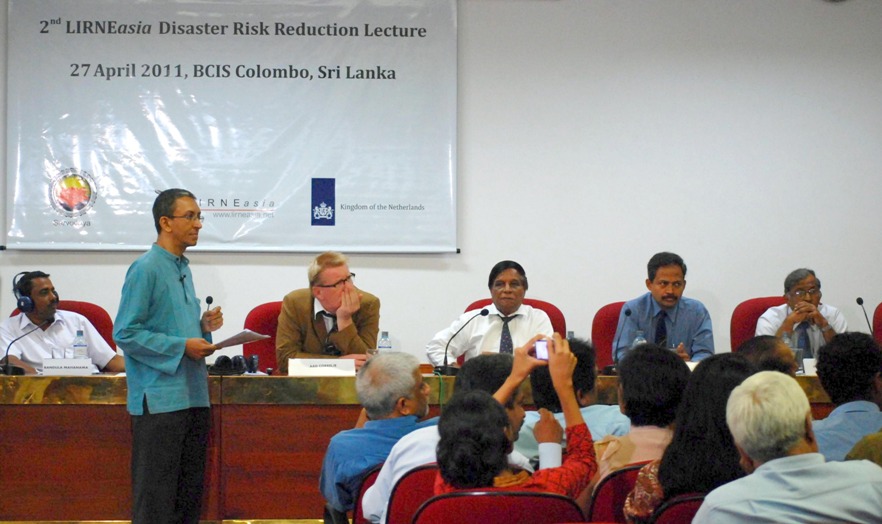
2nd LIRNEasia Disaster Risk Reduction Lecture, 27 April 2011 in Colombo: Nalaka Gunawardene (standing) moderates panel discussion
Writing on 20 April 2011, exactly 25 years after the Kantale large dam breached and washed away downstream villages, I posed the question: “If there were to be a catastrophic dam failure in Sri Lanka today, is there a warning system in place to detect the failure and issue timely warnings? Have the downstream communities participated in evacuation drills and know what action needs to be taken when a warning is issued?”

I’ve been asking such questions for a while. In fact, the post-mortem of the Kantale dam breach was one of the bigger stories I covered soon after I entered mainstream journalism in late 1987. By then, a few months after the incident, a presidential commission of inquiry was looking into what caused that particular disaster.

My interest in this subject is perhaps inevitable. I live in a country that has a high concentration of man-made water bodies. There are approximately 320 large and medium sized dams in Sri Lanka, and over 10,000 smaller dams, referred to as “wewas”, most of them built more than 1,000 years ago. In fact, Sri Lanka probably has the highest number of man-made water bodies in the world. According to the Sri Lanka Wetlands Database, the major irrigation reservoirs (each more than 200 hectares) cover an area of 7,820 hectares, while the seasonal/minor irrigation tanks (each less than 200 hectares) account for 52,250 hectares. This adds up to 60,070 hectares or just over 600 square kilometres — nearly a tenth of the island’s total land area.

Lankans are justifiably proud of their ancient hydrological civilisation — but don’t take enough care of it. Nothing lasts forever, of course, but irrigation systems can serve for longer if properly maintained. In a world where extreme weather is becoming increasingly commonplace, we can’t afford to sit on 25 centuries of historical laurels. Unless we maintain the numerous dams and irrigation systems – most of which are still being used for farming – heritage can easily turn into hazard.

Cartoon from Daily Mirror, 20 Jan 2011
As indeed happened in early 2011, when massive and successive floods lashed the country’s Dry Zone where most reservoirs are located. It was a strong reminder how dams and reservoirs not only attenuate the effects of heavy rains, but if breached, can magnify the effects of such rainfall.

More than 200 small dams did breach during those rains, causing extensive damage to crops and infrastructure. The most dangerous form of breach, the over-topping of the earthen dams of large reservoirs, was avoided only by timely measures taken by irrigation engineers — at considerable cost to those living downstream. This irrigation emergency was captured by a local cartoonist: the head in this caricature is that of the minister of irrigation.

In early February, Sri Lanka announced that it will expand its dam safety programme to cover more large reservoirs and will ask for additional funding from the World Bank following recent floods. Never mind the irony of a proud heritage now having to be maintained with internationally borrowed money. Public safety, not national vanity, comes first.

All this provided a timely setting for the 2nd LIRNEasia Disaster Risk Reduction Lecture in Colombo, which I chaired and moderated. This enabled the issues of flood protection and dam safety to be revisited, building on the path-finding work in 2005-2006 done by LIRNEasia, Vanguard Foundation and Sarvodaya in developing an early warning system for dam hazards in Sri Lanka.

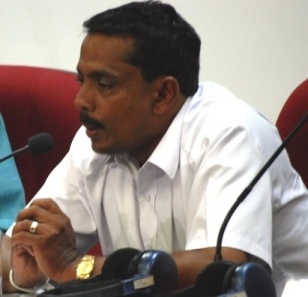
Bandula Mahanama
The main lecture was delivered by Dr Aad Correlje of the Delft University of Technology, the Netherlands. The response panel comprised Bandula Mahanama (a farmer organisation leader from one of the worst flood-affected areas in the Polonnaruwa District), S Karunaratne (Sri Lanka National Committee on Large Dams), Dr Kamal Laksiri (Ceylon Electricity Board) and U W L Chandradasa (Disaster Management Center). A summary is found on LIRNEasia’s blog.

Dams and irrigation systems are widely seen as the exclusive domain of civil engineers. They certainly have a critical role to play, but are not the only stakeholders. I was very glad that both our panel and audience included voices from many of these groups — especially the many communities who live immediately downstream of dams and reservoirs. Some of them are always in the shadow of a dam hazard, and yet helpless about it.

This was the gist of farmer leader Bandula Mahanama’s remarks – he made a passionate plea for a more concerted effort to improve proper maintenance of dams and reservoirs. “Wewas are part of our life, but right now our lives are in danger because the irrigation heritage is in a state of disrepair,” he noted.

I will write more about this in the coming weeks. My last thought from the chair was something I first heard many years ago in a global documentary. When it comes to water management, everybody lives downstream.

That’s certainly the case — but some are more downstream than others. And not everyone lives with the same peace of mind. We need to do something about it.

See also my recent writing in Sinhala on this topic, as part of my weekly science and development column in the Ravaya newspaper in Sri Lanka:

Nalaka Gunawardene’s Ravaya column – 27 Feb 2011 – Dam Safety in Sri Lanka

Anna Hazare: India’s Leading Graft-buster does it again!

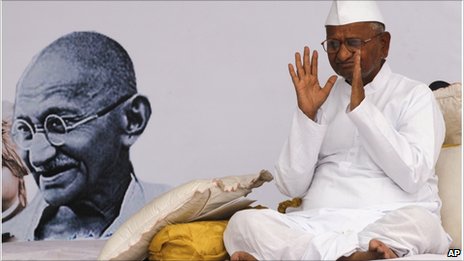
Anna Hazare: Just Say NO!
This 71-year-old Gandhian is the new face of anti-corruption activism in India.

His name is Kisan Bapat Baburao Hazare, but he is popularly known as Anna Hazare. He is an Indian social activist who is giving voice to mass sentiment against pervasive corruption that has shocked Indian society in recent months.

On 5 April 2011, Anna Hazare started a Satyagraha, or a fast unto death, to pressurise the Government of India to enact a strong anti-corruption law that will establish a Lokpal (ombudsman) with the power to deal with corruption in public offices. The fast led to nationwide protests in support of Hazare. It ended four days laater, on 9 April 2011, with the government agreeing to all of his demands: it issued a gazette notification on formation of a joint committee headed by senior minister Pranab Mukherjee to draft an effective Lokpal Bill.

Anna Hazare has a long involvement in rural development, self reliance and anti-corruption work. In 1991, he launched the Bhrashtachar Virodhi Jan Aandolan (BVJA), or People’s Movement against Corruption.

For more information, I want to share what two Indian journalist friends have produced about this remarkable man.

Kalpana Sharma has written this profile for BBC Online, tracing the man’s progress and the emergence of a popular movement against corruption in India:
Anna Hazare: India’s pioneering social activist

As she notes: “The media attention has encouraged more middle class citizens to come out on the streets holding candles, carrying placards, shouting slogans, singing songs and even fasting in sympathy with Hazare. The numbers are modest but the buzz on social networking sites as well as media attention makes it appear larger.”

This is an extract from a half-hour documentary film that Pradip Saha made for the Centre for Science and Environment (CSE) India in 2000, which looked at the nexus between corruption, environment and natural resource management in India. It ends with this segment on Anna mobilising the grassroots against this scourge.