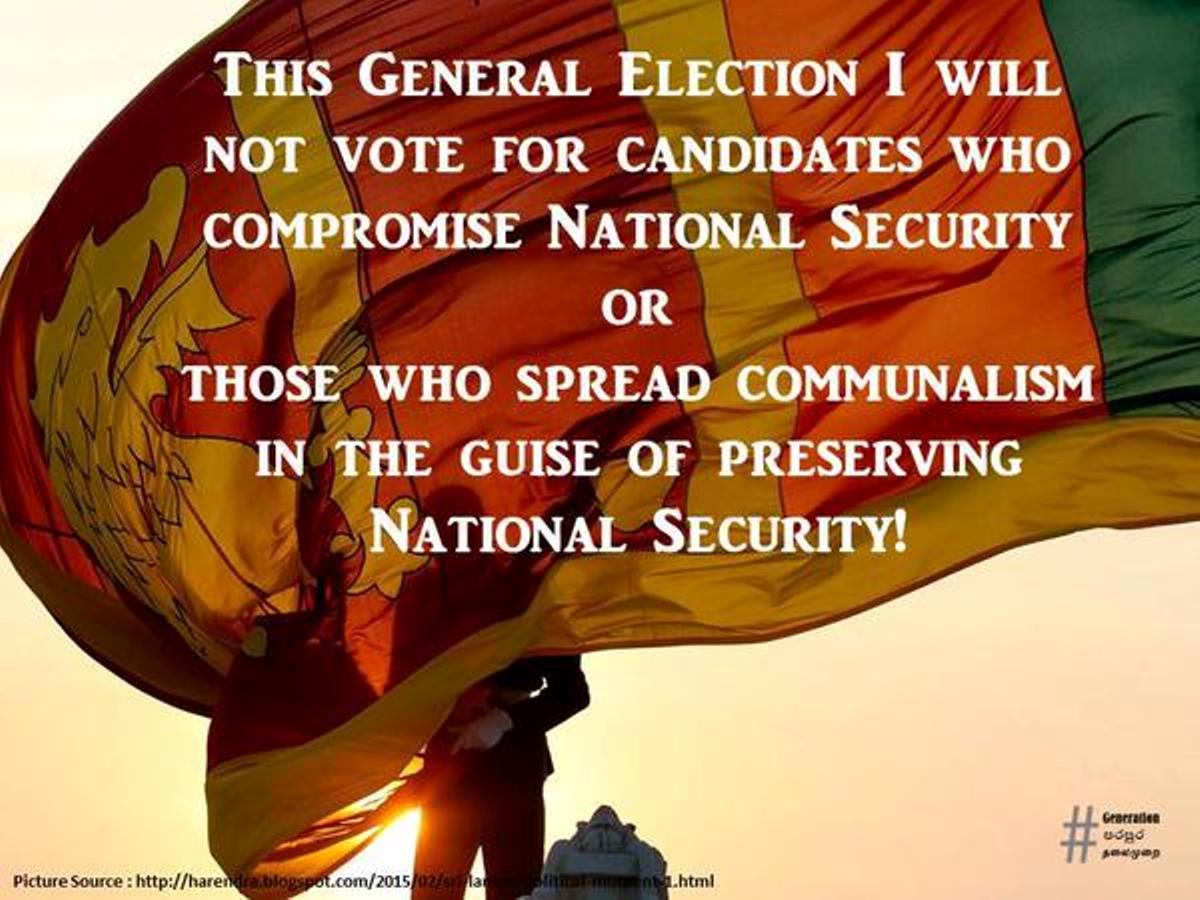
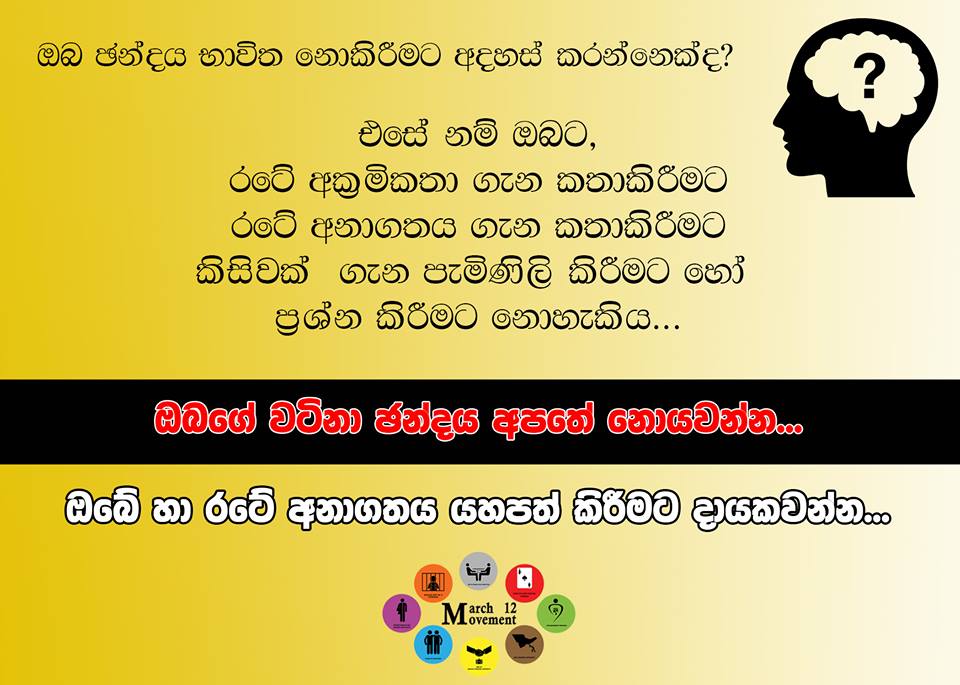
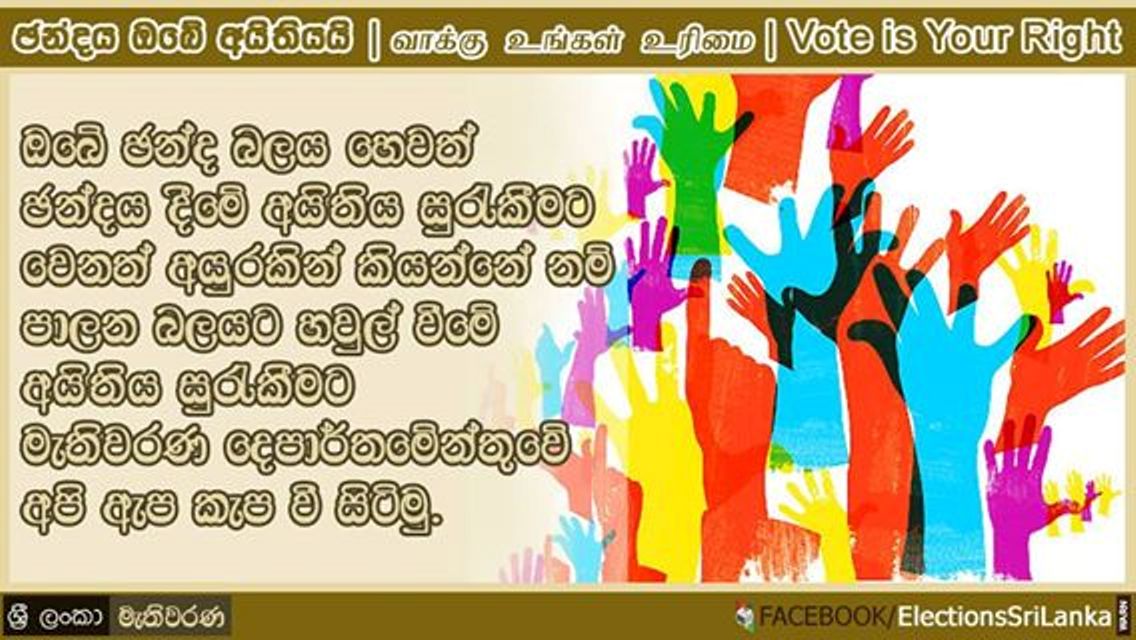
A Popular Election Meme created by Hashtag Generation, Sri Lanka
“Every citizen – including activists and academics — can play a part in shaping the future of our democracy. In this, technology is not the only key driver; what matters even more is the strategic use of our imagination and determination.
“We may not yet have all the detailed answers of our digital future, but one thing is clear. In 2015, we the people of Sri Lanka embarked on a progressive digitalization of our politics and governance.
“It is going to be a bumpy road – be forewarned — but there is no turning back.”
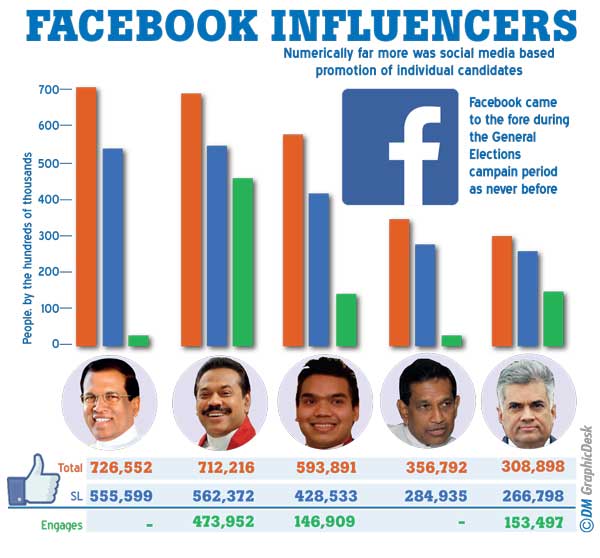
Since then, things have evolved further. In this essay, I look at how the Elections Commission, political parties, election candidates, civil society advocacy groups and individual cyber activists have used various social media tools and platforms in the run-up to, during and immediately after the Parliamentary Election.
“What role (if any) did social media play in the recently concluded General Election on 17 August 2015?
“Many are asking this question – and coming up with different answers. That is characteristic of the cyber realm: there is no single right answer when it comes to a multi-faceted and fast-evolving phenomenon like social media.
“Shortly after the Presidential Election of 8 January 2015 ended, I called it Sri Lanka’s first cyber election. That was based on my insights from over 20 years of watching and chronicling the gradual spread of information and communications technologies (ICTs) in Sri Lanka and the resulting rise of an information society.
“That was not the first time social media had figured in Lankan election campaigns. The trend started slowly some years ago, with a few tech-aware politicians and advertising agencies using websites, Facebook pages and twitter accounts for political outreach. However, such uses did not reach a ‘critical mass’ in the general and presidential elections held in 2010, or in the provincial and local government elections held thereafter.
“By late 2014, that changed significantly but this time the frontrunners were politically charged and digitally empowered citizens, not politicians or their support teams.”
The above is an extract from an op-ed I have just written and published in Daily Mirror broadsheet national newspaper in Sri Lanka (3 Sep 2015).
In this week’s Ravaya column (in Sinhala), I revisit the on-going debate on social media and social accountability, this time from the perspective of freedom of expression.
Unless a user takes consistent precautions, everything published online is ultimately traceable to the point of origin. However, for most practical purposes, options of anonymity and pseudonymity are still available on the web – and widely used by users, for a variety of reasons. Contrary to what some misinformed people say, there is nothing legally or morally wrong with this practice.
Of course, the facilities can be misused, most notably in spreading hate speech and deliberate falsehoods. But this reality, by itself, is not a sufficient argument against online anonymity or pseudonymity. Indeed, as I argue in this column, being able to conceal one’s real identity is a safe way for social activists and public intellectuals to express their views living in countries with repressive regimes and/or intolerant societies.
While I myself have always expressed my views online under my own name — and sometimes received vitriol and threats as a result — I defend the right for anyone to remain anonymous or use pseudonyms.
In this week’s Ravaya column (in Sinhala language), I probe why sections of Lankan society are habouring growing fears of social media, especially Facebook.
A few have called for a blanket ban of Facebook, which the secretary to the Ministry of Media has assured (in his Twitter feed) would not happen. There is an urgent need, however, to enhance public understanding in Sri Lanka of social media use, with particular attention on safety precautions, privacy protection and cyber civility.

 Open Minds!