Do they have a story to tell? Who is listening?Piracy has a chequered history, and even the Wikipedia offers a carefully qualified definition. One person’s pirate can be another person’s defender. There’s an argument that the European colonial powers rode on the backs of their pirates or buccaneers. And I’m writing this in English language possibly because the English were more successful in their overseas piracy than other nations!
Piracy is all over the news again, due to increased activity off Somalia. But in the past few weeks, we’ve started hearing another side of the Somali piracy story — one that the mainstream media didn’t tell us.
Johann Hari, a columnist for the London Independent, posted an op ed in Huffington Post on 13 April 2009 that took a different look at Somali pirates. His main argument: “In 1991, the government of Somalia – in the Horn of Africa – collapsed. Its nine million people have been teetering on starvation ever since – and many of the ugliest forces in the Western world have seen this as a great opportunity to steal the country’s food supply and dump our nuclear waste in their seas.”
In recent days, two interesting short videos have been posted by two activist groups to support the same point of view. I haven’t investigated this story myself, but am intrigued by their take on a widely reported topic…especially because it’s an angle that we don’t read or see in the mainstream media!
This film from Awareness Unfolds highlights the fact that the media is lying about the so called “pirates” of Somolia. According to the blurb: “They (media) choose not to tell you about the toxic waste dumping going on by American, European, and Asian countries that have lead to the death of many Somolian citizens.”
As Johann Hari says at the end of his article: “The story of the 2009 war on piracy was best summarised by another pirate, who lived and died in the fourth century BC. He was captured and brought to Alexander the Great, who demanded to know “what he meant by keeping possession of the sea.” The pirate smiled, and responded: “What you mean by seizing the whole earth; but because I do it with a petty ship, I am called a robber, while you, who do it with a great fleet, are called emperor.” Once again, our great imperial fleets sail in today – but who is the robber?”
Johann Hari has reported from Iraq, Israel/Palestine, the Congo, the Central African Republic, Venezuela, Peru and the US, and his journalism has appeared in publications all over the world. In 2007 Amnesty International named him Newspaper Journalist of the Year. In 2008 he became the youngest person ever to win Britain’s leading award for political writing, the Orwell Prize.
“This year alone, more than 500,000 women will die during pregnancy or childbirth. That’s one woman missing every minute of every day. We call these women ‘missing’ because their deaths could have been avoided. In fact, 80 per cent of maternal deaths could be averted if women had access to essential maternal health services.
“We know where and how these women are dying, and we have the resources to prevent these deaths. Yet, maternal mortality is still one of the most neglected problems internationally.”
Unfortunately, critical issues like these often don’t make the news – or worse, are relegated to the background as inevitable. As Joseph Stalin said in a different context, one death is a tragedy; a million deaths a mere statistic.
The challenge to the development community is to go beyond simply counting deaths in cold, clinical terms. UNICEF has recently released a two minute video, “Missing Mothers” as a tool for international development professionals to use in raising awareness of the issue of mothers dying needlessly.
Having a baby is both a very natural process and a joyous occasion for the parents and extended family concerned. Yet having a baby still remains one of the biggest health risks for millions of women worldwide.
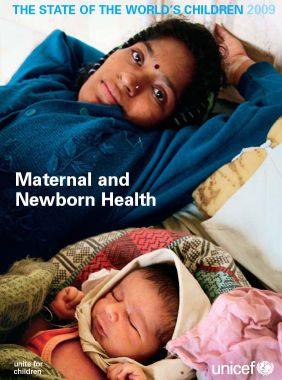
Time to make missing women count...As Unicef’s 2009 State of the World’s Children report reminded us recently, 1,500 women die every day in the world due to complications arising during pregnancy and childbirth. The chances of a woman in developing countries dying before or during childbirth are 300 times greater than for a woman in an industrialised country like the United States. Such a gap does not exist in any other social indicator.
She noted: “The solution has been known for years. The problem is the will to make it work. We also know that the solution would benefit everyone, not just women. Yet, affordable and accessible health care, for instance, has not received the thrust that is needed.”
The Missing Women video suggests to activists and campaigners that action can start with five steps: 1. Educate girls, young women and yourself; 2. Respect their rights; 3. Empower them to participate; 4. Invest in maternal health; 5. Protect against violence and abuse. The Unicef website, meanwhile, lists 10 ways in which concerned individuals can make a difference.
All very commendable and necessary — but not sufficient. With all the good intentions in the world, Unicef’s experts and officials come across as, well, detached and geeky. They don’t connect well enough to the real world people whose needs and interests they are genuinely trying to serve. Their messages are lost somewhere in their precise terms, jargon and endless acronyms.
Just take, for example, the very phrase of maternal mortality itself. Precise but also very stiff and dry. Who outside the medical and development circles uses such terms in conversation? When I write or make films about the issue, I prefer to call it ‘mothers dying needlessly while having babies’. Yes, it’s more wordy and perhaps less exacting. But most ordinary people would get what I’m talking about.
If the jargon-ridden language reads dry in text, it completely puts off people when they watch such words being spoken on video. Such films may pander to the Narcissism of Unicef mandarins, but they completely flop in terms of public communication and engagement.
This is the same point I made in October 2008 when commenting on the Unicef-inspired first Global Handwashing Day: “Passion used to be the hallmark of UNICEF during the time of its legendary executive director James Grant, who strongly believed in communicating messages of child survival and well-being. He gave UNICEF a head start in working with the media, especially television.”
Jim Grant’s deputy, journalist Tarzie Vittachi, who came over to the UN children’s agency after a stint at the UN population fund, used to say: “Governments don’t have babies; people do”. We might extend that to: inter-governmental agencies don’t have babies; real women do. That may be why Unicef insists on delivering its life-saving messages so riddled in politically and scientifically correct, but so sterile language.
Unicef’s YouTube channel has a number of short videos related to what they insist on calling maternal mortality. Here’s an example where Unicef’s Chief of Health Dr. Peter Salama says it’s really an unconscionable number of deaths, and a human tragedy on a massive scale:
We have now passed the half way mark, but progress has been patchy and unimpressive. And it will remain so as long as the UN agencies and other development players insist on peddling jargon and acronyms. Considering the issues of life and death involved here, we must view bad communication as a killer — joining the ranks of unsafe drinking water and violence against women and girls.
Writing an editorial for SciDev.Net in September 2005, I noted: “All development workers and UN officials should take a simple test: explain to the least technical person in your office the core message and relevance of your work. Many jargon-using, data-wielding, acronym-loving development workers would probably fail this test. But unless development-speak is translated into simpler language, the MDGs will remain a buzzword confined to development experts and activists.”
I don’t believe in ghosts, but it’s time to bring back the spirits of Jim Grant and Tarzie Vittachi to Unicef to again humanise the agency so mired in its own ‘geekspeak’. The intellectual rigours of evidence-based, scientific analysis must be balanced with clarity and accessibility. It’s fine to be informed by science, but learn to say it simply, clearly and concisely.
The lives of half a million women and millions of children depend on it.
In his long years of journalism in India, my friend Darryl D’Monte had faced all sorts of questions and situations. But this was one question that stunned and left him speechless for a while.
A visiting Canadian TV crew made this request in the 1970s, when Darryl was resident editor of The Times of
India. He was giving them some insights on the extent of poverty in his city of Bombay, since renamed as Mumbai. The crew had heard of the deliberate maiming of street children, before being employed as beggars. A disabled child would evoke more sympathy, increasing the daily collection for gangsters operating them from behind the scenes.
Darryl wasn’t willing to be associated with this ‘staging’. “Well, it’s going to happen anyway,” was the film crew’s cynical answer.
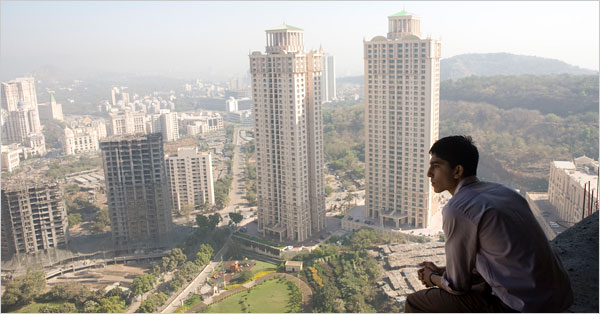
Now, fast forward 30 years to the present. At one point in the British-Indian movie Slumdog Millionaire, we see a young girl being blinded by a gangster who shelters and feeds a small army of children — all unleashed on Mumbai on a daily basis to tug at the heart strings of its teeming millions.
The film’s protagonist Jamal escapes the same fate by making a mad dash for freedom with his brother, Salim. But years later, they cross the gangster’s path again, with devastating results – for him.
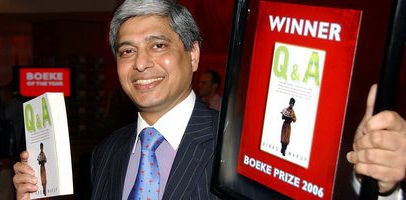
Vikas Swarup: Look what I've started...Set and filmed in India, Slumdog Millionaire is the story of a young uneducated man from the slums of Mumbai who appears on the Indian TV’s version of Who Wants to Be a Millionaire? (Kaun Banega Crorepati) and does so well to reach the final question that the game show host and the police suspect him of cheating.
Some Indians feel their country’s ugly underbelly has been magnified by locating and filming part of the story in the slums of Mumbai. But director Danny Boyle, who sees his film as a Dickensian tale, says he shot in real, gritty locations “to show the beauty and ugliness and sheer unpredictability” of the city.
Indian diplomat Vikas Swarup, who wrote the 2005 novel Q and A on which the movie is based, has a similar view. “This isn’t social critique,” he told The Guardian in an interview. “It’s a novel written by someone who uses what he finds to tell a story. I don’t have firsthand experience of betting on cricket or rape or murder. I don’t know if it’s true that there are beggar masters who blind children to make them more effective when they beg on the streets. It may be an urban myth, but it’s useful to my story.”
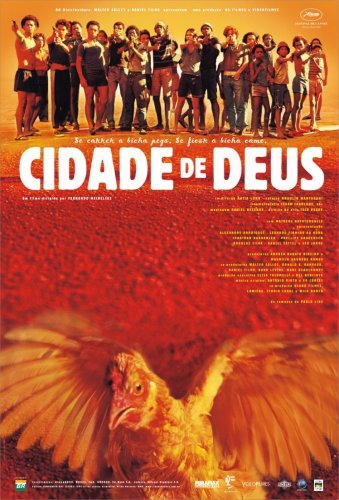
To me, Slumdog Millionaire feels like a cross between the acclaimed Brazilian slum movie City of God (Portuguese name: Cidade de Deus, 2002) and Quiz Show, the 1994 American historical drama film about TV quiz scandals in the 1950s.
City of God (2002) was filmed in the favelas of Rio de Janeiro
City of God is a Brazilian crime drama film directed by Fernando Meirelles and Kátia Lund, released in its home country in 2002 and worldwide in 2003. It was adapted by Bráulio Mantovani from the 1997 novel of the same name written by Paulo Lins.
The film’s depiction of narcotic drug rings, hold-ups, street violence and police corruption may not have been what the upper middle class Brazilians wanted to showcase to the rest of the world, but the film’s stark if grisly authenticity resonated with movie audiences around the world. Most of the actors were residents of favelas (slums) of Rio de Janeiro, such as Vidigal and the Cidade de Deus itself. City of God became one of the highest-grossing foreign films released in the United States up to that time.
The makers of Slumdog Millionaire adopted a similar approach. Its co-director Loveleen Tandan says she likes to get as close to reality as possible. This drove her to the slums of East Bandra to look for young children who resembled the protagonists in the story.
As she recalled in a recent interview with Tehelka: “I was very keen to get real slum kids, which is why I convinced them (producers) to do one-third of the scenes in Hindi. I made a scratch tape with real street kids. The team was surprised that Hindi actually made it brighter and more alive.”
Indeed, Slumdog doesn’t feel like a ‘foreign film’ despite it having a fair number of English subtitles, which only enhance the overall cinematic experience.
But how realistic should films try to become, before the local realities are distorted or local sensibilities are affected? Where does documentary end and drama begin? These questions will continue to be debated across India and elsewhere while Slumdog enthralls millions on its first theatrical release.
Feature film makers can exercise their creative license far more than factual film makers. I doubt if the creators of authentic, close-to-the-ground movies like City of God and Slumdog Millionaire set out with any specific social agenda. They are in the business of entertainment, and just happen to find plenty of drama in real life in places like urban slums. We might argue that in the right hands, dramatised movies can draw mass attention to development issues and challenges far more effectively than the often dull and dreary documentaries.
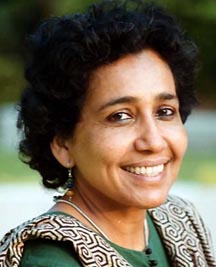
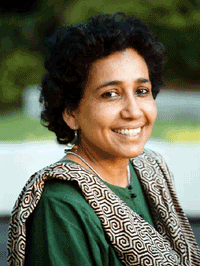
Kalpana Sharma: Eyes wide open“If through (the movie) the world gets a peek at an India inhabited by millions of people who continue to live their lives without clean water, sanitation or electricity, what is the problem?” asks another Indian friend and long-time Mumbai resident Kalpana Sharma.
In a perceptive essay titled Shantytowns of the Mind, written in The Indian Express in early January 2009 before she saw the film, Kalpana flagged important concerns: “Slumdog Millionaire’s success raises some deeper questions. How do we depict poverty as writers, filmmakers, journalists? Is it fair to expect us all the time to give a full, balanced, sensitive portrayal? Or is it inevitable that we write, film, for our audiences? And if, as a byproduct, people are sensitized, so be it. Also, if they are annoyed, so be it. If we are considered exploitative, so be it.”
Kalpana speaks with authority, and not just because she lives in the megacity of Mumbai (population: 13 million and rising) which, she points out, is half made up of slums. In 2000, she wrote a book titled Rediscovering Dharavi: Stories from Asia’s Largest Slum. Far from being a cold, clinical analysis of facts, figures and trends, it’s a book about the extraordinary people who live there, “many of whom have defied fate and an unhelpful State to prosper through a mix of backbreaking work, some luck and a great deal of ingenuity”.
Kalpana ends her essays with these words: “In the end you realise as a writer, a journalist or a filmmaker, that the best you can do is to shine a torch, a searchlight, on an entrenched problem. But the solution will not be found merely by that illumination. For that, there are many more steps to be taken.
“Slumdog Millionaire has focused its lens on the children of India’s slums through a work of fiction. What we do to change their future is the non-fiction that has yet to be written.”
As I have explained elsewhere: “I’m strongly committed to promoting media freedom, but have never been the placard-carrying, slogan-shouting type. Street activism is necessary — but not sufficient. I’ve been more interested in studying trends and conditions, trying to anticipate what the next big threats, challenges and opportunities are, and how best we can respond to them.”
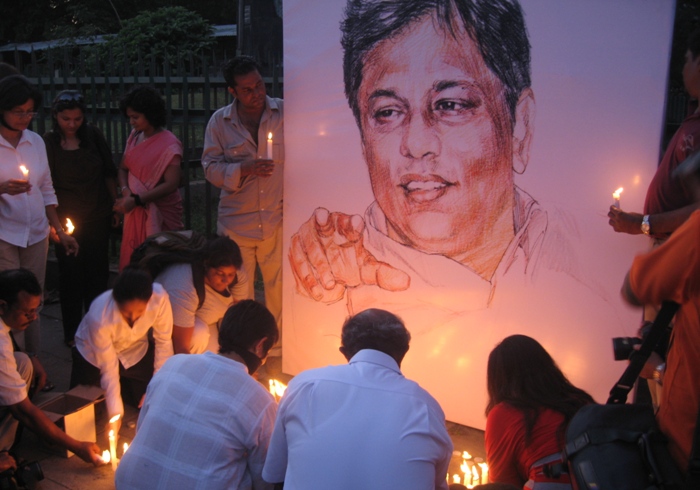
So I went to the vigil more for Lasantha the person and less for any organised effort. The invitation I received by SMS and email from several sources asked us to gather outside Colombo’s Vihara Maha Devi (formerly Victoria) Park at 5.15 pm. It was going to be a ‘joint civil society protest’ against Lasantha’s killing and the erosion of media freedom, democracy and human rights.
It turned out to be a well-intended but poorly-planned event lacking in vision and dynamism, perhaps a bit like our (very) civil society entities themselves. The couple of hundred people who joined it came mainly from Colombo’s high society, the ones who faithfully lapped up every word that Lasantha churned out week after week for nearly 15 years. Ironically, Lasantha and his newspaper were only loosely associated with this kind of (very) civil society – fellow companions on a shared journey, but not necessarily agreeing on priorities or strategies.
I remembered the battered face of an old lady who sat through the entire funeral service – and then left quietly, without even lining up with the rest of the crowd to take one last look at Lasantha as he lay amidst flowers. I remembered the handful of men and women dressed in bright coloured clothes – standing out amidst the sea of white or black clad people – who I later found out came from the Kotahena area and were part of Lasantha’s home town church.
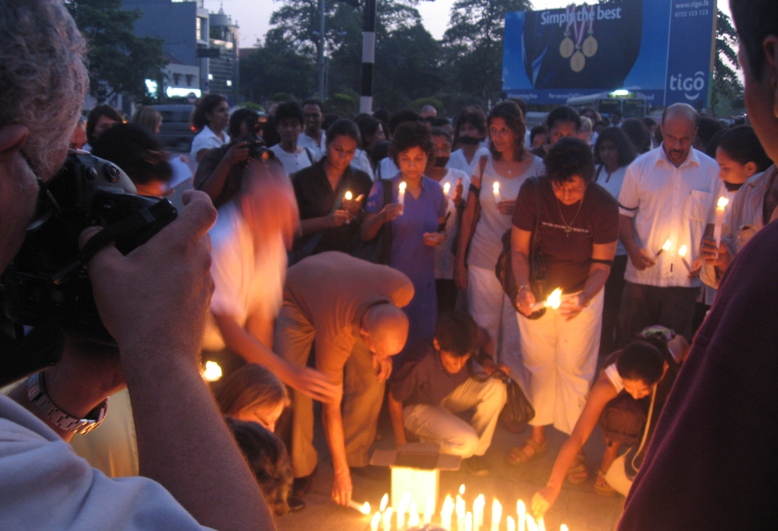
Lighting candles was good. Keeping the flame alive is harder...
No one had sent SMS or emails asking them to turn up. Some of them might not have been readers of English newspapers, which circulate among a numerically small but socially and economically influential section of Lankan society. They came because they felt the fallen man had stood up and spoken out for them.
In comparison, the candlelight vigil was decidedly upmarket. Nothing wrong in that, for the chattering class is very much part of our society and have the same rights to dissent and protest. In some countries, the upper middle class even provides vision, articulation and leadership to mass struggles. Ours, sadly, is more characterised by part-time activists who move more in the cocktail circuits grumbling about everything yet doing precious little to change the status quo. Indeed, some of them in their day jobs benefit personally from the prevailing corruption and nepotism, no matter which political party is in office.
The vigil’s organisers – it wasn’t clear who exactly they were – had painstakingly got the material ready: a large painting of Lasantha, black cloth bands and, of course, candles. But they hadn’t given enough thought to the location. We initially gathered and spent over half an hour on a stretch of road (Green Path) where only motorists passed by, but absolutely no pedestrians. Then someone thought of moving to the nearby roundabout which was a more visible, strategic location.
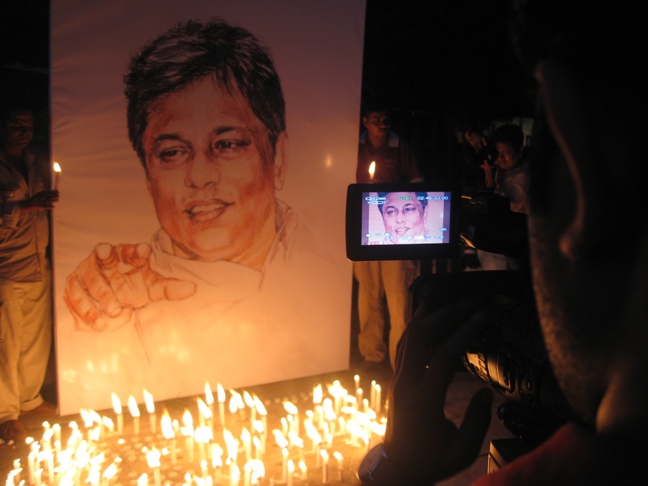
Not perfect, but better. By then, dusk was beginning to fall. We moved unhurriedly, chatting among ourselves, and slowly converged on a wide pavement. There, one by one, we started planting our candles on the ground in front of Lasantha’s picture. It was a moving moment captured in many still cameras and a handful of video cameras.
There we lingered for another hour or more, chatting with each other — and not necessarily about the lofty or somber matters. I was glad to catch up with several friends or associates active in artistic, journalistic or intellectual circles. I saw everybody else doing the same.
One of them, a human rights activist now turned peacenik, asked me many eager questions about blogging. A columnist for an English daily, he isn’t active online and his organisation is notably inept when it comes to mobilising the web for their cause. In his early 50s, he evidently hasn’t crossed what I call the Other Digital Divide. And he typifies the face of our organised civil society – a motley collection of do-gooders who are liberal, mostly secular, passionate yet largely ineffective in their advocacy for reform and change. They just can’t mobilise people power.
Candles burn out, but the image captured will live for longer...
Admittedly, it’s a quantum leap from the one-way street in op ed pages of mainstream print newspapers to the far less orderly, sometimes near-anarchic and often unpredictable world of the blogosphere. This might explain why a majority of Lankan civil society groups stay within their comfort zone and don’t engage the world of web 2.0
On the other hand, the younger, digitally-empowered activists who engage the web with technical savvy and passion are often too impatient or inexperienced (or both) with the necessarily tedious processes of institutional development – such as legal registration, financial management and putting in place mechanisms for the very ideals they advocate in governments and corporations: proper governance and accountability.
Fortunately, this offline/online divide is blurring, even if only slowly. Groups like Beyond Borders, which originated and found their feet in the new media world, are becoming more institutionalised. If they sustain themselves (and don’t lose their sharp edge), they can bridge the online world with the offline realities and needs.
Meanwhile, as some doggedly persistent citizen journalists and new media activists have shown in the days following Lasantha’s killing, it is now possible to stir up public discussion and debate on issues of rights, freedoms and democracy using dynamic websites, blogs, online video and other tools of web 2.0. See, for example, this reflection by the Editor of Groundviews.
Whether they are active online or offline, committed activists in Sri Lanka have their work cut out for them. If the candlelight vigil for Lasantha is an indication, far more work needs to be done in strategy, unity, networking and technology choices. The old order needs to pause, reflect and change their ways. If they can’t or won’t, at a minimum they must get out of the way. (Remember what happened to those dinosaur species that were vegetarian and harmless? They too went the way of T rex…)
Earlier on in the evening, as we were heading to the roundabout with burning candles in our hands, the wind suddenly picked up. Many of us struggled to keep the flame burning, sometimes shielding it with one palm. It wasn’t quite easy to do this while walking forward, watching our step. Amidst all this, we lost sense of where we were heading. We just followed those immediately in front of us, unsure who – if anyone – was leading. Not smart or strategic.
As I drove home, I realised how symbolic that candle-in-the-wind moment had been. Keeping the flames of truth, justice and fairness alive is hard enough. It becomes that much harder when winds of tribalism threaten to snuff it out. And in the thickening darkness, how do we make sure we are headed in the right direction?
The night is young and storm clouds are still gathering. We have miles to go before we can sleep.
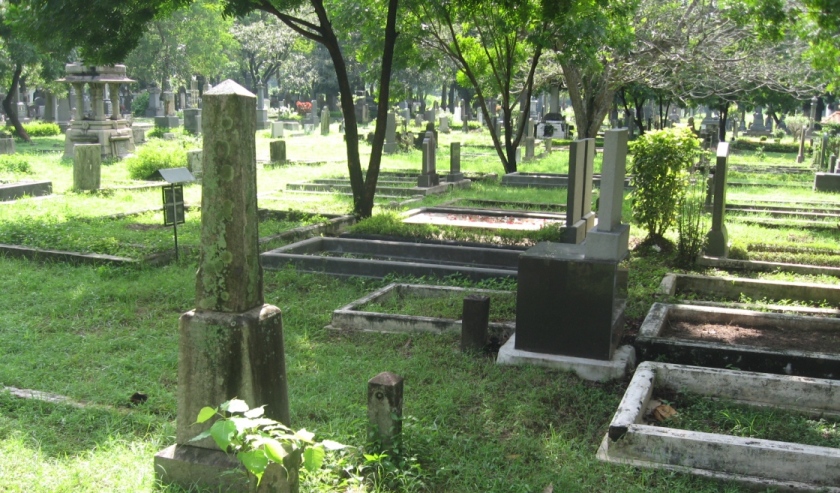
Colombo General Cemetery: No discussion or debate...
This is a view of Colombo’s main cemetery, the final resting place for many residents of Sri Lanka’s capital and its suburbs. I took this photo less than a month ago, when I visited a grave on a quiet morning.
The late Bernard Soysa, a leading leftist politician and one time Minister of Science and Technology, once called it ‘the only place in Colombo where there is no discussion or debate’.
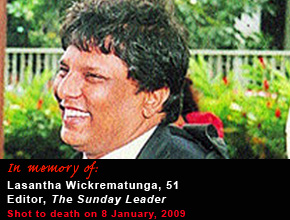
This afternoon, family, friends and many sorrowful admirers of Lasantha Wickramatunga, the courageous Sri Lankan newspaper editor who was brutally slain last week in broad daylight, took him there — and left him behind amidst the quiet company.
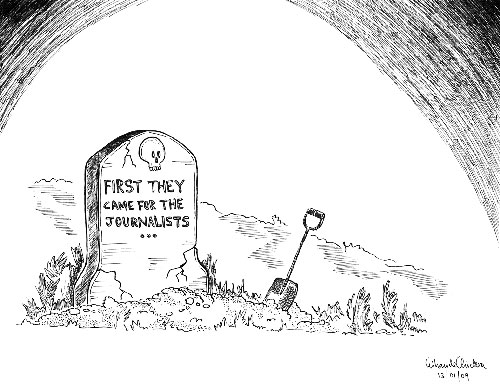
But not before making a solemn pledge. All thinking and freedom-loving people would continue to resist sinister attempts to turn the rest of Sri Lanka into a sterile zombieland where there is no discussion and debate. In other words, rolling out the cemetery to cover the rest of the island.
The last laugh?Silencing Lasantha was the clear aim of cowardly gunmen who intercepted him on his way to work and shot him at pointblank. Tarzie Vittachi, the first Lankan newspaper editor to be forced into exile 50 years ago for freely expressing his views on politically sensitive issues, once called such attacks ‘censorship by murder’. (Alas, since Tarzie uttered those words in 1990, shooting the messenger has become increasingly common in Sri Lanka.)
Rex de Silva, the first editor that Lasantha worked for (at the now defunct Sun newspaper) in the late 1970s, has just cautioned that Lasantha’s murder is the beginning of ‘the sound of silence’ for the press in Sri Lanka. Can this sound of silence be shattered by the silent, unarmed majority of liberal, peace-loving Lankans who were represented at the funeral service and the Colombo cemetery today?
And would they remember for all time Edmund Burke’s timeless words: “All that is necessary for the triumph of evil is that good men do nothing”?
How many would actually read, absorb and heed the deeply moving words of Lasantha’s one last editorial, copies of which were distributed at the cemetery and the religious service before that?
That editorial, which appeared in The Sunday Leader on 11 January 2009, embodies the best of Lasantha Wickrematunga’s liberal, secular and democratic views.
As I wrote in another tribute published today by Himal Southasian and Media Helping Media: “I have no idea which one – or several – of his team members actually penned this ‘Last Editorial’, but it reads authentic Lasantha all over: passionate and accommodating, liberal yet uncompromising on what he held dear. I can’t discern the slightest difference in style.”
“And there lies our hope: while Lasantha at 51 lies fallen by bullets, his spirit and passion are out there, continuing his life’s mission. That seems a good measure of the institutional legacy he leaves behind. If investigative journalism were a bug, the man has already infected at least a few of his team members…”
Much has been written and broadcast in the past 100 or so hours since Lasantha’s journey was brutally cut short by as-yet-unidentified goons who have no respect for the public interest or have no clue how democracies sustain public discussion and debate. I’m sure more will be written – some in outrage and others in reflection – in the coming days and weeks.
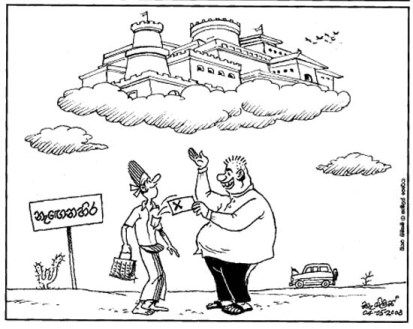
Siribiris (left): puncturing egos for 40 yearsAs we leave Lasantha to his rest, I remember Siribiris. For those unfamiliar with the name, Siribiris is an iconic cartoon character created by Camillus Perera, a veteran Sri Lankan political cartoonist who has been in the business as long as I have been alive.
Siribiris represents Everyman, who is repeatedly hoodwinked and taken for granted by assorted politicians and businessmen who prosper at the common man’s expense. The only way poor, unempowered Siribiris can get back at them is to puncture their egos and ridicule them at every turn. And boy, does he excel in that!
It’s no surprise that Lasantha – the bête noire of shady politicians and crooked tycoons – was very fond of Siribiris. Perhaps he saw his own life’s work as extending that of Siribiris in the complex world of the 21st century. That he did it with aplomb and gusto – and had great fun doing it, sometimes tongue stuck out at his adversaries – will be part of Lasantha’s enduring legacy. (As his last editorial reminded us, in 15 years of investigative journalism on a weekly basis, no one has successfully sued the newspaper for defamation or damages.)
So Goodbye, Lasantha. And Long live Siribiris!
Cartoon by Gihan de Chickera, Courtesy: Daily Mirror, Sri Lanka
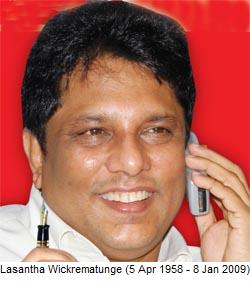
Farewell & fare forward...Saluting the memory of courageous newspaper editor, fearless investigative journalist, jovial human being and my former colleague Lasantha Wickramatunga, Editor in Chief of The Sunday Leader, Sri Lanka, shot dead by four gunmen within sight of his newspaper office. Today, we lost the real Leader of the Opposition.
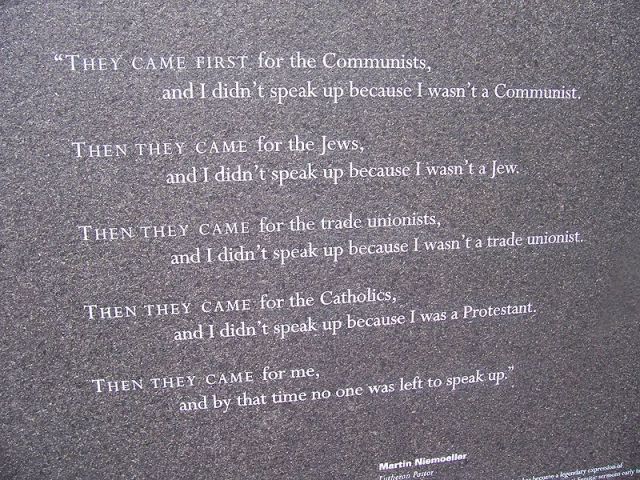
They picked Akanni up one morning
Beat him soft like clay
And stuffed him down the belly
Of a waiting jeep.
What business of mine is it
So long they don’t take the yam
From my savouring mouth?
They came one night
Booted the whole house awake
And dragged Danladi out,
Then off to a lengthy absence.
What business of mine is it
So long they don’t take the yam
From my savouring mouth?
Chinwe went to work one day
Only to find her job was gone:
No query, no warning, no probe –
Just one neat sack for a stainless record.
What business of mine is it
So long they don’t take the yam
From my savouring mouth?
And then one evening
As I sat down to eat my yam
A knock on the door froze my hungry hand.
The jeep was waiting on my bewildered lawn
Waiting, waiting in its usual silence.
I was run over by the truth one day.
Ever since the accident I’ve walked this way
So stick my legs in plaster
Tell me lies about Vietnam…
With these lines opened the bitterly sarcastic reaction to the televised horrors of the Vietnam War by British poet, playwright and performer Adrian Mitchell.
He first read his best-known poem, called To Whom It May Concern (also known as Tell Me Lies), to thousands of anti-war protesters who flocked into London’s Trafalgar Square on the afternoon of Easter Monday 1964. As Mitchell delivered his lines from the pavement above in front of the National Gallery, angry demonstrators in the square below scuffled with police.
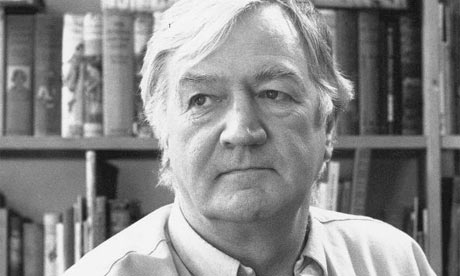
Adrian Mitchell (1932 - 2008)Mitchell, who died on 20 December 2008 aged 76, occasionally updated the poem to take into account the subsequent wars and resulting tragedies in places as far apart as Iraq, Burma, Afghanistan and Israel/Palestine.
“It is about Vietnam, But it is still relevant,” Mitchell said in 2001. “It’s about sitting faithfully in England while thousands of miles away terrible atrocities are being committed in our name.”
As Michael Kustow wrote in an obituary in The Guardian: “Mitchell’s original plays and stage adaptations, performed on mainstream national stages and fringe venues, on boats and in nature, add up to a musical, epic and comic form of theatre, a poet’s drama worthy of Aristophanes and Lorca. Across the spectrum of his prolific output, through wars, oppressions and deceptive victories, he remained a beacon of hope in darkening times. He was a natural pacifist, a playful, deeply serious peacemonger and an instinctive democrat.”
The one time journalist and television critic was fired by The Sunday Times (UK) for reviewing Peter Watkins’ 1965 anti-nuclear TV film The War Game. Its depiction of the impact of Soviet nuclear attack on Britain had caused such dismay within the BBC and British government that the public broadcaster cancelled its scheduled transmission on 6 August 1966 (the 21 anniversary of the Hiroshima attack). It was finally broadcast in 1985, with the corporation stating that “the effect of the film has been judged by the BBC to be too horrifying for the medium of broadcasting”.
But Auntie Beeb and the rest of the Establishment couldn’t stop Mitchell, whose satirical poems continued to demolish myths emanating from the propaganda mills of the military-industrial complex and their allies in the mainstream media.
As Kustow recalled: “To Whom It May Concern, a riveting poem against bombs and cenotaphs and the Vietnam war, with which he stirred a capacity audience in Mike Horovitz’s pioneering Poetry Olympics at the Albert Hall in 1965, has lasted through the too many wars since: a durable counting-rhyme to a rhythm and blues beat.”
Watch Adrian Mitchell recite/sing his poem in 1965 (black and white film):
As Jan Woolf wrote in another tribute: “To watch Adrian Mitchell…prepare his body for a performance of To Whom It May Concern – chin cupped in hand, eyes focused, back tense, ‘I got run over by the truth one day…’ – was to see a great poet steadying himself with all the focus and tension of a warrior. When those blue suede shoes got moving, the poem came alive. He breathed it, lived it, became it. It was as if he were dancing with language to get at the truth.”
Woolf recalls that Mitchell’s reading of Tell Me Lies at a City Hall benefit just before the 2003 invasion of Iraq was electrifying. “Of course, he couldn’t stop that war, but he performed as if he could.”
The 21st century re-mix ends with these words:
“You put your bombers in, you put your conscience out
You take the human being, and you twist it all about
So scrub my skin with women
So chain my tongue with whisky
Stuff my nose with garlic
Coat my eyes with butter
Fill my ears with silver
Stick my legs in plaster
Tell me lies about –
Iraq
Burma
Afghanistan
BAE Systems
Israel
Iran
Tell me lies Mr Bush
Tell me lies Mr Blairbrowncameron
Tell me lies about Vietnam”
For some strange reason that has nothing to do with Adrian Mitchell’s recent departure, these words and the whole poem keep turning in my mind over and over again.
“The attack on Mumbai by ten highly trained gunmen on the night of Wednesday, November 26, and the drama that followed over the next 60 hours, was physically confined to one corner of a very big city. But it extended its ambit to the rest of the city, the country and the world because of the non-stop media coverage.
“For two days and three nights, television channels gave blanket coverage to the drama around the siege of two hotels, the Taj Mahal Palace and Towers, and the Oberoi and Trident Hotels, as well as Nariman House in Colaba, a synagogue and centre for a Jewish sect. And the entire country watched in horror and fascination.”
This is how my friend Kalpana Sharma, one of the most respected journalists in India, looks back at the momentous events that took place in her home city of Mumbai from 26 to 30 November 2008. In a thought-provoking analysis published on Tehelka.com, Kalpana assesses 60 hours of continuous media coverage of the Mumbai crisis and notes the significant gaps.
As Mumbai and India recover from the daring attack, the media continue to play the dramatic images over and over. I was in Hyderabad, in southern India (more than 700 km away from Mumbai) for a few days from November 30 and saw this first hand – especially on India’s several dozen 24/7 TV news channels in English and many local languages. Even before arriving in India, I was following the unfolding events on India’s leading English news channel NDTV 24/7 and their website.
Kalpana SharmaI could see that the high adrenaline that every channel and reporter drew on during the 60 hours of drama has now changed into a mix of patriotism, jingoism and an incredible suspension of journalistic ethics and norms. This makes Kalpana’s reflections extremely timely and important.
She is not an armchair critic of the media, and understands the tough challenges that reporters and their gatekeepers face on a daily basis. “When such developments hit a city, it is understandable that there is a time lag before the media, particularly the electronic media, can react,” she acknowledges in her essay, and asks: “The electronic media, in particular, has to ask whether at a time when they were the only source of information for most of the city, and indeed the country, there should have been some restraint placed on information given out.”
I have met some professors of mass communication who have never been inside a news room and well-meaning media activists whose naive idealism makes me laugh. Kalpana, in contrast, counts over three decades of mainstream media experience and retired last year as Deputy Editor of The Hindu newspaper.
Read Kalpana’s full essay here: Unpacking The Pixel
Breaking News 24/7?
Others inside and outside India are also offering critical analysis of media’s role in the siege of Mumbai, or India’s 26/11 as it’s being called. One is by Anjali Deshpande and S K Pande of the Delhi Union of Journalists who have written an interesting commentary in the South Asian mediawatch website, The Hoot.
They acknowledge how “24×7 reporting of terror has indeed been has also been a traumatic experience for our colleagues” and go on to say that “Some of them really did a good job under the circumstances”. But their piece is are less charitable than Kalpana when they say: “If there is one thing the electronic media helped in particular to do in the last three days was to bolster the confidence of terrorists and to give them a sense of achievement far greater than their action may have provided them.”
They note: “The initial role of some of the media was to grab the eyeballs rather than ask questions and reflect all facets of life as they unfold without adding to the tension strife and trauma in such situations. In some cases the ethics evolved over the years was thrown into the dustbin. Add to it all the fact, that when some restraint began more than a touch of jingoism took over.”
They add: “The media behaved as if the country was so terrified it came to a standstill. As if Madhya Pradesh did not go to polls, as if Delhi did not vote, as if a former Prime Minister, V P Singh did not pass away, as if nothing else happened in the country.” Read the full essay in The Hoot: Three Days of Mumbai terror reporting.
There are dozens of other debates underway in the passionately argumentative Indian society, some of which are being conducted in the newspapers, news magazines, on the air and online. One that especially interested me was the role elitism played in how the media covered the siege of Mumbai.
The attacks took place at multiple locations in the heart of Mumbai, which included two leading hotels, a synagogue and Jewish centre and the main train station. But not all attacks lasted as long, and certainly not all of them received equal coverage.
Gnani Sankaran, a writer based in Tamil Nadu, southern India, asks some pertinent questions in a blog post titled Hotel Taj: Icon of whose India? “Watching at least four English news channels surfing from one another during the last 60 hours of terror strike made me feel a terror of another kind. The terror of assaulting one’s mind and sensitivity with cameras, sound bites and non-stop blabbers. All these channels have been trying to manufacture my consent for a big lie called — Hotel Taj the icon of India.
He adds: “It is a matter of great shame that these channels simply did not bother about the other icon that faced the first attack from terrorists – the Chatrapathi Shivaji Terminus (CST) railway station. CST is the true icon of Mumbai. It is through this railway station hundreds of Indians from Uttar Pradesh, Bihar, Rajasthan, West Bengal and Tamilnadu have poured into Mumbai over the years, transforming themselves into Mumbaikars and built the Mumbai of today along with the Marathis and Kolis
Chatrapathi Shivaji (Victoria) Terminus - the true icon of Mumbai
“But the channels would not recognise this. Nor would they recognise the thirty odd dead bodies strewn all over the platform of CST. No Barkha Dutt went there to tell us who they were. But she was at Taj to show us the damaged furniture and reception lobby braving the guards. And the TV cameras did not go to the government-run JJ hospital to find out who those 26 unidentified bodies were. Instead they were again invading the battered Taj to try in vain for a scoop shot of the dead bodies of the Page 3 celebrities.
Gnani Sankaran“In all probability, the unidentified bodies could be those of workers from Bihar and Uttar Pradesh migrating to Mumbai, arriving by train at CST without cell phones and PAN cards to identify them. Even after 60 hours after the CST massacre, no channel has bothered to cover in detail what transpired there.” Read his full blog post: Whose India, whose icon?
He echoes the same point as Gnani Sankaran about the Victoria Terminus being much more iconic than the Taj hotel, and comes to the same conclusion: “I can’t remember the last time that social class so clearly defined the coverage of a public event, or one in which people spoke so unselfconsciously from their class positions. The English news channels became mega-churches in which hotel-going Indians found catharsis and communion. Person after person claimed the Taj as home. Memories of courtship, marriage, celebration, friendship, the quick coffee, the saved-up-for snack, the sneaked lavatory visit, came together to frame the burning Taj in a halo of affection.”
In his closing para, Kesavan also touches on how the foreign media covered the Mumbai attacks: “English and American papers treated the terror attack as an assault on the West. The terrorists had, after all, specifically looked for American and British citizens to murder. Ironically, even as NDTV, CNN-IBN and Times Now put hotel guests at the heart of the horror and bumped train commuters to its periphery, older English-speaking peoples counted their dead and dimly regretted all Indian casualties as collateral damage. In that residual category, if nowhere else, the Indian dead remained one People.”
Another dimension in the media coverage following the Mumbai attacks is how it is affecting the relations between India and Pakistan, both nuclear powers. As The Hindu reported on 1 December 2008: “The escalating tensions between India and Pakistan over the Mumbai attacks have led to the declaration of hostilities in unexpected quarters – Pakistani media has declared a virtual war on Indian media for its ‘knee-jerk’ finger-pointing across the border, and its unquestioning acceptance of the Indian government’s ‘Pakistan-link’ theory.”
Moderate journalists and media-watchers across South Asia are calling for more restraint, self-reflection and plain common sense. On 4 December 2008, Himal Southasian – the independent and outspoken voice of South Asia – ran a special editorial which opened with these words:
“There is an attempt on to generate mass hysteria in India as television channels compete for ratings. The channels are using the Bombay attacks of last week in a dangerous game of TRP-upmanship which can well derail the political process and set back the India-Pakistan peace train. Going far beyond what is required of them even in times of crisis, some media houses are leading campaigns to get citizens to take pledges of patriotism. They are pushing a brittle, monochromatic vision of the resilient country we know as India.”
Beena Sarwar“Media might have brought the people closer but when nationalism rears its head, the beast of 24-hour television news also fuels conflict. This is where the commercial aspect comes in. When something big happens, the public seeks answers. The channels which cater to this need improve their ratings. Sensation sells. With viewers glued to the screens, channels keep them there with a continuous virtual reality show. They fill the time with speculative commentary, ‘expert’ guests and whatever footage is available. Sometimes such footage is repeated ad nauseum — like when the Twin Towers were destroyed on 9/11, when the Marriott hotel was attacked, when the FIA building in Lahore was struck.”
She adds: “Some Indian channels are running the Pakistan factor like a movie trailer, complete with sound effects and watch-for-the-next-episode commentary. This obviously fuels Pakistani indignation. However, this indignation could be tempered by being less reactive and empathising with the Indians’ pain and grief that many Pakistanis share. Zealous commentators could also recall the times that their own media houses sensationalised an issue.
“Journalists may argue that they are just the messenger, reflecting official or public opinion. But the media must also question, and get people to think. The stakes are high in our nuclear-armed countries, in a post-9/11 world where the major players include armed and trained men around the world who subscribe to the ideology of Al Qaeda and the Taliban.”
Ordinary people outside the media industry have also started expressing their concern.
“Media on both sides of the border has stopped reporting and started indulging in senseless rants. The media, particularly in India seems to have thrown logic to the wind,” wrote Anand Bala from Bangalore, in a letter to the South Asian mediawatch website The Hoot. “The screaming for war on the Indian side has reached a din. The media is manufacturing consent for a war and manufacturing consent for the very people who they are blaming – the politicians.”
I would give the last word to Kalpana Sharma: “Media rarely pauses to analyse itself as it hurtles from one breaking story to another. But the Mumbai terror attack shows us that it is essential that reporters be trained to handle such extraordinary situations, that they learn the importance of restraint and cross-checking as at such times the media is the main source of information. Professionalism and accuracy will ensure that we don’t contribute to prejudice and panic.”
Can five unknown Norwegians achieve the worthy goal that has eluded so many leaders and activists – peace within and among nations of our world?
Well, if the individuals happen to be selectors of the world’s most prestigious prize – the Nobel Peace Prize – they stand a better chance than most people. The Norwegian Nobel Committee, appointed by the country’s parliament for six-year terms, may not be very well known beyond their country but their annual selection reverberates around the world and has changed the course of history in the past century.
“It’s the laureates who work tirelessly and sometimes at great personal risk to pursue peace and harmony in their societies or throughout the world,” he told the international advisory council meeting of Fredskorpset, the Norwegian peace corp, held in Oslo on 4 – 5 September 2008. “With the Nobel Peace Prize, we try to recognise, honour and support the most deserving among them.”
Where high profile laureates are concerned, the prize becomes an additional accolade in their already well known credentials. But for those who are less known in the international media or outside their home countries, being awarded the Nobel Peace Prize is akin to being handed over a ‘loud speaker’ — it helps to amplify their causes, struggles and voices, he said.
In today’s media-saturated information society, the value of such an amplifier cannot be overestimated, says Lundestad, who also serves as Secretary to the Nobel Peace Prize selection committee. It allows laureates to rise above the cacophony and babble of the Global Village.
Geir Lundestad, Director, Norwegian Nobel Institute (photo from NRK)
Every year in October, Lundestad makes one of the most eagerly awaited announcements to the world media: the winner of that year’s Nobel Peace Prize. He would typically give a 45 minute advance warning to the laureate – this is the famous ‘call from Oslo’ (and ‘call from Stockholm’ for laureates of other Nobel prizes).
Lundestad, who has held his position since 1990, has had interesting experiences in making this call. For example, the 1995 prize was equally divided between the Pugwash Conferences on Science and World Affairs and Englishman Joseph Rotblat, its founding secretary general, for their efforts to diminish the part played by nuclear arms in international politics. But when he received the call, Rotblat had insisted that it was some sort of mistake; the media had hyped the prospect of then British prime minister John Major winning the prize for his work on Northern Ireland peace process. He went for a long walk and wasn’t home when the world’s media beat a path to his door a short while later.
Such early warning to the laureate does not always happen, especially if the media keeps a vigil at the favourite contender’s home or office. When Al Gore and the UN-IPCC were jointly awarded the 2007 prize, Lundestad rang the New Delhi office of IPCC chairman Dr Rajendra Pachauri shortly before the decision was announced in Oslo. Pretending to be a Norwegian journalist, he asked Pachauri’s secretary whether any media representatives were present. Being told yes, he just hung up.
The Nobel Peace Prize has been awarded to 95 individuals and 20 organizations since it was established in 1901. During this time, the Norwegian Nobel Committee has tried to honour the will of Swedish engineer, chemist and inventor Alfred Nobel. Where the peace prize was concerned, he wrote that it should go “to the person who shall have done the most or the best work for fraternity between nations, for the abolition of standing armies and for the holding and promotion of peace congresses”.
To decide who has done the most to promote peace is a highly political matter, and scarcely a matter of cool scholarly judgement, said Prof Lundestad, who is also one of Norway’s best known historians. He described the thorough selection process and the various checks and balances in place so that the prize does not become, even indirectly, an instrument of Norwegian foreign policy.
Notwithstanding these, the peace prize does not have a perfect record in whom it has selected as well as those it has failed to honour. The most glaring omission of all, he said, was Mahatma Gandhi.
Gandhi was nominated five times – in 1937, 1938, 1939, 1947 and, finally, a few days before he was assassinated in January 1948. The rules of the prize at the time allowed posthumous presentation, but the then committee decided not to (although UN secretary general Dag Hammarskjöld did receive the 1961 prize posthumously after he died in a plane crash). Gandhi’s omission has been publicly regretted by later members of the Nobel Committee; when the Dalai Lama was awarded the Peace Prize in 1989, the chairman of the committee said that this was “in part a tribute to the memory of Mahatma Gandhi”. Read Nobel website’s essay: Mahatma Gandhi: The Missing Laureate
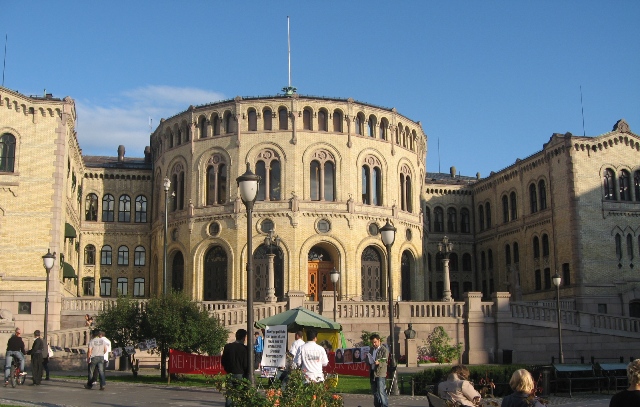
Norwegian Parliament that appoints Nobel Peace Prize Committee
And a few laureates may not have deserved to be so honoured – but Lundestad won’t name any for now (he likes his job and wants to keep it). Perhaps one day, after retirement, he might write a book where this particular insight could be shared.
Controversy has been a regular feature of the prize – both over its selections and exclusions. This is only to be expected when thousands of nominations are received every year, and given the high level political message the selection sends out to the world.
Despite its flaws, there is little argument that the Nobel Peace Prize is the most prestigious of all awards and prizes in the world. At Swedish Krona 10 million, or a little over 1.5 million US Dollars, it isn’t the most lavish prize – but much richer prizes lack the brand recognition this one has achieved over the decades. And it is the best known among over 100 peace prizes in the world.
In recent years, the committee has steadily expanded the scope of the prize to recognise the nexus between peace, human security and environmental degradation (Wangaari Mathaai in 2004; Al Gore and IPCC in 2007) and the link between poverty and peace (Mohammud Yunus, 2006).
The most important question, to many historians and scholars of peace, is the political and social impact of the Nobel Peace Prize. Lundestad is being too modest when he says that it’s the laureates, not the prize itself, that has achieved progress in various spheres ranging from nuclear disarmament and humanitarian intervention to safeguarding human rights and poverty reduction.
“We may have contributed — and that is quite enough,” he says. “We don’t claim to have ended the Cold War, or apartheid in South Africa.”
But the prize’s influence and catalytic effect are indisputable. When the 1983 prize was given to Polish trade union leader Lech Walesa, it triggered a whole series of events that eventually led to the crumbling of the Iron Curtain, collapse of the Berlin Wall and the eventual disintegration of the once mighty Soviet Union. The process culminated when Mikhail Gorbachev became the 1990 laureate. Read Nobel Peace Prize: Revelations from the Soviet Past
In another example, over the years there have been four South African laureates – Albert Lutuli (1960), Bishop Desmond Tutu (1984), Nelson Mandela and F W de Klerk (sharing 1993 prize). Lundestad says: “But we would never claim that the prize was a major factor in ending apartheid in South Africa. The prize was part of the wider international support that built up and sustained pressure on the white minority government. In some respects, the 1960 prize to Lutuli may have been the most significant – for it triggered a process that culminated in the early 1990s.”
He acknowledges, however, that in hot spots like Burma, East Timor and South Africa, the Nobel Peace Prize has enhanced the profile of key political activists and helped maintain the international community’s and media’s interest in these long drawn struggles.
And as Lundestad and the Nobel Peace Prize Committee of five unknown Norwegians know all too well, there is much unfinished business in our troubled and quarrelsome world seeking an elusive peace.
Watch a 2005 interview by University of California television, where host Harry Kreisler talks with Geir Lundestad. They discuss the Nobel Peace Prize, its history, impact and the controversy surrounding some of the awardees (December 2005):
Today is Earth Day. It’s especially observed in the United States, where it originated in 1970 as an apolitical event to rally everyone around to the call for a cleaner, safer environment.
Rather than talk anything environmental, I just want to share a brilliant animation produced by the famous Italian animator Bruno Bozzetto.
It’s called Grasshoppers. It takes a satirical look at the rise of our species in a historical context – and reminds us of our place.
Synopsis: In the natural course of earth’s evolution, five or a thousand years represent just a handful of seconds. What is mankind’s role in this infinite stage?
Grasshoppers received an Oscar nomination in 1991 in the animation shorts section.












 Open Minds!