Moving images blog, two years on: The journey continues…

Blogs put ME back into MEdia...
The Moving Images blog completes two years today. So we pause briefly to look back – and forward.

I launched the blog with two posts from near-freezing Washington DC on 17 March 2007, while participating in the DC Environmental Film Festival. Both concerned my own offering to the festival: Children of Tsunami: The Journey Continues, product of monthly filming with 8 survivor families in 4 countries for nearly one year after the Asian tsunami.

Since then, this blog’s own journey has continued: in 24 months, we have produced 342 posts in 134 categories and with 562 tags. These elicited a total of 622 comments from readers who came from all walks of life, and all parts of the world. To the end of 16 March 2009, I received a cumulative total of slightly over 246,900 page visits. I now average 500 – 600 visits a day.

I share my blogging journey with these readers who have enriched it in various ways. Some commented under their own names; others used pseudonyms. Some left email details; others none. A few have actually suggested stories that I later wrote up as blog posts. I don’t know most of my readers in person, and have only met them online. As this blog enters its 25th month, I thank them all. You’ve kept me going in a particularly tough time in the world…and in my personal life.

Moving Images wasn’t my first blog – in late 2006 I had started another blog called Communicating Majority World under the name ‘Lost Alien’, which I somehow didn’t sustain for more than a few weeks and a handful of posts. For reasons that I can no longer quite recall, the Lost Alien abandoned his original blog – and migrated over here!

When I started Moving Images, I was driven by a simple motive: to discuss and reflect on the many and varied topics and subjects that interest me professionally. In one way or another, these fall into the area of communicating science, development and environment to the non-specialist public. Because my work at TVE Asia Pacific involves using television and video for this purpose, there is a bias on moving images in many things I do.

But by design, this is not an official blog of TVE Asia Pacific, or any other organisation that I am associated with. In fact, I regularly express here views that I cannot say wearing any of these hats — because we live in a world where most people still react not just to the song, but also the singer (and can’t separate the two).
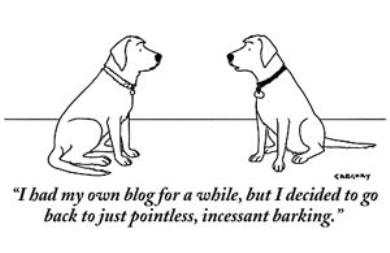
Are we there yet? No!
So this blog is unashamedly, intentionally self-centred: it puts ME back in Media. I make no apologies for speaking my mind on a variety of topics, and for returning to some issues that I’m passionate about.

After 22 years in journalism, broadcasting or communicating development, I find I have sufficient perspective in which to anchor my thoughts, and to express my views in a way, I hope, interests and engages readers. Like the ancient Greeks, I try to ask the right questions – even when I don’t always know or get the right answers. And I have more than a few stories to spice up the narrative.

I’m well aware of the inherent danger of combining writer-editor-publisher all in one: personal blogs don’t always operate under the usual checks and balances that we expect and presume in the more structured media outlets (whether they are in the mainstream or new media spheres). On more than one occasion, I’ve written impulsively – in frustration, anger or elation, and sometimes on the run. Thanks to the training in my news reporter days, I can still churn out readable prose fast. And only once in all these 24 months and 342 posts have I regretted rushing to publish (so, using my absolute discretion as the media tycoon of this blog, I pulled it down).

Do I see myself as a citizen journalist? Yes and no. I don’t report news, and only very occasionally write on latest developments (or breaking news, as it’s now called). I see myself more as a citizen commentator – the op ed equivalent in the new media domain. Yes, I do occasionally report from large conferences that I attend as a speaker or panelist. But I have found how demanding it is to blog from events while keeping up with everything that is going on.

Do I see myself as a Sri Lankan blogger? Not really. Scanning the 342 blog posts I’ve written, I can count only a two dozen that have an appreciable reference to Sri Lanka. This is not because I’m aloof or disengaged; I have simply set a framework for myself that goes well beyond the country of my residence and social/cultural anchor.

Another reason for this intentional lack of geographical focus is that besides this blog, I regularly write op ed essays for other online outlets like Groundviews, MediaChannel.org and MediaHelpingMedia, and print news magazines like Montage. I use these platforms for commenting on Sri Lankan issues that interest or concern me.

I find it a bit incongruous that we who use the new media tools of web 2.0 – which signify the end of old geography – must contain ourselves to geographical or cultural cocoons. Thus, while I sometimes join gatherings of bloggers based in Sri Lanka, and share concerns for freedom of expression, I have consciously avoided joining Kottu, the leading aggregator of Sri Lankan blogs.

gvo-logo-lgAnd I get more than a little miffed when the excellent aggregation service Global Voices constantly labels me as a Sri Lankan voice (with a map of Lanka to boot!) whenever they helpfully flag my blog posts for wider attention. I have privately discussed this with GV’s South Asia coordinator who says their current tagging and categorisation do not allow anything else. Is this an example a new media platforms being trapped in an old media mindset?

If you really must pin me down to some place, call me a South Asian (or, as my friends at Himal would like to write it, Southasian).

Do I see myself as a new media activist?
I’m not sure. I’m not a geek, and have no great knowledge or insights on the back-end technologies that make all this possible. My interest is in how the new media tools shapes societies, cultures and politics in emerging Asia. Those braver and smarter than me are actually innovating and improvising new media tools for social activism. I just watch — and occasionally blog to critically cheerlead them. Mine is definitely the easy part…
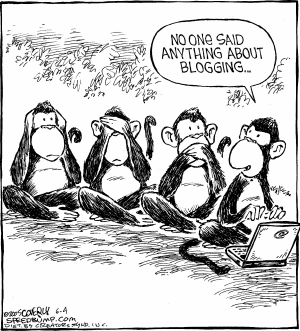
Mainstream media...and bloggers
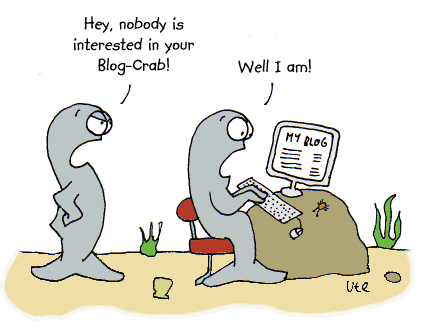
On this blog, I place a higher premium on still and moving images. Regular readers know my fondness for cartoons, which I avidly search for and collect on a wide range of topics. In fact, I believe cartoonists are the best social and cultural commentators of our times – they say so much with such economy of words!

Similarly, I try to embed relevant online videos that I can find. Sometimes it takes me longer to scan YouTube and other platforms than to write the accompanying text for a blog post. And I get frustrated when WordPress does not allow embedding from certain online platforms like EngageMedia, a new Asia-based service that we have recently started to collaborate with.

As I travel around in Asia and Europe, and move across the sometimes overlapping circles of development, media and communications technology, I keep meeting readers who read and follow this blog. Some have never commented on any post; a few have chosen to write emails to me on specific matters.

This means some of the conversations inspired by this blog happen bilaterally — for example, film festival organisers have written asking me for contacts of specific film-makers whose work I have reviewed. Students often write to me seeking additional information or my own views. Long lost friends or associates have revived contact after stumbling upon this blog. I have no illusions of being famous, but it’s nice to stay engaged.

My policy on visitors’ comments is clearly stated in my intro page: “This is a moderated blog where I approve/disapprove the publication of readers’ comments to individual posts. I do allow all reasonable comments left by readers — including those that radically disagree with my own views. The basic rules of my moderation: I don’t publish comments that are outright libelous of individuals, or are so explicitly self-promotional bordering on spam.

Only once in the short history of this blog have I been threatened by someone whose conduct I questioned in the public interest. In late 2007, I wrote a hard-hitting comment on how certain media organisations are exploiting concerns surrounding climate change to their institutional advantage. I was standing by to publish their response, for the institution I named claims to promote public discussion and debate. None came my way, although some peer pressure was used, unsuccessfully, to make me remove the blog post. In mid 2008, when our paths accidentally crossed in a European capital, the individual concerned confronted me. I gave him a patient hearing, and reiterated my offer to publish his response in full. He insisted on my deleting the post (gosh, it must have hit a raw nerve!). He ended our unpleasant encounter saying: “If you lived in my jurisdiction, I would have sued you!”

There has never been a denial or rebuttal from this person or his institution on the substantive points in my blog post. But I was repeatedly told that my candid remarks are ‘not helpful’. Perhaps. But anyone who remotely believes in ‘illuminating debate’ would have engaged me on this blog, or theirs, or in a neutral forum (plenty exist).
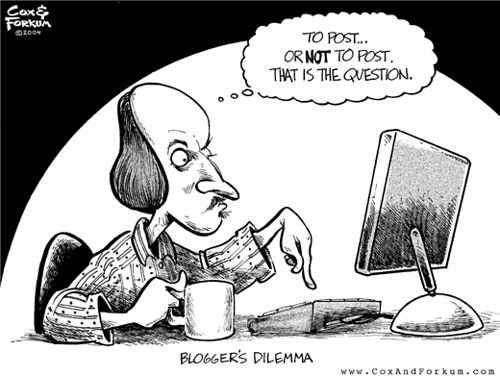
Luckily, I've rarely faced this situation
Encouragingly, many others have done just that. This includes the reader who thinks I have an axe to grind with the BBC (I don’t, but I’m also not a fan of the ageing Auntie), and a few who feel I’ve been unkind to the fledgling global newscaster Al Jazeera English.

Then there are those who assume that I hate state-owned, so-called public broadcasters (again, I don’t, although I question their conduct more rigorously because they are public-funded). In fact, I have sung praise of Burmese TV as a model public broadcaster, and maintained excellent relations with NHK and other public broadcasters in Asia. I’m regularly invited as a speaker or panelist at gatherings of mainstream broadcasters – where I express pretty much the same views as I do on this blog.

Some think I’m too harsh on the United Nations, especially UNICEF. Again, I’m a great believer and supporter of the UN’s ideals, but never hesitate to critique the public communication policies and practices of individual UN agencies. I like to think that the United Nations is bigger (and deeper) than the inflated egos of its senior officials. In fact, middle level officials and experts working in various UN agencies have privately commended me for keeping the spotlight on their agencies. During the two years of this blog, I have worked closely with UN-OCHA, UNEP and UNAIDS, and they have been pluralistic enough to engage me in the greater public interest.

I believe that it’s not just the UN, but the entire development sector, that needs to get its act together when it comes to communicating policies, practices and choices. Having occasionally (and luckily, only briefly) forayed into the charmed development circles, I realise how detached from reality, self-referential and inward looking many development professionals and their institutions are. Communication is often no more than self-promotional publicity for overambitious agency heads. I have watched how the sector has struggled to adjust to the new realities in media and communications technology. Sometimes I have ridiculed their worse attempts on this blog; more often than not, I have quietly worked with them in small groups or bilateral meetings trying to build their capacity to do things better with greater focus and impact.
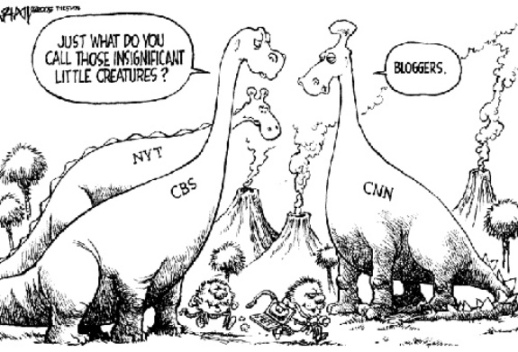
I survived mediasaurus - and lived to tell the tale!
Precisely because I have access to various policy, development and research circles in Asia while (or despite?) being a blogger critiquing the same players, I exercise caution in quoting people or citing examples. Some meetings I attend discuss matters too sensitive for immediate publication; others operate on the Chatham House rule (generic points may be communicated, but without attribution). As a journalist, I’ve been trained to clarify what is on the record and what isn’t; in sourcing content for this blog, I follow the same principles.

Every writer, editor and publisher has her own agenda. Mine is fairly easy to discern, for example from the recurrent themes on this blog. These include: * humanising development communication (going beyond mere facts, figures, analysis and jargon); * demystifying and debunking self-serving development myths (for example, about community radio, or rural poverty); * practising what we preach (broadcasters addressing their own carbon emissions); * evolving more inclusive copyright policies (poverty and climate change as copyright free zones); and * engaging in simple, clear and effective communicating of science and technology in society.

For those who occasionally look for a hidden agenda, my only advice is: get a life. I write this blog for fun. I don’t set out to kick anyone – although I often get a kick out of receiving online or offline feedback.

And that’s my wish for the coming months and years: while I work hard to earn some honest bucks else where, may I continue to derive my kicks here. And if some of you also get a mental kick out of reading or commenting on this blog, that’s my bonus.

Since I remain open-minded and eager for new knowledge, my views on some topics and issues keep evolving over time. Although it’s tempting to go back and edit some of my earlier blog posts in the light of new knowledge or understanding, I refrain from doing so. And if that sometimes presents (minor) inconsistencies, I can only quote Walt Whitman in my defence:
Do I contradict myself?
Very well then I contradict myself,
(I am large, I contain multitudes.)

Mixing oil and water: Media’s challenges in covering human security

Talking to the last drop: All streams flow to Istanbul?

The 5th World Water Forum opens in Istanbul, Turkey, today. It will be held in the historic city – a bridge between the east and west – from 16 to 22 March 2009.

Held every three years, the World Water Forum is the main water-related event in the world. It seeks to put water firmly on the international agenda with a view to fostering collaboration – not confrontation – in sharing and caring for the world’s finite supplies of the life-giving liquid. The forums bring together officials, researchers, activists and media to a few days in which they can drown in their own cacophony…well, almost.

I haven’t been to one of these mega-events – I almost did in 2003, when it was hosted by Kyoto, Japan. That forum was almost entirely eclipsed – as far as the media coverage was concerned – by the United States deciding to invade Iraq during the same week. This inspired me to write an op ed essay on oil, water and media which was syndicated by Panos Features and widely reproduced at the time in newspapers, magazines and even in a few activist and development publications. But six years later, it’s hard to locate it online, so I’m publishing it here, unedited, exactly as I wrote in that eventful week in mid March 2003:

Oil on water: will the media get this Big Story?

By Nalaka Gunawardene: 20 March 2003

“If the wars of this century were fought over oil, the wars of the next century will be fought over water.” Ismail Serageldin, an eminent Egyptian architect and planner, made this remark in 1995 when he was vice president for sustainable development at the World Bank.

Well, we are in that new century now, but old habits die hard. The war in Iraq has been fuelled by oil interests, and – starting at the time it did, on March 20 –effectively sidelined global talks to secure freshwater for all.

Clean water, anyone?
Even as the United States launched its attack on the country that sits on the world’s second largest oil reserve, the Third World Water Forum was in progress at the Japanese cities of Kyoto, Shiga and Osaka. The event, running from March 16 to 23, is this year’s biggest international conference on a sustainable development issue and involved hundreds of government and civil society representatives trying to resolve one of the major survival issues of our time: equitably sharing the world’s finite freshwater resources for our homes, farms and factories.

The two processes cannot be more different. One aims to use force while the other seeks to foster co-operation among nations to cope with water scarcity. The increasingly isolated United States has abandoned the United Nations process in its single-minded determination to disarm Iraq, a nation it considers a major threat to peace and security. Meanwhile in Kyoto, the nations of the world – including, but not led by, the United States – were discussing an issue that is far more central to humanity’s security. It has the full blessings of the UN, which has designated 2003 the International Year of Freshwater.

Yet the water forum seems hardly newsworthy to the major news organisations that are preoccupied with war. For months, the global television networks were gearing up for Iraq war coverage. The first Gulf War helped globalise CNN, and this time around, there are other international and regional channels competing for the eye balls. Locked in a battle for dominant market share, CNN International and BBC World are trying to outdo each other in covering the conflict exhaustively — and to the exclusion of everything else. In the do-or-die media marketplace, ‘soft issues’ such as water are easily edged over by conflict. As cynical news editors will confirm, if it bleeds, it leads.

The notions of national and global ‘security’ – on which the Iraq war is being waged – are relics of the Cold War that are completely out of sync with today’s global realities. Who says we have entered the 21st century?

In the closing decade of the last century, as the world grappled with one crisis after another – ranging from famine and drought to global warming and HIV/AIDS – the notion of ‘security’ was radically redefined to include ecological and social dimensions. What is now termed ‘human security’ is concerned not so much with weapons as with basic human dignity and survival. As first articulated in the UN Development Programme’s Human Development Report in 1994, human security includes safety from chronic threats such as hunger, disease and repression, as well as protection from sudden and harmful disruptions in the patterns of daily life.

Mahbub ul Haq
Mahbub ul Haq
The rationale for this was brilliantly summed up by the late Mahbub ul Haq, former Finance Minister of Pakistan and architect of the Human Development Index: “If people are sleeping on pavements, ministers have no business shopping for modern jets and howitzers. While children suffocate in windowless classrooms, generals go about in their air-conditioned jeeps. Nations might accumulate all the weaponry they want, but they have no strength when their people starve…”

A world in which four out of every ten people live in areas of water scarcity is not secure. And if urgent action is not taken, this will increase to two thirds of humanity by 2005. Ensuring water quality is as important as basic access: preventable diarrhoeal diseases – including cholera and dysentery — kill more than seven million children every year. That is 6,000 deaths every day.

James P Grant
James P Grant
James Grant, former executive director of UNICEF, once used a powerful metaphor to describe this scandalous situation: it was as if several jumbo jets full of children were crashing everyday – and nobody took any notice.

If the media are obsessed with death and destruction, why aren’t these numbers registering on their radars? Why is it that silent emergencies forever remain ignored or are only superficially covered? Even statistics don’t set the media agenda: for example, according to the UN, twice as many people are still dying from diarrhoeal diseases as from HIV/AIDS in China, India and Indonesia. But the international donors and media assign far more importance to HIV than to clean water.

No other factor can distort reality as oil. Oil comes on top of water both in the physical world, and in the murky world of global politics. Our collective dependence on petroleum immediately ensures the Iraq war a disproportionately high rank in public and media concerns.

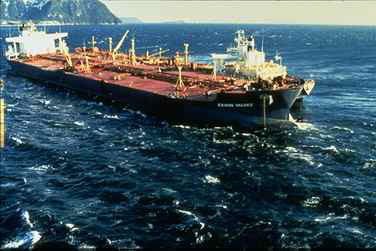
It’s not just the United States that is addicted to oil – we all are. Addicts tend to lose sight of the cost of their dependence, as we have. On 24 March 1989, the oil tanker Exxon Valdez ran aground on in Prince William Sound in Alaska and a fifth of its 1.2 million barrels of oil spilled into the sea, causing massive damage to over 3,800 km of shoreline. Investigations implicated its captain for grossly neglecting duty. Shortly afterwards, Greenpeace ran a major advertising campaign with the headline: “It wasn’t his driving that caused the Alaskan oil spill. It was yours.”

Exxon Valdez: Drunken driving!
Greenpeace continued: “It would be easy to blame the Valdez oil spill on one man. Or one company. Or even one industry. Too easy. Because the truth is, the spill was caused by a nation drunk on oil. And a government asleep at the wheel.”

A nation drunk on oil is waging a war that has more to do with oil than anything else. Our news media are behaving just like cheer-leaders.

War is undoubtedly a big story. But so should be water. One in six humans does not have safe drinking water, and one third of humankind lacks adequate sanitation. We may be living on the Blue Planet, but the waters are muddy and life-threatening to billions.

For sure, a bunch of people huddling together in three Japanese cities won’t solve this crisis overnight. But unless knowledge and skills are shared, and a political commitment is secured, safe water for all will forever remain a pipe dream.

Will it take a full-scale war over water in one of the flashpoints around the world for the military-industrial-media complex take sufficient interest in this survival issue? (That might happen sooner than we suspect.)

It’s ironic that the World Water Forum was undermined by the Iraq war breaking out in the very same week. Washington has now poured oil over everybody’s water.

[Nalaka Gunawardene is an award-winning Sri Lankan science writer, journalist and columnist. He heads TVE Asia Pacific, a regional media organisation working on sustainable development issues, and is on the board of Panos South Asia. The views expressed here are his own.]

Missing Mothers: How acronyms and jargon can kill innocent women

iwd_5“This year alone, more than 500,000 women will die during pregnancy or childbirth. That’s one woman missing every minute of every day. We call these women ‘missing’ because their deaths could have been avoided. In fact, 80 per cent of maternal deaths could be averted if women had access to essential maternal health services.

“We know where and how these women are dying, and we have the resources to prevent these deaths. Yet, maternal mortality is still one of the most neglected problems internationally.”

This sobering message from Unicef is worth reflecting upon as we mark another International Women’s Day.

Unfortunately, critical issues like these often don’t make the news – or worse, are relegated to the background as inevitable. As Joseph Stalin said in a different context, one death is a tragedy; a million deaths a mere statistic.

The challenge to the development community is to go beyond simply counting deaths in cold, clinical terms. UNICEF has recently released a two minute video, “Missing Mothers” as a tool for international development professionals to use in raising awareness of the issue of mothers dying needlessly.

Having a baby is both a very natural process and a joyous occasion for the parents and extended family concerned. Yet having a baby still remains one of the biggest health risks for millions of women worldwide.

Time to make missing women count...
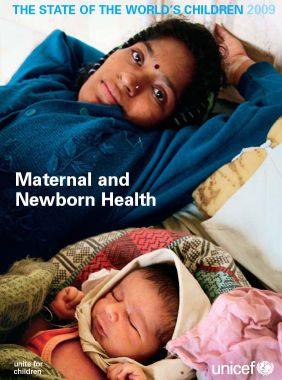
As Unicef’s 2009 State of the World’s Children report reminded us recently, 1,500 women die every day in the world due to complications arising during pregnancy and childbirth. The chances of a woman in developing countries dying before or during childbirth are 300 times greater than for a woman in an industrialised country like the United States. Such a gap does not exist in any other social indicator.

The largest number of maternal deaths in the world is in South Asia. In India alone, an estimated 141,000 women die each year during pregnancy or childbirth. Recently, my Indian journalist friend Kalpana Sharma wrote a perceptive column on this topic in The Hindu newspaper.

She noted: “The solution has been known for years. The problem is the will to make it work. We also know that the solution would benefit everyone, not just women. Yet, affordable and accessible health care, for instance, has not received the thrust that is needed.”

The Missing Women video suggests to activists and campaigners that action can start with five steps: 1. Educate girls, young women and yourself; 2. Respect their rights; 3. Empower them to participate; 4. Invest in maternal health; 5. Protect against violence and abuse. The Unicef website, meanwhile, lists 10 ways in which concerned individuals can make a difference.

All very commendable and necessary — but not sufficient. With all the good intentions in the world, Unicef’s experts and officials come across as, well, detached and geeky. They don’t connect well enough to the real world people whose needs and interests they are genuinely trying to serve. Their messages are lost somewhere in their precise terms, jargon and endless acronyms.

Just take, for example, the very phrase of maternal mortality itself. Precise but also very stiff and dry. Who outside the medical and development circles uses such terms in conversation? When I write or make films about the issue, I prefer to call it ‘mothers dying needlessly while having babies’. Yes, it’s more wordy and perhaps less exacting. But most ordinary people would get what I’m talking about.

If the jargon-ridden language reads dry in text, it completely puts off people when they watch such words being spoken on video. Such films may pander to the Narcissism of Unicef mandarins, but they completely flop in terms of public communication and engagement.

This is the same point I made in October 2008 when commenting on the Unicef-inspired first Global Handwashing Day: “Passion used to be the hallmark of UNICEF during the time of its legendary executive director James Grant, who strongly believed in communicating messages of child survival and well-being. He gave UNICEF a head start in working with the media, especially television.”

Jim Grant’s deputy, journalist Tarzie Vittachi, who came over to the UN children’s agency after a stint at the UN population fund, used to say: “Governments don’t have babies; people do”. We might extend that to: inter-governmental agencies don’t have babies; real women do. That may be why Unicef insists on delivering its life-saving messages so riddled in politically and scientifically correct, but so sterile language.

Unicef’s YouTube channel has a number of short videos related to what they insist on calling maternal mortality. Here’s an example where Unicef’s Chief of Health Dr. Peter Salama says it’s really an unconscionable number of deaths, and a human tragedy on a massive scale:


MDG5: Save Our Moms!
Reducing by three quarters the number of mothers dying needlessly while having babies is one of the Millennium Development Goals or MDGs, the holy grail in international development since the United Nations adopted these in 2000, setting 2015 as the target date.

We have now passed the half way mark, but progress has been patchy and unimpressive. And it will remain so as long as the UN agencies and other development players insist on peddling jargon and acronyms. Considering the issues of life and death involved here, we must view bad communication as a killer — joining the ranks of unsafe drinking water and violence against women and girls.

Writing an editorial for SciDev.Net in September 2005, I noted: “All development workers and UN officials should take a simple test: explain to the least technical person in your office the core message and relevance of your work. Many jargon-using, data-wielding, acronym-loving development workers would probably fail this test. But unless development-speak is translated into simpler language, the MDGs will remain a buzzword confined to development experts and activists.”

I don’t believe in ghosts, but it’s time to bring back the spirits of Jim Grant and Tarzie Vittachi to Unicef to again humanise the agency so mired in its own ‘geekspeak’. The intellectual rigours of evidence-based, scientific analysis must be balanced with clarity and accessibility. It’s fine to be informed by science, but learn to say it simply, clearly and concisely.

The lives of half a million women and millions of children depend on it.

Bill Gates and mosquitoes: World’s top geek now works for its meek

More bugs from Gates...
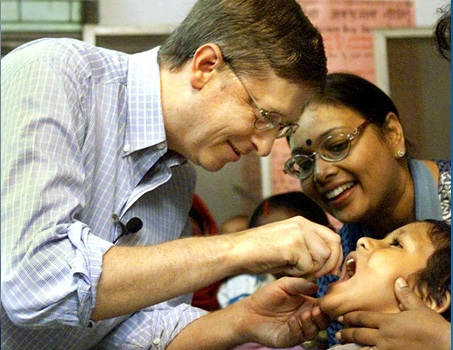
Bill Gates can’t seem to get enough of bugs.

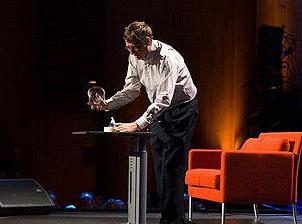
On 4 February 2009, he let loose a swarm of mosquitoes at the TED 2009 technology, entertainment and design conference in California to highlight the dangers of malaria.

“Malaria is spread by mosquitoes,” he reminded his audience of leading scientists, designers, researchers and entrepreneurs. Turning to an upturned jar on stage, he announced: “I brought some. Here…I’ll let them roam around. There is no reason only poor people should be infected.”

Luckily, the mosquitoes were not carrying the disease. But it had the intended effect. Wired editor Chris Anderson, curator of the show, suggested a headline: “Gates releases more bugs into the world”.

Watch Bill Gates’s mosquito moment:

Watch the full 20-minute video of Bill Gates at TED 2009

As stunts go, this one was pretty mild and harmless. There are many shocking ways in which the harsh daily realities of the world’s poor can be brought into gatherings of the rich and famous. They could be served glasses of the contaminated, sludgy (and often smelly) water that tens of millions drink everyday. Or all the toilets could be locked up and the keys thrown away – for good. Or electricity supply could be cut off, or frequent ‘black-outs’ or ‘brown-outs’ could be staged. You get the idea…

Of course, few event organisers would dare try any of these, if only for health and safety considerations. Reminds me of a rare exception: when he was director of information with the UN’s population agency (UNFPA), journalist-turned-UN official Tarzie Vittachi once hosted delegates of a high level meeting to lunch which consisted soley of a bread roll and a glass water. He told his guests: the meal was better more than what most poor people in the global South on any given day.

Bill to the rescue...
Meanwhile, billions of poor and needy – and not just those in the majority world – are glad that Bill Gates caught the ‘development bug’ and has switched his formidable creative energies (not to mention his billions) to address their survival issues. The Bill & Melinda Gates Foundation – which carefully manages the giving away of Gates wealth – operates on the belief that all lives have equal value. “We think all people deserve the chance to have healthy, productive lives”.

They have set priorities such as improving health and reducing extreme poverty in the developing world, and improving high school education in the United States.

The New York Times columnist Nicholas Kristof recently described it as a paradox: “In these brutal economic times, one of the leading advocates for the world’s poorest people is one of the richest.”

He noted: “Mr. Gates ended his full-time presence at Microsoft last July and since then has thrown himself into work at his foundation. He is now trying to do to malaria, AIDS, polio and lethal childhood diarrhea what he did to Netscape, and he just may succeed.”

In his TED talk, Bill Gates addressed two questions that occupy much of his time these days: How do we stop Malaria? How do you make a teacher great?

Look, no computers!
Look, no computers!
He said: “The market does not drive scientists, thinkers, or governments to do the right things. Only by paying attention and making people care can we make as much progress as we need to.”

He called for greater distribution of insect nets and other protective gear, and revealed that an anti-malaria vaccine funded by his foundation and currently in development would enter a more advanced testing phase in the coming months.

“I am an optimist; I think any tough problem can be solved,” he said. That’s the geek in him talking: marshall all information, analyse problems, respond strategically — and keep at it.

A friend who now works with the Gates Foundation confirms how the charity seeks evidence and rigour in all its social investments. This is no bleeding-heart do-gooding or ‘social work’ for its CSR value. The new wave of geeks lining up to serve the meek bring business acumen to the development sector long under-served by unimaginative aid agencies and self-serving UN organisations.

As Kristof wrote: “Gates ended his full-time presence at Microsoft last July and since then has thrown himself into work at his foundation. He is now trying to do to malaria, AIDS, polio and lethal childhood diarrhea what he did to Netscape, and he just may succeed.”

Gates has announced that despite the economic crisis the Gates Foundation will increase spending by US$500 million this year.

In late January 2009, the billionaire philanthropist released the first ‘Annual Letter from Bill Gates‘ where he discussed his work at the foundation and spoke candidly about what has gone well, what hasn’t.

He compared his earlier work at Microsoft with the challenges he now tackles at the charitable foundation. “What I’ve found now is that really those same key elements are there. The opportunity for big breakthroughs is absolutely just as great–now it’s vaccines, it’s seeds that have better yield, it’s ways of sharing teaching practices…they will take the same kind of patience that we had for software breakthroughs.”

Just ahead of the letter’s release, Nicholas Kristof talked with Bill Gates about why aid to developing countries is more important during the economic downturn and vaccine breakthroughs on the horizon. Watch the interview:

Read: Bill Gates’s Next Big Thing by Nicholas D Kristoff, published in the New York Times on 24 January 2009

Early Warning for Planet Earth: How to avoid mother of all Tsunamis!

Next tsunami could begin with this...

Today marks the 4th anniversary of the Indian Ocean Tsunami of December 2004.

The tsunami was triggered by a massive quake that erupted off the coast of Sumatra, and 6 miles deep under the Indian Ocean’s seabed. The estimated 9.1 to 9.3 magnitude earthquake was the strongest in 40 years and the fourth largest in a century. The U.S. Geological Survey later estimated that the amount of energy released was equivalent to the energy of 23,000 Hiroshima-type atomic bombs.

Despite a lag of up to several hours between the earthquake and the impact of the tsunami, nearly all affected people were taken completely by surprise. There were no tsunami warning systems in the Indian Ocean to detect tsunamis or to warn those living on the Indian Ocean rim areas. This cost the lives of over 225,000 people in 11 countries — many of who could have lived if only they had a timely warning to rush inland.

In the past four years, there have been various efforts to set up such early warning systems – as well as effective ways to deliver credible warnings to large numbers of people quickly. These are meant to provide 24/7 coverage to Indian Ocean countries in the same way the Pacific Tsunami Warning Centre has been covering Pacific Ocean countries for many years.

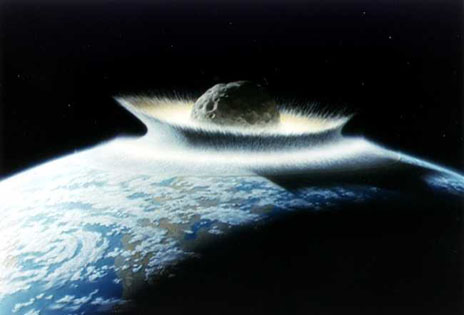
All this is necessary – but not sufficient – to guard ourselves against future tsunamis. For it’s not just earthquakes undersea that can trigger tsunamis. An asteroid impact could trigger the mother of all tsunamis that can impact coastal areas all over the planet.

An asteroid that struck the Earth 65 million years ago wiped out the dinosaurs and 70 per cent of the species then living on the planet. The destruction of the Tunguska region of Siberia in June 1908 – whose centenary was marked this year – is known to have been caused by the impact of a large extraterrestrial object.

Space artist David Hardy's vision...
When discussing the possible consequences of asteroid impacts on Earth, more attention has been given to the destruction it can cause by such a falling piece of the sky hitting inhabited areas of land. Some people seem to be comforted by the fact that two thirds of the planet’s surface is ocean — thus increasing changes that an impact would likely happen at sea.

In fact, we should worry more. Duncan Steel, an authority on the subject, has done some terrifying calculations. He took a modest sized space rock, 200 metres in diameter, colliding with Earth at a typical speed of 19 kilometres per second. As it is brought to a halt, it releases kinetic energy in an explosion equal to 600 megatons of TNT — 10 times the yield of the most powerful nuclear weapon tested (underground). Even though only about 10 per cent of this energy would be transferred to the tsunami, such waves will carry this massive energy over long distances to coasts far away. They can therefore cause much more diffused destruction than would have resulted from a land impact. In the latter, the interaction between the blast wave and the irregularities of the ground (hills, buildings, trees) limits the area damaged. On the ocean, the wave propagates until it runs into land.

Scientists have been talking about asteroid impact danger for decades. Arthur C Clarke suggested – in his 1973 science fiction novel Rendezvous with Rama – that as soon as the technology permitted, we should set up powerful radar and optical search systems to detect Earth-threatening objects. The name he suggested was Spaceguard, which, together with Spacewatch, has now been widely accepted.

In November 2008, a group of the world’s leading scientists urged the United Nations to establish an international network to search the skies for asteroids on a collision course with Earth. The spaceguard system would also be responsible for deploying spacecraft that could destroy or deflect incoming objects.

The group – which includes the Royal Society president Sir Martin Rees and environmentalist Sir Crispin Tickell – said that the UN needed to act as a matter of urgency. Although an asteroid collision with the planet is a relatively remote risk, the consequences of a strike would be devastating.

Not if, but when...
Not if, but when...
The International Panel on Asteroid Threat Mitigation, chaired by former American astronaut Russell Schweickart, urged: “The international community must begin work now on forging three impact prevention elements – warning, deflection technology and a decision-making process – into an effective defence against a future collision.”

Read more media coverage and commentary at:
The Guardian, 7 Dec 2008: UN is told that Earth needs an asteroid shield
World Changing, 10 Dec 2008: Giant asteroids and international security

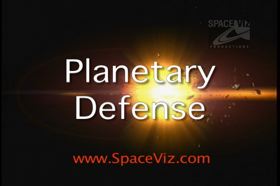
This is exactly the message in an excellent documentary called Planetary Defence made by Canadian filmmaker M Moidel, who runs the Space Viz production company. Over the past many months, the film has been screened at the United Nations, on various TV channels and at high level meetings of people who share this concern.

Its main thrust: Scientists and the military have only recently awakened to the notion that asteroid impacts with Earth do happen. Planetary Defense meets with both the scientific and military communities to study our options to mitigate an impact. It makes the pivotal point: “Civilization is ill prepared for the inevitable. It’s not if an impact will happen with the Earth, it’s when!”

In such an event, the film asks, who will save Earth? The 48 minute documentary explores the efforts underway to detect and mitigate an impact with Earth from asteroids and comets, collectively known as NEO’s (Near Earth Objects).

Watch the trailer of Planetary Defence on YouTube:

Neil deGrasse Tyson, Astrophysicist and Director, American Museum of Natural History, in New York, says: “Planetary Defense, the film, is a documentary that explores how ill-prepared we are to prevent our own extinction from asteroid and comet impacts. Filmmaker M Moidel interviewed all the right people, asked them all the right questions, and leaves the viewer scared for our future, but empowered to do something about it.”

Read more about the film at Space Viz Productions website

Although we have never met, I have been in email contact with M Moidel for several years. I know how deeply committed he is to each of his documentary projects. Working on incredibly tight budgets and performing multiple tasks on his own, this brilliant Canadian has made some eminently accessible, timely and captivating documentaries on ‘big picture’ topics such as the search for intelligent life in the universe, the future of space exploration and, of course, coping with asteroid impacts.

Sir Arthur C Clarke, interviewed on some of Moidel’s films, including Planetary Defence, has highly commended his efforts.

Sir Arthur, whose Sri Lankan diving school was destroyed by the 2004 tsunami, wrote a few days after the disaster:

“Contrary to popular belief, we science fiction writers don’t predict the future — we try to prevent undesirable futures. In the wake of the Asian tsunami, scientists and governments are scrambling to set up systems to monitor and warn us of future hazards from the sea.

“Let’s keep an eye on the skies even as we worry about the next hazard from the depths of the sea.”

Iodised Salt: How to make the world smarter, faster?

A miracle powder?
A miracle substance to get smarter?
One of the earliest video films I helped distribute at TVE Asia Pacific, soon after it was set up in 1996, was called Ending Hidden Hunger.

This 20 minute film, made in 1992 by Bedford Films of UK and narrated by Sir Peter Ustinov, described how the UN children’s agency UNICEF was working toward eliminating micronutrient deficiencies from iron, vitamin A and iodine in different parts of the developing world. Examples are taken from Africa and Asia to both illustrate the extent of the problem as well as steps being taken to reduce these deficiencies that cause mass-scale disability and death.

The main premise of the film was simple: those lacking micro-nutrients in their regular diet often don’t show immediate signs of starvation. This deprivation builds up over time and causes slow – sometimes irreparable – damage.

Nicholas Kristof
Nicholas Kristof
I was reminded of this film — and its still very relevant message — when reading an excellent essay by Nicholas Kristof in International Herald Tribune a few days ago. He is a columnist for the New York Times who travels the world reporting from the various frontlines of survival and struggle.

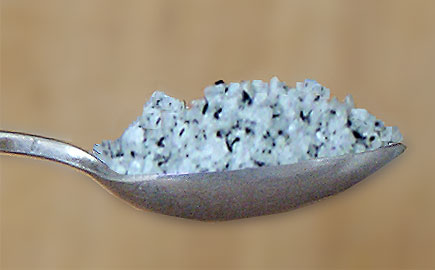
In Raising the World’s I.Q., dispatched from Rawalpindi, Pakistan, Kristof was talking about ‘a miracle substance that is cheap and actually makes people smarter’: iodised salt.

Here’s the context, as he put it:

“Almost one-third of the world’s people don’t get enough iodine from food and water. The result in extreme cases is large goiters that swell their necks, or other obvious impairments such as dwarfism or cretinism. But far more common is mental slowness.

“When a pregnant woman doesn’t have enough iodine in her body, her child may suffer irreversible brain damage and could have an I.Q. that is 10 to 15 points lower than it would otherwise be. An educated guess is that iodine deficiency results in a needless loss of more than 1 billion I.Q. points around the world.”

In nearly all countries, the best strategy to control iodine deficiency is iodisation of salt — one of the most cost-effective ways to contribute to economic and social development. Especially in these hard times, development professionals are looking for smart ways to get the biggest bang for their limited (and still shrinking) bucks. Investing in micronutrients – such as iodine – can provide some of the biggest bangs possible.

UNICEF Report 2008
UNICEF Report 2008
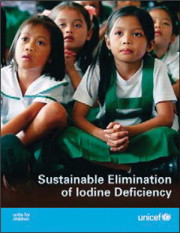
In June 2008, UNICEF published Sustainable elimination of iodine deficiency, a new report on progress since 1990 when the world’s governments set the target to eliminate iodine-deficiency disorders worldwide.

In October 2008, The Lancet, one of the world’s leading medical journals, published a report that noted: “Iodine deficiency is the most common cause of preventable mental impairment worldwide.”

The medical, public health and development communities have known and talked about iodine and other micronutrients for over 30 years. Significant progress has been made – for example, UNICEF says by 2006, more than 120 countries were implementing salt iodisation programmes, and 34 countries had managed to get rid of iodine deficiency among their people through this smart strategy.

But there still are major gaps — which continue to cause preventable damage to tens of millions of people including children.

Nicholas Kristof navigates through the heavy, jargon-ridden developmentspeak and churns out an eminently readable, accessible piece. It’s written in first person narrative from a part of the world where illiteracy, superstition – and their erstwhile companion, religious fanaticism – are trying to prevent people at risk from using iodised salt. This is science writing at its finest: anecdotal, personalised and purposeful.

And he’s absolutely right when he says iodised salt lacks glamour, doesn’t have too many stars or starlets singing its praise and (almost) no one writing about it despite its potential to improve lives for so many people.

I should know: one of the earliest topics I tackled as a young science reporter – getting started in the late 1980s – was salt iodisation. I struggled to put together a readable, engaging piece — which I then had to push through jaded editors who wondered what all this fuss was about.

I have only one (minor) bone to pick with Kristof. He pokes fun at Canada for hosting and supporting the Micronutrient Initiative, “an independent, not-for-profit organization committed to promoting simple cost-effective solutions for hidden hunger and developing innovative new solutions where needed.”

He calls Canada “earnest and dull, just like micronutrients themselves”. It’s a personal view – perhaps expressed with his tongue firmly in his cheek. Having travelled a fair amount in North America, and having good friends in both countries, I think that the nation north of the US-Canada border is a tad more civilised, certainly more caring and better engaged with the rest of the world.

But then, that too is a personal view. I’m darn lucky that I get enough iodine in my diet so that I can think for myself, keep asking lots of annoying questions…and occasionally even get some answers right.

Two billion people – almost a third of humanity – aren’t so lucky.

Read Raising the world’s I.Q. by Nicholas Kristof

Salt iodisation is not universally hailed. Read an alternative point of view that appeared in India’s Frontline magazine in 2006: Imposing iodine

Climate change and copyrights: What intellectual property on a dead planet?

Twenty centuries ago, Emperor Nero fiddled while Rome burned. Today, some media companies are squabbling over copyrights while the planet is warming.

This is the main thrust of my latest op ed essay, just published by the Science and Development Network (SciDev.Net) anchored in London, UK. It’s titled: Planet before profit for climate change films.

I have adapted for this commentary some of my ideas initially expressed on this blog – especially the post on 12 Oct 2008: Climate in Crisis and planet in peril – but we’re squabbling over copyrights!

Broadcasting on a warming planet

In writing this essay, I’ve also drawn on the excellent discussions we had last month during the Asia Pacific workshop on Changing Climate and Moving Images in Tokyo.

I’m challenging broadcasters to put their money where their mouth is.

Here’s an excerpt:

“Broadcast mandarins routinely support global struggles against poverty, HIV, corruption and climate change by offering free airtime to carry public interest messages. But few let go of their own products on these very subjects for non-broadcast uses.

“Making climate change a ‘copyright free zone’ for media products would increase the resource materials available to thousands of educators, social activists and trainers struggling to communicate this complex topic to audiences across the world. Moving images would make their task easier.

“The climate crisis challenges everyone to adopt extraordinary measures. Broadcasters and film-makers need to balance their financial interests with planetary survival.

“What use is intellectual property on a dead planet?”

Read my full essay on SciDev.Net: Planet before profit for climate change films.

In September 2006, speaking at the United Nations headquarters (photo below), I called for poverty to be recognised as a copyright free zone. The idea was to have broadcasters and other electronic publishers release copyrights on TV, video and online content relating to poverty and development issues -– at least until (MDG target year of) 2015.

The TV broadcast and film communities have reacted to this proposal with disdain or indifference, but I keep badgering on. If poverty didn’t motivate broadcasters to change business as usual, I hope, the planetary threat posed by climate change would.

Wash Your Hands – yes, UNICEF, but only if you ask us nicely!

Global Handwashing Day logo

October 15 was marked as the first Global Handwashing Day (GHD). It’s simple yet important mission was to promote the practice of handwashing with soap.

Washing hands can save lives. Washing hands with soap can save more lives. This is the simple message reinforced on this day with public campaigns focusing on schools and school children.

In this UN-declared International Year of Sanitation 2008, the GHD will echo and reinforce its call for improved hygiene practices.

GHD is a Unicef-led initiative involving governments, civil society, volunteers and others around the world.

“Turning handwashing with soap before eating and after using the toilet into an ingrained habit could save more lives than any single vaccine or medical intervention, cutting deaths from diarrhea by almost half and deaths from acute respiratory infections by one-quarter,” says the GHD official website, explaining the background.

IYS 2008 logo
IYS 2008 logo
Trying saying that aloud in one breath – I can’t. Evidently, the crusty technocrat who wrote that text wanted to pack all the rationale into one long, clumsy sentence.

But this message is too important to be spoilt by an inarticulate official. Washing hands with soap can prevent diahrroeal diseases and pneumonia, which together kill more than 3.5 million children under five every year. That’s 400 needless deaths every hour, round the clock.

Fortunately, the campaigning material that went out using moving images were better produced. Here are two good examples (and a bad one).

The popular Australian children’s musical entertainers, The Wiggles, produced and donated a song to mark the Global Handwashing Day. This simple and catchy tune “seeks to motivate millions of children around the world, to transform the simple act of handwashing with soap from an abstract and seldom practiced behaviour into an automatic and enjoyable habit”.

Meanwhile, in India, cricket star Sachin Tendulkar joined forces with UNICEF to get Indian children to improve their health and hygiene as part of GHD. Tendulkar features in a public service announcement (PSA) being broadcast this month in 14 languages across India. It will target students in more than 6 million schools.

And finally, here’s Unicef’s own news story posted this week on its YouTube channel telling us more on GHD. It’s technically well made, but absolutely lacks passion. The narrator delivers her script in such an indifferent, detached tone, and UNICEF Senior Adviser for Sanitation and Hygiene pontificates also in a tone that will not win her many followers. Scenes of senior UN officials washing their hands in a demonstration are laughable. The only saving grace in this story is when we see Hayley Westenra, the well known singer from New Zealand and youngest UNICEF Goodwill Ambassador, visiting water and sanitation projects in Ghana.

If only the rest of GHD promoters had the enthusiasm and passion that Hayley Westenra exudes! Passion used to be the hallmark of UNICEF during the time of its legendary executive director James Grant, who strongly believed in communicating messages of child survival and well-being. He gave UNICEF a head start in working with the media, especially television.

Alas, large UN agencies like UNICEF have little or no institutional memory for more than just a few years. Because if they did, GHD campaigns could have effectively used, at least in South Asia (where nearly half of all people lack access to toilets) an episode of the hugely popular Meena cartoon animation series.

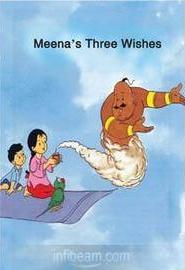
Meena is the enchanting heroine of an animated film series produced by UNICEF in South Asia. The films are part of a package of communication materials promoting the status of the girl child in this region. UNICEF co-produced the series a decade ago with leading animators in the US and South Asia.

Meena's Three Wishes
In Meena’s Three Wishes, Meena dreams of a magic genie that will grant her three wishes so that everyone would be healthy and never again get sick from poor sanitation and unsafe water. When Meena wakes up, she realizes that she must make her dream come true. With the help of her brother Raju, other children in the village, and Mithu, her pet parrot, Meena convinces people to build and use latrines, to use safe water and to wash their hands to stop the spread of germs and disease.

I don’t particularly enjoy it when UN agencies try to play nanny to the whole world, especially if they talk to us in such jargon-ridden, dispassionate terms. Their messages are tremendously important, and deserve wider dissemination — they can literally save lives.

That’s why public campaigns should be left in the hands of communication professionals who know how to reach out beyond the charmed development circle. For the rest of UNICEF, they should perhaps take a lesson or two in passionate communication from Hayley Westenra, The Wiggles – and their own little Meena!

Who speaks for most of the world’s poor people…living in Asia?

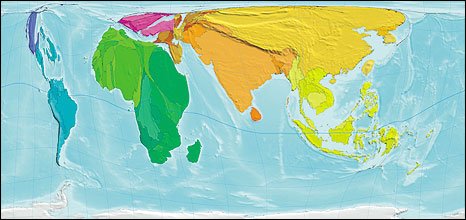
World map of human poverty...shows Asia harbouring over half

Take a close look at this map. What’s happened to our familiar world?

This is the map of human poverty — showing the proportion of poor people living in each country.

The size of each country/territory shows the overall level of poverty, quantified as the population of the territory multiplied by the Human Poverty Index. The index is used by the UNDP to measure the level of poverty in different territories. It attempts to capture all elements of poverty, such as life expectancy and adult literacy.

This map is from the recently released new book, Atlas of the Real World. It uses software to depict the nations of the world, not by their physical size, but by their demographic importance on a range of subjects.
It carries maps constructed to represent data, such as population, migration and economics. But instead of a conventional map being coloured in different shades, for instance, the maps in this Atlas are differently sized. For instance, a country with twice as many people as another is shown twice the size; a country three times as rich as another is three times the size. And so on.

When depicted in this manner, a very different view of our real world emerges. The one on the distribution of poverty, shown above, reminds us something often overlooked: there are more poor people in Asia than anywhere else in the world.

It takes a map like this to drive home such a basic fact. In most discussions on international development or poverty reduction, it is Africa that dominates the agenda. Even those organisations and activists who claim to be evidence-based don’t always realise that when it comes to absolute numbers, and not just percentages, poverty and under-development affects far more Asians than Africans.

Atlas of the Real World, which I haven’t yet seen except through glimpses offered by The Telegraph (UK) and BBC Online, offers many such insights on what our topsy-turvey world is really like.

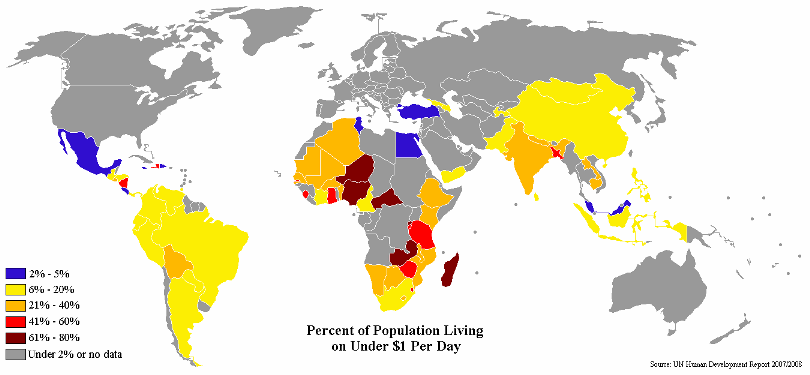
Their map of human poverty draws on the same data that this standard depiction does, in a map I found on Wikipedia sourcing the UN Human Development Report 2007/2008.

UN)
Percentage population living on less than 1 dollar day 2007-2008 (Source: UN)

There are many ways of measuring income poverty, and experts don’t always agree on methods and outcome. But we will leave those technicalities to them. Global Issues is a good website that discusses these issues without too much jargon.

Accurately drawing a two-dimensional map of our spherical world has been a challenge for centuries. Today’s most widely used Mercator projection represents our usual view of the world – with north at the top and Europe at the centre. People in other parts of the world may not always agree with this view.

The Peters Projection World Map is one of the most stimulating, and controversial, images of the world. Introduced in the early 1970s, it was an attempt to correct many imbalances and distortions in the Mercator map.

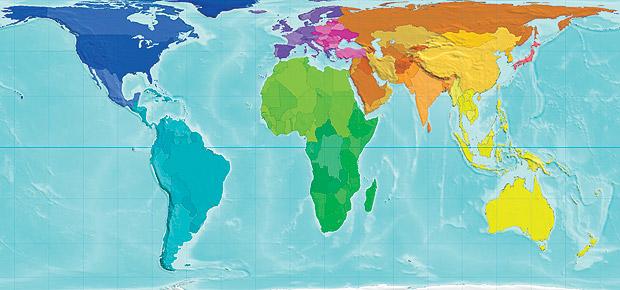
An example: in the traditional Mercator map, Greenland and China look to be the same size but in reality, China is almost 4 times larger! Peters map shows the two countries in their relative sizes.

Atlas of the Real World also carries one map where the size of each territory represents exactly its land area in proportion to that of the others, giving a strikingly different perspective from the Mercator projection most commonly used. It is very similar to the Peters map of the world.

Our world depicted by each country's land area

The UNDP has been producing its influential Human Development Report since 1990. As far as I can discern, the HDR always uses conventional (Mercator?) maps, depicting data using the standard colour-coding or gray tones. The one I have reproduced in this post is an example.
Indeed, the UN’s Cartographic Section seems to favour these.

When would the UNDP – and other members of the UN family – start using more innovative ways such as those used in Atlas of the Real World? How much more effective can the UN’s analysis be if they move out of the comfort zone of Mercator?

Sleeping easy along the shore: Going the Last Mile with hazard warnings

creating-disaster-resilience-everywhere.jpg

October 8 is the International Day for Disaster Reduction. The United Nations system observes the day ‘to raise the profile of disaster risk reduction, and encourage every citizen and government to take part in building more resilient communities and nations’.

Disaster risk reduction (abbreviated as DRR) is the common term for many and varied techniques that focus on preventing or minimising the effects of disasters. DRR measures either seek to reduce the likelihood of a disaster occurring, or strengthen the people’s ability to respond to it.

DRR is not just another lofty piece of developmentspeak. Unlike many other development measures that are full of cold statistics and/or hot air, this one directly (and quietly) saves lives, jobs and properties.

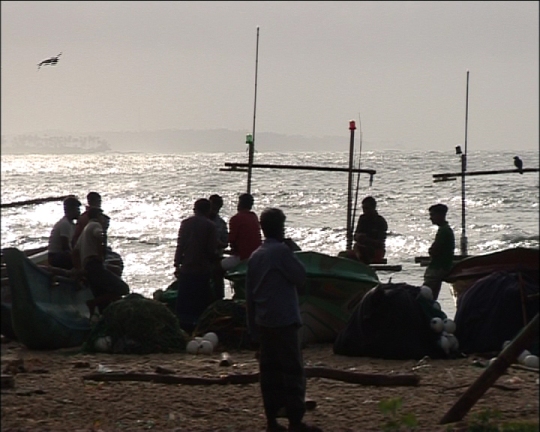
And it gives people peace of mind – we can’t put a value on that. That was the point I made in a blog post written in December 2007, on the third anniversary of the Indian Ocean Tsunami. Taking the personal example of J A Malani, an ordinary Sri Lankan woman living in Hambantota, on the island’s southern coast, I talked about how she has found peace of mind from a DRR initiative.

‘Evaluating Last Mile Hazard Information Dissemination Project’ (HazInfo project for short) was an action research project by LIRNEasia to find out how communication technology and training can be used to safeguard grassroots communities from disasters. It involved Sarvodaya, Sri Lanka’s largest development organisation, and several other partners including my own TVE Asia Pacific. It was supported by International Development Research Center (IDRC) of Canada.

Recently, IDRC’s inhouse series ‘Research that Matters’ has published an article about the project. Titled “For Easy Sleep Along the Shore: Making Hazard Warnings More Effective” its blurb reads: “In Sri Lanka, a grassroots pilot study combines advanced communication technologies with local volunteer networks to alert coastal villages to danger coming from the sea.”

The article has adapted a lot of the information and quotes I originally compiled for a project introductory note in April 2006.

The outcome of the project’s first phase, which ended in mid 2007, is well documented. My own reflective essay on this project is included as a chapter in our book Communicating Disasters: An Asia Pacific Resource Book, published by TVE Asia Pacific and UNDP in December 2007.

TVE Asia Pacific also made a short video film in late 2007. Called The Long Last Mile , it can be viewed on YouTube in two parts:

The Long Last Mile, part 1 of 2:

The Long Last Mile, part 2 of 2:

The recent IDRC article ends with this para: “A related challenge concerns the shortness of any society’s attention span. In the absence of frequent crises and alerts, how can a nation — or even a village — sustain the continuing levels of preparedness essential to ensure that, when the next big wave comes rolling in and the sirens sound, its people will have the motivation and the capacity to act? The follow-up project seeks to address this worry by preparing the hotels and villages to respond to different types of hazards, rather than only to the relatively rare tsunamis.”

Watch this space.

Download pdf of IDRC’s Research That Matters profile on Last Mile Hazard Warning Project