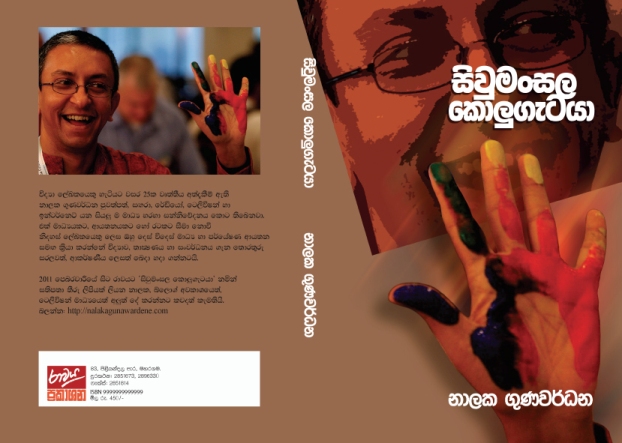
Sivu Mansala Kolu Getaya book cover: A Ravaya Publication
PROMOTIONAL NOTE FOR MY NEW BOOK IN SINHALA:
Colombo, Sri Lanka; 18 September 2012:
Science writer Nalaka Gunawardene’s new Sinhala book, Sivu Mansala Kolu Getaya (සිවුමංසල කොලූ ගැටයා), is being launched at the Colombo International Book Fair that runs from 18 to 26 September 2012.
A Ravaya Publication, the book is an edited collection of his weekly Sinhala columns by the same name, contributed to the Ravaya Sunday broadsheet newspaper in Sri Lanka during 2011.
Beginning in February 2011, Nalaka has sustained a column that touches on many and varied topics related to popular science, human development, mass media and information society. The book compiles 44 of these columns.
“The title is of my column is derived from its particular scope and angle. I stand at the intersection (or confluence) of science, development, media and culture. Once there, I often play the role of that cheeky lad who asked difficult questions, and once pointed out the Emperor(s) had nothing on when all others were either too polite or too scared to say so,” Nalaka says.
He calls the book a personalised exploration of how Sri Lanka can cope with many challenges of globalisation and modernisation. Nalaka writes in conversational Sinhala, rich in metaphor and analogy, and drawing on his own wide experiences as a journalist, filmmaker and development communicator. He often mixes the big picture level analysis (bird’s eye view) with ground level reality checks (toad’s eye view).
“I like to ‘zoom in’ and ‘zoom out’ when discussing topics as diverse as coping with HIV/AIDS, nurturing innovation, regulating the Internet, tackling climate change or farming without costing the Earth,” he says. “I do so with an open mind and sense of wonder. I have no particular ideology to promote and no sacred cows to protect!”
He adds: “As a journalist, I was trained to look for what’s New, True and Interesting (‘NTI Test’). Early on in my career, I went beyond simply reporting events, and probed the underlying causes and processes. With those insights, I can now offer my readers perspectives and seasoned opinion. These are much needed today as we swim through massive volumes of information, trying to stay afloat and make sense of it all.”
The book marks Nalaka’s return to Sinhala writing after an absence of two decades during which he communicated mostly in English to various international audiences. “In a sense, with this column I have come back home. The last time I wrote in Sinhala was in another century, and in what now feels like another country!” he says.
Malima (New Directions in Innovation) is a Sinhala language TV series on science, technology and innovation. This episode was produced and first broadcast by Sri Lanka’s Rupavahini TV channel on 23 August 2012.
Produced by Suminda Thilakasena and presented by science writer Nalaka Gunawardene, this episode features the following items:
• An interview with prolific Lankan inventor M A Prince Chandrasena (of Mawathagama, Kurunegala) who holds 4 Lankan patents with fifth one pending. A refrigerator technician by training, he has developed a compact refrigerator that can remain cold (i.e. retain its low temperature) without mains power supply even for 24 hours. This is ideal for storing vaccines that require an uninterrupted cold chain (most vaccines need to be stored between 3 and 7 degrees C). The “Plus 4-7” refrigerator is particularly helpful to pharmacies and the public health service in a country like Sri Lanka that experiences frequent electricity failures. Profile at: http://tiny.cc/MAPrin
• A Japanese innovation: a small gadget that can ‘read’ basic emotions of dogs. Can this make us better understand our best friends?
• Introducing another indigenous technology of Sri Lanka: the ‘Dee-rangaya’ that is locally made and helps keep pests away from farmlands.
• An interview with young inventor D Chathura Madushanka, until recently a student of Pinnawela Central College, Rambukkana, who has invented a multi-function shoe. Fitted to the expanded sole of this shoe is a small dynamo that turns kinetic energy of walking into electrical energy. A battery stores this energy which can help charge a range of electronic devices including mobile phones and iPods. The shoe also comes fitted with a torch light that helps walkers at night. He recently participated in Intel International Science and Engineering Fair (ISEF) in Pittsburgh, USA, in May 2012. More info at: http://www.ft.lk/2012/05/24/sri-lankan-students-win-big-at-intel-isef-in-usa/
Malima (New Directions in Innovation) is a Sinhala language TV series on science, technology and innovation.
Produced by Suminda Thilakasena and hosted by science writer Nalaka Gunawardene, this episode was produced and first broadcast by Sri Lanka’s Rupavahini TV channel on 9 August 2012.
• An interview with Dinesh Katugampola, a textile engineer who has invented the world’s first Radius Metre that calculates the radius of a circle. The Radius Meter – which comprises measuring instruments as well as a software based calculator – instantly works out the radius an arch or sphere by measuring only small part of that arch or sphere. In practical terms, this helps plot major arches in mechanical engineering, road and building construction and in many other fields. This invention won a silver medal in mechanical designs category at ‘Inventions Geneva’ international exhibition in April 2012. More at: http://www.sundaytimes.lk/120429/BusinessTimes/bt25.html
• Introducing Sri Lanka’s indigenous technology: Dongaraya is a simple device used by farmers to make noise from the breeze that, in turn, scares birds away from paddy fields.
• A Japanese university research team has developed a machine that can measure brain waves and capture different moods. We have a news story on what this means for future of brain-machine interface.
• An interview with Nipun Kavishka Silva a Grade 9 student at De Mazenod College, Kandana, Sri Lanka, who — with his sister Pipunika Silva, has invented ‘NP System’: a computer operating system for blind and visually impaired people. It assists those who cannot see to use computers by providing voice instructions as they use a Braille keyboard and mouse or touchpad. They were winners at Intel International Science and Engineering Fair (ISEF) in Pittsburgh, USA, in May 2012. More info at: http://www.ft.lk/2012/05/24/sri-lankan-students-win-big-at-intel-isef-in-usa/
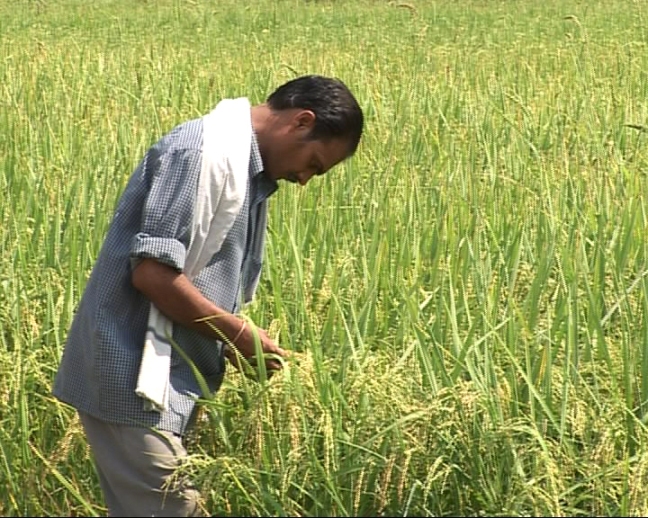
The chronic kidney disease (CKDu) that has already affected thousands in its heartland of farming, has brought into sharp focus some serious environmental concerns that ecologists have long highlighted. These stem from our farmers’ high reliance on inorganic (chemical) fertilisers.
While some fertiliser is needed to sustain soil fertility when growing crops repeatedly on the same land, the ‘Green Revolution’ from the 1960s urged Lankan farmers to use large volumes of fertiliser, provided to them on massive state subsidies. That, in turn, led to indiscriminate use and waste — and higher agricultural runoffs.
Farmers aren’t thrifty because they get fertiliser at a fraction of the market price. In this week’s Ravaya column (in Sinhala, on 2 September 2012), I look at what this national addiction to chemical fertiliser is doing to both our economy and ecology. I also look at organic alternatives and probe why they are not being adopted more widely.
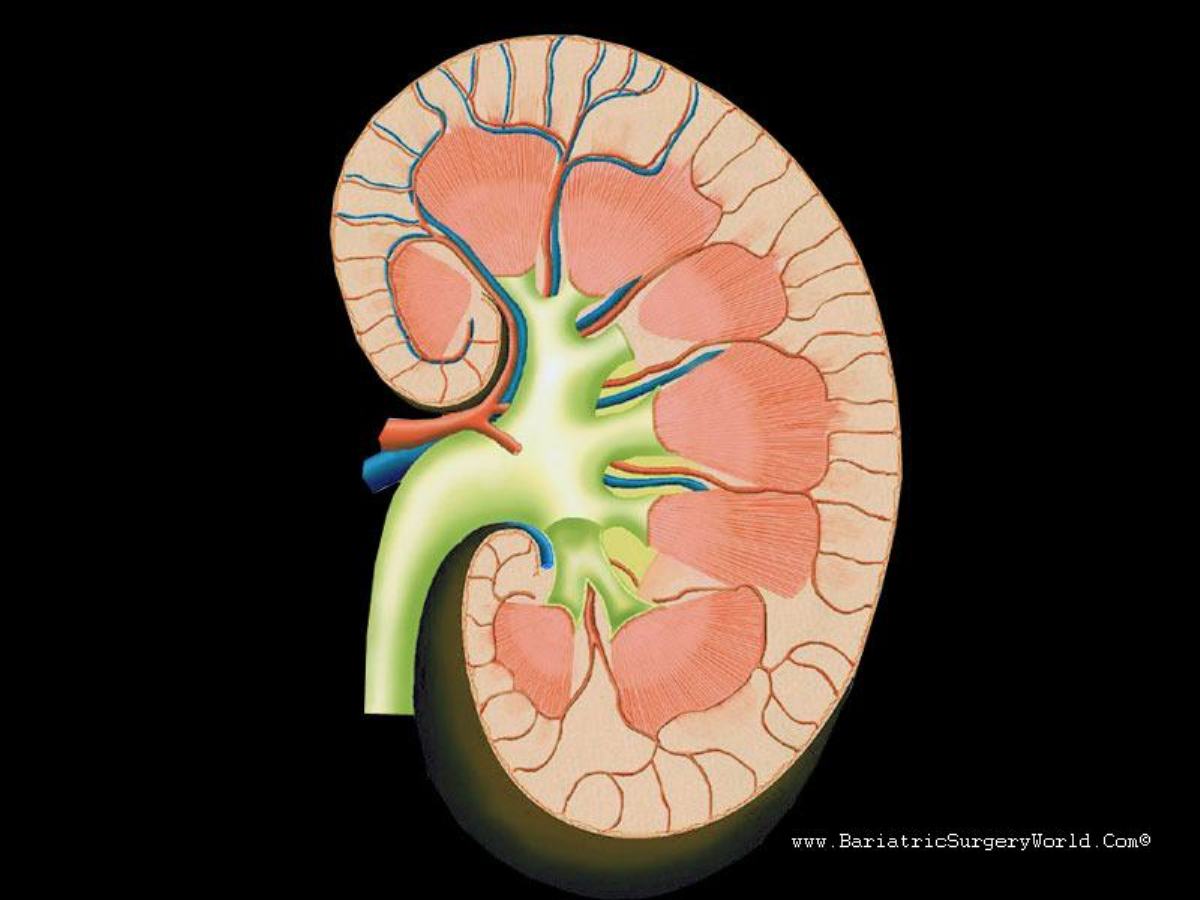
CKDu was first reported in the early 1990s from a single Province in our heartland of farming, but it has now spread across approximately 17,000 sq km (a quarter of the island), which is home to around 2.5 million people. Several thousand have already died; the exact number is not clear. Over 15,000 people are kept alive with regular kidney dialysis.
Investigating causes of this ailment — still not pinned down to a particular cause or factor — has been contentious with scientists, nationalists and politicians trying to hijack the issue for their own agenda setting. Some journalists have added fuel to the fire with sensationalist reporting and fear-mongering. In this column, I ask everyone to focus on the prolonged suffering of those already affected and their families.
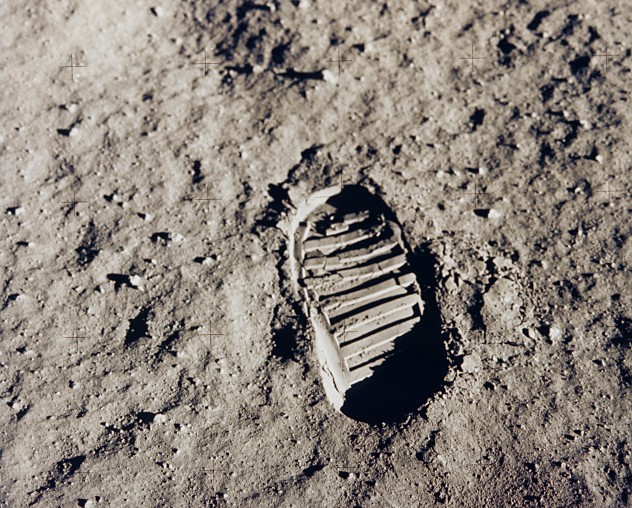
This footprint in the sand will stand the test of time and elements….
In her debut novel The Moon in the Water (2009), Lankan author Ameena Hussein uses a memorable line to describe her protagonist’s many dilemmas: “Her generation had the burden of being the link between the old world and the new. Between pre-man in the moon and post. Between letters and email.”
I’m as much a part of that in-between generation as her character Khadeeja. Rather than being a burden, however, I find it an extremely privileged vantage point to have been. There will never be another generation like ours that straddled two worlds…
For many of us who experienced it, the Apollo 11 ‘Moon shot’ will be among our most indelible memories. Among the various labels I can choose from those tumultuous times, I consider myself a Child of Apollo.
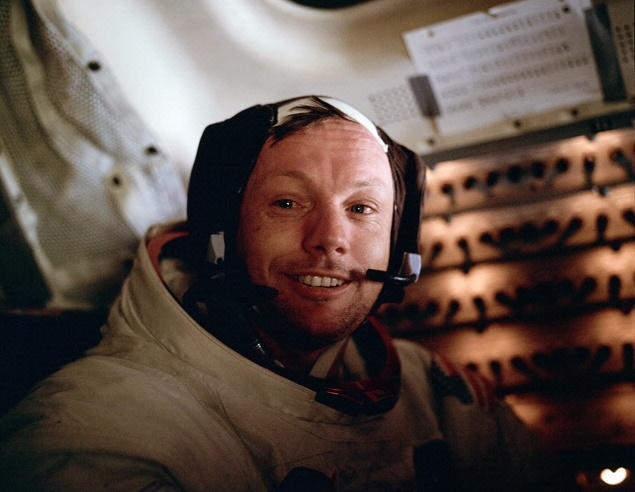
And the boyish, blue-eyed Neil Armstrong (already 39 when he went to the Moon) was my first hero.
These are excerpts from my personalised tribute to Armstrong, who signed off for good on 25 August 2012. In it, I reflect on how the first Moon Landing influenced me personally at the tender age of 3, and recall the very different times in which we lived our lives on the other side of the planet from where Apollo missions were taking off.
It’s a light-hearted, nostalgic and essentially personal tribute, not at all an academic or polemical discussion of the Cold War politics that inspired the Great Space Race. But I do touch on what it meant to be part of history’s first Big Media Moment that was shared in real time by 600 million TV viewers and another few dozen million radio listeners worldwide.
If Neil was originally a hero to me for riding atop the world’s greatest fireworks machine and taking that Giant Leap for Mankind, he is a hero for me now for what he chose to do with his life upon his return.
O voyagers, O seamen,
You who came to port, and you whose bodies
Will suffer the trial and judgement of the sea,
Or whatever event, this is your real destination.”
So Krishna, as when he admonished Arjuna
On the field of battle.
Not fare well,
But fare forward, voyagers.
– T. S. Eliot
Neil Armstrong – Driven by a sense of wonder, did his job quietly and well
In my Ravaya column (in Sinhala) for 26 August 2012, I’ve written about the making of Ran Muthu Duwa, the first colour Sinhala feature film made in Sri Lanka, was released 50 years ago in August 1962.
Ran Muthu Duwa was a trail-blazer in the Lankan cinema industry in many respects. It not only introduced colour to our movies, but also showed for the first time the underwater wonders of the seas around the island.
Malima (New Directions in Innovation) is a Sinhala language TV series on science, technology and innovation. This episode was produced and first broadcast by Sri Lanka’s Rupavahini TV channel on 26 July 2012.
Produced by Suminda Thilakasena and hosted by science writer Nalaka Gunawardene, this episode features the following items:
• An interview with K M Wijepala, proprietor of Wijaya Agro Products in Nuwara Eliya, Sri Lanka, who has developed an entirely organic, liquid fertilizer as a substitute for imported, costly chemical fertilizers. Named GOLF (Gold Organic Lanka Fertilizer), it provides all required nutrients for all kinds of crops according to the innovator. Already patented in Sri Lanka, GOLF’s efficacy has been tested and confirmed by the state’s Tea Research Institute (TRI) and Industrial Technology Institute (ITI). Wijepala, a former field officer of the Department of Agriculture, is giving the recipe away to his fellow farmers as his contribution to a chemicals-free future for agriculture. In his view, the only ‘obstacle’ standing in the way of popularising this indigenous, low-cost fertilizer is the huge state subsidy given to imported chemical fertilizers. GOLF sells at one fifth of the real cost of chemical fertilizers but the 90% subsidy distorts the market. As long as the subsidy continues, farmers will have no interest or incentive in looking at any alternatives.
• An interview with young inventor Samali Gunasekera, a Grade 13 student at Bomiriya Central College, Kaduwala, Sri Lanka, who has designed a multipurpose helping handle for the kitchen. It helps raise cooking vessels, kettles and other utensils; it is also fitted with a spoon. This handle can make life easier for everyone including those with disabilities.
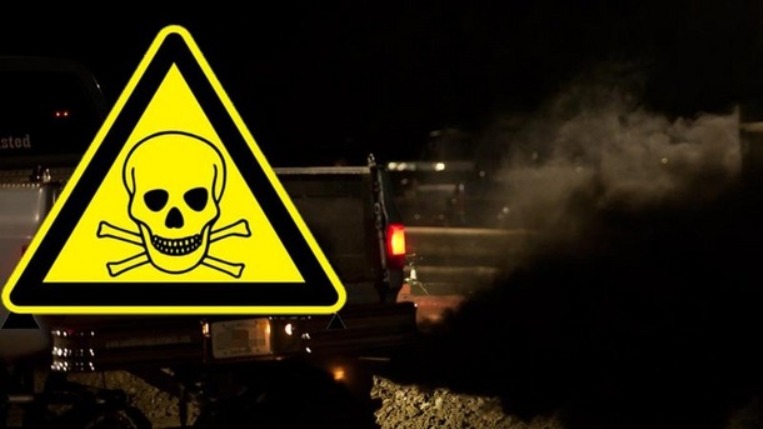
In this week’s Ravaya column (in Sinhala), I look back at the scientific, legal and policy struggles in Sri Lanka that finally god rid of lead additives in petrol (gasoline) in 2002. It is a success story in safeguarding public health and combating environmental pollution that holds valuable lessons in a new challenge that confronts us: how to reduce sulphur content in the diesel distributed in Sri Lanka that currently contains one of the highest sulphur levels in Asia. This is now urgent and important with WHO confirming diesel fumes cause lung causer.
Buckminster Fuller, the visionary American engineer and designer who used challenge his audiences saying: “There’s no energy shortage; there’s no energy crisis; there’s a crisis of ignorance.”
In this episode of Malima (New Directions in Innovation), a Sinhala language TV series on science, technology and innovation, we feature a wide-ranging interview on how innovation can find solutions to the energy crisis.
Produced by Suminda Thilakasena and hosted by science writer Nalaka Gunawardene, this show interviews two Lankan specialists:
• Dr Ajith de Alwis, Professor of Chemical and Process Engineering, University of Moratuwa, Sri Lanka
• Engineer Asoka Abeygunawardana, Adviser to the Minister of Power and Energy and Executive Director, Energy Forum, Sri Lanka
The interview opens with an overview of Sri Lanka’s energy generation and use, and then looks at the current role and future potential of renewable energy sources – ranging from biomass and hydro electricity to wind, solar, biogas and dendro power. In particular, we look at what Lankan inventors can do to make renewable energies cheaper, safer and more user-friendly.

 Open Minds!