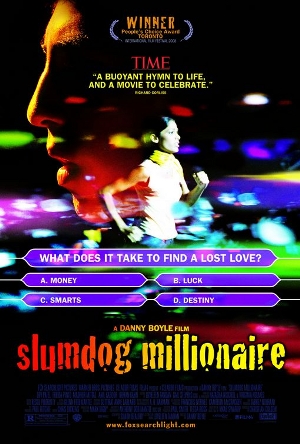
Final Question: Who’s Afraid of a Slumdog Millionaire?

Who wants to be a Slumdog Millionaire?
“All the world is a quiz, and all the men and women merely players.” That’s how the late Magnús Magnússon, iconic host of BBC TV’s long-running quiz Mastermind, once described the scope for his line of work.

These words came to my mind as I watched the new Danny Boyle movie Slumdog Millionaire in New Delhi on its opening night on 23 January 2009. For two hours, it held me spellbound and transported me, alternately, to the rough world of Mumbai slums and the glitzy world of television quizzing in Bollywood.

It’s a feel-good, rags-to-riches story about Jamal Malik, an 18 year-old orphan from the slums of Mumbai who goes on to win a staggering 20 million Indian Rupees (a little over US$ 400,000) on India’s version of the popular TV game show Who Wants To Be A Millionaire? . The story, adapted from an award-winning novel Q&A(2005) by Indian diplomat Vikas Swarup, resonated strongly with me given my own, long-standing association with the overlapping worlds of quizzing and TV hosting.

As the story unfolds, we find out how and why Jamal – who has had little or no formal schooling and lacks ambition to win the quiz – got on the show: for a very personal reason. Through a series of amazing coincidences, well known in the movies that often ask us to suspend disbelief, the answer to each question he faces is deeply etched in his memory from his tumultuous past.

When the show breaks for the night, Jamal is only one question away from winning the show’s grand prize, which can make him a multi-millionaire. But the show’s organisers just can’t believe that an uneducated street kid (or a ‘slum dog’) has made it thus far on his own. So they call in the police.

As the police inspector says: “Doctors… Lawyers… never get past 60 thousand rupees. He’s on 6 million.” The question for everyone is: how does he do it?

Jamal is arrested on suspicion of cheating, and police torture him overnight to find out how. Desperate to prove his innocence, Jamal tells the story of his life in the slum where he and his brother Salim grew up, of their adventures together on the road, of vicious encounters with local gangs, and of Latika, the girl he loved and lost. Each chapter of his story reveals the key to the answer to one of the game show’s questions…

Watch the official movie trailer for Slumdog Millionaire:

Jamal returns the next evening – straight from police custody – to face the final question. The right answer would earn him 20 million; giving the wrong answer would lose all his winnings so far. By this time, his meteoric rise to the final question has made news headlines and tens of millions of TV viewers across India are watching the show and cheering for him. Among them is the young woman for whom Jamal got on the show in the first place…

The dramatic story ends on a happy note, in true Bollywood style, when boy meets his long-lost girl. One of its sub-plots offers insights into the high adrenalin world of quiz shows, which are now being played for high stakes.
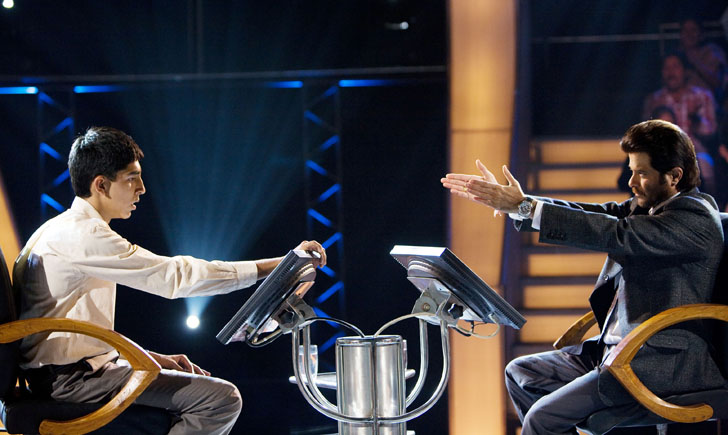
Is that your final answer?

The film uses the actual set of Kaun Banega Crorepati (KBC), the Indian version of the globally popular game show, Who Wants to be a Millionaire? which offers large cash prizes for correctly answering 15 (or in some countries, 12) consecutive multiple-choice questions of increasing difficulty. It represents the highly commercialised end of the quizzing world, which traditionally shunned cash rewards for performance. For example, the winner of BBC Mastermind receives nothing more than the coveted title.

I can’t remember exactly when I first took part in a general knowledge quiz — that is now buried too deep in the sediments of my memory. But I have been an active participant in the fascinating world of quizzing for at least three quarters of my 42 years, first as a quiz kid and then as a quiz master.

Slumdog Millionaire reinforces a point I have been making for years: not to equate knowledge with intelligence. Quizzes of every kind only test the general knowledge and quick recollection ability among participants — but not necessarily their intelligence. Measuring intelligence (that is, determining intelligence quotient, or IQ) is a specialised and complicated process. In any case, scientists acknowledge that such measurements are not always accurate because of cultural diversity and other variables. Although someone excelling in quiz would, in all likelihood, also have a high level of intelligence, quiz performance by itself is no measure of someone’s IQ.

Similarly, there is also no direct co-relation between the level of educational attainment and performance at general knowledge quizzes. While good quiz kids generally tend to be high achievers in their curriculum studies, that is not always so. I remember a London taxi driver once beating dozens of academics and professionals to become the overall winner in Brain of Britain, the BBC’s long-running radio quiz show. Apparently he used to read a great deal while waiting for hires.

Finally, I know of serious quiz enthusiasts who frown upon game shows like KBC as a dumbing down of the cerebral art. But there’s no denying that, by invoking popular culture, the new formats have hugely enhanced the audiences following quizzing on TV. For the true aficionados, there’s always Mastermind and other ‘pure’ forms of quizzing that remain above the fray of commerce. For the rest, there are shows that mix the quest for knowledge with the pursuit of happiness through material rewards.

Who’s afraid of the lure of 20 million Rupees?
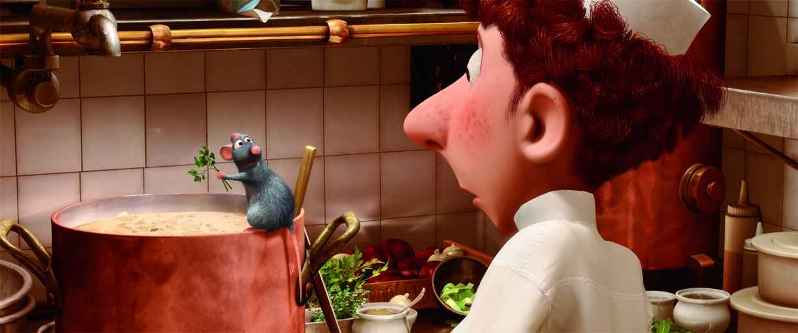
Anyone can make video film, right? Why do we need professionals?

Anyone can cook, right?

I really enjoyed the Disney/Pixar film Ratatouille (2007), which won the year’s best animated feature film Oscar award and deserved it.

Here’s the plot summary from IMDB: Remy is a young rat in the French countryside who arrives in Paris, only to find out that his cooking idol is dead. When he makes an unusual alliance with a restaurant’s new garbage boy, the culinary and personal adventures begin despite Remy’s family’s skepticism and the rat-hating world of humans. Read full synopsis on IMDB

The movie opens with a TV show featuring Chef Auguste Gusteau, owner of the best restaurant in Paris, talking about his bestselling cookbook, which proudly bears his mantra “Anyone Can Cook!”

Well, that’s heretical to the fine artistes of gourmet. But it’s revived the age old debate between fully-trained professionals and new-entrant amateurs, and inspired some interesting discussions online. One blogger thought: “Remy the rat is a perfect metaphor for the non-expert Web 2.0 knowledge maker. He has no credentials and must prove himself through his actual knowledge and application of knowledge rather than through credentials.”

He added: “What’s the moral of the story? Even without being an acknowledged expert on a topic, if you work hard to express your ideas in clever ways, you too can be respected for what you know.”

I’ve only just read these views, but they resonate with what I felt when I watched the movie in late 2007. The story certainly reminded me of a heated debate in my own field of moving images: can anybody and everybody make video, now that the tech barriers and costs have come down? If this is the case, what’s the point of having highly trained, better paid professionals who do it for a living?

I shan’t try to resolve that debate here. But here’s an interesting take on the debate from the Onion News Network. They report: YouTube is offering a cash prize to the first user to upload a video with a shred of originality or artistic merit.

Thai audiences in the dark about ‘Children of the Dark’

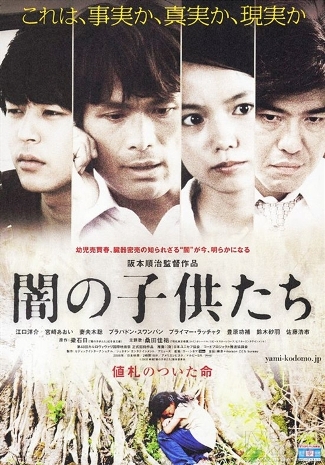
Yami no kodomotachi (Children of the Dark) movie poster

Human trafficking – peddling and trading of human beings for slavery, sexual exploitation and servitude – has grown to alarming proportions in recent years. It’s among the top five illicit trades in the world, whose net annual worth is believed to be between 9 billion and 42 billion US dollars. The truth is, nobody knows exactly how big it is, but human rights activists and development agencies agree the problem is pervasive.

Of the estimated 2.5 million persons trafficked worldwide, more than half are in the Asia Pacific. At the UN General Assembly for Children in August 2007, it was reported that about 1.8 million children became victims of commercial sex trade in 2000. About one million children in Southeast Asia are said to be involved – Thailand is one centre of this shady trade, drawing on misery in its rural hinterlands as well as poorer neighbouring countries like Burma, Cambodia and Laos.

So what happens when someone goes to the trouble of studying the issue in depth, and then pools talent and resources to make a feature film that exposes international connections that sustain the child sex industry in Thailand? Instead of being welcomed as part of the effort to counter this scourge, the film gets banned.

Yami no kodomotachi (Children of the Dark, 138 mins, original Japanese) is a Japanese-Thai film made in 2008 about child sex slavery. It has been banned in Thailand on the grounds that it was ‘inappropriate’ and touched on a ‘sensitive’ issue.

Watch the official trailer of the film (Japanese soundtrack, Thai captions):

I haven’t seen the film, but according to one reviewer who did, Junji Sakamoto‘s film is based on a novel by Yan Sogil and scripted by Sakamoto himself, shows, with a documentary-like directness, how children caught in the web of a Thai prostitution ring are exploited, abused and, in some cases, murdered when they are no longer sexually salable.

Mark Schilling, writing in The Japan Times in August 2008, noted: “…In being so visually graphic — particularly in the sex scenes in the Thai brothel — Sakamoto treads a dangerous line between hard-hitting social drama and stomach-turning exploitation. He takes care never to show his young actors (whose average age looks to be about 10) and their adult ‘clients’ in the same explicit shot, but he films them engaged in sexual acts or their aftermath. Sakamoto may defend these scenes in the name of realism, but could he have filmed similar ones in Japan, using Japanese children? The short answer is “no.”

The Thai ban prevented ‘Children of the Dark’ from being screened at the Bangkok International Film Festival, held in the Thai capital from 23 – 30 September 2008.

“The ban puts under the spotlight the country’s – or at least its higher-ups’ – seeming unwillingness to let go of the Film Act of 1930, when Thailand was still under absolute monarchy. That law gave a Board of Censors the power to impose cuts or to ban a film it deems inappropriate,” writes my friend and colleague Lynette Lee Corporal in an article just published on Asia Media Forum.

Thailand in denial about its Children of the Dark
She quotes my Thai colleague and documentary filmmaker Pipope Panitchpakdi as saying: “Authorities always think that viewers need to be protected and shielded from real issues. They still have that kind of sentiment that the media should function as a gatekeeper. That is, let the good stories in and the bad ones out. It’s okay in certain circumstances but not when talking about real, serious issues.”

Pipope adds: “This country has no problem with hypocrisy; we don’t see anything wrong with double standards. We have sex workers in corners of the city, but we can’t watch people kissing.”

A Bangkok-based journalist who calls himself Wise Kwai, writing in his blog, asks: “When will they (Thai authorities) learn that when they ban or censor a film, the ensuing stink that’s raised causes more problems than if the film had been allowed to quietly unspool? Perhaps if people had seen it, they might criticise it, but they’d also talk about the problems in society that allow children to be exploited.”

Read the full article: Film Censorship Leaves Viewers in the Dark by Lynette Lee Corporal

My Sep 2007 post: MTV Exit: Entertainment TV takes on human trafficking

Standing on Al Gore’s Shoulders: Moving images in the climate debate

And the winner is...

Al Gore used to have a reputation as a very smart man who was very stiff and aloof especially in his public speaking.

I didn’t notice this the only time I listened to him in person, at an environmental journalists conference at MIT in Boston, Massachusetts, in the Fall of 1995. Perhaps because he was speaking to a group of over 200 journalists, Gore was especially charming. He delivered a well prepared speech passionately, and then took a dozen questions.

I still remember one incident during question time. A Bangladeshi participant lined up to ask him something and started addressing him as ‘Mr President’. Gore smilingly interjected: ‘Not yet!’. The journalist, not the least shaken by his slip of the tongue, said: ‘Well, I hope you will be one day!’.

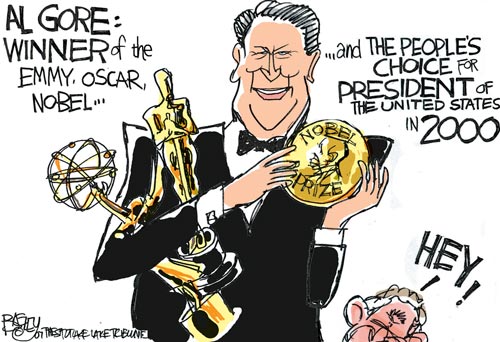
Well, that day came…and it was not to be. Gore won the popular vote in the 2000 presidential election but lost the presidency in a bizarre series of events that had the rest of the world gasping.

All that sounds so long ago, now that Gore has emerged as the world’s best known climate crusader. There are many who feel that he is more effective in his current role than as a politician.

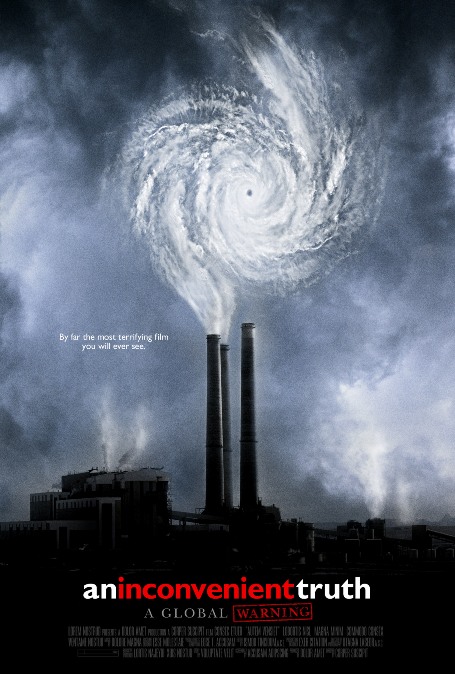
His 2006 film, An Inconvenient Truth, helped move the climate change debate forward in a decisive manner.

Whatever we might think about the film’s artistic and technical merits, I’m glad it has settled one question: can a single film make a difference in tipping public opinion about a matter of global importance?

The answer, where climate change is concerned, is a resounding yes!

For sure, the film arrived at a time when the climate change debate had been going on for nearly two decades. Scientific evidence was mounting for human responsibility for accelerated changes in our climate. Political and business leaders, in denial for years, were finally beginning to take note — perhaps sensing votes or dollars.

Official film poster
Coming in at the time it did — in the Summer of 2006 –- Al Gore’s film tipped the public opinion to agree that climate change was for real and responses were urgently needed.

“It is now clear that we face a deepening global climate crisis that requires us to act boldly, quickly and wisely,” says the former US Vice President introducing his film.

An Inconvenient Truth focuses on Al Gore and his travels in support of his efforts to educate the public about the severity of the climate crisis. Gore says, “I’ve been trying to tell this story for a long time and I feel as if I’ve failed to get the message across.”

The film closely follows a Keynote presentation (dubbed “the slide show”) that Gore presented throughout the world. It intersperses Gore’s exploration of data and predictions regarding climate change and its potential for disaster with Gore’s life story.

An Inconvenient Truth is not a particularly stunning or dramatic documentary. Some have called it a ‘dramatised PowerPoint presentation’ (although Gore actually uses Apple’s Keynote presentation software). There aren’t cuddly animals, deadly chemicals, forest infernos or gory animal hunts that make environmental films appeal to a mass audience.

In fact, it hangs together — and sustains for nearly an hour and a half — due to the sheer star power of Al Gore. And when we take a closer look, we see how hard Gore and his team at Participant Productions have tried to engage audiences.

The film, made on a budget of around US$1 million (modest by Hollywood standards) went on to earn US$49 million at the box office worldwide. As at late 2008, it ranks as the fourth-highest-grossing documentary film in the United States, after Fahrenheit 9/11, March of the Penguins and Sicko.

I first saw An Inconvenient Truth at a cinema in Virginia, USA, while it was still on its initial theatrical release in the Fall of 2006. I reviewed it in early 2007, and recently returned to discussing the film during a presentation I made to our Asia Pacific regional workshop on changing climate and moving images, held in Tokyo in early October 2008.

My thrust was: now that Al Gore and his film have helped turn the climate debate, how can we continue to use moving images in search of solutions? In other words, how do we stand on the shoulders of Al Gore?

Another excellent film on climate change
The Great Warming: Another excellent film on climate change

I looked back at Gore’s film and another excellent Canadian film that came out the same year, The Great Warming. Discussing their merits, I noted how both films appeal as much to our emotions as they do to our rational intellect. “Facts, figures and analysis alone cannot engage a diverse, sometimes sceptical or indifferent audience. That’s why they try a different approach: appealing to the emotions.”

Here are some excerpts from my remarks:

We often see environmental documentaries failing to engage audiences because they pack too much information, or worse, preach too heavily and directly. Some film-makers feel strongly that they must ‘inform and educate’ their viewers at all costs.

To engage people, both are needed
It’s story telling that works best with moving images –- and what better stories to tell than the personalised ones of real people dealing with real world problems and challenges?

With ‘moving images, moving people’ as our slogan, we at TVE Asia Pacific believe in the power of well-made films to reach out to people’s hearts and minds.

Our experience shows that moving images can indeed move people, but only when:
• They are used in the right context;
• They form part of a bigger effort or campaign;
• Audio-visual’s strengths are maximised; and
• Audio-visuals limitations are properly recognised.

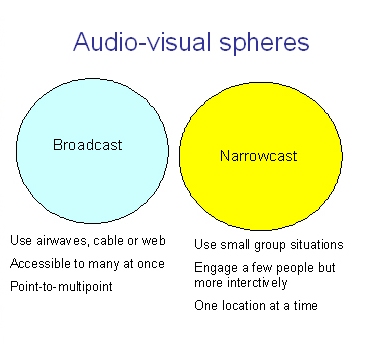
It’s the combination of broadcast and narrowcast spheres that has a better chance of changing people’s attitudes and, ultimately, their behaviour.

Read the full presentation here:
standing-on-al-gores-shoulders-nalaka-gunawardene-speech-in-tokyo-4-oct-20081

A J Gunawardana: Remembering a lost colleague…and discovering online gaps

A J Gunawardana with film director Lester James Peries
A J Gunawardana (left) with film director Lester James Peries

I have just written a 2,000-word essay recalling my times with a senior colleague and fellow media-watcher, the late Dr A J Gunawardana.

AJ, as he was affectionately known, was an outstanding university teacher, writer/journalist, cinema personality and art critic. When he died in September 1998 at the relatively young age of 65, we lost a rare intellectual who had his feet firmly on the ground, and constantly built bridges linking media, culture and society.

We shared more than our surname and involvement in the media. In fact, when I was beginning to be noticed for my journalistic writing in late 1980s and early 1990s, people kept asking me if I was AJ’s son, or at least a relation. I had to disappoint them.

My association with him was in the last decade of his life. His junior by a generation, I related to the genial professor as a fellow writer and occasional partner in mischief in the domains of media and popular culture. These are the times I have recalled in the tribute, just published on Groundviews citizen journalism website.

AJ started his career as a journalist with the then privately owned flagship of Sri Lankan journalism, Ceylon Daily News, where he was a noted arts and culture correspondent in the 1960s. He went on to obtain a doctorate in performing arts from New York University. Upon return, he pursued a career in academia as a professor of English at the Vidyodaya University (later University of Sri Jayawardenapura) and was closely associated with film and media education. He chaired a Presidential Committee of Inquiry on the Sri Lankan film industry, which issued its report in 1985.

In the arts world, he is perhaps best remembered for the screenplays he wrote for three films by Sri Lanka’s best known director Lester James Peries: Baddegama (1980), Kaliyugaya (1982) and Yuganthaya (1985). The latter two are included among the best of Sri Lankan cinema as compiled by the British Film Institute.

At the time of his death, AJ was working on a biography of the doyen of the Sri Lankan cinema, which was posthumously published in 2005 as LJP: Lester James Peries: Life and Work.

Read my full tribute:
Remembering A J Gunawardana: A creative public intellectual

In researching for this essay, I wanted to verify some biographical and filmographical specifics about AJ. The usually reliable Encyclopaedia of sri Lanka (2006) edition, compiled by Charles Gunawardena (note how we all spell our same surname differently!) had no entry on AJ, which is a bit disappointing considering the far more obscure personalities featured in this reference.

My next step was Googling for A J, using the various spellings for his and my shared surname. (Don’t ask me how and why different clans spell it differently – which must drive foreigners crazy – but it matters to us). Considering AJ published most of his journalistic writing before commercial Internet connectivity became widely available and newspapers started publishing their web editions, I wasn’t surprised by how little I could find online. I didn’t come across a single piece of AJ’s incisive writing online, although perhaps a specialised search might yet unearth a few from some depth of an archive.

This highlights an unmet need where many Asian newspapers and magazines are concerned: their archives only go back to a decade or a dozen years. Even when publishers are willing to unlock their archives and make it available, the sheer logistics involved must daunt them. This could change in time to come, with Google’s recently announced initiative to digitise newspaper archives. The search giant has begun scanning microfilm from some newspapers’ historic archives to make them searchable online, first through Google News and eventually on the papers’ own Web sites.

An aside: I remember making the same point to assembled ITU, UNESCO and other UN worthies at the WSIS Asia Preparatory Meeting in Tokyo in January 2003. In a world where search for information and records is moving increasingly to the web, I said, the old sources of Asia’s news, information and culture need to be progressively placed online. This is a huge undertaking even if we just consider only the newspaper archives. But if not done, these valuable sources may soon begin to be ignored as references.

I then turned to the Internet Movie Database, IMDB, for some specifics and was disappointed again. AJ’s main entry on IMDB listed only one of his three films, and there was no other information about him, at least in the areas allowed for free access. It was only later that I stumbled upon another IMDB entry for AJ, where the last two letters of his surname are lopped off, which keeps it out of most searches.

When the two entries are put together, one begins to get an idea of AJ’s cinematic accomplishments, but it still completely leaves out his work as a film critic.

These gaps are not unique to AJ. In fact, even though IMDb is said to be “one of the largest accumulation of data about films, television programs, direct-to-video products, and video games, reaching back to each medium’s respective beginning”, I imagine a large number of film industry creations and professionals from outside the mainstream English language cinema is currently missing or poorly indexed on it.

Clearly, there is work to be done – by film buffs from Asia, whose want their cinematic traditions and professionals featured adequately on IMDB. Although I occasionally edit entries on the Wikipedia, I haven’t figured out how to do it on IMDB.

In this era of user-generated content, we can’t just sit back and complain that the web is biased towards the English speaking west. It’s still the case, but web 2.0 allows us the opportunity and tools to go and do something about it.

From Chris Rock to Barack Obama: Will electoral life imitate Hollywood art?

Barack Obama is finally confirmed as the Democratic Party’s candidate for President.

This week, while the Democratic Party convention was underway on the other side of the planet, I re-watched the 2003 Chris Rock movie Head of State – and realised how prescient it has been – in some respects.

For those who don’t know the movie, classified as a comedy, here’s the summary from Internet Movie Database: Mays Gilliam, a Washington D.C. neighborhood Alderman, is about to be red-lined out of his job. But after the untimely death of the party frontrunner, Gilliam is plucked from obscurity, and thrust into the limelight as his party’s nominee — for President of the United States. Read full summary and other trivia on IMDB.

Well, other men have gone from the log cabin to the White House, but there’s a significant difference: Mays Gilliam is black, socially underprivileged and broke. In the movie, he becomes the first black man to be nominated for President by a major party (the story isn’t explicit as to which party). Starting as the absolute underdog, and running against a serving, two-term vice president (middle-aged white male, a war hero and a cousin of Sharon Stone to boot), he works his way through a rocky campaign.

The odds slowly improve as Mays speaks his mind and talks truth to power — a refreshing change from the smooth-talking politicians rendering silky words written by their spin doctors. Mays goes on to become President. That wasn’t quite in the plan of Washington power brokers who nominated him – they had other, less noble, intentions. But once unleashed, there was no stopping Mays Gilliam, a self-styled young man who knows how the other half lives.

Someone has helpfully posted an extract from the movie on YouTube. This is the TV debate that Mays has with incumbent Brian Lewis:

Chris Rock, who wrote, directed and starred in the movie, says he got the idea from the 1984 Democratic presidential nominee Walter Mondale, who chose Geraldine Ferraro — a woman — as his running mate. The Democrats knew they had little chance of defeating incumbent Ronald Reagan, but Ferraro’s nomination allowed them to gain female voters, contributing to the eventual 1992 election of Bill Clinton.

This plot line becomes very intriguing with Republican contender John McCain just picking the little known Alaska governor Sarah Palin as his running mate for vice president.

The parallels between Head of State and Barack Obama can only stretch so far. Illinois Senator Obama is not exactly from an underprivileged background, and his education and credentials are much greater than Mays Gilliams’.
And there are some who never tire of reminding us that Obama is not even fully black.

But where life does imitate art is in how the Washington establishment conspires to keep a young, charismatic black man from ascending to the highest elected office. In the movie, deep rooted political party divisions are crossed as power brokers look for desperate measures to stop Mays Gilliam from marching to the White House.

Now why does that sound vaguely familiar with Obama’s own courageous and remarkable journey so far?

At one point in the movie, when things aren’t going well in his campaign, Mays is asked if he wants to quit. His answer: he can’t afford to quit. He’s not just running for himself, but for all black people. “If I quit now, there won’t be another black candidate for 50 years.”

Head of State may have been made made in 2003 as a comedy, but the US political landscape has changed much in the past five years. Suddenly, the scenario is not comic anymore…

Whatever the eventual outcome, the next few weeks in the run up to the Nov 4 US Presidential Election are going to be very interesting.

Will electoral life imitate Hollywood art? Watch this space….

Read my July 2008 post: Perhaps they don’t know that Barack means a blessing…

NPR asked in January 2008: Has Hollywood paved the way for Obama?

The price of light: Insights from The Willow Tree

The Willow Tree

“There are two tragedies in life. One is not to get your heart’s desire. The other is to get it.”

These words, by George Bernard Shaw (in “Man and Superman”, 1903), came to my mind as we watched Iranian director Majid Majidi’s 2005 film The Willow Tree (96 mins, in Farsi with English subtitles) as TVE Asia Pacific’s monthly feature film screening this week.

The Willow Tree chronicles the revelations and shocks experienced by Youssef (Parvis Parastui), a blind professor of literature whose eyesight is miraculously restored 38 years after he lost it in a childhood firecracker accident. For nearly four decades, he lived in the care of his comfort zone, first in biological and then married family. But when he regained the ability to see, it opens up a whole new world — one which he is not fully prepared to face.

Some critics see The Willow Tree as closely linked to Majidi’s 1999 film, The Color of Paradise, the story of the lonely but strangely happy Mohammad, a blind 8-year-old boy whose widowed father reluctantly abandons him to the care of a rural carpenter. (Not having seen the latter film yet, I can’t comment.)

As Stephen Holden wrote in a New York Times review: “If the two films are viewed as a matched pair, as I think they should be, Youssef could be Mohammad’s urban grown-up counterpart. Both films are explicitly religious, intensely poetic meditations, filled with recurrent symbols and suffused with a spirit of divine apprehension. Both are sad beyond measure, and both risk seeming mawkishly sentimental.”

The Willow Tree is a soulful, emotionally moving film where Majidi once again proves his dexterity with multi-layered symbolicism and clever use of soundtrack, especially music, to convey much that is unsaid in dialogue.

At one level, the film reinforces the cautionary tale to be careful of what you wish for. At another, it makes us question the whole notion of what it means to be able to see the world with our eyes — something many of us take for granted, but is the defining attribute in Professor Youssef’s life.

It’s easy for us who work in moving images to forget that there is a wholly different world for those who cannot see, or whose vision is impaired as in, say, astigmatism or colour blindness. We sometimes tend to picture perfect our creations – with extra touches of visual effects, some of which are so subtle that they could easily be lost in the fleeting playback. We argue over the shades of gray, the seamlessness of a fade-in and fade-out, or the precise colour corrections, as if those choices were matters of life and death. We who play with light like to get things exactly right.

Well, it’s fine to strive for excellence, but it’s sobering to note that there are some who will never see and appreciate our hard-laboured visual subtleties. A few among them may listen to the soundtrack of our audio-visual creations. But on the whole, cinema, television and video are media catering to those who can both see and hear. Watching films like The Willow Tree, therefore, gives a sense of perspective to us that is not typically part of our daily work milieu.

In the end, we are what our sensory perceptions make us. Yes, it’s a blessing to have all or most of our five senses (and some among us seem to have an as yet undefined sixth sense). But before we rejoice, it’s good to reflect that there may be other beings in the vast universe (or in other dimensions) with far greater powers of sensory perception in realms we have no way of knowing.

This is what American poet Harry Kemp (1883—1960) hinted at in his most famous poem, ‘Blind’:

THE SPRING blew trumpets of color;
Her Green sang in my brain—
I heard a blind man groping
“Tap—tap” with his cane;

I pitied him in his blindness;
But can I boast, “I see”?
Perhaps there walks a spirit
Close by, who pities me,—

A spirit who hears me tapping
The five-sensed cane of mind
Amid such unguessed glories—
That I am worse than blind.

The Willow Tree

H R Premaratne: The Lankan artist who built a space station for 2001

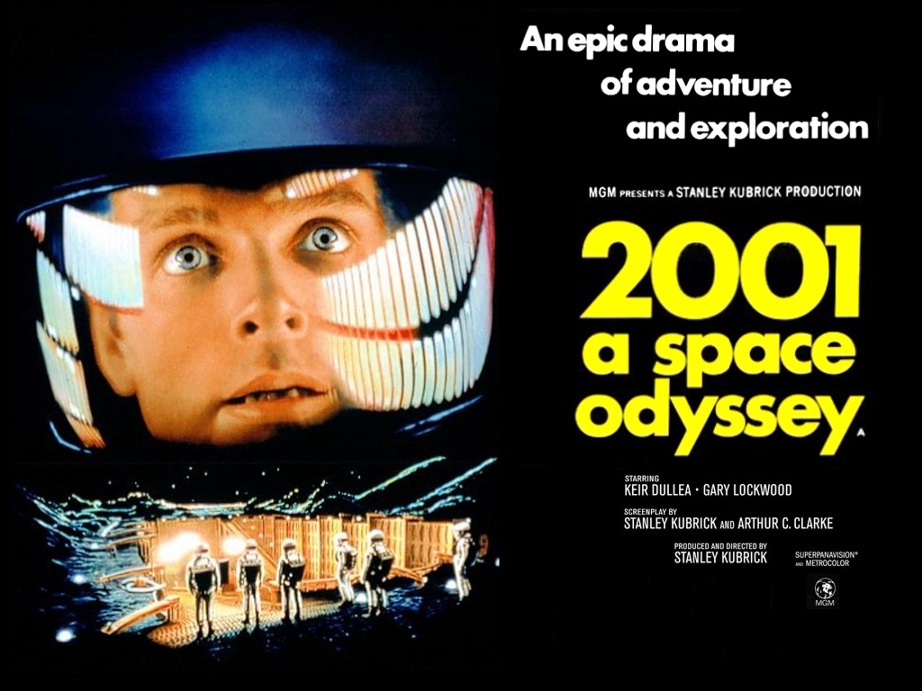
2001 A Space Odyssey movie poster from 1968

The Sunday Observer, Sri Lanka, reproduces this story on 11 May 2008

This month marks the 40th anniversary of the release of classic science fiction movie 2001: A Space Odyssey. The Academy of Motion Picture Arts and Sciences held a commemorative screening last week in Hollywood’s MGM theatre.

In May 1964 director Stanley Kubrick and science fiction author Arthur C Clarke embarked on a creative collaboration: a novel and a screenplay inspired by Clarke’s 1950 short story “The Sentinel.” In December 1965, many ideas, drafts, and titles later, filming commenced on 2001: A Space Odyssey. The futuristic epic, placed in the first year of the new millennium, premiered in the US in April 1968 — and went on to become one of the finest science fiction movies made.

Official MGM trailer for 2001: A Space Odyssey

As the Academy noted on its website: “With its epoch-spanning storyline and its nearly dialogue-free script, 2001: A Space Odyssey combined the production value of Hollywood film-making with the artistic sensibility of European cinema. Its cerebral approach to the genre helped usher in a new, more literate age of science fiction cinema, and its extraordinary imagery – the widescreen 70mm cinematography of Geoffrey Unsworth, the visually dazzling and scrupulously researched production design, and especially the Oscar®-winning special effects – instantly became the benchmark by which all space films would be judged.”

The film’s best known connection to Sri Lanka is that its co-creator Arthur C Clarke had by then settled down there. During the 1964-68 period that he was associated with the production, Clarke would make periodic returns to his Colombo home — first from New York, where he brainstormed with Kubrick for weeks, and then from England, where the movie went into production. Filming of 2001 began in December 1965 in Shepperton Studios, Shepperton, England. Soon, filming was moved to MGM-British Studios in Borehamwood.

The anniversary coverage has triggered my memories of another, much less known Sri Lankan connection with the film. The accomplished Sri Lankan engineer, painter and sculptor H R (Hapugoda Rankothge) Premaratne worked on the movie’s special effects, all of which was hand-made. (Not a single computer was involved in creating the movie, which still awes movie-goers many of who take computer generated imagery, or CGI, completely for granted today.)

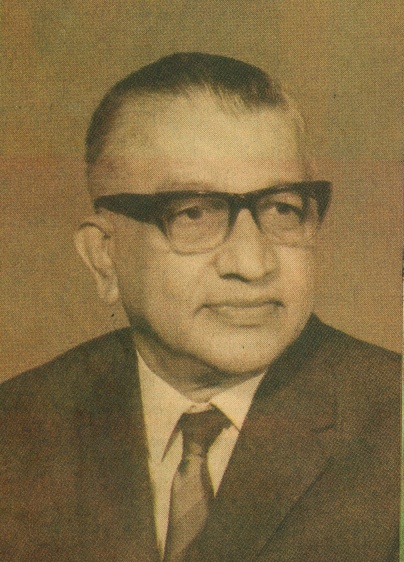
H R Premaratne

I got to know Premaratne (in photo above, affectionately known as Prema) in the late 1980s when he was special assistant to Arthur Clarke, in whose Colombo office I started working as a research assistant in 1987. I have just unearthed, from the depths of my own archives, an illustrated profile I wrote on Prema which appeared in The Island newspaper (Sri Lanka) on 26 January 1991. In a 2,000-word biographical sketch of the man that veteran journalist and biographer D B Dhanapala once called ‘a modern day Viswakarma’, I chronicle how Prema came to be associated with the movie’s production.

Prema had just retired in 1965 as Director of the Department of Public Works – in other words, the Ceylon government’s chief builder. By happy coincidence, 2001 was just entering its production stages around this time, so Clarke put Prema in touch with the Borehamwood Studios where elaborate sets for space scenes were being constructed. There, Prema worked with British and American set designers and special effects specialists.

For his efforts, he was listed as a member of the full production crew – even though he would go uncredited in the movie itself (as did dozens of others). When the Internet Movie Database was created decades later, he would also earn himself an entry there as Hapugoda Premaratne.

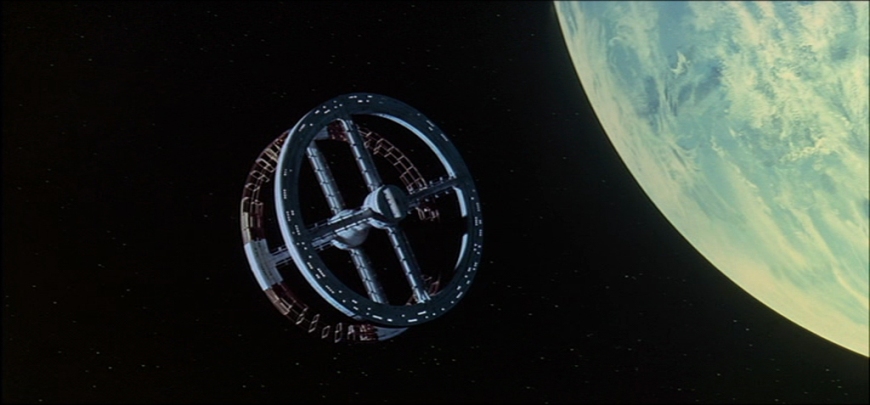
Space station in the movie 2001, envisaged in the mid 1960s

Harry Lange, chief designer of Hawke Films Limited who was in charge of production designs, later wrote to Prema: “Not one model could have been brought to the exceptionally high standard required in this production without the skills and imagination of people like yourself.”

Harry Lange recalls the making of 2001

“Prema was a very skilled architect, his best known work being the magnificent Independence Hall,” Clarke recalled years later in his tribute to Prema upon the latter’s death in the early 1990s. “During his stay in England in the mid 1960s, I put him in touch with Stanley Kubrick, who was then making 2001: A Space Odyssey. Prema’s expertise in art and engineering was very valuable in the production of the movie’s special effects, and he assisted in the building of the spectacular space station.”

Excerpt from 2001: Arrival at the space station in Earth orbit

Prema capped his long and illustrious public service as Sri Lanka’s ambassador to Burma, concurrently accredited to Thailand, Laos and Singapore (1974-78). From 1983, he worked as Clarke’s special assistant, while pursuing his own painting, sculpture and design work from his home at Wijerama Mawatha, Colombo — a short walk from Clarke’s own residence at Barnes Place.

I remember visiting Prema at home on several occasions. After his wife passed away and son moved overseas, he lived alone in a large, old house that was teeming with works of art – it was like a private art gallery or museum. All over the garden, there were scaled replicas of famous rock sculptures from places like Anuradhapura and Polonnaruwa. He pioneered a method of creating fibre glass replicas of archaeologically valuable statues and artefacts. These were used to showcase the best of Sri Lanka in major exhibitions in London, Washington DC and other capitals of the world in the 1980s.

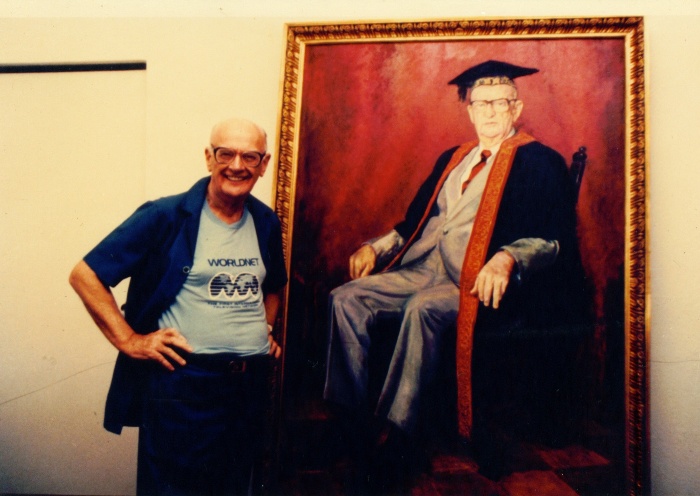
In the late 1980s, Prema also painted a life-size portrait Arthur C Clarke as Chancellor of the University of Moratuwa, which is still on display at the Arthur Clarke Centre there (photo, below).

It’s a bit cliched to say this, but they don’t seem to make renaissance men like H R Premaratne anymore. He straddled the arts and sciences with equal dexterity and with impressive results in both spheres. He not only built bridges in newly independent Ceylon, but was himself a bridge between the Two Cultures of the sciences and humanities.

Just like his friend Arthur C Clarke was…

Sir Arthur Clarke with his Chancellor portrait by H R Premaratne, circa 1990

More information on making 2001: A Space Odyssey is found in the documentary, 2001: The Making of a Myth.

The making of 2001: A Space Odyssey, by Richard Boyle (The Sunday Times, Sri Lanka, November 1998)

Children of Heaven: Appreciating the sound of silence

Courtesy Wikipedia

What’s it with children and shoes? Those who have none dream of owning their first pair. Those who have one, or some, still dream about a better, or perfect, pair. Shoes are worth dreaming about, crying (even fighting?) over, and running races for.

Like Ali did, in Majid Majidi’s superbly crafted 1997 movie Children of Heaven. For 90 minutes this afternoon, my team and I ran the race with little boy Ali, sharing his dreams, sorrows and eventual (albeit bitter-sweet) triumph.

I had seen this film before, but this time around, the experience felt even better than I remembered it. I already knew the story, but I was spell-bound by the film’s culmination – the children’s race where Ali wanted to come third, but ended up winning. I followed the last few minutes with tears in my eyes and the heart beating faster.

This is what good story telling is all about.

Read Children of Heaven synopsis on Wikipedia

Of course, Majid Majidi didn’t work this miracle alone. The superb cinematography of Parviz Malekzaade was well packaged by its editor Hassan Hassandoost. His work is uncluttered and elegant: the story flows in a simple, linear manner with no flashbacks or flash-forwards; no special effects to jazz things up; and the scenes are so seamlessly meshed together with hardly a second being wasted.

And the soundtrack played a vital part in shaping the whole experience. It’s not just the music. As my colleague Buddhini remarked, it also made clever, strategic use of silence.

We might call it the sound of silence – and never underestimate its power in the right place.

All this reminded me of what our Australian film-maker colleague Bruce Moir often said when we worked with him: “We’ve got to remember that film appeals to people’s hearts more than their minds. The way to people’s heads is through their hearts, from the chest upwards — and not the other way round.”

A year ago, I invited him as my special guest to a talk I gave at the University of Western Sydney in Australia – in his home city. There, he once again made the point: “Our fundamental job is to tell a story – one that holds an audience’s interest and moves their heart, regardless of language, cultural context or subject….I have always believed that film achieves its optimal impact by aiming to ‘get at the audience’s head via their heart’…”

April 2007 blog post: Moving images moving heart first, mind next

As I then wrote, I hope this was an ‘Aha!’ moment to some in our largely academic and activist audience. Many who commission films or even a few who make films tend to overlook this. Especially when they set out trying to ‘communicate messages’.

Bruce never tires of saying: “Film is a lousy medium to communicate information. It works best at the emotional level.”

Children of Heaven is living proof of this. It has no lofty agenda to deliver information or communicate messages of any kind. Yet, by telling a universal story set in modern day Iran, it brings up a whole lot of development related issues that can trigger hours of discussion: not just the rich/poor or rural/urban disparities, but other concerns like how a country like Iran is portrayed in the western news media.

As a colleague remarked after today’s film, she had no idea of this aspect of life in Iran — the version we constantly hear is of an oil-rich, nuke-happy, terror-sponsoring theocracy that, to the incumbent US president at least, is part of the ‘axis of evil‘. And the Al Jazeera International channel, packed with BBC discards or defectors, has done little to change this popular perception.

We watched the movie as part of our monthly screening of a feature film. We are lining up critically acclaimed films from different cinematic traditions of the world. And then we discuss its artistic, technical and editorial aspects.

As for me, I totally agree with the famous movie critic Roger Ebert, who wrote in the Chicago Sun-Times at the time of the movie’s first US release: “Children of Heaven is very nearly a perfect movie for children, and of course that means adults will like it, too. It lacks the cynicism and smart-mouth attitudes of so much American entertainment for kids and glows with a kind of good-hearted purity. To see this movie is to be reminded of a time when the children in movies were children and not miniature stand-up comics.”

As he summed it up: “Children of Heaven is about a home without unhappiness. About a brother and sister who love one another, instead of fighting. About situations any child can identify with. In this film from Iran, I found a sweetness and innocence that shames the land of Mutant Turtles, Power Rangers and violent video games. Why do we teach our kids to see through things, before they even learn to see them?”

Note: The film, originally made in Persian, was named Bacheha-Ye aseman . It was nominated for an Academy (Oscar) Award for the best foreign film in 1998, but lost out to a worthy competitor, Roberto Benigni’s Life is Beautiful.

The Meatrix Reality: Mixing animation, activism and spoof

When I gave up eating all meat nearly 15 years ago, I had some explaining to do.

Breaking away from the pack is never that easy. Friends and colleagues wanted to know if I had suddenly gone religious (most certainly not: I practise no religion and frown upon all); or become an animal-hugger (well, not quite); or if I was too sick to eat a ‘normal diet’ anymore.

That last one was closer to the truth. I became a partial vegetarian because I wanted to stay healthy. I realised how unhygienic meat production and distribution were in my part of the world, and yes, I was also sensitive about the excessive cruelty to animals who end up on dining tables.

And it’s not just in Asia that organised meat production is increasingly hazardous to human health (not to mention the untold suffering by farm animals and the growing power of big agri-business companies). Animal rights and environmental activists have been pointing these out for years. And as powerful documentaries like Fast Food Nation (2006) documented, it is not only meat that’s crushed in the powerful mincing machine, but the whole of society.

But just how do we carry this message to the young Digital Natives who are the most eager consumers of meat and fast food? As we discussed some months ago, the big challenge is to take complex development issues in the right durations (shorter the better) and right formats (mixed or pure entertainment).

The Meatrix Moopheus

I was delighted, therefore, to belatedly discover the innovative and insightful series called The Meatrix. Funnily, I heard about it from two sources almost at the same time. A Malaysian activist I was visiting in Georgetown, Penang, last week highly recommended it. Two days later, my colleague Manori Wijesekera returned from having screened one of our own films at the 16th Earth Vision Film Festival in Tokyo – where The Meatrix was a finalist in the children’s environmental film category.

The Meatrix is an animated spoof on The Matrix trilogy (1999 – 2003). It uses humor and thinly veiled characters and situations from the original Matrix films to educate the uninitiated about factory farms.

Evidently, it was made with the blessings of the Wachowski brothers who created the science fiction thriller series. The first animation, The Meatrix, starts when Moopheus the Cow finds Leo the Pig at a family farm and informs him that corporations are taking over the way farms used to be. By taking the blue pill, Leo can remain at ease in his current situation, or by taking the red pill, Leo can see just how far the rabbit hole goes. (Of course, the good Leo takes the red one.)

Watch the first animation on YouTube:

In this case, the Meatrix is the illusion created by big time agricultural corporations who have taken over most family-run farms in the west, and turned them into ruthless factories producing meat and dairy products. Those who take on the Meatrix – at grave risk to their life and limbs – reveal how these factory farms are pumping steroids, antibiotics and growth hormones to maximise production, exposing unsuspecting consumers to major health risks like mad cow disease and antiobiotic resistance.

There are two short sequels to the original Meatrix: The Meatrix II: Revolting, and The Meatrix II½. They all pack action, suspense and even a bit of romance….just like the Matrix films did. And all the Meatrix animations are under five minutes in duration – just right for the fast media generation!

The Meatrix is collaboration between GRACE (Global Resource Action Center for the Environment) and Free Range, a cutting-edge design company with a social conscience. It’s the mission of GRACE to eliminate factory farming and to preach the message that sustainable agriculture is both a better environmental and economic choice for rural communities.

In February of 2003, Free Range developed the Free Range Flash Activism Grant, offering the prize of a flash movie production to forward the work of a worthy nonprofit. GRACE was the first recipient, in recognition of its important work on farm reform.

When The Meatrix I launched in November 2003, the viral grassroots film broke new ground in online advocacy, creating a unique vehicle in which to educate, entertain and motivate people to create change. The Meatrix movies have been translated into more than 30 languages and are now the most successful online advocacy films ever with over 15 million viewers worldwide.

Read more about the creators of The Meatrix.

Read more about healthy farm products – information from Sustainabletable

Get involved – what you can do to stop the Meatrix from marching on and on to restaurants and homes of the world

The Meatrix animations and the interactive website built around them are fine examples of crossing the other digital divide (between Digital Immigrants and Digital Natives) that I have been writing about. This is Education for Sustainable Development (ESD) with none of the pomposity and preaching of UN agencies and other development organisations who are, sadly, trapped in their own version of a Verbiage Matrix where text, text and more text seems to be their whole reality.

It’s time some of our development friends took a red pill to see what lies outside their charmed and illusory circles.

PS: By the way, I still eat fish and other seafood, largely because on my frequent travels in Asia I turn up in places where being a complete vegetarian is simply not realistic (try Korea, for example). I now say I eat only those creatures that swim, but none that walks on land. One of these days, I will give up temptations for all flesh…