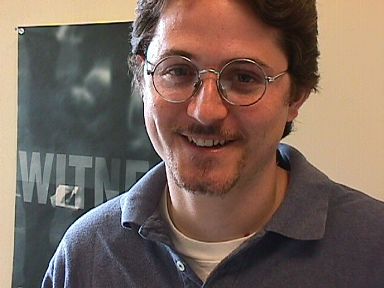
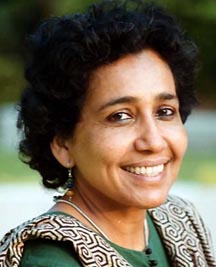
Sam Gregory“It’s an immensely exciting time for people working with video. More and more people creating and using video, more places to share it, more ways to place it in front of people who can make a difference.
“It raises challenges too: saturation of images and compassion-fatigue, finding your place to be heard, and the safety and security and consent issues that arise when many more people are filming each other.
“But overall I think we’re seeing a really powerful moment for individual expression but also collective accountability being supported via image-making.”
So says Sam Gregory programme director of Witness, a human rights organisation which uses video and online technologies to open the eyes of the world to human rights violations. The New York-anchored organisation works around the world to ’empower people to transform personal stories of abuse into powerful tools for justice, promoting public engagement and policy change’.
http://www.witness.orgSam recalls how he was once making films and also involved in activism, and ‘frustrated at how the two didn’t fit together’.
He adds: “In the traditional TV documentary world, the advocacy purpose of film was under-utilized. The fact that you got 500,000 viewers for a TV broadcast told you nothing about whether that turned into action. So I started looking for ways to really make the video fit as a tool for real advocacy and change-making, and came upon WITNESS.”
We at TVE Asia Pacific worked closely with Sam in 2002-2004, when we implemented a collaborative Asian regional project called Truth Talking where Witness was a partner. It was through Witness that I met courageous info activists like Joey R B Lozano.
In his long years of journalism in India, my friend Darryl D’Monte had faced all sorts of questions and situations. But this was one question that stunned and left him speechless for a while.
A visiting Canadian TV crew made this request in the 1970s, when Darryl was resident editor of The Times of
India. He was giving them some insights on the extent of poverty in his city of Bombay, since renamed as Mumbai. The crew had heard of the deliberate maiming of street children, before being employed as beggars. A disabled child would evoke more sympathy, increasing the daily collection for gangsters operating them from behind the scenes.
Darryl wasn’t willing to be associated with this ‘staging’. “Well, it’s going to happen anyway,” was the film crew’s cynical answer.
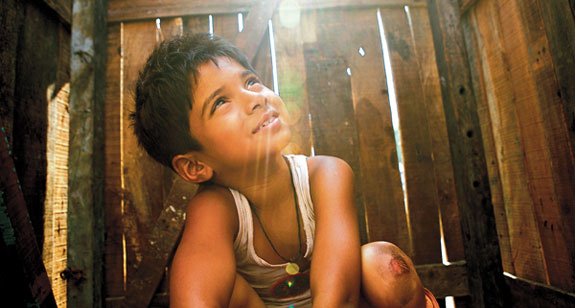
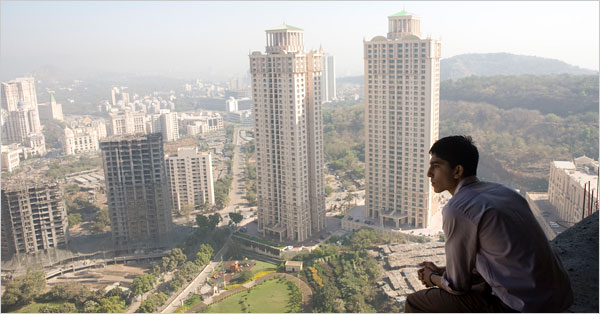
Now, fast forward 30 years to the present. At one point in the British-Indian movie Slumdog Millionaire, we see a young girl being blinded by a gangster who shelters and feeds a small army of children — all unleashed on Mumbai on a daily basis to tug at the heart strings of its teeming millions.
The film’s protagonist Jamal escapes the same fate by making a mad dash for freedom with his brother, Salim. But years later, they cross the gangster’s path again, with devastating results – for him.
Vikas Swarup: Look what I've started...Set and filmed in India, Slumdog Millionaire is the story of a young uneducated man from the slums of Mumbai who appears on the Indian TV’s version of Who Wants to Be a Millionaire? (Kaun Banega Crorepati) and does so well to reach the final question that the game show host and the police suspect him of cheating.
Some Indians feel their country’s ugly underbelly has been magnified by locating and filming part of the story in the slums of Mumbai. But director Danny Boyle, who sees his film as a Dickensian tale, says he shot in real, gritty locations “to show the beauty and ugliness and sheer unpredictability” of the city.
Indian diplomat Vikas Swarup, who wrote the 2005 novel Q and A on which the movie is based, has a similar view. “This isn’t social critique,” he told The Guardian in an interview. “It’s a novel written by someone who uses what he finds to tell a story. I don’t have firsthand experience of betting on cricket or rape or murder. I don’t know if it’s true that there are beggar masters who blind children to make them more effective when they beg on the streets. It may be an urban myth, but it’s useful to my story.”
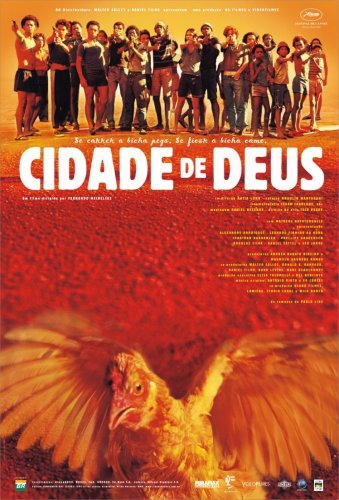
To me, Slumdog Millionaire feels like a cross between the acclaimed Brazilian slum movie City of God (Portuguese name: Cidade de Deus, 2002) and Quiz Show, the 1994 American historical drama film about TV quiz scandals in the 1950s.
City of God (2002) was filmed in the favelas of Rio de Janeiro
City of God is a Brazilian crime drama film directed by Fernando Meirelles and Kátia Lund, released in its home country in 2002 and worldwide in 2003. It was adapted by Bráulio Mantovani from the 1997 novel of the same name written by Paulo Lins.
The film’s depiction of narcotic drug rings, hold-ups, street violence and police corruption may not have been what the upper middle class Brazilians wanted to showcase to the rest of the world, but the film’s stark if grisly authenticity resonated with movie audiences around the world. Most of the actors were residents of favelas (slums) of Rio de Janeiro, such as Vidigal and the Cidade de Deus itself. City of God became one of the highest-grossing foreign films released in the United States up to that time.
The makers of Slumdog Millionaire adopted a similar approach. Its co-director Loveleen Tandan says she likes to get as close to reality as possible. This drove her to the slums of East Bandra to look for young children who resembled the protagonists in the story.
As she recalled in a recent interview with Tehelka: “I was very keen to get real slum kids, which is why I convinced them (producers) to do one-third of the scenes in Hindi. I made a scratch tape with real street kids. The team was surprised that Hindi actually made it brighter and more alive.”
Indeed, Slumdog doesn’t feel like a ‘foreign film’ despite it having a fair number of English subtitles, which only enhance the overall cinematic experience.
But how realistic should films try to become, before the local realities are distorted or local sensibilities are affected? Where does documentary end and drama begin? These questions will continue to be debated across India and elsewhere while Slumdog enthralls millions on its first theatrical release.
Feature film makers can exercise their creative license far more than factual film makers. I doubt if the creators of authentic, close-to-the-ground movies like City of God and Slumdog Millionaire set out with any specific social agenda. They are in the business of entertainment, and just happen to find plenty of drama in real life in places like urban slums. We might argue that in the right hands, dramatised movies can draw mass attention to development issues and challenges far more effectively than the often dull and dreary documentaries.
Kalpana Sharma: Eyes wide open“If through (the movie) the world gets a peek at an India inhabited by millions of people who continue to live their lives without clean water, sanitation or electricity, what is the problem?” asks another Indian friend and long-time Mumbai resident Kalpana Sharma.
In a perceptive essay titled Shantytowns of the Mind, written in The Indian Express in early January 2009 before she saw the film, Kalpana flagged important concerns: “Slumdog Millionaire’s success raises some deeper questions. How do we depict poverty as writers, filmmakers, journalists? Is it fair to expect us all the time to give a full, balanced, sensitive portrayal? Or is it inevitable that we write, film, for our audiences? And if, as a byproduct, people are sensitized, so be it. Also, if they are annoyed, so be it. If we are considered exploitative, so be it.”
Kalpana speaks with authority, and not just because she lives in the megacity of Mumbai (population: 13 million and rising) which, she points out, is half made up of slums. In 2000, she wrote a book titled Rediscovering Dharavi: Stories from Asia’s Largest Slum. Far from being a cold, clinical analysis of facts, figures and trends, it’s a book about the extraordinary people who live there, “many of whom have defied fate and an unhelpful State to prosper through a mix of backbreaking work, some luck and a great deal of ingenuity”.
Kalpana ends her essays with these words: “In the end you realise as a writer, a journalist or a filmmaker, that the best you can do is to shine a torch, a searchlight, on an entrenched problem. But the solution will not be found merely by that illumination. For that, there are many more steps to be taken.
“Slumdog Millionaire has focused its lens on the children of India’s slums through a work of fiction. What we do to change their future is the non-fiction that has yet to be written.”
Uncommon move, once again!This allows others to download, share, remix, subtitle and eventually rebroadcast (or webcast) the material originally gathered by Al Jazeera’s own reporters or freelancers. It has the potential to revolutionise how the media industry gathers and uses TV news and current affairs footage – a lucrative market where there are only a very few suppliers operating at global scale.
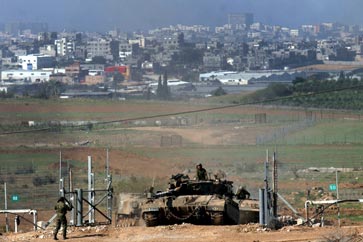
Al Jazeera’s uncommon sharing has started with the network’s coverage of the conflict in the Gaza strip, Palestine. Each day they plan to add the latest footage coming from Gaza. Additional Gaza footage from the start of the war is to be made available shortly.
This is the first time that video footage produced by a news broadcaster is released under the ‘Creative Commons 3.0 Attribution’ license which allows for commercial and non-commercial use.
“We have made available our exclusive Arabic and English video footage from the Gaza Strip produced by our correspondents and crews” says the introductory text in Al Jazeera Creative Commons Repository. “The ongoing war and crisis in Gaza, together with the scarcity of news footage available, make this repository a key resource for anyone.”
Gaza in darknessThe website adds: “This means that news outlets, filmmakers and bloggers will be able to easily share, remix, subtitle or reuse our footage.”
Under the Creative Commons framework, Al Jazeera seeks no payment (licensing fees) of any kind. Users are free to reuse the material with acknowledgement to Al Jazeera. This means such users must attribute the footage to Al Jazeera (“but not in any way that suggests that we endorse you or your use of our work”). They are also required to leave the Al Jazeera logos intact, give reference to the Al Jazeera Creative Commons Repository, and the ‘Creative Commons 3.0 Attribution’ license itself.
Says Joi Ito, CEO of Creative Commons: “Video news footage is an essential part of modern journalism. Providing material under a Creative Commons license to allow commercial and amateur users to share, edit, subtitle and cite video news is an enormous contribution to the global dialog around important events. Al Jazeera has set the example and the standard that we hope others will follow.”
Gaza under siege...Professor Lawrence Lessig, founder of Creative Commons, has hailed this initiative: “Al Jazeera is teaching an important lesson about how free speech gets built and supported. By providing a free resource for the world, the network is encouraging wider debate, and a richer understanding.”
Al Jazeera – which means ‘the island’ or ‘the peninsula’ in Arabic – started out in 1995 as the first independent Arabic news channel in the world dedicated to providing comprehensive television news and live debate for the Arab world. Al Jazeera English, the 24-hour English-language news and current affairs channel, was launched in 2006 and is headquartered in Doha, Qatar. The organisation is the world’s first global English language news channel to be headquartered in the Middle East.
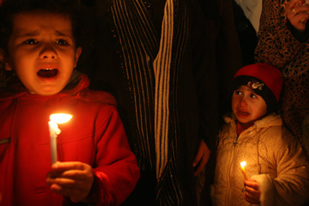
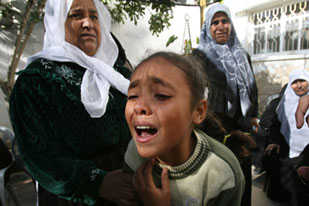
Screams, amplified by media?But we have no hesitation in applauding their sharing of news footage. This move makes it easier for many television stations, websites and bloggers to access authentic moving images from the frontlines of news — we certainly hope Gaza marks only the beginning of AJ’s sharing.
It would also make commercial distributors of news and current affairs footage a bit nervous, for such material trades in hundreds or thousands of dollars per second. The logistical difficulties in gathering such footage, and sometimes the enormous risks involved to the news crews, partly explains the high cost. But the small number of suppliers and syndicators has made it possible for high prices to be maintained. If Al Jazeera sustains its sharing, that could mark the beginning of the end for another pillar of the mainstream media industry.
All images used in this blog post are courtesy Al Jazeera websites
As I wrote at the time: “The few of us thus became the first outsiders to see the film which I found both deeply moving and very ironic. With minimal narration, he allows the local people to tell their own story. There’s only one expert who quickly explains just what is going on in this particularly weather-prone part of the world.”
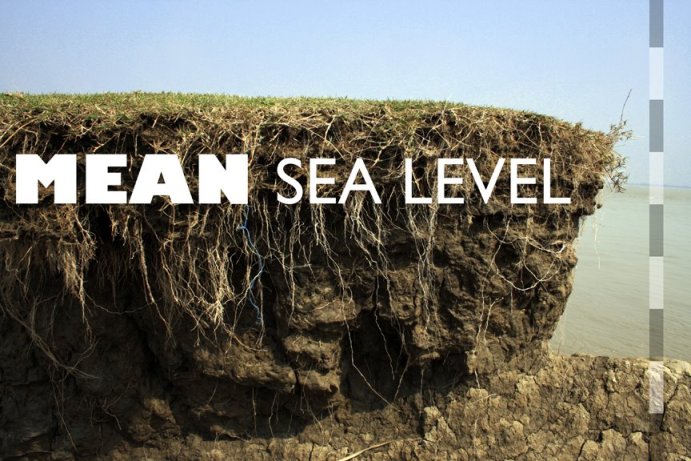
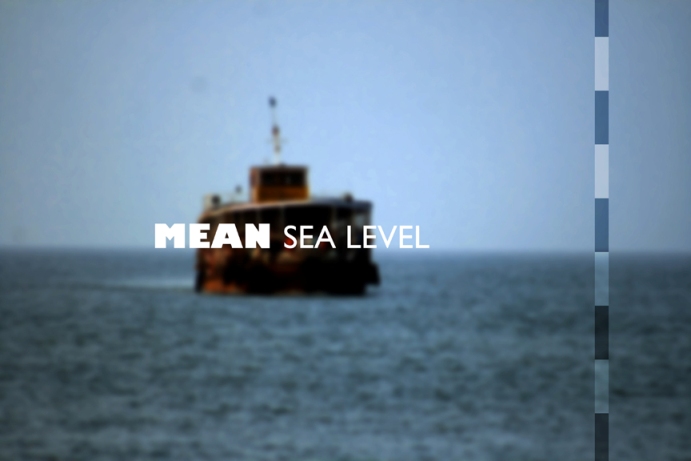
The world’s rich are having a party, and millions living in poverty are the ones footing the bill. This is the premise of the film, which looks at the impact of climate change on the inhabitants of Ghoramara and Sagar islands in the the Sundarban delta region in the Bay of Bengal.
Almost 7,000 inhabitants have been forced to leave Ghoramara in the last 30 years, as the island has become half in size. The biggest island, Sagar which hosted refugees from other islands all these years is witnessing massive erosion now. 70,000 people in the 9 sea-facing islands are at the edge of losing land in next 15 years. For these people climate change is real.
As the sea level rises and takes with it homes and livelihoods in the delta, the villagers of Sagar are paying a hefty price for a problem that they did not create. Meanwhile, middle class India and the political elite are becoming aware of the problem of global warming, but prefer to look the other way.
I’m glad to note that the film is now being screened to various audiences and making ripples. By showing people – including those still not convinced about climate change – what sea level rise is already doing to poor people, the film is stretching the limits of debate and focusing attention on the need to act, not just talk.
It’s also creating ripples in environmental and/or human rights activist circles where all too often, passionate discussions don’t go very far beyond the rhetoric to bring in the real world voices and testimonies. Pradip’s film accomplishes this with authenticity and empathy yet, mercifully, without the shrill and overdose of analysis found in activist-made films. It powerfully and elegantly tells one of the biggest stories of our times.
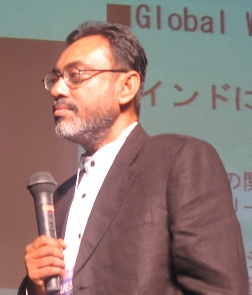
Pradip SahaIn November 2008, Pradip showed and talked about his film at a screening organised by SACREDMEDIACOW (SMC), an independent postgraduate collective on Indian media research and production (and much more) at the School of Oriental and African Studies (SOAS) at the University of London. Before it started, Pradip told his audience to ‘forget that this is a documentary about climate change’ and just watch.
As one member of his audience, Sophia Furber, later wrote: “The film’s approach to climate change is completely non-didactic. Mean Sea Level is no acronym-fest sermon or disaster story, but an intimate portrait of a way of life which is on the verge of going underwater.”
In his day job as editor of Down to Earth magazine, published from India with a global outlook, Pradip excels in wading through the (rapidly expanding) sea of jargon and acronyms surrounding many topics related to science, environment and development. In typical style, his recently started blog is named alphabet soup @ climate dinner.
Read Sophia Furber’s account of SOAS screening in London
The more Pradip shares his film, the more people who notice the irony that I experienced in Tokyo. A short review by the Campaign against Climate Change says: “There is a greater irony. These poor people got nothing out of the economy that created climate change, nor do they contribute to global warming. Mean Sea Level is a testimony of reckless political economy of our times. Climate change is real, and only a sign of our recklessness.”
Last heard, Pradip was planning to screen MEAN Sea Level on Sagar Island so that the story’s participants can see the film for themselves. The idea was to power the event entirely through renewable energy sources, such as solar power.
I hope he will soon place his film – or at least highlights/extracts – online on YouTube or another video sharing platform. This film is too important to be confined to film festivals and public screenings. Whether it would also be broadcast on television in India and elsewhere, we’ll just have to wait and see. I won’t hold my breath on that one…
A miracle substance to get smarter?One of the earliest video films I helped distribute at TVE Asia Pacific, soon after it was set up in 1996, was called Ending Hidden Hunger.
This 20 minute film, made in 1992 by Bedford Films of UK and narrated by Sir Peter Ustinov, described how the UN children’s agency UNICEF was working toward eliminating micronutrient deficiencies from iron, vitamin A and iodine in different parts of the developing world. Examples are taken from Africa and Asia to both illustrate the extent of the problem as well as steps being taken to reduce these deficiencies that cause mass-scale disability and death.
The main premise of the film was simple: those lacking micro-nutrients in their regular diet often don’t show immediate signs of starvation. This deprivation builds up over time and causes slow – sometimes irreparable – damage.
Nicholas KristofI was reminded of this film — and its still very relevant message — when reading an excellent essay by Nicholas Kristof in International Herald Tribune a few days ago. He is a columnist for the New York Times who travels the world reporting from the various frontlines of survival and struggle.
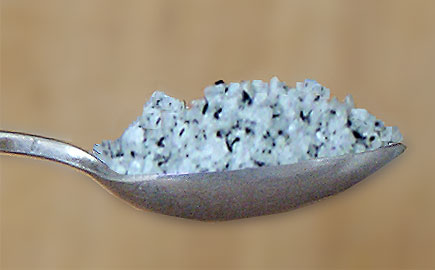
In Raising the World’s I.Q., dispatched from Rawalpindi, Pakistan, Kristof was talking about ‘a miracle substance that is cheap and actually makes people smarter’: iodised salt.
Here’s the context, as he put it:
“Almost one-third of the world’s people don’t get enough iodine from food and water. The result in extreme cases is large goiters that swell their necks, or other obvious impairments such as dwarfism or cretinism. But far more common is mental slowness.
“When a pregnant woman doesn’t have enough iodine in her body, her child may suffer irreversible brain damage and could have an I.Q. that is 10 to 15 points lower than it would otherwise be. An educated guess is that iodine deficiency results in a needless loss of more than 1 billion I.Q. points around the world.”
In nearly all countries, the best strategy to control iodine deficiency is iodisation of salt — one of the most cost-effective ways to contribute to economic and social development. Especially in these hard times, development professionals are looking for smart ways to get the biggest bang for their limited (and still shrinking) bucks. Investing in micronutrients – such as iodine – can provide some of the biggest bangs possible.
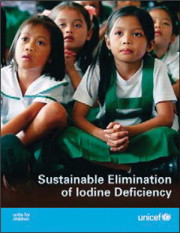
UNICEF Report 2008In June 2008, UNICEF published Sustainable elimination of iodine deficiency, a new report on progress since 1990 when the world’s governments set the target to eliminate iodine-deficiency disorders worldwide.
In October 2008, The Lancet, one of the world’s leading medical journals, published a report that noted: “Iodine deficiency is the most common cause of preventable mental impairment worldwide.”
The medical, public health and development communities have known and talked about iodine and other micronutrients for over 30 years. Significant progress has been made – for example, UNICEF says by 2006, more than 120 countries were implementing salt iodisation programmes, and 34 countries had managed to get rid of iodine deficiency among their people through this smart strategy.
But there still are major gaps — which continue to cause preventable damage to tens of millions of people including children.
Nicholas Kristof navigates through the heavy, jargon-ridden developmentspeak and churns out an eminently readable, accessible piece. It’s written in first person narrative from a part of the world where illiteracy, superstition – and their erstwhile companion, religious fanaticism – are trying to prevent people at risk from using iodised salt. This is science writing at its finest: anecdotal, personalised and purposeful.
And he’s absolutely right when he says iodised salt lacks glamour, doesn’t have too many stars or starlets singing its praise and (almost) no one writing about it despite its potential to improve lives for so many people.
I should know: one of the earliest topics I tackled as a young science reporter – getting started in the late 1980s – was salt iodisation. I struggled to put together a readable, engaging piece — which I then had to push through jaded editors who wondered what all this fuss was about.
I have only one (minor) bone to pick with Kristof. He pokes fun at Canada for hosting and supporting the Micronutrient Initiative, “an independent, not-for-profit organization committed to promoting simple cost-effective solutions for hidden hunger and developing innovative new solutions where needed.”
He calls Canada “earnest and dull, just like micronutrients themselves”. It’s a personal view – perhaps expressed with his tongue firmly in his cheek. Having travelled a fair amount in North America, and having good friends in both countries, I think that the nation north of the US-Canada border is a tad more civilised, certainly more caring and better engaged with the rest of the world.
But then, that too is a personal view. I’m darn lucky that I get enough iodine in my diet so that I can think for myself, keep asking lots of annoying questions…and occasionally even get some answers right.
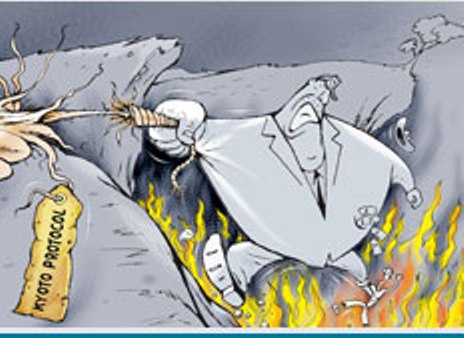
“Twenty centuries ago, Emperor Nero fiddled while Rome burned. Today, some media companies are squabbling over copyrights while the planet is warming.”
The latest outlet to carry my views is Down to Earth, the fortnightly magazine on science and environment published from New Delhi, India. They have included a condensed version of my remarks in their issue for 15 December 2008, under the heading: Films chained, unchained
It’s part of a special issue to mark the 14th Conference of Parties to the United Nations Framework Convention on Climate Change (UNFCCC) and the fourth meeting of Parties to the Kyoto Protocol, being held in the Polish city of Poznan from 1 to 12 December 2008.
When Down to Earth editors first mooted the idea of carrying my views, they suggested a catchy headline: Climate’s Niros. I rather liked that…but that didn’t survive their copyediting. Ah, well…
Last chance for Kyoto Protocol?In its preamble to the special climate change issue, Down to Earth editors say: “Eleven years after the Kyoto Protocol was signed — only to be consigned to irrelevance over the subsequent decade — nations are meeting in Poland to negotiate post-2012 action.
“The realities of climate change are clearer than ever, and the cost of action is mounting. Rich countries, historically responsible for climate change, are proposing new mechanisms to share the burden. Leading developing countries such as India and China need to negotiate hard as well and make a big push for renewables…” Read full story
These have been linked to, or commented upon, by various blogs and websites. Interestingly, the big time TV/video production companies and broadcasters have been keeping quiet in this debate.
Perhaps they are too busy counting their money accruing from license fees?
This is the main thrust of my latest op ed essay, just published by the Science and Development Network (SciDev.Net) anchored in London, UK. It’s titled: Planet before profit for climate change films.
I’m challenging broadcasters to put their money where their mouth is.
Here’s an excerpt:
“Broadcast mandarins routinely support global struggles against poverty, HIV, corruption and climate change by offering free airtime to carry public interest messages. But few let go of their own products on these very subjects for non-broadcast uses.
“Making climate change a ‘copyright free zone’ for media products would increase the resource materials available to thousands of educators, social activists and trainers struggling to communicate this complex topic to audiences across the world. Moving images would make their task easier.
“The climate crisis challenges everyone to adopt extraordinary measures. Broadcasters and film-makers need to balance their financial interests with planetary survival.
“What use is intellectual property on a dead planet?”
In September 2006, speaking at the United Nations headquarters (photo below), I called for poverty to be recognised as a copyright free zone. The idea was to have broadcasters and other electronic publishers release copyrights on TV, video and online content relating to poverty and development issues -– at least until (MDG target year of) 2015.
The TV broadcast and film communities have reacted to this proposal with disdain or indifference, but I keep badgering on. If poverty didn’t motivate broadcasters to change business as usual, I hope, the planetary threat posed by climate change would.
Today, October 31, Halloween would be observed in several countries of the western world.
One Halloween custom is Trick-or-treating where children move from house to house in costumes, asking for treats such as sweets with the question: “Trick or treat?” The “trick” part of “trick or treat” is an idle threat to play a trick on the homeowners or their property if no treat is given.
2008 has been a highly turbulent year for most parts of the world. Oil and food prices went through the roof (and while oil has come down in recent weeks, food scarcities still loom large). Then came the global economic crisis, triggered by greedy bankers lending recklessly.
In such a year, what would it take to scare people on Halloween night? Or would Halloween be mild compared to the shocks and jolts we’ve been living through for much of the year?
Just when you think it can’t get any worse, it does. My favourite cartoon character Calvin had it figured out years ago:
Aren't you scared yet?
According to some analysts, the global economic crisis that we are living through at the moment just a harbinger of a much more dramatic global ecological collapse to come.
One of them is Patrik Etschmayer, who recently wrote an essay in Nachrichten, Switzerland, titled:
“The Wall Street Crisis and the Coming Ecological Disaster”. His main point: the same people that got the world into the present crisis are driving the world over an ecological cliff.
Here’s an extract in translation: “What if this crisis was just a prelude – a precursor to a much greater threat – one that could possibly cost millions of lives? The current economic crises was based on the idea that we can live and consume based on credit – and the belief that we can continue to do so unabated as long as we steadfastly ignore the facts and spread the risks widely enough. That idea didn’t fly. Yet its seems that humanity still seems to believe that the things that have failed in the monetary economy, will, in the long run, still apply to the material reality of our world. Quite simply, because nature will not present us with a bill for the resources upon which we depend for our very survival.”
“As we goggle at the fluttering financial figures, a different set of numbers passes us by. On Friday, Pavan Sukhdev, the Deutsche Bank economist leading a European study on ecosystems, reported that we are losing natural capital worth between $2 trillion and $5 trillion every year, as a result of deforestation alone. The losses incurred so far by the financial sector amount to between $1 trillion and $1.5 trillion. Sukhdev arrived at his figure by estimating the value of the services – such as locking up carbon and providing freshwater – that forests perform, and calculating the cost of either replacing them or living without them. The credit crunch is petty when compared to the nature crunch.
“The two crises have the same cause. In both cases, those who exploit the resource have demanded impossible rates of return and invoked debts that can never be repaid. In both cases we denied the likely consequences. I used to believe that collective denial was peculiar to climate change. Now I know that it’s the first response to every impending dislocation.”
So the Halloween scares could be pretty mild compared to the scares of the real world. As the Hollywood copy writers used to say, we might as well: Get ready to be scared…really scared.
OK, this is hot off my imaginative mind. I was writing an op ed essay today and turning phrases over in my mind when I came up with this…which neatly sums up what I’ve been saying for a while: confronted with the climate crisis, broadcasters and film-makers need to adopt a more liberal approach to copyrights on their creations.
October 15 was marked as the first Global Handwashing Day (GHD). It’s simple yet important mission was to promote the practice of handwashing with soap.
Washing hands can save lives. Washing hands with soap can save more lives. This is the simple message reinforced on this day with public campaigns focusing on schools and school children.
GHD is a Unicef-led initiative involving governments, civil society, volunteers and others around the world.
“Turning handwashing with soap before eating and after using the toilet into an ingrained habit could save more lives than any single vaccine or medical intervention, cutting deaths from diarrhea by almost half and deaths from acute respiratory infections by one-quarter,” says the GHD official website, explaining the background.
IYS 2008 logoTrying saying that aloud in one breath – I can’t. Evidently, the crusty technocrat who wrote that text wanted to pack all the rationale into one long, clumsy sentence.
But this message is too important to be spoilt by an inarticulate official. Washing hands with soap can prevent diahrroeal diseases and pneumonia, which together kill more than 3.5 million children under five every year. That’s 400 needless deaths every hour, round the clock.
Fortunately, the campaigning material that went out using moving images were better produced. Here are two good examples (and a bad one).
The popular Australian children’s musical entertainers, The Wiggles, produced and donated a song to mark the Global Handwashing Day. This simple and catchy tune “seeks to motivate millions of children around the world, to transform the simple act of handwashing with soap from an abstract and seldom practiced behaviour into an automatic and enjoyable habit”.
Meanwhile, in India, cricket star Sachin Tendulkar joined forces with UNICEF to get Indian children to improve their health and hygiene as part of GHD. Tendulkar features in a public service announcement (PSA) being broadcast this month in 14 languages across India. It will target students in more than 6 million schools.
And finally, here’s Unicef’s own news story posted this week on its YouTube channel telling us more on GHD. It’s technically well made, but absolutely lacks passion. The narrator delivers her script in such an indifferent, detached tone, and UNICEF Senior Adviser for Sanitation and Hygiene pontificates also in a tone that will not win her many followers. Scenes of senior UN officials washing their hands in a demonstration are laughable. The only saving grace in this story is when we see Hayley Westenra, the well known singer from New Zealand and youngest UNICEF Goodwill Ambassador, visiting water and sanitation projects in Ghana.
If only the rest of GHD promoters had the enthusiasm and passion that Hayley Westenra exudes! Passion used to be the hallmark of UNICEF during the time of its legendary executive director James Grant, who strongly believed in communicating messages of child survival and well-being. He gave UNICEF a head start in working with the media, especially television.
Alas, large UN agencies like UNICEF have little or no institutional memory for more than just a few years. Because if they did, GHD campaigns could have effectively used, at least in South Asia (where nearly half of all people lack access to toilets) an episode of the hugely popular Meena cartoon animation series.
Meena is the enchanting heroine of an animated film series produced by UNICEF in South Asia. The films are part of a package of communication materials promoting the status of the girl child in this region. UNICEF co-produced the series a decade ago with leading animators in the US and South Asia.
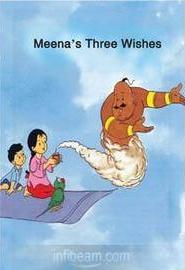
Meena's Three WishesIn Meena’s Three Wishes, Meena dreams of a magic genie that will grant her three wishes so that everyone would be healthy and never again get sick from poor sanitation and unsafe water. When Meena wakes up, she realizes that she must make her dream come true. With the help of her brother Raju, other children in the village, and Mithu, her pet parrot, Meena convinces people to build and use latrines, to use safe water and to wash their hands to stop the spread of germs and disease.
I don’t particularly enjoy it when UN agencies try to play nanny to the whole world, especially if they talk to us in such jargon-ridden, dispassionate terms. Their messages are tremendously important, and deserve wider dissemination — they can literally save lives.
That’s why public campaigns should be left in the hands of communication professionals who know how to reach out beyond the charmed development circle. For the rest of UNICEF, they should perhaps take a lesson or two in passionate communication from Hayley Westenra, The Wiggles – and their own little Meena!







 Open Minds!