Uttareethara (The Greatest) is a biographical documentary series produced and broadcast by HiruTV, a privately owned, commercially operated terrestrial TV channel in Sri Lanka.
Uttareethara profiles — through interviews and archival imagery — the lives of outstanding writers, artistes, scientists, filmmakers and others who left their own mark in the public space in Sri Lanka during the past few decades.
This episode (No 16), first broadcast in September 2012 (and since then, repeated several times) is about Sir Arthur C Clarke (1917-2008), who lived in Sri Lanka since 1956 and became a Resident Guest of the Indian Ocean island in 1975.
It features interviews with: Hector Ekanayake, Managing Director of Underwater Safaris Ltd, long-standing friend and business partner of Sir Arthur; Journalist and former editor Edwin Ariyadasa; communications specialist Dr Rohan Samarajiva; Clarke’s principal Sinhala translator S M Banduseela; amateur astronomer and scholar Fr Dr Mervyn Fernando; tourism specialist Renton de Alwis; and cancer researcher Dr Kumari Andarawewa (via Skype).
At the station’s invitation, I presented the one-hour show and also did several interviews.
Since its 2007 release, the film has inspired discussion and debate. It had its global premiere at the UN Headquarters, and been screened at high level meetings of people who share this concern. It has also been broadcast on United Nations TV and various TV channels, and is available on DVD.
Synopsis: Scientists and the military have only recently awakened to the notion that impacts with Earth do happen. “Planetary Defense” meets with both the scientific and military communities to study our options to mitigate an impact from asteroids and comets, collectively known as NEO’s (Near Earth Objects). Who will save Earth?
How did you choose this topic for a scientific documentary?
I take a great interest in writing/filming subject matter which is so big, that it should shape the way we go about our daily lives, like if we contacted extra-terrestrials (ETs), or colonized Mars. Those big events would have major consequences on our re-thinking of our real place in the Cosmos.
The threat of being wiped out by an asteroid is similarly humbling. Most of us don’t think about Extinction Level Events on a day-to-day basis and what we might do about it.
How realistic are the prospects of a large enough asteroid colliding with our Earth?
David Morrison (former NASA Space Scientist) said in my film, Planetary Defense: “If we actually found an asteroid on a collision course, we could predict the impact decades in advance. And we believe we have the technology in our space program to deflect it, so that the event doesn’t even happen. I could study earthquakes all my life, and I might be able to improve my ability to predict them, but I could never develop a technology to stop an earthquake from happening. In studying asteroids, I not only have the potential to predict the next calamity, but actually to avoid it.”
Interview clip with NASA scientist David Morrison:
I like to present the options where we have the ability to change our destiny (or not act upon it at all). That’s a story that interests me. (Besides, it’s the ultimate literary conflict: Man vs. Nature!) It’s that ability to do something about possible calamity (as Neil deGrasse Tyson, Astrophysicist and Frederick P. Rose Director of the American Museum of Natural History, says in my film) that leaves the viewers “scared for our future, but empowered to do something about it”.
What was the most surprising element you uncovered during your information research for this documentary?
There were several surprising factoids:
• The fact that only a handful of people, a hundred or so around the Earth, are working on the NEO Mitigation Hazard issue.
• The fact that so few people think about something that is unlikely to happen in our lifetime — but the consequences of not doing something about it are too horrible.
• The fact that we COULD do something about it, unlike the dinosaurs, because we have a Space Programme!
• The fact that there is so little day-to-day concern or knowledge about it among ordinary (non-technical) people.
• The fact that so little (sustained or pulsing) force is required to move a big asteroid or comet (once it is de-spun) so that it misses the Earth entirely.
As Arthur C Clarke concluded in the last interview clip in Planetary Defense (before the Epilogue): “The dinosaurs became extinct because they didn’t have a space programme!”
What were the reactions to your film ‘Planetary Defense’ when it was first released in 2007?
Prior to the final edit, I sought out editorial reviews from the key participants. The scientists who participated in it also advised me as they each received advance copies. I listened to each expert and made appropriate changes so I knew the content would be spot-on.
The reaction, upon release, was spectacular! There are four major reviewers of educational content in the United States. To get a review from any one of them is not easy. “Planetary Defense” received two of the four with simultaneous reviews in both “Booklist” (Chicago) and “The Library Journal” (NYC).
Following that, the United Nations TV premiered it understanding immediately how this is a global issue. It has aired in Canada a few years running.
The infamy was not comparable to the effect of Orson Welles’ (1938) CBS radio broadcast of H. G. Wells’ novel “The War of the Worlds” (1898) elicited on the public; but I was happy with the appreciation from both the scientific and educational communities.
Spaceguard is a scientifically credible concept, yet it has not received too much political support. Why?
For two reasons. One, policy makers have limited budgets. They ask: “Who was the last person to die from an asteroid impact? After the laughing subsides, the vote is taken (if any) that this issue can be kicked down the line for a few more years, to the next administrations’ budget.
Two, the second reason is also sad. Humans have very little memory for horrible events unless it happened to them, as a people or a country.
For example, outside Indian Ocean rim countries and Pacific island nations (that are exposed to tsunami hazard), how many westerners really empathize and think regularly about tsunamis? About 250,000 people perished in the Boxing Day tsunami of 2004, and yet it’s a bygone memory outside those affected areas.
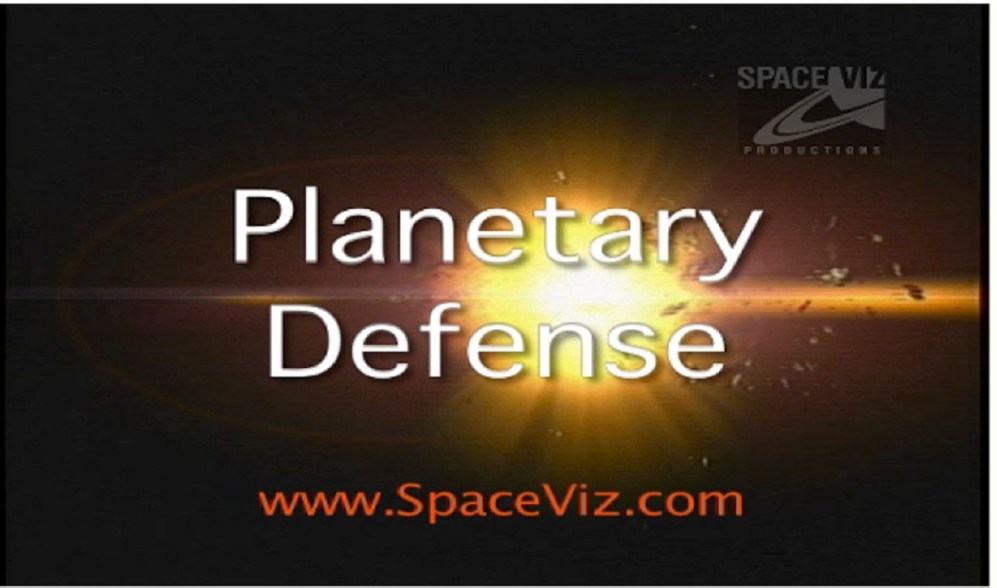
Planetary Defense, a SpaceViz Documentary by M Moidel
Can the Siberian meteorite on 15 February 2013 change this?
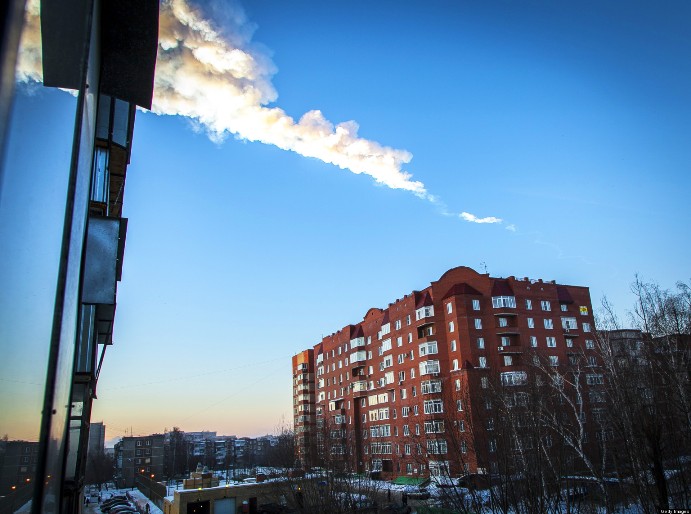
Siberia just experienced an actual airburst, a one in a 100 year event. This time around, unlike the 1908 Tunguska event, there were plenty of video cameras to record the event from all angles. After going viral for not even a week, the story has died down from the news (not enough devastation or death?) and people are going about their daily business.
Although the Russian government is now calling for Space-faring nations to cooperate and work on a Space Defense or Planetary Defense, it might take a few more near-misses, on a regular basis, to make any real ‘impact’ in human beings acquiescence to this threat!
What, in your imagination, is the best thing that can happen for political leaders to take NEO impact threat more seriously?
Well, it almost happened with the airburst over Siberia. As I said, we have short attention spans (when not enough death and destruction) or when it doesn’t happen to “us”. So either more regular, deadly impacts are required — or hopefully, films like mine can wake up a few more policy makers before all that death and destruction occurs. I’m doing my part…
‘Planetary Defense’ sounds a bit Utopian on a highly divided planet?
Well, that’s an excellent question. But at the risk of repeating myself, people have short attention spans — and shorter memories when it doesn’t affect them directly.
What’s odd is it does affect all of us directly — and we can do something about it! It is not cost-prohibitive either to search for NEOs, test deflection mechanisms or actually engage in a defensive mission.
Currently, NEO searches are being done on minimal budgets. The how-to’s are being thought out by some of the greatest minds on the planet. The military is (also) awakening to the threat.
The recent airburst over Siberia has fueled Russian interest in Space Defense technology. Decades of planning, command and control, NEO characterizations and deflection techniques — all these are critical in mitigating impacts with the Earth. All these aspects are covered in my film (aside from an overview of the subject). The road map is in place!
For all these reasons and more, my film is still very timely! So yes, we can all come together to work on this because it’s not cost-prohibitive (and the cost of doing nothing is simply…unthinkable).
Perhaps it won’t take a deadly impact nor a Utopian dream. Perhaps knowledge of the threat from ‘out there’ might finally imbue logic upon the denizens of Earth and we can act as one world (or at least one people) in the cause of self-preservation and the continuation of ‘life as we know it’. There is no “Plan B for Planet Earth”.
Earthrise: Apollo 8's enduring legacy (image courtesy NASA)
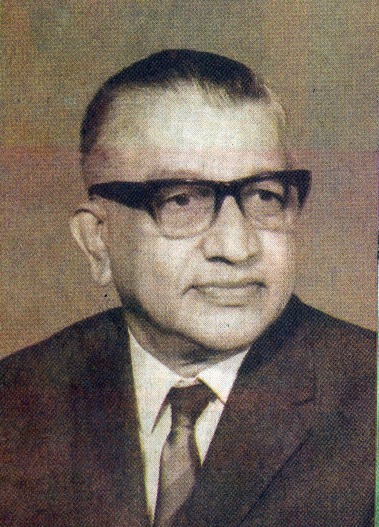
As Sri Lanka marks 65th anniversary of independence this weekend, I dedicate my Ravaya column to the memory the brilliant Lankan engineer, designer and artist H R Premaratne who was closely associated with preparation for the historic ceremony held in Colombo.
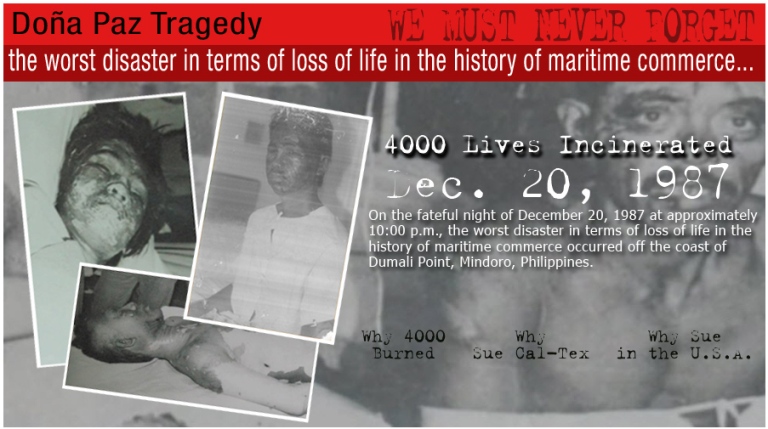
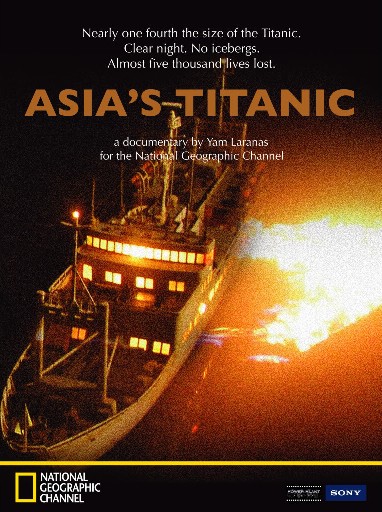
This week’s Ravaya column (in Sinhala) is dedicated to the memory of the world’s worst peace-time maritime disaster in terms of lives lost.
No, it wasn’t the sinking of the Titanic. It’s a disaster that happened 75 later, on the other side of the planet – in Asia.
It is the sinking of the MV Doña Paz, off the coast of Dumali Point, Mindoro, in the Philippines on 20 December 1987. That night, the 2,215-ton passenger ferry sailed into infamy with a loss of over 4,000 lives – many of them burnt alive in an inferno at sea.
Nobody is certain exactly how many lives were lost — because many of them were not supposed to be on that overcrowded passenger ferry, sailing in clear tropical weather on an overnight journey.
In this week’s Ravaya column (in Sinhala), I write about an Indian friend of mine: Moji Riba, filmmaker and cultural anthropologist, who lives and works in India’s north-eastern Arunachal Pradesh.
It’s an isolated remote and sparsely populated part of the country that is home to 26 major tribal communities,. Each one has its own distinctive dialect, lifestyle, faith, traditional practices and social mores. They live side by side with about 30 smaller communities.
A combination of economic development, improved communications, the exodus of the young and the gradual renunciation of animist beliefs for mainstream religions threatens Arunachal’s colourful traditions. “It is not my place to denounce this change or to counter it,” says Moji. “But, as the older generation holds the last link to the storehouse of indigenous knowledge systems, we are at risk of losing out on an entire value system, and very soon.”
For the past 15 years, he has been documenting it on video and photos. Read my English blogposts about him in Nov 2008 and Jan 2009.
I caught up with him in Delhi last week, which inspired this column.
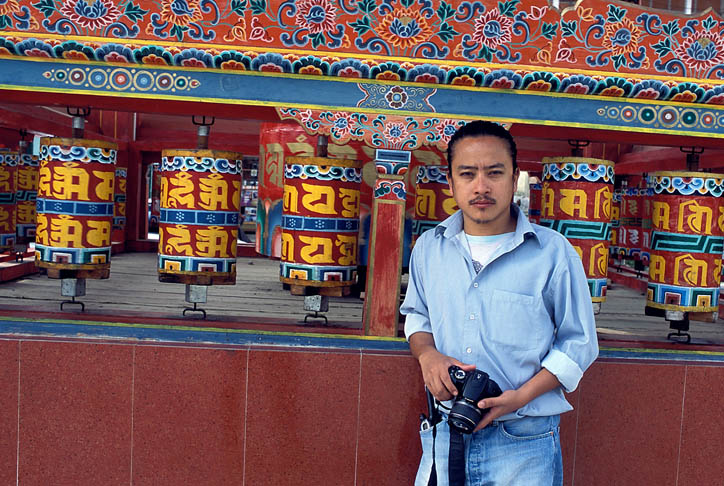
Moji Riba has been working since 1997 to document Arunachal Pradesh's rich cultural heritage. Image courtesy Rolex Awards
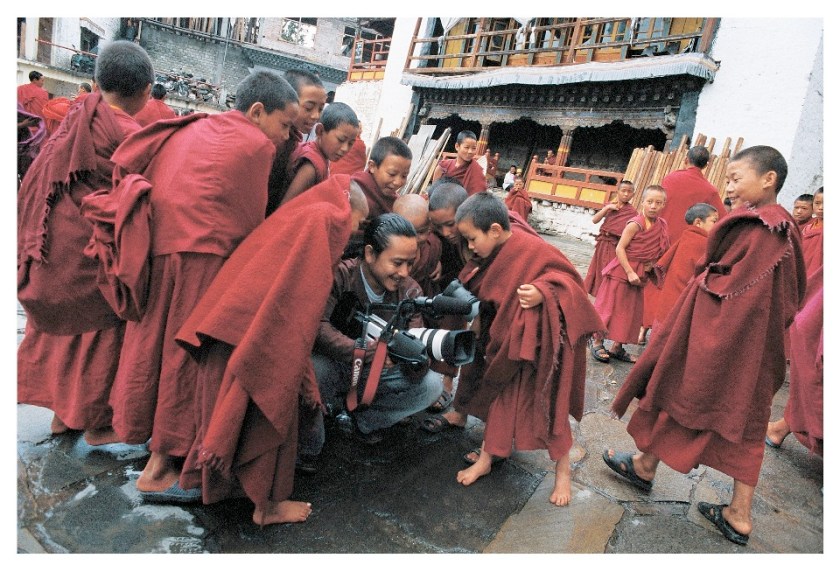
Surrounded by young monks, Moji Riba films rituals celebrating Buddha’s birth at Galden Namgyal Lhatse monastery. Tawang, Arunachal Pradesh, India, 2008 (Photo courtesy Rolex Awards)
සංස්කෘතික පර්යේෂණ හා ලේඛනගත කිරීමේ කේන්ද්රය (Centre for Cultural Research and Documentation, CCRD) අරඹමින් තවත් ඔහු වැනි ම කිහිප දෙනෙකු සමඟ ප්රාන්තයේ ජන සංස්කෘතිය ගැන වීඩියෝ වාර්තා චිත්රපට නිපදවීම ඇරඹුවා.
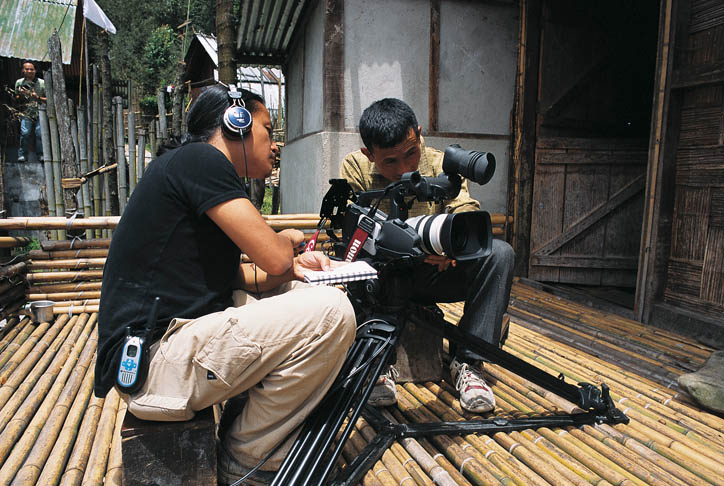
Riba teaches Hage Komo the basic camera skills that will allow the young Apatani to film an interview with his father and an animist priest, thus recording his tribe's oral history (Photo courtesy Rolex Awards)
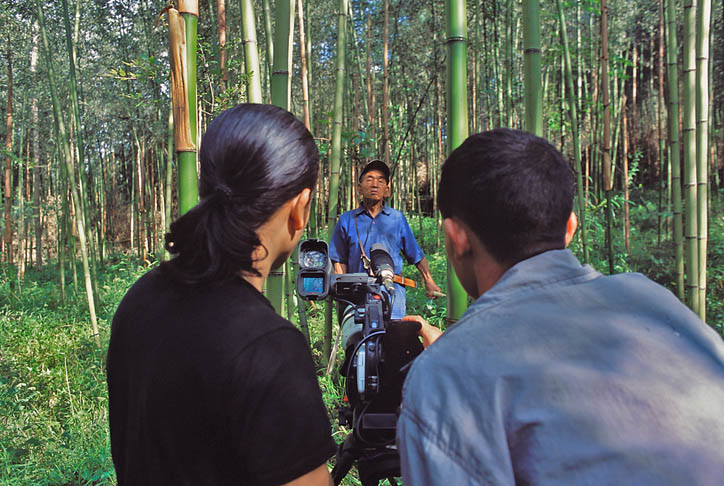
Hage Komo gets video instructions from Moji Riba, who is enlisting local young people to capture the oral histories, languages and rituals of their tribes for his project. Komo films his father gathering bamboo in a grove outside Hari Village. (Photo courtesy Rolex Awards)
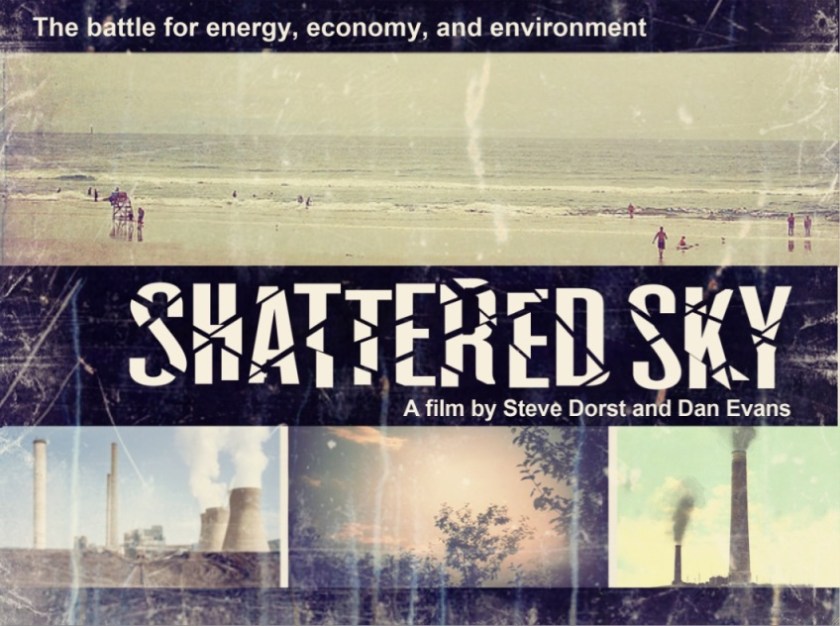
A film by Steve Dorst and Dan Evans.
An invisible compound threatens Earth’s life-support systems, with effects so pervasive that scientists sound the alarm, businesses must innovate, politicians are forced to take action—and American leadership is absolutely vital. Climate change? No…the hole in the ozone layer. For the first time in film, Shattered Sky tells the story of how—during geopolitical turmoil, a recession, and two consecutive Republican administrations— America led the world to solve the biggest environmental crisis ever seen. Today, will we dare to do the same on energy and climate?
A film by Steve Dorst and Dan Evans. The story of how America led the world to solve the biggest environmental crisis ever seen. Today, will we dare to do the same on energy and climate?
A new film looks at American leadership during the ozone crisis and compares it to the situation with global warming today. A good interview with the filmmaker.
In my Ravaya column (in Sinhala) for 26 August 2012, I’ve written about the making of Ran Muthu Duwa, the first colour Sinhala feature film made in Sri Lanka, was released 50 years ago in August 1962.
Ran Muthu Duwa was a trail-blazer in the Lankan cinema industry in many respects. It not only introduced colour to our movies, but also showed for the first time the underwater wonders of the seas around the island.
This is the (Sinhala) text of my Sunday column in Ravaya newspaper on 5 August 2012. This week, I trace the moving images coverage of the Olympics, from the early days of cinema to the modern instantaneous live coverage that makes the whole world watch the Games as they unfold.
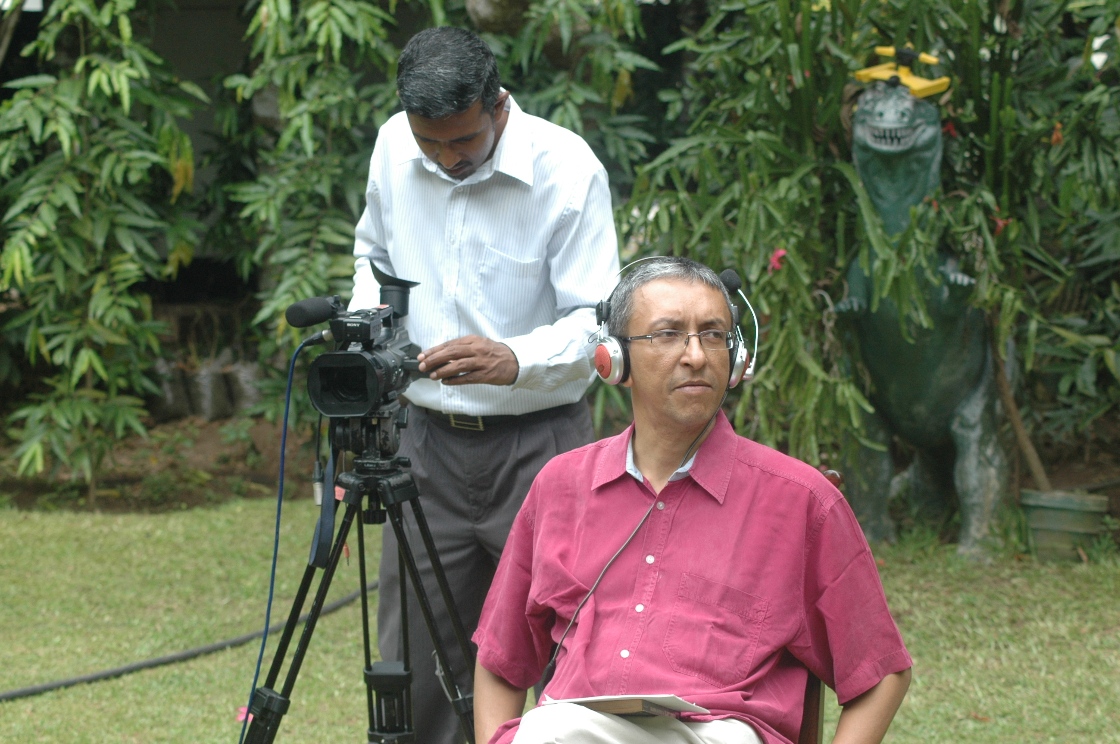
Location: Garden of Leslie’s House, Barnes Place, Colombo 7, Sri Lanka — where Sir Arthur C Clarke lived for 35 years until his death in March 2008
My colleague Janaka Sri Jayalath had taken this photo more than a year ago while we were filming an interview. But I’ve only just taken a closer look, and realised just what he’d captured…:)
The Last Filming – Preoccupied with their work, neither man had any idea what fate was about to befall them…
Caption says it all. Thanks, Gary Larson, for inspiration…







 Open Minds!