සිවුමංසල කොලූගැටයා #94: ඇන්ටාක්ටිකාවට ගිය ශ‍්‍රී ලාංකිකයෝ

This week’s Ravaya column is a follow up to my initial one on Antarctica two weeks ago, සිවුමංසල කොලූගැටයා #92: ඇන්ටාක්ටිකාවට අත නොතබනු!. I had such a good response from readers, some of who wanted to know how many Lankans have been to Antarctica.

I asked around, and have found information on three: Marine biologist Dr Nishad Jayasundara (who visited in 2010), youth activist Imalka de Silva (also in 2010) and astronomer Dr Ray Jayawardhana (2010-11). This column is a summary of what they did. It also answers a question: did trail-blazing Lankan biochemist Dr Cyril Ponnamperuma (1924 – 1994), who studied Antarctic meteorites in the 1970s, ever visit the frozen continent himself?
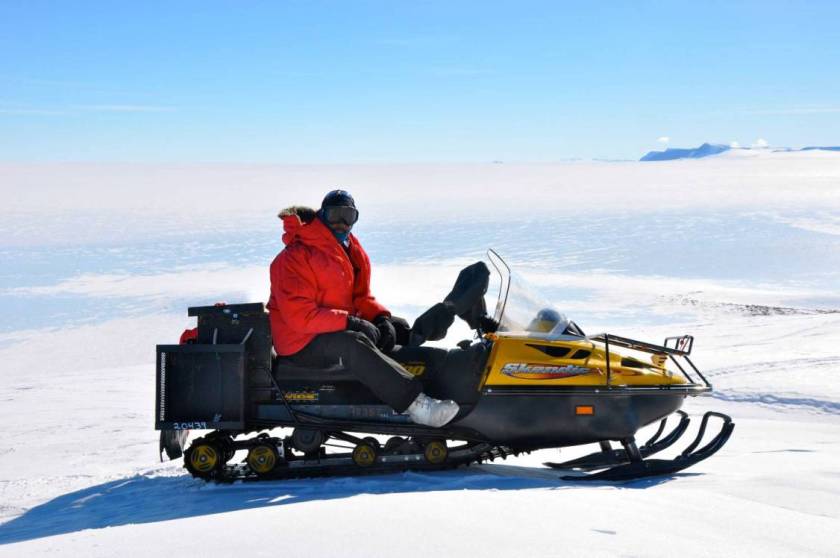
Dr Ray Jayawardhana in Antarctica on snowmobile
Dr Ray Jayawardhana in Antarctica on ski-doo

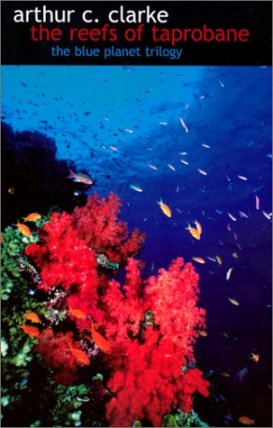
The Reefs of Taprobane, 2002 edition
ආතර් සී. ක්ලාක් ශ‍්‍රී ලංකාව පාදක කර ගෙන ලියූ චාරිකා සටහන් පොත් කිහිපයෙන් පළමුවැන්න වූයේ The Reefs of Taprobane නම් කෘතියයි. 1955 වසරේ මාස කිහිපයක් මයික් විල්සන්, රොඞ්නි ජොන්ක්ලස් හා තවත් කිමිදුම් සගයන් සමඟ ලක් දිවයින අවට මුහුදේත්, රට ඇතුළේත් කළ ගවේෂණ ගැන විචිත‍්‍ර ලෙස ලියා ඇති මෙය මුල් වරට ඉංග‍්‍රීසියෙන් පළ වූයේ 1956දී. (අඩ සියවසකටත් පසුව 2011දී මනෝ ප‍්‍රනාන්දු හා නන්දන එල්ලාවල විසින් සිංහලයට පෙරළා තිබෙනවා.)

එහි සය වන පරිච්ෙඡ්දය ඇරඹෙන්නේ ඔවුන් මාතර තානායමේ ලැගුම් ගත් දිනෙක රැයෙහි, පැහැදිලි අහසත් ඉදිරිපස මහ සාගරයත් මෙනෙහි කරමින් ක්ලාක්ගේ සිතේ පහළ වූ සිතිවිලිවලින්. නිරක්ෂයට අංශක හයක් පමණ උතුරින් පිහිටි මේ ස්ථානය ලක් දිවයිනේ වඩාත් ම දකුණුදිග දෙවුන්දර තුඩුවට ඉතා සමීපයි. මෙතැන සිට ඉන්දියානු සාගරයට පිවිසී දිගට ම දකුණු දෙස බලා යාත‍්‍රා කළොත් යළිත් සැතපුම් දහස් ගණනක් යන තුරු කිසිදු ගොඩබිමක් හමු නොවන බව ක්ලාක් පෙන්වා දෙනවා. (මාලදිවයින් පිහිටා ඇත්තේ අපේ දිවයිනට නිරිත දිගින්.)

එසේ ගිය හොත් ඊළඟට හමු වන එක ම ගොඩබිම දක්ෂණ ධ‍්‍රැවය ද අයත් ඇන්ටාක්ටික් මහාද්වීපයයි. (ශ‍්‍රී ලංකාවේ දකුණු අන්තයේ සිට ඇන්ටාක්ටිකාවට ඍජු දුර කිලෝ මීටර් 10,600ක් පමණ වෙනවා.)

ක්ලාක්ගේ මේ සඳහන මගේ සිහියට ආවේ ශ‍්‍රී ලංකාව හා ඇන්ටාක්ටිකාව අතර සබඳතා මොනවා ද යන්න විමසන විටයි.

ඇන්ටාක්ටිකාවේ පරිසරය රැක ගන්නටත්, එය නිරායුධ කලාපයක් ලෙස දිගට ම පවත්වා ගන්නටත් බි‍්‍රතාන්‍ය ධ‍්‍රැව ගවේෂක රොබට් ස්වෝන් ගෙන යන ව්‍යායාමය ගැන 2012 නොවැම්බර් 18 වනදා කොලමින් මා විස්තර කළා. එය කියවා ප‍්‍රමෝදයට පත් පාඨකයන් කිහිප දෙනකු මගෙන් ඇසුවේ ලාංකිකයන් ඇන්ටාක්ටිකාව සමඟ ඇති සබඳතා මොනවා ද යන්නයි.

ස්වෝන්ගේ විග‍්‍රහයට අනුව ලෝකයේ වෙසෙන බිලියන් 7.3ක් වන හැම මානවයකුට ම ඇන්ටාක්ටිකාවේ එක හා සමාන හිමි කමක් තිබෙනවා. නමුත් ලෝකයේ බහුතරයක් මානවයන් වාසය කරන්නේ සමකයෙන් උතුරට පිහිටි උත්තරාර්ධ ගෝලයේ. අප බොහෝ දෙනෙකුට ඇන්ටාක්ටිකාව පිළිබඳ නිසි අවබෝධයක් නැහැ.

මුල් යුගයේ ඇන්ටාක්ටිකාවට ගියේ ඒ සඳහා විශේෂිත ශාරිරික පුහුණුව ලැබූ ධ‍්‍රැව ගවේෂකයන් පමණයි. එහෙත් 1957-58 ජාත්‍යන්තර භූ භෞතික වර්ෂයෙන් ඇරැඹි විද්‍යාත්මක ගවේෂණ නිසා විවිධ විද්‍යා කේෂත‍්‍රයන්ට අදාළ නොයෙක් රටවල විද්‍යාඥයන්ට ද එහි යාමේ අවස්ථාව සැලසුණා.

පසුගිය දශකයක පමණ කාලය තුළ විද්‍යාඥයන්ට අමතරව තරුණ නායකයන්, ව්‍යාපාරික නායකයන් ආදීන් සඳහා ද කෙටි කාලීන (සති 2 – 3) ඇන්ටාක්ටික් සංචාරයන් කිරීමේ අවස්ථාව උදා වී තිබෙනවා. එහෙත් පෞද්ගලික මට්ටමේ දේශ සංචාරකයන්ට සිය කැමැත්තෙන් එහි ගොඩ බසින්නට බැහැ. සංවිධානාත්මක ඇන්ටාක්ටික් චාරිකාවට, නිසි ක‍්‍රමවේදයක් හරහා ඉල්ලූම් කොට, සුදුසුකම් ලබා එබදු චාරිකාවක නිරත විය යුතුයි.

1986දී මුල් වතාවට දක්ෂිණ ධ‍්‍රැවයට පයින් ගිය ගමනින් පසු රොබට් ස්වෝන් තවත් බොහෝ වාර ගණනක් ඇන්ටාක්ටිකාවට ගොස් තිබෙනවා. 1990 දශකයේ රටවල් 25ක තරුණ තරුණියන් 35 දෙනෙකු ස්වේච්ඡවෙන් සම්බන්ධ කර ගෙන ඔහු ඇන්ටාක්ටිකාවේ අපද්‍රව්‍ය එකතු කිරීමේ උත්සාහයක යෙදුණා.

2008දී ඇන්ටාක්ටිකාවේ මුල් ම අධ්‍යාපනික කඳවුර ස්වෝන්ගේ 2041 සංවිධානය ඇරඹුවා. ඒ හරහා හැම වසරක ම තරඟකාරීව තෝරා ගන්නා තරුණ තරුණියන් පිරිසක් (ලෝකයේ විවිධ රටවලින්) සති දෙක හමාරකට ඇන්ටාක්ටිකාවට රැගෙන යනවා. එයින් පසු ගෝලීය මට්ටමේ පාරිසරික හා බලශක්ති ගැටළුවලට දේශීය මට්ටමින් විසඳුම් සෙවීමේ ක‍්‍රියාකාරිකයන් වීමේ වගකීම ඔවුන්ට පැවරෙනවා.

“ඇන්ටාක්ටිකාවට ටික දිනෙකට හෝ යාම මුළු ජීවිතය ම වෙනස් කරන අසාමාන්‍ය අත්දැකීමක්. මා ලද ඒ අත්දැකීම තරුණ හා ව්‍යාපාරික නායකයන්ටත් ලබා දීම හරහා ඔවුන්ගේ දැක්ම හා චරියාව වඩාත් පුළුල් වනු ඇතැයි මා සිතනවා,” ලෙස ස්වෝන් එය විග‍්‍රහ කරනවා.

මේ දක්වා මට සොයා ගත හැකි වූ තොරතුරුවලට අනුව ලාංකිකයන් තිදෙනකු 2010-2011 වතිකානුවේ ඇන්ටාක්ටිකාවට ගොස් තිබෙනවා. එහෙත් ඔවුන් මේ ගැන මාධ්‍ය හරහා ප‍්‍රසිද්ධියක් ලබා ගන්නට උත්සාහ කර නැති නිසා ඒ තොරතුරු තවමත් අප‍්‍රකටයි.

රොබට් ස්වෝන් කොළඹදී කළ දේශනය අවසානයේ ඔහුගේ 2041 සංවිධානය හරහා ඇන්ටාක්ටිකාවට ගිය ශ‍්‍රී ලාංකික තරුණිය ඉමල්කා ද සිල්වා සභාවට හඳුන්වා දුන්නා. ඇයට මේ වරම හිමි වූයේ 2010දී ඇය අමෙරිකාවේ සරසවි සිසුවියක ලෙස සිටින අතරයි. 2041 සංවිධානයේ මූලිකත්වයෙන් තරගකාරී ලෙස තෝරා ගත් තරුණ තරුණියන් ගණනාවක් 2010 මාර්තු 5 – 18 කාලයේ ඇන්ටාක්ටිකාවේ කල් ගත කළා. මෙය අතිශයින් විචිත‍්‍ර මතකයන් ඉතිරි කළ හා මනස විවර කළ අපූරු අත්දැකීමක් වූ සැටි ඉමල්කා කෙටියෙන් විස්තර කළා.

ඇන්ටාක්ටිකාවට තවත් ලාංකික තරුණ තරුණියන් යවන්නටත්, එයින් ලබන අසාමාන්‍ය අත්දැකීම් මෙරට බෙදා ගන්නටත්, තරුණ පාරිසරික සංවිධානයක් ඇරැඹීමට ඉමල්කා අදහස් කරනවා. 2041 සංවිධානයෙන් ඇන්ටාක්ටික් චාරිකා සඳහා ඉල්ලූම් කිරීමට ඔවුන්ගේ වෙබ් අඩවියට පිවිසෙන්න. http://2041.com/antarctic-expeditions
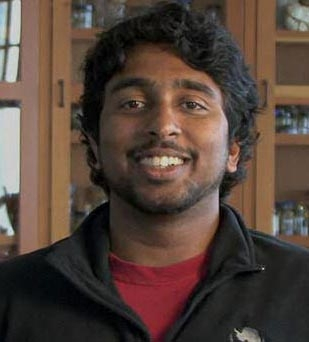
Nishad Jayasundara
Nishad Jayasundara
ඉමල්කා ඇන්ටාක්ටිකාවට ළඟා වන්නට ටික දිනකට පෙර, 2010 ජනවාරියේ ලාංකික සාගර ජීව විද්‍යාඥ නිෂාඞ් ජයසුන්දර පර්යේෂකයකු ලෙස එහි ගියා. අමෙරිකාව විසින් ඇන්ටාක්ටිකාවේ පවත්වා ගෙන යන මැක්මර්ඩෝ පර්යේෂණ කඳවුරට (McMurdo Station) ඔහු ගියේ අමෙරිකාවේ ස්ටැන්ෆර්ඞ් සරසවියේ පශ්චාත් උපාධි සිසුවකු ලෙසයි.

නිෂාඞ්ගේ කණ්ඩායම අධ්‍යයනය කළේ ඇන්ටාක්ටිකාවේ මහා අයිස් තට්ටු යට අධික ලෙස ශීතල පරිසරයකට ස්වභාවිකව හැඩ ගැසී ජීවත් වන මසුන් විශේෂ ගැනයි. 1967දී ඇන්ටාක්ටිකා පර්යේෂණ කළ ඔහුගේ සරසවියේ ම විද්‍යාඥයන් සෙන්ටිගේ‍්‍රඞ් අංශක 6ක් තරම් අඩු උෂ්ණත්වයක දිවි ගෙවන මසුන් විශේෂ තුනක් සොයා ගත්තා. මේ මසුන්ට අංශක 6ට වඩා වැඩි උණුසුම දරා ගත නොහැකියි.

ගෝලීය උණුසුම් වීමත් සමඟ ටිකෙන් ටික ධ‍්‍රැව ප‍්‍රදේශවල ද උණුසුම ඉහළ යත් ම මේ මසුන් වැනි ශීතලට ලැදි සතුන්ට කුමක් වේ ද? නිෂාඞ් ගැඹුරින් විමසන්නේ මේ ප‍්‍රශ්නයට පිළිතුරයි.

2010 අගදී හා 2011 මුලදී තවත් ලාංකික විද්‍යාඥයෙක් ඇන්ටාක්ටිකාවේ දින 37ක් ගත කළා. ඔහු දැන් කැනඩාවේ ටොරොන්ටෝ සරසවියේ තාරකා විද්‍යා සහ තාරකා භෞතික විද්‍යා මහාචාර්ය රේ ජයවර්ධනයි. විශ්වයේ වෙනත් තාරකා වටා අපේ පෘථිවිය බඳු ග‍්‍රහලෝක සෙවීමේ දිගු කාලීන පර්යේෂණවල නියැලී සිටින රේ, වසර 25ක් තිස්සේ මගේ මිතුරෙක්.

1986 හැලීගේ වල්ගා තරුව නැවත දිස් වූ විට ඔහුත් මාත් ඇතුළු තරුණ තාරකාවේදීන්ගේ සංගමයේ (Young Astronomers’ Association) සාමාජික පිරිසක් එය නරඹන්නට මාතරට චාරිකා කොට නවාතැන් ගත්තේ ද මාතර තානායමේයි. එදා හැලී නරඹන විට ආතර් සී. ක්ලාක් එම ස්ථානය ගැන ලියා තිබූ කරුණු අප දැන සිටියේ නැහැ. එමෙන් ම යම් දිනෙක තමන් ඇන්ටාක්ටිකාවට යනු ඇතැයි රේ පවා සිතන්නට නැතිව ඇති!

රේ 2011 ඇක්ටාක්ටිකාවට ගියේ අමෙරිකානු නාසා ආයතනයේ හා එරට ජාතික විද්‍යා පදනමේ අනුග‍්‍රහයෙන්. ඔහු ඇතුළු අට දෙකනුගෙන් සමන්විත පර්යේෂක පිරිසක් උල්කාපාත එකතු කිරීමේ නිරත වුණා.
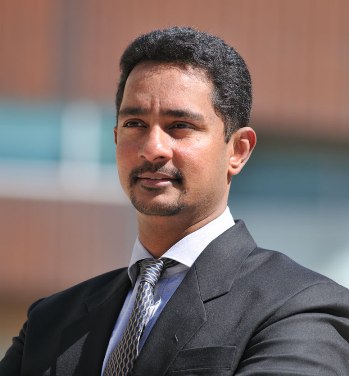
 Ray Jayawardhana
Ray Jayawardhana
උල්කාපාත පෘථිවියේ විවිධ තැන්වලට නිතිපතා ඇද හැලෙනවා. (බොහෝ ඒවා ප‍්‍රමාණයෙන් කුඩා නිසා හානියක් කරන්නේ නැහැ.) මිනිස් ජනාවාස නැති, වර්ෂාපතනය හා හිමපතනය සීමිත ඇන්ටාක්ටිකාවේ වැටෙන උල්කාපාත වඩාත් නිරුපද්‍රිතව සුරැකී තිබෙනවා. මේවා අධ්‍යයනය කිරීමෙන් සෞර ග‍්‍රහ මණ්ඩලයේ හා විශ්වයේ වසර මිලියන් හා බිලියන් ගණනකට ඉහත තත්ත්වය පිළිබඳව තොරතුරු උකහා ගත හැකියි.

හිම මත ගමන් කරන ස්කී-ඩූ (Ski-doo) නම් වාහනවල නැඟී, ප‍්‍රවේශමෙන් ඇන්ටාක්ටික් හිම අතර ගවේෂණය කළ මේ පිරිස සති පහක් තුළ උල්කාපාත 900ක් එකතු කළා. මේ එකතුව පර්යේෂකයන්ට වසර ගණනක් විශ්ලේෂණය කළ හැකි දැනුම් නිධානයක්.

‘‘මා භූ විද්‍යාඥයකු නොවූවත් ඉක්මනින් ම මේ සෙවිල්ලට මා හුරු වුණා. පරිසරයේ අනෙකුත් ගල් කැබලි අතර උල්කාපාත වෙන් කර හඳුනා ගන්නට යම් ලකුණු තිබෙනවා,’’ රේ කියනවා.

ඇන්ටාක්ටිකාවේ ගත කළ සති කිහිපය ශාරීරික හා මානසික දෙඅතින් ම අභියෝගාත්මක වූ බව ඔහු සිහිපත් කරනවා. එහි යන්නට පෙර ශරීර සෞඛ්‍යය හා සවිමත් බව පිළිබඳ පරීක්ෂණවලින් සමත් විය යුතුයි. ඇන්ටාක්ටික් ගිම්හානයේ මාස හතරකටවත් වඩා එක දිගට හිරු පායා තිබෙනවා. මෙය මුලදී අමුත්තක් වූවත්, ඉක්මනින් සිය දින චර්යාව එයට හැඩගස්වා ගන්නට පර්යේෂකයෝ සමත් වුණා.

නාසා ආයතනය ඇන්ටාක්ටික් උල්කාපාත අධ්‍යයනය කිරීම ඇරඹුවේ 1970 ගණන්වලදී. එහිදී පුරෝගාමී පර්යේෂයකු වූයේ කීර්තිමත් ලාංකික ජීව රසායන විද්‍යාඥ මහාචාර්ය සිරිල් පොන්නම්පෙරුම (1924 – 1994). 1970 දශකය අගදී ඇන්ටාක්ටිකාවෙන් ගෙනා උල්කාපාතවල තිබී ඇමයිනෝ අම්ල සොයා ගැනීමට මුල් වීමෙන් ඔහු විද්‍යා ලෝකයේ තවත් මං සළකුණක් වාර්තා කළා.

ඇමයිනෝ අම්ල යනු ජීවයේ පදනම වන ප්‍රෝටීන් සෑදී ඇති සංඝටකයයි. උල්කාපාතාවලට ඇමයිනෝ අම්ල ආවේ කෙසේ ද? ඇන්ටාක්ටිකාවේදී පෘථිවියේ ජීව ද්‍රව්‍ය සමඟ මිශ‍්‍ර වීමට ඇති ඉඩකඩ ඉතා සීමිත නිසා උල්කාපාතවල හමු වන්නේ පිටසක්වලින් ආ ද්‍රව්‍ය බවට තීරණය කළ හැකියි. පෘථිවියේ හමු නොවන ඇමයිනෝ අම්ල දෙකක් උල්කාපාතාවල හඳුනා ගත් පොන්නම්පෙරුම, සිය ජීවිතයේ අවසානය දක්වා විශ්වයේ ජීවය ගැන පර්යේෂණ කරමින් සිටියා.

මහාචාර්ය පොන්නම්පෙරුමත් ඇන්ටාක්ටිකාවට ගියා ද?

මේ ප‍්‍රශ්නය මා දැන් අමෙරිකාවේ වෙසෙන ඔහුගේ දියණිය රෝෂිණීට යොමු කළා. ඇගේ උත්තරය: ඔහු එහි ගියේ නැතත්, එබඳු චාරිකාවල නිරත වූ පර්යේෂකයන් සමඟ ඉතා සමීපව වැඩ කළා. විශේෂයෙන් ඇන්ටාක්ටිකාවේ මුල් ම උල්කාපාත සෙවීමේ නිරත වූ ජපන මහාචාර්ය ෂීරෝ අකබෝරි සමඟ කලක් තොරතුරු හා සාම්පල හුවමාරු කර ගත්තා. පොන්නම්පෙරුම උල්කාපාත සොයා අයිස්ලන්තය හා ග‍්‍රීන්ලන්තයට නම් ගිය බව රෝෂිණී කියනවා.

ඇන්ටාක්ටිකාවට ගිය මුල් ම ලාංකිකයා කවුද?

මේ දක්වා මතු කළ තොරතුරුවලට අනුව නිෂාඞ් ජයසුන්දර, ඉමල්කා ද සිල්වා හා රේ ජයවර්ධන ඒ අනුපිළිවෙළින් එහි ගොස් තිබෙනවා. එහෙත අප කිසිවකුත් නොදන්නා තවත් පර්යේෂකයන් ඉතා නිහඬව මේ චාරිකාවේ යෙදී ඇත් ද? මා සිටින්නේ විමසිල්ලෙන්.

ලෝකයේ රටවල් 30ක් පමණ තමන්ගේ ම ඇන්ටාක්ටික් පර්යේෂණාගාර පවත්වා ගෙන යනවා. (විස්තර: http://en.wikipedia.org/wiki/Research_stations_in_Antarctica) ඉන්දියාව 1981දීත්, චීනය 1985දීත්, පාකිස්ථානය 1991දීත් ඇන්ටාක්ටික් පර්යේෂණ දියත් කළා. සමහරක් රටවල් වසර පුරා පර්යේෂකයන් එහි රඳවන අතර, බහුතරයක් එය කරන්නේ දක්ෂිණ ධ‍්‍රැවයේ ග‍්‍රීෂ්ම කාලයේ පමණයි.

ආසියාතික රටක් සමඟ සහයෝගයෙන් ශ‍්‍රී ලංකාවටත් ක‍්‍රමානුකූලව ඇන්ටාක්ටික් පර්යේෂණවලට දායක විය හැකි ද?
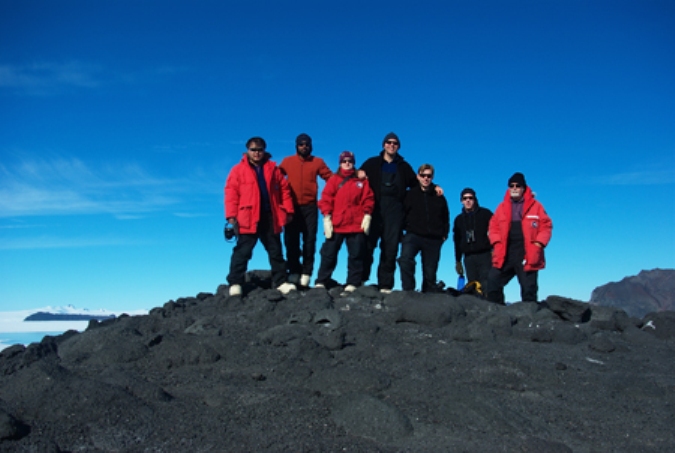
Stanford University Fish Research group in Antarctica 2010

සිවුමංසල කොලූගැටයා #68: විදු උරුමය රැක ගන්නට බැරි අපේ විද්‍යාඥයෝ

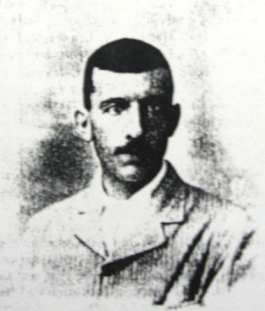
Percy B Molesworth
Percy B Molesworth
This week’s Ravaya column (in Sinhala) is dedicated to a forgotten Ceylonese astronomer who died over a century ago, and now has a Martian crater named after him. He was Percy Molesworth (1867 – 1908).

Most people in the land of his birth have never heard of him, and therein hangs a sad tale of how the country neglects its intellectual and scientific heritage. I have written about him in English some years ago. See: From Trincomalee to Mars: The fascinating journey of Percy B Molesworth

නිධන් හොරුන්ගෙන් පුරාවස්තු හා කෞතුක වටිනාකමක් ඇති ස්ථාන රැක ගන්නේ කෙසේ ද? මේ ප‍්‍රශ්නය ජන සමාජයේත්, මාධ්‍යවලත් මේ දිනවල නිතර කථාබහ කැරෙනවා. එහිදී ඇතැම් දෙනා කියන්නේ නිසි උගත්කමක් ඇති විද්වතුන්ට මේ රටේ හරි තැනක් හා තීරක හැකියාවක් තිබුණොත් උරුමය රැක ගැනිම වඩා පහසු වනු ඇති බවයි.

තර්කයක් ලෙස එය වැදගත් වුවත්, හැම උගතකූම එක හා සමාන ලෙසින් සමාජයීය හා ජාතික වගකීම්වලට උර නොදෙන බව අප දන්නවා. ඇත්තට ම අපේ රටේ බොහෝ ප‍්‍රශ්න උ‍්‍රග‍්‍රවීමට ප‍්‍රබල හේතුවක් නම් පොදු උන්නතියට කැප වූ බුද්ධිමතුන් (public intellectuals) හිඟවීමයි. ඒ වෙනුවට අපට සිටින්නේ ඇඟ බේරා ගෙන වැඩ කරන, පටු ලෙස සිය වෘත්තීමය කාර්ය භාරය විග‍්‍රහ කර ගන්නා විද්වත් බහුතරයක්.

විද්‍යා හා තාක්ෂණ ක්ෂේත‍්‍රවල උරුමයට (heritage) අදාල ස්ථාන හා වස්තු ද තිබෙනවා. මේවාට වෙළඳපොලේ එතරම් ද්‍රව්‍යමය වටිනාකමක් නොලැබුණත් අපේ රටේ නව දැනුම හා නව නිපැයුම් සොයා යාමේ ඉතිහාසය ගැන විමසන විට විද්‍යාත්මක උරුමයට අදාළ ස්ථාන හා භාණ්ඩ රැක ගැනීම වැදගත් වනවා. ශ‍්‍රී ලංකාවේ නීතිමය නිර්වචනයට අනුව වසර සියයට වඩා පැරණි භාණ්ඩයක කෞතුක වටිනාකමක් හා පුරා විද්‍යාත්මක වැදගත්කමක් ඇතැයි සැළකෙනවා.

ශ්‍රී ලංකාවේ ඓතිහාසික වශයෙන් වැදගත් ම දුරදක්නය ප‍්‍රවේශම් කර නොගැනීමේ ඛේදවාචකයත් මේ කථාවට අදාලයි. විද්‍යා හා තාක්ෂණ උරුමයක් රැක ගැනීමට අපොහොසත් වූ මේ රටේ පැරණි ම සරසවිය ගැන අප සිහිපත් කරන්නේ ආයතනයකට නිගරු කිරීමට නොව උගත් සැවො ම එක සේ වගකීම් නොදරණ බවට උදාහරණයක් ලෙසයි.

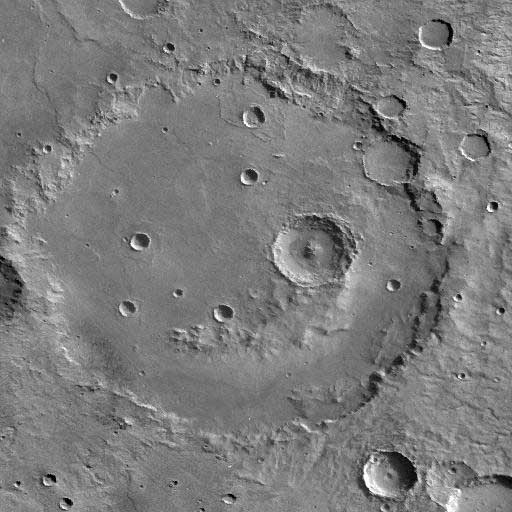
Molesworth crater on Mars

ඒ සඳහා අප සියවසකට වඩා අතීතයට යා යුතුයි. මෙරට නූතන තාරකා විද්‍යා නිරීක්‍ෂණයේ පුරෝගාමියා ලෙස අවිවාදයෙන් සැළකෙන්නේ පර්සි බ්‍රේබෲක් මෝල්ස්වර්ත් (Percy Braybrooke Molesworth, 1867-1908). බි‍්‍රතාන්‍ය දෙමවුපියන්ට ලංකාවේ ඉපදී, ජීවිතයේ වැඩි කාලයක් මෙරට ගත කර, මෙරට ම මිය ගිය ඔහු වෘත්තියෙන් හමුදා ඉංජිනේරුවරයෙක්. එහෙත් වැඩි උනන්දුව තිබුණේ තාරකා විද්‍යා නිරීක්‍ෂණවලටයි.

පර්සිගේ පියා, ශ‍්‍රීමත් ගිල්ෆඞ් ලින්ඩිසේ මෝල්ස්වර්ත් ලංකා දුම්රිය සේවයේ ප‍්‍රථම සාමාන්‍යාධිකාරවරයා. මෙරට මුල් ම දුම්රිය 1864 දෙසැම්බරයේදී කොළඹ සිට අඹේපුස්ස දක්වා ධාවනය කොට ඉතිහාසගත වී තිබෙනවා.

බි‍්‍රතාන්‍යයේ අධ්‍යාපනය ලබා හමුදා පුහුණුව ද ලද පර්සි මෝල්ස්වර්ත්, කෙටි කලක් හොංකොංහි සේවය කිරිමෙන් පසු තමා උපන් රට වූ ලංකාවට ආවා. 1896දී ත‍්‍රිකුණාමලයේ කොටුවට අනුයුක්ත කරනු ලැබු ඔහු, රාජකාරි වශයෙන් කාර්යබහුල නොවූ නිසා වැඩි කාලයක් ගත කළේ තාරකා විද්‍යා නිරීක්ෂණවලටයි. එම ක්ෂේත‍්‍රයේ උසස් අධ්‍යාපනයක් ලබා නොසිටියත් ඉතා උද්යෝගිමත් හා ක‍්‍රමානුකූල ආධුනික තාරකා විද්‍යාඥයකු ලෙස ඔහු ශාස්ත‍්‍රීය වශයෙන් වැදගත් ගවේෂණ රැසක් කළා.

ඒ සඳහා අඟල් 12.5 ක (සෙමී 32) පරාවර්තක දුරදක්නයක් බි‍්‍රතාන්‍යයේ සිට ගෙන වූත් සිය ගෙවත්තේ සවි කළා. 1890 දශකයේ හා විසිවන සියවසේ මුල් වසර කිහිපය තුළ ජාත්‍යන්තර වශයෙන් පිළි ගැනීමට ලක් වූ පර්යේෂණාත්මක සොයා ගැනීම් ගණනාවක් කිරීමට ඔහු සමත් වුණා.

විශේෂයෙන් ම චන්ද්‍රයා හා ග‍්‍රහලෝක නිරික්ෂණයටත්, ඒවා දුරදක්නයක ආධාරයෙන් සිතුවම් කිරීමටත් පර්සි ලොකු උනන්දුවක් දැක්වුවා. මේ නිරීක්ෂණවල සුක්ෂම බව හා ඔහු කළ විද්‍යාත්මක නිබන්ධන නිසා 1898දී බි‍්‍රතාන්‍යයේ රාජකීය තාරකා විද්‍යා සංගමයේ (Royal Astronomical Society, RAS) සාමාජිකත්වය ඔහුට පිරිනමනු ලැබුවා.

බ‍්‍රහස්පති ග‍්‍රහයා මතුපිට සුවිශාල වායුගෝලීය කැළඹීමක් ලෝකයේ තාරකා විද්‍යාඥයන් හැමට පෙර මුලින් ම ඔහු නිරීක්ෂණය කලේ 1901දී. මේ නිසා ලෝකයේ ප‍්‍රමුඛතම නිරීක්ෂණාත්මක තාරකා විද්‍යාඥයකු ලෙස ප‍්‍රසිද්ධියට පත් ඔහු ලංකා දුපතට ද කීර්තියක් ගෙන ආවා.

මෝල්ස්වර්ත් වයස 41දී අකාලයේ මිය ගියේ 1908දී. ඉන් පසු ඔහුගේ ත‍්‍රිකුණාමලයේ නිරීක්‍ෂණාගාරය ගරා වැටුණා. එහි තිබූ ඔහුගේ දුරදක්නය යම් ආකාරයකින් කාලයාගේ ඇවෑමෙන් කොළඹට ගෙනෙනු ලැබුවා.

එය මුලින් කාලගුණ විද්‍යා දෙපාර්තමේන්තුවට අයත් නිරීක්ෂණාගාරයේ තිබුණු බවත්, පසුව කොළඹ සරසවියට තෑගි කළ බවත් වාර්තාවලට අනුව තහවුරු වනවා. රීඞ් මාවතට සමාන්තර කොළඹ සරසවි ක‍්‍රීඩා පිටියේ dome ආකාර කුඩා ගොඩනැගිල්ලක එය පිහිටුවනු ලැබුවා.

එහි නඩත්තුව හා භාවිතය විද්‍යා පීඨයේ ඇදුරන්ට හා සිසුන්ට භාර වී තිබුණා. එහෙත් කලින් කලට ඔවුන් වෙනස් වන විට දුරදක්නය නඩත්තුවේ අඩුපාඩුකම් ද සිදු වුණා. ආයතනික මට්ටමෙන් මේ වටිනා විද්‍යාත්මක උපකරණය ගැන තැකීමක් කොළඹ සරසවියට කිසිදිනක තිබුණා ද යන්න සැක සහිතයි.

1970 දශකය මුල් කාලයේ ආචාර්ය වී කේ සමරනායකගේ මූලිකත්වයෙන් මේ ඓතිහාසික දුරදක්නය අළුත්වැඩියා කළ හැටි තාරකා විද්‍යාඥ ආචාර්ය කාවන් රත්නතුංගට හොඳට මතකයි. ඉනික්බිති එය වසර ගණනාවක් රාත‍්‍රී අහස නිරීක්සන්නට යොදා ගත්තා.

1988දී රට කැළඹී තිබුණු අවස්ථාවේ මේ දුරදක්නයේ ලෝහමය කොටස් කිසිවකු විසින් සොරකම් කරනු ලැබුවා. ඒ ගැන සොයා බලන්නට ඉස්පාසුවක් සරසවි බලධාරීන්ට හෝ පොලිසියට හෝ තිබුණේ නැහැ. මේ ගැන මා ලියූ ලිපියක් ‘The Death of an Observatory’ මැයෙන් 1988 මාර්තු 26 වනදා The Island පත‍්‍රයේ පළ වුණා. උතුරේ හා දකුණේ සන්නද්ධ අරගලයන් දෙකක් මුළු රට ම භීතියට හා පීඩනයට ලක් කර තිබූ එවැනි වකවානුවක මෙබදු සොරකමක් ගැන මාධ්‍ය හරහා කථා කිරීම ගැන මාධ්‍ය සහෘදයන් සමහරකුගෙන් මට දොස් අසන්නට ද සිදු වුණා.

1988 කොල්ලකෑමෙන් පසු මෝල්ස්වර්ත් දුරදක්නය හරිහැටි පිලිසකර වුයේ නැහැ.
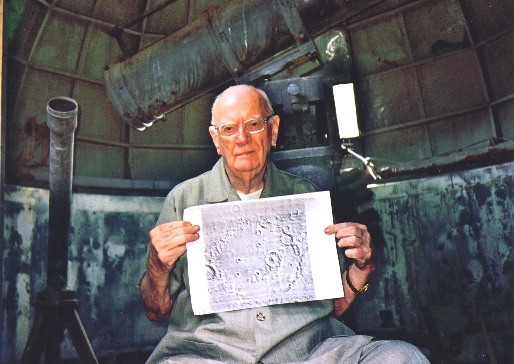
පර්සි මෝල්ස්වර්ත්ගේ විද්‍යා ගවේෂණ ගැන මහත් සේ පැහැදී සිටි ශ‍්‍රීමත් ආතර් සී. ක්ලාක් ද මේ තත්ත්වය වෙනස් කරන්නට උත්සහා කළා. 2003-04 කාලයේ රෝද පුටුවෙන් කොළඹ සරසවියට ගිය ක්ලාක්, නිරීක්ෂණාගාරයේ තත්ත්වය දැක කම්පාවට පත් වුණා. කොළඹ සරසවියේ එවකට සිටි උපකුලපතිවරයාට ලියුමක් ලියමින් ක්ලාක් ඉල්ලා සිටියේ ප‍්‍රමාද වී හෝ මෝල්ස්වර්ත්ගේ දුරදක්නයේ ඉතිරිව තිබෙන කොටස් සංරක්‍ෂණය කරන ලෙසයි.

Sir Arthur Clarke, sitting next to the historic telescope, shows a photo of Crater Molesworth

‘ඔබේ සරසවියේ විද්‍යාත්මක උපකරණ අතරින් වඩාත් ම පැරණි හා ඓතිහාසිකව වැදගත් උපකරණය මෙයයි,’ ක්ලාක් කීවා. එහෙත් මේ ලිපියට සරල පිළිතුරක්වත් ලැබුණේ නැහැ. එබදු ලිපි දෙක තුනක් එවකට සිටි උපකුලපතිවරයාට ලියු බව මා දන්නවා. මොරටුව සරසවියේ කුලපති ලෙස වසර 22ක් (1979 – 2002) කටයුතු කළ ක්ලාක්ගේ ලිපියකට පිළිතුරු එවීමටවත් කොළඹ සරසවි පාලකයන්ට උවමනාවක් තිබුණේ නැහැ!

මේ අතර මෝල්ස්වර්ත්ගේ නිරීක්ෂණ සටහන්, වාර්තා පොත් හා පර්යේෂණ පත‍්‍රිකා අද දක්වා ලන්ඩන් නුවර RAS පුස්තකාලයේ සුරැකිව තිබෙනවා. ඔහුගේ විදවත් දායකත්වය ලෝක මට්ටමින් ඇගැයීමට ලක් කළ ජාත්‍යන්තර තාරකා විද්‍යා සංගමය (International Astronomical Union, IAU) 1973දී අඟහරු ග‍්‍රහයා මතුපිට කිමි 175ක් පළල් වූ ආවාටයක් ඔහුගේ නමින් නිල වශයෙන් නම් කළා. (ආකාශ වස්තුවලට නම් දීමේ වරම සතු එක ම විද්වත් සංවිධානය වන IAU හරහා මෙසේ පිළි ගැනීමට පත්ව ඇත්තේ ලාංකිකයන් අතලොස්සක් පමණයි. 2011 අපේ‍්‍රල් 3දා කොලම බලන්න.)

එහෙත් මේ පුරෝගාමී තාරකා විද්‍යාඥයාගේ විද්වත් දායකත්වය ගැන ශ‍්‍රී ලංකාවේ කිසිදු පිළි ගැනිමක් හෝ ඇගයීමක් හෝ සිදු වී නැහැ. මෝල්ස්වර්ත් මිය ගොස් සියවසක් පිරුණු 2008 දෙසැම්බරයේ මේ කථාව සම්පිණ්ඩනය කර මා Sunday Times පත‍්‍රයට ලිපියක් ලිව්වා.

එය අවසන් කරමින් මා කීවේ “ඔහු ඉපිදල වැඩි කාලයක් ගත කළ රටෙහි පර්සි මෝල්ස්වර්ත් ගැන මතකයන් නැතත් ඒ දුපතෙන් කිමි මිලියන ගණනක් දුරින් පිහිටි රතු ග‍්‍රහයා මතුපිට මෝල්ස්වර්ත් ආවාටය ඔහුගේ නම විශ්වයට සිහිපත් කර දෙනවා.” http://tiny.cc/PercyM

පසුගිය වසරේ ඔක්තෝබරයේ ආතර් සී. ක්ලාක්ගේ පෞද්ගලික දුරදක්නය ගැන බොරු මාධ්‍ය කලබලයක් ඇති වූ විට කොළඹ සරසවියේ භෞතික විද්‍යාඥ ආචාර්ය චන්දන ජයරත්න උපුටා දක්වමින් කියා තිබුණේ “මේ දුරදක්නය ඇතුළු ආතර් සී. ක්ලාක් පරිහරණය කළ දෑ අනාගත පරපුරට දැක ගැනීමට හැකි ස්ථානයක සංරක්‍ෂණය කළ යුතු” බවයි. මේ සඳහා රජයට මැදිහත් විය හැකි ද යන්න පුවතෙන් ප‍්‍රශ්න කොට තිබුණා. (2011 ඔක්තෝබර 9දා කොලම බලන්න.)

තමන්ගේ සරසවියේ ම තිබුණු මෙරට වටිනා ම දුරදක්නය රැක ගන්නට අපොහොසත් වූ විද්‍යාඥයන්ට, ක්ලාක්ගේ වසර 30ක් නොපැරණි පෞද්ගලික දුරදක්නය රැක ගන්නට යයි මාධ්‍ය ප‍්‍රකාශ කිරීමට සදාචාරමය අයිතියක් ඇත් ද?

සිවුමංසල කොලූගැටයා #58: විනාශයක් ළග එනවා – ඒකට අපි සැරසෙනවා!

In this week’s Sunday column, published in Ravaya newspaper of 18 March 2012, I take a critical look at the mounting hype and hysteria about the world ending in December 2012.

The Wikipedia describes the ‘2012 phenomenon’ as comprising a range of eschatological beliefs according to which cataclysmic or transformative events will occur on 21 December 2012. In reality, it’s a blockbuster Hollywood movie, rather than any ancient prophecy, that triggered this wave of public concern!

Much of this information was drawn from NASA’s webpage on the topic where reputed scientists answer questions that they are frequently asked regarding 2012.
See also my English blogpost on this, written on 5 Jan 2012.

2012දී ලෝක විනාශයක් සිදු වෙයි ද? එසේ වන බවට අතීත ශිෂ්ටාචාරයක් හෝ පිටසක්වල ජීවීන් හෝ කල් තබා අනතුරු අගවා ඇත් ද? එසේ නම් අපි පණ බේරා ගන්නේ කොහොමද?

මේ දිනවල නිතර කථා බහට තේමා වන ප‍්‍රශ්න අතර මේවා ද තිබෙනවා. ලෝකයේ ආර්ථික ප‍්‍රශ්නල පාරිසරික ප‍්‍රශ්නල යුද්ධ අරගල ආදිය මදිවාට ලෝක විනාශය ගැනත් අප බිය විය යුතු ද? මොකක්ද මෙහි සැබෑ කථාව?

ලෝකය විනාශ වීම අතීතයේ සිට මිනිසුන් තුළ තිබූ බියක්. ලෝකය හා විශ්වය ගැන විද්‍යාත්මක තොරතුරු දැන ගත් පසුවත් බොහෝදෙනා තුළ තවමත් යන්තමින් හෝ මෙබදු භීතියක් තිබෙනවා. විද්‍යාව හා තර්කානුකූල චින්තනය හෙළා දකින ඇතැම් දෙනාල ස්වයංමුලාවකට පත් වීමටත්, අන් අය බිය වැද්දීමටත් භාවිත කරන එක් සංකල්පයක් නම් යම් නිශ්චිත දිනෙක ලෝකය විනාශ වීමයි.

ලෝක විනාශය ගැන විග‍්‍රහයේදී භෞතික විද්‍යාවට අමතරව සමාජ විද්‍යාව හා මනෝ විද්‍යාව ද යොදා ගත යුතු වන්නේ මේ නිසයි. මගෙන් මේ ගැන විමසන අයට මා කියන්නේ ලෝක විනාශ ව්‍යාපාරය (End of the World Industry) නම් අළුත් වෙළදාමක් බිහි වී ඇති නිසා එයට හසු නොවන ලෙසයි.

එහෙත් අසුබවාදී දෙය අදහන්නට අපේ ඇත්තන්ට ලොකු ඕනෑකමක් තිබෙනවා. ‘2012 ලෝක විනාශය’ ගැන විමසීම් රැසක් ලැබෙන්නට පටන් ගත් විට අමෙරිකාවේ අභ්‍යවකාශ කටයුතු භාර නාසා ආයතනය ඒ ගැන විද්වත් තොරතුරු ඇතුළත් වෙබ් පිටුවක් 2011 නොවැම්බරයේ ආරම්භ කළා. බලන්න: http://www.nasa.gov/topics/earth/features/2012.html

ඉංග‍්‍රීසි බසින් ඇති මේ වෙබ් පිටුවේ මුල් ම ප‍්‍රශ්නය හා උත්තරය මෙයයි.
ප‍්‍රශ්නය: 2012 දෙසැම්බරයේ ලෝක විනාශය සිදුවන බවට බොහෝ දෙනා හා ඇතැම් වෙබ් අඩවි කියනවා. මෙහි ඇත්ත කුමක් ද?

උත්තරය: 2012 දී පෘථිවියට එසේ විපතක් හෝ අන්තරායක් ඇති වේ යයි කීමට පදනමක් නැහැ. වසර බිලියන් 4කට වැඩි කලක් තිස්සේ පැවත එන පෘථිවිය 2012 මහා තර්ජනයකට ලක් වන බවට ලොව කිසිදු විද්‍යාඥයකු ප‍්‍රකාශ කර නැහැ.

2012 ලෝක විනාශය ගැන ලෝක ව්‍යාප්ත විශ්වාසයේ අගමුල නාසා වෙබ් අඩවිය විග‍්‍රහ කරනවා. එය ඇරඹුණේ නිබිරු (Nibiru) නම් අයාලේ යන ග‍්‍රහලෝකය ගැන ප‍්‍රබන්ධයකින්. තාරකා විද්‍යාඥයන් නොදන්නා මේ අද්භූත ග‍්‍රහලෝකයල පෘථිවියේ ගැටෙනවා යයි මුලින් ‘අනාවැකි’ පළකර තිබුණේ 2003දි. එහෙත් එය සිදු නොවූ විට ලෝක විනාශ සංකල්පවාදියෝ කිසි ලැජ්ජාවකින් තොරව ඒ දිනය 2012 දෙසැම්බරයට මාරු කළා!

මධ්‍යම ඇමෙරිකාවේ අද හොන්ඩුරාස්, ගුවාතමාලා, නිකරාගුවා සහ මෙක්සිකෝව නමින් හැදින්වෙන ප‍්‍රදේශවල සියවස් ගණනක් තිස්සේ පැවති මායානු ශිෂ්ටාචාරයත් මේ ලෝක විනාශ කතන්දරයට ඈදා ගෙන තිබෙනවා. මායාවරුන්ගේ ඓතිහාසික කැලැන්ඩරය අපේ සම්මත වර්ෂවලින් 5,125ක් දිගු බවත්, එය අවසන් වන්නේ 2012 දෙසැම්බර් 21 වනදා බවත් පෙන්වා දෙන උදවිය, එයින් සංකේතවත් කැරෙන්නේ මානව සංහතියෙ අවසානය බවත් කියනවා. මේ සඳහා ඔවුන්ට තර්කානුකූල සාක්‍ෂි නැතත්, අද්භූත හා විනාශකාරී තොරතුරුවලට ලොල් බවක් දක්වන ජනයා අතරේ ජනප‍්‍රිය වීමට හැකිව තිබෙනවා.

නාසා වෙබ් අඩවිය කියන්නේ යම් අවස්ථාවක නිබිරූ ප‍්‍රබන්ධය හා මායා කැලැන්ඩරයේ ප‍්‍රබන්ධය එකිනෙකට බද්ධ වී වඩාත් බිහිසුණු ලෝකවිනාශ ”අනාවැකියක්” බවට පත් වී ඇති බවයි.

පුරාණ මායාවරුන්ගේ කැලැන්ඩරය 2012න් අවසන් වූවත්, අප දැන් භාවිත කරන වර්ෂ ක‍්‍රමයේ අළුත් වසරක් හැම ජනවාරි 1වනදා ම ඇරඹෙන අයුරින් ඔවුන්ගේ ද නව දිනවකවානු චක‍්‍රයක් ඇරඹිය හැකියි. කැලැන්ඩරයක් හමාර වූ පලියට ලෝකය හමාර නොවන බව නාසා අපට මතක් කර දෙනවා. ඒ අතර මායාවරුන්ගේ කැලැන්ඩරය 2012න් අවසන් වීමට තවත් හාස්‍යජනක හේතූන් දක්‍ෂ කාටූන් ශිල්පීන් ද මතු කර තිබෙනවා!

Simple explanations are always the best – but not entertaining enough?

2012 දී ලොව විනාශ වන බවට කිසිදු සඳහනක් අතීත මායාවරුන්ගේ ලේඛනවල හෝ පුරාවස්තු නටඹුන්වලින් හමු වී නැති බව මායා ශිෂ්ටාචාරය ගැඹුරින් අධ්‍යයනය කළ මානව විද්‍යාඥයෝ හා පුරා විද්‍යාඥයෝ කියනවා.

‘ලෝක විනාශය’ නොයෙක් දෙනා තේරුම් ගන්නේ විවිධාකාරයෙන්ග සමහරුන් එය දකින්නේ අපේ ග‍්‍රහලෝකය ම පුපුරා කැබලි වී යන හැටියට. ඇතමුන් එය මිහිතලය මත ජීවය විනාශ වී ගොස් අජීවී ද්‍රව්‍ය පමණක් ඉතිරි වීමක් ලෙස සළකනවා. මේ දෙක අතර තවත් විවිධ විය හැකියාවන් පරිකල්පනය කළ හැකියි. එයින් ඇතැම් ඒවාට විද්‍යාත්මක පදනමක් ඇතත් විය හැකියාව අඩුයි.

උදාහරණයක් නම් ලෝක ව්‍යාප්ත න්‍යෂ්ටික යුද්ධයක්. මුළු මහත් ජීවීන් සියළු දෙනා මිහිපිටින් අතු ගා දමන්නට නම් ඉතා අධික විකිරණශීලිතාවයක් ග‍්‍රහලෝකය පුරා පැතිරිය යුතුයි. සීතල යුද්ධයේ ඇතැම් අවස්ථාවල එබදු තුන්වන ලෝක යුද්ධයක අභිමුඛයට ආවත් එබන්දක් සිදු වූයේ නැහැ.

2012 දී ග‍්‍රහලෝක එක ම හෝ ආසන්න හෝ රේඛාවක පිහිටීමෙන් පෘථිවියට අහිතකර බලැපෑම් ඇති විය හැකි ද? මේ පැනයටත් නාසා පිළිතුරු දෙනවා. එවැනි ග‍්‍රහ පිහිටීමක් 2012දී හෝ තවත් දශක ගණනාවකට සිදු නොවන බවත්, එබන්දක් සිදු වන විට පවා (ග‍්‍රහලෝක අතර ඇති අති විශාල දුර ප‍්‍රමාණ නිසා) කිසිදු බලපෑමක් ඇති නොවන බවත් ඔවුන් අවධාරණය කරනවා.
අපේ චක‍්‍රාවාටයේ (ගැලක්සියේ) තලයට සාපේක්‍ෂව පෘථිවියේ පිහිටීම ගැන විවිධ අද්භූත මත ප‍්‍රචලිත වී ඇතත් එබදු කිසිවක් අපේ ලෝකයට දැනෙන ආකාරයේ බලපෑමක් කළ නොහැකි යයි නාසා කියනවා.

අයාලේ යන ග‍්‍රහ කැබැල්ලක් හෝ උල්කාපාතයක් හෝ පෘථිවියේ ගැටීමෙන් මහ විනාශයක් සිදුවිය හැකි ද? මෙය විද්‍යාත්මක පදනමක් ඇති ප‍්‍රශ්නයක්. පෘථිවි ඉතිහාසය පුරා මෙබදු ගැටුම් විටින් විට සිදු වී ඇති බවට භූ විද්‍යාත්මක සාක්‍ෂි තිබෙනවා. එහෙත් මහා පරිමානයේ ගැටුම් ඉතා විරලයි. අවසන් වරට එබන්දක් සිදුව ඇත්තේ වසර මිලියන් 65කට පෙර. ඩයිනසෝරයන් ඇතුළු බොහෝ ජීවීන් වඳ වී යාමට තුඩු දුන් ඒ ගැටුමෙන් ද මිහිපිට ජීවය තුරන් වූයේ නැහැ.
පෘථිවිය ආසන්නයට එන හා ගැටීමේ ඉඩ ඇති සියළුම ග‍්‍රහවස්තු ගැන ලොව පුරා තාරකා විද්‍යාඥයෝ නිරතුරුව විමසිල්ලෙන් සිටින නිසා අද දවසේ එබදු අනතුරක් වසර ගණනකට පෙර දත හැකියි. එබන්දක් දැන ගත් විට එයට ගත හැකි ක‍්‍රියාමාර්ග තිබෙනවා. 2012දී එබදු ග‍්‍රහ ගැටුමක සේයාවක්වත් නැහැ. මේ සියළු තාරකා විද්‍යා තොරතුරු ඕනෑ ම කෙනකුට බලාගත හැකි පරිදි වෙබ් අඩවිගත කර තිබෙනවා. කුමන්ත‍්‍රණවාදී වෙබ් අඩවි වෙනුවට පිළිගත් විද්‍යාත්මක වෙබ් අඩවිවලින් තොරතුරු ලබා ගන්න.

මහජනයා බිය කර භාණ්ඩ හා සේවාවන් විකුණන අයට නම් මේ වසර හොඳ අවස්ථාවක්. 2012 ලෝක විනාශය පිළිබඳ මිථ්‍යාවලට බෙහෙවින් දායක වූයේ ද මීට තෙවසරකට පෙර හොලිවුඞ් නිපද වූ චිත‍්‍රපටයක් ‘2012’ නම් වූ එය ඉතා ත‍්‍රාසජනක ලෙසින් ඉදිරිපත් කළේ මේ වසරේදී භූමිකම්පා, ගිනිකදු විදාරණය ඇතුළු භූවිද්‍යාත්මක ව්‍යසනයන් රැසක් සිදු වී මිහිපිට බොහෝ ජනාවාස විනාශ වී යන සැටියි.

තනිකර ම ප‍්‍රබන්ධයක් වන මේ චිත‍්‍රපටයේ අලෙවිකරණ උපක‍්‍රමයක් ලෙස ලෝක විනාශය ගැන ‘විද්‍යාත්මක’ ගවේෂණ කරන වෙබ් අඩවියක හැඩ රුව රැගත් බොරු වෙබ් අඩවියක් මුදා හරිනු ලැබුවා. Institute for Human Continuity නම් කල්පිත ආයතනයක නමින් පවත්වාගෙන ගිය මේ වෙබ් අඩවියල නිර්මාණශීලී උත්සාහයක් වූවත් එය සැබෑවක් ලෙස වරදවා වටහා ගත් බොහෝ දෙනා බියපත් වී සිටිනවා.

සැබෑ විද්‍යාඥයන් හා අධ්‍යාපනවේදීන් මේ ප‍්‍රචාරණ ක‍්‍රමය දැඩි සේ විවේචනය කළත් අන්තිමේදී 2012 චිත‍්‍රපටය ඩොලර් මිලියන් 770ක ආදායමක් ලබා ගත්තා. මේ දෙස බලා සිටි ටෙලිවිෂන් ආයතන, පොත් ප‍්‍රකාශකයෝ හා වෙනත් ව්‍යාපාරිකයෝ ද මේ 2012 භීතියෙන් ආදායම් උපදවා ගැනීමේ උපක‍්‍රම දියත් කළා.

අද බොහෝ දෙනකු මංමුලා වී සිටින්නේ සැබෑව හා මිථ්‍යාව තෝරාගත නොහැකිවයි. නිල මූලාශ‍්‍රයන් හා විද්වත් ආයතන කියන දේට වඩා කුමන්ත‍්‍රණවාදීන් කියන දේ අදහන්නට කවදත් කැමති පිරිසකුත් හැම සමාජයක ම සිටිනවා. කණගාටුව නම් පුරාණ මායාවරුන් ද මේ නූතන භීතිකා ව්‍යාපාරයට සම්බන්ධ කර ගැනීමයි.

එමෙන්ම 2012 ලෝක විනාශයක් ගැන කථා කිරීමෙන් අද ලොව හමුවේ තිබෙන සැබෑ අභියෝගවලට ලැබිය යුතු අවධානය අඩුවන බවත් මැදහත් විද්‍යාඥයන්ගේ මතයයි. ගෝලීය දේශගුණ විපර්යාස,ජීවී විශේෂ වඳ වී යාමේ තර්ජනය හා ආහාර-ජලය-බලශක්ති පිළිබඳ හිගයන් අද අපට මුහුණ දීමට ඇති මහා ප‍්‍රශ්න අතර තිබෙනවා. 2012 දෙසැම්බරයේ අප සියළු දෙනා විනාශ වනවා නම් මේ ප‍්‍රශ්න විසදීමට උත්සාහ කිරීමේ තේරුමක් ඇත් ද? මේ අයුරින් බලන විට සංත‍්‍රාසය ඇති කිරීමට සමහරුන් ගෙන යන ලෝක විනාශ සංකල්පවාදය මුළුමනින් විචාර බුද්ධියට හා තර්කානුකූල චර්යාවන්ට එරෙහි බව පැහැදිලියි.

2012 දෙසැම්බර් 21දා ‘ලෝක විනාශය’ ගැන කෙළවරක් නැති ප‍්‍රලාඵයන්ගෙන් විඩාවට පත් තාරකා විද්‍යාඥ ආචාර්ය කාවන් රත්නතුංග, ඒ ගැන තර්ක කරන අයට විවෘත අභියෝගයක් කරනවා. 2011 නොවැම්බර් 15දා රූපවාහිනියේ ‘බටහිර අහස’ සජීව වැඩසටහන ඔස්සේ ඔහු කීවේ මෙයයි: “ලෝක විනාශයක් ගැන ඔය තරමට දැඩි සේ අදහනවා නම් 2012 දෙසැම්බර් 22 වනදා සිට බල පවත්වන පරිදි ඔබ සතු දේපළ මට උරුම වන්නට නීත්‍යානුකූලව පවරන්න. එසේ කරන කෙනකුට ඒ දේපොල වටිනාකමින් සියයට 10ක් දැන් ගෙවීමට මා සූදානම්!”

2012 මාර්තු 15දා වන තුරුත් කාවන්ගේ අභියෝගය කිසිවකු භාර ගෙන තිබුණේ නැහැ. එහෙත් 2012 ලෝක විනාශ ප‍්‍රබන්ධය රස කරමින් පතුරුවන අයගේ අඩුවක් ද නැහැ. ඉදිරි මාස කිහිපයේ මේ ප‍්‍රබන්ධය හරහා ස්වයංමුලාවට පත් වන අය මෙන් ම එයින් අවස්ථාවාදී ලෙස බඩ වඩා ගන්නා අය ගණනත් ඉහළ යනු ඇති. මුළු මහත් ලොව ම වැනසෙන විට ආනුභාව සම්පන්න ලංකා දිවයින පමණක් කෙසේ හෝ නොනැසී පවතිනු ඇතැයි අපේ ජ්‍යොතිෂකාරයකු කියන්නටත් ඉඩ තිබෙනවා!

2012 දෙසැම්බර් 22දාට පසු යළිත් මේ ගැන කථා කරමු.

සිවුමංසල කොලූගැටයා #56: විශ්වයේ අන්තිම සිංහල වචනය?

This is the Sinhala text of my Ravaya newspaper column published on 4 March 2012. Today, I talk about the gold-plated disk containing sounds and images of our Earth that was sent to the universe with Voyager 1 and 2 spacecraft launched by NASA in mid 1977.

In particular, I look at how a Sinhala language greeting was included on it, and thank Cornell University and project leader astronomer Carl Sagan for keeping it entirely a scholarly effort with nothing official about it. Thank you, Carl, for keeping the babus out of humanity’s ‘message in a bottle’ sent adrift to the depths of space.

සිවුමංසල කොලූගැටයා #57: ශ්‍රී ලංකාවට හඳ අහිමි වූ සැටි

සිංහල භාෂාව මවුබස ලෙස කථා කරන සමස්ත ජන සංඛ්‍යාව මිලියන් 16ක් පමණ වන අතර තවත් මිලියන් 2ක් ජනයා එය ප‍්‍රායෝගිකව භාවිත කරන බව විකිපීඩියාව කියනවා. භාෂා නිතිපතා පරිනාමය වෙනවා. කිසිදු භාෂාවක් සදා කල් පවතින්නේ නැහැ. සංස්කෘතිය යනු කෞතුකාගාරයක හෝ සංරක්‍ෂණාගාරයක දමා දැඩි ආරක්‍ෂාව යටතේ ප‍්‍රවේශම් කළ හැකි දෙයක් නෙවෙයි. එය සජීව හා ගතික සංසිද්ධියක්.

නූතන සිංහලය ක‍්‍රි.ව. 12 වන සියවසෙන් පමණ පසු භාවිතයේ පවතින නමුත් ගෙවී ගිය සියවස් කිහිපය පුරා විවිධ භාෂාවලින් එය පෝෂණය වී තිබෙනවා. යටත්විජිත බලපෑම්, වෙළඳ සබඳතා, ගෝලීයකරණය හා තාක්‍ෂණය සිංහල භාෂාවට බලපා ඇති සාධක අතර වනවා.

සිංහල භාෂාවේ ආරම්භය හරියට ම කවදා කෙලෙස සිදු වී දැයි කිව නොහැකිවාක් මෙන් ම සිංහලයේ අනාගතය කෙසේ පරිනාමය වේ දැයි කියන්නටත් බැහැ. නමුත් එක් තොරතුරක් මා දන්නවා. දුර අනාගතයේදී විශ්වයේ ඉතිරිවන අවසාන සිංහල වචනය ‘ආයුබෝවන්’. එය දැනටමත් කථා කර හමාරයි!

මා එසේ කියන්නේ ඇයි? මේ පිටුපස රසවත් කථාවක් තිබෙනවා.

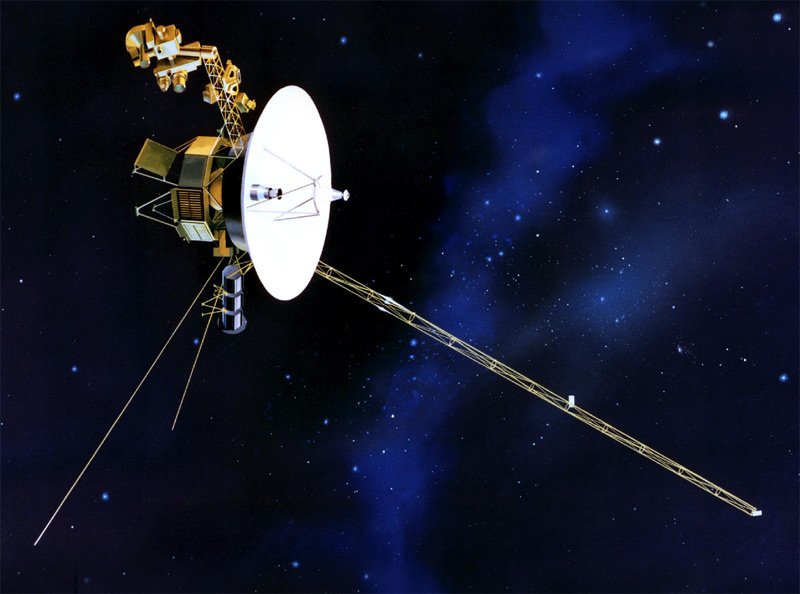
මීට 35 වසරකට පෙර 1977දී අමෙරිකානු අභ්‍යවකාශ අධිකාරිය වන නාසා (NASA) ආයතනය ග‍්‍රහලෝක ගවේෂණය සඳහා වොයෙජර් 1 හා වොයෙජර් 2 නම් ස්වයංක‍්‍රීය අභ්‍යවකාශ යානා දෙකක් උඩුගුවන් ගත කළා. බ‍්‍රහස්පති, සෙනසුරු, යුරේනස් හා නෙප්චූන් යන ග‍්‍රහලෝක හතරට සමීප වෙමින් 1979-89 කාලය තුළ මේ යානා දෙක අති විශාල තොරතුරු හා ඡයාරූප සමුදායක් රේඩියෝ සංඥා මගින් පෘථිවියට සම්පේ‍්‍රෂණය කළා.

කිසිදු ග‍්‍රහලෝකයකට ගොඩ නොබැස, සමීපවීම් හරහා පමණක් මේ ගවේෂණයන් කළ වොයෙජර් යානා දෙක ඉනික්බිති අපේ ග‍්‍රහමණ්ඩලයෙන් පිටත ඈත අභ්‍යවකාශයට ගමන් කිරීමට සළස්වා තිබෙනවා. මේ වන විට මිනිස් සංහතිය උඩුගුවන් ගත කළ යානාවලින් පෘථිවියෙන් වැඩි ම දුරකට ගොස් ඇත්තේ මේ යානා දෙකයි. අභ්‍යවකාශයේ වේගය බාල වීමක් නැති නිසා (යම් අනතුරක් නොවුණොත්) මේ යානා දෙක දිගින් දිගට ම සියවස් හා සහශ‍්‍ර ගණනක් තිස්සේ අභ්‍යවකාශයේ ගමන් කරනු ඇති. යානා දෙක කිසිදු නිශ්චිත ඉලක්කයක් කරා ගමන් නොකළත්, වෙනත් තරුවකට ළගා වන්නට තව වසර 40,000ක් වත් ගත වනවා.

මිනිස් සංහතියේ යාන්ත‍්‍රික නියෝජිතයා ලෙස විශ්වයට යන මේ දුතයන් දෙදෙනා තුළ තැන්පත් කර තිබෙන විශ්ව පණිවුඩයක් තිබෙනවා. එය රත්රන් ආලේපිත තඹ තැටියක් (phonographic record). පෘථිවි ග‍්‍රහලෝකය හා මානව වර්ගයා නියෝජනය කැරෙන විවිධ ශබ්ද හා රූප රැසක් එහි තැටිගත කොට තිබෙනවා. වසර දහස් ගණනක ගමනකින් පසුව යම් දිනෙක බුද්ධිමත් ජීවීන්ට මේ යානා මුණ ගැසුණොත් ඔවුන්ට වොයෙජර් යානා නිපද වූ හා අභ්‍යවකාශයට යැවූ මානව වර්ගයා පිළිබඳ ඉගියක් ලබා දීම එහි අරමුණයි.

මෙබදු සංක්‍ෂිප්ත සන්නිවේදයක් හරහා විස්තරාත්මක තොරතුරු දිය නොහැකි වූවත් එය සම කළ හැකි වන්නේ මුහුදේ පාළු දුපතක අතරමං වූවකු බෝතලයක් තුළ පණිවුඩයක් ලියා සාගර රැුලි අතර එය පාකොට යැවීමටයි. වොයෙජර් යානාවල තැන්පත් කළ ශබ්ද හා රූප තැටිල අපෙන් විශ්ව සාගරයට යැවෙන බෝතල් පණිවුඩයකට සමාන බව එම අදහසේ මූලිකයා වූ අමෙරිකානු තාරකා විද්‍යාඥ හා කෝනෙල් සරසවියෙ ආචාර්ය කාල් සේගාන් (1934 – 1996) කියා තිබෙනවා.

මිනිස් හඩට අමතරව සොබා දහමේ ශබ්ද (අකුණු, ගිගිරුම, මුහුදේ රළ බිෙඳන සැටි, සැඩ සුළග ආදිය) සහ විවිධ සතුන්ගේ ශබ්ද (කුරුළු නාද, තල්මසුන්ගේ සංගීතමය හඩ) එම තැටියට ඇතුළත් වුණා. එමෙන්ම විවිධ සංස්කෘතීන් නියෝජනය කැරෙන පරිදි සංගීත ඛණ්ඩයන් ගණනාවක් ද තෝරා ගනු ලැබුවා.
පෘථිවියේ ජෛව විවිධත්වය හා සංස්කෘතික විවිධත්වය ඡයාරූප ගොන්නකුත් එහි අඩංගුයි.

මේ තැටියේ අන්තර්ගතය තීරණය කිරීමේ භාරදුර වගකීම නාසා ආයතනය කෝනෙල් සරසවියෙ විද්‍යාඥ පිරිසකට පැවරුවා. කෝනෙල් සරසවිය විද්‍යා – කලා ක්‍ෂෙත‍්‍ර දෙකෙහි ම පෙරමුණ ගත් අමෙරිකානු සරසවියක් නිසා මෙබදු ඓතිහාසික තේරීම් ක‍්‍රියාවලියකදී තිබිය යුතු බහුවිධ ක්‍ෂෙත‍්‍ර නියෝජනය හරිහැටි සිදු වුණා. එසේ නොවන්නට එය රාජ්‍ය තාන්ත‍්‍රික මට්ටමේ සංකීර්ණ ක‍්‍රියාවලියක් වන්නට ඉඩ තිබුණා!

ලෝකයේ කථා කැරෙන භාෂා 55කින් භාෂිත ඉතා කෙටි සුභාශිංසන පණිවුඩ මේ තැටියේ ශබ්ද අතර තිබෙනවා. කවදත් තම ජාතිකත්වයට වඩා දුර දැක්මකින් ක‍්‍රියා කළ කාල් සේගාන්ට ඕනෑ වුණේ හැකි තාක් මානව සංහතිය නියෝජනය කරන ආකාරයේ රූප-ශබ්ද එකතුවක් හදන්නටයි. එහෙත් ඒ සඳහා ඔහු ඇතුළු කෝනෙල් සරසවියේ පිරිසට තිබුණේ මාස කිහිපයක කාලයක් හා සීමිත මුදල් ප‍්‍රතිපාදනයක් පමණයි.

ඔවුන්ට උදක් ම ඕනෑ වුණේ ලෝකයේ වැඩිපුර ජන සංඛ්‍යාවක් කථා කරන භාෂා 25කින් මේ තැටියට සුභාශිංසන ලබා ගන්නටයි. ඒ ඉලක්කය ළගා වූ පසු තවත් භාෂා 30කට එය පුළුල් කරනු ලැබුවා. සිංහල භාෂාව එයට එක් වූයේ එලෙසයි.

“මේ තේරීම අප කළේ පිටසක්වල බුද්ධිමත් ජීවීන් සඳහා වූවත් මේ හරහා අපේ ලෝකයේ දැනට ජීවත්ව සිටින මානවයන්ටත් ප‍්‍රබල සංකේතාත්මක පණිවුඩයක් ලැබෙන බව අප හො`දාකාරව දැන සිටියා,” ආචාර්ය සේගාන් ලියා තැබුවා.

එහෙත් භාෂා 55ක සම්මාදම කෙටි කලක් තුළ ලබා ගැනීම ඔවුන්ට ලොකු අභියෝගයක් වුණා. කෝනෙල් සරසවියේ එවකට (1976-77 වකවානුවේ) සිටි ශිෂ්‍යයන්, ඇදුරන් හා ඔවුන්ගේ නෑ හිතමිතුරන් අතරින් ලෝකයේ භාෂා රැසක් කථා කරන පුද්ගලයන් සොයා ගන්නට හැකි වුණා.

‘පිටසක්වලට ඔබේ භාෂාවෙන් ඉතා කෙටි පණිවුඩයක් දෙන්න’ යන පොදු ඉල්ලීමට ප‍්‍රතිචාර ලෙස නොයෙක් දෙනා විවිධාකාරයේ අදහස් ගැබ් වූ කෙටි වාක්‍ය තැටිගත කළා. කිසිදු රජයක, තානාපති කාර්යාලයක හෝ නිල ආයතනයක මැදිහත්වීමක් තිබුණේ නැහැ. අන්තිමේදී විශ්වයට ගිය මානව පණිවුඩ තැටිය නිල නොවන, ශාස්ත‍්‍රීය තේරීමක් වීම ගැන මා ඉතා සතුටු වනවා!

සිංහලෙන් මේ සුභාශිංසනය විශ්වයට යැවීමේ දුර්ලභ අවස්ථාව ලැබුණේ ආචාර්ය කමල් ඩි ආබෲ (Dr Kamal De Abrew) නම් ලාංකිකයාටයි. මෙය සිදු වී ඇත්තේ අහම්බෙන්. මීට වසර කිහිපයකට පෙර ටෙලිවිෂන් වැඩසටහනකට සූදානම් වෙද්දී මෙහි පසුබිම් කථාව මා අසා දැන ගත්තා.

ඒ කාලයේ ඔහු සිය ආචාර්ය උපාධියට කෝනෙල් සරසවියේ පශ්චාත් උපාධි සිසුවෙක්. සේගාන්ගේ පිරිස ඔහුගෙන් ඉල්ලා සිටියා සිංහලෙන් පණිවුඩයක් දෙන ලෙස. ඒ අනුව ඉතා කෙටි එහෙත් අපේ සංස්කෘතිය හරවත් ලෙස නියෝජනය කැරෙන ‘ආයුබෝවන්’ යන වචනය ඔහුගේ හඩින් මේ තැටියට ලබා දුන්නා. ඉංග‍්‍රීසි භාෂාව පිළිබඳ මහාචාර්යවරයකු හැටියට විවිධ සරසවිවල සේවය කර ඇති ආචාර්ය ඩි ආබෲ තවමත් සක‍්‍රීය සරසවි ඇදුරෙක්.

කමල් ඩි ආබෲ එසේ 1977 වසරේ දිනෙක කෝනෙල් සරසවියේදී පැවසූ ‘ආයුබෝවන්’ වචනය අන් සියළු සිංහල වචනවලට වඩා වැඩි කලක් පැවතීමේ ඉඩක් පවතිනවා. මිහිතලය මත කාලගුණ, දේශගුණ, සොබාවික විපත් හා වෙනත් අනපේක්‍ෂිත සිදුවීම් නිසා සහස‍්‍ර ගණනක් යම් දෙයක හෝ යම් භාෂාවක පැවැත්ම ගැන සහතික වන්නට බැහැ. එහෙත් හිස් අභ්‍යවකාශය හරහා අපෙන් ඔබ්බට ඇදී යන (එකිනෙකට වෙනස් දිශාවලට යොමු වී ඇති) වොයෙජර් 1 හා 2 යානාවල ඇති විශ්වයට යැවෙන පණිවුඩයල අපේ වර්ගයාට වැඩි කාලයක් පවතිනු ඇති. විශ්වයේ කිසිවක් සාදාතනික නොවූවත්, සාපේක්‍ෂව තව වසර 40,000ක් හෝ ලක්‍ෂයක් වූවද එය නිරුපද්‍රිතව තිබීමේ සම්භාවිතාව ඉහළයි. ආයුබෝවන් වචනයේ අරුතින් ම ඒ අන්තිම සිංහල වචනය වැඩි ම කලක් රැදී පවතිනු ඇති.

ලෝක නායකයන් අතරින් මේ තැටියේ ලිඛිත පණිවුඩ යවා ඇත්තේ එවකට සිටි අමෙරිකානු ජනාධිපති ජිමී කාටර් සහ එවකට එක්සත් ජාතීන්ගේ මහලේකම් කුර්ට් වෝල්ඩයිම් පමණයි. මෙය දේශපාලකයන් දුරස්ත කරමින්, විද්වතුන්, කලාකරුවන් හා සාමාන්‍ය මිනිසුන්ගේ සාමුහික ප‍්‍රයත්නයක් කළ කාල් සේගාන්ට අපේ ප‍්‍රණාමය!

“අපට ලෙහෙසියෙන් සිතා ගත නොහැකි තරම් ඉදිරි අනාගතයේ දී, එනම් අදින් වසර මිලියන් ගණනක් ගෙවී ගිය පසු අපේ පෘථිවියේ මහාද්වීප වෙනස් වී, ජීවීන් මුළුමනින් පරිනාමය වී හෝ වඳ වී හෝ තිබිය හැකියි. අපේ විවිධ ශිෂ්ඨාචාරයන් ඉදි කළ සියල්ල කාලයාගේ ඇවෑමෙන් දුවිලි බවට පත්වනු ඇති. එහෙත් මේ සියල්ලෙන් දුරස්තව විශ්වයේ යම් තැනෙක 1977දී අප උඩුගුවන් ගත කොට යැවූ වොයෙජර් යානා දෙක අපේ රූප හා හඩ පමණක් නොවෙයි, අපේ සිහින හා පැතුම් ද රැගෙන ගමනේ යෙදෙනු ඇති. යම් දිනෙක මුළු මිහිතලය වෙනුවෙන් විශ්වයේ ඉතිරි වන්නේ එය පමණක් ද විය හැකියි.” ඉතා දාර්ශනික ලෙසින් ආචාර්ය කාල් සේගාන් එසේ කියනවා.

ඇත්තට ම මෙබදු තැටියක් වාදනය කොට අපේ රූප හා ශබ්ද ග‍්‍රහණය කිරීමෙන් අපේ ලෝකය හා එහි විවිධ සභ්‍යත්වයන් ගැන දළ හැගීමක් හෝ ලබන්නට පිටසක්වල ජීවීන්ට හැකි වේද? මෙයට හරි පිළිතුරක් දෙන්න අමාරුයි. පියාඹන පීරිසි ගැන විවිධ ප‍්‍රබන්ධ කථා කෙතරම් ප‍්‍රචලිත වුණත් බුද්ධිමත් පිටසක්වල ජීවයක් ඇති බවට පැහැදිලි සාක්‍ෂි තවමත් අපට ලැබී නැහැ.

විශ්වයේ අප වැනි හෝ අපටත් වඩා දියුණු ජීවීන් වාසය කරන බව අද බහුතරයක් විද්‍යාඥයන්ගේ පිළිගැනීමයි. නමුත් විශ්වයේ ලෝක අතර ඇති ඉමහත් දුර ප‍්‍රමාණ නිසා ඔවුන් හා අප අතර සන්නිවේදනය දුෂ්කර කාරියක්.

යම් දිනෙක අපට බෙහෙවින් වෙනස් පිටසක්වල ජීවීන් මේ තැටියට සවන් දුන්නොත් ඔවුන් අපේ ලෝකය හා අපේ වර්ගයා ගැන කුමක් සිතයි ද?

වොයෙජර් තැටියේ අන්තර්ගතය සඳහා බලන්න
http://voyager.jpl.nasa.gov/spacecraft/goldenrec.html

විශ්වයේ අන්තිම සිංහල වචනයට සවන් දෙන්න
http://voyager.jpl.nasa.gov/spacecraft/greetings.html

සිවුමංසල කොලූගැටයා #57: ශ්‍රී ලංකාවට හඳ අහිමි වූ සැටි

සිවුමංසල කොලූගැටයා #35: දුර දැක්මක් නැති දූපතක දුරදක්නවල ඉරණම

This is the Sinhala text of my weekly column in Ravaya newspaper, issue for 9 Oct 2011. In this, I discuss the plight of two telescopes in Sri Lanka – a private one used by Sir Arthur C Clarke, and another gifted to the government by Japan that is located in the wrong place and grossly underused.

For an English discussion of the same topics, see my article in Groundviews.org published on 4 Oct 2011: A Tale of Three Telescopes and a Blind News Media

Sir Arthur Clarke with his Celestron 14-inch telescope - photo by Rohan de Silva, circa 2001

“ආතර් සී. ක්ලාක් භාවිතා කළ දුරදක්නය රුපියල් දස ලක‍ෂයකට විකුණලා!”

මේ ප්‍රවෘත්තිය සිරස මාධ්‍ය ජාලය ඔස්සේ ප්‍රචාරය වූයේ ඇතැම් දෙනකුගේ කුතුහලය අවුස්සමින්. ලංකාවේ පදිංචිකරුවකු (පුරවැසියෙකු නොවේ!) හැටියට අඩසියවසක් ගත කළ කීර්තිමත් බ්‍රිතාන්‍ය විද්‍යා ලේඛකයා පරිහරණය කළ දුරදක්නය පුවත්පතක දැන්වීමක් හරහා විකුණා ඇති බවත්, ගැණුම්කරුගේ අනන්‍යතාවය නොදන්නා බවත් එයින් කියැවුණා. එපමණකින් නතර නොවී පුවත් වාර්තාකරු කොළඹ සරසවියේ භෞතික විද්‍යාඥ ආචාර්ය චන්දන ජයරත්න උපුටා දක්වමින් කියා තිබුණේ මේ දුරදක්නය ඇතුළු ආතර් සී. ක්ලාක් පරිහරණය කළ දෑ ‘අනාගත පරපුරට දැක ගැනීමට හැකි ස්ථානයක සංරක‍ෂණය කළ යුතු’ බවයි. මේ සදහා රජයට මැදිහත් විය හැකි ද යන්න පුවතෙන් ප්‍රශ්න කොට තිබුණා.

පැය විසි හතර පුරා ම ප්‍රවෘත්ති වාර්තා කිරීමේ පීඩනයට නතු වූ වාර්තාකරුවන් මෙබදු කථාන්තර ලිවීම අපට තේරුම් ගත හැකියි. අවාසනාවකට සිරස පුවතට හසු වී තිබුණේ කටකථාවලට ඔබ්ඛෙන් වැඩි දුරක් නොගිය, අර්ධ සත්‍ය තොරතුරු ටිකක් හා මත දැක්වීම් පමණයි. මේ ගැන මීට වඩා ගැඹුරින් විග්‍රහ කිරීමට තිබුණු අවස්ථාව ඔවුන් අතින් ගිලිහී ගියා.

ආතර් සී. ක්ලාක්ගේ විද්‍යාත්මක, ලේඛන හා මාධ්‍ය කටයුතු සම්බන්ධීකරණයට කුඩා කාර්යාලයක් ඔහුගේ කොළඹ නිවසේ කොටසක පවත්වා ගෙන ගියා. එහි කාර්ය මණ්ඩලයේ වසර 21ක් තිස්සේ (අර්ධ කාලීනව) මා ද සාමාජිකයකු වුණා. ඔහු 2008 මාර්තුවේ මිය ගිය පසු අන්තිම කැමති පත්‍රයට අනුව ඔහුට හිමිව තිබූ නිශ්චල හා චංචල දේපල අධිකරණ අධීක‍ෂණය යටතේ අදාල පුද්ගලයන්ට හා ඔහුගේ නමින් ලියාපදිංචි කළ භාරයකට පවරනු ලැබුවා. මෙය නීති සහගත ක්‍රියාදාමයක්. ඒ හරහා දුරදක්නය ලද පුද්ගලයාට එය විකිණීමට උවමනා නම් කිසිදු බාධාවක් නැහැ. (ඇත්තට ම සිදුවී ඇත්තේ පුවත්පත් දැන්වීමක් පළ කළත් එය ගනුදෙනුවක් දක්වා ගමන් නොකිරීමයි.)

මාධ්‍ය පුවතින් දුරදක්නය ගැන කිසිදු විස්තරයක් හෙළි නොවුවත් එය ගැන සියළු තොරතුරු ඉන්ටර්නෙට් තොරතුරු ගවේෂණයකින් සොයා ගත හැකියි. මේ දුරදක්නය මා හොදට දන්නවා. එය අමෙරිකාවේ Celestron සමාගම නිෂ්පාදනය කළ අගල් 14 ක පරාවර්තක (reflector) දුරදක්නයක්. එය වෘත්තීය තාරකා විද්‍යාඥයන්ට නොව ආධුනික තාරකා විද්‍යාවේ නියැලෙන අයට රාත්‍රී අහස නිරික්සීමට යොදාගත හැකි ඉහළ මට්ටමේ උපකරණයක්.

රාත්‍රී අහස නිරීක‍ෂණයට කුඩා කල සිට ම ක්ලාක්ගේ ලොකු උනන්දුවක් තිබුණා. එංගලන්තයේ ගොවිපලක ගත කළ ළමා කාලයේදී ඔහු අඩු වියදමින් තමන්ගේ මුල් දුරදක්නය ගෙදරදී ම හදා ගත්තා. පසු කලෙක වාණිජ මට්ටමින් වෙළදපොලේ ඇති දුරදක්න මිළට ගෙන මේ විනෝදාංශය මහත් ඕනෑකමින් කර ගෙන ගියා. 1956 දී ඔහු ලංකාවේ පදිංචියට ආ විට උතුරු අහස මෙන් ම දකුණු අහසේත් විශාල පරාසයක් විහිදෙන තරු මෙරට සිට නැරඹිය හැකි බව තේරුම් ගත්තා. එයින් ඔහුගේ ආධුනික තාරකා විද්‍යා කටයුතු තවත් උත්සන්න වුණා.
ඒ විනෝදාංශයට යොමු වී සිටි තවත් ලාංකිකයන් හවුල් කරගෙන 1959දී ලංකා තාරකා විද්‍යා සංගමය (Ceylon Astronomical Association) පිහිටුවා ගත් ඔහු වසර කිහිපයක් එහි සභාපතිවරයාද වුණා. මීට පෙර කොලමක මා ස`දහන් කළ පරිදි වෘත්තිමය තාරකා විද්‍යා කටයුතු ස`දහා අවශ්‍ය පහසුකම් මෙරට නැති නිසා අපට ඇත්තේ ආධුනික තාරකා විද්‍යා ක්‍රියාකාරකම් පමණයි. මෙරටින් බිහි වූ සියළු ම වෘත්තිමය තාරකා විද්‍යාඥයන් රැකියාවල නිරතවන්නේ විදේශ රටවලයි. නමුත් සංවිධානගත මට්ටමින් ආධුනික තාරකා විද්‍යා නිරීක‍ෂණ කරන කිහිප දෙනකු මෙරට සිටිනවා.

ක්ලාක් Celestron-14 දුරදක්නය මෙරටට ගෙන ආවේ 1980 දශකය මුලදී. සිය නිවසේ උඩුමහලේ බැල්කනියේ එය තැන්පත් කළ ඔහු විටින් විට රාත්‍රී අහස නිරීක්සීමට එය යොදාගත්තා. ඔහු වඩාත් ම උනන්දු වූයේ චන්ද්‍රයාගේ මතුපිට බලන්නටත්, ග්‍රහලෝක නිරීක‍ෂණයටත්. සෙනසුරුගේ වළලූ හා බ්‍රහස්පතිගේ මතුපිට ලප ආදිය මේ හරහා බලා ගත හැකිවුණා. දශකයක පමණ කාලයක් මෙය මෙරට තිබූ විශාලතම දුරදක්නය වූ නිසා ලංකා තාරකා විද්‍යා සංගමයේ හා තරුණ තාරකාවේදීන්ගේ සංගමයේ නිරීක‍ෂණ සදහාත් ඔහු නොමසුරුව සිය දුරදක්නය භාවිතා කරන්නට ඉඩ දුන්නා. එහෙත් මේ දුරදක්නයෙන් කිසිදු තාරකා විද්‍යා පර්යේෂණයක් කිරීම ඔවුන්ගේ අරමුණ වූයේ නැහැ.

1994දී ජපන් රජය අගල් 18ක (සෙමී 45) GOTO වර්ගයේ පරාවර්තක දුරදක්නයක ලංකාවට පරිත්‍යාග කළා. මේ දක්වා මෙරටට ගෙන ආ විශාලත ම දුරදක්නය වූ එය කොතැනක ස්ථානගත කළ යුතු ද යන්න ඒ දිනවල විවාදයට ලක්වුණා. ප්‍රශස්ත තාරකා නිරීක‍ෂණයට බාධා කරන වීදි ආලෝකය හා නාගරික දුවිල්ලෙන් දුරස්ථ වූ තැනක මෙය පිහිටුවන ලෙස මෙරට වෘත්තිමය හා ආධුනික තාරකා විද්‍යාඥයන් උදක් ම ඉල්ලා සිටියා. ඒ දිනවල මෙරට වාසය කළ සයිමන් ටූලොක් (Simon Tulloch) නම් බ්‍රිතාන්‍ය ජාතික තාරකා විද්‍යාඥයා මෙරට විවිධ ස්ථානවලට ගොස් තාරකා විද්‍යා නිරීක‍ෂණාගාරයකට වඩාත් උචිත ස්ථාන ගැන අධ්‍යයනයක් කළා. ඔහුගේ නිර්දේශය වූයේ මහනුවර දිස්ත්‍රික්කයේ කිරිමැටියකන්ද හෝ කරකහතැන්න ප්‍රදේශ සාපේක‍ෂව වඩාත් හොද එමෙන් ම ගමනාගමනයටත් එතරම් අපහසු නොවූ තැන් දෙකක් බවයි. වැඩි විස්තර සදහා බලන්න: http://www.qucam.com/publications/SL.pdf

එහෙත් විද්‍යා හා තාක‍ෂණ අමාත්‍යාංශයේ නිලධාරීන් ඒ නොතකා මොරටුවේ පිහිටි නව තාක‍ෂණය පිළිබද ආතර් සී. ක්ලාක් ආයතනයේ (ACCIMT) එය ස්ථාන ගත කිරීමට තීරණය කළා. (1984 දී ජයවර්ධන රජය විසින් ඇති කළ මේ තාක‍ෂණික ආයතනය කිසිදු ආකාරයකින් කොළඹ පවත්වා ගෙන ගිය ආතර් සී. ක්ලාක්ගේ පෞද්ගලික කාර්යාලයට සම්බන්ධ වූයේ නැහැ. මේ වෙනස නොදත් බොහෝ දෙනා එය පටලවා ගන්නවා.) සිය නම යෙදූ රාජ්‍ය ආයතනය වූවත් දුරදක්නයකට නම් එතැන අනුචිත බව ක්ලාක් පවා එහිදී පෙන්නා දුන්නා.

පසුගිය වසර 15 පුරා මොරටුවේ තිඛෙන, මහජන මුදලින් නඩත්තු කරන මේ ජපන් දුරදක්නයෙන් කිසිදු තාරකා විද්‍යා පර්යේෂණයක් සිදු කෙරී ඇතැයි දැන ගන්නට නැහැ. මෙරට සිටින ජ්‍යෙෂ්ඨතම (විශ්‍රාමික) වෘත්තීය තාරකා විද්‍යෘඥයා වන ආචාර්ය කාවන් රත්නතුංග කියන්නේ ජාත්‍යන්තරව පිළි ගත් තාරකා විද්‍යා පර්යේෂණ නිබන්ධන එකක්වත් මේ මොරටු දුරදක්නය යොදා ගෙන ලියැ වී නැති බවයි.

“තාරකා විද්‍යාඥයකු හැටියට මෙබදු දුරදක්නයකින් කළ හැකි වැඩ කොටස මා හොදාකාර දන්නවා. එහෙත් මොරටුවේ ක්ලාක් ආයතනය මේ දුරදක්නය පවත්වා ගෙන යන්නේ දවල් කාලයේ එහි එන පාසල් සිසුන්ට පෙන්වීමටයි. ආතර් සී. ක්ලාක්ගේ පෞද්ගලික දුරදක්නයටත් වඩා වයසින් අඩු මේ ජපන් දුරදක්නයල ඒ රාජ්‍ය ආයතනයේ කාර්ය මණ්ඩලය සළකන්නේ හරියට කෞතුක භාණ්ඩයක් වගෙයි!”

විද්‍යාත්මක උපකරණ තනා ඇත්තේ පාවිච්චි කිරීමටයි. පරිගණක, අන්වීක‍ෂ හා දුරදක්න ආදිය වැඩි පරෙස්සමට යයි කියා පසෙක තැබුවොත් එය ලොකු අපරාධයක්. ලංකාවේ ලොකු ම දුරදක්නය භාර ආයතනය හැටියට මොරටුවේ ක්ලාක් ආයතනය දුර දැක්මක් නැතිව කටයුතු කිරීම ඉතා කණගාටුදායකයි.

ප්‍රසිද්ධ පුද්ගලයන් පාවිච්චි කළ භාණ්ඩවලට ඒවායේ වෙළදපොල වටිනාකමට ඉහළ අගයක් ආරෝපණය වන බව අප දන්නවා. ඒ නිර්නායකය හරහා විග්‍රහ කරන විටදීවත් ආතර් සී. ක්ලාක්ගේ පෞද්ගලික Celestron-14 දුරදක්නයට වටිනාකමක් ඇත්දැයි මා ආචාර්ය කාවන් රත්නතුංගගෙන් ඇසුවා. ඔහු කියන්නේ ප්‍රසිද්ධත්වයෙන් ලැඛෙන වටිනාකම (celebrity value) හා ඓතිහාසික, කෞතුක වටිනාකම (museum value) යන දෙක එකිනෙකට වෙනස් බවයි. ක්ලාක් විනෝදයට අහස බලන්නට යොදා ගත් දුරදක්නයට, ඔහු සතුව තිබීම නිසා අමතර වටිනාකමක් ලැබුණත් එය ඓතිහාසික වටිනාකමක් නොවෙයි. එසේ ම එය ඔහුගේ වෘත්තියට (ලේඛන කලාවට) ඍජුව යොදා ගත්තක් ද නොවෙයි.

ජන සමාජයට ලොකු දායකත්වයක් දුන් ප්‍රකට පුද්ගලයකුගේ අභාවයෙන් පසු ඔහු හෝ ඇය පරිහරණය කළ දේ කුමන අයුරින් රැකගත යුතු ද යන පොදු ප්‍රශ්නයත් මතු වනවා. වගකීම් සහිතව, දිගු කල් දැකමකින් හා සැළසුමකින් යුක්තව එයට මැදිහත් වන රාජ්‍ය හා ශාස්ත්‍රීය ආයතන පෙර අපර දෙදිග වෙනත් රටවල තිඛෙනවා. එහෙත් පටු ලෙස පුරාවිද්‍යාත්මක හා කෞතුක වටිනාකම නිර්වචනය කැරෙන අපේ රටේ එබන්දකට ඉදහිට හෝ මුල් වන්නේ අදාල පුද්ගලයාගේ පවුලේ සාමාජිකයින් හා හිතමිතුරන් මිස නිල ආයතන නොවේ. මාටින් වික්‍රමසිංහ භාරය හා (මෑත දී පිහිටවූ) රේ විෙජ්වර්ධන භාරය මෙයට උදාහරණයි.

මගේ මතය නම් ලේඛකයකුට කළ හැකි හො`ද ම උපහාරය ඔහු නිර්මාණය කළ කෘතීන් හැකි තාක් කල් වැඩි ම දෙනකුට කියැවීමේ අවස්ථාව ලබා දීම බවයි. මිය යන්නට දෙවසරකට පමණ පෙර විදෙස් මාධ්‍යවේදියකු ක්ලක්ගෙන් ඇසුවා ඔහු කුමන ආකාරයක ස්මාරකයක් පතනවා ද කියා. ක්ලාක් කිසිදු පැකිලීමකින් තොරව කීවේ “ඕනෑම හො`ද පුස්තකාලයකට ගොස් බලන්න. මගේ ස්මාරකය දැනටමත් එතැන ඇති!” (“Go to any well-stocked library and just look around!”).

මේ වටිනා අදහස ඕනෑ ම ලේඛකයකුට අදාල කරගත හැකියි. ක්ලාක් 90 විය සපුරමින් නිකුත් කළ වීඩියෝ පණිවුඩයේ කීවේ තමන් විද්‍යාව හා ලේඛන කලාව යන ෙක‍ෂත්‍ර දෙකේ ම හපන්කම් කළත් ලේඛකයකු හැටියට ජන මතකයට එක් වන්නට වඩාත් කැමති බවයි. මේ නිසා ඔහු විනෝදයට පරිහරණය කළ දුරදක්නය ගැන ලත වනවා වෙනුවට ඔහු ලියූ 100කට අධික මාහැගි පොත් සමූහයට අවධානය යොමු කරමු. ඒ පොත්වලින් අඩක්වත් තවම සිංහලට හෝ දෙමළට හෝ පෙරැළී නැහැ.

ක්ලාක්ගේ දායාදය රැක ගෙන ප්‍රවර්ධනය කිරීමට ඕනෑ නම් වැඩ පටන් ගත යුතු ඉතා ම හොද තැන එතැනයි!

British Interplanetary Society (BIS) remembers Sir Arthur C Clarke

Humanity’s journey to the stars began here…Photo by Greg Fewer


I seem to have a knack for visiting the UK just when Nature decides to remind the hapless islanders who is really in charge. Last April it was the Icelandic volcano Eyjaffjalljokull coughing up. Last week it was sub-zero temperatures and freezing winds coming all the way, with love, from Siberia…

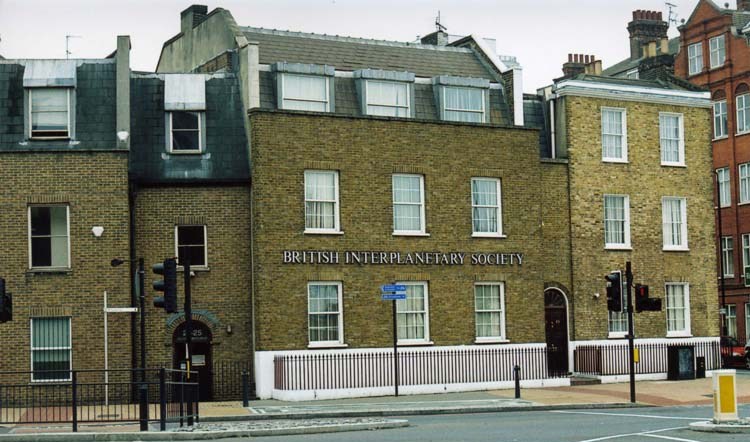
But London’s spirits are not so easily dampened by ash or snow (but they all groaned when their bid for FIFA World Cup 2018 lost to Russia’s). A highlight of my week’s stay was a visit to the British Interplanetary Society (BIS) headquarters on South Lambeth Road.

BIS, founded in 1933 by Phil E Cleator, is the oldest organisation in the world whose aim is exclusively to support and promote astronautics and space exploration. It was originally set up not only to promote and raise the public profile of astronautics, but also to undertake practical experiments in rocketry. But the pioneering British ‘space cadets’ soon discovered that Britain’s the Explosives Act of 1875 prevented any private testing of liquid-fuel rockets.

Undaunted, they continued with their thought experiments, discussions and public advocacy. Perhaps it was just as well that they didn’t get into the messy (and potentially hazardous) business of rocketry. For over 75 years, they have been preparing humanity’s engagement with the realm and challenges of space. Unlike its American and German counterparts, the BIS never became absorbed into the rocket or space industries that developed after the Space Age began in 1957.

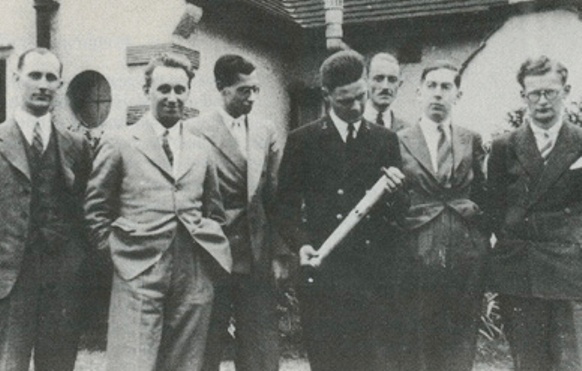
Arthur C. Clarke (far right) and other members of the British Interplanetary Society had a visit from rocket pioneer Robert Truax (holding the rocket model) in 1938

I have always admired the BIS for their pioneering role in popularising space travel, and having ha the audacity to dream of it and in public too. So I was delighted to be invited to the BIS annual Christmas get-together on the evening of December 1. This year, they celebrated the life and times of their founder member and two-time chairman, Arthur C Clarke.

Mark Stewart, the energetic librarian and archivist at BIS, heard I was visiting London and invited me to join their members-only event. Mark is currently looking after one of the finest collections on astronautics on this side of the Atlantic. Some records and documents at the BIS Library go back to the 1930s.

It was good to finally visit ‘ground zero’ of where it all began — nothing less than humanity’s long (and eventual) journey to the stars, hatched by a group of starry-eyed youth as an entirely private, citizen initiative. It took another 20 years — and considerable battering of London by Germany’s V2 rockets — for the British government to take it seriously.

I spent the afternoon chatting with Mark and Colin Philip, a BIS Fellow. Joining us later was Mark’s teenage son Alex, a next-gen space cadet already volunteering at the society. They gave me the guided tour — only a few months ago, I heard, a certain N. Armstrong had been similarly shown around. The society is certainly proud of its history and Sir Arthur’s photos, books, papers and posters are prominently displayed.

L to R – Colin Philip, Naaka Gunawardene, Mark Stewart, BIS Library 1 Dec 2010

The evening gathering was attended by 40 – 50 members, who were treated to an illustrated talk by Mat Irvine, British TV personality who has worked on many science and science fiction shows over the years, gave an illustrated talk about his friend Arthur. (Confession: I was so engrossed in his talk that I forgot to take any photos of him making it!)

I was familiar with much of the ground that Mat covered, but there were occasional revelations. For example, I didn’t know that circa 1995, Mat and (Sir Arthur’s brother) Fred Clarke had worked with the Isle of Man Post Office to issue some stamps bearing Sir Arthur’s visage and other iconic images associated with him, e.g. the monolith from 2001, comsats, etc. Alas, the plans didn’t work out, but Mat still has the designs and is hopeful that the British Post Office might consider it for the author’s birth centenary in 2017. Of course, some lobbying will be needed…but there’s plenty of time for that.

Like all non-profits these days, the BIS is struggling financially. It also faces the challenge of recruiting younger members – the average age of the Christmas gathering seemed to be 55 or 60. They have fascinating stories to tell (among them: the inside story how Apollo 13 was saved), but forward transmission requires more new blood.

The Council, I heard, is working on repositioning the society for the Facebook generation, and I wish them every success. ‘Imagination to reality’ is their motto, and they have seen a good deal of day-dreaming of the pioneering space cadets come true.

Nalala Gunawardene (L) with Mark Stewart at BIS Library

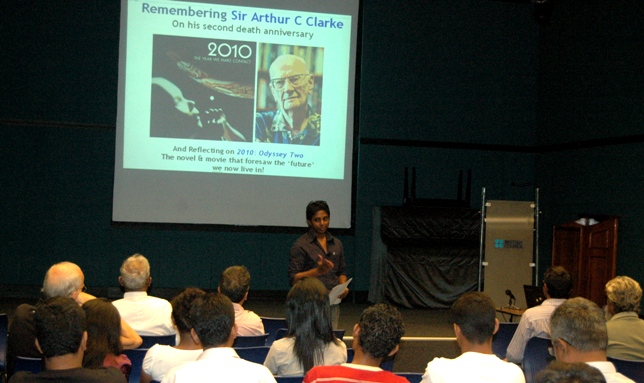
Remembering Sir Arthur Clarke on his second death anniversary

It’s exactly two years since Sir Arthur C Clarke abandoned his 91st orbit around the Sun and headed to the stars. That was on 19 March 2008.

A public meeting to commemorate Sir Arthur was held on 17 March 2010 afternoon at the British Council Colombo. The event was jointly organised by the Sri Lanka Astronomical Association (SLAA) and the Arthur C Clarke Estate in partnership with the British Council.

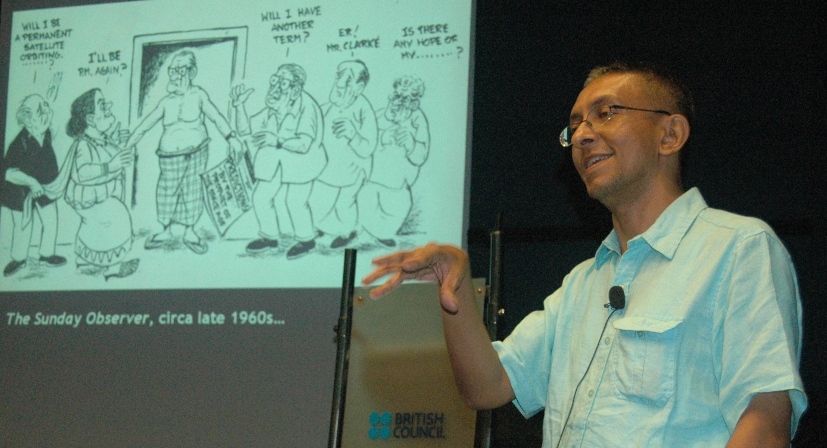
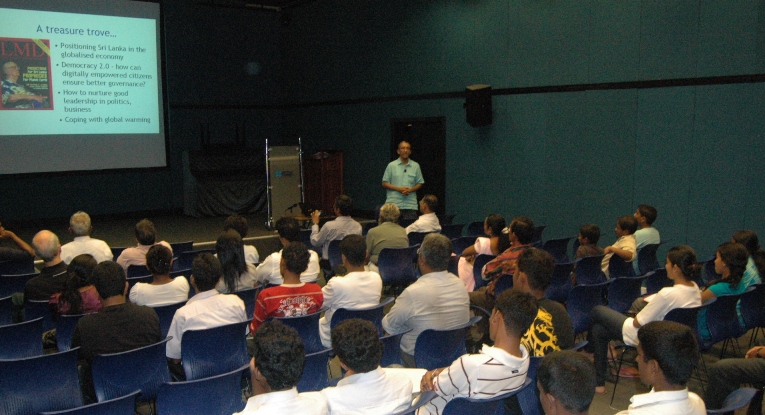
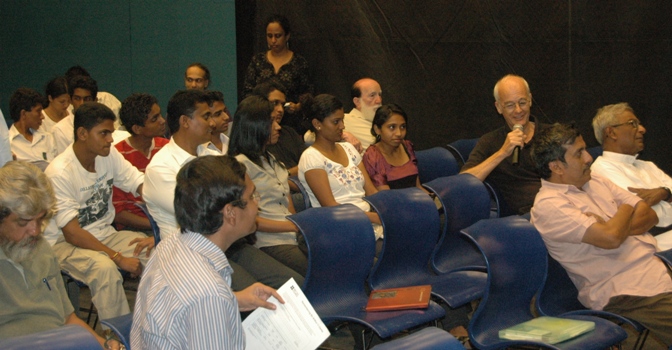
I gave an illustrated talk titled ‘Sir Arthur C Clarke: Man Who Lived in the Future’. We had an eager audience of 65 – 70 persons. Here are some photos from the occasion – a more detailed blog post will follow.

Nalaka Gunawardene giving Sir Arthur C Clarke memorial talk (photos above & below), 17 Marc 2010, British Councl Colombo

Thilina Heeatigala, General Secretary of SLAA, introducing the programme
Michael Snowden asking a question

The talk will be followed by the screening of feature film 2010: The Year We Make Contact (116 mins, 1984). Directed by Peter Hyams on a screenplay co-written by Peter Hyams and Arthur C Clarke, the film starred Roy Scheider, John Lithgow, Helen Mirren and Keir Dullea. This is the movie adaptation of the best selling science fiction novel 2010: Odyssey Two that Arthur C Clarke wrote in 1982.

All photos by Amal Samaraweera, TVE Asia Pacific

Solar Eclipse 15 Jan 2010: New media slowly eclipsing MSM in Sri Lanka?


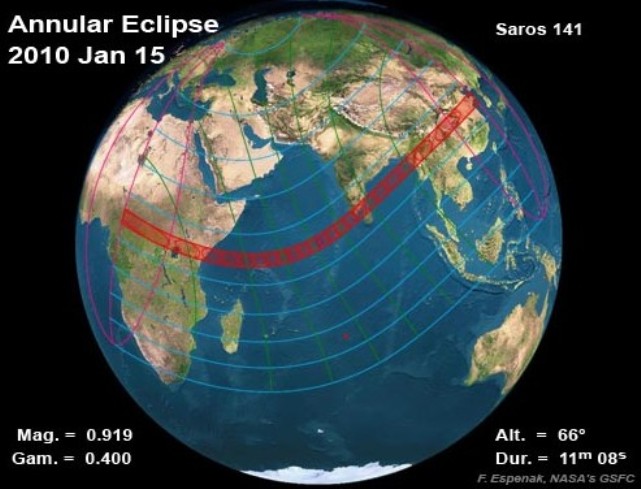
The Annular Solar Eclipse, best seen from northern Sri Lanka and southern India on 15 January 2010, was not only a rare celestial event; it also marked a turning point in how the mainstream media (MSM) and new media cover a wide-spread news event (albeit a highly predictable one).

Where the island of Sri Lanka was concerned, it was the first solar eclipse of the broadband internet era — and that showed.

The last solar eclipse seen in Sri Lanka was two generations ago, on 20 June 1955. That was almost pre-historic in mass media terms. The newly independent Ceylon had a single, state-owned radio station and a handful of newspapers. There was no television, and the internet was not even conceived.

Yet, paradoxically, the media’s influence over the 8 million people then living on the island seem to have been greater at the time. As astronomer Dr Kavan Ratnatunga recalled: “A quack physician cum astrologer, recommended that women wanting to become fair and lovely should drink a decoction of which the main ingredient was “Vada Kaha” (Sweet Flag or Acorus Calamus) at the time of the total eclipse, preferably unseen by others. Many who took his advice ended up in hospital.”

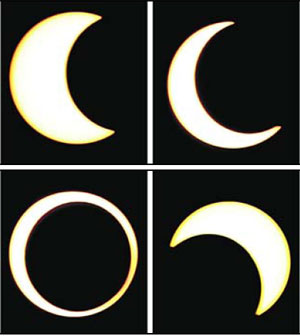
Solar eclipse on 15 Jan 2010 seen in Anuradhapura, north-central Sri Lanka - photos by Reuters
In contrast, in 21st Century Sri Lanka, the January 15 eclipse was not much of a news story. I don’t claim to have done a systematic analysis, but my impressions are drawn from scanning the major newspaper websites in English and Sinhala, and surfing the dozen or more terrestrial (free-to-air, not cable) TV channels that were on the air during the three hours or so of the eclipse. (Sorry: I missed out radio, and I’m not proficient in Tamil.)

Broadcast television was my biggest disappointment. Solar eclipses are a visual spectacular, and literally heaven-sent for live television. Yet, not a single Lankan TV channel carried a live broadcast of the event, either from northern Sri Lanka where it was best seen (in its annular form, with ‘ring of fire’ effect), or from elsewhere on the island as a partial eclipse.

It seemed as if the Colombo-based media were completely preoccupied with the intense build-up to the presidential election scheduled for 26 January 2010 — a case of politics eclipsing the solar eclipse?

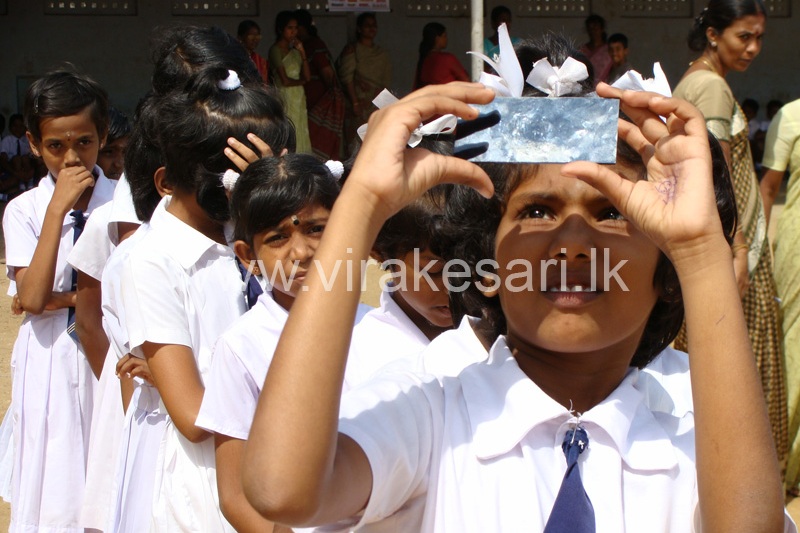
Jaffna school children view the solar eclipse - Photo courtesy Virakesari

But there were a couple of honourable exceptions – and thank heavens for that! One was the leading Tamil daily Virakesari, which sponsored an expedition to Jaffna, in northern Sri Lanka, by a group of professional and amateur astronomers from SkyLk.com. According to one member of this expedition, Thilina Heenatigala, this newspaper provided the widest and most uptodate coverage of the annular eclipse from Jaffna.

SkyLk.com collaborated with the Hindu College in Jaffna, whose playground was converted into an open air observation camp. Thilina says over 2,000 people – including school children and adults – had converged to witness the event. A large screen was set up on to which the live image from a telescope was projected.

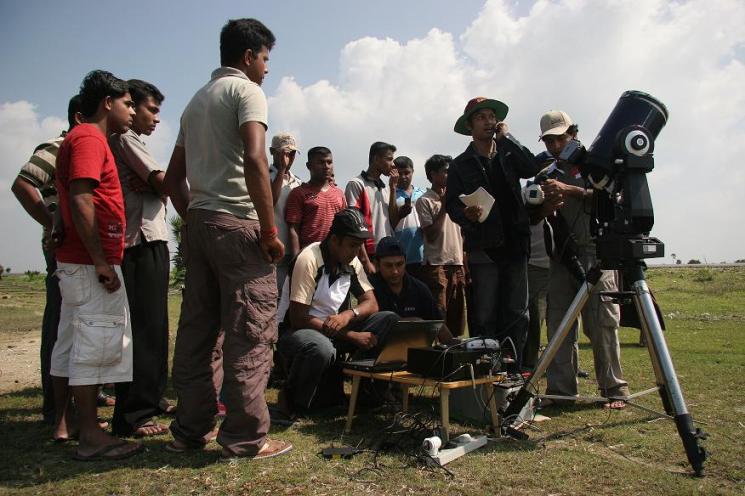
Not far from there, a group of engineering students and teachers from the University of Moratuwa was doing a more scientific observation. Later that day, team leader Dr Rohan Munasinghe reported in an email: “We have recorded the solar eclipse from Kayts (lat 9d,37m N, Long 79d,58 E), the biggest island off Jaffna Sri Lanka. We have timestamped the video with GPS (Garmin 18) accuracy.”

University of Moratuwa team observing the clipse - photo courtesy Dr Rohan Munasinghe

The Sinhala Sunday newspaper Rivira was part of this university expedition. Its science editor Tharaka Gamage, himself an astronomy enthusiast, reported from the eclipse’s ground zero for his readers.

Elsewhere across the island of Sri Lanka, there was plenty of interest among the people from all walks of life — as seen from the thousands who stepped out during mid-day to take a peek at the celestial phenomenon. Not all of them followed the safety precautions to prevent eye damage, disseminating which the media had done a good job in the preceding days.

Clearly, this high level of public interest was not reflected in how the rest of Lankan mainstream media covered the eclipse. But if the mainstream media’s gaze was firmly fixed on the gathering election storm on the ground, the new media created opportunities for others to step into that void. Citizen scientists joined hands with citizen journalists to capture and share the eclipse with each other — and the world. These unpaid enthusiasts used commonly available digital tools and online platforms for this purpose.

Some of them uploaded dozens of photos for public viewing on image sharing sites like Flickr. A good example is what Shehal Joseph and Romayne Anthony did. There were many others.

SkyLk.com group was more ambitious: they actually webcast the eclipse live online from their public observation camp at Hindu College grounds. Stuck in Colombo with its sub-optimal viewing conditions for this eclipse, this was the best chance for people like myself to catch the annular part of the phenomenon.

“We were struggling with bandwidth limitations most of the time,” Thilina Heenatigala says. “We used a Dialog HSPA modem to connect to the web, and line speeds kept fluctuating. We were not the only ones uploading still photos or video to the web from different locations in northern Sri Lanka — and apparently all of us were slowing down each other.”

Being the tech-savvy planner he is, Thilina had alerted Dialog telecom company about the likely peaking of bandwidth demand. But he is not sure if any temporary enhancing was done, even though Dialog currently claims to be the ‘first and best’ to offer telecom coverage in the north. Certainly, the live eclipse webcast was not of uniform quality — it’s a small miracle it happened at all: until a few months ago, this was part of the theatre of war in northern Sri Lanka.

In fact, SkyLk.com had used the web to build up public awareness and interest using video trailers on YouTube. Here is one of several simulations they had up from December, thus one for Anuradhapura, Sri Lanka (simulation):


In the end, however, SkyLk.com became a victim of its own success. The live webcast was followed by hundreds, and then thousands of online visitors from different parts of the world. This apparently overshot the usual allocations provided by the offshore hosting company (in the US), which suspended the account. Right now SkyLk.com website is not accessible (as at 16 January 2010, 15:00 UTC/GMT).

Within hours of the eclipse, several individuals and groups also uploaded highlights of their eclipse videos on to the YouTube. Here are the most striking ones I came across in a quick search:

Solar Eclipse 2010 Sri Lanka Scientific Record – by University of Moratuwa
Scientific recording of the annular solar eclipse on 15 January 2010 was carried out from the Island Kayts (Lat +09d 37m North and Long +79d 58m East) of Sri Lanka.

Orion Video’s coverage from Nallur, Jaffna:

Not in the same league as the above two videos, this was Nishan Perera’s personal observations from Ratnapura, south-western Sri Lanka:

It’s too early to draw firm conclusions from this random evidence, but in all likelihood, we passed thresholds in both citizen journalism and citizen science with this eclipse. Clearly, the mainstream media’s monopoly/domination over reporting of such an event has been shattered: their indifference will no longer stand in the way of information and images being disseminated.

Perhaps just as important, it is no longer possible for a couple of self-appointed ‘public astronomers’ to dominate the public information channels on an occasion like this, mostly for shameless self-promotion. As Dr Kavan Ratnatunga, President of the Sri Lanka Astronomical Association, noted in an article: “I am amazed as to how many who have never even seen a Solar Eclipse, will gladly talk about it to an equally ignorant journalist, resulting in some totally misleading and sometimes hilarious information being published in both the English and Sinhala media. In a nation which believes in pseudo astrology, I am sure it is just a matter of time before quacks start using it to predict influence on local events and politics. However, there is absolutely no influence on any person by any of these celestial events.”

At the end of the day, however, astronomy aficionados are emphatic that no amount of media coverage can really substitute the experience of being there and experiencing it ourselves. As Kavan says: “A solar Eclipse is event which must be experience and observed. No video can do justice to that experience. It can also become addictive. In the modern age when the Internet and TV can bring events to your home, one may wonder why some Eclipse chasers travel round the world to see an Eclipse of the Sun.”

The next solar eclipse visible from Sri Lanka will be on 26 December 2019. I wonder what kind of media and ICT landscape would cover that event…

Having a bad day? This cosmic perspective could help!

We all have a bad day every now and then. Each one has different ways of coping with it – some curse the government, others blame their karma, and still others just play sport or music to soothe the mind.

This past Season, two astronomically inclined friends showed me a new way of coping with the assorted problems of our imperfect world and unfair life.

First, Rex I de Silva – diver, naturalist and amateur astronomer who was a citizen scientist before the term was invented – sent me this clever piece of animation that originated in Australia. He wrote: “It’s so very well done that most folks don’t realize how much info is being shared! Just click on the link below….but with your computer’s speakers on. We are on quite a ride….It’s not over till it asks if you want to view again.”

Indeed, it’s the ultimate journey – take it at:
http://dingo.care2.com/cards/flash/5409/galaxy.swf (it was working as of today).

Then, Thilina Heenatigala – one of the most active astronomy and space enthusiasts in Sri Lanka – informed me that the original Galaxy Song was sung by Eric Idle from Monty Python’s Meaning of Life (1983), with graphics from NASA of flying through the universe.

So here it is, the film version from YouTube:

If the real images are not awe-inspiring enough, here’s an animated version of the same song that I discovered on my own while exploring that rapidly expanding online video galaxy – it features ‘Pinhead’ from RProduction13’s animated short series, “The Four”.

And here are the lyrics of
The Galaxy Song:

Whenever life gets you down, Mrs. Brown,
And things seem hard or tough,
And people are stupid, obnoxious or daft,
And you feel that you’ve had quite eno-o-o-o-o-ough…

Just remember that you’re standing on a planet that’s evolving
And revolving at nine hundred miles an hour,
That’s orbiting at nineteen miles a second, so it’s reckoned,
A sun that is the source of all our power.
The sun and you and me and all the stars that we can see
Are moving at a million miles a day
In an outer spiral arm, at forty thousand miles an hour,
Of the galaxy we call the “Milky Way”.

Our galaxy itself contains a hundred billion stars.
It’s a hundred thousand light years side to side.
It bulges in the middle, sixteen thousand light years thick,
But out by us, it’s just three thousand light years wide.
We’re thirty thousand light years from galactic central point.
We go ’round every two hundred million years,
And our galaxy is only one of millions of billions
In this amazing and expanding universe.

(Animated calliope interlude)

The universe itself keeps on expanding and expanding
In all of the directions it can whizz
As fast as it can go, at the speed of light, you know,
Twelve million miles a minute, and that’s the fastest speed there is.
So remember, when you’re feeling very small and insecure,
How amazingly unlikely is your birth,
And pray that there’s intelligent life somewhere up in space,
‘Cause there’s bugger all down here on Earth.

Composers: Eric Idle & John Du Prez
Author: Eric Idle
Singer: Eric Idle
From the ‘Meaning of Life’ album, MCA Records MCA 6121

I have no idea who Mrs Brown is, but it sure works for me too!

Asia’s Other Eclipse: The one that doesn’t make TV news!

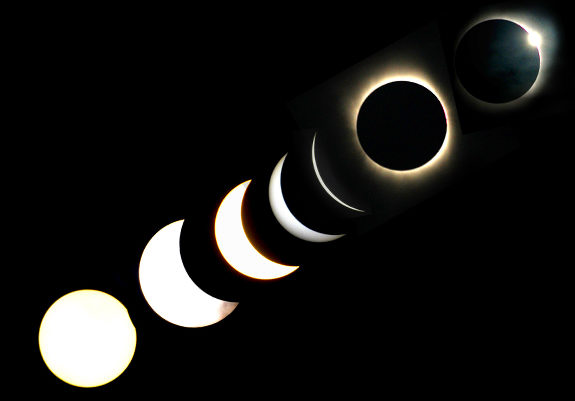
This multiple exposure image shows the various stages of the total solar eclipse in Baihata village, 30 kms from Guwahati, the capital city of the northeastern state of Assam on July 22, 2009. The longest solar eclipse of the 21st century cast a shadow over much of Asia, plunging hundreds of millions into darkness across the giant land masses of India and China. AFP PHOTO/ Biju BORO

This century’s longest solar eclipsed moved across Asia on 22 July 2009, wowing scientists and the public alike. Asia’s multifarious media covered the solar eclipse with great enthusiasm and from myriad locations across the vast continent.

The path of the eclipse’s totality –- where the sun was completely obscured by the Moon for a few astounding minutes –- started in northern India. It then crossed through Nepal, Bangladesh, Bhutan, Myanmar and China, before heading out to the Pacific Ocean. Those who were lucky enough to be at the right place at the right time saw one of Nature’s most spectacular phenomena. It was certainly a sight to behold, capture on film, and cherish for a lifetime.

But many along the path missed this chance as clouds obscured the Sun. It’s the rainy season in much of Asia, where the delayed monsoon is finally delivering much-needed rain.

Eclipse watching in Taregna, Bihar, India - Photo: Prashant Ravi, BBC Online
That’s what happened in Taregna, in the eastern Indian state of Bihar. The media had dubbed it the ‘epicentre’ of the solar eclipse, and estimated totality to be visible for at least three minutes and 38 seconds. Thousands who flocked to the village were disappointed when the clouds refused to budge. Nature doesn’t follow our scripts.

That didn’t deter some affluent Indians -– if the eclipse won’t come to them, they just went after it. They chartered an airplane to fly above the rain clouds to catch the once-in-a-lifetime eclipse. Each seat cost US Dollars 1,650.

It’s rarely that totality crosses through countries with such high human numbers as China and India. This time around, millions of people and thousands of journalists took advantage.

Some travelled long distances hoping to get the best view from the 200-km wide path of totality. Others watched it one of Asia’s many and cacophonous 24/7 TV news channels. The event had all the elements of a perfect television story: mass anticipation, eager experts and enthusiasts, occasional superstitions, uncertainties of weather and, finally, a stunning display of Nature’s raw power.

‘Darkness at Dawn!’ screamed a popular headline, referring to the eclipse causing a sudden ‘nightfall’ after the day had begun. Other superlatives like ‘Spectacle of the century’ and ‘A sight never to be missed’ were also widely used.

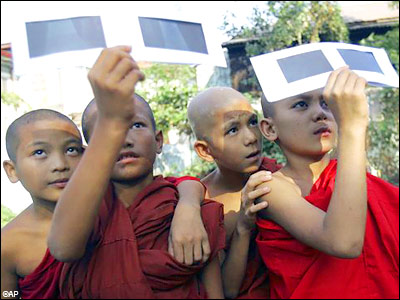
Myanmar Buddhist novices watch solar eclipse through the filters, in Yangon, Myanmar
Solar eclipses are indeed a marvel of Nature, and the media’s excitement was justified. For once, it was good to see them devoting a great deal of airtime and print/web space for something that was not violent, depressing or life-threatening.

How I wish Asia’s media took as much interest in another kind of ‘eclipse’ that surrounds and engulfs us! One that does not end in minutes, but lasts for years or decades, and condemns millions to lives of misery and squalor.

Stories of poverty, social disparity and economic marginalisation are increasingly ‘eclipsed’ in Asia by stories of the region’s growing economic and geopolitical might.

The mainstream media in Asia –- as well as many outlets in the West — never seem to tire of carrying reports of Asia rising. Indeed, that is a Big Story of our times: many Asian economies have been growing for years at impressive rates. Thanks to this, over 250 million Asians have moved out of poverty during this decade alone. According to the UN’s Asian arm ESCAP, this is the fastest poverty reduction progress in history.

We see evidence of increased prosperity and higher incomes in many parts of developing Asia. Gadgets and gizmos –- from MP3 to mobile phones — sell like hot cakes. More Asians are travelling for leisure than ever before, crowding our roads, trains and skies. Lifestyle industries never had it so good. Even the current recession hasn’t fully dampened this spending spree.

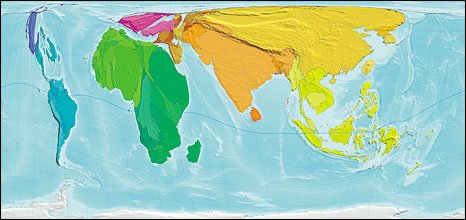
World map proportionate to number of poor people in each country/region - from Atlas of the Real World

But not everyone is invited to the party. Tens of millions of people are being left behind. Many others barely manage to keep up -– they must keep running fast just to stay in the same place.

National governments, anxious to impress their own voters and foreign investors, often gloss over these disparities. The poor don’t get more than a token nod in Davos. National statistical averages of our countries miss out on the deprivations of significant pockets of population.

For example, despite recent gains, over 640 million Asians were still living on less than one US Dollar a day in 2007 according to UN-ESCAP. Three quarters of the 1.9 billion people who lack safe sanitation are in Asia — that’s one huge waiting line for a toilet!

On the whole, the UN cautions that the Asia Pacific region is in danger of missing out the 2015 target date for most Millennium Development Goals – the time-bound and measurable targets for socio-economic advancement that national leaders committed to in 2000.

The plight of marginalised groups is ignored or under-reported by the cheer-leading media. For the most part, these stories remain forever eclipsed. Except, that is, when frustrations accumulate and blow up as social unrest, political violence or terrorism. Even then, the media’s coverage is largely confined to reporting the symptoms rather than the underlying social maladies.

Indonesian children look up through x-ray film sheets to watch a solar eclipse in the sky in Anyer Beach, Banten province, Indonesia
“Half the children in South Asia go to bed hungry every night, but the covers of our news magazines are about weight loss parlors,” says Kunda Dixit, Chief Editor of The Nepali Times.

As he noted in a recent essay: “Maternal mortality in parts of Nepal is nearly at sub-Saharan levels, but we are obsessed with politics. Hundreds of cotton farmers in India commit suicide every year because of indebtedness, but the media don’t want to cover it because depressing news puts off advertisers. Reading the region’s newspapers, you would be hard-pressed to find coverage of these slow emergencies.”

P N Vasanti, Director of the Delhi-based Centre for Media Studies which monitors the leading newspapers and news channels in India, laments how “development” issues such as health, agriculture and education are not even on the radar of popular news sources. Her conclusion is based on a content analysis of the six major Indian news channels during the run-up to the recent general election in India.

I have come across similar apathy in my travels across Asia trying to enhance television broadcasters’ coverage of development and poverty issues. As one Singaporean broadcast manager, running a news and entertainment channel in a developing country, told me: “I don’t ever want to show poor people on my channel.”

Don’t get me wrong. Trained as a science journalist, I can fully appreciate the awe and wonder of a solar eclipse. For years, I have cheered public-spirited scientists who join hands with the media to inform and educate the public on facts and fallacies surrounding these celestial events.

But there are more things in heaven and earth, than are dreamt of in our mainstream media’s breathless coverage of the march of capital. Journalists and their gate-keepers should look around harder for the many stories that stay eclipsed for too long.

* * * * * *

Shorter version of the above comment was published by Asia Media Forum on 23 July 2009

Full length version appeared on OneWorld.Net on 23 July 2009

Reprinted in The Nepali Times, 24 July 2009

Waiting for his long eclipse to end...