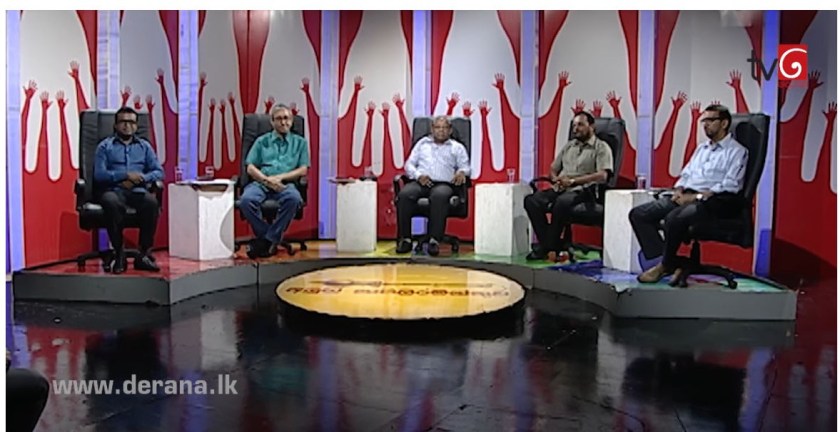
Aluth Parlimenthuwa live talk show on Social Media Blocking in Sri Lanka – TV Derana, 14 March 2018
Sri Lanka’s first ever social media blocking lasted from 7 to 15 March 2018. During that time, Facebook and Instagram were completely blocked while chat apps WhatsApp and Viber were restricted (no images, audio or video, but text allowed).
On 7 March 2018, the country’s telecom regulator, Telecommunications Regulatory Commission (TRCSL), ordered all telecom operators to impose this blocking across the country for three days, Reuters reported. This was “to prevent the spread of communal violence”, the news agency quoted an unnamed government official as saying. In the end, the blocking lasted 8 days.
Both actions are unprecedented. In the 23 years Sri Lanka has had commercial Internet services, it has never imposed complete network shutdowns (although during the last phase of the civil war between 2005 and 2009, the government periodically shut down telephone services in the Northern and Eastern Provinces). Nor has any social media or messaging platforms been blocked before.
I protested this course of action from the very outset. Restricting public communications networks is ill-advised at any time — and especially bad during an emergency when people are frantically seeking reliable situation updates and/or sharing information about the safety of loved ones.
Blocking selected websites or platforms is a self-defeating exercise in any case, since those who are more digitally savvy – many hate peddlers among them –can and will use proxy servers to get around. It is the average web user who will be deprived of news, views and updates.
While the blocking was on, I gave many media interviews to local and international media. I urged the government “to Police the streets, not the web!”.
At the same time, I acknowledged and explained how a few political and religious extremist groups have systematically ‘weaponised’ social media in Sri Lanka during recent years. These groups have been peddling racially charged hate speech online and offline. A law to deal with hate speech has been in the country’s law books for over a decade. The International Covenant on Civil and Political Rights (ICCPR) Act No 56 of 2007 prohibits the advocacy of ‘religious hatred that constitutes incitement to discrimination, hostility or violence’. This law, fully compliant with international human rights standards, has not been enforced.
On 14 March 2018, I took part in the ‘Aluth Parlimenthuwa’ TV talk show of TV Derana on this topic, where I articulated the above and related views. The other panelists were Deputy Minister Karu Paranawithana, presidential advisor Shiral Lakthilaka, Bar Association of Sri Lanka chairman U R de Silva, and media commentator Mohan Samaranayake.
Some are urging national governments to ‘regulate’ social media in ways similar to how newspapers, television and radio are regulated. This is easier said than done where globalized social media platforms like Facebook, Twitter and Instagram are concerned, because national governments don’t have jurisdiction over them.
But does this mean that globalized media companies are above the law? Short of blocking entire platforms from being accessed within their territories, what other options do governments have? Do ‘user community standards’ that some social media platforms have adopted offer a sufficient defence against hate speech, cyber bullying and other excesses?
In this conversation, Lankan science writer Nalaka Gunawardene discusses these and related issues with Toby Mendel, a human rights lawyer specialising in freedom of expression, the right to information and democracy rights.
Mendel is the executive director of the Center for Law and Democracy (CLD) in Canada. Prior to founding CLD in 2010, Mendel was for over 12 years Senior Director for Law at ARTICLE 19, a human rights NGO focusing on freedom of expression and the right to information.
The interview was recorded in Colombo, Sri Lanka, on 5 July 2017.
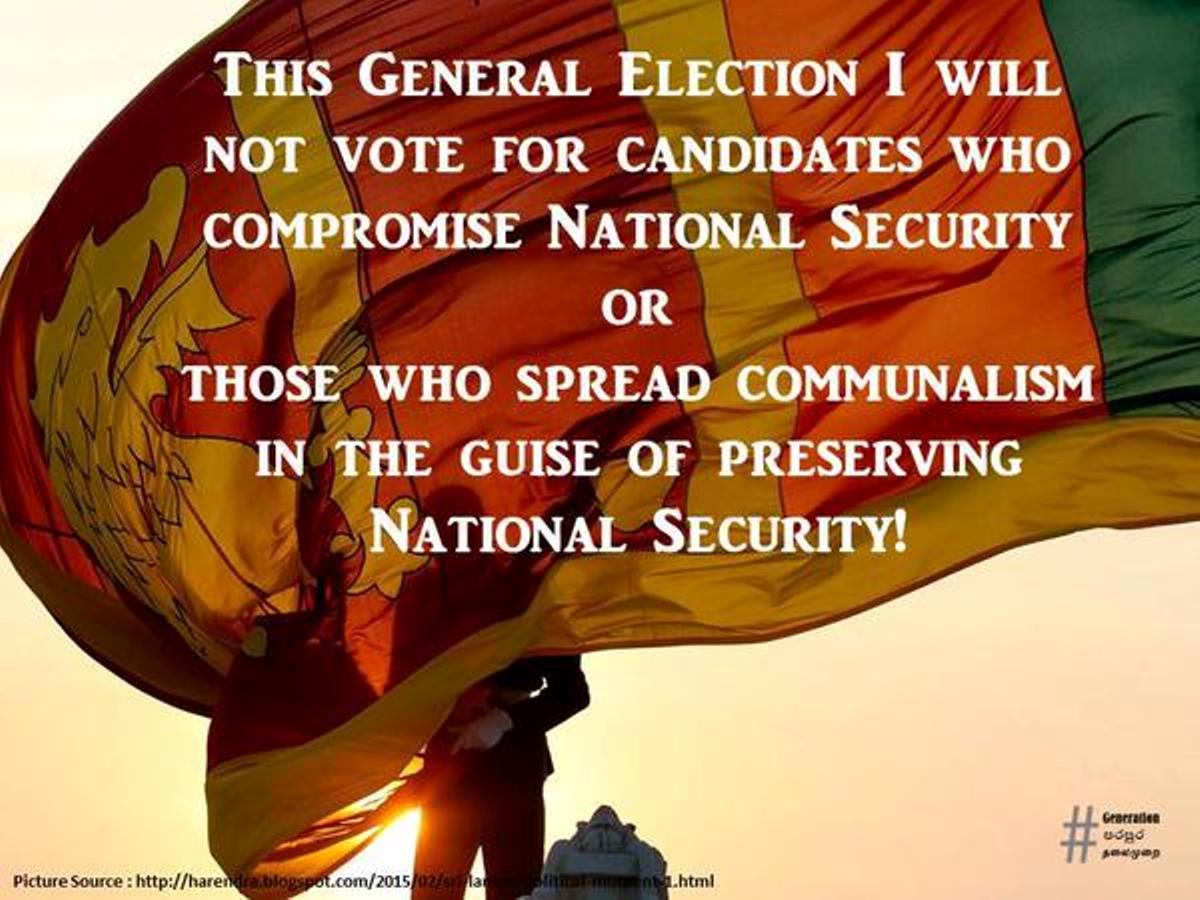
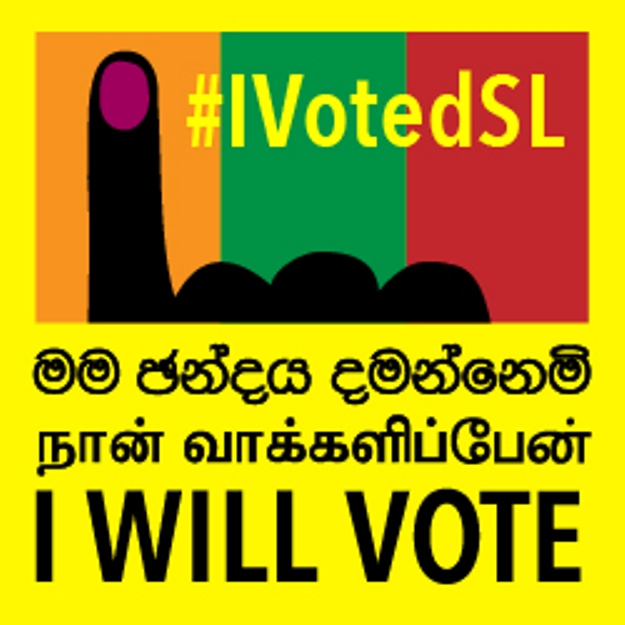
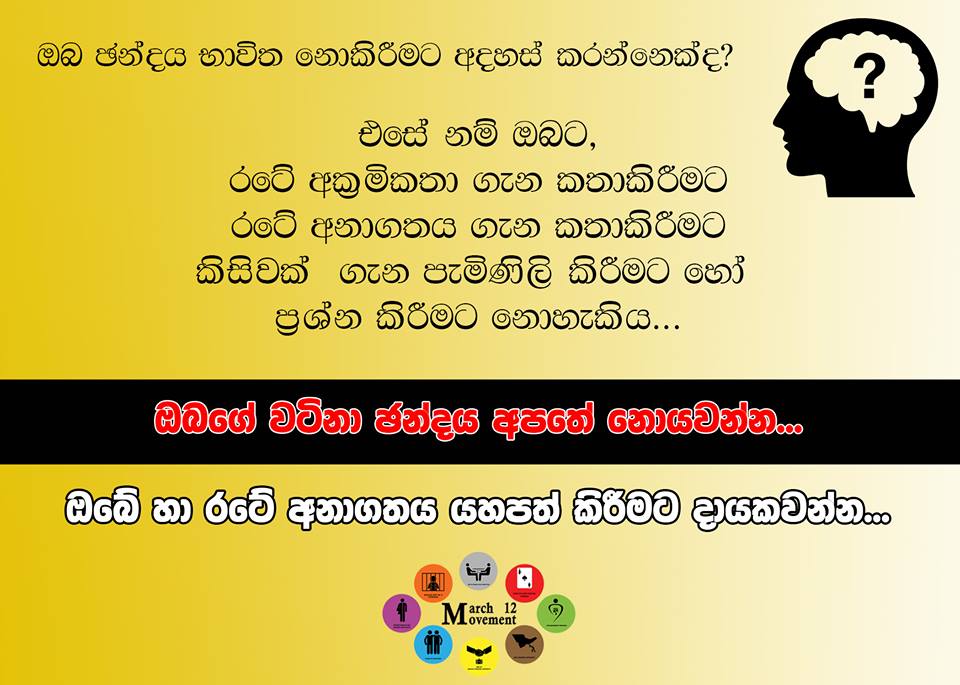
A Popular Election Meme created by Hashtag Generation, Sri Lanka
“Every citizen – including activists and academics — can play a part in shaping the future of our democracy. In this, technology is not the only key driver; what matters even more is the strategic use of our imagination and determination.
“We may not yet have all the detailed answers of our digital future, but one thing is clear. In 2015, we the people of Sri Lanka embarked on a progressive digitalization of our politics and governance.
“It is going to be a bumpy road – be forewarned — but there is no turning back.”
Since then, things have evolved further. In this essay, I look at how the Elections Commission, political parties, election candidates, civil society advocacy groups and individual cyber activists have used various social media tools and platforms in the run-up to, during and immediately after the Parliamentary Election.
“What role (if any) did social media play in the recently concluded General Election on 17 August 2015?
“Many are asking this question – and coming up with different answers. That is characteristic of the cyber realm: there is no single right answer when it comes to a multi-faceted and fast-evolving phenomenon like social media.
“Shortly after the Presidential Election of 8 January 2015 ended, I called it Sri Lanka’s first cyber election. That was based on my insights from over 20 years of watching and chronicling the gradual spread of information and communications technologies (ICTs) in Sri Lanka and the resulting rise of an information society.
“That was not the first time social media had figured in Lankan election campaigns. The trend started slowly some years ago, with a few tech-aware politicians and advertising agencies using websites, Facebook pages and twitter accounts for political outreach. However, such uses did not reach a ‘critical mass’ in the general and presidential elections held in 2010, or in the provincial and local government elections held thereafter.
“By late 2014, that changed significantly but this time the frontrunners were politically charged and digitally empowered citizens, not politicians or their support teams.”
The above is an extract from an op-ed I have just written and published in Daily Mirror broadsheet national newspaper in Sri Lanka (3 Sep 2015).
In this week’s Ravaya column, (in Sinhala, appearing in issue of 26 July 2015), I review how Lankan politicians and political parties are using social media in the run-up to the general election to be held on 17 August 2015.
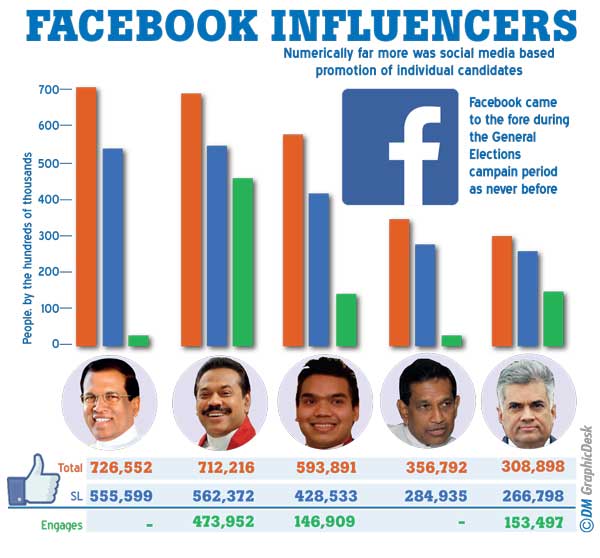
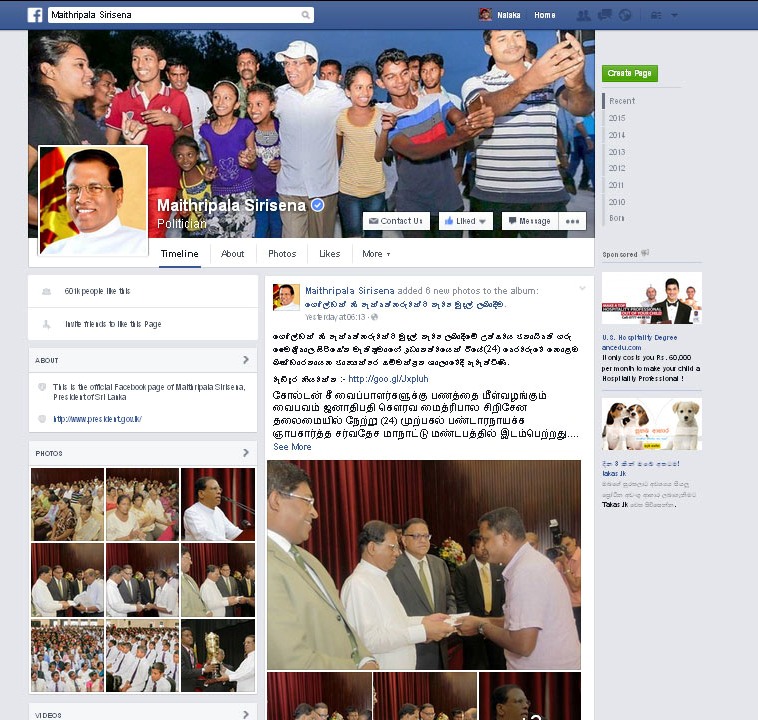
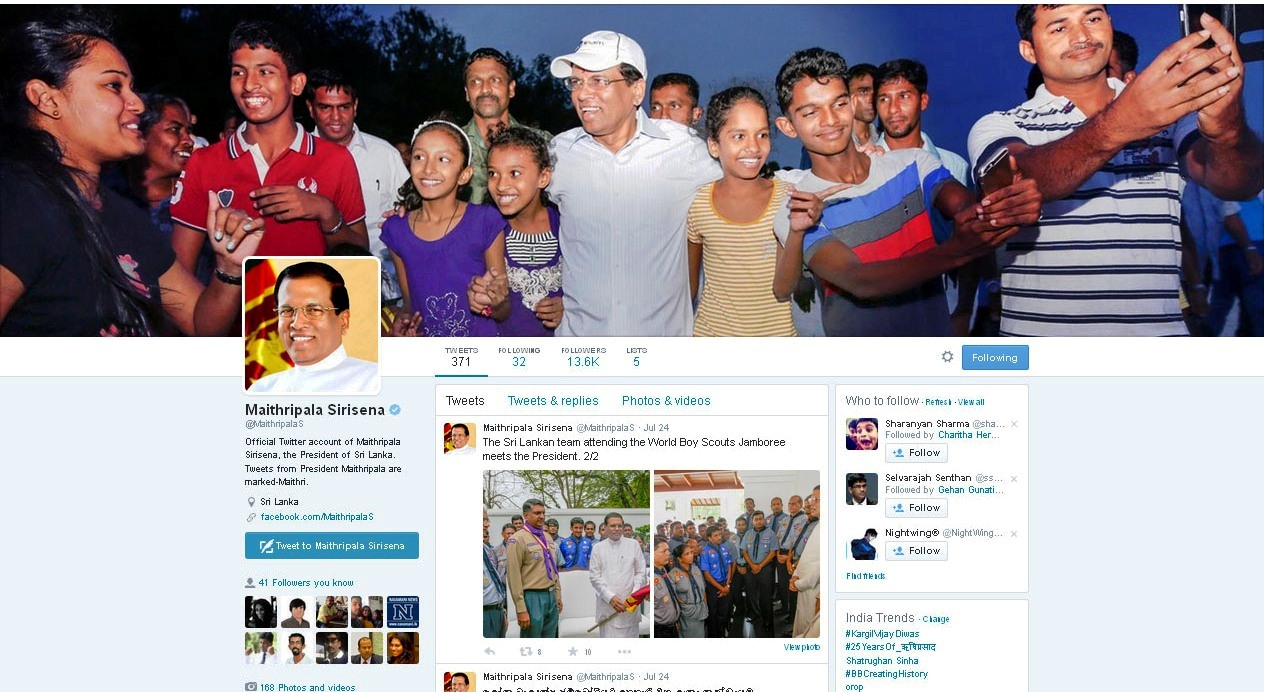
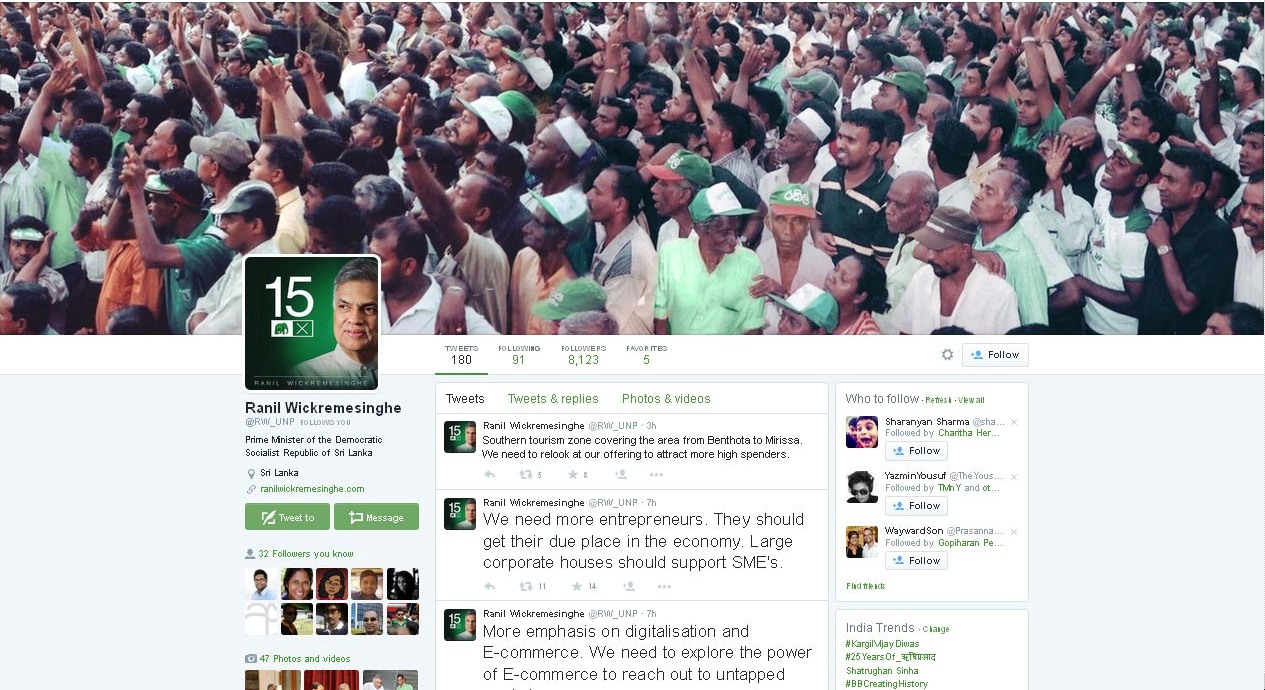
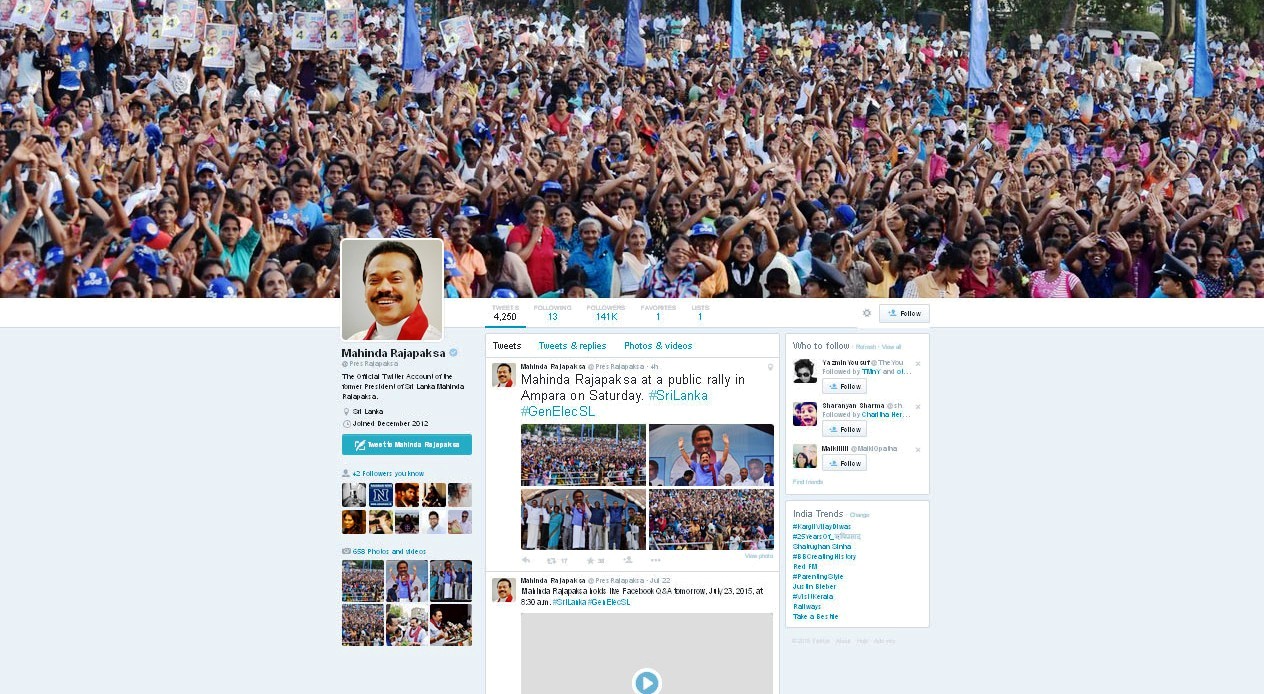
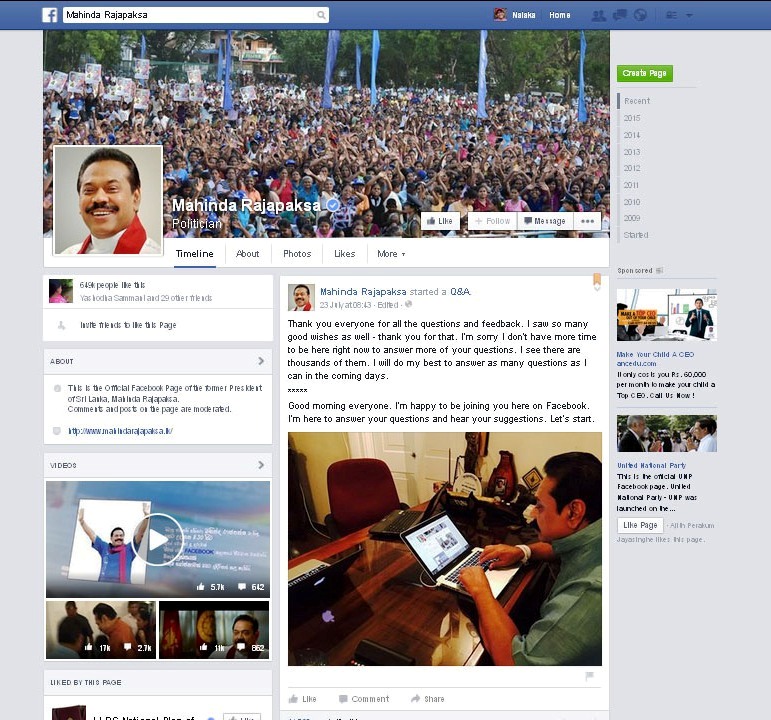
In particular, I look at how President Maithripala Sirisena and Prime Minister Ranil Wickremesinghe are using Facebook and Twitter (mostly to ‘broadcast’ their news and images, and hardly ever to engage citizens). I also remark on two other politicians who have shown initiative in social media use, i.e. former President Mahinda Rajapaksa and JHU leader Champika Ranawaka (both of who have held live Q&As on social media with varying degrees of engagement).
I raise questions like these: Can political parties afford to not engage 25% of Lankan population now regularly using the web? When would election campaigners – rooted in the legacy media’s practice of controlling and fine-tuning messages – come to terms with the unpredictable and sometimes unruly nature of social media?
While politicians, their campaigners and parties struggle to find their niches on social media, politically conscious citizens need to up their game too. Cyber literacy has been slower to spread than mere internet connectivity in Sri Lanka, and we need enlightened and innovative use of social media in the public interest. Every citizen, activist and advocacy group can play a part.
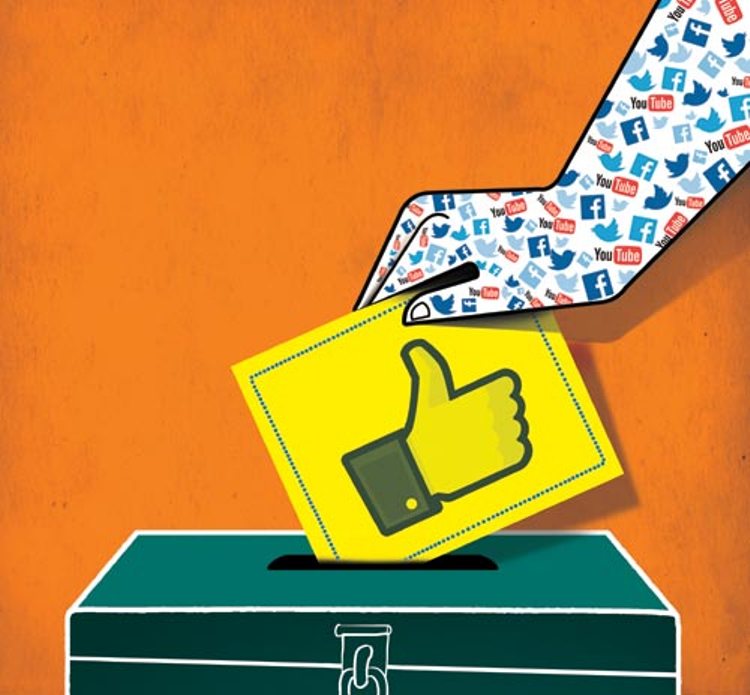
Can social media communications influence voting patterns?
 Open Minds!