Text of my ‘When Worlds Collide’ column published in Ceylon Today Sunday broadsheet newspaper on 24 November 2013
Twenty years ago, Italian police and Customs officials going after narcotics were considered ‘heroic’ while those investigating any environmental crimes were seen as ‘boy scouts’. After all, what could be so criminal about waste and pollution?
Plenty, as it turned out. In the early 1990s, Italy’s notorious organised crime syndicates – or the mafia – discovered that they could make lots of money fast by helping industries to get rid of their toxic waste.
So mafia groups decided to ‘go green’ – and ecomafias emerged.
The Italian environmental advocacy group Legambiente started investigating this in 1993, when a pile of toxic waste was discovered near a NATO military base in Italy. In fact, they coined the term ‘ecomafie’ (ecomafia), which soon entered popular vocabulary.
Legambiente has been researching on ecomafia practices…
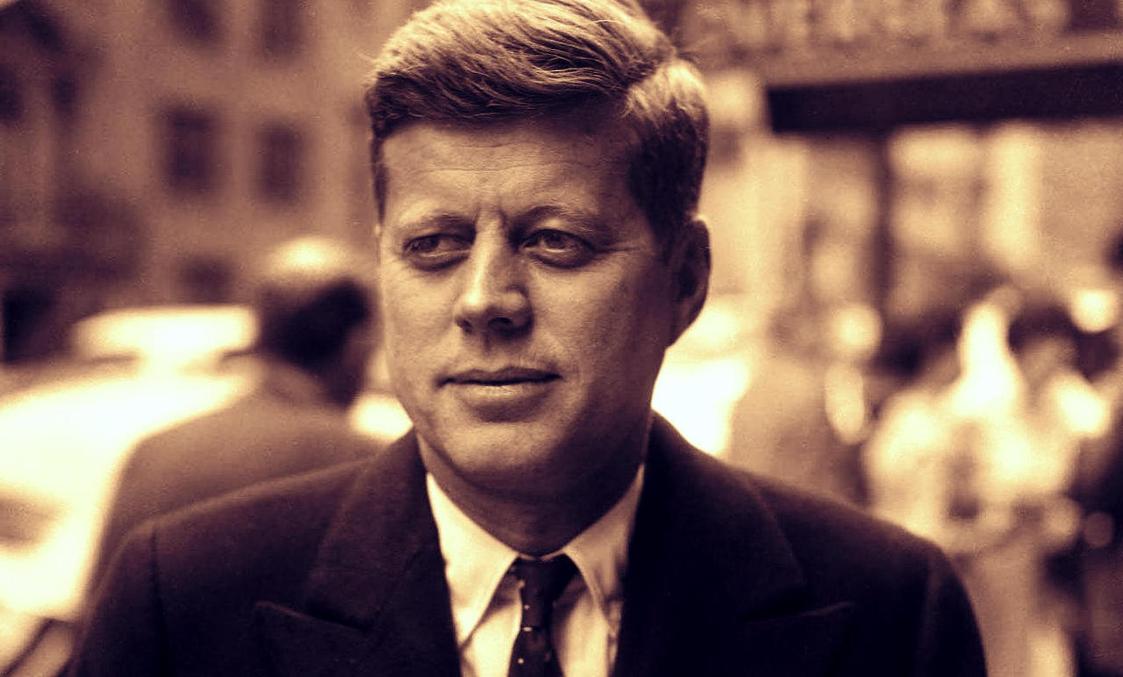
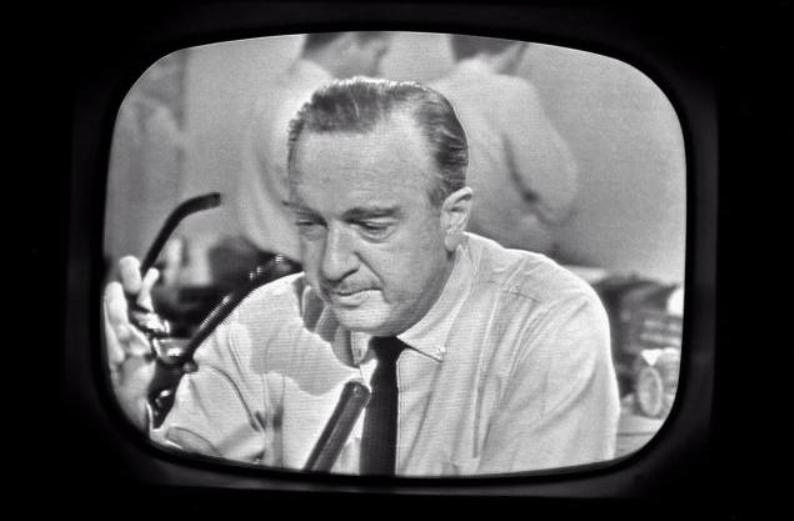
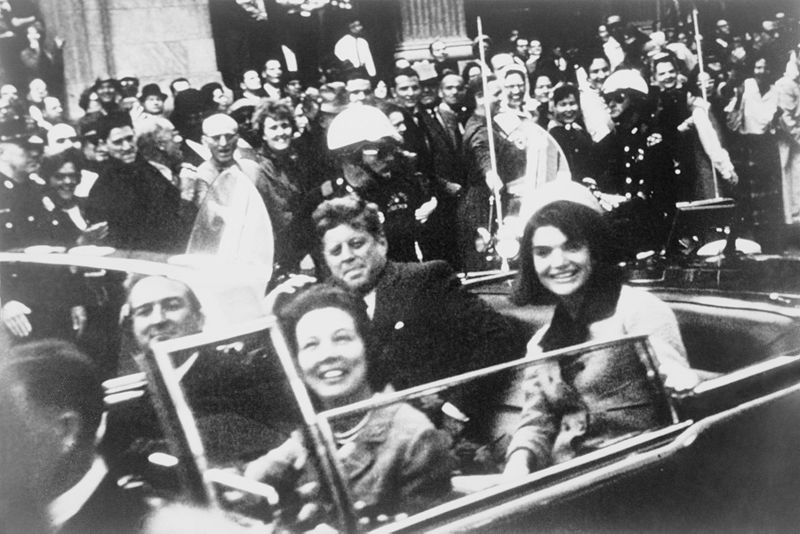
In this week’s Ravaya column (in Sinhala), I look back at the world’s first President of the Television Age – John F Kennedy. How did he ride the airwaves to the hearts and minds of American voters? What combination of wits, looks and charisma made him an ideal icon for the Television Age in its Golden Age? And what lessons JFK holds for all image-conscious politicians who want to appear on television?
John F. Kennedy motorcade, Dallas, Texas, Nov. 22, 1963. Partially restored version of original file with some artifacts removed – original photo by Victor Hugo King, via Wikipedia
In this week’s Ravaya column (in Sinhala), I discuss Lankan society’s resistance to innovators and inventors — those who try out new ways of solving problems. Must these attempts always lead to patents and awards? Not necessarily, I argue. The spirit of innovation is far more important than pieces of paper that authenticate them!
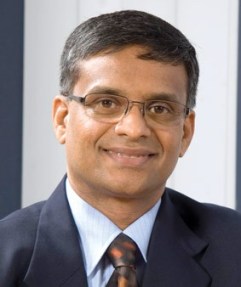
I quote Dr Suranga Nanayakkara, of Singapore University of Technology and Design, and Deepal Sooriyaarachchi, Commissioner, Sri Lanka Inventors’ Commission, and draw on my own impressions of having hosted two TV series introducing Lankan innovators and inventors.
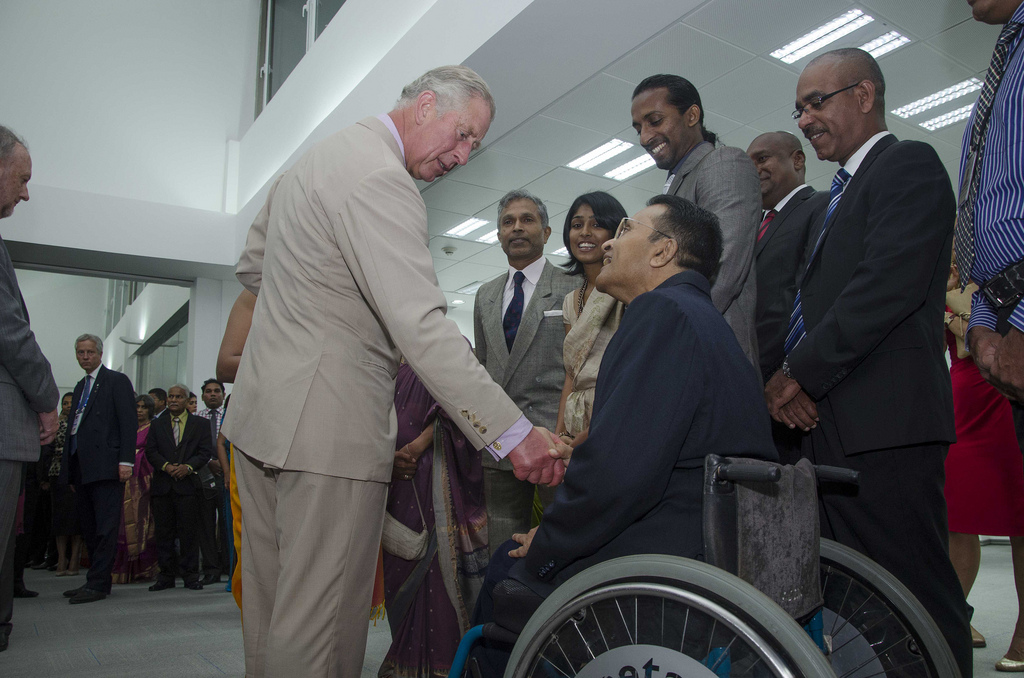
Prince Charles talks with Dr Ajith C S Perera, activist for mobility access, at the opening of British Council new building in Colombo, 16 Nov 2013 – Photo courtesy British Council Sri Lanka
Charlie is a charmer: he can be engaging, a good listener and smiles a lot.
At least these are my impressions of having watched Prince Charles at close range at a reception hosted by the Colombo British Council this evening – coupled with the opening of their new building.
The future king was ushered in without much fanfare (even his security was light touch and courteous). He spent around 40 minutes talking his way through the crowded room.
He chatted with many of the 250 or so guests — friends and partners of the British Council. It included a number of students and youth activists, as well as teachers, writers and scholars.
The Prince listened to short speeches by the British Council Sri Lanka Director and their global CEO. He then made the shortest speech of the evening: less than a minute, in which he made us laugh.
He basically thanked everyone, and expressed relief that the building he’d inaugurated on his last visit (1998) hadn’t been demolished.
Shortly afterwards, he left as quietly as he arrived. The party continued.
It was a brief encounter, but devoid of hype and pomposity that have characterised the Commonwealth Heads of Government Meeting (CHOGM) taking place in Colombo this week — the main reason why Prince Charles was in town.
I was quite tempted to take a quick photo with my mobile phone (cameras were not allowed). But our hosts had earnestly requested that we don’t take any photos. For once, I played by the rules.
In a more officious setting, I would quite likely have defied the restriction (after all, no one was watching our good conduct, as usually happens at Lanka government functions these days).
Yet the British Council has a special place in our hearts and minds. It’s a friendly oasis for artistes, learners, performers and activists. While they pursue their mission of promoting British cultural interests abroad, British Councils truly engage the community. Violating their request for taking a murky crowd photo would have been too unkind…
Part of that brand loyalty for British Council is explained in this short essay by Eranda Ginige of British Council Sri Lanka. In it, he reflects on their library in Colombo, which remains a community hub even as most readers trade paperbacks for portable devices.
Charlie produced unexpected gains, too. When I finally reached home, I had a rousing welcome from the two adorable females – a teenager and Labrador – who raise me:
Dear Charlie, You’ve boosted my approval rating among household teenagers but Digital Native puzzled I didn’t snap u! http://t.co/h0hPmBM8Ec
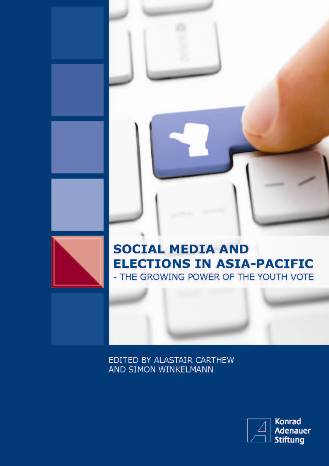
Did youth vote and social media make a difference in Colombo Municipal Council election in Sri Lanka held in October 2011?
This was the question that Chanuka Wattegama and I asked ourselves and set out to answer when invited to contribute a chapter to a regional book on how social media are influencing elections in Asia.
The book comprises 10 chapters covering 11 nations written by local contributors from Australia, Indonesia, Japan, Malaysia, New Zealand, Singapore, South Korea, Sri Lanka, the Philippines, Taiwan and Thailand.
It examines trends and outcomes surrounding recent elections in these countries — and how social media influenced election campaigning and voting, especially among young voters.
Topics include:
• Use of social media surrounding elections
• Digital electioneering
• How social media can make a difference
• How important is voting to young people?
• Detailed polling of political trends
Our summary for the Sri Lanka chapter:
The Colombo Municipal Council (CMC) is the local government body that administers Sri Lanka’s largest city and its commercial capital. Its last election, held in October 2011, saw the nationally ruling coalition losing this key municipality while winning all other municipalities as well as many of the smaller local government bodies.
What made CMC election outcome different? This election saw some apolitical activists and researchers engaging the mayoral candidates on social media, questioning and critiquing their election manifestos and trying to hold them accountable. Did these online activities influence voter behaviour? What lesson does this hold for other elections and the overall political landscape in Sri Lanka?
Text of my ‘When Worlds Collide’ column published in Ceylon Today Sunday broadsheet newspaper on 12 November 2013
Robert S McNamara, who was US Secretary of Defence under Presidents Kennedy and Johnson, then served as President of the World Bank from 1968 to 1981. Despite his contentious legacy in the US government, he is credited to have shifted the Bank’s focus to population and poverty issues.
McNamara, whom I once interviewed when in retirement, had a razor sharp mind and a wit to match. The story goes how, in the early days of his Bank appointment, he was visited by three highly accomplished Ceylonese officials — all of who happened to be well built men.
“Do you gentlemen represent the starving millions of Ceylon?” McNamara reportedly asked them with a sarcastic smile.
“No Sir,” one of them replied. “We represent their aspirations!”
India’s Down to Earth magazine was presented with the first Greenaccord International Media Award at an international conference held in Naples, Italy, last week.
The award, newly established by the Rome-based non-profit group Greenaccord, recognises outstanding media contributions to covering issues of environment and sustainable development.
Tommaso Sodano, deputy mayor of the City of Naples, presented the award at the conclusion of the 10th Greenaccord International Media Forum held from 6 to 9 November 2013.
Darryl D’Monte (centre) receives Greenaccord International Media Award on behalf of Down to Earth magazine, India – Naples, 9 Nov 2013 – Photo courtesy Greenaccord Press Office
“We asked all our Asian colleagues for nominations for this inaugural award, and many of them recommended Down to Earth magazine that has covered sustainability issues from a developing country perspective for 21 years,” said Alfonso Cauteruccio, President of Greenaccord.
Down to Earth is a fortnightly magazine focusing on issues of science and environment. It is published by the Centre for Science and Environment (CSE), a leading research and advocacy group in India. Founded by leading journalist and activist Anil Agarwal in May 1992, it provides reportage, analysis and commentary on a broad range of issues related to environment and development.
From the beginning, the magazine has challenged its readers to think about sustainable development. It inspires and encourages its readers to become more environment-friendly.
Darryl D’Monte, senior Indian journalist and a former editor of the Times of India, accepted the award on behalf of Down to Earth editors and publishers.
“Anil Agarwal was a trail-blazing journalist who combined knowledge and advocacy. Down to Earth, launched just before the Earth Summit in Rio in mid 1992, reflects that vision,” D’Monte said in his acceptance speech.
D’Monte recalled how Agarwal and CSE played a key role in the early days of global climate negotiations, especially in focusing global attention on per capita emissions of global warming greenhouse gases.
“Climate change is as much politics as it is science, and Anil was well aware of that. He approached all debates well armed with statistics, analysis and a southern perspective, which is also the Down to Earth magazine’s approach to issues,” he added.
Darryl D’Monte talks about Down to Earth magazine at Greenaccord Forum in Naples – Photo courtesy Greenaccord Press Office
Down to Earth presents accessible content intended for interested non-specialists including policy makers. Articles are often investigative, in-depth, all presented in well edited and designed form. In recent years, it has developed an extensive website at www.downtoearth.org.in.
The magazine has been an important vehicle for many CSE campaigns in the public interest, including its exposes on pesticide residues in popular soft drinks and bottled water brands, and agitation for cleaner air in Delhi and other metropolitan areas in India.
CSE’s right to clean air campaign resulted in New Delhi becoming the world’s first city to introduce compressed natural gas (CNG) for all public transport vehicles, D’Monte said.
Greenaccord is a non-profit association, headquartered in Rome, and founded to be of service to the world of information and training that deals with environmental issues. The association is made up of journalists and professionals who volunteer their time to provide training to their colleagues.
Since 2003, Greenaccord organises an annual gathering of journalists and scientists concerned about sustainability – which has become one of the largest such gatherings taking place on a regular basis.
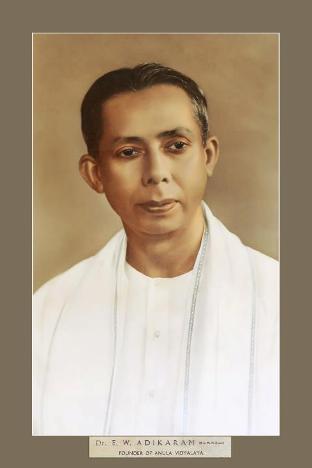
In this week’s Ravaya column (in Sinhala), I pay tribute to scholar and free thinker Dr E W Adikaram (1905-1985), a Lankan pioneer in public communication of science in Sinhala.
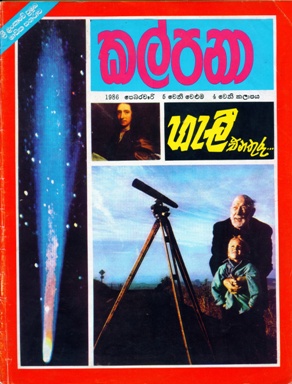
I also recall with gratitude how, a few months before his death at age 80, he advised and guided me through a challenging science writing assignment on the history and science of comets.
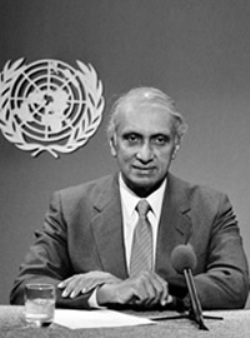
Gamani Corea, Secretary General of UNCTAD (1974-1984)
“I have a rather large nose that dominates my photos,” said Gamani Corea as I asked him to pose for a photo in his spacious garden at Horton Place, in the heart of residential Colombo.
“Then how come your nose isn’t as famous as JR’s?” I asked as I snapped a few photos. That reference was to our first Executive President J R Jayewardene, whose prominent nose was the delight of cartoonists for decades.
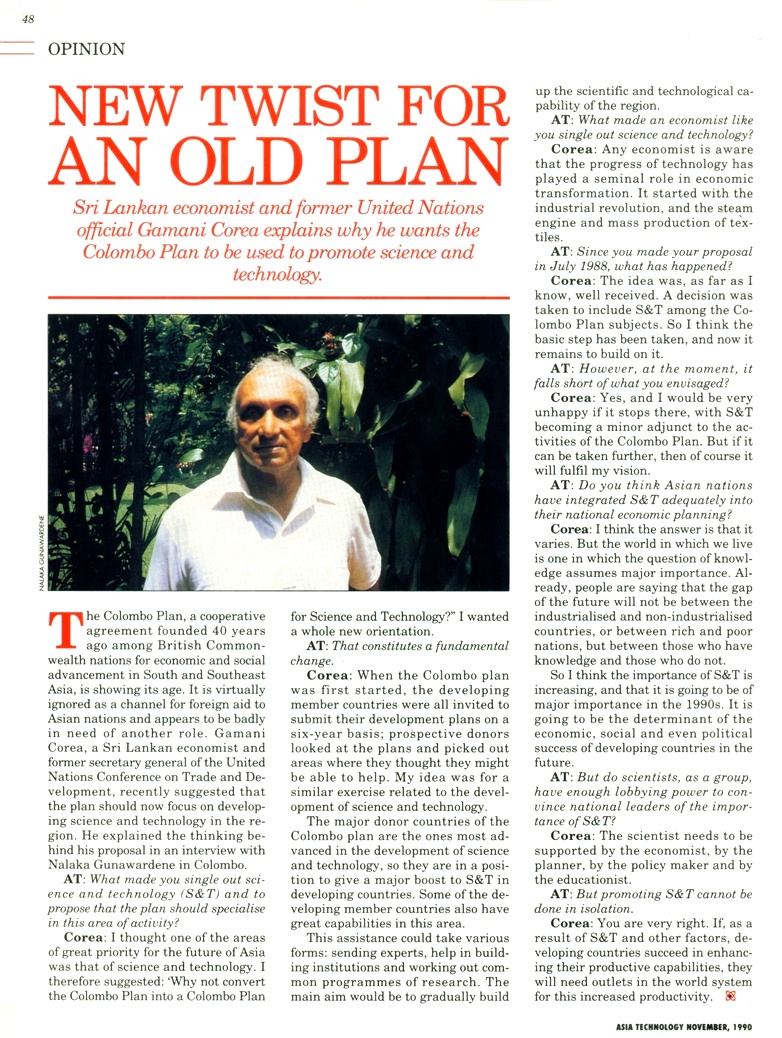
Economist, diplomat and international civil servant Dr Gamani Corea (1925-2013), one of the most accomplished Sri Lankans of the 20th century, had just given me an interview.
It was sometime in late 1990. Dr Corea was dividing his time between Colombo and Geneva. I was a young science reporter working for Asia Technology magazine published from Hong Kong
A few weeks earlier, I’d suggested to my editors a story about Dr Corea’s proposal to revamp the Colombo Plan — an inter-governmental organisation to strengthen economic and social development of countries in the Asia Pacific region — with a new focus on science and technology.
He didn’t know me before, but turned out to be both approachable and amiable. He matched my eagerness with energetic and optimistic answers. We chatted for the better part of an hour.
Dr. Corea, who served as Secretary-General of UNCTAD from 1974 to 1984, died on 3 November 2013 aged 87. As UNCTAD website noted, he was known for his vision of a rebalanced international economic order that would provide fairer treatment to developing countries.
I wrote up that interview for Asia Technology November 1990 issue. Here’s a scan, illustrated by my photo with his not-so-famous nose:
Dr Gamani Corea interviewed by Nalaka Gunawardene – Asia Technology, Nov 1990
Text of my ‘When Worlds Collide’ column published in Ceylon Today Sunday broadsheet newspaper on 3 November 2013
My favourite example of how not to support innovation comes from (James Bond creator) Ian Fleming’s children’s story Chitty Chitty Bang Bang. Written in 1964 and turned into a popular movie in 1968, the story revolves around a struggling inventor who builds a magical car that can ride, fly and float.
Soon, Baron Bomburst, tyrant ruler of the kingdom of Vulgaria, hears about it. He promptly rounds up top scientists and engineers of his land and imprisons them in a dungeon equipped as a lab. To earn their freedom, they must produce a similar gravity-defying vehicle.
Years pass, with the captive scientists trotting out all sorts of contraptions while getting rather long in the tooth. But still no breakthrough…
In their case, the goal was unattainable. But even when chasing feats…










 Open Minds!