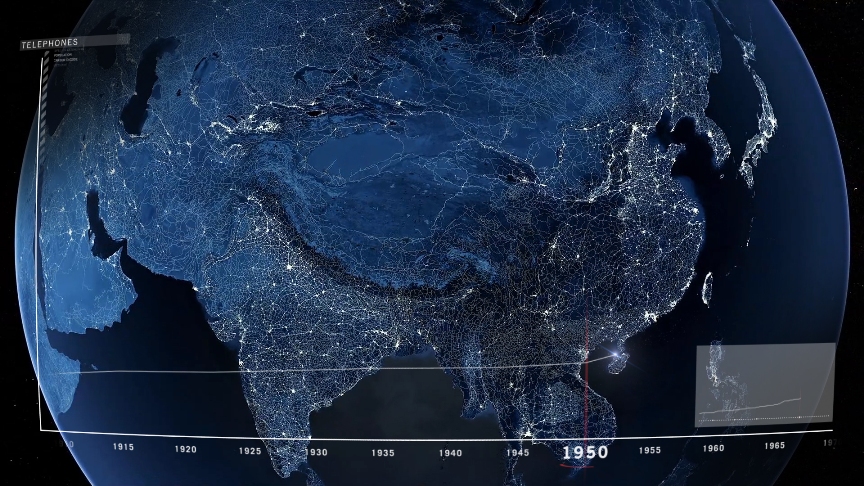
A scene from The Anthropocene film
In March, I wrote about the high impactful short film called Welcome to the Anthropocene that launched the Planet Under Pressure conference, London 26-29 March 2012.
It is a three-minute blast through the last few centuries of Earth’s history, starting in 1750 and finishing at the Rio+20 Summit. It graphically depicts how one species has transformed Earth and shows why many scientists now say we have entered a new geological epoch, the Anthropocene.
Produced by the International Geosphere-Biosphere Programme (IGBP) and partners, it opened the United Nations Rio+20 summit today in Rio de Janeiro.
This information is found in a media notice released by IGBP today:
The data visualization, which is already an online viral hit with over 700,000 views, demonstrates that while we have had a dramatic impact on Earth for many thousands of years, it has only been since the 1950s we have grown into a colossal global force.
“The Anthropocene changes our relationship with the planet. We have a new responsibility and we need to determine how to meet that responsibility,” says co-director of the film, Owen Gaffney, director of communications at the International Geosphere-Biosphere Programme (IGBP), based in Stockholm.
“The Rio+20 summit is the largest UN event ever held and the first major international gathering on global sustainability since the concept of the Anthropocene was first popularised,” added Mr Gaffney.
The film opens at the beginning of the Industrial Revolution. As the camera swoops over Earth, viewers watch the planetary impact of humanity: cities, roads, railways, pipelines, cables and shipping lanes until finally the world’s planes spin a fine web around the planet. The film is produced as part of the world’s first educational portal on the Anthropocene.
The film was co-directed by Canadian data visualization expert and anthropologist Felix Pharand-Deschenes from the education organization GLOBAIA.
Pharand-Deschenes said: “Data visualization is a powerful tool to help us view the world and our place in it and to help foster the global awareness needed to support global sustainability and governance. Science can make use of these tools to help bring research to more people.”
The film was commissioned for a major international science conference, Planet Under Pressure, held in March 2012. The conference was designed to provide scientific leadership in support of the Rio+20 summit.
Conference co-chair Dr Mark Stafford Smith from CSIRO in Australia, said: “The film picks up the main theme of the Planet Under Pressure conference: the risks we face are global, urgent and interconnected. Our search for solutions must take this into account.”
The film was produced by the International Geosphere-Biosphere Programme and Globaia. It is part of the website, Anthropocene.info which is co-sponsored by IGBP; Globaia, CSIRO, Stockholm Resilience Centre, Stockholm Environment Institute, International Human Dimensions Programme.
This week’s Ravaya column (in Sinhala) is a preview of a key challenge being taken up at the UN Conference on Sustainable Development being held in Rio de Janeiro, Brazil, this month. I raise the question: how can Sri Lanka transform its economy into a green economy in pursuit of sustainable development?
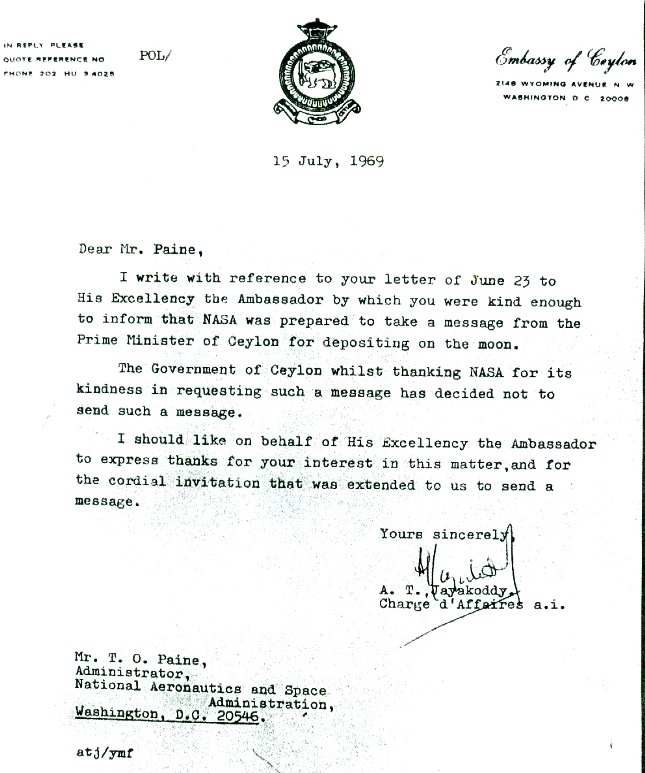
This is the Sinhala text of my Ravaya newspaper column published on 11 March 2012. Today I write about How Sri Lanka Missed the Moon. I wrote an English article in July 2009 covering the same ground, but this is NOT a translation. I don’t do translations.
As I have often said on this blog, Television used to be the favourite whipping boy of those who love to criticise communication technologies and consumer gadgets — until the Internet and mobile phones came along.
When it finally arrived in Asia in 1991, direct TV broadcasting by satellite scared the daylights out of many Asian governments and self-appointed guardians of culture and public morals. How can the unexposed (i.e. ‘unspoilt’) hundreds of millions of Asians cope with massive volumes of information and entertainment beaming down from the skies, they asked. Their real concern was the loss of control over what the public watched, which governments and ruling elites had tightly controlled for decades since radio and TV emerged as mass media.
So, for much of that decade, we witnessed howls of protests from them — but their worst fears never materialised. Satellite TV found its niche alongside terrestrial transmissions, and Asian broadcasters soon mastered the medium. Today, global broadcasters like CNN, BBC and Al Jazeera compete with hundreds of Asian satellite TV channels and the audiences have a far greater choice.
As I wrote in September 2008: “In 1990, most Asian viewers had access to an average of 2.4 TV channels, all of them state owned. This has changed dramatically — first with the advent of satellite television over Asia in 1991, and then through the gradual (albeit partial) broadcast liberalisation during the 1990s. Asian audiences, at last freed from the unimaginative, propaganda-laden state channels, exercised their new-found choice and quickly migrated to privately owned, commercially operated channels.”
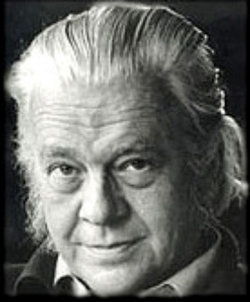
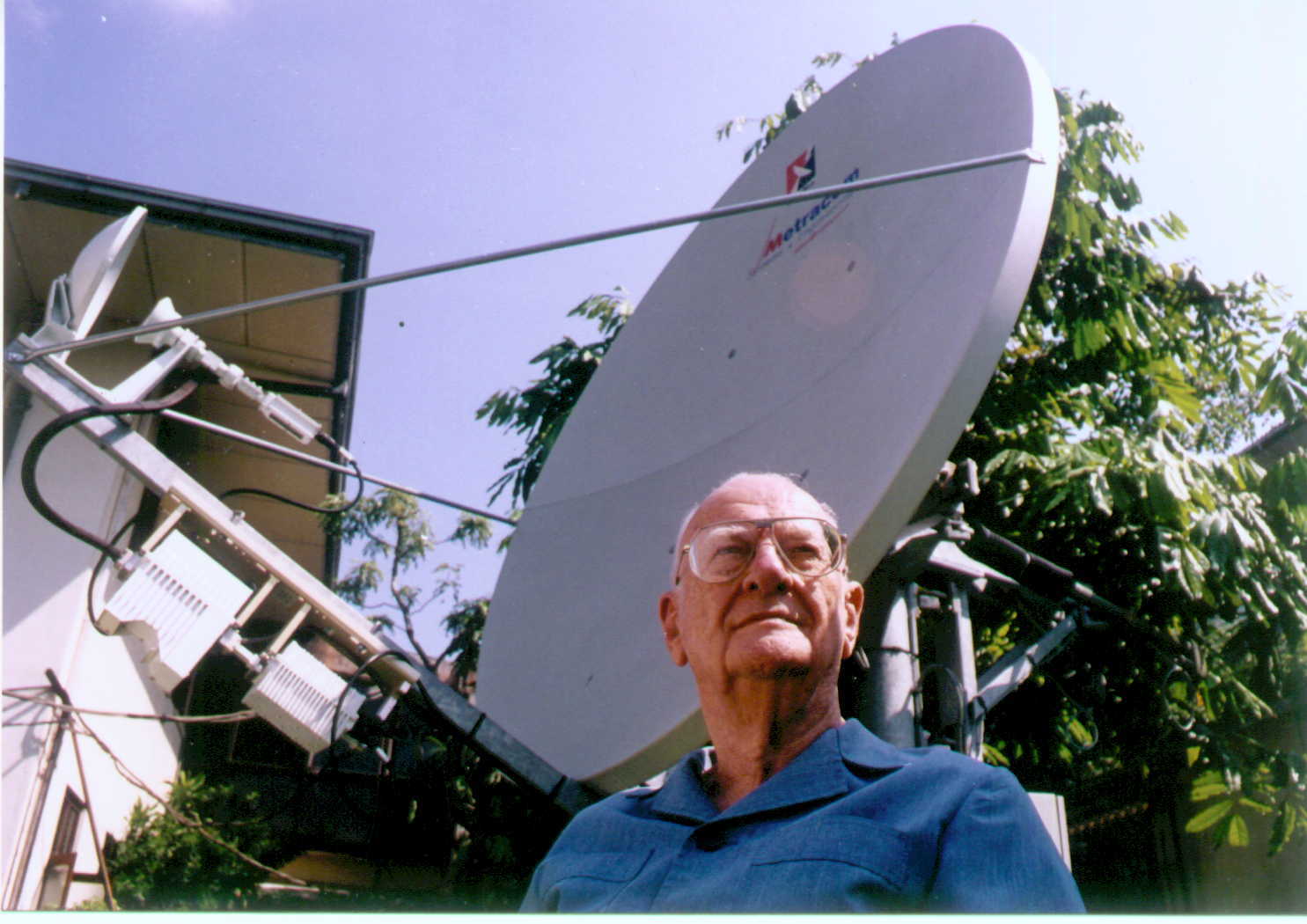
Sir Arthur Clarke was the man who triggered this satellite communication revolution. In 1945, while still in his late 20s, he was the first to propose the concept of using a network of satellites in the geo-synchronous orbit for television and telecommunications. His vision became a reality in the mid 1960s, and within a generation, humankind has come to rely critically on the network of comsats placed, in what is now called the Clarke Orbit, some 22,300 miles above the earth.
In December 2003, on the eve of the World Summit on the Information Society (WSIS) and days before his 86th birthday, I did a wide-ranging interview with Sir Arthur Clarke on satellite TV, internet, censorship and other challenges of information societies. It was published in One World South Asia on 5 December 2003.
For my Ravaya column this week (18 Dec 2011), I have adapted parts of that interview into Sinhala, making the point that much of what he said about satellite TV at the time is now equally relevant to the rapid spread of the Internet. It’s also a nice way to mark his 94th birth anniversary this week.
Sir Arthur C Clarke: Opened up the heavens as part of information superhighway...
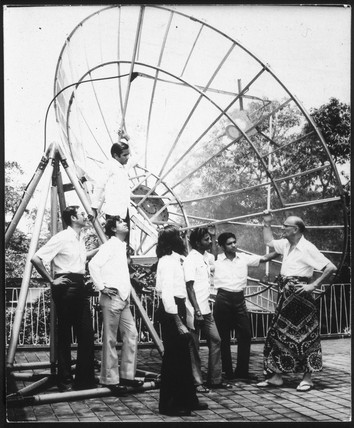
Arthur C Clare (extreme right) with Indian ISRO engineers who installed satellite antenna at his Colombo home, in 1975හොඳම උදාහරණය ලැඛෙන්නේ දකුණු අප්රිකාවෙන්. 1960 දශකය වන විට ලෝකයේ ඉසුරුබර රාජ්යයන් අතුරෙන් ටෙලිවිෂන් සේවාවක් අරඹා නොතිබූ එක ම රට වූයේ දකුණු අපිකාවයි. එවකට එහි පැවති සුදු පාලකයන්ගේ රජයේ සන්නිවේදන අමාත්යවරයා එරට ටෙලිවිෂන් සේවාවක් ඇරඹීමට කිසිසේත් එකග වූයේ නැහැ. ‘ටෙලිවිෂන් තමයි අප්රිකාවේ සුදු මිනිසාගේ පාලනය හමාර කරන්නේ’ යයි ඔහු කළ ප්රකාශයෙහි ලොකු අරුතක් ගැබ් වී තිබුණා. ^‘Television will mean the end of the white man in Africa.’)
This is the Sinhala text of my weekly column in Ravaya newspaper of 20 Nov 2011. This week, I continue our discussion on Internet freedom: what can – and must – be regulated online, and how regulation is fundamentally different from control and censorship. I insist that conceptual clarity is as important as technical understanding of how the Internet works.
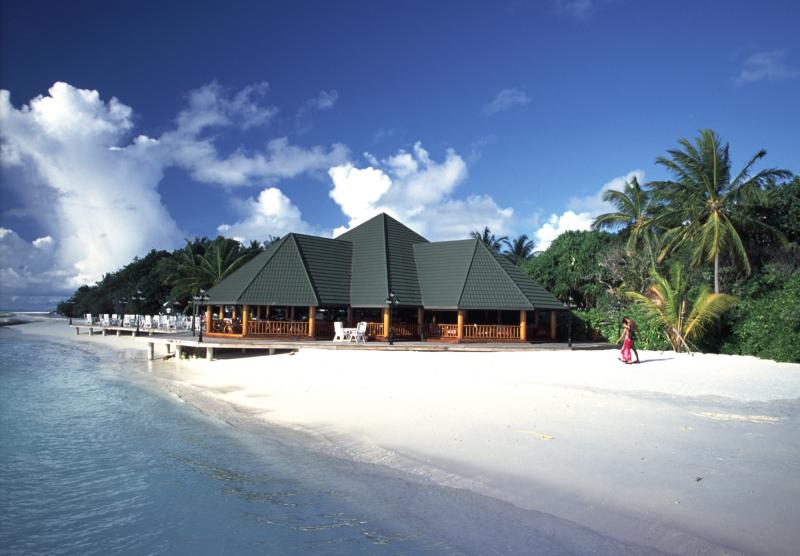
The setting is exotic enough – I’m near some of the finest beaches and bluest seas in the world. It’s a cloudy day outside, with tropical sunshine interrupted by occasional showers. We’re just a few hundred kilometres north of the Equator.
But it’s whole different world inside the meeting room. We have no windows and are visually cut off from the scenery. And the air conditioning is too strong. Even the 50 or so people inside the room don’t emit enough body heat to counter the chill spilling out from the ceiling.
Paradise (resort) isn’t alone. Across tropical Asia, our public offices, hotels and shopping malls just love to freeze us out.
This habit has a particular irony at this meeting. Convened by the UN Environment Programme (UNEP), it’s discussing how to stay cool without killing the planet.
To be precise, how air conditioning and refrigeration industries can continue their business – and keep cooling people and goods – without damaging the ozone layer or warming the planet.
It’s the semi-annual meeting of government officials from across Asia who help implement the Montreal Protocol to control and phase out several dozen industrial chemicals that damage the ozone layer in the upper atmosphere.
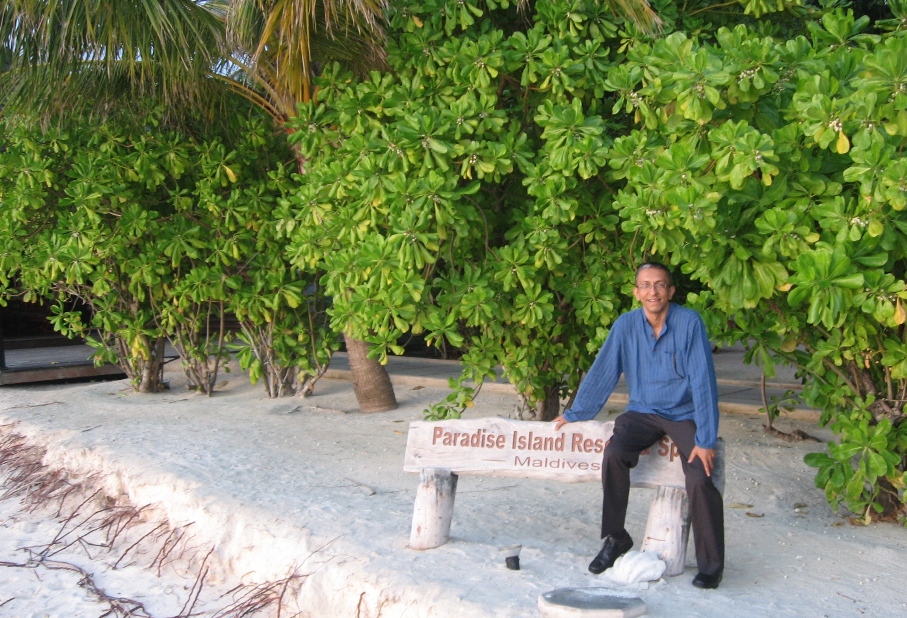
A nitpicker in Paradise? Photo by Darryl D'Monte
Adopted in 1987 and now ratified by 196 countries, it is the world’s most successful environmental treaty. It has reversed a catastrophic loss of ozone high up in the Earth’s atmosphere, and prevented tens of thousands of cases of skin cancer and cataract.
A landmark was reached at the end of 2009, when it succeeded in totally phasing out the production and use of chlorofluorocarbons (CFCs) — chemicals that had helped the cooling industries for decades. Now, a bigger challenge remains: removing two other widely used gases known as HCFCs and HFCs.
Both were originally promoted as substitutes for CFCs in the early days of the Protocol. HCFCs are less ozone-damaging than CFCs, while HFCs are fully ozone-safe. However, both have a high global warming potential — up to 1,700 times that of Carbon dioxide — and therefore contribute to climate change.
It was only a few years ago that scientists and officials realized that there was little point in fixing one atmospheric problem if it aggravated another. So in 2007, the Montreal Protocol countries agreed to address the climate impacts of their work.
The Montreal Protocol now encourages the countries to promote the selection of alternatives to HCFCs that minimize environmental impacts, in particular impacts on climate change.
The air conditioning and refrigeration industries are being encouraged to switch from HCFC to substitutes ahead of the global phase-out deadline of 2030. Alternatives — including natural refrigerants such as ammonia, carbon dioxide, hydrocarbons — are entering the market for many applications.
Parallel to this, consumers are being encouraged to opt for newer appliances that are both ozone-safe and climate friendly.
It takes time and effort for this message to spread and take hold. Many users — especially in the developing countries — only consider the purchase price of appliances and not necessarily the long-term energy savings or planetary benefits.
Events like the first Asian Ozone2Climate Roadshow, held in the Maldivian capital Malé from 8 to 12 May 2011, are pushing for this clarity and awareness. It’s still an uphill task: too many people have to be won over on too many appliances using a wide range of chemicals and processes.
And sitting here at my freezing corner of Paradise, I feel we should add another message: conserving energy includes a more rational and sensible use of air conditioning.
Perhaps we should promote and adopt the Japanese practice of Cool Biz.
Introduced by the Japanese Ministry of Environment in the summer of 2005, the idea behind Cool Biz was simple: ensure the thermostat in all air conditioners stayed fixed at 28 degrees Centigrade.
CoolBiz LogoThat’s not exactly a very cool temperature (and certainly no freezing), but not unbearable either.
The Cool Biz dress code advised office workers to starch collars “so they stand up and to wear trousers made from materials that breathe and absorb moisture”. They were encouraged to wear short-sleeved shirts without jackets or ties.
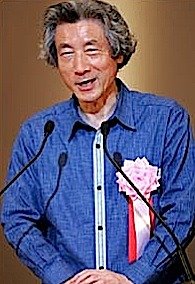
A Cool Koizumi: Leading from the front...Then Prime Minister Junichiro Koizumi himself set the tone, wearing informal attire. But then, he was already known for his unorthodox style.
Clothes designers and retailers chipped in, with clothes offering greater comfort at higher temperatures.
Cool Biz changed the Japanese work environment – and fast. I remember walking into a meeting at a government office in Tokyo a few weeks after the idea had been introduced, and finding I was the most formally dressed.
The Japanese like to count things. When the first season of Cool Biz ended, they calculated the countrywide campaign to have saved at least 460,000 tons of Carbon dioxide emissions (by avoided electricity use). That’s about the same emissions from a million Japanese households for a month.
The following year, an even more aggressive Cool Biz campaign helped save an estimated 1.14 million tons of Carbon dioxide – or two and half times more than in the first year.
The idea also traveled beyond Japan. In 2006, the South Korean Ministry of Environment and the British Trade Union Congress both endorsed the idea.
This summer, the seventh since Cool Biz started, there is an added reason for the Japanese to conserve energy. As the Asahi Shimbun reported on 28 April 2011: “In what has been dubbed the ‘power-conserving biz’ campaign, many companies plan to conserve energy during the peak summer period in light of expected power shortages caused by the crisis at the Fukushima No. 1 nuclear power plant.”
Meanwhile, the rest of us freeze-happy tropical Asians can evolve our own Cool Biz practices – we don’t need to wait for governments and industry to launch organized campaigns.
For a start, we – as consumers or patrons – can urge those who maintain public-access buildings to observe voluntary upper limits of cooling. Sensitive thermostats can automatically adjust air conditioner operations when temperatures rise above a pre-determined comfortable level.
It all depends on how many of us pause to think. Of course, we can also continue business as usual – and freeze ourselves today for a warmer tomorrow.
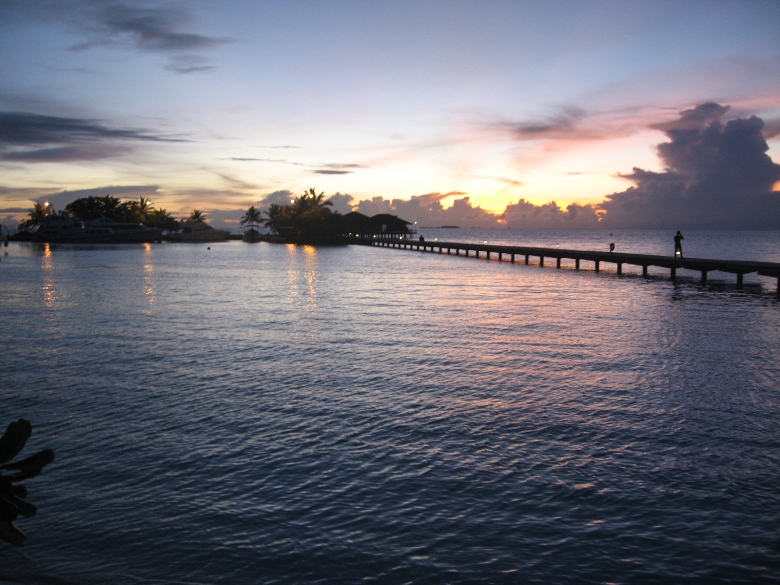
The sun sets in Paradise too - photo by Nalaka Gunawardene
There is a well known Chinese proverb, which was supposedly favoured by Mao Zedong, saying “Women hold up half the sky.” Despite this, women have had to fight for their rightful place society for much of history — and the struggle for gender equality continues in the 21st Century.
International Women’s Day (IWD), which falls on March 8, symbolizes this long-running quest. This year marks the centenary of the worldwide observance that started in Europe.
Wiz Quiz this week, coinciding with IWD, starts off with a few questions on women’s rights and gender equality, and then roams the knowledge universe exploring other topical matters.
But not before we talk about the Convention on the Elimination of All Forms of Discrimination Against Women (CEDAW), adopted by the United Nations General Assembly some years ago, and UN Women , the newest UN agency established on in July 2010 ‘to lead, support and coordinate the work on gender equality and the empowerment of women at global, regional and country levels’.
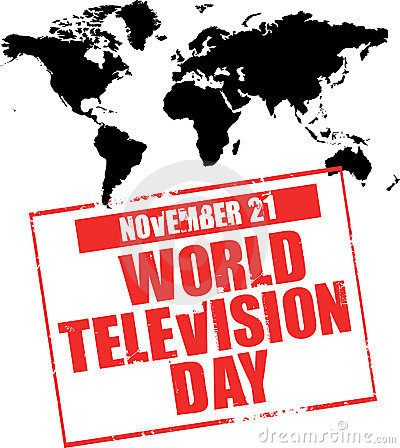
Television leads in Asia, including Sri LankaToday, 21 November, is World Television Day. The United Nations declared this in 1996 recognising “the increasing impact television has on decision-making by alerting world attention to conflicts and threats to peace and security and its potential role in sharpening the focus on other major issues, including economic and social issues”.
A new survey that I was closely associated with has just confirmed that broadcast television is the most dominant and most trusted source of information on news and current affairs by Lankans of all walks of life.
The mass media are the major source of public information on current news and affairs for Lankans living in cities, towns and villages – and broadcast television leads among the different types of media, according to the survey on public perceptions on climate change in Sri Lanka 2010.
Broadcast television is the single most popular source, cited by the highest number of respondents (94%). It is followed by radio (74%), and newspapers and magazines (taken together, 70%). There was no significant urban/rural difference in these preferences.
By mid 2010, Sri Lanka had 19 terrestrial channels broadcasting free-to-air transmissions in English, Sinhala or Tamil languages. Meanwhile, close to 50 radio channels – mostly on the FM band – crowd the airwaves.
The next most widely cited information source was friends, neighbours and colleagues. But interestingly, while 52% of all respondents listed this category, only very few (2%) acknowledged it as a credible source. In contrast, the credibility factor was higher for TV (88%), radio (42%) and print media (33%).
Educational institutions (schools, universities and training centres) were assigned a very low rank as a source (7%) and even lower status as a credible source (3%).
Although only 9% of the respondents cited the Internet as a regular source of information for themselves, its perception as a credible source was considerably high (51%). This makes the Internet the second most trusted source for the sample, behind only TV.
The exact survey question that elicited these answers was: “What are your main sources of information for current affairs/events?”
“If you’re an alien planning to invade the Earth, choose July 11. Chances are that our planet will offer little or no resistance.
“Today, most members of the Earth’s dominant species – the nearly 7 billion humans – will be preoccupied with 22 able-bodied men chasing a little hollow sphere. It’s only a game, really, but what a game: the whole world holds its breath as the ‘titans of kick’ clash in the FIFA World Cup Final.
“Played across 10 venues in South Africa, this was much more than a sporting tournament. It’s the ultimate celebration of the world’s most popular sport, held once every four years. More popular than the Olympics, it demonstrates the sheer power of sports and media to bring together – momentarily, at least – the usually fragmented and squabbling humanity.”
This is the opening of my latest op ed essay, which appears in several print and online outlets this weekend. It’s timed for the finals of the FIFA World Cup 2010 – the most widely followed sporting event in the world, which will be played in Soccer City, Johannesburg, South Africa today, 11 July 2010. The Netherlands will meet Spain in this culmination of international football that has been distracting a good part of humanity for a month.
This sporting event is tipped to be the most-watched television event in history. Hundreds of broadcasters are transmitting the World Cup to a cumulative TV audience that FIFA estimates to reach more than 26 billion people. Some TV channels offer high definition (HD) or 3-D quality images to enhance the mass viewing experience.
The essay was written a few days ago, after the FIFA World Cup 2010 had reached the semi-finals stage. To be honest, I’m not an ardent football fan. But as an observer of popular culture, I’ve gladly allowed myself to be caught up in the current football frenzy. I just love to watch people who watch the game…
It’s a light piece written to suit the current global mood, but I acknowledge that the World Cup is really more than just a ball game. The basic thrust of my essay is to comment on the powerful mix of fooball and live coverage: “For the past month, the winning formula for unifying the Global Family seemed to be: international football + live broadcasts + live coverage via the web and mobile phones.”
United Colours of Football, courtesy FIFAThe essay builds on themes that I’ve already explored on this blog – for example, how President Nelson Mandela used the 1995 World Cup Rugby championship to unite his racially divided nation, as told in the movie Invictus.
Here’s my parting thought, on which I invite reader comment: “On second thoughts, those invading aliens don’t need to worry too much about the Earth’s political leaders or their armies. Without firing a single shot, the globalised media have quietly taken over our Global Village — and now it’s too late to resist! We can argue on its merits and demerits, but the facts are indisputable.”
If one acronym has dominated the world’s media and public minds in the past month, it must be FIFA.
It stands for the International Federation of Association Football, and is derived from the original French name, Fédération Internationale de Football Association. It’s the global governing body of association football, founded in 1904 and with its headquarters in Zürich, Switzerland.
FIFA is responsible for the organisation and governance of football’s major international tournaments — most notably the FIFA World Cup, held once every four years since 1930. The current World Cup, being held in South Africa from 11 June to 11 July 2010, is the 19th edition. The next will be hosted by Brazil in 2014.
As a global body with substantial financial resources, FIFA has had its own share of controversies and been criticised for its lack of transparency and internal democracy. It’s true that FIFA controls the media rights to key international games with an iron fist (which inspired the above cartoon). They are not alone: the International Olympic Committee (IOC) has its own detractors and allegations on similar considerations.
Who's got the soft power?But there is little argument on how far and wide the influence of these global sports bodies extend. In an op ed essay being published this weekend, I contend: “FIFA, with its 208 member associations, is probably more influential — and certainly better known — than the United Nations, with its 192 member states. The difference is in media outreach. It signifies the rise of soft power in our always-connected information society.”
Indeed, the UN itself is well aware of this. In one of the most memorable op ed essays he’s written, the former UN Secretary General Kofi Annan acknowledged in 2006 (during the previous FIFA World Cup): “The World Cup makes us at the UN green with envy. As the pinnacle of the only truly global game, played in every country by every race and religion, it is one of the few phenomena as universal as the UN. But there are better reasons for our envy.”
He continued: “This is an event in which everybody knows where their team stands, and what it did to get there. They know who scored and how and in what minute of the game; they know who saved the penalty. I wish we had more of that sort of competition in the family of nations. Countries vying for the best standing in the table of respect for human rights, and trying to outdo one another in child survival rates or enrolment in secondary education. States parading their performance for all the world to see. Governments being held accountable.”
Of course, FIFA’s domination over the global public mind will wane after the FIFA World Cup 2010 ends. But how many other global bodies can claim to hold billions of people so engaged for a month? And in this era of 24/7 information society, that’s formidable soft power indeed.
What can we call the wielder of such soft power? How about Super-soft-power?
And can this kind of power also intoxicate and even corrupt its wielders? We’ve seen how power manipulations work in other centres of soft power, such as Hollywood and Bollywood. The challenge for FIFA — and all others who are connected to it through the love of football and/or media’s outreach — is to watch out that this concentration of soft power doesn’t corrupt.
The very same media that helps FIFA attain the status of a soft-super-power needs to keep an eye on how this power is being used. Perhaps that’s the ultimate game in the media-saturated 21st Century: Emperors of Eyeballs vs. Titans of Kick.







 Open Minds!