Around 2,000 media professionals and experts from over 100 countries gathered at the World Conference Centre Bonn (WCCB) for the event, themed on ‘Global Inequalities’. Across many plenaries and parallel sessions, we discussed a whole range of issues related to politics and human rights, media development and innovative journalism concepts.
On 13 June 2018, I moderated a session on “Digitalization and polarization of the media: How to overcome growing inequalities and a divided public” which was organised by the Institut für Auslandsbeziehungen (ifa) or Institute for Foreign Relations, a century old entity located in Stuttgart.
Curd Knüpfer, Co-Head Research Group on Digitalization and the Transnational Public Sphere, Weizenbaum Institute for the Networked Society, Freie Universität Berlin
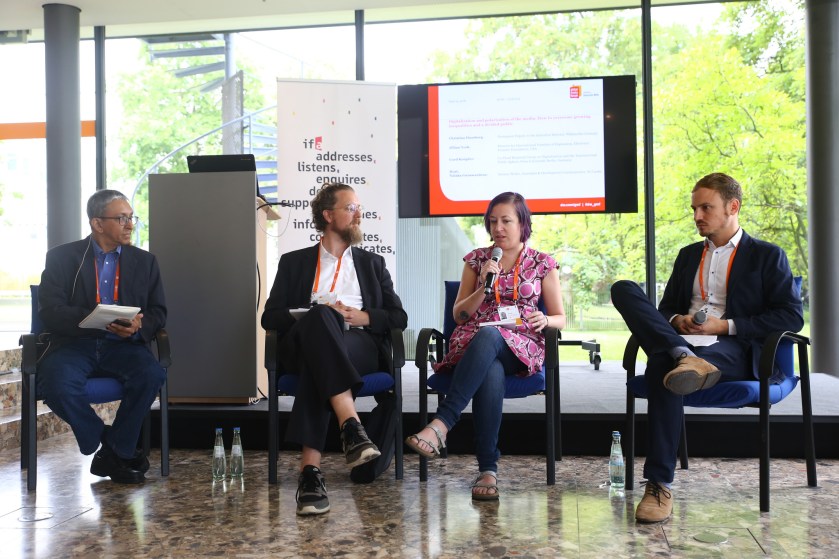
L to R – Nalaka Gunawardene (moderator), Christian Humborg, Jillian York, and Curd Knupfer. [Photo courtesy DW GMF 2018]Here are my opening remarks for the panel, setting it in context:
Our topic resonates deeply with my personal experiences. I come from Sri Lanka, where a brutal civil war lasted for 26 years and ended nearly a decade ago. But even today, my society remains highly polarised along ethnic, religious and political lines. This is very worrying, especially as we are a multicultural society.
Our media, for the most part, reflect this division in society — and many sections of the media actually keep dividing us even further! Reconciliation is the last thing some of our tribal media owners and editors seem to want…
This situation is by no means unique to Sri Lanka. Well into the 21st century’s second decade, tribalistic media seems to be proliferating both in analog and digital realms! We can find examples from the East and the West, and from the global North and the South.
But let’s be clear: these trends predate the digitalisation of (what is still called) mainstream media and the emergence of entirely digital media. Trends like ultra-nationalistic media, hate speech and fake news have all been around for decades — certainly well before the web emerged in the 1990s.
What digital tools and the web have done is to ‘turbo-charge’ these trends. The ease with which content can now be created and the speed at which it can be globally shared is unprecedented. As is the intensity of misuse of social media platforms, and the spreading of deliberate falsehoods, or disinformation. Conspiracy theorists, spin doctors and other assorted charlatans never had it so good!
What is all this doing to our politics and societies, especially in democracies?
In today’s discussion, we will consider both the established media – television, radio and newspapers – as well as the newer media that are digitally produced and distributed online. (Demarcations are blurred because many ‘old media’ content is also now digitally available.)
Nalaka Gunawardene moderating session on “Digitalization and polarization of the media: How to overcome growing inequalities and a divided public” at DW Global Media Forum 2018 in Bonn, 13 June 2018 [Photo courtesy DW GMF 2018]In today’s panel, we want to recognise a few key questions, all of them at ‘big picture’ level:
How are old media and new media so much better at polarising societies than in uniting or unifying societies? Do they tape into a fundamental tribal instinct among us?
Is the free and open internet, especially in the form of social media, undermining free and open societies?
Around the world, digital media have been a powerful force for the good, promoting human rights, democracy and social empowerment. But is that era of idealism coming to an end? What next?
How is the role of news journalism changing in an age of foreign policy making that is increasingly impulsive and driven by social media?
What policies, regulations and actions are needed to avoid undesirable outcomes and to harness all media for the public good?
We may not find all the answers today, but it is very important that we ask these questions and collectively search for answers.
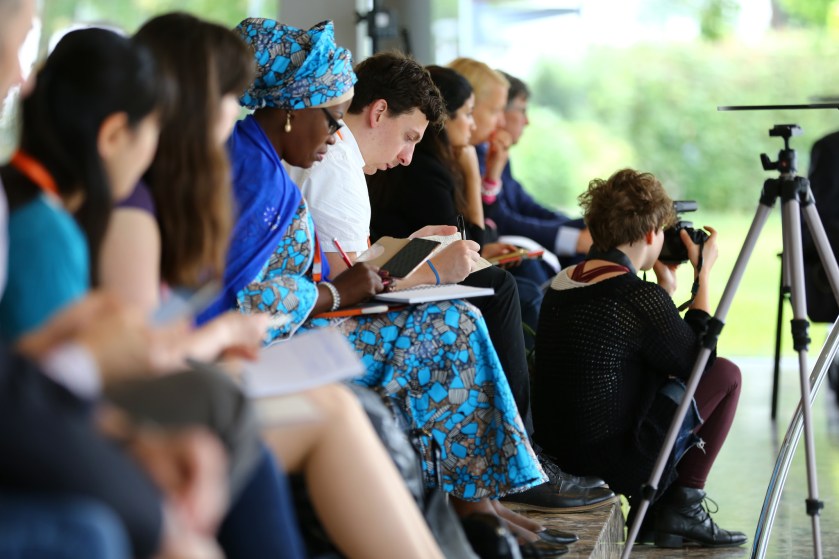
Some of the participants at session on “Digitalization and polarization of the media” at DW Global Media Forum 2018 [Photo courtesy DW GMF 2018]Here is the panel description written by the organisers:
Populism and nationalism are on the rise in many democracies. Recent elections, especially Trump’s victory in the US, are proof of deep social cleavages and the polarization of the media. The media system itself seems to be both the problem and the solution. It reveals the inequality of access to media, to a range of opinions, and to a true exchange that takes place outside of everyone’s echo chamber, and it highlights unequal levels of media literacy.
How can the media itself contribute to overcoming this polarization and disrupt these echo chambers? What does this fragmentation mean for political debates in democracies? How is the role of news journalism changing in an age of foreign policy making that is increasingly impulsive and driven by social media? How important is net neutrality? And what media policies are needed?
Speakers for the DW-GMF 2018 session on “Digitalization and polarization of the media: How to overcome growing inequalities and a divided public”
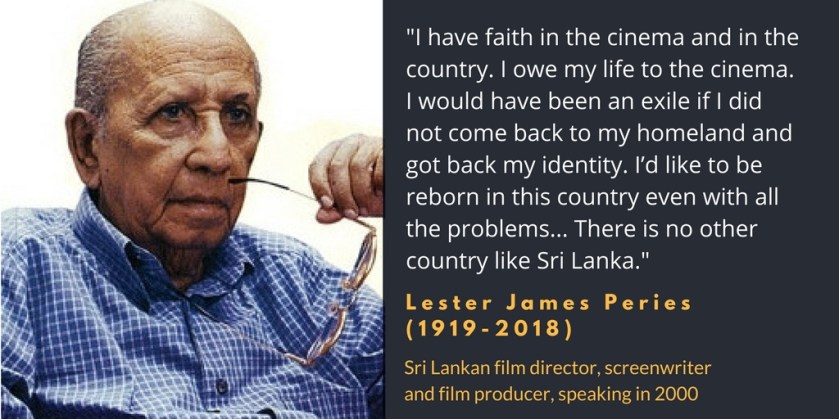
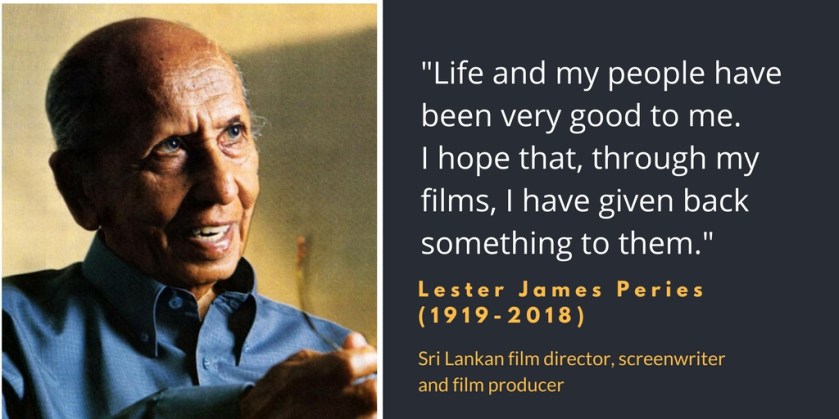
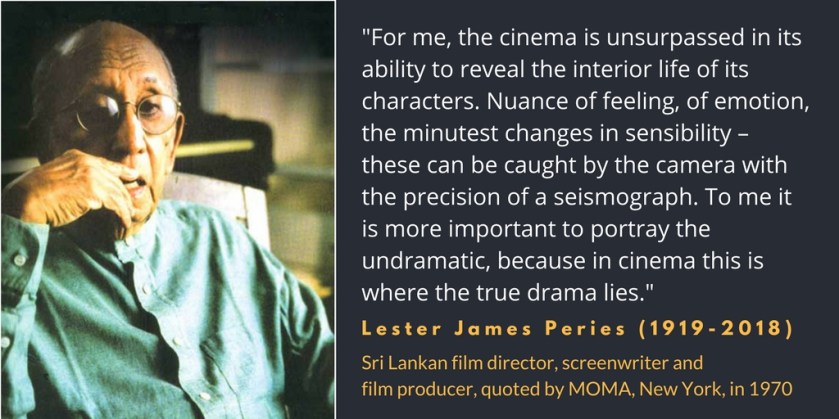
In my Ravaya column published in the printed edition of 6 May 2018, I look back at the long and illustrious career of Sri Lanka’s grand old man of the cinema, Lester James Peries (1919-2018) who died last week. As others assess his major contributions to the Sinhala cinema and in evolving an Asian cinema, I focus on his role as a public intellectual — one who wrote widely on matters of culture and society.
In June 2016, Sri Lanka became the 108th country in the world to pass a law allowing citizens to demand information from the government. After a preparatory period of six months, citizens were allowed to exercise their newly granted Right to Information (RTI) by filing information applications from February 2017 onward.
Just over a year later, the results are a mixed bag of successes, challenges and frustrations. There have been formidable teething problems – some sorted out by now, while others continue to slow down the new law’s smooth operation.
On the ‘supply side’ of RTI, several thousand ‘public authorities’ at central, provincial and local government level had to get ready to practise the notion of ‘open government’. This includes the all government ministries, departments, state corporations, other stator bodies and companies that are wholly or majority state owned. Despite training programmes and administrative circulars, there remain some gaps in officials’ attitudes, capacity and readiness to process citizens’ RTI applications.
To be sure, we should not expect miracles in one year after we have had 25 centuries of closed government under all the Lankan monarchs, colonial rulers and post-independence governments. RTI is a major conceptual and operational ‘leap’ for some public authorities and officials who have hidden or denied information rather than disclosed or shared it with the public.
Owing to this mindset, some officials have been trying to play hide-and-seek with RTI applications. Others are grudgingly abiding by the letter of the law — but not its spirit. These challenges place a greater responsibility on active citizens to pursue their RTI applications indefatigably.
During the first year of operation, the independent RTI Commission had received a little over 400 appeals from persistent citizens who refused to take ‘No’ for an answer. In a clear majority of cases heard so far, the Commission has ordered disclosure of information that was initially declined. These rulings are sending a clear message to all public authorities: RTI is not a choice, but a legal imperative. Fall in line, or else…
To ensure all public authorities comply with this law, it is vital to sustain citizen pressure. This is where the ‘demand side’ of RTI needs a lot more work. Unlike most other laws of the land that government uses, RTI is a rare law that citizens have to exercise – government only responds. Experience across Asia and elsewhere shows that the more RTI is used by people, the sharper and stronger it becomes.
It is hard to assess current public awareness levels on RTI without doing a large sample survey (one is being planned). However, there is growing anecdotal evidence to indicate that more Lankans have heard about RTI even if they are not yet clear on specifics.
But we still have plenty to do on the demand side: citizens need to see RTI as a tool for solving their local level problems – both private and public grievances – and be motivated to file more RTI applications. For this, they must overcome a historical deference towards government, and start demanding answers more vociferously.
Citizens who have been denied clear or any answers to their pressing problems – on missing persons, land rights, subsidies or public spending – are using RTI as an additional tool. We need to sustain momentum. RTI is a marathon, not a sprint.
Even though some journalists and editors were at the forefront in advocating for RTI in Sri Lanka for over two decades, the Lankan media as a whole is yet to grasp RTI’s potential.
Promisingly, some younger journalists have been producing impressive public interest stories – on topics as varied as disaster responses, waste management and human rights abuses – based on what they uncovered with their RTI applications. One of them, working for a Sinhala language daily, has filed over 40 RTI applications and experienced a success rate of around 70 per cent.
Meanwhile, some civil society groups are helping ordinary citizens to file RTI applications. A good example is the Vavuniya-based youth group, the Association for Friendship and Love (AFRIEL), that spearheads a campaign to submit RTI applications across Sri Lanka’s Northern Province, seeking information on private land that has been occupied by the military during the civil war and beyond. Sarvodaya, Sri Lanka’s largest development organisation, is running RTI clinics in different parts of the country with Transparency International Sri Lanka to equip citizens to exercise this new right.
The road to open government is a bumpy one, but there is no turning back on this journey. RTI in Sri Lanka may not yet have opened the floodgates of public information, but the dams are slowly but surely breached. Watch this space.
Disclosure: The writer works with both government and civil society groups intraining and promoting RTI. These views are his own.
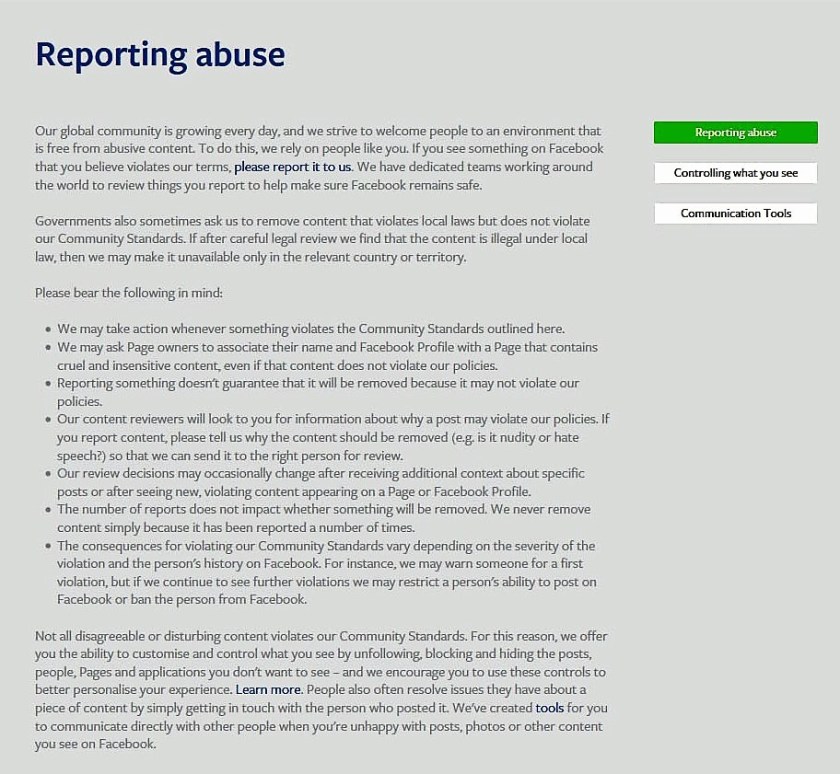
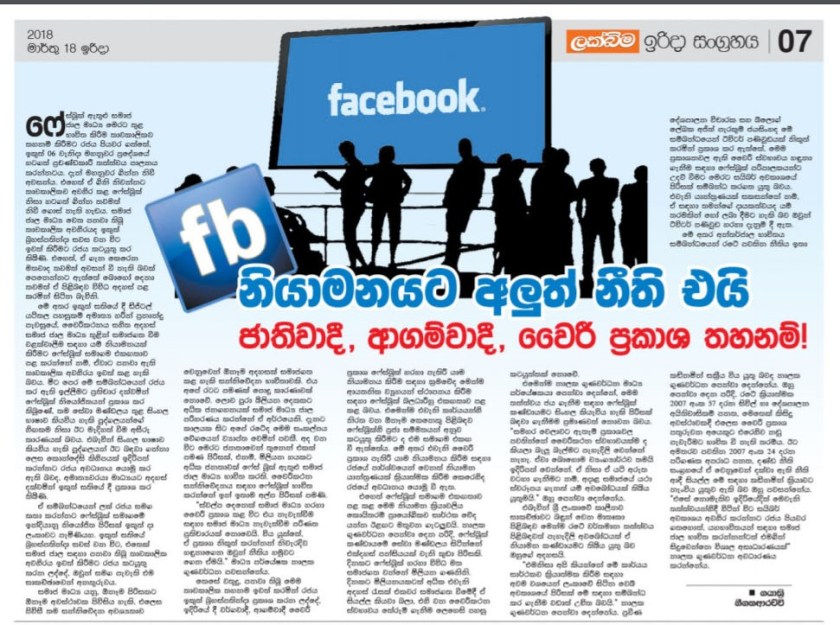
This is an annotated Sinhala language adaptation of Facebook’s Community Standards as they stood on 25 March 2018. Note this is not a verbatim translation and also not an officially sanctioned translation. It has been adapted and annotated as a public service by Nalaka Gunawardene, new media analyst and activist.
I discuss Facebook’s Community Standards and the complaints mechanism currently in place, and the difficulties that non-English language content poses for Facebook’s designated monitors looking out for violations of these standards. Hate speech and other objectionable content produced in local languages like Sinhala sometimes pass through FB’s scrutiny. This indicates more needs to be done both by the platform’s administrators, as well as by concerned FB users who spot such content.
But I sound a caution about introducing new Sri Lankan laws to regulate social media, as that can easily stifle citizens’ right to freedom of expression to question, challenge and criticise politicians and officials. Of course, FoE can have reasonable and proportionate limits, and our challenge is to have a public dialogue on what these limits are for online speech and self-expression that social media enables.
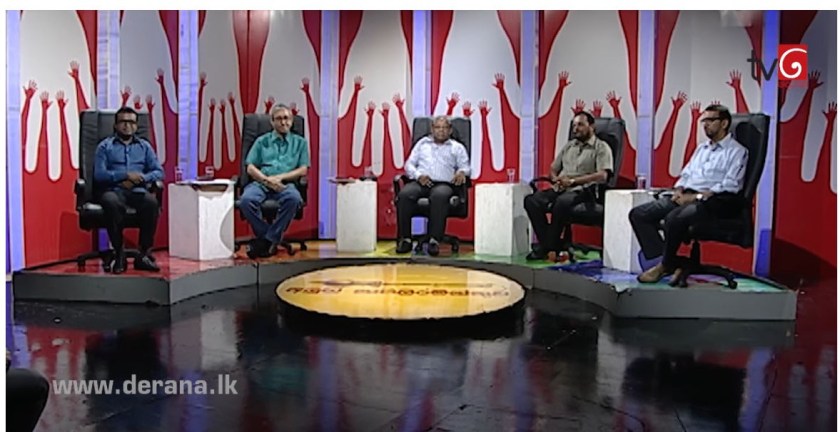
Aluth Parlimenthuwa live talk show on Social Media Blocking in Sri Lanka – TV Derana, 14 March 2018
Sri Lanka’s first ever social media blocking lasted from 7 to 15 March 2018. During that time, Facebook and Instagram were completely blocked while chat apps WhatsApp and Viber were restricted (no images, audio or video, but text allowed).
On 7 March 2018, the country’s telecom regulator, Telecommunications Regulatory Commission (TRCSL), ordered all telecom operators to impose this blocking across the country for three days, Reuters reported. This was “to prevent the spread of communal violence”, the news agency quoted an unnamed government official as saying. In the end, the blocking lasted 8 days.
Both actions are unprecedented. In the 23 years Sri Lanka has had commercial Internet services, it has never imposed complete network shutdowns (although during the last phase of the civil war between 2005 and 2009, the government periodically shut down telephone services in the Northern and Eastern Provinces). Nor has any social media or messaging platforms been blocked before.
I protested this course of action from the very outset. Restricting public communications networks is ill-advised at any time — and especially bad during an emergency when people are frantically seeking reliable situation updates and/or sharing information about the safety of loved ones.
Blocking selected websites or platforms is a self-defeating exercise in any case, since those who are more digitally savvy – many hate peddlers among them –can and will use proxy servers to get around. It is the average web user who will be deprived of news, views and updates.
While the blocking was on, I gave many media interviews to local and international media. I urged the government “to Police the streets, not the web!”.
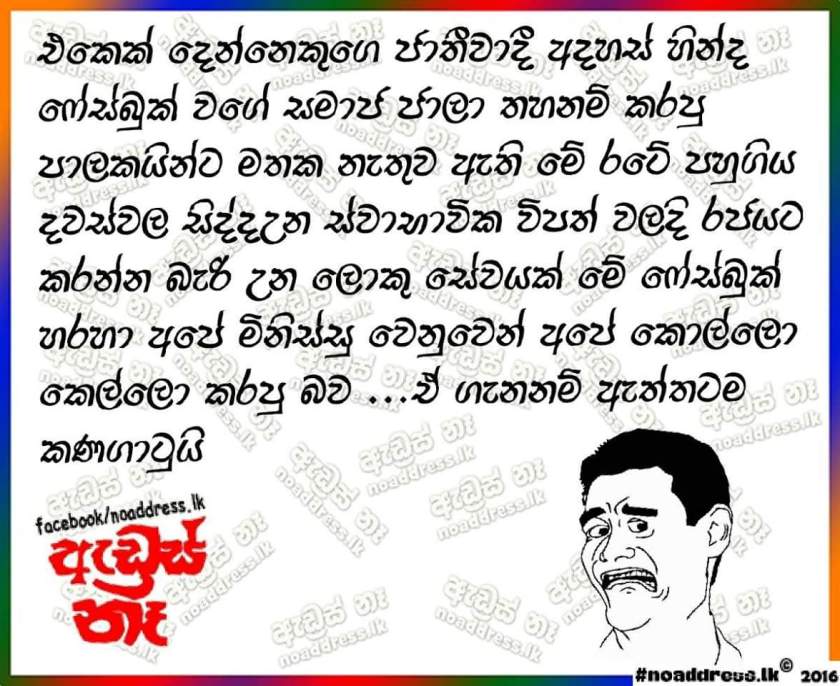
At the same time, I acknowledged and explained how a few political and religious extremist groups have systematically ‘weaponised’ social media in Sri Lanka during recent years. These groups have been peddling racially charged hate speech online and offline. A law to deal with hate speech has been in the country’s law books for over a decade. The International Covenant on Civil and Political Rights (ICCPR) Act No 56 of 2007 prohibits the advocacy of ‘religious hatred that constitutes incitement to discrimination, hostility or violence’. This law, fully compliant with international human rights standards, has not been enforced.
On 14 March 2018, I took part in the ‘Aluth Parlimenthuwa’ TV talk show of TV Derana on this topic, where I articulated the above and related views. The other panelists were Deputy Minister Karu Paranawithana, presidential advisor Shiral Lakthilaka, Bar Association of Sri Lanka chairman U R de Silva, and media commentator Mohan Samaranayake.
This comment on Sri Lanka’s social media blocking that commenced on 7 March 2018, was written on 8 March 2018 at the request of Irida Lakbima Sunday broadsheet newspaper, which carried excerpts from it in their issue of 11 March 2018. The full text is shared here, for the record.
On 1 March 2018, Facebook announced that it was ending its six-nation experiment known as ‘Explore Feed’. The idea was to create a version of Facebook with two different News Feeds: one as a dedicated place with posts from friends and family and another as a dedicated place for posts from Pages.
Adam Mosseri, Head of News Feed at Facebook wrote: “People don’t want two separate feeds. In surveys, people told us they were less satisfied with the posts they were seeing, and having two separate feeds didn’t actually help them connect more with friends and family.”
An international news agency asked me to write a comment on this from Sri Lanka, one of the six countries where the Explore feed was tried out from October 2017 to February 2018. Here is my full text, for the record:
Did Facebook’s “Explore” experiment increase
our exposure to fake news?
Comment by Nalaka Gunawardene, researcher and commentator on online and digital media; Fellow, Internet Governance Academy in Germany
Despite its mammoth size and reach, Facebook is still a young company only 14 years old this year. As it evolves, it keeps experimenting – mistakes and missteps are all part of that learning process.
But given how large the company’s reach is – with over 2 billion users worldwide – there can be far reaching and unintended consequences.
Last October, Facebook split its News Feed into two automatically sorted streams: one for non-promoted posts from FB Pages and publishers (which was called “Explore”), and the other for contents posted by each user’s friends and family.
Sri Lanka was one of six countries where this trial was conducted, without much notice to users. (The other countries were Bolivia, Cambodia, Guatemala, Serbia, Slovakia.)
Five months on, Facebook company has found that such a separation did not increase connections with friends and family as it had hoped. So the separation will end — in my view, not a moment too soon!
What can we make of this experiment and its outcome?
Humans are complex creatures when it comes to how we consume information and how we relate to online content. While many among us like to look up what our social media ‘friends’ have recommended or shared, we remain curious of, and open to, content coming from other sources too.
I personally found it tiresome to keep switching back and forth between my main news feed and what FB’s algorithms sorted under the ‘Explore’ feed. Especially on mobile devices – through which 80% of Lankan web users go online – most people simply overlooked or forgot to look up Explore feed. As a result, they missed out a great deal of interesting and diverse content.
For me as an individual user, a key part of the social media user experience is what is known as Serendipity – accidentally making happy discoveries. The Explore feed reduced my chances of Serendipity on Facebook, and as a result, in recent months I found myself using Facebook less often and for shorter periods of time.
For publishers of online newspapers, magazines and blogs, Facebook’s unilateral decision to cluster their content in the Explore feed meant significantly less visibility and click-through traffic. Fewer Facebook users were looking at Explore feed and then going on to such publishers’ content.
I am aware of mainstream media houses as well as bloggers in Sri Lanka who suffered as a result. Publishers in the other five countries reported similar experiences.
For the overall information landscape too, the Explore feed separation was bad news. When updates or posts from mainstream news media and socially engaged organisations were coming through on a single, consolidated news feed, our eyes and ears were kept more open. We were less prone to being confined to the chatter of our friends or family, or being trapped in ‘eco chambers’ of the likeminded.
Content from reputed news media outlets and bloggers sometimes comes with their own biases, for sure, but these act as a useful ‘bulwark’ against fake news and mind-rotting nonsense that is increasing in Sri Lanka’s social media.
It was thus ill-advised of Facebook to have taken such content away and tucked it in a place called Explore that few of us bothered to visit regularly.
The Explore experiment may have failed, but I hope Facebook administrators learn from it to fine-tune their platform to be a more responsive and responsible place for global cacophony to evolve.
Indeed, the entire Facebook is an on-going, planetary level experiment in which all its 2 billion plus members are participating. Our common challenge is to balance our urge for self-expression and sharing with responsibility and restraint. The justified limitations on free speech continue to apply on new media too.
Some are urging national governments to ‘regulate’ social media in ways similar to how newspapers, television and radio are regulated. This is easier said than done where globalized social media platforms like Facebook, Twitter and Instagram are concerned, because national governments don’t have jurisdiction over them.
But does this mean that globalized media companies are above the law? Short of blocking entire platforms from being accessed within their territories, what other options do governments have? Do ‘user community standards’ that some social media platforms have adopted offer a sufficient defence against hate speech, cyber bullying and other excesses?
In this conversation, Lankan science writer Nalaka Gunawardene discusses these and related issues with Toby Mendel, a human rights lawyer specialising in freedom of expression, the right to information and democracy rights.
Mendel is the executive director of the Center for Law and Democracy (CLD) in Canada. Prior to founding CLD in 2010, Mendel was for over 12 years Senior Director for Law at ARTICLE 19, a human rights NGO focusing on freedom of expression and the right to information.
The interview was recorded in Colombo, Sri Lanka, on 5 July 2017.
Sri Lanka’s Free Media Movement (FMM) is media freedom watchdog organization of Journalists. Started in 1992, it completes 25 years in 2017. FMM has been active in all areas relating to media freedom, defending the rights of journalists and other media workres. It also has called for reform of legislation, agitating against censorship and intimidation of media personnel and standing for broad principles of democracy and human rights.
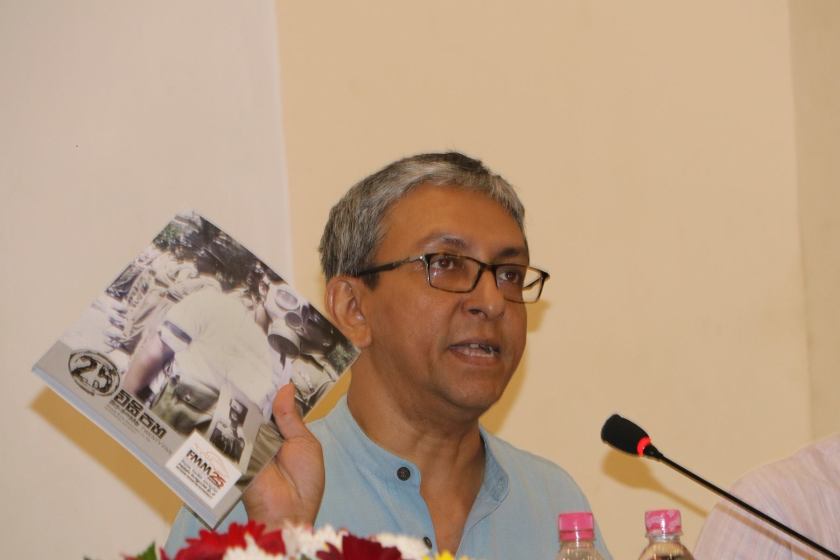
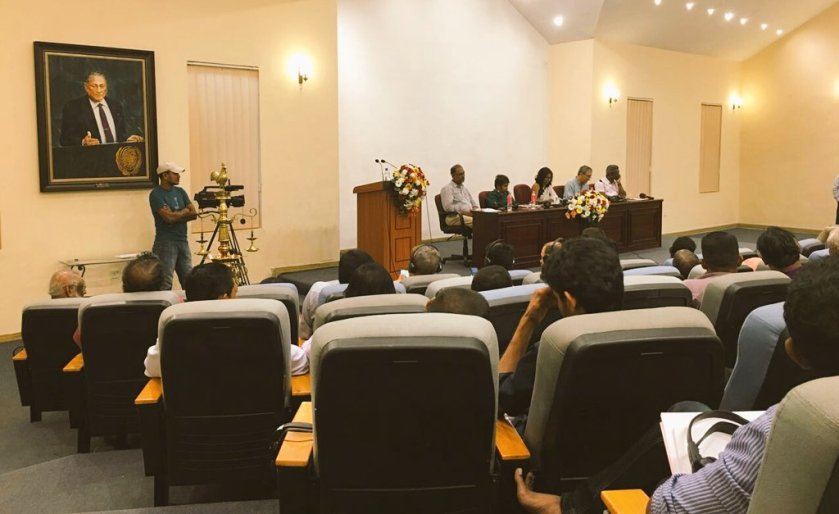
I was invited to speak at the 25th anniversary commemoration held in Colombo on 21 November 2017. Here is a synopsis of my remarks, which were delivered in Sinhala (see below):
Sri Lanka’s media went through its worst period in history during the decade 2005-2014, when journalists and media houses became regular targets of goon squads who acted with impunity. Prominent journalists were killed, made to disappear, or captured and tortured. The government of the day promised ‘prompt investigations’ but nothing happened. For some time, Sri Lanka was one of the most dangerous places in the world for journalists. FMM and other media rights groups did whatever they could, non-violently, to defend media freedom and the public’s right to know.
That state of siege has ended with the change of government in January 2015. Critics of the government and independent journalists no longer face violent reprisals. But no one can be certain whether this marks a temporary ‘ceasefire’ or a permanent ‘peace’ in the long drawn conflict between the Lankan state and Lankan journalists.
So let us take advantage of the current ‘lull’ — for however long it lasts — to advocate some legal and institutional reforms that will strengthen the safety of journalists and ensure the Constitutional guarantees of free expression work in reality. For the media community to have societal support for these reforms, the media’s ethical conduct and professionalism must be improved, urgently. Otherwise, why should the public support the rights of an irresponsible, unethical and compromised media?
Note: I spoke these views in my personal capacity.
Nalaka Gunawardene speaks at Free Media Movement (Sri Lanka) 25th anniversary, on 21 Nov 2017FMM 25 anniversary meeting in Colombo, 21 Nov 2017FMM 25 anniversary meeting in Colombo, 21 Nov 2017 – part of the audience









 Open Minds!