As a science journalist, I have been covering scientific aspects of the public health emergency of mass kidney failure that has killed an estimated 20,000 persons in Sri Lanka over the past two decades.
It emerged in the early 1990s, when hundreds of people in Sri Lanka’s Dry Zone – heartland of its farming — developed kidney failure without having the common causative factors of diabetes or high blood pressure.
Most affected were men aged between 30 and 60 years who worked as farmers. The disease built up inside the body without tell-tale signs or symptoms, manifesting only in advanced stages.
Over the years, many scientific studies have been carried out on what causes this mysterious disease, now called Chronic Kidney Disease of unknown aetiology, or CKDu. Various environmental, geochemical and lifestyle related factors have been probed. Researchers now suspect environmental and genetic factors as causes – but a definitive link to a specific factor has yet to be found.
On 23 January 2015, I answered a few questions posed by BBC World Service (radio) on CKDu, to feed a news report they were producing for global broadcast.
My full answers are shared here in the public interest.
Science writer Nalaka Gunawardene responds to questions from BBC World Service on the mysterious mass kidney failure in Sri Lanka: 23 January 2015
Question 1: What are the various theories that scientists have put forward as a possible cause for this disease which has been studied for 20 years?
Question 2: As a science journalist, you’ve been tracking the research on this public health concern for some years. What do you think is most likely cause?
Question 3: The World Health Organisation supported research has suggested a link with agrochemical use. Don’t you think that such a link is likely?
Question 4: The new government of Sri Lanka has just pledged to give high priority to the kidney disease. What are the challenges faced by the government in dealing with this crisis?
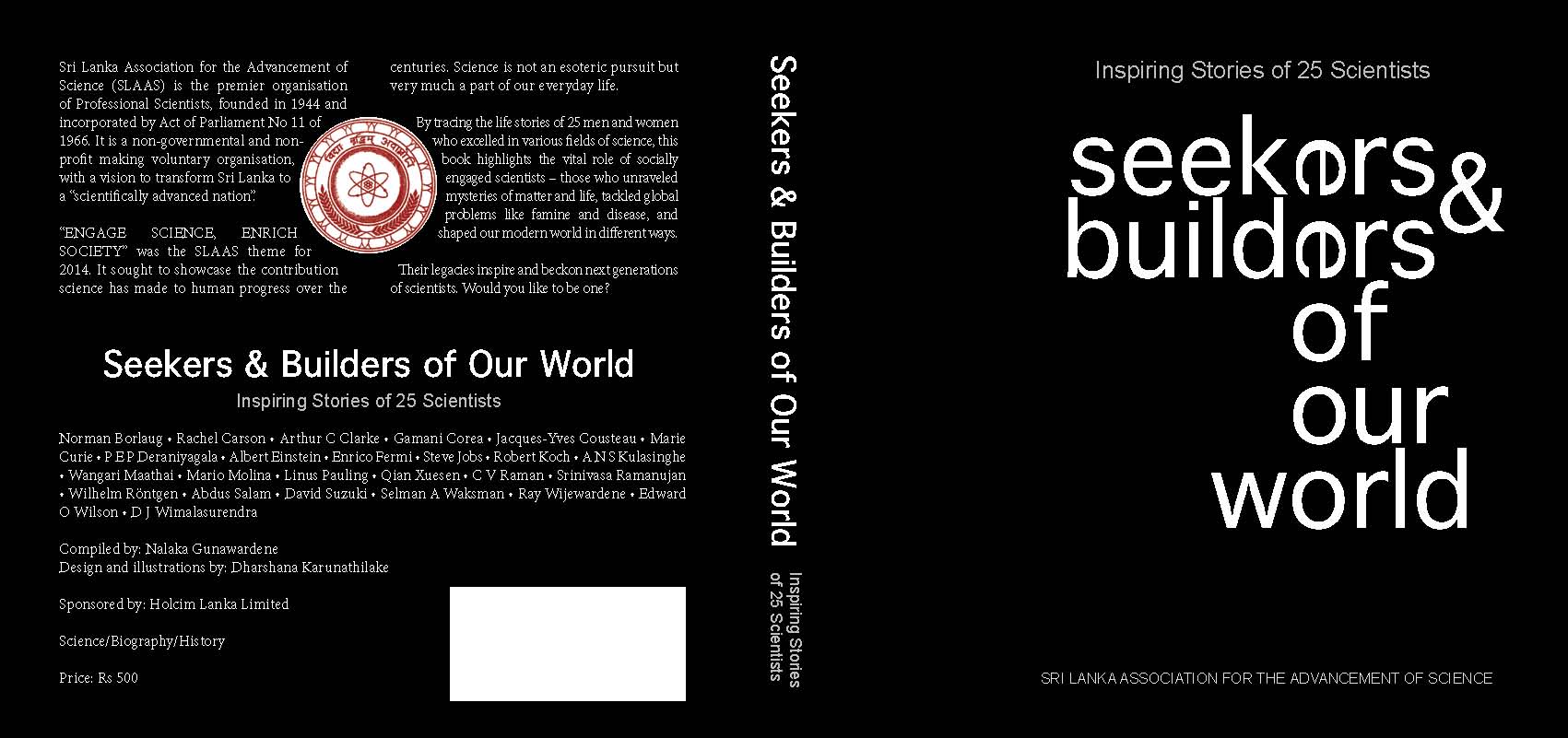
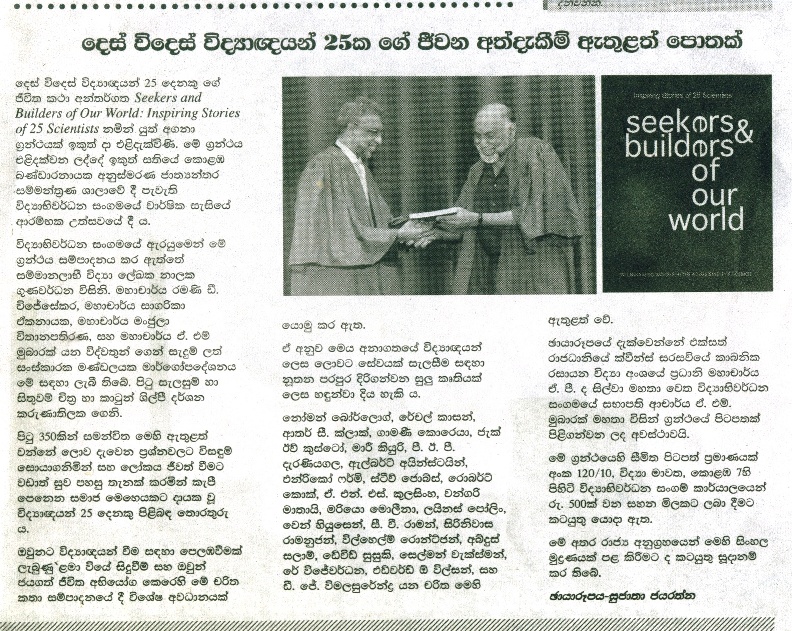
Vidusara, Sri Lanka’s only weekly science newspaper, carries this news item in its issue of 10 December 2014 on my latest book, just published by Sri Lanka Association for the Advancement of Science (SLAAS):
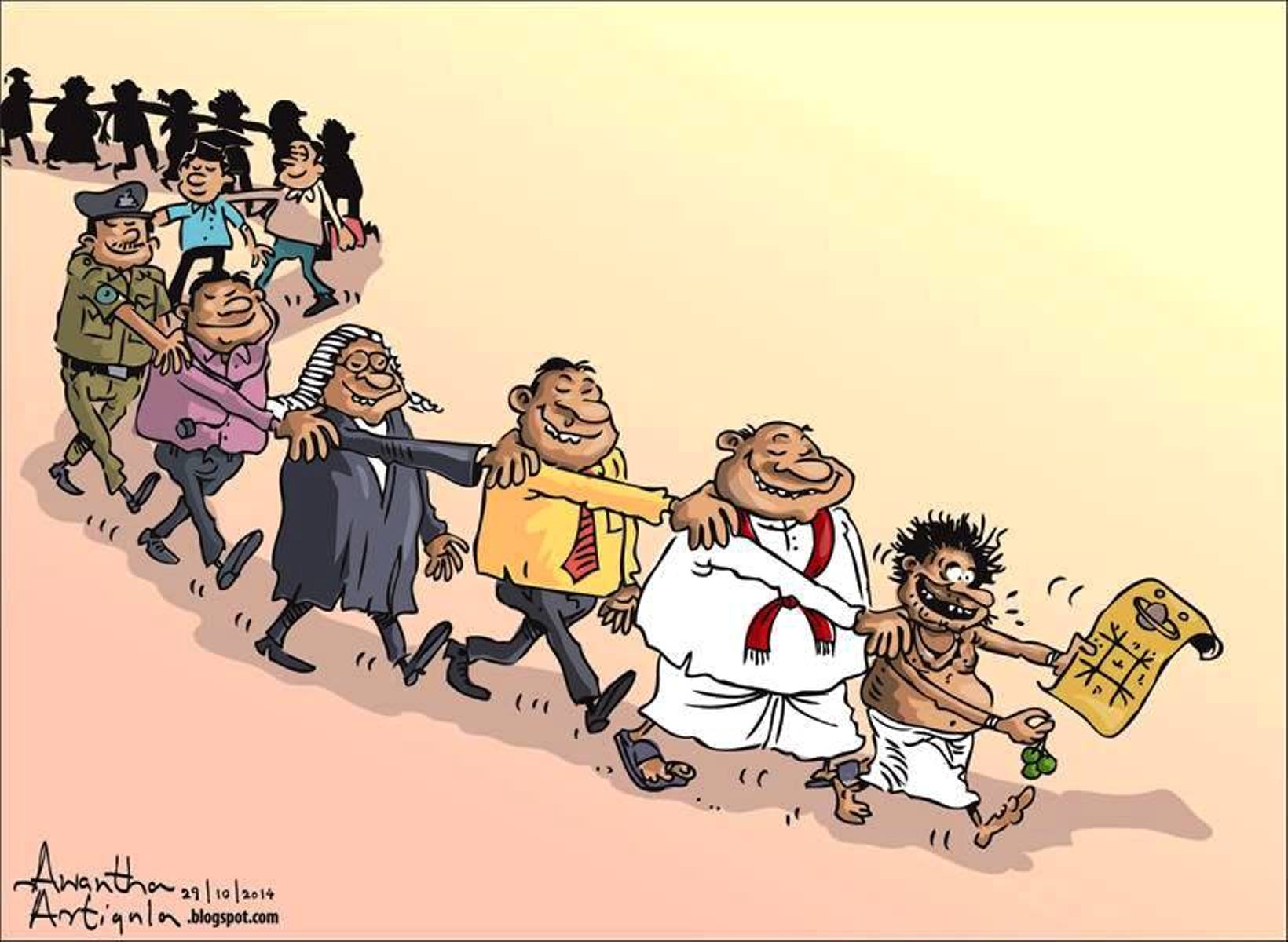
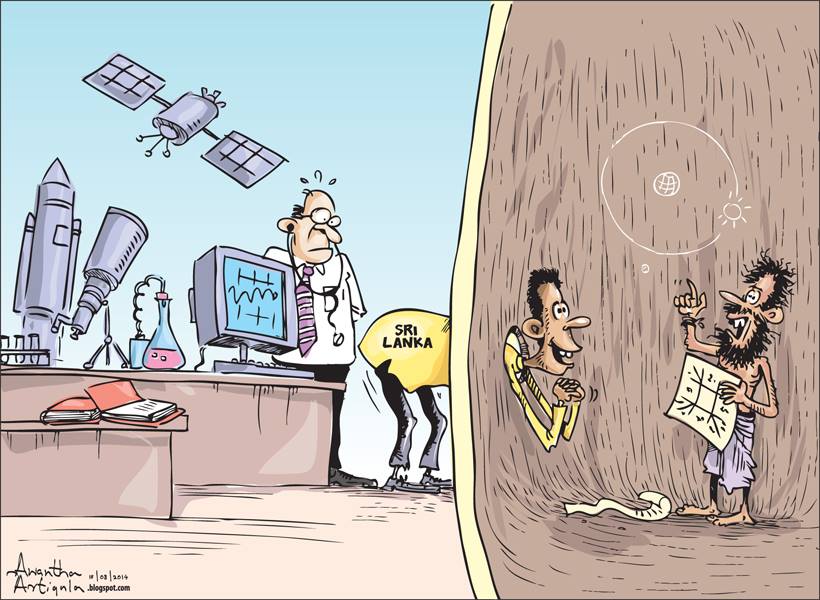
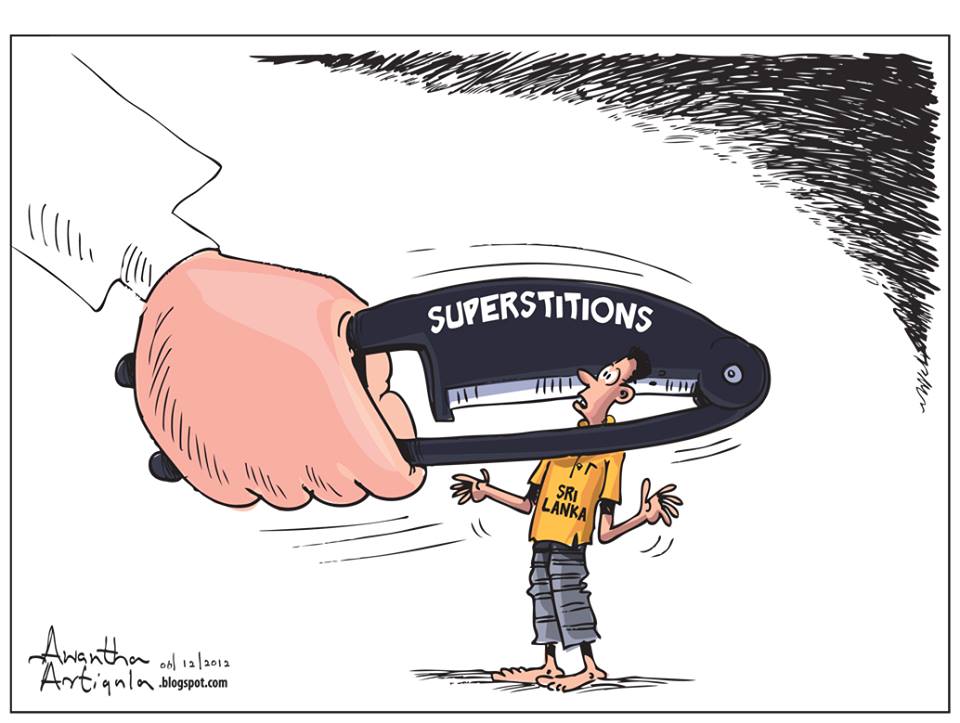
In this week’s Ravaya column (in Sinhala), published on 23 November 2014, I ask whether astrologers are the most powerful persons in Sri Lanka. This is because all important decisions of the state, including the ceremonial opening of Parliament and scheduling of elections, is done strictly on astrological advice.
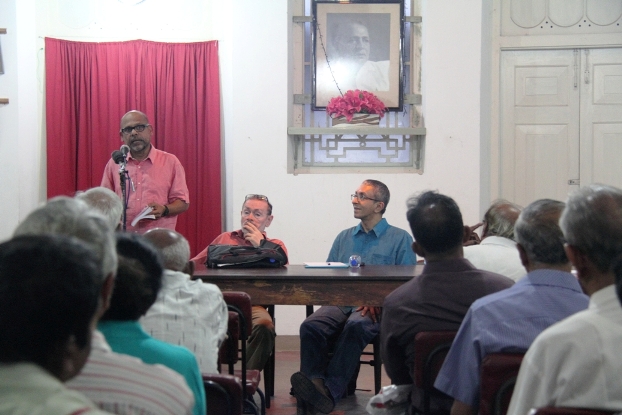
Speaking at a recent meeting of the Sri Lanka Rationalists’ Association to discuss my latest book, writer and political commentator Gamini Viyangoda said astrology determines so many personal and public decisions in Sri Lanka. In this obsession, ruling party and opposition party politicians seem united.
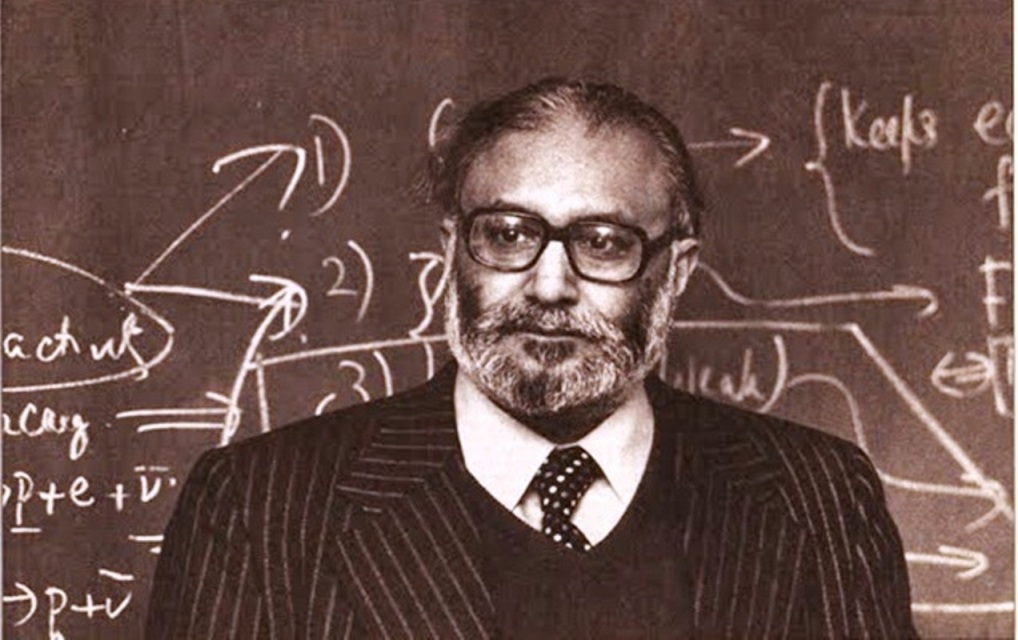
Twenty-five years ago, I interviewed the first national of Pakistan – as well as the first muslim — to win a Nobel Prize: theoretical physicist Dr Abdus Salam (1926 – 1996).
Salam was one of the most influential theoretical physicists of the 20th century. He shared the Nobel Prize in Physics in 1979 with two American physicists, Sheldon Lee Glashow and Steven Weinberg.
In last week’s Ravaya column (in Sinhala), I profiled the accomplished South Asian who probed further from where Albert Einstein left off, and is called Einstein of the developing world. This week, I render into Sinhala segments of the two interviews I did with him – first in 1989 when he visited Sri Lanka, and again in 1990 when I visited him at the International Center for Theoretical Physics, ICTP.
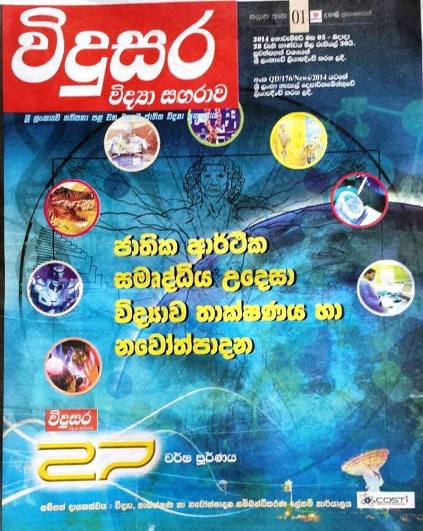
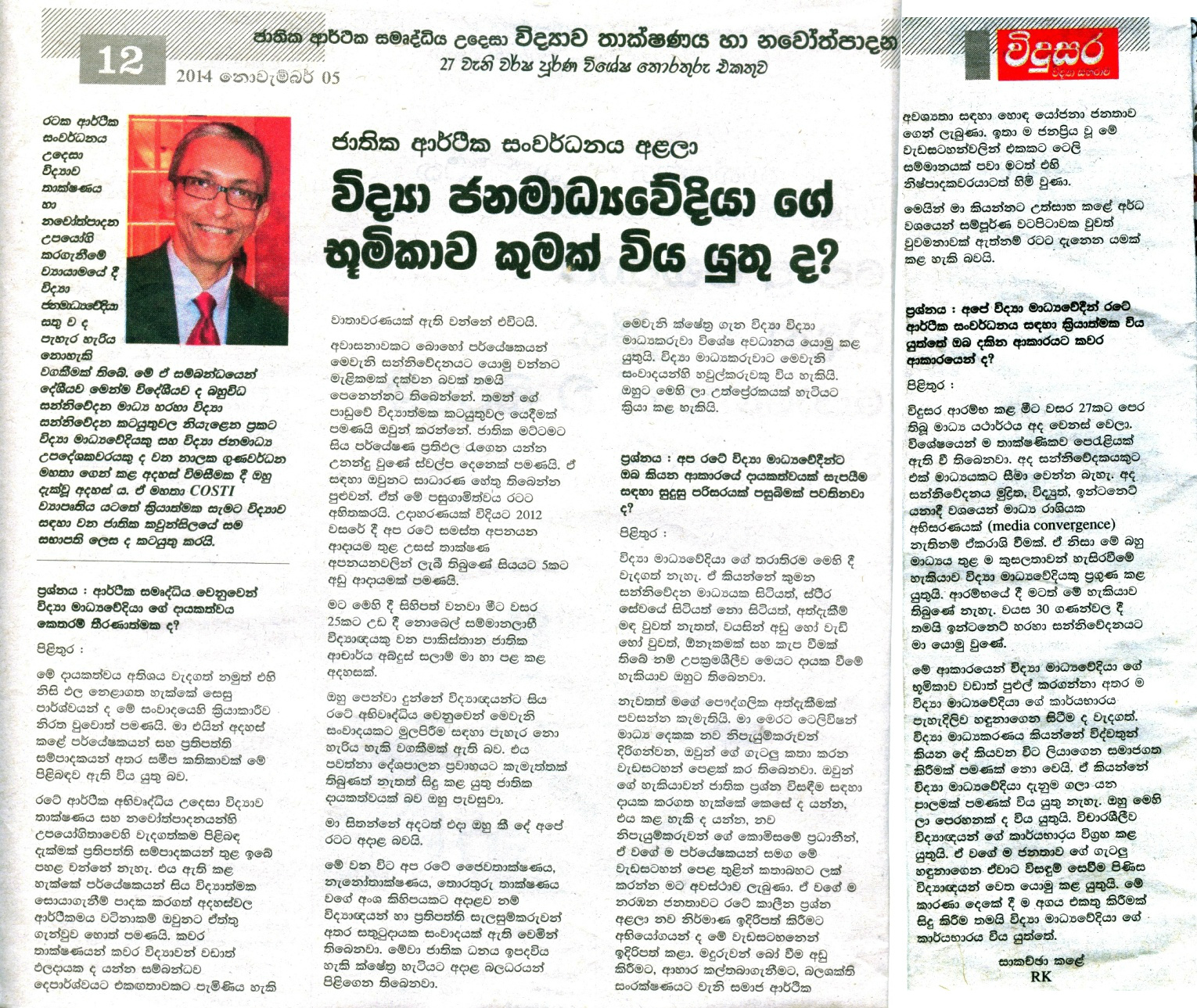
Vidusara, Sri Lanka’s only science and technology weekly magazine, has interviewed me in their issue dated 5 November 2014, which marks their 27th anniversary. They talked to me about the role of science journalists and other science communications in promoting science and technology for national economic development.
Here’s my Q&A with the newspaper’s editor, Rajendra Kulasinghe:
Promo note for my latest Sinhala language book, being released this week at Colombo International Book Fair to be held from 10 – 17 September 2014.
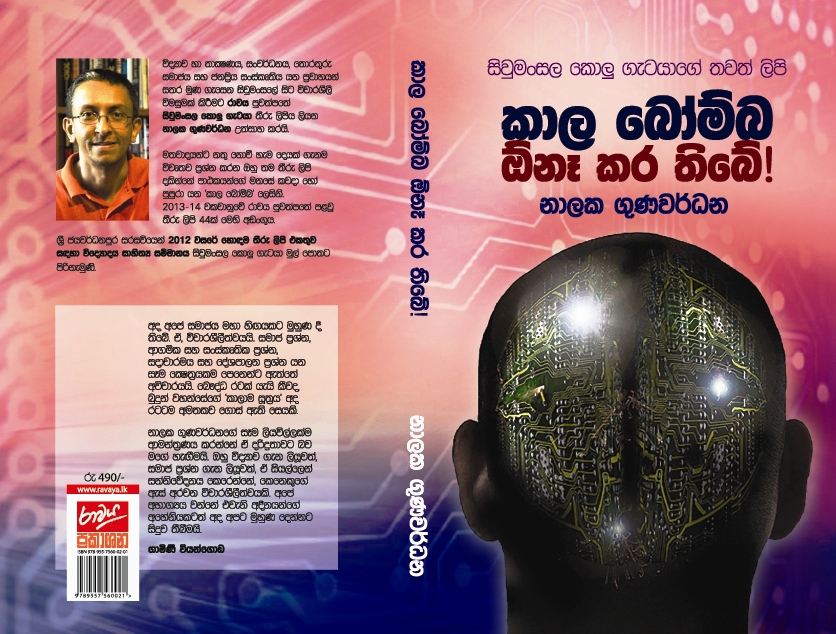
Kaala Bomba One Kara Thibe – by Nalaka Gunawardene (Ravaya Publishers, 2014) book cover
Award winning science writer Nalaka Gunawardene’s latest Sinhala book, Kaala Bomba One Kara Thibe (‘කාල බෝම්බ ඕනෑ කර තිබේ!’ = Wanted: Time Bombs of the Mind!), will be released at the Colombo International Book Fair that starts on 10 September 2014.
A Ravaya Publication, the book compiles 44 of his weekly columns named Sivu Mansala Kolu Getaya published in the Ravaya newspaper during 2013-14.
Launched in 2011, the popular column offers musings of a sceptical inquirer who sits at the intersection (or confluence) of science, development, mass media and information society. The University of Sri Jayawardenapura presented Nalaka a Vidyodaya Literary Award for the best newspaper column of 2012.
Written in an easy, conversational Sinhala rich in metaphor and analogy, Nalaka connects the local with global and also bridges sciences and humanities. The new collection touches on pharmaceuticals, organic farming, tobacco control, rationalism, citizen journalism and social media among many other topics.
“Lankan society today suffers from a major deficiency of critical thinking. Blind faith and sycophancy dominate our social, religious, political and cultural spheres. Whether writing on science, development or social issues, Nalaka Gunawardene comes up with refreshing doses of scepticism,” says Gamini Viyangoda, leading Sinhala writer and political commentator.
In his quest for clarity and reason, Nalaka talks to researchers, activists and officials. He also draws on his many experiences and global travels as a journalist and development communicator.
In his foreword, researcher and university lecturer Dr Udan Fernando says: “At a time when insularity and monoculturalism are being celebrated in Sri Lanka, Nalaka represents the endangered cosmopolitan perspective.”
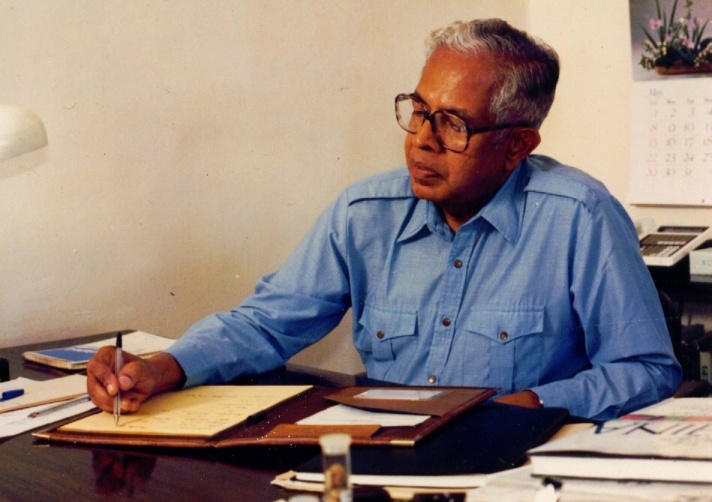
Nalaka has dedicated this book to two giants of public science in Sri Lanka: late Prof Cyril Ponnamperuma (1923-1994) and late Dr Ray Wijewardene (1924-2010). “They embraced the best of East and West without losing their roots. We urgently need such public intellectuals today,” Nalaka says.
The book includes columns profiling the work of both scientists, including the Sinhala adaptation of a long interview with Dr Wijewardene.
The title is inspired by the words of Swedish economist, Gunnar Myrdal, who once said, “Books are like time bombs. If they contain ideas that are correct, then one day they will explode. And if they don’t, they will be consigned to the dustbin of history.”
The 300-page book is priced at Rs. 490. It will be available from leading bookstores, and at special discounts from the Ravaya booth during the Colombo Book Fair.
Sivu Mansala Kolu Getaya – columnhead in Ravaya newspaper
In this week’s Ravaya column (in Sinhala), I write about public perception of risk in Japan and Sri Lanka — and how alarmist exaggerations distort society’s reactions and affect policy responses. I quote from the writing and presentations of Japanese science journalist Hajime Hikino, who has long studied this phenomenon in Japan.
To this, I mix my own observations on Lankan society, and quote from a media interview given by Professor Sudantha Liyanage, dean of applied science at the University of Sri Jayawardenapura, Sri Lanka – a rare public intellectual who calls for measured, scientifically based approach to risk assessment and communication.
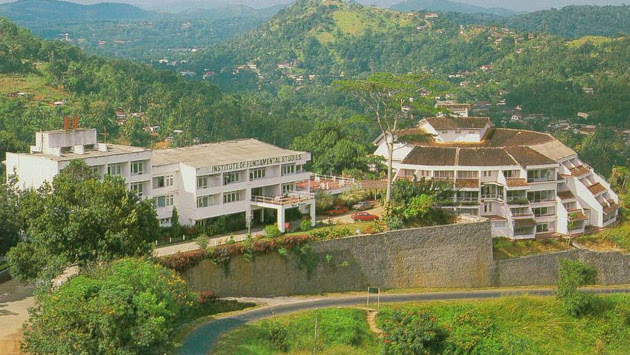
In this week’s Ravaya column, I pay another tribute to Dr Cyril Ponnamperuma, Lankan biochemist who was one of the best known and most accomplished scientists produced by Sri Lanka.This explores the time he spent in Sri Lanka in the late 1980s, working as Presidential Science Adviser and Director of the Institute of Fundamental Studies (IFS) in Kandy.
India’s Down to Earth magazine was presented with the first Greenaccord International Media Award at an international conference held in Naples, Italy, last week.
The award, newly established by the Rome-based non-profit group Greenaccord, recognises outstanding media contributions to covering issues of environment and sustainable development.
Tommaso Sodano, deputy mayor of the City of Naples, presented the award at the conclusion of the 10th Greenaccord International Media Forum held from 6 to 9 November 2013.
Darryl D’Monte (centre) receives Greenaccord International Media Award on behalf of Down to Earth magazine, India – Naples, 9 Nov 2013 – Photo courtesy Greenaccord Press Office
“We asked all our Asian colleagues for nominations for this inaugural award, and many of them recommended Down to Earth magazine that has covered sustainability issues from a developing country perspective for 21 years,” said Alfonso Cauteruccio, President of Greenaccord.
Down to Earth is a fortnightly magazine focusing on issues of science and environment. It is published by the Centre for Science and Environment (CSE), a leading research and advocacy group in India. Founded by leading journalist and activist Anil Agarwal in May 1992, it provides reportage, analysis and commentary on a broad range of issues related to environment and development.
From the beginning, the magazine has challenged its readers to think about sustainable development. It inspires and encourages its readers to become more environment-friendly.
Darryl D’Monte, senior Indian journalist and a former editor of the Times of India, accepted the award on behalf of Down to Earth editors and publishers.
“Anil Agarwal was a trail-blazing journalist who combined knowledge and advocacy. Down to Earth, launched just before the Earth Summit in Rio in mid 1992, reflects that vision,” D’Monte said in his acceptance speech.
D’Monte recalled how Agarwal and CSE played a key role in the early days of global climate negotiations, especially in focusing global attention on per capita emissions of global warming greenhouse gases.
“Climate change is as much politics as it is science, and Anil was well aware of that. He approached all debates well armed with statistics, analysis and a southern perspective, which is also the Down to Earth magazine’s approach to issues,” he added.
Darryl D’Monte talks about Down to Earth magazine at Greenaccord Forum in Naples – Photo courtesy Greenaccord Press Office
Down to Earth presents accessible content intended for interested non-specialists including policy makers. Articles are often investigative, in-depth, all presented in well edited and designed form. In recent years, it has developed an extensive website at www.downtoearth.org.in.
The magazine has been an important vehicle for many CSE campaigns in the public interest, including its exposes on pesticide residues in popular soft drinks and bottled water brands, and agitation for cleaner air in Delhi and other metropolitan areas in India.
CSE’s right to clean air campaign resulted in New Delhi becoming the world’s first city to introduce compressed natural gas (CNG) for all public transport vehicles, D’Monte said.
Greenaccord is a non-profit association, headquartered in Rome, and founded to be of service to the world of information and training that deals with environmental issues. The association is made up of journalists and professionals who volunteer their time to provide training to their colleagues.
Since 2003, Greenaccord organises an annual gathering of journalists and scientists concerned about sustainability – which has become one of the largest such gatherings taking place on a regular basis.
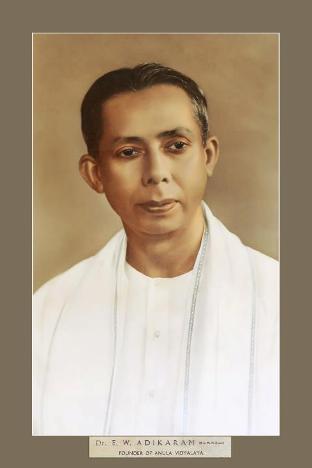
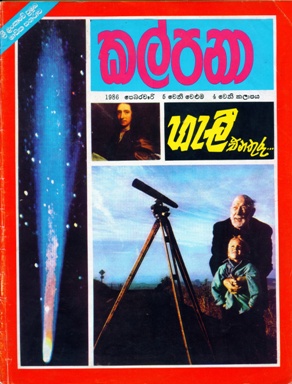
In this week’s Ravaya column (in Sinhala), I pay tribute to scholar and free thinker Dr E W Adikaram (1905-1985), a Lankan pioneer in public communication of science in Sinhala.
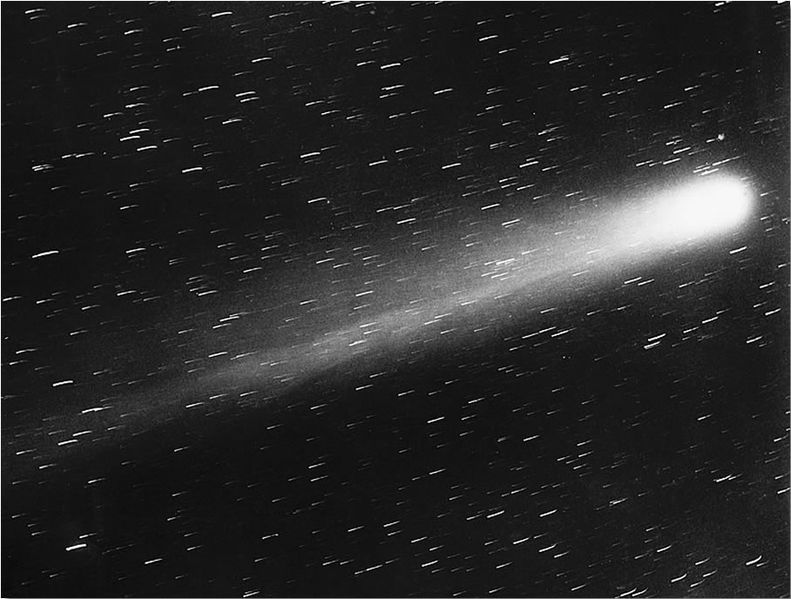
I also recall with gratitude how, a few months before his death at age 80, he advised and guided me through a challenging science writing assignment on the history and science of comets.






 Open Minds!