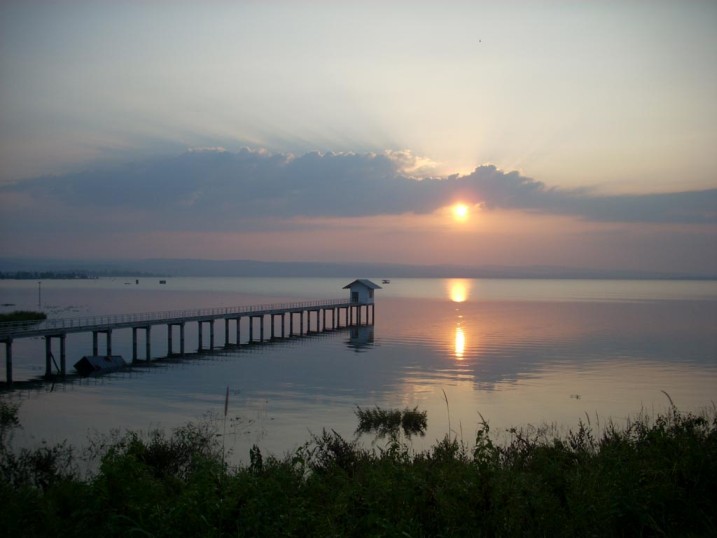
Calm now, turbulent tomorrow? View of Upper Mun Reservoir on the Mekong in northern Thailand: image courtesy TVE Asia PacificThe Greater Himalaya region is known as the water tower of Asia: the continent’s nine largest rivers emerging from its ice-capped mountains provide 1.5 billion people with water and 3 billion people with their food and power.
With more ice stored here than anywhere outside the Arctic and Antarctic, the region has even been called the earth’s third pole. But the ice fields of the Himalayas are melting, and at a faster pace than anywhere else on the planet.
A river that is going to be affected is the Mekong – one of Asia’s major rivers, and the twelfth longest in the world. TVE Asia Pacific has just produced a short film looking at how current and anticipated environmental changes could impact water users in the six countries of Southeast Asia which share its waters. We released it online this week, just in time for World Water Day 2009, March 22.
Mekong: Watch that River!
Along its journey of nearly 5,000 kilometres (3,000 miles), the Mekong nurtures a great deal of life in its waters – and in the wetlands, forests, towns and villages along its path. Starting in the Tibetan highlands, it flows through China’s Yunan province, and then across Myanmar, Thailand, Laos and Cambodia…before entering the sea from southern Vietnam.
The Mekong River Basin is the land surrounding all the streams and rivers that flow into it. This covers a vast area roughly the size of France and Germany combined. The basin supports more than 65 million people who share Mekong waters for drinking, farming, fishing and industry. Along the way, the river also generates electricity for South East Asia’s emerging economies.
The Mekong has sustained life for thousands of years. But growing human demands are slowly building up environmental pressures on the river. A new study, commissioned by the UN Environment Programme (UNEP), cautions that climate change could add to this in the coming years.
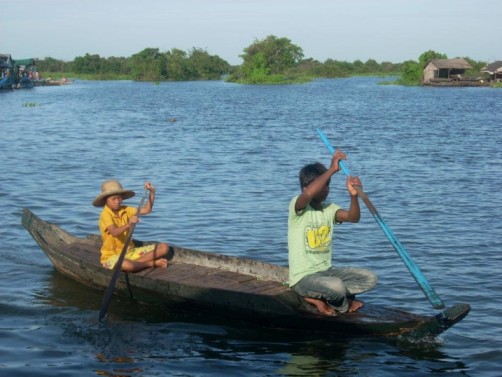
Fishing on the Tonle Sap lake in Cambodia: An 'ecological hot spot' on the MekongThe study, carried out under a project named “Vulnerability Assessment of Freshwater Resources”, was headed by Dr Mukand Babel at the Asian Institute of Technology (AIT) in Bangkok. It probed how climate change can impact the river from the highlands to the delta….affecting the survival and prosperity of millions.
Dr Babel says on the film: “Climate change would affect…the amount of rainfall which is received. Under climate change conditions, we expect less rainfall to be observed and that would bring less flows in the river which would affect the water users in the downstream areas.”
He adds: “At the same time, the sea level rise which is an associated impact of climate change, would bring more sea water intrusion into the river systems and groundwater systems in the delta in Vietnam.”
Salt water could go upstream by 60 to 70 kilometres, degrading the land and water in the Mekong delta. This would add to pressures already coming from growing human numbers, expanding economies and disappearing forests.
So the Mekong will be affected at both ends, by different processes that are triggered by climate change.
To find out how these changes could affect the Mekong’s millions, my colleagues filmed in two
‘ecological hot spots’ in the river basin identified by the study: the Upper Mun River, a tributary of the Mekong, and the Tonlé Sap lake in Cambodia.
The UNEP-AIT study recommends Mekong river countries to improve how they manage their water and land. This needs better policies, institutions and systems.
Dr. Young-Woo Park, Regional Director, UNEP, says on the film: “Countries sharing the Mekong river…have to act together and they have to develop the policies on how to conserve and how to conserve the Mekong river and also how to properly manage the Mekong river.”
The study found the Mekong river basin ‘moderately vulnerable’ to environmental changes. There aren’t any major water shortages in this river basin as yet. For now, the Mekong is holding up despite many pressures.
But all this can change if less water is flowing down the river and the demand for water keeps growing.
That’s why we named this film ‘Mekong: Watch that River!’
The legend lives on: Arthur C Clarke (1917 - 2008) - photos by Rohan de Silva
Today we mark the first death anniversary of Sir Arthur C Clarke. Exactly one year ago, when he passed away aged 90, I was thrust into a media frenzy. I’d been Sir Arthur’s research assistant and, in later years, his media spokesman and in the hours and days following his death, the family asked me to continue that role.
This blog recorded my experiences and emotions as they happened (see several posts in the latter half of March 2008). A year later, all of us who worked closely with him still miss Sir Arthur, but I can now take a more detached, longer-term view. And that’s what I’ve just done.
In an op ed essay published today in Groundviews website, I argue that sparking imagination and nurturing innovation are the best ways in which Sri Lanka can cherish Sir Arthur’s memory in the land he called home for half a century.
Despite his well known ego, Sir Arthur never sought personal edifices to be put up in his honour or memory. When a visiting journalist once asked him about monuments, he said: “Go to any well-stocked library, and just look around…”
In the weeks and months following Sir Arthur’s death, many have asked me what kind of monument was being planned in his memory. As far as the Arthur C Clarke Estate is concerned, there is none –- and that seems to surprise many.
Yet it is fully consistent with the man of ideas, imagination and dreams that Sir Arthur Clarke was. Monuments of brick and mortar — or even of steel and silicon — seem superfluous for a writer who stretched the minds of millions. Commemorative lectures or volumes cannot begin to capture the spirit and energy of the visionary who invented the communications satellite and inspired the World Wide Web.
A life of no regrets...except for a minor complaint In my essay, I suggested: “Instead of dabbling in these banalities, Sri Lanka should go for the ‘grand prize’: nurturing among its youth the intellectual, cultural and creative attributes that made Arthur C Clarke what he was. In other words, we must identify and groom the budding Arthur Clarkes of the 21st century!”
Easier said than done. In fact, in a country like Sri Lanka that is still partly feudal, insular and stubbornly clinging on to the past instead of facing the present and future, this becomes formidable. This is why I noted: “But can imagination and innovation take root unless we break free from the shackles of orthodoxy? For transformative change to happen, we will need to rethink certain aspects of our education, bureaucracy, social hierarchies and culture. Are we willing and able to attempt these?”
I then discuss some of the key challenges involved in nurturing imagination and innovation. I end my essay with these words: “Let’s not kid ourselves: sparking imagination and innovation is much harder than launching a gleaming new satellite in Sir Arthur’s name. But the rewards would also be greater: if we get it right this time, Sri Lanka can finally take its rightful place in the 21st century.”
Blogs put ME back into MEdia...The Moving Images blog completes two years today. So we pause briefly to look back – and forward.
I launched the blog with two posts from near-freezing Washington DC on 17 March 2007, while participating in the DC Environmental Film Festival. Both concerned my own offering to the festival: Children of Tsunami: The Journey Continues, product of monthly filming with 8 survivor families in 4 countries for nearly one year after the Asian tsunami.
Since then, this blog’s own journey has continued: in 24 months, we have produced 342 posts in 134 categories and with 562 tags. These elicited a total of 622 comments from readers who came from all walks of life, and all parts of the world. To the end of 16 March 2009, I received a cumulative total of slightly over 246,900 page visits. I now average 500 – 600 visits a day.
I share my blogging journey with these readers who have enriched it in various ways. Some commented under their own names; others used pseudonyms. Some left email details; others none. A few have actually suggested stories that I later wrote up as blog posts. I don’t know most of my readers in person, and have only met them online. As this blog enters its 25th month, I thank them all. You’ve kept me going in a particularly tough time in the world…and in my personal life.
When I started Moving Images, I was driven by a simple motive: to discuss and reflect on the many and varied topics and subjects that interest me professionally. In one way or another, these fall into the area of communicating science, development and environment to the non-specialist public. Because my work at TVE Asia Pacific involves using television and video for this purpose, there is a bias on moving images in many things I do.
But by design, this is not an official blog of TVE Asia Pacific, or any other organisation that I am associated with. In fact, I regularly express here views that I cannot say wearing any of these hats — because we live in a world where most people still react not just to the song, but also the singer (and can’t separate the two).
Are we there yet? No!So this blog is unashamedly, intentionally self-centred: it puts ME back in Media. I make no apologies for speaking my mind on a variety of topics, and for returning to some issues that I’m passionate about.
After 22 years in journalism, broadcasting or communicating development, I find I have sufficient perspective in which to anchor my thoughts, and to express my views in a way, I hope, interests and engages readers. Like the ancient Greeks, I try to ask the right questions – even when I don’t always know or get the right answers. And I have more than a few stories to spice up the narrative.
I’m well aware of the inherent danger of combining writer-editor-publisher all in one: personal blogs don’t always operate under the usual checks and balances that we expect and presume in the more structured media outlets (whether they are in the mainstream or new media spheres). On more than one occasion, I’ve written impulsively – in frustration, anger or elation, and sometimes on the run. Thanks to the training in my news reporter days, I can still churn out readable prose fast. And only once in all these 24 months and 342 posts have I regretted rushing to publish (so, using my absolute discretion as the media tycoon of this blog, I pulled it down).
Do I see myself as a citizen journalist? Yes and no. I don’t report news, and only very occasionally write on latest developments (or breaking news, as it’s now called). I see myself more as a citizen commentator – the op ed equivalent in the new media domain. Yes, I do occasionally report from large conferences that I attend as a speaker or panelist. But I have found how demanding it is to blog from events while keeping up with everything that is going on.
Do I see myself as a Sri Lankan blogger? Not really. Scanning the 342 blog posts I’ve written, I can count only a two dozen that have an appreciable reference to Sri Lanka. This is not because I’m aloof or disengaged; I have simply set a framework for myself that goes well beyond the country of my residence and social/cultural anchor.
Another reason for this intentional lack of geographical focus is that besides this blog, I regularly write op ed essays for other online outlets like Groundviews, MediaChannel.org and MediaHelpingMedia, and print news magazines like Montage. I use these platforms for commenting on Sri Lankan issues that interest or concern me.
I find it a bit incongruous that we who use the new media tools of web 2.0 – which signify the end of old geography – must contain ourselves to geographical or cultural cocoons. Thus, while I sometimes join gatherings of bloggers based in Sri Lanka, and share concerns for freedom of expression, I have consciously avoided joining Kottu, the leading aggregator of Sri Lankan blogs.
And I get more than a little miffed when the excellent aggregation service Global Voices constantly labels me as a Sri Lankan voice (with a map of Lanka to boot!) whenever they helpfully flag my blog posts for wider attention. I have privately discussed this with GV’s South Asia coordinator who says their current tagging and categorisation do not allow anything else. Is this an example a new media platforms being trapped in an old media mindset?
If you really must pin me down to some place, call me a South Asian (or, as my friends at Himal would like to write it, Southasian).
Do I see myself as a new media activist? I’m not sure. I’m not a geek, and have no great knowledge or insights on the back-end technologies that make all this possible. My interest is in how the new media tools shapes societies, cultures and politics in emerging Asia. Those braver and smarter than me are actually innovating and improvising new media tools for social activism. I just watch — and occasionally blog to critically cheerlead them. Mine is definitely the easy part…
Mainstream media...and bloggersOn this blog, I place a higher premium on still and moving images. Regular readers know my fondness for cartoons, which I avidly search for and collect on a wide range of topics. In fact, I believe cartoonists are the best social and cultural commentators of our times – they say so much with such economy of words!
Similarly, I try to embed relevant online videos that I can find. Sometimes it takes me longer to scan YouTube and other platforms than to write the accompanying text for a blog post. And I get frustrated when WordPress does not allow embedding from certain online platforms like EngageMedia, a new Asia-based service that we have recently started to collaborate with.
As I travel around in Asia and Europe, and move across the sometimes overlapping circles of development, media and communications technology, I keep meeting readers who read and follow this blog. Some have never commented on any post; a few have chosen to write emails to me on specific matters.
This means some of the conversations inspired by this blog happen bilaterally — for example, film festival organisers have written asking me for contacts of specific film-makers whose work I have reviewed. Students often write to me seeking additional information or my own views. Long lost friends or associates have revived contact after stumbling upon this blog. I have no illusions of being famous, but it’s nice to stay engaged.
My policy on visitors’ comments is clearly stated in my intro page: “This is a moderated blog where I approve/disapprove the publication of readers’ comments to individual posts. I do allow all reasonable comments left by readers — including those that radically disagree with my own views. The basic rules of my moderation: I don’t publish comments that are outright libelous of individuals, or are so explicitly self-promotional bordering on spam.”
Only once in the short history of this blog have I been threatened by someone whose conduct I questioned in the public interest. In late 2007, I wrote a hard-hitting comment on how certain media organisations are exploiting concerns surrounding climate change to their institutional advantage. I was standing by to publish their response, for the institution I named claims to promote public discussion and debate. None came my way, although some peer pressure was used, unsuccessfully, to make me remove the blog post. In mid 2008, when our paths accidentally crossed in a European capital, the individual concerned confronted me. I gave him a patient hearing, and reiterated my offer to publish his response in full. He insisted on my deleting the post (gosh, it must have hit a raw nerve!). He ended our unpleasant encounter saying: “If you lived in my jurisdiction, I would have sued you!”
There has never been a denial or rebuttal from this person or his institution on the substantive points in my blog post. But I was repeatedly told that my candid remarks are ‘not helpful’. Perhaps. But anyone who remotely believes in ‘illuminating debate’ would have engaged me on this blog, or theirs, or in a neutral forum (plenty exist).
Luckily, I've rarely faced this situationEncouragingly, many others have done just that. This includes the reader who thinks I have an axe to grind with the BBC (I don’t, but I’m also not a fan of the ageing Auntie), and a few who feel I’ve been unkind to the fledgling global newscaster Al Jazeera English.
Then there are those who assume that I hate state-owned, so-called public broadcasters (again, I don’t, although I question their conduct more rigorously because they are public-funded). In fact, I have sung praise of Burmese TV as a model public broadcaster, and maintained excellent relations with NHK and other public broadcasters in Asia. I’m regularly invited as a speaker or panelist at gatherings of mainstream broadcasters – where I express pretty much the same views as I do on this blog.
Some think I’m too harsh on the United Nations, especially UNICEF. Again, I’m a great believer and supporter of the UN’s ideals, but never hesitate to critique the public communication policies and practices of individual UN agencies. I like to think that the United Nations is bigger (and deeper) than the inflated egos of its senior officials. In fact, middle level officials and experts working in various UN agencies have privately commended me for keeping the spotlight on their agencies. During the two years of this blog, I have worked closely with UN-OCHA, UNEP and UNAIDS, and they have been pluralistic enough to engage me in the greater public interest.
I believe that it’s not just the UN, but the entire development sector, that needs to get its act together when it comes to communicating policies, practices and choices. Having occasionally (and luckily, only briefly) forayed into the charmed development circles, I realise how detached from reality, self-referential and inward looking many development professionals and their institutions are. Communication is often no more than self-promotional publicity for overambitious agency heads. I have watched how the sector has struggled to adjust to the new realities in media and communications technology. Sometimes I have ridiculed their worse attempts on this blog; more often than not, I have quietly worked with them in small groups or bilateral meetings trying to build their capacity to do things better with greater focus and impact.
I survived mediasaurus - and lived to tell the tale!Precisely because I have access to various policy, development and research circles in Asia while (or despite?) being a blogger critiquing the same players, I exercise caution in quoting people or citing examples. Some meetings I attend discuss matters too sensitive for immediate publication; others operate on the Chatham House rule (generic points may be communicated, but without attribution). As a journalist, I’ve been trained to clarify what is on the record and what isn’t; in sourcing content for this blog, I follow the same principles.
Every writer, editor and publisher has her own agenda. Mine is fairly easy to discern, for example from the recurrent themes on this blog. These include: * humanising development communication (going beyond mere facts, figures, analysis and jargon); * demystifying and debunking self-serving development myths (for example, about community radio, or rural poverty); * practising what we preach (broadcasters addressing their own carbon emissions); * evolving more inclusive copyright policies (poverty and climate change as copyright free zones); and * engaging in simple, clear and effective communicating of science and technology in society.
For those who occasionally look for a hidden agenda, my only advice is: get a life. I write this blog for fun. I don’t set out to kick anyone – although I often get a kick out of receiving online or offline feedback.
And that’s my wish for the coming months and years: while I work hard to earn some honest bucks else where, may I continue to derive my kicks here. And if some of you also get a mental kick out of reading or commenting on this blog, that’s my bonus.
Since I remain open-minded and eager for new knowledge, my views on some topics and issues keep evolving over time. Although it’s tempting to go back and edit some of my earlier blog posts in the light of new knowledge or understanding, I refrain from doing so. And if that sometimes presents (minor) inconsistencies, I can only quote Walt Whitman in my defence: Do I contradict myself?
Very well then I contradict myself,
(I am large, I contain multitudes.)
“This year alone, more than 500,000 women will die during pregnancy or childbirth. That’s one woman missing every minute of every day. We call these women ‘missing’ because their deaths could have been avoided. In fact, 80 per cent of maternal deaths could be averted if women had access to essential maternal health services.
“We know where and how these women are dying, and we have the resources to prevent these deaths. Yet, maternal mortality is still one of the most neglected problems internationally.”
Unfortunately, critical issues like these often don’t make the news – or worse, are relegated to the background as inevitable. As Joseph Stalin said in a different context, one death is a tragedy; a million deaths a mere statistic.
The challenge to the development community is to go beyond simply counting deaths in cold, clinical terms. UNICEF has recently released a two minute video, “Missing Mothers” as a tool for international development professionals to use in raising awareness of the issue of mothers dying needlessly.
Having a baby is both a very natural process and a joyous occasion for the parents and extended family concerned. Yet having a baby still remains one of the biggest health risks for millions of women worldwide.
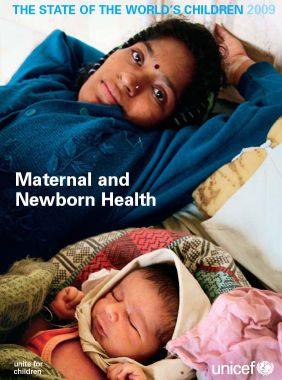
Time to make missing women count...As Unicef’s 2009 State of the World’s Children report reminded us recently, 1,500 women die every day in the world due to complications arising during pregnancy and childbirth. The chances of a woman in developing countries dying before or during childbirth are 300 times greater than for a woman in an industrialised country like the United States. Such a gap does not exist in any other social indicator.
She noted: “The solution has been known for years. The problem is the will to make it work. We also know that the solution would benefit everyone, not just women. Yet, affordable and accessible health care, for instance, has not received the thrust that is needed.”
The Missing Women video suggests to activists and campaigners that action can start with five steps: 1. Educate girls, young women and yourself; 2. Respect their rights; 3. Empower them to participate; 4. Invest in maternal health; 5. Protect against violence and abuse. The Unicef website, meanwhile, lists 10 ways in which concerned individuals can make a difference.
All very commendable and necessary — but not sufficient. With all the good intentions in the world, Unicef’s experts and officials come across as, well, detached and geeky. They don’t connect well enough to the real world people whose needs and interests they are genuinely trying to serve. Their messages are lost somewhere in their precise terms, jargon and endless acronyms.
Just take, for example, the very phrase of maternal mortality itself. Precise but also very stiff and dry. Who outside the medical and development circles uses such terms in conversation? When I write or make films about the issue, I prefer to call it ‘mothers dying needlessly while having babies’. Yes, it’s more wordy and perhaps less exacting. But most ordinary people would get what I’m talking about.
If the jargon-ridden language reads dry in text, it completely puts off people when they watch such words being spoken on video. Such films may pander to the Narcissism of Unicef mandarins, but they completely flop in terms of public communication and engagement.
This is the same point I made in October 2008 when commenting on the Unicef-inspired first Global Handwashing Day: “Passion used to be the hallmark of UNICEF during the time of its legendary executive director James Grant, who strongly believed in communicating messages of child survival and well-being. He gave UNICEF a head start in working with the media, especially television.”
Jim Grant’s deputy, journalist Tarzie Vittachi, who came over to the UN children’s agency after a stint at the UN population fund, used to say: “Governments don’t have babies; people do”. We might extend that to: inter-governmental agencies don’t have babies; real women do. That may be why Unicef insists on delivering its life-saving messages so riddled in politically and scientifically correct, but so sterile language.
Unicef’s YouTube channel has a number of short videos related to what they insist on calling maternal mortality. Here’s an example where Unicef’s Chief of Health Dr. Peter Salama says it’s really an unconscionable number of deaths, and a human tragedy on a massive scale:
We have now passed the half way mark, but progress has been patchy and unimpressive. And it will remain so as long as the UN agencies and other development players insist on peddling jargon and acronyms. Considering the issues of life and death involved here, we must view bad communication as a killer — joining the ranks of unsafe drinking water and violence against women and girls.
Writing an editorial for SciDev.Net in September 2005, I noted: “All development workers and UN officials should take a simple test: explain to the least technical person in your office the core message and relevance of your work. Many jargon-using, data-wielding, acronym-loving development workers would probably fail this test. But unless development-speak is translated into simpler language, the MDGs will remain a buzzword confined to development experts and activists.”
I don’t believe in ghosts, but it’s time to bring back the spirits of Jim Grant and Tarzie Vittachi to Unicef to again humanise the agency so mired in its own ‘geekspeak’. The intellectual rigours of evidence-based, scientific analysis must be balanced with clarity and accessibility. It’s fine to be informed by science, but learn to say it simply, clearly and concisely.
The lives of half a million women and millions of children depend on it.
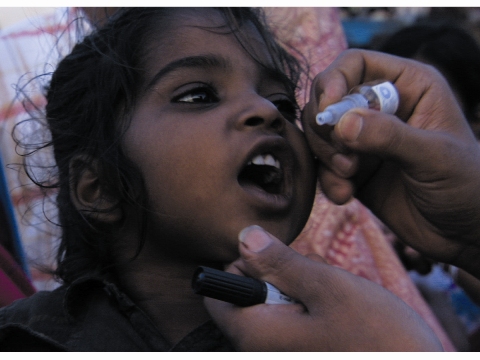
No longer just a drop in the ocean..?The Final Inch didn’t win the Oscar for the best short documentary film made in 2008. But the nomination has given a boost to the film and its cause: even before its official release in April 2009, it is already raising global awareness on the major public health challenge of banishing polio from the planet.
The Final Inch is a testament of the health workers around the world laboring to make polio the second globally eliminated disease behind small pox, says director Irene Taylor Brodsky.
The 37-minute film, due to air on HBO on 1 April 2009, looks at the “the final stages of a 20 year initiative” to eradicate polio. It focuses the polio vaccine efforts in India and Pakistan, which are among the last four countries where polio is still endemic (the other two being Afghanistan and Nigeria).
Watch the trailer for The Final Inch:
The campaign to eradicate polio is now 21 years old. World Health Organisation (WHO), UNICEF and Rotary Foundation embarked on this campaign in earnest in 1988, and as a young (and equally earnest) science journalist, I remember writing about its early strategies, goals and targets. But the virus has proven to be a lot more stubborn than originally expected.
Well, the campaign has scored remarkable victories, and a little over 1,600 people in the world were stricken by polio in 2008. (AIDS and malaria, in contrast, killed more than three million people.) Compare that with 350,000 cases per year when the global onslaught started, and we see there has indeed been progress.
But the virus – and the crippling disease it causes – persists in several poor, densely populated countries in Asia and Africa. Updates are available from Global Polio Eradication Initiative.
Thus it’s the ‘last inch’ – or last mile, if you like – that’s proving the hardest to traverse. In a perceptive essay published in Newsweek in January 2009, Fred Guterl noted: “It’s not easy to wipe a disease off the face of the planet—especially one like polio, which spreads easily and quickly through contact and occasionally through contaminated food and water. Only one in 200 children who contract the virus shows symptoms (usually paralysis), which makes the other 199 silent carriers.”
It’s not just biology that polio eradicators are up against. Indeed, human superstition and religious dogma have made the final inch particularly contentious and treacherous for public health workers.
In 2005, TVE Asia Pacific started distributing a global documentary on immunisation called Fragile Lives: Immunization at Risk. It showed how at least 2 million children die every year from diseases that that vaccination could easily prevent.
Foot soldiers of the largest non-military army in history engaged in its final battle At one point, the film takes us to Uttar Pradesh, in northern India, to show how polio, eradicated in most of the world, stubbornly persists in a few countries. This very poor state with its 272 million inhabitants had two thirds of the world’s polio. We talk to the glamorous young cricketer, Mohamed Kaif, who helps publicise a massive campaign to get every single child to the vaccination booths. The film discovers the strange reason behind why so many Muslim parents refuse to have their children vaccinated.
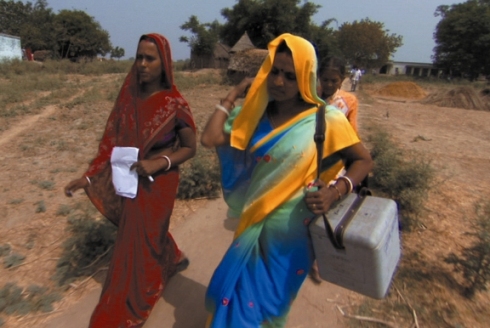
The Final Inch features the heroic efforts of Munzareen Fatima, a field worker in Meerut, Uttar Pradesh, who is a part of UNICEF’s Social Mobilisation Network for ensuring vaccination coverage. She reaches out to her target group through personal and public intervention programmes.
As she told IANS: “It has been a tough journey for me over the last five years to convince 470 families at Dufferin block in Khairnagar to administer polio drops to their children. I met with resistance from the families, who initially refused to immunise their children. The conservative community also belittled me for stepping out of home to campaign against polio.”
India is not alone. If anything, misplaced resistance to polio vaccination has been stronger in Pakistan. As IPS reported in August 2006, the country’s drive against polio was hit by both rumours and litigation.
The news story, filed by Ashfaq Yusufzai in Peshawar, noted: “The reliability and safety of oral polio vaccine (OPV) has been put under scrutiny in Pakistan after wild rumours that it causes impotency snowballed into a writ petition in a high court.”
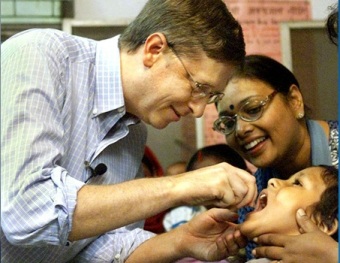
Bill Gates: geek power and bucks to battle polio...Religion-inspired superstitions have often stood in the way of achieving sufficient vaccination coverage, leaving room for viruses to spread again. Religious leaders sometimes strengthen the hand of those making pseudoscientific claims, says South African science writer George Claassen. Writing in SciDev.Net in April 2008, he noted: “Attempts to eliminate polio in Nigeria, for example, ran into problems when Datti Ahmed, the chair of the Supreme Council for Sharia in Kano state, referred to the Global Polio Eradication Initiative as ‘modern-day Hitlers… who have deliberately adulterated the oral polio vaccines with antifertility drugs and contaminated them with certain viruses which are known to cause HIV and AIDS.'”
Of course, the mistrust of vaccines is not just limited to the developing world, nor is it always inspired by religion or superstition. Sometimes over-protective moms can be just as irrational. Fragile Lives, for example, took us to Dublin, Ireland, where there have been two serious outbreaks of measles – largely due to mothers rejecting vaccination because of the MMR controversy. In some parts of Ireland only 60% instead of the necessary 95%, have been vaccinated.
I have long wondered if both radio and TV broadcasters store their archival material in black holes – into which everything disappears and nothing ever comes out. And certainly, nothing is shared with anyone else.
In a widely reproduced and commented op ed essay written for SciDev.Net in November 2008, titled Planet before profit for climate change films, I noted:
“It isn’t just climate-related films that are locked up with copyright restrictions. Every year, hundreds of television programmes or video films — many supported by public, corporate or philanthropic funds — are made on a variety of development and conservation topics.
“These are typically aired once, twice or at best a few times and then relegated to a shelf somewhere. A few may be released on DVD or adapted for online use. But the majority goes into archival ‘black holes’, from where they might never emerge again. Yet most of these films have a long shelf life and could serve multiple secondary uses outside the broadcast industry.”
Escape from the Southern 'black hole'?Well, it seems things are changing, albeit very slowly. Last month, we welcomed the announcement from Al Jazeera sharing their news footage online through a Creative Commons license — the first time that video footage produced by a news broadcaster is released for commercial and non-commercial use.
Now comes the news that Australia’s public broadcaster ABC is releasing selected content from its vast archives for non-commercial use by others. And we must thank Charles Darwin for that.
On 12 February 2009, to celebrate Charles Darwin’s 200th birthday, ABC started releasing some archival materials, all based loosely around the theme of evolution and mutation. This Australian first was achieved through ABC’s collaborative media site, Pool.
The next offering to Gene Pool would be a clip from ABC’s Monday Conference in 1971 featuring Stanford entomologist Paul Ehrlich talking about climate change (yes, it’s from 38 years ago!).
These materials are being released under the Creative Commons 3.0 licence allowing people to reuse or remix them in any way they like — as long as it’s for non-commercial use.
On Gene Pool website, ABC said: “You can also create your own work exploring the themes of evolution and mutation in lateral ways, and share them back into the Gene Pool.”
A framework for sharing...As Creative Commons Australia explained: “This means that people can tweak, twist and remix the files to create their own creative interpretation of the themes of evolution and mutation, and share these results with the rest of the world. The idea is to build a whole community up around the project, remixing and reusing the ABC archival material in new and previously unthought of ways. This all culminates in a public exhibition of Gene Pool pieces at Melbourne’s RMIT on November 24th – the 150th anniversary of the publication of Darwin’s book The Origin of Species.”
They added: “Just imagine what gems might be hidden away in ABC filing cabinets, waiting to be discovered and put to good use by the population that payed for them in the first place.”
That’s precisely what I’ve been saying for a long time – the taxpayer-funded broadcasters like BBC, NHK or ABC (and their equivalents in other countries) have no moral right to lock away their archives on legal or technical grounds. And to think that some of the content thus held up could actually help us in winning history’s eternal race between education and catastrophe!
Nothing escapes from this one...for nowThe BBC – hailed as a model public broadcaster worldwide – is among the worst offenders on this count. It holds one of the largest archives on environment, natural history and wildlife filmed all over the planet for several decades, yet it stubbornly refuses to share this material with anyone, even when it’s only for strict non-commercial, educational use. Read one example in my July 2007 blog post, The Lawyers who locked up the Butterfly Tree.
This myopic selfishness is contrasted (and put to shame) by exceptional film-makers like Richard Brock (who worked with BBC Natural History Unit for 35 years before leaving it unhappy over its rights management) who have decided to open up their personal video archives for non-commercial use especially in the majority world where such material is in short supply.
We can only hope that ABC’s move would build up pressure on the stubborn old Auntie BBC to finally relent. In fact, this might be a chance for all those public broadcasters – many of them now ‘Aunties without eyeballs’ – to redeem themselves at last, ending decades of copyrights tyranny. (And if that puts their inhouse lawyers out of a job, they can join greedy bankers now lining up for public forgiveness!)
ABC says about its tentative steps to the world of open archives: “It’s a small offering to start but there’ll be a lot more to come. We’re working madly behind the scenes getting clearance to release more more more.”
Watch this space…and keep an eye on that Gene Pool!
The tsunami was triggered by a massive quake that erupted off the coast of Sumatra, and 6 miles deep under the Indian Ocean’s seabed. The estimated 9.1 to 9.3 magnitude earthquake was the strongest in 40 years and the fourth largest in a century. The U.S. Geological Survey later estimated that the amount of energy released was equivalent to the energy of 23,000 Hiroshima-type atomic bombs.
Despite a lag of up to several hours between the earthquake and the impact of the tsunami, nearly all affected people were taken completely by surprise. There were no tsunami warning systems in the Indian Ocean to detect tsunamis or to warn those living on the Indian Ocean rim areas. This cost the lives of over 225,000 people in 11 countries — many of who could have lived if only they had a timely warning to rush inland.
In the past four years, there have been various efforts to set up such early warning systems – as well as effective ways to deliver credible warnings to large numbers of people quickly. These are meant to provide 24/7 coverage to Indian Ocean countries in the same way the Pacific Tsunami Warning Centre has been covering Pacific Ocean countries for many years.
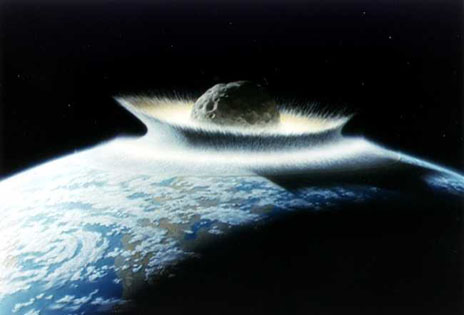
All this is necessary – but not sufficient – to guard ourselves against future tsunamis. For it’s not just earthquakes undersea that can trigger tsunamis. An asteroid impact could trigger the mother of all tsunamis that can impact coastal areas all over the planet.
An asteroid that struck the Earth 65 million years ago wiped out the dinosaurs and 70 per cent of the species then living on the planet. The destruction of the Tunguska region of Siberia in June 1908 – whose centenary was marked this year – is known to have been caused by the impact of a large extraterrestrial object.
Space artist David Hardy's vision...When discussing the possible consequences of asteroid impacts on Earth, more attention has been given to the destruction it can cause by such a falling piece of the sky hitting inhabited areas of land. Some people seem to be comforted by the fact that two thirds of the planet’s surface is ocean — thus increasing changes that an impact would likely happen at sea.
In fact, we should worry more. Duncan Steel, an authority on the subject, has done some terrifying calculations. He took a modest sized space rock, 200 metres in diameter, colliding with Earth at a typical speed of 19 kilometres per second. As it is brought to a halt, it releases kinetic energy in an explosion equal to 600 megatons of TNT — 10 times the yield of the most powerful nuclear weapon tested (underground). Even though only about 10 per cent of this energy would be transferred to the tsunami, such waves will carry this massive energy over long distances to coasts far away. They can therefore cause much more diffused destruction than would have resulted from a land impact. In the latter, the interaction between the blast wave and the irregularities of the ground (hills, buildings, trees) limits the area damaged. On the ocean, the wave propagates until it runs into land.
Scientists have been talking about asteroid impact danger for decades. Arthur C Clarke suggested – in his 1973 science fiction novel Rendezvous with Rama – that as soon as the technology permitted, we should set up powerful radar and optical search systems to detect Earth-threatening objects. The name he suggested was Spaceguard, which, together with Spacewatch, has now been widely accepted.
In November 2008, a group of the world’s leading scientists urged the United Nations to establish an international network to search the skies for asteroids on a collision course with Earth. The spaceguard system would also be responsible for deploying spacecraft that could destroy or deflect incoming objects.
The group – which includes the Royal Society president Sir Martin Rees and environmentalist Sir Crispin Tickell – said that the UN needed to act as a matter of urgency. Although an asteroid collision with the planet is a relatively remote risk, the consequences of a strike would be devastating.
Not if, but when...The International Panel on Asteroid Threat Mitigation, chaired by former American astronaut Russell Schweickart, urged: “The international community must begin work now on forging three impact prevention elements – warning, deflection technology and a decision-making process – into an effective defence against a future collision.”
This is exactly the message in an excellent documentary called Planetary Defence made by Canadian filmmaker M Moidel, who runs the Space Viz production company. Over the past many months, the film has been screened at the United Nations, on various TV channels and at high level meetings of people who share this concern.
Its main thrust: Scientists and the military have only recently awakened to the notion that asteroid impacts with Earth do happen. Planetary Defense meets with both the scientific and military communities to study our options to mitigate an impact. It makes the pivotal point: “Civilization is ill prepared for the inevitable. It’s not if an impact will happen with the Earth, it’s when!”
In such an event, the film asks, who will save Earth? The 48 minute documentary explores the efforts underway to detect and mitigate an impact with Earth from asteroids and comets, collectively known as NEO’s (Near Earth Objects).
Watch the trailer of Planetary Defence on YouTube:
Neil deGrasse Tyson, Astrophysicist and Director, American Museum of Natural History, in New York, says: “Planetary Defense, the film, is a documentary that explores how ill-prepared we are to prevent our own extinction from asteroid and comet impacts. Filmmaker M Moidel interviewed all the right people, asked them all the right questions, and leaves the viewer scared for our future, but empowered to do something about it.”
Although we have never met, I have been in email contact with M Moidel for several years. I know how deeply committed he is to each of his documentary projects. Working on incredibly tight budgets and performing multiple tasks on his own, this brilliant Canadian has made some eminently accessible, timely and captivating documentaries on ‘big picture’ topics such as the search for intelligent life in the universe, the future of space exploration and, of course, coping with asteroid impacts.
Sir Arthur, whose Sri Lankan diving school was destroyed by the 2004 tsunami, wrote a few days after the disaster: “Contrary to popular belief, we science fiction writers don’t predict the future — we try to prevent undesirable futures. In the wake of the Asian tsunami, scientists and governments are scrambling to set up systems to monitor and warn us of future hazards from the sea.
“Let’s keep an eye on the skies even as we worry about the next hazard from the depths of the sea.”
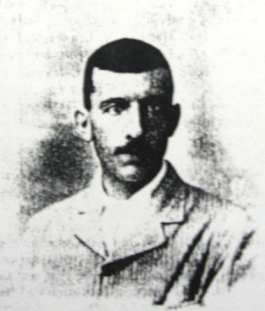
Percy B MolesworthIt was Sir Arthur C Clarke who first told me, nearly a quarter of a century ago, about a forgotten Ceylonese astronomer who has a Martian crater named after him. His name was Percy Molesworth, and I was fascinated by the story of this man who lived and died in a world so different from ours…and the trails he blazed.
Christmas Day 2008 marks the hundredth death anniversary of this remarkable man who pioneered astronomical observations in colonial Ceylon (now Sri Lanka). Most people in the land of his birth have never heard of him, and therein hangs a sad tale of how the country neglects its intellectual and scientific heritage.
By profession, Percy Braybrooke Molesworth (1867 – 1908) was a major in corps of Royal Engineers, but he is better remembered as one of the world’s leading amateur astronomers at the beginning of the Twentieth Century. From his personal observatory in Trincomalee, on Ceylon’s east coast, Molesworth both observed the night sky and photographed celestial bodies, the results of which he shared with leading astronomical groups in the west. Armed only with a basic telescope, a sharp eye and good drawing skills, he made significant contributions to advancing our knowledge of the heavens at the time.
In these articles, I weave together material gleaned from a dozen different sources, including obituaries of Molesworth published by the British Astronomical Association (BAA) and Royal Astronomical Society (RAS), and later papers and reviews of the formidable body of work that Molesworth left behind after a short but highly productive life of 41 years.
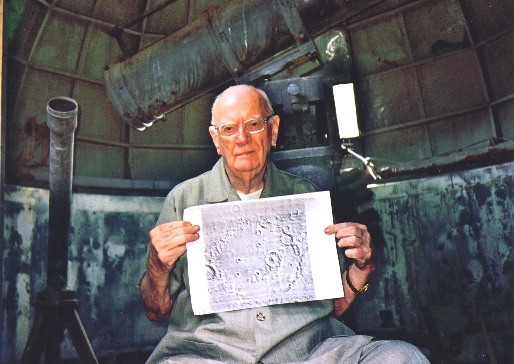
Sir Arthur Clarke, sitting next to the historic telescope, shows a photo of Crater MolesworthOne of my principal sources is Sir Arthur C Clarke, another astronomically-inclined Englishman who was to settle down in Ceylon decades later, and with whom I worked for over 20 years as a research assistant. Molesworth combined in him several elements that resonated with Sir Arthur -– Ceylon, Trincomalee, night sky observations and Mars. In the years that followed my introduction to Molesworth, Sir Arthur allowed me unrestricted access to his library and archives where I read more about Molesworth, principally from BAA and RAS journals and newsletters.
I also had the privilege of associating the late Herschel Gunawardena, who co-founded the Ceylon Astronomical Association (CAA) with Arthur Clarke in 1959, and served as its first secretary and later president. Herschel told me details of his personal quest for Molesworth, which he had chronicled in an article he wrote in the CAA journal, Equatorial, in 1971.
Others who gave me information or insights into this story include the late Dr V K Samaranayake, who played a part in restoring the telescope in the 1960s, and Fr Dr Mervyn Fernando, a keen amateur astronomer who continues to promote the subject in the local languages through the Subodhi Astronomy and Space Study Centre.
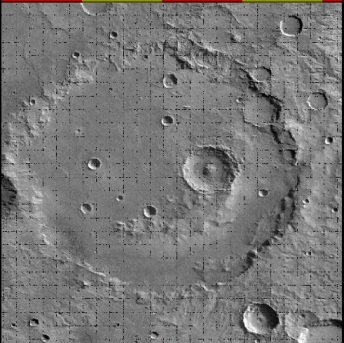
Crater MolesworthMy own connection with Molesworth happened over 20 years ago. In early 1988, while Sri Lanka was engulfed in a brutal southern insurgency, vandals looted the Colombo University dome – by then housing the Molesworth telescope – and removed several parts purely for their metallic value. I covered that incident as a young science journalist working for The Island newspaper, and later wrote a feature article titled ‘The death of an observatory’ (published on 26 March 1988).
Given the political turmoil at the time, it barely made any ripples. I still remember being ridiculed by some for reviving the memory of a long dead man at a time when hundreds of innocent, non-combatant lives were being lost every week due to extra-judicial killings.
Indeed, for much of the past 30 years, Trincomalee has been affected by Sri Lanka’s long-drawn civil war in the country’s north and east. I had planned to visit Trincomalee this year to personally find out the current status of the Molesworth bungalow and tombstone. But that didn’t happen due to the pressure of work and other distractions. I might well do that in 2009, now designated the International Year of Astronomy.
Naming celestial objects is a serious business, carried out by the International Astronomical Union (IAU) through a careful process. There are hundreds of thousands of craters on Mars, but only some of them have names. The Wikipedia has a list of Martian craters which are by convention named after famous scientists and science fiction authors, or if less than 60 km in diameter, after towns on Earth.
A miracle substance to get smarter?One of the earliest video films I helped distribute at TVE Asia Pacific, soon after it was set up in 1996, was called Ending Hidden Hunger.
This 20 minute film, made in 1992 by Bedford Films of UK and narrated by Sir Peter Ustinov, described how the UN children’s agency UNICEF was working toward eliminating micronutrient deficiencies from iron, vitamin A and iodine in different parts of the developing world. Examples are taken from Africa and Asia to both illustrate the extent of the problem as well as steps being taken to reduce these deficiencies that cause mass-scale disability and death.
The main premise of the film was simple: those lacking micro-nutrients in their regular diet often don’t show immediate signs of starvation. This deprivation builds up over time and causes slow – sometimes irreparable – damage.
Nicholas KristofI was reminded of this film — and its still very relevant message — when reading an excellent essay by Nicholas Kristof in International Herald Tribune a few days ago. He is a columnist for the New York Times who travels the world reporting from the various frontlines of survival and struggle.
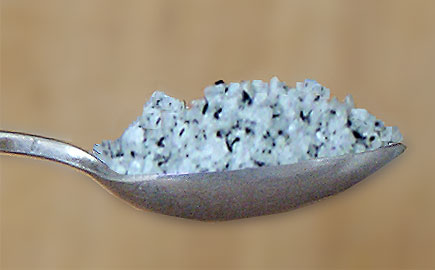
In Raising the World’s I.Q., dispatched from Rawalpindi, Pakistan, Kristof was talking about ‘a miracle substance that is cheap and actually makes people smarter’: iodised salt.
Here’s the context, as he put it:
“Almost one-third of the world’s people don’t get enough iodine from food and water. The result in extreme cases is large goiters that swell their necks, or other obvious impairments such as dwarfism or cretinism. But far more common is mental slowness.
“When a pregnant woman doesn’t have enough iodine in her body, her child may suffer irreversible brain damage and could have an I.Q. that is 10 to 15 points lower than it would otherwise be. An educated guess is that iodine deficiency results in a needless loss of more than 1 billion I.Q. points around the world.”
In nearly all countries, the best strategy to control iodine deficiency is iodisation of salt — one of the most cost-effective ways to contribute to economic and social development. Especially in these hard times, development professionals are looking for smart ways to get the biggest bang for their limited (and still shrinking) bucks. Investing in micronutrients – such as iodine – can provide some of the biggest bangs possible.
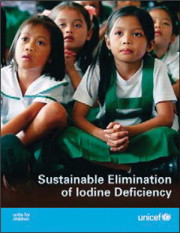
UNICEF Report 2008In June 2008, UNICEF published Sustainable elimination of iodine deficiency, a new report on progress since 1990 when the world’s governments set the target to eliminate iodine-deficiency disorders worldwide.
In October 2008, The Lancet, one of the world’s leading medical journals, published a report that noted: “Iodine deficiency is the most common cause of preventable mental impairment worldwide.”
The medical, public health and development communities have known and talked about iodine and other micronutrients for over 30 years. Significant progress has been made – for example, UNICEF says by 2006, more than 120 countries were implementing salt iodisation programmes, and 34 countries had managed to get rid of iodine deficiency among their people through this smart strategy.
But there still are major gaps — which continue to cause preventable damage to tens of millions of people including children.
Nicholas Kristof navigates through the heavy, jargon-ridden developmentspeak and churns out an eminently readable, accessible piece. It’s written in first person narrative from a part of the world where illiteracy, superstition – and their erstwhile companion, religious fanaticism – are trying to prevent people at risk from using iodised salt. This is science writing at its finest: anecdotal, personalised and purposeful.
And he’s absolutely right when he says iodised salt lacks glamour, doesn’t have too many stars or starlets singing its praise and (almost) no one writing about it despite its potential to improve lives for so many people.
I should know: one of the earliest topics I tackled as a young science reporter – getting started in the late 1980s – was salt iodisation. I struggled to put together a readable, engaging piece — which I then had to push through jaded editors who wondered what all this fuss was about.
I have only one (minor) bone to pick with Kristof. He pokes fun at Canada for hosting and supporting the Micronutrient Initiative, “an independent, not-for-profit organization committed to promoting simple cost-effective solutions for hidden hunger and developing innovative new solutions where needed.”
He calls Canada “earnest and dull, just like micronutrients themselves”. It’s a personal view – perhaps expressed with his tongue firmly in his cheek. Having travelled a fair amount in North America, and having good friends in both countries, I think that the nation north of the US-Canada border is a tad more civilised, certainly more caring and better engaged with the rest of the world.
But then, that too is a personal view. I’m darn lucky that I get enough iodine in my diet so that I can think for myself, keep asking lots of annoying questions…and occasionally even get some answers right.
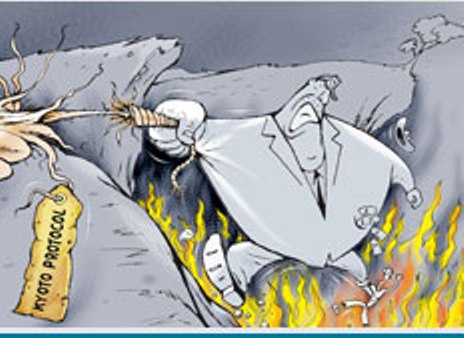
“Twenty centuries ago, Emperor Nero fiddled while Rome burned. Today, some media companies are squabbling over copyrights while the planet is warming.”
The latest outlet to carry my views is Down to Earth, the fortnightly magazine on science and environment published from New Delhi, India. They have included a condensed version of my remarks in their issue for 15 December 2008, under the heading: Films chained, unchained
It’s part of a special issue to mark the 14th Conference of Parties to the United Nations Framework Convention on Climate Change (UNFCCC) and the fourth meeting of Parties to the Kyoto Protocol, being held in the Polish city of Poznan from 1 to 12 December 2008.
When Down to Earth editors first mooted the idea of carrying my views, they suggested a catchy headline: Climate’s Niros. I rather liked that…but that didn’t survive their copyediting. Ah, well…
Last chance for Kyoto Protocol?In its preamble to the special climate change issue, Down to Earth editors say: “Eleven years after the Kyoto Protocol was signed — only to be consigned to irrelevance over the subsequent decade — nations are meeting in Poland to negotiate post-2012 action.
“The realities of climate change are clearer than ever, and the cost of action is mounting. Rich countries, historically responsible for climate change, are proposing new mechanisms to share the burden. Leading developing countries such as India and China need to negotiate hard as well and make a big push for renewables…” Read full story
These have been linked to, or commented upon, by various blogs and websites. Interestingly, the big time TV/video production companies and broadcasters have been keeping quiet in this debate.
Perhaps they are too busy counting their money accruing from license fees?












 Open Minds!