
Sometime ago, when I gave a talk at the Sri Lanka Rationnalists’ Association, a member of my audience asked if parents should be banned from reading fairy tales to their children. His argued that children should be raised on reality and not fantasy. I was talking about science fiction and their social relevance, and I answered: there is absolutely no harm in fairy tales as they nurture in our young minds those vital qualities of imagination and sense of wonder. I quoted C S Lewis as saying that the only people really against escapism were…jailers!
These days, not all children’s stories are fairy tales and some of them actually carry very down-to-earth messages either overtly or covertly. Members of that largest club in the world – Parenthood – keep discovering new depths and insights in some children’s stories.
On 30 January, as people power struggles were unfolding in Tunisia and Egypt, I wrote a blog post titled Wanted: More courageous little ‘Mack’s to unsettle Yertle Kings of our times!. I related how, while following the developments on the web, I have been re-reading my Dr Seuss. In particular, the delightfully inspiring tale of Yertle the Turtle King. To me, that is the perfect example of People Power in action — cleverly disguised as children’s verse!
Turns out another parent on the opposite side of the planet had a similar insight, but from an even older children’s story written in Russia! Philip Shishkin has shared his experience in the latest issue of Newsweek.
Tarankanische, or ‘The Terrible Cockroach’ (also translated as ‘The Giant Cockroach’) is a children’s story written by the Russian author Kornei Chukovsky (1882-1969). The first edition, with illustrations by Sergeii Chekhonin, was published in (then) Leningrad 1925.
I was raised on translated Russian children’s stories (the only books of that genre we could access in the closed-economy, socialist misadventures of Sri Lanka during the early 1970s). Whatever economic realities that thrust those books on my childhood, many of them were very fine stories, always well illustrated. But I had somehow missed out on this one — so I quickly did some web searching for this story. And what a fantastic fable it is!
Tarankanische tells the nonsense tale of a threatening cockroach who is so fierce that he terrifies all the animals who are out to enjoy a picnic. Even the mighty elephants are helpless in his presence. The cockroach bullies and scares animals much larger than itself, and demands they surrender their cubs so he can eat them. He is seen as “a terrible giant: the red-haired, big-whiskered cockroach.”

In his essay titled Watching the Mighty Cockroach Fall, Philip Shishkin writes: “It is hard not to read the poem as an allegory for the rise and fall of a dictatorship. Despots tend to appear invincible while they rule, and then laughably weak when they fall. Once their subjects call them out on their farce, dictators look ridiculous. Often, they react by killing and jailing people, which buys them more time in power (Iran, Belarus, and Uzbekistan come to mind). But just as often, when faced with a truly popular challenge, dictators shrink to the size of their inner cockroaches.”
Shishkin then raises an interesting question: Did Kornei Chukovsky have Joseph Stalin in mind when he wrote it? Was Stalin prominent enough when the story was first published in 1925? To find out, read the full essay.
According to his mini-bio on IMDB, Chukovsky was a praised Russian translator of Charles Dickens, Mark Twain, Walt Whitman, and other English and American authors. His writings for children are regarded as classics of the form. His best-known poems for children are “Krokodil”, “Moydodyr”, “Tarakanische”, and “Doctor Aybolit” (Doctor Ouch).
This short video is currently a high favourite online. Created by Tamer Shaaban. Another Egyptian who’s had enough.
Their blurb: “Violent clashes between police and demonstrators as over ten thousand gather on the streets of Cairo. The Egyptian people have endured a tyrant’s rule for far too long, millions struggle each day to find where their next meal is coming from. January 25th, 2011 marks the day when the people rise and take back what’s rightfully there’s. This isn’t the end, but hopefully the beginning to a long awaited regime change! Send to everyone and let them know.”
Song: “Into the Fire” – Thirteen Senses
Thanks to the following news sources for their footage
Daily News Egypt
The Guardian
CNN
New York Times
Al Masry Al Youm
The video was posted on reddit and has gained momentum!
#Facebook Link: Egypt’s Peaceful Revolution
Related blog post: Wanted: More courageous little ‘Mack’s to unsettle Yertle Kings of our times!
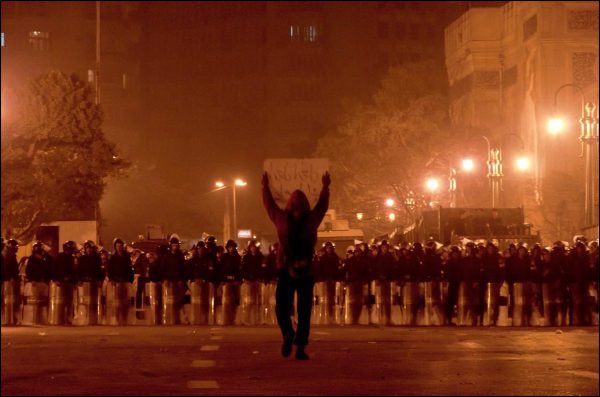
January 2011 has been an eventful month for democratic reform in the Middle East. As People Power successfully toppled the deeply entrenched dictator Ben Ali in Tunisia, and the ordinary Egyptians intensified their pressure on own 30-year-long regime of Hosni Mubarak, commentators around the world have been trying to make sense of the rapidly unfolding developments. One of them, David Kravets, writing in Wired linked to a blog post of mine that talked about the experience of one of the earliest successful demonstrations of people power — in the Philippines, when they toppled a long-misruling dictator in 1986.
Amidst all this, and while following the developments on the web, I have been re-reading my Dr Seuss. In particular, the delightfully inspiring tale of Yertle the Turtle King. To me, that is the perfect example of People Power in action — cleverly disguised as children’s verse!
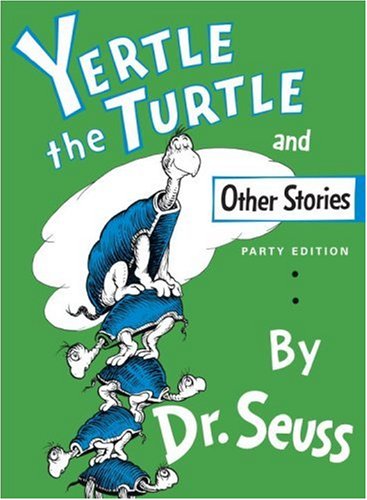
The story was first published in April 1958, in a picture book collection by Theodor Geisel, published under his more commonly-known pseudonym, Dr. Seuss. In 2001, Publishers Weekly listed it at No 125 on a list of the best-selling children’s books of all time.
For those poor Seuss-deprived readers, here’s a helpful summary I have adapted from Wikipedia:
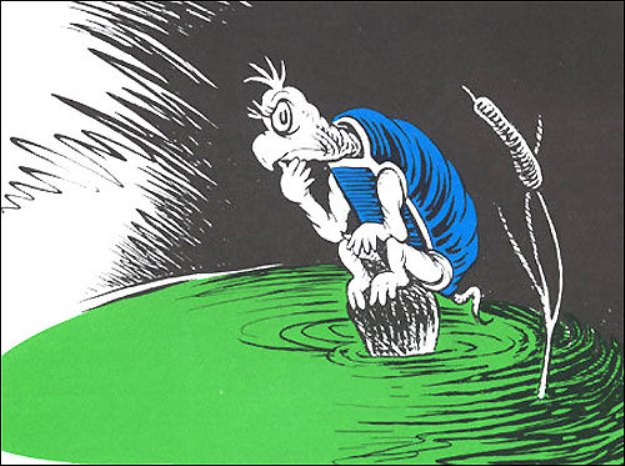
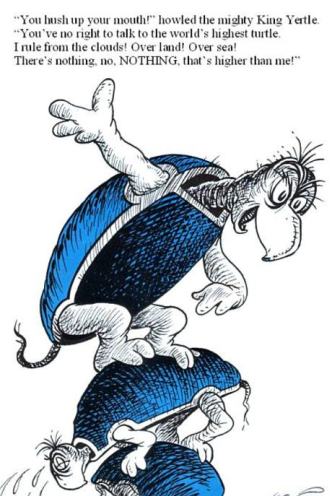
The story is about Yertle the Turtle, the king of the pond in the far-away island of Sala-ma-Sond. Unsatisfied with the stone that serves as his throne, he commands the other turtles to stack themselves beneath him so that he can see further and expand his kingdom (he considers himself the master of all he can see). However, the stacked turtles are in pain. Mack, a very ordinary little turtle at the very bottom of the pile, asks Yertle for a respite, but Yertle just tells him to shut up. Dissent is suppressed.
King Yertle is still not happy: he wants ‘to expand his kingdom’. So he commands more and more turtles to add to his throne. Mack again asks for a respite because the increased weight is now causing extreme pain to the turtles at the bottom. Again Yertle yells at Mack to shut up. At this point, little Mack decides he has had enough and decides to do something to vent his anger and frustration: he just burps. That simple action shakes up the entire stack of turtles, and the mighty king comes crashing down into the pond — and all turtles are freed at last!
 Years ago, when I first read the story to my then very young daughter, I could immediately see strong parallels between the vain, merciless Yertle the turtle king and the equally egotistic megalomaniacs in the world of human politics and governance. I would later learn that Dr Seuss meant Yertle to be Adolf Hitler: the turtle’s rule of the pond and takeover of the surrounding areas signified Hitler’s regime in Germany and invasion of surrounding Europe.
The ordinary but courageous Mack epitomises long-suffering Everyman and Everywoman in all countries where autocratic or dictatorial regimes rule, piling ever more burdens on their people. Like the turtles in the stack, the people can go on for years taking a great deal of suffering and sacrifice while the despots plunder and make merry. But there comes a day when a ‘Mack’ says enough is enough…and emits a humble ‘burp’ that shakes up everyone.
As Dr Seuss wrote (and this is my favourite part!):
But, as Yertle, the Turtle King, lifted his hand
And started to order and give the command,
That plain little turtle below in the stack,
That plain little turtle whose name was just Mack,
Decided he’d taken enough. And he had.
And that plain little lad got a bit mad.
And that plain little Mack did a plain little thing.
He burped!
And his burp shook the throne of the king!
And Yertle the Turtle, the king of the trees,
The king of the air and the birds and the bees,
The king of a house and a cow and a mule…
Well, that was the end of the Turtle King’s rule!
For Yertle, the King of all Sala-ma-Sond,
Fell off his high throne and fell Plunk! in the pond!
And today the great Yertle, that Marvelous he,
Is King of the Mud. That is all he can see.
And the turtles, of course… all the turtles are free
As turtles and, maybe, all creatures should be.
Read the text of Yertle the Turtle King
I don’t mean to oversimplify or belittle the enormous courage and resolve it takes for ordinary people to take on a brutal regime, but as pop-culture metaphors go, it’s hard to find a better one than Mack and his defiant burp. That little burp by a tiny turtle brought a vain king down, and its real-world equivalent is called people power: when long-oppressed ordinary people take to the streets to protest against the accumulated excesses of their rulers, demanding reform or regime change.
Not all such ‘burps’ bring all ‘Yertles’ down in the real world. The mighty Soviet Union crumbled in the late 1980s thanks to the courage and persistence of ordinary people who stood up and stepped out. It also worked twice in the Philippines: first against an outright dictator (Marcos) in 1986, and then against a renegade elected president (Estrada) in 2001. A variation of it happened in Nepal against the brutal King Gyanendra, who was dumped into the dustbin of history with the entire monarchy in 2006. Each case had its own history, dynamics and outcomes but shared the common feat of people power.
But there’s no doubt that recent history has been shaped and made by Macks who broke the silence and, figuratively speaking, burped. Some such burps were heard around the world, and some Macks went on to lead prolonged revolutions that ended with them becoming rulers themselves: Lech Walesa, Cory Aquino and Valclav Havel come to mind.
For every ‘Mack’ who succeeds, though, there are many who go unsung —or much worse. We still have no idea what happened to that much photographed and celebrated ‘Tank Man’ who stood up against the Red Army’s tanks on Tiananman Square one fateful day in June 1989. We don’t even know his name, but his defiance against such enormous odds still inspires assorted Macks all over the world.
For sure, our world is a tiny bit larger — and more complex — than that muddy pond in far away Sala-ma-Sond. And we have an abundance of Yertles, of various colours and hues, riding literally on the backs of their fellow people.
At least some of these tyrants must be following the recent developments in Tunisia and Egypt with growing anxiety. We can only hope that there will be a steady stream of courageous little ‘Macks’ in all such countries who will finally speak up and say: ‘Oi, Enough is enough!’
And then…BURP!
PS: Interesting footnote: Dr Seuss was the first to use the word “burp” in print. That apparently was cause for some concern before publication. According to him, the publishers at Random House, including the president, had to meet to decide whether or not they could use “burp” because “nobody had ever burped before on the pages of a children’s book”.
See also this interesting poem The Vain King, by American poet Henry Van Dyke (1852 – 1933)
It’s funny how, more than a generation after most of the world adopted the metric system of measurements, relics of the earlier, ‘imperial’ units still linger in our language and popular culture.
Frequent flyers stlll accumulate air-miles, not kilometres. Disaster managers grapple with the challenges of communicating credible early warnings on that the crucial ‘last mile’ (it’s not yet the ‘last kilometre’). And many among us, including those who have grown up in a metric world, can better grasp a square mile than a square kilometre.
One Square Mile is also the name of an interesting new TV series produced by One Planet Pictures of the UK, and first airing this month on BBC World News. In this series, reporters visit a neighbourhood in different parts of the developing world and try and find out what the residents’ hopes and aspirations
Says its producer Robert Lamb: “One Square Mile is an experiment. So much in television is set up. In this series our reporters explore a small patch of a city with the aim of providing the viewer with an authentic slice of life.”
According to Robert, One Square Mile takes the lid off a neighbourhood. Reporters wander around a marked out section of a town and city and talk to the people they meet to find out what their everyday concerns are.
Of this months shows, two are presented by Zeinab Badawi . In one, she goes walkabout in Juba, capital of south Sudan which is on the verge of becoming an independent state. In the other, Badawi encounters murder on the streets in Guatemala City.
The other two are presented by my friend Vasanthi Hariprakash, whose day job is with India’s leading TV news network NDTV. These two are of particular interest to me as she travels to countries in Asia that are closer to me in distance and closer to my heart.
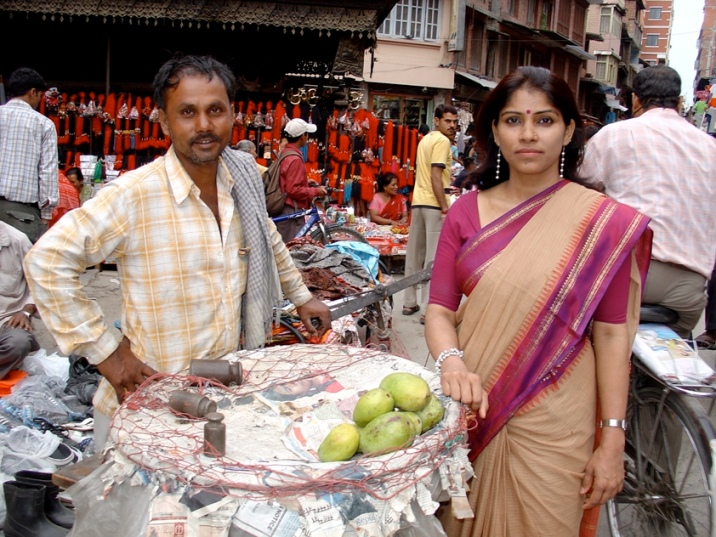
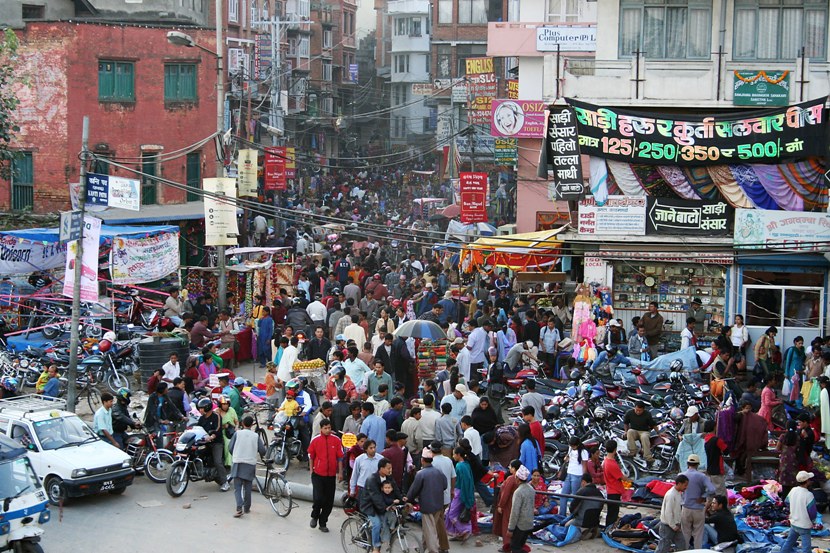
In one show, Vasanthi travels to Kathmandu, the capital of Nepal. The blurb says: “Despite a recent record of political instability that has seen a monarchy overthrown and an uneasy peace struck with the Maoist insurgents, reporter Vasanthi Hariprakash finds a city population surprisingly upbeat. But a long dawn queue outside the passport office tells a different story – young Nepali men are desperate to get out to find work in the Gulf and Southeast Asia.”
I’m familiar with that city having made multiple visits since 1995, and have shared the pains and anxieties of my Nepali friends as they went through political turmoil and a bloody insurgency. I saluted them when their ‘people power’ got rid of the despotic king in 2006.
Vasanthi did remarkably well in presenting her first-time appearance on a BBC-broadcast show. She came across as informed, eager and empathetic to the people and place she was exploring. Not once did I notice a hint of cynicism or condescension in her voice. This is quite in contrast to regular BBC reporters, many of who are far too judgemental and dismissive than good journalists should ever be. We can only hope vasanthi never aspires to those despicable professional levels…
In her second show, Vasanthi travels to a small village in Laos next to the old Ho Chi Minh trail where the dominant concern is unexploded cluster bombs from the Vietnam war. The synopsis reads: “From the capital Vientiane it takes 10 hours for reporter Vasanthi Hariprakash to reach her square mile – a village next to the old Ho Chi Minh trail. Today it’s a peaceful highway for enterprising Vietnamese traders but during the war it was a target for the B 52 bombers with their deadly cargo of cluster bombs. 40% are live – called UXOs – Unexploded Ordinance – and Hariprakesh finds the villagers’ poverty leaves them no choice but to run the gauntlet of the unexploded munitions as they work in their paddy fields.”
This reminds me of a short film I saw in Cambodia many years ago about a poor, rural community who faced a similar dilemma living and working in a countryside littered with unknown and unexploded landmines. The Cold War conflicts in Southeast Asia may have ended decades ago, but local people still live in the shadow of their deadly legacies…
I can’t wait for more real-life stories in One Square Mile, and I hope Robert Lamb will send out his intrepid and charming reporters to far corners of the real world where real people are taking on life’s many challenges 24/7. These people’s resilience and resourcefulness inspire us all.
And that’s what good television is all about. Moving images, moving us all!
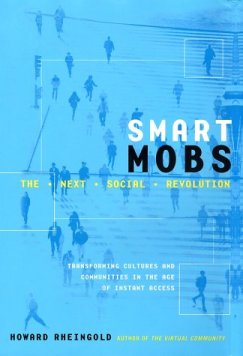
The idea was first proposed by author Howard Rheingold in his 2002 book, Smart Mobs: The Next Social Revolution. It deals with the social, economic and political changes implicated by developing information and communications technology. The topics range from text-messaging culture and wireless internet to the impact of the web on the marketplace.
In the eight years since the book first appeared, we’ve seen a proliferation and evolution of smart mobs, fuelled by the growth web 2.0 tools and, more recently, the many and varied social media. In fact, author Rheingold is credited with inventing the term virtual communities.
But the reality is that smart mobs can also be very fickle — their attention can be easily distracted. A smart mob can disperse just as fast as it forms, even while its original provocation remains.
This was demonstrated in dramatic terms in June 2009. Following a hotly disputed presidential election in Iran, there was a surge of online support for pro-democracy activists there who launched a massive protest. A main point of convergence for online reporting and agitation was micro-blogging platform Twitter. Within a few days, mainstream media like TIME and Washington Post were all talking about this phenomenon in gushing terms.
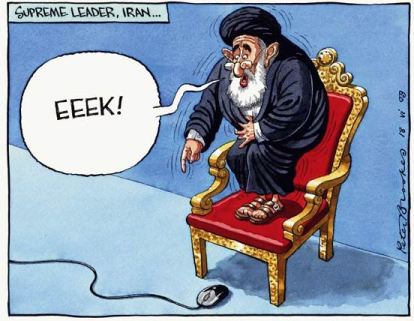
As I wrote at the time: “I have no idea if the Ayatollahs are closet fans of Michael Jackson. But they must surely have thanked the King of Pop for creating a much-needed diversion in cyberspace precisely when the theocracy in Tehran needed it most.”
Other recent experiences have demonstrated how online interest can both build up and dissipate very fast. Staying with a single issue or cause seems hard in a world where news is breaking 24/7.
Here’s a current example. Following the massive oil spill in the Gulf of Mexico that started on 20 April 2010, local communities and environmental activists deployed various social media tools to track the unfolding disaster. BP, the giant oil company implicated in the disaster, has also tried to use social media to communicate its positions, but not too successfully. On Twitter, it was not BP’s official account but the satirical @BPGlobalPR that was dominating the online conversation. As one commentator wrote: “It is an object lesson in how social media can shape and control a company’s message during a crisis.”
Riding the wave can be fun, but waves form and break quickly. Those who want to use social media tools for social activism still need to learn how to hitch a ride with the ocean current beneath the fickle waves.
How I wish I could get some practical advice on this from a certain ancient mariner named Sinbad.
Updated: 6 Dec 2013 Nelson Rolihlahla Mandela (1918 – 2013): Thank You and Goodbye!
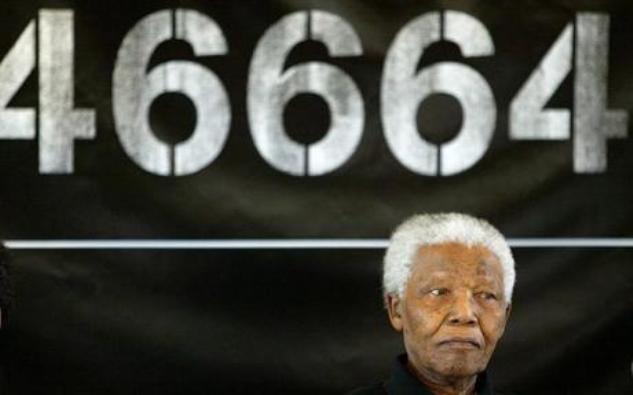
This week marks the 20th anniversary of Nelson Mandela’s release after 27 years in prison.
Ending his long walk to freedom on 11 February 1990, he gave a speech which ended with these words from the defence statement he’d made during his trial for treason 27 years previously: “I have fought against white domination, and I have fought against black domination. I have cherished the ideal of a democratic and free society in which all persons will live together in harmony with equal opportunities. It is an ideal which I hope to live for, and to see realised. But my Lord, if needs be, it is an ideal for which I am prepared to die.”
My friend and inspiration Danny Schechter wrote an interesting piece recalling the week 20 years ago when his hero (and mine) finally walked free after being the world’s most celebrated political prisoner for over a quarter century.
American journalist and film maker Danny was a long and persistent supporter of the struggle against Apartheid: in all, he has made six films with and about Mandela. Here are his reminiscences in full, borrowed from his News Dissector blog:
WAITING FOR MANDELA, by Danny Schechter
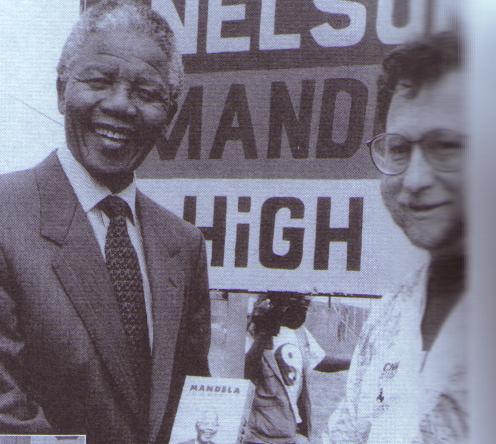
Twenty years ago during this very week, I was leading the production team of Globalvision’s inaugural TV series, South Africa Now. We were all consumed by the rumors that best known political prisoner in the world, Nelson Mandela, the leader and symbol of the African National Congress, was about to be released from prison in South Africa after 27 years.
It was exciting and nerve-wracking to contemplate what would come next—but with all the joy and anticipation, there was a fear too, fear that Mandela would be freed into an unfree society with power still in white hands dominated by their pro-apartheid Generals and securocrats. No one was sure what would happen. Would he be going from one jail to another? Would he be assassinated? Would it even happen?
Back then, we were rushing to finish a South Africa Now PBS special slated to air in prime time on Sunday February 11th. PBS correspondent Charlayne Hunter Gault, later to become first NPR’s and then CNN’s bureau chief in South Africa, had agreed to anchor it, and we were busy putting the final touches on the show which we had titled WAITING FOR MANDELA.
It was all rush, rush. We wanted to be timely but we were covering all bases because we weren’t sure if he would be freed or not. On Friday, February 9th, we went into the studio at the old WNET–Channel 13 in New York to record our studio introductions. We finished our graphics. Charlayne prercorded her open. She was great, We were ready to go. All that remained was for the special to be packaged and aired.
But then, late on Friday Night or was it Saturday Morning, we heard that South African President DeKlerk was going to make a special announcement, a key speech to mark the opening of their Parliament. He was considered a liberal Afrikaner and had been part of a process or internal coup that ousted hardline pro-apartheid president. P.W. Botha known there as “the crocodile.”
What would he say? What would he do?
The next day, were glued to our TV sets and saw DeKlerk shock the world. He announced that Mandela would be freed the next day, on Sunday. He was then in Victor Verster prison in South Africa’s wine country north of Capetown. It was happening!
 Not only that. DeKlerk announced that the ANC and the South African Communist Party and all other banned organizations would be, after decades, unbanned and allowed to participate in South African politics. This meant that the ANC leaders and their MK guerrilla fighters would be able to come home from so many years in the pain of exile.
The world was upside down. ANC people worldwide had to pinch themselves to see if they really heard what he said.
It was mind-blowing. We screamed. We cried. And then, we panicked. Our TV special was now out of date. The Waiting for Mandela was over. We had a little more that 24 hours to come up with a new TV hour with virtually no budget. We had won a hour of prime time TV. We couldn’t allow it to go to waste.
The world media was rushing to the scene. They had satellites, crews, reporters galore. What could we do that was different? We had been covering the situation there on a weekly basis and had all sorts of footage the networks didn’t. We had contacts and context. But we couldn’t go there because there wasn’t enough time. And besides, we were, in effect, banned there working with South Africans. (The ANC would be unbanned before us!)
We went to work, re-editing, tapping into a South African broadcasting company feed, and setting up the first televised exchange between the ANC and a government that refused to recognize the liberation movement.
We worked around the clock. Two editors collapsed in reworking the material under pressure. We just made air, as TV people say, by minutes. We believe our special was the best on TV.
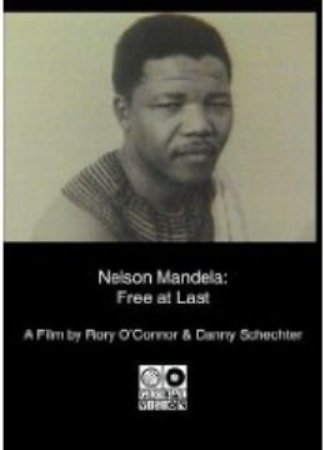
The program was now called MANDELA: Free At Last. And we have tapes for anyone interested!
Read more memories and reflections by Danny Schechter on the News Dissector blog
Huffington Post, June 2008: Danny Schechter’s 90th birthday tribute to Nelson Mandela
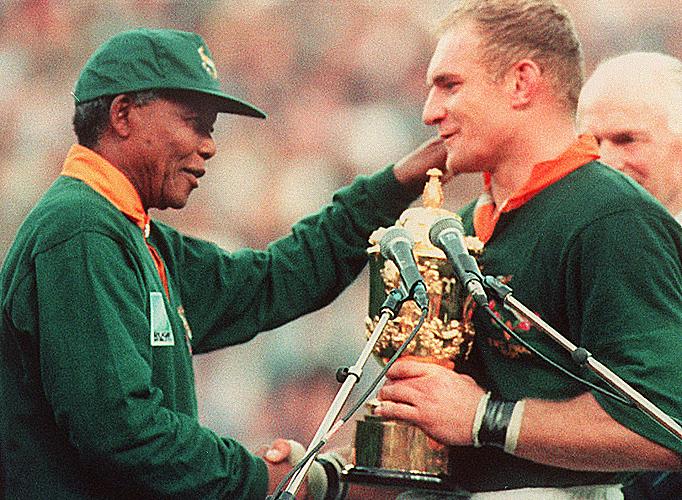
Updated: 6 Dec 2013 Nelson Rolihlahla Mandela (1918 – 2013): Thank You and Goodbye!
If a run-away genie granted me a wish to clone any single living human being, I’ll have no hesitation with my choice: Nelson Mandela — undoubtedly the greatest living statesman on the planet.
One might argue that Mandelas are not born; they are made. A combination of personality and historical circumstances create the rare phenomena like him.
In July 2008, when Mandela turned 90, I quoted the American film-maker, social activist and blogger Danny Schechter — who filmed Mandela’s struggle to end apartheid and restore democracy in South Africa — as saying: “He (Mandela) is one of those leaders who not only helped free his own country and people but became an icon and symbol for freedom in the world. At a time when darkness seems to be descending again, with the economy on the edge amidst protracted wars and pervasive abuses of powers, he is the one person that people the world over look to as a symbol of that saying that ‘another world is possible.’ He is not perfect – who is? He has taken great risks, and made his share of mistakes, but the love and adoration he inspires speaks to how special he is – even as he sees himself as part of a collective, a movement…“
The Mandela story has been told many times by many film-makers, writers and journalists. Few other leaders have engaged the popular culture and media’s attention — while both in and out of office — as Mandela has, and with good reason.
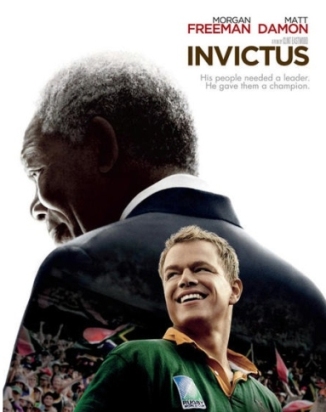
The latest film inspired by Mandela is Invictus directed by Clint Eastwood, starring Morgan Freeman and Matt Damon. Both actors have just been nominated for Oscar awards – for best actor and best supporting actor respectively. But the film’s exclusion from the 10 nominees for best picture has surprised and disappointed some.
Invictus reconstructs the events in the life of Nelson Mandela at a crucial time for himself and country: after the fall of apartheid in South Africa, during his term as the rainbow nation’s first black president. The film revolves around how he campaigned to host the 1995 Rugby World Cup event as an opportunity to unite his rainbow nation. (South Africa’s team eventually won the championship.)
Here’s the plot summary from IMDB:
The film tells the inspiring true story of how Nelson Mandela joined forces with the captain of South Africa’s rugby team to help unite their country. Newly elected President Mandela knows his nation remains racially and economically divided in the wake of apartheid. Believing he can bring his people together through the universal language of sport, Mandela rallies South Africa’s rugby team as they make their historic run to the 1995 Rugby World Cup Championship match.
Watch official trailer of Invictus the movie:
The film’s title comes from the fact that Mandela had the poem Invictus, by English poet William Ernest Henley, written on a scrap of paper on his prison cell while he was incarcerated. The story is based on the John Carlin book Playing the Enemy: Nelson Mandela and the Game That Changed a Nation.
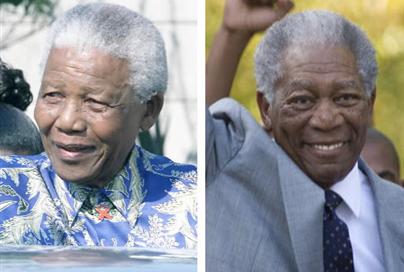
I can’t wait to see Invictus, for it has one of my favourite actors playing one of my greatest heroes. Morgan Freeman is such a versatile and accomplished actor. Having played the US President and God in past movies, this is clearly cut out for him.
As Clint Eastwood explains: “As an actor, Morgan has the same presence when he walks in the room that Mandela has as a politician. Morgan has a certain bearing and charisma. He was built to play this role.”
The Guardian (UK) preview noted: “So convinced by Freeman’s performance was Mandela’s personal assistant that when she stepped on set, she wondered how her boss had made it to the shoot without her. Freeman plays Mandela with all the expected wisdom and fortitude, but it’s the twinkle of mischief in his eye that makes you feel you’re not just watching the man, rather than a virtuoso impression.”
The Guardian calls Invictus “a startlingly powerful film: a clear-eyed look a recent history, an awe-inspiring tale of prejudice overcome, a study of power – and a rousing sports movie.”
Note: In the movie, Mandela gives the “Invictus” poem to his national rugby team’s captain Francois Pienaar before the start of the 1995 Rugby World Cup. In reality, Mandela provided Pienaar with an extract from Theodore Roosevelt’s “The Man in the Arena” speech from 1910.
If you and I think we have problems, we should consider the case of English poet William Ernest Henley (1849–1903).
Wikipedia says Henley became a victim of tuberculosis of the bone at age 12. A few years later, the disease progressed to his foot, and physicians announced that the only way to save his life was to amputate directly below the knee. But he persevered. In 1867, he passed the Oxford local examination as a senior student, and led an active and productive life till he died aged 53. (According to Robert Louis Stevenson’s letters, the idea for the character of Long John Silver was inspired by his real-life friend Henley.)
In 1875, when Henley was 26 years old, he wrote a poem from a hospital bed. It originally bore no title, and wasn’t published until 1888. It was Sir Arthur Quiller-Couch who named it “Invictus” (Latin for “unconquered”) when he included the poem in The Oxford Book Of English Verse (1900).
So here is Henley’s words of resolve and courage, speaking to us across the gulf of time:
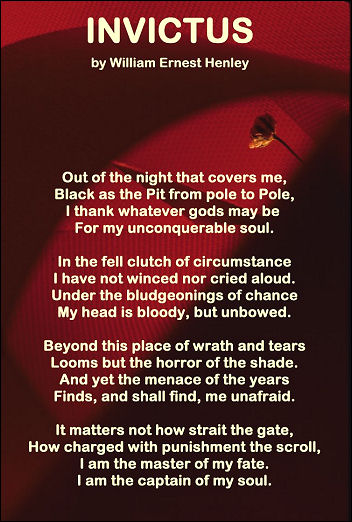
Invictus is also the title of a remarkable 2009 film directed by Clint Eastwood, starring Morgan Freeman and Matt Damon. The film is a look at the life of Nelson Mandela after the fall of apartheid in South Africa, during his term as president, when he campaigned to host the 1995 Rugby World Cup event as an opportunity to unite his countrymen. The title comes from the fact that Mandela had the poem written on a scrap of paper on his prison cell while he was incarcerated.
And here’s an image that echoes the same fighting spirit…
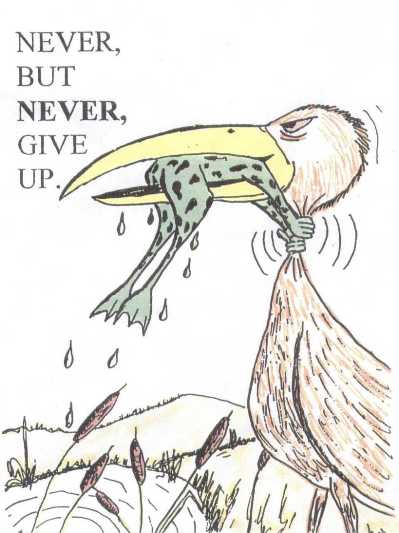
“Pictures are for entertainment, messages should be delivered by Western Union.”
Those words by American film producer and studio founder Sam Goldwyn (1879-1974) sum up Hollywood’s attitude to movie-making for the past many decades.
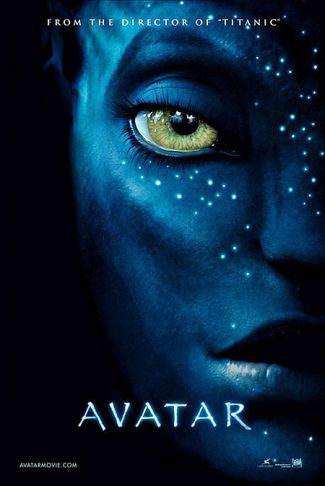
As I watched James Cameron’s latest blockbuster movie Avatar, I kept wondering how the master film maker managed to subvert this so completely. Beneath the 3D, special effects and riot of other worldly colours, the movie is one long (2 hrs 40 mins) and powerful commentary on why might is not right when it comes to exploiting resources — belonging to other countries, people, or as in this case, other worlds.
This is not just another worthy indie movie made by an idealistic movie maker defiant of Hollywood traditions and big money. James Cameron is one of the most commercially successful directors in the mainstream film industry – and perhaps one of the very few who can get away with this kind of stunt. At a budget of over US$ 300 million , Avatar is one of the most expensive films ever made, and the costliest ever for 20th Century Fox.
The big gamble is certainly paying off. On 26 January 2010 came the news that Avatar has surpassed Titanic as the highest-grossing movie worldwide. According to the studio, worldwide box office total for Avatar at that point stood at US$1.859 billion, beating the US$1.843 billion racked up by Cameron’s romantic drama in 1997-98. Avatar broke that record in a little over six weeks.
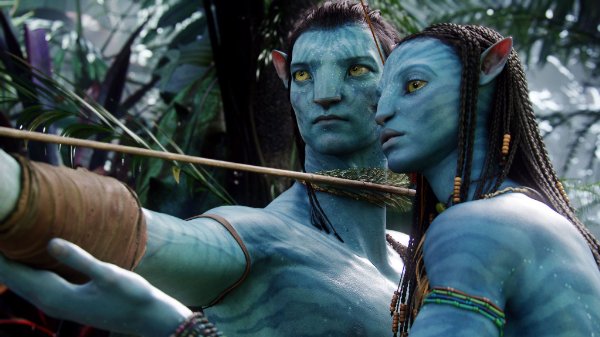
Part of the reason for such appeal is the extraordinary special effects: it’s an action-packed thriller where good and evil battle it out on another planet. The strange landscapes give it a video game like feel, but no small screen can match the theatrical experience, especially if you watch it in IMAX 3D (I didn’t). And for a change, this time the aliens inhabiting planet Pandora are benign, while it’s the humans who are ruthless invaders and brutal killers. Well, at least most of the time…
Here’s the official blurb: “Avatar takes us to a spectacular world beyond imagination, where a reluctant hero embarks on an epic adventure, ultimately fighting to save the alien world he has learned to call home. James Cameron, the Oscar-winning director of Titanic, first conceived the film 15 years ago, when the means to realize his vision did not exist yet. Now, after four years of production, AVATAR, a live action film with a new generation of special effects, delivers a fully immersive cinematic experience of a new kind, where the revolutionary technology invented to make the film disappears into the emotion of the characters and the sweep of the story.”
And here’s AVATAR – Official International Launch Trailer (HD)
Film critics and social commentators around the world have noticed the many layers of allegory in the film. Interestingly, depending on where you come from, the movie’s underlying ‘message’ can be different: anti-war, pro-environment, anti-Big Oil, anti-mining, pro-indigenous people, and finally, anti-colonial or anti-American. Or All of the Above…
It looks as if Cameron has made the ultimate DIY allegory movie: he gives us the template into which any one of us can add our favourite injustice or underdog tale — and stir well. Then sit back and enjoy while good triumphs over evil, and the military-industrial complex is beaten by ten-foot-tall, blue-skinned natives brandishing little more than bows and arrows (and with a little help from Ma Nature). If only it works that way in real life…
But the multi-purpose allegory is apparently working well. Take these two from opposite sides of the planet:
Thomas Eddlem wrote in The New American: “Avatar, is a visually stunning epic that is a perfect allegory for any of a dozen or more Indian wars in American history. From King Philip’s War in New England to Tippecanoe in Indiana to Horseshoe Bend in Alabama — and all the way across the American continent, for that matter — the story was the same. Colonists simply take land from the natives, as the Sully explains: ‘This is how it’s done. When people are sitting on something that you want, you make them your enemy so that you can drive them out.’
Mayank Shekhar wrote in The Hindustan Times newspaper: “Between a green worldview and the globe’s war over a natural resource, James Cameron’s twin analogies of present-day politics are fairly complete. They lend his science fiction ‘event picture’ a certain soul, even if not much of a story line.”
So did Cameron set out trying to send a message? Or was it all an incidental byproduct? Listen to the director himself in these two online video stories:
James Cameron’s Vision Featurette
CBS Interview with James Cameron: From Titanic to Avatar
The most compelling social commentary on Avatar I have so far read comes from Naomi Wolf, the American political activist, author and social critic. In an op ed essay written for Project Syndicate, she sees two revealing themes in Avatar: “the raw, guilty template of the American unconscious in the context of the ‘war on terror’ and late-stage corporate imperialism, and a critical portrayal of America – for the first time ever in a Hollywood blockbuster – from the point of view of the rest of the world.”
She adds: “In the Hollywood tradition, of course, the American hero fighting an indigenous enemy is innocent and moral, a reluctant warrior bringing democracy, or at least justice, to feral savages. In Avatar , the core themes highlight everything that has gone wrong with Americans’ view of themselves in relation to their country’s foreign policy.”
Does the box office triumph of Avatar make James Cameron one of the most effective campaigners for social justice on the planet (comparable, in some ways, to Michael Jackson having been one of the biggest environmental communicators of his time)?
And is Avatar the most expensive piece of info-tainment or edu-tainment ever made, just like the Lord of the Rings trilogy was one long (even if unintended) commercial for the breathtaking sights and sounds of New Zealand?
Certainly, mixing messages with entertainment is such a difficult and delicate art that most people who dabble in it fall between the two stools. The entertainment value of Cameron’s latest flick is not in question. Granted, it’s not as heart-breaking as Titanic, and the storyline is oh-so-predictable. But 3D and SFX magic alone can’t hold today’s audiences gripped for 160 long minutes. And if the underlying story starts movie-goers thinking and talking about many parallels between the fictional world of Pandora and our own Earth, he’s certainly getting somewhere.
As Naomi Wolf says: “Ironically, Avatar will probably do more to exhume Americans’ suppressed knowledge about the shallowness of their national mythology in the face of their oppressive presence in the rest of the world than any amount of editorializing, college courses, or even protest from outside America’s borders. But I am not complaining about this. Hollywood is that powerful. But, in the case of Avatar , the power of American filmmaking has for once been directed toward American self-knowledge rather than American escapism.”
Perhaps this wasn’t part of the script, but would the executives at 20th Century Fox care as they laugh all the way to their bank?
 Open Minds!