Today was World Environment Day (WED), and this year’s theme was biodiversity. The slogan read: Many Species, One Planet, One Future.
Different people observed the day in many and varied ways. Each one is valid, useful and purposeful.
I don’t believe in tokenistic tree planting. In fact, I’ve never planted more than a tree or two all my life – and honesty, I don’t know what happened to those hapless saplings after I deposited them gently and eagerly into a little hole in the ground…
Instead, I’m committed to a longer term effort: raising a single child as a single parent, trying to make her more caring for the planet, its limited natural resources and its people. I’m hoping that this would prove to be a lot more planet-friendly and worthwhile than a whole lot of trees planted and then abandoned…
As David Suzuki, the Canadian environmentalist and my favourite broadcaster, has said: “Our personal consumer choices have ecological, social, and spiritual consequences. It is time to re-examine some of our deeply held notions that underlie our lifestyles.”
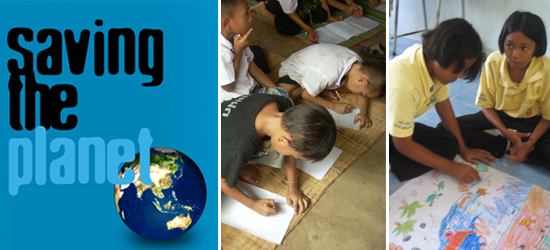
This is precisely the premise of Saving the Planet, the six-part, pan-Asian TV series we at TVE Asia Pacific produced and released in late 2009. It was among the compilation of environmental films that we screened at the British Council Colombo today to mark WED.
Filmed in six countries in South and Southeast Asia, Saving the Planet profiles groups working quietly and relentlessly to spread knowledge, understanding and attitudes that inspire action that will help humans to live in harmony with the planet.
Here are two stories that have a particular focus on biodiversity – all others have also been featured on this blog over the past few months (just run a search for ‘Saving the Planet’).
The people of Prek Toal have always known how closely their lives and jobs are linked to the ebb and flow of the Tonlé Sap lake, the largest in Cambodia and linked to the Mekong River. Now, the conservation group Osmose is showing how they can benefit from the lake’s fish and other natural resources without killing off the very ecosystem that sustains them. One strategy that works: to reach out to grown-ups through their children.
Tourists are astounded by the richness and diversity of Thailand’s natural heritage. But many Thai children and youth are not connected with Nature – they are not familiar with plants and animals even in their own backyard. Concerned, the Thai Education Foundation launched a programme that links schools with their local community to learn about Nature through exposure and experience. We travel to Phang Nga province in southern Thailand to find out this works.
Who says environment is a ‘safe’ subject for journalists and broadcasters to cover?
Journalist colleagues who work on conflict, security and political topics often have an illusion that environmental reporting is a ‘cosy and comfortable beat’ – one that allows reporters to travel to exotic locations, see cuddly animals, relax in pristine environments and generally take things easy.
That might have been the case some years ago, in another century that’s now receding in our memories. But not any longer: there’s as much conflict, intrigue and complexity in many of today’s environmental topics, and covering them can often be hazardous to the courageous journalists who go after them.
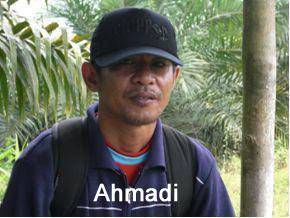
Ahmadi: Beaten up for exposeJust ask Ahmadi, a journalist working for Harian Aceh in Indonesia. Together with a fellow journalist, working for News Investigasi in Medan, he recently investigated a flood that had taken place in the Alapan district in April 2010. During their journey, they met some people cutting up logs. The journalists asked workers who owned these logs and were told that they belonged to the Alapan District Police Station and the Alapan Military Sub-District Command. Hmm…
When confronted with this information, a high ranking military officer reacted quickly and sharply: he wanted the whole story suppressed. In defiance, Harian Aceh published the story on 21 May 2010 — which resulted in Ahmadi being assaulted and threatened with death by the same officer.
“Ahmadi joins the long list of journalists who have been targeted for shedding light on deforestation, which is responsible for at least 18 per cent of the world’s greenhouse gas emissions,” says Reporters Without Borders (RSF), the international watchdog on media freedom.
It says attacks on journalists and bloggers who try to cover any kind of environmental damage are growing steadily all over the world. Among them, those who investigate industrial pollution or the destruction of forests are particularly at risk.
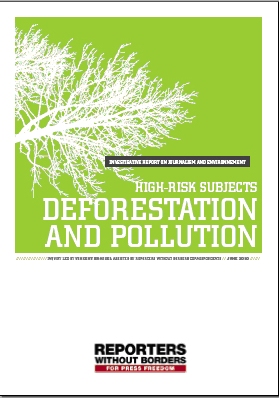
No longer a cosy beat...This week, on the eve of World Environment Day (5 June), RSF released a new report titled Deforestation and pollution: High-risk subjects. It makes grim reading for all of us who are committed to journalism as if the planet mattered.
It follows and echoes their call last year: “We must defend journalists who expose attacks on the environment”.
The new report, the second of its kind within just a few months from RSF, was prepared with the help of its worldwide network of correspondents. They gathered information about incidents in Indonesia, Argentina, El Salvador, Gabon, India, Azerbaijan, China and Morocco. Behind each of these threats and attacks, there were big corporations, criminal gangs or government officials who had been corrupted by money from mining or logging.
Asia features prominently in the report, which condemns the responsibility of the Vietnamese and Chinese governments in serious press freedom violations that deprive the public of crucial information about cases of pollution or deforestation.
The report describes, for example, the way the government in Hanoi has tried to suppress any debate about the environmental impact of bauxite mines being operated by a Chinese company. A field investigation in Argentina established that journalists are under pressure from both supporters and opponents of a mining project.
Mining companies (Aluminium Corp of China, China Metallurgical Group and the Canadian companies Yamana Gold and Pacific Rim), oil companies (Shell, Addax and Synopec), wood pulp companies (Sinar Mas and Riau Andalan Pulp and Paper) and two French multinationals (Bollor and Areva) are all identified in this report as having a direct or indirect role in cases of intimidation or censorship.
This is the second report that RSF has published on this subject. In September 2009, a report titled “The dangers for journalists who expose environmental issues.“, looked at 15 cases of journalists and bloggers who had been killed, attacked, jailed, threatened or censored for covering environmental problems in Russia, Cambodia, Bulgaria and Brazil.
RSF this week reiterated the appeal it launched during last December’s Copenhagen Summit: The media are needed to gather information and disseminate it to the public. Where climate change was concerned, it reminded everyone one, it was the media who helped to establish credible, independent diagnoses of the state of our planet. Their analyses continue to play a crucial role in helping decision-makers to adopt policies and rules that will lead to the desired changes.
On this blog, we have consistently highlighted the need for safeguarding journalists who pursue environmental stories that threaten vested interests within and across borders. For example:
In April 2007, we asked: Can journalists save the planet? Yes, they can be front-runners in the world’s attempts to save species, habitats and entire ecosystems. But only if the rest of society protects and stands by them. When our planetary house is on fire, shooting the messenger isn’t going to save anyone.
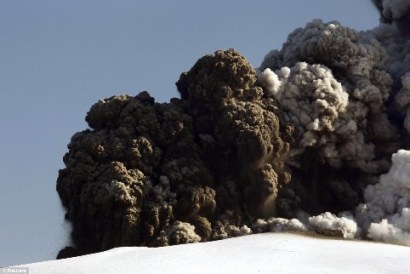
Eyjaffjalljokull erupting away in IcelandCall it the cough heard around the world.
And boy, what a cough – and with what consequences!
A week ago, most of us had never heard of Eyjaffjalljokull (a glacial volcano in Iceland) — and we’re still struggling to pronounce its name even as it keeps tens of millions of people completely grounded and held ‘hostage’ with its incessant and powerful coughing.
My daughter Dhara and I are currently ‘trapped’ in London: a volcanic ash cloud from Iceland shut down all flights in and over the British Isles on Thursday 15 April 2010. The siege has continued on to the fifth day now, disrupting travel plans of so many people, and causing massive losses to the travel industry. With over 150,000 Britons stranded abroad unable to fly back, the UK is now going into emergency mode to deal with the crisis.
It’s annoying to have an unknown – and unpronounceable! – natural factor crop up and change our carefully laid plans. But things could have been much worse. As I tweeted earlier, as natural disasters go, volcanic ash has been highly disruptive but with no casualties except economic (at least so far).
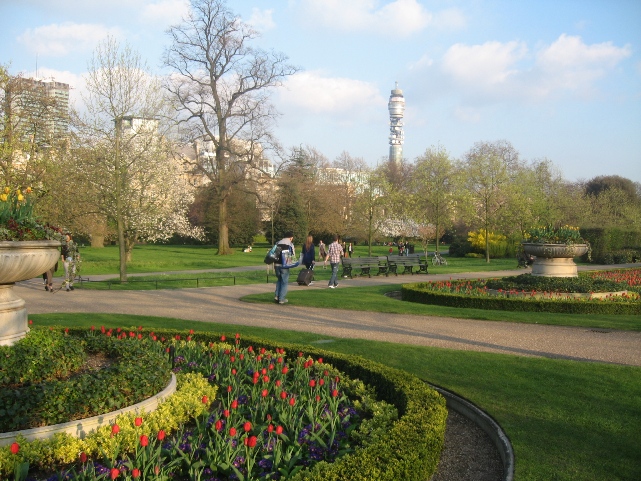
Life goes on in London: Regent's Park, 17 April 2010Life in London goes on with no visible signs of concern. Dhara and I walked around absorbing the sights, sounds and smells of London, and people were going about with life – and welcoming Spring. Joggers in Hyde Park and Regent’s Park, babies being strolled around, and weekend revelers at Camden Town and Trafalgar Square.
We mixed into all these crowds – it’s Dhara’s first time, so she’s wondering what the fuss is all about! (If you’ve traveled with an energetic teenager, you know what I’m coping with.) Yes, we are being ‘held hostage’, but by an ever-so-gentle force that’s invisible to the naked eye: as if in compensation, London has rolled out sunny blue skies (long may they last!). On balance, I’d rather be caught in this kind of situation than in a devastating earthquake or tsunami…
The British media are covering the unfolding situation in great detail, but I haven’t yet seen an estimate of the number of visitors to the UK forced to stay on as there is no current escape from these islands, at least by air. But that number must be significant – and each one has his or her story to tell, some more desperate than others.
Nadia is being adventurous (or just taking her chances). She is planning to take train or ferry or any other means to France, and then catch a train to southern Europe whose airspace is not yet affected by volcanic ash. Her determination is admirable – she just won’t allow this remote volcano to keep her hostage (she call it Eyja: “Do not expect me to ever know its full name. What kind of parent names their son Eyjafjallajoekull?”).
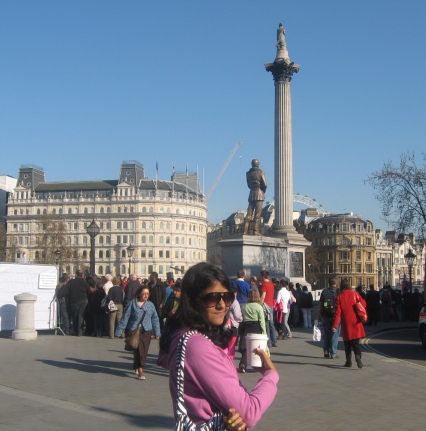
Dhara at Trafalgar Square, 18 April 2010Meanwhile, Dhara and I will hold out for a couple of days more to see if the skies will clear up and the aviation regulators will ease up. As time passes and the flight suspension begins to bite hard, more and more aviation industry professionals are questioning the complete no-fly ban. Some are calling it a regulatory over-reaction.
He adds: “The blanket ban under clear blue skies and glorious sunshine is making some wonder whether this ‘one-size-fits-all’ regulation is appropriate to a situation that the regulations did not foresee…In the final analysis, despite the scares, no one has actually been killed in a volcano incident – something which cannot be said for the much more hazardous drive to the airport.”
Meanwhile, the journal Science has unearthed (no pun intended) from its archives an article published in November 2004 about an enormous volcanic eruption from Iceland’s past — and what it means for the country’s future. It looks at researchers studying one of the largest and least appreciated eruptions in recorded history: volcano Laki that killed 10,000 Icelanders in 1783, and according to recent studies, its billowing plumes led to extreme weather and extensive illness that may have claimed thousands more lives in Britain and on the European continent.
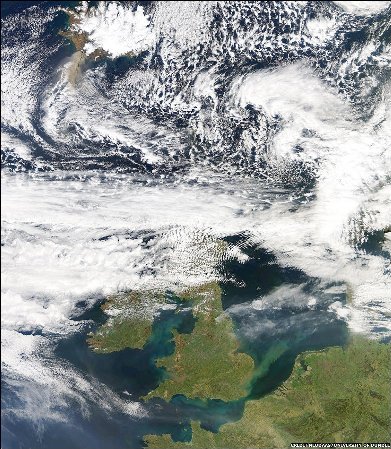
An image made available by NEODAAS/University of Dundee which shows the volcanic ash plume from Iceland, top left, to northern France as pictured by Nasa\'s Terra Satellite on 17 April 2010. Photo courtesy NEODAAS/University of Dundee/APIt’s not exactly a comforting thought to read how much worse a volcanic eruption could be. The piece was written by science writer Richard Stone (currently their Asia News Editor, and my fellow panelist at the science journalists conference last Summer in London). Interestingly, the headline I gave to that blog post was: Reporting disasters: How to keep a cool head when all hell breaks loose.
Well, easier said than done! It’s challenging for us journalists to keep a level head and report or comment on a mega-disaster for our media. But it’s even harder being caught up and personally affected by forces of Nature (and according Richard North, regulatory over-reaction). I’ve had my house flooded out, and was close enough to ground zero of the 2004 Asian Tsunami. On both occasions, the impact was brutal and immediate.
Eyja’s persistent coughing is different. It’s a distributed, slowly unfolding phenomenon with zero casualties so far, yet affecting millions. At one level, local residents can continue life’s routines with no threat of basic amenities of life being shattered. We travelers can grumble and remain nervous when we can get home, but at the streets of London are nothing like what the doomsday scenario shows in The Children of Men, placed in a near-future London of 2027.
But as Eyja’s strangely gentle yet firm siege continues – succeeding in closing down Britain’s air space in a way that Hitler and Bin Laden couldn’t – we are reminded of who is really in charge.
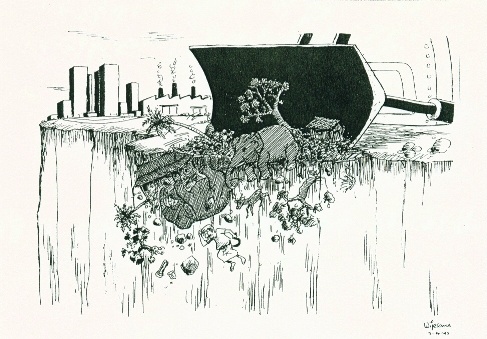
Price of Development, as seen by Cartoonist W R Wijesoma, 1993
Environmental activist and communicator Piyal Parakrama’s sudden death last week, of a heart attack, jolted Sri Lanka’s closely-knit green community. The activist community may bicker and argue endlessly among themselves, but there is also strong kinship among its cacophonous members. Many of them are still trying to come to terms with the loss.
As indeed am I – even if I’m not quite a certified member of the activist community, I consider myself a fellow traveler. I turn to words – either reflective prose or verse – when I want to make sense of something, and over the last weekend I wrote a new essay. It runs into 1,800 words and, as with all my tributes to public figures, this one is also social commentary laced in anecdotal reminiscence. It expands on initial thoughts that first appeared on this blog .
Here’s an excerpt where I talk about challenges faced by Sri Lanka’s environmental activists:
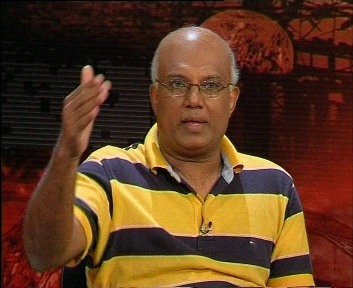
Piyal Parakrama on Sri Lanka 2048 TV showDuring the past three decades, Piyal and fellow activists have taken up the formidable challenges of conserving Sri Lanka’s biodiversity, long under multiple pressures such as growing human numbers, rising human aspirations, and gaps in law enforcement. Adding to the sense of urgency was the 1999 designation of Sri Lanka as one of the world’s biodiversity hotspots, where high levels of endemic species (found nowhere else in the wild) were threatened with extinction. Public and media attention is disproportionately focused on a few charismatic mega-fauna like elephants and leopards; in reality, dozens of other animal and plant species are being edged out.
In search of viable solutions for entrenched conservation problems, Piyal collaborated with scientists, educators, journalists and grassroots activists. Some industrialists and investors hated his guts, but he was much sought after by schools, universities and community groups across the country. Concerned researchers and government officials sometimes gave him sensitive information which he could make public in ways they couldn’t.
Some eco-protests grew into sustained campaigns. Among them were the call to save the Buona-Vista reef at Rumassala and struggles against large scale sugarcane plantations in Bibile. A current campaign focuses on the Iran-funded Uma Oya multipurpose project, which involves damming a river for irrigation and power generation purposes.
While environmentalists ultimately haven’t block development projects, their agitations helped increase environmental and public health safeguards. Occasionally, projects were moved to less damaging locations – as happened in mid 2008, when Sri Lanka’s second international airport was moved away from Weerawila, next to the Bundala National Park.
The hard truth, however, is that our green activists have lost more struggles than they have won since the economy was liberalized in 1977. They have not been able to stand up to the all-powerful executive presidency, ruling the country since 1978 — most of that time under Emergency regulations. In that period, we have had ‘green’ and ‘blue’ parties in office, sometimes in coalitions with the ‘reds’. But their environmental record is, at best, patchy. In many cases, local or foreign investors — acting with the backing of local politicians and officials — have bulldozed their way on promises of more jobs and incomes. Environmentalists have sometimes been maligned as anti-development or anti-people. In contemporary Sri Lanka, that’s just one step away from being labeled anti-national or anti-government.
At the end of the essay, I try to sum up the multiple challenges faced by ALL activists in Sri Lanka today:
“Activism is not an easy path anywhere, anytime, and especially so in modern day Sri Lanka. All activists – whether working on democracy, governance, social justice or environment – are struggling to reorient themselves in the post-conflict, middle-income country they suddenly find themselves in. Their old rhetoric and strategies no longer seem to motivate the people or influence either the polity or policy. Many of them haven’t yet crossed the Other Digital Divide, and risk being left behind by the march of technology.”
After all, I want our activists to be effective and successful as society’s conscience. My suggested author intro for this latest essay, somehow now included in the published version, read: “Science writer Nalaka Gunawardene dreams of becoming an activist one day, but for now, he remains a ‘critical cheer-leader’ of those who are more courageous.”
Piyal Parakrama died so suddenly and unexpectedly on the night of March 3 that it’s hard to believe that he is no longer among us. Another public-spirited individual has left the public space all too soon.
Piyal combined the roles of environmentalist, educator, researcher and media personality. He was also a colleague who became a friend, and a fellow traveller for many years.
In a public career spanning 30 years, he wore multiple hats, among them: Executive Director of the Centre for Environmental and Nature Studies, founder President of the Nature Conservation Group (NatCog), President of the Green Party of Sri Lanka, and consultant to various state and academic institutions. He also worked for the now-defunct Sri Lanka Environmental Congress (SLEC) and now dormant Sri Lanka Environmental Television Project (SLETP).
But Piyal Parakrama was more than an amalgamation of these parts: he was his own distinctive brand — admired, trusted or feared by different sections of society. Even his ardent detractors (and he had a few) would readily agree that he gave far more to the public good than he took back personally.
Piyal’s forte was biodiversity. His interest and knowledge were nurtured first at the Young Zoologists Association (YZA) – where he remained a volunteer for 30 years – and later at the Lumumba Friendship University in Russia, where he studied biology from 1983 to 1986.
In searching for viable solutions for entrenched conservation problems, Piyal collaborated with scientists, educators, journalists, school children and local activists. Some industrialists and investors simply hated his guts, while concerned researchers and government officials sometimes gave him sensitive information which he could make public in ways they couldn’t.
Given our common interests in development issues and the media, Piyal and I moved in partly overlapping circles. Our paths crossed frequently, and we shared public platforms, newspaper space and broadcast airtime. We even worked together for a few months in the late 1990s at the SLETP. His communications skills were invaluable in rendering a number of international environmental films into Sinhala.
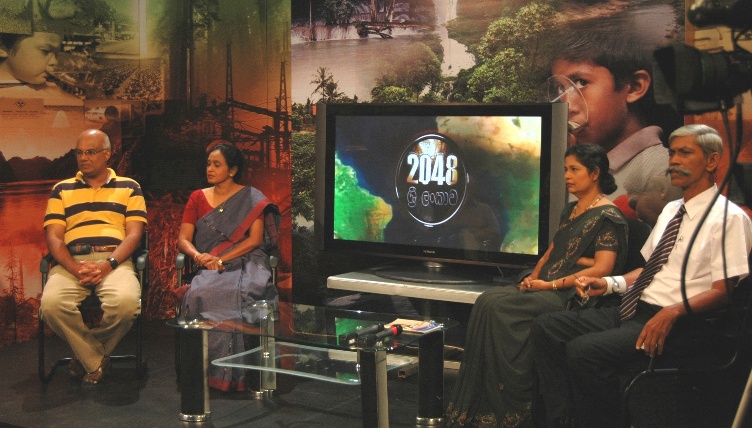
Piyal Parakrama (left) on the set of Sri Lanka 2048 - debate on Water Management
The last time we collaborated was in such a media venture. In mid 2008, Piyal joined an hour-long TV debate we produced as part of the Sri Lanka 2048 series. The show discussed the various choices and trade-offs that had to be made today to create a more sustainable Sri Lanka over the next 40 years. Taking such a long term view is rare in our professional and media spheres preoccupied with the challenges of now and here (or restricted in vision by short-termism).
Piyal could speak authoritatively on several topics we covered in the 10-part series, but I invited him to the one on managing freshwater, one of Sri Lanka’s once abundant but now threatened natural resources. With his deep knowledge and understanding of traditional water and soil conservation systems, he was truly in his element in that debate. He was also the ‘star’ among the diverse panel and studio audience we had carefully assembled.
I’m working on a longer tribute where I try to position Piyal’s role in Sri Lanka’s conservation movement. Watch this space…
This is no Avatar: It's Real!A few days ago, reviewing the blockbuster movie Avatar, I wrote: “Film critics and social commentators around the world have noticed the many layers of allegory in the film. Interestingly, depending on where you come from, the movie’s underlying ‘message’ can be different: anti-war, pro-environment, anti-Big Oil, anti-mining, pro-indigenous people, and finally, anti-colonial or anti-American. Or All of the Above…”
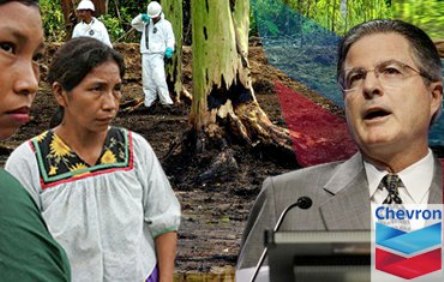
Indeed, an Avatar-like struggle is unfolding in the Amazon forest right now. The online campaigning group Avaaz have called it a ‘Chernobyl in the Amazon’. According to them: “Oil giant Chevron is facing defeat in a lawsuit by the people of the Ecuadorian Amazon, seeking redress for its dumping billions of gallons of poisonous waste in the rainforest.”
From 1964 to 1990, Avaaz claims, Chevron-owned Texaco deliberately dumped billions of gallons of toxic waste from their oil fields in Ecuador’s Amazon — then pulled out without properly cleaning up the pollution they caused.
In their call to action, they go on to say: “But the oil multinational has launched a last-ditch, dirty lobbying effort to derail the people’s case for holding polluters to account. Chevron’s new chief executive John Watson knows his brand is under fire – let’s turn up the global heat.”
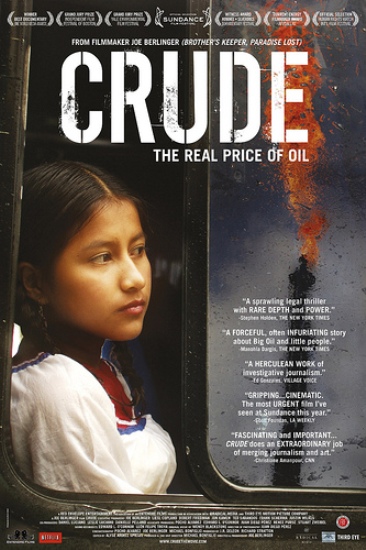
Others have been highlighting this real life struggle for many months. Chief among them is the documentary CRUDE: The Real Price of Oil, made by Joe Berlinger.
The award-winning film, which had its World Premiere at the 2009 Sundance Film Festival, chronicles the epic battle to hold oil giant Chevron (formerly Texaco) accountable for its systematic contamination of the Ecuadorian Amazon – an environmental tragedy that experts call “the Rainforest Chernobyl.”
Here’s the official blurb: Three years in the making, this cinéma-vérité feature from acclaimed filmmaker Joe Berlinger is the epic story of one of the largest and most controversial legal cases on the planet. An inside look at the infamous $27 billion Amazon Chernobyl case, CRUDE is a real-life high stakes legal drama set against a backdrop of the environmental movement, global politics, celebrity activism, human rights advocacy, the media, multinational corporate power, and rapidly-disappearing indigenous cultures. Presenting a complex situation from multiple viewpoints, the film subverts the conventions of advocacy filmmaking as it examines a complicated situation from all angles while bringing an important story of environmental peril and human suffering into focus.
Watch the official trailer of Crude: The Real Price of Oil
According to Amazon Watch website: “With key support from Amazon Watch and our Clean Up Ecuador campaign, people are coming together to promote (and see) this incredible film, and then provide ways for viewers to support the struggle highlighted so powerfully by the film.”
They go on to say: “A victory for the Ecuadorian plaintiffs in the lawsuit will send shock waves through corporate boardrooms around the world, invigorating communities fighting against injustice by oil companies. The success of our campaign can change how the oil industry operates by sending a clear signal that they will be held financially liable for their abuses.”
While Avatar‘s story unfolds in imaginary planet Pandora — conjured up by James Cameron’s imagination and created, to a large part, with astonishing special effects, the story of Crude is every bit real and right here on Earth. If one tenth of those who go to see Avatar end up also watching Crude, that should build up much awareness on the equally brutal and reckless conduct of Big Oil companies.
Civilisation's ultimate addiction?
Others have been making the same point. One of them is Erik Assadourian, a Senior Researcher at Worldwatch Institute, whom I met at the Greenaccord Forum in Viterbo, Italy, in November 2009.
He recently blogged: “The Ecuadorians aren’t 10-feet tall or blue, and cannot literally connect with the spirit of the Earth (Pachamama as Ecuadorians call this or Eywa as the Na’vi call the spirit that stems from their planet’s life) but they are as utterly dependent—both culturally and physically—on the forest ecosystem in which they live and are just as exploited by those that see the forest as only being valuable as a container for the resources stored beneath it.”
Erik continues: “Both movies were fantastic reminders of human short-sightedness, one as an epic myth in which one of the invading warriors awakens to his power, becomes champion of the exploited tribe and saves the planet from the oppressors; the other as a less exciting but highly detailed chronicle of the reality of modern battles—organizers, lawyers, and celebrities today have become the warriors, shamans, and chieftains of earlier times.”
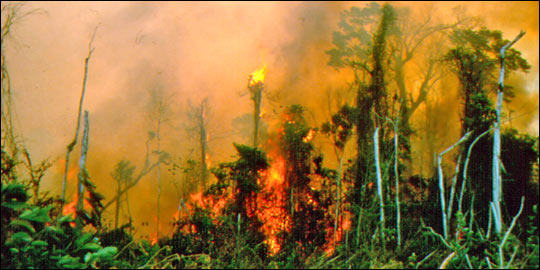
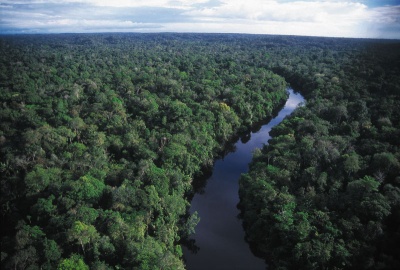
The Decade of Destruction A unique chronicle of the destruction of the Amazonian rainforest.
Whatever we might think about Al Gore’s film An Inconvenient Truth, I’m glad it has settled one question: can a single film make a difference in tipping public opinion about a matter of global importance? The answer, where climate change is concerned, is a resounding yes!
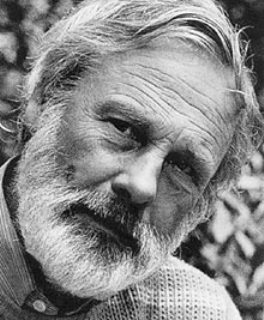
But years or decades before Al Gore, other film makers have had their own impact on other environmental issues. One of them is Adrian Cowell, the award-winning British film maker whose quest to tell the story of the destruction of the Amazon forest made politicians listen and the world take note.
According to the Centre for Social Media at the American University, “He catapulted the environmental movement to save the Amazonian rain forests through the television series The Decade of Destruction and Banking on Disaster.”
Adrian CowellAdrian, whom I have had the pleasure of meeting and talking on several occasions, is a world acclaimed leader in our field. Born in Tongshan, China in 1934 and educated at Cambridge University, Adrian has been making films longer than I have been alive — and luckily for all of us, he is still at it.
He began filming his path-breaking series called The Decade of Destruction in 1980, when the Amazon was first opened up to settlers and developers. He has documented the systematic destruction of the rainforest there into late 1990 when, for the first time, there was an indication that the fires were being brought under control.
As the synopsis says: “Each episode follows the real life stories of people caught up in the frontier’s web of need and greed, stories of personal tragedy and great courage. The programs relate the individual’s struggle to the wider developments going on around them. Together they illustrate the principal issues of Amazonia during the 1980s – its decade of greatest destruction.”
The Chicago Tribune called it an epic, “a brilliantly told story of greed, death, politics, violence, heroism and environmental holocaust.”
I recently came across this brief account by Adrian Cowell himself, looking back at his long engagement with the Amazon:
“In January 1980 we started 10 years of recording the destruction of the Amazon forest. We began by filming colonists invading the territory of the then unknown, and very vulnerable, tribe, the Uru Eu Wau Wau, in the Brazilian state of Rondonia. Many colonists had received, free of charge from the government, plots of 40-50 hectares in the forest traditionally hunted by the Indians. Tragically, within a decade, this ‘colonisation’ process, called the Polonoroeste Project, would not only leave three-quarters of the Indians dead, but also prove a disaster for the colonists themselves. They had been given such poor soil that, within six years, 60% of the land they had so hopefully deforested would be abandoned.
“So we were astounded when the World Bank moved in to lend nearly half a billion dollars to the project, and were even more astonished when we realised that what was being played out in front of our cameras was evidence of one of the most disastrous loans the Bank had ever made. Not unnaturally, I went to Washington to find out what could explain the Bank’s loan. And there I met three environmentalists, Bruce Rich, Barbara Bramble and Brent Blackwelder, respectively from the Environmental Defense Fund, the National Wildlife Federation and the Environmental Policy Institute. They were campaigning on how international economic development affected the environment. But by a remarkable coincidence they had decided to focus, not only on the World Bank, but on – of all its hundreds of loans all over the world – the very Polonoroeste Project that we were filming. They asked me to show our film in Congressional hearings and I telephoned José Lutzenberger – more or less the father of Brazilian environmentalism – to ask him to testify. By yet another happy coincidence, an American researcher, Brent Millikan, had written a report giving academic detail to the facts behind what we had filmed. And an American expert on Amazonia, Dr Philip Fearnside, added his authority to the diagnosis of what was going wrong.
“And so, some months later – after a complex chain of legislative and political developments – we were able to record Senator Robert Kasten, the chairman of the powerful Appropriation Committee’s subcommittee on foreign operations, cutting off 20% of the money the US donated annually to the World Bank. Nothing concentrates a banker’s attention more than the withdrawal of some of his money. Within a few months we were able to conclude our programme, Banking on Disaster, by filming World Bank president Barber Conable admitting, for the first time, that a Bank loan, specifically the Polonoroeste Project, had gone wrong. This was to be the beginning of a very slow and gradual greening of World Bank policies.
“Obviously, our television film had played a part in this political change. But though a film may sometimes be the most dramatic way to present a case, it is an illusion to think that it can be more than just one tool or facet of the very complex process behind international and environmental evolution.”
* * * * *
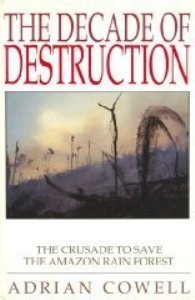
Here’s more biographical background about Adrian: Book of the TV seriesAdrian Cowell has been making documentary films for five decades. In 1955-56, he joined the Oxford and Cambridge Far Eastern Expedition, an experience which launched his film career and his interest in Burma. The following year, he made his first foray into the rain forest of Brazil, part of a joint Oxford-Cambridge expedition of young filmmakers. These early trips became the seeds of Cowell’s award-winning epic projects. His series Opium was filmed over an eight-year period (including nine months when he was trapped behind the lines in Burma). His ten-year chronicle of the destruction of the Brazilian rain forests during the 1980’s—broadcast as the television series The Decade of Destruction —stirred the world and contributed to the international debate on how the Amazon should be developed. In 1990, The Decade of Destruction was broadcast on Channel Four in Britain and on PBS FRONTLINE in the U.S. Adrian Cowell’s more recent British TV series include The Heroin Wars. It is a follow-up to The Opium Trail (1966), The Opium Warlords (1974) and Opium (1978).
Cowell is an environmental activist, co-founder of the Television Trust for the Environment and the author of two books on Brazilian Indians, The Heart of the Forest (Knopf) and The Tribe that Hides from Man (Stein and Day). He also wrote a companion book to the TV series The Decade of Destruction (Henry Holt and Company).
Life saving sand...This week marks the 10th anniversary of the deadly cyclone that hit India’s eastern state of Orissa.
The 1999 Orissa cyclone, also known as Cyclone 05B, and Paradip cyclone, was the deadliest Indian Ocean tropical cyclone since the 1991 Bangladesh cyclone, and deadliest Indian storm since 1971. The storm made landfall just weeks after a Category 4 storm hit the same general area.
A tropical depression formed over the Malay Peninsula on October 25. It moved to the northwest and became a tropical storm on October 26. It continued to strengthen into a cyclone on the 27th. On October 28, it became a severe cyclone with a peak of 160 mph (260 km/h) winds. It hit India the next day as a 155 mph (250 km/h) cyclone. It caused the deaths of over 10,000 people, and heavy to extreme damage in its path of destruction.
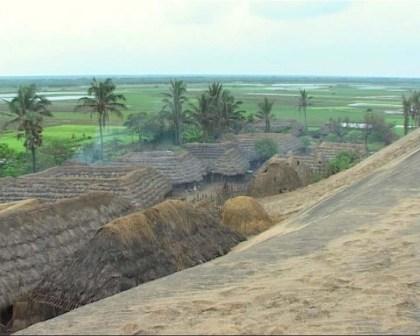
In 2006, during the production of TVE Asia Pacific‘s TV series The Greenbelt Reports, we visited the coastal village of Satabhaya, located on the edges of the Bhitara-kanika National Park in Orissa. A giant sand dune separates the village from the Indian Ocean.
The dune is the source of regular sand storms that force people to stay indoors for hours. Each storm can cover their houses with several inches of sand. Yet, they are not complaining. They remember the super cyclone of October 1999 – it was the natural sand dune that reduced the impact of that super-cyclone. The Satabhaya people know that it’s their only protection.
After the cyclone, they have devised traditional methods to trap the sand and create dunes to protect their village.
The Greenbelt Reportsseries It looks at how communities, researchers or environmental activists are trying to find a balance between conserving coastal greenbelts – coral reefs, mangroves and sand dunes – and deriving economic benefits for local people.
Watch The Greenbelt Reports: Surround Sand on YouTube:
News by definition looks for the exception. What goes right, and according to plan, is hardly news. Deviations, aberrations and accidents hit the news.
It’s the same with disasters. Reducing a hazard or averting a disaster does not make the news; when that hazard turns into a disaster, that typically tops the news. Yet, as we discussed during a session at the 6th World Conference of Science Journalists held in London from June 30 – July 2, 2009, both aspects are important — and both present many challenges to journalists and the media.
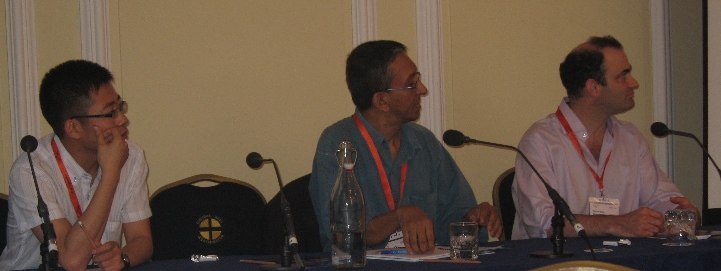
The session, titled Covering a disaster from Sichuan to Sri Lanka, saw three science journalists share their own experiences and insights in covering two major disasters in Asia. Richard Stone (Asia News Editor, Science) and Hujun Li (senior science writer with Caijing magazine, China) both spoke about covering the Sichuan earthquake that occurred on 12 May 2008. I spoke on my experiences in covering the Indian Ocean tsunami of 26 December 2004. The session was chaired by the veteran (and affable) British journalist Tim Radford, who has been The Guardian‘s arts editor, literary editor and science editor.
Covering a disaster from Sichuan to Sri Lanka: L to R: Hujun Li, Nalaka Gunawardene and Richard StoneI recalled the post-tsunami media coverage in two phases — breaking news phase (first 7 – 10 days) and the aftermath, which lasted for months. When the news broke on a lazy Sunday morning, ‘Tsunami’ was a completely alien term for most media professionals in Sri Lanka. In newspaper offices, as well as radio and TV studios, journalists suddenly had to explain to their audiences what had happened, where and how. This required journalists to quickly educate themselves, and track down geologists and oceanographers to obtain expert interpretation of the unfolding events. We than had to distill it in non-technical terms for our audiences.
My involvement in this phase was as a regular ‘TV pundit’ and commentator on live TV broadcasts of MTV Channels, Sri Lanka’s largest and most popular broadcast network. Night after night on live TV, we talked about the basics of tsunami and earthquakes, and summed up the latest information on what had taken place. We also acknowledged the limits of science -– for example, despite advances in science and technology, there still was no way of predicting earthquakes in advance.
One question we simply couldn’t answer was frequently raised by thousands of people who lost their loved ones or homes: why did it happen now, here — and to us? Was it an act of God? Was it mass scale karma? As science journalists, we didn’t want to get into these debates — we had to be sensitive when public emotions were running high.
There were enough topics during the breaking news phase that had a scientific angle. Clinically cold as it sounded, the mass deaths required the safe, proper and fast burial of bodies with identities established. The survivors had to be provided shelter, food, safe drinking water and counselling. And when rumours were spreading on the possibility of further tsunamis, both officials and public needed credible information from trusted, competent sources.
Tsunami waves lashing Kalutara beach on western Sri Lanka on 26 December 2004: satellite image courtesy DigitalGlobe Quickbird satellite, http://www.digitalglobe.com
After the breaking news phase passed, we had more time to pursue specific stories and angles related to the tsunami. As an environmentally sensitive journalist, I was naturally interested in how the killer waves had impacted coastal ecosystems. Then I heard some interesting news reports – on how some elements of Nature had buffered certain locations from Nature’s own fury.
Within days, such news emerged from almost all Tsunami-affected countries. They talked about how coral reefs, mangroves and sand dunes had helped protect some communities or resorts by acting as ‘natural barriers’ against the Tsunami waves. These had not only saved many lives but, in some cases, also reduced property damage. Scientists already knew about this phenomenon, called the ‘greenbelt effect’. Mangroves, coral reefs and sand dunes may not fully block out tsunamis or cyclones, but they can often reduce their impact.
Researching this led to the production of TVE Asia Pacific‘s regional TV series called The Greenbelt Reports, which was filmed at a dozen tsunami impacted locations in South and Southeast Asia. By the time we released the series in December 2006, sufficient time had passed for the affected countries to derive environmental lessons of the tsunami.
The other big story I closely followed was on early warnings for rapid on-set disasters like tsunamis. Some believed that the tsunami caught Indian Ocean rim countries entirely by surprise, but that wasn’t quite true. While the countries of South and Southeast Asia were largely unprepared to act on the tsunami, the Pacific Tsunami Warning Centre (PTWC) in Hawaii, who had detected the extraordinary seismic activity, did issued a tsunami warning one hour after the undersea quake off western Sumatra. This was received at Sri Lanka’s government-run seismological centre in good time, but went unheeded: no one reacted with the swiftness such information warranted. Had a local warning been issued, timely coastal evacuation could have saved thousands.
All this shows the many and varied science or development stories that journalists can find in the aftermath of disasters. Some of these are obvious and widely covered. Others need to be unearthed and researched involving months of hard work and considerable resources. Revisiting the scenes of disasters, and talking to the affected people weeks or months after the event, often brings up new dimensions and insights.
My own advice to science journalists was that they should leave the strictly political stories to general news reporters, and instead concentrate on the more technical or less self-evident facets in a disaster. During discussion, senior journalist Daniel Nelson suggested that all disaster stories are inherently political as they deal with social disparities and inequalities. I fully agreed that a strict separation of such social issues and science stories wasn’t possible or desirable. However, science journalists are well equipped to sniff out stories that aren’t obviously covered by all members of the media pack that descends on Ground Zero. Someone needs to go beyond body counts and aid appeals to ask the hard questions.
As Hujun Li said recalling the post-Sichuan quake experience, “Politics and science are like twins – we can’t separate the two. What we as science journalists can do is to gather scientific evidence and opinion before we critique official policies or practices.”
Another question we were asked was how journalists can deal with emotions when they are surrounded by so much death and destruction in disaster scenes. Reference was made to trauma that some reporters experience in such situations.
I said: “We are human beings first and journalists next, so it’s entirely normal for us to be affected by what is happening all around us. On more than one occasion in the days following the tsunami, I spoke on live television with a lump in my throat; I know of presenters who broke down on the air when emotions overwhelmed them.”
And now...the sequelsSumming up, Tim Radford emphasized the need for the media to take more interest in Disaster Risk Reduction (DRR), which basically means preventing disasters or minimising the effects of disasters.
“DRR is perhaps less ‘sexy’ for the media, as it involves lots of policies and practices sustained over time,” he said. “But the potential to do public good through these interventions is enormous.”
As Tim reminded us, disasters already exact a terrible and enduring toll on the poorest countries. This is set to get worse as human numbers increase and climate change causes extreme weather and creates other adverse impacts. Living with climate change would require sustained investments in DRR at every level.
The stories are out there to be captured, analysed and communicated. In the coming years, the best stories may well turn out to be on disasters averted or minimised
Raised on popular culture, I have always been an admirer of tabloid journalism – which means using popular formats to reach out to a mass audience in newspapers or broadcasting. There’s nothing inherently wrong with this: we might even argue that the tabloid approach is the only way to achieve truly mass media (with all else being niche media reaching to smaller demographic groups).
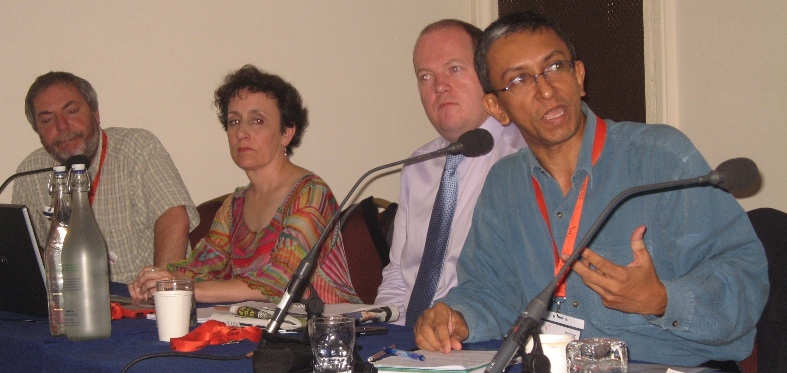
So I was delighted to be on a panel with two leading British tabloid journalists and a popular radio host from South Africa during the 6th World Conference of Science Journalists held in London from June 30 – July 2, 2009.
My own, personal answer is NO — it need not be! And I’ve spent a good part of my two decades of work in the media experimenting and showing that communicating science can be fun — both for us communicators and our audiences.
But I pointed out that science is still being covered in sections of Asian media in the more traditional, classical way, just like science itself is still an elitist pursuit in many of our societies.
L to R: Paul Sutherland, space correspondent of The Sun, UK; Christina Scott, radio and web journalist, South Africa; David Derbyshire, Environment editor, The Daily Mail, UK; Nalaka Gunawardene, Director/CEO, TVE Asia Pacific
I said: “We might call this coverage ‘broadsheet approach’ in print; or ‘bluechip documentary’ format on television. And they are both unsustainable! They are also endangered in these hard times for the mainstream media in most economies.
“So going the tabloid path is a practical and pragmatic way to deliver science stories and science information to a mass audience or readership. We’re doing it in different ways in the Asian media!”
In my remarks, I gave some examples where science is jazzed up (rather than dumbed down) for popular consumption on Asian television. For example, how solar and lunar eclipses provide fodder for endless stories on our numerous news channels. Such coverage, fleeting and superficial as it might often be, takes the wonders of science and Nature to more people than anyone else can.
I argued that the path to the mass audiences in Asia is through news, sports and entertainment programming. We have our own niche, factual channels – Discovery, National Geographic, Animal Planet and their local equivalents. They have a loyal but small audience. They do excellent work. But where numbers are concerned, they cannot – yet! – compete with the outreach and appeal of broadcast radio, TV and newspapers. Neither can the online and mobile media, even though their outreach is growing fast.
Things don’t always go right, however. Doing wall-to-wall coverage of news demands producers and reporters to tackle a variety of topics and subjects — including specialised science stories. Some handle this better than others. In their race for ratings and revenue, a few ‘dress up’ the stories a bit too much.
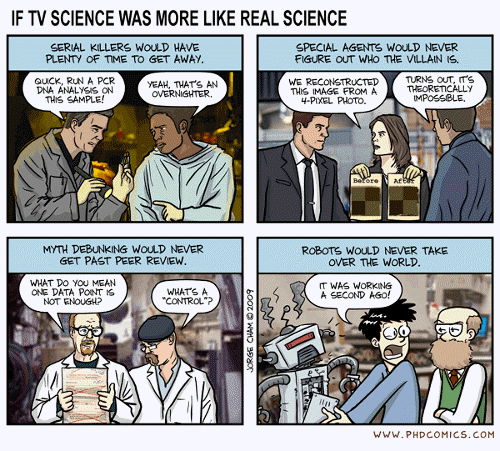
Television science: aspiration or reality?A good example was how some Indian news channels handled the so-called ‘Big Bang experiment’ in September 2008, when the Large Hadron Collider (LHC) was commissioned. The mega-science experiment was interesting in its own right, but it wasn’t apparently exciting enough for at least two channels — Aaj Tak and India TV. Their coverage running up to the event speculated about its “catastrophic effect on the world” – effectively end of the world.
Their coverage caused panic, which led to at least one attributable death. This prompted the Indian Ministry of Information and Broadcasting to caution the channels for spreading “misinformation, fear and horror” among viewers. It advised the channels to exercise restraint in presenting such issues.
I call this the ’24/7 TV Deficit’ in Asian broadcasting. The long term response to this is to invest in training and capacity building of journalists and producers already working in the media. For the most part, they learn on the job, making mistakes on the air. This is far from ideal.
Here’s how I summed up: ‘Tabloid science coverage’ – in print or broadcast – may be imperfect in some ways. But our choice is either that, or nothing. Our challenge is to make the process and product better as we go along.
We urgently need to unleash scientific knowledge and understanding in matters of public interest and public policy. We can’t afford the ALL or NOTHING approach.


 Open Minds!