Long before Malala, there was another spirited young girl named Meena.
Like Malala Yousafzai does today, Meena too spoke out for and on behalf of girls — their right to education, good health, nutrition and, most important, to be treated the same way as boys.
Like Malala, young Meena too spoke passionately yet courteously. While Malala challenged the ferocious Taliban, Meena took on the equally formidable adversary named tradition.
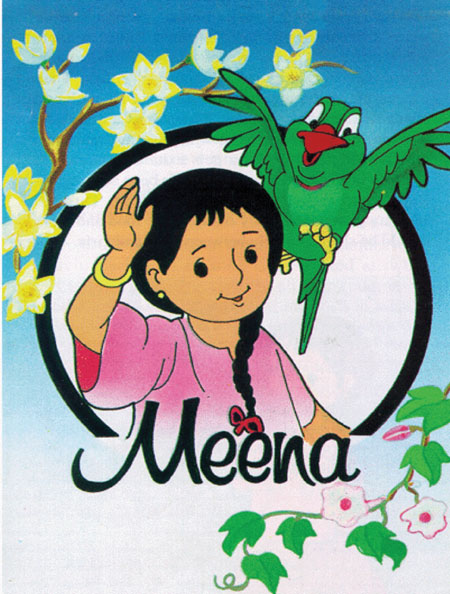
Malala and Meena could well have been sisters in arms — except that the latter isn’t quite real. She is a cartoon character imagined and developed by some of South Asia’s most talented animators and development communicators two decades ago.
UNICEF developed the Meena Communication Initiative (MCI) as a mass communication project aimed at changing perceptions and behaviour that hamper the survival, protection and development of girls in South Asia.
Here’s how their website describes Meena:
“Meena is a cartoon character from South Asia. She is a spirited, nine-year-old girl who braves the world – whether in her efforts to go to school or in fighting the stigma surrounding HIV/AIDS in her village.”
UNICEF launched Meena in September 1998 after eight years of extensive research in the region since the initial conceptualization. The name Meena was carefully chosen as it was found to span the different cultures in the region: people in Bangladesh, Bhutan, India, Maldives, Nepal, Pakistan and Sri Lanka could relate to the name.
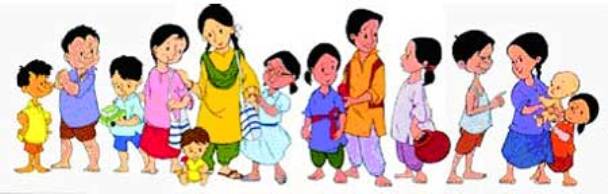
A cast of carefully researched characters was created for Meena’s family and community. It included Meena’s talkative pet parrot Mithu, brother Raju, mom and dad, grandma and village school teacher.
There was no fundamentalist group threatening Meena’s village. Instead, it was grappling with poverty, ignorance and orthodoxy.
The Meena stories are entertaining and fun, but also reflect the realities of girls’ lives in South Asia. Through story-telling, important social messages are conveyed, such as the value of educating girls, freedom from exploitation and abuse, need for hygiene and proper sanitation, and the right of girls to a proper childhood not marred by under-age marriages.
In total, 13 Meena episodes were produced through a collaboration that involved Ram Mohan Studios of Mumbai and Hanna-Barbera affiliate Fil Cartoons of Manila.
Three examples:
Meena: Will Meena Leave School?
Meena: Count Your Chickens
Meena: Too Young to Marry
Meena is widely recognised and appreciated in most South Asian countries, and is a successful advocacy and teaching tool for girls’ and children’s rights. The Meena figure has achieved remarkable popularity as she tackles the key issues affecting children, and the threats to the rights of millions of girls in South Asia.
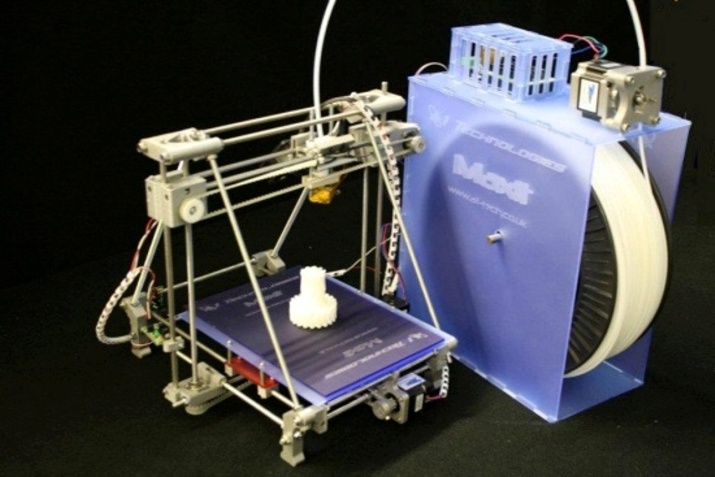
My latest Ravaya column (in Sinhala) is about the promise and challenges of 3D printing technology.
Sri Lanka took many years to come to terms with colour copiers and printers in 2D. For a while, they were not even allowed. This time around, regulating 3D printing will be harder — and there won’t be as much time to endlessly ponder what to do.
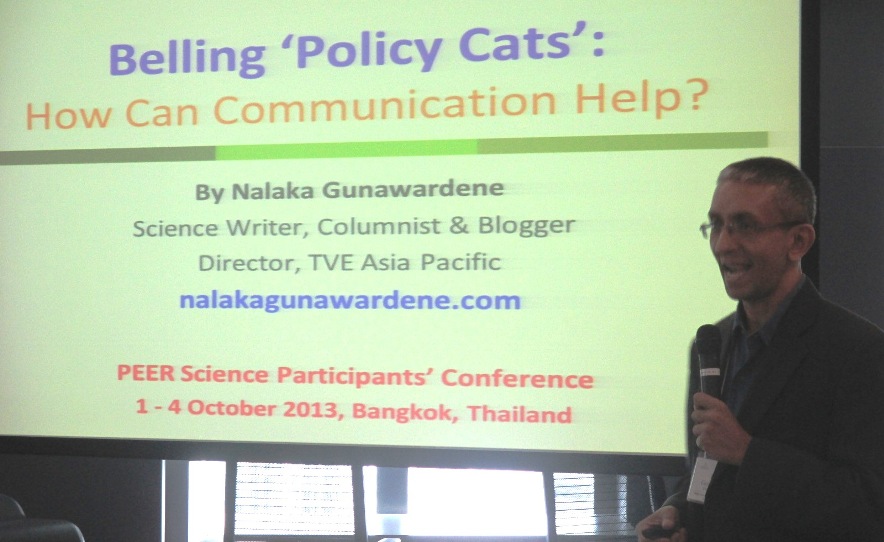
Nalaka Gunawardene speaks at PEER Science Conference 2013 in Bangkok, 3 Oct 2013
How to ‘Bell’ the policy ‘cats’?
This question is often asked by researchers and activists who would like to influence various public policies. Everyone is looking for strategies and engagement methods.
The truth is, there is no one sure-fire way — it’s highly situation specific. Policy makers come in many forms and types, and gaining their attention depends on many variables such as a country’s political system, governance processes, level of bureaucracy and also timing.
Perfecting the finest ‘bells’ and coming across the most amiable and receptive ‘cats’ is an ideal rarely achieved. The rest of the time we have to improvise — and hope for the best.
Good research, credible analysis and their sound communication certainly increase chances of policy engagement and eventual influence.
How Can Communications Help in this process? This was the aspect I explored briefly in a presentation to the PEER Science Participants’ Conference 2013 held in Bangkok, Thailand, from 1 to 4 Oct 2013.
It brought together over 40 principal investigators and other senior researchers from over a dozen Asian countries who are participating in Partnerships for Enhanced Engagement in Research (PEER) Science program. PEER Science is a grant program implemented by the (US) National Academies of Science on behalf of the U.S. Agency for International Development (USAID) and in cooperation with the National Science Foundation (NSF).
I flagged some key findings of a global study by SciDev.Net (where I am an honorary trustee) which looked at the different contextual settings within which policymakers, the private sector, NGOs, media organisations and the research community operate to better understand how to mainstream more science and technology evidence for development and poverty reduction purposes.
I like show and tell. To illustrate many formats and approaches available, I shared some of my work with LIRNEasia and IWMI, two internationally active research organisations for which I have produced several short videos (through TVE Asia Pacific) communicating their research findings and policy recommendations.
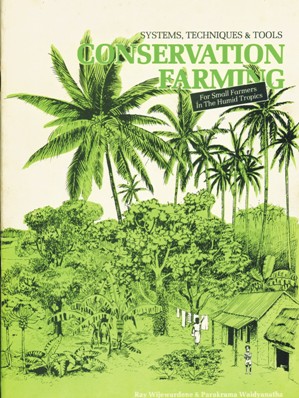
This week, my Ravaya Sunday column (in Sinhala) carries the third and concluding part of my long exchange with the late Dr Ray Wijewardene, agro-engineer turned farmer and a leading practitioner in conservation farming in the humid tropics. Today, we discuss soil conservation in Sri Lanka’s hill country, restoring shifting (chena) cultivation to its original method, and how small farmers can become more resilient to market forces.
This week, my Ravaya Sunday column (in Sinhala) carries the second part of my long exchange with the late Dr Ray Wijewardene, agro-engineer turned farmer and a leading practitioner in conservation farming in the humid tropics.
In this week’s Ravaya column (in Sinhala), I have adapted a long exchange I did in 1995 with the late Dr Ray Wijewardene, agro-engineer turned farmer and a leading practitioner in conservation farming in the humid tropics. The rest of this exchange will appear in future columns.
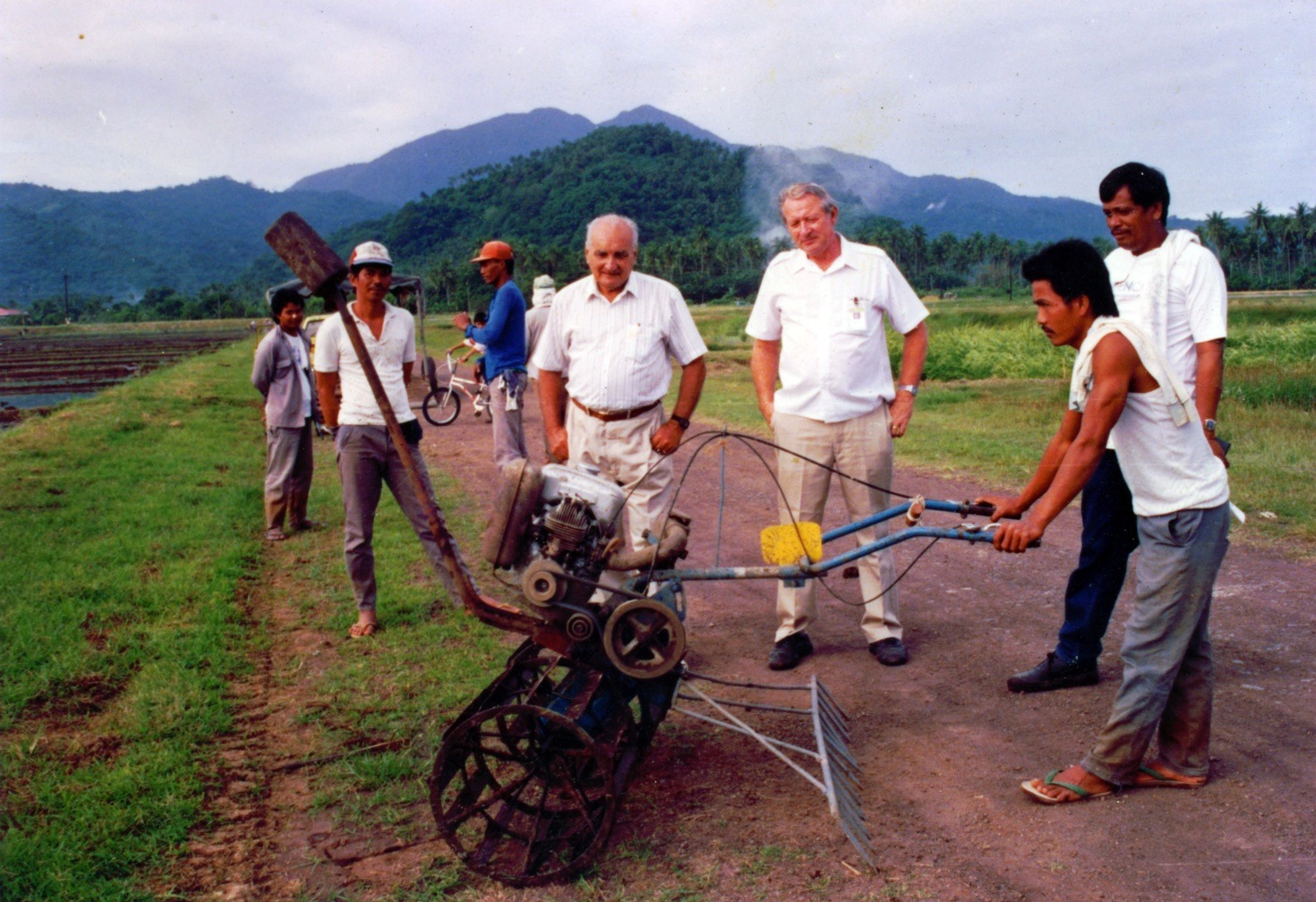
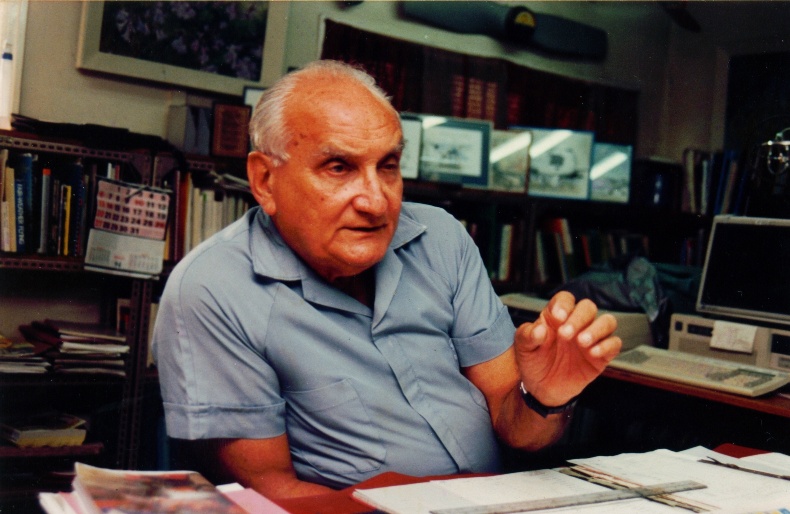
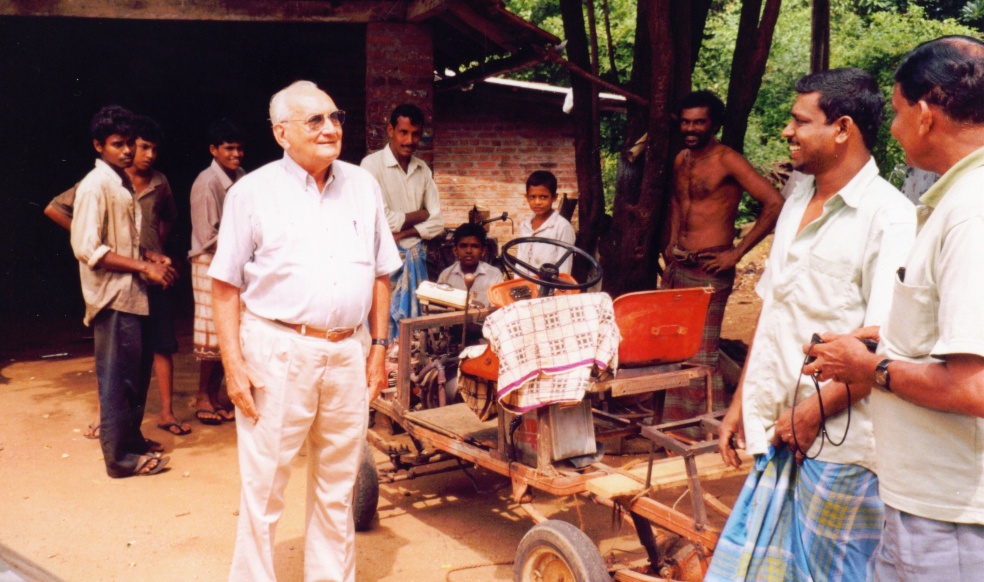
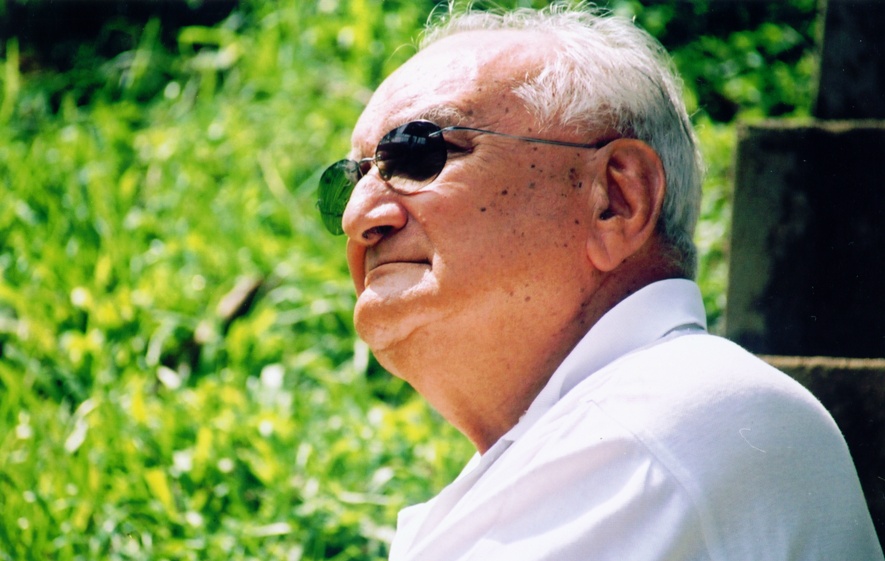
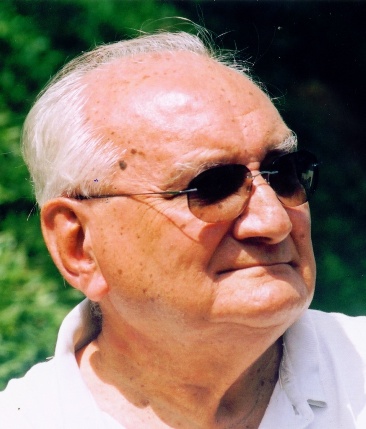
Ray Wijewardene (1924 – 2010) was an accomplished engineer, aviator, inventor, Olympian athlete and a public intellectual of the highest calibre. Although educated at Cambridge and further trained at Harvard, he preferred to introduce himself as a farmer and mechanic ‘who got his hands dirty’. His third death anniversary falls on 18 August 2013.
It was among his flying machines that I first met Ray in late 1986 at the Ratmalana Airport, just south of Colombo. One Sunday morning, he took time off to talk to a group of us high school leavers participating in a Science for Youth programme. It exposed us to various (then) modern technologies. Much of that ‘new knowledge’ has long become obsolete; but the inspiration propelled many of us to pursue careers in science.
That inspiration stemmed mostly from the shy and unorthodox Ray Wijewardene. Although he was then in his early 60s, he had the sense of wonder of a 10-year-old. He gave us practical demonstrations about problem solving and innovation in three areas close to his heart: energy, agriculture and transport.
At the time, he was looking for ways to improve the ordinary bicycle, so that riders could go faster with less effort. He also talked about buffaloes, earthworms and growing our food and energy to become truly ‘non-dependent’ on costly imports.
It was his flying machines that fascinated us the most. As a pilot, Ray was licensed to fly all three kinds of flying machines: fixed-wing aircraft, helicopters and autogyros. But this pilot was flying not only factory-fitted, mass-manufactured units: he built and flew his own ultra-light aircraft and helicopters.
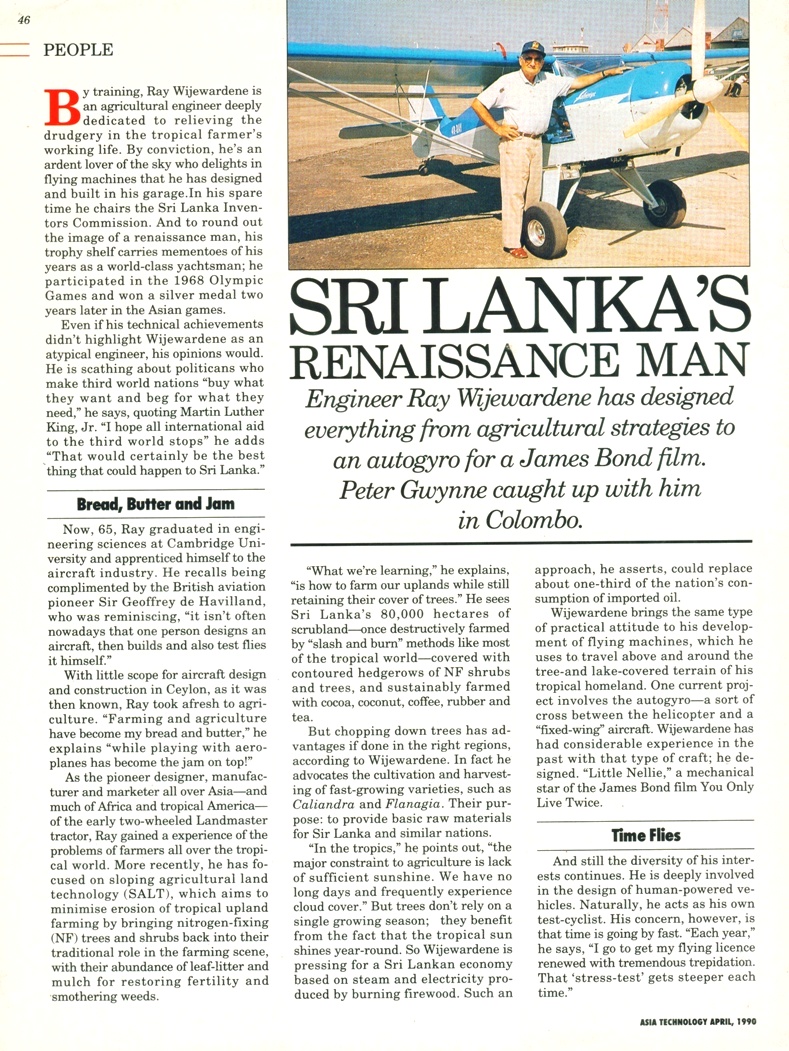
I have just unearthed, from the depths of my own archives, an interview I arranged in early 1990 between Ray and science writer Peter Gwynne, who at the time was editor of Asia Technology magazine published from HongKong. I was their Sri Lanka correspondent.
Peter, who held a BA and MA in metallurgy from Oxford and had been a science writer with various publications (including Newsweek) before moving to HongKong, was on a short visit to Colombo. So I took him to meet one of my most colourful and outspoken scientific friends — Ray. Beyond the predictable Oxbridge banter, they talked about many things. I was just a fascinated fly on the wall…
Based on that encounter, Peter wrote a perceptive profile of Ray — and called him Sri Lanka’s Renaissance Man. An apt title, indeed, given that Ray was talented in many pursuits including music and painting, and had a refined sense of aesthetics, probably the basis of his design sense. (It took me 21 years to come up with anything comparable: when creating the Ray Wijewardene website in 2011, I called him ‘A Man for All Elements’).
Here’s the full profile from Asia Technology, April 1990:
Ray Wijewardene profiled in Asia Technology, April 1990
PS: Asia Technology was a bold venture that didn’t last too long (even though it was part of the Dow Jones Company). The full colour, glossy publication was an early chronicler of Asia’s rise in science and technology, but was ahead of its time. It blazed like a supernova for a year and half, and then folded.
Another World Environment Day will be observed on June 5. We can expect Lankan environmentalists to raise their shrill, giving us more rhetoric than substance.
I have always stayed clear of such impulsive green extremism, instead advocating a more measured approach to balancing modern lifestyles with their ecological impacts. In this week’s Ravaya column (in Sinhala), I debunk a widely peddled green myth that suggests ‘Mother’ Earth will look after us if only we take better care of her.
Well, our home planet doesn’t care one way or the other. People can lull ourselves into whatever illusion of their choice, but Earth is indifferent. Coming to terms with this can help our greens to reach some maturity they badly need.
See also these previous explorations of the same theme:
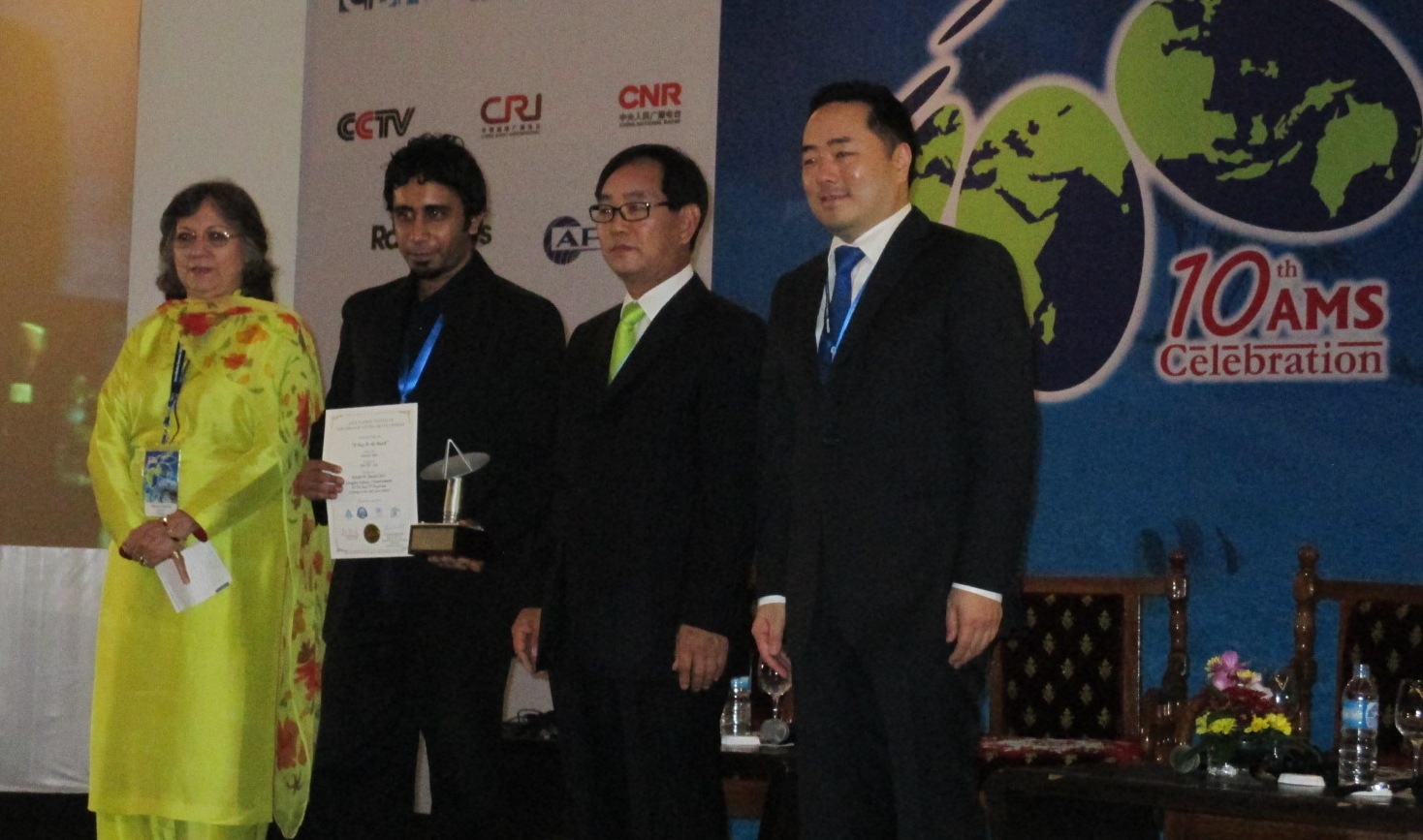
L to R – Moneeza Hashmi (Jury chair), Clarence Dass, Young-Woo Park (Regional Director, UNEP), Yang Binyuan (AIBD Director)
Fijian filmmaker and broadcaster Clarence Dass is a star at Asia Media Summit 2013 in Manado, Indonesia, this week.
First, he won the coveted World TV Award in the Science and Environment category, for his futuristic, dramatized film titled “A Day at the Beach” made for and broadcast by Fiji Broadcasting Corporation (FBC) TV.
That earned him US$ 5,000 prize money, a trophy and a certificate – as well as an all expenses paid trip to Manado, where he just collected them in front of 350 broadcast managers and professionals from across Asia Pacific.
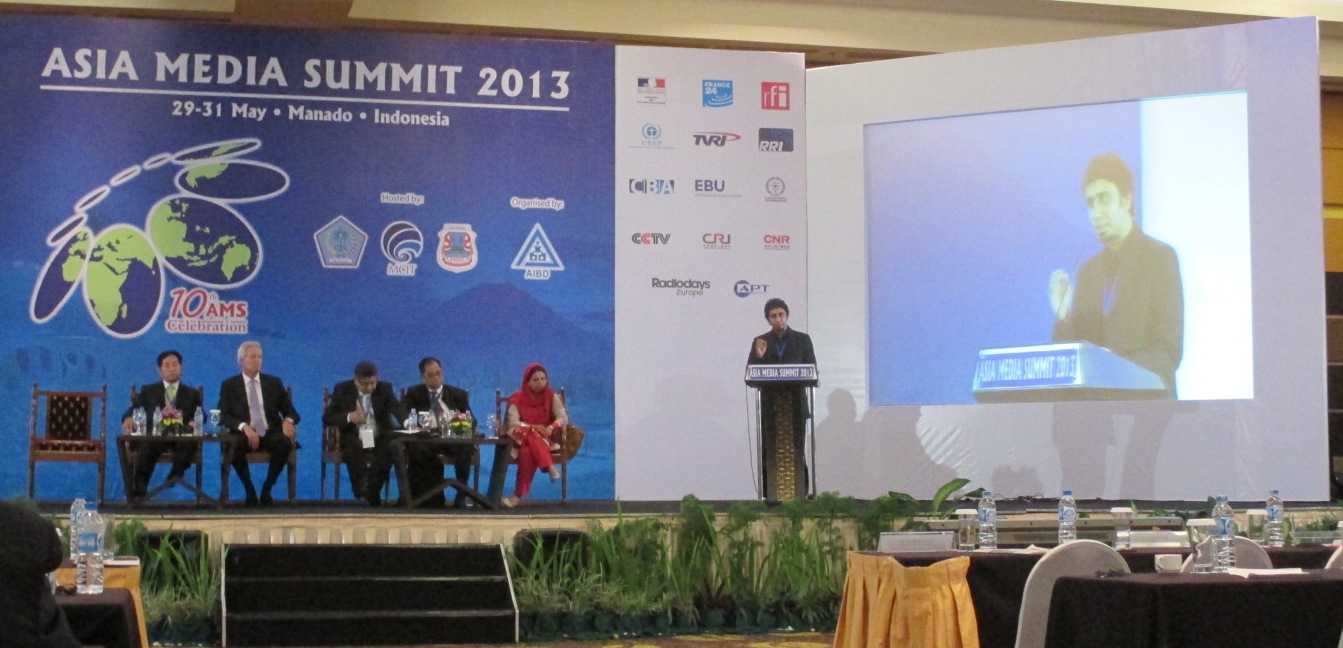
To top it up, he then spoke passionately and articulately during a session on taking action for sustainable development: how can media help?
While TV productions are all team work, public speaking is a solo art. Coming last of five panelists and youngest among them, Clarence made the most perceptive and practical remarks of all.
Clarence would have done well in any case. Now in his early 30s, he has been active in Fiji media since 2001, having started in newspapers as a music journalist, before moving onto radio presenting/producing and then TV production.
He is very digitally savvy, but as his panel remarks showed, also people savvy.
“Today, we have to produce media on-the-go for people who are constantly on the go,” he said. “We have to find ways to bring sustainable development elements into this.”
In “A Day at the Beach”, Clarence imagines a futuristic, climate ravaged Fiji and the Pacific in 2063. A young girl asks: did it have to be this way? Wasn’t there something earlier generations could do?
A bit evocative of The Age of Stupid movie (2009), which I had mentioned during our training. But it’s a universal theme.
Clarence offered some advice from his station’s experience. Key among them is to mix information with entertainment, so as to attract and sustain audiences who are constantly distracted these days.
“As Fiji’s national broadcaster, we provide info-tainment and edu-tainment programmes all the time,” he said.
Clarence Dass speaks on sustainable development how can media help at Asia Media Summit 29 May 2013
Other nuggets of wisdom from the amiable Pacific islander:
* Always ask for whom we are creating content. Knowing and profiling our audience is essential.
* We must make our content engaging. We need to find the right level so our programming appeals to both between laymen and experts.
* Beware of using too many effects and gimmicks, which can dilute the message. How much creativity is too much? Every producer has to ask that question.
* Small scale broadcasters in developing countries have to make content interesting on very limited budgets. Funding is a huge issue. But if managed properly, limited funds can still be made to go a long way.





 Open Minds!