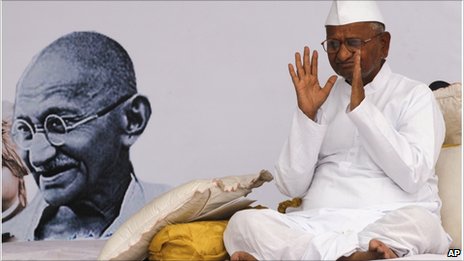
Anna Hazare: Just Say NO!This 71-year-old Gandhian is the new face of anti-corruption activism in India.
His name is Kisan Bapat Baburao Hazare, but he is popularly known as Anna Hazare. He is an Indian social activist who is giving voice to mass sentiment against pervasive corruption that has shocked Indian society in recent months.
On 5 April 2011, Anna Hazare started a Satyagraha, or a fast unto death, to pressurise the Government of India to enact a strong anti-corruption law that will establish a Lokpal (ombudsman) with the power to deal with corruption in public offices. The fast led to nationwide protests in support of Hazare. It ended four days laater, on 9 April 2011, with the government agreeing to all of his demands: it issued a gazette notification on formation of a joint committee headed by senior minister Pranab Mukherjee to draft an effective Lokpal Bill.
Anna Hazare has a long involvement in rural development, self reliance and anti-corruption work. In 1991, he launched the Bhrashtachar Virodhi Jan Aandolan (BVJA), or People’s Movement against Corruption.
For more information, I want to share what two Indian journalist friends have produced about this remarkable man.
As she notes: “The media attention has encouraged more middle class citizens to come out on the streets holding candles, carrying placards, shouting slogans, singing songs and even fasting in sympathy with Hazare. The numbers are modest but the buzz on social networking sites as well as media attention makes it appear larger.”
This is an extract from a half-hour documentary film that Pradip Saha made for the Centre for Science and Environment (CSE) India in 2000, which looked at the nexus between corruption, environment and natural resource management in India. It ends with this segment on Anna mobilising the grassroots against this scourge.
I once saw a sports car on the narrow streets of Malé, capital of the Maldives (total population 350,000). Nothing unusual about it — except that the whole of Malé is about two square km: we can WALK the length and breadth of the crowded capital in 10 or 15 minutes. The other 1,200 islands that make up the Indian Ocean archipelago are even smaller.
That reality didn’t stop an optimistic Maldivian from investing in a fast vehicle – after all, a car (especially a sports model) is more just a means of transport.
Something akin to this plays out in the virtual world everyday in many parts of developing Asia. Many Internet users have state of the art access devices — ranging from the latest laptops and high-speed desk tops to ipads and internet-enabled mobile phones. But most of the time the users and devices are held up by poor quality internet connections. I mean patchy, uneven, really S-L-O-W ones.
So part of the time — how often and how long depends on where you are, and who your internet service provider or ISP is — we are all like that Maldivian sports car owner. Dressed up and rearing to go, but not really going very far. Because our network is overloaded.
What can you do when your broadband internet connectivity slows down, making some web applications tedious or impossible? How can you measure and compare the quality of broadband service within the same telecom network or across different service providers?
As consumers, we have limited options. We can grin and bear, and be grateful that we are among the 2 billion (and counting) human beings who regularly access the Internet. We can grumble and rant, and even complain to our ISP. But chances are that they’ll plead it was a system fluke, an exception to the norm.
Now there’s another option. The Ashoka-Tissa method, a simple and free software developed by LIRNEasia and IIT Madras, enables just that: with it, you can gather evidence before taking it up with telecom operators.
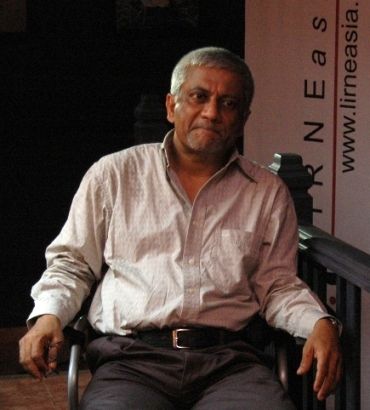
Rohan Samarajiva: Fraudband-buster?At TVE Asia Pacific , we have just produced a short video in which LIRNEasia — a regional ICT policy and regulation think tank active across the Asia Pacific — sums up their experience in developing a user-friendly method to measure broadband quality of service experience. It also shows how they engaged telecom operators and regulators in South and Southeast Asia from 2007 t0 2010.
“256 kbps up and down is the minimum definition (of broadband),” says Dr Rohan Samarajiva, LIRNEasia’s Chair and CEO. “There are various people debating about it: whether it should be 2Mbps and so on, but I will give an acceptable minimum definition…Our research shows that, in fact, many broadband products that say they are giving 2Mbps don’t even meet this minimum rate.”
The former Sri Lankan telecom regulator adds: “Then of course there is this whole story of companies promising all kinds of things. 2Mbps up, 2Mbps down and various other things being promised and giving not even 256kbps. So there is almost like a dishonesty factor here. As one of my friends says, this is not broadband; this is fraudband!”
PS: While writing this blog post, I was frustrated by the poor quality of my own supposedly high-speed broadband connection, provided by Sri Lanka’s oldest telecom operator.
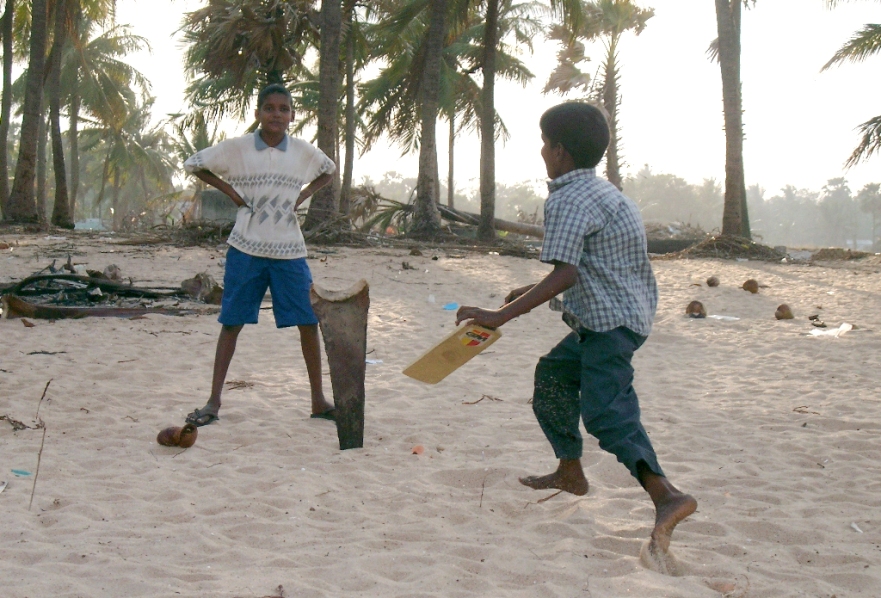
Boys playing cricket on tsunami hit beach in eastern Sri Lanka, January 2005 (photo by Video Image)
Two boys playing cricket on a beach, with a makeshift bat and wicket. What could be more ordinary than this in cricket-crazy Sri Lanka, where every street, backyard or bare land can host an impromptu game?
But the time and place of this photo made it anything but ordinary. This was somewhere along Sri Lanka’s east coast, one day in mid January 2005. Just a couple of weeks after the Indian Ocean tsunami had delivered a deadly blow to this part of the island on 26 December 2004.
My colleagues were looking for a survivor family whose story we could document for the next one year as part of the Children of Tsunami media project that we had just conceived. On their travels, they came across these two boys whose family was hit hard by the tsunami: they lost a sibling and their house was destroyed.
They were living in a temporary shelter, still recovering from the biggest shock of their short lives. But evidently not too numbed to play a small game of cricket. Perhaps it was part of their own way of coping and healing.
More than six years and many thousand images later, I still remember this photo for the quiet defiance and resilience it captured. Maybe that moment in time for two young boys on a devastated beach is symbolic of the 20 million plus men, women and children living in post-war Sri Lanka today.
We are playing cricket, or cheering cricket passionately and wildly even as we try to put a quarter century of war, destruction and inhumanity behind us. And at least on the cricket front, we’re doing darn well: the Sri Lanka national team beat New Zealand on March 29 to qualify for the ICC Cricket World Cup finals on April 3 in Mumbai.
We’ve been here once before – in March 1996 – and won the World Cup against many odds. Can we repeat or improve that performance? We’ll soon know.
Of course, rebuilding the war-ravaged areas and healing the deep-running wounds of war is going to be much harder than playing the ball game.
A few days ago, Captain of Lankan cricket team Kumar Sangakkara described post-war northern Sri Lanka as a scene of devastation after paying his first visit to the region. People of the north have been deprived for 30 years of everything that is taken for granted in Colombo, he told the media.
He toured the north with team mate and wiz bowler Muttiah Muralitharan, who is patron of the Foundation of Goodness. The charity, itself a response to the 2004 tsunami, “aims to narrow the gap between urban and rural life in Sri Lanka by tackling poverty through productive activities”.
Earlier this month, Lankan novelist Shehan Karunatilaka wrote a highly moving essay in the London Observer titled ‘How cricket saved Sri Lanka’. The blurb read: “As co-host of the current World Cup, Sri Lankans are relishing their moment on the sport’s biggest stage. And no wonder. For them, cricket is much more than a game. After years of civil war, the tsunami and floods, it’s still the only thing holding their chaotic country together.”
In that essay, which is well worth a read, he noted: “Many of us believe in the myth of sport; some more than others. Clint Eastwood and Hollywood have turned the 1995 Rugby World Cup into a sport-conquers-apartheid fantasy in Invictus. CLR James believed cricket to be the catalyst for West Indian nationalism. A drunk in a Colombo cricket bar once told me that Rocky IV had hastened the fall of the Soviet Empire.”
He added: “Let’s abandon the myths for now. Sport cannot change a world. But it can excite it. It can galvanise a nation into believing in itself. It can also set a nation up for heartbreak.”
Cricket has indeed excited the 20 million Lankans from all walks of life, and across the various social, economic and cultural divides. It has rubbed off on even a cricket-skeptic like myself.
We will soon know whether the Cricket World Cup will be ours again. Whatever happens at the Wankhede Stadium in Mumbai on April 2, we have a long way to go on the road to recovery and reconciliation.
Colombo, 29 March 2011: When Sri Lanka beat New Zealand to qualify for Cricket World Cup 2011 Finals
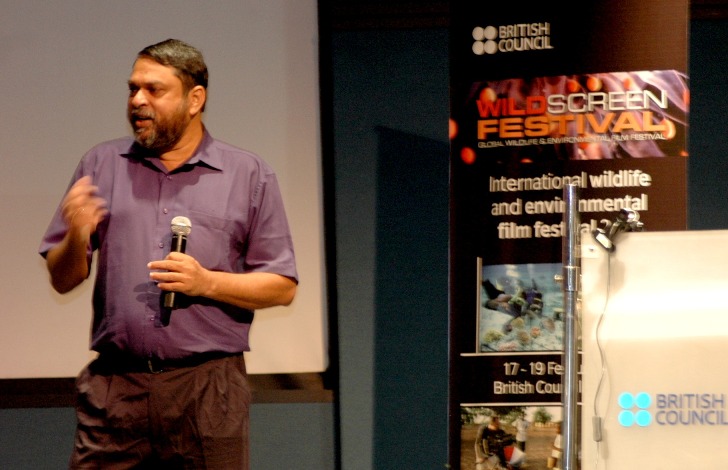
Taya Diaz conducts film making master class during Wildscreen 2011 in Colombo
“Taya Diaz has the shortest name in Sri Lanka but is a big man with a personality to match and a bushy black beard. Apart from being an excellent guide with good knowledge of all aspects of Sri Lankan Wildlife, he’s also a writer and film maker and is excellent company.”
That’s how a bird-watching website once described Taya Diaz, Sri Lankan conservationist turned wildlife film maker.
During the past two decades, Taya has collaborated in making over 20 full-length international wildlife documentaries, all showcasing Sri Lanka’s rich biological diversity and ecosystems. He has been a scientific investigator, presenter, narrator or Sinhalese scriptwriter.
One of his earliest involvements in international film making was with The Temple Troop. Made in 1997, for the BBC and Discovery Channel, it documented a year in the life of a troop of monkeys living in Sri Lanka’s ancient city of Polonnaruwa. These monkeys have been the subject of a long-running study by the Smithsonian Institution’s Primate Biology Program.
Trained as a scientist, Taya has worked in a number of field based conservation projects including the Smithsonian study of monkeys. But it’s as a wildlife and natural history that he now makes a name both in Sri Lanka and overseas.
The Urban Elephant (2000, for PBS/National Geographic), and The Last Tusker (2000, for BBC/Discovery) are two other productions that used Taya’s ground knowledge and scientific expertise. He has provided local liaison for broadcasters such as New Zealand TV, Canal+, Discovery channel, and BBC1.
Taya Diaz: Enough stories to last a lifetime!For all these reasons, Taya was a natural choice when TVE Asia Pacific was asked to recommend a Sri Lankan film maker to present a master class when the Wildscreen traveling film festival held in Colombo from 17 to 19 February 2011. His master class, titled “Untold Stories of Sri Lanka”, looked at Sri Lanka’s as yet largely untapped potential for authentic, factual stories related to wildlife, natural history and the environment.
He explained the premise for his master class: “Sri Lanka is a pot of plenty in every aspect — the opportunities for a documentary filmmaker are astounding. But sadly, what most audiences see on the airwaves is very standard and boringly similar, touching on the same topics year in and year out.”
Taya feels that documentary films and TV programmes are also essential for educating Sri Lankans about their own natural heritage. Sri Lanka has an impressively high number of plant and animal species for its relatively small land area — which makes it one of the most biologically diverse countries in the world.
“Sri Lankan naturalists, wildlife experts and environmentalists should collaborate more closely with film makers and/or broadcasters to make more local films aimed at local audiences,” he said during a panel discussion I moderated on February 17. “This is essential for raising awareness on environment and sustainable development issues as Sri Lanka pursues rapid economic development after the war.”
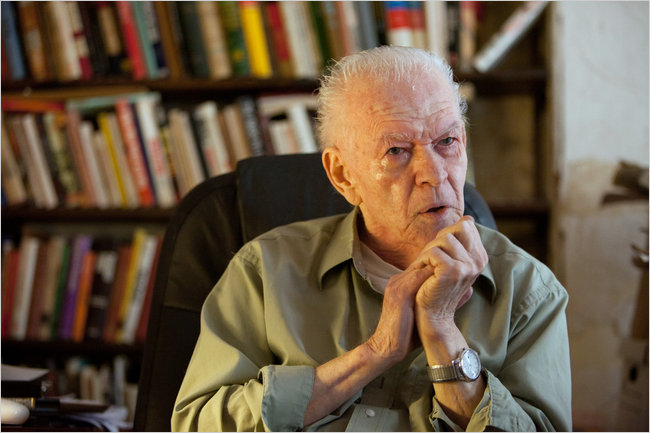
Is this man, now 82 years old, giving the world’s assorted dictators their worst nightmares?
This is Dr Gene Sharp, a Professor Emeritus of political science at the University of Massachusetts Dartmouth in the US, he is widely known for his extensive writings on nonviolent struggle, which have influenced numerous anti-government resistance movements around the world. He is now credited with the strategy behind the recent toppling of the Egyptian government of Hosni Mubarak.
The New York Times on 17 Feb 2011 profiled him with the title: “Shy U.S. Intellectual Created Playbook Used in a Revolution”. The article noted: “Few Americans have heard of Mr Sharp. But for decades, his practical writings on nonviolent revolution — most notably “From Dictatorship to Democracy,” a 93-page guide to toppling autocrats, available for download in 24 languages — have inspired dissidents around the world, including in Burma, Bosnia, Estonia and Zimbabwe, and now Tunisia and Egypt.”
“Gene Sharp is the world’s foremost expert on non-violent revolution. His work has been translated into more than 30 languages, his books slipped across borders and hidden from secret policemen all over the world,” says Ruaridh Arrow, Director of the upcoming documentary titled ‘Gene Sharp – How to Start a Revolution’.
In 2009 Arrow, a producer with Sky News in the UK, began filming a documentary following the impact of Sharp’s work from his Boston house, across four continents and eventually to Tahrir square in Cairo, “where I slept alongside protesters who read his work by torchlight in the shadow of tanks”.
Extract: “Gene Sharp is no Che Guevara but he may have had more influence than any other political theorist of his generation. His central message is that the power of dictatorships comes from the willing obedience of the people they govern – and that if the people can develop techniques of withholding their consent, a regime will crumble.”
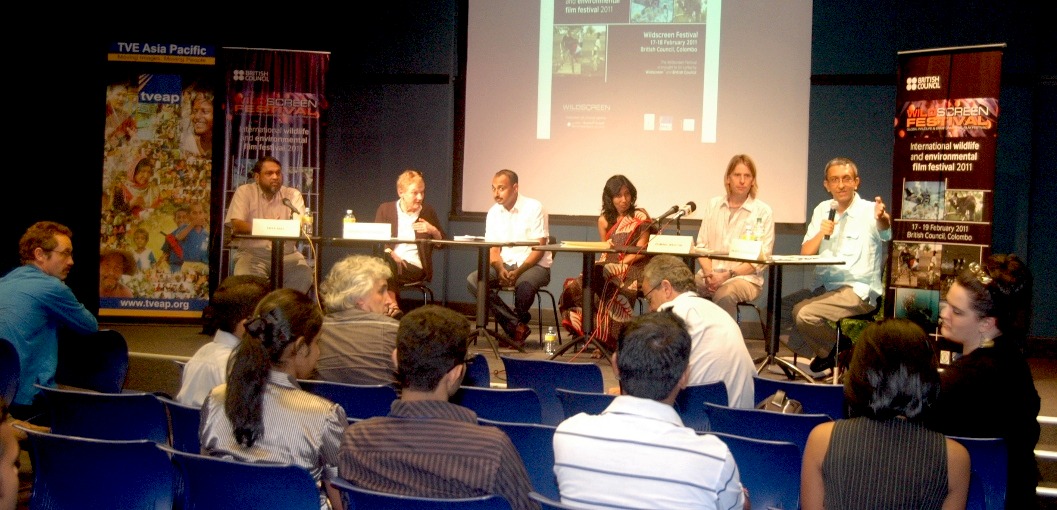
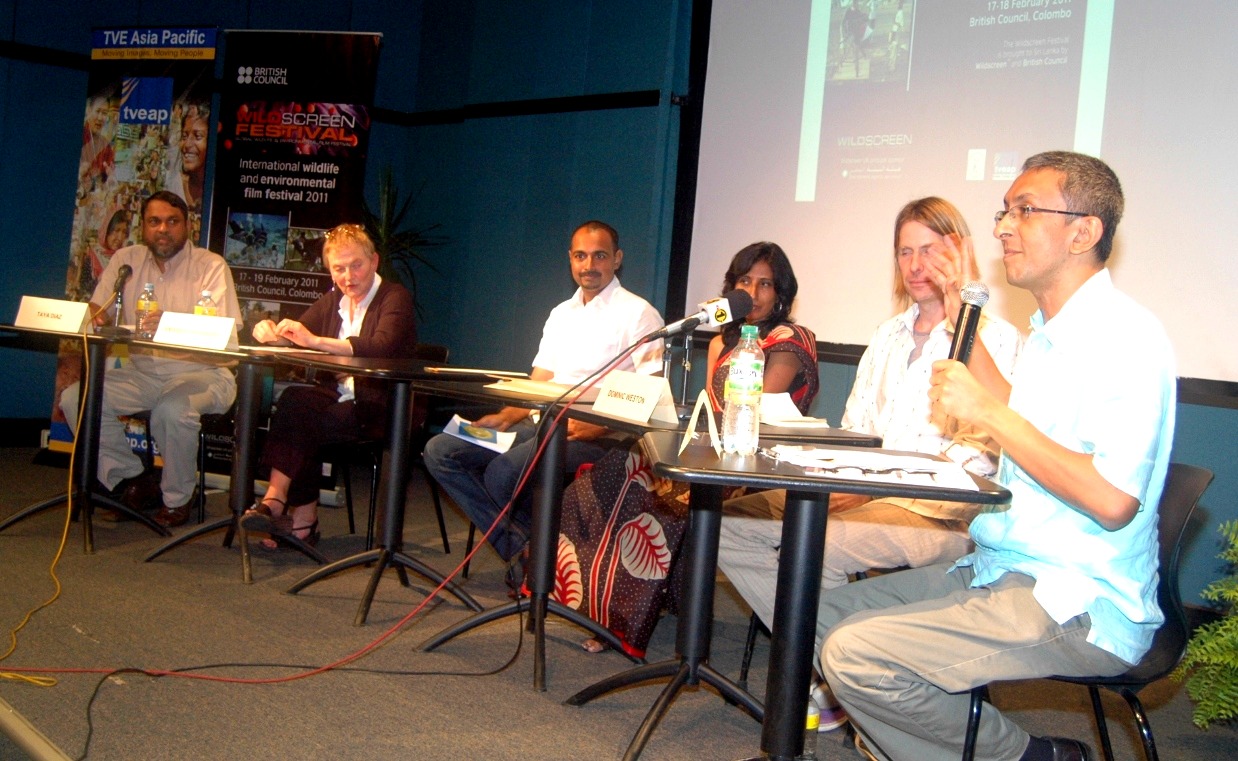
Wildscreen 2011 Colombo Panel: From L to R - Taya Diaz, Amanda Theunissen, Delon Weerasinghe, Anoma Rajakaruna, Dominic Weston and Nalaka Gunawardene
Is there an elite or ‘charmed’ circle of wildlife and natural history film makers in the world? If so, how does a new film maker break into this circle?
This is the question I posed to a group of visiting British film makers and their Sri Lankan counterparts during a panel discussion I moderated at the British Council Colombo on February 17 evening.
The panel, organised around the topic ‘Differences and mutual challenges in Asian, American and European productions/film making’, was part of the Wildscreen traveling film festival held hosted in Colombo, Sri Lanka, from 17 to 19 February 2011.
Amanda Theunissen, who has worked with the BBC Natural History Unit and National Geographic Television, gave a straight answer: yes, there is such a charmed circle.
And although she didn’t say it in so many words, it was clear from our overall discussions that the circle is jealously guarded, and it’s not easy for any newcomer to break into it. And the entry barrier becomes harder if the film maker is from the global South.
I opened the panel recalling the opening sentence of Our Common Future, the 1987 Report by the World Commission on Environment and Development: “The Earth is one but the world is not”. I said: “A similar disparity exists in wildlife and natural history film making. We are all covering the same planet Earth in all its splendour and diversity. But on this planet there are many different worlds of film making.”
I asked my five panelists — Amanda Theunissen and Dominic Weston from the UK, and Delon Weerasinghe, Anoma Rajakaruna, and Taya Diaz from Sri Lanka — to address three key challenges faced by all wildlife and natural history film makers everywhere: the art of effective story telling; fund raising to make films; and ensuring wide distribution of the films made.
The panel discussion was lively, wide-ranging and engaged the audience which comprised mostly aspiring film makers or film students. I didn’t want our discussion to scare any of them away from a career in environment and wildlife film making. But at the same time, we wanted to acknowledge the practical realities — and disparities — that exist within and across countries in this respect.
I’ve now written up a summary of the panel discussion for TVE Asia Pacific news. Its heading comes from a provocative question I asked during the panel: does wildlife film making operate on almost Darwinian rules?
This is one of the more popular cartoons about People Power revolution in Egypt. The icon of pyramid has been irresistible for many cartoonists, but this one is especially profound: it says so much with so little!
We salute all ordinary Egyptians whose 18 days of resolve and agitation have driven out the dictator Hosni Mubarak. But as I tweeted to my Egyptian friend Nadia El-Awady on the night of 11 February soon after hearing Mubarak’s resignation: “One huge roadblock is now gone; we hope you’ll persist in your long march to democratic freedom.”
Toppling an unpopular, ruthless dictator is never easy, but the immediate aftermath is the most decisive – and dangerous – moment. This is when the ultra-nationalists and fundamentalists will compete with the democrats and liberals to fill the void. In Iran, when the Shah fell in 1979 after prolonged people power, it was a theocracy that replaced the autocracy. So people power requires constant vigilance, especially now.
People Power does not – and should not – stop at elections or revolutions in any country: regime change is only half of the struggle won. Ensuring people have a say in how their governments are run requires constant engagement by their citizens. This is a topic I have long been interested in, and written about. I also helped produce a global TV documentary on the subject in 2004. See these blog posts and web story about that film:
The Earth is one, but the world is not... As I wrote the other day, during 2011, human numbers will add up to 7 billion. That is 7,000,000,000 living and breathing people.
But how many of us can grasp such a large number? I can size up a gathering of a few hundred people, or at the most, a couple of thousand. After that, I lose count…and I’m not alone.
That’s why the idea of a Global Village of 100 is so very useful. It’s based on a simple yet profound premise: if we could reduce the world’s population to a village of precisely 100 people, with all existing human ratios remaining the same, what would it look like?
The idea was the brainchild of Donella Meadows, a pioneering American environmental scientist, teacher and writer. She is best known as lead author of the influential book The Limits to Growth (1972).
It was first published in May 1990 with the title “State of the Village Report”, and Meadows originally envisaged a village of one thousand people. This approach to showing the global disparities was so refreshing and accessible that it soon spread among educators, journalists and activists — in today’s Internet terms, we would call that ‘going viral’.
David Copeland, a surveyor and environmental activist, revised the report to reflect a village of 100 and single-handedly distributed 50,000 copies of a Value Earth poster at the 1992 Earth Summit in Rio de Janiero.
What happened after that is recounted in this brief history by Carolyn Jones, adapted by Bob Abramms.
The analogy has been revised every few years to reflect the changing demographics and global development trends. The practice is now sustained by the Miniature Earth Project, whose latest animated video version for 2010 runs as this:
There is also the 100 People Foundation (www.100people.org) which is “committed to simplifying and humanizing complex global statistics by looking at the world as a community of 100 people”. They provide media and educational tools to teachers around the world to help them teach a global view, and inspire their students to learn more about their global neighbors. Here’s their own video:
100 People: A World Portrait Trailer
Here’s another variation on the theme, set to John Lenon’s ‘Imagine’:
If the world were a village of 100 people…
This cartoon animation uses the same approach, but with emphasis on linguistic and cultural diversity.
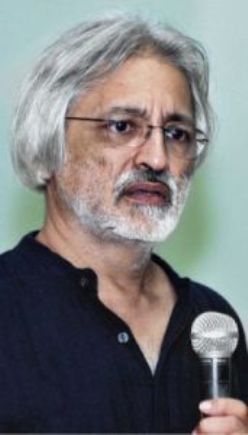
Anand Patwardhan is one of India’s best known and most outspoken documentary film makers. He has been making political documentaries for over three decades, pursuing diverse and controversial issues that are at the crux of social and political life in India. He epitomises the activist film maker and has inspired a generation of socially sensitive film makers.
In the world’s largest democracy that is India, and in a country with a vibrant and diverse media that is considered to be among the most free in the developing world, Anand has constantly run into problems getting his films seen on broadcast television. Many of his films were at one time or another banned by state television channels in India and became the subject of litigation by Anand, who successfully challenged the censorship rulings in court.
As his website notes, several of his films have also incurred the wrath of right wing fundamanentalists both in India and abroad. “In keeping with the uneven nature of India’s democratic institutions and its sharply divided polity, bouquets have been accompanied by brickbats.”
I came across a good interview with Anand Patwardhan in the Indian current affairs magazine Frontline, issue for 4 – 17 December 2010. Here are two questions concerning the censorship problems he has often faced:
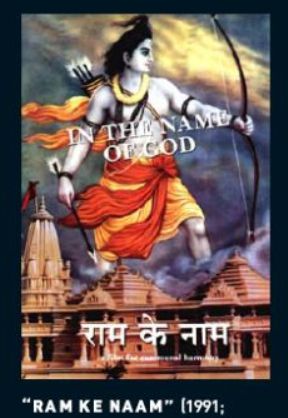
Ram Ke Naam (In the Name of God), 1991Q: You have had problems getting clearance from the Central Board of Film Certification for almost all your films, and then later they were not allowed to be screened on Doordarshan. Your films are also not screened on private channels. How do you see this constant struggle with these forms of censorship?
A: Right from the first film, I faced censorship in some form or the other. Even the Janata Party after it came to power refused to screen Waves of Revolution though it was against the Emergency. L.K. Advani was the Information and Broadcasting Minister then. I had added an epilogue which said that the janata raj [people’s rule] that the film spoke about was not the same as [that of] the Janata Party now in power. I also drew attention to the political prisoners still being held in jail. Finally, after media pressure built up, the film was screened on Doordarshan.
Prisoners of Conscience also got into trouble with the censor board, and it took a letter from Satyajit Ray to the government saying that they must not stop a film like this to get the required clearance.
Ram Ke Naam followed the rath yatra of Advani and the violence in Ayodhya on October 30, 1990, when the Babri Mosque was attacked for the first time. It was meant to be a warning to the nation about the rise of Hindutva fundamentalism. I had trouble with the censors initially, but it finally got through in 1992 and then I had trouble with Doordarshan, which refused to show it. Finally, after the film won a national award for Best Investigative Documentary, I was able to go to court and argue that the government cannot give me a national award and yet say that I cannot show the film on Doordarshan, which it had been doing systematically. In fact, whenever any film of mine won a national award, I used it to go to court. I argued that not showing such a film on national TV was a denial of my right to freedom of expression and of the viewers’ right to information.
On these grounds I have won seven cases till now – five in the High Courts and two in the Supreme Court after the government went in appeal. Ram Ke Naam was finally shown on Doordarshan in 1997. The judge ordered that the film should be telecast at prime time.
Stills from Anand Patwardhan (courtesy his website) Q: Why have you not approached private channels to screen your films?
A: The private media, including television, are not about giving people information. They are run by corporates more interested in providing entertainment. Their news and analysis are restricted to five and 10 second [sound] bites. Their clear mandate is commercial. They will ask, “Where are the advertisers who will endorse your product? Who is going to give the money to show this? Are we going to waste one and a half hours of TV time on issues?”
I have also discovered that even in the private domain there is political censorship. A few days before the Allahabad High Court verdict on [the] Ayodhya [title suit] was due, a private channel approached me to screen Ram Ke Naam. They paid me for three broadcasts but stopped after showing the film just once despite extremely positive feedback from viewers. On inquiring, I was told that the channel was pressured not to show the film by both the Information and Broadcasting Ministry and the TV Broadcasters’ Association. Anyone who watches Ram Ke Naam will realise that this censorship was done to protect the interests of unscrupulous politicians who had used the emotive appeal of Ram for financial and political gain.
The situation today is such that you cannot pinpoint where the censorship is coming from. During the Emergency you at least knew who the enemy was. But now what do you do when every wing of society – whether it’s the legal system, and so on – is complicit in a blanket suppression of facts.
If we put a cash price on the economic services that, say, watersheds or insects or coastal mangroves provide, would we value Nature more? Would we be prepared to change our ways of measuring wealth and economic growth? And if we did, would that slow down the extinctions and collapse of ecosystems?
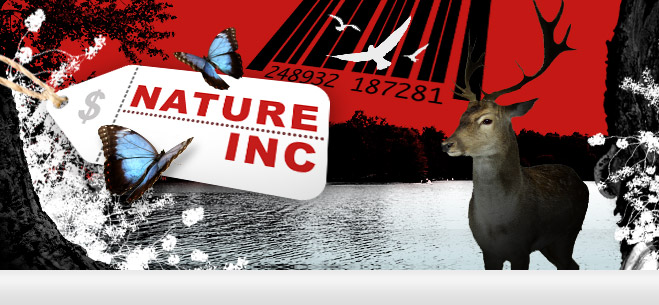
These are some of the issues that are explored in Nature, Inc., a path-breaking TV documentary series that puts a price-tag on environmental services such as forests, wildlife and coral reefs.
First broadcast in 2008 and 2009 on BBC World News, Nature Inc. broke new ground for environmental programming by seeking out a new breed of investor – those who believe they can make money out of saving the planet.
Watch Nature, Inc. series trailer:
Nature Inc. offers new insights into valuing the benefits of natural systems and biodiversity. It takes its lead from economists who have worked out that ecosystem services are worth more than the total of all the world’s national economies.
The first and second series are now available from TVE Asia Pacific (TVEAP). Each series comprises six half-hour episodes, compacting stories filmed in different parts of the world. Broadcast, civil society and educational users across the Asia Pacific may order copies at the cost of duplication and dispatch, and without having to pay a license fee.
The series was produced by One Planet Pictures of the UK, in association with dev.tv of Switzerland.
“There is new green thinking out there and some of it is grappling with pricing renewable assets. As such we felt it was a legitimate new area to take as an organising theme for the new series,” says Robert Lamb, series producer of Nature, Inc. “Perhaps the global recession has made viewers more aware of the ‘eco’ in economics”.
Robert LambThe series is based on new research and analysis being done on the subject. Among these new studies is the Economics of Ecosystems and Biodiversity (TEEB), a major international initiative to draw attention to the global economic benefits of biodiversity, to highlight the growing costs of biodiversity loss and ecosystem degradation, and to draw together expertise from the fields of science, economics and policy to enable practical actions moving forward.
But adding a price tag to Nature is not something that pleases all scientists or activists. Robert says the producers received “an overwhelmingly positive reaction” to the first series, but there was also a small minority who wrote in to say they hated the premise of the whole series.
He adds: “That’s good, we want to foster discussion in Nature Inc. which is why we are encouraging viewers to contribute ideas for the next series.”
Here’s a sample episode from the series, titled Coral Cashpoint. In this, Nature Inc investigates a claim that our coral reefs are worth $30 billion a year. In this fourth episode, we go diving on the Great Barrier Reef, the Maldives and to the bottom of the North Sea to find out how coral reefs supply 500 million of us with food and work. But we are destroying the reefs so quickly, they could vanish entirely in less than a hundred years.
 Anna Hazare has a long involvement in rural development, self reliance and anti-corruption work. In 1991, he launched the Bhrashtachar Virodhi Jan Aandolan (BVJA), or People’s Movement against Corruption.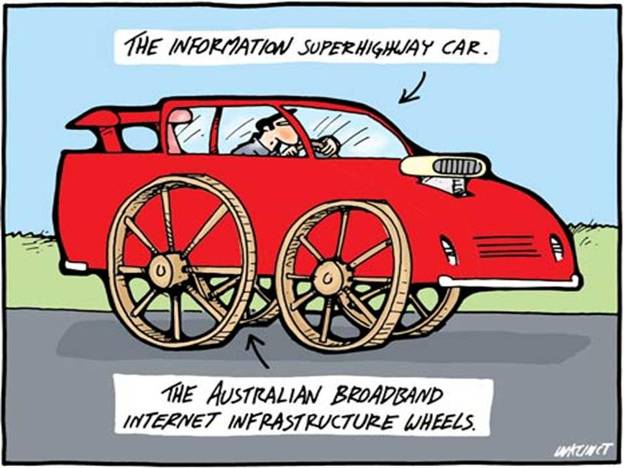




 Open Minds!