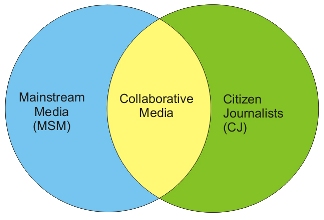
Can this common ground expand? Is there common ground between the mainstream media (MSM) and citizen journalists (CJ) that can be tapped to better serve the public interest?
MSM have gone from denial to dismissal to apprehension about this murky, distributed phenomenon called citizen journalists. But, as I asked, must MSM and CJ always compete? Must they consider each other mutually exclusive? I don’t think so.
Consider these facts: CJs are not an organised, unionised mass of people. They are a scattered, loosely connected group that is a community of practice across geographical borders and time zones. They rarely agree on anything among themselves. CJs are not out to topple MSM.
Once we get those points clarified, we can move beyond chest-thumping egotism. We can then address the fundamental values of why MSMs and CJs are both doing what they do: for the free flow of information, ideas and opinions.
Indeed, we should see how MSM and CJs can join hands more to serve the public interest. CJs today are not just frustrated poets and writers who never found a public outlet in the past. Today’s plethora of CJs include scientific experts, professionals, retirees with loads of experience and tech-savvy geeks among many others. This is a vast resource that MSM can tap into — especially in these days of leaner budgets and fewer staff.
Must everything be All-or-Nothing? No!And why not? Many issues these days are just too complex, technical or nuanced for even the most committed full-time, paid journalists to tackle all on their own. The information is often too vast to wade through in time for deadlines. And things are changing faster too. In such situations, can MSM work collaboratively with CJs, sharing the work load, risk and eventually, the credit?
In fact, MSM have historically relied on citizens to provide part of the content – whether they are letters to the editor, or funniest home videos, or news tips from the public that reporters then pursue. Today’s CJs can take this ‘crowd-sourcing’ to a new level.
I recently came across an interesting example of crowd-sourcing in investigative journalism – a component of journalism that is particularly demanding. Over several weeks in April – May 2009, The Telegraph in the UK disclosed the scandal over many exaggerated or false expense claims made by British Members of Parliament. This left the British public furious, and brought worldwide ridicule on the Mother of all Parliaments.
The story still unfolds. Now, The Guardian has involved readers to dig through the several truckloads of MPs’ expense documents to spot claims that merit further investigation because they seem…a tad suspicious. This is more than what a small team of paid journalists can do on their own: a total of 458,832 pages of documents need be manually checked. So far, 23,262 readers had signed up by 2 August 2009. Many hands make light work for The Guardian, whose editors will then decide which claims are to be further probed and queried.
Mobile: the most subversive ICT of all?Can we expect to see more of such collaborations in time to come? I certainly hope so. Under siege as they are, MSM should be the first one to make the move to search for this common ground – after all, they have everything to gain and little to lose. We can all think of tedious record-scanning, number-crunching tasks that are needed to unearth and/or understand complex stories of our times.
Of course, for such collaborations to work well, the rules of engagement between MSM and CJs need to be clear, transparent and based on mutual trust. That requires some work, but when it works well, everybody stands to gain.
In late 2005, I researched and worked with Sir Arthur C Clarke to write an essay on the rise of citizen journalists, which first appeared in the Indian news weekly Outlook on 17 October 2005. I’m quite proud of how we ended the essay: “There is more than just a generation gap that separates the mainstream media from the increasingly influential online media…Yet one thing is clear: the age of passive media consumption is fast drawing to an end. There will be no turning back on the road from Citizen Kane to citizen journalist.”
Emerging new models of collaboration in media and journalism indicate that this evolutionary road need not be a one-way street. So nearly four years on, I now raise the question that I first put to the media tycoons of Colombo the other day: Can Citizen Kane and Citizen Journalist join hands in the public interest?
I very much hope the answer is a resounding: Yes, We Can!
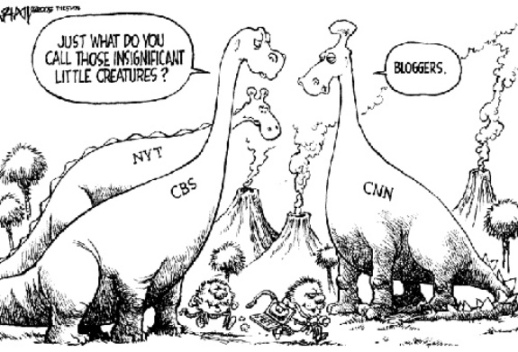
I have just been very lucky. I addressed a select gathering of media owners, publishers, editors and senior journalists — almost all of them working in the mainstream print or broadcast media in Sri Lanka — and virtually called them dinosaurs, and compared their industry to the supposedly unsinkable Titanic.
The nice people they all were, they actually let me get away with it! The occasion was the Sri Lanka launch of Asia Media Report 2009, held at the now-renovated Galle Face Hotel in Colombo.
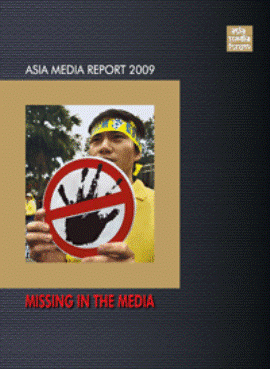
Shining a light at a spot rarely probed...Coordinated, produced and published by the Asia Media Forum with the assistance of Actionaid, the report is a quick survey of the state of media in 20 Asian countries, written mostly by working journalists and broadcasters. It focuses on how the media throughout Asia reports on marginalised people and communities in their respective societies, from the very poorest countries to the richest.
‘Missing in the Media’ is the theme of Asia Media Report 2009, and I used this as the point of departure for my talk, illustrated with many cartoons some of which have appeared on this blog. I fully agreed with the editor and contributors of the report – six of whom I know – that there are many elements missing or lacking in Asia’s mainstream media today. But instead of adding to that list, I asked a more fundamental question: at a time when the mass media as we know it is under threat of mass extinction, how do we save and nurture at least a few good things that we hold dear?
In that process, I had to do some plain speaking and tell my audience that they cannot continue business as usual and expect to remain relevant, or even solvent for too long. I referred to the famous mediasaurus essay by Michael Crichton, and traced what happened since its appearance in 1993. I also compared the media’s arrogance to that of the Titanic‘s builders, who believed the ship was unsinkable.
I don’t do this kind of big picture talk too often, and mind my own business most of the time (which is a hands full these days). In fact, the last two occasions I spoke my mind to assorted worthies of the Sri Lankan media, the reaction was much harsher.
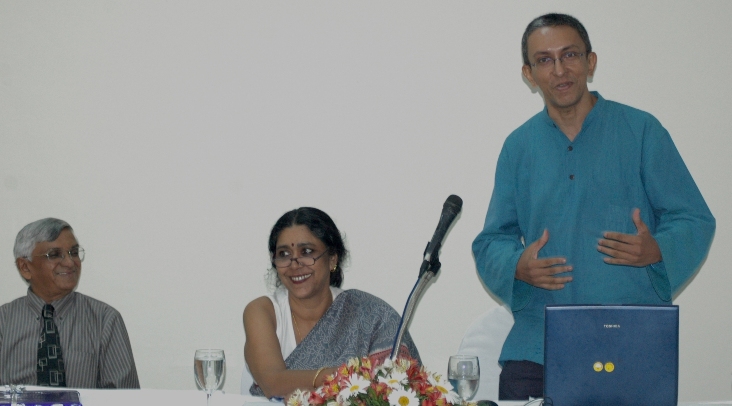
The Coming Ka-Boom? L to R: Vijitha Yapa and Sharmini Boyle seem to be amused as Nalaka Gunawardene speaksFirst was when I talked about the press freedom in the digital age to large gathering of Sri Lankan journalists and editors was the World Press Freedom Day Colombo observance in 2001. When I referred to the potential of new communications technologies – especially the (then still emergent) Internet and mobile phones – for safeguarding media freedoms, I was practically shouted down by a section of the audience. They felt I was talking about ‘western trends’ and ‘concerns too far removed from their bread-and-butter issues and survival issues’. Yet, the past few years have amply proved that if anything, I was too conservative in what I anticipated as technology’s role in promoting media freedom.
The second occasion was in mid 2004, when I was asked to speak at a Colombo meeting to mark the launch of a scholarly volume (in Sinhala) looking back at the first 25 years of television broadcasting in Sri Lanka. I was one of two dozen contributors, from diverse backgrounds of culture, science and journalism, who were brought together by the Catholic Media Centre of Sri Lanka which has a (secular) media monitoring programme. Having expressed my reflective views in the book chapter, in my speech I discussed my aspirations for the next 25 years — hoping there would be greater innovation and experimentation in an industry that seemed to be running short of both. This irked a certain local pioneer of television, who spoke after me and spent half of his given time attacking me personally and ideologically. Talk about pioneer’s syndrome. That definitely was a mediasaurus breathing fire, and I don’t want to meet one of these beasts on a dark night…
On both occasions, the event organisers apologised to me for the hostile reactions, but I was cool. By now, I’m used to reactions of all kinds in the public sphere. Given this history, yesterday’s encounter was far more reassuring that there still are good people even in an industry that is under siege in more ways than one.
I’m so fortunate to be welcomed by both media practitioners and media researchers across Asia. I’m no longer a card-carrying member of either group (if I ever was!), but I have great fun hobnobbing with both, occasionally telling them some home truths. This is what Irish journalist-cum-academic Conor Cruise O’Brien once called ‘having a foot in both graves’!
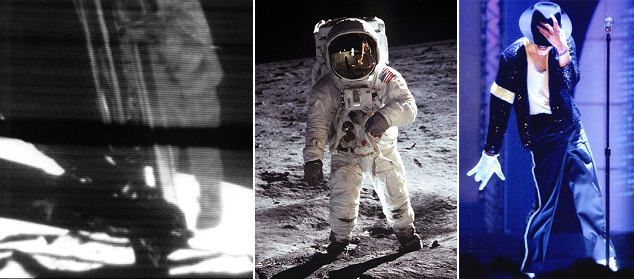
While Apollo astronauts conquered the Moon, Michael Jackson took over the Earth...
What a pity that Michael Jackson missed the 40th anniversary of the first Apollo moonwalk by only a few weeks.
He was only 10 when Apollo 11’s Neil Armstrong took that historic first lunar step on July 20, 1969 and was probably among the 500 million people — the largest TV audience the world had known at that time — who watched it live. Fourteen years later, Jackson would invent his own kind of ‘moonwalk’.
First performed for his song ‘Billie Jean’ on a U.S. TV show in March 1983, Jackson’s dance technique that gives the illusion of the dancer stepping forward while actually moving backward gained worldwide popularity and became his signature move.
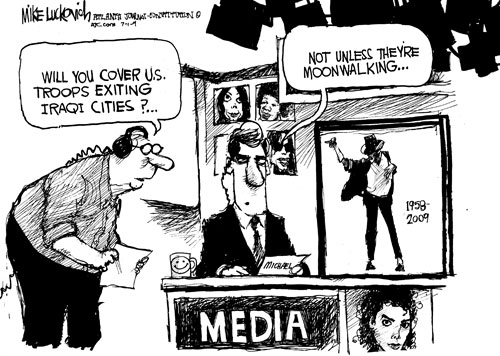
Like that historic ‘moonwalk’ 40 years ago, Jackson’s untimely death on June 25, 2009 created ripples that was felt worldwide. News of his sudden death crashed some news or social networking websites, and stalled others. Even the mighty Google, now the world’s largest media operation, slowed down; Google News was inaccessible for a while.
This is the opening of my latest op ed essay, inspired by the media and public reactions to Michael Jackson’s sudden death. Titled ‘King of Pop Moonwalks to Online Immortality’, it has just been published by the Asian Media Forum website.
I must admit that I’m more a fan of the original Apollo moonwalk than Michael’s version. I was three and a half years when the first Moon landing happened, which remains my earliest childhood memory that can be traced to a specific date.
I look back at how these twin technologies transformed far-away Jackson into a local icon across Asia. I also recall a 2001 documentary named Michael Jackson Comes to Manikganj. Directed by Indian journalist Nupur Basu, it probed how far and wide satellite television was influencing and impacting culture, society and even politics of South Asia. (Full disclosure: I was interviewed on the film, along with nearly two dozen other South Asians.)
The essay ends noting how Jackson could not quite ride the Internet wave the way he did the satellite TV wave. I share my thoughts on how the world’s online population — now over 1.5 billion people according to one estimate — reacted to the news that King of Pop was no more.
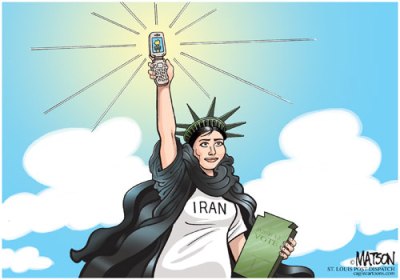
The news created a data tsunami of its own on the web, which incidentally – and half the world away – provided a much need respite for the Ayatollahs of Iran…Read the full essay and find out why!
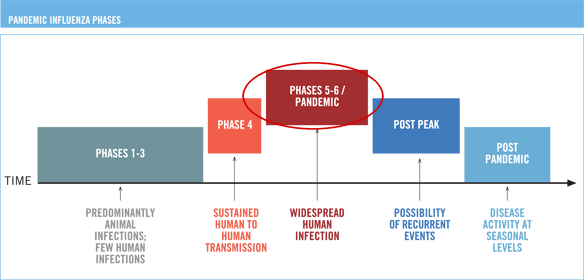
So this is how it REALLY started...The World Health Organization (WHO) said this week that the global spread of swine flu was highly likely, and raised its alert level to Phase 5 — the next-to-highest level in the worldwide warning system. It also offered advice on prevention, caring for persons with the flu and how to seek medical help.
“Wash your hands when you shake hands, cover your mouth when you cough,” he said. “It sounds trivial, but it makes a huge difference. If you are sick, stay home. If your child is sick, take them out of school. If you are feeling certain flu symptoms, don’t get on an airplane.”
That’s the basic preventive message that needs amplification and repetition all over the world. While medical doctors and researchers spearhead the public health response, we need the mass media and all communications professionals to support the public awareness response. Flu shots and hospitals alone cannot win this battle.
For the first time in history, we have the means of rapid access to most of humanity. What we now need is clarity of message, credible messengers and sustained delivery.
I see this as an interesting – even if very risky – social experiment on the preventive powers of our 24/7 media and information devices. More than four billion mobile phones are in use, most of them in the developing world. Over one billion people connect to the web. We also have hundreds of radio and TV channels saturating the airwaves. Can these media peddle the right kind of awareness and inspire preventive action faster than the flu virus propagates itself? This is the classic race between education and catastrophe that H G Wells wrote about many decades ago!
We in Asia have some useful experiences from 2003 when the Severe Acute Respiratory Syndrome (SARS) affected much of the region. On that occasion, the media led a parallel front against the pandemic, delivering both preventive messages and helping care for those already infected.
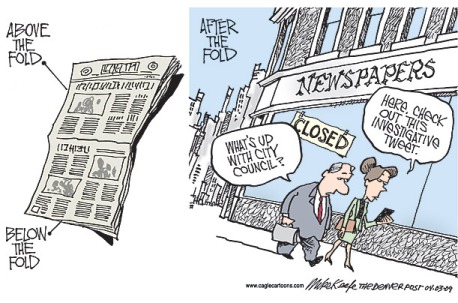
Precisely because rapid response is vital in a situation like SARS and swine flu, it’s the broadcast and online media that can provide timely and up-to-date coverage. It’s too early and too soon to compare media’s role in this crisis with SARS and other rapid-spread public health crisis of the past. Print media can also play a part in spreading general awareness, but they don’t have the speed and 24/7 outreach that we need for covering a crisis like this. Besides, in many parts of the world, newspapers and magazines are struggling to stay in business, coping with a terminal malady affecting their industry.
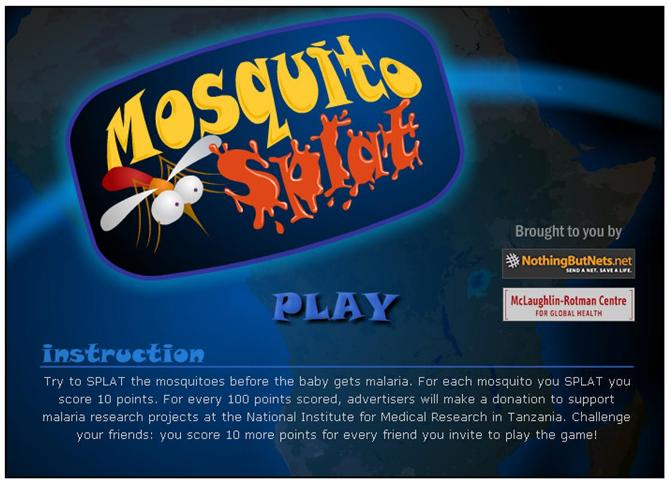
I just killed a few dozen ‘girls’ before breakfast. It wasn’t always easy or pleasant, and after a while there was blood all over the place. But I feel good about getting them – and I saved an innocent baby in the process, and even helped a researcher doing good work!
Now online: a game we have played over millennia against 'em blood suckers...
The aim of the game is to use the fly squatter to SPLAT mosquitoes before the baby gets malaria. For each mosquito you SPLAT, you score 10 points. For every 100 points scored, advertisers will make a donation to support malaria research projects at the National Institute for Medical Research in Tanzania. We also score 10 points for everyone we invite to play the game – plus there’s a link taking us to an online donation page in case we want to support the research directly.
“It’s quick, easy and fun, and a great way to do your part for one of the most serious global health problems in the developing world,” say the game’s promoters.
Indeed. Nearly 500 million cases of malaria occur each year, resulting in over one to three million deaths (figures online vary enormously on this). Malaria is particularly devastating in Africa where it is a leading killer of children. Every 30 seconds a child in Africa dies from malaria.
The fact is, malaria deaths are entirely preventable with modest investment and spread of knowledge that mosquitoes spread malaria (not everyone knows this, and as I wrote in another blog post, that’s a challenge that educators and broadcasters are now working on).
McLaughlin-Rotman Center for Global Health: Taking anti-malaria campaign onlineBut more needs to be done to engage the Digital Natives in this global public health challenge. It’s not just the exposed people in malaria-prevalent parts of Africa, Asia and Latin America who are at risk. As development economist Jeffrey Sachs has been reminding us eloquently, malaria reduces productivity, increases poverty, weakens people’s bodies and makes them vulnerable to other diseases. In a globalised world, such massive suffering in some parts of the world would quickly manifest in different ways all over the planet.
Little biology lesson: Usually, people get malaria by being bitten by an infective female Anopheles mosquito. Only Anopheles mosquitoes can transmit malaria, and they must have been infected through a previous blood meal taken on an infected person. When a mosquito bites an infected person, a small amount of blood is taken, which contains microscopic malaria parasites. About one week later, when the mosquito takes its next blood meal, these parasites mix with the mosquito’s saliva and are injected into the person being bitten.
A film to reveal what the old media didn't show...When Barack Obama and his running made Joe Biden won the US Presidential Election held on 4 November 2008, they not only beat the Republican duo McCain-Palin but also a host of other also-rans. It’s too soon to tell, but that date might also mark the beginning of the end for the old media, also called the mediasaurus, who have been dominating the public’s access to news, information and commentary for over a century.
But how did it all happen? Who can tell us the real story as it happened, and why, without filters and biases so rampant among the mediasaurus?
On this blog, we have watched with deep interest and some fascination the rise of Barack Obama from relative obscurity to become the President of the United States. On 6 November 2008, soon after the election results were confirmed, we noted how Obama had just been elected ‘President of the New Media world’. I explained: “Obama’s rise has epitomised change in many ways. Among other things, he is the first elected leader of a major democracy who shows understanding and mastery over the New Media World, which is radically different from the old media order.”
On 20 January 2009, when he was inaugurated, we wrote: “For four or eight years, Obama’s every move, word and gesture will be captured, dissected and debated to exhaustion by admirers and detractors alike. And his administration will be under scrutiny by thousands of citizen journalists who don’t share much except the digital platforms and social networks on which they post their impressions. Welcome to the New Media Presidency. The hard work – and real fun – begin now!”
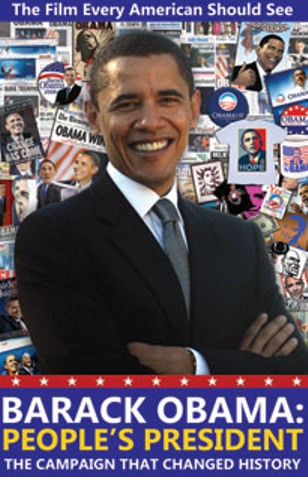
And now, one of the world’s leading new media activists, Danny Schechter, is about to release a new documentary on how the Obama campaign rode the new media wave to the White House — and more importantly, how the same new media can help the American public to keep Obama Administration accountable.
The film “Barack Obama, People’s President”, (slated for DVD release later this month by ChoiceMedia.net), documents the online and on the ground techniques that were used to win the highest office in the land.
As the film’s advance promo blurb says: The one story that most TV outlets didn’t tell in the 2008 election was the most important one -how did a young and relatively unknown candidate become President? If you voted for Barack Obama or not, this is a story you will want to know because it shows how the face of presidential politics changed forever. Barack Obama used techniques never seen before in a nationwide election — his grassroots mobilization and use of the internet was unprecedented, inspiring and effective. You have seen the rest of the coverage — now see the real story.
The film goes inside the official and unofficial campaign to show how Barack Obama was turned into a political brand to appeal to young first time voters. It shows how social networking on the internet — blogs, Facebook, texting and other techniques — were used carry the message to the masses and to raise tens of millions of dollars for the campaign. Popular online videos such as “Obama Girl”, along with those created by regular yet passionate supporters to engage their own communities, became one of the most important tools in the campaign’s success.
Watch the trailer of “Barack Obama, People’s President” directed by Danny Schechter:
Emmy award winning film-maker Danny Schechter, who is also blogger-in-chief at MediaChannel.org that keeps a critical eye on the media, just wrote this explaining why he made this film:
“It is hard to remember that two years earlier Obama was barely known, registering on the radar screen for just 10% of voters. He was also hardly a brand name as a first term Senator who spent more time in state politics in Illinois than on the national stage. Moreover, he was young and a man of color — not qualities that usually prevail in a presidential arena which tends to draw far older, far whiter, and far more centrist candidates. The thought that he would beat frontrunner Hillary Clinton in the primaries was, quite frankly, unthinkable to most of the elite.
“And yet he prevailed, as he used a phrase appropriated from labor organizer and Latino legend Caesar Chavez. Obama turned the farm workers Spanish language slogan “Si Se Puede” into “Yes We Can.” Rather than focus on specific political issues, he built a campaign on the promise of “Hope.” Rather than just rely on traditional fundraising — although by the end, he was plush with it — he reached out over the internet for smaller donations from millions of donors.
Perils of the New Media Generation...“Few in the major media gave him a chance, but he was not discouraged because he had created his own grassroots media operation using sophisticated organizing and social networking techniques to build a bottom-up movement, not the usual top-down apparatus. While his campaign ran the show, he encouraged independent initiatives including citizen-generated media, music videos, personalized websites, twittering and texting, etc..
“This is the new direction our politics has taken. It is a story that may be somewhat threatening to old media – and older activists – who prefer a one to many approach to communication, as opposed to forging a more interactive empowering platform. There is no question that young people — especially those mobilized by Obama — prefer online media and that choice is making it harder and harder for traditional outlets to sustain their influence and, in some cases, even their organizations. Old media may be on the way out.
“This is why our film is, in my mind, so important, not just as a record of how Obama won and what happened in 2008, but in what will happen, can happen, and is happening in the future. This is why I believe its critical for Americans to see it — and others in the world as well — to recognize how Obama represents more than just another politician, but a whole new approach to politics. That old adage is worth remembering: “It’s not the ship that makes the wave, it’s the motion of the ocean.”
“Obama, for all his shortcomings, which are becoming more obvious by the day, has pioneered the way change must be won — not by people on the top, but by all of us. It remains for “us” to hold him accountable. We live in a culture of amnesia – it is important to learn the lessons of the recent past.”
Read the full comment: New Film Tells Unreported Story of Obama’s Election on MediaChannel.org
Blogs put ME back into MEdia...The Moving Images blog completes two years today. So we pause briefly to look back – and forward.
I launched the blog with two posts from near-freezing Washington DC on 17 March 2007, while participating in the DC Environmental Film Festival. Both concerned my own offering to the festival: Children of Tsunami: The Journey Continues, product of monthly filming with 8 survivor families in 4 countries for nearly one year after the Asian tsunami.
Since then, this blog’s own journey has continued: in 24 months, we have produced 342 posts in 134 categories and with 562 tags. These elicited a total of 622 comments from readers who came from all walks of life, and all parts of the world. To the end of 16 March 2009, I received a cumulative total of slightly over 246,900 page visits. I now average 500 – 600 visits a day.
I share my blogging journey with these readers who have enriched it in various ways. Some commented under their own names; others used pseudonyms. Some left email details; others none. A few have actually suggested stories that I later wrote up as blog posts. I don’t know most of my readers in person, and have only met them online. As this blog enters its 25th month, I thank them all. You’ve kept me going in a particularly tough time in the world…and in my personal life.
When I started Moving Images, I was driven by a simple motive: to discuss and reflect on the many and varied topics and subjects that interest me professionally. In one way or another, these fall into the area of communicating science, development and environment to the non-specialist public. Because my work at TVE Asia Pacific involves using television and video for this purpose, there is a bias on moving images in many things I do.
But by design, this is not an official blog of TVE Asia Pacific, or any other organisation that I am associated with. In fact, I regularly express here views that I cannot say wearing any of these hats — because we live in a world where most people still react not just to the song, but also the singer (and can’t separate the two).
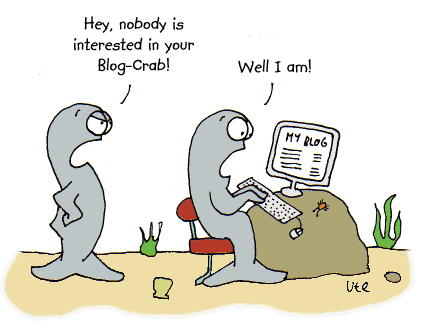
Are we there yet? No!So this blog is unashamedly, intentionally self-centred: it puts ME back in Media. I make no apologies for speaking my mind on a variety of topics, and for returning to some issues that I’m passionate about.
After 22 years in journalism, broadcasting or communicating development, I find I have sufficient perspective in which to anchor my thoughts, and to express my views in a way, I hope, interests and engages readers. Like the ancient Greeks, I try to ask the right questions – even when I don’t always know or get the right answers. And I have more than a few stories to spice up the narrative.
I’m well aware of the inherent danger of combining writer-editor-publisher all in one: personal blogs don’t always operate under the usual checks and balances that we expect and presume in the more structured media outlets (whether they are in the mainstream or new media spheres). On more than one occasion, I’ve written impulsively – in frustration, anger or elation, and sometimes on the run. Thanks to the training in my news reporter days, I can still churn out readable prose fast. And only once in all these 24 months and 342 posts have I regretted rushing to publish (so, using my absolute discretion as the media tycoon of this blog, I pulled it down).
Do I see myself as a citizen journalist? Yes and no. I don’t report news, and only very occasionally write on latest developments (or breaking news, as it’s now called). I see myself more as a citizen commentator – the op ed equivalent in the new media domain. Yes, I do occasionally report from large conferences that I attend as a speaker or panelist. But I have found how demanding it is to blog from events while keeping up with everything that is going on.
Do I see myself as a Sri Lankan blogger? Not really. Scanning the 342 blog posts I’ve written, I can count only a two dozen that have an appreciable reference to Sri Lanka. This is not because I’m aloof or disengaged; I have simply set a framework for myself that goes well beyond the country of my residence and social/cultural anchor.
Another reason for this intentional lack of geographical focus is that besides this blog, I regularly write op ed essays for other online outlets like Groundviews, MediaChannel.org and MediaHelpingMedia, and print news magazines like Montage. I use these platforms for commenting on Sri Lankan issues that interest or concern me.
I find it a bit incongruous that we who use the new media tools of web 2.0 – which signify the end of old geography – must contain ourselves to geographical or cultural cocoons. Thus, while I sometimes join gatherings of bloggers based in Sri Lanka, and share concerns for freedom of expression, I have consciously avoided joining Kottu, the leading aggregator of Sri Lankan blogs.
And I get more than a little miffed when the excellent aggregation service Global Voices constantly labels me as a Sri Lankan voice (with a map of Lanka to boot!) whenever they helpfully flag my blog posts for wider attention. I have privately discussed this with GV’s South Asia coordinator who says their current tagging and categorisation do not allow anything else. Is this an example a new media platforms being trapped in an old media mindset?
If you really must pin me down to some place, call me a South Asian (or, as my friends at Himal would like to write it, Southasian).
Do I see myself as a new media activist? I’m not sure. I’m not a geek, and have no great knowledge or insights on the back-end technologies that make all this possible. My interest is in how the new media tools shapes societies, cultures and politics in emerging Asia. Those braver and smarter than me are actually innovating and improvising new media tools for social activism. I just watch — and occasionally blog to critically cheerlead them. Mine is definitely the easy part…
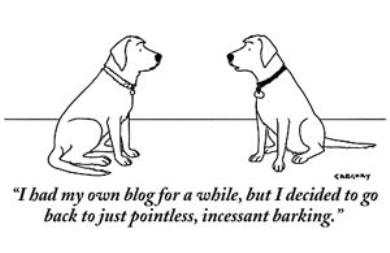
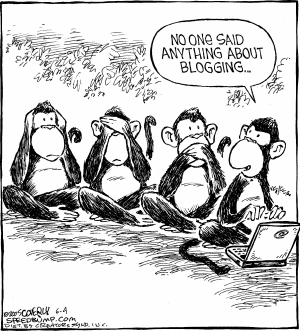
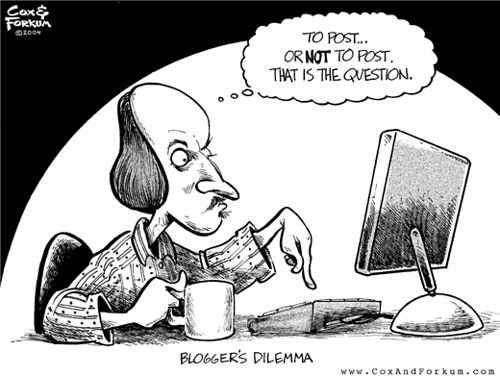
Mainstream media...and bloggersOn this blog, I place a higher premium on still and moving images. Regular readers know my fondness for cartoons, which I avidly search for and collect on a wide range of topics. In fact, I believe cartoonists are the best social and cultural commentators of our times – they say so much with such economy of words!
Similarly, I try to embed relevant online videos that I can find. Sometimes it takes me longer to scan YouTube and other platforms than to write the accompanying text for a blog post. And I get frustrated when WordPress does not allow embedding from certain online platforms like EngageMedia, a new Asia-based service that we have recently started to collaborate with.
As I travel around in Asia and Europe, and move across the sometimes overlapping circles of development, media and communications technology, I keep meeting readers who read and follow this blog. Some have never commented on any post; a few have chosen to write emails to me on specific matters.
This means some of the conversations inspired by this blog happen bilaterally — for example, film festival organisers have written asking me for contacts of specific film-makers whose work I have reviewed. Students often write to me seeking additional information or my own views. Long lost friends or associates have revived contact after stumbling upon this blog. I have no illusions of being famous, but it’s nice to stay engaged.
My policy on visitors’ comments is clearly stated in my intro page: “This is a moderated blog where I approve/disapprove the publication of readers’ comments to individual posts. I do allow all reasonable comments left by readers — including those that radically disagree with my own views. The basic rules of my moderation: I don’t publish comments that are outright libelous of individuals, or are so explicitly self-promotional bordering on spam.”
Only once in the short history of this blog have I been threatened by someone whose conduct I questioned in the public interest. In late 2007, I wrote a hard-hitting comment on how certain media organisations are exploiting concerns surrounding climate change to their institutional advantage. I was standing by to publish their response, for the institution I named claims to promote public discussion and debate. None came my way, although some peer pressure was used, unsuccessfully, to make me remove the blog post. In mid 2008, when our paths accidentally crossed in a European capital, the individual concerned confronted me. I gave him a patient hearing, and reiterated my offer to publish his response in full. He insisted on my deleting the post (gosh, it must have hit a raw nerve!). He ended our unpleasant encounter saying: “If you lived in my jurisdiction, I would have sued you!”
There has never been a denial or rebuttal from this person or his institution on the substantive points in my blog post. But I was repeatedly told that my candid remarks are ‘not helpful’. Perhaps. But anyone who remotely believes in ‘illuminating debate’ would have engaged me on this blog, or theirs, or in a neutral forum (plenty exist).
Luckily, I've rarely faced this situationEncouragingly, many others have done just that. This includes the reader who thinks I have an axe to grind with the BBC (I don’t, but I’m also not a fan of the ageing Auntie), and a few who feel I’ve been unkind to the fledgling global newscaster Al Jazeera English.
Then there are those who assume that I hate state-owned, so-called public broadcasters (again, I don’t, although I question their conduct more rigorously because they are public-funded). In fact, I have sung praise of Burmese TV as a model public broadcaster, and maintained excellent relations with NHK and other public broadcasters in Asia. I’m regularly invited as a speaker or panelist at gatherings of mainstream broadcasters – where I express pretty much the same views as I do on this blog.
Some think I’m too harsh on the United Nations, especially UNICEF. Again, I’m a great believer and supporter of the UN’s ideals, but never hesitate to critique the public communication policies and practices of individual UN agencies. I like to think that the United Nations is bigger (and deeper) than the inflated egos of its senior officials. In fact, middle level officials and experts working in various UN agencies have privately commended me for keeping the spotlight on their agencies. During the two years of this blog, I have worked closely with UN-OCHA, UNEP and UNAIDS, and they have been pluralistic enough to engage me in the greater public interest.
I believe that it’s not just the UN, but the entire development sector, that needs to get its act together when it comes to communicating policies, practices and choices. Having occasionally (and luckily, only briefly) forayed into the charmed development circles, I realise how detached from reality, self-referential and inward looking many development professionals and their institutions are. Communication is often no more than self-promotional publicity for overambitious agency heads. I have watched how the sector has struggled to adjust to the new realities in media and communications technology. Sometimes I have ridiculed their worse attempts on this blog; more often than not, I have quietly worked with them in small groups or bilateral meetings trying to build their capacity to do things better with greater focus and impact.
I survived mediasaurus - and lived to tell the tale!Precisely because I have access to various policy, development and research circles in Asia while (or despite?) being a blogger critiquing the same players, I exercise caution in quoting people or citing examples. Some meetings I attend discuss matters too sensitive for immediate publication; others operate on the Chatham House rule (generic points may be communicated, but without attribution). As a journalist, I’ve been trained to clarify what is on the record and what isn’t; in sourcing content for this blog, I follow the same principles.
Every writer, editor and publisher has her own agenda. Mine is fairly easy to discern, for example from the recurrent themes on this blog. These include: * humanising development communication (going beyond mere facts, figures, analysis and jargon); * demystifying and debunking self-serving development myths (for example, about community radio, or rural poverty); * practising what we preach (broadcasters addressing their own carbon emissions); * evolving more inclusive copyright policies (poverty and climate change as copyright free zones); and * engaging in simple, clear and effective communicating of science and technology in society.
For those who occasionally look for a hidden agenda, my only advice is: get a life. I write this blog for fun. I don’t set out to kick anyone – although I often get a kick out of receiving online or offline feedback.
And that’s my wish for the coming months and years: while I work hard to earn some honest bucks else where, may I continue to derive my kicks here. And if some of you also get a mental kick out of reading or commenting on this blog, that’s my bonus.
Since I remain open-minded and eager for new knowledge, my views on some topics and issues keep evolving over time. Although it’s tempting to go back and edit some of my earlier blog posts in the light of new knowledge or understanding, I refrain from doing so. And if that sometimes presents (minor) inconsistencies, I can only quote Walt Whitman in my defence: Do I contradict myself?
Very well then I contradict myself,
(I am large, I contain multitudes.)
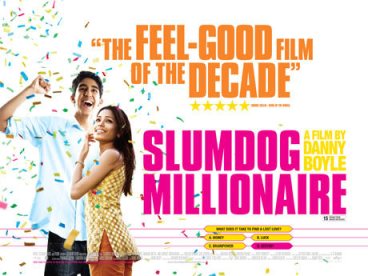
Few films in recent years have generated as much buzz as Slumdog Millionaire, the British-Indian film based in the slums of Mumbai. It has won five Critics’ Choice Awards, four Golden Globes and seven BAFTA Awards, and is nominated for ten Academy Awards, including Best Picture.
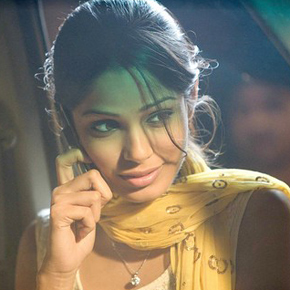
I just called to ask...Early on, film critic Ben Walters spotted this aspect. He asked in The Guardian on 9 December 2008: Is Slumdog Millionaire the first truly 21st-century film? Among his reasons: “Jamal works in a call centre decorated with London Underground paraphernalia and whose employees are kept up to date on EastEnders plotlines to improve their chances of successful small talk with their customers. Aptly enough, the customers are mobile phone users – another emblem of 21st-century connectivity – and a mobile plays a crucial part in the story’s climax.”
And now it turns out that a real life ICT experiment triggered the idea of the Slumdog story.
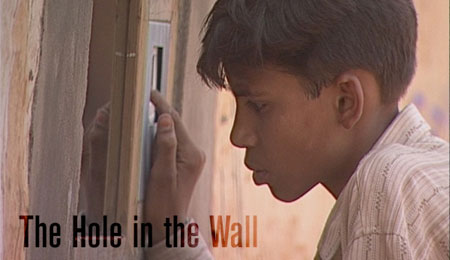
Indian author Vikas Swarup, on whose 2005 novel Q&A the movie is based, has recently revealed how he was inspired by the hole-in-the-wall project. This was an initiative by Dr. Sugata Mitra, chief scientist at NIIT, a leading computer software and training company in New Delhi. Mitra embedded a high-speed computer in a wall separating his firm’s headquarters from an adjacent slum, he discovered that slum children quickly taught themselves how to surf the net, read the news and download games and music. He then replicated the experiment in other locations. Each time the results were similar: within hours, and without instruction, the children began browsing the Internet.
Swarup told Indian Express in January 2009: “That got me fascinated and I realised that there’s an innate ability in everyone to do something extraordinary, provided they are given an opportunity. How else do you explain children with no education at all being able to learn to use the Internet. This shows knowledge is not just the preserve of the elite.”
Discover your world...Dr Mitra’s project was the subject of a 2002 documentary film, called Hole in the Wall, made by the New York based production company GlobalVision.
The film was introduced as follows: A revolution in information technology is redefining poverty, as how much you know is becoming just as important as how much you own. “The Hole in the Wall” examines one possible solution to the growing technological gap between rich and poor — the so-called ‘digital divide’ — that threatens to consign millions to an “information underclass.”
The film was made by Rory O’Connor and Gil Rossellini. An 8-min version was broadcast by PBS in October 2002 in their program Frontline/World. A 60-min version was screened at the United Nations in New York City in December 2002. The film has been widely screened, and won several awards.
Initiator of the Hole in the Wall project carries on his mission to adapt ICTs to serve the unmet needs of India’s poor. Watch Dr Sugata Mitra talk about his work in this TED Video:
Sam Gregory“It’s an immensely exciting time for people working with video. More and more people creating and using video, more places to share it, more ways to place it in front of people who can make a difference.
“It raises challenges too: saturation of images and compassion-fatigue, finding your place to be heard, and the safety and security and consent issues that arise when many more people are filming each other.
“But overall I think we’re seeing a really powerful moment for individual expression but also collective accountability being supported via image-making.”
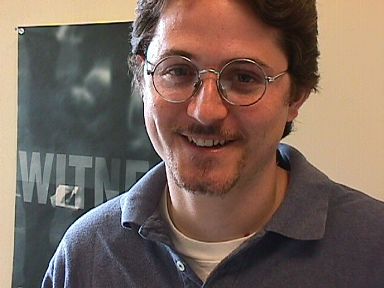
So says Sam Gregory programme director of Witness, a human rights organisation which uses video and online technologies to open the eyes of the world to human rights violations. The New York-anchored organisation works around the world to ’empower people to transform personal stories of abuse into powerful tools for justice, promoting public engagement and policy change’.
http://www.witness.orgSam recalls how he was once making films and also involved in activism, and ‘frustrated at how the two didn’t fit together’.
He adds: “In the traditional TV documentary world, the advocacy purpose of film was under-utilized. The fact that you got 500,000 viewers for a TV broadcast told you nothing about whether that turned into action. So I started looking for ways to really make the video fit as a tool for real advocacy and change-making, and came upon WITNESS.”
We at TVE Asia Pacific worked closely with Sam in 2002-2004, when we implemented a collaborative Asian regional project called Truth Talking where Witness was a partner. It was through Witness that I met courageous info activists like Joey R B Lozano.
The press release quoted Julia Marton-Lefèvre, Director General of IUCN as saying: “Because we are a science-based organization and because we are also a membership organization, we tend to avoid controversies. While we, as an organization, will maintain our scientific rigor and strict neutrality in defending nature conservation, we wanted to provide our experts and members a space to freely express themselves, get feedback from a wide audience and generate informed debates around the big issues of our time.”
Intrigued, I quickly looked up the new Opinion page, and found this welcome note from Mario Laguë, its Head of Global Communications: “IUCN is an organization that built its enviable reputation on science and on the contributions of all its members. This combination of the need for both accuracy and democratic legitimacy can at times slow down our capacity to react to current events or to express opinions that are not ‘official positions’. While it is clear that the views expressed on this page are not necessarily those of IUCN, we expect them to be in accordance with its vision of ‘a just world that values and conserves nature’.
Not quite what IUCN would approve, but still an interesting idea...This is what I would call cautious engagement, but it’s certainly a welcome move. The first contribution to the Opinions page is an article by Dr Ashok Khosla, President of IUCN, titled ‘A new President for the United States: We have a dream’. In his characteristic analytical and perceptive style, Ashok sums up the promise the new US administration holds for pursuing the conservation agenda worldwide.
The opinions page allows comments by readers — moderated, and limited to 300 characters per comment, just enough to make a point briefly. Two days after the Khosla essay was posted online, it had attracted four comments…or at least that many were approved by people at IUCN headquarters who review comments.
Beyond these specifics, the launch of an interactive opinions page marks a new era for IUCN which brings together over 1,000 governments, state agencies and non-governmental organisations committed to preserving life on Earth. It signifies that the alliance as a whole is finally crossing what I have called the ‘Other Digital Divide’ — the one that separates the Digital Natives and Digital Immigrants.
I’m delighted to see IUCN belatedly crossing this divide, which I’ve been advocating for some time. In September 2007, participating in IUCN’s Fourth Asian Conservation Forum in Kathmandu, Nepal, I argued that scientific merit and rational (and often very articulate) reasoning alone won’t win them enough new converts to achieve significant changes in lifestyles, attitudes and practices needed to change business as usual.
I said: “To be heard and heeded in the real world outside the charmed development and conservation circles, we need to employ a multitude of platforms, media and ICT tools.”
I added: “IUCN and other conservationists, with their rigorous scientific analysis expressed in technical papers, print publications and the occasional op ed article in broadsheet newspapers, have to navigate in this whirlpool (of new media) — and it’s not easy. But their choice is between engagement and marginalisation. The planet cannot afford the latter.
“I’m not suggesting that conservation scientists and organisations must drop their traditional advocacy methods and rush to embrace the new ICT tools. But they need to survey the new media landscape with an open mind and identify opportunities to join the myriad global conversations.”
It takes time to turn around a large ship like IUCN, but they have been trying. For example, in September 2008, days before its World Conservation Congress in Barcelona, Spain, IUCN launched its own YouTube channel to share its videos online. Four months later, viewing numbers for the three dozen short videos posted are still in double digits, but a start has been made.
So it’s good to have the grand old lady of global conservation enter the endlessly chatty, cacophonic world of web 2.0. Let’s hope she won’t remain too aloof or elite (what I call the ‘broadsheet newspaper mentality’ when much of the world has gone tabloid or ‘compact’), or try to be too prim and proper in expressing her own views. The conversations online tend to evolve fast, and can sometimes be rough, spontaneous or unpredictable. Excessive moderating can leave out the passion and rhetoric that drive some discussions – sanitising is not recommended except to avoid libel and slander. These attributes can be very disconcerting to well-established organisations that have so far carefully managed their corporate communications. Engaging new media requires losing a good part of that control.
But as our friends in Gland have now recognised, it’s no longer a choice – but an imperative.


 Open Minds!