Prof Anil K Gupta lights oil lamp in front of Ray Wijewardene photo before delivering Inaugural Ray Lecture in Colombo, 13 Dec 2011 - photo by Ruveen Mandawala
“Ray Wijewardene was a man well ahead of his time, which might explain why he was not better understood and appreciated. He was also a systemic thinker who went to the root of problems and looked for elegant and efficient ways of solving them. He was not mesmerised by technology alone.”
Dr Anil Kumar Gupta, a Professor at the Indian Institute of Management (IIM) in Ahmedabad, India, and Founder of the Honey Bee Network, spoke on “Grassroots Innovation for Inclusive Development: From Rhetoric to Reality” at the Institution of Engineers Sri Lanka (IESL) on 13 December 2011.
The IESL auditorium was packed to capacity, with more people standing and spilling over to the corridor. Anil Gupta gave an engaging talk that makes him the subcontinent’s foremost innovation-spotter. With inspiring examples and illustrations, he emphasized that grassroots innovations can provide a new ray of hope — provided we let them grow.
The lecture was organised by IESL and the Ray Wijewardene Charitable Trust (RWCT), set up to promote Ray’s legacy, and committed to nurturing innovation in Sri Lanka.
The Trust made an auspicious start by inviting Anil Gupta to deliver the first lecture in Ray’s memory. Gupta and Wijewardene were kindred spirits who stayed in touch over the years across the Palk Strait.
“It is a privilege for me and the Honey Bee Network to be invited for a lecture in honour of such an illustrious innovator, social change activist and thought leader of our sub-continent, and indeed the entire developing world,” Professor Gupta said when I first reached out to him a few months ago to invite for the lecture.
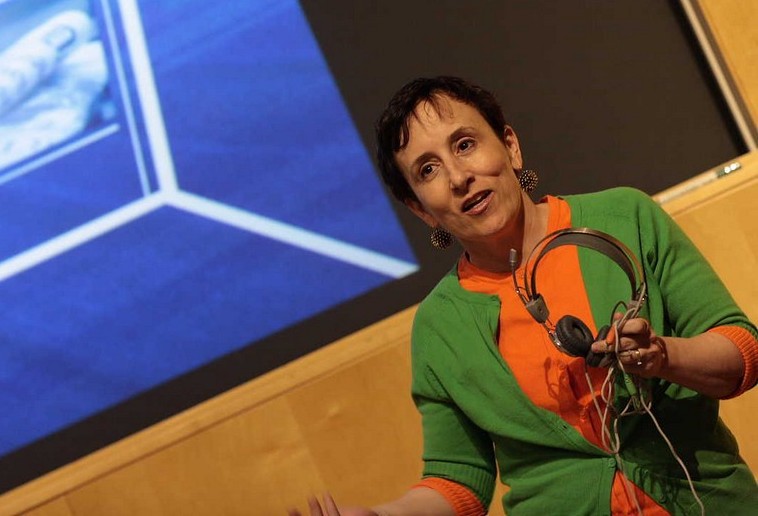
Prof Anil Gupta delivers inaugural Ray Wijewardene memorial lecture in Colombo, 13 Dec 2011 - Photo by Ruveen Mandawala
Anil K Gupta is an unusual professor who walks the talk — and walks through the villages and slums of India in search of innovation. His mission is to ensure that grassroots innovators receive due recognition, respect and reward for their bright ideas. He also seeks to embed an innovative ethic in educational policy and institutions.
All three entities are partners of the National Innovation Foundation (NIF India), an autonomous body under the Department of Science and Technology in India. Since 2000, NIF has mobilized more than 160,000 innovations and traditional knowledge practices from all over India, and now holds the largest database of its kind in the world. Professor Gupta is Executive Vice Chair of the NIF, and is also a member of the National Innovation Council of India.
In my latest column written for Ravaya newspaper on 11 Dec 2011, I question why people living with HIV in Sri Lanka face such a high level of stigma and discrimination irrespective of their educational level and social class. The perpetrators of such discrimination also come from all strata in society: doctors and healthcare workers are among them. I recall the bitter experience of pediatrician Dr Mrs Kamalika Abeyaratne, the first Lankan to publicly acknowledge her HIV status, who stood up and spoke out for the rights of those living with HIV in Sri Lanka.
I then contrast the Sri Lanka situation with that in Nepal, where the communities have gradually come around to accept those living with HIV. What cultural, social and other factors enabled such a transformation? I draw from a 2002 documentary called Love for a Longer Life, made by Nepali film maker Durba Basnet, which I earlier blogged about.
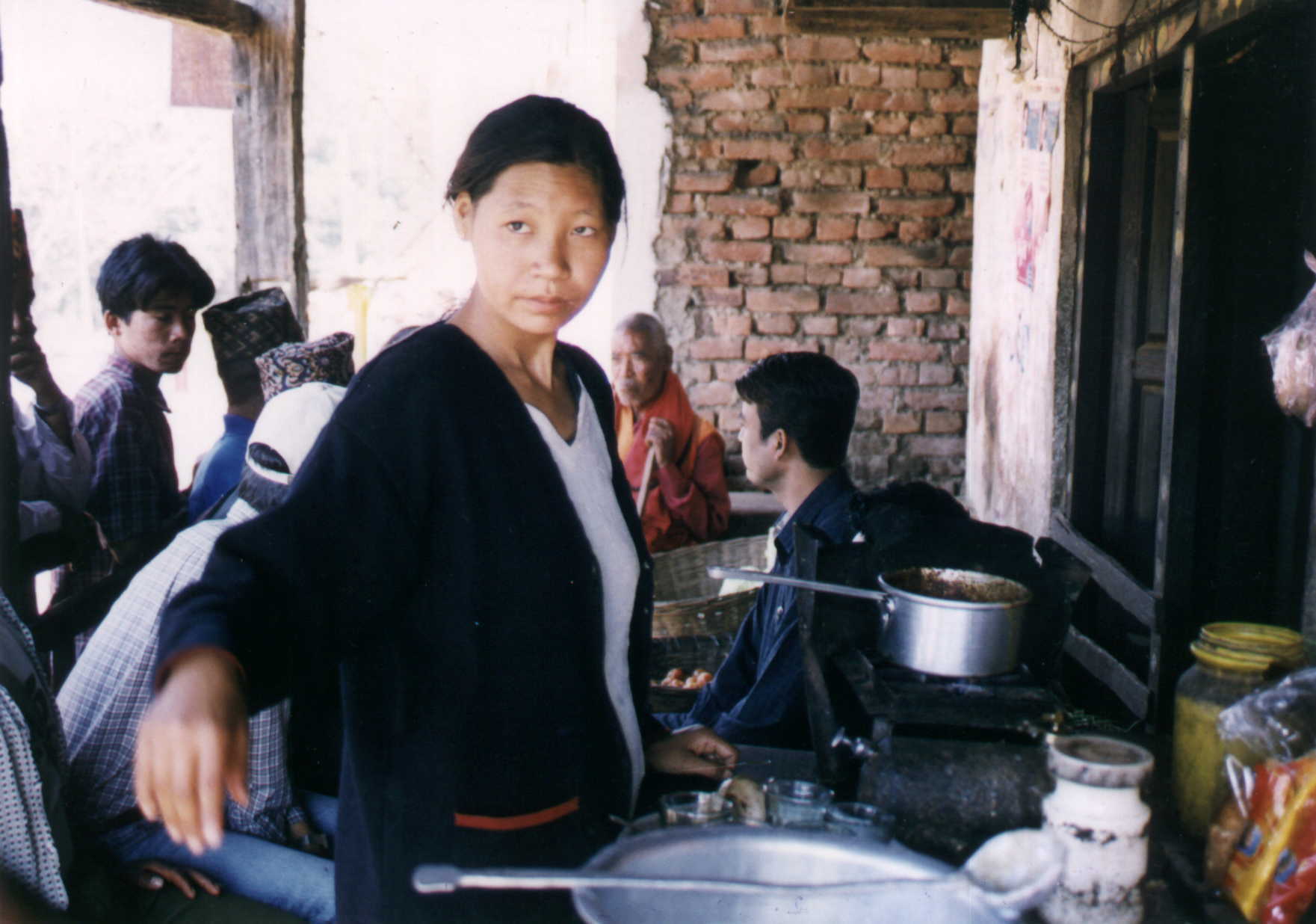
Lakshmi Lama at her tea shop in Ratomate, central Nepal
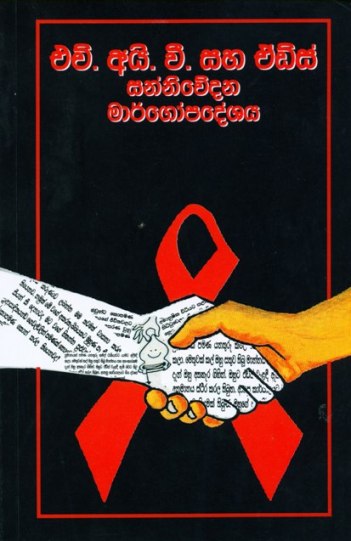
HIV communication needs media partnership - image courtesy Panos South Asia
On this blog, I have written regularly about challenges in communicating on HIV/AIDS through media and non-media methods. To mark World AIDS Day 2011, and 30 years since the discovery of AIDS, I have devoted this week’s (Sinhala) Sunday column in Ravaya newspaper to the topic of HIV/AIDS coverage in the Lankan mass media. I have drawn heavily from a 1999 handbook on HIV/AIDS communication written by my good friend Dr Vinya Ariyaratne, a specialist in community medicine, but the opinions are all mine.
Ari is also our elder statesman of inclusive development. For over half a century, he and Sarvodaya have advocated a nuanced approach to overcoming poverty, illiteracy and various social exclusions. Unlike some die-hard activists, Ari doesn’t ask us to denounce materialism or revert to pre-industrial lifestyles. Instead, he seeks a world without extreme poverty or extreme affluence.
Suddenly, his quest for social justice and equality is resonating all over the world. In fact, Ari has been speaking out for the 99 per cent of less privileged people decades before a movement by that name emerged in the West. In a sense, those occupying Wall Street and other centres of affluence are all children of Sarvodaya.
While Ari shares their moral outrage, his own strategy has been quite different. He didn’t occupy physical spaces in his struggle; he went straight to the fount of all injustice – our minds.
In this 2,400-word essay, I salute a hero of mine who continues to speak truth to power, and makes a difference to millions of people in his land and elsewhere. For doing this, he has been ridiculed, harassed and vilified by small minds and the state. He continues undaunted, and shows no sign of slowing down after turning 80.
Here’s another excerpt:
“In Ari, we find elements of Mahatma Gandhi (non-violent pursuit of the greater good); the Dalai Lama (interpreting Buddhist philosophy for the modern world); Martin Luther King, Jr. (struggling for the rights and dignity of marginalised people); Nelson Mandela (nurturing democracy and healing society); and Jimmy Carter (globalism with a humanitarian agenda).
“Yet Ari is more than the sum of these noble parts; he is his own unique visionary. And an adroit ‘remixer’ who constantly blends the best of East and West. He adapts our civilisational heritage to tackle the Twenty First Century’s anxieties and uncertainties. Thankfully, though, he doesn’t peddle simplistic solutions to today’s complex problems.”
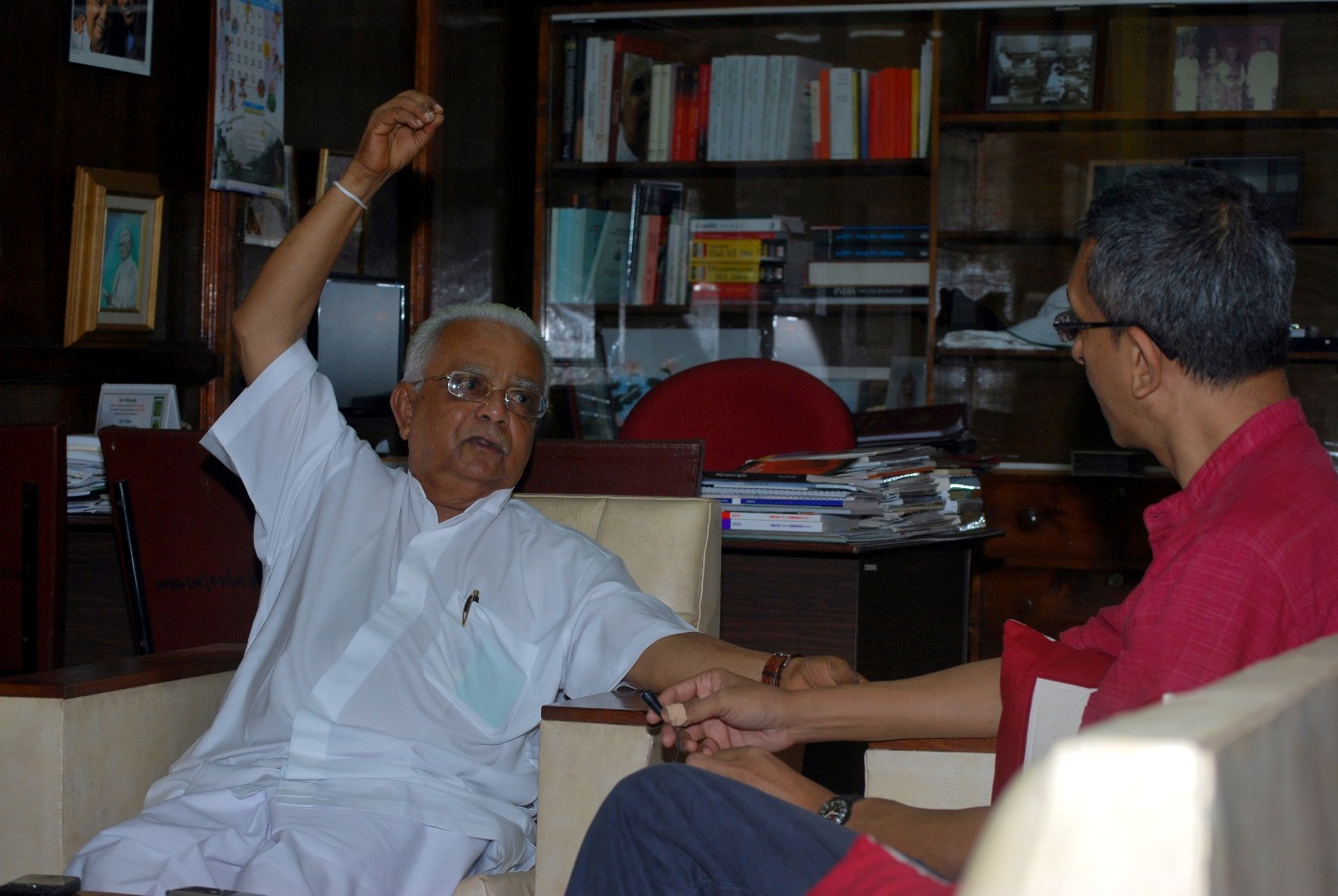
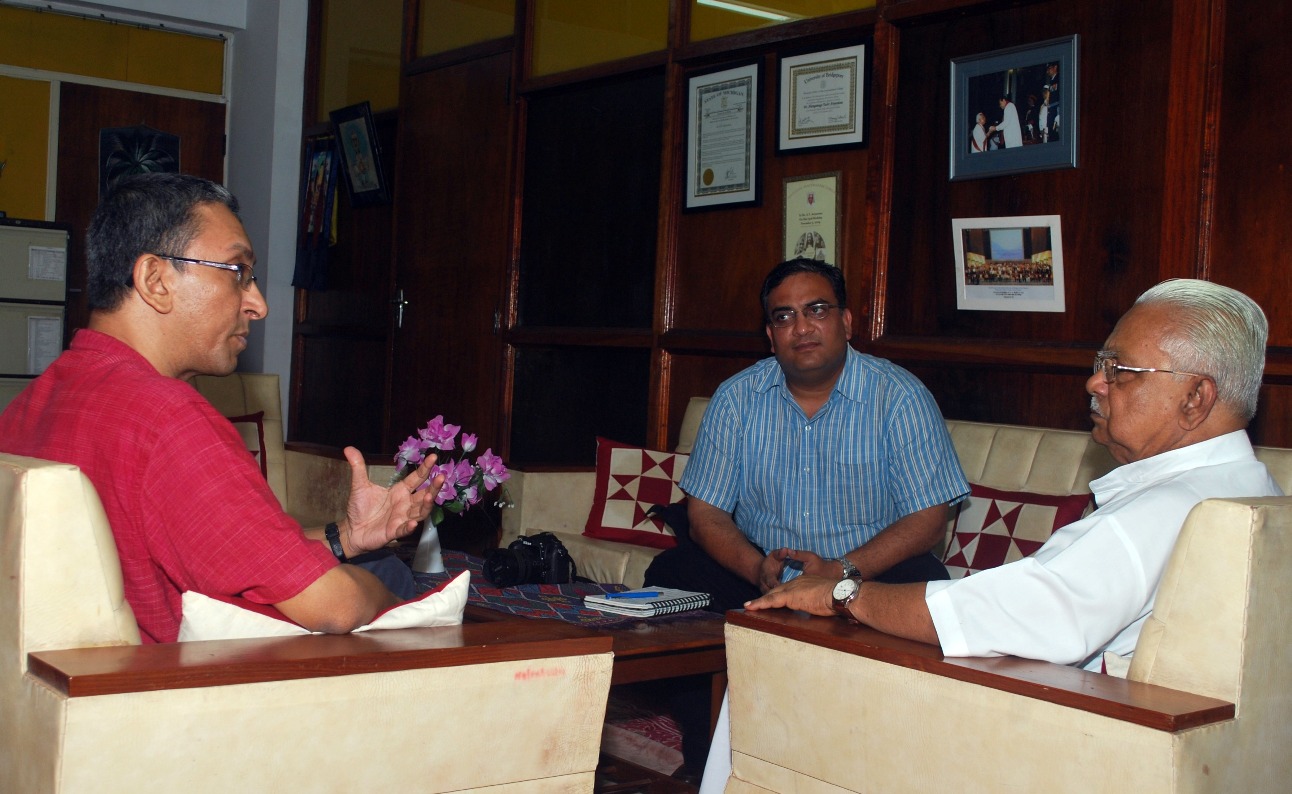
I also recall my first encounter with Ari, in early 1991, when a tyrant leader of Sri Lanka had virtually declared ‘war’ on this unarmed, non-violent small man. I have interviewed him several times since then – the most recent was in March 2011, when I accompanied my journalist friend Aditya Batra from India to talk to Ari (photo, below).
Christina Scott: A funny story always got funnier when she related it...
I was travelling in the Himalayan Republic of Nepal when I heard the sad news: Christina Scott, a pioneering science journalist from South Africa, has just been killed in a road accident. She would have turned 50 on November 20.
Christina’s tragic and abrupt departure elicited an outpouring of grief, memories and tributes from science journalists, scientists and others who knew and admired her. I’m late to join that, I know, but here’s the slightly expanded version of what I just posted on SciDev.Net as a reader comment:
“Short, stroppy reporter with a funny accent. Likes to eat sushi. No head for alcohol and caffeine addiction.” That’s how Canadian-born Christina chose to introduce herself. Everyone has an anecdote about her, reminding us of the colourful and highly talented person she was.
Christina was passionate, articulate and had a clear vision of how science, technology and innovation could make a difference to millions of people in Africa, Asia and Latin America. She made science fun. She was also great fun to work with.
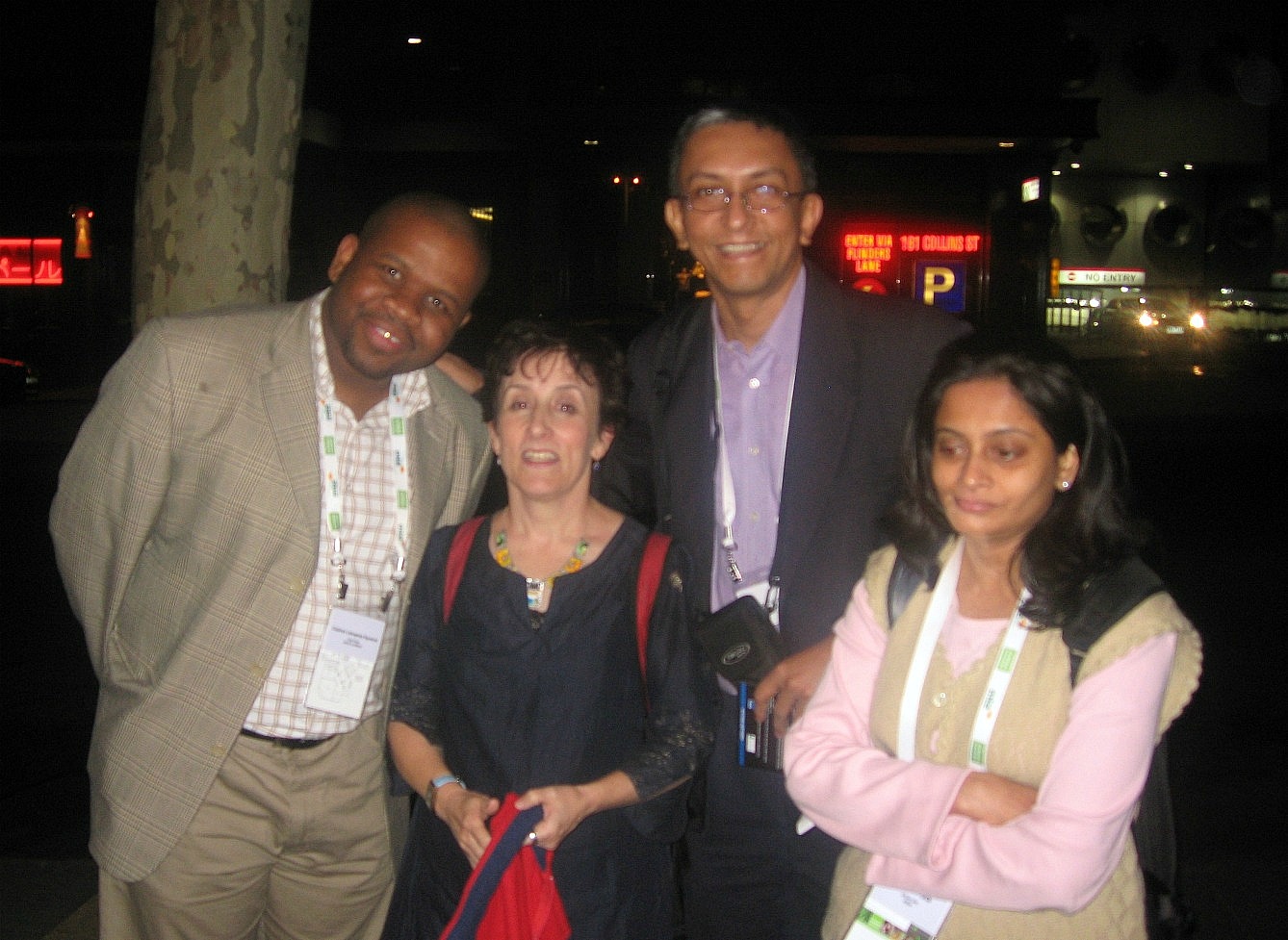
Christina and I didn’t meet that often, separated as we are by time zones and the Indian Ocean. But our few encounters — usually at professional gatherings of science journalists — left a deep impression.
We first met at the Fifth World Conference of Science Journalists in Melbourne in April 2007, where we were both speakers.
She and I were part of a memorable plenary session on ‘Reporting Science in Emerging Economies’ that was put together by SciDev.Net and produced by Julie Clayton. It had science journalists or editors from Brazil, China, India, Sri Lanka and Zambia.
It was Christina who came up with a novel idea to dim the meeting hall lights just as we started. In the semi-darkness, she lit a single cigarette lighter to symbolise how science journalists in the developing world struggled daily with power outages, poor literacy, unsympathetic editors and uncaring governments.
Earlier in that conference, Christina compared some of her professional tribe to extremophile bacteria: hardy enough to survive in very harsh environments. The broad conclusion from our session was that, just as life finds a way against many odds, so does science journalism. In conditions far from ideal, science journalism happens — and even thrives — thanks to the resilience, resourcefulness and commitment of its practitioners.
Christina Scott (left) making a point. Photo courtesy WFSJ
Christina excelled in communicating science through print, web and broadcast media. She switched easily between written and spoken words, and could hold an audience in any medium. Such multimedia journalists are rare.
But she didn’t allow the technology ‘tail’ to wag the journalism ‘dog’. In 2007, she was still wondering if Internet, computes and online communications could make much headway in reaching out a majority of South Africans. It wasn’t a lack of connectivity and computers any longer, but a more basic absence of electricity in many remote areas.
To her, old fashioned radio was still the most cost-effective way to reach more people quickly. That was also her favourite medium, one in which she did some of most memorable coverage.
Christina had a fine sense of theatrical performance to engage a live audience. She knew just how to shook and hook them. She had no time or patience for political correctness or euphemisms; she just spoke truth to power.
I learnt much by being in her audience, or sharing a platform with her. It was exhilarating to see how she engaged audiences full of jaded and sceptical journalists.
Once, during a panel discussing HIV/AIDS, she asked her audience how many were aged over 50 years. A few hands went up. “In South African terms, chances are you’re already dead,” she declared.
She didn’t have comforting words for those below 35 either: “You’re probably infected with HIV, and don’t know it yet — and go around giving it to others!”
That’s how she summed up the stark realities of South Africa, which has one of the highest HIV infection rates in the world. She then personalized, with a wish was that her daughter, then 15, would get through college without contracting HIV.
Christina Scott was a supernova who shone bright and fiery. Her trail would continue to blaze for a long time. But we won’t hear that spirited voice, in that funny accent, always ready to tell an interesting story.
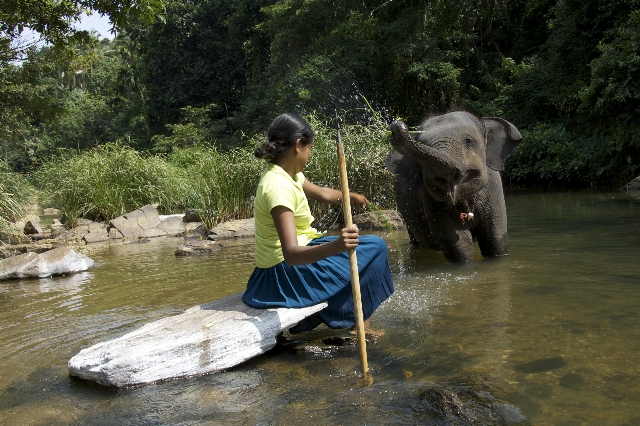
This is my latest Sinhala column published in Ravaya newspaper on 23 October 2011, which is about human-elephant interactions in Sri Lanka, which has the highest density of Asian elephants in the world. I have covered much of the same ground in English in another recent essay, Chandani: Riding a Jumbo Where No Woman Has Gone Before…
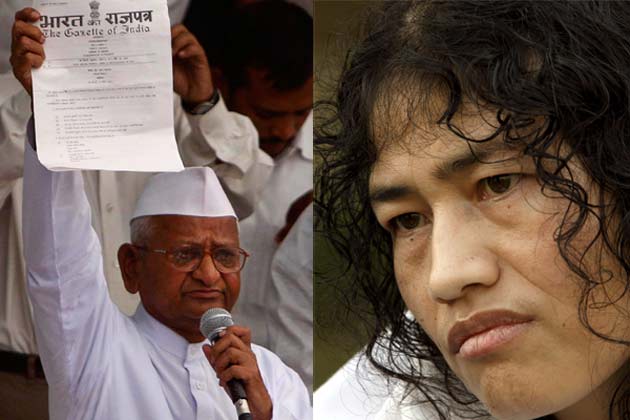
Fasting for a personal or public interest cause is a very old tradition in India. Today, social activists of all colours and hue resort to fasting — but not everyone evokes the same interest and coverage in the media. In a previous column, I looked at how and why the anti-corruption activist Anna Hazare has become the darling of the Indian media. In my latest Ravaya column published on 2 October 2011, I look at two other fasts: one by Swami Nigamananda, who died in June calling for a stop to sand-mining in the Ganges River, and woman activist Irom Sharmila in Manipur who is engaged in the longest fast in the world, 11 years and counting…
The story goes like this. Victor Hugo was travelling out of town and wanted to know how his latest book was selling. He messaged (telegraphed?) his agent: ?
The agent, not to be outdone, replied: !
Enough said. How I wish I could beat that economy of words…
I have a fondness for both question marks and exclamation marks — I used a good deal of both in my own speaking and writing. I use these as a metaphor in a tribute I just wrote about one of my mentors: Ray Wijewardene.
“If I had to condense the multi-faceted and fascinating life of Ray Wijewardene, I would reduce it to a whole lot of question marks and exclamation marks. In his 86 years, Ray generated more than his fair share of both.
“He was unpigeonholeable: engineer, farmer, inventor, aviator and sportsman all rolled into one. Whether at work or play, he was an innovative thinker who rose above his culture and training to grasp the bigger picture.”
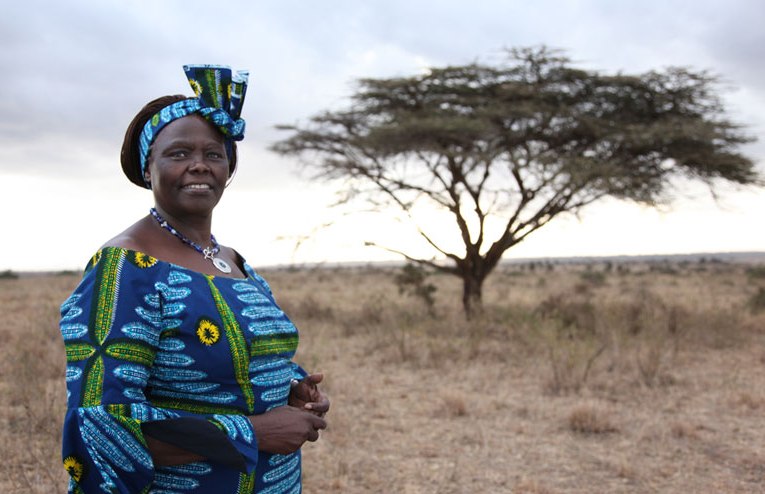
Wangari Muta Maathai (1 April 1940 – 25 September 2011)
“We are very fond of blaming the poor for destroying the environment. But often it is the powerful, including governments, that are responsible.”
That was a typical remark by Wangari Muta Maathai, the Kenyan environmental and political activist who has just died.
In the 1970s, Maathai founded the Green Belt Movement, an environmental non-governmental organisation focused on the planting of trees, environmental conservation, and women’s rights.
In 2004, she became the first African woman to receive the Nobel Peace Prize for “her contribution to sustainable development, democracy and peace.”
The Green Belt Movement in a profile about their founder counted the many roles she played: environmentalist; scientist; parliamentarian; founder of the Green Belt Movement; advocate for social justice, human rights, and democracy; elder; and Nobel Peace Laureate.
“”It is the people who must save the environment. It is the people who must make their leaders change. And we cannot be intimidated. So we must stand up for what we believe in,” Wangari Maathai kept saying.
As a tribute, I have assembled a few links to interesting online videos featuring her.
Taking Root, a long format documentary, tells the dramatic story of Wangari Maathai whose simple act of planting trees grew into a nationwide movement to safeguard the environment, protect human rights, and defend democracy—a movement for which this charismatic woman became an iconic inspiration.
TAKING ROOT: The Vision of Wangari Maathai Trailer on PBS YouTube channel:
Wangari Maathai & The Green Belt Movement, short film by StridesinDevelopment:
Riz Khan’s One on One: Wangari Maathai: Part 1
Interview with Al Jazeera English first broadcast on 19 Jan 2008
“I will be a hummingbird” – Wangari Maathai
Two more memorable quotes from her to inspire us all:
“I have always believed that, no matter how dark the cloud, there is always a thin, silver lining, and that is what we must look for.”
“We cannot tire or give up. We owe it to the present and future generations of all species to rise up and walk!”
My weekly column on science, development and media, published in Ravaya newspaper on 28 August 2011 (converted into unicode Sinhala font using UCSC online facility, which has some limitations).







 Open Minds!