India’s Down to Earth magazine was presented with the first Greenaccord International Media Award at an international conference held in Naples, Italy, last week.
The award, newly established by the Rome-based non-profit group Greenaccord, recognises outstanding media contributions to covering issues of environment and sustainable development.
Tommaso Sodano, deputy mayor of the City of Naples, presented the award at the conclusion of the 10th Greenaccord International Media Forum held from 6 to 9 November 2013.
Darryl D’Monte (centre) receives Greenaccord International Media Award on behalf of Down to Earth magazine, India – Naples, 9 Nov 2013 – Photo courtesy Greenaccord Press Office
“We asked all our Asian colleagues for nominations for this inaugural award, and many of them recommended Down to Earth magazine that has covered sustainability issues from a developing country perspective for 21 years,” said Alfonso Cauteruccio, President of Greenaccord.
Down to Earth is a fortnightly magazine focusing on issues of science and environment. It is published by the Centre for Science and Environment (CSE), a leading research and advocacy group in India. Founded by leading journalist and activist Anil Agarwal in May 1992, it provides reportage, analysis and commentary on a broad range of issues related to environment and development.
From the beginning, the magazine has challenged its readers to think about sustainable development. It inspires and encourages its readers to become more environment-friendly.
Darryl D’Monte, senior Indian journalist and a former editor of the Times of India, accepted the award on behalf of Down to Earth editors and publishers.
“Anil Agarwal was a trail-blazing journalist who combined knowledge and advocacy. Down to Earth, launched just before the Earth Summit in Rio in mid 1992, reflects that vision,” D’Monte said in his acceptance speech.
D’Monte recalled how Agarwal and CSE played a key role in the early days of global climate negotiations, especially in focusing global attention on per capita emissions of global warming greenhouse gases.
“Climate change is as much politics as it is science, and Anil was well aware of that. He approached all debates well armed with statistics, analysis and a southern perspective, which is also the Down to Earth magazine’s approach to issues,” he added.
Darryl D’Monte talks about Down to Earth magazine at Greenaccord Forum in Naples – Photo courtesy Greenaccord Press Office
Down to Earth presents accessible content intended for interested non-specialists including policy makers. Articles are often investigative, in-depth, all presented in well edited and designed form. In recent years, it has developed an extensive website at www.downtoearth.org.in.
The magazine has been an important vehicle for many CSE campaigns in the public interest, including its exposes on pesticide residues in popular soft drinks and bottled water brands, and agitation for cleaner air in Delhi and other metropolitan areas in India.
CSE’s right to clean air campaign resulted in New Delhi becoming the world’s first city to introduce compressed natural gas (CNG) for all public transport vehicles, D’Monte said.
Greenaccord is a non-profit association, headquartered in Rome, and founded to be of service to the world of information and training that deals with environmental issues. The association is made up of journalists and professionals who volunteer their time to provide training to their colleagues.
Since 2003, Greenaccord organises an annual gathering of journalists and scientists concerned about sustainability – which has become one of the largest such gatherings taking place on a regular basis.
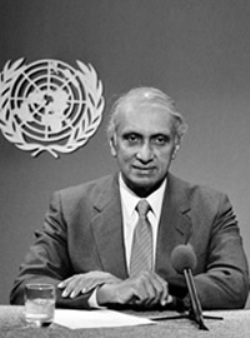
Gamani Corea, Secretary General of UNCTAD (1974-1984)
“I have a rather large nose that dominates my photos,” said Gamani Corea as I asked him to pose for a photo in his spacious garden at Horton Place, in the heart of residential Colombo.
“Then how come your nose isn’t as famous as JR’s?” I asked as I snapped a few photos. That reference was to our first Executive President J R Jayewardene, whose prominent nose was the delight of cartoonists for decades.
Economist, diplomat and international civil servant Dr Gamani Corea (1925-2013), one of the most accomplished Sri Lankans of the 20th century, had just given me an interview.
It was sometime in late 1990. Dr Corea was dividing his time between Colombo and Geneva. I was a young science reporter working for Asia Technology magazine published from Hong Kong
A few weeks earlier, I’d suggested to my editors a story about Dr Corea’s proposal to revamp the Colombo Plan — an inter-governmental organisation to strengthen economic and social development of countries in the Asia Pacific region — with a new focus on science and technology.
He didn’t know me before, but turned out to be both approachable and amiable. He matched my eagerness with energetic and optimistic answers. We chatted for the better part of an hour.
Dr. Corea, who served as Secretary-General of UNCTAD from 1974 to 1984, died on 3 November 2013 aged 87. As UNCTAD website noted, he was known for his vision of a rebalanced international economic order that would provide fairer treatment to developing countries.
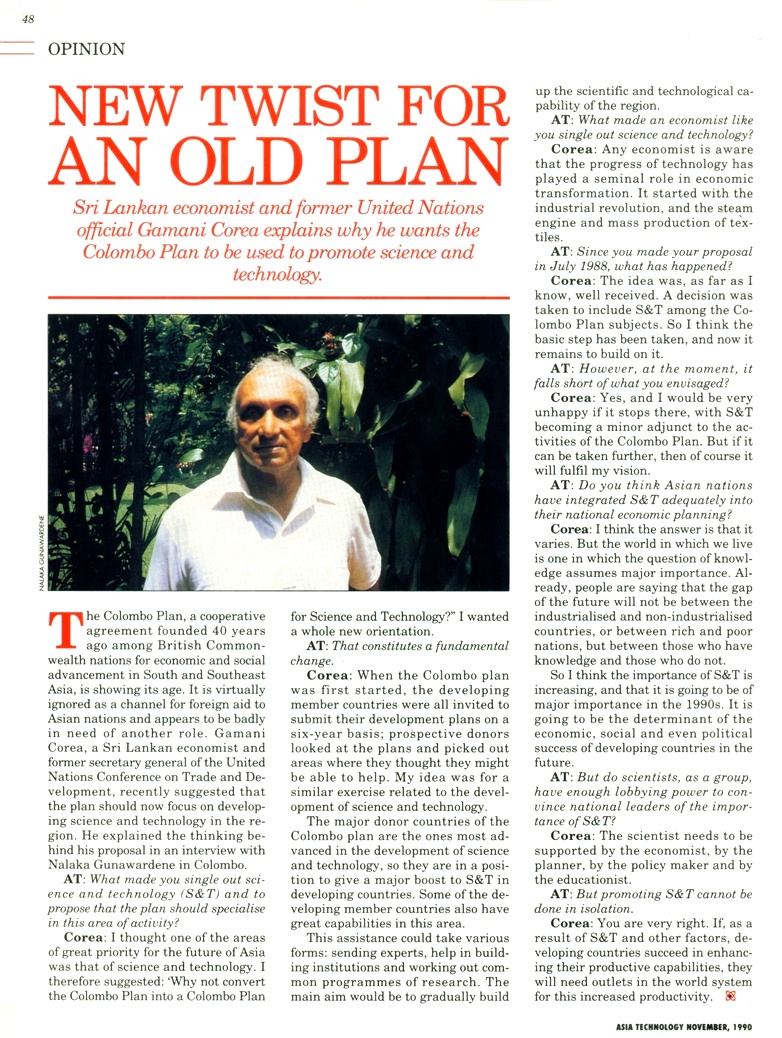
I wrote up that interview for Asia Technology November 1990 issue. Here’s a scan, illustrated by my photo with his not-so-famous nose:
Dr Gamani Corea interviewed by Nalaka Gunawardene – Asia Technology, Nov 1990
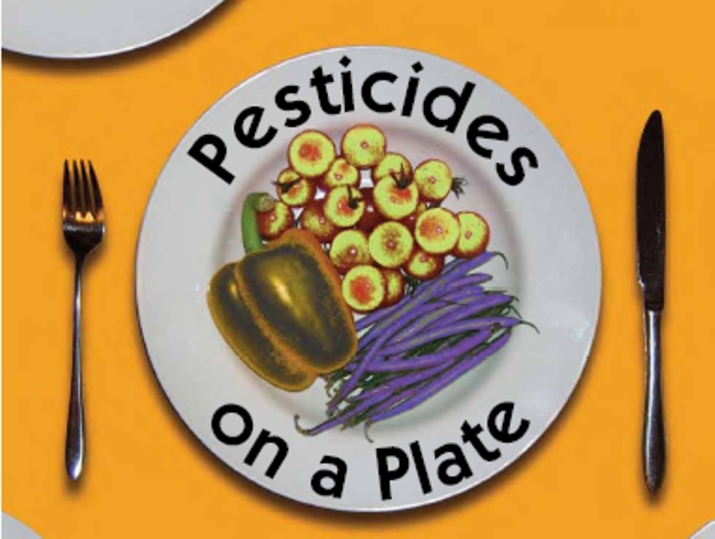
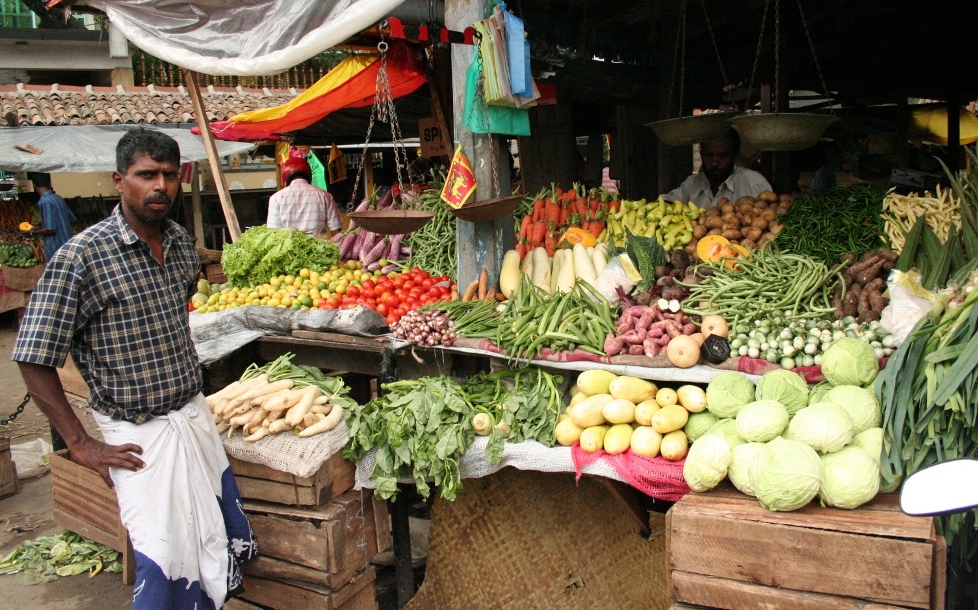
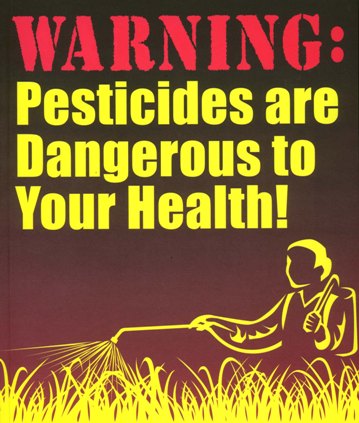
How can we protect ourselves from slow poisoning by agrochemical residues in our food? In this week’s Ravaya column, I discuss two options for Sri Lanka: organic farming, and the in-situ testing of farm produce for residues (after determining maximum residue levels).
I’m delighted that Malima TV show on innovation, which I presented on Sri Lanka’s national TV Rupavahini for much of 2012, just won a Sumathi Tele Award — our equivalent of the Emmy Awards.
A Special Jury Award was presented to Malima at the 18th Sumathi Tele Awards festival held in Colombo on 30 October 2013.
The jury commended the studio-based show for both its content and presentation, noting our creative effort to link technology to everyday life in solving problems.
Exact jury citation (in Sinhala) read:
උතුර දකුණ මාරු නොකොට,
බුද්ධියෙන් ප්රඥාව කරා,
සතුටින් ගුණ නුවනින් යනුව ජීවිතය ගවේෂණය සඳහා
නව දිශානතියකින් කළ ඉදිරිපත් කිරීමක්.
සංකල්ය නිර්මාණයේ නිර්මාණශීලීතාව අගය කිරීමක්.
ජාතික රූපවාහිනීය නිෂ්පාදනය කළ,
නාලක ගුණවර්ධන ඉදිරිපත් කළ,
සුමින්ද තිලකසේන අධ්යක්ෂණය කළ
මාලිමා වැඩසටහනට පිරිනමනු ලබන සම්මානයයි මේ…..
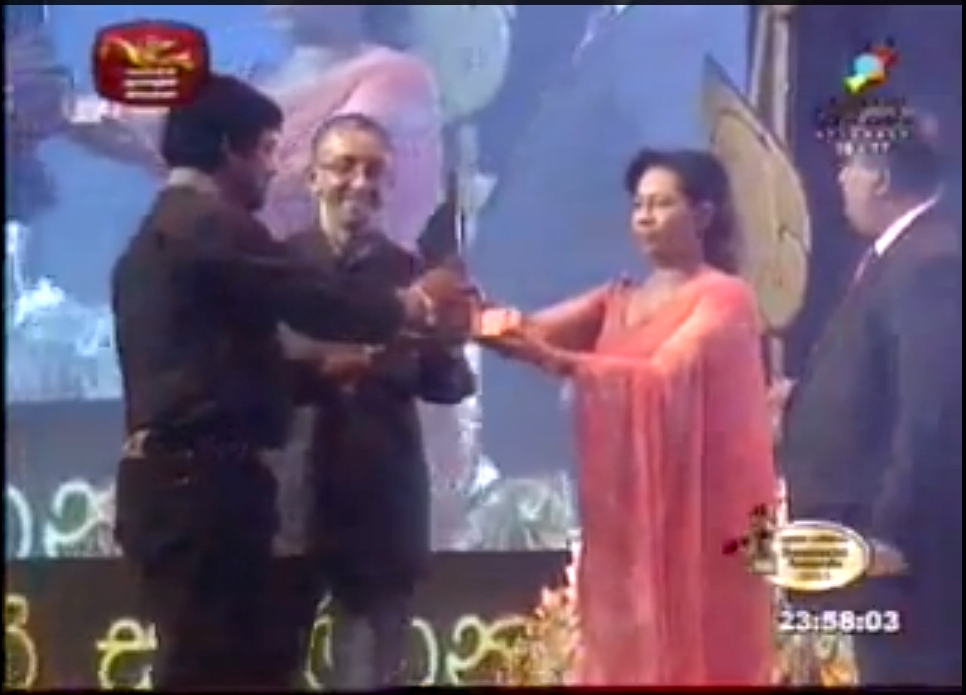
The award was received by the show’s producer Mr Suminda Thilakasena and myself; it was presented by Ms Pavithra Wanniarachchi, Minister of Power & Energy, one of the guests of honour that evening.
Ms Pavithra Wanniarachchi, Minister of Power & Energy, presents Sumathi Tele Award to Suminda Thilakasena (left) and Nalaka Gunawardene on 30 Oct 2013
Sumathi Awards have been organised by the privately owned Sumathi Group since 1995. It has established itself as the leading awards festival of the Lankan television industry that started in 1979.
Rupavahini broadcast of the evening (our award is presented around 16th minute):
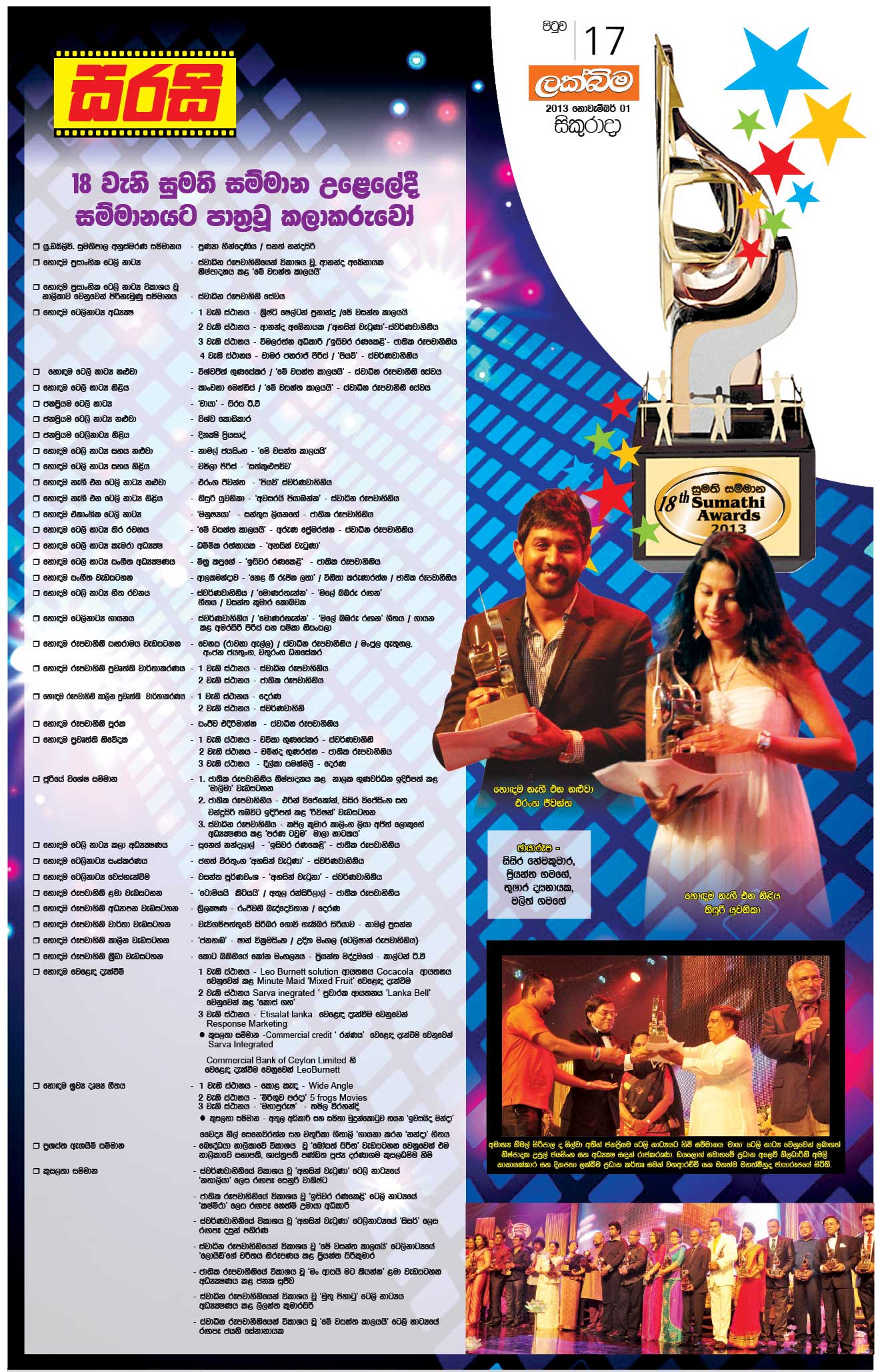
Full awards list, as published in Lakbima daily newspaper, 1 November 2013:
Full list of award winners at 18th Sumathi Tele Awards, as published in Daily Lakbima, 1 Nov 2013
In this week’s Ravaya column (in Sinhala), I discuss the public health implications of rising levels of pesticide residues in our food. I cite research by the Hector Kobbekaduwa Agrarian Research and Training Institute (HARTI) on pesticide use habits of upcountry vegetable and potato farmers, which makes alarming reading.
Among other things, researchers found that up to a quarter of surveyed farmers grow some chemicals-free vegetables their own use! So this is not a matter of ignorance, but willful poisoning of the unsuspecting consumer.
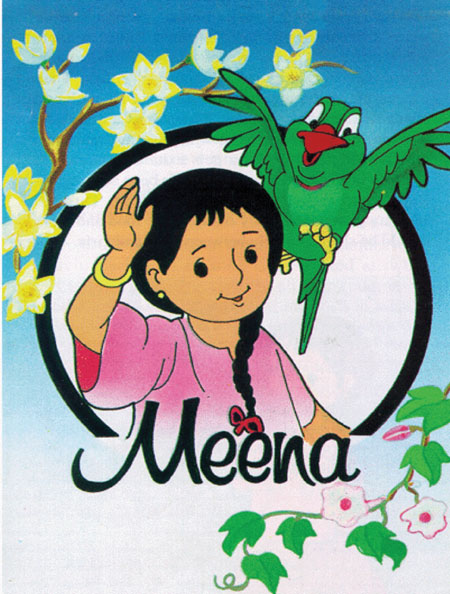
Long before Malala, there was another spirited young girl named Meena.
Like Malala Yousafzai does today, Meena too spoke out for and on behalf of girls — their right to education, good health, nutrition and, most important, to be treated the same way as boys.
Like Malala, young Meena too spoke passionately yet courteously. While Malala challenged the ferocious Taliban, Meena took on the equally formidable adversary named tradition.
Malala and Meena could well have been sisters in arms — except that the latter isn’t quite real. She is a cartoon character imagined and developed by some of South Asia’s most talented animators and development communicators two decades ago.
UNICEF developed the Meena Communication Initiative (MCI) as a mass communication project aimed at changing perceptions and behaviour that hamper the survival, protection and development of girls in South Asia.
Here’s how their website describes Meena:
“Meena is a cartoon character from South Asia. She is a spirited, nine-year-old girl who braves the world – whether in her efforts to go to school or in fighting the stigma surrounding HIV/AIDS in her village.”
UNICEF launched Meena in September 1998 after eight years of extensive research in the region since the initial conceptualization. The name Meena was carefully chosen as it was found to span the different cultures in the region: people in Bangladesh, Bhutan, India, Maldives, Nepal, Pakistan and Sri Lanka could relate to the name.
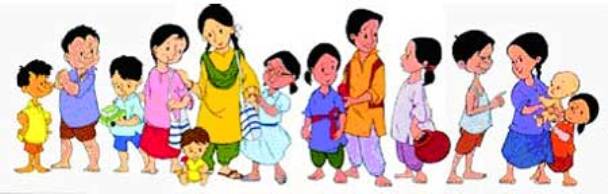
A cast of carefully researched characters was created for Meena’s family and community. It included Meena’s talkative pet parrot Mithu, brother Raju, mom and dad, grandma and village school teacher.
There was no fundamentalist group threatening Meena’s village. Instead, it was grappling with poverty, ignorance and orthodoxy.
The Meena stories are entertaining and fun, but also reflect the realities of girls’ lives in South Asia. Through story-telling, important social messages are conveyed, such as the value of educating girls, freedom from exploitation and abuse, need for hygiene and proper sanitation, and the right of girls to a proper childhood not marred by under-age marriages.
In total, 13 Meena episodes were produced through a collaboration that involved Ram Mohan Studios of Mumbai and Hanna-Barbera affiliate Fil Cartoons of Manila.
Three examples:
Meena: Will Meena Leave School?
Meena: Count Your Chickens
Meena: Too Young to Marry
Meena is widely recognised and appreciated in most South Asian countries, and is a successful advocacy and teaching tool for girls’ and children’s rights. The Meena figure has achieved remarkable popularity as she tackles the key issues affecting children, and the threats to the rights of millions of girls in South Asia.
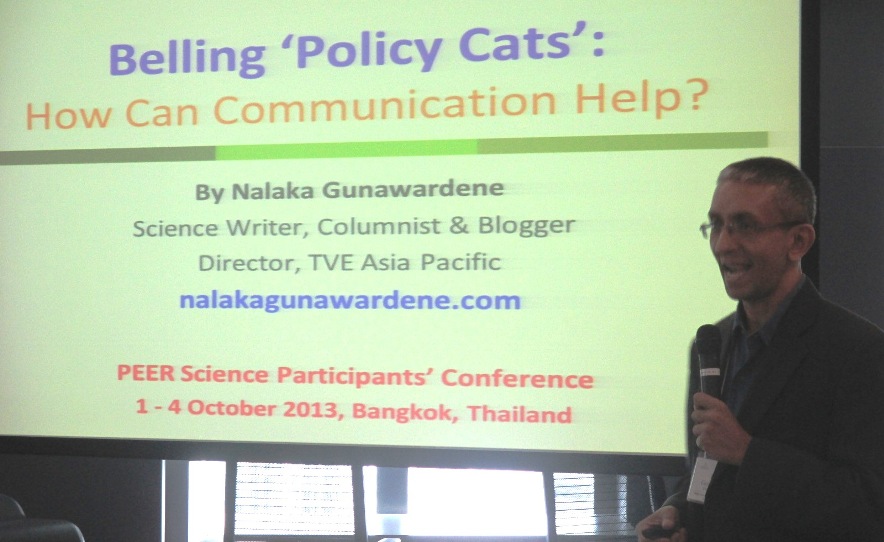
Nalaka Gunawardene speaks at PEER Science Conference 2013 in Bangkok, 3 Oct 2013
How to ‘Bell’ the policy ‘cats’?
This question is often asked by researchers and activists who would like to influence various public policies. Everyone is looking for strategies and engagement methods.
The truth is, there is no one sure-fire way — it’s highly situation specific. Policy makers come in many forms and types, and gaining their attention depends on many variables such as a country’s political system, governance processes, level of bureaucracy and also timing.
Perfecting the finest ‘bells’ and coming across the most amiable and receptive ‘cats’ is an ideal rarely achieved. The rest of the time we have to improvise — and hope for the best.
Good research, credible analysis and their sound communication certainly increase chances of policy engagement and eventual influence.
How Can Communications Help in this process? This was the aspect I explored briefly in a presentation to the PEER Science Participants’ Conference 2013 held in Bangkok, Thailand, from 1 to 4 Oct 2013.
It brought together over 40 principal investigators and other senior researchers from over a dozen Asian countries who are participating in Partnerships for Enhanced Engagement in Research (PEER) Science program. PEER Science is a grant program implemented by the (US) National Academies of Science on behalf of the U.S. Agency for International Development (USAID) and in cooperation with the National Science Foundation (NSF).
I flagged some key findings of a global study by SciDev.Net (where I am an honorary trustee) which looked at the different contextual settings within which policymakers, the private sector, NGOs, media organisations and the research community operate to better understand how to mainstream more science and technology evidence for development and poverty reduction purposes.
I like show and tell. To illustrate many formats and approaches available, I shared some of my work with LIRNEasia and IWMI, two internationally active research organisations for which I have produced several short videos (through TVE Asia Pacific) communicating their research findings and policy recommendations.
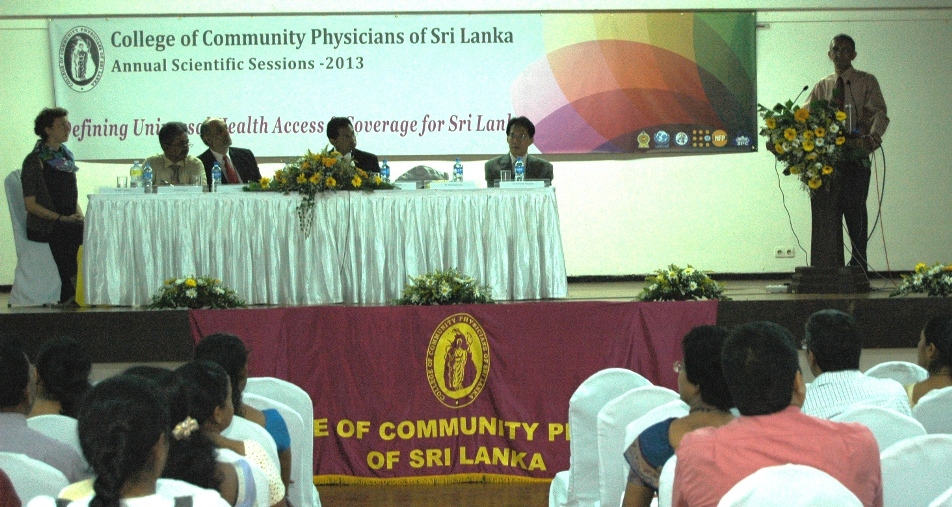
In this week’s Ravaya column (in Sinhala), I explore the nexus between public perceptions and public health – a topic I discussed in a recent talk to the College of Community Physicians Sri Lanka held in Colombo on 23 – 24 September 2013.
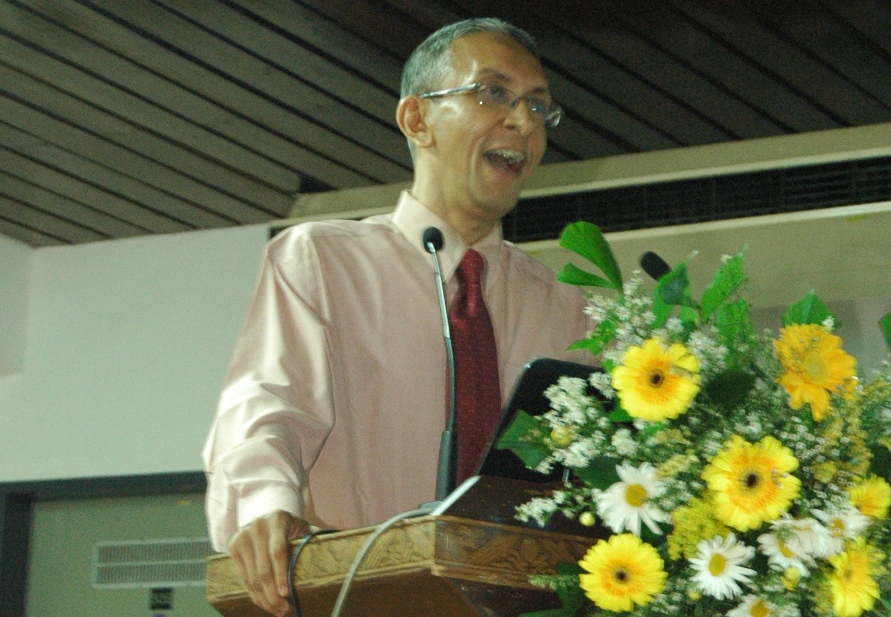
Nalaka Gunawardene speaks at Annual Scientific Sessions of College of Community Physicians Sri Lanka, 24 Sep 2013 Colombo – Photo by Janaka Sri Jayalath
This week, my Ravaya Sunday column (in Sinhala) carries the third and concluding part of my long exchange with the late Dr Ray Wijewardene, agro-engineer turned farmer and a leading practitioner in conservation farming in the humid tropics. Today, we discuss soil conservation in Sri Lanka’s hill country, restoring shifting (chena) cultivation to its original method, and how small farmers can become more resilient to market forces.
Nalaka Gunawardene speaks at Annual Scientific Sessions of College of Community Physicians Sri Lanka, 24 Sep 2013 Colombo – Photo by Janaka Sri Jayalath
Speaking to an audience of medical practitioners, researchers and academics focusing on community medicine, I explored how public perceptions influence private choices and, ultimately, public health trends and progress.
I was part of a plenary session titled ‘Multi-sectoral approaches for universal health access’, co-chaired by the Director General of Health Services (Dr Palitha Maheepala) and WHO Country Representative in Sri Lanka (Dr F R Mehta).
Achieving universal health access and a robust public healthcare system requires not only medical and para-medical systems but also paying attention to sociological, anthropological and psychological aspects of wellness and illness in the Lankan context, I argued.
Nalaka Gunawardene speaking at Annual Scientific Sessions of College of Community Physicians Sri Lanka, 24 Sep 2013 Colombo – Photo by Janaka Sri Jayalath
I have long been interested in the nexus between public perceptions and environmental conservation. The same principles apply in public health: it’s not just facts, figures and technocratic analysis but people’s impressions, apprehensions, suspicions and fears that shape the public mind. These, in turn, influence public policies (which in democracies try to respond to public opinion — for better or worse!).
Investing LKR billions of public funds in the health sector is necessary, but not sufficient. Such public funds are at risk of being undermined if the public mind is occupied by assorted demons old and new. The new demons come dressed in the clothes of pseudo-science!
The media can either amplify ill-founded public perceptions, or help clarify matters. For the latter, medical professionals need to collaborate with sympathetic media editors and practitioners. This is a long-haul task.




 Open Minds!