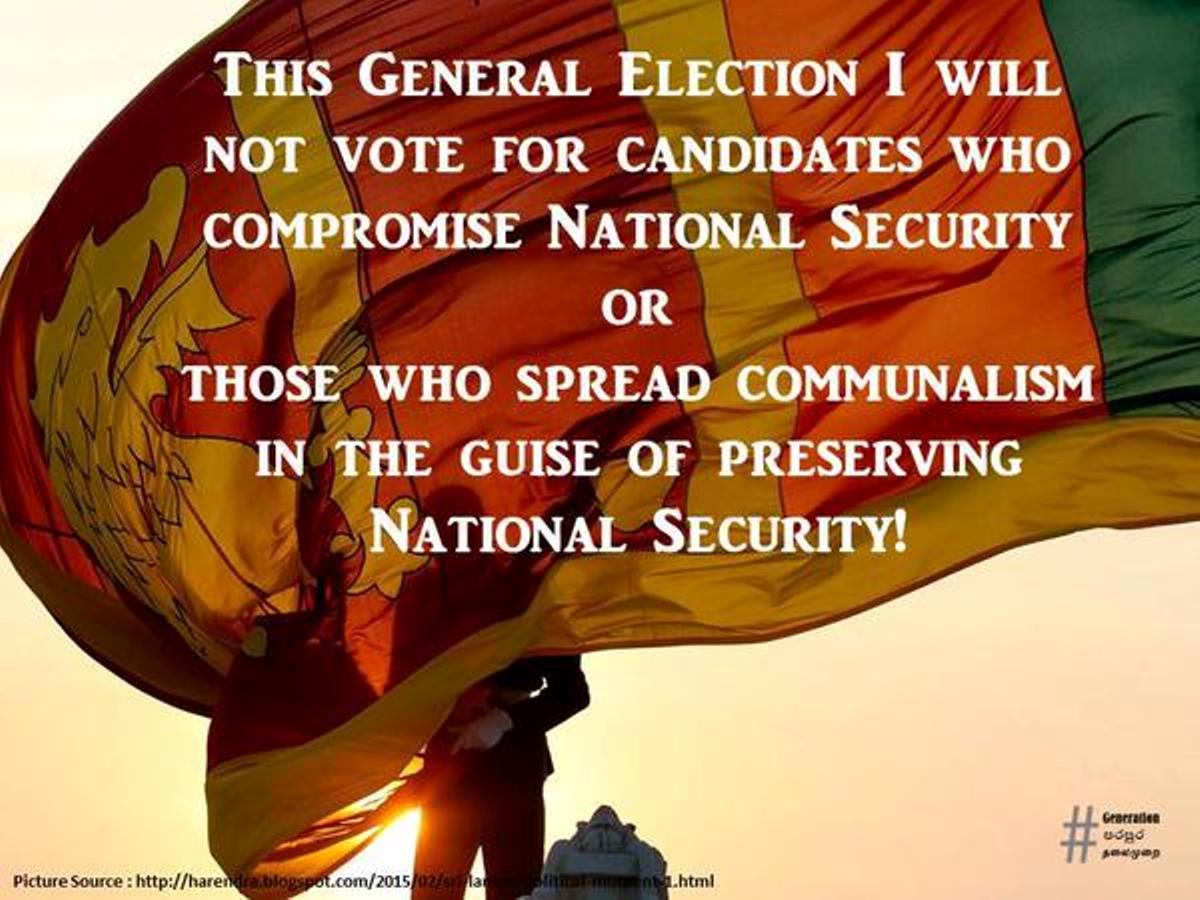
A Popular Election Meme created by Hashtag Generation, Sri Lanka
“Every citizen – including activists and academics — can play a part in shaping the future of our democracy. In this, technology is not the only key driver; what matters even more is the strategic use of our imagination and determination.
“We may not yet have all the detailed answers of our digital future, but one thing is clear. In 2015, we the people of Sri Lanka embarked on a progressive digitalization of our politics and governance.
“It is going to be a bumpy road – be forewarned — but there is no turning back.”
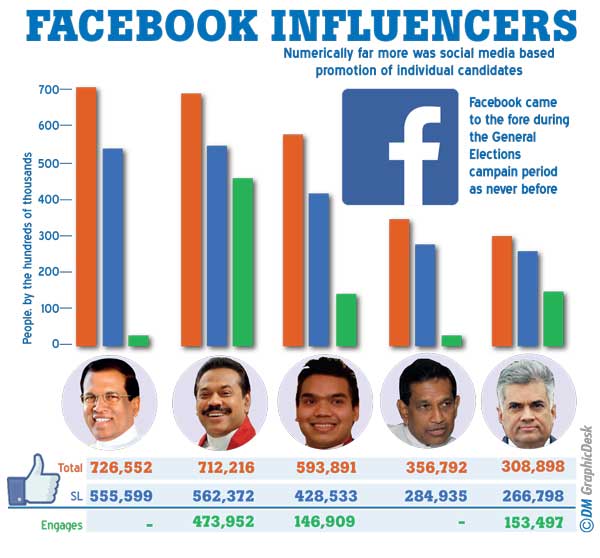
Since then, things have evolved further. In this essay, I look at how the Elections Commission, political parties, election candidates, civil society advocacy groups and individual cyber activists have used various social media tools and platforms in the run-up to, during and immediately after the Parliamentary Election.
“What role (if any) did social media play in the recently concluded General Election on 17 August 2015?
“Many are asking this question – and coming up with different answers. That is characteristic of the cyber realm: there is no single right answer when it comes to a multi-faceted and fast-evolving phenomenon like social media.
“Shortly after the Presidential Election of 8 January 2015 ended, I called it Sri Lanka’s first cyber election. That was based on my insights from over 20 years of watching and chronicling the gradual spread of information and communications technologies (ICTs) in Sri Lanka and the resulting rise of an information society.
“That was not the first time social media had figured in Lankan election campaigns. The trend started slowly some years ago, with a few tech-aware politicians and advertising agencies using websites, Facebook pages and twitter accounts for political outreach. However, such uses did not reach a ‘critical mass’ in the general and presidential elections held in 2010, or in the provincial and local government elections held thereafter.
“By late 2014, that changed significantly but this time the frontrunners were politically charged and digitally empowered citizens, not politicians or their support teams.”
The above is an extract from an op-ed I have just written and published in Daily Mirror broadsheet national newspaper in Sri Lanka (3 Sep 2015).
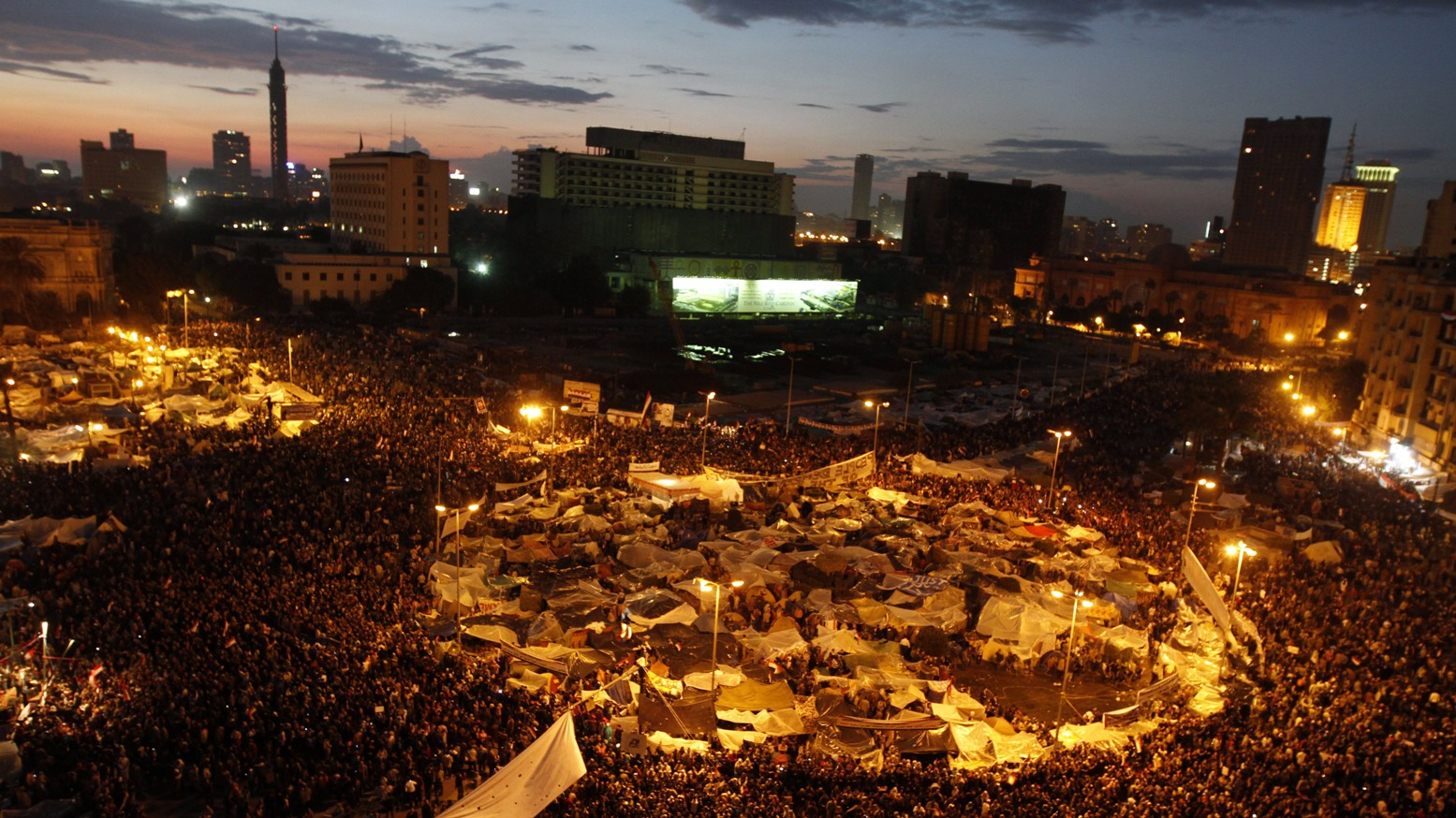
Anti-government demonstrators crowd Cairo’s Tahrir Square in February 2011
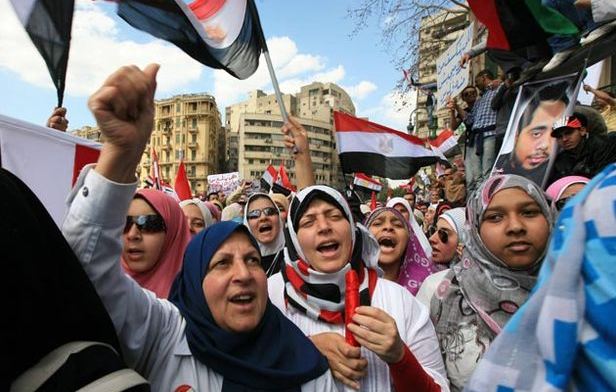
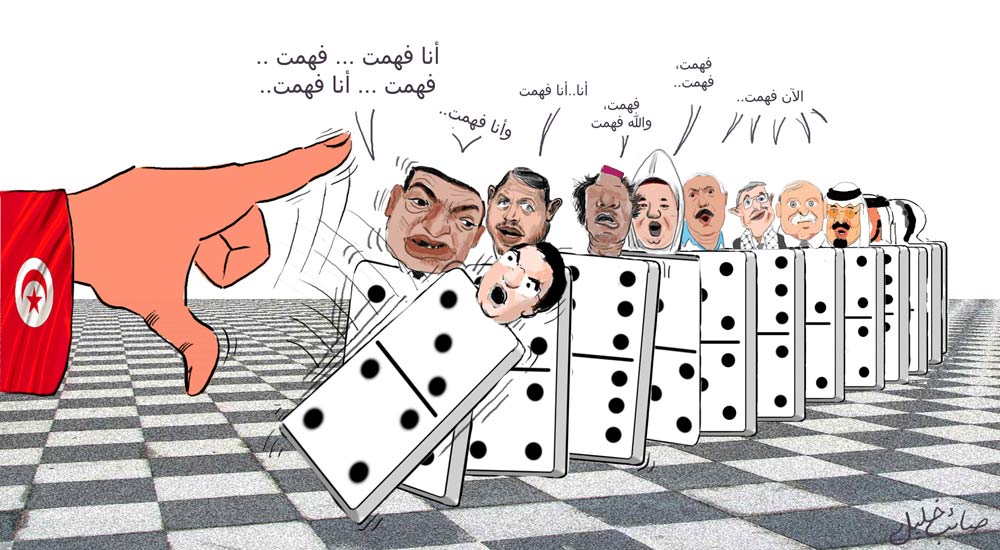
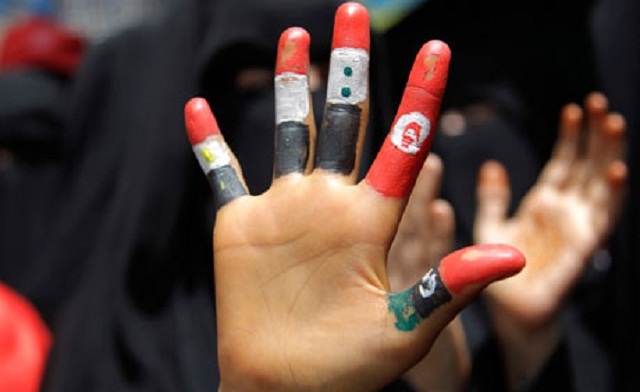
In this week’s Ravaya column (in Sinhala), published in the issue dated 4 January 2015, I pose a topical question: are there necessary and sufficient conditions for a spontaneous people’s uprising in Sri Lanka similar to what happened in the collective phenomenon known as the Arab Spring?
I address this because both the ruling party and opposition politicians in Sri Lanka have been loosely referring to Arab Spring during their current campaigns running up to the Presidential Election scheduled for 8 January 2015.
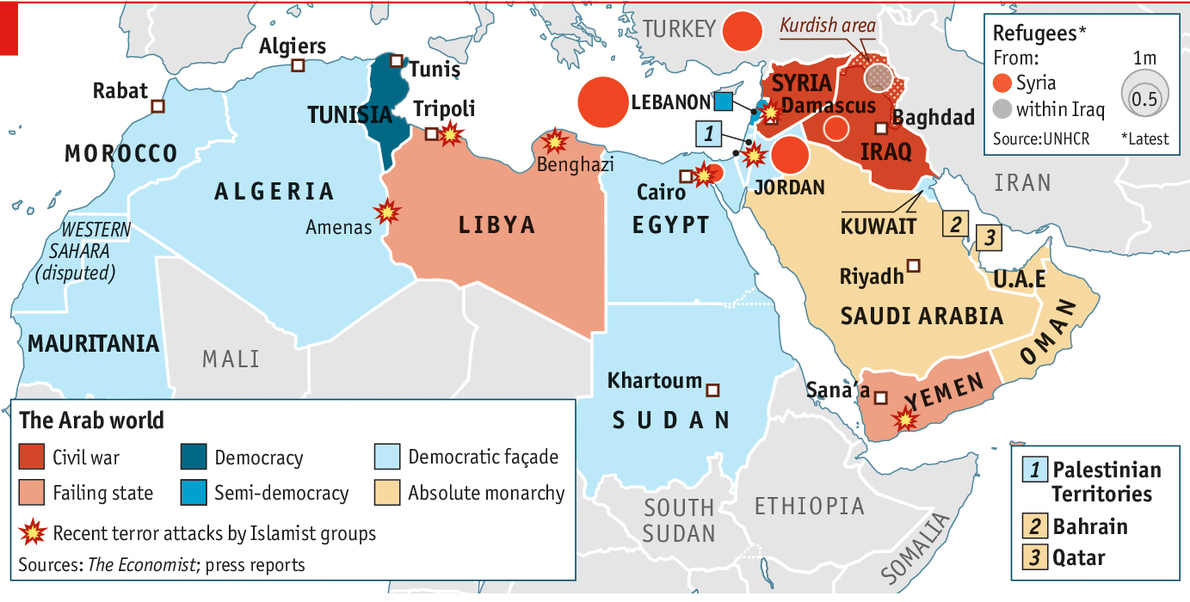
In this column, I briefly chronicle what happened in the Middle East and North Africa during 2010-11, and then explore the many factors that triggered or sustained the complex series of events. I discern three key factors: demographics (especially a low median age with large youthful populations); democracy deficit; and proliferation of information and communications technologies ranging from easy access to trans-boundary satellite television broadcasts, mobile phones and Internet.
I argue that while Sri Lanka of today has achieved the ICT factor in good measure, the other two factors fall short. With a median age of 31 years (in 2012), ours is no longer a youthful population and the demographic impetus for uprisings has passed. And while there are serious concerns about governance, the country’s democratic deficit is only partially present.
Thus, it is very unlikely that an Arab Spring style uprising could happen in Sri Lanka. So both the ruling coalition and opposition parties relax — and should let go of this much-hyped prospect.
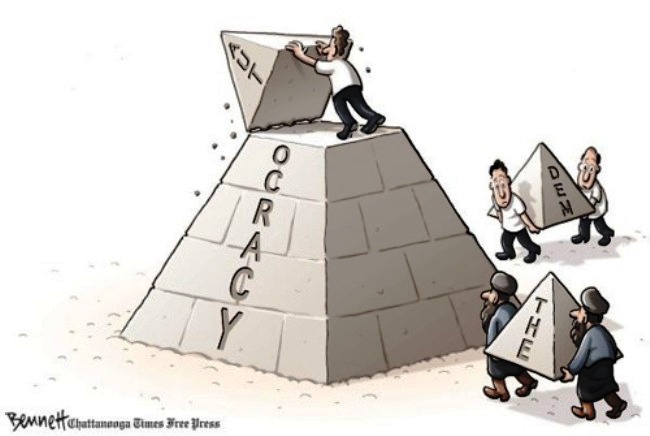
Replace autocracy with democracy or theocracy? Changing the top isn’t that easy! Cartoon by Clay Bennett on 1 February 2011. Cartoon courtesy timesfreepress.com
Did youth vote and social media make a difference in Colombo Municipal Council election in Sri Lanka held in October 2011?
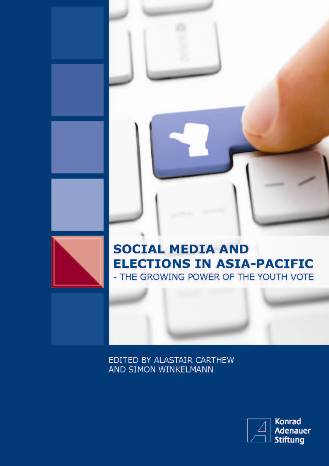
This was the question that Chanuka Wattegama and I asked ourselves and set out to answer when invited to contribute a chapter to a regional book on how social media are influencing elections in Asia.
The book comprises 10 chapters covering 11 nations written by local contributors from Australia, Indonesia, Japan, Malaysia, New Zealand, Singapore, South Korea, Sri Lanka, the Philippines, Taiwan and Thailand.
It examines trends and outcomes surrounding recent elections in these countries — and how social media influenced election campaigning and voting, especially among young voters.
Topics include:
• Use of social media surrounding elections
• Digital electioneering
• How social media can make a difference
• How important is voting to young people?
• Detailed polling of political trends
Our summary for the Sri Lanka chapter:
The Colombo Municipal Council (CMC) is the local government body that administers Sri Lanka’s largest city and its commercial capital. Its last election, held in October 2011, saw the nationally ruling coalition losing this key municipality while winning all other municipalities as well as many of the smaller local government bodies.
What made CMC election outcome different? This election saw some apolitical activists and researchers engaging the mayoral candidates on social media, questioning and critiquing their election manifestos and trying to hold them accountable. Did these online activities influence voter behaviour? What lesson does this hold for other elections and the overall political landscape in Sri Lanka?

 Open Minds!