From City of God to Slumdog Millionaire: Filming ‘underbelly’ of nations…

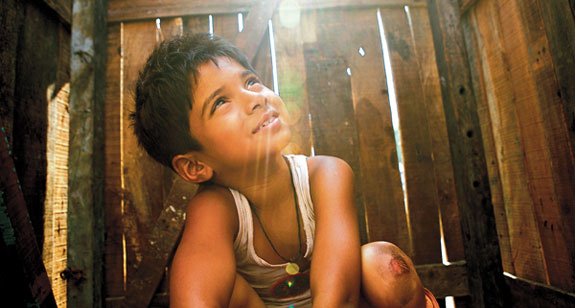
From 'Slumdog Millionaire'

“Can you help us to film a child’s leg being broken?”

In his long years of journalism in India, my friend Darryl D’Monte had faced all sorts of questions and situations. But this was one question that stunned and left him speechless for a while.

A visiting Canadian TV crew made this request in the 1970s, when Darryl was resident editor of The Times of
India
. He was giving them some insights on the extent of poverty in his city of Bombay, since renamed as Mumbai. The crew had heard of the deliberate maiming of street children, before being employed as beggars. A disabled child would evoke more sympathy, increasing the daily collection for gangsters operating them from behind the scenes.

Darryl wasn’t willing to be associated with this ‘staging’. “Well, it’s going to happen anyway,” was the film crew’s cynical answer.

Now, fast forward 30 years to the present. At one point in the British-Indian movie Slumdog Millionaire, we see a young girl being blinded by a gangster who shelters and feeds a small army of children — all unleashed on Mumbai on a daily basis to tug at the heart strings of its teeming millions.

The film’s protagonist Jamal escapes the same fate by making a mad dash for freedom with his brother, Salim. But years later, they cross the gangster’s path again, with devastating results – for him.
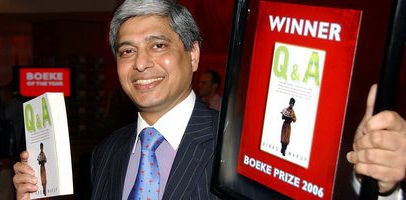
Look what I've started...
Vikas Swarup: Look what I've started...
Set and filmed in India, Slumdog Millionaire is the story of a young uneducated man from the slums of Mumbai who appears on the Indian TV’s version of Who Wants to Be a Millionaire? (Kaun Banega Crorepati) and does so well to reach the final question that the game show host and the police suspect him of cheating.

Some Indians feel their country’s ugly underbelly has been magnified by locating and filming part of the story in the slums of Mumbai. But director Danny Boyle, who sees his film as a Dickensian tale, says he shot in real, gritty locations “to show the beauty and ugliness and sheer unpredictability” of the city.

Indian diplomat Vikas Swarup, who wrote the 2005 novel Q and A on which the movie is based, has a similar view. “This isn’t social critique,” he told The Guardian in an interview. “It’s a novel written by someone who uses what he finds to tell a story. I don’t have firsthand experience of betting on cricket or rape or murder. I don’t know if it’s true that there are beggar masters who blind children to make them more effective when they beg on the streets. It may be an urban myth, but it’s useful to my story.”

To me, Slumdog Millionaire feels like a cross between the acclaimed Brazilian slum movie City of God (Portuguese name: Cidade de Deus, 2002) and Quiz Show, the 1994 American historical drama film about TV quiz scandals in the 1950s.
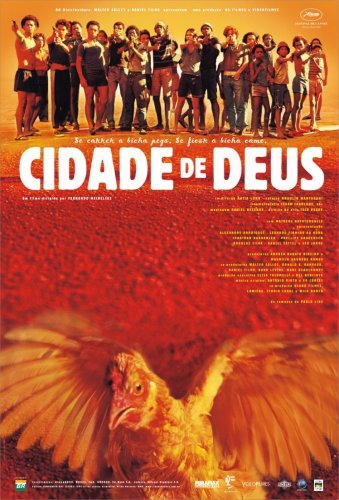
City of God (2002) was filmed in the favelas of Rio de Janeiro

City of God is a Brazilian crime drama film directed by Fernando Meirelles and Kátia Lund, released in its home country in 2002 and worldwide in 2003. It was adapted by Bráulio Mantovani from the 1997 novel of the same name written by Paulo Lins.

The film’s depiction of narcotic drug rings, hold-ups, street violence and police corruption may not have been what the upper middle class Brazilians wanted to showcase to the rest of the world, but the film’s stark if grisly authenticity resonated with movie audiences around the world. Most of the actors were residents of favelas (slums) of Rio de Janeiro, such as Vidigal and the Cidade de Deus itself. City of God became one of the highest-grossing foreign films released in the United States up to that time.

The makers of Slumdog Millionaire adopted a similar approach. Its co-director Loveleen Tandan says she likes to get as close to reality as possible. This drove her to the slums of East Bandra to look for young children who resembled the protagonists in the story.

As she recalled in a recent interview with Tehelka: “I was very keen to get real slum kids, which is why I convinced them (producers) to do one-third of the scenes in Hindi. I made a scratch tape with real street kids. The team was surprised that Hindi actually made it brighter and more alive.”

Indeed, Slumdog doesn’t feel like a ‘foreign film’ despite it having a fair number of English subtitles, which only enhance the overall cinematic experience.

But how realistic should films try to become, before the local realities are distorted or local sensibilities are affected? Where does documentary end and drama begin? These questions will continue to be debated across India and elsewhere while Slumdog enthralls millions on its first theatrical release.

Feature film makers can exercise their creative license far more than factual film makers. I doubt if the creators of authentic, close-to-the-ground movies like City of God and Slumdog Millionaire set out with any specific social agenda. They are in the business of entertainment, and just happen to find plenty of drama in real life in places like urban slums. We might argue that in the right hands, dramatised movies can draw mass attention to development issues and challenges far more effectively than the often dull and dreary documentaries.

Eyes wide open
Kalpana Sharma: Eyes wide open
“If through (the movie) the world gets a peek at an India inhabited by millions of people who continue to live their lives without clean water, sanitation or electricity, what is the problem?” asks another Indian friend and long-time Mumbai resident Kalpana Sharma.

In a perceptive essay titled Shantytowns of the Mind, written in The Indian Express in early January 2009 before she saw the film, Kalpana flagged important concerns: “Slumdog Millionaire’s success raises some deeper questions. How do we depict poverty as writers, filmmakers, journalists? Is it fair to expect us all the time to give a full, balanced, sensitive portrayal? Or is it inevitable that we write, film, for our audiences? And if, as a byproduct, people are sensitized, so be it. Also, if they are annoyed, so be it. If we are considered exploitative, so be it.”

Kalpana speaks with authority, and not just because she lives in the megacity of Mumbai (population: 13 million and rising) which, she points out, is half made up of slums. In 2000, she wrote a book titled Rediscovering Dharavi: Stories from Asia’s Largest Slum. Far from being a cold, clinical analysis of facts, figures and trends, it’s a book about the extraordinary people who live there, “many of whom have defied fate and an unhelpful State to prosper through a mix of backbreaking work, some luck and a great deal of ingenuity”.

Kalpana ends her essays with these words: “In the end you realise as a writer, a journalist or a filmmaker, that the best you can do is to shine a torch, a searchlight, on an entrenched problem. But the solution will not be found merely by that illumination. For that, there are many more steps to be taken.

Slumdog Millionaire has focused its lens on the children of India’s slums through a work of fiction. What we do to change their future is the non-fiction that has yet to be written.”

Read Shantytowns of the Mind by Kalpana Sharma, Indian Express, 14 January 2009
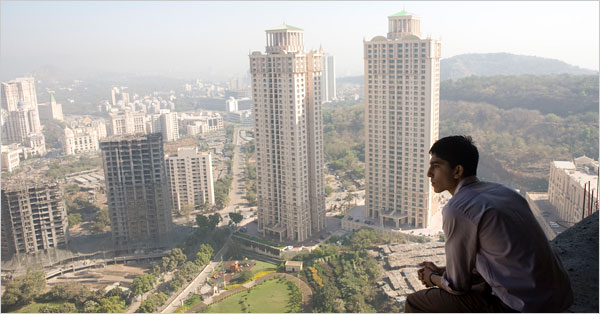
India rising...but not for all slumdogs?

Romulus Whitaker: Mixing films and conservation in India

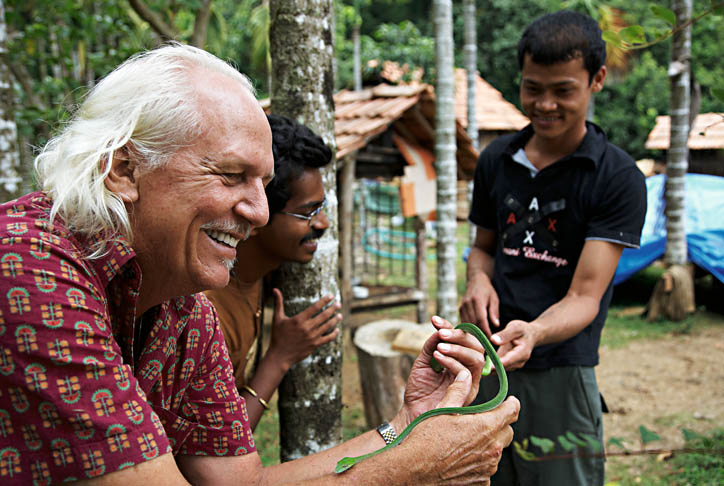
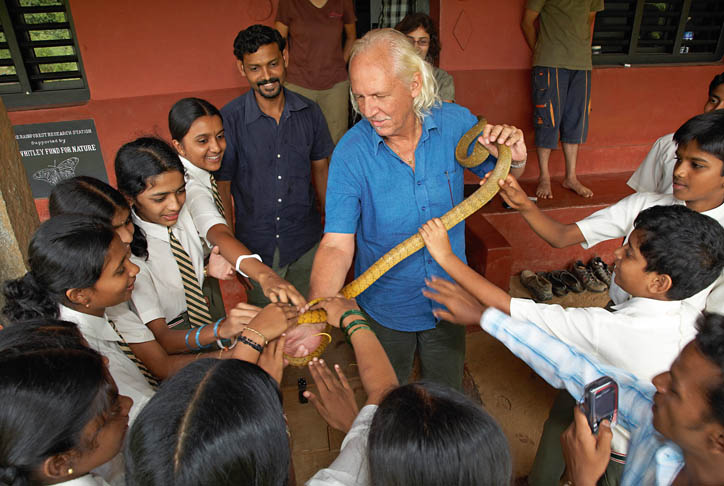
A young volunteer gets to know a snake at Agumbe research station - photo courtesy Rolex Awards
Romulus Whitaker introduces a young volunteer to a snake at Agumbe research station, Tamil Nadu, India – photo courtesy Rolex Awards

“I haven’t had to do a nine-to-five job ever in my life, and that is a very envious situation to be in if you like the wild. Life has been much like a river in that it picks you up and carries you along. I have got into things as they come towards me.”

That’s how Romulus Whitaker, reptile and amphibian specialist, conservationist and filmmaker sums up his long, eventful and illustrious career. At 65, he is full of zest for life, ready to take on new challenges in protecting India’s forests and wildlife.

His current ambition, for which he has just been selected as an Associate Laureate in the 2008 Rolex Awards for Enterprise, is to create a network of rainforest research stations throughout India.

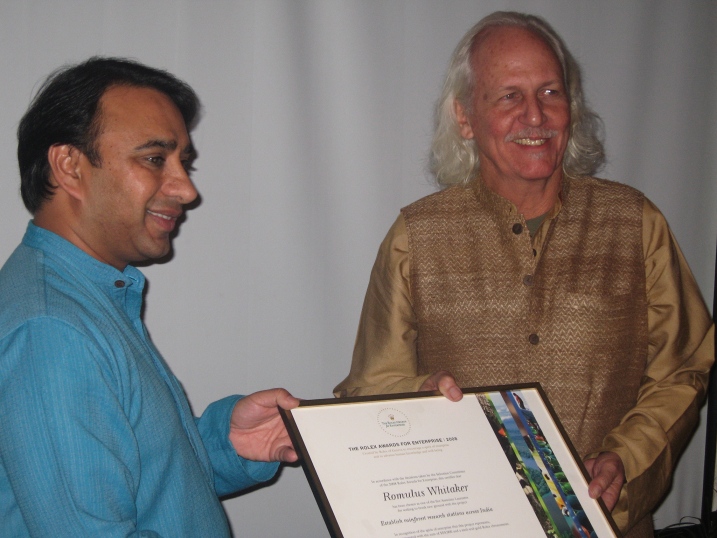
I caught up with this American-born, naturalised Indian citizen a few days ago when he and fellow Indian Moji Riba were presented with their Rolex awards at a ceremony in New Delhi.

Of course, I’d heard about Romulus (Rom) Whitaker for years and seen some of his natural history films. In some ways, his style was a bit like that of ‘The Crocodile Hunter’ Steve Irwin — putting himself in the picture, sometimes in daring encounters with potentially dangerous animals…all in the name of bringing nature a bit closer to us in our living rooms.

But such similarities go only so far. Rom takes a less dramatic and more philosophical approach to humans’ relationship with Nature. For him, television is only a means to an end. As Rolex award profile put it, “the combination of a foreign name, mildly Viking looks inherited from his Swedish mother, an unexpected fluency in local Indian dialects and a thoroughly irreverent attitude” makes him “a highly unconventional yet effective conservationist in a country far from his birthplace”.

To catch a glimpse of this remarkable man, watch this ‘Incredible India’ PSA featuring Romulus Whitaker:

Rom was the founder director of the Snake Park in Chennai. The park was established in 1972 ‘to preserve the endangered reptile species in the sub continent’.

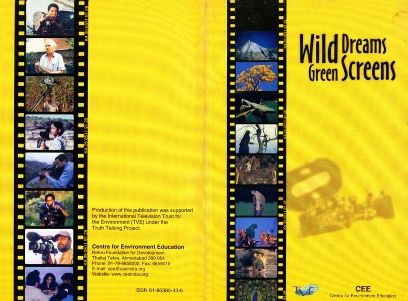
Rom’s career in film making was a byproduct of his life-long desire to bring people and Nature closer. He chronicled his venture into the world of television and film in a chapter he wrote for a book published by India’s Centre for Environment Education and TVE Asia Pacific in 2002. In that book, titled Wild Dreams, Green Screens, eight leading Indian film-makers shared insights about their careers, including how and when they decided to get involved in this field. They also talked about some of the exciting — and frustrating — experiences they have had while filming nature and wildlife.

From dreams to screen...
From dreams to screen…

In the early 1970s, Rom worked with a Russian film crew who turned up to do a sequence on snakes for a film based on the famous Kipling story, Rikki Tikki Tavi. “It was fun for me to help them figure out how to film a snake stealing an egg from a bird’s nest – and it took a whole week to do it. I was impressed by their patience and persistence,” Rom recalled in the book.

After that, every few months, some film crew would show up to do either a short news story on the Snake Park, or a short film on Indian snakes for foreign audiences. India’s stereotyped reputation as a land of snakes and snake-charmers partly fueled this interest.

Rom continues: “By the 1980s, I started thinking I knew something about making wildlife films – even though I didn’t have a TV, and there weren’t really very many such documentaries screened anywhere in India. I was aware that films could show and teach people about my beloved reptiles like nothing else. Surely the Snake Park with nearly a million visitors a year could make good use of such films, and I knew the visitors would go away with a new awareness of how beautiful, graceful and interesting reptiles are. A single broadcast on a TV channel and 20 million people would be able to see it all at once!”

Determined to do his own films, Rom teamed up with two school friends John and Louise Riber, and Shekar Dattatri, to make a film on India’s snakebite problem. They had a tiny budget (Indian Rupees 50,000, which is approximately US$ 1,000 today), an old Arri camera and ‘a lot of enthusiasm’.

One thing led to another. “‘Snakebite’ turned out to be a good little half-hour film which was translated into several Indian languages… Amazingly, this little film won a first prize at a festival in the United States, and was awarded the Golden Eagle by the American Movie and Television Federation. Lo and behold, I was a filmmaker!”

‘Snakebite’ (1985), made on 16 mm film, also launched the career of Shekar Dattatri, a multi-award winning Indian filmmaker who worked as an assistant director on this production. Coincidentally, Shekar was an Associate Laureate of the Rolex Award in 2004 for his ‘Wild India Project – Changing Hearts and Minds through Moving Images’.

Vikram Akula (left) presents Rolex Awards certificate to Romulus Whitaker in Delhi, 22 January 2009

We missed Shekar at the Delhi event – he couldn’t make it due to scheduling difficulties. But as Rom has written, the Whitaker-Dattatri partnership continued for several years while they struggled with ‘very crude equipment’ and tiny budgets. Films like ‘Seeds of Hope’ (on tree planting) and ‘A Cooperative for Snake Catchers’ followed.

Rom further writes in his chapter: “We worked hard on these films, learning as we went along month after month, working with really good people like the tree planters of Auroville and the Palni Hills Conservation Council, and, of course, the fantastic Irula tribals. We did have a few narrow escapes with snakes, but we always felt we were in much more danger driving down National Highway 45, than from any of our venomous subjects!”

Rom’s film making in the past two decades has taken him not only to the far corners of India, but to other biodiversity hotspots of the world – such as Indonesia. As the years passed, his enhanced reputation attracted big names in wildlife films, such as National Geographic, Discovery/Animal Planet and BBC Natural History. Combining his conservation knowledge with public education skills, Rom has also been presenter of several films.

The King (Cobra) and I

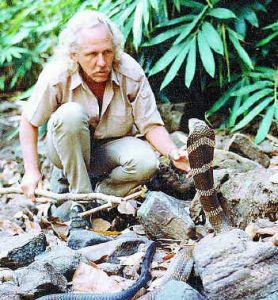
These multiple involvements have earned him a string of awards – his documentary King Cobra made for National Geographic won him an Emmy award, considered the television equivalent of the Oscars.

Despite the rigorous demands of film making (and the occasional lure of television medium), Rom has remained active in conservation circles both within India and at global level. While many conservationists in India focus their attention on charismatic megafauna like tigers and elephants, Rom has stayed faithful to his chosen field of reptiles and amphibians. Years ago he realized that his beloved species cannot survive unless their natural habitats do. So, like many others, he evolved from naturalist to conservationist.

“A lot of us get wrapped up in our own little special animal and then we wake up and start thinking it has got to be habitat and it has to be eco-development that involves people and, now, in my case, it has crystallized into the whole idea of water resources,” he says.

Read his detailed CV for details on his conservation, publishing and film making accomplishments.

Rom’s colourful career has itself become a subject for other filmmakers. In 2007, he was featured in a critically-acclaimed documentary produced by PBS, under their “Nature” banner, on “super-sized” crocodiles and alligators, which was filmed in India, East Africa and Australia.

And in January 2009, Whitaker returned to the small screen in another “Nature” documentary on real-life reptiles such as Komodo dragons and Dracos that inspired tales of dragons.

Extract from The Dragon Chronicles, which premiered on PBS in January 2009:

Read the PBS/Dragon Chronicles interview with Rom Whitaker

The man who turned to moving images in the 1980s to move people’s minds towards conservation is still engaged in that business. He is a conservationist who puts a premium on public engagement, and especially on working with children and young people.

He says: “We are doing a lot of work with young people, bringing them to the forest and showing them what happens here and why it matters. It can be very difficult to change adult attitudes, but with the young, it is easier to get across the knowledge that what we are doing to the forests we are doing to ourselves.”

In Romulus Whitaker's hands, snakes become educational tools for children and icons of nature conservation. Photo courtesy Rolex Awards
In Romulus Whitaker\’s hands, snakes become educational tools for children and icons of nature conservation. Photo courtesy Rolex Awards

IUCN at 60 finally crosses the ‘Other Digital Divide’…

iucn.org
iucn.org
This news just came in, from IUCN – International Union for Conservation of Nature:
“Gland, Switzerland, 29 January 2009 (IUCN) – The world’s oldest and largest environmental organization is launching a new opinion page on its website, starting today with an article on President Obama written by IUCN’s President, Mr. Ashok Khosla.”

The press release quoted Julia Marton-Lefèvre, Director General of IUCN as saying: “Because we are a science-based organization and because we are also a membership organization, we tend to avoid controversies. While we, as an organization, will maintain our scientific rigor and strict neutrality in defending nature conservation, we wanted to provide our experts and members a space to freely express themselves, get feedback from a wide audience and generate informed debates around the big issues of our time.”

Intrigued, I quickly looked up the new Opinion page, and found this welcome note from Mario Laguë, its Head of Global Communications: “IUCN is an organization that built its enviable reputation on science and on the contributions of all its members. This combination of the need for both accuracy and democratic legitimacy can at times slow down our capacity to react to current events or to express opinions that are not ‘official positions’. While it is clear that the views expressed on this page are not necessarily those of IUCN, we expect them to be in accordance with its vision of ‘a just world that values and conserves nature’.

This isn't quite what IUCN would approve, but still an interesting idea...
Not quite what IUCN would approve, but still an interesting idea...
This is what I would call cautious engagement, but it’s certainly a welcome move. The first contribution to the Opinions page is an article by Dr Ashok Khosla, President of IUCN, titled ‘A new President for the United States: We have a dream’. In his characteristic analytical and perceptive style, Ashok sums up the promise the new US administration holds for pursuing the conservation agenda worldwide.

The opinions page allows comments by readers — moderated, and limited to 300 characters per comment, just enough to make a point briefly. Two days after the Khosla essay was posted online, it had attracted four comments…or at least that many were approved by people at IUCN headquarters who review comments.

Beyond these specifics, the launch of an interactive opinions page marks a new era for IUCN which brings together over 1,000 governments, state agencies and non-governmental organisations committed to preserving life on Earth. It signifies that the alliance as a whole is finally crossing what I have called the ‘Other Digital Divide’ — the one that separates the Digital Natives and Digital Immigrants.

I’m delighted to see IUCN belatedly crossing this divide, which I’ve been advocating for some time. In September 2007, participating in IUCN’s Fourth Asian Conservation Forum in Kathmandu, Nepal, I argued that scientific merit and rational (and often very articulate) reasoning alone won’t win them enough new converts to achieve significant changes in lifestyles, attitudes and practices needed to change business as usual.

I said: “To be heard and heeded in the real world outside the charmed development and conservation circles, we need to employ a multitude of platforms, media and ICT tools.”

I added: “IUCN and other conservationists, with their rigorous scientific analysis expressed in technical papers, print publications and the occasional op ed article in broadsheet newspapers, have to navigate in this whirlpool (of new media) — and it’s not easy. But their choice is between engagement and marginalisation. The planet cannot afford the latter.

“I’m not suggesting that conservation scientists and organisations must drop their traditional advocacy methods and rush to embrace the new ICT tools. But they need to survey the new media landscape with an open mind and identify opportunities to join the myriad global conversations.”

It takes time to turn around a large ship like IUCN, but they have been trying. For example, in September 2008, days before its World Conservation Congress in Barcelona, Spain, IUCN launched its own YouTube channel to share its videos online. Four months later, viewing numbers for the three dozen short videos posted are still in double digits, but a start has been made.

So it’s good to have the grand old lady of global conservation enter the endlessly chatty, cacophonic world of web 2.0. Let’s hope she won’t remain too aloof or elite (what I call the ‘broadsheet newspaper mentality’ when much of the world has gone tabloid or ‘compact’), or try to be too prim and proper in expressing her own views. The conversations online tend to evolve fast, and can sometimes be rough, spontaneous or unpredictable. Excessive moderating can leave out the passion and rhetoric that drive some discussions – sanitising is not recommended except to avoid libel and slander. These attributes can be very disconcerting to well-established organisations that have so far carefully managed their corporate communications. Engaging new media requires losing a good part of that control.

But as our friends in Gland have now recognised, it’s no longer a choice – but an imperative.

September 2007 blog post: Crossing the Other Digital Divide – Challenge to Conservation Community

August 2008 blog post: Wanted: Development 2.0 to catch up with web 2.0!

Iodised Salt: How to make the world smarter, faster?

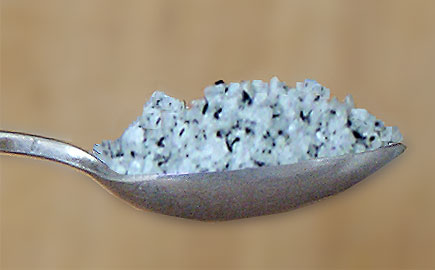
A miracle powder?
A miracle substance to get smarter?
One of the earliest video films I helped distribute at TVE Asia Pacific, soon after it was set up in 1996, was called Ending Hidden Hunger.

This 20 minute film, made in 1992 by Bedford Films of UK and narrated by Sir Peter Ustinov, described how the UN children’s agency UNICEF was working toward eliminating micronutrient deficiencies from iron, vitamin A and iodine in different parts of the developing world. Examples are taken from Africa and Asia to both illustrate the extent of the problem as well as steps being taken to reduce these deficiencies that cause mass-scale disability and death.

The main premise of the film was simple: those lacking micro-nutrients in their regular diet often don’t show immediate signs of starvation. This deprivation builds up over time and causes slow – sometimes irreparable – damage.

Nicholas Kristof
Nicholas Kristof
I was reminded of this film — and its still very relevant message — when reading an excellent essay by Nicholas Kristof in International Herald Tribune a few days ago. He is a columnist for the New York Times who travels the world reporting from the various frontlines of survival and struggle.

In Raising the World’s I.Q., dispatched from Rawalpindi, Pakistan, Kristof was talking about ‘a miracle substance that is cheap and actually makes people smarter’: iodised salt.

Here’s the context, as he put it:

“Almost one-third of the world’s people don’t get enough iodine from food and water. The result in extreme cases is large goiters that swell their necks, or other obvious impairments such as dwarfism or cretinism. But far more common is mental slowness.

“When a pregnant woman doesn’t have enough iodine in her body, her child may suffer irreversible brain damage and could have an I.Q. that is 10 to 15 points lower than it would otherwise be. An educated guess is that iodine deficiency results in a needless loss of more than 1 billion I.Q. points around the world.”

In nearly all countries, the best strategy to control iodine deficiency is iodisation of salt — one of the most cost-effective ways to contribute to economic and social development. Especially in these hard times, development professionals are looking for smart ways to get the biggest bang for their limited (and still shrinking) bucks. Investing in micronutrients – such as iodine – can provide some of the biggest bangs possible.

UNICEF Report 2008
UNICEF Report 2008
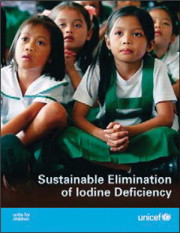
In June 2008, UNICEF published Sustainable elimination of iodine deficiency, a new report on progress since 1990 when the world’s governments set the target to eliminate iodine-deficiency disorders worldwide.

In October 2008, The Lancet, one of the world’s leading medical journals, published a report that noted: “Iodine deficiency is the most common cause of preventable mental impairment worldwide.”

The medical, public health and development communities have known and talked about iodine and other micronutrients for over 30 years. Significant progress has been made – for example, UNICEF says by 2006, more than 120 countries were implementing salt iodisation programmes, and 34 countries had managed to get rid of iodine deficiency among their people through this smart strategy.

But there still are major gaps — which continue to cause preventable damage to tens of millions of people including children.

Nicholas Kristof navigates through the heavy, jargon-ridden developmentspeak and churns out an eminently readable, accessible piece. It’s written in first person narrative from a part of the world where illiteracy, superstition – and their erstwhile companion, religious fanaticism – are trying to prevent people at risk from using iodised salt. This is science writing at its finest: anecdotal, personalised and purposeful.

And he’s absolutely right when he says iodised salt lacks glamour, doesn’t have too many stars or starlets singing its praise and (almost) no one writing about it despite its potential to improve lives for so many people.

I should know: one of the earliest topics I tackled as a young science reporter – getting started in the late 1980s – was salt iodisation. I struggled to put together a readable, engaging piece — which I then had to push through jaded editors who wondered what all this fuss was about.

I have only one (minor) bone to pick with Kristof. He pokes fun at Canada for hosting and supporting the Micronutrient Initiative, “an independent, not-for-profit organization committed to promoting simple cost-effective solutions for hidden hunger and developing innovative new solutions where needed.”

He calls Canada “earnest and dull, just like micronutrients themselves”. It’s a personal view – perhaps expressed with his tongue firmly in his cheek. Having travelled a fair amount in North America, and having good friends in both countries, I think that the nation north of the US-Canada border is a tad more civilised, certainly more caring and better engaged with the rest of the world.

But then, that too is a personal view. I’m darn lucky that I get enough iodine in my diet so that I can think for myself, keep asking lots of annoying questions…and occasionally even get some answers right.

Two billion people – almost a third of humanity – aren’t so lucky.

Read Raising the world’s I.Q. by Nicholas Kristof

Salt iodisation is not universally hailed. Read an alternative point of view that appeared in India’s Frontline magazine in 2006: Imposing iodine

Moji Riba: Capturing oral history in moving images

Moji Riba has been working since 1997 to document Arunachal Pradesh's rich cultural heritage. Image courtesy Rolex Awards

“I like to think of our heritage as an elastic band. I want to stretch this as much into the future generations as we can – till it reaches its edge and snaps. Each day I wake up and hope that this never happens. But that is sadly a finality we have to stare at – unless of course, there is a revolution of some kind!”

That’s how Moji Riba, Indian film-maker and cultural anthropologist, sums up the raison d’etre for his work.

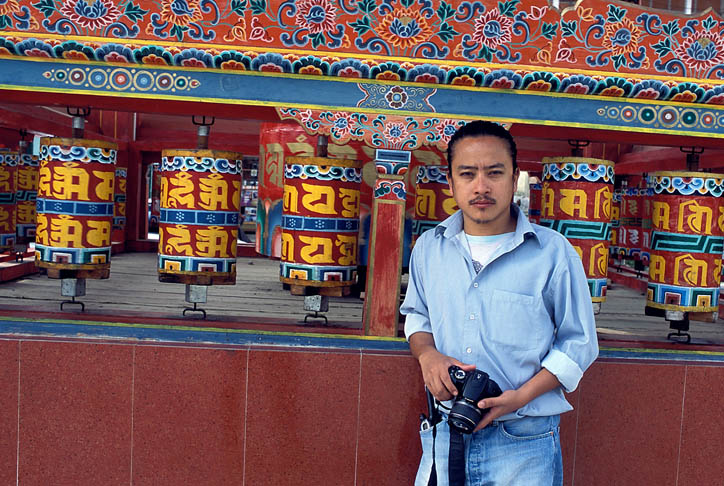
He has reasons to worry. He lives and works in India’s north-eastern Arunachal Pradesh, which an isolated remote and sparsely populated part of the country that is home to 26 major tribal communities,. Each one has its own distinctive dialect, lifestyle, faith, traditional practices and social mores. They live side by side with about 30 smaller communities.

Today, a combination of economic development, improved communications, the exodus of the young and the gradual renunciation of animist beliefs for mainstream religions threatens Arunachal’s colourful traditions. “It is not my place to denounce this change or to counter it,” says Moji. “But, as the older generation holds the last link to the storehouse of indigenous knowledge systems, we are at risk of losing out on an entire value system, and very soon.”

Can anyone capture culture – a dynamic, hugely variable phenomenon – and preserve it in a museum or lab? Not quite. Preserving the communities as a living reservoir of culture is the best method. In addition, modern communication technologies can be used to record the myriad practices and memories – the indigenous knowledge and oral history of a people.

This is just what Moji Riba has been doing for over a decade. He founded and heads the Centre for Cultural Research and Documentation (CCRD) in Naharlagun, Arunachal Pradesh. The non-profit centre, established in 1997, focuses on audio-visual documentation of the folklore, ritual practices and oral histories of the diverse tribes that inhabit the north-eastern states of India and how the indigenous people are adapting to the processes of rapid change.

Moji, who holds a masters degree in mass communication from the prestigious Mass Communication Research Center (MCRC), Jamia Millia Islamia University, New Delhi, could easily have joined the exodus of talent from his state to the metropolitan centres in India. But he chosen to return to his roots with his enhanced skills and expanded worldview.

Over the past decade, he and the centre have made 35 documentaries for television stations and for government and non-governmental agencies. But the centre is more than just an archive or library: it is also a platform offering the tribal people an opportunity to voice their concerns and share experiences.

In 2004, Moji was instrumental in creating the diploma in mass communications at Itanagar’s Rajiv Gandhi University, to augment understanding of cultural values and local customs. He currently divides his time as head of the university’s communications department and running CCRD.

“CCRD has been using documentary films as a tool to document and understand the transitional tribal society and to share that experience through the medium of television,” says Moji. “In these 10 years, we have primarily produced television documentaries on linkages between issues of culture, environment and development and how one cannot be seen in isolation from the other.”

CCRD films have been showcased on Doordarshan, India’s national broadcaster, and various other national and international forums.

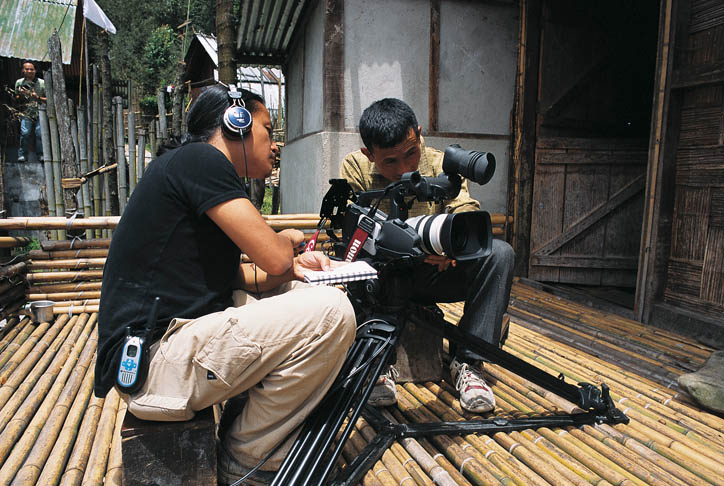
Riba teaches Hage Komo the basic camera skills that will allow the young Apatani to film an interview with his father and an animist priest, thus recording his tribe's oral history (Photo courtesy Rolex Awards)

Years of hard work and quiet persistence are beginning to pay off. Moji has just been selected as an Associate Laureate of Rolex Awards for Enterprise, a prestigious global honour. He is being recognised for ‘helping to preserve and document the rich cultural heritage of India’s Arunachal Pradesh tribes’.

He is among the 10 winners of the 2008 Rolex Awards for Enterprise, which for more than 30 years have supported pioneering work in science and medicine, technology and innovation, exploration and discovery, the environment and cultural heritage.

Read the full profile on Moji and his work on Rolex Awards website

I have known Moji for half a decade, in which time my admiration for him has continued to grow. We first met during a South Asian TV training workshop TVE Asia Pacific organised in Kathmandu in October 2003. Since then, Moji worked with us as a freelance film director and producer. In 2005, he directed Deep Divide, a half-hour, three-country documentary on the state of environmental justice in South Asia. In 2006, he filmed stories for TVEAP series Digita4Change (in Bhutan) and The Greenbelt Reports (in three locations in India).

Moji’s films have drawn the attention of film festivals and reviewers. My friend Darryl D’Monte, one of the most senior journalists in India, wrote in 2006 about one film titled When the Mist is Lifted: “As an insider, he (Moji) is able to draw out the contradiction between old and new lifestyles and practices. In remarks after the screening, he spoke about the difficulties of making films in the northeast, and understandably expressed his reluctance to make another film on Arunachal, which has been his staple over the years.”

rolex-awards-logoWith support from the Rolex Award, Moji and CCRD plan to implement in 2009 the Mountain Eye Project, an unconventional and ambitious initiative that aims to create a cinematic time capsule documenting a year in the life of 15 different ethnic groups. They will select and train young people from each community to do the filming. This gives him access to enough film-makers as well as access to people with an intimate understanding of village life.

According to Moji, the Mountain eye Project is the result of the learnings that have emerged from about a decade’s work on documentation of the folklore and cultural heritage of the tribal groups in northeast India. It seeks to involve local communities in extensively documenting the disappearing cultural practices and traditional knowledge and to build an audio-visual archive of this data.

It also proposes to activate a vast network of outreach activities through museums in order to inculcate in children and youth, an appreciation of traditional heritage and creating respect for cultural diversity.

Watch this space.

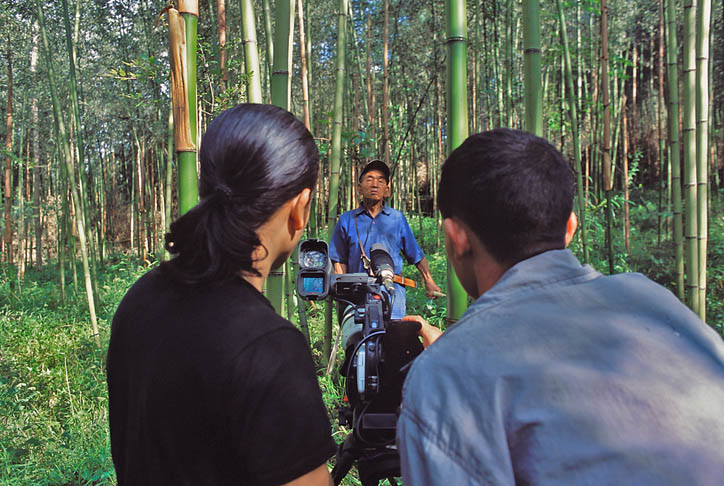
Hage Komo gets video instructions from Moji Riba, who is enlisting local young people to capture the oral histories, languages and rituals of their tribes for his project. Komo films his father gathering bamboo in a grove outside Hari Village. (Photo courtesy Rolex Awards)

Climate change and copyrights: What intellectual property on a dead planet?

Twenty centuries ago, Emperor Nero fiddled while Rome burned. Today, some media companies are squabbling over copyrights while the planet is warming.

This is the main thrust of my latest op ed essay, just published by the Science and Development Network (SciDev.Net) anchored in London, UK. It’s titled: Planet before profit for climate change films.

I have adapted for this commentary some of my ideas initially expressed on this blog – especially the post on 12 Oct 2008: Climate in Crisis and planet in peril – but we’re squabbling over copyrights!

Broadcasting on a warming planet

In writing this essay, I’ve also drawn on the excellent discussions we had last month during the Asia Pacific workshop on Changing Climate and Moving Images in Tokyo.

I’m challenging broadcasters to put their money where their mouth is.

Here’s an excerpt:

“Broadcast mandarins routinely support global struggles against poverty, HIV, corruption and climate change by offering free airtime to carry public interest messages. But few let go of their own products on these very subjects for non-broadcast uses.

“Making climate change a ‘copyright free zone’ for media products would increase the resource materials available to thousands of educators, social activists and trainers struggling to communicate this complex topic to audiences across the world. Moving images would make their task easier.

“The climate crisis challenges everyone to adopt extraordinary measures. Broadcasters and film-makers need to balance their financial interests with planetary survival.

“What use is intellectual property on a dead planet?”

Read my full essay on SciDev.Net: Planet before profit for climate change films.

In September 2006, speaking at the United Nations headquarters (photo below), I called for poverty to be recognised as a copyright free zone. The idea was to have broadcasters and other electronic publishers release copyrights on TV, video and online content relating to poverty and development issues -– at least until (MDG target year of) 2015.

The TV broadcast and film communities have reacted to this proposal with disdain or indifference, but I keep badgering on. If poverty didn’t motivate broadcasters to change business as usual, I hope, the planetary threat posed by climate change would.

2008: A Halloween Year – Prepare to get really scared…

Be scared...very scared!

Today, October 31, Halloween would be observed in several countries of the western world.

One Halloween custom is Trick-or-treating where children move from house to house in costumes, asking for treats such as sweets with the question: “Trick or treat?” The “trick” part of “trick or treat” is an idle threat to play a trick on the homeowners or their property if no treat is given.

2008 has been a highly turbulent year for most parts of the world. Oil and food prices went through the roof (and while oil has come down in recent weeks, food scarcities still loom large). Then came the global economic crisis, triggered by greedy bankers lending recklessly.

In such a year, what would it take to scare people on Halloween night? Or would Halloween be mild compared to the shocks and jolts we’ve been living through for much of the year?

Just when you think it can’t get any worse, it does. My favourite cartoon character Calvin had it figured out years ago:

Aren't you scared yet?

According to some analysts, the global economic crisis that we are living through at the moment just a harbinger of a much more dramatic global ecological collapse to come.

One of them is Patrik Etschmayer, who recently wrote an essay in Nachrichten, Switzerland, titled:
The Wall Street Crisis and the Coming Ecological Disaster”. His main point: the same people that got the world into the present crisis are driving the world over an ecological cliff.

Here’s an extract in translation: “What if this crisis was just a prelude – a precursor to a much greater threat – one that could possibly cost millions of lives? The current economic crises was based on the idea that we can live and consume based on credit – and the belief that we can continue to do so unabated as long as we steadfastly ignore the facts and spread the risks widely enough. That idea didn’t fly. Yet its seems that humanity still seems to believe that the things that have failed in the monetary economy, will, in the long run, still apply to the material reality of our world. Quite simply, because nature will not present us with a bill for the resources upon which we depend for our very survival.”

British journalist George Monbiot made the same point in his weekly environmental column. Writing in The Guardian on 14 Oct 2008, he said:

“As we goggle at the fluttering financial figures, a different set of numbers passes us by. On Friday, Pavan Sukhdev, the Deutsche Bank economist leading a European study on ecosystems, reported that we are losing natural capital worth between $2 trillion and $5 trillion every year, as a result of deforestation alone. The losses incurred so far by the financial sector amount to between $1 trillion and $1.5 trillion. Sukhdev arrived at his figure by estimating the value of the services – such as locking up carbon and providing freshwater – that forests perform, and calculating the cost of either replacing them or living without them. The credit crunch is petty when compared to the nature crunch.

“The two crises have the same cause. In both cases, those who exploit the resource have demanded impossible rates of return and invoked debts that can never be repaid. In both cases we denied the likely consequences. I used to believe that collective denial was peculiar to climate change. Now I know that it’s the first response to every impending dislocation.”

So the Halloween scares could be pretty mild compared to the scares of the real world. As the Hollywood copy writers used to say, we might as well: Get ready to be scared…really scared.

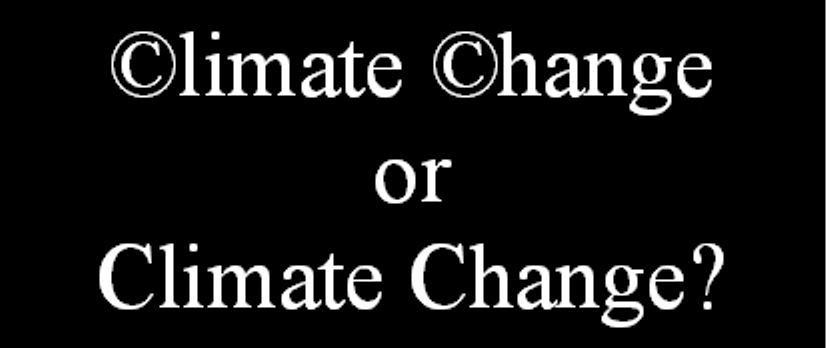
©limate ©hange or climate change? Copyrights on a warming planet

This is the real question!

OK, this is hot off my imaginative mind. I was writing an op ed essay today and turning phrases over in my mind when I came up with this…which neatly sums up what I’ve been saying for a while: confronted with the climate crisis, broadcasters and film-makers need to adopt a more liberal approach to copyrights on their creations.

For discussions on this, see my earlier blog posts:

15 Oct 2008: Standing on Al Gore’s Shoulders: Moving images in the climate debate

13 Oct 2008: ‘Climate Challenge’ marks turning point in Vietnam’s climate concerns

12 Oct 2008: India’s climate change NIMBYsm and middle class apathy

12 Oct 2008: Climate in Crisis and planet in peril – but we’re squabbling over copyrights!

See also these news items appearing on TVE Asia Pacific website:

6 Oct 2008:
Make climate change a ‘copyright free zone’: Asia Pacific TV and film professionals call

4 Oct 2008:
Climate coverage in media needs rational and emotional approaches

Wash Your Hands – yes, UNICEF, but only if you ask us nicely!

Global Handwashing Day logo

October 15 was marked as the first Global Handwashing Day (GHD). It’s simple yet important mission was to promote the practice of handwashing with soap.

Washing hands can save lives. Washing hands with soap can save more lives. This is the simple message reinforced on this day with public campaigns focusing on schools and school children.

In this UN-declared International Year of Sanitation 2008, the GHD will echo and reinforce its call for improved hygiene practices.

GHD is a Unicef-led initiative involving governments, civil society, volunteers and others around the world.

“Turning handwashing with soap before eating and after using the toilet into an ingrained habit could save more lives than any single vaccine or medical intervention, cutting deaths from diarrhea by almost half and deaths from acute respiratory infections by one-quarter,” says the GHD official website, explaining the background.

IYS 2008 logo
IYS 2008 logo
Trying saying that aloud in one breath – I can’t. Evidently, the crusty technocrat who wrote that text wanted to pack all the rationale into one long, clumsy sentence.

But this message is too important to be spoilt by an inarticulate official. Washing hands with soap can prevent diahrroeal diseases and pneumonia, which together kill more than 3.5 million children under five every year. That’s 400 needless deaths every hour, round the clock.

Fortunately, the campaigning material that went out using moving images were better produced. Here are two good examples (and a bad one).

The popular Australian children’s musical entertainers, The Wiggles, produced and donated a song to mark the Global Handwashing Day. This simple and catchy tune “seeks to motivate millions of children around the world, to transform the simple act of handwashing with soap from an abstract and seldom practiced behaviour into an automatic and enjoyable habit”.

Meanwhile, in India, cricket star Sachin Tendulkar joined forces with UNICEF to get Indian children to improve their health and hygiene as part of GHD. Tendulkar features in a public service announcement (PSA) being broadcast this month in 14 languages across India. It will target students in more than 6 million schools.

And finally, here’s Unicef’s own news story posted this week on its YouTube channel telling us more on GHD. It’s technically well made, but absolutely lacks passion. The narrator delivers her script in such an indifferent, detached tone, and UNICEF Senior Adviser for Sanitation and Hygiene pontificates also in a tone that will not win her many followers. Scenes of senior UN officials washing their hands in a demonstration are laughable. The only saving grace in this story is when we see Hayley Westenra, the well known singer from New Zealand and youngest UNICEF Goodwill Ambassador, visiting water and sanitation projects in Ghana.

If only the rest of GHD promoters had the enthusiasm and passion that Hayley Westenra exudes! Passion used to be the hallmark of UNICEF during the time of its legendary executive director James Grant, who strongly believed in communicating messages of child survival and well-being. He gave UNICEF a head start in working with the media, especially television.

Alas, large UN agencies like UNICEF have little or no institutional memory for more than just a few years. Because if they did, GHD campaigns could have effectively used, at least in South Asia (where nearly half of all people lack access to toilets) an episode of the hugely popular Meena cartoon animation series.

Meena is the enchanting heroine of an animated film series produced by UNICEF in South Asia. The films are part of a package of communication materials promoting the status of the girl child in this region. UNICEF co-produced the series a decade ago with leading animators in the US and South Asia.

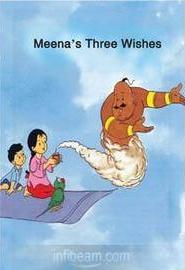
Meena's Three Wishes
In Meena’s Three Wishes, Meena dreams of a magic genie that will grant her three wishes so that everyone would be healthy and never again get sick from poor sanitation and unsafe water. When Meena wakes up, she realizes that she must make her dream come true. With the help of her brother Raju, other children in the village, and Mithu, her pet parrot, Meena convinces people to build and use latrines, to use safe water and to wash their hands to stop the spread of germs and disease.

I don’t particularly enjoy it when UN agencies try to play nanny to the whole world, especially if they talk to us in such jargon-ridden, dispassionate terms. Their messages are tremendously important, and deserve wider dissemination — they can literally save lives.

That’s why public campaigns should be left in the hands of communication professionals who know how to reach out beyond the charmed development circle. For the rest of UNICEF, they should perhaps take a lesson or two in passionate communication from Hayley Westenra, The Wiggles – and their own little Meena!

Standing on Al Gore’s Shoulders: Moving images in the climate debate

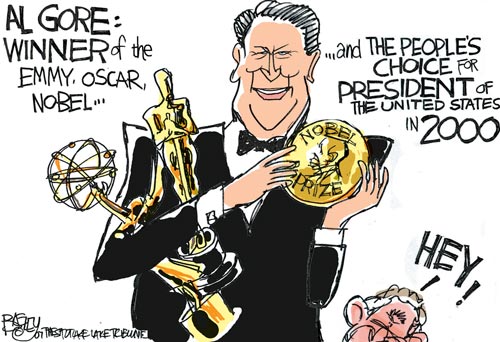
And the winner is...

Al Gore used to have a reputation as a very smart man who was very stiff and aloof especially in his public speaking.

I didn’t notice this the only time I listened to him in person, at an environmental journalists conference at MIT in Boston, Massachusetts, in the Fall of 1995. Perhaps because he was speaking to a group of over 200 journalists, Gore was especially charming. He delivered a well prepared speech passionately, and then took a dozen questions.

I still remember one incident during question time. A Bangladeshi participant lined up to ask him something and started addressing him as ‘Mr President’. Gore smilingly interjected: ‘Not yet!’. The journalist, not the least shaken by his slip of the tongue, said: ‘Well, I hope you will be one day!’.

Well, that day came…and it was not to be. Gore won the popular vote in the 2000 presidential election but lost the presidency in a bizarre series of events that had the rest of the world gasping.

All that sounds so long ago, now that Gore has emerged as the world’s best known climate crusader. There are many who feel that he is more effective in his current role than as a politician.

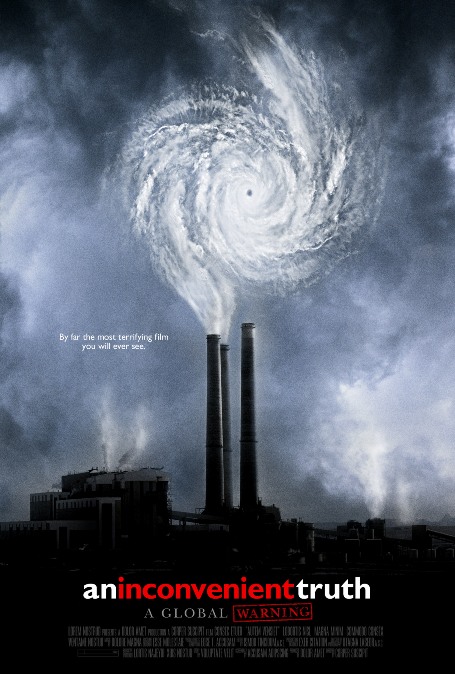
His 2006 film, An Inconvenient Truth, helped move the climate change debate forward in a decisive manner.

Whatever we might think about the film’s artistic and technical merits, I’m glad it has settled one question: can a single film make a difference in tipping public opinion about a matter of global importance?

The answer, where climate change is concerned, is a resounding yes!

For sure, the film arrived at a time when the climate change debate had been going on for nearly two decades. Scientific evidence was mounting for human responsibility for accelerated changes in our climate. Political and business leaders, in denial for years, were finally beginning to take note — perhaps sensing votes or dollars.

Official film poster
Coming in at the time it did — in the Summer of 2006 –- Al Gore’s film tipped the public opinion to agree that climate change was for real and responses were urgently needed.

“It is now clear that we face a deepening global climate crisis that requires us to act boldly, quickly and wisely,” says the former US Vice President introducing his film.

An Inconvenient Truth focuses on Al Gore and his travels in support of his efforts to educate the public about the severity of the climate crisis. Gore says, “I’ve been trying to tell this story for a long time and I feel as if I’ve failed to get the message across.”

The film closely follows a Keynote presentation (dubbed “the slide show”) that Gore presented throughout the world. It intersperses Gore’s exploration of data and predictions regarding climate change and its potential for disaster with Gore’s life story.

An Inconvenient Truth is not a particularly stunning or dramatic documentary. Some have called it a ‘dramatised PowerPoint presentation’ (although Gore actually uses Apple’s Keynote presentation software). There aren’t cuddly animals, deadly chemicals, forest infernos or gory animal hunts that make environmental films appeal to a mass audience.

In fact, it hangs together — and sustains for nearly an hour and a half — due to the sheer star power of Al Gore. And when we take a closer look, we see how hard Gore and his team at Participant Productions have tried to engage audiences.

The film, made on a budget of around US$1 million (modest by Hollywood standards) went on to earn US$49 million at the box office worldwide. As at late 2008, it ranks as the fourth-highest-grossing documentary film in the United States, after Fahrenheit 9/11, March of the Penguins and Sicko.

I first saw An Inconvenient Truth at a cinema in Virginia, USA, while it was still on its initial theatrical release in the Fall of 2006. I reviewed it in early 2007, and recently returned to discussing the film during a presentation I made to our Asia Pacific regional workshop on changing climate and moving images, held in Tokyo in early October 2008.

My thrust was: now that Al Gore and his film have helped turn the climate debate, how can we continue to use moving images in search of solutions? In other words, how do we stand on the shoulders of Al Gore?

Another excellent film on climate change
The Great Warming: Another excellent film on climate change

I looked back at Gore’s film and another excellent Canadian film that came out the same year, The Great Warming. Discussing their merits, I noted how both films appeal as much to our emotions as they do to our rational intellect. “Facts, figures and analysis alone cannot engage a diverse, sometimes sceptical or indifferent audience. That’s why they try a different approach: appealing to the emotions.”

Here are some excerpts from my remarks:

We often see environmental documentaries failing to engage audiences because they pack too much information, or worse, preach too heavily and directly. Some film-makers feel strongly that they must ‘inform and educate’ their viewers at all costs.

To engage people, both are needed
It’s story telling that works best with moving images –- and what better stories to tell than the personalised ones of real people dealing with real world problems and challenges?

With ‘moving images, moving people’ as our slogan, we at TVE Asia Pacific believe in the power of well-made films to reach out to people’s hearts and minds.

Our experience shows that moving images can indeed move people, but only when:
• They are used in the right context;
• They form part of a bigger effort or campaign;
• Audio-visual’s strengths are maximised; and
• Audio-visuals limitations are properly recognised.

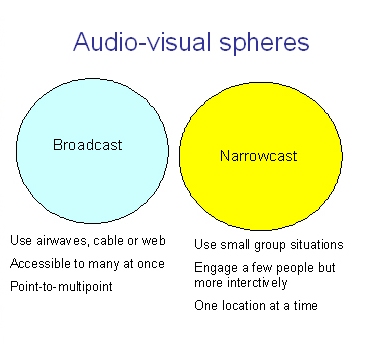
It’s the combination of broadcast and narrowcast spheres that has a better chance of changing people’s attitudes and, ultimately, their behaviour.

Read the full presentation here:
standing-on-al-gores-shoulders-nalaka-gunawardene-speech-in-tokyo-4-oct-20081