Wanted: More courageous little ‘Mack’s to unsettle Yertle Kings of our times!

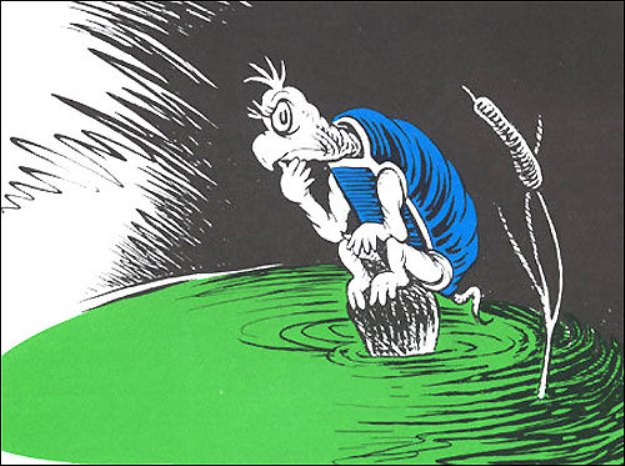
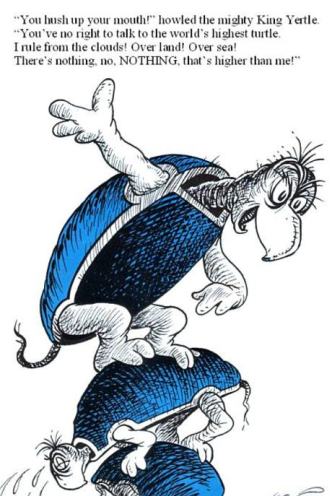
Yertle the Turtle King: My mental image of a despotic ruler!

Related blog post on 7 Feb 2011: Of Dictators and Terrible Cockroaches: A Russian children’s story…from 1925!

January 2011 has been an eventful month for democratic reform in the Middle East. As People Power successfully toppled the deeply entrenched dictator Ben Ali in Tunisia, and the ordinary Egyptians intensified their pressure on own 30-year-long regime of Hosni Mubarak, commentators around the world have been trying to make sense of the rapidly unfolding developments. One of them, David Kravets, writing in Wired linked to a blog post of mine that talked about the experience of one of the earliest successful demonstrations of people power — in the Philippines, when they toppled a long-misruling dictator in 1986.

Amidst all this, and while following the developments on the web, I have been re-reading my Dr Seuss. In particular, the delightfully inspiring tale of Yertle the Turtle King. To me, that is the perfect example of People Power in action — cleverly disguised as children’s verse!

The story was first published in April 1958, in a picture book collection by Theodor Geisel, published under his more commonly-known pseudonym, Dr. Seuss. In 2001, Publishers Weekly listed it at No 125 on a list of the best-selling children’s books of all time.

For those poor Seuss-deprived readers, here’s a helpful summary I have adapted from Wikipedia:

The story is about Yertle the Turtle, the king of the pond in the far-away island of Sala-ma-Sond. Unsatisfied with the stone that serves as his throne, he commands the other turtles to stack themselves beneath him so that he can see further and expand his kingdom (he considers himself the master of all he can see). However, the stacked turtles are in pain. Mack, a very ordinary little turtle at the very bottom of the pile, asks Yertle for a respite, but Yertle just tells him to shut up. Dissent is suppressed.

King Yertle is still not happy: he wants ‘to expand his kingdom’. So he commands more and more turtles to add to his throne. Mack again asks for a respite because the increased weight is now causing extreme pain to the turtles at the bottom. Again Yertle yells at Mack to shut up. At this point, little Mack decides he has had enough and decides to do something to vent his anger and frustration: he just burps. That simple action shakes up the entire stack of turtles, and the mighty king comes crashing down into the pond — and all turtles are freed at last!
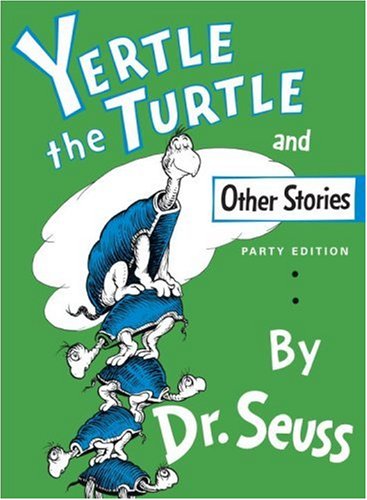
Required reading for all despots?Years ago, when I first read the story to my then very young daughter, I could immediately see strong parallels between the vain, merciless Yertle the turtle king and the equally egotistic megalomaniacs in the world of human politics and governance. I would later learn that Dr Seuss meant Yertle to be Adolf Hitler: the turtle’s rule of the pond and takeover of the surrounding areas signified Hitler’s regime in Germany and invasion of surrounding Europe.

The ordinary but courageous Mack epitomises long-suffering Everyman and Everywoman in all countries where autocratic or dictatorial regimes rule, piling ever more burdens on their people. Like the turtles in the stack, the people can go on for years taking a great deal of suffering and sacrifice while the despots plunder and make merry. But there comes a day when a ‘Mack’ says enough is enough…and emits a humble ‘burp’ that shakes up everyone.

As Dr Seuss wrote (and this is my favourite part!):

But, as Yertle, the Turtle King, lifted his hand
And started to order and give the command,
That plain little turtle below in the stack,
That plain little turtle whose name was just Mack,
Decided he’d taken enough. And he had.
And that plain little lad got a bit mad.
And that plain little Mack did a plain little thing.
He burped!
And his burp shook the throne of the king!

And Yertle the Turtle, the king of the trees,
The king of the air and the birds and the bees,
The king of a house and a cow and a mule…
Well, that was the end of the Turtle King’s rule!
For Yertle, the King of all Sala-ma-Sond,
Fell off his high throne and fell Plunk! in the pond!

And today the great Yertle, that Marvelous he,
Is King of the Mud. That is all he can see.
And the turtles, of course… all the turtles are free
As turtles and, maybe, all creatures should be.

Read the text of Yertle the Turtle King

I don’t mean to oversimplify or belittle the enormous courage and resolve it takes for ordinary people to take on a brutal regime, but as pop-culture metaphors go, it’s hard to find a better one than Mack and his defiant burp. That little burp by a tiny turtle brought a vain king down, and its real-world equivalent is called people power: when long-oppressed ordinary people take to the streets to protest against the accumulated excesses of their rulers, demanding reform or regime change.

Not all such ‘burps’ bring all ‘Yertles’ down in the real world. The mighty Soviet Union crumbled in the late 1980s thanks to the courage and persistence of ordinary people who stood up and stepped out. It also worked twice in the Philippines: first against an outright dictator (Marcos) in 1986, and then against a renegade elected president (Estrada) in 2001. A variation of it happened in Nepal against the brutal King Gyanendra, who was dumped into the dustbin of history with the entire monarchy in 2006. Each case had its own history, dynamics and outcomes but shared the common feat of people power.
Sounds familiar? That's because it's all too common!
But elsewhere, as in Tiananmen Square of China (1989) Burma (2007) and Thailand (2010), people power failed to change regimes and led to much violence and bloodshed. What particular combination of social, political and technological factors make people power work is currently the subject of intense study and debate among scholars, diplomats and activists.

But there’s no doubt that recent history has been shaped and made by Macks who broke the silence and, figuratively speaking, burped. Some such burps were heard around the world, and some Macks went on to lead prolonged revolutions that ended with them becoming rulers themselves: Lech Walesa, Cory Aquino and Valclav Havel come to mind.

For every ‘Mack’ who succeeds, though, there are many who go unsung —or much worse. We still have no idea what happened to that much photographed and celebrated ‘Tank Man’ who stood up against the Red Army’s tanks on Tiananman Square one fateful day in June 1989. We don’t even know his name, but his defiance against such enormous odds still inspires assorted Macks all over the world.

For sure, our world is a tiny bit larger — and more complex — than that muddy pond in far away Sala-ma-Sond. And we have an abundance of Yertles, of various colours and hues, riding literally on the backs of their fellow people.

At least some of these tyrants must be following the recent developments in Tunisia and Egypt with growing anxiety. We can only hope that there will be a steady stream of courageous little ‘Macks’ in all such countries who will finally speak up and say: ‘Oi, Enough is enough!’

And then…BURP!

PS: Interesting footnote: Dr Seuss was the first to use the word “burp” in print. That apparently was cause for some concern before publication. According to him, the publishers at Random House, including the president, had to meet to decide whether or not they could use “burp” because “nobody had ever burped before on the pages of a children’s book”.


See also this interesting poem The Vain King, by American poet Henry Van Dyke (1852 – 1933)

Coping with a warming planet and WikiLeakable world: Common challenges

Time is ticking away...but crises also mean opportunities

I like to think and speak in metaphors, especially visual metaphors. Sometimes I coin or design new ones. This illustration is the latest example.

Individual elements in this came from very different sources (thanks to them all). I just mixed them together to make two points during a talk I just gave at the Colombo University.

We live in a crisis-ridden world where we have to cope with multiple emergencies unfolding at the same time, impacting us on different fronts. This illustration captures three of them: crisis in biodiversity, man-made climate change, and the new reality of living in a rapidly WikiLeakable world — what I called the Global Glass House.

We don’t get to choose the timing, severity or duration of any challenge. But we do have some choice over how we respond: we can despair and grumble (blaming the Gods or karma if we believe in those); we can become really alarmist (a la Chicken Little); or we can be measured and smart in how we deal with the seemingly overwhelming situations.

Speaking at the Leaders in Environmental Advocacy Forum (LEAF) on Preserving the Past, Securing the Future on 22 January 2011 at the University of Colombo, I advocated this last option. I also pulled together a number of ideas mentioned on this blog over the past four years.

LEAF was a two-day summit held in Colombo, Sri Lanka, hosted by members of the Elon University’s Periclean Scholar Class of 2011, in partnership with the University of Colombo, the United States Embassy in Colombo, the National Science Foundation of Sri Lanka and Rainforest Rescue International.

My illustrated talk was titled “Telling Stories to Save Ourselves: Communicating on a Warming Planet” — I revisited an idea originally featured on this blog in mid 2007 (about Arabian Nights and their modern day relevance) and coupled that with a more recent proposal of mine: consider education and communication the third track of plank in humanity’s response to climate change (alongside climate mitigation and adaptation).

In fact, some challenges of living on a warming planet are comparable to coping with a WikiLeakable world: both demand quick adaptation to a new reality. In both cases, governments and society have to change mindset and practices on the go — business as usual is no longer an option. Denialism, or demonising the messenger, won’t take us forward. We need more measured, sometimes even pragmatic responses.

In that process, all-or-nothing is not a viable approach. Waiting for full knowledge and understanding is not feasible either. As I once described it, responding to the planet’s climate and other ecological crisis with partial scientific understanding is akin to many pages of our planet’s ‘operations manual’ being still completely blank — and yet we have to manage the planet to the best of our knowledge, intuition and common sense.

Many of the same principles apply to living in the modern networked info society, where no secrets can be kept that way for too long. The sooner we come to terms with this new reality and adapt, the better.

I’m delighted to see others are addressing these parallels. In my talk, I mentioned a recent essay titled Could climate science become open source? by Brendan Barrett and Sulayman K. Sowe, published earlier this month on the UN University’s Our World 2.0 website.

In their perceptive piece, the authors ask whether climate science would benefit by being more firmly grounded in the principles of openness, perhaps along the lines of the free and open source software communities and open content movements. “The concept of openness behind free and open source software describes a mode of creative knowledge production and sharing in which individuals and communities freely generate and adapt or remix resources (content or software) without licensing restrictions.”

They add: “Proposing a move to a new model of climate science in no way suggests that climate change is not a real and present threat or that we cannot rely on the integrity of our contemporary climate science institutions and scientists. Rather, the argument here is that learning from the way free and open source software projects and communities work may be an important way forward in engendering more effective global, national and local responses to climate change.”

I have always worn multiple ‘hats’, and dabbled in multiple pursuits rather than follow narrow paths of enquiry. I see myself continuing to oscillate between the ‘geeks’ and greens, and where possible, bridging their worlds. It’s really encouraging to see some others straddling the two spheres.

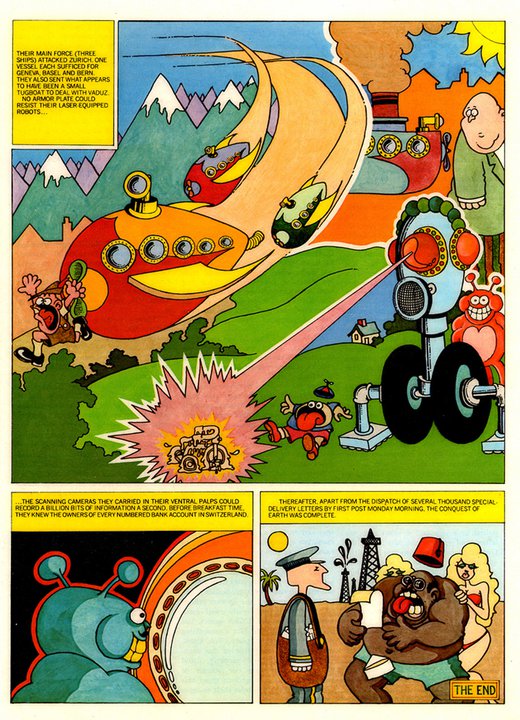
When the Twerms Came: The PLAYBOY Comic Strip is found!

Skip Williamson's Facebook profile photo
Wow, isn’t the Facebook a great place to connect people, ideas and creativity? I never thought much about it, but maybe I ought to spend more time there…

Yesterday, I published a semi-serious essay called WikiLeaks, Swiss Banks and Alien invasions, which was about an obscure short story by Arthur C Clarke describing an unlikely alien invasion of the Earth. For once, the invaders used brain and cunning rather than fire power, and against this onslaught, our planet’s rulers had no defence…

I mentioned how PLAYBOY Magazine had used that story as the basis for a psychedelic comic strip illustrated by the American underground cartoonist Skip Williamson. At the time of writing, I had not been able to locate the comic strip that was published in their issue of May 1972. I wondered: “…it’s either behind a pay-wall, or lies somewhere with little or no indexing by search engines.”

Turns out to be the latter. In less than 24 hours, there was a response from Skip Williamson himself saying the artwork is on his Facebook page, http://www.facebook.com/skip.williamson.

Many thanks to Skip Williamson for posting the link…and while at it, for all his brilliantly cheeky and subversive creations over the years! I hope he doesn’t mind my reproducing the comic strip (all of 2 pages) below:

When the Twerms Came - Comic Strip - Page 1 of 2
When the Twerms Came - Comic Strip page 2 of 2

When the Twerms Came: Arthur C Clarke’s easy guide for aliens to invade Earth?

Why waste all that energy when there are smarter ways? Image courtesy movie 'Independence Day'

It’s time to come clean: I have a fascination with alien invasions of our planet.

As a kid, I was an avid listener of radio (my only electronic medium, as I grew up in a land without television, and in a time before the Internet) — and expected the regular transmissions to be interrupted any moment to break the news of an alien invasion underway. The spoilsports shattered my childhood dreams everyday.

Now slightly older, I keep looking for the perfect moments for that history-shattering event. A widely reproduced op ed essay I wrote in July 2010 opened with these words:

“If you’re an alien planning to invade the Earth, choose July 11. Chances are that our planet will offer little or no resistance. Today, most members of the Earth’s dominant species – the nearly 7 billion humans – will be preoccupied with 22 able-bodied men chasing a little hollow sphere. It’s only a game, really, but what a game: the whole world holds its breath as the ‘titans of kick’ clash in the FIFA World Cup Final…”

The careless aliens didn’t heed my advice, but I live in hope. I keep looking for the strategic moments and smart ways to take over the planet — with as little violence as possible. After all, I’m a peace-loving person (even if I’m unhappy with the planet’s current management).

I’m not alone in this noble quest. Science fiction writers have been at it for decades, and future Earth invaders are well advised to first study these useful instructions masquerading as popular literature. In an op ed essay published today, I highlight one such story by Sir Arthur C Clarke.

Click on this ONLY if you're a prude...
I wrote WikiLeaks, Swiss Banks and Alien invasions with my tongue in my cheek about half the time (go figure!). I’ve been following the WikiLeaks cablegate saga for several weeks, and was intrigued to read that other critically sensitive secrets — that have nothing to do with garrulous American diplomats — were also reaching this online platform for assorted whistle-blowers.

One such story, appearing in the London Observer on 16 January 2011, reported how the Swiss whistleblower Rudolf Elmer plans to hand over offshore banking secrets of the rich and famous to WikiLeaks. That reminded me of an obscure short story that Arthur C Clarke had written more than 40 years ago, which is not as widely known as it should be. This short essay is an attempt to revive interest in it.

I describe how PLAYBOY Magazine used the story as a basis for a psychedelic comic strip illustrated by the American underground cartoonist Skip Williamson. That appeared in their issue for May 1972 — and I’m still trying to locate that story. All in the interests of pop culture, of course.

Read WikiLeaks, Swiss Banks and Alien invasions on Groundviews.org

New Year 2011 is here: The Future isn’t what it used to be!

2011 is here! We’re not ones to be easily affected by a mere landmark in our particular system of chronology, but as watchers of popular culture, we go along with the mood of the moment — if only to blend in with the planet’s natives…

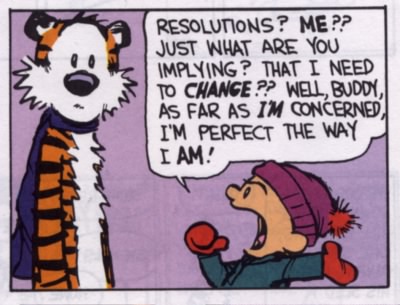
As for our own mind (which is large and contains multitudes), Bill Watterson – the inimitable creator of Calvin and Hobbes – has once again captured my thoughts so well…and so colourfully.

The future isn't what it used to be!

As for resolutions, the only one I have is that I get to write more, and get read more widely. What more can a wordsmith ask for?

Besides, I tend to agree with Calvin when he says here…

Change? Why change?

What were the most iconic images of Asian Tsunami of December 2004?

Every major disaster produces its own iconic images which determine how the collective memory of the world would remember the incident.

In a blog post to mark the sixth anniversary, I quoted photojournalist Shahidul Alam as saying: “The immediacy of an iconic image, its ability to engage with the viewer, its intimacy, the universality of its language, means it is at once a language of the masses, but also the key that can open doors. For both the gatekeepers and the public, the image has a visceral quality that is both raw and delicate. It can move people to laughter and to tears and can touch people at many levels. The iconic image lingers, long after the moment has gone. We are the witnesses of our times and the historians of our ages. We are the collective memories of our communities.”

Looking back six years later, which of the numerous images of the Asian Tsunami of 26 December 2004 have achieved that iconic status? It was one of the most widely photographed disasters of our time — but which handful of images do we remember now, more than 2,000 days later?

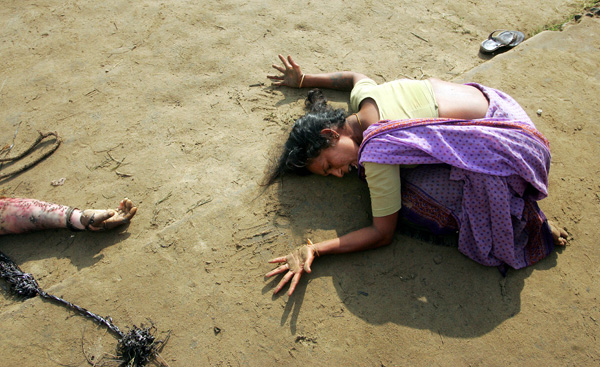
One image that lingers, for its frozen horror and tragedy, is this one taken by Reuters photojournalist Arko Datta in Tamil Nadu, southern India. It later won him the World Press Photo and other international awards.

An Indian woman mourns the death of a relative killed in the Asian tsunami. The picture was taken in Cuddalore, Tamil Nadu, on 28 December 2004 (REUTERS, Arko Datta)

For a mega-disaster that was distributed over a very large area along the Indian Ocean rim, covering a dozen countries in South and Southeast Asia, there must be more iconic images — either globally or nationally. What image/s do YOU remember the December 2004 Tsunami by?

It doesn’t matter if they the image was taken by a professional photographer (i.e. one who is paid to do that job) or a holiday maker or a local resident…as long as it was widely shared and has entered our collective consciousness. Please nominate your images with links, which we will display here.

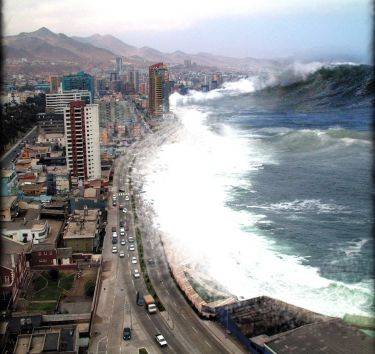
This photo is a fake!
Note: Beware of fake tsunami images that are in circulation, which some people are peddling either knowingly or unknowingly. One of them — allegedly the waves hitting Phuket in Thailand — is exposed at Urban Legends as digitally imagined fantasy. Another set of images is real enough — but have nothing to do with the tsunami. These show people running away from an oncoming burst of water, seemingly a big wave. They are of a TIDAL BORE, not a tsunami, taken in October 2002 at the Qiantang Jian River in Hangzhou, Zhejiang, China — an area known for tidal bores.

Capturing Nature’s Fury: Revisiting Asian Tsunami memories through photographs

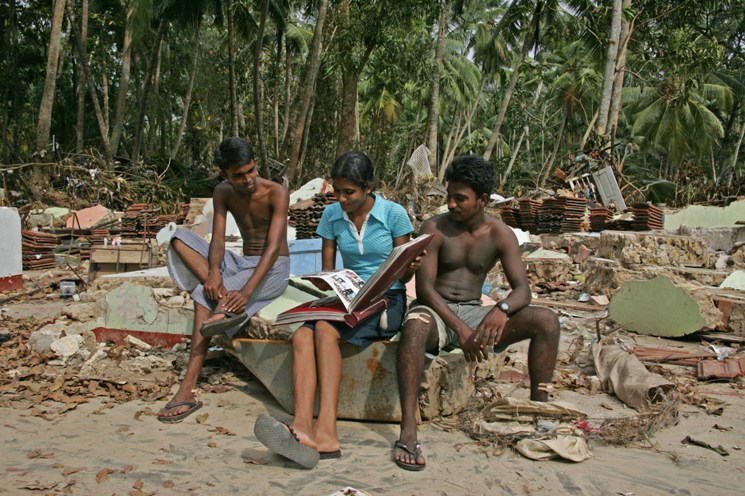
Tsunami survivors look at an lbum of family photos in Telwatte, Sri Lanka - Photo by Shahidul Alam

Today marks the 6th anniversary of the Boxing Day Tsunami of December 2004. The occasion is being marked solemnly in many locations hit by the waves all along the Indian Ocean rim countries.

Among them is Peraliya, close to Telwatte, where the worst train crash in railroad history occurred that day — when an overcrowded passenger train was destroyed on a coastal railway in Sri Lanka by the tsunami. The government-owned Sri Lanka Railways will never be able to live down their day of infamy when a packed train headed to disaster with no warning… They have the gumption — and insensitivity — to operate a memorial train today along the same path that led more than 2,000 passengers to a watery grave six years ago.

After six years, most survivors have moved on and rebuilt their shattered lives. Memories are also beginning to fade a bit, but for those directly affected, they will remember 26 December 2004 for the rest of their lives. And we who shared their tragedy and misery will keep reliving the memories through photographs, videos and the growing body of creative writing that the region-wide disaster inspired.

Photographs stand out as possibly the most enduring memory aids of a disaster. As disaster survivors sift through what is left of their homes, family photo albums are among the most cherished possessions they seek to recover. Why are snapshots of frozen moments so powerfully evocative to individuals, communities and the world?

I posed this question in the introductory blurb I wrote for my friend Shahidul Alam‘s chapter on disasters and photography in our 2007 book, Communicating Disasters: An Asia Pacific Resource Book.

Titled Capturing Nature’s Fury, the chapter drew on Shahidul’s experiences not only with the tsunami, which he covered in Sri Lanka, but also the earthquakes in Bam, Iran (December 2003) and Kashmir (October 2005), and cyclones and floods in his native Bangladesh.

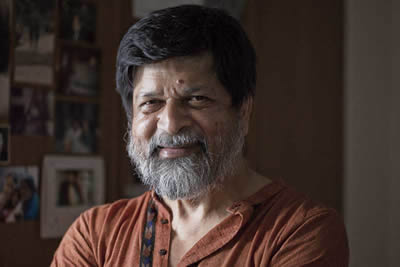
Shahidul Alam. Photo: Rahnuma Ahmed/Drik/Majority World
Describing the circumstances of the above photo, Shahidul wrote: “In the ruins of Telwatte, where the fateful train disaster had taken place, I came across a family that had gathered in the wreckage of their home. I wanted to ask them their stories, find out what they had seen, but stopped when I saw them pick up the family album. They sat amidst the rubble and laughed as they turned page after page.”

Zooming out, he further reflected:

“I had seen it before. As people rummaged through the ruins of their homes, the first thing they searched for was photographs. Years earlier at a disaster closer to home, I had photographed a group of children amidst the floods of 1988. The children insisted on being photographed. As I pressed the shutter, I realised that the boy in the middle was blind. He would never see the photograph he was proudly posing for. Why was it so important for the blind boy to be photographed?

“Though my entry into photography had been through a happy accident, my choice of becoming a photographer had been a very conscious one. Having felt the power of the image I recognised its ability to move people. The immediacy of an iconic image, its ability to engage with the viewer, its intimacy, the universality of its language, means it is at once a language of the masses, but also the key that can open doors.

“For both the gatekeepers and the public, the image has a visceral quality that is both raw and delicate. It can move people to laughter and to tears and can touch people at many levels. The iconic image lingers, long after the moment has gone. We are the witnesses of our times and the historians of our ages. We are the collective memories of our communities.

“For that blind boy in Bangladesh and for the many who face human suffering but may otherwise be forgotten, the photograph prevents them from being reduced to numbers. It brings back humanity in our lives.”

Read the full chapter: Capturing Nature’s Fury, by Shahidul Alam


Photographer Chuli de Silva’s memories of the Tsunami, recalled six years later

Dec 2007: Asian Tsunami: A moving moment frozen in time

Anand Patwardhan: Film maker as perennial trouble-maker

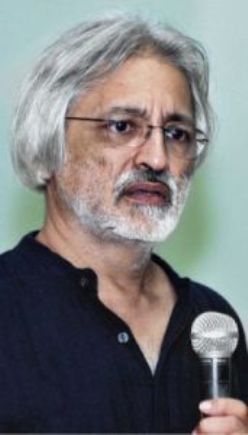
Anand Patwardhan

Anand Patwardhan is one of India’s best known and most outspoken documentary film makers. He has been making political documentaries for over three decades, pursuing diverse and controversial issues that are at the crux of social and political life in India. He epitomises the activist film maker and has inspired a generation of socially sensitive film makers.

In the world’s largest democracy that is India, and in a country with a vibrant and diverse media that is considered to be among the most free in the developing world, Anand has constantly run into problems getting his films seen on broadcast television. Many of his films were at one time or another banned by state television channels in India and became the subject of litigation by Anand, who successfully challenged the censorship rulings in court.

As his website notes, several of his films have also incurred the wrath of right wing fundamanentalists both in India and abroad. “In keeping with the uneven nature of India’s democratic institutions and its sharply divided polity, bouquets have been accompanied by brickbats.”

I came across a good interview with Anand Patwardhan in the Indian current affairs magazine Frontline, issue for 4 – 17 December 2010. Here are two questions concerning the censorship problems he has often faced:

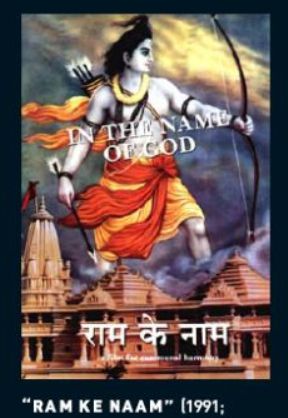
Ram Ke Naam (In the Name of God), 1991
Q: You have had problems getting clearance from the Central Board of Film Certification for almost all your films, and then later they were not allowed to be screened on Doordarshan. Your films are also not screened on private channels. How do you see this constant struggle with these forms of censorship?

A: Right from the first film, I faced censorship in some form or the other. Even the Janata Party after it came to power refused to screen Waves of Revolution though it was against the Emergency. L.K. Advani was the Information and Broadcasting Minister then. I had added an epilogue which said that the janata raj [people’s rule] that the film spoke about was not the same as [that of] the Janata Party now in power. I also drew attention to the political prisoners still being held in jail. Finally, after media pressure built up, the film was screened on Doordarshan.

Prisoners of Conscience also got into trouble with the censor board, and it took a letter from Satyajit Ray to the government saying that they must not stop a film like this to get the required clearance.

Ram Ke Naam followed the rath yatra of Advani and the violence in Ayodhya on October 30, 1990, when the Babri Mosque was attacked for the first time. It was meant to be a warning to the nation about the rise of Hindutva fundamentalism. I had trouble with the censors initially, but it finally got through in 1992 and then I had trouble with Doordarshan, which refused to show it. Finally, after the film won a national award for Best Investigative Documentary, I was able to go to court and argue that the government cannot give me a national award and yet say that I cannot show the film on Doordarshan, which it had been doing systematically. In fact, whenever any film of mine won a national award, I used it to go to court. I argued that not showing such a film on national TV was a denial of my right to freedom of expression and of the viewers’ right to information.

On these grounds I have won seven cases till now – five in the High Courts and two in the Supreme Court after the government went in appeal. Ram Ke Naam was finally shown on Doordarshan in 1997. The judge ordered that the film should be telecast at prime time.

Stills from Anand Patwardhan (courtesy his website)

Q: Why have you not approached private channels to screen your films?

A: The private media, including television, are not about giving people information. They are run by corporates more interested in providing entertainment. Their news and analysis are restricted to five and 10 second [sound] bites. Their clear mandate is commercial. They will ask, “Where are the advertisers who will endorse your product? Who is going to give the money to show this? Are we going to waste one and a half hours of TV time on issues?”

I have also discovered that even in the private domain there is political censorship. A few days before the Allahabad High Court verdict on [the] Ayodhya [title suit] was due, a private channel approached me to screen Ram Ke Naam. They paid me for three broadcasts but stopped after showing the film just once despite extremely positive feedback from viewers. On inquiring, I was told that the channel was pressured not to show the film by both the Information and Broadcasting Ministry and the TV Broadcasters’ Association. Anyone who watches Ram Ke Naam will realise that this censorship was done to protect the interests of unscrupulous politicians who had used the emotive appeal of Ram for financial and political gain.

The situation today is such that you cannot pinpoint where the censorship is coming from. During the Emergency you at least knew who the enemy was. But now what do you do when every wing of society – whether it’s the legal system, and so on – is complicit in a blanket suppression of facts.

Read the full interview in Frontline magazine, issue for 4 – 17 December 2010

Read TVE Asia Pacific profile and interview with Ananda Patwardhan in 2002

Exploring our crowded planet, One Square Mile at a time…

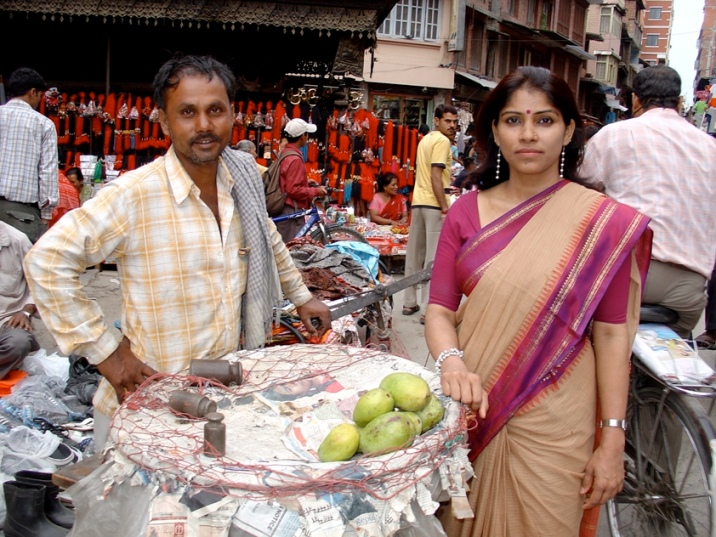
Vasanthi Hariprakash exploring One Square Mile in Kathmandu, Nepal

It’s funny how, more than a generation after most of the world adopted the metric system of measurements, relics of the earlier, ‘imperial’ units still linger in our language and popular culture.

Frequent flyers stlll accumulate air-miles, not kilometres. Disaster managers grapple with the challenges of communicating credible early warnings on that the crucial ‘last mile’ (it’s not yet the ‘last kilometre’). And many among us, including those who have grown up in a metric world, can better grasp a square mile than a square kilometre.

One Square Mile is also the name of an interesting new TV series produced by One Planet Pictures of the UK, and first airing this month on BBC World News. In this series, reporters visit a neighbourhood in different parts of the developing world and try and find out what the residents’ hopes and aspirations

Says its producer Robert Lamb: “One Square Mile is an experiment. So much in television is set up. In this series our reporters explore a small patch of a city with the aim of providing the viewer with an authentic slice of life.”

According to Robert, One Square Mile takes the lid off a neighbourhood. Reporters wander around a marked out section of a town and city and talk to the people they meet to find out what their everyday concerns are.

Of this months shows, two are presented by Zeinab Badawi . In one, she goes walkabout in Juba, capital of south Sudan which is on the verge of becoming an independent state. In the other, Badawi encounters murder on the streets in Guatemala City.

The other two are presented by my friend Vasanthi Hariprakash, whose day job is with India’s leading TV news network NDTV. These two are of particular interest to me as she travels to countries in Asia that are closer to me in distance and closer to my heart.

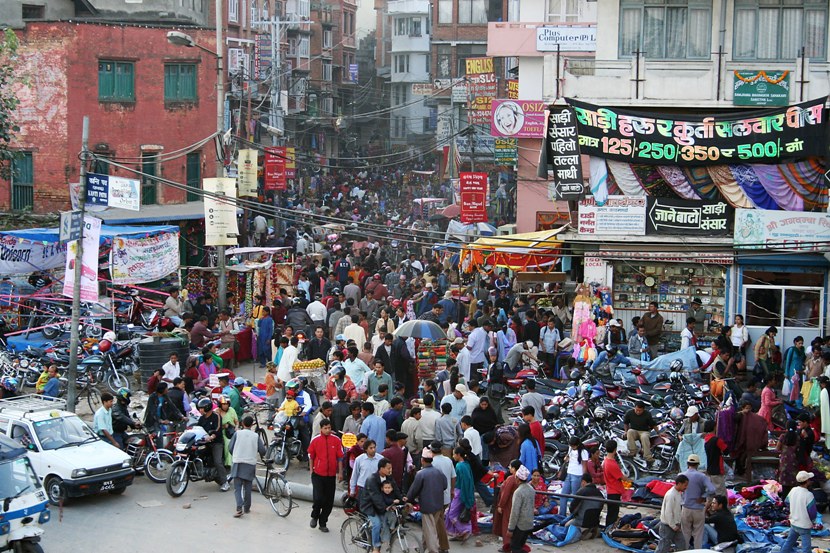
In one show, Vasanthi travels to Kathmandu, the capital of Nepal. The blurb says: “Despite a recent record of political instability that has seen a monarchy overthrown and an uneasy peace struck with the Maoist insurgents, reporter Vasanthi Hariprakash finds a city population surprisingly upbeat. But a long dawn queue outside the passport office tells a different story – young Nepali men are desperate to get out to find work in the Gulf and Southeast Asia.”

I’m familiar with that city having made multiple visits since 1995, and have shared the pains and anxieties of my Nepali friends as they went through political turmoil and a bloody insurgency. I saluted them when their ‘people power’ got rid of the despotic king in 2006.

Vasanthi did remarkably well in presenting her first-time appearance on a BBC-broadcast show. She came across as informed, eager and empathetic to the people and place she was exploring. Not once did I notice a hint of cynicism or condescension in her voice. This is quite in contrast to regular BBC reporters, many of who are far too judgemental and dismissive than good journalists should ever be. We can only hope vasanthi never aspires to those despicable professional levels…

Amidst political intrigue and uncertainties, life goes on in Kathmandu...

In her second show, Vasanthi travels to a small village in Laos next to the old Ho Chi Minh trail where the dominant concern is unexploded cluster bombs from the Vietnam war. The synopsis reads: “From the capital Vientiane it takes 10 hours for reporter Vasanthi Hariprakash to reach her square mile – a village next to the old Ho Chi Minh trail. Today it’s a peaceful highway for enterprising Vietnamese traders but during the war it was a target for the B 52 bombers with their deadly cargo of cluster bombs. 40% are live – called UXOs – Unexploded Ordinance – and Hariprakesh finds the villagers’ poverty leaves them no choice but to run the gauntlet of the unexploded munitions as they work in their paddy fields.”

This reminds me of a short film I saw in Cambodia many years ago about a poor, rural community who faced a similar dilemma living and working in a countryside littered with unknown and unexploded landmines. The Cold War conflicts in Southeast Asia may have ended decades ago, but local people still live in the shadow of their deadly legacies…

I can’t wait for more real-life stories in One Square Mile, and I hope Robert Lamb will send out his intrepid and charming reporters to far corners of the real world where real people are taking on life’s many challenges 24/7. These people’s resilience and resourcefulness inspire us all.

And that’s what good television is all about. Moving images, moving us all!

Ray Wijewardene: Finally free to roam the skies forever…

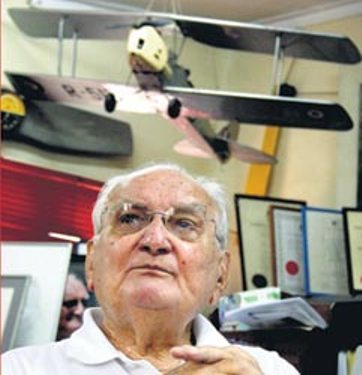
Ray Wijewardene: Freed from gravity, at last!
I went straight from a paddy field, where I was filming much of the morning, to the funeral of my mentor and friend Ray Wijewardene early afternoon at the General Cemetery Colombo.

Ray would have approved: despite being a high flyer in every sense of that phrase, he had his feet firmly on the ground — and sometimes in the mud. He was fond of saying, “Agriculture is my bread and butter, while aviation is the jam on top of it”.

Dr Philip Revatha (Ray) Wijewardene, who passed away on August 18 aged 86, was an accomplished engineer, aviator, inventor, Olympian and a public intellectual of the highest calibre. He was also one of the most practical and down to earth people I’ve known.

He preferred to introduce himself as a farmer and mechanic ‘who still got his hands dirty’. Perhaps that’s how he wanted to be remembered — but each one of us will carry our own vivid memories of this colourful, jovial and altogether remarkable human being.

I’ve already written a quick introduction about Ray for Groundviews.org, which has published a long interview I did with Ray 15 years ago, originally for an Indian science magazine. That exchange is a reminder of the imaginative thinker, life-long experimenter and outspoken scientist that Ray always was.

Read Who Speaks for Small Farmers, Earthworms and Cow Dung? The late Ray Wijewardene in conversation with Nalaka Gunawardene

Story behind the story explained in later blog post: Ray Wijewardene: Passionate voice for small farmers and earthworms

I’ll be writing more about Ray Wijewardene in the coming weeks, exploring his many different facets. I’ve known and walked alongside him for almost a quarter century. For now, I’ll remember him for one facet that I didn’t share despite many offers and invitations: flying.

per ardua ad astra...
Ray just loved to fly. Most humans share this age old dream, but Ray wasn’t contented just being flown around on commercial jets — which to him were merely large, sealed up cylinders. He far preferred the small, propeller-driven aircraft – single or twin seaters that gave their passengers a true sense flying and a real taste of the sky.

Looking back, it was quite apt that I first met Ray at the Ratmalana Airport, just south of Colombo, from where he took off and landed hundreds of times over the decades. One sunny morning in mid 1986, he took time off from his flying to talk to a group of high school leavers who were participating in the first Science for Youth programme. It exposed us to various (then) modern technologies over six consecutive weekends. Much of the knowledge we gained has long been obsolete, but its inspirational value was timeless….and continues to propel me forward.

Much of that inspiration came from Ray Wijewardene, who talked to us – with lots of practical demonstrations – about problem solving and innovations in three areas close to his heart: energy, agriculture and transport. I remember how he was experimenting with improvements to the humble bicycle at the time, so that riders could optimise performance with modest efforts.

He also talked about growing our food and energy. But it was his flying experience that most fascinated us starry-eyed youngsters. As a pilot, Ray was licensed to fly three kinds of flying machines: fixed-wing aircraft, helicopters and autogyros. But this pilot was flying not only factory-fitted, mass-manufactured units. He also experimented with building and flying his own ultra-light aircraft and helicopters – he was particularly interested in building amphibious small planes that could land on, and take off from, Sri Lanka’s numerous inland lakes and reservoirs.

All this and more made Ray a journalist’s dream, but as I soon found out, he wasn’t an easy subject to cover! In 1988, The Island newspaper asked me to interview Ray and write an article about the dream and reality of flying. He happily talked with me for two hours — yet, in the end, didn’t want his name mentioned in print. For all his accomplishments and outspoken views, Ray was completely publicity shy. He didn’t mind his views being reported, but with little or no mention of the source.

It’s the song that matters, not the singer, he said — and I heartily disagreed. I pointed out that we journalists needed to attribute wherever possible for greater credibility of what we write (I didn’t tell him that we also love good news-makers: the more informed and opinionated they are, the better!). This became a running argument that Ray and I had for two decades. Within a few years, he trusted me enough to talk to me on the record. But what he said off the record was always more interesting…

When he was approaching 75, Ray told me how nervous he was when he had to go for renewals of his pilot’s license. In the end, it wasn’t age that ended his flying career: along with everyone else, he was ‘grounded’ when private flying was first restricted and then banned during the latter years of Sri Lanka’s long-drawn war.

During the 1990s, Ray had repeatedly invited me to share a flight on one of his home-built light planes. He assured me they were perfectly safe — among satisfied customers was Prof Cyril Ponnamperuma, one time science advisor to the President of Sri Lanka and an internationally renowned biochemist. (Ray did acknowledge that he’d crash landed his various planes thrice — and each time, he lived to tell the tale. He believed that test flying one’s own aircraft designs quickly eliminated bad designers!)

I kept deferring my own tryst with the open skies and was too preoccupied with earthly matters — and suddenly, it was too late. By the time Sri Lanka’s war ended in May 2009, Ray’s flying days were over (and our skies are not yet fully free for private domestic aviation).

Gravity, bureaucracy and age may have conspired to keep Ray confined to the ground in the last few years of his life — but only just. His spirit soared even when the body wasn’t allowed to: in all my years and encounters with him, I’ve never seen him ‘down’ (concerned and reflective, yes; depressed, no).

A lone spirit, on a long journey....
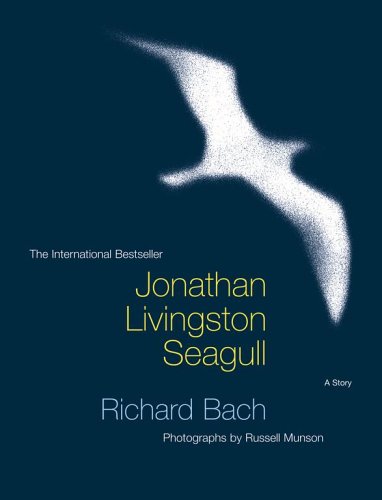
That passion, enthusiasm and spirit of adventure characterised Ray and influenced everything he did, on the ground and in the air. Born in the 1920s and raised as part of the first generation of humans for whom private flying was available, he was infected with the ‘flying bug’ in the same way that American author and aviator Richard Bach was. In fact, Ray knew Bach and was a devoted fan of the latter’s books, especially Jonathan Livingston Seagull.

Perhaps Ray saw himself in Jonathan: a seagull tired of the monotonous life in his clan. He rather experiments with new – always more daring – flying techniques…which means he must fly solo most of the time, and confront the travails of life on his own.

Ray wasn’t a loner (to the contrary, he was very much a team player in everything he did). But sometimes he was racing ahead of us – or just flying at a higher altitude. Although I’ve never heard him say it, perhaps this unattributed quote partly explains the phenomenon: “When once you have tasted flight, you will forever walk the earth with your eyes turned skyward, for there you have been, and there you will always long to return.”

What Ray did quote, frequently, were these words of Robert Browning: “Ah, but a man’s reach should exceed his grasp, or what’s a heaven for?”

It was entirely fitting that a grand daughter would recite the poem ‘High Flight’ by John Gillespie Magee, Jr., a favourite verse among aviators and, more recently, astronauts.

High Flight
by John Gillespie Magee, Jr.

Oh! I have slipped the surly bonds of Earth
And danced the skies on laughter-silvered wings;
Sunward I’ve climbed, and joined the tumbling mirth
of sun-split clouds, — and done a hundred things
You have not dreamed of—wheeled and soared and swung
High in the sunlit silence. Hov’ring there,
I’ve chased the shouting wind along, and flung
My eager craft through footless halls of air….

Up, up the long, delirious, burning blue
I’ve topped the wind-swept heights with easy grace
Where never lark nor even eagle flew—
And, while with silent lifting mind I’ve trod
The high untrespassed sanctity of space,
Put out my hand, and touched the face of God.

On returning from the simple yet moving funeral, I tweeted:
No longer a prisoner of gravity: sky-lover, pilot & light aircraft builder Ray Wijewardene blasted off heavenwards. Farewell, high flyer!


20 Aug 2010: A Lankan pilot’s tribute to his mentor: Happy Landings, Sir! by Suren Ratwatte