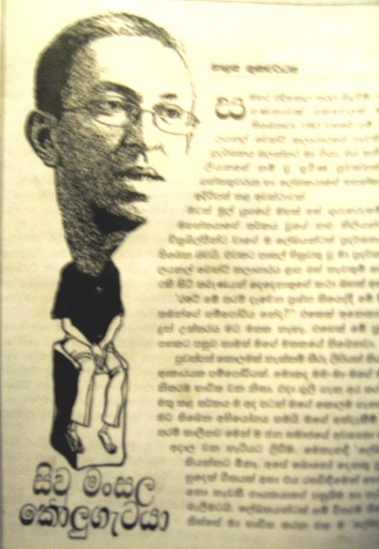
සිවුමංසල කොලූගැටයා #41: ඉන්ටර්නෙට්වලට කවුද බය?

This is the Sinhala text of my weekly column in Ravaya newspaper of 20 Nov 2011. This week, I continue our discussion on Internet freedom: what can – and must – be regulated online, and how regulation is fundamentally different from control and censorship. I insist that conceptual clarity is as important as technical understanding of how the Internet works.

Similar grounds was covered in two blog posts:
April 2007: Press Freedom in the Digital Age – Seeing beyond our noses and tummies
May 2008: Who is afraid of Citizen Journalists? Thoughts on World Press Freedom Day

The web is (largely) free for now...but for how long? Assorted babus are out to cage it!

දස වසරක් කියන්නේ මානව ඉතිහාසයට කෙටි කාල පරාසයක්. එහෙත් මානවයකුගේ ජීවිතයේ සැළකිය යුතු කාල වකවානුවක්. නව සන්නිවේදන තාක‍ෂණයන් පැත්තෙන් බැලූවොත් දිගු කාලයක්. ඉන්ටර්නෙට් මාධ්‍යයේ එක් වසරක් තුළ සාමාන්‍ය ලෝකයේ වසර ගණනාවක තරම් පරිනාමයක් සිදු වනවා. මේ පරිනාමීය සීඝ්‍රතාව හා එයින් මාධ්‍ය ලෝකයට හා සමස්ත ජන සමාජයට ඇති වන බලපෑම් ගැන අවධියෙන් සිටීම වැදගත්.

දස වසකට පෙරල 2001 ලෝක මාධ්‍ය නිදහස් සමරු දිනය (මැයි 3) සමරන්නට කර්තෘ මණ්ඩල සංසදය හා මාධ්‍යවේදීන්ගේ සංවිධාන ගණනාවක් එක්ව කොළඹ බණ්ඩාරනායක සම්මන්ත්‍රණ ශාලාවේ පැවැත් වූ රැස්වීමේ කථීකයකු ලෙස මටත් ඇරැයුම් කළා. සංවිධායකයන් මගෙන් ඉල්ලා සිටියේ නව සන්නිවේදන තාක‍ෂණයන් මාධ්‍ය නිදහසට දායක වන සැටි ගැන කථා කරන්නයි.

එවකට ජංගම දුරකථන භාවිතය ඇරඹී වසර 12ක් හා වාණිජ මට්ටමෙන් ඉන්ටර්නෙට් ලංකාවට හදුන්වා දී වසර 6ක් ගත වී තිබුණා. නමුත් ජංගම දුරකථනවල වටිනාකම හදුනා ගත්ත ද මාධ්‍ය ආයතන ඉන්ටර්නෙට් ගැන හරිහැටි අවබෝධයක් ලබා තිබුණේ නැහැ. ගෝලීය ප්‍රවණතා හා ආසියා කලාපීය අත්දැකීම් හුවා දක්වමින් මා තර්ක කළේ එළඹෙන වසරවල මාධ්‍ය නිදහසට හා තොරතුරු ගලනයට විප්ලවීය දායකත්වයක් ඉන්ටර්නෙට් හරහා ලැඛෙන බවයි. ඉන්ටර්නෙට් ප්‍රගමනය මාධ්‍යවේදීන්ට ප්‍රයෝජනවත් වන අතර එයින් නව අභියෝග ද මතු කරන සැටි මා පෙන්වා දුන්නා.

මගේ කරුණු දැක්වීම මෙරට මාධ්‍යවේදීන්ට අදාල නොවන ‘බටහිර’ සංකල්පයක් බවට ප්‍රබල තර්කයක් සභාවෙන් මතුව ආවා. මාධ්‍යවේදීන් හා කතුවරුන් බහුතරයක් නිහඩව සිටිද්දී සුළුතරයක් පුන පුනා කියා සිටියේ රජය හා මාධ්‍ය හිමිකරුවන්ගෙන් විවිධාකාර හිරිහැර විදින අපේ මාධ්‍යවේදීන්ට ‘ඔය ඉන්ටර්නෙට් විලාසිතාවලට කාලයක් නැති’ බවයි. එක් පසෙකින් මරණීය තර්ජනවලට මුහුණ දෙමින්, තවත් පසෙකින් අඩු වැටුප් හා අවම පහසුකම් යටතේ වැඩ කරමින් සිටින බහුතරයක් මාධ්‍යවේදීන්ට ඉන්ටර්නෙට් ගැන කථා කිරීම ම ඔවුන්ට අවමන් කිරීමක් බවට එක් තරුණ මාධ්‍ය සගයෙක් කියා සිටියා!

ඔවුන්ගේ සංදේහවාදය (scepticism) අගය කරමින් මා ඉල්ලා සිටියේ මාධ්‍ය නිදහස සදහා අරගල කරද්දී අද ගැන පමණක් නොව හෙට ගැන ද අවධානය යොමු කරන ලෙසයි. ඉන්ටර්නෙට් පෙරටු කරගත් නව සන්නිවේදන තාක‍ෂණයන්ගේ සිඝ්‍ර ව්‍යාප්තිය සමග සාම්ප්‍රදායිකව තොරතුරු ගලනය පාලනය කරන්නට රාජ්‍යයන්, සමාගම් හා වෙනත් බලාධිකාරයන් යොදා ගත් උපක්‍රම තව දුරටත් සාර්ථක නොවනු ඇතැයි මා අනාවැකි පළ කළා. එහෙත් ඒ තොරතුරු ප්‍රවාහය උත්සන්න වීමත් සමග තොරතුරු ජනනය හා ගලනය කරවන මාධ්‍යවේදීන් හා අනෙකුත් විද්වතුන්ට අළුත් වගකීම් සමුදායක් බිහි වන බවත්, තොරතුරු ප්‍රවාහයට වේලි බැදීමේ නව උපක්‍රම බලාධිකාරීන් සොයා ගනු ඇති බවත් මා තව දුරටත් කියා සිටියා.

එදා ආවේගශීලීව මා සමග තර්ක කළ තරුණ මාධ්‍යවේදීන් වසර පහක් යන්නට පෙර තමන්ගේ ම ප්‍රවෘත්ති හෝ මතවාදී වෙබ් අඩවි ඇරඹීම දෙස මා බලා සිටියේ උපේක‍ෂා සහගතවයි. එමෙන් ම දස වසක ඇවෑමෙන් ඉන්ටර්නෙට්, මාධ්‍ය නිදහස හා මාධ්‍ය සදාචාරය ගැන මා එදා කී ලෙසින් ම සංවාදයක් ඇති වී තිඛෙන ආකාරය මා දකින්නේ ද මහත් ඕනෑකමින්.

සරසවි ඇදුරන්ට සීමා වූ ඉන්ටර්නෙට් භාවිතයක් 1990 සිට මෙරට ක්‍රියාත්මක වූවත් වාණිජ මට්ටමෙන් ඕනෑ ම කෙනකුට මුදල් ගෙවා ලබාගත හැකි ඉන්ටර්නෙට් සේවා ඇරඹුණේ 1995 අප්‍රේල් මාසයේ. 1995 සැප්තැම්බර්යේ ලේක්හවුස් ඉංග්‍රීසි පුවත්පත්වල වෙබ් අඩවි ඇරඹීමත් සමග මෙරට මාධ්‍ය ටිකෙන් ටික ඉන්ටර්නෙට් වෙත ප්‍රවේශ වුණා.

මේ වන විට මෙරට ජනගහනයෙන් අඩු තරමින් සියයට 10ක් (ලක‍ෂ 20 ක් දෙනා) නිතිපතා ඉන්ටර්නෙට් පරිශීලනය කරනවා. (ඉන්ටර්නෙට් ගිණුම් සංඛ්‍යාව මීට අඩුයි. ඇතැම් දෙනා හවුලේ භාවිත කරන ගිණුම් රැසක් තිඛෙනවා.) සෘජුව භාවිත කරන ජන සංඛ්‍යාවට අමතරව එම මාධ්‍යයේ බලපෑම වක්‍රව ලබන තවත් ජන පිරිසක් ද සිටිනවා.

අද වන විට ඉතා විශාල තොරතුරු සමුදායක් නිතිපතා ඉන්ටර්නෙට් හරහා හුවමාරු වනවා. එය විවිධ මට්ටම්වල සිදු වනවා. පුද්ගලයන් හෝ ආයතන අතර පෞද්ගලිකව සිදුවන හුවමාරු තිඛෙනවා. (email, Skype, Facebook කථා බහ ආදිය). මේවා සෙසු අයට විවෘත නැහැ. ඇතැම් වෙබ් අඩවි ද මුරපදයක් (password) යොදා අවසර ගෙන ඇතුල් විය යුතු ආකාරයේ ඒවායි. සමහර මාධ්‍ය ආයතනවල වෙබ් අඩවි මේ ගණයට අයිතියි.

එසේ නොමැතිව ඕනෑ ම කෙනෙකුට නොමිළයේ පිවිසීමට හැකි වෙබ් අඩවි අති විශාල සංඛ්‍යාවක් තිඛෙනවා. ඒවා තුළ ප්‍රවෘත්ති, මතවාද, ඡායාරූප, කාටුන් රේඩියෝ හා ටෙලිවිෂන් වැඩසටහන් මෙන්ම අධ්‍යාපනික හා වෙනත් විශේෂිත අන්තර්ගතයන් තිඛෙනවා. අසත්‍ය තොරතුරු ප්‍රචාරය කරන වෙබ් අඩවි, මිනිසුන් මුලා කරමින් මුදල් වංචා කරන්නට තැත් කරන වෙබ් අඩවි මෙන්ම අසභ්‍ය පින්තූර හා විඩියෝ ඇතුළත් අඩවි ද තිඛෙනවා.

බලා ගෙන ගියා ම මුද්‍රිත මාධ්‍යයේත් අඩු වැඩි පමණට මේ විවිධත්වය හමු වනවා. එහෙත් එක් ප්‍රධාන වෙනසක් වන්නේ මුද්‍රිත මාධ්‍ය සංසරණයට තැපෑල හෝ පත්තර ලෑලි හෝ පොත් සාප්පු හෝ අවශ්‍ය වූවත් ඉන්ටර්නෙට් හරහා මේ අන්තර්ගතයන් පරිශීලනයට අවශ්‍ය වන්නේ පරිගණකයක් හෝ ඉහළ මට්ටමේ ජංගම දුරකථනයක් හා ඉන්ටර්නෙට් පහසුකම පමණයි. එ නිසා නිවසේ, කාර්යාලයේ මෙන් ම මහමගදී වූවත් එයට බද්ධ විය හැකියි.

අතට හසු නොවන, මනසට පවා නුහුරු මේ අළුත් ‘සෙල්ලම’ ගැන ඇතැම් දෙනා බිය සැක උපදවා ගැනීම පුදුමයක් නොවෙයි. වසර 16ක් ගත වීත් ලක් සමාජය තවමත් ඉන්ටර්නෙට් සමග බද්ධ වන්නේ යම් චකිතයක්, සැකයක් හා දෙගිඩියාවක් සමගයි. අළුත් දෙයකට හුරු වන්නට කල් ගත වීම ස්වාභාවික වූවත්, දිගින් දිගට ම නව මාධ්‍යයක් දෙස වපර ඇසින් බැලීම හොද ද?

වත්මන් ආන්දෝලනයට හේතු වී ඇත්තේ සුළුතරයක් වෙබ් අඩවි විසින් ප්‍රවෘත්ති වාර්තාකරණයට හා කාලීන සිදුවීම් විග්‍රහයන්ට යොමු වීමයි. මේ ප්‍රවණතාව රජයට පමණක් නොව සාම්ප්‍රදායික ජන මාධ්‍යවලටත් ප්‍රශ්නයක් වී ඇති බව පෙනෙනවා.

ලොව පුරා ම ඉන්ටර්නෙට් හරහා පමණක් ප්‍රවෘත්ති ඛෙදා හරින හා අදහස් ප්‍රකාශනයේ යෙදෙන වෙබ් අඩවි ගණන වැඩි වෙමින් තිඛෙනවා. මේවා ප්‍රධාන ප්‍රවාහයේ පුවත්පත්වල වෙබ් අඩවිවලට වඩා ආකෘතියෙන් හා ස්වභාවයෙන් වෙනස්. යම් තරමකට මේවා සම කළ හැක්කේ පැය 24 පුරා ම පුවත් ආවරණයේ යෙදෙන, චන්ද්‍රිකා හරහා විකාශය කැරෙන ටෙලිවිෂන් නාලිකාවලටයි (උදා. CNN). දේශ සීමා හා රාජ්‍ය නීතිරීතිවලට නතු නොවී වාර්තාකරණයේ යෙදීමේ හැකියාව මේ දෙවර්ගයට ම තිඛෙනවා. අසාධාරණ මාධ්‍ය මර්දනය හෝ නිල පුවත් පාලනයක් හෝ පවතින රටවල (උදා. බුරුමය) සැබෑ තොරතුරු එරට වැසියන් දැන ගන්නෙත්, පිටස්තර ලෝකයට යන්නේත් මෙබදු සේවා හරහායි.

ඉන්ටර්නෙට් යනු මුළුමනින් පාලනය (control) කළ හැකි මාධ්‍යයක් නොවේ. අපේ රට තුළ වෙබ් අඩවි තහනම් කිරීම ගැන විටින් විට සංවාදයන් මතු වනවා. වෙබ් අඩවියක් තහනම් කිරීම යනුවෙන් මෙරට අදහස් වන්නේ රට තුළ ඉන්ටර්නෙට් සබදතා හරහා යම් වෙබ් අඩවිවලට පිවිසීම අවහිර කිරීම (blocking) පමණයි. ඒ වෙබ් අඩවි සෙසු ලෝකයට ම බලා ගත හැකියි. එසේම චරදංහ නම් වට රවුම් තාක‍ෂණික ක්‍රමයක් හරහා අවහිර කළ වෙබ් අඩවි මෙරට සිට බලා ගන්නටත් හැකියි. මෙරට හිතුමතයට, හිතෙන වෙලාවට වෙබ් අඩවි අවහිර කරන්නට බලධාරීන් කි්‍රයා කළත් පරිනත වූ ප්‍රජාතන්ත්‍රවාදයක් ඇති රටවල එසේ කළ හැක්කේ අධිකරණ නියෝග මත පමණයි. එහිදී නිශ්චිත අපහාසයක් හෝ අගතියක් හෝ සිදු වන බවට අධිකරණයට ඒත්තු ගිය යුතුයි.

පුවත් වාර්තාකරණයේ යෙදෙන ඉන්ටර්නෙට් වෙබ් අඩවිවල හිමිකරුවන් හා සංස්කාරකයන් සොයා ගත නොහැකි යයි කීම මුළුමනින් ම සත්‍ය නැහැ. ඉන්ටර්නෙට් අක්මුල් ආපසු සොයා ගෙන යා හැකි තාක‍ෂණයක්. අවශ්‍ය තාක‍ෂණික දැනුම, ශිල්ප ඥානය හා අධිකරණ නියෝගයක් තිබේ නම් අනන්‍යතාවය හෙළි නොකර ප්‍රකාශනයේ යෙදෙන වෙබ් අඩවියක පසුබිම අනාවරණය කර ගත හැකියි. එහෙත් එය ලෙහෙසි නැහැ. එමෙන් ම ජාත්‍යන්තර සහයෝගය අවශ්‍යයි. බොහෝ වෙබ් අඩවි යොදා ගන්නා වෙබ් ඉඩකඩ (servers) ඇත්තේ බටහිර රටවල හෝ සිංගප්පූරුව වැනි ස්ථානවලයි. (මෙයට වෙළදපොල හේතු තිඛෙනවා)

ලංකාවේ ඉන්ටර්නෙට් ආගමනය වූ දා පටන් ඒ ගැන අධ්‍යයනය කරන මා මිත්‍ර චානුක වත්තේගම කියන්නේ රුසියාව වැනි රටවල් එබදු සහයෝගය නොදෙන නිසා එබදු රටක වෙබ් අඩවියක් මුල්ගත (host) කළොත් එහි හිමිකරුවන් හදුනාගැනීම දුෂ්කර වන බවයි.

චානුක අවධාරණය කරන පරිදි, මුද්‍රිත මාධ්‍ය (පුවත්පත්, සගරා) හා විද්යුත් මාධ්‍ය (රේඩියෝ, ටෙලිවිෂන්) සම්බන්ධයෙන් අදාල භෞතික තත්ත්වයන් හා නියාමන/පාලන හැකියාවන් ඉන්ටර්නෙට් මාධ්‍යයට ඍජුව අදාල නොවන බව තේරුම් ගැනීම ඉතා වැදගත්. එය මුද්‍රිත හා විද්යුත් මාධ්‍ය මෙන් භෞතික ලෝකයේ සංසරනය වන මාධ්‍යයක් නොවෙයිග පත්තර, රේඩියෝ හා ටෙලිවිෂන් මානසිකත්වයේ හැදී වැඩුණු අප බොහෝ දෙනකුට ඉන්ටර්නෙට් සංකල්පමය අභියෝගයක් එල්ල කරනවා.

ඉන්ටර්නෙට් මුල පටන් ම සැළසුම් කොට නිර්මාණය කර ඇත්තේ කිසිදු තනි බලාධිකාරියකට (රාජ්‍ය, හමුදා හෝ සමාගම්) නතු කර ගෙන පාලනය කළ නොහැකි ලෙසටයි. ඉන්ටර්නෙට් බිහි කිරීමට තාක‍ෂණික දැනුම හා මූල්‍යමය සම්පත් ලබා දුන් අමෙරිකානු රජයට වුවත් ඉන්ටර්නෙට් හසුරුවන්නට බැහැ. විකිලීක්ස් වෙබ් අඩවිය හරහා අමෙරිකානු රාජ්‍ය තාන්ති්‍රක රහස් හෙළදරවු වීම නතර කරන්නට ඔවුන්ට මහත් ඕනෑකමක් තිබුණත් එයට තාක‍ෂණික හැකියාවක් තිබුණේ නැහැ. තනි රජයකට නොව ලෝකයේ රාජ්‍යන්ගේ සාමුහිකය වන එක්සත් ජාතීන්ගේ සංවිධානයට පවා ඉන්ටර්නෙට් පාලනය පිළිබද අවසන් බලතල නැහැ.

නමුත් මෙයින් අදහස් කරන්නේ ඉන්ටර්නෙට් ඇති සයිබර් අවකාශය අරාජික, අනාරක‍ෂිත හා අන්තරාදායක පරිසරයක් යන්න නොවෙයි. ඉන්ටර්නෙට් හරහා ඩිජිටල් (අංකිත) ස්වරූපයෙන් තොරතුරු ගලා යාමට ලොව පුරා ක්‍රියාත්මක වන පරිගණක විද්‍යාත්මක ප්‍රමිතීන් හා එකගතාවයන් තිඛෙනවා. ඒවා ස්වයං නියාමනය කැරෙන ක්‍රමවේදයන් ද පසුගිය වසර 25 තුළ බිහි වී තිඛෙනවා.

සරල උදාහරණයකට රාවය වෙබ් අඩවියේ www.ravaya.lk ලිපිනය බලන්න. මේ ලිපිනය (URL) රාවය වෙඩ් අඩවියට සුවිශේෂීයි. එය ලබාගෙන ඇත්තේ .lk මගින් අවසන් වන සියළු වෙබ් ලිපිනයන් අනුමත කිරීමේ බලය ලත් LK Domain Name Registry (www.nic.lk) නම් ආයතනයෙන්. එය මොරටුව විශ්ව විද්‍යාලයට අනුබද්ධව ක්‍රියාත්මක වෙතත් එහි බල මූලය වන්නේ ICANN (www.icann.org) නමැති ලෝකයේ ම වෙබ් නාමකරණය නියාමනය කරන සංවිධානයයි. ඔබ .lk නොකැමති නම් .com හා .org වැනි ලිපිනයන් භාවිත කළ හැකියි. ඒවා නිකුත් කිරීමේ වරම ඇති සමාගම් විශාල සංඛ්‍යාවක් තිඛෙනවා. එහෙත් ඒ සියල්ල අන්තිමේදී සම්බන්ධ වන පොදු ICANN ප්‍රමිති හා රීති මාලාවක් තිඛෙනවා. මේ රාමුවට පිටින් යන හිතුවක්කාර කිසිවකුට ඉන්ටර්නෙට් හරහා තොරතුරු දෙන්න හෝ ලබන්න හෝ නොහැකියි. නමුත් මේ නියාමනය සිදු වන්නේ ඉන්ටර්නෙට් යටිතල පහසුකම්වලට (internet infrastructure) අදාල ව මිස ඒ හරහා ගලා යන තොරතුරු සම්බන්ධයෙන් නොවෙයි.

අප කැමති වූවත් නැතත් නව සන්නිවේදන තාක‍ෂණයන් හා මාධ්‍යයන් ලෝකයේ පරිනාමය වනවා. ඒවා අභිමුඛව අපට තෝරා ගත හැකි ප්‍රතිචාර දෙකක් තිඛෙනවා. එකක් නම් ‘ඕවා අපට එපා’ කියමින් අපේ රටට එම තාක‍ෂණය/මාධ්‍යය පිවිසීම නතර කිරීමයි. (1968දී ජර්මනියෙන් ත්‍යාග කරන්නට ගිය ටෙලිවිෂන් විකාශ පහසුකම් එවකට පැවති රජය ප්‍රතික්ශෙප කළේ ඇතැම් පණ්ඩිතයන්ගේ අවවාද නිසයි.) දෙවැනි විකල්පය නම් අවධි වූ සිහියෙන් යුතුවල නිසි නියාමනයක් (regulation) සහිතව නව සන්නිවේදන තාක‍ෂණයන් මෙරට ස්ථාපිත වන්නට ඉඩ දීමයි.

ළිං මැඩියන් බදු ජාතියක් බිහි නොකර, ලෝකයත් සමග ගනුදෙනු කරන තත්ත්වයකට යන්නට නම් දෙවැනි විකල්පය තෝරා ගත යුතුයි. එහිදී ප්‍රශස්ත ප්‍රතිපත්ති රාමුවක් හා නියාමන ක්‍රමවේදයක් අවශ්‍ය වනවා. එය හරි හැටි තෝරා බේරා නොගැනීම නිසයි අද දක්වා ම ඉන්ටර්නෙට් ගැන මේ තරම් බයක් සැකක් පවතින්නේ.
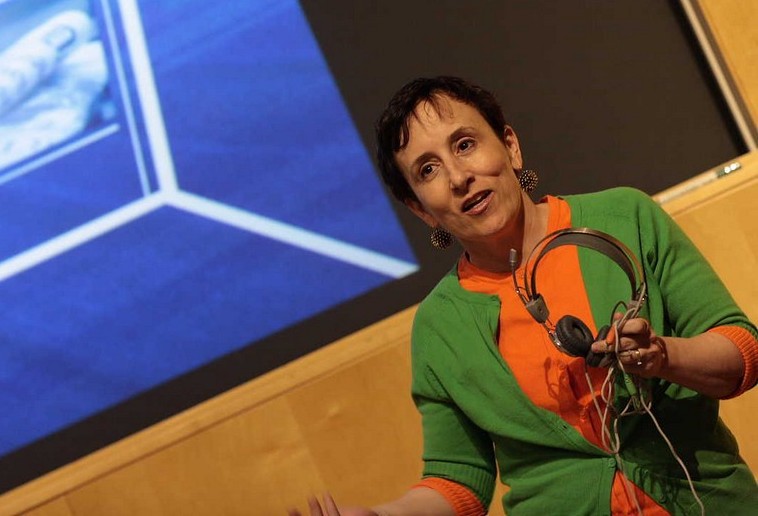
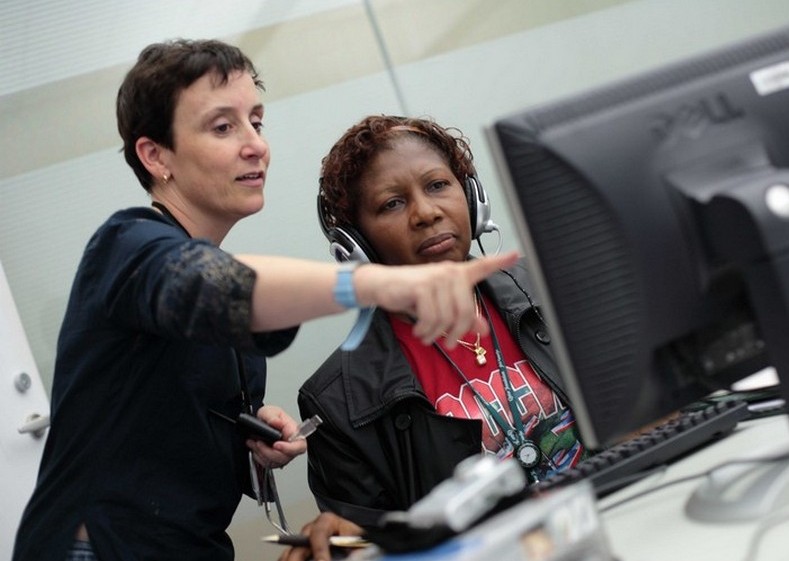
Christina Scott (1961 – 2011): Passionate science journalist, interrupted mid-sentence…

Christina Scott: A funny story always got funnier when she related it...

I was travelling in the Himalayan Republic of Nepal when I heard the sad news: Christina Scott, a pioneering science journalist from South Africa, has just been killed in a road accident. She would have turned 50 on November 20.

As Mike Shanahan, whose tweet broke the sad news of Christina’s hasty departure, wrote: there is one star less in Africa.

Christina’s tragic and abrupt departure elicited an outpouring of grief, memories and tributes from science journalists, scientists and others who knew and admired her. I’m late to join that, I know, but here’s the slightly expanded version of what I just posted on SciDev.Net as a reader comment:

“Short, stroppy reporter with a funny accent. Likes to eat sushi. No head for alcohol and caffeine addiction.” That’s how Canadian-born Christina chose to introduce herself. Everyone has an anecdote about her, reminding us of the colourful and highly talented person she was.

Christina was passionate, articulate and had a clear vision of how science, technology and innovation could make a difference to millions of people in Africa, Asia and Latin America. She made science fun. She was also great fun to work with.

Christina and I didn’t meet that often, separated as we are by time zones and the Indian Ocean. But our few encounters — usually at professional gatherings of science journalists — left a deep impression.

We first met at the Fifth World Conference of Science Journalists in Melbourne in April 2007, where we were both speakers.

She and I were part of a memorable plenary session on ‘Reporting Science in Emerging Economies’ that was put together by SciDev.Net and produced by Julie Clayton. It had science journalists or editors from Brazil, China, India, Sri Lanka and Zambia.

It was Christina who came up with a novel idea to dim the meeting hall lights just as we started. In the semi-darkness, she lit a single cigarette lighter to symbolise how science journalists in the developing world struggled daily with power outages, poor literacy, unsympathetic editors and uncaring governments.

Earlier in that conference, Christina compared some of her professional tribe to extremophile bacteria: hardy enough to survive in very harsh environments. The broad conclusion from our session was that, just as life finds a way against many odds, so does science journalism. In conditions far from ideal, science journalism happens — and even thrives — thanks to the resilience, resourcefulness and commitment of its practitioners.

Christina Scott (left) making a point. Photo courtesy WFSJ

Christina excelled in communicating science through print, web and broadcast media. She switched easily between written and spoken words, and could hold an audience in any medium. Such multimedia journalists are rare.

But she didn’t allow the technology ‘tail’ to wag the journalism ‘dog’. In 2007, she was still wondering if Internet, computes and online communications could make much headway in reaching out a majority of South Africans. It wasn’t a lack of connectivity and computers any longer, but a more basic absence of electricity in many remote areas.

To her, old fashioned radio was still the most cost-effective way to reach more people quickly. That was also her favourite medium, one in which she did some of most memorable coverage.

Christina had a fine sense of theatrical performance to engage a live audience. She knew just how to shook and hook them. She had no time or patience for political correctness or euphemisms; she just spoke truth to power.

I learnt much by being in her audience, or sharing a platform with her. It was exhilarating to see how she engaged audiences full of jaded and sceptical journalists.

Once, during a panel discussing HIV/AIDS, she asked her audience how many were aged over 50 years. A few hands went up. “In South African terms, chances are you’re already dead,” she declared.

She didn’t have comforting words for those below 35 either: “You’re probably infected with HIV, and don’t know it yet — and go around giving it to others!”
That’s how she summed up the stark realities of South Africa, which has one of the highest HIV infection rates in the world. She then personalized, with a wish was that her daughter, then 15, would get through college without contracting HIV.

Christina Scott was a supernova who shone bright and fiery. Her trail would continue to blaze for a long time. But we won’t hear that spirited voice, in that funny accent, always ready to tell an interesting story.

Here are links to some tributes found online:

Christina Scott: Editorial by SciDev.Net editor David Dickson

ResearchResearh.com: Christina Scott, doyenne of African science journalism, dies
by Ehsan Masood

Mail & Guardian: Christina Scott: Farewell to ‘short, stroppy’ giant
by Adele Baleta

Mike Shanahan blog: One less star in Africa tonight

WFSJ Website: Tribute to Christina Scott RIP

Africa STI: Christina Scott, Africa’s Foremost Science Journalist, dies

Facebook Page: Remembering Christina Scott

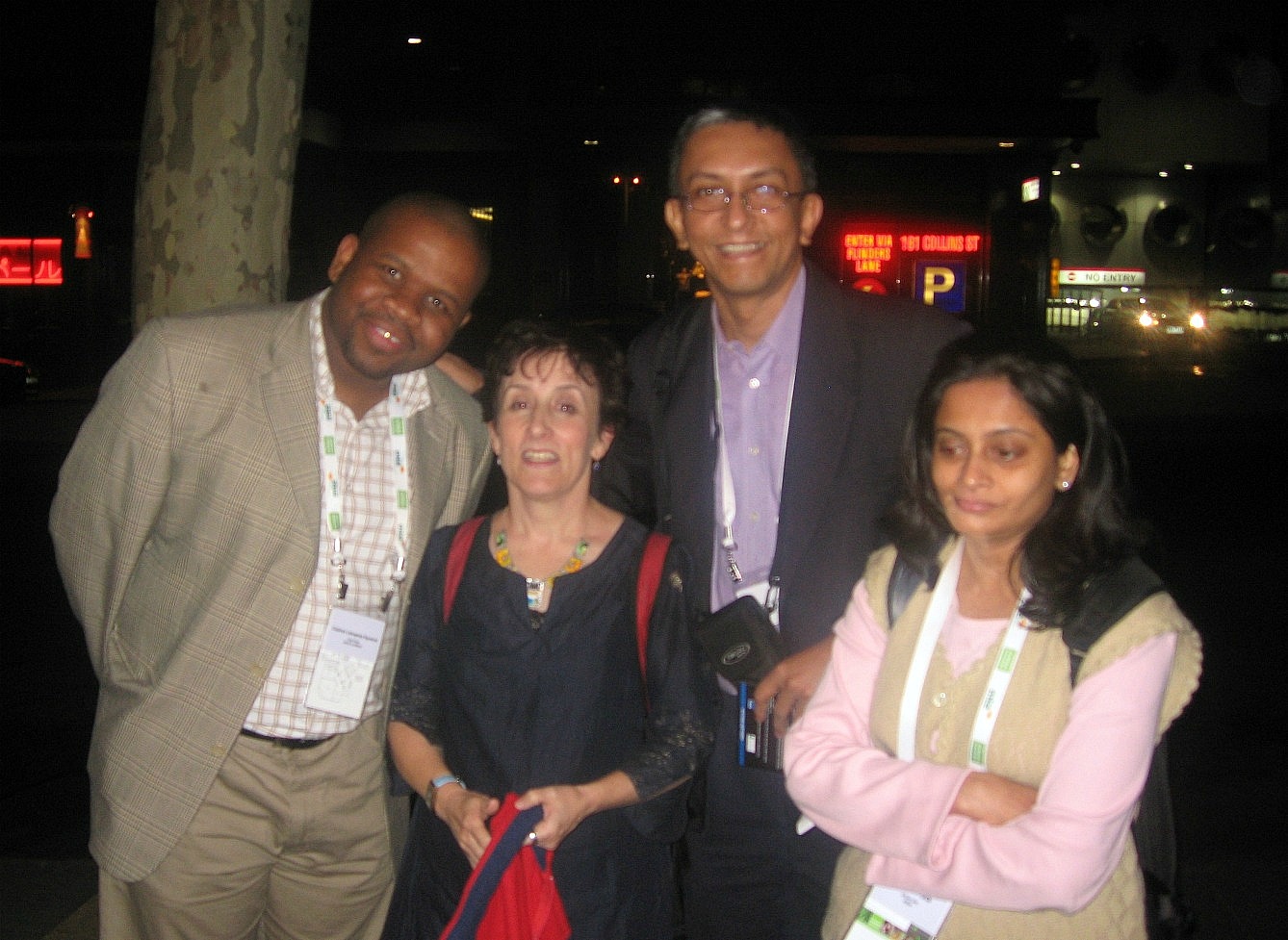
In Melbourne, April 2007: L to R - To be identified, Christina Scott, Nalaka Gunawardene and T V Padma

Celebrating Steve Jobs, we ask: Where are all the Asian tech mavericks?

Steven Paul Jobs (1955 – 2011): The Crazy One

In my own tribute to Steve Jobs, just published on Groundviews.org, I raise some pertinent questions about nurturing discovery and innovation in Asian societies.

Here’s an excerpt:

We might admire – even revere – mavericks like Steve Jobs from afar, but few Asians have any idea where mavericks come from, or how best to deal with them. Our conformist and hierarchical societies don’t nurture mavericks. Our cultures tend to suppress odd-balls and iconoclasts. That’s probably why we don’t have enough of our own Steve Jobses, Richard Bransons and Anita Roddicks.

Mark Twin said: “The man with a new idea is a crank – until the idea succeeds”. The question is: do we Asians hush down our home-grown cranks even before they have a sporting chance? Are we culturally too biased against individualism that propels useful – and potentially transformative ­ mavericks?

As a ‘maverick spotter’ and cheerleader for all types of innovation, I often worry that we are. I have come across bright young men and women who were ridiculed in the classroom (‘freaks!’) or scorned at home (‘losers!’) for not wanting to be doctors, engineers or lawyers.

This is the central argument in my latest op-ed, a tribute to Steve Jobs and a reflection on individualistic tech innovation in our own Asian societies.

Read full essay on Groundviews.org: Goodbye, Steve Jobs; Long Live Mavericks!

Ray Wijewardene: Saluting a thinker who also tinkered

Working with a Genial Giant: Ray Wijewardene

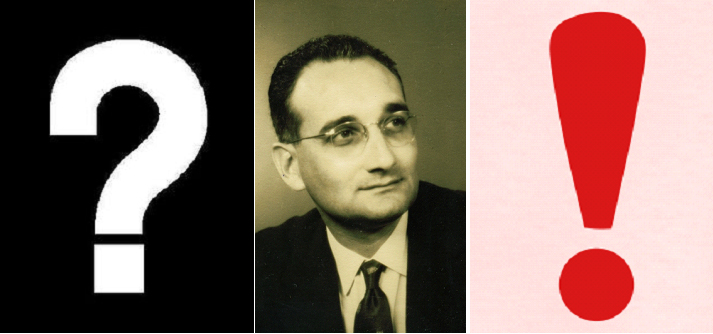
As a communicator, I look for ways to say more with less. The ‘gold standard’ for brevity was set two centuries ago by the French poet, playwright, novelist and essayist Victor Hugo.

The story goes like this. Victor Hugo was travelling out of town and wanted to know how his latest book was selling. He messaged (telegraphed?) his agent: ?

The agent, not to be outdone, replied: !

Enough said. How I wish I could beat that economy of words…

I have a fondness for both question marks and exclamation marks — I used a good deal of both in my own speaking and writing. I use these as a metaphor in a tribute I just wrote about one of my mentors: Ray Wijewardene.

Ray Wijewardene: An Extraordinary Thinker and Tinkerer has just been published by Groundviews.org. It also appears on the official website about Ray Wijewardene, being formally launched today.

Here are the opening paras of my essay:

“If I had to condense the multi-faceted and fascinating life of Ray Wijewardene, I would reduce it to a whole lot of question marks and exclamation marks. In his 86 years, Ray generated more than his fair share of both.

“He was unpigeonholeable: engineer, farmer, inventor, aviator and sportsman all rolled into one. Whether at work or play, he was an innovative thinker who rose above his culture and training to grasp the bigger picture.”

Full essay: Ray Wijewardene: An Extraordinary Thinker and Tinkerer

The website was built by my team at TVE Asia Pacific (TEVAP) as a public education resource. read TVEAP News story:
TVEAP unveils new website on outstanding Sri Lankan scientist and visionary

Arthur C Clarke Institute in Sri Lanka: Time to ask some tough questions!

Read also: 4 Oct 2011: A Tale of Three Telescopes and a Blind News Media

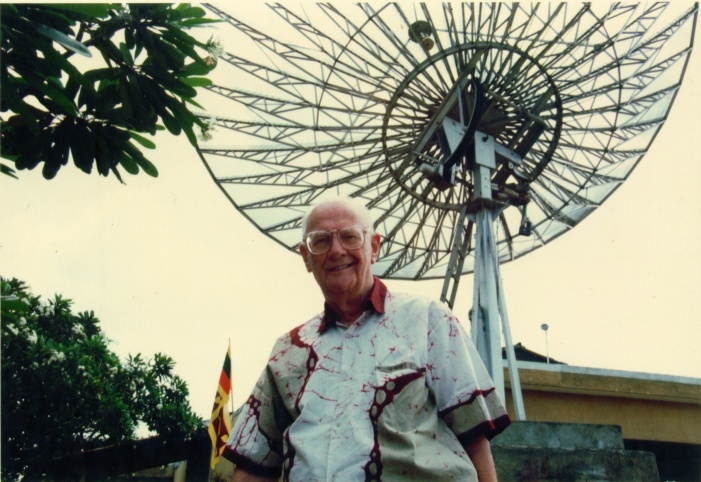
Sir Arthur C Clarke at the ACCIMT in better times

For many years, I’ve been explaining and clarifying to everyone that I worked with the late Sir Arthur C Clarke in his personal office in Colombo, which was completely separate from a government entity named the Arthur C Clarke Institute for Modern Technologies in Moratuwa, Sri Lanka. This is not just an institutional demarcation; the latter body set up by the government of Sri Lanka in 1984 and sustained since then with public funding has completely under-served its founding ideals and remains mediocre and unproductive after a quarter century. I have no wish to be associated, even mistakenly, with such an entity.

I remained quiet about this for as long as Sir Arthur was alive, as it was not tactful for me – as part of his team – to criticise a state entity named in his honour. A year after his death, I broke that silence and wrote a media article which was published in the current affairs magazine Montage in April 2009.

That elicited some strange ‘reader comments’ on the magazine’s website — several of which alleged that I was a ‘traitor’ who was out to discredit the hard-working (‘Sinhala Buddhist’) engineers and managers of this institute! I could not fathom how and why the staff’s ethnicity or religious faith was relevant.

Beyond such vitriol, these pseudonymous ‘readers’ never once responded to my specific questions about the public-funded institute’s scientific productivity and public accountability.

Unfortunately, Montage went out of publication and its website, which was located at http://www.montagelanka.com, is also no longer available online. So in the public interest, I’m reproducing my article below, unedited as it appeared in print in April 2009. Alas, I never saved the online comments so those are probably lost forever…

As always, this blog is open to a rational discussion of the core issues raised below, as all the concerns still remain valid. And there are no ‘sacred cows’ in my book!

* * * * *

Published in Montage magazine, Sri Lanka; April 2009 issue (print issue and
originally online at: http://www.montagelanka.com/?p=1476)

Monument for Sir Arthur C Clarke: Time to ask some tough questions

By Nalaka Gunawardene

As the first death anniversary of Sir Arthur C Clarke approaches, Lankans are still debating how best to cherish the memory of the celebrated author and visionary who called the island his home for more than half a century.

Ours is a land where private individuals — and governments –- just love to put up ostentatious and often superfluous structures to honour the departed. We typically don’t assess their cost-effectiveness or utility. Neither do we pause to ask how the person being honoured would have felt about it.

The Telecommunications Regulatory Commission of Sri Lanka (TRCSL) recently announced plans to launch the country’s first satellite, which is to be named after Sir Arthur. According to news reports, it will be launched into low earth orbit (LEO) at an estimated cost around US$ 20 million.

Would naming Sri Lanka’s first satellite be a fitting tribute to Sir Arthur, universally acclaimed as inventor of the communications satellite (comsat)? Or should a monument to this ‘one man cheering squad for Sri Lanka’ be more rooted in the Lankan soil, where people can see and feel its presence everyday? And, by the way, what about the state technical institute in Moratuwa that already bears the Arthur Clarke name?

Sir Arthur, with whom I worked closely for 21 years as an aide and a decade as spokesman, would surely have wanted an open and frank debate on this matter. He opted for rational, evidence-based decisions based on cost-benefit analysis. He frowned upon grandiose plans made for their own sake, whether their implementation was going be paid for by public or private funds.

Besides, he already had an asteroid, dinosaur species and a geostationary comsat named after him during his lifetime. Topping that without going over the top would be a challenge indeed.

A living legacy

The tussle for the Clarke legacy started within hours of his death on 19 March 2008. He had left clear written instructions for his funeral to be held on a strictly secular and austere basis. He didn’t want any decorations, and explicitly disallowed official involvement by British or Lankan governments.

As this news spread, it fell on me to explain to government officials why offers of a state funeral and other types of state patronage could not be accommodated. This raised some eyebrows and dashed hopes of some who wanted to turn the sombre event into a carnival. In the end, the state appealed for a symbolic radio silence of two minutes to coincide with the funeral.

In the weeks and months that followed, many have asked me what kind of monument was being planned in Sir Arthur’s memory. The answer, as far as the Arthur Clarke Estate is concerned, is none –- and this seems to surprise many.

Yet it is entirely consistent with Sir Arthur’s personality and vision: he never sought personal edifices in his honour or memory. When a journalist once asked him about a monument, he said: “Go to any well-stocked library, and look around…”

That evokes memories of the well known epitaph for Sir Christopher Wren, one of the greatest architects of all time, who significantly changed London’s skyline: “Lector, Si Monumentum Requiris Circumspice”(“Reader, if you seek his monument, look around”). It also begs the question why Sir Arthur chose not to make any mention of the physical entity that already bore his name: the Arthur C Clarke Institute for Modern Technologies (ACCIMT).

Indeed, the ACCIMT is today a perfect example of a good idea gone astray, becoming a disgrace to the very man it was meant to honour. How did things go wrong to the point where Sir Arthur Clarke distanced himself from the Arthur Clarke Institute in the last few years of his life? These thorny questions need to be asked now that we are discussing matters of legacy.

The world was very different, and aspirations were very high, when ACCIMT was established in 1984 by an Act of Parliament to help transfer and adopt modern technologies in five areas: computers, telecommunications, energy, robotics and space technology. The Institute, initially called the Arthur Clarke Centre, was to undertake research and development as well as train technical professionals in ways that would accelerate economic development and advance the quality of life.

Several leading Lankan professionals were associated with its creation. Among them were civil servant (later Minister) Dr Sarath Amunugama and diplomat (now academic) Dr Naren Chitty. In 1985, President J R Jayewardene appointed the eminent biochemist (and his science advisor) Professor Cyril Ponnamperuma as its founder director.

As patron, Sir Arthur had no executive functions or responsibilities, but generously provided advice, guidance and some funding to the fledgling institute. He donated US$ 35,000 received for the 1982 Marconi Fellowship. Just as importantly, he mobilised his far-flung network of international contacts in scientific, technological and engineering circles. The Arthur Clarke ‘fan club’ stretched far and wide -– from the White House to the Kremlin, and from elite academia to geeky Silicon Valley. Carrying this unique calling card, ACCIMT had access to a global reservoir of goodwill, partnerships and external funding.

Tragically, despite this head start and advantages, the Institute reaped little benefit. While it did show some early promise, it has failed to consolidate itself as a credible and productive technical institute. Its founding aim of becoming a centre of excellence for the developing world also flopped. When assessed using universally accepted measures of scientific productivity -– such as research publications in refereed international journals, peer citations and patents for innovation — it shows a dismally poor track record.

For sure, it has been dabbling with a few everyday technologies such as traffic lights, telephone locks and domestic gas leak alarms. Useful as these applications are in specific situations, they cannot justify 25 years of substantial investment of Lankan tax payer money as well as international donor funds.

March of ICTs

Perhaps an institute with this kind of lofty mandate could have been more influential at the apex policy level. The past 25 years have seen Sri Lanka adopting many new information and communication technologies or ICTs (e.g. mobile telephony in 1989, commercial internet connectivity in 1995). There has been an unprecedented and phenomenal growth in the coverage of telecom services. These developments have thrown up many policy and regulatory challenges for the state and private sector players.

Alas, ACCIMT has not kept up with the rapid evolution of information society, and failed to carve out a clear niche for itself even as Sri Lanka engages the Global Village through a multitude of ICTs. Its voice is neither heard nor heeded in key debates on bridging the digital divide, and on how best to prepare our youth to ‘exploit the inevitable’ in a globalised marketplace. These concerns were very dear to Sir Arthur, who continued to talk and write perceptively about them to the very end of his life. But ACCIMT is still stuck in the obsolete analog concerns of the 1980s.

Peer acceptance and recognition are indicators of any technical institute’s standing. ACCIMT would struggle to demonstrate its worth on these criteria. It is routinely bypassed by state policy making mechanisms and agencies. It is curious how the telecom industry regulator is spearheading the government’s newly announced satellite project. Why is ACCIMT, with a statutory mandate in this subject, not playing a more prominent role in such plans and discussions?

When the rest of government ignores the institute, it’s not surprising that technology-based industries don’t turn to it for advice either. The institute’s principal activity these days is conducting training courses in electronics — useful, no doubt, but for which purpose there already are several dedicated vocational training centres.

For much of its 25 years, the Arthur Clarke institute has taken cover behind its famous patron to avoid adequate public scrutiny. Large sections of society, including many in the media, harboured a misconception that Sir Arthur Clarke was personally involved in its management and research; in practice, he had none.

Early sparks

Things didn’t always look this bleak. For a while, it seemed as if the institute would live up to its founders’ expectations. For example, it was the first to downlink and relay CNN broadcasts in Sri Lanka. CNN founder Ted Turner‘s respect for Sir Arthur made this possible. The institute was also involved designing low-cost dish antennae for households to directly capture satellite TV transmissions in the 1980s when only two terrestrial channels were available. March of technology and commerce later made these services redundant.

One far-sighted activity that Professor Ponnamperuma started was the Science for Youth programme. On a national and competitive basis, 25 of the brightest high school leavers were selected and introduced to modern technologies over six consecutive weekends. Out of that exercise eventually emerged the Young Astronomers’ Association and Computer Society of Sri Lanka, the latter now a professional body.

As part of the 1986 batch, I can personally vouch for the insights and inspiration Science for Youth gave me in those pre-Internet days. I was especially fascinated by the outspoken views of inventor and aviator Ray Wijewardene. The friendship I formed with him has lasted for over two decades and enriched me enormously. Later, as a young science journalist, I used to cover the institute’s public events hosting of visiting tech pioneers and Russian cosmonauts. For a while, ACCIMT was a ‘happening place’.

Then, sometime in the 1990s, the institute abandoned most of its public engagement and outreach activities. This inward looking attitude didn’t change even after the government decided to locate the country’s largest optical telescope (donated by Japan) at the institute. I remember how exasperated Sir Arthur was to hear schools being told that they may visit and look at the telescope during the working hours from 9 am to 5 pm!

But by then, he was not going to intervene. After he turned 80 in 1997, Sir Arthur adopted a policy of ‘benign neglect’ towards the institute on which he had pinned such high hopes only years earlier. Ever conscious of his ‘resident guest’ status, he chose not to criticise the institute in public, although he shared his dismay and disappointment in private.

As we debate how best to preserve Sir Arthur’s illustrious legacy, we cannot afford to continue such ‘benign neglect’ on the publicly-funded Arthur Clarke Institute. A good starting point would be to belatedly ask tough questions and engage in some serious introspection.

Sir Arthur would have expected nothing less.

About the writer: Science writer Nalaka Gunawardene worked for Sir Arthur Clarke’s personal office, which was totally separate from the Arthur Clarke Institute. The views in this article are entirely those of the author.

Photographs courtesy Rohan de Silva, Arthur C Clarke Estate.

Read also these other critiques of the governmental Clarke Institute in Sri Lanka:

16 June 2010: Sri Lanka’s Sacred Cows and Orbital Dreams: Asking difficult questions

4 Oct 2011: A Tale of Three Telescopes and a Blind News Media

9 Oct 2011: සිවුමංසල කොලූගැටයා #35: දුර දැක්මක් නැති දූපතක දුරදක්නවල ඉරණම

FINALLY, SOME HOPE OF SALVAGING ARTHUR C CLARKE’S LEGACY — ON THE OTHER SIDE OF THE PLANET!

24 May 2013: New Arthur C Clarke Centre to study Human Imagination

Ray Wijewardene website: Celebrating a Man for All Elements!

Ray Wijewardene (1924 - 2010): A man for all elements

One year has passed since Ray Wijewardene’s death aged 86. In that year, I’ve been privileged to play a part in celebrating his life and preserving his legacy.

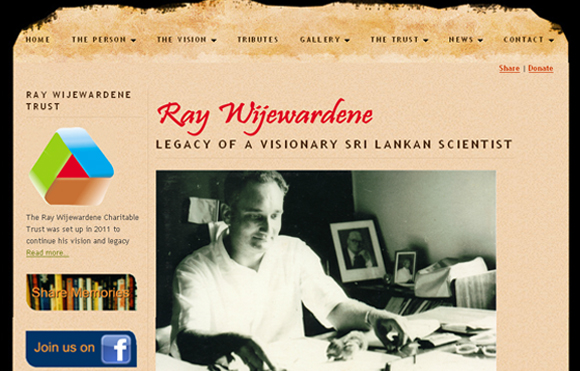
My main contribution todate is building the official Ray Wijewardene website, which was launched in time for Ray’s 87th birth anniversary. It can now be accessed at: http://www.raywijewardene.net

Here’s the promotional blurb I sent out to a few dozen people this weekend:

Philip Revatha (Ray) Wijewardene (1924 – 2010) was an extraordinary Sri Lankan who was rightly called a Renaissance Man. Educated at two of the most prestigious universities in the world (Cambridge and Harvard), he excelled in many different areas of human endeavour: agriculture, aviation, engineering design, inventions, renewable energy technologies and water sports. He also painted and played the violin.

The Ray Wijewardene official website went ‘live’ just in time for Ray’s 87th birth anniversary on 20 August 2011.

This informative website captures highlights of Ray’s rich and colourful life that covered different areas of human endeavour: agriculture, aviation, engineering design, renewable energy, transport and water sports. It promotes his vision for self-reliance, innovation and sustainable development in Sri Lanka and in other countries in the humid tropics.

Weaving the four elements: Ray's logo
The website introduces Ray as ‘a man for all elements’, and showcases his personal logo that symbolised the integration of the four elements in eastern philosophy: water, fire, air and matter/Earth.

It carries first person narratives written by five individuals who knew Ray in different capacities: aviator Capt Elmo Jayawardena, renewable energy specialist P G Joseph, science writer Nalaka Gunawardene, conservationist Dr Ranjith Mahindapala and biologist Rohan Pethiyagoda. It also collates links to tributes and appreciations that were published in the media following Ray’s death in August 2010.

In another section, the website has a photo gallery that includes many hitherto-unseen images drawn from the Wijewardene family albums and from various other institutional and media sources. These offer glimpses of Ray Wijewardene’s education, training, career and leisure activities that took him to the universities of Cambridge and Harvard, international service with the United Nations, the Olympic and Asian games and the grassroots in Sri Lanka.

The website was conceived and built by the Colombo-based non-profit media foundation TVE Asia Pacific. It is an entirely voluntary effort that involved the collaboration of many individuals from different backgrounds and geographical locations. Information and images were sourced from Ray’s family members, friends and associates.

More information, photographs and videos are to be added as new material becomes available. The website actively seeks memories, anecdotes and images for the Ray biography compilation project that is now underway.

The Ray Wijewardene Charitable Trust (RWCT) was established in early 2011 to promote Ray’s vision and ideas in Sri Lanka. The Trust will support innovation in areas that were close to Ray’s heart. This website is the Trust’s first public activity to preserve Ray’s legacy.

Gasping for Fresh Air in Delhi and Colombo: Miles to go before we can breathe easily!

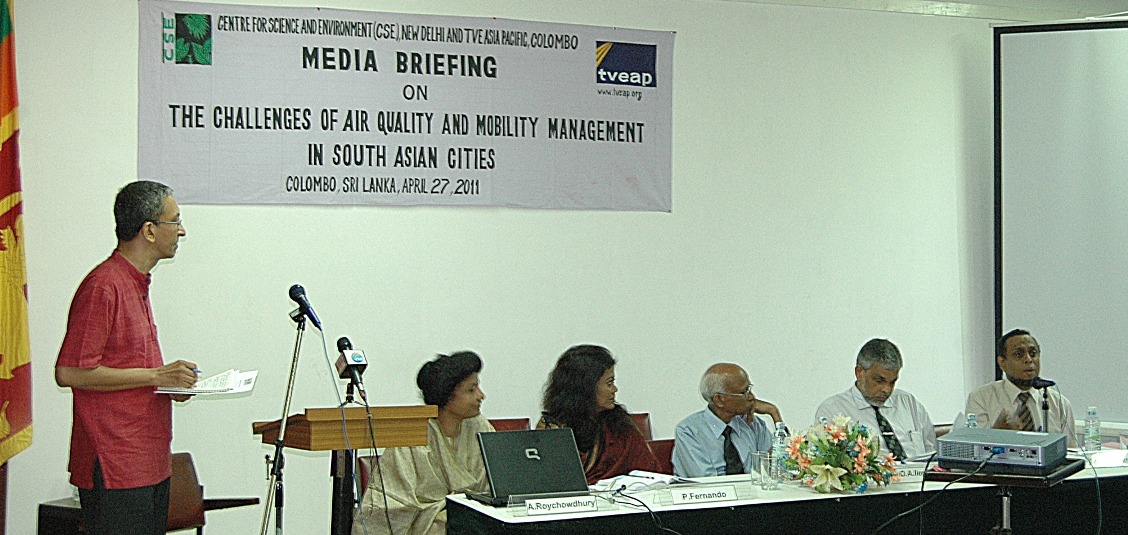
CSE TVEAP Media Briefing on Air Qualitry Issues in Colombo, 27 April 2011

Almost exactly four years ago, I wrote a blog post called Gasp! Asthma on the rise – and we made it all possible. I argued how we who suffer from Asthma — and our numbers keep increasing — are also contributing to making the bad problem worse.

So I write, speak and make films about clean air entirely with an enlightened self interest: I want to breathe more easily. This week, just a few days ahead of the annual World Asthma Day, I once again declared this as I opened a Media Briefing on the Challenges of Air Quality and Mobility Management in South Asian Cities organised in Colombo today by the Centre for Science and Environment (CSE), New Delhi and TVE Asia Pacific.

I held up my life-saving inhaler that I always carry around wherever I go, and am never more than a few feet away from. This is not theatrics, but drama in real life. Almost exactly a year ago, I was rushed to hospital at night for nebulisation. I don’t suffer such attacks too often, thank goodness, but I also don’t want to take chances — as I can never count on good air in my home city.

And I’m far from being alone. Wherever I go, I find increasing numbers of fellow asthma sufferers: we gripe and groan, but only a few among us realise that our lifestyles, choices and apathy contributes to the worsening quality of our air.

Almost every South Asian city today is reeling under severe air pollution and gridlocked urban traffic congestion. Colombo, a medium sized city by South Asian standards, has the (slight) advantage of the sea breeze flushing out part of its polluted air — but Greater Colombo is still struggling with polluting fuels, outdated vehicle technologies and rising numbers of private vehicles leading to massive congestion. Air quality levels vary considerably as we travel to the interior of the island, but some provincial cities now have mounting air pollution problems.

Finding the 'Common Air' in everybody's self interest...

This is why we collaborated with CSE, which has a long track record in knowledge-based advocacy for clean air in India and other countries of developing Asia, to organise this event. It was an open forum where air quality experts in Sri Lanka and India engaged Sri Lankan journalists and broadcasters on the status of Sri Lanka’s air quality and what it can learn from the neighbouring countries.

In my remarks, I said: “The quest for clean air in developing Asia is much more than a simple pollution story. It has many layers and complex links to government policies, regulation, industrial lobbies and technology options.

I added: “Our big challenge, as professional story-tellers, is to ask tough questions, seek clarity and then connect the dots for our audiences. At stake is our health, prosperity and indeed our very lives. Air pollution kills, slowly but surely!”

See my PowerPoint presentation:

Read more: Gasping for Fresh Air, Seeking More Liveable Cities in South Asia

T (Tambiaiah) Sabaratnam: Fond farewell to a pathfinder science journalist

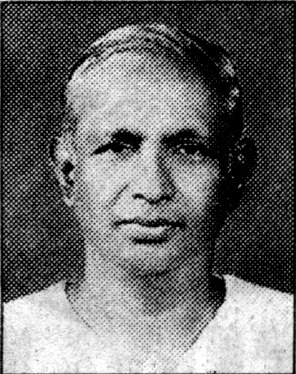
Tambiaiah Sabaratnam
I seem to be writing a few fond farewells to fellow travellers every year, becoming an obituarist of sorts in that process. I don’t go to funerals if I can help it (they’re too depressing), and instead I withdraw to a corner to write my memories. Some are published; others are privately circulated.

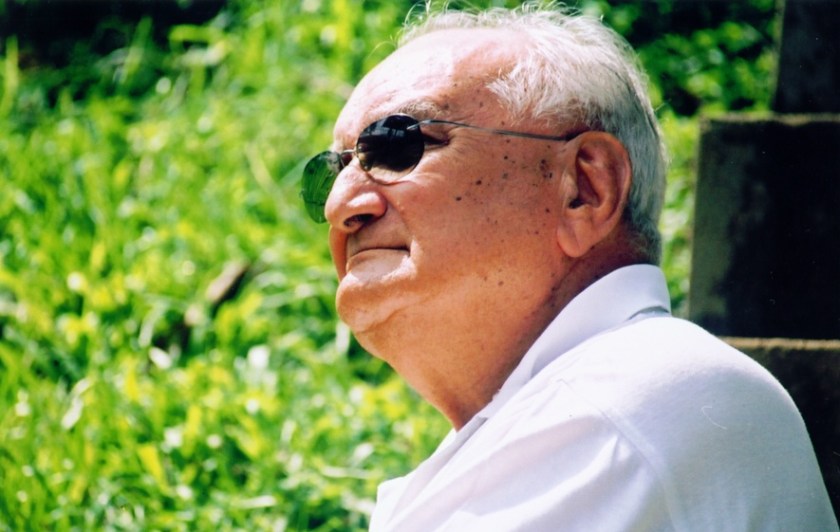
I’ve just published such a tribute on veteran Lankan journalist T (Tambiaiah) Sabaratnam, who died on March 5 aged 79. He was a senior colleague when I entered the world of journalism in the late 1980s. He retired (sort of) in 1997, but remained active in the world of media to the very end.

He was an outstanding journalistic story-teller. As I wrote in the tribute: “He was a pathfinder and leading light in Sri Lankan science journalism for over a generation. Throughout his long association with the English and Tamil press, he advocated the pursuit of public science: tax-payer funded scientific research for the benefit of the people and economy.”

Here’s another excerpt, more personalised:
“He was a source of inspiration and encouragement to me during my early years in science journalism. Our paths crossed often in the late 1980s and early 1990s when he and I covered many of the same scientific events. He was approachable and helpful, but I could never bring myself to call him ‘Saba’. When I knew him, he had already been in journalism for longer than I’d been alive. To me, he was always ‘Mr Sabaratnam’.

“He reached out despite our generational, media house and other divides. He was genuinely interested in my progress as a science journalist, and offered me advice on both style and substance. Occasionally, he also cautioned about on various ‘pitfalls’ in the local scientific scene — personal rivalries, exaggerated claims or oversized egos.”

Read the full tribute on Groundviews.org: Tambiaiah Sabaratnam (1932 – 2011): The Storyteller of Public Science

Read compact version in Daily News, 15 March 2011: Tambiaiah Sabaratnam (1932 – 2011): Storyteller of public science

Resilience 2011: Banging Heads together to make lives better

What does Livelihood Resilience mean to them?

I am at Resilience 2011: Asia Regional Conference on Building Livelihood Resilience in Changing Climate, being held in Kuala Lumpur, Malaysia, from 3 – 5 March 2011. It is jointly organised by Wetlands International-South Asia (WISA), International Development Research Center (IDRC), The Climate and Development Knowledge Network (CDKN), Cordaid and ekgaon technologies

The conference has attracted three dozen researchers, practitioners and policy makers from across the Asia Pacific region, and from different ‘domains’: Disaster Risk Reduction (DRR) and disaster management; Ecosystem services and conservation; and livelihoods and socio-economic development.

I like hobnob with researchers and activists from whom I learn much. As a science and development communicator, I sit through their often very technical discussions and find ways of relating them to the bigger realities. For a start, I created a word map of the keywords being used in the conference. That gives an idea of concerns at a glance.

I then tried to make sense of the conference introduction note, published on the event website. It looks and reads like the work of a committee, and not the easiest to read and absorb unless one is deep immersed in these areas. Since most of us aren’t, I spent an hour or two rewriting it in my own language. Here it is — my version of what Resilience 2011 conference is trying to accomplish:

Building Livelihood Resilience in Changing Climate Asia Regional Conference
Kuala Lumpur, Malaysia, 3 – 5 March 2011
A layman’s interpretation of the vision, scope and aims of the conference

Asia, home to over 60 per cent of all human beings, is the largest and most diverse geographical region in the world. It is also a region of sharp contrasts and disparities in economic and social development.

Some Asian economies have been growing faster than any other on the planet, and even the global recession has not slowed them down too much. This growth has helped push tens of millions of people out of poverty during the past three decades. Yet, Asia still has the largest number of people living in poverty and food insecurity.

In some respects, gains have been lost. For example, the UN Millennium Development Goals Report for 2010 revealed that the proportion of undernourished Asians has increased recently to levels last seen during the 1990s. Two thirds of the world’s undernourished people live in Asia. At the same time, the natural resources on which food supplies depend – land, water and biodiversity – are degrading rapidly. Food shortages and water scarcities are already being experienced, or anticipated, in many countries.

Growing number and intensity of disasters adds further pressures. According to the international disaster database EM DAT, Asia accounted for nearly half (46 per cent) of the all water related disasters in the world, and 90 per cent of all affected people during 1980 to 2006. During this period, disasters in Asia caused a total of US$ 8 billion worth of economic damage. These disasters impacted disproportionately on the poor and vulnerable sections of society.

Climate change impacts will make this situation worse for everyone, and especially for the poor who already have limited options and ability to adjust to rapid changes. It is now clear that all efforts aimed at reducing poverty and protecting the socially vulnerable groups need to factor in the additional pressures created by changing climate.

To cope with these challenges, we need better understand how livelihoods are threatened, and what strategies can be adopted to improve resilience especially at the grassroots. Researchers and practitioners in natural resource management and poverty reduction are now focusing more and more on the nexus between resources, climate changes and livelihoods.

New ways of looking at the inter-linked challenges have emerged:
• Humanitarian aid workers active on disasters now focus on disaster risk reduction, expanding the scope of risk management to include preparedness and risk reduction.
• Development practitioners working on poverty reduction emphasize on increasing access to various capitals to help address disaster risk and poverty.
• A ‘systems approach’ is being used to look at poverty in broader terms of well-being of people and ecosystem services of Nature.

In addition, researchers and activists emphasize the value of freedoms for participation, economic facilities, social opportunities, transparency guarantees, protective security and ecological security. It is only by ensuring these freedoms that the poor will have a meaningful chance to assert their rights and make their own choices in what they do, and how they do it.

The slowly but steadily warming planet challenges everyone to rethink their conceptual frameworks, and redefine or reconfigure how they work. If there is one thing certain about these uncertain and turbulent times, it is business-as-usual won’t do!

What do we seek to achieve?

Each sector has accumulated a knowledge base, set of best practices and lessons learnt exist within individual domains. Each sector’s theories, approaches and actions within various domains differ on how to make livelihoods more resilient, especially in the often harsh realities of the developing world.

They are all necessary, but not sufficient. Taken individually, no single approach or solution can help make everybody’s livelihoods resilient from the multitude of pressures and impacts. Yet, what one strand cannot withstand on its own, a bundle of strands very likely can: bringing different areas of research, advocacy and practice is the way forward to ensuring better resilience at the grassroots.

This is easier said than done. Both researchers and practitioners have long worked in their own silos or compartments, with occasional nods at each other’s work and periodic exchanges. From this, we need to evolve more integrated framework that brings in the ecologists, disaster managers, social scientists and everyone else who share an interest in making lives better at the grassroots and at the bottom of the income pyramid.

The Kuala Lumpur conference attempts to address this formidable challenge. It will provide a common platform to practitioners and researchers from various ‘domains’ related to livelihoods to work out a shared vision on livelihoods resilience by seeking answers to these questions:
• What are the existing challenges to achieving livelihood resilience?
• What are the gaps in existing livelihood frameworks in relation to disaster, climate change adaptation and conservation in addressing livelihood resilience?
• What are the challenges in scaling up pilot models of Livelihood Resilience?
• How does social adaptation occur in resilience building?

New column in Ravaya newspaper: Little Boy asking Big Questions…

Graphics identity for my new Ravaya column As a journalist, I was trained to look for what’s New, True and Interesting (‘NTI Test’). Early on, I went beyond just reporting events, and probed the underlying causes and processes. With experience, I can now offer my audiences something more: perspective and seasoned opinion. These are needed today more than ever as we wade through massive volumes of information, trying to make sense of it all.

I’ve been privileged to chronicle and comment on the closing decade of the 20th Century and the opening one of the 21st – years of unprecedented change, and considerable turmoil, in my country (Sri Lanka), region (Asia) and the world. In my chosen areas of science, technology and sustainable development, changes have happened at a dazzling and often bewildering speed.

As a science writer and development film maker, I work with researchers, activists and officials across Asia who struggle to balance ecological concerns with economic development imperatives. I call myself a ‘critical cheer-leader’ of their efforts. Through TVE Asia Pacific, SciDev.Net and my other affiliations, I seek to enhance the public understanding of complex issues and choices required in pursuing sustainable development.

I sometimes feel a strange kinship with the ancient Greeks, who first asked some fundamental questions about the universe. They didn’t always get the answers right, and neither do I. But it is very important that we question and critique progress – I do so with an open mind, enthusiasm and optimism. On some occasions, this involves asking uncomfortable questions that irk those in positions of power and authority. In that sense, I sometimes play the role of that little boy who told the Emperor had no clothes on. (Does anyone know what happened to the boy after that?).

This is the basic premise for a new weekly newspaper column I am writing from this month in the Sinhala weekend newspaper Ravaya. A few weeks ago, the executive editor of Ravaya invited me to write a regular column, which I accepted after some hesitation. My hesitation was not about them; it was about my own ability to express myself in Sinhala, a language I studied more than a quarter century ago, but have not worked in for over 20 years. But I’ve decided to take it on as a challenge, and see how far I can go and how well I can write on topics and issues that are close to my heart: science, technology, environment and development. The first column has just appeared in the Ravaya issue for 6 Feb 2011.

Ravaya: Always Open for Debate

I have been a regular reader of Ravaya in all its 25 years of publication. As I wrote in a book review last year: “It is an extraordinary publication that has, for nearly a quarter of a century, provided a platform for vibrant public discussion and debate on social and political issues. It does so while staying aloof of political party loyalties and tribal divisions. While it cannot compete directly (for circulation) with newspapers published by the state or press barons, this sober and serious broadsheet commands sufficient influence among a loyal and discerning readership.”

Published by a company owned by journalists themselves, Ravaya is almost unique among Lankan newspapers for another reason: its columnists and other contributors are allowed to take positions that are radically different from those of its formidable editor, Victor Ivan. I’m not sure how soon I will get to test this, but such pluralism is very rare in today’s mainstream media in Sri Lanka.