Reporting disasters: How to keep a cool head when all hell breaks loose

WCSJ London

News by definition looks for the exception. What goes right, and according to plan, is hardly news. Deviations, aberrations and accidents hit the news.

It’s the same with disasters. Reducing a hazard or averting a disaster does not make the news; when that hazard turns into a disaster, that typically tops the news. Yet, as we discussed during a session at the 6th World Conference of Science Journalists held in London from June 30 – July 2, 2009, both aspects are important — and both present many challenges to journalists and the media.

The session, titled Covering a disaster from Sichuan to Sri Lanka, saw three science journalists share their own experiences and insights in covering two major disasters in Asia. Richard Stone (Asia News Editor, Science) and Hujun Li (senior science writer with Caijing magazine, China) both spoke about covering the Sichuan earthquake that occurred on 12 May 2008. I spoke on my experiences in covering the Indian Ocean tsunami of 26 December 2004. The session was chaired by the veteran (and affable) British journalist Tim Radford, who has been The Guardian‘s arts editor, literary editor and science editor.
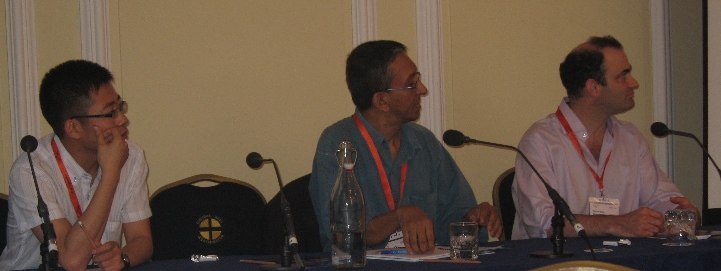
Covering a disaster from Sichuan to Sri Lanka: L to R: Hujun Li, Nalaka Gunawardene and Richard Stone
I recalled the post-tsunami media coverage in two phases — breaking news phase (first 7 – 10 days) and the aftermath, which lasted for months. When the news broke on a lazy Sunday morning, ‘Tsunami’ was a completely alien term for most media professionals in Sri Lanka. In newspaper offices, as well as radio and TV studios, journalists suddenly had to explain to their audiences what had happened, where and how. This required journalists to quickly educate themselves, and track down geologists and oceanographers to obtain expert interpretation of the unfolding events. We than had to distill it in non-technical terms for our audiences.

My involvement in this phase was as a regular ‘TV pundit’ and commentator on live TV broadcasts of MTV Channels, Sri Lanka’s largest and most popular broadcast network. Night after night on live TV, we talked about the basics of tsunami and earthquakes, and summed up the latest information on what had taken place. We also acknowledged the limits of science -– for example, despite advances in science and technology, there still was no way of predicting earthquakes in advance.

One question we simply couldn’t answer was frequently raised by thousands of people who lost their loved ones or homes: why did it happen now, here — and to us? Was it an act of God? Was it mass scale karma? As science journalists, we didn’t want to get into these debates — we had to be sensitive when public emotions were running high.

There were enough topics during the breaking news phase that had a scientific angle. Clinically cold as it sounded, the mass deaths required the safe, proper and fast burial of bodies with identities established. The survivors had to be provided shelter, food, safe drinking water and counselling. And when rumours were spreading on the possibility of further tsunamis, both officials and public needed credible information from trusted, competent sources.

Tsunami waves lashing Kalutara beach on western Sri Lanka on 26 December 2004: satellite image courtesy DigitalGlobe Quickbird satellite, http://www.digitalglobe.com

After the breaking news phase passed, we had more time to pursue specific stories and angles related to the tsunami. As an environmentally sensitive journalist, I was naturally interested in how the killer waves had impacted coastal ecosystems. Then I heard some interesting news reports – on how some elements of Nature had buffered certain locations from Nature’s own fury.

Within days, such news emerged from almost all Tsunami-affected countries. They talked about how coral reefs, mangroves and sand dunes had helped protect some communities or resorts by acting as ‘natural barriers’ against the Tsunami waves. These had not only saved many lives but, in some cases, also reduced property damage. Scientists already knew about this phenomenon, called the ‘greenbelt effect’. Mangroves, coral reefs and sand dunes may not fully block out tsunamis or cyclones, but they can often reduce their impact.

Researching this led to the production of TVE Asia Pacific‘s regional TV series called The Greenbelt Reports, which was filmed at a dozen tsunami impacted locations in South and Southeast Asia. By the time we released the series in December 2006, sufficient time had passed for the affected countries to derive environmental lessons of the tsunami.

The other big story I closely followed was on early warnings for rapid on-set disasters like tsunamis. Some believed that the tsunami caught Indian Ocean rim countries entirely by surprise, but that wasn’t quite true. While the countries of South and Southeast Asia were largely unprepared to act on the tsunami, the Pacific Tsunami Warning Centre (PTWC) in Hawaii, who had detected the extraordinary seismic activity, did issued a tsunami warning one hour after the undersea quake off western Sumatra. This was received at Sri Lanka’s government-run seismological centre in good time, but went unheeded: no one reacted with the swiftness such information warranted. Had a local warning been issued, timely coastal evacuation could have saved thousands.
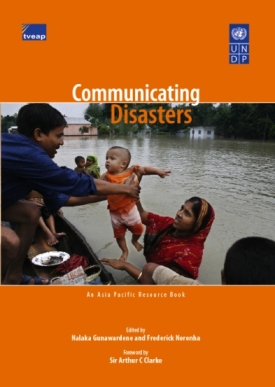
Views from Ground Zero of several disasters...
Part of my sustained coverage focused on logistical, technological and socio-cultural challenges in delivering timely, credible and effective early warnings to communities at risk. I did this by writing opinion essays on SciDev.Net and elsewhere, partnering in the HazInfo action research project in Sri Lanka, and leading the Communicating Disasters Asian regional project. A lasting outcome is the multi-author book on Communicating Disasters that I co-edited in December 2007.

All this shows the many and varied science or development stories that journalists can find in the aftermath of disasters. Some of these are obvious and widely covered. Others need to be unearthed and researched involving months of hard work and considerable resources. Revisiting the scenes of disasters, and talking to the affected people weeks or months after the event, often brings up new dimensions and insights.

My own advice to science journalists was that they should leave the strictly political stories to general news reporters, and instead concentrate on the more technical or less self-evident facets in a disaster. During discussion, senior journalist Daniel Nelson suggested that all disaster stories are inherently political as they deal with social disparities and inequalities. I fully agreed that a strict separation of such social issues and science stories wasn’t possible or desirable. However, science journalists are well equipped to sniff out stories that aren’t obviously covered by all members of the media pack that descends on Ground Zero. Someone needs to go beyond body counts and aid appeals to ask the hard questions.

As Hujun Li said recalling the post-Sichuan quake experience, “Politics and science are like twins – we can’t separate the two. What we as science journalists can do is to gather scientific evidence and opinion before we critique official policies or practices.”

Another question we were asked was how journalists can deal with emotions when they are surrounded by so much death and destruction in disaster scenes. Reference was made to trauma that some reporters experience in such situations.

I said: “We are human beings first and journalists next, so it’s entirely normal for us to be affected by what is happening all around us. On more than one occasion in the days following the tsunami, I spoke on live television with a lump in my throat; I know of presenters who broke down on the air when emotions overwhelmed them.”

SciDev.Net blog post: Finding the science in the midst of disaster
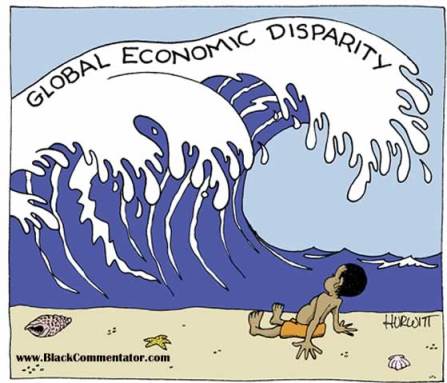
And now...the sequels
Summing up, Tim Radford emphasized the need for the media to take more interest in Disaster Risk Reduction (DRR), which basically means preventing disasters or minimising the effects of disasters.

“DRR is perhaps less ‘sexy’ for the media, as it involves lots of policies and practices sustained over time,” he said. “But the potential to do public good through these interventions is enormous.”

As Tim reminded us, disasters already exact a terrible and enduring toll on the poorest countries. This is set to get worse as human numbers increase and climate change causes extreme weather and creates other adverse impacts. Living with climate change would require sustained investments in DRR at every level.

Read Tim Radford on how disasters hit the poor the hardest (The Guardian, 22 May 2009).

The stories are out there to be captured, analysed and communicated. In the coming years, the best stories may well turn out to be on disasters averted or minimised
Tabloid science maybe imperfect, but it’s still better than no science coverge!

WCSJ London

Raised on popular culture, I have always been an admirer of tabloid journalism – which means using popular formats to reach out to a mass audience in newspapers or broadcasting. There’s nothing inherently wrong with this: we might even argue that the tabloid approach is the only way to achieve truly mass media (with all else being niche media reaching to smaller demographic groups).

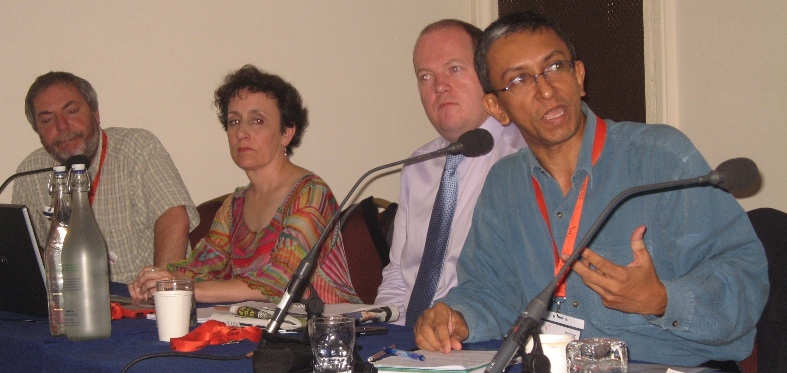
So I was delighted to be on a panel with two leading British tabloid journalists and a popular radio host from South Africa during the 6th World Conference of Science Journalists held in London from June 30 – July 2, 2009.

We had to address this question: Does science coverage in the media need to be highbrow?

My own, personal answer is NO — it need not be! And I’ve spent a good part of my two decades of work in the media experimenting and showing that communicating science can be fun — both for us communicators and our audiences.

But I pointed out that science is still being covered in sections of Asian media in the more traditional, classical way, just like science itself is still an elitist pursuit in many of our societies.

L to R: Paul Sutherland, space correspondent of The Sun, UK; Christina Scott, radio and web journalist, South Africa; David Derbyshire, Environment editor, The Daily Mail, UK; Nalaka Gunawardene, Director/CEO, TVE Asia Pacific

I said: “We might call this coverage ‘broadsheet approach’ in print; or ‘bluechip documentary’ format on television. And they are both unsustainable! They are also endangered in these hard times for the mainstream media in most economies.

“So going the tabloid path is a practical and pragmatic way to deliver science stories and science information to a mass audience or readership. We’re doing it in different ways in the Asian media!”

In my remarks, I gave some examples where science is jazzed up (rather than dumbed down) for popular consumption on Asian television. For example, how solar and lunar eclipses provide fodder for endless stories on our numerous news channels. Such coverage, fleeting and superficial as it might often be, takes the wonders of science and Nature to more people than anyone else can.

I argued that the path to the mass audiences in Asia is through news, sports and entertainment programming. We have our own niche, factual channels – Discovery, National Geographic, Animal Planet and their local equivalents. They have a loyal but small audience. They do excellent work. But where numbers are concerned, they cannot – yet! – compete with the outreach and appeal of broadcast radio, TV and newspapers. Neither can the online and mobile media, even though their outreach is growing fast.

Things don’t always go right, however. Doing wall-to-wall coverage of news demands producers and reporters to tackle a variety of topics and subjects — including specialised science stories. Some handle this better than others. In their race for ratings and revenue, a few ‘dress up’ the stories a bit too much.

Television science: aspiration or reality?
A good example was how some Indian news channels handled the so-called ‘Big Bang experiment’ in September 2008, when the Large Hadron Collider (LHC) was commissioned. The mega-science experiment was interesting in its own right, but it wasn’t apparently exciting enough for at least two channels — Aaj Tak and India TV. Their coverage running up to the event speculated about its “catastrophic effect on the world” – effectively end of the world.

Their coverage caused panic, which led to at least one attributable death. This prompted the Indian Ministry of Information and Broadcasting to caution the channels for spreading “misinformation, fear and horror” among viewers. It advised the channels to exercise restraint in presenting such issues.

I call this the ’24/7 TV Deficit’ in Asian broadcasting. The long term response to this is to invest in training and capacity building of journalists and producers already working in the media. For the most part, they learn on the job, making mistakes on the air. This is far from ideal.

Here’s how I summed up: ‘Tabloid science coverage’ – in print or broadcast – may be imperfect in some ways. But our choice is either that, or nothing. Our challenge is to make the process and product better as we go along.

We urgently need to unleash scientific knowledge and understanding in matters of public interest and public policy. We can’t afford the ALL or NOTHING approach.

Why can’t researchers just pay the media to cover their work?

WCSJ London
“Why can’t researchers pay media to cover their work?”

This was the question asked by one African editor participating in the 6th World Conference of Science Journalists held in London last week. He raised it during a luncheon session titled ‘Friendship or Friction: How the media relates to the research community’ organised by the UK Department for International Development (DFID).

The question was asked in apparent sincerity and seriousness. Since media space/time is limited, and different groups and interests are competing to get in, he reasoned, why can’t research budgets include a legitimate allocation for buying newspaper space or radio/TV air time.

Luckily, good sense prevailed and the suggestion was gently cast aside by the moderator. Participants felt such a practice, if allowed, could seriously distort both the news values of media organisations and their public service brief. Listening to this exchange in the audience, I heaved a sigh of relief.

It’s true that many mainstream media organisations are struggling these days to stay in business. But resorting to selling their column inches or air time to the highest bidder would take them a whole different realm where advertising and public relations set the agenda.

This can cast a long and dubious shadow...
This is the reverse of cheque-book journalism, where some media organisations pay celebrity or other sources for exclusive access to their stories. When development agencies are paying sections of the media to get promotional or favourable stories aired, we must call it ‘cheque-book development’.

In August 2007, I wrote an op ed essay on this concern, titled ‘Cheque-book Development’ Corrupting the Media?. It appeared in several websites, and was later reprinted in newspapers such as Nepali Times. I was reacting to a disturbing trend where development agencies were simply throwing money at the media to gain access for their (supposedly public interest) messages.

I wrote: “As development organisations compete more intensely for external funding, they are increasingly adopting desperate strategies to gain higher media visibility for their names, logos and bosses.

“Communication officers in some leading development and humanitarian organisations have been reduced to publicists. When certain UN agency chiefs tour disaster or conflict zones, their spin doctors precede or follow them. Some top honchos now travel with their own ’embedded journalists’ — all at agency expense.

“In this publicity frenzy, these agencies’ communication products are less and less on the issues they stand for or reforms they passionately advocate. Instead, the printed material, online offerings and video films have become ‘logo delivery mechanisms’.”

Read full essay: ‘Cheque-book Development’ Corrupting the Media?

I have long argued, and shown with results, that there is really no need for productive researchers to pay anything to have their work covered in the media. If all they want is to bring the essence of their analysis, findings and recommendations to the attention of public and policy makers, there are ways they can engage the media without paying. I’ve called this Hitch-hiking with the media.

If on the other hand, researchers or their institutions want ego-massaging, vanity-promoting kind of coverage, the media will be far less likely to provide that for free. Throwing money is then the only way forward, but beware: it’s a slippery slope…

See also:
1 December 2007: Moving images moving research…beyond academic circles
16 December 2007: Teleuse@BOP film launched at GK3 – Interactive Quiz – a novel format to communicate research

Read SciDev.Net’s blog post on the same session

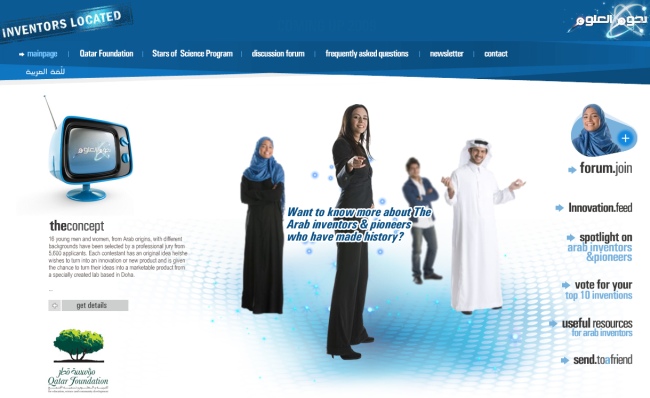
‘Stars of Science’ shine brightly in the Arab World: Reality TV with a difference!

Reality TV with a purpose: Stars of Science on Pan Arab TV network

“I believe that every TV programme has some educational value. The cathode ray tube – and now the plasma screen – is a window to the world.”

So said Sir Arthur C Clarke, inventor of the communications satellite and one of the greatest science communicators of our time. He knew what he was talking about: he was not only a prolific and well-loved science writer, but also a genial host of popular science programmes on TV that made his a household name (and face) around the world.

I have sometimes wondered if he would still have endorsed the television medium so enthusiastically if he saw some of the reality TV shows that have become a staple of ratings-craving broadcasters in recent years. This obsession with reality TV – which presents purportedly unscripted dramatic or humorous situations, documents actual events, and features ordinary people instead of professional actors – has sometimes appeared like a race to the bottom.

I’m all for trying out new formats, and been telling my friends who are factual film-makers that we can learn a thing or two from the recent successes of some reality TV shows. I’m delighted, therefore, to hear about Stars of Science, a new reality TV show being beamed across the Arab world, where brainy youngsters compete to produce the best invention.

The weekly programme, which started airing on 16 pan Arabic TV channels from end May 2009, differs from existing reality shows: it will not emphasize and showcase the best voices, appearances or dance abilities, and instead seek out the best brains and problem solving skills.

Stars of Science rising over the Arab world
Throughout the five weeks the first series will air, young participants (aged 21 to 30 years) will have the opportunity to develop their inventions from mere ideas on paper to actual products that can be mass produced and sold worldwide. Throughout this processes, cameras follow their every move, capturing their successes – as well as their failures – as they are confronted by the many challenges that come with creating new technologies.

This show has an interactive format. During the final episode, to be broadcast live from Aspire Sports Academy in Doha, Qatar, on 26 June 2009, will have the two finalists given the opportunity to launch their ‎product. Viewers will vote by SMS and telephone to decide the winner of a US$300,000 grand prize.‎

The programme attracted more than 5,600 applicants from across the Arab world, from among whom 100 were selected to vie for the 16 positions on the air.

The newly inaugurated Science and Technology Park in Doha is hosting the reality show. State of the art workshops, classrooms and lounging areas have been built specifically for the show. The innovative programme is the initiative of Qatar Foundation for Education, Sciences and Community Development, who aim to “endorse a healthy competitive spirit, encourage creativity, team-building and innovative careers amongst the youth in the Arab world.

“The show has deliberately eschewed the cruelty of booting out losing candidates: instead, they are invited to team up with successful competitors,” says British journalist Ruth Sutherland, writing in The Observer, London. “Stars of Science encapsulates the huge faith Qatar puts in research and innovation; the contrast between it and our version of reality TV also says something about the arrogance of assuming western cultural values are automatically superior…”

Added on 27 June 2009: Watch Al Jazeera International’s news story on this series:
TV contest promotes Arab entrepreneurs

Al Jazzera: Audience offer opinions at ‘Stars of Science’ contest

Now on MediaChannel.org: Good communications to combat swine flu?

They turn the spotlight inwards...

MediaChannel.org has just published my latest op ed essay titled: Good communications to combat swine flu?

7 May 2009: New Age newspaper in Bangladesh has reprinted the essay

24 May 2009: The Hindu newspaper in India has reprinted the essay in its Sunday Magazine

In this essay, I have expanded some points originally made in two recent blog posts, on 30 April and 1 May 2009.

Here’s an excerpt:

“Flu shots, quarantine measures and hospital care alone cannot counter the current flu outbreak. While medical doctors and researchers spearhead the public health response, we need the mass media and other communicators to mount the public awareness response. Ideally, they should reinforce each other.

“For the first time in history, we now have the technological means to quickly reach out to most of humanity. More than four billion mobile phones are in use, a majority of them in the developing world. Nearly a quarter of the world population (over 1.5 billion people) have access to the web, even if at varying levels of bandwidth. Thousands of radio and TV channels saturate the airwaves – these still are the primary source of news and information for billions.

“Can these information and communication technologies (ICTs) help disseminate the right kind of flu awareness? How fast can we mobilise 24/7 media outlets and telecom networks to inspire preventive and curative action? What can the blogging, texting and twittering new media activists do in such efforts?”

Stop the virus, but not the news!
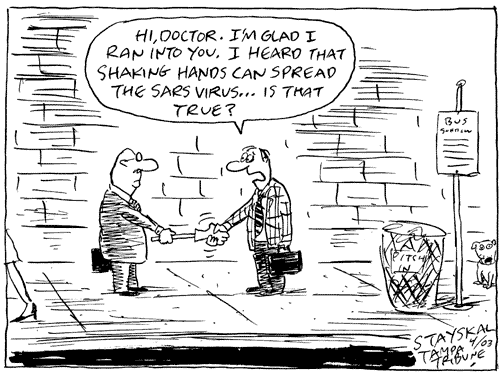
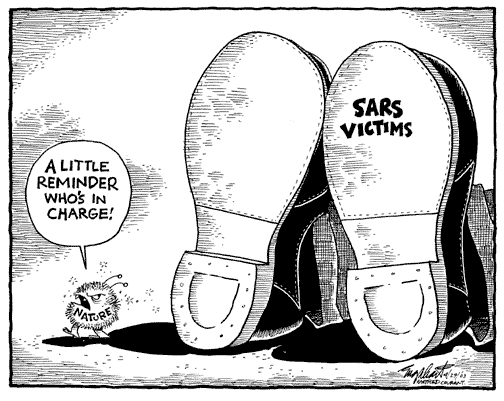
Looking for models of communicating against an infectious epidemic, I recall the Asian experience with Severe Acute Respiratory Syndrome (SARS) . I summarise in this essay the public interest roles played by Asian media during the SARS crisis, which has been studied and analysed in considerable detail.

I then return to one of my favourite points about communicating disasters and crises: the need for credible messages and credible messengers. This was a core theme in the Asian book on Communicating Disasters that I co-edited in 2007. I also highlighted it in this interview given to APC in early 2008.

Here’s how my essay ends: “Whether it is SARS, HIV or tsunami, many Asian governments have suffered from a credibility gap in managing information about emergencies. For example, the initially slow and guarded media reporting on SARS allowed the virus to spread quickly in China, with devastating results. We cannot afford to repeat these mistakes with the latest flu pandemic.

“Nearly a century ago, British author H G Wells talked about human history being a race between education and catastrophe. In the coming weeks, we would find out if humanity has what it takes to outrun and outsmart a stubborn virus.

Read the full essay at MediaChannel.org

Read my op ed essay in SciDev.net in Dec 2005: A Long Last Mile: The lesson of the Asian tsunami

MediaChannel have published my op ed essays before. They were the first to publish, in June 2006, my global call for the broadcast industry to recognise poverty as a copyright free zone. And when Al Jazeera English channel was launched at the end of 2006, MediaChannel carried my essay on ethical news gathering as the biggest challenge for the new global TV network.

My latest essay is a humble birthday present to MediaChannel.org as it completes 10 years. Unique among websites, MediaChannel.org holds the rest of the media accountable with the best of the world’s media criticism and analysis — offering news, diverse global perspectives, and commentaries tracking international news flows. They cover breaking controversies, showcase change-makers, trends and cutting edge issues that you need to know about – produced by journalists for journalists and citizens.

MediaChannel’s co-founder Danny Schechter is one of my media heroes – he was Moving Images Person of the Year 2008.

“Our survival alone is a cause for celebration – a decade of growth and impact is impressive in ‘Internet years’,” wrote the website’s founders in a special 10th anniversary message. They added: “Over the past 10 years, we have survived financial crises and organized hack attacks. We have managed to remain relevant and on the cutting edge in a quickly evolving online landscape when many other sites and organizations have come… and gone.”

The team is making an urgent appeal for donations to keep this excellent service going. I’m very happy to amplify this – few services can deliver better value for money, and our troubled times and troubled media sure need the soul-searching constantly provided by MediaChannel.org

Ten years of kicking ass!

TV playing nanny: How Asian broadcasters helped fight SARS

Media joined the public awareness campaign
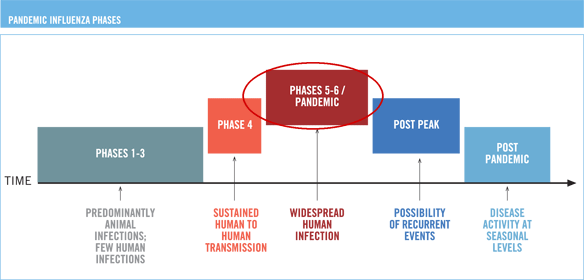
Now that the World Health Organisation (WHO) has raised the swine flu level to Phase 5, the next to highest level in the worldwide alert system, everyone is talking about a global pandemic. On 30 April 2009, the UN’s top health agency referring to it as Influenza A(H1N1).

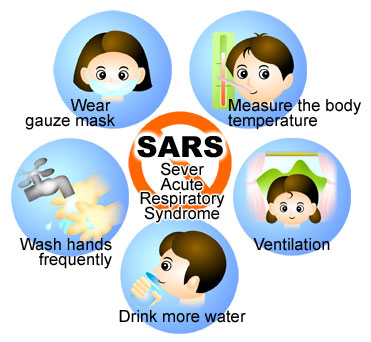
As I just wrote in another blog post, “While medical doctors and researchers spearhead the public health response, we need the mass media and all communications professionals to support the public awareness response. Flu shots and hospitals alone cannot win this battle.”

This is where Asian mass media – especially broadcast television – have some relevant and useful experiences. When Severe Acute Respiratory Syndrome (SARS) spread across much of East Asia and Southeast Asia, it wasn’t just the public health systems that took on the epidemic. The local, national and regional media joined the effort in the true spirit of public interest. There was no division between state-owned and privately-owned media. The airwaves were mobilised for preventing, containing and eventually beating the disease that wreaked havoc for several months.

The role played by Asian media during the SARS crisis has been studied and analysed in considerable detail. Lessons from that experience are worth recalling at this moment when the world is looking for ways to contain swine flu.

When SARS forced Chinese schools, universities and public offices to be closed for several weeks in the Spring and Summer of 2003, the country’s television broadcasters rose to the occasion. They started beaming a combination of entertainment and educational programming round the clock to over 400 million households across the country — now the largest national television audience in the world. The idea was to use the media to encourage more people to stay inside homes and minimise the spread of the virus through contact. China Educational Television (CETV) — the satellite distributed educational network — took on the role of substitute teacher by increasing its broadcasts.

Crisis? What crisis?
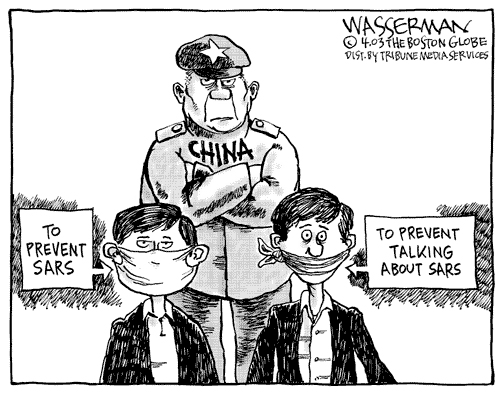
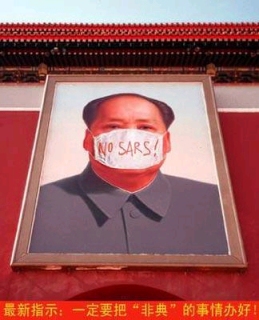
Of course, as the most likely place of origin of the SARS virus, China’s initial response to the epidemic was denial. Researchers have established how the slow or muted media reporting within China triggered more rapid disease transmission of the virus both within and beyond China. As the noted Asia watcher, columnist and journalism professor Tom Plate, wrote in 2008: “All the serious Chinese journalists were left holding their heads in shame. In effect, the institution of the mass-communication of news, because it was not allowed to do its job, contributed to the enormity of the SARS toll.”

Many researchers agree that it was the island republic of Singapore that best handled the SARS crisis. Dr Stewart Auyash, an Associate Professor in Health Promotion and Physical Education at Ithaca College in New York says: “Of the countries affected, the actions of Singapore’s government stand out as an example of how to deal not only with the biological elements of the disease but with the methods, style, tone, timing and breadth of its communicated messages.”

The Auyash study was titled ‘Communications as a Treatment for SARS in Singapore and its Lessons for Infectious Epidemics in Asia’, and appeared in Media Asia (Vol 32, No 4). Although the journal’s publishers restrict online access to subscribers, a copy can be freely downloaded from here.

Here’s how Tom Plate summarised its findings: “At the outset of the 2003 crisis, Singapore’s government and media authorities hammered out a clear plan to limit the syndrome’s spread among the populace. It adopted a containment policy that offered a major role for news media institutions. The media was asked to promote the idea of positive participation by all citizens to avoid furthering transmission.

Practising what we preach...
“Model citizens who followed World Health Organization guidelines with exceptional care were made proud subjects of newspaper feature stories. Top government officials, including high-profile members of the cabinet, were photographed or televised as submitting to the same mandatory preventive procedures as everyone else (for example, regular temperature checks). But citizens who fought the program by either resistance or even tepid nonchalance were portrayed scornfully, with the media publicly castigating them as ‘free riders’ who benefited from a safer health environment solely through the sacrifices of others.

“To make the media policy work, the government had to play things absolutely straight. When officials knew the answer to a scary question about SARS, they answered it quickly and completely; but when they had no answer, rather than making one up and putting their credibility at risk when this was later discovered, they flat out stated that they simply did not know but would try to find out.

“In Singapore, compliance with all kinds of government policies, not just health measures, is viewed as a personal and community responsibility. It is in the small city-state’s civic ethic that ‘individual rights and inconvenience may be infringed upon to protect the greater good of the public’s health,’ as Prof. Auyash put it. Even so, what seems both notable and possibly transportable to other countries is the cooperative role of the news media in a serious health crisis. Auyash points out that the role of the media is to emphasize symbols of positive compliance. Gestures and symbols, he says, ‘can galvanize a nation’s citizens to act. In short, symbols matter.'”

At the height of the crisis, Singapore even launched a dedicated SARS TV channel. The public service channel, which began in May 2003, was run jointly by Singapore’s three main broadcasters — Singapore Press Holdings, Media Corporation of Singapore and StarHub — and aimed to raise awareness about how to identify symptoms and prevent the spread of the disease.

Everyone was roped in, from educators to entertainers, in the all-out campaign against the invisible but formidable virus. The popular local sit-com Phua Chu Kang, which airs on Singapore’s Channel 5, came up with this hilarious rap video advising viewers the dos and don’ts of SARS.

As Prof Auyash concludes: “Singapore’s communication management around SARS can serve as a guide for future infectious disease control measure…There are major principles learned from SARS in Singapore from which other countries can learn…”

The US Centers for Disease Control (CDC) offered a similarly positive post-crisis judgment. This global defender against infectious diseases has praised Singapore’s aggressive and expansive policy of contact tracing and home quarantine during SARS.

“The bleakest projections about bird flu suggest that more than 300 million people could die from a global pandemic,” says Tom Plate. He adds: “Let us hope that such a number will never be realized simply because nations refuse to learn from the successes of others, simply out of pride, parochialism, ignorance or stubbornness. A pandemic of stupidity can kill people, too.”

A message from our...tormentors

Digital Defenders: How 24/7 media can help fight swine flu worldwide

So this is how it REALLY started...
The World Health Organization (WHO) said this week that the global spread of swine flu was highly likely, and raised its alert level to Phase 5 — the next-to-highest level in the worldwide warning system. It also offered advice on prevention, caring for persons with the flu and how to seek medical help.

A pandemic is not something to be taken lightly. The New Media President Barack Obama has termed the outbreak “cause for deep concern but not panic”. On 29 April 2009, he took the unusual step of using a prime-time televised news conference, convened to mark his 100th day in office, to deliver a public health message to the American people.

“Wash your hands when you shake hands, cover your mouth when you cough,” he said. “It sounds trivial, but it makes a huge difference. If you are sick, stay home. If your child is sick, take them out of school. If you are feeling certain flu symptoms, don’t get on an airplane.”

That’s the basic preventive message that needs amplification and repetition all over the world. While medical doctors and researchers spearhead the public health response, we need the mass media and all communications professionals to support the public awareness response. Flu shots and hospitals alone cannot win this battle.

For the first time in history, we have the means of rapid access to most of humanity. What we now need is clarity of message, credible messengers and sustained delivery.

I see this as an interesting – even if very risky – social experiment on the preventive powers of our 24/7 media and information devices. More than four billion mobile phones are in use, most of them in the developing world. Over one billion people connect to the web. We also have hundreds of radio and TV channels saturating the airwaves. Can these media peddle the right kind of awareness and inspire preventive action faster than the flu virus propagates itself? This is the classic race between education and catastrophe that H G Wells wrote about many decades ago!

We in Asia have some useful experiences from 2003 when the Severe Acute Respiratory Syndrome (SARS) affected much of the region. On that occasion, the media led a parallel front against the pandemic, delivering both preventive messages and helping care for those already infected.

TV playing nanny: How Asian broadcasters helped fight SARS

Precisely because rapid response is vital in a situation like SARS and swine flu, it’s the broadcast and online media that can provide timely and up-to-date coverage. It’s too early and too soon to compare media’s role in this crisis with SARS and other rapid-spread public health crisis of the past. Print media can also play a part in spreading general awareness, but they don’t have the speed and 24/7 outreach that we need for covering a crisis like this. Besides, in many parts of the world, newspapers and magazines are struggling to stay in business, coping with a terminal malady affecting their industry.

WHO's phases of a pandemic alert

Mosquito SPLAT: New Facebook game to support malaria research

I just killed a few dozen ‘girls’ before breakfast. It wasn’t always easy or pleasant, and after a while there was blood all over the place. But I feel good about getting them – and I saved an innocent baby in the process, and even helped a researcher doing good work!

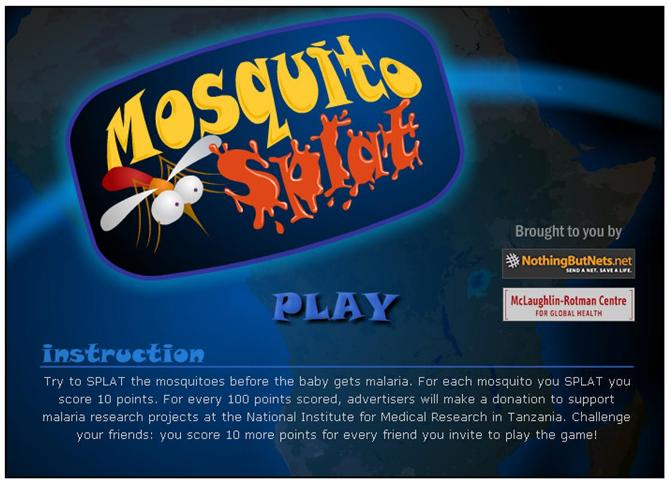
The ‘girls’ are malaria carrying mosquitoes, and I was playing a new Facebook game called Mosquito SPLAT that was released this week to mark World Malaria Day 2009.

Now online: a game we have played over millennia against 'em blood suckers...

The aim of the game is to use the fly squatter to SPLAT mosquitoes before the baby gets malaria. For each mosquito you SPLAT, you score 10 points. For every 100 points scored, advertisers will make a donation to support malaria research projects at the National Institute for Medical Research in Tanzania. We also score 10 points for everyone we invite to play the game – plus there’s a link taking us to an online donation page in case we want to support the research directly.

“It’s quick, easy and fun, and a great way to do your part for one of the most serious global health problems in the developing world,” say the game’s promoters.

Indeed. Nearly 500 million cases of malaria occur each year, resulting in over one to three million deaths (figures online vary enormously on this). Malaria is particularly devastating in Africa where it is a leading killer of children. Every 30 seconds a child in Africa dies from malaria.

The fact is, malaria deaths are entirely preventable with modest investment and spread of knowledge that mosquitoes spread malaria (not everyone knows this, and as I wrote in another blog post, that’s a challenge that educators and broadcasters are now working on).

McLaughlin-Rotman Center for Global Health: Taking anti-malaria campaign online
But more needs to be done to engage the Digital Natives in this global public health challenge. It’s not just the exposed people in malaria-prevalent parts of Africa, Asia and Latin America who are at risk. As development economist Jeffrey Sachs has been reminding us eloquently, malaria reduces productivity, increases poverty, weakens people’s bodies and makes them vulnerable to other diseases. In a globalised world, such massive suffering in some parts of the world would quickly manifest in different ways all over the planet.

Mosquito SPLAT is a partnership between the McLaughlin-Rotman Center for Global Health at the University Health Network and the University of Toronto and the UN Foundation’s Nothing But Nets campaign. The Mosquito SPLAT game is part of Malaria Engage, an initiative to enlist people directly in the anti-malaria battle by supporting malaria research projects in the developing world.

Click here to engage your Facebook friends to support malaria research.

Little biology lesson: Usually, people get malaria by being bitten by an infective female Anopheles mosquito. Only Anopheles mosquitoes can transmit malaria, and they must have been infected through a previous blood meal taken on an infected person. When a mosquito bites an infected person, a small amount of blood is taken, which contains microscopic malaria parasites. About one week later, when the mosquito takes its next blood meal, these parasites mix with the mosquito’s saliva and are injected into the person being bitten.

Pay it forward: A charming idea for our hard times?

The power of three...to do good!
Just imagine…
You do a favour that really helps someone, and tell him/her not to pay it back…
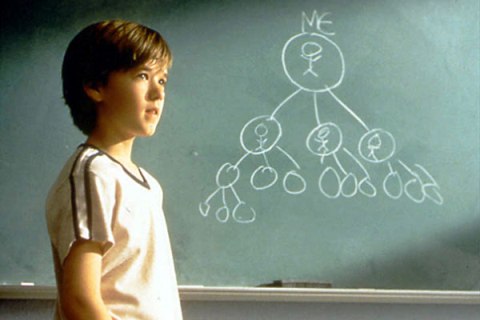
Instead, you ask that it be paid FORWARD to three other people who, in turn, must each pay it forward to three more…and so on.

Impossible? Well, not quite – if you believe (as I do) in the essential goodness of human beings, no matter what their class, race and other divisive factors are.

This idea is known as ‘Pay it forward’. It is really simple: it asks that a good turn be ‘repaid’ by having it done to others instead. Paying it forward has been around as a concept for more than two millennia, from the time of ancient Greece. It was rediscovered in modern times by Benjamin Franklin and later, by Ralph Waldo Emerson, one of my favourite essayists.

In his 1841 essay titled ‘Compensation’, Emerson wrote: “In the order of nature we cannot render benefits to those from whom we receive them, or only seldom. But the benefit we receive must be rendered again, line for line, deed for deed, cent for cent, to somebody.”

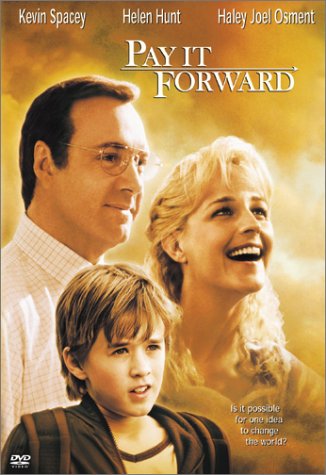
During the Twentieth Century, science fiction author Robert A Heinlein popularised the concept in his book Between Planets (1951). It formed the central theme of Pay It Forward (2000), a novel by Catherine Ryan Hyde, which was soon turned into a movie by the same name.

In that story, a thoughtful teacher challenges his seventh grade students with ‘an assignment to save the world’. One perceptive student devices a scheme where one has to carry out three good deeds for others as repayment of a good deed received. Such good deeds should be things that the beneficiaries cannot accomplish on their own.

It was through Pay It Forward the movie, made in 2000 and directed by Mimi Leder, that I first came cross the idea. It’s one of those simple and elegant ideas that packs so much power to change people and the world. Its implementation requires trust, honour and imagination, which most human beings can muster in sufficient quantity when challenged.

Then I realised that, without a conscious plan and not labelling it as such, I was already ‘paying it forward’ myself — and not just to three new people, but many. That was the least I could do for the many breaks, blessings and opportunities I had received in my professional life.

More about that in a minute. First, take a look at the official trailer for Pay it Forward:

And this is how it all started in the movie, with one thoughtful class teacher challenging his seventh grade pupils with ‘an assignment to save the world’:

Here’s an extended, unofficial trailer remixed by a fan using the official trailer, some scenes from the movie and a few interviews with the key stars:

Journalism – especially the industrialised, mainstream version of it – is by definition a highly collaborative business: newspapers, magazines, as well as TV/radio broadcasts are produced by several or many people working together, each playing a specified part.

And because the media are a mirror on our society and our times, the stories we journalists produce just won’t be possible unless our sources share their information, experiences and insights. This is why Bill Moyers, one of the most respected and credible voices in American broadcasting (a land where such professionals are endangered), says: “We journalists are simply beachcombers on the shores of other people’s knowledge, other people’s experience, and other people’s wisdom. We tell their stories.”

During the early years of my career as a science writer and journalist, I was enormously lucky in both respects. I had kind, indulgent, nurturing senior colleagues who showed me the ropes, expecting nothing in return except good stories. And I benefited much from the kindness and thoughtfulness of many accomplished men and women – mostly in the worlds of science, environment and development – who took the time and trouble to talk to me, clarify even basics to a rookie like myself, and allow me to attribute information or quotes them. I was a complete stranger to many of them, yet they cared enough in spite of busy schedules (there were also a few didn’t, but that’s only to be expected).

Then there were opportunities, some competitively earned, others bestowed on me. In those formative years, the opportunities for training, mentoring and other influences sharpened my skills and shaped my worldview. It was easy to grow up angry with the world and seeing conspiracies everywhere; it was much harder to acquire a balanced view of the world and to become a skeptical enquirer without turning into an incurable cynic.

Among those early influences were:
• Working with the Centre for Science and Environment (CSE) in India, under the late Anil Agarwal and his worthy successor Sunita Narain
• Regional and international training programmes, organised by various UN agencies and other entities such as the Abdus Salam International Centre for Theoretical Physics in Trieste, Italy
• Invaluable support from the International Science Writing Association (ISWA), which leverages far more benefits than its modest resources would indicate at first glance (again, the power of networking!)
• Editorial training and global syndication from Panos, which provided my first outlet to publish internationally through Panos Features (sadly, no more).

Then there was my mentor Sir Arthur C Clarke, who gave me the rare privilege of spending 21 years as his research assistant — a long and unique apprenticeship that enriched me so much.

These and others helped fill gaps in my formal training in science journalism. And such exposure was worth so much more in the days before commercial internet connectivity. There was no Google or YouTube, and early versions of email were just beginning to roll out.

Just do it, and hope others will keep doing it too...
And now it’s my turn to ‘pay it forward’. It’s plain and simple; there’s no grand pledge or plan. No one asked me to sign up to any binding agreement. There is no spiritual or intellectual compulsion. I just do it, because that’s a good thing to do.

This is why, despite pressure of work, I work with young journalists and producers, organising training workshops through TVE Asia Pacific, or readily agreeing to be a resource person for good programmes organised by others. This is also why I mentor a few eager, committed young professionals in my native Sri Lanka and elsewhere in developing Asia. Read here my tribute to one of them, whose death four years ago was hard to bear. And this is why every year I donate a couple of weeks of my time serving on boards of management of two media/development related charities whose vision and mission I share.

This is also why I spent a good part of my recent Easter/New Year holidays putting together a detailed response to a young script writer who is passionately promoting a film project related to climate change. I have never met him in person, and until a few weeks ago, I’d never heard of him. A cynical British colleague used to caution me that any crazy nut sitting under a banyan tree can write a letter (or more likely an email these days) claiming to be anything he wasn’t. There’s always that risk. But I’m taking my chances.

Years ago I stopped counting the favours I paid forward, and I no longer even keep track of the people that I give little nudges along the way. Being a secular rationalist with no absolutely religious belief of any kind, I don’t collect brownie points for any ‘next world account’. I just do these little good deeds to make this world a little better place.

If further justification were needed, I cannot say it better than Steven Grellet, a prominent French Quaker missionary who once said (and I quote him for its secular essence): “I expect to pass through this world but once; any good thing therefore that I can do, or any kindness that I can show to any fellow creature, let me do it now; let me not defer or neglect it, for I shall not pass this way again.”

Message placement: Gates Foundation discovers TV soaps are good for health!

There's still time for TV to redeem itself...
In the developing (or majority) world, we have been doing it for years: embedding subtle messages on health, environment, family planning or civic behaviour in popular, highly-rated entertainment shows on television.

In parts of Asia, Africa and Latin America, there is a long history of collaboration among non-formal educators, advocacy groups and broadcast companies to mix entertainment with public education — a difficult balance to achieve without putting off viewers who tune in for entertainment. See, for example, my coverage of the BBC World Service Trust’s work in India.

Now, it seems, this ‘edu-tainment‘ approach is also being tried out seriously in the home of ‘soap operas’ or television drama: the United States.

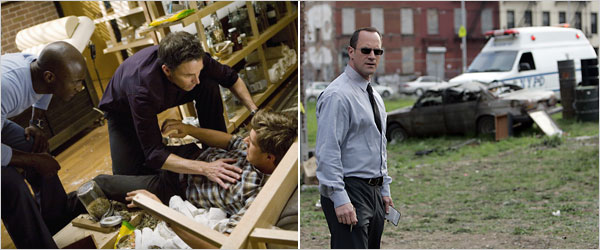
A recent report in the New York Times describes how the Bill and Melinda Gates Foundation is working with video production companies and broadcast networks to shape story lines and insert health-related messages into popular entertainment like the television shows “ER,” “Law & Order: SVU” and “Private Practice.”

Already, the foundation’s messages on HIV prevention, surgical safety and the spread of infectious diseases have found their way into these shows.

The report, written by Tim Arango and Brian Stelter, said: “Now the Gates Foundation is set to expand its involvement and spend more money on influencing popular culture through a deal with Viacom, the parent company of MTV and its sister networks VH1, Nickelodeon and BET.”

They called it “message placement”: the social or philanthropic corollary to product placement deals in which marketers pay to feature products in shows and movies. Instead of selling Coca-Cola or G.M. cars, they promote education and healthy living.

Some viewers in television-saturated US might say: it’s about time! In the past, many American companies producing entertainment content have resisted approaches from social activists to use the mass medium for public good.

In the late 1980s, when I shared some Asian experiences of mixing television drama and public education at an international science communication conference in Spain, American academics and journalists in the audience were intrigued. “But this can never happen in the United States…we keep our education and entertainment separate, and with good reason!” one of them said during question time.

Clearly, those hard attitudes have been changing slowly. As the NYT article says: “The efforts of philanthropies to influence entertainment programming is not new…. The Kaiser Family Foundation, which focuses on health issues, has been doing such work for a dozen years. It has worked story lines about H.I.V. and AIDS into programs on CBS and UPN (now known as the CWnetwork), including the reality show “America’s Next Top Model.”

Left, ABC’s “Private Practice,” and NBC’s “Law & Order: SVU.” The story lines of both shows have spread the health-related messages of the Gates Foundation. Images courtesy ABC & NBC

The Norman Lear Center at the University of Southern California’s Annenberg School for Communication is at the forefront of blending entertainment with public education. “There’s a lot of research that shows that when a character in a series says, ‘I’m going to be an organ donor,’ it’s effective, more effective than giving out a pamphlet,” said Martin Kaplan, director of the Centre.

The Centre has a Hollywood, Health & Society programme that provides entertainment industry professionals with accurate and timely information for health storylines. It organises meetings between health specialists and script writers for entertainment shows – not just drama, but also reality and variety shows.

“Our view is you don’t have to sacrifice entertainment value to be accurate,” Kaplan is quoted as saying in the NYT article.

That’s a view – and experience – shared by TV writers, producers and programme managers from Mexico to South Africa, and from India to the Philippines. In fact, this is an approach the Gates Foundation should consider rolling out in the majority world countries where they are already a key player in selected areas of health and development. Despite the recent spread of broadband internet, broadcast television is still the dominant mass medium – and primary source of news and entertainment – for most people in much of the developing world. That’s billions of eyeballs we’re talking about – and the cost of producing quality entertainment (even with education subtly embedded in some places) is significantly less than in the west.

In short, Gates can get a bigger bang for its bucks on the airwaves in the global South. And there’s really no need to convince TV industry gate-keepers and producers on how edu-tainment works: they’ve been at it for years, using whatever resources they can find.

Read full article: Messages With a Mission, Embedded in TV Shows, NYT 2 April 2009