In a new op ed essay — titled ‘Open Moment’, Closed Minds! — just published on Groundviews.org, I look back and ask some hard questions.
Here’s an excerpt:
“We all knew the hard-won peace had to be nurtured and consolidated. We also realised just how formidable the challenges of healing and rebuilding were. But could anyone have imagined the dramatic turn of political events since?
“Who would have thought that the victors of the war would soon be engaged in a nasty battle for personal glory and power? Who expected the historical feud between ‘lions’ and ‘tigers’ to be replaced so swiftly by a showdown between self-proclaimed ‘patriots’ and ‘traitors’?”
I raise these questions in the context of a fiercely contested presidential election scheduled for 26 January 2010. I note: “The two main contenders both claim to hold a mutually exclusive key to a better future for our land and people. Their dizzy campaigns bombard us with lofty claims and counter-claims 24/7 delivered through broadcast, broadband, mobile and other media.”
I ask whether either of the leading candidates has the open mind needed to seize the historic ‘open moment’ since the war ended. I recall how we completely missed the last such open moment created by the tsunami of December 2004.
I write: “Having missed the tsunami’s open moment, we cannot afford to bungle again. Rebuilding a nation of lasting peace, pluralism and prosperity will require many sections of society to change their mindset. This is especially and urgently needed in our media, much of which has become uncritical cheerleaders for patriotism and tribalism in recent years.”
Despite the many disappointments of the past 250 days, I still remain cautiously optimistic. But for how long?
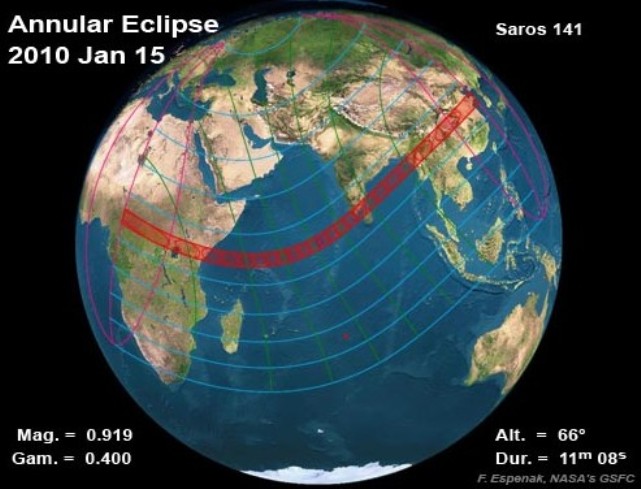
Where the island of Sri Lanka was concerned, it was the first solar eclipse of the broadband internet era — and that showed.
The last solar eclipse seen in Sri Lanka was two generations ago, on 20 June 1955. That was almost pre-historic in mass media terms. The newly independent Ceylon had a single, state-owned radio station and a handful of newspapers. There was no television, and the internet was not even conceived.
Yet, paradoxically, the media’s influence over the 8 million people then living on the island seem to have been greater at the time. As astronomer Dr Kavan Ratnatunga recalled: “A quack physician cum astrologer, recommended that women wanting to become fair and lovely should drink a decoction of which the main ingredient was “Vada Kaha” (Sweet Flag or Acorus Calamus) at the time of the total eclipse, preferably unseen by others. Many who took his advice ended up in hospital.”
Solar eclipse on 15 Jan 2010 seen in Anuradhapura, north-central Sri Lanka - photos by ReutersIn contrast, in 21st Century Sri Lanka, the January 15 eclipse was not much of a news story. I don’t claim to have done a systematic analysis, but my impressions are drawn from scanning the major newspaper websites in English and Sinhala, and surfing the dozen or more terrestrial (free-to-air, not cable) TV channels that were on the air during the three hours or so of the eclipse. (Sorry: I missed out radio, and I’m not proficient in Tamil.)
Broadcast television was my biggest disappointment. Solar eclipses are a visual spectacular, and literally heaven-sent for live television. Yet, not a single Lankan TV channel carried a live broadcast of the event, either from northern Sri Lanka where it was best seen (in its annular form, with ‘ring of fire’ effect), or from elsewhere on the island as a partial eclipse.
It seemed as if the Colombo-based media were completely preoccupied with the intense build-up to the presidential election scheduled for 26 January 2010 — a case of politics eclipsing the solar eclipse?
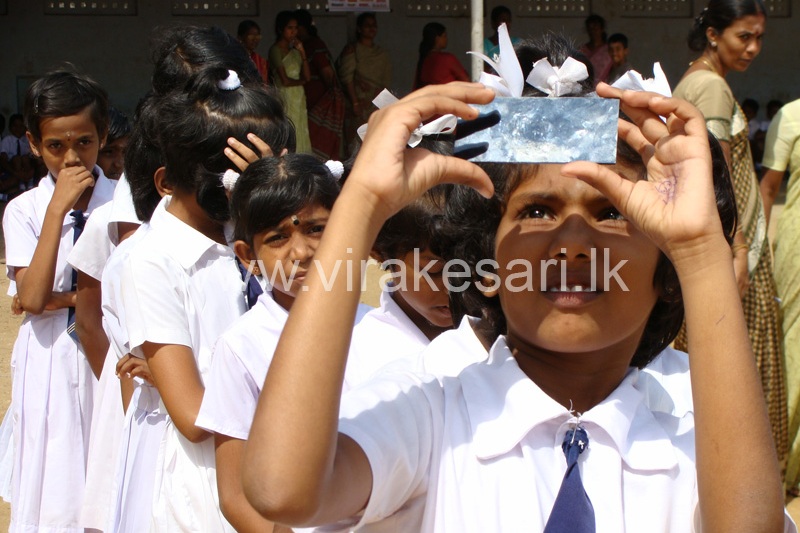
Jaffna school children view the solar eclipse - Photo courtesy Virakesari
But there were a couple of honourable exceptions – and thank heavens for that! One was the leading Tamil daily Virakesari, which sponsored an expedition to Jaffna, in northern Sri Lanka, by a group of professional and amateur astronomers from SkyLk.com. According to one member of this expedition, Thilina Heenatigala, this newspaper provided the widest and most uptodate coverage of the annular eclipse from Jaffna.
SkyLk.com collaborated with the Hindu College in Jaffna, whose playground was converted into an open air observation camp. Thilina says over 2,000 people – including school children and adults – had converged to witness the event. A large screen was set up on to which the live image from a telescope was projected.
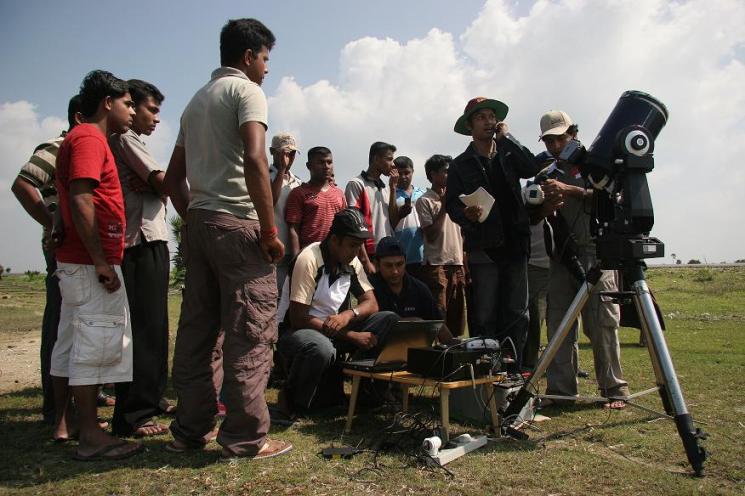
Not far from there, a group of engineering students and teachers from the University of Moratuwa was doing a more scientific observation. Later that day, team leader Dr Rohan Munasinghe reported in an email: “We have recorded the solar eclipse from Kayts (lat 9d,37m N, Long 79d,58 E), the biggest island off Jaffna Sri Lanka. We have timestamped the video with GPS (Garmin 18) accuracy.”
University of Moratuwa team observing the clipse - photo courtesy Dr Rohan Munasinghe
Elsewhere across the island of Sri Lanka, there was plenty of interest among the people from all walks of life — as seen from the thousands who stepped out during mid-day to take a peek at the celestial phenomenon. Not all of them followed the safety precautions to prevent eye damage, disseminating which the media had done a good job in the preceding days.
Clearly, this high level of public interest was not reflected in how the rest of Lankan mainstream media covered the eclipse. But if the mainstream media’s gaze was firmly fixed on the gathering election storm on the ground, the new media created opportunities for others to step into that void. Citizen scientists joined hands with citizen journalists to capture and share the eclipse with each other — and the world. These unpaid enthusiasts used commonly available digital tools and online platforms for this purpose.
Some of them uploaded dozens of photos for public viewing on image sharing sites like Flickr. A good example is what Shehal Joseph and Romayne Anthony did. There were many others.
SkyLk.com group was more ambitious: they actually webcast the eclipse live online from their public observation camp at Hindu College grounds. Stuck in Colombo with its sub-optimal viewing conditions for this eclipse, this was the best chance for people like myself to catch the annular part of the phenomenon.
“We were struggling with bandwidth limitations most of the time,” Thilina Heenatigala says. “We used a Dialog HSPA modem to connect to the web, and line speeds kept fluctuating. We were not the only ones uploading still photos or video to the web from different locations in northern Sri Lanka — and apparently all of us were slowing down each other.”
Being the tech-savvy planner he is, Thilina had alerted Dialog telecom company about the likely peaking of bandwidth demand. But he is not sure if any temporary enhancing was done, even though Dialog currently claims to be the ‘first and best’ to offer telecom coverage in the north. Certainly, the live eclipse webcast was not of uniform quality — it’s a small miracle it happened at all: until a few months ago, this was part of the theatre of war in northern Sri Lanka.
In fact, SkyLk.com had used the web to build up public awareness and interest using video trailers on YouTube. Here is one of several simulations they had up from December, thus one for Anuradhapura, Sri Lanka (simulation):
In the end, however, SkyLk.com became a victim of its own success. The live webcast was followed by hundreds, and then thousands of online visitors from different parts of the world. This apparently overshot the usual allocations provided by the offshore hosting company (in the US), which suspended the account. Right now SkyLk.com website is not accessible (as at 16 January 2010, 15:00 UTC/GMT).
Within hours of the eclipse, several individuals and groups also uploaded highlights of their eclipse videos on to the YouTube. Here are the most striking ones I came across in a quick search:
Solar Eclipse 2010 Sri Lanka Scientific Record – by University of Moratuwa
Scientific recording of the annular solar eclipse on 15 January 2010 was carried out from the Island Kayts (Lat +09d 37m North and Long +79d 58m East) of Sri Lanka.
Orion Video’s coverage from Nallur, Jaffna:
Not in the same league as the above two videos, this was Nishan Perera’s personal observations from Ratnapura, south-western Sri Lanka:
It’s too early to draw firm conclusions from this random evidence, but in all likelihood, we passed thresholds in both citizen journalism and citizen science with this eclipse. Clearly, the mainstream media’s monopoly/domination over reporting of such an event has been shattered: their indifference will no longer stand in the way of information and images being disseminated.
Perhaps just as important, it is no longer possible for a couple of self-appointed ‘public astronomers’ to dominate the public information channels on an occasion like this, mostly for shameless self-promotion. As Dr Kavan Ratnatunga, President of the Sri Lanka Astronomical Association, noted in an article: “I am amazed as to how many who have never even seen a Solar Eclipse, will gladly talk about it to an equally ignorant journalist, resulting in some totally misleading and sometimes hilarious information being published in both the English and Sinhala media. In a nation which believes in pseudo astrology, I am sure it is just a matter of time before quacks start using it to predict influence on local events and politics. However, there is absolutely no influence on any person by any of these celestial events.”
At the end of the day, however, astronomy aficionados are emphatic that no amount of media coverage can really substitute the experience of being there and experiencing it ourselves. As Kavan says: “A solar Eclipse is event which must be experience and observed. No video can do justice to that experience. It can also become addictive. In the modern age when the Internet and TV can bring events to your home, one may wonder why some Eclipse chasers travel round the world to see an Eclipse of the Sun.”
The next solar eclipse visible from Sri Lanka will be on 26 December 2019. I wonder what kind of media and ICT landscape would cover that event…
Last chance...?Here’s a winning idea for a new business venture in these lean times: make an always-agreeable ‘magic’ mirror — and the vane and wicked will beat a path to your door.
Well, at least half the politicians in Sri Lanka would. They’d rather not see their true selves on any mirror.
The magic mirror idea was popularised many years ago by Snow White and the Seven Dwarfs, whose wicked and vain queen had an unusual mirror that talked back, each time she asked: ‘Mirror, mirror, on the wall. Who’s the fairest of them all?’.
The queen wasn’t looking for honest answers; she just wanted to hear she was always the prettiest and fairest in the land. (All competition – real and imagined – was dealt with brutally.)
Little has changed, even in this 21st Century. We may not have too many monarchs left in the world, but our uncrowned rulers can be equally vain and ruthless. They are obsessed with self-aggrandizing sycophancy – they’d only tolerate magic mirrors that totally boost their egos.
If I seem to be preoccupied with mirrors, that’s nothing to do with my own vanity. In this digital age, the mirror is still a pretty good metaphor for the media industry that I have been part of, in one way or another, for over 20 years. At its very basic, the media are expected to reflect our society and our times.
But some people don’t like what they see on a true mirror. In 2009, we saw a spate of mirror smashing or media bashing in Sri Lanka. It started on 6 January, when the studio of the Maharaja Television/Broadcasting Network (MTV/MBC, popularly known as Sirasa Group) was attacked by armed gunmen who almost blew up the country’s most popular private broadcast organisation. On 8 January, exactly a year ago today, Lasantha Wickrematunga, editor of The Sunday Leader, was shot dead by two men on a motorcycle as he drove to work in suburban Colombo.
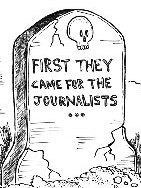
Sirasa & Lasantha: Refused to be magic mirrorsOne year later, both crimes remain unsolved. They have joined a long list of crimes against journalists and media organisations in Sri Lanka, most of which have never led to any prosecution of the perpetrators.
As Reporters Without Borders noted in a statement this week: “The emotion and anger have not gone away in the year since this famous Sri Lankan journalist’s death. The anger is being sustained by the government’s flagrant obstruction of the investigation. Lasantha Wickrematunge’s name and memory will not disappear and, in that sense, those who were behind his murder made a mistake.”
Commenting on the MTV/MBC (Sirasa) attack, I described the typical reaction of the mirror-bashers: “…if you don’t like what you see in the mirror – which is what media is to society – just kick it, shatter it and hammer it into dust so that it won’t reflect anymore. Destroy all the mirrors of the land, and we’ll finally be the fairest and prettiest in the whole world. That seems to be the perverse logic that fuels attacks of this nature.”
Rex de Silva, the first editor that Lasantha worked for in the late 1970s cautioned that Lasantha’s murder was the beginning of ‘the sound of silence’ for the press in Sri Lanka. As I asked on the day of Lasantha’s emotionally-charged funeral: “Can this sound of silence be shattered by the silent, unarmed majority of liberal, peace-loving Lankans who were represented at the funeral service and the Colombo cemetery today?”
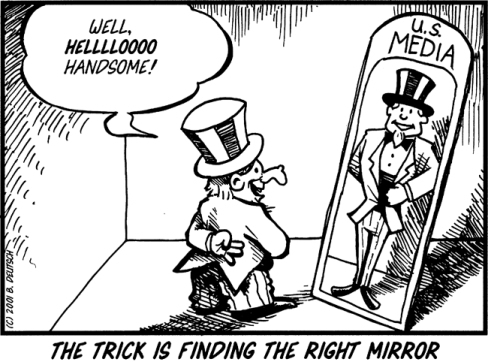
Back to mirrors. While the true mirrors were getting bashed, those who played being ‘magic mirrors’ have done well for themselves (and are probably laughing all the way to their banks). But that’s not a phenomenon confined to the little island of Sri Lanka. A good part of the US Media did the same under the hawkish Bush Administration, which prompted the cartoon below.
It’s not just ‘Dubya’ who is addicted to such agreeable mirrors. Indeed, for many modern-day rulers, an essential trapping of power involves surrounding themselves with spin doctors, press commissioners and other manipulators or manufacturers of image. In mature democracies, there are certain checks and balances which usually guard against the worst excesses (but there are notable exceptions – look at Italy!).
In immature, fragile or pseudo democracies, mirrors obey the laws of physics (optics) at grave risk to themselves. If you want proof, just talk to the staff of Sirasa or The Sunday Leader in Sri Lanka…
Schools across Asia are re-opening this week after the Seasonal holidays. In some countries, as in Sri Lanka, it also marks the beginning of a new school year (we summer-less folks follow the calendar year).
So I want to share this great cartoon, recently drawn by Nate Beeler, the award-winning editorial cartoonist for The Washington Examiner.
New kid on the block?
This is no laughing matter. According to WHO, as of 27 December 2009, worldwide more than 208 countries and overseas territories or communities have reported laboratory confirmed cases of pandemic influenza H1N1 2009, including at least 12220 deaths.
The WHO director-general, Margaret Chan, said on 4 January 2010 that the swine flu — influenza A(H1N1) — pandemic may not be conquered until 2011.
So watch out – but just how do we get kids to stop being…kids?
When I was in my early teens (back in the early 1980s), I developed a great interest in radio. Not just in listening to radio broadcasts, which I did regularly while growing up in a country that had no television, but also in building a radio that could both receive and transmit signals.
My school teacher father, who encouraged me in many of my diverse pursuits, bought transistors, condensers and other ‘building blocks’ for a basic radio set. With the help of an amateur radio handbook, and through trial and error, he and I actually built a functional transmitter. It was exhilarating to listen to local and shortwave broadcasts on a home-made radio set, but even more exciting to be able to transmit rudimentary signals.
Even as a kid, I was not contented in being a passive recipient of information; I wanted to give out as much as I received…
That particular fancy didn’t last long: I soon moved on to other challenges, and never persisted with being a serious amateur radio enthusiast (or ‘radio ham’), but it left a lasting impression. A few years later, after leaving high school, I became a regular freelancer at the local radio station. By age 23, I was hosting my own weekly show on national radio, and my association with the radio medium would last for much of my 20s.
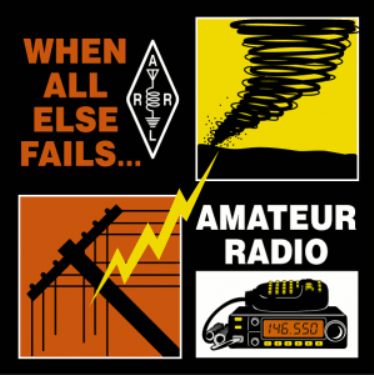
The humble low tech that saved the day...My interest in amateur radio lay dormant — until five years ago, when I read reports about how radio hams helped revive emergency communications in the immediate aftermath of the Indian Ocean Tsunami.
The decades old practice was hailed as the ‘low tech’ miracle that literally helped save lives. Where electricity and telephone services — both fixed and mobile — had been knocked down, radio hams restored the first communication links. They were at the forefront of relief efforts, for example, in the Andaman and Nicobar Islands in India, and in Hambantota in southern Sri Lanka.
This intrigued Sir Arthur C Clarke, inventor of the communications satellite and long time resident of Sri Lanka. Shortly afterwards, he wrote in Wired magazine: “We might never know how many lives they saved and how many minds they put at ease, but we owe a debt to Marconi’s faithful followers.”
If Sir Arthur were alive, he would have been dismayed to find what has happened since. Notwithstanding their celebrated role after the tsunami, radio hams have been sidelined in Sri Lanka. Their very hobby is being frowned upon by the state on the grounds of…national security.
Looking back, it seems like the public-spirited radio hams were given their 15 minutes of fame and then soundly ignored. Worse, the short-lived prominence may have attracted new bureaucratic hurdles.
“As the applause died away, everything was forgotten,” I quote Victor Goonetilleke, one time President and current Secretary of the Radio Society of Sri Lanka, which networks amateur radio practitioners in the country.
One reason for this bureaucratic fear and negativity, I argue, may be simple ignorance of what amateur radio really is — reflecting the disturbingly low levels of media literacy in Sri Lanka.
Read the full essay, and join the conversation on Groundviews, or on this blog.
All journalism is subjective; it’s just that some of us are better at disguising it! As we head for the end of 2009, we at Moving Images blog take one last fleeting, impressionistic, judgemental and, yes, darn too opinionated look at the past 365 days. That Was The Year That Was…and here’s our list of superlatives!
Best news and biggest relief (national): Sri Lanka’s nearly three decades long and brutal civil war finally ended in mid May 2009 – and not a moment too soon. It rightly created headlines around the world, and also made it to TIME’s top 10 news of the year. Within 24 hours of that much-awaited news, I wrote and published one of my most emotionally charged essays ever, Memories of War, Dreams of Peace. I probably spoke for a whole generation of Lankans: “As we stand on the threshold of peace, I am overwhelmed with memories of our collective tragedy. I hope we can once again resume our long suspended dreams for a better today and tomorrow.” With the hindsight of seven months, I still want to believe every word…although it’s become increasingly hard to cling on to such ideals.
Biggest disappointment (national): Ending the Lankan war entailed tremendous effort, cost and sacrifice, and we all knew that consolidating peace and restoring normalcy were going to be even harder – delivering peace dividends is no mean task. As weeks became months, our cautious optimism slowly turned into disappointment and dismay: it became clear that the triumphalist government was treating the historic ‘open moment’ simply as as blank cheque to do pretty much what it wanted. My May 19 essay on Dreams of Peace had ended with a question that resonated with millions: “Would our leaders now choose the Mandela Road or the Mugabe Road for the journey ahead?” Can we please ask that question again…? Hello, anybody listening?
Most evocative piece of writing: Without competition, that distinction goes to The Last Editorial by Lasantha Wickrematunga, the courageous investigative journalist (and de facto leader of the political opposition) in Sri Lanka, who was brutally slain on January 8 while on his way to work. That editorial, which appeared post-humously in his newspaper The Sunday Leader on 11 January 2009, embodies the best of Lasantha’s liberal, secular and democratic views. Nearly a year after the dastardly daylight crime, his killers have not been caught and independent media remains under siege even in post-war Sri Lanka.
Most memorable quote: While people like Lasantha articulated our cherished dreams for a truly pluralistic society, our billion+ neighbours in India have been building it for over six decades. It’s still a work in progress, and the ideals need occasional reiteration. This is precisely what classical dancer Mallika Sarabhai did when she ran as an independent candidate when India conducted the world’s largest democratic election in April-May. She lost, but wrote one of the most insightful pieces on what it means to live amidst the huge cultural, social and political diversity in India: “We are a salad-like melange of cultures and not a soup where all variations get reduced to a homogeneous pulp—this, to me, is our greatest strength.” (She inspired my own essay: Sri Lanka – Spice Island or Bland Nation?)
Biggest disappointment (global):
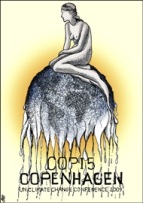
The UN climate conference in Copenhagen, held in December and officially dubbed COP15, ended up in what many activists felt was a cop-out. Greenpeace echoed the frustration of many when they said at the end of what was, at its start, billed as the ’14 days to seal seal history’s judgment on this generation‘: “Don’t believe the hype, there is nothing fair, ambitious or legally binding about this deal. The job of world leaders is not done. Today they shamefully failed to save us all from the effects of catastrophic climate change.” I was glad I wasn’t part of the mega event — I’ve burnt enough aviation fuel this year, but almost all events I participated in on three continents were more productive than the Danish debacle…
Biggest Under-achiever: If the world laboured a mountain and delivered a mouse in Copenhagen, the mid-wife of that process must surely have been the current UN chief Ban Ki Moon. More secretary than general, Ban is, in his own admission, the UN’s Invisible Man. All the top speech writers and PR agents in the world can’t animate this the perennially dull and dour diplomat. Not ideal change-maker when the world is racing against catastrophe. Kofi Annan, we miss you!
Most moving work of moving images: The world’s rich are having a party, and millions living in poverty are the ones footing the bill. This is the premise of Indian journalist and activist Pradip Saha’s latest film, MEAN Sea Level, which looks at the impact of climate change on the inhabitants of Ghoramara and Sagar islands in the the Sundarban delta region in the Bay of Bengal. I found it both deeply moving and very ironic. With minimal narration, he allows the local people to tell their own story. As it turned out, these testimonies were lost on the bickering politicians in Copenhagen…
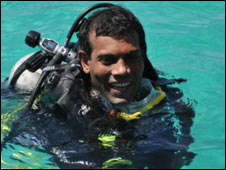
Best media stunts: We are a bit divided here. At a time of ever-shrinking attention spans, it takes much creativity and guts to grab the cacophonous media’s attention, especially for a good cause. Two very different men succeeded where many have failed. In February Bill Gates, the world’s top geek now working for its meek, released some mosquitoes at the TED 2009 conference to highlight the continuing grip that malaria has on the developing world, especially Africa. In October, climate crusader President Mohamed Nasheed of the Maldives held the world’s first underwater cabinet meeting to remind everyone of the watery future that awaits low lying island nations like his when climate change rises sea levels.
Biggest Irony: NASA announced in November that an unmanned space probe that was intentionally crashed on the Moon had discovered the presence of ‘significant amounts’ of water there. That bit of scientific evidence cost US$79 million to obtain…and was not the most comforting news for a planet that rapidly running short of usable freshwater. In the wake of the Apollo Moon landings in the late 1960s, misguided voters in Sri Lanka elected a government that promised ‘to bring rice even from the Moon’. When might we hear politicians promise us water from the Moon?
Well, that’s it folks — the highs and lows of 2009 according to the Blogger-in-Chief and his team of elves here at the Moving Images Media Empire. We’ve waded through our several dozen blog posts to come up with the above, and make no claims for being fair, balanced or comprehensive…
Indeed, we hope you don’t agree with all our picks, and invite you to express alternative – even dissenting – views. All comments that are not outright libellous or blatantly self-promotional will be published.
We take this opportunity to thank each and everyone who read our posts over the year — and especially those who left comments, sometimes radically disagreeing with our views. We also reiterate our pledge to frustrate those few persistent detractors who keep demanding to see our nationalistic, religious or other credentials…
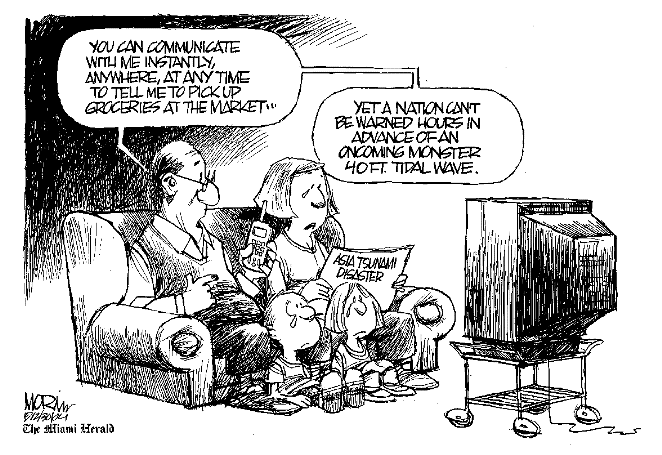
This is one of the most memorable cartoons about the Asian Tsunami of December 2004. It was drawn by Jim Morin, the Pulitzer Prize winning editorial cartoonist of the Miami Herald.
It summed up, brilliantly, one of the biggest shocks associated with that mega-disaster. As I wrote in my op ed essay to mark the fifth anniversary: “It took a while for the tsunami waves, traversing the Indian Ocean at the speed of a jetliner, to reach India, the Maldives, Sri Lanka and Thailand. Yet, in this age of instantaneous telecom and media messaging, coastal residents and holiday makers were caught completely unawares — there was no public warning in most locations. Institutional, technological and systemic bottlenecks combined to produce this monumental failure in communication.”
After doing a dispassionate analysis of what went wrong in Sri Lanka in the crucial hours just before and during the 2004 tsunami, he asked: “So what remedies one can suggest so that when the next disaster happens — which may or may not be a tsunami — we do not see the same series of events repeated? What exactly is the role that the media can play?”
Disaster warning is everyone’s business: Life for most of us would have been easier had the government taken full charge of disaster warnings. Unfortunately, the things do not work that way. These are some of key stakeholders and they have specific roles that they can play:
Views from Ground Zero of several disasters...• The scientific community: Develop the early warning systems based on their expertise, support the design of scientific and systematic monitoring and warning services and translate technical information to layman’s language.
• National governments: Adopt policies and frameworks that facilitate early warning, operate Early Warning Systems, issue warnings for their country in a timely and effective manner.
• Local governments: Analyse and store critical knowledge of the hazards to which the communities are exposed. Provide this information to the national governments
• International bodies: Provide financial and technical support for national early warning activities and foster the exchange of data and knowledge between individual countries.
• Regional institutions and organizations: Provide specialized knowledge and advice in support of national efforts, to develop or sustain operational capabilities experienced by countries that share a common geographical environment.
• Non-governmental organizations: Play a critical role in raising awareness among individuals and organizations involved in early warning and in the implementation of early warning systems, particularly at the community level.
• The private sector: Play an essential role in implementing the solutions, using their know-how or donations (in-kind or cash) of goods or services, especially for the communication, dissemination and response elements of early warning.
• The media: It has to play an important role in improving the disaster consciousness of the general population, and disseminating early warnings. This can be the critical link between the agency that offer the warning and the recipients.
• Communities: These are central to people-oriented early warning systems. Their input to system-design and their ability to respond ultimately determines the extent of risk associated with natural hazards.
And here’s his conclusion: “Technology is important. The sole reason behind the seemingly incredible advancements that have happened in the field of human development is the spurt in the growth of new technology. However without people to handle it properly, the technology per se can achieve little. What we can expect a sophisticate earthquake detecting device to do, if there are no human beings to take note what it indicates? So, while giving technology its due position, let us focus on the people-side of the problems. “
The wide-ranging interview was originally filmed in November 2005 in Bangkok, Thailand, by Thai journalist and film maker friend Pipope Panitchpakdi. He used excerpts at the time for a Thai documentary to mark the first anniversary of the tsunami. It remains one of the best media interviews I have given, for which all credit goes to Pipope.
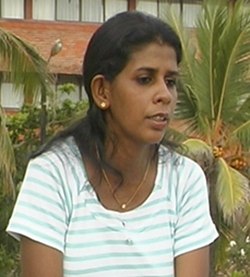
Dilrukshi Handunnetti in Deep Divide filmContrary to a popular belief, journalists don’t enjoy being able to say ‘I told you so!’. They much rather prefer if their investigative or analytical work in the public interest are heeded in time.
A few months before the Indian Ocean tsunami of December 2004, my friend and journalist Dilrukshi Handunnetti wrote an investigative story on how coastal zone management laws and regulations were openly flouted by developers. She cautioned that it was a ‘disaster waiting to happen’
She had no idea how forcefully her point will be driven home before that year ended.
“Little did anyone realise the price coastal communities would have to pay for the greed of a few dozen developers,” she said after the tsunami, interviewed for Deep Divide, a South Asian documentary on environmental justice that TVE Asia Pacific produced in 2005.
Sri Lanka’s economic activities are concentrated in coastal areas: 80 per cent of the tourist related activities are found there, along with one third of the population. Seeking to accelerate economic growth, the Sri Lankan government took measures to develop the island’s coastal regions. Shrimp and prawn farming was encouraged, while many incentives were provided for developing tourist resorts along the island’s scenic beaches.
As the shrimp exports grew and tourist arrivals increased, there was a ‘cost’ that only local residents and a few environmentalists cared about: mangrove forests were cleared, coral reefs were blasted, and the coastal environment was irreversibly changed.
Shrimp farming damaged mangroves, aggravated tsunami impactCoastal zone management regulations and guidelines were openly flouted by developers. Local communities were the last to benefit from this development boom — they watched silently as their fish catch dwindled and their coastal environment was pillaged. But little did anyone realise the price coastal communities would have to pay for the greed of a few dozen developers.
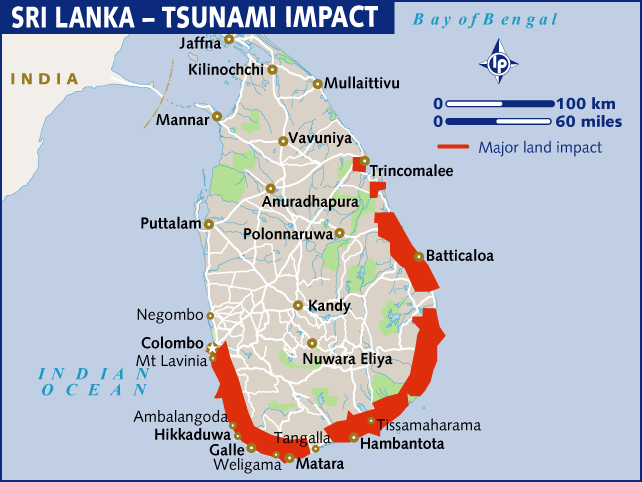
When the tsunami struck, there were very few natural barriers to minimise its impact. More than 40,000 people died or went missing, while hundreds of thousands lost their homes and livelihoods. It was the biggest single disaster in the island’s history.
Dilrukshi reflects: “Post-tsunami, people realised that the mangroves have protected these little, you know, landmass. And where you find a little bit of protected mangroves, you also find the landmass protected.”
She adds: “I think we have committed lot of excesses and we have been made to answer for those sins. Hereafter, we cannot afford to not do it right.”
Filmed on location in India, Nepal and Sri Lanka, Deep Divide explores the reality of environmental justice in South Asia — home to 500 million people living in absolute poverty, or 40 per cent of the world’s total poor. Everywhere, it finds environmental injustice. This investigative film builds on the work by three local journalists, who act as our guides to understanding the complexities and nuances of development amidst poverty and social disparities.
The origins of Deep Divide go back to 2002. Panos South Asia, a regionally operating non-profit organization analyzing development issues, awarded media fellowships to selected journalists from five South Asian countries to explore specific cases of environmental injustice in their countries. They were to investigate issues as varied as land degradation, food and water insecurity, rising pollution, and mismanaged development.
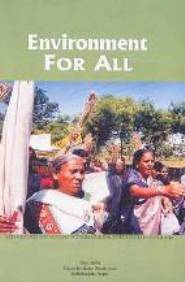
Their findings were initially published in the local media – in the newspapers or magazines they worked for. In 2004, Panos South Asia compiled the articles in a book titled Environment for All. Three stories from this book were adapted into the documentary, directed by Indian film maker Moji Riba.
The undersea quake that triggered the Indian Ocean tsunami on 26 December 2004 was so powerful that it was felt around the globe, as far away as Alaska. Likewise, the killer waves that hammered the coasts of South and Southeast Asia left such a trail of destruction that it was like a lasting, unceasing wave.
On the eve of the mega-disaster’s fifth anniversary, I’ve been busy writing, talking and reflecting on what it meant for me personally, and my media profession and fellow Asians in general. I recently filmed an interview for Thai Public Television (TPBS), where my friend Pipope Panitchpakdi is doing a tsunami+5 documentary.
He was in Sri Lanka at the time of the tsunami, and spent two weeks working as a freelance reporter covering the aftermath for the western media. His piece sums up the mixed bag of lessons and recovery efforts that Sri Lanka, one of the hardest hit countries, has accomplished in the half decade this that momentous day.
An excerpt: “Five years later, life in the affected countries has resumed, and the world has learned immensely valuable lessons about responding to catastrophe. But as with any human endeavor, some opportunities have also been lost.”













 Open Minds!