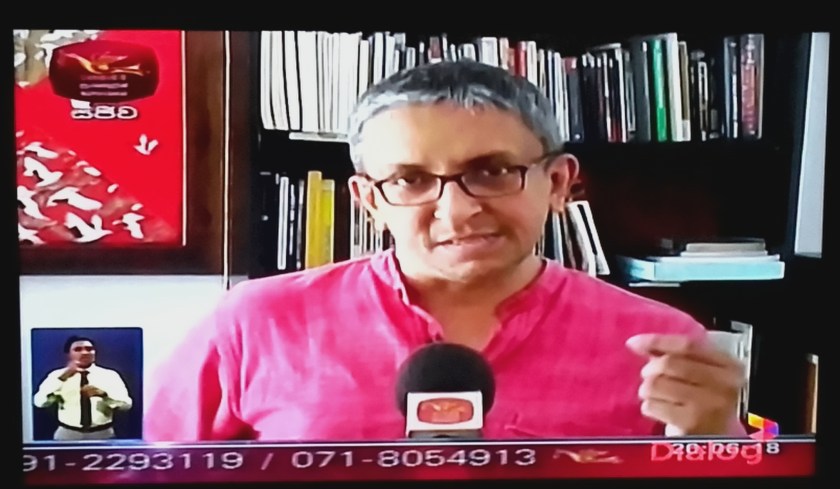
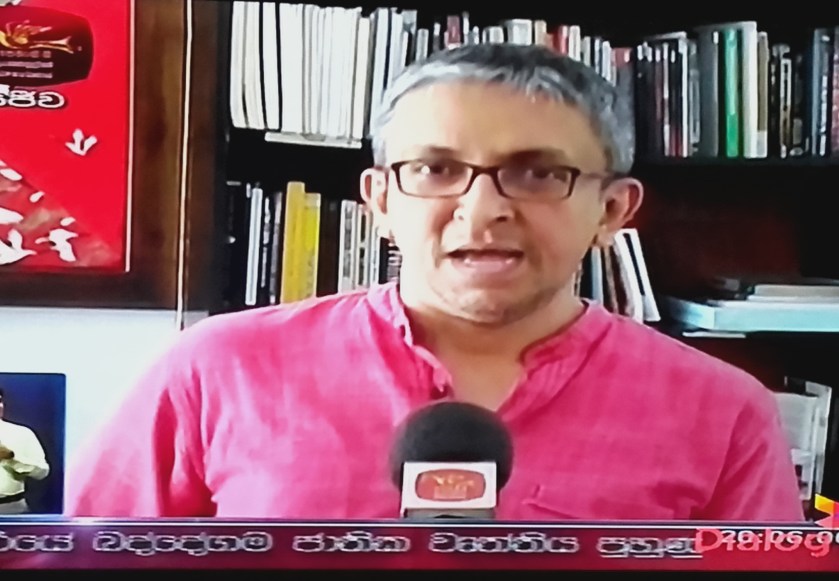
[Main points I made in a TV news interview with national broadcaster Rupavahini on 25 June 2016, within 24 hours of Sri Lanka’s Parliament passing the Right to Information law.]
Nalaka Gunawardene in Rupavahini interview on Sri Lanka’s new Right to Information RTI Law, 25 June 2016
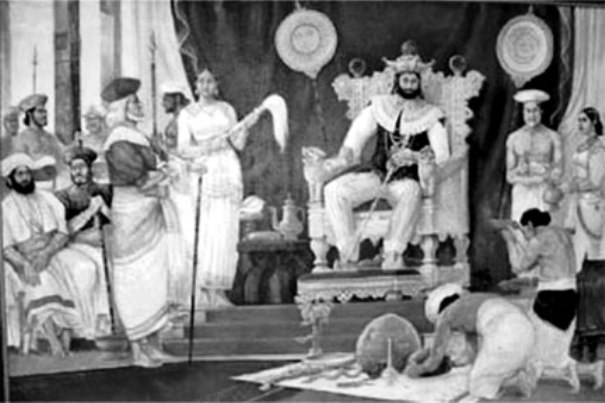
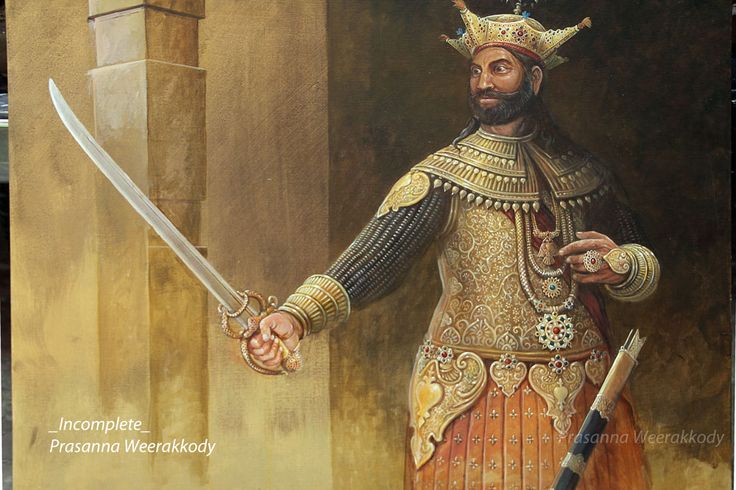
Last king of Ceylon, Sri Wickrama Rajasinghe’s court
In this week’s Ravaya column (appearing in issue of 24 January 2016), I wonder why some people in Sri Lanka – including educated ones – keep clamouring for a return to monarchy that ended 200 years ago.
The Lankan monarchy always remained absolute until it ended in 1815. There were no formal limits to the monarch’s powers, even though Dasa-Raja-Dhamma or the ‘Ten Royal Virtues’ in Buddhism were meant to moderate that power. In practice, many monarchs ignored it.
There was never a local equivalent of the Magna Carta, adopted in medieval England in 1215 as the first formal document stating that a King had to follow the laws of the land (‘Rule of Law’). It guaranteed the rights of individuals against the wishes of the King. This paved the way for trial by jury which means people are tried by their peers and guaranteed the civil rights of the individual.
This was never the case in Sri Lanka where all powerful and feudal king could – and often did – execute anyone who disagreed with him.
Those who clamour for the restoration of monarchy in Sri Lanka don’t know or overlook how feudal, unrestrained and unaccountable the monarchy was. And shrewd politicians use this misplaced desire to project themselves as modern-day monarchs, i.e. figures of veneration who by historical implication need to be treated as ‘above the law’, and custodian of all the state’s wealth. Hmm…
I also look at how Nepal abolished its monarchy in 2008 and Bhutan became a Constitutional Monarchy in recent years – steps towards modernity and democracy.
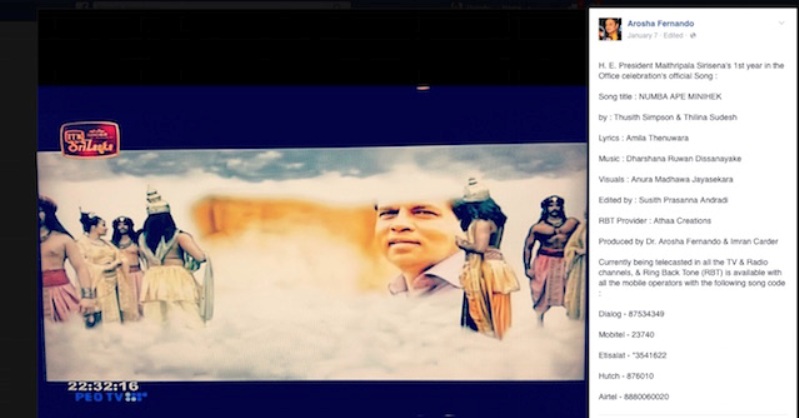
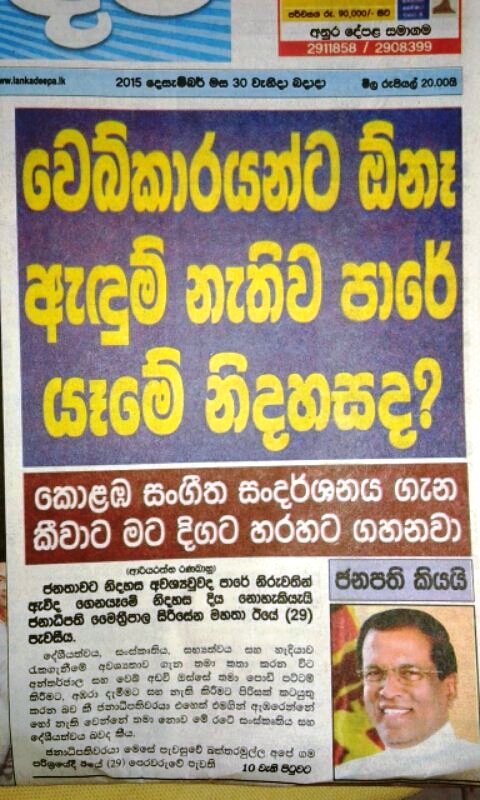
Controversial song to mark first anniversary of Maithripala Sirisena – later disowned by the Presidential Secretariat of Sri Lanka
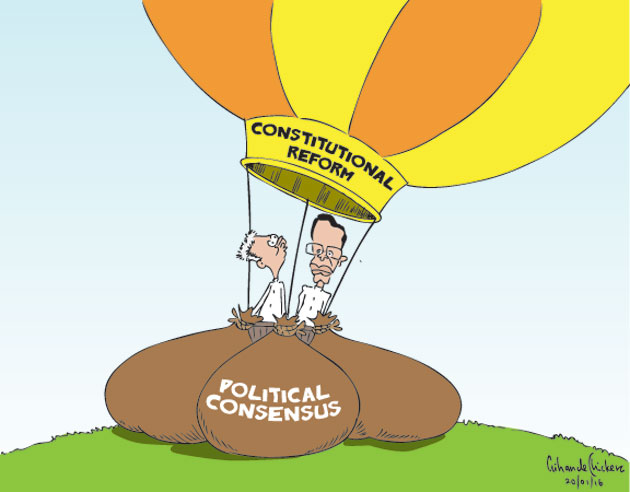
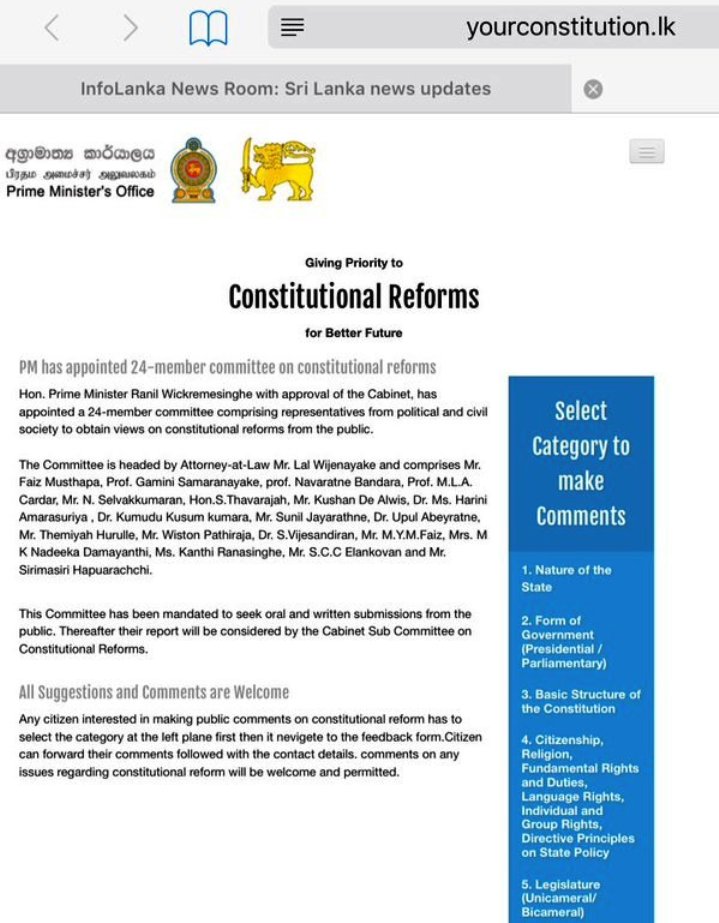
“Sri Lanka wants to make a new Constitution in a radically different way. It is poised to become the first developing country in the world to ‘crowd-source’ ideas for making the highest law of the land.
“That is all well and good – as long as the due process is followed, and that process has intellectual rigour, transparency and integrity. Therein lies the big challenge.”
So opens my latest op-ed essay, just published by Groundviews.org
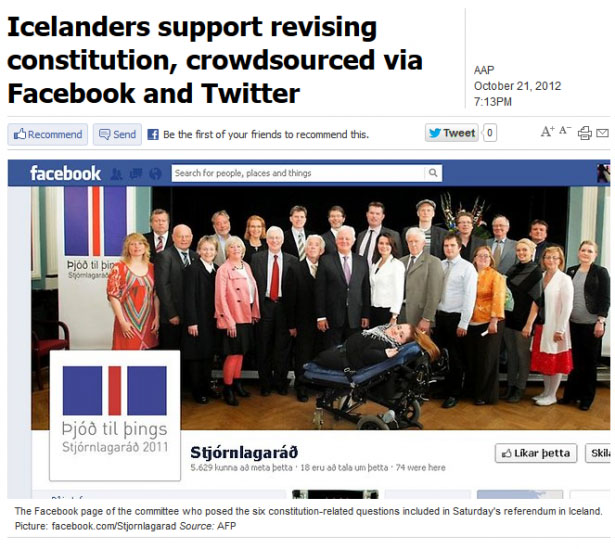
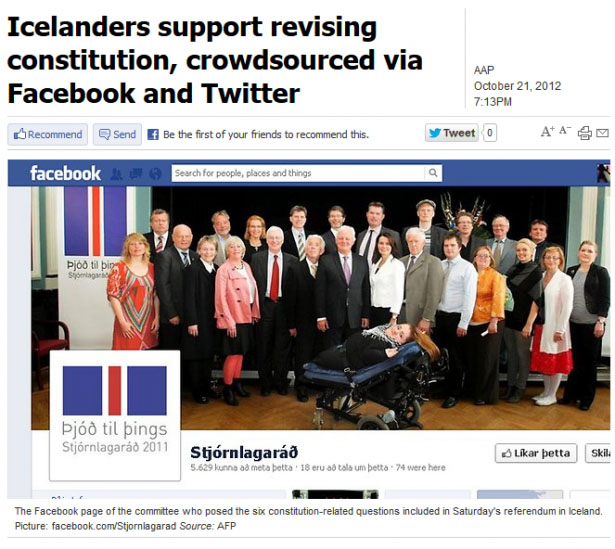
In it, I describe the experience of Iceland which was the world’s first country to ‘crowd-source’ a new Constitution. From 2011 to 2013, the European nation of 330,000 people engaged in an exercise of direct democracy to come up with a modern Constitution to replace the existing one adopted in 1944. That involved many public hearings as well as using social media and other communications platforms to gather public inputs and to ensure public scrutiny.
Facebook was used as part of a public consultation strategy to draft Iceland’s new Constitution in 2011-13
This is the path that Sri Lanka has now chosen: open and participatory Constitution making. To be sure, tropical Sri Lanka is vastly different. Its population of 21 million is 60 times larger than Iceland’s. But the Arctic nation’s generic lessons are well worth studying – both for inspiration and precaution.
I point out: “In doing so, it is important to ensure that public consultative process is not limited to the web and social media. Instead of dominating, technologies should only enable maximum participation.”
“The bottom-line: gathering public proposals is commendable, but not an end by itself. The government needs to adopt a systematic method to study, categorize and distil the essence of what is suggested. And that must happen across English, Sinhala and Tamil languages.”
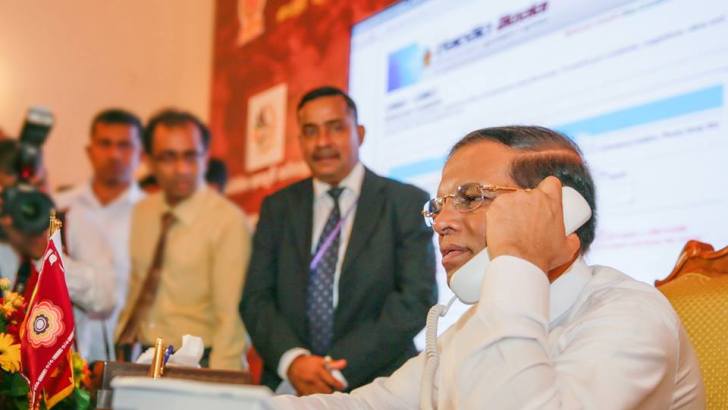
In this week’s Ravaya column (appearing in issue of 17 January 2016), I critique the public communications practices President Maithripala Sirisena of Sri Lanka – and call for better listening and more engagement by the head of state.
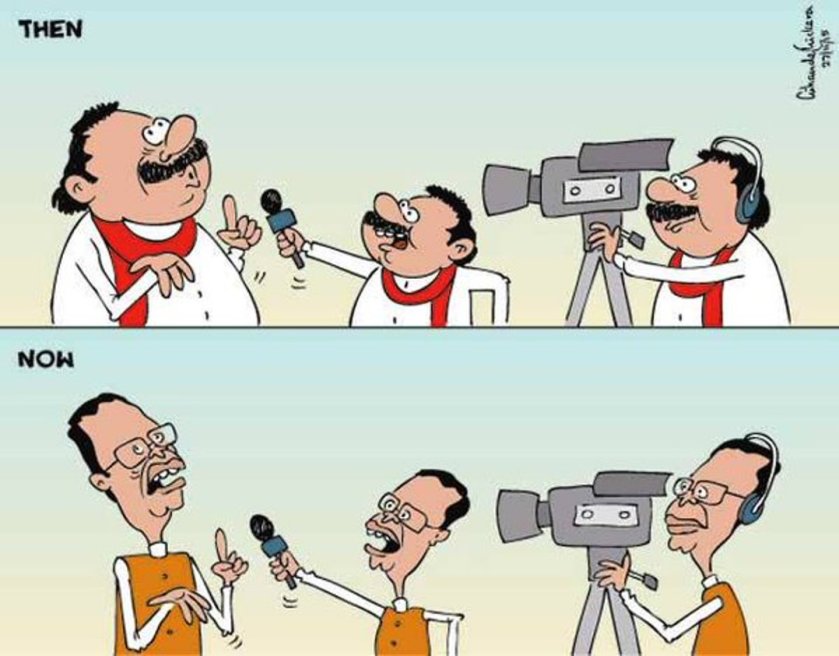
I point out that Sirisena is in danger of overexposure in the mainstream media, which I call the ‘Premadasa Syndrome’ (as this bad practice was started by President R Premadasa who was in office from 1988 to May 1993). I argue that citizens don’t need to be force-fed a daily dose of presidential activities on prime time news or in the next day’s newspapers. If public documentation is needed, use the official website.
Like other politicians in Sri Lanka, Sirisena uses key social media platforms like Facebook and Twitter to simply disseminate his speeches, messages and photos. But his official website has no space for citizens to comment. That is old school broadcasting, not engaging.
This apparent aloofness, and the fact that he has not done a single Twitter/Facebook Q&A session before or after the election, detracts from his image as a consultative political leader.
On the whole, I would far prefer to see a more engaged (yet far less preachy!) presidency. It would be great to have our First Citizen using mainstream media as well as new media platforms to have regular conversations with the rest of us citizens on matters of public interest. A growing number of modern democratic rulers prefer informal citizen engagement without protocol or pomposity. President Sirisena is not yet among them.
Here are my wishes for 2016, shared on Facebook and Twitter as home-made web memes.
I wish for a truly OPEN SOCIETY in Sri Lanka in 2016
where good ideas flow freely,
public debate is informed, wide-ranging and courteous
and there are no Sacred Cows!
Let’s make it so! The power is with each and every one of us.
On New Year’s eve, I shared this timeless quote of Mahatma Gandhi, which I felt was relevant for raging debates in Sri Lanka on what constitutes ‘our culture’ and how best to preserve it.
Mahatma Gandhi on the value of open, inclusive and multicultural societies
And here is how I rendered it into Sinhala language:
“මගේනිවසවටාසැමඅතින්පවුරුබැඳ,
එහිකවුළුසියල්ලවසාදමන්නටමාකොහෙත්මකැමතිනැහැ.
ලොවනොයෙකුත්සංස්කෘතීන්ගේආභාෂප්රවාහයන්
මනිවසේනිදහසේසංසරණයවීමමටඅවශ්යයි.
එහෙත්ඒකිසිවකින්මාපෙරළාදමන්නටනම්මාඉඩදෙන්නේනැහැ.”
Mahatma Gandhi on the value of open, inclusive and multicultural societies – translated by Nalaka Gunawardene
Sri Lanka’s new government has committed to drafting a new Constitution to replace the current one adopted in 1978.
According to the Cabinet spokesperson, “for the first time [in Sri Lanka], a Constitution is going to be framed with the consultation of people.” Though the country has adopted Constitutions twice after independence — in 1972 and 1978 — public participation was negligible on both occasions.
Nalaka Gunawardene in a serious pose
This is well and good, but it is still not clear what consultation mechanisms would be used, and how genuinely consultative the process is going to be. Our politicians and officials lack imagination and courage to try out new methods of public participation in governance. For example, they barely use the potential of new information and communications technologies (ICTs).
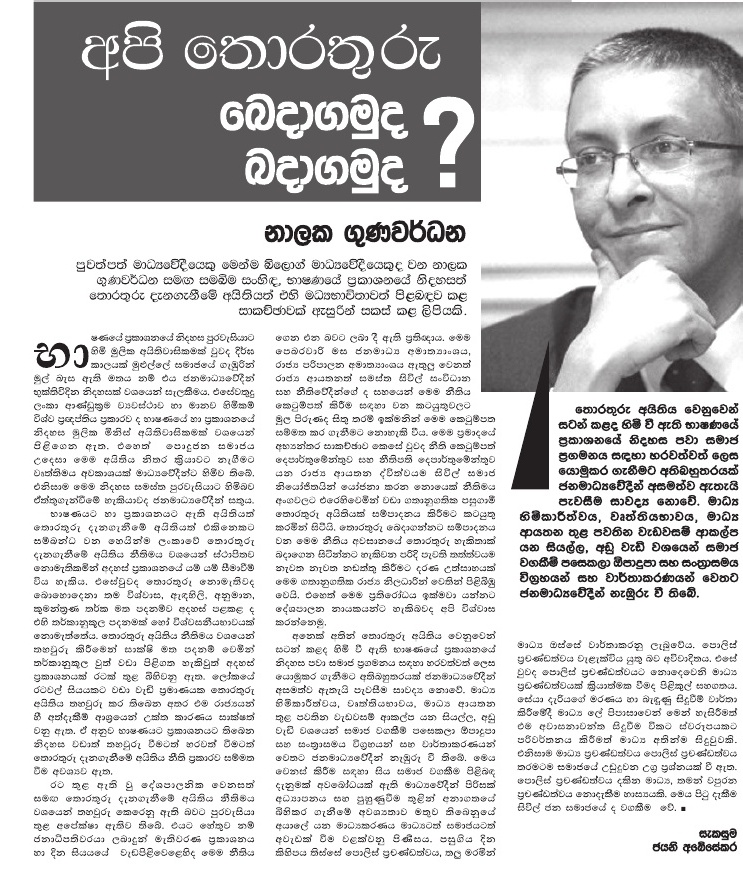
In an interview with Prasad Nirosha Bandara of Ravaya independent broadsheet newspaper, published on 20 December 2015, I make an earnest case for the new Constitution drafting process to be more open, more participatory and more consultative by using all available methods – tried and tested old-fashioned ones, as well as new potential opened up by the spread of the web, mobile phones and social media.
I also draw attention to a historically important memorandum was sent by the Ceylon Rationalist Association on 25 September 1970 to Dr Colvin R De Silva, then Minister of Constitutional Affairs, who was heading the group tasked with drafting what eventually became the country’s first Republican Constitution of 1972. Written by the Association’s Founder President Dr Abraham Thomas Kovoor, it captured the broad, idealistic vision that members of that voluntary group of free thinkers had advocated since its inception in 1960. Among other principles, it advocated – in point 6 – that “the best protection for freedom of conscience is a Secular State”.
I located the memo two years ago and published it online on Groundviews.org so that it becomes widely available. In this interview, I urge the new Constitution drafters of 2016 not to make the same mistakes that Colvin R de Silva did in 1972 by ignoring these ideas of public intellectuals.
Samabima monthly magazine, published by Rights Now human rights advocacy group in Sri Lanka, has carried an interview with me in its December 2015 issue.
In this, I discuss the societal implications of a Right to Information law, which is to be adopted by Sri Lanka’s Parliament in early 2016. I reiterate that we need to see the new law as only the beginning of a long journey. Proper implementation will require adequate political will, administrative support and sufficient public funds. We would also need sustained monitoring by civil society groups and media to guard against the whole process becoming mired in too much red tape.
I also touch on serious inadequacies in our mainstream media that often fail to serve the public interest because of incompetence, arrogance or indifference. In this interview, I coin a phrase ‘Mass Media Brutality’ meted out to victims of crime or discrimination in Sri Lanka — when the media pack descends on an individual or family and unethical, sensational coverage follows.
Nalaka Gunawardene interview in Samabima magazine, Dec 2015 issue
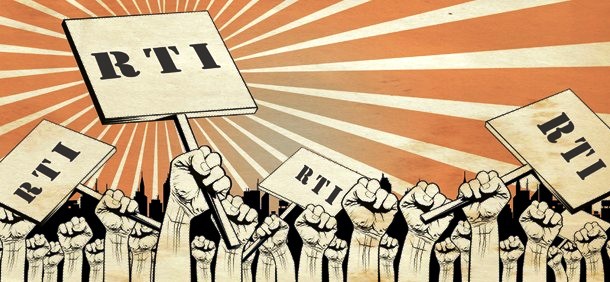
After many years of advocacy by civil society groups and journalists, Sri Lanka is set to soon adopt a law guaranteeing citizens’ Right to Information (RTI, also known as freedom of information laws in some countries). With that, we will join over 100 other countries that have introduced such progressive laws.
The first step is already taken. The 19th Amendment to the Constitution, passed in Parliament in April 2015, made the right to information a fundamental right. The Right to Information Act is meant to institutionalize the arrangement – i.e. put in place the administrative arrangement where a citizen can seek and receive public information.
RTI signifies unleashing a new potential, and a major change in status quo. First, we need to shake off a long historical legacy of governments not being open or accountable to citizens.
In this week’s Ravaya column, (appearing in issue of 22 Nov 2015), I explore how RTI can gradually lead to open government. I also introduce the 9 key principles of RTI.
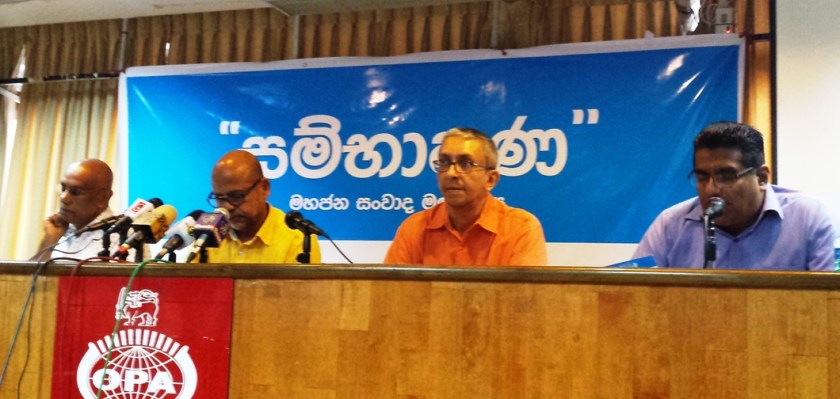
L to R – Wijayananda Jayaweera, Gamini Viyangoda, Nalaka Gunawardene, Shan Wijetunge. At Right to Information public forum on 17 Nov 2015 in Colombo. Photo by Sampath Samarakoon
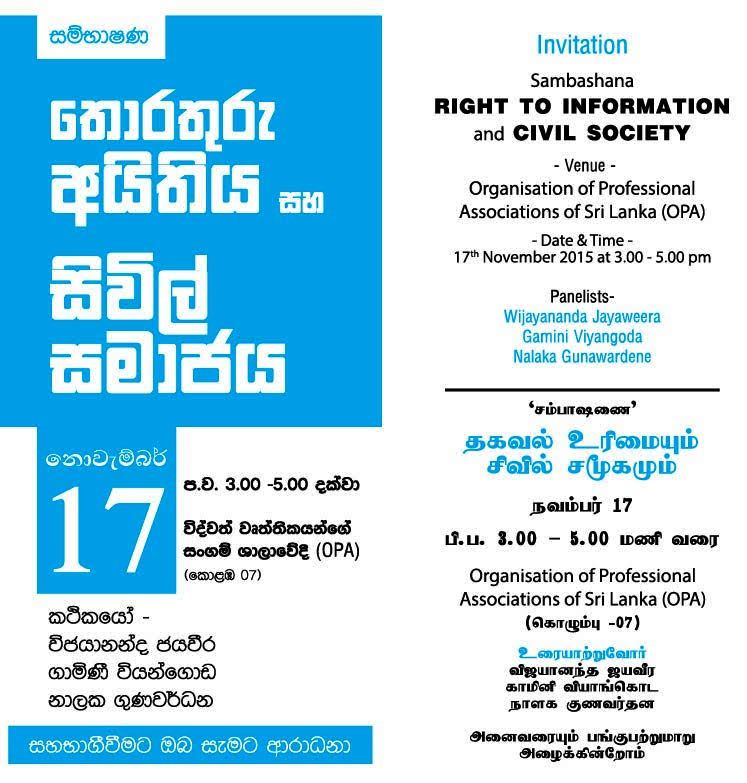
Transparency International Sri Lanka (TISL) held a Public Forum on the Right to Information in Colombo on 17 November 2015. I was one of three panelists, along with Wijayananda Jayaweera and Gamini Viyangoda. The panel was moderated by TISL’s Shan Wijetunge.
RTI Public Forum on 17 Nov 2015
The meeting was conducted in Sinhala. After the event, a journalist from an English language newspaper asked for a summary of my remarks in English, so I wrote this up.
L to R – Wijayananda Jayaweera, Gamini Viyangoda, Nalaka Gunawardene, Shan Wijetunge. At Right to Information public forum on 17 Nov 2015 in Colombo. Photo by Sampath Samarakoon
Summary of remarks made at Right to Information Public Forum held in Colombo on 17 Nov 2015
By Nalaka Gunawardene
Science writer, columnist and new media researcher
After many years of advocacy by civil society groups and journalists, Sri Lanka is set to soon adopt a law guaranteeing citizens’ Right to Information (RTI, also known as freedom of information laws in some countries). With that, we will join over 100 other countries that have introduced such progressive laws.
The first step is already taken. The 19th Amendment to the Constitution, passed in Parliament in April 2015, made the right to information a fundamental right.
The Right to Information Act is meant to institutionalize the arrangement – i.e. put in place the administrative arrangement where a citizen can seek and receive public information.
Some have been critical of the current draft of the RTI Bill as it falls short of the ideal. But in my view, adopting even an imperfect RTI law would be progress.
But we need to see the law’s adoption as only the beginning of a long journey. Proper implementation will require adequate political will, administrative support and sufficient public funds. We would also need sustained monitoring by civil society groups and media to guard against the whole process becoming mired in too much red tape.
RTI signifies unleashing a new potential, and a major change in status quo. First, we need to shake off a long historical legacy of governments not being open or accountable to citizens.
For over 2,000 years of monarchy, over 400 years of colonial rule and 67 years of self-rule since independence, all our governments have restricted public information – even mundane ones unrelated to any security or sensitive issues.
Thus, the ‘default setting’ in most government agencies seems to be to deny and restrict information. When this finally changes, both public servants and citizens will need to adjust.
Information custodians can no longer release selectively, or demand petty bribes for doing so. Citizens, on their part, must find purpose and focus in information they can demand and receive. RTI is not a mere political slogan.
To draw an analogy from water management, opening sluice gates of a water reservoir can benefit only if the downstream systems are in place and the users are ready. With both water and information, recipients need to know how to make the best use of what comes through.
As long-standing champions of RTI, Lankan media and civil society must now switch roles. While benefiting from RTI themselves, they can nurture the newly promised openness in every sphere of public life. They can show, inspire and equip other citizens how best to make use of it.
However, RTI is not just a piece of law or changing how governments share public information. At its most basic, RTI is a collective state of mind. With its adoption, a society can start moving along a more open, informed and inquisitive pathway.
Better management of public information – which covers its proper gathering, storing, analysing and disseminating – should come into sharper focus with RTI.
In a related development, Sri Lanka has just joined an international, multilateral initiative called the Open Government Partnership (OGP). It is the first country in South Asia to do so.
OGP is a global effort “to make governments better”. It aims to secure firm commitments from governments to promote transparency, empower citizens, fight corruption, and harness new technologies to strengthen governance. OGP was launched in September 2011, and since then, the partnership has grown to 69 countries representing over a third of the world’s population.
To join OGP, a country must meet minimum eligibility criteria. These cover the timely publication of essential budget documents forms the basic building blocks of budget accountability; RTI guaranteed by law; rules that require public disclosure of income and assets for elected and senior public officials; and openness to citizen participation and engagement in policymaking and governance, including basic protections for civil liberties.
With its impending RTI law, Sri Lanka became eligible to join OGP. Its membership was confirmed at the recent OGP Conference held in Mexico City in late October 2015, where Sri Lanka endorsed the Open Government Declaration committing “to foster a global culture of open government that empowers and delivers for citizens, and advances the ideals of open and participatory 21st century government.”
In his speech in Mexico City, Minister Wijeyadasa Rajapakshe said: “Our people have proven that citizens will and should be at the heart of the destiny of any country. Importantly, the events this year reaffirm the resilience of our democracy and make it apparent that it is the people that demand an ‘open government’ for my country.”
Now the Yahapalana Government must walk this lofty talk.
OGP member countries are required to prepare a National Action Plan (NAP) which should be done collaboratively by the government and civil society. Such plans should cover a two-year period and consist of a set of commitments that advance transparency, accountability, participation and/or technological innovation.
The bottomline with Right to Information is this. RTI is not simply a legal or technocratic solution. It is not a quick fix to all problems that affect our society. But it heralds a new way of thinking – a paradigm shift, if you like – that would make our government more open, and our society more focused on using information and data to make our lives better.
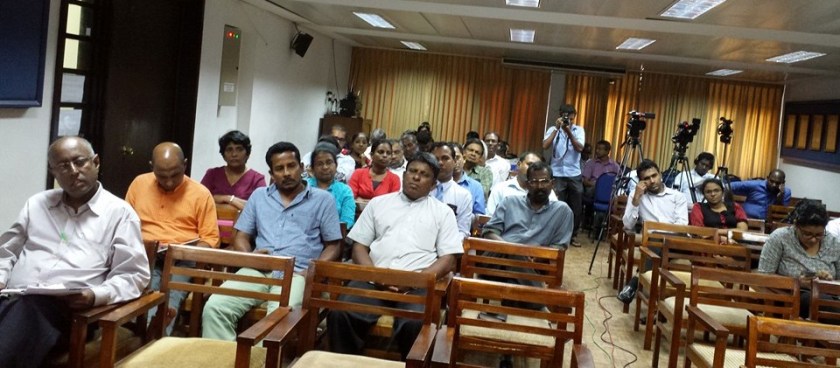
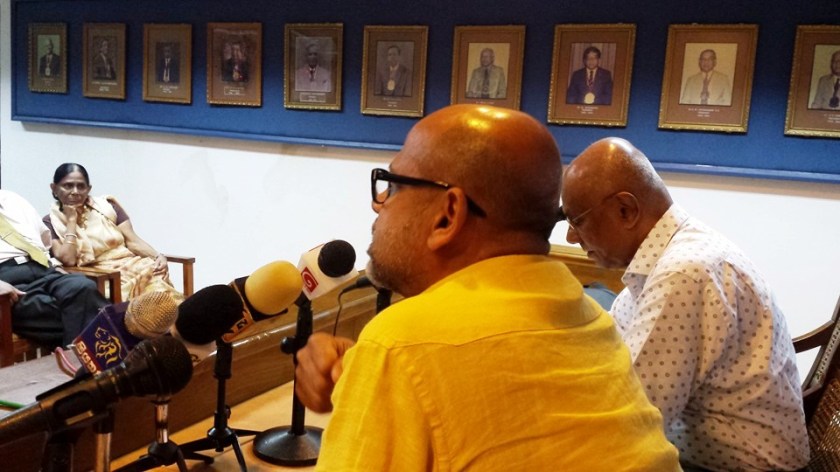
Part of the audience at RTI Public Forum on 17 Nov 2015 in ColomboWriter and activist Gamini Viyangoda speaks at RTI Public Forum on 17 Nov 2015





 Open Minds!