 As a journalist, I was trained to look for what’s New, True and Interesting (‘NTI Test’). Early on, I went beyond just reporting events, and probed the underlying causes and processes. With experience, I can now offer my audiences something more: perspective and seasoned opinion. These are needed today more than ever as we wade through massive volumes of information, trying to make sense of it all.
I’ve been privileged to chronicle and comment on the closing decade of the 20th Century and the opening one of the 21st – years of unprecedented change, and considerable turmoil, in my country (Sri Lanka), region (Asia) and the world. In my chosen areas of science, technology and sustainable development, changes have happened at a dazzling and often bewildering speed.
As a science writer and development film maker, I work with researchers, activists and officials across Asia who struggle to balance ecological concerns with economic development imperatives. I call myself a ‘critical cheer-leader’ of their efforts. Through TVE Asia Pacific, SciDev.Net and my other affiliations, I seek to enhance the public understanding of complex issues and choices required in pursuing sustainable development.
I sometimes feel a strange kinship with the ancient Greeks, who first asked some fundamental questions about the universe. They didn’t always get the answers right, and neither do I. But it is very important that we question and critique progress – I do so with an open mind, enthusiasm and optimism. On some occasions, this involves asking uncomfortable questions that irk those in positions of power and authority. In that sense, I sometimes play the role of that little boy who told the Emperor had no clothes on. (Does anyone know what happened to the boy after that?).
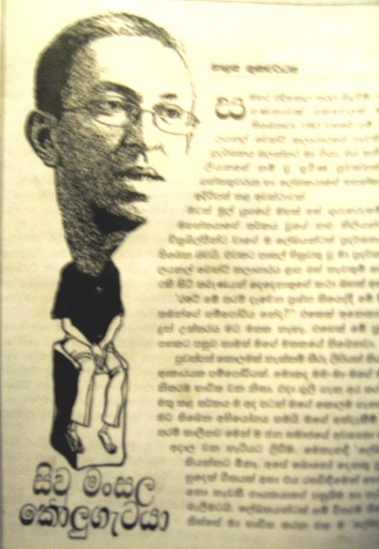
This is the basic premise for a new weekly newspaper column I am writing from this month in the Sinhala weekend newspaper Ravaya. A few weeks ago, the executive editor of Ravaya invited me to write a regular column, which I accepted after some hesitation. My hesitation was not about them; it was about my own ability to express myself in Sinhala, a language I studied more than a quarter century ago, but have not worked in for over 20 years. But I’ve decided to take it on as a challenge, and see how far I can go and how well I can write on topics and issues that are close to my heart: science, technology, environment and development. The first column has just appeared in the Ravaya issue for 6 Feb 2011.

I have been a regular reader of Ravaya in all its 25 years of publication. As I wrote in a book review last year: “It is an extraordinary publication that has, for nearly a quarter of a century, provided a platform for vibrant public discussion and debate on social and political issues. It does so while staying aloof of political party loyalties and tribal divisions. While it cannot compete directly (for circulation) with newspapers published by the state or press barons, this sober and serious broadsheet commands sufficient influence among a loyal and discerning readership.”
Published by a company owned by journalists themselves, Ravaya is almost unique among Lankan newspapers for another reason: its columnists and other contributors are allowed to take positions that are radically different from those of its formidable editor, Victor Ivan. I’m not sure how soon I will get to test this, but such pluralism is very rare in today’s mainstream media in Sri Lanka.
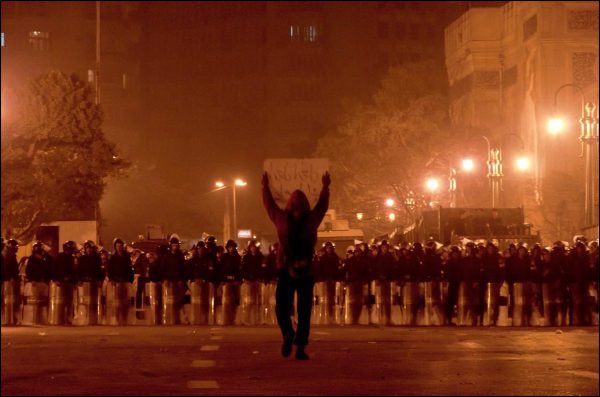
This short video is currently a high favourite online. Created by Tamer Shaaban. Another Egyptian who’s had enough.
Their blurb: “Violent clashes between police and demonstrators as over ten thousand gather on the streets of Cairo. The Egyptian people have endured a tyrant’s rule for far too long, millions struggle each day to find where their next meal is coming from. January 25th, 2011 marks the day when the people rise and take back what’s rightfully there’s. This isn’t the end, but hopefully the beginning to a long awaited regime change! Send to everyone and let them know.”
Song: “Into the Fire” – Thirteen Senses
Thanks to the following news sources for their footage
Daily News Egypt
The Guardian
CNN
New York Times
Al Masry Al Youm
The video was posted on reddit and has gained momentum!
#Facebook Link: Egypt’s Peaceful Revolution
Related blog post: Wanted: More courageous little ‘Mack’s to unsettle Yertle Kings of our times!
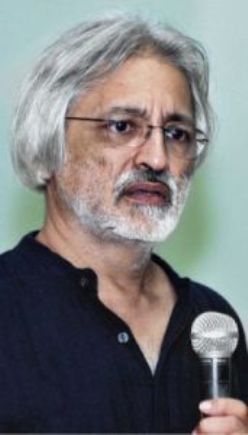
Anand Patwardhan is one of India’s best known and most outspoken documentary film makers. He has been making political documentaries for over three decades, pursuing diverse and controversial issues that are at the crux of social and political life in India. He epitomises the activist film maker and has inspired a generation of socially sensitive film makers.
In the world’s largest democracy that is India, and in a country with a vibrant and diverse media that is considered to be among the most free in the developing world, Anand has constantly run into problems getting his films seen on broadcast television. Many of his films were at one time or another banned by state television channels in India and became the subject of litigation by Anand, who successfully challenged the censorship rulings in court.
As his website notes, several of his films have also incurred the wrath of right wing fundamanentalists both in India and abroad. “In keeping with the uneven nature of India’s democratic institutions and its sharply divided polity, bouquets have been accompanied by brickbats.”
I came across a good interview with Anand Patwardhan in the Indian current affairs magazine Frontline, issue for 4 – 17 December 2010. Here are two questions concerning the censorship problems he has often faced:
A: Right from the first film, I faced censorship in some form or the other. Even the Janata Party after it came to power refused to screen Waves of Revolution though it was against the Emergency. L.K. Advani was the Information and Broadcasting Minister then. I had added an epilogue which said that the janata raj [people’s rule] that the film spoke about was not the same as [that of] the Janata Party now in power. I also drew attention to the political prisoners still being held in jail. Finally, after media pressure built up, the film was screened on Doordarshan.
Prisoners of Conscience also got into trouble with the censor board, and it took a letter from Satyajit Ray to the government saying that they must not stop a film like this to get the required clearance.
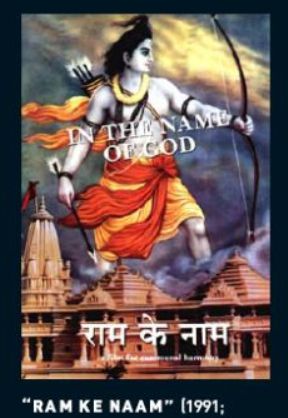
Ram Ke Naam followed the rath yatra of Advani and the violence in Ayodhya on October 30, 1990, when the Babri Mosque was attacked for the first time. It was meant to be a warning to the nation about the rise of Hindutva fundamentalism. I had trouble with the censors initially, but it finally got through in 1992 and then I had trouble with Doordarshan, which refused to show it. Finally, after the film won a national award for Best Investigative Documentary, I was able to go to court and argue that the government cannot give me a national award and yet say that I cannot show the film on Doordarshan, which it had been doing systematically. In fact, whenever any film of mine won a national award, I used it to go to court. I argued that not showing such a film on national TV was a denial of my right to freedom of expression and of the viewers’ right to information.
On these grounds I have won seven cases till now – five in the High Courts and two in the Supreme Court after the government went in appeal. Ram Ke Naam was finally shown on Doordarshan in 1997. The judge ordered that the film should be telecast at prime time.

Q: Why have you not approached private channels to screen your films?
A: The private media, including television, are not about giving people information. They are run by corporates more interested in providing entertainment. Their news and analysis are restricted to five and 10 second [sound] bites. Their clear mandate is commercial. They will ask, “Where are the advertisers who will endorse your product? Who is going to give the money to show this? Are we going to waste one and a half hours of TV time on issues?”
I have also discovered that even in the private domain there is political censorship. A few days before the Allahabad High Court verdict on [the] Ayodhya [title suit] was due, a private channel approached me to screen Ram Ke Naam. They paid me for three broadcasts but stopped after showing the film just once despite extremely positive feedback from viewers. On inquiring, I was told that the channel was pressured not to show the film by both the Information and Broadcasting Ministry and the TV Broadcasters’ Association. Anyone who watches Ram Ke Naam will realise that this censorship was done to protect the interests of unscrupulous politicians who had used the emotive appeal of Ram for financial and political gain.
The situation today is such that you cannot pinpoint where the censorship is coming from. During the Emergency you at least knew who the enemy was. But now what do you do when every wing of society – whether it’s the legal system, and so on – is complicit in a blanket suppression of facts.
Read the full interview in Frontline magazine, issue for 4 – 17 December 2010
Read TVE Asia Pacific profile and interview with Ananda Patwardhan in 2002
“In the struggle for freedom of information, technology — not politics — will be the ultimate decider.”
These words, by Sir Arthur C Clarke, have been cited in recent days and weeks in many debates surrounding WikiLeaks, secrecy and the public’s right to know.
I invoke these words, and many related reflections by the late author and futurist, in a 2,250-word essay I have just written. Titled Living in the Global Glass House, it is presented in the form of an Open Letter to Sir Arthur C Clarke. It has just been published by Groundviews.org
 This is my own attempt to make sense of the international controversy – and confusion – surrounding WikiLeaks. Taking off from the current concerns, I also look at what it means for individuals, corporations and governments to live in the Age of Transparency that has resulted from the Information Society we’ve been building for years.
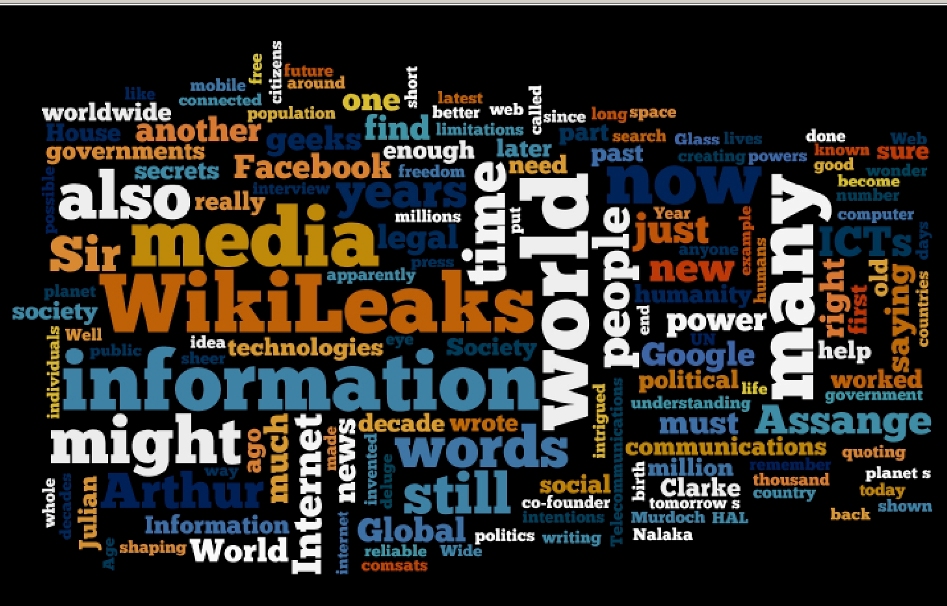
Sir Arthur foresaw these developments year or decades ago, and wrote perceptively and sometimes in cautionary terms about how we can cope with these developments. As a research assistant and occasional co-author to Sir Arthur from 1987 to 2008, I had the rare privilege of sharing his views firsthand. In this essay, I distill some of the best and most timely for wider dissemination. The above Wordle graphic illustrates the keywords in my essay.
The essay was also prompted by recent experiences. Here’s that story behind the story:
By happy coincidence, I arrived in London on 28 November 2010, the very day the WikiLeaks Cablegate erupted all over the web, beginning to spill out what would eventually be over 250,000 secret international ‘cables’ within the US diplomatic corps.
The Guardian UK that day published an interactive map-based visualization of the leaks. By moving the mouse over the map, readers can find key stories and a selection of original documents by country, subject or people
During the week I spent in London, I experienced not only uncharacteristically early and intense snow storms, but a mounting international storm on the web over the leaked cables. WikiLeaks’ co-founder and chief editor Julian Assange was also somewhere in the UK, playing cat and mouse at the time with the Swedish police and Interpol. (He later turned himself in to the British authorities.)
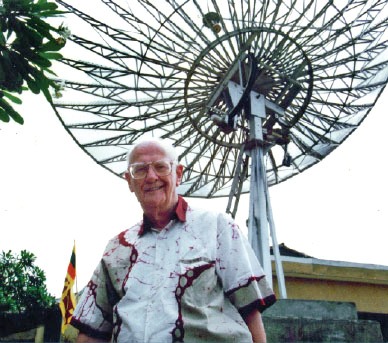
Soon after I returned to Colombo, Transparency International Sri Lanka asked me to speak at a workshop on the right to information they had organised for journalists. Given my reputation as a geek-watcher and commentator on the Information Society, they asked to talk about what WikiLeaks means for investigative journalism. Two days later, the Ravaya newspaper did a lengthy interview with me on the same topic which they have just published in their issue for 19 December 2010.
All these elements and experiences combined in writing this essay. Being confined to home by a nasty cold and cough also helped! In fact, on 16 December when Sir Arthur’s 93rd Birth Anniversary was marked, I was too weak to even step out of the house to visit his gravesite. In the end, I finished writing this Open Letter to him on the evening of that day.
My daughter Dhara and I would normally have taken flowers to Sir Arthur’s grave on his birth anniversary. This year, instead, I offer him 2,250 words in his memory. The fine writer would surely appreciate this tribute from a small-time wordsmith.
Read Living in the Global Glass House: An Open Letter to Sir Arthur C Clarke
Compact version published in Daily Mirror, Sri Lanka, on 21 Dec 2010
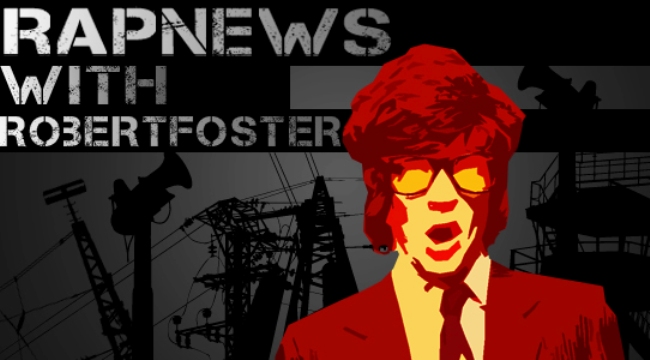
I’m delighted to highlight another commendable effort, this time on the web. It’s a website called The Juice Media, which presents news reports in, believe it or not, rap music! It has been online for a while, drawing rave reviews. One of them: “Like a mix of Eminem and Jon Stewart”.
TheJuiceMedia: Rap News is written and created by Hugo Farrant and Giordano Nanni in a home-studio/suburban backyard in Melbourne, Australia. In fact, Hugo appears as the amiable Rap News anchorman, Robert Foster.
Here are their latest three releases, which are hilariously serious.
Rap News 6 – Wikileaks’ Cablegate: the truth is out there
Rap News 5: Wikileaks & the war on journalism (ft. Julian Assange)
RAP NEWS 4: Wikileaks vs The Pentagon – the WWWAR on the Internet
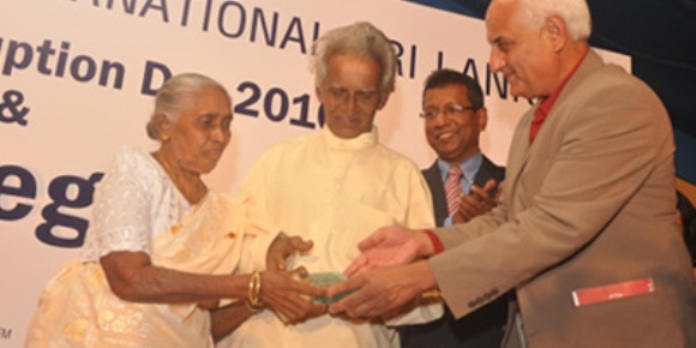
Two persons stood out among the several hundred people gathered at Sri Lanka National Integrity Awards ceremony on December 9 evening in Colombo. Dressed in off-white, the elderly couple looked dignified yet slightly bewildered by the pace of events at Colombo’s top conventions venue.
But when their moment arrived, the parents of investigative journalist Poddala Jayantha rose to the occasion: they accepted the Global Integrity Award presented to him by the anti-corruption watchdog Transparency International (TI).
Jayantha could not turn up in person because his is under threat and fled Sri Lanka for safety. In June 2009, he was abducted by unidentified persons and assaulted. The attack, one among many on journalists in Sri Lanka, left him permanently disabled in his legs. That’s the high price he had to pay for systematically exposing corruption and irregularities in government and corporate sector in Sri Lanka.
TI, which created this award to recognise the courage and determination of individuals and organisations fighting corruption around the world, commended Jayantha for his “dedication to exposing injustice in Sri Lanka”.
It was originally presented at the Global Anti-Corruption Conference in Bangkok in November 2010.
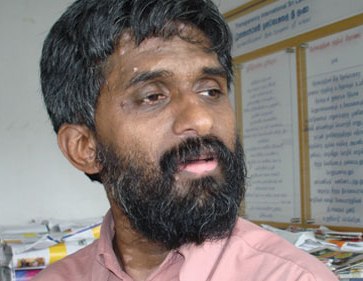
I’ve long admired Poddala’s courage and meticulous research, and have been amazed that he managed to do so much while working in a state-owned media establishment like Lake House, where he was employed after leaving the independent Ravaya newspaper. Of course he was the exception to the rule, but what a refreshing exception that was — reminding us that even amidst all those sacred cows that state media journalists must tiptoe around, they can still serve the public interest if they want to…
Of course, there were also stories that he never got to write. In November 2008, I wrote about one such example in an essay commenting on the Lankan media’s shameful conduct in relation to our own Ponzi scheme and local Madoff called Sakvithi.
Fellow investigative journalist Dilrukshi Handunnetti has written an excellent tribute to Poddala on Groundviews.

My regular readers know my deep interest in political satire, and fascination with cartoons of all kinds including those political. On this blog, we’ve also discussed the worldwide decline in mainstream journalism.
I’ve just blended my thoughts in these strands in my latest op ed essay, ostensibly a book review. It has just been published by Groundviews.org as Political Satire in Sri Lanka: When Making Fun is No Laughing Matter
Here are the opening paras:
“Political satire is nothing new: it has been around for as long as organised government, trying to keep the wielders of power in check. Over the centuries, it has manifested in many oral, literary or theatrical traditions, some of it more enduring — such as Gulliver’s Travels and Animal Farm. And for over a century, political cartoonists have also been doing it with such brilliant economy of words. Together, these two groups probably inspire more nightmares in tyrants than anyone or anything else.
“Today, political satire has also emerged as a genre on the airwaves and in cyberspace, and partly compensates for the worldwide decline in serious and investigative journalism. Many mainstream media outlets have become too submissive and subservient to political and corporate powers. Those who still have the guts often lack the resources and staff to pursue good journalism.
“If Nature abhors a vacuum, so does human society — and both conjure ways of quickly filling it up. Into this ‘journalism void’ have stepped two very different groups of people: citizen journalists, who take advantage of the new information and communications technologies (ICTs), and political satirists who revive the ancient arts of caricaturisation and ego-blasting…”
In this essay, I revisit a question I first posed in my July 2009 blog post: News wrapped in laughter: Is this the future of current affairs journalism?
Read the full essay:
Political Satire in Sri Lanka: When Making Fun is No Laughing Matter
You might also like to look at these other related blog posts:
August 2009: The XYZ Show: New horizon in political satire on African TV, but room to grow?
Sep 2009: XYZ Show controversy: Kenyan politicians forgetting ‘Hakuna matata’?
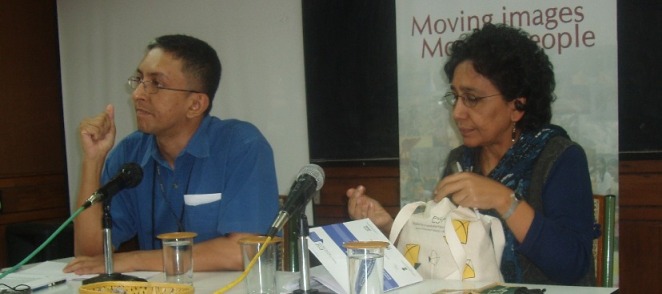
My friend Kalpana Sharma just stepped down after serving on the Panos South Asia board for over a decade. The Executive Director A S Panneerselvan asked me to write a personalised piece felicitating her. Part of this was read at the annual meeting of the Board held in Dhaka last weekend. Here’s the full essay — a couple of mutual friends who read it say it isn’t too eulogistic! Now you can decide for yourself…
* * * * *
The Curious Ms Sharma of Mumbai
I knew Kalpana Sharma from her by-line long before I met her in person. Now, more than a dozen years after we became friends, she remains an inspiration and a role model.
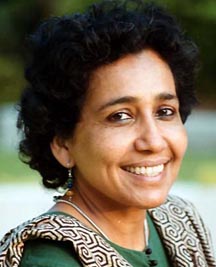
Kalpana has been covering the ‘other India’ that is largely ignored by the Indian media. Its denizens are some 456 million people living under the global poverty line of $1.25 per day — a third of the world’s poor. (If they declared independence, they would immediately become the world’s third most populous nation.) Kalpana’s reporting from the ‘Ground Zero’ of many disasters and conflict zones has highlighted the multiple deprivations of these people living on the margins of survival.
For many such communities, a headline-creating event is just the latest episode in their prolonged and silent suffering. The media pack that descends on them after a sudden development can’t seem very different from the assorted politicians who turn up periodically during election campaigns. For too long, the grassroots have been treated merely as a grazing ground for stories or votes.
Kalpana doesn’t hesitate to be part of the media pack when duty calls, but once in the field, she sees connections often missed by other journalists looking for a quick sound byte or dramatic image. Unlike some news hounds, she doesn’t exploit the misery of affected people (“Hands up who’s poor, speaks English – and looks good on TV!”). And she returns to the same locations months or years later to follow up.
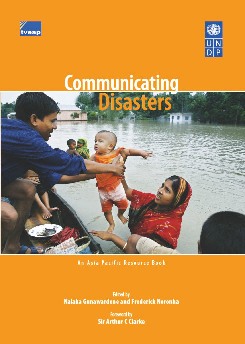 For all these reasons, Kalpana was our first choice to write the last chapter in a regional book on disasters and media that I co-edited with Indian journalist Frederick Noronha in 2007. Her 2,000-word reflective essay should be required reading for any journalist covering disasters and social disparity in South Asia.
Here is a passage that sums up her views on the subject: “Much of disaster reporting sounds and reads the same because the reporters only see what is in front of them, not what lies behind the mounds of rubble, figuratively speaking. What was this region before it became this disaster area? How were social relations between different groups? What was its history? What were its relations with the state government? Was it neglected or was it favoured? How important was it to the politics of the state?”
Kalpana has been asking such probing questions all her professional life. And it’s not just in the rural hinterland of India that Kalpana has travelled extensively listening and talking to people from all walks of life. Living in the world’s second most populous city Mumbai, she has been equally concerned with its burning issues of urban poverty, gender disparity, environmental mismanagement and governance.
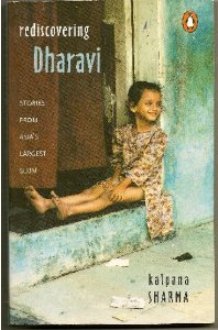 Kalpana once wrote an insightful book about the Dharavi slum in Mumbai, looking at both its social inequalities and the people’s remarkable resilience. Titled Rediscovering Dharavi: Stories from Asia’s largest slum (Penguin, 2000), it was called ‘a model of sane, human, down-to-earth writing’. All this was years before the Oscar-winning movie Slumdog Millionaire (2008) popularised the location through a dramatic tale.
In her quest for untold human stories, Kalpana has taken a particular interest in the plight of poor women. She has written many authentic and moving stories about women who struggle on the margins of the margin. A recurrent theme in her writing is how invisible ‘superwomen’ hold the social fabric together in much of India. Many communities and production systems –ranging from domestic work and child care to waste disposal and farming – would simply grind to a halt if these unseen and unsung women took even a single day off. In reality, of course, they just can’t afford such luxuries.
Kalpana’s column The Other Half, which started in The Indian Express and now appears in The Hindu, is a regular eye-opener. She takes a current topic – from politics, culture, sport or environment — and explores its gender dimensions. She does so by carefully blending facts, personal insights and opinion that makes her writing very different to the rhetorical shrill of gender activists.
Make no mistake: Kalpana is an activist in her own right, and one of the finest in modern India. It’s just that her approach is more subtle, rational and measured – and in the long run, wholly more effective. Long ago, she found how to balance public interest journalism with social activism. This is one more reason why I look up to her.
In her writing, television appearances and public speaking, Kalpana stays well within the boundaries of good, old-fashioned journalism based on its A, B and C: accuracy, balance and credibility. In my view, she enriches the mix by adding a ‘D’ and ‘E’: depth and empathy. Without these qualities, mere reporting is sterile and dispassionate.
And once we get to know her, we also discover the ‘F’ in Kalpana Sharma: she is a fun-loving, cheerful woman who doesn’t take herself too seriously. We can count on her to be adventurous, enthusiastic and endlessly curious.
Cultivating these attributes would certainly enrich any journalist. I can’t agree more when Kalpana says (in her chapter to a recent book on environmental journalism in South Asia): “Journalists are good or bad, professional or unprofessional. I am not sure if other labels, such as ‘environmental’ or ‘developmental’, ought to be tagged on to journalists.”
I hope Kalpana has no retirement plans. She has earned a break after a dozen years on the Board of Panos South Asia. But we want her to remain a guiding star – a bundle of energy that shines a light into the Darkness, and helps make sense of the tumult and frenzy that surrounds us.
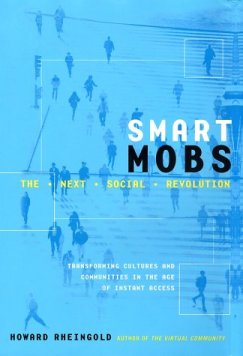
The idea was first proposed by author Howard Rheingold in his 2002 book, Smart Mobs: The Next Social Revolution. It deals with the social, economic and political changes implicated by developing information and communications technology. The topics range from text-messaging culture and wireless internet to the impact of the web on the marketplace.
In the eight years since the book first appeared, we’ve seen a proliferation and evolution of smart mobs, fuelled by the growth web 2.0 tools and, more recently, the many and varied social media. In fact, author Rheingold is credited with inventing the term virtual communities.
But the reality is that smart mobs can also be very fickle — their attention can be easily distracted. A smart mob can disperse just as fast as it forms, even while its original provocation remains.
This was demonstrated in dramatic terms in June 2009. Following a hotly disputed presidential election in Iran, there was a surge of online support for pro-democracy activists there who launched a massive protest. A main point of convergence for online reporting and agitation was micro-blogging platform Twitter. Within a few days, mainstream media like TIME and Washington Post were all talking about this phenomenon in gushing terms.
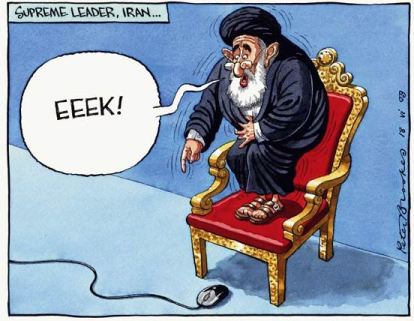
As I wrote at the time: “I have no idea if the Ayatollahs are closet fans of Michael Jackson. But they must surely have thanked the King of Pop for creating a much-needed diversion in cyberspace precisely when the theocracy in Tehran needed it most.”
Other recent experiences have demonstrated how online interest can both build up and dissipate very fast. Staying with a single issue or cause seems hard in a world where news is breaking 24/7.
Here’s a current example. Following the massive oil spill in the Gulf of Mexico that started on 20 April 2010, local communities and environmental activists deployed various social media tools to track the unfolding disaster. BP, the giant oil company implicated in the disaster, has also tried to use social media to communicate its positions, but not too successfully. On Twitter, it was not BP’s official account but the satirical @BPGlobalPR that was dominating the online conversation. As one commentator wrote: “It is an object lesson in how social media can shape and control a company’s message during a crisis.”
Riding the wave can be fun, but waves form and break quickly. Those who want to use social media tools for social activism still need to learn how to hitch a ride with the ocean current beneath the fickle waves.
How I wish I could get some practical advice on this from a certain ancient mariner named Sinbad.
 Open Minds!