Malima (New Directions in Innovation) is a Sinhala language TV series on science, technology and innovation. This episode was produced and first broadcast by Sri Lanka’s Rupavahini TV channel on 23 August 2012.
Produced by Suminda Thilakasena and presented by science writer Nalaka Gunawardene, this episode features the following items:
• An interview with prolific Lankan inventor M A Prince Chandrasena (of Mawathagama, Kurunegala) who holds 4 Lankan patents with fifth one pending. A refrigerator technician by training, he has developed a compact refrigerator that can remain cold (i.e. retain its low temperature) without mains power supply even for 24 hours. This is ideal for storing vaccines that require an uninterrupted cold chain (most vaccines need to be stored between 3 and 7 degrees C). The “Plus 4-7” refrigerator is particularly helpful to pharmacies and the public health service in a country like Sri Lanka that experiences frequent electricity failures. Profile at: http://tiny.cc/MAPrin
• A Japanese innovation: a small gadget that can ‘read’ basic emotions of dogs. Can this make us better understand our best friends?
• Introducing another indigenous technology of Sri Lanka: the ‘Dee-rangaya’ that is locally made and helps keep pests away from farmlands.
• An interview with young inventor D Chathura Madushanka, until recently a student of Pinnawela Central College, Rambukkana, who has invented a multi-function shoe. Fitted to the expanded sole of this shoe is a small dynamo that turns kinetic energy of walking into electrical energy. A battery stores this energy which can help charge a range of electronic devices including mobile phones and iPods. The shoe also comes fitted with a torch light that helps walkers at night. He recently participated in Intel International Science and Engineering Fair (ISEF) in Pittsburgh, USA, in May 2012. More info at: http://www.ft.lk/2012/05/24/sri-lankan-students-win-big-at-intel-isef-in-usa/
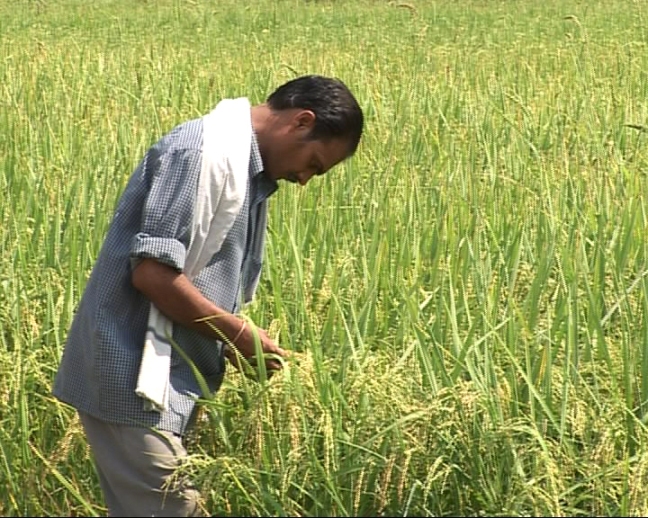
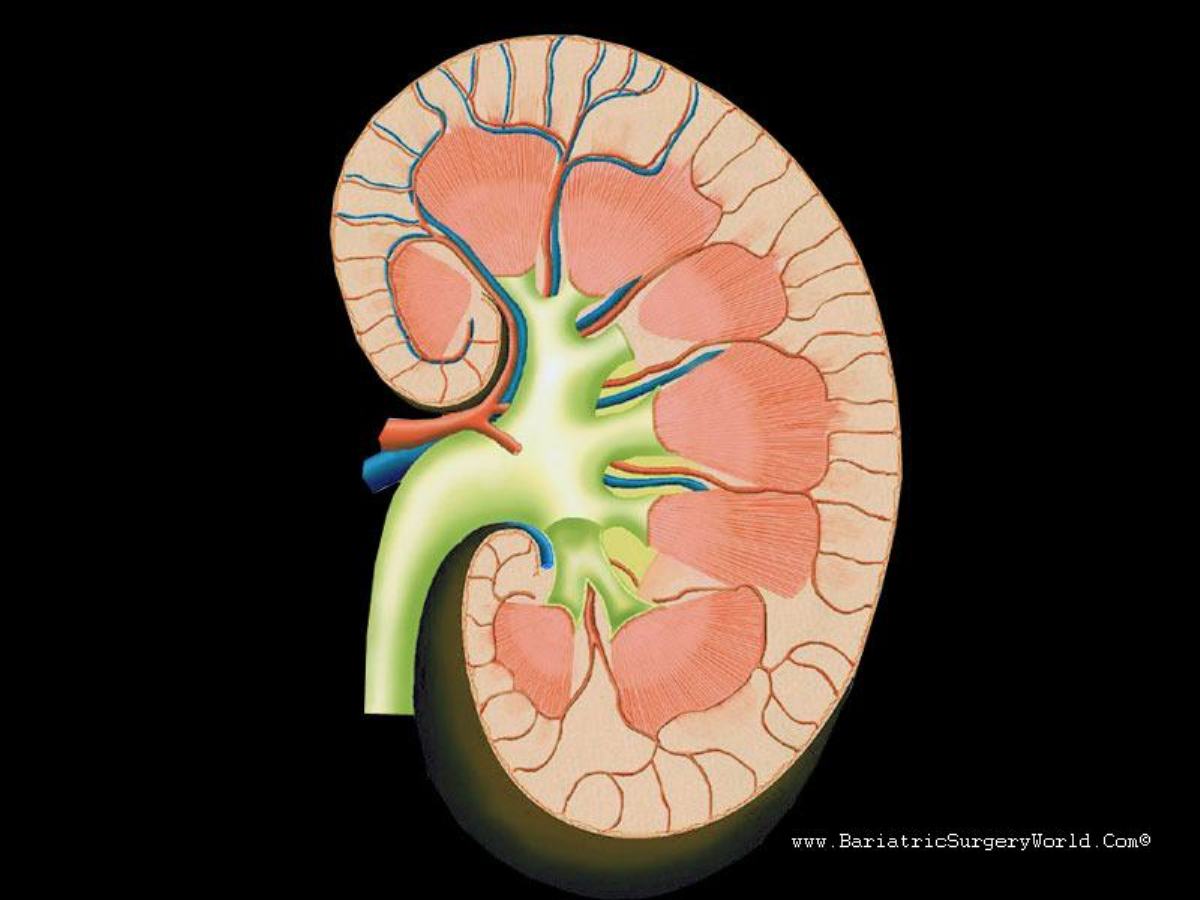
The chronic kidney disease (CKDu) that has already affected thousands in its heartland of farming, has brought into sharp focus some serious environmental concerns that ecologists have long highlighted. These stem from our farmers’ high reliance on inorganic (chemical) fertilisers.
While some fertiliser is needed to sustain soil fertility when growing crops repeatedly on the same land, the ‘Green Revolution’ from the 1960s urged Lankan farmers to use large volumes of fertiliser, provided to them on massive state subsidies. That, in turn, led to indiscriminate use and waste — and higher agricultural runoffs.
Farmers aren’t thrifty because they get fertiliser at a fraction of the market price. In this week’s Ravaya column (in Sinhala, on 2 September 2012), I look at what this national addiction to chemical fertiliser is doing to both our economy and ecology. I also look at organic alternatives and probe why they are not being adopted more widely.
CKDu was first reported in the early 1990s from a single Province in our heartland of farming, but it has now spread across approximately 17,000 sq km (a quarter of the island), which is home to around 2.5 million people. Several thousand have already died; the exact number is not clear. Over 15,000 people are kept alive with regular kidney dialysis.
Investigating causes of this ailment — still not pinned down to a particular cause or factor — has been contentious with scientists, nationalists and politicians trying to hijack the issue for their own agenda setting. Some journalists have added fuel to the fire with sensationalist reporting and fear-mongering. In this column, I ask everyone to focus on the prolonged suffering of those already affected and their families.
Malima (New Directions in Innovation) is a Sinhala language TV series on science, technology and innovation. This episode was produced and first broadcast by Sri Lanka’s Rupavahini TV channel on 26 July 2012.
Produced by Suminda Thilakasena and hosted by science writer Nalaka Gunawardene, this episode features the following items:
• An interview with K M Wijepala, proprietor of Wijaya Agro Products in Nuwara Eliya, Sri Lanka, who has developed an entirely organic, liquid fertilizer as a substitute for imported, costly chemical fertilizers. Named GOLF (Gold Organic Lanka Fertilizer), it provides all required nutrients for all kinds of crops according to the innovator. Already patented in Sri Lanka, GOLF’s efficacy has been tested and confirmed by the state’s Tea Research Institute (TRI) and Industrial Technology Institute (ITI). Wijepala, a former field officer of the Department of Agriculture, is giving the recipe away to his fellow farmers as his contribution to a chemicals-free future for agriculture. In his view, the only ‘obstacle’ standing in the way of popularising this indigenous, low-cost fertilizer is the huge state subsidy given to imported chemical fertilizers. GOLF sells at one fifth of the real cost of chemical fertilizers but the 90% subsidy distorts the market. As long as the subsidy continues, farmers will have no interest or incentive in looking at any alternatives.
• An interview with young inventor Samali Gunasekera, a Grade 13 student at Bomiriya Central College, Kaduwala, Sri Lanka, who has designed a multipurpose helping handle for the kitchen. It helps raise cooking vessels, kettles and other utensils; it is also fitted with a spoon. This handle can make life easier for everyone including those with disabilities.
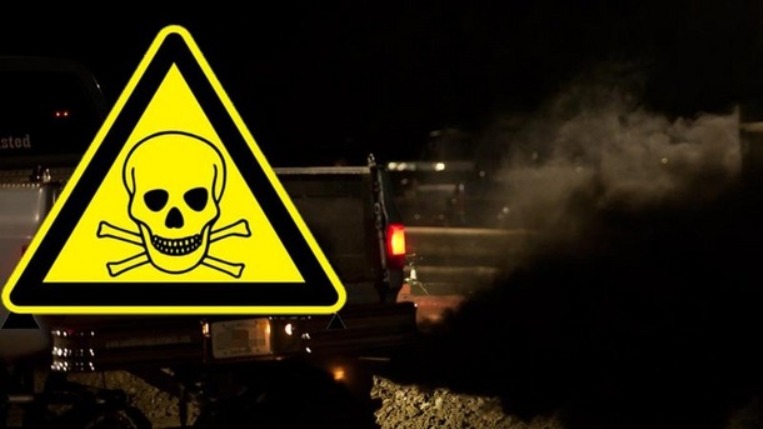
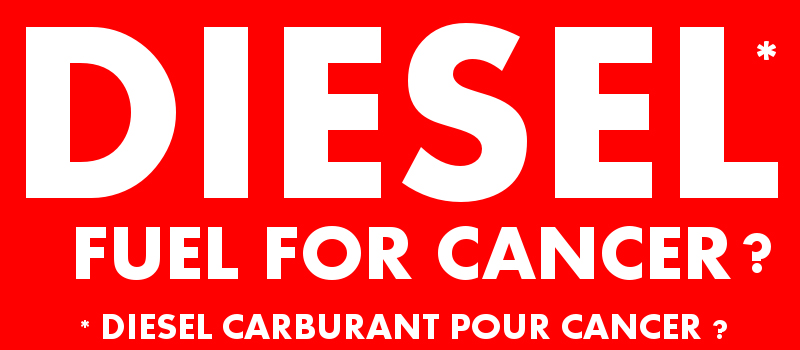
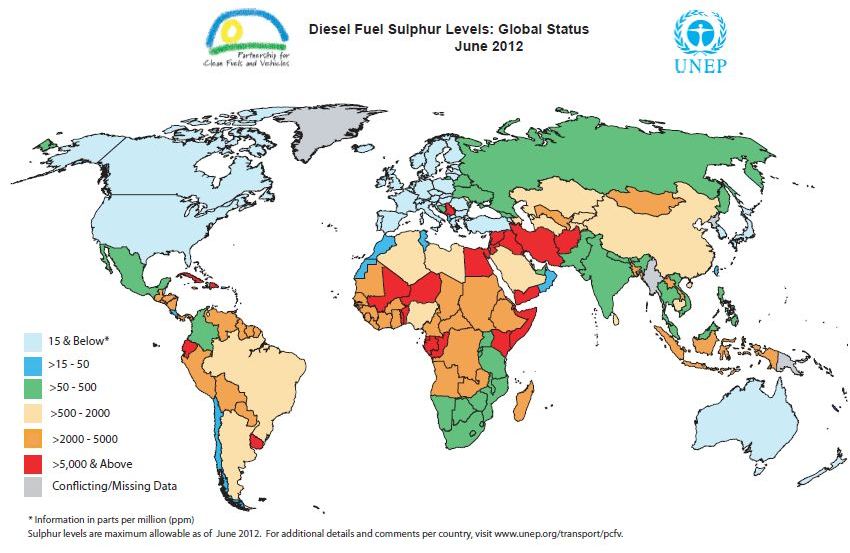
In this week’s Ravaya column (in Sinhala), I look back at the scientific, legal and policy struggles in Sri Lanka that finally god rid of lead additives in petrol (gasoline) in 2002. It is a success story in safeguarding public health and combating environmental pollution that holds valuable lessons in a new challenge that confronts us: how to reduce sulphur content in the diesel distributed in Sri Lanka that currently contains one of the highest sulphur levels in Asia. This is now urgent and important with WHO confirming diesel fumes cause lung causer.
Buckminster Fuller, the visionary American engineer and designer who used challenge his audiences saying: “There’s no energy shortage; there’s no energy crisis; there’s a crisis of ignorance.”
In this episode of Malima (New Directions in Innovation), a Sinhala language TV series on science, technology and innovation, we feature a wide-ranging interview on how innovation can find solutions to the energy crisis.
Produced by Suminda Thilakasena and hosted by science writer Nalaka Gunawardene, this show interviews two Lankan specialists:
• Dr Ajith de Alwis, Professor of Chemical and Process Engineering, University of Moratuwa, Sri Lanka
• Engineer Asoka Abeygunawardana, Adviser to the Minister of Power and Energy and Executive Director, Energy Forum, Sri Lanka
The interview opens with an overview of Sri Lanka’s energy generation and use, and then looks at the current role and future potential of renewable energy sources – ranging from biomass and hydro electricity to wind, solar, biogas and dendro power. In particular, we look at what Lankan inventors can do to make renewable energies cheaper, safer and more user-friendly.
In this week’s Sunday column in Ravaya (22 July 2012, in Sinhala), I discuss the far-reaching public health implications of the World Health Organisation (WHO)’s recent assessment that diesel engine fumes do certainly cause cancer, especially lung cancer, in humans.
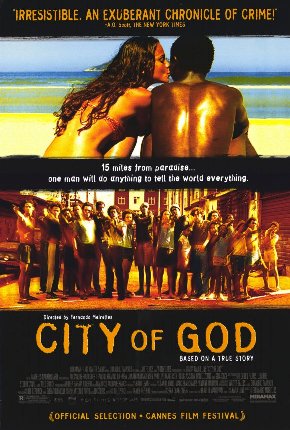
In this week’s Ravaya column (in Sinhala), I share my impressions and reflections of the city of Rio de Janeiro that just hosted the Rio+20 conference. But this piece is not about the event, but its venue — where the first world of affluence and third world of deprivation co-exist.
Statue of Christ te Redeemer looks down on Rio de Janeiro from Corcovado Mountain
තිරසාර සංවර්ධනය පිළිබඳ එක්සත් ජාතීන්ගේ සමුළුව (UN Conference on Sustainable Development, Rio+20) බ්රසීලයේ රියෝ ද ජනෙයිරෝ නුවර පැවැත්වුණා.
Animation films are hard to make all around. Even with digital technologies, the art and science of making entertaining and informative animations remains a challenge — and that’s why there are few good ones around.
I was thus happy to discover There’s No Tomorrow, a half-hour animated documentary about resource depletion, energy and the impossibility of infinite growth on a finite planet.
Inspired by the pro-capitalist cartoons of the 1940s, the film is an introduction to the energy dilemmas facing the world today. It is made by Incubate Pictures.
Their intro text says:
“The average American today has available the energy equivalent of 150 slaves, working 24 hours a day. Materials that store this energy for work are called fuels. Some fuels contain more energy than others. This is called energy density.”
“Economic expansion has resulted in increases in atmospheric nitrous oxide and methane, ozone depletion, increases in great floods, damage to ocean ecosystems, including nitrogen runoff, loss of rainforest and woodland, increases in domesticated land, and species extinctions.”
“The global food supply relies heavily on fossil fuels. Before WW1, all agriculture was Organic. Following the invention of fossil fuel derived fertilisers and pesticides there were massive improvements in food production, allowing for increases in human population.The use of artificial fertilisers has fed far more people than would have been possible with organic agriculture alone.”
Text of my news feature published in Ceylon Today newspaper on 23 June 2012
The UN Kicks the Paper Habit – at last!
By Nalaka Gunawardene
In Rio de Janeiro, Brazil
The United Nations secretariat – the world’s largest bureaucracy – has long been known as a formidable ‘paper factory’. It cranks out millions of documents every year in the organisation’s six working languages. Some of it is not read even once.
A few years ago, it acknowledged producing over 700 million printed pages every year (2005 figures). The cost of printing documents in its New York and Geneva offices along was over 250 million dollars a year.
And major international conferences convened by the UN have seen a splurge of paper – both official documents and many that are simply self-promotional of various participating national delegation, development agencies or companies. When such events end, literally tons of paper are left behind convention sites.
Environmentalists have been urging the UN to go easy on paper for many years, both to save trees pulped to make paper, and to reduce chemicals use and carbon emissions in printing or copying.
The message is finally being heeded. The United Nations Conference on Sustainable Development in Rio de Janeiro is the first major UN event to reduce paper use – and it shows.
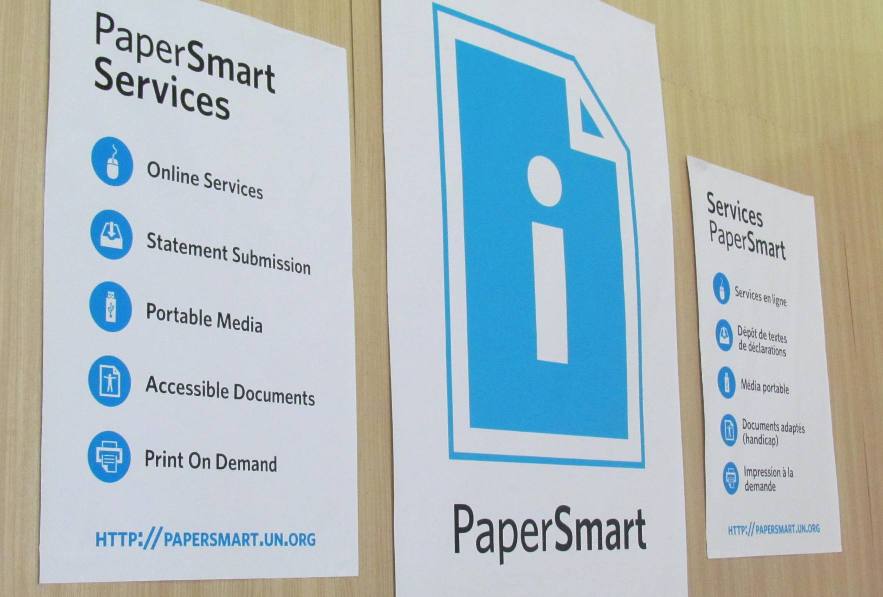
The entire meeting process is using less paper, and more electronic means for generating and sharing information. It’s the result of a new initiative called PaperSmart.
The vast Rio Centro convention centre, where the main inter-governmental meetings and major groups’ discussions are being held, is surprisingly paper-free.
So is the media centre, the operations base for hundreds of journalists from all over the world covering dozens of parallel sessions and events. In the past, this was a favourite ‘dumping ground’ for paper based materials.
At Rio+20 this week, only a handful of non-governmental organisations, academic bodies and activist groups still peddled paper. Most others had cut back on indiscriminate distribution of publications, posters, postcards and other materials.
Of course, the UN system loves to belabour the point. A dedicated website (http://papersmart.un.org) explains the underlying thinking and mechanics. PaperSmart is based on four principles: sustainability, efficiency, accessibility and knowledge management.
Switching from atoms to electrons has not been easy or smooth. Some participants – including web-savvy journalists – have been struggling with the complicated Rio+20 website and related online UN information services.
It’s still a work in progress, but PaperSmart is definitely a positive development to be cheered.
“After decades of sanctimonious preaching about the environment, the United Nations is taking a step in the right direction,” says Thalif Deen, the UN Bureau Chief of the developing world’s news agency, Inter Press Service (IPS).
Deen is a veteran of many UN conferences and processes who has seen how telexes and teleprinters gave way to instant global communications with Internet-enabled laptops and smartphones.
He recalls: “I was on the reporting staff of the first conference newspaper IPS published during the 1992 Earth Summit in Rio where the UN’s carbon foot print was all over the conference centre: reams and reams of reports and documents and thousands of UN staffers flying in from UN offices the world over.”
Deen hails Rio+20 as “a major breakthrough for a global institution long accused of extravagance and conspicuous consumption”.
A few years ago, Deen asked Shashi Tharoor, then UN under-secretary-general for public information, on when the paperless office might finally arrive at the UN Secretariat.
The digitally savvy Tharoor admitted the UN’s track record was not a good one. He then offered a comparison: “The amount of paper we use in a year to produce every single UN document, in all six official languages, is equivalent to what the New York Times consumes to print a single Sunday edition.”
Things have evolved a bit both in the newspaper industry and the UN bureaucracy since that remark was made in 2005. Newspapers in the west are now selling less, especially in paper editions.
Simply stamping out paper use can be misleading unless the total energy and resource uses are factored in. In recent years, concerns have been raised on the carbon emissions of massive internet servers.
Of course, these are dwarfed by the amount of planet-warming gases spewed out by delegates flying long distances to be in the same crowded conference with thousands of others.
As at June 20 evening, Rio+20 had close to 40,000 officially registered participants in various categories. Many unofficial events attract more.
Environmentalists, relieved by the reduced use of paper, would also be quick to point out growing problems of electronic waste.
It seems there is no such thing as an impact-free communication!



 Open Minds!