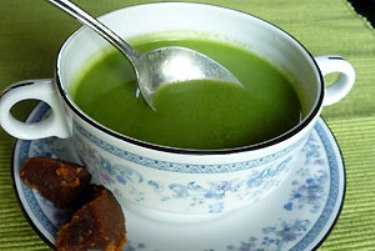
Kola Kenda - herbal porridge, Lankan style Have a Kola Kenda and a Smile!
That was the – not very original – slogan I coined 30 years ago as a school boy to promote and popularise kola kenda, the Lankan version of herbal porridge.
I’ve always been an ardent eater of green leaves and veggies (isn’t everybody?). So I didn’t need any special persuasion to drink kola kenda.
Most of my peers didn’t share this enthusiasm. They didn’t mind the taste, but the whole thing seemed too old fashioned. Self-respecting teenagers shouldn’t be seen drinking a favourite of their grandparents, they argued.
As often happened, I disagreed. Not only did I take delight in partaking my kola kenda, but also kept trying to convince my peers that, hey, kola kenda was cool.
First I tried the rational, evidence-based approach. I found out as much as I could about kola kenda and distilled it into a few non-technical, non-preachy lines. I wrote about in our school magazine, spoke about it at the school assembly, and seized every other opportunity to plug the green stuff.
I must have been around 15 or 16 years old at the time, but even then, I realised kola kenda had an image problem. So — following the golden advice, “Don’t just sit there; do something!” — I tried to improve it.
I abbreviated kola kenda to KK. I designed a stylish logo for it, independent of any corporate branding. Adapting a popular tag-line for Coca Cola at the time, I even came up with the slogan, “Have a KK – and a smile!”
None of this really worked; after six months, I gave up being the kola kenda evangelist. But that campaign earned me an inevitable nickname: kola-kendaya.
I was proud of it then as I’m now.
Years later, when I started running my own household, I realized making kola kenda is a tedious process. So, despite being a life-long kola-kendaya, I don’t make it too often.
I’m all for modernising traditional recipes: retaining the nutrition and taste, while reducing the drudgery. That’s just what CBL have done. It comes in five flavours too: gotukola, welpenela, haathawariya, karapincha and mixed herbs.
At LKR 50 (less than US$ 50 cents) per pack of 3 servings, it’s good value for money.
I’m now working on my resident teenager to try it sometime. She’s not yet convinced. I’m hoping that this 21st Century Girl would prove smarter than those ignorant boys who turned their backs to KK 30 years ago…
This is the Sinhala text of my Sunday column in Ravaya newspaper, 1 April 2012.
Facing an electricity generation crisis, Sri Lanka has embarked on a countrywide energy conservation drive — urging everyone to switch off all non-essential lights, and reduce other forms of power consumption.
Beyond these important yet token gestures, are there smart options that can save significant quantities of electricity, 85% of which is now generated in Sri Lanka using imported, costly fossil fuels?
Yes, there is one: advance the clock by half an hour. Faced with power crises in the past, governments did this in the 1990s — and with tangible results. This is evidence based policy and action. But a vocal minority in Lanka resented this progressive move all along, and in April 2006, they successfully lobbied the (current) government to revert Sri Lanka’s standard time to GMT+5:30 from GMT+6 which had been used since 1996.
I wrote about Sri Lanka giving up on Daylight Saving time in April 2006 in this SciDev.Net opinion essay: Science loses in Sri Lanka’s debate on standard time. As I noted: “In doing so, the government completely ignored expert views of scientists and intellectuals. It listened instead to a vocal minority of nationalists, astrologers and Buddhist monks who had lobbied the newly elected president to ‘restore the clock to original Sri Lankan time’.”
Malima (New Directions in Innovation) is a Sinhala language TV series on science, technology and innovation, broadcast on Sri Lanka’s Rupavahini TV channel.
Produced by Suminda Thilakasena and hosted by science writer Nalaka Gunawardene, this episode was first broadcast on 22 March 2012. It features three stories:
• An interview with Dr Sarath Wimalasuriya, who has invented a low-cost, portable device that provided electrical pulse to a fence protecting crops from elephants. Called Shock Defender, this 5kg unit can support a fence 1.8km long, typically 50 acres (20.2 hectares). When fully charged, it can work for 48 hrs on battery. The medical doctor turned electronic inventor sells the device at one sixth the price of comparable imported ones.
• South Korean scientists say they have developed flexible memory technology that could support bendable computer platforms for e-books and cell phones.
• An interview with child inventor K K Irushika Teran Suriyakumara, student of St Benedict’s College, Colombo, who has come up with a simple automated device to remotely feed fish in a household fish tank. He has cleverly combined discarded material and a basic mobile phone. Find out how!
Some geologists now believe that human activity has so irrevocably altered our planet that we have entered a new geological age.
A decade ago the Nobel Laureate Dutch chemist, Paul J Crutzen, coined a new term for it: the Anthropocene.
The proposed new epoch was discussed at a major conference held at the Geological Society in London in the summer of 2011.
A new short video explaining it in simple terms was released this week in connection with the Planet Under Pressure conference, London 26-29 March 2012.
As they say, it offers a “3-minute journey through the last 250 years of our history, from the start of the Industrial Revolution to the Rio+20 Summit”.
The film charts the growth of humanity into a global force on an equivalent scale to major geological processes.
The film is part of the world’s first educational webportal on the Anthropocene, commissioned by the Planet Under Pressure conference, and developed and sponsored by anthropocene.info
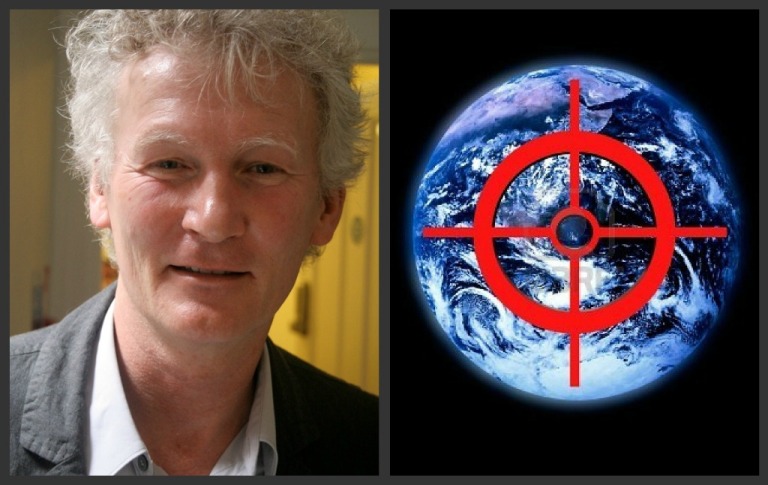
Robert Paul Lamb (1952 – 2012): The Earth’s Reporter
Robert Paul Lamb (1952 – 2012) was a planetary scale story teller. He used simple words and well chosen moving images to show us how we are abusing the only habitable planet we have.
He excelled in the world’s most pervasive mass medium, television. He effectively turned the small screen into a ‘mirror’ that showed how humans are constantly living beyond our natural means…as if we have spare planets in store.
For nearly three decades, Robert Lamb reported about the Earth to people all over the Earth. He ‘zoomed in’ to far corners of the planet to get a closer look at what was going on. He regularly ‘zoomed out’ for the bigger picture. All his life he probed why, as the Brundtland Commission had memorably noted in its 1987 report, “The Earth is one but the world is not”.
In this quest, he interviewed some of the finest minds and most passionate activists on what needs to be done, and how to do it. He also showcased the work of researchers, innovators and entrepreneurs trying out solutions to our many problems of resource and energy use. He always cheered these pathfinders who are our best hopes in overcoming the current ecological and economic quagmires.
Robert’s work was not easily pigeonholeable, which confused many. He wasn’t making wildlife or natural history films, although he sometimes touched on the subject from a human interaction angle. Perhaps the best summing up of his line of work was given by Mahatma Gandhi, who, when asked for his views on Indian wildlife decades ago, replied: “Wildlife is decreasing in the jungles — but it is increasing in the towns!”
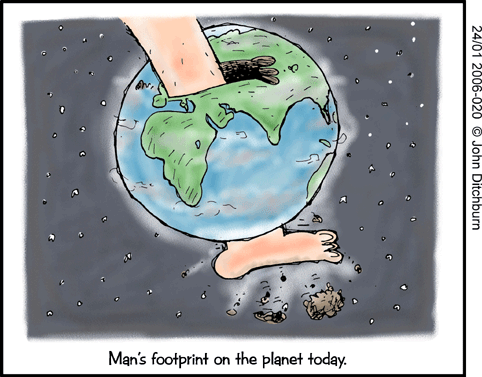
If this isn't wildlife, what is?Robert documented life going wild with far-reaching consequences. In the spectrum of factual TV programme production, he occupied a niche best described as scientifically based environmental films: those that explore the crushing ‘ecological footprint’ modern humans are having on the rest of Nature and ecosystems.
Robert was a journalist first and last. Although he later straddled the worlds of media and development, his outlook was firmly rooted in journalism where he started his career. He had a firm grasp of scientific, economic and political realities that shaped international development.
From 1984 to 2002, he was founder director of the UK-based media charity Television Trust for the Environment (TVE) from 1984 to 2002. TVE was set up to harness the potential of television and video to raise environmental awareness and catalyse sustainable development debates in the developing world.
Heading TVE for nearly two decades, Robert commissioned, produced or co-produced dozens of documentaries on a broad range of issues and topics.
Some were straightforward ones that ‘connected the dots’ for intelligent viewers. Others investigated complex — often contentious — causes and effects of environmental degradation or social exclusion.
These efforts dovetailed on-going discussions at the time on sustainable development. The Brundtland Commission had just defined it as a pattern of economic growth that “meets the needs of the present without compromising the ability of future generations to meet their own needs.”
Easier said than done in a world where many families could barely afford to think beyond their next meal while most governments chose not to see beyond the next election. Next generation thinking was rare then, as it is now. Only mavericks dare walk that path.
Besides, what exactly did that ideal mean for a subsistence farmer in Africa or a small entrepreneur in Asia? Did this long term view figure at all when politicians or bureaucrats struggled to balance their national budget or negotiate better terms of trade? How and where did women and children figure in these considerations?
Robert and his team followed the lofty intellectual debates and also tracked progress on the growing number of international treaties on specific environmental matters. They captured the essence of these through compelling moving image creations.
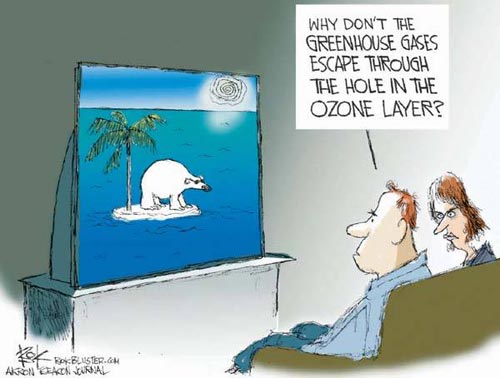
In doing so, this small band of individuals changed forever how environment was covered on TV. As he recalled in UNEP’s Our Planet magazine in 2000, “In the mid-1980s barely anyone had heard about the ozone layer or global warming. Natural history programming brought the wonders of plant and animal diversity into our living rooms but glossed over the complex causes of extinction.”
Robert was swimming against not one but several currents. As he wrote years later: “Television does not cope well with explaining the grey areas. Or rather it could — but the received wisdom is that it makes the viewer reach for the remote channel changer. Television prefers the black and white; the good guys versus the bad.”
He accomplished this through what I call the ‘triple-S formula’: mixing the right proportions of good Science and engaging Stories, told in Simple (but not simplistic) language.
He demystified jargon-ridden science and procedure-laden intergovernmental negotiations without losing their complexity or nuances. This is what public communication of science is all about.
We can only hope he isn’t our average TV viewer...but are we sure?Always look for what’s New, True and Interesting (the NTI Test), he used to tell us who followed the trail he blazed. All our efforts ultimately hinged on how we appealed to the viewer – and she held that all-powerful remote controller in hand!
Robert’s overarching advice: never underestimate your audience’s intelligence — or overestimate its interest levels.
“If we don’t engage our audiences in the first 60 to 90 seconds, they are gone,” Robert often told his producers. “Hook them – and make it worth their while to do so!”
Most people don’t carry good memories of school. When they sit down to watch TV – usually at the end of a long day – they just want something light and pleasant, and preferably not reminded of school…
Pervasive as TV was, the medium wasn’t a substitute for reading or a classroom. At best, we could only flag the highlights of an issue, and whet the appetite for viewers to go after more.
Sympathetic as he was to issues and concerns of the developing world, Robert applied the same rigorous editorial criteria on film makers based in the global South. He pointed out the latter’s sweeping generalizations, condescending elitist language or incoherent story telling. Some walked away grumbling, but realized years later that he was right…
Robert’s fast pace and no-nonsense demeanour probably won him as many admirers as detractors. Producers dreaded his piercing questions about evidence and coherence. Over time, staff got used to his sharp text editing, usually done with a thick-tipped pen.
He was most assertive in (video) edit rooms, where I have seen him in action only on a few occasions. While TV productions involve team work, editorial decisions have to be centralised. You can’t make films by committee. As series editor or executive editor, he was the master of all he surveyed. Conversely, he stood by his producers who’d done their homework.
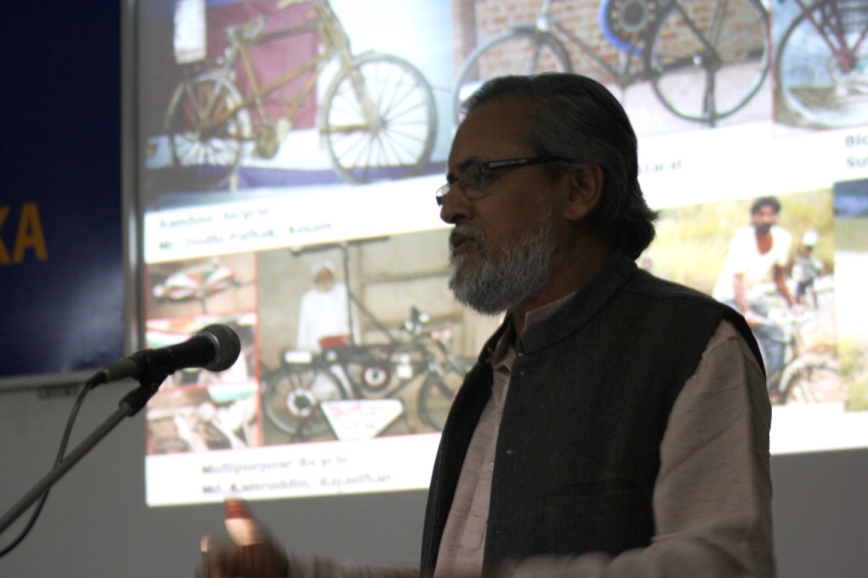
Prof Anil K Gupta lights oil lamp in front of Ray Wijewardene photo before delivering Inaugural Ray Lecture in Colombo, 13 Dec 2011 - photo by Ruveen Mandawala
“Ray Wijewardene was a man well ahead of his time, which might explain why he was not better understood and appreciated. He was also a systemic thinker who went to the root of problems and looked for elegant and efficient ways of solving them. He was not mesmerised by technology alone.”
Dr Anil Kumar Gupta, a Professor at the Indian Institute of Management (IIM) in Ahmedabad, India, and Founder of the Honey Bee Network, spoke on “Grassroots Innovation for Inclusive Development: From Rhetoric to Reality” at the Institution of Engineers Sri Lanka (IESL) on 13 December 2011.
The IESL auditorium was packed to capacity, with more people standing and spilling over to the corridor. Anil Gupta gave an engaging talk that makes him the subcontinent’s foremost innovation-spotter. With inspiring examples and illustrations, he emphasized that grassroots innovations can provide a new ray of hope — provided we let them grow.
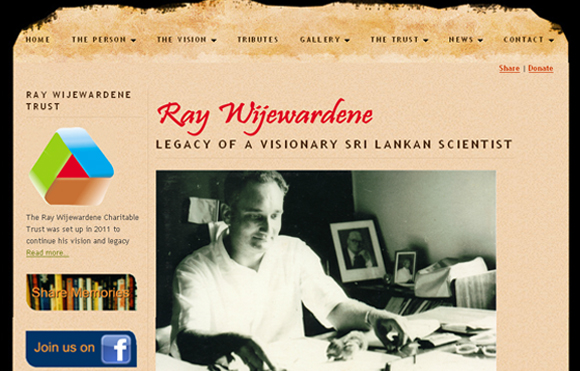
The lecture was organised by IESL and the Ray Wijewardene Charitable Trust (RWCT), set up to promote Ray’s legacy, and committed to nurturing innovation in Sri Lanka.
The Trust made an auspicious start by inviting Anil Gupta to deliver the first lecture in Ray’s memory. Gupta and Wijewardene were kindred spirits who stayed in touch over the years across the Palk Strait.
“It is a privilege for me and the Honey Bee Network to be invited for a lecture in honour of such an illustrious innovator, social change activist and thought leader of our sub-continent, and indeed the entire developing world,” Professor Gupta said when I first reached out to him a few months ago to invite for the lecture.
Prof Anil Gupta delivers inaugural Ray Wijewardene memorial lecture in Colombo, 13 Dec 2011 - Photo by Ruveen Mandawala
Anil K Gupta is an unusual professor who walks the talk — and walks through the villages and slums of India in search of innovation. His mission is to ensure that grassroots innovators receive due recognition, respect and reward for their bright ideas. He also seeks to embed an innovative ethic in educational policy and institutions.
All three entities are partners of the National Innovation Foundation (NIF India), an autonomous body under the Department of Science and Technology in India. Since 2000, NIF has mobilized more than 160,000 innovations and traditional knowledge practices from all over India, and now holds the largest database of its kind in the world. Professor Gupta is Executive Vice Chair of the NIF, and is also a member of the National Innovation Council of India.
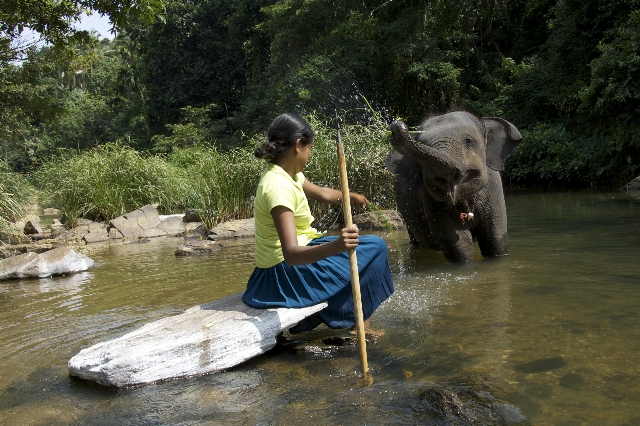
This is my latest Sinhala column published in Ravaya newspaper on 23 October 2011, which is about human-elephant interactions in Sri Lanka, which has the highest density of Asian elephants in the world. I have covered much of the same ground in English in another recent essay, Chandani: Riding a Jumbo Where No Woman Has Gone Before…
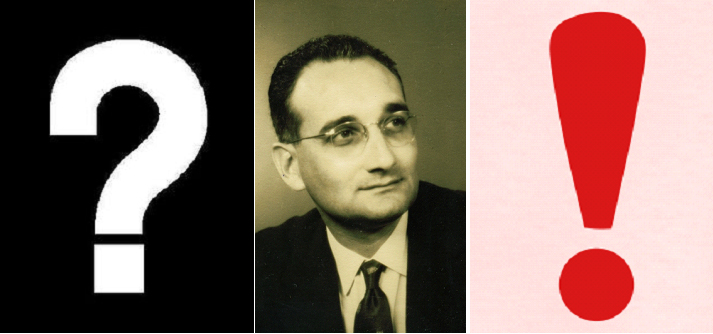
The story goes like this. Victor Hugo was travelling out of town and wanted to know how his latest book was selling. He messaged (telegraphed?) his agent: ?
The agent, not to be outdone, replied: !
Enough said. How I wish I could beat that economy of words…
I have a fondness for both question marks and exclamation marks — I used a good deal of both in my own speaking and writing. I use these as a metaphor in a tribute I just wrote about one of my mentors: Ray Wijewardene.
“If I had to condense the multi-faceted and fascinating life of Ray Wijewardene, I would reduce it to a whole lot of question marks and exclamation marks. In his 86 years, Ray generated more than his fair share of both.
“He was unpigeonholeable: engineer, farmer, inventor, aviator and sportsman all rolled into one. Whether at work or play, he was an innovative thinker who rose above his culture and training to grasp the bigger picture.”
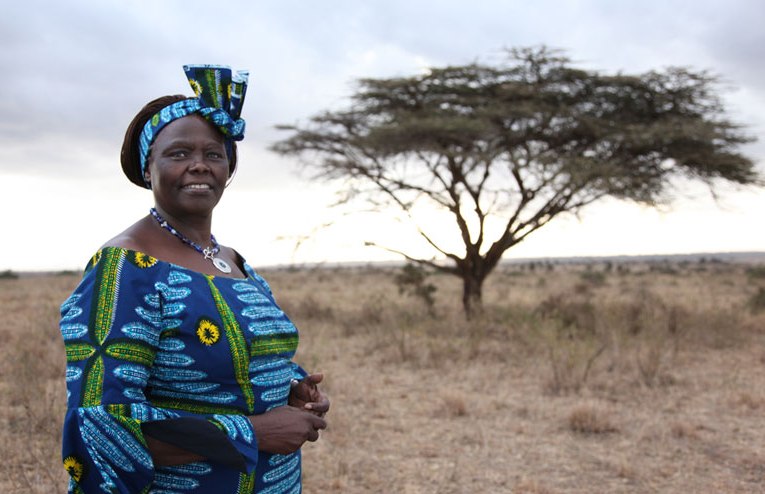
Wangari Muta Maathai (1 April 1940 – 25 September 2011)
“We are very fond of blaming the poor for destroying the environment. But often it is the powerful, including governments, that are responsible.”
That was a typical remark by Wangari Muta Maathai, the Kenyan environmental and political activist who has just died.
In the 1970s, Maathai founded the Green Belt Movement, an environmental non-governmental organisation focused on the planting of trees, environmental conservation, and women’s rights.
In 2004, she became the first African woman to receive the Nobel Peace Prize for “her contribution to sustainable development, democracy and peace.”
The Green Belt Movement in a profile about their founder counted the many roles she played: environmentalist; scientist; parliamentarian; founder of the Green Belt Movement; advocate for social justice, human rights, and democracy; elder; and Nobel Peace Laureate.
“”It is the people who must save the environment. It is the people who must make their leaders change. And we cannot be intimidated. So we must stand up for what we believe in,” Wangari Maathai kept saying.
As a tribute, I have assembled a few links to interesting online videos featuring her.
Taking Root, a long format documentary, tells the dramatic story of Wangari Maathai whose simple act of planting trees grew into a nationwide movement to safeguard the environment, protect human rights, and defend democracy—a movement for which this charismatic woman became an iconic inspiration.
TAKING ROOT: The Vision of Wangari Maathai Trailer on PBS YouTube channel:
Wangari Maathai & The Green Belt Movement, short film by StridesinDevelopment:
Riz Khan’s One on One: Wangari Maathai: Part 1
Interview with Al Jazeera English first broadcast on 19 Jan 2008
“I will be a hummingbird” – Wangari Maathai
Two more memorable quotes from her to inspire us all:
“I have always believed that, no matter how dark the cloud, there is always a thin, silver lining, and that is what we must look for.”
“We cannot tire or give up. We owe it to the present and future generations of all species to rise up and walk!”






 Open Minds!