Raised on popular culture, I have always been an admirer of tabloid journalism – which means using popular formats to reach out to a mass audience in newspapers or broadcasting. There’s nothing inherently wrong with this: we might even argue that the tabloid approach is the only way to achieve truly mass media (with all else being niche media reaching to smaller demographic groups).
So I was delighted to be on a panel with two leading British tabloid journalists and a popular radio host from South Africa during the 6th World Conference of Science Journalists held in London from June 30 – July 2, 2009.
My own, personal answer is NO — it need not be! And I’ve spent a good part of my two decades of work in the media experimenting and showing that communicating science can be fun — both for us communicators and our audiences.
But I pointed out that science is still being covered in sections of Asian media in the more traditional, classical way, just like science itself is still an elitist pursuit in many of our societies.
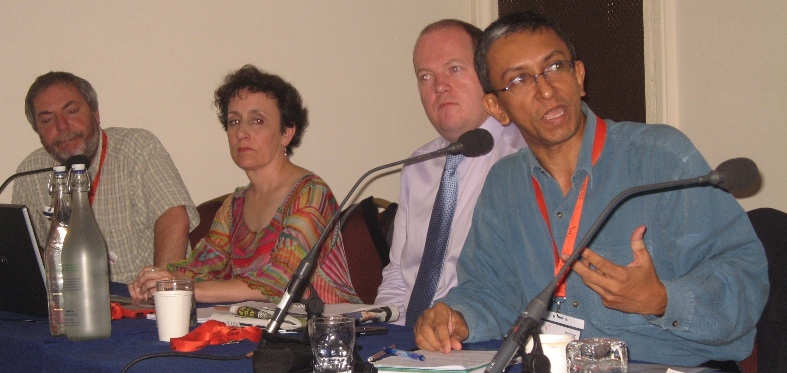
L to R: Paul Sutherland, space correspondent of The Sun, UK; Christina Scott, radio and web journalist, South Africa; David Derbyshire, Environment editor, The Daily Mail, UK; Nalaka Gunawardene, Director/CEO, TVE Asia Pacific
I said: “We might call this coverage ‘broadsheet approach’ in print; or ‘bluechip documentary’ format on television. And they are both unsustainable! They are also endangered in these hard times for the mainstream media in most economies.
“So going the tabloid path is a practical and pragmatic way to deliver science stories and science information to a mass audience or readership. We’re doing it in different ways in the Asian media!”
In my remarks, I gave some examples where science is jazzed up (rather than dumbed down) for popular consumption on Asian television. For example, how solar and lunar eclipses provide fodder for endless stories on our numerous news channels. Such coverage, fleeting and superficial as it might often be, takes the wonders of science and Nature to more people than anyone else can.
I argued that the path to the mass audiences in Asia is through news, sports and entertainment programming. We have our own niche, factual channels – Discovery, National Geographic, Animal Planet and their local equivalents. They have a loyal but small audience. They do excellent work. But where numbers are concerned, they cannot – yet! – compete with the outreach and appeal of broadcast radio, TV and newspapers. Neither can the online and mobile media, even though their outreach is growing fast.
Things don’t always go right, however. Doing wall-to-wall coverage of news demands producers and reporters to tackle a variety of topics and subjects — including specialised science stories. Some handle this better than others. In their race for ratings and revenue, a few ‘dress up’ the stories a bit too much.
Television science: aspiration or reality?A good example was how some Indian news channels handled the so-called ‘Big Bang experiment’ in September 2008, when the Large Hadron Collider (LHC) was commissioned. The mega-science experiment was interesting in its own right, but it wasn’t apparently exciting enough for at least two channels — Aaj Tak and India TV. Their coverage running up to the event speculated about its “catastrophic effect on the world” – effectively end of the world.
Their coverage caused panic, which led to at least one attributable death. This prompted the Indian Ministry of Information and Broadcasting to caution the channels for spreading “misinformation, fear and horror” among viewers. It advised the channels to exercise restraint in presenting such issues.
I call this the ’24/7 TV Deficit’ in Asian broadcasting. The long term response to this is to invest in training and capacity building of journalists and producers already working in the media. For the most part, they learn on the job, making mistakes on the air. This is far from ideal.
Here’s how I summed up: ‘Tabloid science coverage’ – in print or broadcast – may be imperfect in some ways. But our choice is either that, or nothing. Our challenge is to make the process and product better as we go along.
We urgently need to unleash scientific knowledge and understanding in matters of public interest and public policy. We can’t afford the ALL or NOTHING approach.
Journalists always love a crisis for its news value. But they’d prefer such crises to be happening to someone else, and not to themselves. Right now, however, mainstream media (MSM) are hit by their own crisis – one that threatens their very survival. Their old business models are crumbling in the face of online media, and their advertisers are moving away as fast as their audiences do.
The crisis is real, no doubt — but it’s not evenly spread across the media or around the world. Despite being a world conference, what we heard most frequently and emphatically was the version of the western, mainly English language media. So when I had a chance to talk — during a session on Does science need to be highbrow? — I spent a couple of minutes giving the other side of the news.
Here’s part of what I said:
All news is not doom and gloom...We’ve heard a lot of doom and gloom at this conference about the state of mainstream media. We empathise with our journalist colleagues affected by both economic downturn and audience migration to online media. The situation is somewhat different in many parts of Asia, where there is still vibrancy in newspapers, radio and television industries. I realise this is a sweeping generalisation, but the media industry’s statistics suggest this.
According to the World Association of Newspapers (WAN):
• 8 of the world’s 10 largest circulating, paid-for daily newspapers are in Asia.
• The largest national newspaper markets are in China, India and Japan — the United States is a distant fourth.
• While readers are abandoning newspapers in North America and Europe, paid-subscriptions in Asia’s grew by nearly 5% in 2008.
• In India alone, 11.5 million new newspaper readers were added in 2008.
Some say Asia is enjoying what may be the world’s last great newspaper boom. This is fuelled by a confluence of factors – among them:
• growing literacy rates and rising educational levels;
• rising middle classes many of who consider buying a daily newspaper at home as a sign of prosperity; and
• media reforms in some countries which have liberalised the sector, allowing local and foreign companies to enter the media market.
Similar trends are seen in radio and television broadcasting, where there has been an explosion of channel numbers in the past two decades. All this presents challenges AND opportunities for covering science.
What does all this mean? Is the Asian media boom the exception that does not prove the rule? Or is the mass extinction of mainstream media going to hit Asia just a bit later? In that case, are we now seeing the last hurrah of the mediasaurus — to use a term that was first coined by the American writer Michael Crichton, best known for his novel Jurassic Park? He anticipated the current crisis in the media back in 1993, in an essay he wrote in Wired magazine, titled “Mediasaurus“.
Adapting to survive?Naturally, the industry does not like to acknowledge it is doomed. Predicting the death of newspapers “seems to have reached the level of a new sport,” says Gavin O’Reilly, President of the World Association of Newspapers. He told the ‘Power of Print’ Conference in Barcelona, Spain, in May 2009: “That this doom and gloom about our industry has largely gone unanswered is, to me, the most bizarre case of willful self-mutilation ever in the annals of industry. And it continues apace, with commentators failing to look beyond their simple rhetoric and merely joining the chorus that the future is online, online, online, almost to the exclusion of everything else. This is a mistake. This oversimplifies a rather complex issue.”
It’s complex alright, and what happens to the larger media industry would determine how and where science can be covered in the media. In our session, I went on to discuss the prospects for covering science and technology in the currently numerous – and very cacophonous! – media in South and Southeast Asia. A separate blog post covers that part of my remarks.
When Cable News Network – or CNN – was launched in June 1980, it became the first network to provide 24-hour television news coverage, and the first all-news television network in the United States. Most people didn’t believe it would last for long, for they could hardly believe that there was enough news to fill all hours of the day and night.
They had reasons to be skeptical: at the time all major TV channels and networks in North America, Europe and elsewhere carried an hour or two of well-packaged and well-presented news bulletins per day. Viewers looked forward to these bulletins, when able and amiable anchors like Walter Cronkite – ‘the most trusted man in America’ – entered their living rooms for an update and reflection on the day’s events. A leader had to be assassinated or men had to walk on the Moon for this routine to be broken…
CNN founder Ted Turner changed all that. He proved the skeptics wrong, and blazed a new trail in broadcast journalism. In his wake, dozens and now hundreds of all-news channels have emerged, providing a cacophony of coverage and punditry as never before seen.
Saturated with news on TV? Reach out for this relief!
One of the early, unofficial expansions of CNN was ‘covering news needlessly’. This was sometimes necessary to fill 24 hours a day (or 1,440 minutes) and 7 days a week (or 168 hours). The channels say repetition is meant to give the chance for any viewer to catch up on the news whatever time she tunes in. But the question remains: is there so much news to fill not only 24/7 but hundreds of such channels?
The answer is both yes – and no. It all depends on the definition of news, and what each channel considers to be in the public interest. We won’t get into that big debate here. But the fact remains that, at least where the numerous all-news channels in Asia are concerned, they often struggle to fill their air time – and not always very successfully.
And do we have an abundance of such channels. India alone now has more than 60 all-news channels catering to a billion+ audience in dozens of languages…and more keep popping up. Elsewhere in countries such as the Philippines, Pakistan and Thailand, there have been similar channel explosions in recent years. This is partly triggered by media liberalisation which allowed local and foreign private companies to enter the broadcast sector that earlier remained a state monopoly.
Aryn Baker of TIMEBut more channels has not necessarily meant better coverage of news. There was a perceptive observation by Time magazine’s Aryn Baker in a recent essay she wrote in June 2009 about the state of Pakistan’s media. In her essay titled Casualty of War, she noted: “In 2002, the then President, General Pervez Musharraf, permitted private TV stations to broadcast news instead of just the state-owned Pakistan Television Corp. At the time, Musharraf’s deregulation was hailed as a significant step for the nascent free-press movement; indeed, today there are more than 30 nongovernment TV stations in the country. As TV stations proliferated, I argued that increased competition would force the emergence of a strong, ethical and responsible media corps. But there simply aren’t enough well-trained and -informed local journalists to supply the dramatically greater number of media outlets. I also assumed that consumers would gravitate toward truth. Instead the bulk of readers and viewers seem comfortable with sensationalism and xenophobia — as reflected by an April poll conducted by Gallup Pakistan revealing that 76% of Pakistanis “believe Pakistani media [are] unbiased to a great or somewhat extent.” In other words, Pakistanis like their media the way they are.”
Baker cites examples where the print and broadcast media in Pakistan regularly rumour and peddle conspiracy theories as news. She ends with a strong plea: “Pakistan’s press needs to take a hard look at itself and its level of professionalism. Only then will it live up to its potential, and only then will Pakistan get the media it deserves.”
Shooting the news...I couldn’t agree more. Having cheered the collapse of state broadcasting monopolies across Asia in the 1990s, I have very much felt the same way about news channels across the region (here I’m talking about the English language channels only, which are outnumbered in most markets by local language channels). While there are a few news channels that stand above the rest, a majority would come close to what Aryn Baker describes for Pakistan.
Speaking at the 6th World Conference of Science Journalists held in London in early July, I called this the ’24/7 TV Deficit’ in Asia’s broadcast media. In summary, it is this: In the developed world, all-news channels like CNN evolved over time, building capacity and experience along the way. In emerging Asia, news channel explosion hasn’t allowed time for such evolution – so skills and resources are spread too thin. There are genuine limitations of competence and capacity. Sometimes this leads to sensationalism or distortion.
I said: “The long term response to this is to invest in training and capacity building of journalists and producers already working in the media. For the most part, they learn on the job, making mistakes on the air. This is far from ideal.”
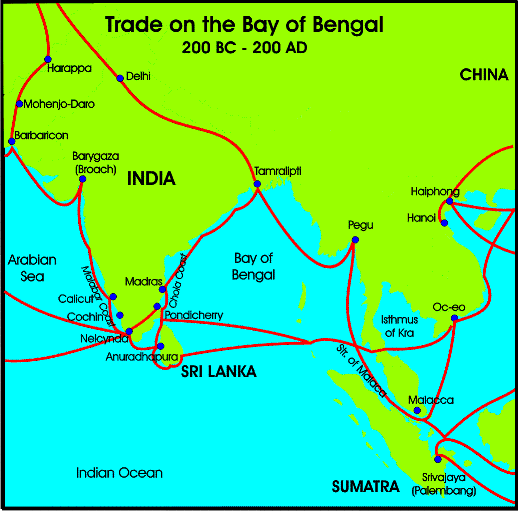
Ancient Lanka: Open and engaged with the world - image courtesy http://nabataea.net
I am neither a historian nor chef, but have a healthy interest in the subject areas of both. The two rarely come together, except when one goes in search of culinary history. I have just written an essay titled ‘Sri Lanka: Spice Island or Bland Nation?’ which blends the two in a social commentary highlighting a challenge we face as we rebuild our island nation after the war.
“Located strategically in the Indian Ocean, Sri Lanka was a hub in the maritime silk and spice routes for millennia. It drew traders from the east and west for both business and pleasure. Notable among the attractions were spices, whose many aromas and flavours formed an integral part of the tropical paradise experience.
“The traditional Lankan curry contained up to 13 spices and herbs. Most plants were not native – cardamom came from South India, cloves from Indonesia and chilli all the way from the Americas. Cinnamon was Sri Lanka’s unique contribution to this delightful mix. The origins didn’t really matter: the islanders knew just how to mix the native and the foreign to achieve legendary results.
“As Sri Lanka embarks on national integration after three decades of highly divisive war, it is worth recalling these aspects of its heritage. For the war not only devastated our economy and blighted the prospects of a generation; it also nurtured high levels of insecurity, insularity and mutual suspicion. In recent years, democratic dissent has become ‘unpatriotic’. Everything foreign is suspect – especially if from the west.
“Suddenly, the spice island is in danger of turning into a ‘bland’ nation with xenophobia the only condiment in use.”
Both versions of the essay end with an ardent plea for a return to pluralistic, cacophonic society we have been for much of our long and well-chronicled history.
“Throughout history, the spice island nurtured plurality without losing its identity or integrity. It withstood numerous invasions, colonialism and tsunamis. Sri Lanka is more resilient than many of its citizens think — and more vibrant and diverse than it appears at first glance. That’s the legacy of good geography and open frontiers.
“Let genes, ideas and spices flow freely again! We have nothing to lose – except our temporary blandness.”
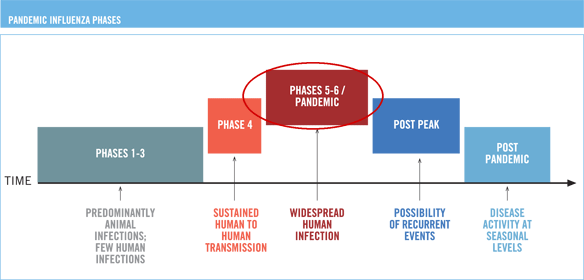
Media joined the public awareness campaign Now that the World Health Organisation (WHO) has raised the swine flu level to Phase 5, the next to highest level in the worldwide alert system, everyone is talking about a global pandemic. On 30 April 2009, the UN’s top health agency referring to it as Influenza A(H1N1).
As I just wrote in another blog post, “While medical doctors and researchers spearhead the public health response, we need the mass media and all communications professionals to support the public awareness response. Flu shots and hospitals alone cannot win this battle.”
This is where Asian mass media – especially broadcast television – have some relevant and useful experiences. When Severe Acute Respiratory Syndrome (SARS) spread across much of East Asia and Southeast Asia, it wasn’t just the public health systems that took on the epidemic. The local, national and regional media joined the effort in the true spirit of public interest. There was no division between state-owned and privately-owned media. The airwaves were mobilised for preventing, containing and eventually beating the disease that wreaked havoc for several months.
The role played by Asian media during the SARS crisis has been studied and analysed in considerable detail. Lessons from that experience are worth recalling at this moment when the world is looking for ways to contain swine flu.
When SARS forced Chinese schools, universities and public offices to be closed for several weeks in the Spring and Summer of 2003, the country’s television broadcasters rose to the occasion. They started beaming a combination of entertainment and educational programming round the clock to over 400 million households across the country — now the largest national television audience in the world. The idea was to use the media to encourage more people to stay inside homes and minimise the spread of the virus through contact. China Educational Television (CETV) — the satellite distributed educational network — took on the role of substitute teacher by increasing its broadcasts.
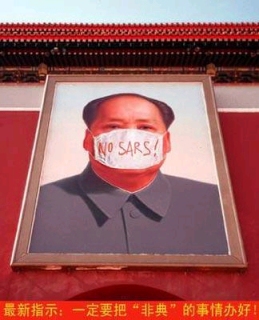
Crisis? What crisis?Of course, as the most likely place of origin of the SARS virus, China’s initial response to the epidemic was denial. Researchers have established how the slow or muted media reporting within China triggered more rapid disease transmission of the virus both within and beyond China. As the noted Asia watcher, columnist and journalism professor Tom Plate, wrote in 2008: “All the serious Chinese journalists were left holding their heads in shame. In effect, the institution of the mass-communication of news, because it was not allowed to do its job, contributed to the enormity of the SARS toll.”
Many researchers agree that it was the island republic of Singapore that best handled the SARS crisis. Dr Stewart Auyash, an Associate Professor in Health Promotion and Physical Education at Ithaca College in New York says: “Of the countries affected, the actions of Singapore’s government stand out as an example of how to deal not only with the biological elements of the disease but with the methods, style, tone, timing and breadth of its communicated messages.”
The Auyash study was titled ‘Communications as a Treatment for SARS in Singapore and its Lessons for Infectious Epidemics in Asia’, and appeared in Media Asia (Vol 32, No 4). Although the journal’s publishers restrict online access to subscribers, a copy can be freely downloaded from here.
Here’s how Tom Plate summarised its findings: “At the outset of the 2003 crisis, Singapore’s government and media authorities hammered out a clear plan to limit the syndrome’s spread among the populace. It adopted a containment policy that offered a major role for news media institutions. The media was asked to promote the idea of positive participation by all citizens to avoid furthering transmission.
Practising what we preach...“Model citizens who followed World Health Organization guidelines with exceptional care were made proud subjects of newspaper feature stories. Top government officials, including high-profile members of the cabinet, were photographed or televised as submitting to the same mandatory preventive procedures as everyone else (for example, regular temperature checks). But citizens who fought the program by either resistance or even tepid nonchalance were portrayed scornfully, with the media publicly castigating them as ‘free riders’ who benefited from a safer health environment solely through the sacrifices of others.
“To make the media policy work, the government had to play things absolutely straight. When officials knew the answer to a scary question about SARS, they answered it quickly and completely; but when they had no answer, rather than making one up and putting their credibility at risk when this was later discovered, they flat out stated that they simply did not know but would try to find out.
“In Singapore, compliance with all kinds of government policies, not just health measures, is viewed as a personal and community responsibility. It is in the small city-state’s civic ethic that ‘individual rights and inconvenience may be infringed upon to protect the greater good of the public’s health,’ as Prof. Auyash put it. Even so, what seems both notable and possibly transportable to other countries is the cooperative role of the news media in a serious health crisis. Auyash points out that the role of the media is to emphasize symbols of positive compliance. Gestures and symbols, he says, ‘can galvanize a nation’s citizens to act. In short, symbols matter.'”
At the height of the crisis, Singapore even launched a dedicated SARS TV channel. The public service channel, which began in May 2003, was run jointly by Singapore’s three main broadcasters — Singapore Press Holdings, Media Corporation of Singapore and StarHub — and aimed to raise awareness about how to identify symptoms and prevent the spread of the disease.
Everyone was roped in, from educators to entertainers, in the all-out campaign against the invisible but formidable virus. The popular local sit-com Phua Chu Kang, which airs on Singapore’s Channel 5, came up with this hilarious rap video advising viewers the dos and don’ts of SARS.
As Prof Auyash concludes: “Singapore’s communication management around SARS can serve as a guide for future infectious disease control measure…There are major principles learned from SARS in Singapore from which other countries can learn…”
The US Centers for Disease Control (CDC) offered a similarly positive post-crisis judgment. This global defender against infectious diseases has praised Singapore’s aggressive and expansive policy of contact tracing and home quarantine during SARS.
“The bleakest projections about bird flu suggest that more than 300 million people could die from a global pandemic,” says Tom Plate. He adds: “Let us hope that such a number will never be realized simply because nations refuse to learn from the successes of others, simply out of pride, parochialism, ignorance or stubbornness. A pandemic of stupidity can kill people, too.”
So this is how it REALLY started...The World Health Organization (WHO) said this week that the global spread of swine flu was highly likely, and raised its alert level to Phase 5 — the next-to-highest level in the worldwide warning system. It also offered advice on prevention, caring for persons with the flu and how to seek medical help.
“Wash your hands when you shake hands, cover your mouth when you cough,” he said. “It sounds trivial, but it makes a huge difference. If you are sick, stay home. If your child is sick, take them out of school. If you are feeling certain flu symptoms, don’t get on an airplane.”
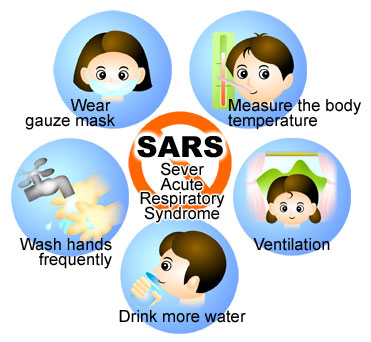
That’s the basic preventive message that needs amplification and repetition all over the world. While medical doctors and researchers spearhead the public health response, we need the mass media and all communications professionals to support the public awareness response. Flu shots and hospitals alone cannot win this battle.
For the first time in history, we have the means of rapid access to most of humanity. What we now need is clarity of message, credible messengers and sustained delivery.
I see this as an interesting – even if very risky – social experiment on the preventive powers of our 24/7 media and information devices. More than four billion mobile phones are in use, most of them in the developing world. Over one billion people connect to the web. We also have hundreds of radio and TV channels saturating the airwaves. Can these media peddle the right kind of awareness and inspire preventive action faster than the flu virus propagates itself? This is the classic race between education and catastrophe that H G Wells wrote about many decades ago!
We in Asia have some useful experiences from 2003 when the Severe Acute Respiratory Syndrome (SARS) affected much of the region. On that occasion, the media led a parallel front against the pandemic, delivering both preventive messages and helping care for those already infected.
Precisely because rapid response is vital in a situation like SARS and swine flu, it’s the broadcast and online media that can provide timely and up-to-date coverage. It’s too early and too soon to compare media’s role in this crisis with SARS and other rapid-spread public health crisis of the past. Print media can also play a part in spreading general awareness, but they don’t have the speed and 24/7 outreach that we need for covering a crisis like this. Besides, in many parts of the world, newspapers and magazines are struggling to stay in business, coping with a terminal malady affecting their industry.
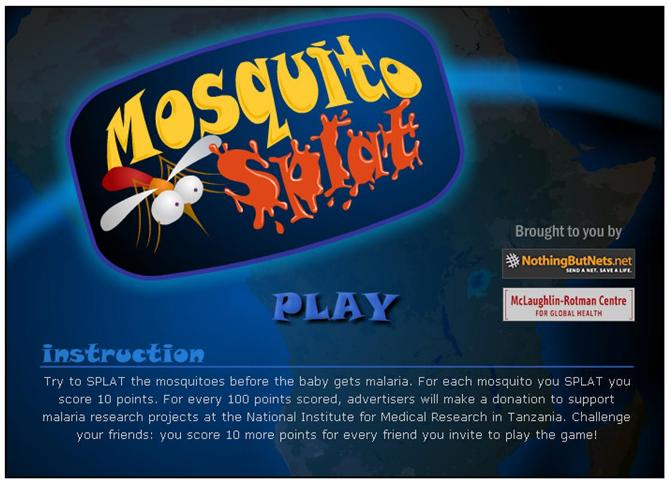
I just killed a few dozen ‘girls’ before breakfast. It wasn’t always easy or pleasant, and after a while there was blood all over the place. But I feel good about getting them – and I saved an innocent baby in the process, and even helped a researcher doing good work!
Now online: a game we have played over millennia against 'em blood suckers...
The aim of the game is to use the fly squatter to SPLAT mosquitoes before the baby gets malaria. For each mosquito you SPLAT, you score 10 points. For every 100 points scored, advertisers will make a donation to support malaria research projects at the National Institute for Medical Research in Tanzania. We also score 10 points for everyone we invite to play the game – plus there’s a link taking us to an online donation page in case we want to support the research directly.
“It’s quick, easy and fun, and a great way to do your part for one of the most serious global health problems in the developing world,” say the game’s promoters.
Indeed. Nearly 500 million cases of malaria occur each year, resulting in over one to three million deaths (figures online vary enormously on this). Malaria is particularly devastating in Africa where it is a leading killer of children. Every 30 seconds a child in Africa dies from malaria.
The fact is, malaria deaths are entirely preventable with modest investment and spread of knowledge that mosquitoes spread malaria (not everyone knows this, and as I wrote in another blog post, that’s a challenge that educators and broadcasters are now working on).
McLaughlin-Rotman Center for Global Health: Taking anti-malaria campaign onlineBut more needs to be done to engage the Digital Natives in this global public health challenge. It’s not just the exposed people in malaria-prevalent parts of Africa, Asia and Latin America who are at risk. As development economist Jeffrey Sachs has been reminding us eloquently, malaria reduces productivity, increases poverty, weakens people’s bodies and makes them vulnerable to other diseases. In a globalised world, such massive suffering in some parts of the world would quickly manifest in different ways all over the planet.
Little biology lesson: Usually, people get malaria by being bitten by an infective female Anopheles mosquito. Only Anopheles mosquitoes can transmit malaria, and they must have been infected through a previous blood meal taken on an infected person. When a mosquito bites an infected person, a small amount of blood is taken, which contains microscopic malaria parasites. About one week later, when the mosquito takes its next blood meal, these parasites mix with the mosquito’s saliva and are injected into the person being bitten.
Today is World Malaria Day. It’s a day to reflect on an ancient disease that continues to kill and sicken so many people in the majority (developing) world.
Malaria accounts for one death every 30 seconds. Malaria kills more than 1 million people every year. Each year, between 350 million and 500 million people are infected with malaria.
Malaria plagued Europe and North America as recently as 60 years ago. Simple public health measures were crucial to eliminating the disease and helping those regions achieve growth, prosperity and stability. Many countries in Africa, Asia and Latin America have yet to achieve this level of control.
Public health officials have been trying to contain and control malaria for decades, most measures targeting the malaria vector mosquitoes. In recent years, educators have joined hands — for stopping malaria begins with awareness on how it spreads and what simple measures can be taken to prevent it.
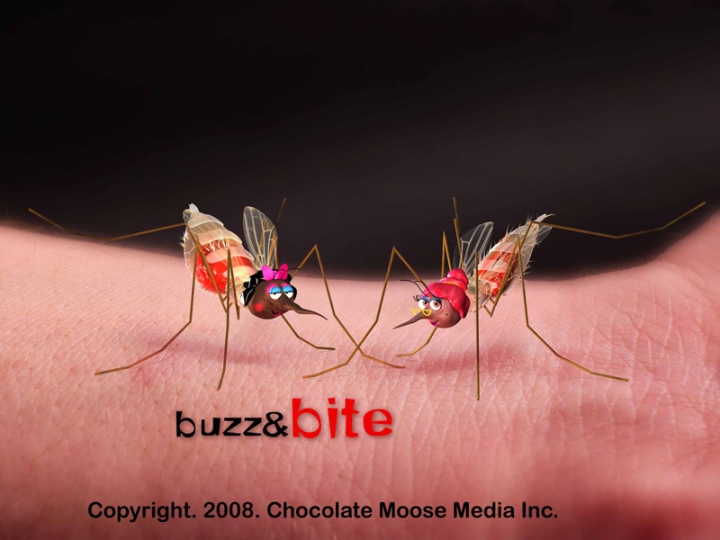
The Buzz and Bite Campaign is the creation of Canadian animation producer and director Firdaus Kharas, working with a team of skilled professionals. Firdaus earlier took on another public health challenge, HIV/AIDS, through his highly popular animation series The Three Amigos.
Watch a sample Buzz and Bite Spot (in English, British Accent)
According to the Buzz and Bite website, PSAs have so far been produced in 22 languages, and are being adapted into more. “The goal is to enable a potential reach of 80% of the world’s malaria at-risk population or over 5 billion people in their own language.”
The PSAs are available to any television broadcaster, radio station, NGO, hospital, doctor, community group, university, school, educator or other user, free of charge, anywhere in the world.
Malaria has been eradicated in many parts of the world but continues to thrive and even grow in other parts, especially in tropical areas. “This anti-malaria campaign focuses on sub-Saharan Africa (where up to 90 per cent of all malaria fatalities occur), on South America, and on South and South-East Asia, where the rates of malaria are alarmingly high,” says the website, adding: “Malaria is preventable. The easiest and cheapest way to prevent malaria infection is through the use of long-lasting insecticide-treated bed-nets (LLINs) which can last up to 5 years. This campaign promotes the use of nets.”
Syeda Rizwana Hasan: Goldman Prize winner 2009In Greek legend, Helen of Troy was the ‘face that launched a thousand ships’. Now meet Syeda Rizwana Hasan, a determined environmental activist who keeps dozens of ships from coming to die on the beaches of her native Bangladesh.
Rizwina is an environmental lawyer who is working hard to reduce the impact of Bangladesh’s exploitative and environmentally-devastating ship breaking industry. She has spearheaded a legal battle resulting in increased government regulation and heightened public awareness about the dangers of ship breaking. For this, she has just been honoured as the Asia winner of the prestigious Goldman Environmental Prize 2009.
Ship breaking is a lucrative yet highly hazardous business. Decommissioned ships from around the world are sent to Bangladesh, where they are dismantled by hand on the beaches by unskilled workers who are often paid less than one dollar per day. Lacking in sufficient mineral deposits for metal mining, Bangladesh relies on the iron and other materials from the ships for some of its metal. The scrap metal, along with other parts of the ships — including sinks, toilets, beds, appliances, and light bulbs — are resold in huge open markets lining the roads of Chittagong, the main ship breaking region.
Ship-breaking is done by around 20,000 workers – mostly young men, some as young as 14, who come from the northern parts of Bangladesh. They are paid very little, housed in the most basic of shelters, and provided with little or no medical care. It is estimated that, on average, one ship breaking worker dies at the yards in Bangladesh every week and every day one worker is injured.
Rizwana Hasan, 40, is a lawyer and Executive Director of the Bangladesh Environmental Lawyers Association (BELA), a public interest law firm. Growing up in a politically-engaged family, Hasan committed herself to public service and, after receiving her master’s degree in law at age 24, joined BELA. She soon became one of the country’s leading voices for the environment. Today, she manages six offices with nearly 60 staff and is one of the leading young lawyers enrolled with the Supreme Court of Bangladesh.
The Goldman Environmental Prize, now in its 20th year, is awarded annually to grassroots environmental heroes from each of the world’s six inhabited continental regions and is the largest award of its kind with an individual cash prize of $150,000. This year’s prizes were awarded in San Francisco on 20 April 2009.
The 2009 Goldman Environmental Prize recipients are a group of fearless grassroots leaders taking on government and corporate interests and working to improve the environment for people in their communities. Other winners this year came from Gabon, Indonesia, Russia, Suriname and USA.
The power of three...to do good!Just imagine…
You do a favour that really helps someone, and tell him/her not to pay it back…
Instead, you ask that it be paid FORWARD to three other people who, in turn, must each pay it forward to three more…and so on.
Impossible? Well, not quite – if you believe (as I do) in the essential goodness of human beings, no matter what their class, race and other divisive factors are.
This idea is known as ‘Pay it forward’. It is really simple: it asks that a good turn be ‘repaid’ by having it done to others instead. Paying it forward has been around as a concept for more than two millennia, from the time of ancient Greece. It was rediscovered in modern times by Benjamin Franklin and later, by Ralph Waldo Emerson, one of my favourite essayists.
In his 1841 essay titled ‘Compensation’, Emerson wrote: “In the order of nature we cannot render benefits to those from whom we receive them, or only seldom. But the benefit we receive must be rendered again, line for line, deed for deed, cent for cent, to somebody.”
During the Twentieth Century, science fiction author Robert A Heinlein popularised the concept in his book Between Planets (1951). It formed the central theme of Pay It Forward (2000), a novel by Catherine Ryan Hyde, which was soon turned into a movie by the same name.
In that story, a thoughtful teacher challenges his seventh grade students with ‘an assignment to save the world’. One perceptive student devices a scheme where one has to carry out three good deeds for others as repayment of a good deed received. Such good deeds should be things that the beneficiaries cannot accomplish on their own.
It was through Pay It Forward the movie, made in 2000 and directed by Mimi Leder, that I first came cross the idea. It’s one of those simple and elegant ideas that packs so much power to change people and the world. Its implementation requires trust, honour and imagination, which most human beings can muster in sufficient quantity when challenged.
Then I realised that, without a conscious plan and not labelling it as such, I was already ‘paying it forward’ myself — and not just to three new people, but many. That was the least I could do for the many breaks, blessings and opportunities I had received in my professional life.
More about that in a minute. First, take a look at the official trailer for Pay it Forward:
And this is how it all started in the movie, with one thoughtful class teacher challenging his seventh grade pupils with ‘an assignment to save the world’:
Here’s an extended, unofficial trailer remixed by a fan using the official trailer, some scenes from the movie and a few interviews with the key stars:
Journalism – especially the industrialised, mainstream version of it – is by definition a highly collaborative business: newspapers, magazines, as well as TV/radio broadcasts are produced by several or many people working together, each playing a specified part.
And because the media are a mirror on our society and our times, the stories we journalists produce just won’t be possible unless our sources share their information, experiences and insights. This is why Bill Moyers, one of the most respected and credible voices in American broadcasting (a land where such professionals are endangered), says: “We journalists are simply beachcombers on the shores of other people’s knowledge, other people’s experience, and other people’s wisdom. We tell their stories.”
During the early years of my career as a science writer and journalist, I was enormously lucky in both respects. I had kind, indulgent, nurturing senior colleagues who showed me the ropes, expecting nothing in return except good stories. And I benefited much from the kindness and thoughtfulness of many accomplished men and women – mostly in the worlds of science, environment and development – who took the time and trouble to talk to me, clarify even basics to a rookie like myself, and allow me to attribute information or quotes them. I was a complete stranger to many of them, yet they cared enough in spite of busy schedules (there were also a few didn’t, but that’s only to be expected).
Then there were opportunities, some competitively earned, others bestowed on me. In those formative years, the opportunities for training, mentoring and other influences sharpened my skills and shaped my worldview. It was easy to grow up angry with the world and seeing conspiracies everywhere; it was much harder to acquire a balanced view of the world and to become a skeptical enquirer without turning into an incurable cynic.
Among those early influences were:
• Working with the Centre for Science and Environment (CSE) in India, under the late Anil Agarwal and his worthy successor Sunita Narain
• Regional and international training programmes, organised by various UN agencies and other entities such as the Abdus Salam International Centre for Theoretical Physics in Trieste, Italy
• Invaluable support from the International Science Writing Association (ISWA), which leverages far more benefits than its modest resources would indicate at first glance (again, the power of networking!)
• Editorial training and global syndication from Panos, which provided my first outlet to publish internationally through Panos Features (sadly, no more).
Then there was my mentor Sir Arthur C Clarke, who gave me the rare privilege of spending 21 years as his research assistant — a long and unique apprenticeship that enriched me so much.
These and others helped fill gaps in my formal training in science journalism. And such exposure was worth so much more in the days before commercial internet connectivity. There was no Google or YouTube, and early versions of email were just beginning to roll out.
Just do it, and hope others will keep doing it too...And now it’s my turn to ‘pay it forward’. It’s plain and simple; there’s no grand pledge or plan. No one asked me to sign up to any binding agreement. There is no spiritual or intellectual compulsion. I just do it, because that’s a good thing to do.
This is also why I spent a good part of my recent Easter/New Year holidays putting together a detailed response to a young script writer who is passionately promoting a film project related to climate change. I have never met him in person, and until a few weeks ago, I’d never heard of him. A cynical British colleague used to caution me that any crazy nut sitting under a banyan tree can write a letter (or more likely an email these days) claiming to be anything he wasn’t. There’s always that risk. But I’m taking my chances.
Years ago I stopped counting the favours I paid forward, and I no longer even keep track of the people that I give little nudges along the way. Being a secular rationalist with no absolutely religious belief of any kind, I don’t collect brownie points for any ‘next world account’. I just do these little good deeds to make this world a little better place.
If further justification were needed, I cannot say it better than Steven Grellet, a prominent French Quaker missionary who once said (and I quote him for its secular essence): “I expect to pass through this world but once; any good thing therefore that I can do, or any kindness that I can show to any fellow creature, let me do it now; let me not defer or neglect it, for I shall not pass this way again.”












 Open Minds!