Invictus: Clint Eastwood and Morgan Freeman serve more Mandela magic

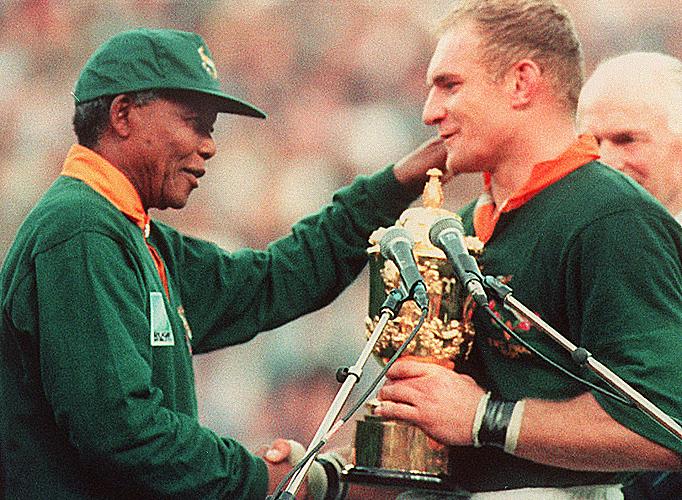
Nelson Mandela hands the World Cup to Francois Pienaar in 1995 (Photo courtesy The Sun, UK)

Updated: 6 Dec 2013 Nelson Rolihlahla Mandela (1918 – 2013): Thank You and Goodbye!

If a run-away genie granted me a wish to clone any single living human being, I’ll have no hesitation with my choice: Nelson Mandela — undoubtedly the greatest living statesman on the planet.

One might argue that Mandelas are not born; they are made. A combination of personality and historical circumstances create the rare phenomena like him.

In July 2008, when Mandela turned 90, I quoted the American film-maker, social activist and blogger Danny Schechter — who filmed Mandela’s struggle to end apartheid and restore democracy in South Africa — as saying: He (Mandela) is one of those leaders who not only helped free his own country and people but became an icon and symbol for freedom in the world. At a time when darkness seems to be descending again, with the economy on the edge amidst protracted wars and pervasive abuses of powers, he is the one person that people the world over look to as a symbol of that saying that ‘another world is possible.’ He is not perfect – who is? He has taken great risks, and made his share of mistakes, but the love and adoration he inspires speaks to how special he is – even as he sees himself as part of a collective, a movement…

The Mandela story has been told many times by many film-makers, writers and journalists. Few other leaders have engaged the popular culture and media’s attention — while both in and out of office — as Mandela has, and with good reason.
One poem + two men = Rainbow Nation

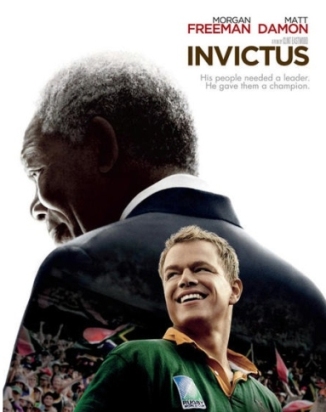
The latest film inspired by Mandela is Invictus directed by Clint Eastwood, starring Morgan Freeman and Matt Damon. Both actors have just been nominated for Oscar awards – for best actor and best supporting actor respectively. But the film’s exclusion from the 10 nominees for best picture has surprised and disappointed some.

Invictus reconstructs the events in the life of Nelson Mandela at a crucial time for himself and country: after the fall of apartheid in South Africa, during his term as the rainbow nation’s first black president. The film revolves around how he campaigned to host the 1995 Rugby World Cup event as an opportunity to unite his rainbow nation. (South Africa’s team eventually won the championship.)

Here’s the plot summary from IMDB:
The film tells the inspiring true story of how Nelson Mandela joined forces with the captain of South Africa’s rugby team to help unite their country. Newly elected President Mandela knows his nation remains racially and economically divided in the wake of apartheid. Believing he can bring his people together through the universal language of sport, Mandela rallies South Africa’s rugby team as they make their historic run to the 1995 Rugby World Cup Championship match.

Read Wikipedia’s plot summary

Watch official trailer of Invictus the movie:

The film’s title comes from the fact that Mandela had the poem Invictus, by English poet William Ernest Henley, written on a scrap of paper on his prison cell while he was incarcerated. The story is based on the John Carlin book Playing the Enemy: Nelson Mandela and the Game That Changed a Nation.
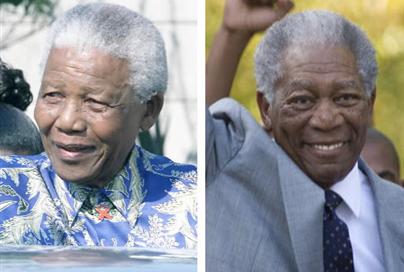
A legend plays another legend

I can’t wait to see Invictus, for it has one of my favourite actors playing one of my greatest heroes. Morgan Freeman is such a versatile and accomplished actor. Having played the US President and God in past movies, this is clearly cut out for him.

As Clint Eastwood explains: “As an actor, Morgan has the same presence when he walks in the room that Mandela has as a politician. Morgan has a certain bearing and charisma. He was built to play this role.”

The Guardian (UK) preview noted: “So convinced by Freeman’s performance was Mandela’s personal assistant that when she stepped on set, she wondered how her boss had made it to the shoot without her. Freeman plays Mandela with all the expected wisdom and fortitude, but it’s the twinkle of mischief in his eye that makes you feel you’re not just watching the man, rather than a virtuoso impression.”

The Guardian calls Invictus “a startlingly powerful film: a clear-eyed look a recent history, an awe-inspiring tale of prejudice overcome, a study of power – and a rousing sports movie.”

Note: In the movie, Mandela gives the “Invictus” poem to his national rugby team’s captain Francois Pienaar before the start of the 1995 Rugby World Cup. In reality, Mandela provided Pienaar with an extract from Theodore Roosevelt’s “The Man in the Arena” speech from 1910.
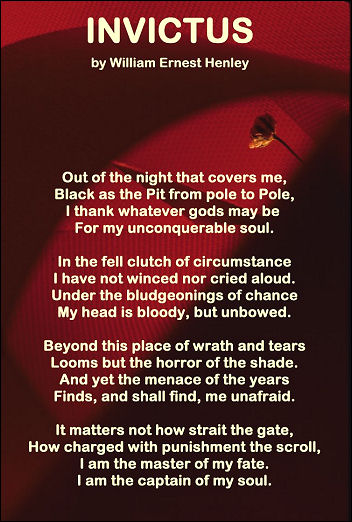
Invictus, by William Ernest Henley: Never say die!

If you and I think we have problems, we should consider the case of English poet William Ernest Henley (1849–1903).

Wikipedia says Henley became a victim of tuberculosis of the bone at age 12. A few years later, the disease progressed to his foot, and physicians announced that the only way to save his life was to amputate directly below the knee. But he persevered. In 1867, he passed the Oxford local examination as a senior student, and led an active and productive life till he died aged 53. (According to Robert Louis Stevenson’s letters, the idea for the character of Long John Silver was inspired by his real-life friend Henley.)

In 1875, when Henley was 26 years old, he wrote a poem from a hospital bed. It originally bore no title, and wasn’t published until 1888. It was Sir Arthur Quiller-Couch who named it “Invictus” (Latin for “unconquered”) when he included the poem in The Oxford Book Of English Verse (1900).

So here is Henley’s words of resolve and courage, speaking to us across the gulf of time:

Invictus is also the title of a remarkable 2009 film directed by Clint Eastwood, starring Morgan Freeman and Matt Damon. The film is a look at the life of Nelson Mandela after the fall of apartheid in South Africa, during his term as president, when he campaigned to host the 1995 Rugby World Cup event as an opportunity to unite his countrymen. The title comes from the fact that Mandela had the poem written on a scrap of paper on his prison cell while he was incarcerated.

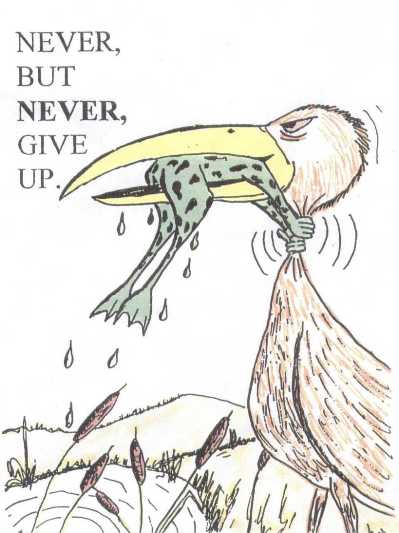
And here’s an image that echoes the same fighting spirit…

All You Need is Love: When the world sang one song for HIV…

We must love one another or die...

Our planet is one, but our world speaks and sings in a myriad tongues — and that’s part of our cherished cultural diversity. Once in a while, however, it’s good to see that cacophony morph into a symphony when the world shares a few moments — in awe, horror, love or happiness.

It happened last week when the world sang for an extremely good cause. On 7 December 2009 at 1:30pm GMT, Starbucks invited musicians from all over the world to sing together at the same time to raise awareness for HIV/AIDS in Africa. In one breathtaking moment, musicians from 156 countries played “All You Need is Love” together. The live participation of most nations together to sing this song became a Guinness world record.

Watch now, as musicians from all around the world come together and share a song.

My former colleague Buddhini Ekanayake joined this global production by coordinating the input from Sri Lanka. “Personally, I am really glad to take part in this event together with my team, on behalf of Watermelon Creatives,” she says on her blog, where she shares some info and images.

You can still join in by lending your own voice to the Starbucks Love Project.. Watch streaming video from countries around the world and then join in by singing All You Need is Love yourself. For each video submitted, Starbucks will make a contribution to the Global Fund to help fight against AIDS in Africa. You can also help increase the Starbucks contribution to the Global Fund by submitting a drawing to the Love Gallery.

The global sing-along is part of our continuing efforts to help fight AIDS in Africa. In just one year in partnership with (RED), Starbucks has generated money equivalent to more than 7 million days of medicine to help those living with HIV in Africa.

“All You Need Is Love” is a song written by John Lennon and credited to Lennon/McCartney. It has been associated with path-breaking initiatives before. It was first performed by The Beatles on Our World, the first live global television link. Watched by 400 million in 26 countries, the programme was broadcast via satellite on 25 June 1967.

‘Thank you for warming the planet (good for business)’ — Africa’s malaria mosquitoes

Nelly Damaris Chepkoskei: Voice of Hope
Malaria still claims over a million lives every year, most of them in Africa. This is not simply a public health statistic for Nelly Damaris Chepkoskei – she lost a daughter to the ancient scourge that continues to outsmart human attempts to control it.

“It was very sad when my daughter died of malaria at the age of four,” she recalls. What makes it especially tragic is the fact that malaria is a new arrival in her area.

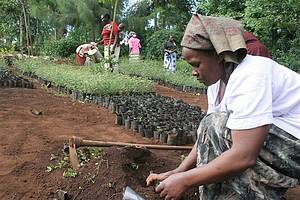
Nelly, 51, is a farmer living in Kenya’s Kericho District. Located high in the mountains, Kericho’s cold weather has kept mosquitoes at bay for centuries. But not any longer: global warming has raised the area’s average temperature, and mosquitoes have appeared in recent years, bringing malaria with them.

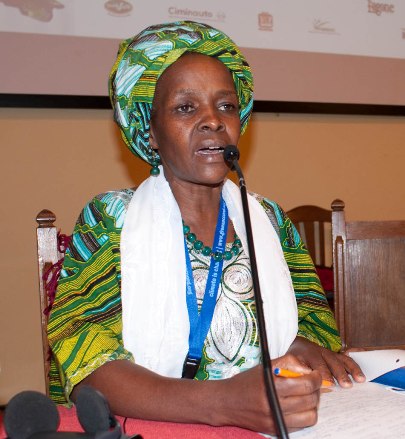
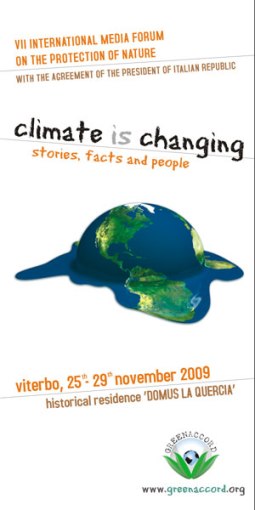
“I had never seen a mosquito until I was 20 years old. But now they are everywhere – people are even dying of malaria, something that was virtually unheard of 20 or 30 years ago,” Nelly told the 7th Greenaccord International Media Forum on the Protection of Nature, being held in Viterbo, Italy, 25 – 29 November 2009.

The theme this year is ‘Climate is changing: stories, facts and people’. Nelly Chepkoskei is one of 10 Climate Witnesses who travelled to the historic city from far corners of the world to share their stories of ground level changes induced by climate change.

Climate Witness is a global programme by WWF International to enable grassroots people to share their story of how climate change affects their lives and what they are doing to maintain a clean and healthy environment. All Climate Witness stories have been authenticated by independent scientists.

Married with five children, Nelly grows maize and tea, and keeps a few cows – the pride and joy of Kenyan farmers. Lacking faith in politicians and government, she is working with women in her community to pursue their own development.

Life was never easy, but climate change is making it even harder.

“Rainfall patterns have changed drastically in recent decades,” she says. “In the Kericho district, we used to have rain throughout the year. I remember clearly that my family celebrated Christmas when it was raining heavily. But today, Christmas is usually dry.”

Unlike 20 years ago, the dry season is now hotter, drying up all the grass. In the past, the grass would remain green throughout the year.

“This means there isn’t enough fodder for my cows, leading to a drop in milk production and my income,” she explains. “The soils are also left bare during the dry season, which means more erosion when rains come in.”

With higher temperatures, more pests have turned up to damage crops. This prompts farmers to use more pesticides, increasing production costs and polluting the environment with hazardous chemicals.

Nelly turned out to be the most outspoken Climate Witness in Viterbo. In a frank exchange with an audience of 130 journalists, activists and scientists drawn from 55 countries, she exclaimed: “Don’t talk to politicians – they are the same everywhere! I can’t understand why journalists always follow politicians and are so keen to talk to them!”

She continued: “There is so many good things happening in Africa, but we don’t see it reported in the local and international media. You only hear about fighting, famine and corruption. So we continue to be seen and known as the Dark Continent.”

In her view, what Africa needs more than anything else is education. She firmly believes that higher levels of literacy and education would reduce the incidence of conflict and plunder.

Nelly herself is a high school drop out, and places a very high value on education to empower all Africans, especially women.

“There is a big gap between Kenyan intellectuals and the ordinary people. Knowledge is not where and how it is needed,” she says.

I asked her what she thought of foreign aid to Kenya and rest of Africa. This elicited a passionate and emphatic response: “If you want to spoil and corrupt Africa more, then keep giving aid to our governments. Aid money mostly ends up in the wrong hands, or buying guns to fight each other.”

She added: “We do need help, but don’t give aid to our governments. Instead, support NGOs who are better in delivering to the grassroots.”

Nelly and her network of women are digitally empowered. They refer the web to find out information on what aid and opportunities are available and then pursue them with all available means. Armed with the latest data, they lobby local and provincial governments to ensure that aid pledged from international donors reach the intended communities.

Nelly may not be Wangari Maathai, the Kenyan environmentalist and women’s right activist, but she admits to being a Wangaari in spirit. And having listened to the first African woman to win the Nobel Peace Prize at a previous Greenaccord forum, I readily agree: women like Nelly are a beacon of hope not just for Africa, but to the entire Majority World.

If only the mosquitoes could spread their passion and concern for the land and people…

Read WWF report on climate change impacts in East Africa

Images courtesy Greenaccord and WWF

XYZ Show controversy: Kenyan politicians forgetting ‘Hakuna matata’?

Politics no longer a laughing matter?

“The trouble with political jokes is that they keep getting elected!”

Ayesha, a regular reader of this blog, left that one-liner comment in response to my blog post of 13 August 2009 on an interesting experiment in political satire on Kenyan television that ended its first season on 9 August 2009.

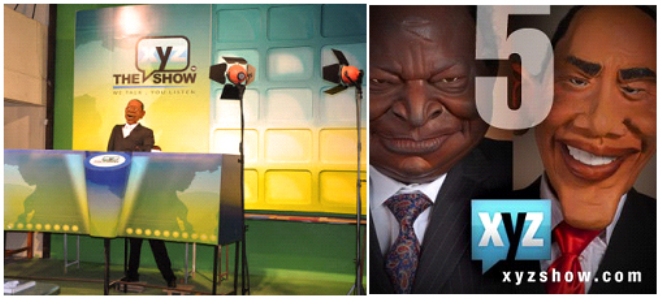
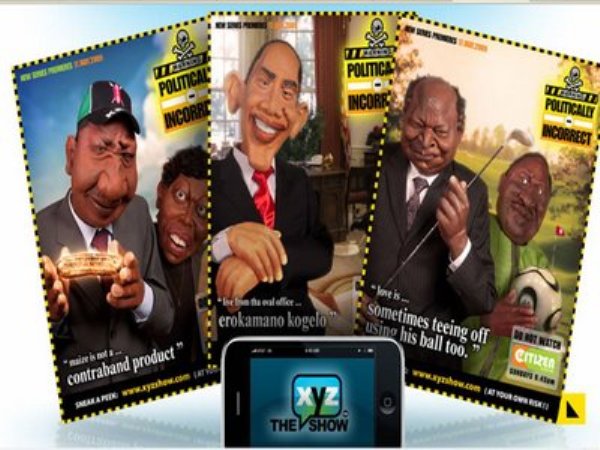
It’s a show called the XYZ Show, broadcast weekly on Kenya’s Citizen TV. Started in mid May 2009, the first season introduced Kenyan viewers to a new form of satire television, with life-sized puppets made to resemble famous persons, mostly politicians.

Now comes the report that the show has riled some Kenyan politicians – surprise, surprise! I have only just come across this Citizen TV news report, broadcast a couple of weeks ago:

Controversy Over The XYZ Show

The satirical puppet show XYZ on Citizen Television every Sunday night, has attracted the attention of non other than the Public Service Minister Dalmas Otieno. The Minister says the caricature show is depicting politicians in bad light. The Director of Communication Ezekiel Mutua avers that, the show is representative of just how free the media is, in Kenya.

Well, what can we say? We thought politicians in general had thicker skins. Perhaps some Kenyan politicians are in danger of forgetting that timeless piece of Swahilian advice: Hakuna matata!

Hakuna matata is a Swahili phrase that is literally translated as “There are no worries”. It is sometimes translated as “no worries”, although is more commonly used similarly to the English phrase “no problem”.

The XYZ Show: New horizon in political satire on African TV, but room to grow?

Anyone can do ABC; it takes effort to make it all the way to XYZ...
Anyone can do ABC; it takes a special effort to make XYZ...


Update on 1 Sep 2009: Controversy over XYZ Show: Kenyan politicians forgetting Hakuna matata?

I ended a recent blog post, News wrapped in laughter, with this thought: “There is another dimension to satirising the news in immature democracies as well as in outright autocracies where media freedoms are suppressed or denied. When open dissent is akin to signing your own death warrant, and investigative journalists risk their lives on a daily basis, satire and comedy becomes an important, creative – and often the only – way to comment on matters of public interest. It’s how public-spirited journalists and their courageous publishers get around draconian laws, stifling regulations and trigger-happy goon squads. This is precisely what is happening right now in countries like Kenya and Sri Lanka, and it’s certainly no laughing matter.

An interesting experiment in political satire on Kenyan television has just ended its first season on 9 August 2009. It’s a show called the XYZ Show, which was broadcast weekly on Kenya’s Citizen TV. Started in mid May 2009, the first season introduced Kenyan viewers to a new form of satire television, with life-sized puppets made to resemble famous persons, mostly politicians.

Gado the Creator
Gado the Creator
The XYZ Show was inspired by famous puppet satire series like the British “Spitting Image” and the French “Les Guignols de l’Info” shows. In the XYZ Show, the puppets commented on news and current events from both Kenya and overseas.

The XYZ Show was developed by a team led by Kenyan cartoonist Godfrey Mwampembwa, alias Gado. He is the most widely syndicated cartoonist in East and Central Africa. He publishes a daily cartoon in The Nation, the largest newspaper in Kenya, and his work has been published in Le Monde (France), Washington Times (US), De Standaard (Belgium) and The Japan Times.

According to its creators, the XYZ Show challenged famous figures from Kenyan high society and politics using humour and satire. It aimed to become a new forum for social and political debate, one that provides room for open discussion.

Watch XYZ Show’s first episode trailer, produced one year ago:

Says the Prince Claus Fund of the Netherlands, which supported the show’s production: “Although freedom of the press is a constitutional right in Kenya, it is difficult for many journalists to practice their profession without interference. Gado and his team hope that the XYZ Show will contribute positively to strengthening freedom of the press and increasing political and social awareness among the people of Kenya. The show provides commentary on current social and political developments and aims to use humour and artistry to reinforce freedom of speech in Kenya.”

From what I’ve been able to watch online, on the show’s YouTube channel and elsewhere, the production values are at a high standard, comparable to such shows made in Europe and East Asia. The puppets are attractive, movements convincing and the pace quick and slick.

Who pulls his strings?
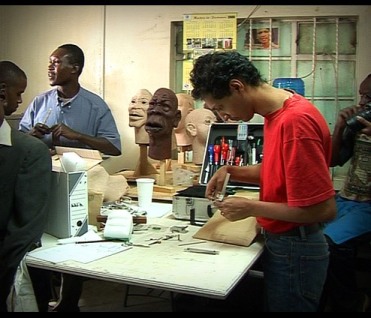
The producers have also tried hard to make XYZ more than just a TV show. The website, in English, shows how the content is being adapted for the web (as webisodes) and mobile phones (as mobisodes). The show’s official blog takes us on to the set and shares with us the story behind the story, and introduces us to the artists and technical geniuses involved. Full marks for trying to engage the audience.

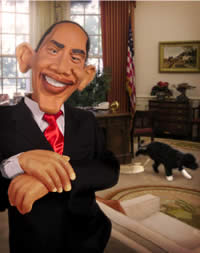
Then there is Barack Obama. Using his Kenyan connections, the show casts him (really, a puppet in his image) in a ‘supporting actor’ role. This has clearly inspired some interest in the show beyond Kenya.

So far, so good. But how does it work with the audience? The show is directed mainly at local audiences, and even if it’s presented in a mix of English and local language, it’s not something a complete outsider like myself can appreciate.

So I ‘crowd-sourced’ by asking a Kenyan reader of my blog, Marion N N, for her opinion. Marion is part of Sojourner, which her blog introduces as “a social enterprise that exists to promote the origination, production and distribution of African viewpoints through visual media. We are passionate about African film-making and seek its viable promotion globally”.

Marion wrote a comment in her blog after watching one episode a few weeks ago. She lives and works in Kenya, and her views are far more valid than my own.

Behind the screen, creators at work...
She wrote: “My first off impression was fascination about the quality of the show in terms of animation which is very new to the local TV production scene in Kenya. Once past the fascination of the animation, I found that the content failed to hold my interest, connect with me or engage me as an audience. As a socio-political spoof show, humor ideally should be the hook that captures audience but in this case, humor comes across as mindless, illogical or simply stupid action on the screen. As if in evidence to this fact, at some point my husband in between laughter remarked ‘This show is really stupid’. I would imagine this would be a compliment to the Production becuase it provoked laughter in a viewer. However beyond that moment, it seemed only natural for us to flick over to more substantial entertainment having enjoyed that brief flight of fancy that failed to arouse an appetite for more.”

Marion also wondered what the show’s intended audience was, and highlighted the many challenges in getting the levels and balances right in doing political satire: “That politicians sometimes (nay, most times) behave ridiculously is not new or fresh. But the treatment, underlying themes, ideas communicated to audiences should be. Why do I suggest this? Because political satire by its nature speaks to an audience that is fairly mature, and exposed. To use childish humor that is poorly developed will not hold the audience’s attention. Infact at some point the content may become a tad irritating to watch. Political satire needs to be treated with a peppering of fact, wit, fresh perspective or take -out: The achievement of some underlying objective and not just mindless visual gimmicks that lead to the feeling of ‘stooping to idiocy; by audiences. This seeming insult of intelligence causes us as an audience to switch off.”

XYZ Show logoIn my own view, The XYZ Show had at least three major challenges. Doing any puppet show is hard enough, and these days the on-air competition is neither local nor fair: it comes from global entertainment corporations like MTV and their regional variations, usually with deep pockets. Doing political satire is even harder, especially if the political culture is intolerant or repressive. To get the look, feel and balances right in a country where such a show is being done locally for the first time is a formidable challenge by itself.

But I’ll let Marion have the last word. In spite of the various concerns, she feels that the XYZ Show has ‘room to grow and conquer the airwaves’. But, as she notes, “The production team have their work cut out for them in pre-production. It’s back to the drawing board and ask who is my audience? What appeals to them? How do I connect with them, define an objective for the show and its audiences? Research facts and opinions about national sentiment on issues then develop scripts and sequences…”

Read Marion’s full comment on her blog

All images used on this blog post are courtesy The XYZ Show.

Nollywood rising: Low cost, high volume film industry entertains Africa

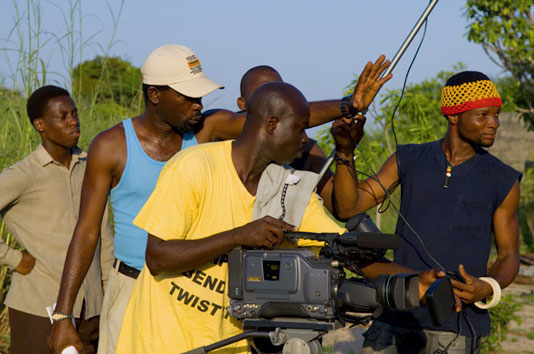
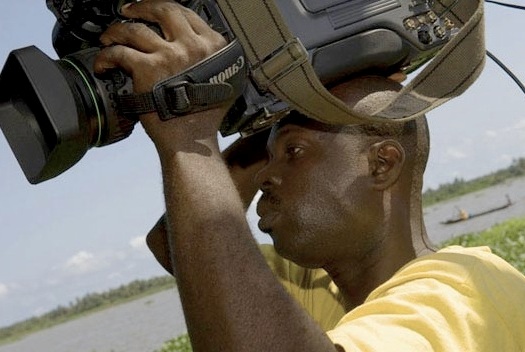
Lights, camera...budget action! Image courtesy 'This Is Nollywood'
Here’s a general knowledge question: Everyone knows India’s Bollywood is the world’s largest producer of movies (by number). Which country’s movie industry comes second?

If you said Hollywood, that’s a dated answer. America’s movie industry used to be the second largest in the world — until an unlikely contender turned up from…Nigeria!

India remains the world’s leading film producer but Nigeria is closing the gap after overtaking the United States for second place, according to a global cinema survey conducted by the UNESCO Institute for Statistics (UIS).

Bollywood produced 1,091 feature-length films in 2006 compared to 872 productions (in video format) from Nigeria’s film industry, commonly referred to as Nollywood. In contrast, the United States produced 485 major films.

The three heavyweights were followed by eight countries that produced more than 100 films: Japan (417), China (330), France (203), Germany (174), Spain (150), Italy (116), South Korea (110) and the United Kingdom (104).

Nigerian filmmakers rely on video instead of film to reduce production costs. And as the survey points out, Nigeria has virtually no formal cinemas. About 99% of screenings occur in informal settings, such as “home theatre”.

This is Nollywood
This is Nollywood
The UNESCO survey reveals another key element of the Nigerian success story: multilingualism. About 56% of Nollywood films are produced in Nigeria’s local languages, namely Yoruba (31%), Hausa (24%) and Igbo (1%). English remains a prominent language, accounting for 44%, which may contribute to Nigeria’s success in exporting its films.

Nollywood’s rising has been chronicled in a 2007 documentary by Franco Sacchi and Robert Caputo. Called This is Nollywood, it tells the story of the Nigerian film industry – a revolution enabling Africans with few resources to tell African stories to African audiences. Despite all odds, Nigerian directors produce between 500 and 1,000 movies a year. The disks sell wildly all over the continent – Nollywood actors have become stars from Ghana to Zambia.

Says Zambia-born director Franco Sacchi: “When I first read about Nigerian directors producing hundreds of feature-length films with digital cameras, a week, and a few thousand dollars, I found the subject irresistible. Here was not only a rare positive story about Africa, but one that embodied the egalitarian promise of digital technology—anybody can make a movie. And Nollywood was virtually unknown.”

This is Nollywood takes us behind the sets and scenes in one Nigerian movie being made on the cheap — and fast. Acclaimed director Bond Emeruwa sets out to make a feature-length action film in just nine days. Armed only with a digital camera, two lights, and about $20,000, Bond faces challenges unimaginable in Hollywood and Bollywood.

Emeruwa says: “We are telling our own stories in our own way, our Nigerian way, African way. I cannot tell the white man’s story. I don’t know what his story is all about. He tells me his story in his movies. I want him to see my stories too.”

Watch This is Nollywood: Movie Trailer

I then came across this TED Talk by Franco Sacchi, where he takes us through Nollywood (at the time he gave his talk, the world’s third largest and now second only to Bollywood). He talks about ‘guerrilla film-making’ and brilliance under pressure from crews that can shoot a full-length feature in a week.

Welcome to Nollywood is another 2007 documentary film, directed by Jamie Meltzer, that looked at the Nigerian film industry. Its findings were similar to those of This is Nollywood. Traveling to the country’s chaotic capitol, Lagos, Meltzer spent ten weeks following three of Nigeria’s hottest directors, each different in personality and style, as they shot their films about love, betrayal, war, and the supernatural.

At around US$250 million per year (and rising), Nollywood’s capital outlay is far below that of Hollywood and Bollywood. For perspective, that’s a bit less than what it cost to make Spiderman 3 in 2007 (budget: US$ 258 million) — the second most expensive film made. See list of most expensive Hollywood films.

Telling their own stories....
But what it lacks in capital, Nollywood more than makes up in numbers and mass appeal. As the Wikipedia notes, Nigerian directors adopt new technologies as soon as they become affordable. Bulky videotape cameras gave way to their digital descendents, which are now being replaced by HD cameras. Editing, music, and other post-production work is done with common computer-based systems.

As Colin Freeman wrote in the Daily Telegraph, UK: “While the likes of Serpent in Paradise and Evil Finger may not be as slick as their Hollywood counterparts, they offer one thing that the likes of George Clooney and Brad Pitt can never provide: characters and stories with which an African audience can identify.”

And according to The Economist, it all started in 1992, when Kenneth Nnebue, a Nigerian trader based in Onitsha, was trying to sell a large stock of blank videocassettes he had bought from Taiwan. He decided that they would sell better with something recorded on them, so he shot a film called “Living in Bondage” about a man who achieves power and wealth by killing his wife in a ritualistic murder, only to repent later when she haunts him. The film sold more than 750,000 copies, and prompted legions of imitators.

The rest, as they say, is now Nollywood history.

Read my August 2007 blog post: “If we don’t tell our stories, no one else will”

Mosquito SPLAT: New Facebook game to support malaria research

I just killed a few dozen ‘girls’ before breakfast. It wasn’t always easy or pleasant, and after a while there was blood all over the place. But I feel good about getting them – and I saved an innocent baby in the process, and even helped a researcher doing good work!

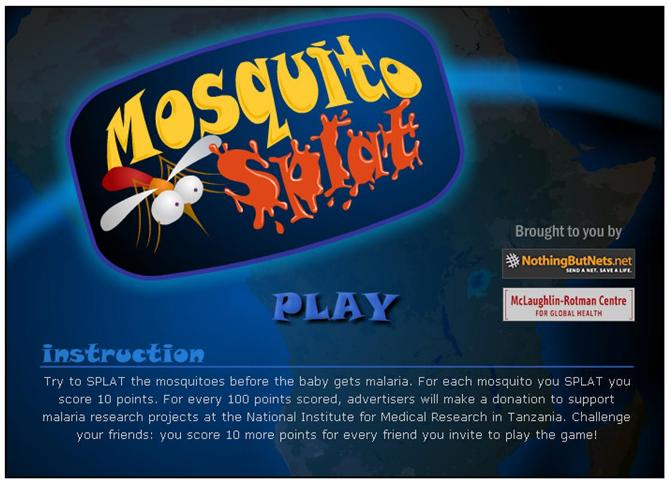
The ‘girls’ are malaria carrying mosquitoes, and I was playing a new Facebook game called Mosquito SPLAT that was released this week to mark World Malaria Day 2009.

Now online: a game we have played over millennia against 'em blood suckers...

The aim of the game is to use the fly squatter to SPLAT mosquitoes before the baby gets malaria. For each mosquito you SPLAT, you score 10 points. For every 100 points scored, advertisers will make a donation to support malaria research projects at the National Institute for Medical Research in Tanzania. We also score 10 points for everyone we invite to play the game – plus there’s a link taking us to an online donation page in case we want to support the research directly.

“It’s quick, easy and fun, and a great way to do your part for one of the most serious global health problems in the developing world,” say the game’s promoters.

Indeed. Nearly 500 million cases of malaria occur each year, resulting in over one to three million deaths (figures online vary enormously on this). Malaria is particularly devastating in Africa where it is a leading killer of children. Every 30 seconds a child in Africa dies from malaria.

The fact is, malaria deaths are entirely preventable with modest investment and spread of knowledge that mosquitoes spread malaria (not everyone knows this, and as I wrote in another blog post, that’s a challenge that educators and broadcasters are now working on).

McLaughlin-Rotman Center for Global Health: Taking anti-malaria campaign online
But more needs to be done to engage the Digital Natives in this global public health challenge. It’s not just the exposed people in malaria-prevalent parts of Africa, Asia and Latin America who are at risk. As development economist Jeffrey Sachs has been reminding us eloquently, malaria reduces productivity, increases poverty, weakens people’s bodies and makes them vulnerable to other diseases. In a globalised world, such massive suffering in some parts of the world would quickly manifest in different ways all over the planet.

Mosquito SPLAT is a partnership between the McLaughlin-Rotman Center for Global Health at the University Health Network and the University of Toronto and the UN Foundation’s Nothing But Nets campaign. The Mosquito SPLAT game is part of Malaria Engage, an initiative to enlist people directly in the anti-malaria battle by supporting malaria research projects in the developing world.

Click here to engage your Facebook friends to support malaria research.

Little biology lesson: Usually, people get malaria by being bitten by an infective female Anopheles mosquito. Only Anopheles mosquitoes can transmit malaria, and they must have been infected through a previous blood meal taken on an infected person. When a mosquito bites an infected person, a small amount of blood is taken, which contains microscopic malaria parasites. About one week later, when the mosquito takes its next blood meal, these parasites mix with the mosquito’s saliva and are injected into the person being bitten.

Buzz and Bite: PSA campaign against relentless malaria

We tried DDT for half a century. Now try PSA...

Today is World Malaria Day. It’s a day to reflect on an ancient disease that continues to kill and sicken so many people in the majority (developing) world.

Malaria accounts for one death every 30 seconds. Malaria kills more than 1 million people every year. Each year, between 350 million and 500 million people are infected with malaria.

Malaria plagued Europe and North America as recently as 60 years ago. Simple public health measures were crucial to eliminating the disease and helping those regions achieve growth, prosperity and stability. Many countries in Africa, Asia and Latin America have yet to achieve this level of control.

Public health officials have been trying to contain and control malaria for decades, most measures targeting the malaria vector mosquitoes. In recent years, educators have joined hands — for stopping malaria begins with awareness on how it spreads and what simple measures can be taken to prevent it.

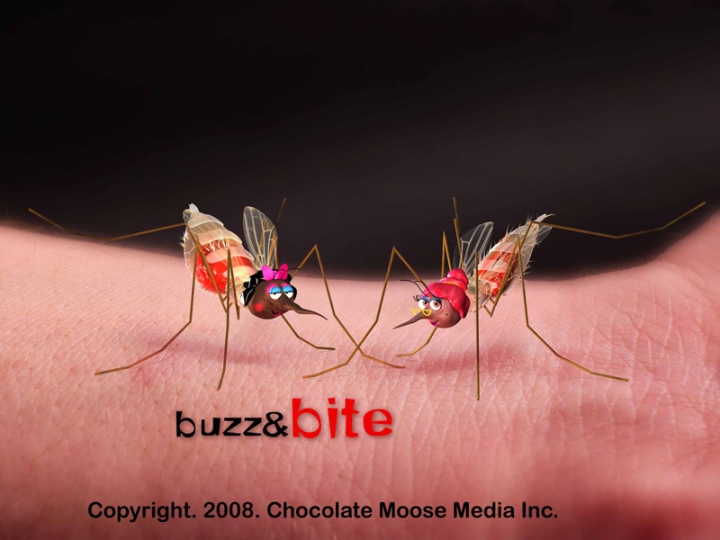
The Buzz and Bite Campaign is one such awareness tool launched a year ago on World Malaria Day 2008. It consists of a series of 30 animated shorts and 5 audio shorts called Public Service Announcements (PSAs).

The Buzz and Bite Campaign is the creation of Canadian animation producer and director Firdaus Kharas, working with a team of skilled professionals. Firdaus earlier took on another public health challenge, HIV/AIDS, through his highly popular animation series The Three Amigos.

Watch a sample Buzz and Bite Spot (in English, British Accent)

According to the Buzz and Bite website, PSAs have so far been produced in 22 languages, and are being adapted into more. “The goal is to enable a potential reach of 80% of the world’s malaria at-risk population or over 5 billion people in their own language.”

See all language versions on Buzz and Bite channel on YouTube

The PSAs are available to any television broadcaster, radio station, NGO, hospital, doctor, community group, university, school, educator or other user, free of charge, anywhere in the world.

The campaign is strongly supported by Nobel Laureate Archbishop Desmond M. Tutu.

Malaria has been eradicated in many parts of the world but continues to thrive and even grow in other parts, especially in tropical areas. “This anti-malaria campaign focuses on sub-Saharan Africa (where up to 90 per cent of all malaria fatalities occur), on South America, and on South and South-East Asia, where the rates of malaria are alarmingly high,” says the website, adding: “Malaria is preventable. The easiest and cheapest way to prevent malaria infection is through the use of long-lasting insecticide-treated bed-nets (LLINs) which can last up to 5 years. This campaign promotes the use of nets.”

You heard the buzz...Now get ready for bite!

Images and video courtesy Buzz and Bite campaign

Somali pirates: Part of the story mainstream media hasn’t told us!

Do they have a story to tell? Who is listening?
Piracy has a chequered history, and even the Wikipedia offers a carefully qualified definition. One person’s pirate can be another person’s defender. There’s an argument that the European colonial powers rode on the backs of their pirates or buccaneers. And I’m writing this in English language possibly because the English were more successful in their overseas piracy than other nations!

Piracy is all over the news again, due to increased activity off Somalia. But in the past few weeks, we’ve started hearing another side of the Somali piracy story — one that the mainstream media didn’t tell us.

Johann Hari, a columnist for the London Independent, posted an op ed in Huffington Post on 13 April 2009 that took a different look at Somali pirates. His main argument: “In 1991, the government of Somalia – in the Horn of Africa – collapsed. Its nine million people have been teetering on starvation ever since – and many of the ugliest forces in the Western world have seen this as a great opportunity to steal the country’s food supply and dump our nuclear waste in their seas.”

In recent days, two interesting short videos have been posted by two activist groups to support the same point of view. I haven’t investigated this story myself, but am intrigued by their take on a widely reported topic…especially because it’s an angle that we don’t read or see in the mainstream media!

The Media Is Lying to You About Pirates

The IFC Media Project’s “News Junkie” deconstructs the mainstream media’s half-baked coverage of Somali Pirates.


Are They Really “Pirates”?

This film from Awareness Unfolds highlights the fact that the media is lying about the so called “pirates” of Somolia. According to the blurb: “They (media) choose not to tell you about the toxic waste dumping going on by American, European, and Asian countries that have lead to the death of many Somolian citizens.”

As Johann Hari says at the end of his article: “The story of the 2009 war on piracy was best summarised by another pirate, who lived and died in the fourth century BC. He was captured and brought to Alexander the Great, who demanded to know “what he meant by keeping possession of the sea.” The pirate smiled, and responded: “What you mean by seizing the whole earth; but because I do it with a petty ship, I am called a robber, while you, who do it with a great fleet, are called emperor.” Once again, our great imperial fleets sail in today – but who is the robber?”

Johann Hari has reported from Iraq, Israel/Palestine, the Congo, the Central African Republic, Venezuela, Peru and the US, and his journalism has appeared in publications all over the world. In 2007 Amnesty International named him Newspaper Journalist of the Year. In 2008 he became the youngest person ever to win Britain’s leading award for political writing, the Orwell Prize.