I sometimes wish Life came with its own progress bar. [tweetmeme]
You know, that now familiar indicator on computer screens that shows how much of a task is done, and estimates what more remains — and for how long.
Wouldn’t it be interesting to know how much of our life is still left?
I’m not alone in this wish. In fact, whole cottage industries – such as astrology and palmistry – thrive on this universal curiosity to know what’s next, and what’s round the corner for ourselves.
Yet there is no known system of knowledge, or a proven technology, that can give us a customised, accurate answer. Everything that claims to do this is nothing better than a clever guess. Often, it’s not even that and only a complete rip-off…
The Undiscovered Country...Then again, do we really want to know when we’re going to reach the end of the line (whether or not the mission is accomplished)?
Years ago, I watched a Star Trek episode that involved a world where everyone died at the same age. So all living persons knew how much time they had left, allowing them to sort their lives before it was too late.
I don’t think I’d want to live there. Not knowing how much of my life is left, and what’s in store for me in that remainder, makes living more interesting. Besides, I doubt if the chaos theory and randomness of the universe will ever allow such precise advance knowledge of anyone’s future…
As I turn 44 years today, I Googled for ‘progress bar + life’. Just for the heck and kick of it. I didn’t really expect to find an exact match, but I did. That’s the wonder of the web…
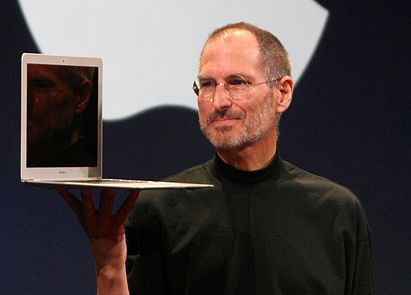
Always in a hurry?Perhaps the inspiration came from Top Geek Steve Jobs, who is quoted on this website as saying: “Remembering that I’ll be dead soon is the most important tool I’ve ever encountered to help me make the big choices in life”
Still in the realm of marginally useful web apps, I also discovered timeanddate.com some weeks ago: it allows counting down or counting between any two dates. The result can be in days, hours, minutes or – for those who prefer such precision in their lives – even in seconds.
They tell me that I am exactly 16,071 days old today. Not a neat round figure as being 44 years, but there we are. (I somehow thought I’d lived for more days than that, but a quick manual calculation showed they are right.)
These counts are all very abstract anyway: our days and years are peculiar to the Earth — these measurements have no meaning beyond our home planet. Planetary rotation defines a day, while its revolution around the local star (in our case, the Sun) defines a ‘year’.
Another website, maintained by San Francisco’s excellent Exploratorium, allows me to calculate how old I would be if I lived on other planets of the Solar System where the rotation and revolution are different.
According to them, if I were to travel to the two planets closest to ours, I would be aged: 71.5 Venusian years on Venus; and 23.3 Martian years on Mars.
And if I want to melt my years away, I have to travel further to the outer planets: on Jupiter, I will be 3.7 Jovian years, and I’ll not even be 2 in Saturnian years! Wow…
On second thoughts, I think I’ll just stay on here.
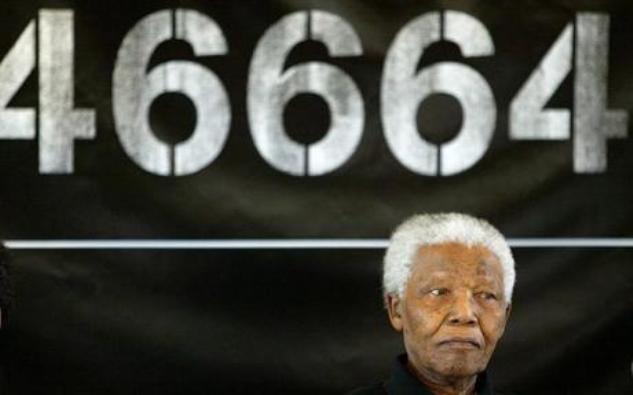
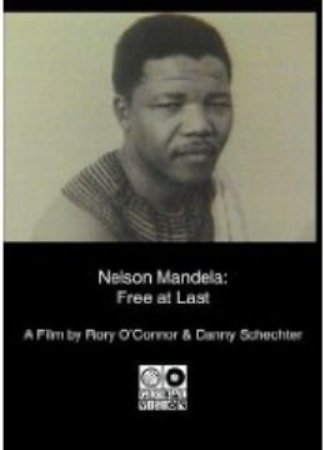
Ending his long walk to freedom on 11 February 1990, he gave a speech which ended with these words from the defence statement he’d made during his trial for treason 27 years previously: “I have fought against white domination, and I have fought against black domination. I have cherished the ideal of a democratic and free society in which all persons will live together in harmony with equal opportunities. It is an ideal which I hope to live for, and to see realised. But my Lord, if needs be, it is an ideal for which I am prepared to die.”
American journalist and film maker Danny was a long and persistent supporter of the struggle against Apartheid: in all, he has made six films with and about Mandela. Here are his reminiscences in full, borrowed from his News Dissector blog:
WAITING FOR MANDELA, by Danny Schechter
Danny Schechter with Nelson Mandela
Twenty years ago during this very week, I was leading the production team of Globalvision’s inaugural TV series, South Africa Now. We were all consumed by the rumors that best known political prisoner in the world, Nelson Mandela, the leader and symbol of the African National Congress, was about to be released from prison in South Africa after 27 years.
It was exciting and nerve-wracking to contemplate what would come next—but with all the joy and anticipation, there was a fear too, fear that Mandela would be freed into an unfree society with power still in white hands dominated by their pro-apartheid Generals and securocrats. No one was sure what would happen. Would he be going from one jail to another? Would he be assassinated? Would it even happen?
Back then, we were rushing to finish a South Africa Now PBS special slated to air in prime time on Sunday February 11th. PBS correspondent Charlayne Hunter Gault, later to become first NPR’s and then CNN’s bureau chief in South Africa, had agreed to anchor it, and we were busy putting the final touches on the show which we had titled WAITING FOR MANDELA.
It was all rush, rush. We wanted to be timely but we were covering all bases because we weren’t sure if he would be freed or not. On Friday, February 9th, we went into the studio at the old WNET–Channel 13 in New York to record our studio introductions. We finished our graphics. Charlayne prercorded her open. She was great, We were ready to go. All that remained was for the special to be packaged and aired.
But then, late on Friday Night or was it Saturday Morning, we heard that South African President DeKlerk was going to make a special announcement, a key speech to mark the opening of their Parliament. He was considered a liberal Afrikaner and had been part of a process or internal coup that ousted hardline pro-apartheid president. P.W. Botha known there as “the crocodile.”
What would he say? What would he do?
The next day, were glued to our TV sets and saw DeKlerk shock the world. He announced that Mandela would be freed the next day, on Sunday. He was then in Victor Verster prison in South Africa’s wine country north of Capetown. It was happening!
Not only that. DeKlerk announced that the ANC and the South African Communist Party and all other banned organizations would be, after decades, unbanned and allowed to participate in South African politics. This meant that the ANC leaders and their MK guerrilla fighters would be able to come home from so many years in the pain of exile.
The world was upside down. ANC people worldwide had to pinch themselves to see if they really heard what he said.
It was mind-blowing. We screamed. We cried. And then, we panicked. Our TV special was now out of date. The Waiting for Mandela was over. We had a little more that 24 hours to come up with a new TV hour with virtually no budget. We had won a hour of prime time TV. We couldn’t allow it to go to waste.
The world media was rushing to the scene. They had satellites, crews, reporters galore. What could we do that was different? We had been covering the situation there on a weekly basis and had all sorts of footage the networks didn’t. We had contacts and context. But we couldn’t go there because there wasn’t enough time. And besides, we were, in effect, banned there working with South Africans. (The ANC would be unbanned before us!)
We went to work, re-editing, tapping into a South African broadcasting company feed, and setting up the first televised exchange between the ANC and a government that refused to recognize the liberation movement.
We worked around the clock. Two editors collapsed in reworking the material under pressure. We just made air, as TV people say, by minutes. We believe our special was the best on TV.
The program was now called MANDELA: Free At Last. And we have tapes for anyone interested!
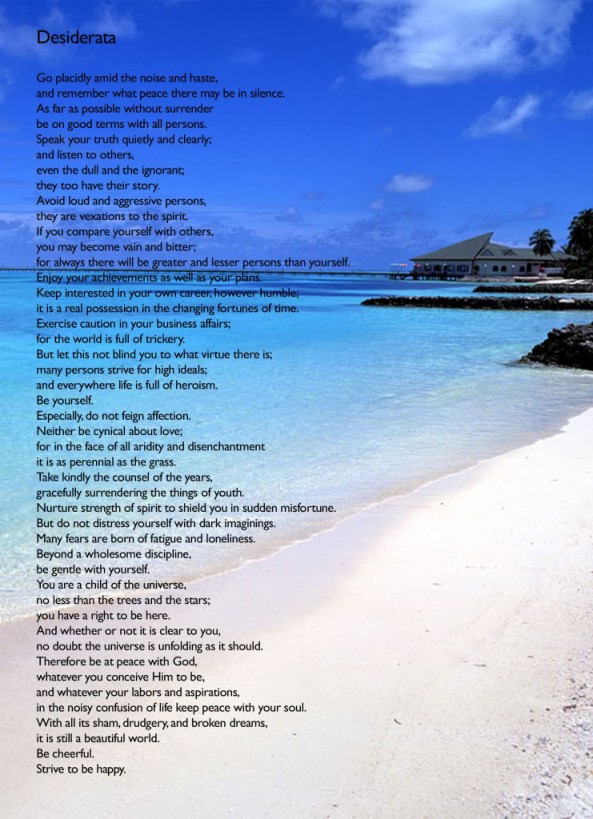
“Desiderata” is Latin for “desired things”, and the plural of desideratum. Desiderata is also the title of a famous prose poem written by Max Ehrmann an American spiritual writer and attorney.
It captures his thoughts about attaining happiness in life. Its universal and timeless sentiments have resonated with people all over the world. As with the ‘Chief Seattle speech‘, another urban legend has emerged suggesting that this poem was “found” at Old St. Paul’s Church in Baltimore and is as old as 1692.
None of this takes away from the beauty and profundity of the poem. Living in a world full of clutter and noise, I find much comfort in this. Here’s one illustrated version I found online:
This is no Avatar: It's Real!A few days ago, reviewing the blockbuster movie Avatar, I wrote: “Film critics and social commentators around the world have noticed the many layers of allegory in the film. Interestingly, depending on where you come from, the movie’s underlying ‘message’ can be different: anti-war, pro-environment, anti-Big Oil, anti-mining, pro-indigenous people, and finally, anti-colonial or anti-American. Or All of the Above…”
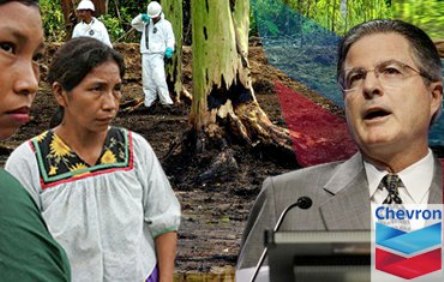
Indeed, an Avatar-like struggle is unfolding in the Amazon forest right now. The online campaigning group Avaaz have called it a ‘Chernobyl in the Amazon’. According to them: “Oil giant Chevron is facing defeat in a lawsuit by the people of the Ecuadorian Amazon, seeking redress for its dumping billions of gallons of poisonous waste in the rainforest.”
From 1964 to 1990, Avaaz claims, Chevron-owned Texaco deliberately dumped billions of gallons of toxic waste from their oil fields in Ecuador’s Amazon — then pulled out without properly cleaning up the pollution they caused.
In their call to action, they go on to say: “But the oil multinational has launched a last-ditch, dirty lobbying effort to derail the people’s case for holding polluters to account. Chevron’s new chief executive John Watson knows his brand is under fire – let’s turn up the global heat.”
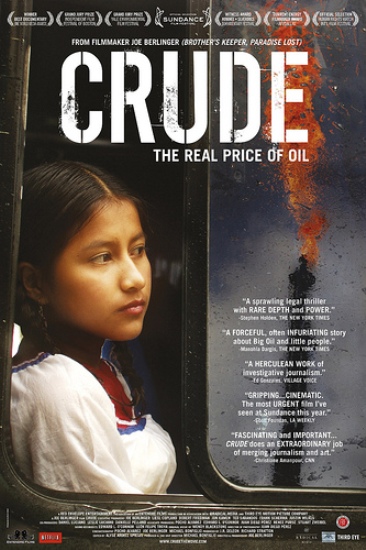
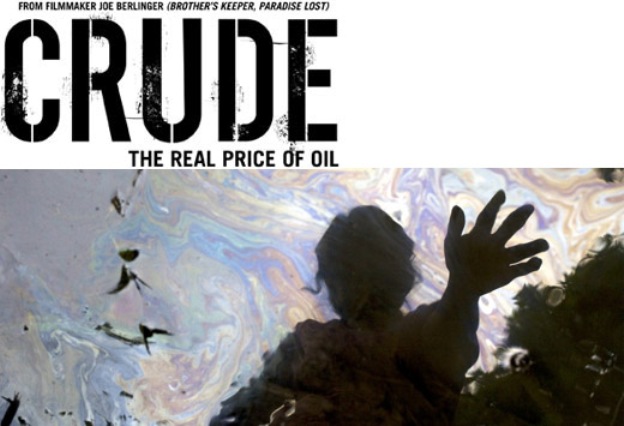
Others have been highlighting this real life struggle for many months. Chief among them is the documentary CRUDE: The Real Price of Oil, made by Joe Berlinger.
The award-winning film, which had its World Premiere at the 2009 Sundance Film Festival, chronicles the epic battle to hold oil giant Chevron (formerly Texaco) accountable for its systematic contamination of the Ecuadorian Amazon – an environmental tragedy that experts call “the Rainforest Chernobyl.”
Here’s the official blurb: Three years in the making, this cinéma-vérité feature from acclaimed filmmaker Joe Berlinger is the epic story of one of the largest and most controversial legal cases on the planet. An inside look at the infamous $27 billion Amazon Chernobyl case, CRUDE is a real-life high stakes legal drama set against a backdrop of the environmental movement, global politics, celebrity activism, human rights advocacy, the media, multinational corporate power, and rapidly-disappearing indigenous cultures. Presenting a complex situation from multiple viewpoints, the film subverts the conventions of advocacy filmmaking as it examines a complicated situation from all angles while bringing an important story of environmental peril and human suffering into focus.
Watch the official trailer of Crude: The Real Price of Oil
According to Amazon Watch website: “With key support from Amazon Watch and our Clean Up Ecuador campaign, people are coming together to promote (and see) this incredible film, and then provide ways for viewers to support the struggle highlighted so powerfully by the film.”
They go on to say: “A victory for the Ecuadorian plaintiffs in the lawsuit will send shock waves through corporate boardrooms around the world, invigorating communities fighting against injustice by oil companies. The success of our campaign can change how the oil industry operates by sending a clear signal that they will be held financially liable for their abuses.”
While Avatar‘s story unfolds in imaginary planet Pandora — conjured up by James Cameron’s imagination and created, to a large part, with astonishing special effects, the story of Crude is every bit real and right here on Earth. If one tenth of those who go to see Avatar end up also watching Crude, that should build up much awareness on the equally brutal and reckless conduct of Big Oil companies.
Civilisation's ultimate addiction?
Others have been making the same point. One of them is Erik Assadourian, a Senior Researcher at Worldwatch Institute, whom I met at the Greenaccord Forum in Viterbo, Italy, in November 2009.
He recently blogged: “The Ecuadorians aren’t 10-feet tall or blue, and cannot literally connect with the spirit of the Earth (Pachamama as Ecuadorians call this or Eywa as the Na’vi call the spirit that stems from their planet’s life) but they are as utterly dependent—both culturally and physically—on the forest ecosystem in which they live and are just as exploited by those that see the forest as only being valuable as a container for the resources stored beneath it.”
Erik continues: “Both movies were fantastic reminders of human short-sightedness, one as an epic myth in which one of the invading warriors awakens to his power, becomes champion of the exploited tribe and saves the planet from the oppressors; the other as a less exciting but highly detailed chronicle of the reality of modern battles—organizers, lawyers, and celebrities today have become the warriors, shamans, and chieftains of earlier times.”
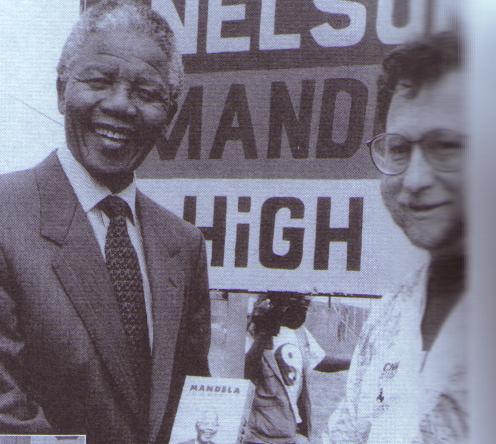
If a run-away genie granted me a wish to clone any single living human being, I’ll have no hesitation with my choice: Nelson Mandela — undoubtedly the greatest living statesman on the planet.
One might argue that Mandelas are not born; they are made. A combination of personality and historical circumstances create the rare phenomena like him.
In July 2008, when Mandela turned 90, I quoted the American film-maker, social activist and blogger Danny Schechter — who filmed Mandela’s struggle to end apartheid and restore democracy in South Africa — as saying: “He (Mandela) is one of those leaders who not only helped free his own country and people but became an icon and symbol for freedom in the world. At a time when darkness seems to be descending again, with the economy on the edge amidst protracted wars and pervasive abuses of powers, he is the one person that people the world over look to as a symbol of that saying that ‘another world is possible.’ He is not perfect – who is? He has taken great risks, and made his share of mistakes, but the love and adoration he inspires speaks to how special he is – even as he sees himself as part of a collective, a movement…“
The Mandela story has been told many times by many film-makers, writers and journalists. Few other leaders have engaged the popular culture and media’s attention — while both in and out of office — as Mandela has, and with good reason.
One poem + two men = Rainbow Nation
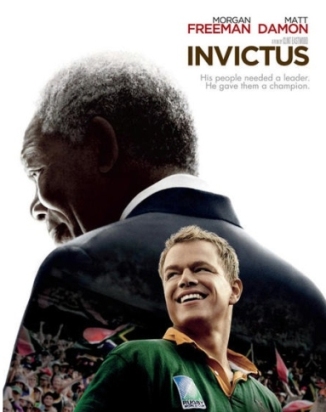
The latest film inspired by Mandela is Invictus directed by Clint Eastwood, starring Morgan Freeman and Matt Damon. Both actors have just been nominated for Oscar awards – for best actor and best supporting actor respectively. But the film’s exclusion from the 10 nominees for best picture has surprised and disappointed some.
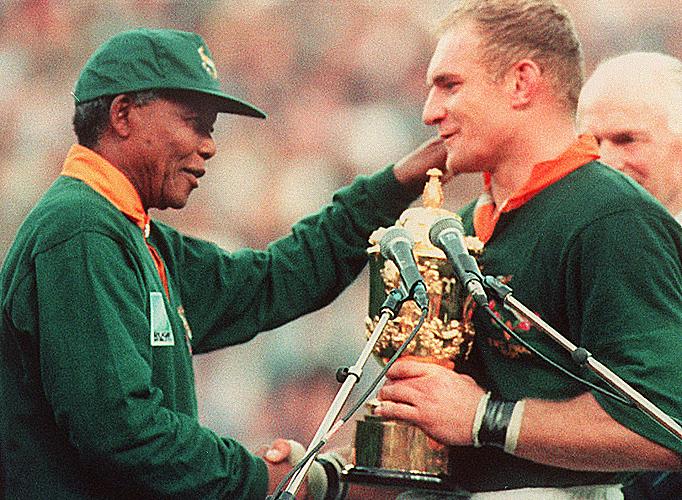
Invictus reconstructs the events in the life of Nelson Mandela at a crucial time for himself and country: after the fall of apartheid in South Africa, during his term as the rainbow nation’s first black president. The film revolves around how he campaigned to host the 1995 Rugby World Cup event as an opportunity to unite his rainbow nation. (South Africa’s team eventually won the championship.)
Here’s the plot summary from IMDB:
The film tells the inspiring true story of how Nelson Mandela joined forces with the captain of South Africa’s rugby team to help unite their country. Newly elected President Mandela knows his nation remains racially and economically divided in the wake of apartheid. Believing he can bring his people together through the universal language of sport, Mandela rallies South Africa’s rugby team as they make their historic run to the 1995 Rugby World Cup Championship match.
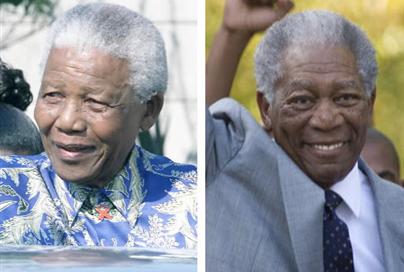
I can’t wait to see Invictus, for it has one of my favourite actors playing one of my greatest heroes. Morgan Freeman is such a versatile and accomplished actor. Having played the US President and God in past movies, this is clearly cut out for him.
As Clint Eastwood explains: “As an actor, Morgan has the same presence when he walks in the room that Mandela has as a politician. Morgan has a certain bearing and charisma. He was built to play this role.”
The Guardian (UK) preview noted: “So convinced by Freeman’s performance was Mandela’s personal assistant that when she stepped on set, she wondered how her boss had made it to the shoot without her. Freeman plays Mandela with all the expected wisdom and fortitude, but it’s the twinkle of mischief in his eye that makes you feel you’re not just watching the man, rather than a virtuoso impression.”
The Guardian calls Invictus “a startlingly powerful film: a clear-eyed look a recent history, an awe-inspiring tale of prejudice overcome, a study of power – and a rousing sports movie.”
Note: In the movie, Mandela gives the “Invictus” poem to his national rugby team’s captain Francois Pienaar before the start of the 1995 Rugby World Cup. In reality, Mandela provided Pienaar with an extract from Theodore Roosevelt’s “The Man in the Arena” speech from 1910.
If you and I think we have problems, we should consider the case of English poet William Ernest Henley (1849–1903).
Wikipedia says Henley became a victim of tuberculosis of the bone at age 12. A few years later, the disease progressed to his foot, and physicians announced that the only way to save his life was to amputate directly below the knee. But he persevered. In 1867, he passed the Oxford local examination as a senior student, and led an active and productive life till he died aged 53. (According to Robert Louis Stevenson’s letters, the idea for the character of Long John Silver was inspired by his real-life friend Henley.)
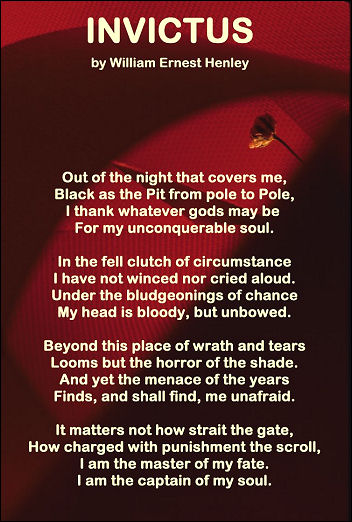
In 1875, when Henley was 26 years old, he wrote a poem from a hospital bed. It originally bore no title, and wasn’t published until 1888. It was Sir Arthur Quiller-Couch who named it “Invictus” (Latin for “unconquered”) when he included the poem in The Oxford Book Of English Verse (1900).
So here is Henley’s words of resolve and courage, speaking to us across the gulf of time:
Invictus is also the title of a remarkable 2009 film directed by Clint Eastwood, starring Morgan Freeman and Matt Damon. The film is a look at the life of Nelson Mandela after the fall of apartheid in South Africa, during his term as president, when he campaigned to host the 1995 Rugby World Cup event as an opportunity to unite his countrymen. The title comes from the fact that Mandela had the poem written on a scrap of paper on his prison cell while he was incarcerated.
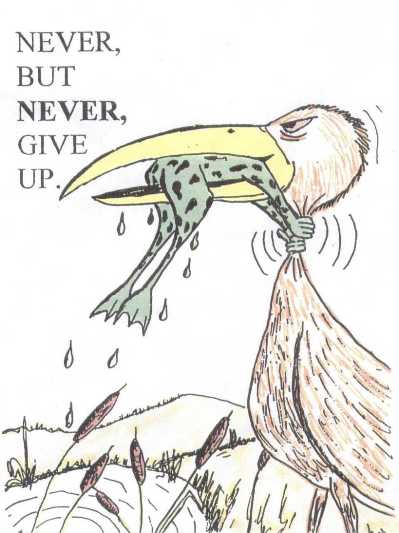
And here’s an image that echoes the same fighting spirit…
“Pictures are for entertainment, messages should be delivered by Western Union.”
Those words by American film producer and studio founder Sam Goldwyn (1879-1974) sum up Hollywood’s attitude to movie-making for the past many decades.
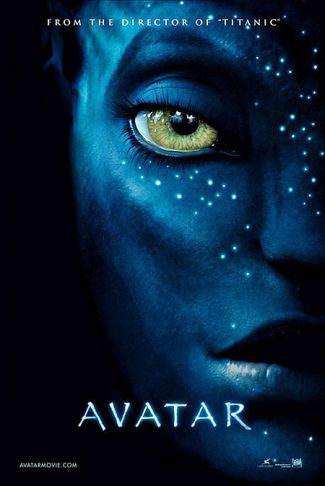
As I watched James Cameron’s latest blockbuster movie Avatar, I kept wondering how the master film maker managed to subvert this so completely. Beneath the 3D, special effects and riot of other worldly colours, the movie is one long (2 hrs 40 mins) and powerful commentary on why might is not right when it comes to exploiting resources — belonging to other countries, people, or as in this case, other worlds.
This is not just another worthy indie movie made by an idealistic movie maker defiant of Hollywood traditions and big money. James Cameron is one of the most commercially successful directors in the mainstream film industry – and perhaps one of the very few who can get away with this kind of stunt. At a budget of over US$ 300 million , Avatar is one of the most expensive films ever made, and the costliest ever for 20th Century Fox.
The big gamble is certainly paying off. On 26 January 2010 came the news that Avatar has surpassed Titanic as the highest-grossing movie worldwide. According to the studio, worldwide box office total for Avatar at that point stood at US$1.859 billion, beating the US$1.843 billion racked up by Cameron’s romantic drama in 1997-98. Avatar broke that record in a little over six weeks.
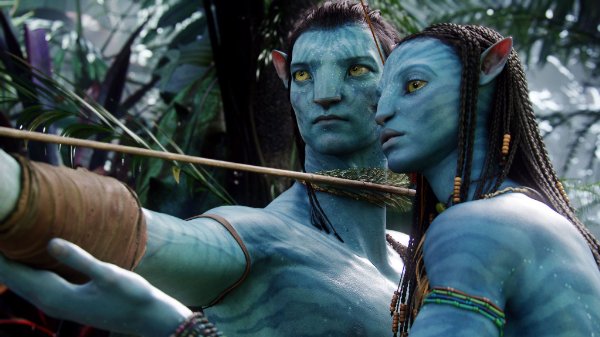
Part of the reason for such appeal is the extraordinary special effects: it’s an action-packed thriller where good and evil battle it out on another planet. The strange landscapes give it a video game like feel, but no small screen can match the theatrical experience, especially if you watch it in IMAX 3D (I didn’t). And for a change, this time the aliens inhabiting planet Pandora are benign, while it’s the humans who are ruthless invaders and brutal killers. Well, at least most of the time…
Here’s the official blurb: “Avatar takes us to a spectacular world beyond imagination, where a reluctant hero embarks on an epic adventure, ultimately fighting to save the alien world he has learned to call home. James Cameron, the Oscar-winning director of Titanic, first conceived the film 15 years ago, when the means to realize his vision did not exist yet. Now, after four years of production, AVATAR, a live action film with a new generation of special effects, delivers a fully immersive cinematic experience of a new kind, where the revolutionary technology invented to make the film disappears into the emotion of the characters and the sweep of the story.”
And here’s AVATAR – Official International Launch Trailer (HD)
Film critics and social commentators around the world have noticed the many layers of allegory in the film. Interestingly, depending on where you come from, the movie’s underlying ‘message’ can be different: anti-war, pro-environment, anti-Big Oil, anti-mining, pro-indigenous people, and finally, anti-colonial or anti-American. Or All of the Above…
It looks as if Cameron has made the ultimate DIY allegory movie: he gives us the template into which any one of us can add our favourite injustice or underdog tale — and stir well. Then sit back and enjoy while good triumphs over evil, and the military-industrial complex is beaten by ten-foot-tall, blue-skinned natives brandishing little more than bows and arrows (and with a little help from Ma Nature). If only it works that way in real life…
But the multi-purpose allegory is apparently working well. Take these two from opposite sides of the planet:
Thomas Eddlem wrote in The New American: “Avatar, is a visually stunning epic that is a perfect allegory for any of a dozen or more Indian wars in American history. From King Philip’s War in New England to Tippecanoe in Indiana to Horseshoe Bend in Alabama — and all the way across the American continent, for that matter — the story was the same. Colonists simply take land from the natives, as the Sully explains: ‘This is how it’s done. When people are sitting on something that you want, you make them your enemy so that you can drive them out.’
Mayank Shekhar wrote in The Hindustan Times newspaper: “Between a green worldview and the globe’s war over a natural resource, James Cameron’s twin analogies of present-day politics are fairly complete. They lend his science fiction ‘event picture’ a certain soul, even if not much of a story line.”
So did Cameron set out trying to send a message? Or was it all an incidental byproduct? Listen to the director himself in these two online video stories:
James Cameron’s Vision Featurette
CBS Interview with James Cameron: From Titanic to Avatar
The most compelling social commentary on Avatar I have so far read comes from Naomi Wolf, the American political activist, author and social critic. In an op ed essay written for Project Syndicate, she sees two revealing themes in Avatar: “the raw, guilty template of the American unconscious in the context of the ‘war on terror’ and late-stage corporate imperialism, and a critical portrayal of America – for the first time ever in a Hollywood blockbuster – from the point of view of the rest of the world.”
She adds: “In the Hollywood tradition, of course, the American hero fighting an indigenous enemy is innocent and moral, a reluctant warrior bringing democracy, or at least justice, to feral savages. In Avatar , the core themes highlight everything that has gone wrong with Americans’ view of themselves in relation to their country’s foreign policy.”
And is Avatar the most expensive piece of info-tainment or edu-tainment ever made, just like the Lord of the Rings trilogy was one long (even if unintended) commercial for the breathtaking sights and sounds of New Zealand?
Certainly, mixing messages with entertainment is such a difficult and delicate art that most people who dabble in it fall between the two stools. The entertainment value of Cameron’s latest flick is not in question. Granted, it’s not as heart-breaking as Titanic, and the storyline is oh-so-predictable. But 3D and SFX magic alone can’t hold today’s audiences gripped for 160 long minutes. And if the underlying story starts movie-goers thinking and talking about many parallels between the fictional world of Pandora and our own Earth, he’s certainly getting somewhere.
As Naomi Wolf says: “Ironically, Avatar will probably do more to exhume Americans’ suppressed knowledge about the shallowness of their national mythology in the face of their oppressive presence in the rest of the world than any amount of editorializing, college courses, or even protest from outside America’s borders. But I am not complaining about this. Hollywood is that powerful. But, in the case of Avatar , the power of American filmmaking has for once been directed toward American self-knowledge rather than American escapism.”
Perhaps this wasn’t part of the script, but would the executives at 20th Century Fox care as they laugh all the way to their bank?
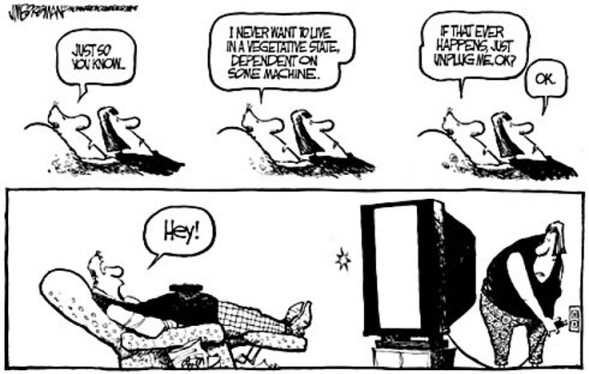
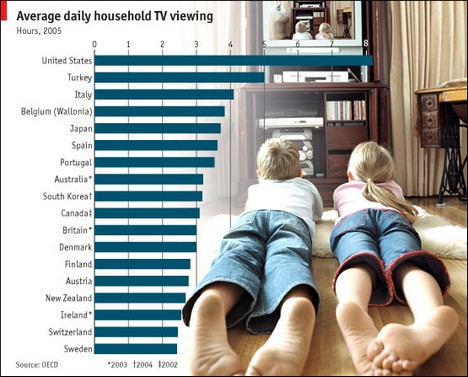
Television has been called many names in the few decades it’s been around – among them the Great Wasteland and Idiot Box. Television used to be the favourite whipping boy of those who love to criticise communication technologies and consumer gadgets — until the Internet and mobile phones came along.
Couch potatoes of the world have ignored all snide remarks, and just carried on their sedentary practice.
Now they might have to think again: Television may be hazardous to your health in more ways than previously imagined. In fact, it might shorten your life.
The report, which appears in the journal Circulation,says every extra hour spent watching television increases people’s risk of premature death.
Professor David Dunstan of the Baker IDI Heart and Diabetes Institute in Melbourne, followed more than 8000 Australian adults for six years.
The team discovered that the people who watched the most TV died younger.
“What this study provides is the first compelling evidence linking television viewing to an increased risk of early death,” says Dunstan. “People who watch four or more hours of television a day have a 46% higher risk of death from all causes and 80% increased risk of death from cardiovascular disease.”
Trivia: Robert Armstrong, an artist from California, developed the term couch potato in 1976. Several years later, he listed the term as a trademark with the United States government. Armstrong also helped illustrate a funny book about life as a full-time television watcher. It is called the “Official Couch Potato Handbook.”
Heads you lose, tails we win...?With over 10 million others, I voted in Sri Lanka’s sixth Presidential Election yesterday. Today, after the votes were counted and tallied, we were informed that the incumbent President Mahinda Rajapaksa has been re-elected for another six year term. He has won 57.9% of the valid votes.
Nearly 11,000 polling stations had been set up for this purpose, mostly at temples or schools. A quarter of a million public servants were mobilised to handle this massive operation, while close to 100,000 policemen and soldiers were tasked to maintain law and order. And the whole business of choosing the next leader is costing the war-impoverished nation several billion rupees.
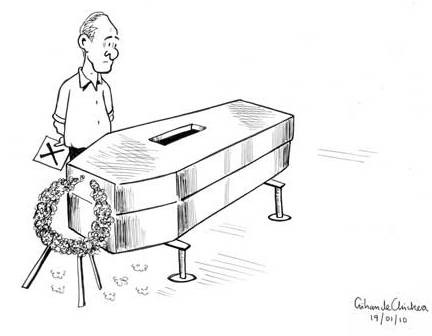
So do the results — basically, more of the same — justify all this cost and effort? Was there real choice for us the hopeful little men (and women) who walked into little booths with little pencils in hand to make a little cross on a (not so) little bit of paper?
Opinion is highly polarised on that last question. The two main candidates not only tried to outpromise each other without coherence or focus, but also made a mockery out of the whole campaign process.
In fact, as I noted in my essay last week titled Open Moment, Closed Minds: “Party politics has always polarised Lankans, but no other election in recent memory has been as divisive…The two main contenders both claim to hold a mutually exclusive key to a better future for our land and people. Their dizzy campaigns bombard us with lofty claims and counter-claims 24/7 delivered through broadcast, broadband, mobile and other media.”
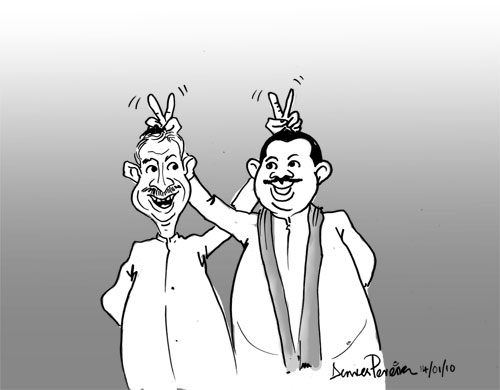
With pre-election violence escalating, the choice before voters looked like this a week before election day.The election results will be analysed and debated for weeks to come. At first glance, it looks as if the voters used this election to express gratitude to Rajapaksa for having provided the political leadership to end Sri Lanka’s long-drawn civil war.
We can argue whether presidential elections should be turned into referendums on individual performance of candidates – or instead, decided on the vision and policies offered by them. I grant this is a bit more serious than American Idol – or its local variations – where we text our preference for the candidate with the best looks or talent.
In fact, I’m still not convinced whether it’s such a good idea to mix personal gratitude with voting for a head of state.
I’ve voted in four presidential and three general elections (I missed some due to overseas travel). With one exception (1994), all have been ‘protest votes’ – I was voting against an incumbent more than in favour of an aspirant.
But there are more things in heaven and on Earth, dear reader, than are dreamt in our messy politics. Albert Einstein said it so well many decades ago: “Everything that can be counted does not necessarily count; everything that counts cannot necessarily be counted.”
We can only hope that our votes were properly counted — and that they count and matter to the leader whom we have collectively chosen today. That is, if he can see and hear beyond the cacophony of sycophants who surround him 24/7.
And as I tweeted earlier today: As Sri Lanka re-elects the President, we hope ALL 20 million Lankans can share the promise of a Better Future on which he campaigned and won…
In a new op ed essay — titled ‘Open Moment’, Closed Minds! — just published on Groundviews.org, I look back and ask some hard questions.
Here’s an excerpt:
“We all knew the hard-won peace had to be nurtured and consolidated. We also realised just how formidable the challenges of healing and rebuilding were. But could anyone have imagined the dramatic turn of political events since?
“Who would have thought that the victors of the war would soon be engaged in a nasty battle for personal glory and power? Who expected the historical feud between ‘lions’ and ‘tigers’ to be replaced so swiftly by a showdown between self-proclaimed ‘patriots’ and ‘traitors’?”
I raise these questions in the context of a fiercely contested presidential election scheduled for 26 January 2010. I note: “The two main contenders both claim to hold a mutually exclusive key to a better future for our land and people. Their dizzy campaigns bombard us with lofty claims and counter-claims 24/7 delivered through broadcast, broadband, mobile and other media.”
I ask whether either of the leading candidates has the open mind needed to seize the historic ‘open moment’ since the war ended. I recall how we completely missed the last such open moment created by the tsunami of December 2004.
I write: “Having missed the tsunami’s open moment, we cannot afford to bungle again. Rebuilding a nation of lasting peace, pluralism and prosperity will require many sections of society to change their mindset. This is especially and urgently needed in our media, much of which has become uncritical cheerleaders for patriotism and tribalism in recent years.”
Despite the many disappointments of the past 250 days, I still remain cautiously optimistic. But for how long?
 I sometimes wish Life came with its own progress bar. [tweetmeme]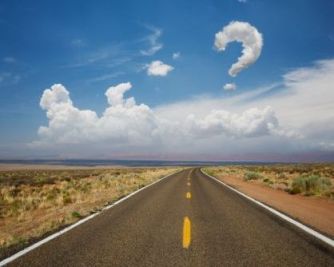

 Open Minds!