FIFA World Cup 2010: Media Conquering Planet Football!

Most Earthlings have just spent a month on this!

“If you’re an alien planning to invade the Earth, choose July 11. Chances are that our planet will offer little or no resistance.

“Today, most members of the Earth’s dominant species – the nearly 7 billion humans – will be preoccupied with 22 able-bodied men chasing a little hollow sphere. It’s only a game, really, but what a game: the whole world holds its breath as the ‘titans of kick’ clash in the FIFA World Cup Final.

“Played across 10 venues in South Africa, this was much more than a sporting tournament. It’s the ultimate celebration of the world’s most popular sport, held once every four years. More popular than the Olympics, it demonstrates the sheer power of sports and media to bring together – momentarily, at least – the usually fragmented and squabbling humanity.”

This is the opening of my latest op ed essay, which appears in several print and online outlets this weekend. It’s timed for the finals of the FIFA World Cup 2010 – the most widely followed sporting event in the world, which will be played in Soccer City, Johannesburg, South Africa today, 11 July 2010. The Netherlands will meet Spain in this culmination of international football that has been distracting a good part of humanity for a month.

This sporting event is tipped to be the most-watched television event in history. Hundreds of broadcasters are transmitting the World Cup to a cumulative TV audience that FIFA estimates to reach more than 26 billion people. Some TV channels offer high definition (HD) or 3-D quality images to enhance the mass viewing experience.

The essay was written a few days ago, after the FIFA World Cup 2010 had reached the semi-finals stage. To be honest, I’m not an ardent football fan. But as an observer of popular culture, I’ve gladly allowed myself to be caught up in the current football frenzy. I just love to watch people who watch the game…

It’s a light piece written to suit the current global mood, but I acknowledge that the World Cup is really more than just a ball game. The basic thrust of my essay is to comment on the powerful mix of fooball and live coverage: “For the past month, the winning formula for unifying the Global Family seemed to be: international football + live broadcasts + live coverage via the web and mobile phones.”

The Times of India, 11 July 2010: Planet Football: Sports unites a fragmented humanity

The Sunday Times, Sri Lanka, 11 July 2010: Conquering Planet Football

Groundviews.org: Beam Me Up to Planet Football

United Colours of Football, courtesy FIFA
The essay builds on themes that I’ve already explored on this blog – for example, how President Nelson Mandela used the 1995 World Cup Rugby championship to unite his racially divided nation, as told in the movie Invictus.

I also touch on FIFA being a wielder of formidable soft power in the world today, arguably more influential than the United Nations.

Here’s my parting thought, on which I invite reader comment: “On second thoughts, those invading aliens don’t need to worry too much about the Earth’s political leaders or their armies. Without firing a single shot, the globalised media have quietly taken over our Global Village — and now it’s too late to resist! We can argue on its merits and demerits, but the facts are indisputable.”

FIFA: Empire of Football or a global super-soft power?

The Empire of kicking around

If one acronym has dominated the world’s media and public minds in the past month, it must be FIFA.

It stands for the International Federation of Association Football, and is derived from the original French name, Fédération Internationale de Football Association. It’s the global governing body of association football, founded in 1904 and with its headquarters in Zürich, Switzerland.

FIFA is responsible for the organisation and governance of football’s major international tournaments — most notably the FIFA World Cup, held once every four years since 1930. The current World Cup, being held in South Africa from 11 June to 11 July 2010, is the 19th edition. The next will be hosted by Brazil in 2014.

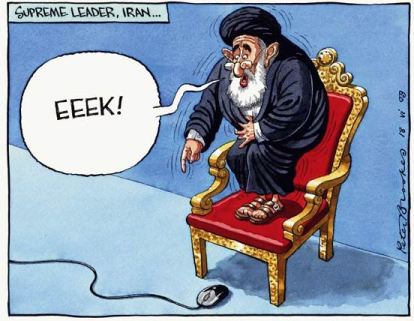
As a global body with substantial financial resources, FIFA has had its own share of controversies and been criticised for its lack of transparency and internal democracy. It’s true that FIFA controls the media rights to key international games with an iron fist (which inspired the above cartoon). They are not alone: the International Olympic Committee (IOC) has its own detractors and allegations on similar considerations.

Who's got the soft power?
But there is little argument on how far and wide the influence of these global sports bodies extend. In an op ed essay being published this weekend, I contend: “FIFA, with its 208 member associations, is probably more influential — and certainly better known — than the United Nations, with its 192 member states. The difference is in media outreach. It signifies the rise of soft power in our always-connected information society.”

Indeed, the UN itself is well aware of this. In one of the most memorable op ed essays he’s written, the former UN Secretary General Kofi Annan acknowledged in 2006 (during the previous FIFA World Cup): “The World Cup makes us at the UN green with envy. As the pinnacle of the only truly global game, played in every country by every race and religion, it is one of the few phenomena as universal as the UN. But there are better reasons for our envy.”

He continued: “This is an event in which everybody knows where their team stands, and what it did to get there. They know who scored and how and in what minute of the game; they know who saved the penalty. I wish we had more of that sort of competition in the family of nations. Countries vying for the best standing in the table of respect for human rights, and trying to outdo one another in child survival rates or enrolment in secondary education. States parading their performance for all the world to see. Governments being held accountable.”

Of course, FIFA’s domination over the global public mind will wane after the FIFA World Cup 2010 ends. But how many other global bodies can claim to hold billions of people so engaged for a month? And in this era of 24/7 information society, that’s formidable soft power indeed.

What can we call the wielder of such soft power? How about Super-soft-power?

And can this kind of power also intoxicate and even corrupt its wielders? We’ve seen how power manipulations work in other centres of soft power, such as Hollywood and Bollywood. The challenge for FIFA — and all others who are connected to it through the love of football and/or media’s outreach — is to watch out that this concentration of soft power doesn’t corrupt.

The very same media that helps FIFA attain the status of a soft-super-power needs to keep an eye on how this power is being used. Perhaps that’s the ultimate game in the media-saturated 21st Century: Emperors of Eyeballs vs. Titans of Kick.

Remember, you read it here first.

Why are ‘Smart Mobs’ also very fickle? Looking for an antidote to fleeting activism

Smart but fleeting mobs?
‘Smart mobs’ is an interesting term for like-minded groups that behave intelligently (or just efficiently) because of their exponentially increasing network links.

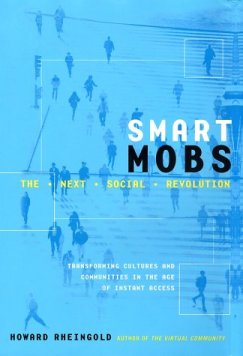
The idea was first proposed by author Howard Rheingold in his 2002 book, Smart Mobs: The Next Social Revolution. It deals with the social, economic and political changes implicated by developing information and communications technology. The topics range from text-messaging culture and wireless internet to the impact of the web on the marketplace.

In the eight years since the book first appeared, we’ve seen a proliferation and evolution of smart mobs, fuelled by the growth web 2.0 tools and, more recently, the many and varied social media. In fact, author Rheingold is credited with inventing the term virtual communities.

But the reality is that smart mobs can also be very fickle — their attention can be easily distracted. A smart mob can disperse just as fast as it forms, even while its original provocation remains.

This was demonstrated in dramatic terms in June 2009. Following a hotly disputed presidential election in Iran, there was a surge of online support for pro-democracy activists there who launched a massive protest. A main point of convergence for online reporting and agitation was micro-blogging platform Twitter. Within a few days, mainstream media like TIME and Washington Post were all talking about this phenomenon in gushing terms.

'Rescued' by Michael Jackson?
Then something totally unexpected happened. On June 25, Michael Jackson’s sudden death in Los Angeles shocked the world. As the news spread around the world at the speed of light, it crashed some social networking sites and slowed down even the mighty Google. Online interest on Iran dipped — and never regained its former levels.

As I wrote at the time: “I have no idea if the Ayatollahs are closet fans of Michael Jackson. But they must surely have thanked the King of Pop for creating a much-needed diversion in cyberspace precisely when the theocracy in Tehran needed it most.”

Other recent experiences have demonstrated how online interest can both build up and dissipate very fast. Staying with a single issue or cause seems hard in a world where news is breaking 24/7.

Here’s a current example. Following the massive oil spill in the Gulf of Mexico that started on 20 April 2010, local communities and environmental activists deployed various social media tools to track the unfolding disaster. BP, the giant oil company implicated in the disaster, has also tried to use social media to communicate its positions, but not too successfully. On Twitter, it was not BP’s official account but the satirical @BPGlobalPR that was dominating the online conversation. As one commentator wrote: “It is an object lesson in how social media can shape and control a company’s message during a crisis.”

Beyond PR?
By early July 2010, however, there were already signs that online interest on the issue was already waning — even as the oil continued to leak from this largest offshore oil spill in US history. In a detailed analysis of main social media platforms’ coverage of the issue, Mashable noted last week: “An estimated 100 million gallons or more of oil have surged into the Gulf of Mexico…Yet on Twitter, Google, blogs and even YouTube, we’re already wrapping up our collective discussion of the oil spill and how to repair its damage.”

Riding the wave can be fun, but waves form and break quickly. Those who want to use social media tools for social activism still need to learn how to hitch a ride with the ocean current beneath the fickle waves.

How I wish I could get some practical advice on this from a certain ancient mariner named Sinbad.

From Michael Jackson to K’naan: Anthems for the Global Family?

A song that will outlive the games?

FIFA World Cup Football enters its final few days this week, culminating a month of international football at the highest level.

Played across 10 venues in South Africa, this is much more than a sporting tournament. It’s the ultimate celebration of the world’s most popular sport, held once every four years. More popular than the Olympics, it demonstrates the sheer power of sports and media to bring together – momentarily, at least – the usually fragmented and squabbling humanity.

And one upbeat song has characterised this World Cup more than any other: the FIFA World Cup Anthem, “Wavin’ Flag” (The Celebration Mix). Sung by K’naan (born Keinan Abdi Warsame) a Somali-Canadian poet, rapper, singer, songwriter, and instrumentalist.

It opens with these now famous words:

…Singing forever young, singing songs underneath that sun
Lets rejoice in the beautiful game,
And together at the end of the day.
We all say
When I get older I will be stronger
They’ll call me freedom, just like a wavin’ flag…

“Wavin’ Flag” is the third official single (eighth single overall) from K’naan’s Troubadour album. He specially recorded a version of the song for the tournament, hosted by South Africa. The remix of “Wavin’ Flag” is part of Coca-Cola’s global integrated marketing campaign “inspired by the joyous dance celebrations familiar to Africa.”

The song is popping up and pouring out from billions of radio and TV sets, mobile phones, websites and other devices. So much so that I wonder if it might as well be our planetary anthem — an idea that some social activists and artistes have dreamed about for decades?

Last year, shortly after Michael Jackson’s sudden death, I wrote a blog post that looked back at his songs that celebrated social and environmental themes. Referring to one, I said: “…the Earth Song had much wider and more lasting appeal, almost becoming an anthem for the global environmental movement in the past decade. But its real impact was not among the converted – with this song, Jackson took the green message to the heartland of the Facebook generation.”

We can argue about that (please do!). For now, here’s the celebrated song, currently the most popular on the planet:

FIFA Wold Cup Anthem “Wavin’ Flag” (The Celebration Mix) by K’naan

Wavin’ Flag lyrics (Celebration Mix) by K’naan

Ooooooh Wooooooh Ooooooh Wooooooh

Give me freedom, give me fire, give me reason, take me higher
See the champions, take the field now, unify us, make us feel proud
In the streets are, hands are liftin’, as we lose our inhibition
Celebration, its around us, every nations, all around us

Singin’ forever young, singin’ songs underneath that sun
Lets rejoice in the beautiful game
And together at the end of the day

WE ALL SAY

When I get older, I will be stronger
They’ll call me freedom
Just like a wavin’ flag

And then it goes back…And then it goes back…
And then it goes back…And then it goes…

When I get older, I will be stronger
They’ll call me freedom
Just like a wavin’ flag

And then it goes back…And then it goes back…
And then it goes back…And then it goes…

Ooooooh Wooooooh Ooooooh Wooooooh

Give you freedom, give you fire, give you reason, take you higher
See the champions, take the field now, unify us, make us feel proud
In the streets are, hands are lifting, every loser inhibition
Celebration, its around us, every nations, all around us

Singin’ forever young, singin’ songs underneath that sun
Lets rejoice in the beautiful game
And together at the end of the day

WE ALL SAY

When I get older, I will be stronger
They’ll call me freedom
Just like a wavin’ flag

And then it goes back…And then it goes back…
And then it goes back…And then it goes…

When I get older, I will be stronger
They’ll call me freedom
Just like a wavin’ flag

And then it goes back…And then it goes back…
And then it goes back…And then it goes….

Ooooooh Wooooooh Ooooooh Wooooooh

WE ALL SAY

When I get older, I will be stronger
They’ll call me freedom
Just like a wavin’ flag

And then it goes back…And then it goes back…
And then it goes back…And then it goes…

When I get older, I will be stronger
They’ll call me freedom
Just like a wavin’ flag

And then it goes back…And then it goes back…
And then it goes back…And then it goes…

Ooooooh Wooooooh Ooooooh Wooooooh

And everybody will be singin’ it

Ooooooh Wooooooh Ooooooh Wooooooh

And we are all singin’ it

Why isn’t school very cool? Have we asked our kids yet?

Look what education is doing to me!
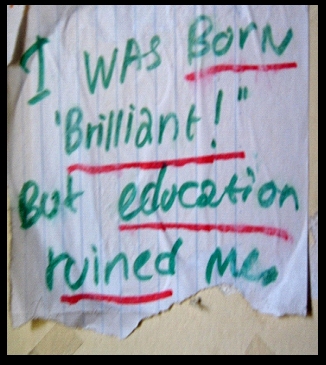
A few days ago, while cleaning the spare room in our home, I came across a piece of paper stuck on to the wall. These words were scribbled on it: “I was born brilliant – but education ruined me!” (see photo).

My daughter Dhara, 14, admitted authorship without any hesitation. It’s not her original line, of course — but a clear reflection of how she feels about schooling and formal education. When we think about it, these few innocent words become a severe indictment of a mass-scale system in which families, societies and countries invest so much money, time and hope.

She’s certainly not alone in her misgivings about the value of institutionalised education. As George Bernard Shaw once declared, “The only time I interrupted my education was in school.”

Although I had a happy school life, I can well appreciate how and why many people feel like this about school. Don’t take my word for it – do a quick, random sampling of those around you. How many of them will admit to having happy memories of their school days?

Let’s face it: the whole concept of a school is flawed. Education may be a great leveller among human beings, but schooling in most parts of the world operates at the lowest common denominator level. How can you group together 30 or 40 children at random, expose them to the same curriculum, imparted at the same pace, and expect all to thrive? Some will keep up; others will lag behind; and a few will be completely bored out of their minds – like I was, for a good part of my primary and secondary schooling.

Yet there is not much that even the most dedicated teacher could do under such trying circumstances. Oddly enough, no one in any self-respecting healthcare system would want to prescribe the same medicine for patients with very different ailments. Yet the one-size-fits-all approach is never questioned when it comes to education. Why?

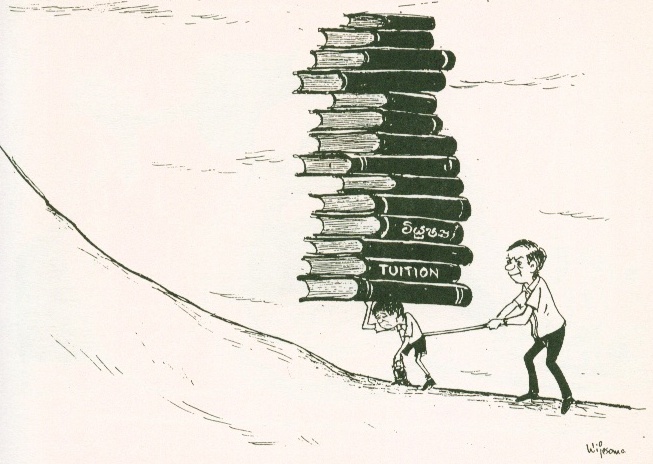
A hapless school kid being primed for the Great Rat Race - cartoon by W R Wijesoma, 1994

One reason why this abuse has thrived is because no one listens to the most important voice in this debate: the average schoolgirl and schoolboy. The learner’s perspective is largely missing in most educational policies and plans. There is so much emphasis on teaching, infrastructure, performance and resources. The handful of men and women who decide what should be taught in our schools hardly ever pause to think how their decisions affect the last link in the chain: the hapless, overburdened, over-driven student. Over 4 million of them — like the one in the cartoon above.

Must things remain like this forever? Is there any hope that our much-tinkered (and much-maligned) education system could one day be more student friendly, more learning oriented and more responsive to the different needs of different students? Will those in charge of the system begin to treat students and teachers as something more than movable statistics? And most importantly, can we restore the joy of learning, the sense of wonder and fun of schooling?

I don’t have easy answers to these – nobody does. But these are worth asking, even if they are uncomfortable and unpopular questions to pose. For too long, the formal education sector has carried on with its business-as-usual with the typical self-righteousness and arrogance of a matronly school principal.

It’s time for us to storm the citadels of learning and make them more caring, accommodating and sensitive to the needs of the most important people in the system: the learners.

Nothing less than our children’s individual and collective futures are at stake.

Note: The views in this blog post are adapted from a longer essay I wrote in 2002, titled Let’s Restore the Joy of Learning.

Related blog post, March 2010: SOS from the Next Generation: “We need Good Parents!”

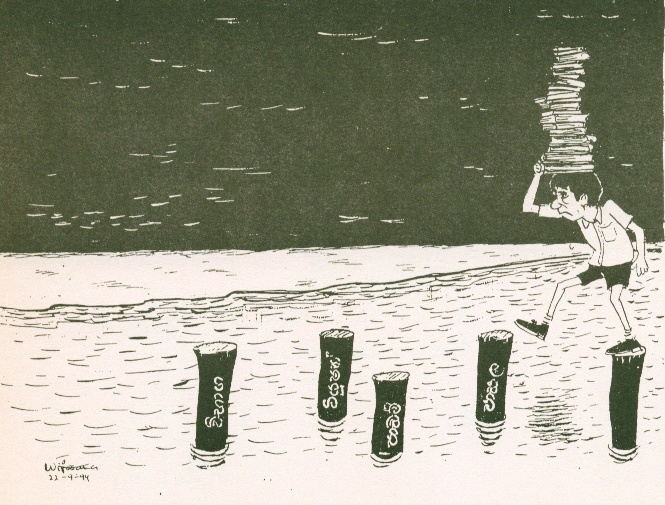
A perilous journey covering school, lessons, tuition classes, exams...Cartoon by W R Wijesoma, 1994

Updates from Tweet-land: Say it all in 140 characters…and why not?

Tweet, Tweet! Do you follow me yet?
I just passed the 500 mark in tweeting. That’s not a great number considering how some people tweet a dozen or more times every day. But I’m not into such high volume tweeting – the most I’ve done on a given day, I think, is half a dozen. So it took me several months to clock up 500.

I was a late-comer to Twitter. It was my friend David Brewer, new media activist, who persuaded me to sign up in late 2009. On his Media Helping Media website, he has been showcasing the new tools, platforms and opportunities for anyone to become a global media brand in just 100 minutes (he recently updated this quick guide, reducing the time to 60 minutes).

Since then, I’ve been learning the ropes and having fun. What started off as a way to share weblinks to my blog posts or other interesting online content has evolved – in just a few months – into an outlet where I can express my opinions on social, political or cultural topics of current interest. And as my regular readers know, I can be quite opinionated…

I don’t normally tweet about very personal experiences or impressions. But I do share insights from my frequent travels, and meetings with interesting people and ideas.

The past few months have provided me with ample material. I became single again in January, and am now trying to reboot my personal and professional lives, even as I raise a teen-aged daughter as a single parent. Meanwhile my country of anchor, Sri Lanka, is emerging from nearly three decades of civil war, and the trauma and militarisation that went with it, and is struggling to return to normal, peaceful days again. Both processes are fraught with many challenges, and the journey is also the destination.

Slowly but surely, I’ve realised that a good deal can be expressed in 140 characters or less that each tweet allows. The mandarins of verbosity may not agree, but as Shakespeare himself noted in Hamlet, ‘brevity is the soul of wit’. As a writer, I already knew the power of concise and precise expression, and Twitter has only challenged me to be compact, punchy and imaginative.

Looking back, I realise that my tweeting has come at some cost to my blogging. It’s not the only reason, or even the main one, but I’ve been blogging less in the past few months even as I tweeted more. Blogging entails more work, whereas tweeting is really micro-blogging on the run. I can tweet in under a minute whereas an average blog post – at the level of hotlinking and illustrating I like to do – can take between 30 mins to an hour.

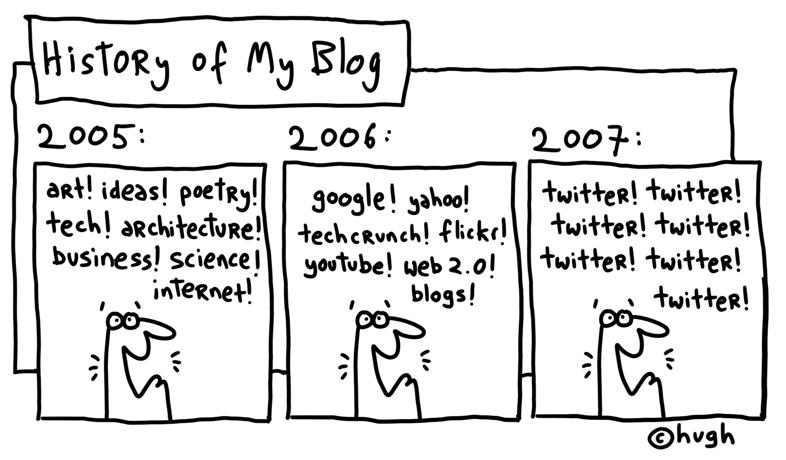
As I juggle bread-and-butter with my multiple passions (or the ‘jam’ on top), I’ve had less time for more reflective and leisurely blogging this year. It doesn’t mean that my blog will go the way of the blogger in this cartoon – if anything, it serves me as a caution!

Cartoon courtesy Hugh MacLeod

I started tweeting as an occasional habit, but should have known better. It took me a while to realise that it’s become a habit. And then, when I spent a few days in Beijing in late May this year, I almost developed withdrawal symptoms (Twitter is officially blocked in China). My resulting blog post, Twitterless in Beijing, has been widely linked to and discussed.

On a technical note, I’m still quite old fashioned in that I don’t post new tweets from mobile phones or other hand-held devices – all my 500+ tweets so far have been posted from the web, using my regular browser. I have no immediate plans to go for a fancy new mobile phone or ipad or similar device. I know mobile internet is the new wave, but I don’t yet have the urge to be tweeting on the run – I can hold my ideas and communicative urges until I sit down at my laptop…

But who knows what changes would occur on the road to my 1,000th tweet?

Here’s a collection of spoofs on famous quotes, as they apply to Twitter and tweeting. Some are very funny!

Sri Lanka’s Sacred Cows and Orbital Dreams: Asking difficult questions

Holy cow! How does she do it?
Cows have been a part of South Asian cultures, economics and societies for millennia. Many among us are connected to cows in one way or another – some worship them while others feast on them. Even a secular vegetarian in South Asia – like myself – can’t avoid bumping into the occasional cow on our delightfully messy streets…

We probably gave the term ‘sacred cow’ to the English language. It means an object or practice which is considered immune from criticism, especially unreasonably so. As the Wikipedia explains, “The term is based on the popular understanding of the place of cows in Indian religions as objects that have to be treated with respect, no matter how inconvenient.”

Well, some of us beg to differ on modern-day sacred cows. My latest op ed essay, just published on Groundviews.org, is all about sacred cows in rapidly modernising South Asia. It starts with my experience as a young science journalist covering the impending launch of Pakistan’s first digital communications satellite, Badr 1, in early 1990.

At the time, Pakistan had recently returned to civilian rule after many years of dictatorship, and Benazir Bhutto was Prime Minister (in her first term). The political mood was generally upbeat. But I soon found out — from Pakistani journalists and independent scientists — that they weren’t allowed to ask critical questions about the country’s nuclear or space programmes.

In Sacred Cows and Orbital Dreams in Sri Lanka, I write: “The message was clear: democracy or not, some sacred cows always enjoy their privileged status! This has certainly been the case with both the space and nuclear programmes in India and Pakistan: they have been shielded from public and media scrutiny for decades.

What price for having our own?
“For the past few months, it seemed as if we too were following this South Asian tradition. Plans to build Sri Lanka’s own satellites were announced and pursued with little information disclosure and no public debate. The government wanted to launch our very own ‘sacred cows’ into orbit. We the public were to just applaud on cue, and then cough up the money for it…”

The essay is a critique of Sri Lanka’s much hyped plans to build its own satellites. The project was announced in February 2009 and appeared to gain momentum during the year. Going by official statements and media reports, the plan was to launch not one but two satellites.

Suddenly, there seems to be a change of heart. In a interview on 6 June 2010 covering a range of issues, head of the Telecom Regulatory Commission (TRC) disclosed that the government was not going ahead with the much-hyped project. At least not in its originally announced form. The reason: the very high cost, and the need to ‘explore other options such as hiring satellites’ instead of building our own.

Hmmm. Better to be wise later than never. This is the first time in over 15 months that the high costs of this high cost project have been acknowledged.

The satellite is not the only mega-science project being pursued in post-war Sri Lanka. In June 2009, the Ministry of Science and Technology directed the Atomic Energy Authority to set up a national committee to study technical and financial aspects of setting up a nuclear power plant.

Again, this mega project has not been opened up for public discussion and debate, in spite of a few citizens and activists expressing concern, highlighting safety and public health risks, high cost of construction and the unresolved problem of nuclear waste disposal.

I end the essay arguing that as long as public safety and public funds are involved, sacred cows – whether orbital or radioactive – can’t be allowed free range.

Read the full essay on Groundviews: Sacred Cows and Orbital Dreams in Sri Lanka

A compact version appeared in The Sunday Times, 13 June 2010: Sri Lanka’s Satellite: Lost in Space?

Palitha Lakshman de Silva (1959 – 2010): Animator, stilled.

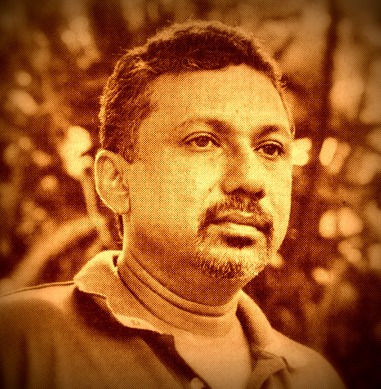
Palitha Lakshman de Silva, 1959-2010
For the second time in just over three months, I went to the Colombo general cemetery to bid farewell to a fellow traveller. This is becoming a worrying habit.

Those of us who’ve opted for the path less travelled don’t expect crowds or accolades. At least we have each other for company and inspiration. Suddenly it’s getting a bit lonely: long-standing friends and colleagues are dropping dead in the prime of their lives.

First, it was environmentalist, journalist and public intellectual Piyal Parakrama who left in early March. Now, it’s Palitha Lakshman de Silva — journalist, photographer, cartoonist, puppet animator and television professional among other pursuits and talents.

Uncannily, what I wrote upon hearing Piyal’s death applies – word by word – to Palitha too. I just have to change the name and date: Palitha died so suddenly and unexpectedly on the evening of June 11 that it’s hard to believe that he is no longer among us. Another public-spirited individual has left the public space all too soon…

Both men had just passed 50, and were leading active, productive and busy lives. They had no known ailments, and were in apparent good health. Yet in the end, it was the unseen, gradual clogging of the heart’s arteries that struck them both down: the first heart attack was swift and fatal. Neither man reached the nearest hospital alive.

I had known Palitha for twice as long as I worked with him (in the past decade). Although we weren’t close friends, we shared a passionate, life-long interest in using broadcast television and narrowcast video to communicate public interest messages. Some call it non-formal education, but we avoided the e-word for it reminds some people of school that they didn’t enjoy. We believed – and demonstrated too – that the audio-visual medium can blend information with entertainment in ways that make learning effortless and painless.

Having started his career as a reporter and photojournalist at a leading newspaper, Palitha later moved on to TV, where he blazed new trails in cartoon animation, puppetry and documentary making. He was part of Sri Lanka’s first generation of television and video professionals who experimented with the medium, and found new ways of combining education, information and entertainment.

All this made Palitha a natural ally and partner in my work at TVE Asia Pacific. I just wrote a more official tribute tracing our collaborations over a decade, which the TVEAP website published: Tribute to Palitha Lakshman de Silva (1959 – 2010): Photojournalist and cartoon animator

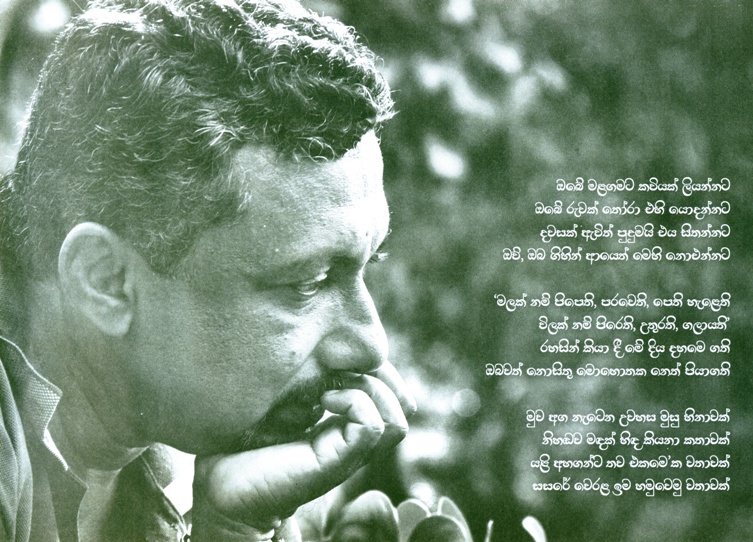
I’ll write more reflectively once I recover from the shock of another colleague signing off for good. For now, I can only echo the lyrical sentiments in this leaflet distributed at Palitha’s funeral by his artistically-inclined friends. The English approximation (below) is mine, and not particularly good (though bilingual, I’m a lousy translator). I’m glad, however, that the original verse captures one intrinsic quality of Palitha: his gentle, soft-spoken nature which often concealed the creative genius inside him.

Goodbye, Palitha Lakshman de Silva

The day has arrived
Suddenly and shockingly
When you’ve gone away
Leaving us alone
All by ourselves
To write a verse
And choose an image
In your fond memory.

Flowers bloom and wither
Lakes flourish and drain
Such is the Circle of Life
Which your hasty exit
Once again reminds us
With a soft, little whisper.

We’ll travel to the end of time
If can we see, just once more,
Your gentle and soothing smile,
And listen to your stories
That you told us so gently.

Just once more…

WED 2010: Saving the Planet, one human mind at a time…

Race to save the Planetary Ark: How are we doing?

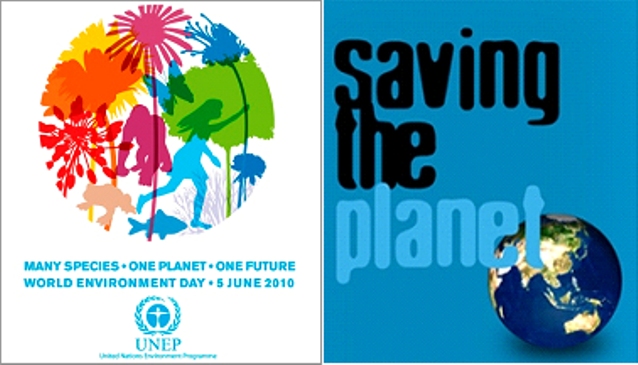
Today was World Environment Day (WED), and this year’s theme was biodiversity. The slogan read: Many Species, One Planet, One Future.

Different people observed the day in many and varied ways. Each one is valid, useful and purposeful.

I don’t believe in tokenistic tree planting. In fact, I’ve never planted more than a tree or two all my life – and honesty, I don’t know what happened to those hapless saplings after I deposited them gently and eagerly into a little hole in the ground…

Instead, I’m committed to a longer term effort: raising a single child as a single parent, trying to make her more caring for the planet, its limited natural resources and its people. I’m hoping that this would prove to be a lot more planet-friendly and worthwhile than a whole lot of trees planted and then abandoned…

As David Suzuki, the Canadian environmentalist and my favourite broadcaster, has said: “Our personal consumer choices have ecological, social, and spiritual consequences. It is time to re-examine some of our deeply held notions that underlie our lifestyles.”

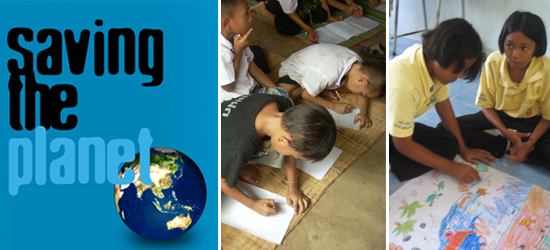
This is precisely the premise of Saving the Planet, the six-part, pan-Asian TV series we at TVE Asia Pacific produced and released in late 2009. It was among the compilation of environmental films that we screened at the British Council Colombo today to mark WED.

Filmed in six countries in South and Southeast Asia, Saving the Planet profiles groups working quietly and relentlessly to spread knowledge, understanding and attitudes that inspire action that will help humans to live in harmony with the planet.

Here are two stories that have a particular focus on biodiversity – all others have also been featured on this blog over the past few months (just run a search for ‘Saving the Planet’).

Cambodia: Floating the Future

The people of Prek Toal have always known how closely their lives and jobs are linked to the ebb and flow of the Tonlé Sap lake, the largest in Cambodia and linked to the Mekong River. Now, the conservation group Osmose is showing how they can benefit from the lake’s fish and other natural resources without killing off the very ecosystem that sustains them. One strategy that works: to reach out to grown-ups through their children.

Thailand: Smile Again!

Tourists are astounded by the richness and diversity of Thailand’s natural heritage. But many Thai children and youth are not connected with Nature – they are not familiar with plants and animals even in their own backyard. Concerned, the Thai Education Foundation launched a programme that links schools with their local community to learn about Nature through exposure and experience. We travel to Phang Nga province in southern Thailand to find out this works.

When green stories make some see red: who protects the reporters?

Who says environment is a ‘safe’ subject for journalists and broadcasters to cover?

Journalist colleagues who work on conflict, security and political topics often have an illusion that environmental reporting is a ‘cosy and comfortable beat’ – one that allows reporters to travel to exotic locations, see cuddly animals, relax in pristine environments and generally take things easy.

That might have been the case some years ago, in another century that’s now receding in our memories. But not any longer: there’s as much conflict, intrigue and complexity in many of today’s environmental topics, and covering them can often be hazardous to the courageous journalists who go after them.

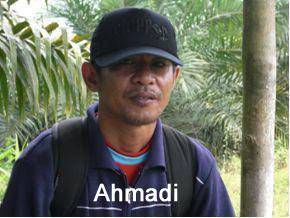
Ahmadi: Beaten up for expose
Just ask Ahmadi, a journalist working for Harian Aceh in Indonesia. Together with a fellow journalist, working for News Investigasi in Medan, he recently investigated a flood that had taken place in the Alapan district in April 2010. During their journey, they met some people cutting up logs. The journalists asked workers who owned these logs and were told that they belonged to the Alapan District Police Station and the Alapan Military Sub-District Command. Hmm…

When confronted with this information, a high ranking military officer reacted quickly and sharply: he wanted the whole story suppressed. In defiance, Harian Aceh published the story on 21 May 2010 — which resulted in Ahmadi being assaulted and threatened with death by the same officer.

“Ahmadi joins the long list of journalists who have been targeted for shedding light on deforestation, which is responsible for at least 18 per cent of the world’s greenhouse gas emissions,” says Reporters Without Borders (RSF), the international watchdog on media freedom.

It says attacks on journalists and bloggers who try to cover any kind of environmental damage are growing steadily all over the world. Among them, those who investigate industrial pollution or the destruction of forests are particularly at risk.

No longer a cosy beat...
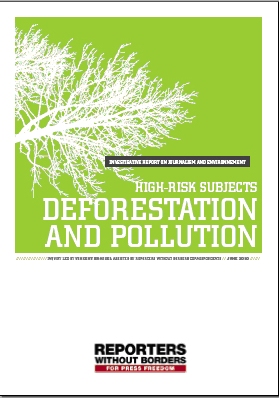
This week, on the eve of World Environment Day (5 June), RSF released a new report titled Deforestation and pollution: High-risk subjects. It makes grim reading for all of us who are committed to journalism as if the planet mattered.

It follows and echoes their call last year: “We must defend journalists who expose attacks on the environment”.

The new report, the second of its kind within just a few months from RSF, was prepared with the help of its worldwide network of correspondents. They gathered information about incidents in Indonesia, Argentina, El Salvador, Gabon, India, Azerbaijan, China and Morocco. Behind each of these threats and attacks, there were big corporations, criminal gangs or government officials who had been corrupted by money from mining or logging.

Asia features prominently in the report, which condemns the responsibility of the Vietnamese and Chinese governments in serious press freedom violations that deprive the public of crucial information about cases of pollution or deforestation.

The report describes, for example, the way the government in Hanoi has tried to suppress any debate about the environmental impact of bauxite mines being operated by a Chinese company. A field investigation in Argentina established that journalists are under pressure from both supporters and opponents of a mining project.

Mining companies (Aluminium Corp of China, China Metallurgical Group and the Canadian companies Yamana Gold and Pacific Rim), oil companies (Shell, Addax and Synopec), wood pulp companies (Sinar Mas and Riau Andalan Pulp and Paper) and two French multinationals (Bollor and Areva) are all identified in this report as having a direct or indirect role in cases of intimidation or censorship.

This is the second report that RSF has published on this subject. In September 2009, a report titled “The dangers for journalists who expose environmental issues.“, looked at 15 cases of journalists and bloggers who had been killed, attacked, jailed, threatened or censored for covering environmental problems in Russia, Cambodia, Bulgaria and Brazil.

RSF this week reiterated the appeal it launched during last December’s Copenhagen Summit: The media are needed to gather information and disseminate it to the public. Where climate change was concerned, it reminded everyone one, it was the media who helped to establish credible, independent diagnoses of the state of our planet. Their analyses continue to play a crucial role in helping decision-makers to adopt policies and rules that will lead to the desired changes.

On this blog, we have consistently highlighted the need for safeguarding journalists who pursue environmental stories that threaten vested interests within and across borders. For example:

September 2009: Who will protect journalists fighting for a better planet?

November 2007: Protect journalists who fight for social and environmental justice!

In April 2007, we asked: Can journalists save the planet? Yes, they can be front-runners in the world’s attempts to save species, habitats and entire ecosystems. But only if the rest of society protects and stands by them. When our planetary house is on fire, shooting the messenger isn’t going to save anyone.