That was the refrain of a certain Chicken Licken or Chicken Little, the lead character in a popular folk tale. The rather timid creature was easily scared, and each time something slightly out of the ordinary was experienced, it always assumed the worst.
“The sky is falling!” has entered the English language as an idiom for hysterical or mistaken belief that disaster is imminent. If the original Chicken Little was prone to hallucination, its modern day equivalents are more likely feigning hysteria for their own reasons and gains.
For much of 2012, a large section of the print and broadcast media in Sri Lanka has behaved like Chicken Little. They have uncritically and sometimes gleefully peddled the completely unsubstantiated and imaginary prophecies of doom and gloom – specifically, about the world ending on 21 December 2012.
And just like Chicken Little did, our media too had plenty of uncritical followers – a case of the blind leading the blind. They worked themselves into a misplaced frenzy, imagining all sorts of scenarios for the world’s end.
Some involved terrestrial hazards while others, extra-terrestrial ones. The prophets of doom were too busy churning out more and more fantastic tales to realize that, if all their various scenarios were to happen, we would need not one but several worlds…
Ah, but our intrepid media won’t allow such facts to get in the way of a good story, or reality checks to hold down their run-away imagination. Fear and panic sell newspapers, and keep TV ratings high…
As the leading Indian rationalist Sanal Edamaruku has noted, “Selling every day anything from bunkers to miracle bracelets and wonder cures to gullible, fearful people, they don’t just exploit them; they massively reinforce the mind crippling vicious circle of superstition in their lives. The superstition generator is running overtime, even in many of our otherwise so critical and progressive media.”
We the minority of sceptical readers have long endured not only the incredible shrill of assorted doomsday prophecies in our media, but the distraction of public attention and the deprivation of valuable media space and time for covering issues of genuine public interest. In desperation and frustration, we decided to present Chicken Little Media Awards
Nominations were called via Twitter and Facebook, and selecting the worst performers was truly difficult as the contenders were engaged in a race to the bottom. The online debate about these choices will continue.
But after considerable deliberation, meanwhile, here is our choice…
Chicken Little Media Awards 2012
Most Hysterical Sinhala newspaper: Mawbima
Runner-up: Lankadeepa
Most Giddy-headed TV channel: Sirasa TV
Runners-up: Swarnawahini and TV Derana
Two-headed Chicken Little Award: Vidusara science magazine, which accommodated both critical views as well as outright superstition (thus covering all bases?)
Headless Chicken Little Award: All-astrology newspapers that thrive on people’s gullibility
We salute all reporters, editors and media managers who have peddled mind-rotting tall tales about the world ending.
The much touted ‘Doomsday’ has finally arrived: today is 21 December 2012.
According to the assorted peddlers of doom and gloom, the world should be ending today. Hmm…
Perhaps THEIR WORLD of myth and fantasy would indeed end today — and not a moment too soon!
For the rest of us, however, it’s another day. And from today, I would call the misguided “star-readers” ass-trologers.
Ass-trologers and other dabblers in pseudo-science and non-science will now have a lot of explaining to do. The religious zealots, of course, would probably claim that their pious conduct and non-stop prayers earned us a stay of execution…
The US space agency NASA was so sure that the world won’t come to an end on 21 Dec 2012, that last week they released this simple explanatory video for “the day after”. It has already been seen by over 2 million viewers on YouTube:
Here’s an excerpt: “Doomsday prophecies may not be the most dangerous part of the problem. But as they are bound to collide always so harshly with the continued existence of the world after zero hour, they allow us a glimpse at a process – here in fast motion – that normally would play out too slowly to be understood. It is a process of immunization against reason…”
Read my 4 Nov 2012 Sunday column: End-of-the-World, Inc.
Text of my ‘When Worlds Collide’ column published in Ceylon Today Sunday newspaper on 16 December 2012
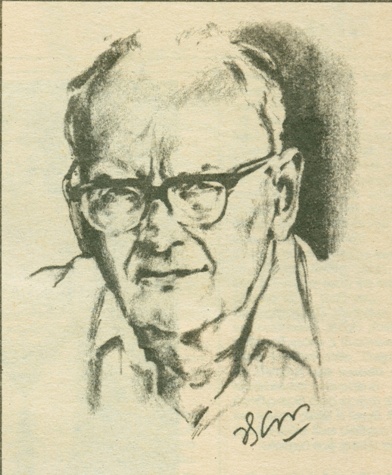
“Did you hear about the man who lit a cigarette from a nuclear explosion?” Sir Arthur C Clarke was fond of asking his visitors some years ago.
The acclaimed science fiction writer and space visionary, whose 95th birth anniversary falls today (16 Dec 2012), loved to pose such baffling questions to visitors. He would gleefully volunteer the answer, and in that process, also share an interesting factoid.
In this instance, the answer was Theodore (Ted) Taylor (1925 – 2004), an American nuclear scientist who designed atomic weapons in the 1950s and 1960s. He apparently held up a small parabolic mirror during a nuclear test — the giant ‘fireball’ was 12 miles (19 km) away – which turned the focused light into heat.
“The moment I heard this, I wrote to Taylor, saying ‘Don’t…
This week, my Ravaya column (in Sinhala) is about why we in Sri Lanka should re-read Arthur C Clarke, author of 100 books and over 1,000 essays of both fiction and non-fiction. This marks his 95th birth anniversary that falls on 16 Dec 2012.
As a science writer, Sir Arthur wrote on many and varied topics. Here, I single out two aspects: human violence and human gullibility, both of which continue to affect societies around the world.
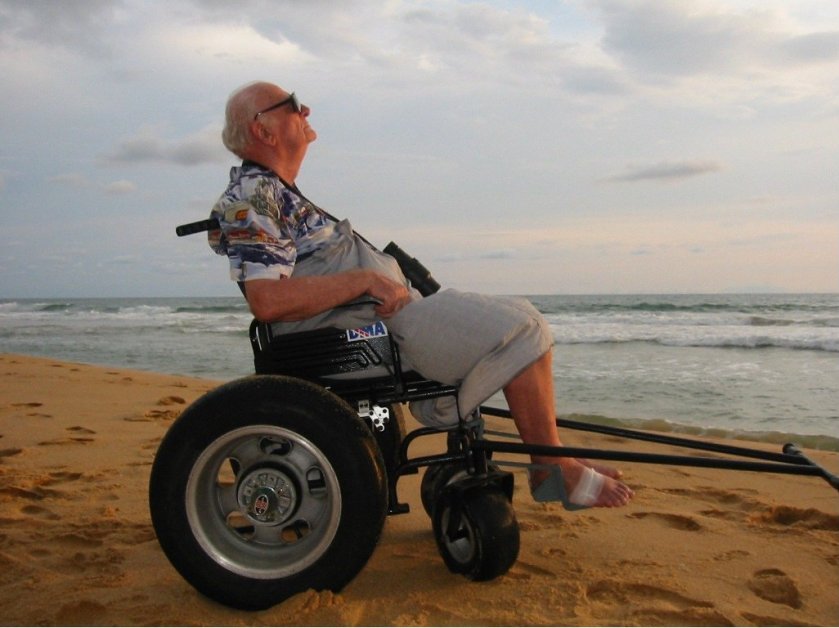
Sir Arthur Clarke revisits Hikkaduwa beach in souther Sri Lanka in his custom-made Dune Roller, circa 2005 ශ්රීමත් ආතර් සී. ක්ලාක්ගේ 95 වන ජන්ම සංවත්සරය අදට යෙදෙනවා.
Tribute published in Ceylon Today newspaper on 13 Dec 2012:
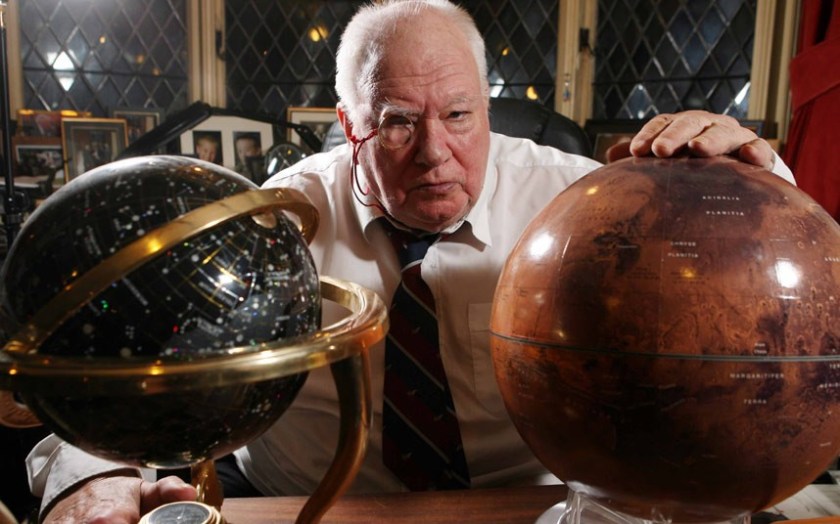
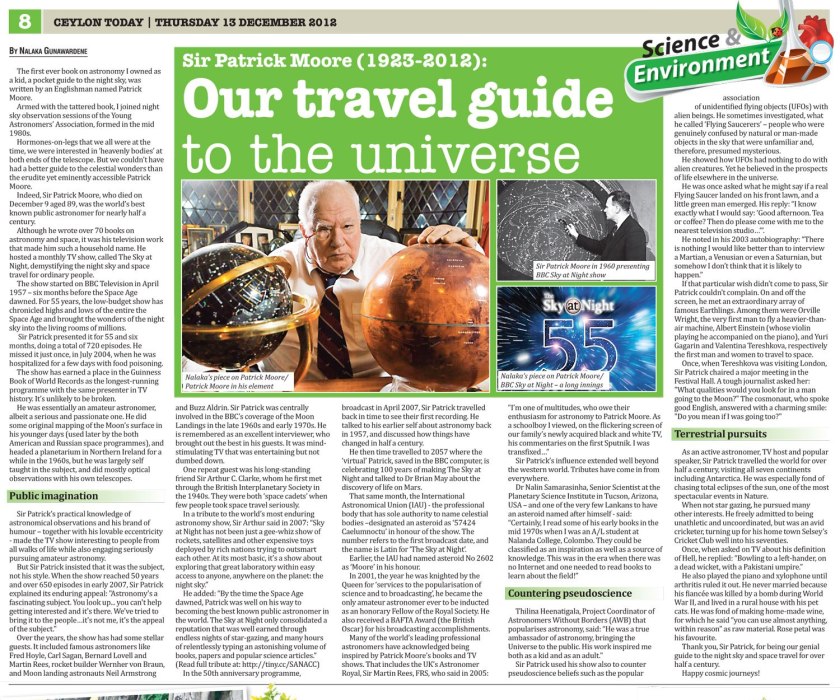
Sir Patrick Moore (1923 -2012): A colourful journey fuelled by enthusiasm
The first ever book on astronomy I owned as a kid, a pocket guide to the night sky, was written by an Englishman named Patrick Moore.
Armed with the tattered book, I joined night sky observation sessions of the Young Astronomers’ Association, formed in the mid 1980s.
Hormones-on-legs that we all were at the time, we were interested in ‘heavenly bodies’ at both ends of the telescope. But we couldn’t have had a better guide to the celestial wonders than the erudite yet eminently accessible Patrick Moore.
Indeed, Sir Patrick Moore, who died on December 9 aged 89, was the world’s best known public astronomer for nearly half a century.
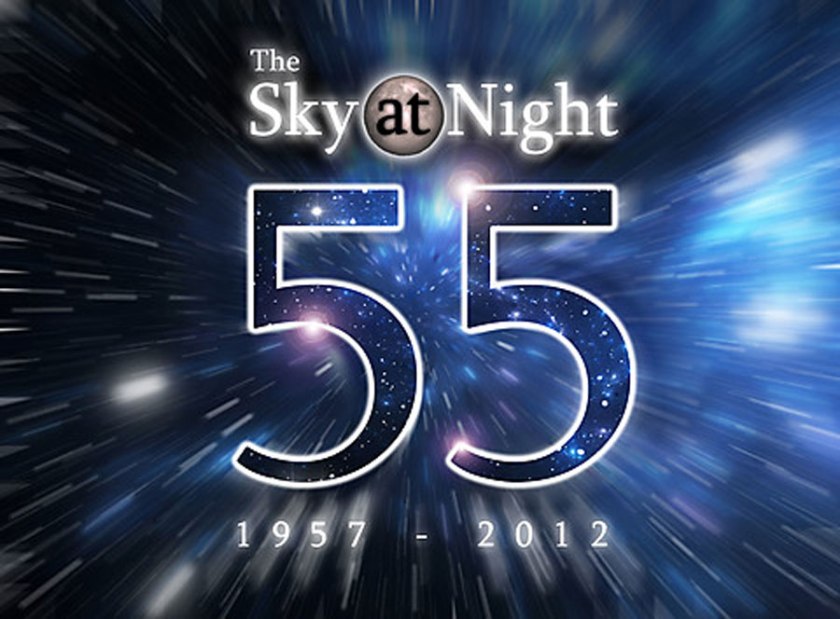
Although he wrote over 70 books on astronomy and space, it was his television work that made him such a household name. He hosted a monthly TV show, called The Sky at Night, demystifying the night sky and space travel for ordinary people.
The show started on BBC Television in April 1957 – six months before the Space Age dawned. For 55 years, the low-budget show has chronicled highs and lows of the entire the Space Age and brought the wonders of the night sky into the living rooms of millions.
Sir Patrick presented it for 55 and six months, doing a total of 720 episodes. He missed it just once, in July 2004, when he was hospitalized for a few days with food poisoning.
The show has earned a place in the Guinness Book of World Records as the longest-running programme with the same presenter in TV history. It’s unlikely to be broken.
He was essentially an amateur astronomer, albeit a serious and passionate one. He did some original mapping of the Moon’s surface in his younger days (used later by the both American and Russian space programmes), and headed a planetarium in Northern Ireland for a while in the 1960s, but he was largely self taught in the subject, and did mostly optical observations with his own telescopes.
Public Imagination
Sir Patrick’s practical knowledge of astronomical observations and his brand of humour – together with his lovable eccentricity — made the TV show interesting to people from all walks of life while also those engaging seriously pursuing amateur astronomy.
But Sir Patrick insisted that it was the subject, not his style. When the show reached 50 years and over 650 episodes in early 2007, Sir Patrick explained its enduring appeal: “Astronomy’s a fascinating subject. You look up… you can’t help getting interested and it’s there. We’ve tried to bring it to the people…it’s not me, it’s the appeal of the subject.”
Over the years, the show has had some stellar guests. It included famous astronomers like Fred Hoyle, Carl Sagan, Bernard Lovell and Martin Rees, rocket builder Wernher von Braun, and Moon landing astronauts Neil Armstrong and Buzz Aldrin.
Sir Patrick was centrally involved in the BBC’s coverage of the Moon Landings in the late 1960s and early 1970s. He is remembered as an excellent interviewer who brought out the best in his guests. It was mind-stimulating TV that was entertaining but not dumbed down.
One repeat guest was his long-standing friend Sir Arthur C Clarke, whom he first met through the British Interplanetary Society in the 1940s. They were both ‘space cadets’ when few people took space travel seriously.
In a tribute to the world’s most enduring astronomy show, Sir Arthur said in 2007: “Sky at Night has not been just a gee-whiz show of rockets, satellites and other expensive toys deployed by rich nations trying to outsmart each other. At its most basic, it’s a show about exploring that great laboratory within easy access to anyone, anywhere on the planet: the night sky.”
He added: “By the time the Space Age dawned, Patrick was well on his way to becoming the best known public astronomer in the world. The Sky at Night only consolidated a reputation that was well earned through endless nights of star-gazing, and many hours of relentlessly typing an astonishing volume of books, papers and popular science articles.”
In the 50th anniversary programme, broadcast in April 2007, Sir Patrick travelled back in time to see their first recording. He talked to his earlier self about astronomy back in 1957, and discussed how things have changed in half a century.
He then time travelled to 2057 where the ‘virtual’ Patrick, saved in the BBC computer, is celebrating 100 years of making The Sky at Night and talked to Dr Brian May about the discovery of life on Mars.
That same month, the International Astronomical Union (IAU) — the professional body that has sole authority to name celestial bodies –designated an asteroid as “57424 Caelumnoctu” in honour of the show. The number refers to the first broadcast date, and the name is Latin for “The Sky at Night”.
Earlier, the IAU had named asteroid No 2602 as “Moore” in his honour.
In 2001, the year he was knighted by the Queen for “services to the popularisation of science and to broadcasting”, he became the only amateur astronomer ever to be inducted as an honorary Fellow of the Royal Society. He also received a BAFTA Award (the British Oscar) for his broadcasting accomplishments.
Many of the world’s leading professional astronomers have acknowledged being inspired by Patrick Moore’s books and TV shows.
That includes the UK’s Astronomer Royal, Sir Martin Rees, FRS, who said in 2005: “I’m one of multitudes who owe their enthusiasm for astronomy to Patrick Moore. As a schoolboy I viewed, on the flickering screen of our family’s newly acquired black and white TV, his commentaries on the first Sputnik. I was transfixed…”
Sir Patrick’s influence extended well beyond the western world. Tributes have come in from everywhere.
Dr Nalin Samarasinha, Senior Scientist at the Planetary Science Institute in Tucson, Arizona, USA – and one of the very few Lankans to have an asteroid named after himself — said: “Certainly, I read some of his early books in the mid 1970s when I was an A/L student at Nalanda College, Colombo. They could be classified as an inspiration as well as a source of knowledge. This was in the era when there was no Internet and one needed to read books to learn about the field!”
Thilina Heenatigala, Project Coordinator of Astronomers Without Borders (AWB) that popularises astronomy, said: “He was a true ambassador of astronomy, bringing the Universe to the public. His work inspired me both as a kid and as an adult.”
Countering Pseudoscience
Sir Patrick used his show also to counter pseudoscience beliefs such as the popular association of unidentified flying objects (UFOs) with alien beings. He sometimes investigated what he called ‘Flying Saucerers’ – people who were genuinely confused by natural or man-made objects in the sky that were unfamiliar and, therefore, presumed mysterious.
He showed how UFOs had nothing to do with alien creatures. Yet he believed in the prospects of life elsewhere in the universe.
He was once asked what he might say if a real Flying Saucer landed on his front lawn, and a little green man emerged. His reply: “I know exactly what I would say: ‘Good afternoon. Tea or coffee? Then do please come with me to the nearest television studio…’”.
He noted in his 2003 autobiography: “There is nothing I would like better than to interview a Martian, a Venusian or even a Saturnian, but somehow I don’t think that it is likely to happen.”
If that particular wish didn’t come to pass, Sir Patrick couldn’t complain. On and off the screen, he met an extraordinary array of famous Earthlings. Among them were Orville Wright, the very first man to fly a heavier-than-air machine, Albert Einstein (whose violin playing he accompanied on the piano), and Yuri Gagarin and Valentina Tereshkova, respectively the first man and women to travel to space.
Once, when Tereshkova was visiting London, Sir Patrick chaired a major meeting in the Festival Hall. A tough journalist asked her: “What qualities would you look for in a man going to the Moon?” The cosmonaut, who spoke good English, answered with a charming smile: “Do you mean if I was going too?”
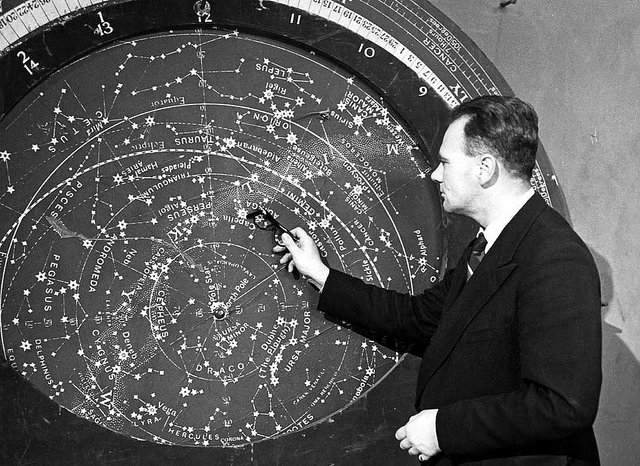
A younger Patrick Moore presenting BBC Sky at Night show around 1960
Terrestrial Pursuits
As an active astronomer, TV host and public speaker, Sir Patrick travelled the world for over half a century, visiting all seven continents including Antarctica. He was especially fond of chasing total eclipses of the sun, one of the most spectacular events in Nature.
When not star gazing, he pursued many other interests. He freely admitted to being unathletic and uncoordinated, but was an avid cricketer, turning up for his home town Selsey’s Cricket Club well into his seventies.
Once, when asked on TV about his definition of Hell, he replied: “Bowling to a left-hander, on a dead wicket, with a Pakistani umpire.”
He also played the piano and xylophone until arthritis ruled it out. He never married because his fiancée was killed by a bomb during World War II, and lived in a rural house with his pet cats. He was fond of making home-made wine, for which he said “you can use almost anything, within reason” as raw material. Rose petal was his favourite.
Thank you, Sir Patrick, for being our genial guide to the night sky and space travel for over half a century.
Happy cosmic journeys!
Sir Patrick Moore tribute by Nalaka Gunawardene, Ceylon Today, 13 Dec 2012
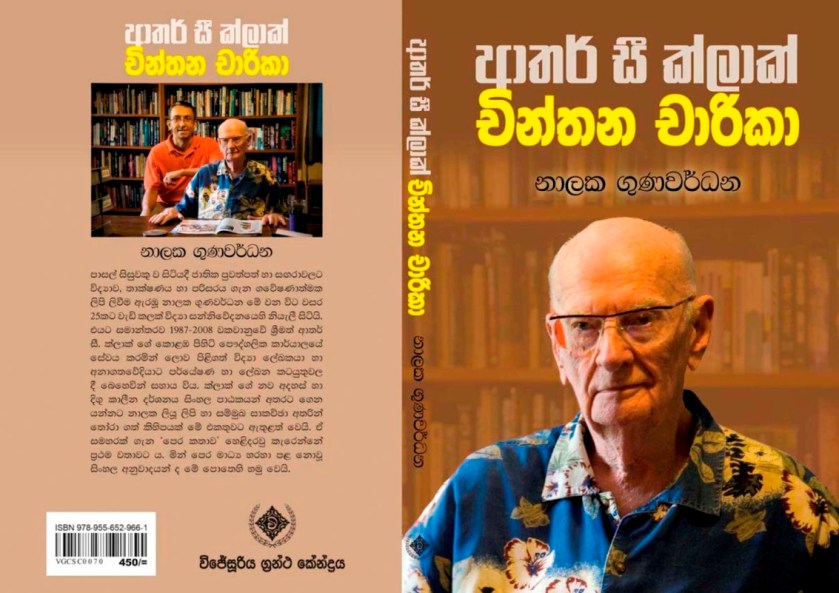
Arthur C Clarke Chintana Charika – Sinhala Book of essays and interviews by Nalaka Gunawardene (Wijesooriya Book Centre, Colombo, 2012). Cover photos by Shahidul Alam, Drik
In a literary career spanning over six decades, Sir Arthur C Clarke (1917 – 2008) wrote 100 books and more than 1,000 short stories and essays. He was the first to propose geostationary communications satellites, and inspired the World Wide Web.
To mark his 95th birth anniversary which falls this month, science writer Nalaka Gunawardene is releasing a new Sinhala book offering a quick tour of Clarke’s imagination, analyses and extrapolations on the world’s current challenges and our choice of futures.
Titled ‘Arthur C Clarke Chintana Charika’ (Mind Journeys with Arthur C Clarke), the book is a collection of Nalaka’s articles, media columns and interviews based on the late author and visionary’s formidable intellectual output. Some have appeared in Lankan newspapers or magazines during the past 25 years, while others are coming out in print for the first time.
“These are not translations, and most are not even adaptations. Instead, I have distilled Sir Arthur’s ideas and imagination and presented them in simple Sinhala,” says Nalaka, who worked with Clarke for 21 years as research associate at his personal office in Colombo.
Indicative of Clarke’s diverse career and interests, the book is divided into five sections: highlights of his illustrious life; astronomy and space travel; information and communications technology; futuristic visions; and his long association with Sri Lanka.
“Sir Arthur cheered and promoted Sri Lanka for half a century – in both good times and bad. The section on Sri Lanka captures his visions and hopes for his adopted homeland: on how we may overcome the burdens of evolution and history to create a truly peaceful and prosperous island for all,” says Nalaka.
The book contains Clarke’s advice on rebuilding Sri Lanka after the 2004 tsunami, the story of the first Sinhala feature film in colour (Ran Muthu Duwa, 1962) that Clarke financed, and the text of his 90th birthday video, which eventually became his public farewell.
Other essays focus on Clarke’s cautious optimism for information society and the future of artificial intelligence, his hopes of developing clean energy sources to end humanity’s addiction to fossil fuels, and his advocacy of a world free of nuclear weapons.
Nalaka reiterates that the best way to celebrate the legacy of Arthur C Clarke is to adapt his ideas for a better world based on knowledge, ethics, compassion and imagination.
The 280-page book, published by Wijesooriya Grantha Kendraya (Wijesooriya Book Centre), will be launched at 3 pm on Tuesday, 18 December 2012 at the National Library Services and Documentation Board, 14, Independence Avenue, Colombo 7. The main speaker will be Prof Rohan Samarajiva, Chair and CEO of LIRNEasia. Copies will be sold on discount at the launch.
Text of my ‘When Worlds Collide’ column published in Ceylon Today Sunday newspaper on 9 December 2012
Paul Hermann Müller (1899 – 1965) was a Swiss chemist. He won the 1948 Nobel Prize in physiology (medicine) for his 1939 discovery of DDT’s insecticidal qualities and its use in controlling disease carrying mosquitoes.
That knowledge was soon put to wide use. DDT was sprayed during the latter part of World War II to contain malaria and typhus among troops and civilians, and then adopted as an agricultural insecticide.
Christopher William Wijekoon (CWW) Kannangara (1884 – 1969) was a Lankan lawyer, legislator and effectively the country’s first minister of education during the pre-independence era. In the mid 1940s, he introduced far reaching reforms in that sector, enabling children from all levels of society to study from kindergarten to (and including) university level for free.
It’s unlikely that Müller and Kannangara ever met…
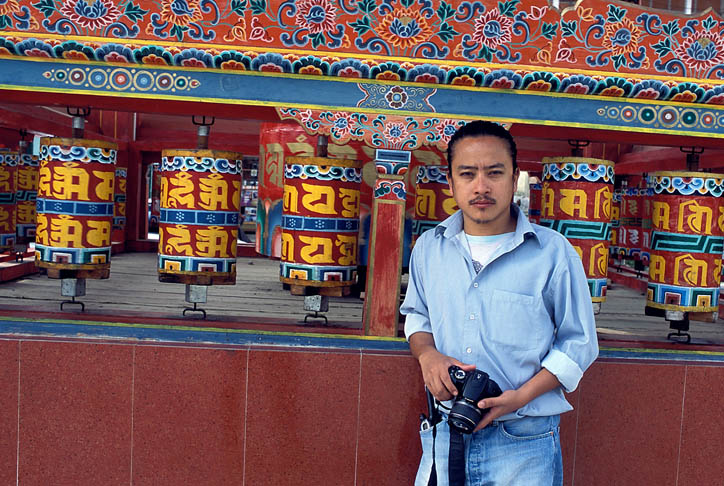
In this week’s Ravaya column (in Sinhala), I write about an Indian friend of mine: Moji Riba, filmmaker and cultural anthropologist, who lives and works in India’s north-eastern Arunachal Pradesh.
It’s an isolated remote and sparsely populated part of the country that is home to 26 major tribal communities,. Each one has its own distinctive dialect, lifestyle, faith, traditional practices and social mores. They live side by side with about 30 smaller communities.
A combination of economic development, improved communications, the exodus of the young and the gradual renunciation of animist beliefs for mainstream religions threatens Arunachal’s colourful traditions. “It is not my place to denounce this change or to counter it,” says Moji. “But, as the older generation holds the last link to the storehouse of indigenous knowledge systems, we are at risk of losing out on an entire value system, and very soon.”
For the past 15 years, he has been documenting it on video and photos. Read my English blogposts about him in Nov 2008 and Jan 2009.
I caught up with him in Delhi last week, which inspired this column.
Moji Riba has been working since 1997 to document Arunachal Pradesh's rich cultural heritage. Image courtesy Rolex Awards
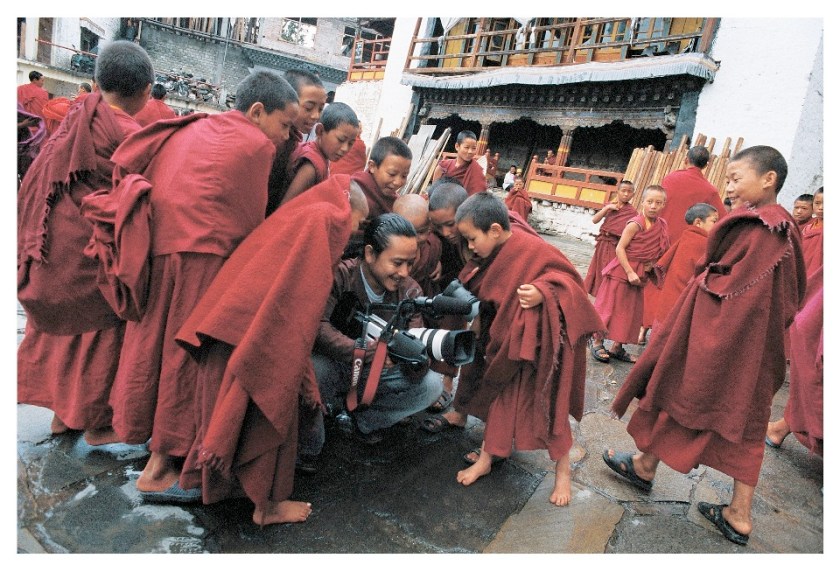
Surrounded by young monks, Moji Riba films rituals celebrating Buddha’s birth at Galden Namgyal Lhatse monastery. Tawang, Arunachal Pradesh, India, 2008 (Photo courtesy Rolex Awards)
සංස්කෘතික පර්යේෂණ හා ලේඛනගත කිරීමේ කේන්ද්රය (Centre for Cultural Research and Documentation, CCRD) අරඹමින් තවත් ඔහු වැනි ම කිහිප දෙනෙකු සමඟ ප්රාන්තයේ ජන සංස්කෘතිය ගැන වීඩියෝ වාර්තා චිත්රපට නිපදවීම ඇරඹුවා.
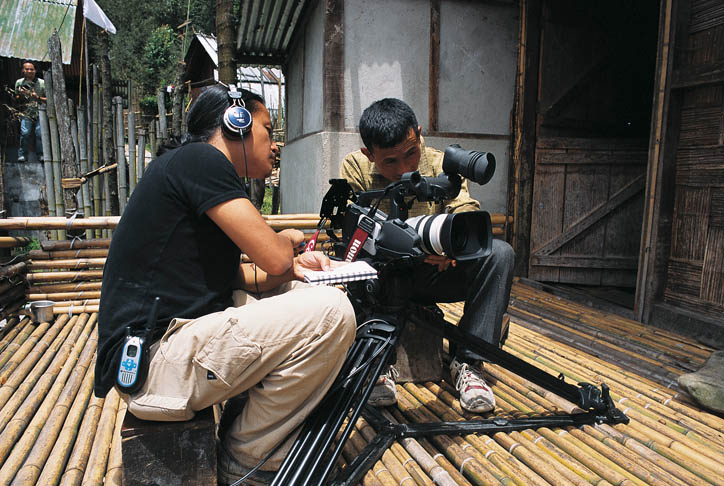
Riba teaches Hage Komo the basic camera skills that will allow the young Apatani to film an interview with his father and an animist priest, thus recording his tribe's oral history (Photo courtesy Rolex Awards)
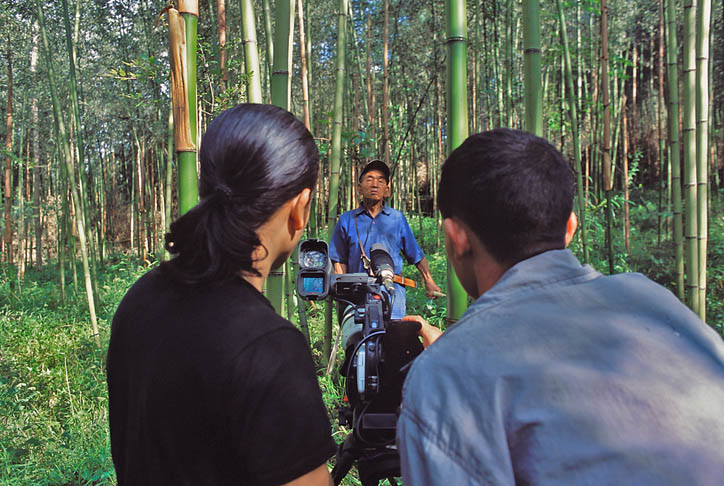
Hage Komo gets video instructions from Moji Riba, who is enlisting local young people to capture the oral histories, languages and rituals of their tribes for his project. Komo films his father gathering bamboo in a grove outside Hari Village. (Photo courtesy Rolex Awards)
Text of my ‘When Worlds Collide’ column published in Ceylon Today Sunday newspaper on 2 December 2012
Vaccines have been called ‘travel insurance for life’ – their life-saving and life-enhancing capability is second only to that of safe drinking water.
We have had modern vaccines only for a couple of centuries and now take their protection completely for granted. But not everyone is covered – some vaccines are still beyond the reach of millions in the developing world because of cost, or the logistics of getting it across.
Most vaccines are fragile bio products that need to be stored at a temperature of between 2 and 8 degrees centigrade, from the time they are made to the point of administration. Any disruption in this ‘cold chain’ can reduce efficacy or make them invalid.
Even as new vaccines are being introduced against various diseases, delivering them safely to those who need…
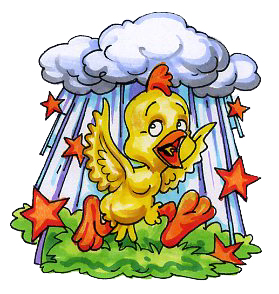 “The sky is falling, the sky is falling!”
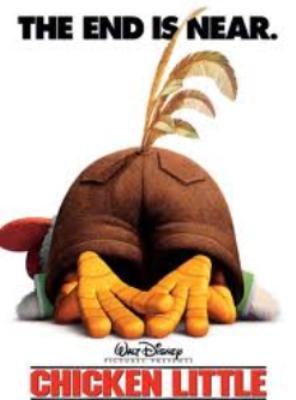 Ah, but our intrepid media won’t allow such facts to get in the way of a good story, or reality checks to hold down their run-away imagination. Fear and panic sell newspapers, and keep TV ratings high…
 Open Minds!