Text of my ‘When Worlds Collide’ column published in Ceylon Today broadsheet newspaper on 14 February 2014
Coastal challenges of South Asia – courtesy Down to Earth Magazine, CSE
Many different worlds collide on the coast – both literally and metaphorically.
Coasts are where land meets the sea. A precise coastline cannot be fixed because tides and wave action keep it dynamic. Hence the term ‘coastal zone’ for the wider interactive area where natural and human actions take place.
Coasts are also where survival and livelihood pursuits co-exist – and often compete – with recreational activity. Throw in important ecosystems such as mangroves and coral reefs, and key infrastructure like ports and power plants, and collisions are almost inevitable.
Cartoon by Popa Matumula – Courtesy Cartoon Movement
“To garner public support for their causes, the development community must connect with rest of society using everyday phrases, metaphors and images. That is a far better strategy than expecting everyone to understand their gobbledygook.”
This is the central argument in my latest op-ed essay, just published on the Communication Initiative blog.
Titled Crossing the ‘Dev-Code’ Divide, I revisit a theme familiar to my regular readers: getting development pr0fessionals to communicate better.
Another excerpt:
“After working with technological ‘geeks’ and development workers for many years, I know they have at least one thing in common: their own peculiar languages that don’t make much sense to the rest of us.
“Talking in code is fine for peer-to-peer conversations. But it’s a nonstarter for engaging policy makers and the public.”
This essay is a tribute to my mentor and former colleague Robert Lamb (1952 – 2012), who was a grandmaster in communicating development to public and policy audiences using simple language and powerful imagery.
Working with Robert for 15 years, I saw how he brought seemingly dreary development issues alive on TV and video – dominant media of his time — through simple and sincere story telling. He mixed inter-governmental processes with stark ground level realities. In three decades he produced or commissioned hundreds of international TV documentaries exploring what sustainable development meant in the real world.
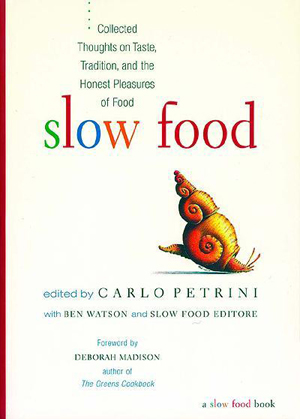
In this week’s Ravaya column (in Sinhala), I continue my exploration of the global Slow Movement, which started with Slow Food in Italy in 1986, originally as a defiance of fastfood. It has since inspired other pursuits of doing things more reflectively and deliberately slowly – such as Slow Cities, Slow Reading, Slow Travel and Slow Art.
In this week’s Ravaya column (in Sinhala), I discuss the merits of Slow Food, a concept that originated from Italy in 1986 in defiance of fastfood — but has since grown into a worldwide social movement that critiques industrialised food production and consumption. It has also inspired other pursuits of doing things more reflectively and deliberately slowly – such as Slow Cities, Slow Reading, Slow Travel and Slow Art.
Go organic! That call is heard increasingly in Sri Lanka, which has been late to get on this bandwagon. Much of the island nation’s organically produced fruit, spices and vegetables was exported to high-paying overseas markets until recently. But concerned with health effects of agrochemical residues in the good, more Lankans are now looking for organic products.
Is this an upper middle class fad, or can organic food become the mainstream? What about the significant price difference? What assurance of quality and where are the certification schemes?
In my latest Ravaya column (in Sinhala), I survey the small but rapidly growing organic produce market in Sri Lanka, and raise some questions that need regulatory and consumer attention.
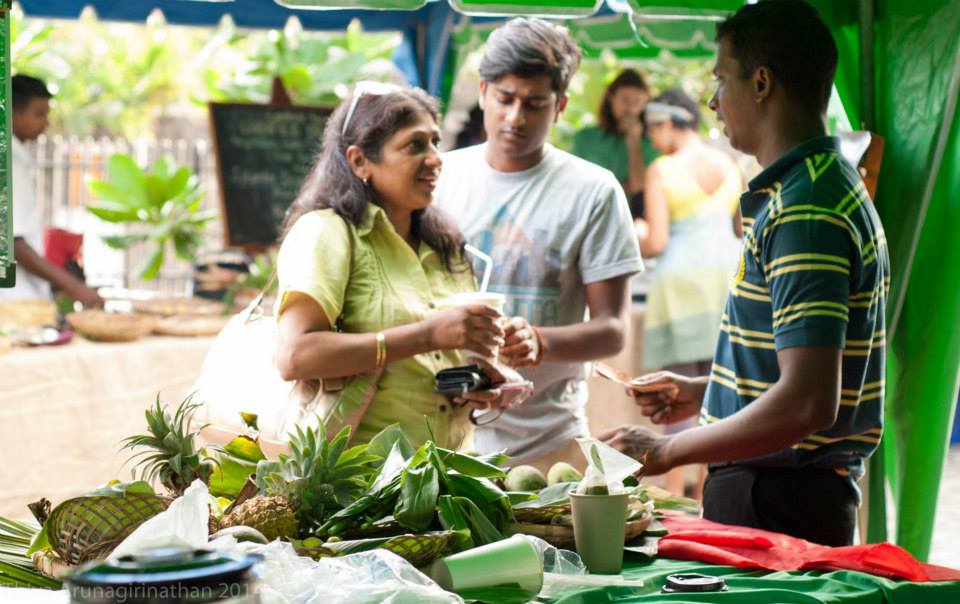
Sri Lanka is evolving its own demand for organic produce, as seen at the Good Market in Colombo and Battaramulla – image courtesy Good Market Facebook page
High inputs to make high yields – at a heavy price
“For sure, the double-edged legacy of the Green Revolution which promoted high external inputs in agriculture must be critiqued. Past mistakes can be rectified at least now.
“However, corrections have to begin upstream by questioning macro-level policies. For example, for half a century, Lankan farmers have had a huge — 90 per cent — state subsidy on chemical fertilisers. This does not encourage thrifty use, yet successive governments have hesitated to fix the massive drain of taxpayer funds.
“Thus, mass kidney failure is more than just a public health emergency or environmental crisis. It is symptomatic of cascading policy failures in land care, water management and farming over decades.”
This is an excerpt from the first of a monthly series of analysis blogs (columns) I will be writing for SciDev.Net in 2014.
Titled “Going upstream for lasting kidney disease remedies“, the first essay looks at the broader implications of a chronic kidney disease that is spreading in India and Sri Lanka for which medical and other researchers still cannot pinpoint a specific cause.
I have been writing and broadcasting about this public health issue for sometime, and have listened (or interviewed) most key players on the Lankan side of the investigation. In this opinion essay, I look at the policy dilemmas and healthcare challenges posed by Chronic Kidney Disease of uncertain aetiology, or CKDu.
I argue: “There are no quick fixes. In searching for solutions, health and environmental activists must rise above their single-issue advocacy positions. They can bring grassroots concerns to national debates. Collaboration – not confrontation or conspiracy theories – is the need of the hour.
“Hijacking a human tragedy for scoring some debating points is not worthy of any true follower of Rachel Carson.”
News feature published in Ceylon Today broadsheet newspaper, 23 January 2014
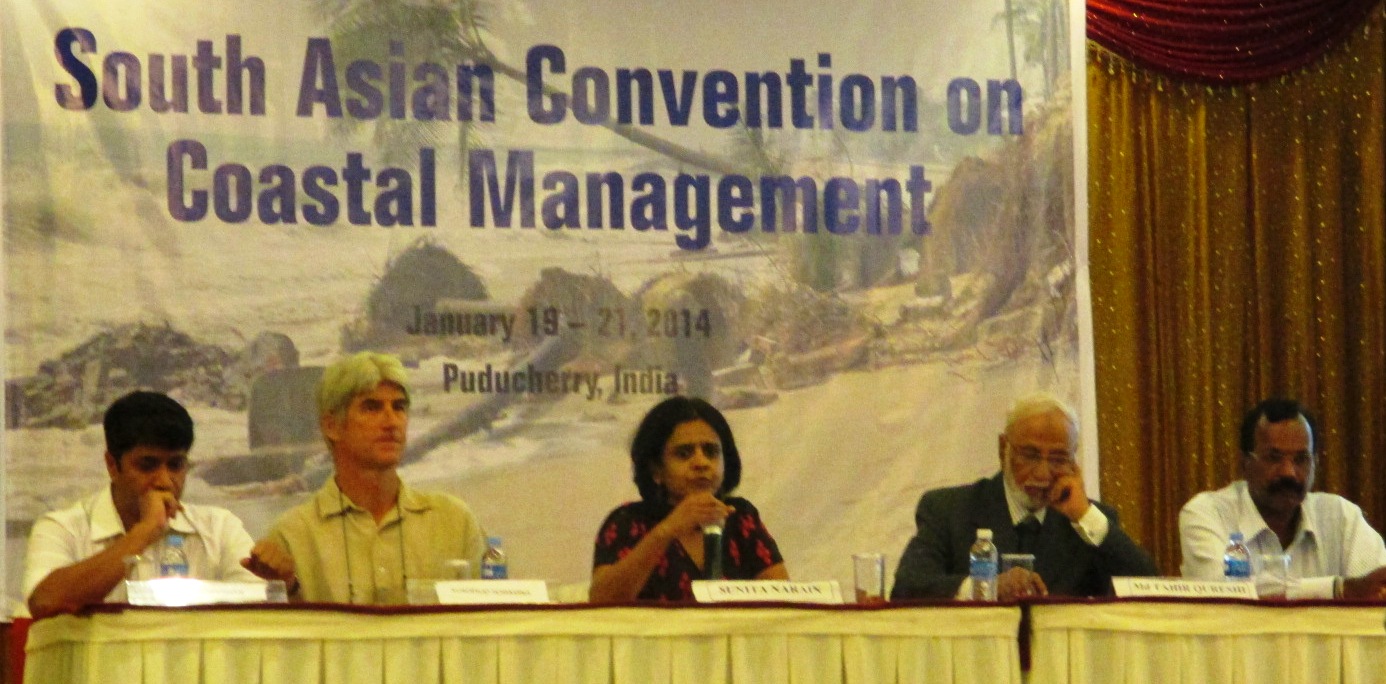
South Asia Coastal Management Convention in Pondicherry – L to R Chandra Bhushan, Aurofilio Schiavina, Sunita Narain, Tahir Qureshi, Anil Premaratne
South Asian Coasts Reeling Under Pressure
By Nalaka Gunawardene in Pondicherry, India
As economic development gathers pace in South Asia, its coastal regions are coming under pressure as never before. More ports, power plants and tourist resorts are jostling with fishermen and farmers.
Balancing livelihoods, economic growth and environmental conservation is the only way to avoid a major resource crisis, acknowledged participants at the South Asia Convention on Coastal Management held in Pondicherry, India, from 19 to 21 January 2014.
Over 70 senior government officials, researchers, civil society activists and journalists from Bangladesh, India, Maldives, Pakistan and Sri Lanka came together for this event, organised by Delhi-based Centre for Science and Environment (CSE) and Pondicherry-based citizen group, PondyCAN.
They reported how a disproportionately high share of South Asia’s industrialisation, urbanisation and tourism development is concentrated along its combined 11,240 km of coastline. In total, coastal areas support livelihoods of some 400 million South Asians through fisheries, tourism and other activities.
In many parts of the region, high population density exists alongside sensitive ecosystems – such as mangroves and coral reefs and river estuaries. This intensifies the challenge of managing coastal resources. Climate change impacts, already felt as extreme weather events, add to these pressures.
Participants discussed strategies for regulating coastal development, protecting coastal habitats and coping with climate change.
They agreed on the urgent need for improving scientific understanding of coastal regions, which begins with clearly defining, demarcating and mapping such areas. Evidence based policy making and effective regulation depend on such a knowledge base, currently lacking or inadequate.
“There is a need to strengthen regulatory systems, build capacity and do more research to better manage coastal challenges in South Asia,” said Sunita Narain, Director General of CSE.
In CSE’s view, she said, the most important intervention is to strengthen existing institutions to get them to deliver with greater transparency and accountability.
She added: “We need to balance conservation with benefits to local communities. We also need partnerships between conservation, development and livelihoods without which coastal resource management is not possible in a region like South Asia”.
Only such an approach can reconcile the many pressures faced by South Asia’s maritime countries including poverty, depleting resources, increasing hazards and large scale enterprises seeking quick profits from the coastal resources.
“We need to make sure these plans incorporate climate change to make them more meaningful to countries like ours,” he added.
Large scale infrastructure development projects are adding to other pressures. India – which already has 202 commercial ports and 27 thermal power plants on its coastline – is planning another 76 ports and 59 power plants. Over 70% of Sri Lanka’s tourist hotels are located in the coastal zone, with more coming up. The scramble for the coast is increasing in other countries, too.
Meanwhile, over two thirds of the world’s ship breaking takes place on open beaches in Bangladesh, India and Pakistan with little regard for worker health or environmental pollution. It is a highly hazardous industry with lucrative returns for operators.
Participants agreed on the need for the South Asian countries to share experiences and approaches and to learn from each other.
Premaratne pointed out that laws and regulations are just one strategy for better managing coastal areas. Other strategies include awareness raising and public education, and the involvement of local communities in resource management and benefit sharing.
Participants also stressed the need for placing all scientific information and maps in the public domain. Right now, these are often trapped in state agencies or research institutes, with no easy access to researchers or other citizens.
Probir Banerjee, President PondyCAN, stressed that the “worst affected are the people living at the margins and the objective has to be to enhance livelihoods, and not compromise them.”
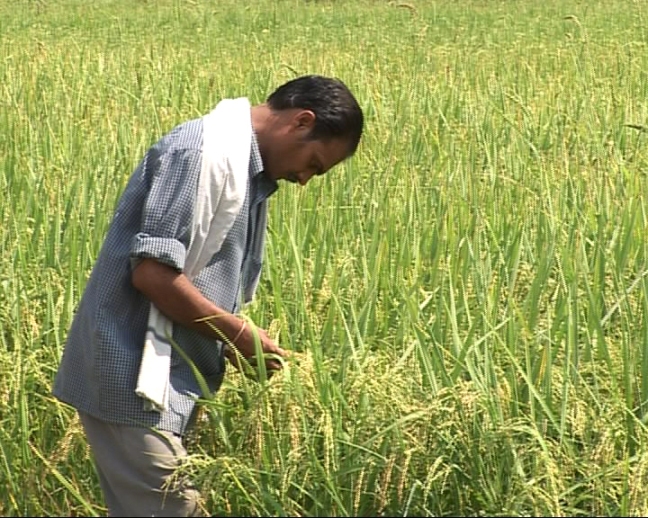
In this week’s Ravaya column, I feature Indian agricultural scientist and activist Dr Anupam Paul, who is committed to organic farming and preserving traditional varieties of rice (folk rice).
He was in Colombo in December 2013 when I had an interesting interview on the uphill struggle to sustain in-situ conservation efforts working with a handful of committed farmers who still grow folk rice varieties instead of hybrid ones promoted by the Green Revolution.