ELCA prototype built by Nilanga Senevirathne Epa 2012
Malima (New Directions in Innovation) is a Sinhala language TV series on science, technology and innovation. This episode was produced and first broadcast by Sri Lanka’s Rupavahini TV channel on 10 May 2012.
Produced by Suminda Thilakasena and hosted by science writer Nalaka Gunawardene, this episode features three stories:
• REVA meets ELCA! Indian-made compact electric car REVA has been on the market for a decade. Now, a young Lankan has made a home-grown version. Nilanga Senevirathne Epa’s ELCA (short for Electric Car) is a two-door, two-seater ideal for city and suburban running; it can reach speeds of up to 60 km per hour. Over 60% of the car is made locally but the motor and battery are imported from Japan. When fully charged, its lead-acid batteries can power the car for 80 to 100 km on — recharging can be done at home by connecting it to 5 Amp ordinary power outlet for 8 hours. Nilanga is now working with a leading company to mass produce ELCA for the local market. Next target: make batteries locally to sell them cheaper. If all goes well, ELCA should be running on Lankan roads before end 2013.
• Ride, pack and go! Nearly two centuries after the bicycle was invented, they are still innovating with it. We bring you an international story about a bicycle that can be folded up and carried in a case!
• Dengue mosquitoes, beware! An interview with school boy inventor G A Hirun Dhananjaya Gajasinghe, of Ruwanwella Rajasinghe Central School, who has designed a device with which gutters can be remotely turned upside down for easy cleaning. By emptying water and leaf debris collecting in gutters without having to climb to the roof, this invention can help in the battle against dengue-carrying mosquitoes – a formidable public enemy in many parts of Sri Lanka. This comes just in time for the rainy season!
Malima (New Directions in Innovation) is a Sinhala language TV series on science, technology and innovation. This episode was produced and first broadcast by Sri Lanka’s Rupavahini TV channel on 9 February 2012.
Produced by Suminda Thilakasena and hosted by science writer Nalaka Gunawardene, it is a magazine style programme. This episode features:
• An interview with versatile Lankan inventor Niranjan Weerakoon, who has several patents and won many awards. We take a quick look at his motorised bicycle (moped) already on the roads, as well as his coconut plucking machine, research on generating electricity from sea waves, and Lakro – the energy efficient wood stove he has recently introduced to the local market.
• The Wright Brothers were indefatigable inventors. What lessons can today’s inventors learn from their pursuit of building and flying the first successful aircraft in 1903?
• The dance of the dung beetle has long amused insect watchers. Researchers at Lund University in Sweden say the beetles use their circular strut as a corrective navigation system when moving dung balls away from the pile. This could inspire the design of future robots. More at: http://www.sciencedaily.com/releases/2012/01/120119101555.htm
• Interview with young inventor Pasindu Paveetha Ranawaka, age 8, a student of Vidyartha College, Kandy. He has invented a battery-operated electric pen that creates unusual lines and shapes. Can anyone become an artist with such a pen in hand? We experiment to find out.
Malima (New Directions in Innovation) is a Sinhala language TV series on science, technology and innovation produced and first broadcast by Sri Lanka’s Rupavahini TV channel on 26 January 2012.
Produced by Suminda Thilakasena and hosted by science writer Nalaka Gunawardene, it is a half-hour show in magazine style.
• An interview with engineering student W Rakitha Brito who has invented several tools and robots for use in the aviation industry
• A glimpse of the ‘pehi pattalaya’, an ancient Lankan technology for extracting medicinal oil from various seeds
• Why doesn’t the woodpecker get headaches after a hard day’s work? Scientists who probed this have come up with new technology to prevent injury in accidents.
• Interview with young inventor Jayashanka Dushan, 17, a student of Bomiriya National School in Kaduwela, on his invention of simplified, low-cost and energy efficient traffic light using LEDs
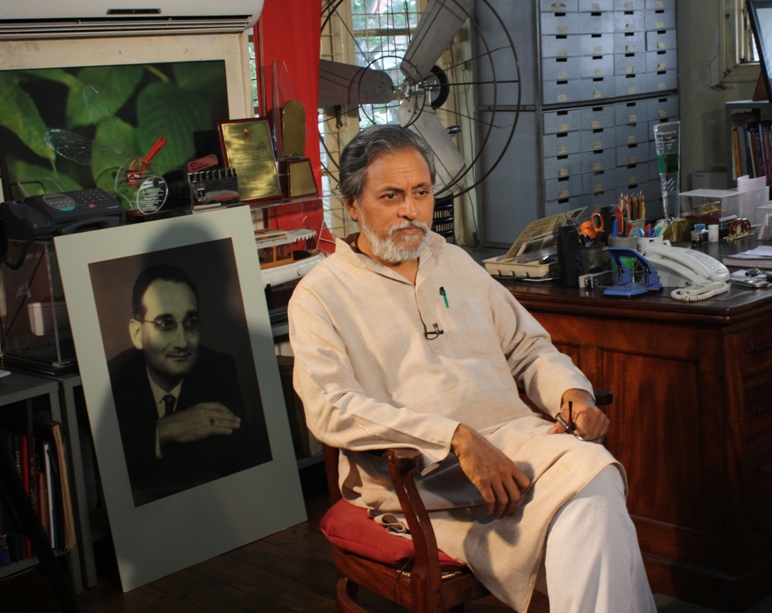
Prof Anil Gupta sits in the Colombo study of late Dr Ray Wijewardene - photo by Anisha Gooneratne
What does an inventor look like?
A nerdy kid in glasses and a white coat, tinkering perilously in a lab? Or a tightly-focused technician toiling away in a greasy workshop?
Perhaps. But most innovators are ordinary people moving among us. For the most part, they are unnoticed and unsung as they try to crack problems that have engaged their attention — or frustrated them for too long.
At one level, many of us improvise everyday for personal gain — to save money, lighten our workload or boost yields. Only a few take it to a higher level. They are unhappy with the status quo. They probe how things work and speculate how it can improve. They tackle problems that daunt most.
Spotting them isn’t easy. Such innovators may come from any social, educational or cultural background but they all march to the beat of a different drum. While education and training help, some of the most successful inventors in history were entirely self-taught.
The late Ray Wijewardene was one quintessential ‘tinkerer’ who led a life-long quest to solve practical problems and improve the quality of life – for himself, those around him, and society at large. He left his mark in agriculture, engineering design, renewable energy, transport and aviation. Just as importantly, he nurtured other innovators to go after nagging problems. A firm believer in trial and error, he encouraged constant experimentation.
Ray’s spirit of enquiry and enterprise was rekindled this week when one of the world’s leading innovation-spotters delivered the inaugural Ray Wijewardene Memorial Lecture in Colombo.
With inspiring examples and illustrations, Gupta emphasized that grassroots innovations can provide a new ray of hope – if we let them grow.
Speaking of his own country’s experience, he said: “Outside of India’s major cities, unsung heroes of the country are solving, or trying to solve, local problems in spite of the structures that have bypassed them so far. Creativity, compassion and collaboration are the key characteristics of these voices from grassroots. Let’s listen to them and resonate with them!”
And it isn’t just an Indian phenomenon. At the outset, Gupta listed a dozen recent innovations made by Lankans. Some, like the safe kerosene bottle lamp, are widely known but most remain obscure. Yet, all have been authenticated, and many granted patents.
Home-grown inventions
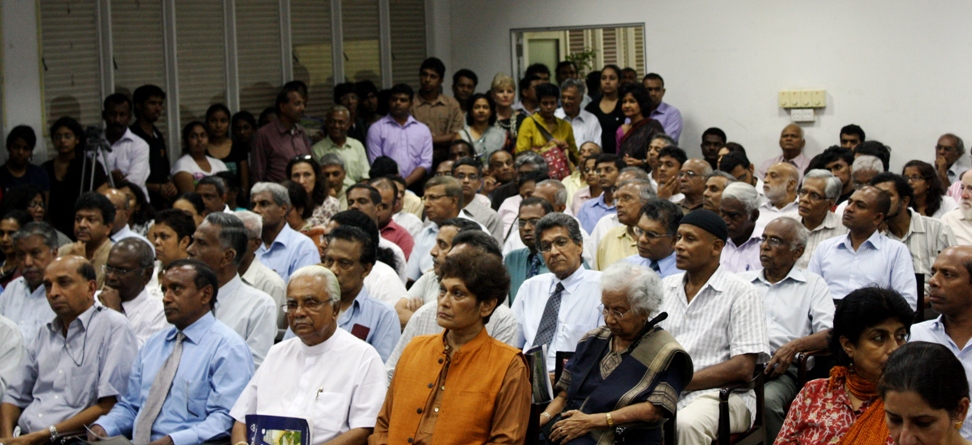
Few among the packed Colombo audience of over 200 seemed to recognise these home-grown innovations — just the point the professor was making.
“You get innovators all over Sri Lanka, but most are not known or recognised even in their own communities,” he said.
To make matters more challenging, most innovators tend to be loners: they are day-dreamers who don’t follow the pack.
“They don’t come to meetings or speak up much. We have to reach out to them, make them feel comfortable and valued,” Gupta added.
His suggestion: Sri Lanka should launch a national effort to discover its own innovators — both technological and social. The media can play a big role in spotting and promoting innovators, as can schools, universities and state agencies with relevant mandates.
But Gupta also had a strong word of caution: “Whatever we do, we must never try to convert these precious ‘odd-balls’ into conformists.”
Ray would surely have applauded. He was an accomplished non-conformist, or maverick, who didn’t fit into the stereotyped academic or engineering circles. Now the Ray Wijewardene Charitable Trust (RWCT), set up to promote his legacy, wants to nurture innovation in Sri Lanka.
The Trust made an auspicious start by inviting Anil Gupta to deliver the first lecture in Ray’s memory. Gupta and Wijewardene were kindred spirits who stayed in touch over the years across the Palk Strait.
Gupta himself defies the standard notion of an academic. He is an unusual professor who walks his talk — and walks through the villages and slums of India in search of innovation. His mission for the past two decades has been to ensure that grassroots innovators receive due recognition, respect and reward for their bright ideas. He also seeks to embed an innovative ethic in educational policy and institutions.
The man doesn’t sit in his campus; he goes innovator-scouting all over India. “In our walks, we move from village to village spotting grassroots innovations and honouring them. We have come across very simple modifications make life easier for people, and also help save natural resources,” Gupta said.
A simple example: at a rural location, he found someone had fitted six tapes on to the outlet of a single water pump. It allowed that many to draw water at the same time, and also reduced pumped up water going waste.
The bicycle is another invention that has been adapted for multiple purposes across India. Genius improvisers are using it for moving on land (and water), generating electricity, helping with the cooking, and even in washing clothes.
The popular Hindi film 3 Idiots featured a pedal-powered washing machine, which was inspired by the invention of a 20-year-old woman from Kerala, Remya Jose. It has since been showcased on Discovery Channel as part of the ‘Indian Innovators’ series of short films.
Part of audience at Ray Wijewardene Memorial Lecture in Colombo, 13 Dec 2011 - photo by Anisha Gooneratne
Benefit sharing
One defining characteristic of such grassroots innovation is that those tinkering are also immediate benefits of any improvements. As Gupta puts it: “From agricultural innovations to the gas-powered iron or pressure-cooker-driven coffee maker, we find that solutions developed by producers who are also users reflect the concerns of both the production and consumption environments.”
Not all inventions need to be earth-shattering. In fact, many aren’t – and that is perfectly fine, says Gupta.
“Even basic improvements in a water pump, for example, can make life easier for millions of people. When we look for design improvements, we should consider not only the benefits to humans, but even to domesticated animals.”
How can society ensure that grassroots innovators not just receive accolades but also get paid for their creative ideas?
Much of innovation related knowledge is ‘open source’ – meaning it has been developed by a number of people collaboratively and non-secretively. But that doesn’t mean their knowledge rights should be trampled with.
Taking out patents is one way to ensure such rights. The Honey Bee network has successfully obtained over 550 patents for grassroots innovations – more than some well-funded laboratories in India! This was made possible by mobilising pro bono lawyers and other volunteers.
The spirit of volunteerism common in Asian cultures can do much to nurture innovation and safeguard intellectual property rights at the same time, Gupta said.
His hope: “The Ray Wijewardene Trust should be able to find public-spirited lawyers in Sri Lanka to emulate the Indian experience.”
And what about glaring gaps that often exist between inventive minds and the ruthless market?
Don’t try to turn every innovator into businessman, Gupta said. “Most innovators are not good entrepreneurs because they are incorrigible improvisers. In many cases, we try to persuade and counsel innovators to work on their products. There are some who do very well, while others take time.”
Instead of trying to turn every inventor into an entrepreneur, we have to create institutions, schemes and networks that bring these two types together – the one who tinker and those who market.
We have to find ways to link innovation with investment and enterprise. Together, these three elements form what Gupta calls the ‘golden triangle’ for grassroots creativity.
Science writer Nalaka Gunawardene is a trustee of the Ray Wijewardene Charitable Trust, and has been profiling Lankan innovators for 25 years.
In this column, which appears in Ravaya newspaper on 30 October 2011, I pay tribute to the late film and TV professional Titus Thotawatte. I recall how he founded and headed the effort to ‘localise’ foreign-produced programmes during the formative years of Sri Lanka’s national TV, Rupavahini, launched in 1982. In particular, I describe how Titus resisted attempts by intellectuals and civil servants to turn the new medium into a dull and dreary lecture room, and insisted on retaining quality entertainment as national TV’s core value.
This is my latest Sinhala column published in Ravaya newspaper on 23 October 2011, which is about human-elephant interactions in Sri Lanka, which has the highest density of Asian elephants in the world. I have covered much of the same ground in English in another recent essay, Chandani: Riding a Jumbo Where No Woman Has Gone Before…
Titus Thotawatte: The Magician
Emmanuel Titus de Silva, who was better known as Titus Thotawatte, was the finest editor in the six decades of the Lankan cinema. He was also a great assimilator and remixer – a ‘builder of bridges’ across cultures, media genres and generations.
Titus straddled the distinctive spheres of cinema and television with a technical dexterity and creativity rarely seen in either one. Both spheres involve playing with sound and pictures, but at different levels of scale, texture and ambition. Having excelled in the craft of making movies in the 1960s and 1970s, Titus successfully switched to television in the 1980s and 1990s. There, he again blaze his own innovative trail in Sri Lanka’s nascent television industry. As a result, my generation remembers him for his television legacy whereas my patents’ generation recall more of his cinematic accomplishments.
Titus left an indelible mark in the history of moving images. The unifying thread that continued from 16mm and 35mm formats in the cine world to U-matic and Betacam of the TV world was his formidable genius for story telling.
Titus de Silva, as he was then known, was a member of the ‘three musketeers’ who left the Government Film Unit (GFU) in the mid 1950s to take their chances in making their own films. The other two were director Lester James Peries and cinematographer Willie Blake. Lester recalls Titus as “an extraordinarily talented but refreshingly undisciplined character” who had been shunned from department to department at GFU “as he was by nature a somewhat disruptive force”!
The trio would go on to make Rekava (Line of Destiny, 1956) – and make history. In his biography by A J Gunawardana, Lester recalls how they were full of self-confidence, “cocky as hell” and determined to overcome the artificiality of studio sets. “We were revolutionaries, shooting our enemies with the camera, and set on changing the course of Sinhala film. In our ignorance, we were blissfully unaware of the hazards ahead – seemingly insurmountable problems we had to face, problems that no book on film-making can ever tell you about!”
In the star-obsessed world of cinema, the technical craftsmen who do the real magic behind the cameras rarely get the credit or recognition they deserve. Editors, in particular, must perform a very difficult balancing task – between the director, with his own vision of how a story should be told, and the audience that fully expects to be lulled into suspending their disbelief. Good editors distinguish themselves as much for what they include (and how) as for what they leave on the ‘cutting room floor’.
The tango between Lester and Titus worked well, both in the documentaries they made while at GFU, and the two feature films they did afterward: Rekava was followed by Sandeshaya (The Message, 1960).
They also became close friends. At his own expense, Titus also accompanied Lester to London where they re-edited and sub-titled Rekava (into French) for screening at the Cannes festival of 1957. As Lester recalls, “Titus was a great source of moral and technical strength to me; his presence was invaluable during sub-titling of the film”.
Titus Thotawatte - photo courtesy biography by Nuwan Nayanajith Kumara
In all, Titus edited a total of 25 Lankan feature films, nine of which he also directed. The cinematic trail that started with Rekava in 1956 continued till Handaya in 1979. While most were in black and white, typical of the era, Titus also edited the first full length colour feature film made in Sri Lanka: Ran Muthu Duwa (1962).
His dexterity and versatility in editing and making films were such that his creations are incomparable among themselves. In the popular consciousness, perhaps, Titus will be remembered the most for his last feature film Handaya – which he both directed and edited. Ostensibly labelled as a children’s film, it reached out and touched the child in all of us (from 8 to 80, as the film’s promotional line said). It was an upbeat story of a group of children and a pony – powerful visual metaphors for the human spirit triumphing in a harsh urban reality that has been exacerbated in the three decades since the film’s creation.
Handaya swept the local film awards at the Saravaviya, OCIC and Presidential film awards for 1979/1980. It also won the Grand Prix at the International Children and Youth Film Festival in Giffoni, Italy, in 1980. That a black and white, low-budget film outcompeted colour films from around the world was impressive enough, but the festival jury watched the film without any English subtitles was testimony to Titus’s ability to create cine-magic that transcended language.
Despite the accolades from near and far, a sequel to Handaya was scripted but never made: the award-winning director just couldn’t raise the money! This and other might-have-beens are revealed in the insightful Thotawatte biography written by journalist Nuwan Nayanajith Kumara. Had he been born in a country with a more advanced film industry with greater access to capital, the biographer speculates, Titus could have been another Steven Spielberg or Walt Disney.
Titus Thotawatte was indeed the closest we had to a Disney. As the pioneer in language versioning at Rupavahini from its early days in 1982, he not only voice dubbed some of the world’s most popular cartoons and classical dramas, but localised them so cleverly that some stories felt better than the originals! Working long hours with basic facilities but abundant talent, Titus once again sprinkled his ‘pixie dust’ in the formative years of national television.
In May 2002, when veteran broadcaster (and good friend) H M Gunasekera passed away, I called him the personification of the famous cartoon character Tintin. I never associated Titus personally, but having grown up in the indigenised cartoon universe that he created on our television, I feel as if I have known him for long. Therefore, Therefore, I hope Titus won’t mind my looking for a cartoon analogy for himself.
I don’t have to look very far. According to his loyal colleagues (and his biographer), Titus was a good-hearted and jovial man with a quick temper and scathing vocabulary. It wasn’t easy working with him. That sounds a bit like the inimitable Captain Haddock, the retired merchant sailor who was Tintin’s most dependable human companion. Haddock had a unique collection of expletives and insults, providing some counterbalance to the exceedingly polite Tintin. Yet beneath the veneer of gruffness, Haddock was a kind and generous man. It was their complementarity that livened up the globally popular stories, now a Hollywood movie by Steven Spielberg awaiting December release.
Perhaps that’s too simplistic an analogy for Titus. From all accounts, he was a brilliantly creative and multi-layered personality who embodied parts of Dr Dolittle (Dosthara Honda Hitha), Top Cat (Pissu Poosa), Bugs Bunny (Haa Haa Hari Haawa) and a myriad other characters that he rendered so well into Sinhala that some of my peers in Sri Lanka’s first television generation had no idea of their ‘foreign’ origins…
Titus was also a true ‘Gulliver’ whose restlessly imaginative mind traversed space and time — even after he was confined to one place during the last dozen years of his life.
Years ago, I resolved not to watch any more documentaries about elephants – I have sat through far more than my fair share of them at film festivals across Asia and Europe. I have nothing against elephants; it’s just that most films about them are so predictably formulaic. Sooner or later, they all suggest: we greedy humans have robbed these giants of their jungles, and are now driving them to extinction.
While that is undeniable, the ground reality is a bit more nuanced. But few filmmakers or film commissioners want to go there. In any case, even the most balanced conservation film would still be trapped in an anthropocentric view of the human-elephant relationship: how differently might an elephant tell the same story?
Given these misgivings, I was pleasantly surprised by Arne Birkenstock’s new film, Chandani: The Daughter of the Elephant Whisperer (88 mins, 2010). He proves that it is always possible to find a refreshingly new way of telling a very old story.
The German film, shot entirely on location in Sri Lanka, centres around a young girl who loves elephants so much that she wants to spend the rest of her life tending to them. Sixteen-year-old Chandani Renuka Ratnayake is the eldest daughter Sumanabanda, the chief mahout at the elephant orphanage in Pinnawela. They hail from a family that has tamed and looked after elephants for generations. Lacking a son, he agrees to let Chandani train as a mahout.
There is only one small problem: Chandani is going where no Lankan woman has gone before. Other mahouts and the community doubt whether the eager young lass can rise to the many challenges involved in this hitherto male-only profession.
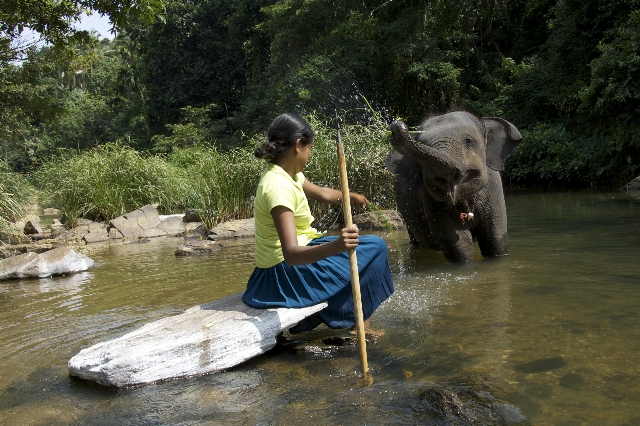
Sumanabanda brings home an elephant calf named Kandula, and assigns it to Chandani. Under the watchful eye of her father, Chandani does all the feeding, bathing and other chores. She has to divide her time between school and her boisterous charge. Soon, the two young ones bond with each other.
She also receives guidance from a wildlife ranger named Mohammed Raheem. He takes her to the Udawalawe National Park, an important habitat for wild elephants. There, she gets glimpses of the daily skirmish between wild elephants and humans for the land claimed by both species.
Exploring the relationship between children and elephants is a recurrent theme for filmmakers across cultures and genres. An early example was Elephant Boy (1937), a British adventure film directed by documentary filmmaker Robert J. Flaherty and Zoltan Korda, based on Rudyard Kipling’s “Toomai, of the Elephants”. A few years ago I watched the Japanese film Hoshi ni natta shonen — with a goofy English name, Shining Boy and Little Randy — directed by Shunsaku Kawake in 2005. It was the bittersweet story of a young boy who goes to Thailand to become Japan’s first elephant trainer.
The child character is usually male, possibly influenced by Mowgli of Jungle Book fame. But here, Chandani is playing herself: she has grown up watching the complexities of ex-situ conservation of the largest land mammal.
The elephant orphanage, set up on a 10-hectare coconut estate in 1975 to look after young elephants whose mothers have been killed — often in violent confrontations with villagers — is now home to nearly a hundred elephants. A captive breeding programme, introduced in 1982, has resulted in several live births.
Pinnawela continues a long tradition — going back to over 3,000 years — where elephants are captured, tamed and trained in Sri Lanka. Jayantha Jayewardene, an expert on Asian elephants, says the elephant, although tamed and trained, is not quite a domesticated animal in the same sense that dogs are.
As he explains in his book, The Elephant in Sri Lanka: “It (the elephant) is an immensely powerful animal whose strength and wild nature calls for caution in handling it, especially during capture and the initial training stages. Later on, using less than a dozen words of command, the handler, called a mahout, is able to exercise control over this powerful animal. In most instances, the elephant and mahout develop a strong and lasting bond.”
After months of training, Chandani faces her moment of truth. She has to accompany Kandula in the local perahera, the procession that tours the streets with decoratively dressed elephants as star attractions. Peraheras are noisy, crowded and sometimes chaotic affairs: participating elephants and mahouts need focus and coordination.
The young girl and elephant prove their mettle. If Chandani’s family and peers are impressed by that public performance, the indifferent state is not. Sumanabanda is belatedly informed that he is not legally allowed to raise an elephant at home (even if he paid ‘good money’ for the creature). Eventually, he and his daughter agree that it is best for Kandula to return to the jungle. Their emotional attachment is strong by now, making separation painful. As Chandani watches Kandula being taken away, she reflects on her chosen future…
Relaxed Drama
The film is labeled as a documentary, but there is considerable movement, tension and other emotions that lend it a dramatic quality. Evidently, many sequences have been scripted. We don’t know how much time and effort that entailed. It probably helped that Chandani and Sumanabanda seem ease-going people. The director has managed to get even the (usually stiff) government officials to relax for the camera.
By staying tightly focused on his characters, Birkenstock avoids a common pitfall in many elephant films that either eulogise pachyderms or editorialise too heavily about their predicament. He blends striking images with an evocative soundtrack to tell a compelling story that is informed by real world issues — but not deep immersed in them.
This mix is welcome indeed. In 2000, when I served on the global jury of Wildscreen, the world’s leading wildlife and natural history film festival in Bristol, UK, we told filmmakers that simply documenting animal and plant behaviour and their habitats was no longer adequate in a world facing a multitude of environmental crises. There was an urgent need, our jury statement said, for films that explored the nexus between the natural environment and human society — both the conflict and harmony between the two.
Chandani and Kandula the elephant
Forming the backdrop to Chandani are the tough choices confronting biodiversity conservation in Sri Lanka. The wildlife ranger Mohammed, in particular, brings in both specialised knowledge and official perspective — mercifully without any activist shrill. Hard core environmentalists might not find this film ‘green enough’. For mass audiences worldwide, however, it conveys a very important message: how some ordinary Lankans are doing their bit for inter-species harmony against many odds.
That is no small accomplishment on our crowded island which has the world’s highest density of wild Asian Elephants. The first-ever nationwide elephant census in August 2011 produced a total of 7,379 jumbos across the island: 5,879 of them were spotted near parks and sanctuaries, while another 1,500 were estimated to be living in other areas. Some environmentalists were unhappy with the methodology and questioned its results. But even imperfect data can inspire more systematic conservation measures.
Sooner or later, we have to answer the hard question: how many wild elephants can the island’s remaining forests realistically sustain? This has already sparked off heated arguments. In the long-term, the survival of the Lankan Elephant might be assured only though captive breeding.
Meanwhile, every year, a few dozen elephants and humans perish in increasingly violent encounters over land and food. As we search for lasting solutions, we need more Chandanis, Mohammeds and Sumanabandas to show us the way.
Science writer Nalaka Gunawardene is far more interested in wild-life in urban jungles than wildlife in natural ones.
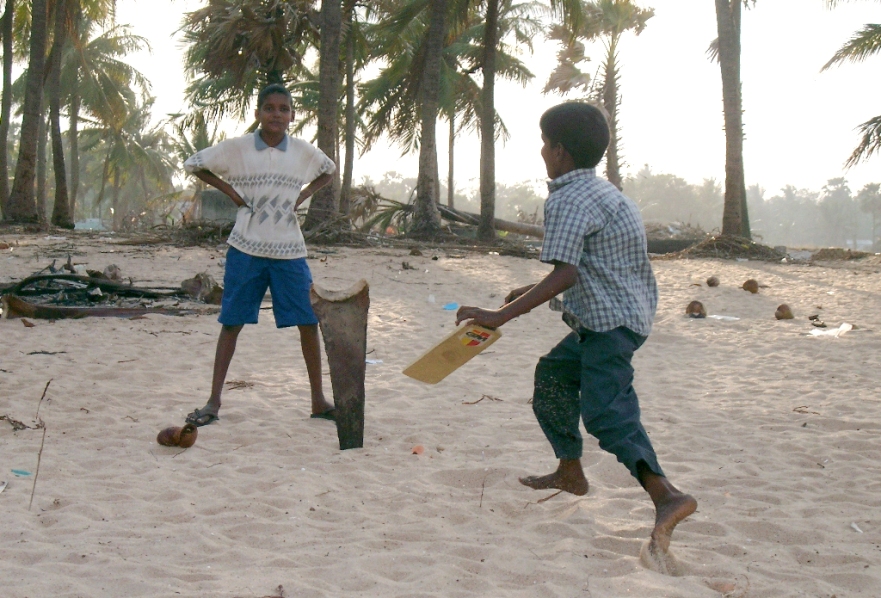
Boys playing cricket on tsunami hit beach in eastern Sri Lanka, January 2005 (photo by Video Image)
Two boys playing cricket on a beach, with a makeshift bat and wicket. What could be more ordinary than this in cricket-crazy Sri Lanka, where every street, backyard or bare land can host an impromptu game?
But the time and place of this photo made it anything but ordinary. This was somewhere along Sri Lanka’s east coast, one day in mid January 2005. Just a couple of weeks after the Indian Ocean tsunami had delivered a deadly blow to this part of the island on 26 December 2004.
My colleagues were looking for a survivor family whose story we could document for the next one year as part of the Children of Tsunami media project that we had just conceived. On their travels, they came across these two boys whose family was hit hard by the tsunami: they lost a sibling and their house was destroyed.
They were living in a temporary shelter, still recovering from the biggest shock of their short lives. But evidently not too numbed to play a small game of cricket. Perhaps it was part of their own way of coping and healing.
More than six years and many thousand images later, I still remember this photo for the quiet defiance and resilience it captured. Maybe that moment in time for two young boys on a devastated beach is symbolic of the 20 million plus men, women and children living in post-war Sri Lanka today.
We are playing cricket, or cheering cricket passionately and wildly even as we try to put a quarter century of war, destruction and inhumanity behind us. And at least on the cricket front, we’re doing darn well: the Sri Lanka national team beat New Zealand on March 29 to qualify for the ICC Cricket World Cup finals on April 3 in Mumbai.
We’ve been here once before – in March 1996 – and won the World Cup against many odds. Can we repeat or improve that performance? We’ll soon know.
Of course, rebuilding the war-ravaged areas and healing the deep-running wounds of war is going to be much harder than playing the ball game.
A few days ago, Captain of Lankan cricket team Kumar Sangakkara described post-war northern Sri Lanka as a scene of devastation after paying his first visit to the region. People of the north have been deprived for 30 years of everything that is taken for granted in Colombo, he told the media.
He toured the north with team mate and wiz bowler Muttiah Muralitharan, who is patron of the Foundation of Goodness. The charity, itself a response to the 2004 tsunami, “aims to narrow the gap between urban and rural life in Sri Lanka by tackling poverty through productive activities”.
Earlier this month, Lankan novelist Shehan Karunatilaka wrote a highly moving essay in the London Observer titled ‘How cricket saved Sri Lanka’. The blurb read: “As co-host of the current World Cup, Sri Lankans are relishing their moment on the sport’s biggest stage. And no wonder. For them, cricket is much more than a game. After years of civil war, the tsunami and floods, it’s still the only thing holding their chaotic country together.”
In that essay, which is well worth a read, he noted: “Many of us believe in the myth of sport; some more than others. Clint Eastwood and Hollywood have turned the 1995 Rugby World Cup into a sport-conquers-apartheid fantasy in Invictus. CLR James believed cricket to be the catalyst for West Indian nationalism. A drunk in a Colombo cricket bar once told me that Rocky IV had hastened the fall of the Soviet Empire.”
He added: “Let’s abandon the myths for now. Sport cannot change a world. But it can excite it. It can galvanise a nation into believing in itself. It can also set a nation up for heartbreak.”
Cricket has indeed excited the 20 million Lankans from all walks of life, and across the various social, economic and cultural divides. It has rubbed off on even a cricket-skeptic like myself.
We will soon know whether the Cricket World Cup will be ours again. Whatever happens at the Wankhede Stadium in Mumbai on April 2, we have a long way to go on the road to recovery and reconciliation.
Colombo, 29 March 2011: When Sri Lanka beat New Zealand to qualify for Cricket World Cup 2011 Finals
18 Days that changed Egypt: 25 Jan to 11 Feb 2011The geeky Davids bring down the mighty Goliath of Mubarak: Bravo!!!Don't meddle with a proud nation that's 5,000 years old!Mubarak unplugged Egypt from the Internet; Angry Egyptians unplugged him!









 Open Minds!