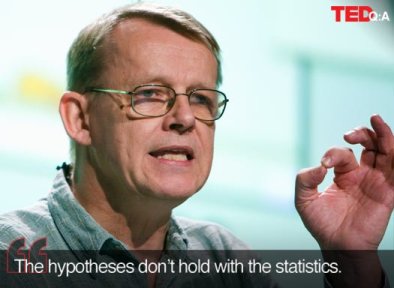
Hans Rosling and Gapminder: Unraveling the Joy of Stats!

Hans Rosling: Information Wizard
If you thought Al Gore was a data-happy geek, you should see Hans Rosling in action.

The Swedish medical researcher has a way with numbers. He brings heavy and dreary statistics into life using a combination of animated graphics and equally animated presentations. With the drama and urgency of a sportscaster, he uses a new presentation tool called Gapminder to debunk various myths about world – economic development, disparities and how well (or poorly) we share our planet’s resources.

Hans Rosling is Professor of International Health at Karolinska Institutet (which awards the Nobel Prize in medicine), but it’s his other role – as Director of the Gapminder Foundation – that he plays ‘statistics guru’ to the whole world. If you’re perplexed by lots of numbers, he’s the man who can make sense of it all.

In some ways, Rosling and Gapminder present in live action – and on video – what the Atlas of the Real World attempted to do in 2D maps: show the world as it is, with little or no distortion or misconceptions. That effort, published in late 2008, uses software to depict the nations of the world, not by their physical size, but by their demographic importance on a range of subjects.

I’ve watched a number of Rosling talks on video online. He makes no attempt to conceal his Scandinavian accent, and his English grammar is not always perfect. But it doesn’t matter: the guy has such mastery over his ideas and statistics, and a great stage presence too. He’s profound and funny at the same time, without being condescending that most experts and especially professors are.

Here’s an example of Rosling at his best: recorded in February 2006 in Monterrey, California:

No more boring data: TEDTalks

Rosling’s quest to use numbers to shatter stereotypes of rich and poor countries has brought him global prominence. He was one of the world’s “100 most important global thinkers” of 2009, according to Foreign Policy Magazine.
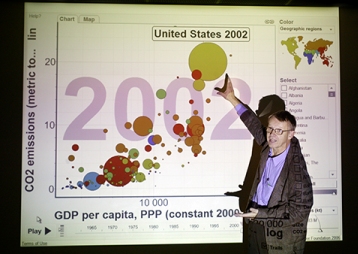
Look, no magic here!
Rosling was honored at #96 on the list for “boggling our minds with paradigm-shattering data“. The list is topped by (1) Ben Bernanke, the chairman of US Federal Reserve for his actions to turn the US depression and (2) President Barack Obama for “for reimagining America’s role in the world.”

Foreign Policy noted: “Rosling is well known for his energetic lectures, in which he narrates mind-blowing statistics on development and public health — as they literally move across a screen. Imagine x-y axes filled with data points, each representing a country. As time passes, the dots move, realigning to show changes in child mortality, percentage of paved roads, unemployment rates, or pretty much any other metric you can imagine.”

Here are some more examples of Rosling magic:

200 years that changed the world (with Hans Rosling)

For the first time, Gapminder can now visualize change in life expectancy and income per person over the last two centuries. In this Gapminder video, Hans Rosling shows you how all the countries of the world have developed since 1809 – 200 years ago.

Hans Rosling on HIV: New facts and stunning data visuals

Hans Rosling unveils new data visuals that untangle the complex risk factors of one of the world’s deadliest (and most misunderstood) diseases: HIV. He argues that preventing transmissions — not drug treatments — is the key to ending the epidemic.

Hans Rosling: Asia’s rise — how and when

This is one of the funniest Rosling talks I’ve watched online so far. Speaking at TEDIndia in November 2009, Rosling recalled how he was a young guest student in India when he first realized that Asia had all the capacities to reclaim its place as the world’s dominant economic force. He graphs global economic growth since 1858 and predicts the exact date that India and China will outstrip the US.

Note:
Rosling and Gapminder developed the Trendalyzer software that converts international statistics into moving, interactive and enjoyable graphics. The aim is to promote a fact-based world view through increased use and understanding of freely accessible public statistics. His lectures using Gapminder graphics to visualise world development have won awards by being humorous yet deadly serious. The interactive animations are freely available from the Foundation’s website. In March 2007 Google acquired the Trendalyzer software with the intention to scale it up and make it freely available for public statistics. Google has since made available as Motion Chart, a Google Gadget.
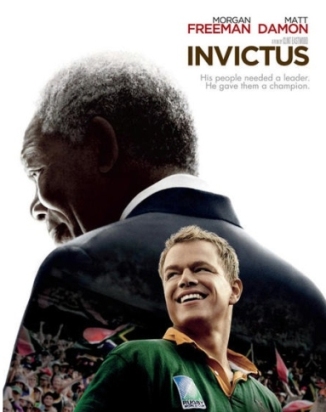
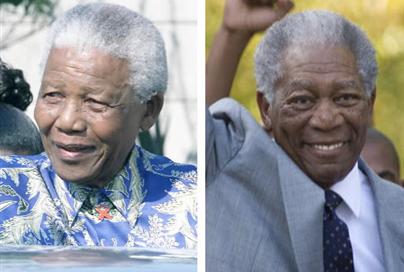
Invictus: Clint Eastwood and Morgan Freeman serve more Mandela magic

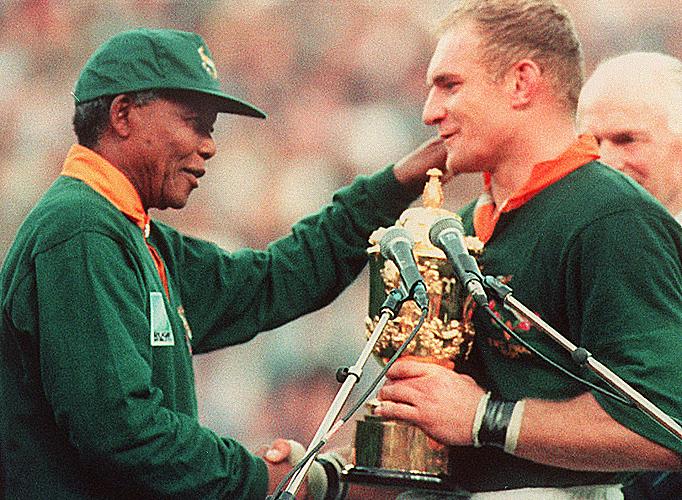
Nelson Mandela hands the World Cup to Francois Pienaar in 1995 (Photo courtesy The Sun, UK)

Updated: 6 Dec 2013 Nelson Rolihlahla Mandela (1918 – 2013): Thank You and Goodbye!

If a run-away genie granted me a wish to clone any single living human being, I’ll have no hesitation with my choice: Nelson Mandela — undoubtedly the greatest living statesman on the planet.

One might argue that Mandelas are not born; they are made. A combination of personality and historical circumstances create the rare phenomena like him.

In July 2008, when Mandela turned 90, I quoted the American film-maker, social activist and blogger Danny Schechter — who filmed Mandela’s struggle to end apartheid and restore democracy in South Africa — as saying: He (Mandela) is one of those leaders who not only helped free his own country and people but became an icon and symbol for freedom in the world. At a time when darkness seems to be descending again, with the economy on the edge amidst protracted wars and pervasive abuses of powers, he is the one person that people the world over look to as a symbol of that saying that ‘another world is possible.’ He is not perfect – who is? He has taken great risks, and made his share of mistakes, but the love and adoration he inspires speaks to how special he is – even as he sees himself as part of a collective, a movement…

The Mandela story has been told many times by many film-makers, writers and journalists. Few other leaders have engaged the popular culture and media’s attention — while both in and out of office — as Mandela has, and with good reason.

One poem + two men = Rainbow Nation

The latest film inspired by Mandela is Invictus directed by Clint Eastwood, starring Morgan Freeman and Matt Damon. Both actors have just been nominated for Oscar awards – for best actor and best supporting actor respectively. But the film’s exclusion from the 10 nominees for best picture has surprised and disappointed some.

Invictus reconstructs the events in the life of Nelson Mandela at a crucial time for himself and country: after the fall of apartheid in South Africa, during his term as the rainbow nation’s first black president. The film revolves around how he campaigned to host the 1995 Rugby World Cup event as an opportunity to unite his rainbow nation. (South Africa’s team eventually won the championship.)

Here’s the plot summary from IMDB:
The film tells the inspiring true story of how Nelson Mandela joined forces with the captain of South Africa’s rugby team to help unite their country. Newly elected President Mandela knows his nation remains racially and economically divided in the wake of apartheid. Believing he can bring his people together through the universal language of sport, Mandela rallies South Africa’s rugby team as they make their historic run to the 1995 Rugby World Cup Championship match.

Read Wikipedia’s plot summary

Watch official trailer of Invictus the movie:

The film’s title comes from the fact that Mandela had the poem Invictus, by English poet William Ernest Henley, written on a scrap of paper on his prison cell while he was incarcerated. The story is based on the John Carlin book Playing the Enemy: Nelson Mandela and the Game That Changed a Nation.

A legend plays another legend

I can’t wait to see Invictus, for it has one of my favourite actors playing one of my greatest heroes. Morgan Freeman is such a versatile and accomplished actor. Having played the US President and God in past movies, this is clearly cut out for him.

As Clint Eastwood explains: “As an actor, Morgan has the same presence when he walks in the room that Mandela has as a politician. Morgan has a certain bearing and charisma. He was built to play this role.”

The Guardian (UK) preview noted: “So convinced by Freeman’s performance was Mandela’s personal assistant that when she stepped on set, she wondered how her boss had made it to the shoot without her. Freeman plays Mandela with all the expected wisdom and fortitude, but it’s the twinkle of mischief in his eye that makes you feel you’re not just watching the man, rather than a virtuoso impression.”

The Guardian calls Invictus “a startlingly powerful film: a clear-eyed look a recent history, an awe-inspiring tale of prejudice overcome, a study of power – and a rousing sports movie.”

Note: In the movie, Mandela gives the “Invictus” poem to his national rugby team’s captain Francois Pienaar before the start of the 1995 Rugby World Cup. In reality, Mandela provided Pienaar with an extract from Theodore Roosevelt’s “The Man in the Arena” speech from 1910.

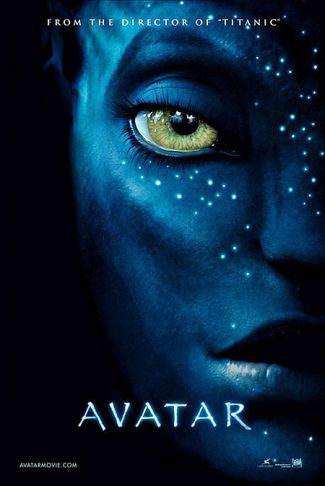
Avatar: Blockbuster film as socio-political and green allegory?


“Pictures are for entertainment, messages should be delivered by Western Union.”

Those words by American film producer and studio founder Sam Goldwyn (1879-1974) sum up Hollywood’s attitude to movie-making for the past many decades.

As I watched James Cameron’s latest blockbuster movie Avatar, I kept wondering how the master film maker managed to subvert this so completely. Beneath the 3D, special effects and riot of other worldly colours, the movie is one long (2 hrs 40 mins) and powerful commentary on why might is not right when it comes to exploiting resources — belonging to other countries, people, or as in this case, other worlds.

This is not just another worthy indie movie made by an idealistic movie maker defiant of Hollywood traditions and big money. James Cameron is one of the most commercially successful directors in the mainstream film industry – and perhaps one of the very few who can get away with this kind of stunt. At a budget of over US$ 300 million , Avatar is one of the most expensive films ever made, and the costliest ever for 20th Century Fox.

The big gamble is certainly paying off. On 26 January 2010 came the news that Avatar has surpassed Titanic as the highest-grossing movie worldwide. According to the studio, worldwide box office total for Avatar at that point stood at US$1.859 billion, beating the US$1.843 billion racked up by Cameron’s romantic drama in 1997-98. Avatar broke that record in a little over six weeks.

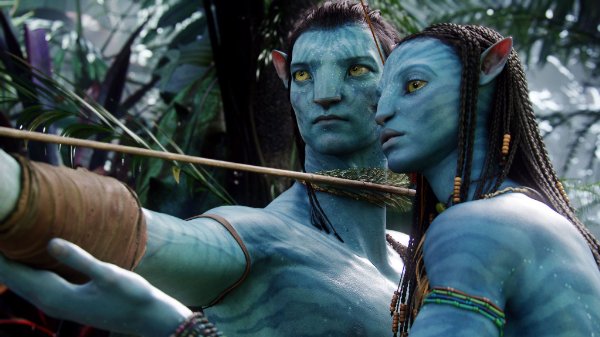
Part of the reason for such appeal is the extraordinary special effects: it’s an action-packed thriller where good and evil battle it out on another planet. The strange landscapes give it a video game like feel, but no small screen can match the theatrical experience, especially if you watch it in IMAX 3D (I didn’t). And for a change, this time the aliens inhabiting planet Pandora are benign, while it’s the humans who are ruthless invaders and brutal killers. Well, at least most of the time…

Here’s the official blurb: “Avatar takes us to a spectacular world beyond imagination, where a reluctant hero embarks on an epic adventure, ultimately fighting to save the alien world he has learned to call home. James Cameron, the Oscar-winning director of Titanic, first conceived the film 15 years ago, when the means to realize his vision did not exist yet. Now, after four years of production, AVATAR, a live action film with a new generation of special effects, delivers a fully immersive cinematic experience of a new kind, where the revolutionary technology invented to make the film disappears into the emotion of the characters and the sweep of the story.”

And here’s AVATAR – Official International Launch Trailer (HD)

Film critics and social commentators around the world have noticed the many layers of allegory in the film. Interestingly, depending on where you come from, the movie’s underlying ‘message’ can be different: anti-war, pro-environment, anti-Big Oil, anti-mining, pro-indigenous people, and finally, anti-colonial or anti-American. Or All of the Above…

It looks as if Cameron has made the ultimate DIY allegory movie: he gives us the template into which any one of us can add our favourite injustice or underdog tale — and stir well. Then sit back and enjoy while good triumphs over evil, and the military-industrial complex is beaten by ten-foot-tall, blue-skinned natives brandishing little more than bows and arrows (and with a little help from Ma Nature). If only it works that way in real life…

But the multi-purpose allegory is apparently working well. Take these two from opposite sides of the planet:

Thomas Eddlem wrote in The New American: “Avatar, is a visually stunning epic that is a perfect allegory for any of a dozen or more Indian wars in American history. From King Philip’s War in New England to Tippecanoe in Indiana to Horseshoe Bend in Alabama — and all the way across the American continent, for that matter — the story was the same. Colonists simply take land from the natives, as the Sully explains: ‘This is how it’s done. When people are sitting on something that you want, you make them your enemy so that you can drive them out.’

Mayank Shekhar wrote in The Hindustan Times newspaper: “Between a green worldview and the globe’s war over a natural resource, James Cameron’s twin analogies of present-day politics are fairly complete. They lend his science fiction ‘event picture’ a certain soul, even if not much of a story line.”

So did Cameron set out trying to send a message? Or was it all an incidental byproduct? Listen to the director himself in these two online video stories:

James Cameron’s Vision Featurette

CBS Interview with James Cameron: From Titanic to Avatar

The most compelling social commentary on Avatar I have so far read comes from Naomi Wolf, the American political activist, author and social critic. In an op ed essay written for Project Syndicate, she sees two revealing themes in Avatar: “the raw, guilty template of the American unconscious in the context of the ‘war on terror’ and late-stage corporate imperialism, and a critical portrayal of America – for the first time ever in a Hollywood blockbuster – from the point of view of the rest of the world.”

She adds: “In the Hollywood tradition, of course, the American hero fighting an indigenous enemy is innocent and moral, a reluctant warrior bringing democracy, or at least justice, to feral savages. In Avatar , the core themes highlight everything that has gone wrong with Americans’ view of themselves in relation to their country’s foreign policy.”

Does the box office triumph of Avatar make James Cameron one of the most effective campaigners for social justice on the planet (comparable, in some ways, to Michael Jackson having been one of the biggest environmental communicators of his time)?

And is Avatar the most expensive piece of info-tainment or edu-tainment ever made, just like the Lord of the Rings trilogy was one long (even if unintended) commercial for the breathtaking sights and sounds of New Zealand?

Certainly, mixing messages with entertainment is such a difficult and delicate art that most people who dabble in it fall between the two stools. The entertainment value of Cameron’s latest flick is not in question. Granted, it’s not as heart-breaking as Titanic, and the storyline is oh-so-predictable. But 3D and SFX magic alone can’t hold today’s audiences gripped for 160 long minutes. And if the underlying story starts movie-goers thinking and talking about many parallels between the fictional world of Pandora and our own Earth, he’s certainly getting somewhere.

As Naomi Wolf says: “Ironically, Avatar will probably do more to exhume Americans’ suppressed knowledge about the shallowness of their national mythology in the face of their oppressive presence in the rest of the world than any amount of editorializing, college courses, or even protest from outside America’s borders. But I am not complaining about this. Hollywood is that powerful. But, in the case of Avatar , the power of American filmmaking has for once been directed toward American self-knowledge rather than American escapism.”

Perhaps this wasn’t part of the script, but would the executives at 20th Century Fox care as they laugh all the way to their bank?

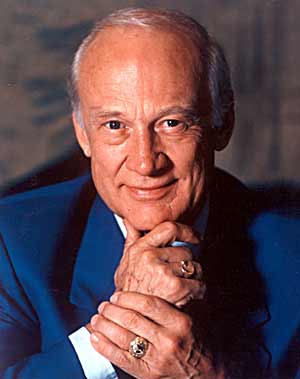
Buzz Aldrin at 80: Still blasting off imagination everyday

Moonwalker No 2

This is one of history’s most famous photographs – and also one that is frequently misidentified. The man behind the space mask is a pioneer Moon walker – but it’s not Neil Armstrong. It’s the Buzz Aldrin, the second Man on the Moon.

According to space historians, all the famous photos from the first Moon landing are actually of Aldrin, with Armstrong reflected in the visor. This is an occupational hazard for those who take photos!

Buzz, who celebrated his 80th birthday on January 20, remains active and publicly engaged as he has been for most of the past 40 years since the first Moon landing in July 1969.

I’m following Buzz on his Twitter feed, from which I find that he’s just back from a trip to Antarctica with a National Geographic cruise, was at the premiere for the movie Avatar in mid December, and is now busy promoting his latest autobiography, Magnificent Desolation.

On his 80th birthday, Buzz asked fans to donate US$8 ot 80 to the Clinton-Bush Haiti Fund. And he will soon launch my iPhone App, Buzz Aldrin Portal to Science and Space Exploration.

This contrasts with Neil Armstrong, who is notoriously shy. He rarely speaks in public, turns down all media interviews and has also refused autograph requests since 1994.

Trained as an engineer, the two-time space traveller Buzz has been keeping up with new media pretty well. He has his own website, and launched his own YouTube channel only a month ago, where we can see his latest broadcast and film appearances. Through these and other means, he continues to promote causes like space exploration, science education and nurturing imagination.

To mark his 80th birthday, we present some of the many Buzz Aldrin videos available online.

First, here’s the moment when Buzz Aldrin set foot on the Moon, in a partial restoration by NASA Video

Here’s the DVD Promo Overview of the latest Buzz video:

On the 40th anniversary of the Apollo 11 crew landing on the moon, former astronaut Buzz Aldrin shares his experience and predicts where man will go in the future. (Assciated Press video, 20 July 2009)

Buzz has long years of close association with popular culture. For example, the popular space ranger character Buzz Lightyear, in Pixar’s Toy Story movie series, is named after him. Apparently the film’s makers felt that he has “the coolest name of any astronaut.”

NASA video: Follow Buzz Lightyear on Spaceship Discovery

Finally, for comic relief, here’s the 2003 interview Buzz did with Ali G (Sacha Baron Cohen) in the British comedy series Ali G in da USA, during which Ali G referred to him as Buzz Lightyear:

P.S.: If you prefer a more detached look at the man and his career:
The Guardian, July 2009: The Man who fell to Earth

Having a bad day? This cosmic perspective could help!

We all have a bad day every now and then. Each one has different ways of coping with it – some curse the government, others blame their karma, and still others just play sport or music to soothe the mind.

This past Season, two astronomically inclined friends showed me a new way of coping with the assorted problems of our imperfect world and unfair life.

First, Rex I de Silva – diver, naturalist and amateur astronomer who was a citizen scientist before the term was invented – sent me this clever piece of animation that originated in Australia. He wrote: “It’s so very well done that most folks don’t realize how much info is being shared! Just click on the link below….but with your computer’s speakers on. We are on quite a ride….It’s not over till it asks if you want to view again.”

Indeed, it’s the ultimate journey – take it at:
http://dingo.care2.com/cards/flash/5409/galaxy.swf (it was working as of today).

Then, Thilina Heenatigala – one of the most active astronomy and space enthusiasts in Sri Lanka – informed me that the original Galaxy Song was sung by Eric Idle from Monty Python’s Meaning of Life (1983), with graphics from NASA of flying through the universe.

So here it is, the film version from YouTube:

If the real images are not awe-inspiring enough, here’s an animated version of the same song that I discovered on my own while exploring that rapidly expanding online video galaxy – it features ‘Pinhead’ from RProduction13’s animated short series, “The Four”.

And here are the lyrics of
The Galaxy Song:

Whenever life gets you down, Mrs. Brown,
And things seem hard or tough,
And people are stupid, obnoxious or daft,
And you feel that you’ve had quite eno-o-o-o-o-ough…

Just remember that you’re standing on a planet that’s evolving
And revolving at nine hundred miles an hour,
That’s orbiting at nineteen miles a second, so it’s reckoned,
A sun that is the source of all our power.
The sun and you and me and all the stars that we can see
Are moving at a million miles a day
In an outer spiral arm, at forty thousand miles an hour,
Of the galaxy we call the “Milky Way”.

Our galaxy itself contains a hundred billion stars.
It’s a hundred thousand light years side to side.
It bulges in the middle, sixteen thousand light years thick,
But out by us, it’s just three thousand light years wide.
We’re thirty thousand light years from galactic central point.
We go ’round every two hundred million years,
And our galaxy is only one of millions of billions
In this amazing and expanding universe.

(Animated calliope interlude)

The universe itself keeps on expanding and expanding
In all of the directions it can whizz
As fast as it can go, at the speed of light, you know,
Twelve million miles a minute, and that’s the fastest speed there is.
So remember, when you’re feeling very small and insecure,
How amazingly unlikely is your birth,
And pray that there’s intelligent life somewhere up in space,
‘Cause there’s bugger all down here on Earth.

Composers: Eric Idle & John Du Prez
Author: Eric Idle
Singer: Eric Idle
From the ‘Meaning of Life’ album, MCA Records MCA 6121

I have no idea who Mrs Brown is, but it sure works for me too!

Plastics-free 2010? No laughing matter, says comedian Tim Minchin

For the first time this Season, I didn’t receive a single paper-based greetings card at home – a sign of our increasingly digital times.

Among the many e-cards and email-based greetings I received was an environmentally conscious friend who sent me the link to an upbeat, meaningful song by Tim Minchin, the British-born Australian comedian, actor and musician. This is a simple song about an everyday matter that has far-reaching implications: how to reduce plastics dumped in our environment.

In this case, simply by carrying a cloth/canvas bag to the supermarket, we can cut down on the needless use of plastic shopping bags.

Last FM wrote about Canvas Bags: “An ‘emotional’ tune that has fun lyrics. Tim Minchin is Australian, but you can’t really tell. Trying to show that he can send out a serious message, Minchin explains how plastic is the bane of the universe and that we can only save our planet by eliminating it and “taking our canvas bags to the supermarket”. Of course, this message is punctuated by the usual splashes of humour that Minchin has made his trademark.”

Canvas Bags by Tim Minchin

Directed by Stephen Leslie, this is the unedited version of Tim Minchin’s Environmental Anthem film clip recorded for BBC3’s Comedy Shuffle.

Here are the first few lines:

Take your canvas bags
When you go
To the supermarket
Why use plastic bags when you know
You know the world can’t take it

Take your canvas bags
When you go
To the supermarket market market
Don’t you use those plastic ones
No, no, no
Don’t you know that you’ll feel better for it…


Read the full lyrics

TWTYTW: Our own (very subjective) list of best and worst of 2009…

All journalism is subjective; it’s just that some of us are better at disguising it! As we head for the end of 2009, we at Moving Images blog take one last fleeting, impressionistic, judgemental and, yes, darn too opinionated look at the past 365 days. That Was The Year That Was…and here’s our list of superlatives!

Best news and biggest relief (national): Sri Lanka’s nearly three decades long and brutal civil war finally ended in mid May 2009 – and not a moment too soon. It rightly created headlines around the world, and also made it to TIME’s top 10 news of the year. Within 24 hours of that much-awaited news, I wrote and published one of my most emotionally charged essays ever, Memories of War, Dreams of Peace. I probably spoke for a whole generation of Lankans: “As we stand on the threshold of peace, I am overwhelmed with memories of our collective tragedy. I hope we can once again resume our long suspended dreams for a better today and tomorrow.” With the hindsight of seven months, I still want to believe every word…although it’s become increasingly hard to cling on to such ideals.

Biggest disappointment (national): Ending the Lankan war entailed tremendous effort, cost and sacrifice, and we all knew that consolidating peace and restoring normalcy were going to be even harder – delivering peace dividends is no mean task. As weeks became months, our cautious optimism slowly turned into disappointment and dismay: it became clear that the triumphalist government was treating the historic ‘open moment’ simply as as blank cheque to do pretty much what it wanted. My May 19 essay on Dreams of Peace had ended with a question that resonated with millions: “Would our leaders now choose the Mandela Road or the Mugabe Road for the journey ahead?” Can we please ask that question again…? Hello, anybody listening?

Most evocative piece of writing: Without competition, that distinction goes to The Last Editorial by Lasantha Wickrematunga, the courageous investigative journalist (and de facto leader of the political opposition) in Sri Lanka, who was brutally slain on January 8 while on his way to work. That editorial, which appeared post-humously in his newspaper The Sunday Leader on 11 January 2009, embodies the best of Lasantha’s liberal, secular and democratic views. Nearly a year after the dastardly daylight crime, his killers have not been caught and independent media remains under siege even in post-war Sri Lanka.

Most memorable quote: While people like Lasantha articulated our cherished dreams for a truly pluralistic society, our billion+ neighbours in India have been building it for over six decades. It’s still a work in progress, and the ideals need occasional reiteration. This is precisely what classical dancer Mallika Sarabhai did when she ran as an independent candidate when India conducted the world’s largest democratic election in April-May. She lost, but wrote one of the most insightful pieces on what it means to live amidst the huge cultural, social and political diversity in India: “We are a salad-like melange of cultures and not a soup where all variations get reduced to a homogeneous pulp—this, to me, is our greatest strength.” (She inspired my own essay: Sri Lanka – Spice Island or Bland Nation?)

Biggest disappointment (global):
The UN climate conference in Copenhagen, held in December and officially dubbed COP15, ended up in what many activists felt was a cop-out. Greenpeace echoed the frustration of many when they said at the end of what was, at its start, billed as the ’14 days to seal seal history’s judgment on this generation‘: “Don’t believe the hype, there is nothing fair, ambitious or legally binding about this deal. The job of world leaders is not done. Today they shamefully failed to save us all from the effects of catastrophic climate change.” I was glad I wasn’t part of the mega event — I’ve burnt enough aviation fuel this year, but almost all events I participated in on three continents were more productive than the Danish debacle…

Biggest Under-achiever: If the world laboured a mountain and delivered a mouse in Copenhagen, the mid-wife of that process must surely have been the current UN chief Ban Ki Moon. More secretary than general, Ban is, in his own admission, the UN’s Invisible Man. All the top speech writers and PR agents in the world can’t animate this the perennially dull and dour diplomat. Not ideal change-maker when the world is racing against catastrophe. Kofi Annan, we miss you!

Most moving work of moving images: The world’s rich are having a party, and millions living in poverty are the ones footing the bill. This is the premise of Indian journalist and activist Pradip Saha’s latest film, MEAN Sea Level, which looks at the impact of climate change on the inhabitants of Ghoramara and Sagar islands in the the Sundarban delta region in the Bay of Bengal. I found it both deeply moving and very ironic. With minimal narration, he allows the local people to tell their own story. As it turned out, these testimonies were lost on the bickering politicians in Copenhagen…

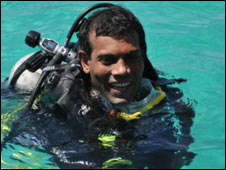
Best media stunts: We are a bit divided here. At a time of ever-shrinking attention spans, it takes much creativity and guts to grab the cacophonous media’s attention, especially for a good cause. Two very different men succeeded where many have failed. In February Bill Gates, the world’s top geek now working for its meek, released some mosquitoes at the TED 2009 conference to highlight the continuing grip that malaria has on the developing world, especially Africa. In October, climate crusader President Mohamed Nasheed of the Maldives held the world’s first underwater cabinet meeting to remind everyone of the watery future that awaits low lying island nations like his when climate change rises sea levels.

Biggest Irony: NASA announced in November that an unmanned space probe that was intentionally crashed on the Moon had discovered the presence of ‘significant amounts’ of water there. That bit of scientific evidence cost US$79 million to obtain…and was not the most comforting news for a planet that rapidly running short of usable freshwater. In the wake of the Apollo Moon landings in the late 1960s, misguided voters in Sri Lanka elected a government that promised ‘to bring rice even from the Moon’. When might we hear politicians promise us water from the Moon?

Well, that’s it folks — the highs and lows of 2009 according to the Blogger-in-Chief and his team of elves here at the Moving Images Media Empire. We’ve waded through our several dozen blog posts to come up with the above, and make no claims for being fair, balanced or comprehensive…

Indeed, we hope you don’t agree with all our picks, and invite you to express alternative – even dissenting – views. All comments that are not outright libellous or blatantly self-promotional will be published.

We take this opportunity to thank each and everyone who read our posts over the year — and especially those who left comments, sometimes radically disagreeing with our views. We also reiterate our pledge to frustrate those few persistent detractors who keep demanding to see our nationalistic, religious or other credentials…

May the cacophony continue and intensify in 2010!

Looking back at Asian Tsunami of 2004…and media response

Nalaka Gunawardene talking about 2004 Asian Tsunami

To mark the fifth anniversary of the Indian Ocean Tsunami of December 2004, TVE Asia Pacific has just released excerpts from an in-depth TV interview I recorded four years ago.

The wide-ranging interview was originally filmed in November 2005 in Bangkok, Thailand, by Thai journalist and film maker friend Pipope Panitchpakdi. He used excerpts at the time for a Thai documentary to mark the first anniversary of the tsunami. It remains one of the best media interviews I have given, for which all credit goes to Pipope.

Selected segments of that interview, in its original English, can now be viewed on TVEAP’s YouTube channel, while the transcript is published on the TVEAP website.

To give a flavour of this belated release of archival material, here are the first two extracts:

Nalaka Gunawardene recalls Asian Tsunami of Dec 2004 Part 1 of 6

Part 2 of 6:


Watch all extracts on TVEAP’s YouTube channel

Asian Tsunami+5: Revisiting survivor Heshani Hewavitharana of Sri Lanka…

Heshani in Feb 2005: Creative and reflective - Photo courtesy TVEAP

Heshani Madushika Hewavitharana, 13, was an eager student in school who also excelled in creative writing, in which she’d won certificates and awards. All of these, along with her school books and everything else her family owned, was lost in the Asian Tsunami of 26 December 2004. Their beach front house, in Suduwella in Sri Lanka’s southern district of Matara, was badly damaged. They escaped with their lives — and were among the luckier ones.

When we found Heshani and family a few weeks after the tragedy, they were taking refuge in a friend’s house. Her fisherman father could not immediately return to his work without his boat and gear, also washed away by the waves. The family was living on the mother’s meagre income from spinning coir ropes.

Despite their plight, Heshani and family agreed to participate in the Children of Tsunami media project, where local film crews in India, Indonesia, Sri Lanka and Thailand tracked how eight survivor families were rebuilding their lives and livelihoods after the Asian tsunami disaster.

We at TVE Asia Pacific documented on TV, video and web the personal recovery stories of eight affected families in these worst affected countries for one year after the disaster. Our many media products — distributed on broadcast, narrowcast and online platforms -– inspired wide ranging public discussion on disaster relief, recovery and rehabilitation. In that process, we were also able to demonstrate that a more engaged, respectful kind of journalism was possible when covering post-disaster situations.

Watch Heshani’s first monthly video update, February 2005:

Not all our participating families recovered from the tsunami’s mighty blow within one year, but we ran out of money and had to stop capturing their stories by the end of 2005, which I called Asia’s longest year. In a goodbye tribute to the courage and resilience of these families, I wrote in December 2005: “Our journey with the eight families ends with the first anniversary. We know their own journeys to recovery are far from finished. We can only wish them well.

Heshani in Nov 2009 - Courtesy Xinhua
Since then, I have often wondered how the eight children were faring. (In March 2007, it suddenly became seven when the Theeban, the boy in Sri Lanka’s east whose story we tracked, was brutally murdered.) However, I have resisted the temptation to revisit the children as I felt we had been intrusive enough already during that first difficult year after the tsunami. They must now be allowed to continue their lives in private.

Yet, I was intrigued by a recent report where two correspondents working for the Chinese news agency Xinhua, Chen Zhanjie and Liu Yongqiu, tracked down Heshani and family. They wrote a story on Xinhua’s website for the Universal Children’s Day in November which focused attention on the protection and welfare of children. Heshani is now 17, and her younger sister Dimalka, 12. Already having passed the GCE Ordinary Level exam, Heshani is now preparing for her Advanced Level exam slated for August 2010.

While Dimalka aspires to be a doctor, Heshani wants to become a banker. Their father believes the tragedy has added a new dimension to the girls’ lives: “They have leant their responsibilities from the tsunami. Now the two girls have no fears.”

Read the full story on Xinhua website: From tsunami to trauma to trek ahead

Children of Tsunami: No More Tears…

where Children of Tsunami stories were filmed for much of 2005
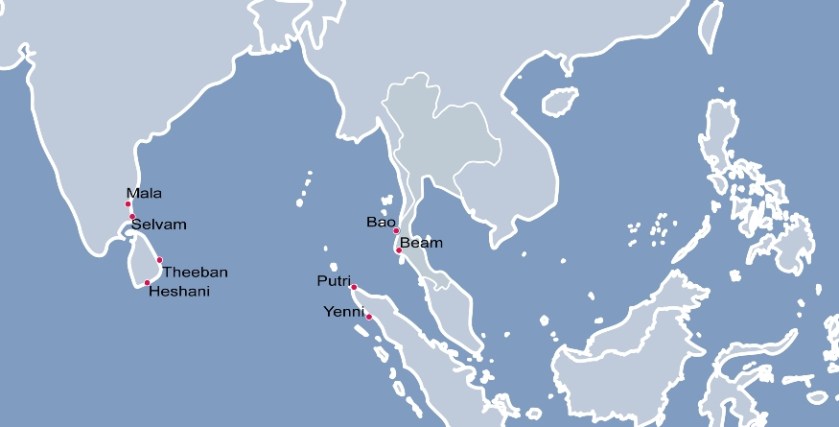
Four countries, eight locations: where Children of Tsunami stories were filmed for much of 2005

They have never met each other. Some have never travelled beyond their native village. On December 26 2004, the sea rose and rose and took everything they cherished.

Documented over the year, locally-based filmmakers returned to Asia’s battered coasts in India, Indonesia, Sri Lanka and Thailand to track the healing and the hurt through the eyes of children.

Asia’s recovery process from the tsunami is being captured through the stories of three girls and two boys aged 8 to 16 years.

Of different races, worshipping different Gods, they live on different shores in different countries. They are the tsunami generation, sharing the vulnerability of a child and the legacy of the tragic tides.

Young survivors of the Asian tsunami let us into their lives to personalise the mass of statistics, aid pledges and recovery plans. “Children of Tsunami” is a tapestry of intimate stories, woven by voices of individual and collective resilience, heroism and recovery.

Children of Tsunami: No More Tears – Part 1 of 3

Part 2 of 3

Part 3 of 3

Duration: 24 mins
Year of production: 2005
Countries filmed in: India, Indonesia, Sri Lanka, Thailand
In each country, a locally based production crew carried out filming for TVE Asia Pacific.

Regional Production Team
Supervising Producer: Bruce Moir
Production Assistant: Yohan Abeynaike
Production Manager: Manori Wijesekera
Executive Producers: Joanne Teoh Kheng Yau and Nalaka Gunawardene

Co-Produced by: Channel News Asia, Singapore
In partnership with TVE Asia Pacific

Broadcast Asia-wide on the first anniversary of the Asian Tsunami, 26 Dec 2005

For more information, visit: www.childrenoftsunami.info

See also: Channel News Asia – Making of a pan-Asian news channel