Beyond Babu SAARC: Liberating airwaves for South Asians

“Watching the current SAARC jamboree unfold over television news, my young daughter asked why none of the officials were smiling. The SAARC Secretary General, Dr. Sheel Khant Sharma, was always scowling. Others didn’t have smiles on their faces either, even insincere ones. They all looked stressed out, wearing glum, miserable faces.

“I could only hazard a guess. Perhaps the assorted babus have too much to worry about, as they get through their very serious and grim business of fostering regional cooperation. On the other hand, after all these years of endless meetings and declarations, they might have forgotten the simple joys of smiling and enjoying each other’s company.”

With these words I open my latest op ed essay, just published on the Sri Lankan citizen journalism website Groundviews.

Anti-people, Pro-Babu SAARC in Colombo

The essay is my personal response to the meetings of the South Asian Association for Regional Cooperation or SAARC, taking place in my home city of Colombo this week. Assorted babus (a derogatory South Asian term for pompous officials) from all over South Asia have invaded the city, displacing its people and severely disrupting normal life and work.

And all for what? So that the unsmiling babus can congratulate each other on how little they have accomplished since the last such gathering in New Delhi in April 2007!

As I note in my essay: Make no mistake: SAARC is a good idea hijacked by unimaginative and pompous, unsmiling babus of South Asia and run to the ground. The self-congratulatory rhetoric of the inter-governmental merry-go-round is once again deafening us as the 15th SAARC takes place in Colombo. In reality, SAARC at 23 has the mental development of a 3-year-old (if that). There isn’t, in fact, much to smile about.

The SAARC Sec Gen is always scowling, with never a smile on his face...

I go on to note:
The proof of the SAARC pudding is not in over-hyped Summits or crusty declarations, but in the free flow of people, ideas, creativity and culture across the political boundaries jealously guarded by governments and their militaries. Most SAARC initiatives miserably fail this test. Typical of this arrested development is the SAARC Audio-Visual Exchange, SAVE.

The rest of my essay is a critique of SAVE, and how it has failed to foster greater regional understanding among the people of South Asia through the airwaves. This is because SAVE brought together only the state-owned radio and television stations of South Asia which are no more than propaganda organs for ruling parties and/or militaries that are running our countries.

I go on to cheer the recent initiative called TV South Asia, a collaboration involving 5 private TV broadcasters in South Asia. Without any of the pomposity of SAVE or SAARC, TV South Asia is quietly doing what SAVE has failed for nearly a quarter of a century.

The essay builds on my 6 July 2008 blog post TV South Asia: Nothing official about it, yipee!

Read my full op ed essay on Groundviews

More unsmiling SAARC babus - they certainly dont speak for me!
More unsmiling SAARC babus - they certainly don't speak for me!
Never a smile on their faces!
Foreign secretaries of SAARC: Never a smile on their faces!

All images courtesy Daily News, Sri Lanka

Calling Hydrocarbons Anonymous: Admitting my oil addiction…

Living with climate change
On the set of Sri Lanka 2048: Living with climate change

I have finally done it…and not a moment too soon!

There I was, moderating an hour-long TV debate on Saturday evening prime time television on Sri Lanka’s premier English language Channel One MTV. Our topic for this edition of Sri Lanka 2048 was living with climate change. After exploring its many facets, I was beginning to wind up.

But not before underlining the need for us to take personal responsibility for changing our lifestyles whose cumulative impact on the planet is significant.

The philosophical and political debates over climate change will continue for a long time, I said. Meanwhile, we have to live with climate change impacts that are already happening…and change how we use energy and resources so that we don’t make matters any worse.

This means we must consume less, share more, live simply and pursue smart solutions through green technologies. Of course, at the basis of all this is finding meaningful, practical ways of kicking our addiction to oil.

That’s when I put my hand up and admitted, on air, my own substance addiction: I am hooked on hydrocarbons, a.k.a. petroleum. I’m struggling to break free from it, but it’s not easy.

Of course, my individual addiction pales into insignificance when we look at how entire industries, sectors and countries are addicted to oil and stubbornly insist on continuing the status quo. But we must be the change we seek, so it’s never too late for me to work on my oil problem. When enough of us individuals do, countries and economies will follow.

But people with addictions often need expert guidance, as well as to keep the company of fellow addicts who are similarly trying to kick the habit. That’s why those having drinking problems find help in Alcoholics Anonymous.

We oil addicts could do with some organised help — environmental activist groups, please note. And Sir Arthur C Clarke has already suggested the perfect name for such a movement: Hydrocarbons Anonymous. Read his 2004 essay on Hydrocarbons Anonymous.

* * * * *

Race Against Time
Nalaka Gunawardene moderates Sri Lanka 2048: Race Against Time

Here’s what the promotional blurb for last weekend’s show said:

Sri Lanka 2048 looks at living with climate change: how challenges can become opportunities

Climate change is no longer a theory; it’s already happening. What awaits Sri Lanka – and how best can we adapt to live with extreme weather events, disrupted rainfall, sea level rise and other projected impacts? How can Sri Lanka play a meaningful role in mitigating further damage to the world’s climate?

These and related questions will be raised in this week’s Sri Lanka 2048, the series of TV debates exploring Sri Lanka’s prospects for a sustainable future in the Twenty First Century. The one-hour debate, in English, will be shown on Channel One MTV from 8 to 9 pm on Saturday, 26 July 2008.

Titled Race Against Time, this week’s debate brings together concerned Sri Lankans from academic, corporate, civil society and government backgrounds to discuss the many challenges of living with climate change. The debate looks at aspects such as promoting renewable energy to reduce our carbon emissions, and emerging opportunities for individuals, communities and businesses to adopt low carbon lifestyles and practices.

This week’s panel comprises: Dr. W. L. Sumathipala Director, National Ozone Unit, Ministry of Environment & Natural Resources; Dr. Suren Batagoda, CEO, Sri Lanka Carbon Fund; Dr Ray Wijewardene, Eminent engineer and specialist in renewable energies; and Darshani de Silva, Environmental Specialist, World Bank Office in Colombo. The debate is moderated by TVE Asia Pacific’s Director Nalaka Gunawardene.

The debate also seeks answers to questions such as: What niche can Sri Lanka occupy in the fast-growing global carbon market? How much money can we make from this market? What is the role of the recently established Sri Lanka Carbon Fund? Is the Clean Development Mechanism the right way forward?

The debate concludes with the recognition that climate Change is not just an environmental concern, but also has economic, social, political and security implications. While the philosophical and political debates over climate change will continue for a long time, everyone has to learn fast to live with it. This calls for consuming less, sharing more, living simply and pursuing smart solutions that reduce carbon emissions without compromising the quality of living.

Sri Lanka 2048 debates are co-produced by TVE Asia Pacific, an educational media foundation, and IUCN, the International Union for Conservation of Nature, in partnership with MTV Channel (Private) Limited. This editorially independent TV series is supported under the Raising Environmental Consciousness in Society (RECS) project, sponsored by the Government of the Netherlands.

Sri Lanka 2048
Sri Lanka 2048

Photos by Amal Samaraweera, TVE Asia Pacific

Sri Lanka 2048: Business As Unusual

Sri Lanka 2048 - Nalaka Gunawardene moderating

When our Sri Lanka 2048 TV debate series started a few weeks ago, I had no idea that I’d be hosting some programmes. But through an interesting turn of events, I’ve ended up doing just that.

The series, which TVE Asia Pacific is co-producing with IUCN and MTV Channel (Pvt) Limited — Sri Lanka’s ratings leading TV broadcaster — has been going out once every week from 22 May 2008. As I wrote at the time the series started, most programmes (8 out of 10) were hosted by Sirasa TV’s versatile and dynamic presenter Kingsly Rathnayaka.

Our plan was to do two shows in English, exploring the topics living with climate change and the nexus between business and the environment. We were still searching for a presenter for these two even as we produced and aired the Sinhala programmes.

In the end, the channel management as well as our production team all suggested for me to take it on. I’ve been hosting quiz shows on TV since 1990, and have been a regular ‘TV pundit’ on a broad range of development, science and technology issues for at least a decade. I’ve also been doing a fair amount of moderating sessions and panels at international conferences. Hosting Sri Lanka 2048 challenged me to combine all these skills — and to be informed, interested and curious about our topics under discussion.

I enjoyed being the ‘skeptical inquirer’, a role I’ve had fun playing for long years as a development journalist. Our viewers can judge how well I fared. My aim was to keep the panel and audience focused, engaged and moving ahead. My style is slower and more reflective than Kingsly’s fast-paced, chatty one. Direct comparisons would be unfair and unrealistic since we are very different personalities.

But I’m enormously grateful to the younger, more experienced Kingsly for his advice and guidance in preparing for my new role. The TV camera is ruthless in capturing and sometimes magnifying even minor idiosyncrasies in presenters. It has as much to do with style as with substance. Hope I made the grade…

Sri Lanka 2048 series branding

Here’s the promotional blurb for this weekend’s show, titled Business As Unusual (yes, I borrowed the apt title from our sorely missed inspiration Anita Roddick). It was broadcast on Channel One MTV, the English language channel of Sri Lanka’s Maharaja broadcasting group.

Sri Lanka 2048 looks at Business As Unusual: How can companies do well while doing good?

The private sector is acknowledged as the engine of our economic growth. But how long can this ‘engine’ keep running without addressing its many impacts on society and the natural environment? With public concerns rising everywhere for a cleaner and safer environment, how best can businesses respond to the environmental challenges — and find new opportunities to grow and innovate?

These and related questions will be raised in this week’s Sri Lanka 2048, the series of TV debates exploring Sri Lanka’s prospects for a sustainable future in the Twenty First Century. The one-hour debate, this time in English, will be shown on Channel One MTV from 8 to 9 pm on Saturday, 19 July 2008.

Titled Business As Unusual, this week’s debate brings together concerned Sri Lankans from academic, corporate, civil society and government backgrounds to discuss what choices, decisions and tradeoffs need to be made for businesses to become environmentally responsible — and still remain profitable. Increasingly, there are examples of smart companies achieving this balance.

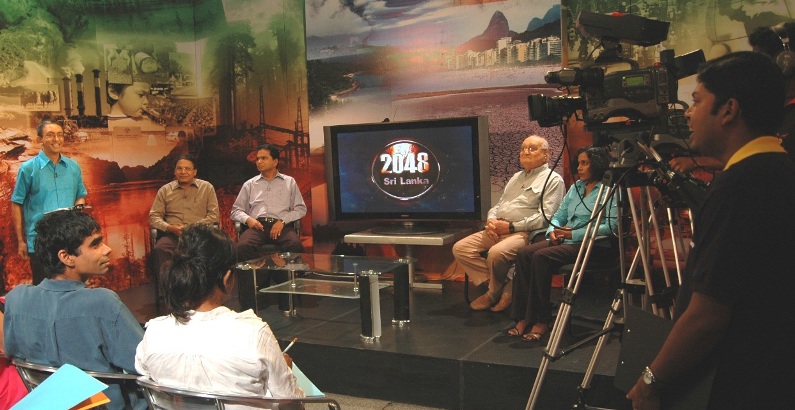
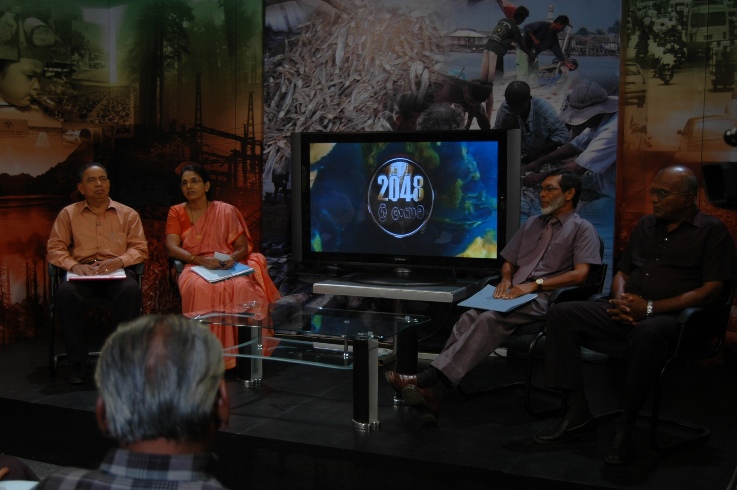
This week’s panel comprises (seated left to right in the photo below): Professor Sarath W Kotagama, Professor of Environment Science, University of Colombo; Renton de Alwis, Chairman, Sri Lanka Tourism Development Authority; Dilhan C Fernando, Marketing Director, MJF Group; and Jeevani Siriwardena, Director – Product Management, Sri Lanka Export Development Board.

Sri Lanka 2048 panel on business and environment broadcast on 19 July 2008

The wide ranging discussion — looking at both domestic and international markets, and covering a range of industries — notes that many companies already address not just financial but also social and environmental bottomlines. Adopting cleaner production practices have helped increase profits through being thrifty with resources and careful with waste.

The debate also looks at the findings of a survey that IUCN and the Ceylon Chamber of Commerce carried out last year of 45 companies on their corporate social responsibility (CSR) policies and practices. It revealed that a significant number of companies are actively applying CSR principles, with slightly over half (53%) already having environmental components in their CSR (known as CSER). The survey also found that local companies were stronger on CSR/CSER than the local operations of multinational companies.

As some panelists and audience members argue, embracing sound environmental practices goes well beyond CSR. With rising consumer awareness and greater scrutiny of how companies source materials and energy, ‘going green’ has become an integral part of responsible corporate citizens.

Sri Lanka 2048 debates are co-produced by TVE Asia Pacific, an educational media foundation, and IUCN, the International Union for Conservation of Nature, in partnership with MTV Channel (Private) Limited. This editorially independent TV series is supported under the Raising Environmental Consciousness in Society (RECS) project, sponsored by the Government of the Netherlands.

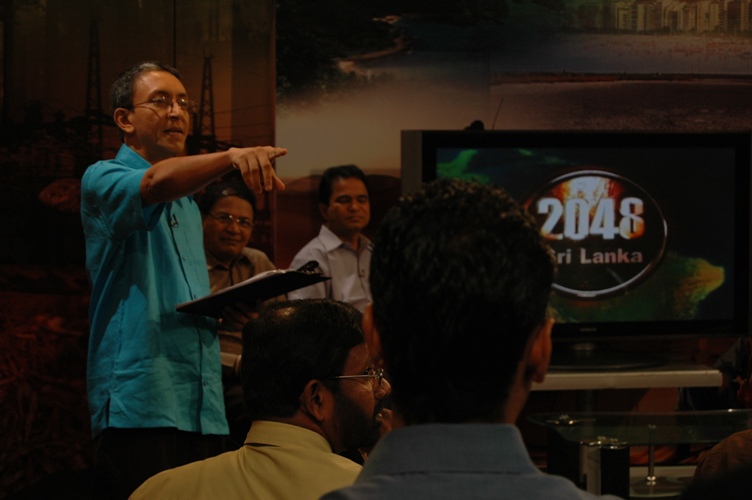
Sri Lanka 2048 - Nalaka briefing audience just before recording starts...

Wherever you are, Anita, I hope you were watching our show tonight — and hopefully nodding… When you insisted that businesses must care for community and the environment, you were so ahead of the pack. We’re still struggling to catch up.

Nalaka with panelist Jeevani Siriwardena
On the set of Sri Lanka 2048: Nalaka with panelist Jeevani Siriwardena

Photos by Amal Samaraweera, TVE Asia Pacific

Mobile phones in Sri Lanka: Everyman’s new trousers?

Mobile phones - social leveller in Sri Lanka

Mobile Phones in Sri Lanka: Everyman’s new trousers?

This is the title of my latest op ed essay, published this week on Groundviews, the leading citizen journalism website in Sri Lanka.

In this, I try to place in a social and cultural context a series of discriminatory laws, regulations and taxes that my native Sri Lanka has introduced – or threatened – in the past few months all aimed at mobile phones, and only mobiles.

This, despite the fact that the proliferation of mobiles has brought telecom services within reach of millions of Sri Lankans in the past decade, helping raise the country’s overall tele-density (mobiles+fixed phones) to 54 telephones per 100 population. With over 11 million SIMs issued, mobiles today outnumber fixed phones by three to one.

In my essay, I cite specific examples, and ask the crucial questions:

Why is this already licensed and regulated technology often targeted for ‘special treatment’ by different arms of government?

Where is this wide-spread suspicion and hostility towards mobiles coming from?

I argue that it is rear-guard action by the traditional elite and bureaucracy who’d rather not allow such digital empowerment to spread. And this has historical parallels.

Here’s the crux of it:

“There is a numerically small (but influential) privileged class that resents information and communication access becoming universal. They might talk glibly in public on using ICTs for social development or poverty reduction. But back inside the corridors of power, they make policies and regulations to undermine the very utility of these tools. This is no accident.

“The mobile phone is the biggest social leveller in Sri Lankan society since the trouser became ubiquitous (initially for men, and belatedly for women). Our elders can probably recall various arguments heard 30 or 40 years ago on who should be allowed to wear the western garb: it was okay for the educated and/or wealthy mahattayas, but not for the rest. Absurd and hilarious as these debates might seem today, they were taken very seriously at the time.

“Make no mistake: the mobile is the trouser of our times –- and thus becomes the lightning rod for class tensions, petty jealousies and accumulated frustrations of an elite that sees the last vestiges of control slipping away.

Read the full essay on Groundviews

Relevant to this discussion is a short film that TVE Asia Pacific produced for LIRNEasia in late 2007, summarising the findings of the latter’s large sample survey on tele-use at the bottom of the pyramid in five emerging markets (which included Sri Lanka).

TVEAP News, Nov 2007: Film highlights telephone revolution in Asia’s emerging markets

Watch the film online:

Teleuse@BOP – Part 1 of 2

Teleuse@BOP – Part 2 of 2

Photo courtesy TVE Asia Pacific

TV Southasia: Nothing official about this, yipee!

TV South Asia

Nearly one year ago, I wrote a blog post titled: Channel South Asia? Yes and No!

My closing words at the time were:
“I, for one, am relieved that South Asian governments are unlikely to come together in such a venture – we’ve suffered long enough and hard enough with our state-owned, government-controlled, ruling party mouthpieces (both radio and TV) that pollute our airwaves (a public commons) every day and night. Euphemistically called ‘national television’, these conduits of governmental propaganda have progressively lost audience share — and influence — since private channels started operating in the early 1990s. They are today reduced to vanity channels for vane politicians and bureaucrats. The mass audience has long ago abandoned them. I’d rather take chances with a South Asian Murdoch, than with our unaccountable, selfish governments.”

Chevaan Daniel, head of Sri Lanka’s enterprising Channel One MTV, posted a comment soon afterwards, on 27 July 2007, saying: “Maharaja Channels have pioneered this for Sri Lanka, by joining together in an initiative involving media companies from India, Pakistan, Nepal and Bangladesh to launch ‘The SouthAsian’. This collaboration includes a weekly programme produced in Calcutta, aired at the same time in the region. The next step is indeed a SouthAsian Channel, which we are working towards.

Well, I’m delighted to find that over the past 12 months, they have indeed been investing time, creative effort and money in this venture. TV Southasia is now a reality!

It’s a collaborative venture of commercial broadcasters in five countries of South Asia, who have joined hands to produce and share content across their national borders. Mercifully, no governments are involved and certainly none of the state-owned broadcasters (Babu TVs) whose lack of vision and creativity is only matched by their depleting audiences these days.

TV Southasia

Indeed, there’s nothing official about TV Southasia (TVSA), and that’s to be celebrated on its own merit. And if they get it right, TVSA founders — Rtv of Bangladesh, TARANEWS of India, Image Channel of Nepal, Aaj TV of Pakistan and News 1st of Sri Lanka — can tap into an enviably large audience. Between them, their countries have more than 1.5 billion people, most of who have access to television.

TVSA founders are taking one step at a time, perhaps knowing very well that cross-border ventures in South Asia need to be nursed slowly and incrementally, while dealing with assorted historical hang-ups and tonnes of red tape (or these days the colour could well be saffron or khaki, depending on where you live!).

It all started when a group of broadcasters and activists from across South Asia came together in Kolkata in December 2006 and agreed to forge the Southasian initiative. They swapped content to start producing a half-hour magazine programme (containing news analysis, music, features and interviews) from April 2007. Called Southasian, it was produced by Taranewz drawing on content from the participating channels, who then broadcast it weekly and also made it available online.

Taking the next logical step, the five broadcasters decided in August 2007 to form a channel, branded as TV Southasia. It started being previewed on 19 April 2008.
Read more about TV Southasia on its own website

The channel is being distributed by Thailand’s ThaiCom5 satellite, and would be available through cable operators across South Asia. It’s an English language channel, based on the reality that English is the only link language shared and understood by all countries of South Asia.

TVSA says it’s concentrating on talk shows, interviews, lifestyle, music, short films, sports, cuisine and quiz — most of this content is already available through many national channels and occasionally from global channels too. But TVSA can bring in a trans-boundary, pan South Asian outlook which is largely missing in these channels. In fact, it would be refreshing to see a TV channel covering South Asia as a whole, without giving into the frequent pressures or temptations of national tribalism and geopolitical posturing that we see all the time on both BabuTVs and many commercial channels.

Click here for programme lineup on TV Southasia

I have so far only caught glimpses of their offering, when Channel One MTV shows the Southasian magazine show. Going by this limited exposure, I can confirm that the products of this collaboration are superior to what BabuTVs have been struggling to do for two decades through the very official (read: officious and unimaginative) framework of SAARC Audio-Visual Exchange, or SAVE.

Started in 1987, just two years after the South Asian governments formed the regional grouping called South Asian Association for Regional Cooperation or SAARC, SAVE brought together the so-called national broadcasters in radio and TV. Trapped in inter-governmental bureaucracies, they tried to share and carry each other’s broadcast content. The officially sanctioned programmes, often made by committees, completely failed to capture the diversity and vibrancy of what’s going on in each South Asian country that interests the rest of the sub-region. I have no idea if SAVE still exists, because I don’t watch BabuTV anymore (does anybody?). Even in its formative days, I could tell that SAVE was beyond saving…

TV Southasia

Enter TV Southasia – and not a moment too soon. As its website says: “It is for the first time in history that the private electronic media channels have come together and have formed a collaborative channel sharing the same view points on diversity, heritage, bondage and possibilities.”

Unlike many broadcast ventures, TVSA declares its agenda – and it’s a lofty one. It wants to promote highly desirable values like liberalism, scientific temperament, education, heritage and cultural diversity. Rather courageously, it also declares what it is explicitly opposed to, which includes superstition, fundamentalism, corruption, violence, cultural hegemony and communalism — the long and depressing list of evils that keeps hundreds of millions of South Asians in misery, fear and trapped at the bottom of the development ladder. Read TVSA’s vision, mission and ideals

This agenda resonates with the equally passionate, secular idealism of Ujala TV, another satellite broadcast venture aimed at beaming to South Asia since mid 2006. I have been cheering them from the beginning, while my organisation TVE Asia Pacific has been a regular supplier of factual programming for them. Read my July 2007 blog post on Ujala TV – Enriching South Asian airwaves

Well, we need as many idealists as we can find in South Asia. Encouragingly, TV Southasia has already involved Himal Southasian founder and editor Kanak Mani Dixit, a great champion of people-to-people collaboration in South Asia. Perhaps it’s due to Kanak’s influence that the brave new channel is spelling Southasia as one word, as Himal Southasian has been doing for some years now. It might seem an aberration in spelling to some, but in fact, it separates these entirely unofficial, people’s ventures from the many committees and initiatives of the official SAARC, which are endlessly meeting yet constantly failing to forge regional trust, cooperation and cohesion.

The official, officious and unproductive SAARC will be on parade once again at the next Summit due in late July 2008. My SAARCasm is shared by many journalists, intellectuals and activists across South Asia who have tracked the origins and evolution of this grouping since its founding in Dhaka in 1985. To put it charitably, at 23 years of age, SAARC has the mental development of a 3-year-old (if that). We only need to take a look at the People’s SAARC Declaration, adopted in Kathmandu in March 2007, to realise how much the official SAARC has failed to accomplish.

That’s in spite of its frequent and highly expensive meetings. Alas, this time they have chosen to meet in my city of Colombo, which means – after footing a massive Summit bill of LKR 2.8 billion (over USD 27 million) – we ordinary citizens will very likely be kept under virtual house arrest for its duration. All in the name of security, of course.

I hope I can catch a bit more of TV Southasia when the visiting SAARC-babus drive us off our own streets.

Photos and images all courtesy TV Southasia

Below – photos from TV Southasia launch

Not in my backyard: The last urban oasis under siege

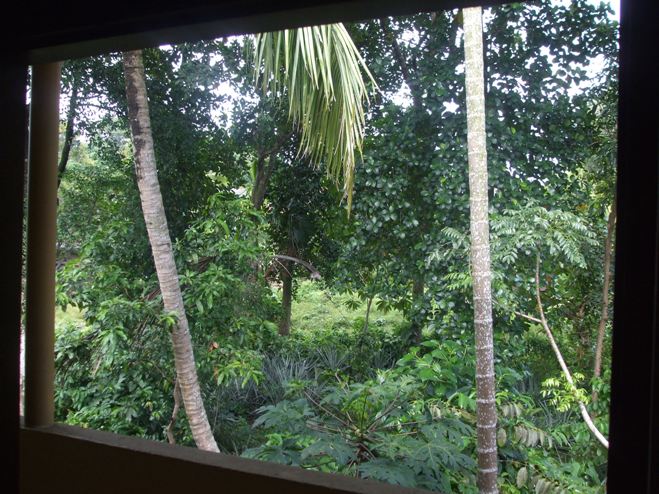
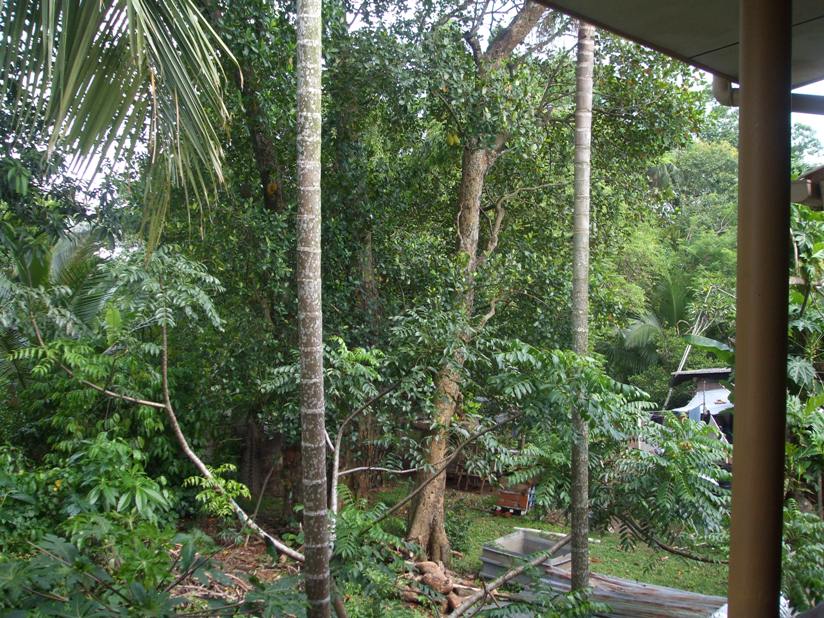
This is a view of what I see when I look out from the upstair back balcony of my home. And I’m so privileged to have this much of greenery in my backyard.

I live in Pagoda, Nugegoda, a suburb of Sri Lanka’s capital Colombo. This is a crowded, urbanised area, but there still are a few pockets of greenery left. Like this one, that I clicked with my daughter Dhara’s camera on June 5, World Environment Day.

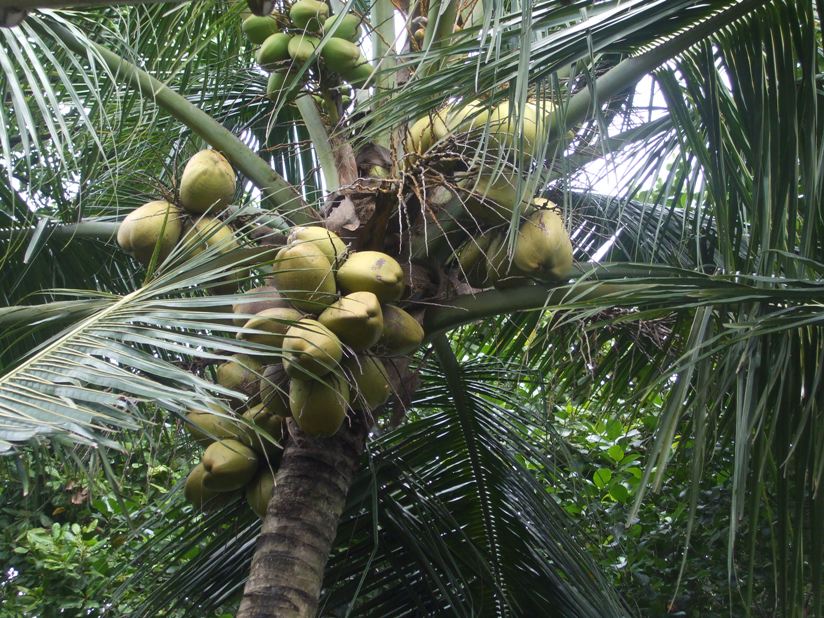
All this greenery is packed into an area no more than a few hundred square metres in extent – it’s really small. But at the same time, it has a concentration of larger trees like coconut, jak fruit and arecanut as well as a good deal of shrubs and undergrowth. And it attracts creatures who are looking for an oasis in a neighbourhood that is increasingly built up.

Last Christmas, I gifted a small, inexpensive digital camera to Dhara, who just turned 12. She has been having lots of fun in the past few months, shooting people and what little of Nature that she can find in our corner of suburbia.

It’s no rainforest for sure, but she’s captured images of several species of birds, snails, a lone monkey and even a couple of rabbits (Okay – these are being raised by a neighbour and aren’t exactly in the wild! But 30 years ago, we did find rabits in the wild in this same area…)

But this level of biodiversity might not last too long. In recent weeks, the little patch of suburban jungle in my backyard has come under siege. Apparently a change of ownership has taken place, and the new owners are drawing up plans to clear the land and build one or more houses. Already, some of the larger trees have been felled (they didn’t seem to value the timber either – they just chopped the trees and carried them away – for dumping?).

So in the near future, as the march of ‘progress’ claims yet another bit of unbuilt land, these photos may be all we are left with.

By happy coincidence, the same week my friend and eminent scientist Ray Wijewardene emailed me this poem which I first read many years ago. I’m very grateful to Ray for sharing this in the same week that I was lamenting the imminent demise of my wonderfully green backyard.

TREES…
A poem by Joyce Kilmer

I think that I shall never see
A poem lovely as a tree

A tree whose hungry mouth is pressed
Against the earths sweet flowing breast

A tree that looks art God all day,
And lifts her leafy arms to pray.

A tree that may in summer wear
A nest of robins in her hair;

Upon whose bosom snow has lain;
Who intimately lives with rain.

Poems are made by fools like me,
But only God can make a tree.


Photos by Dhara and Nalaka Gunawardene

Lakshani: A child of the sea travels beyond the seas…

Lakshani photo by TVEAP

Our teacher said our country is small and is surrounded by the sea….she showed it on the globe.”

With these words, young Lakshani Fernando (photo, above) begins telling us the compact story of her short life.

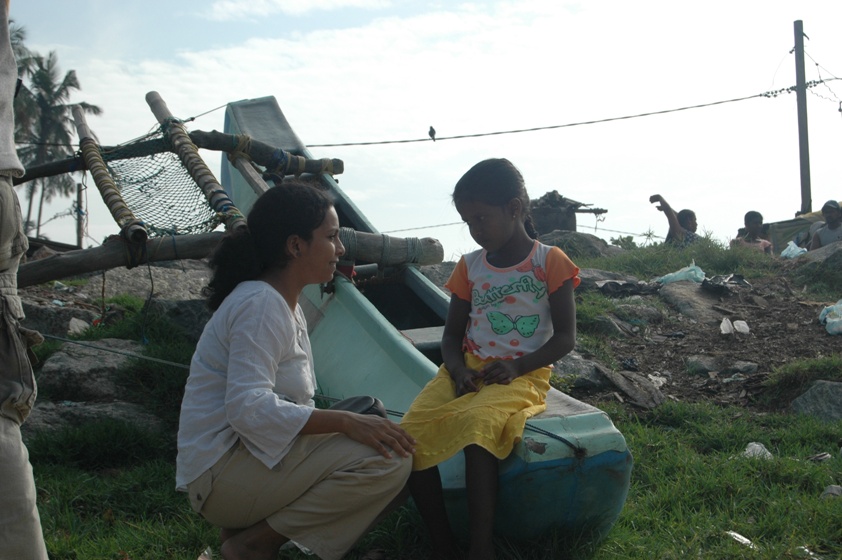
Lakshani, 9, has lived by the sea (Indian Ocean) from the time she was born. When she was just six, the Asian Tsunami of December 2004 destroyed their beachfront house in Koralawella, Moratuwa, on Sri Lanka’s western coast. More than three years later, when my colleague Buddhini Ekanayake met Lakshani in March 2008, the family was still struggling to raise their heads from that massive blow.

A day in Lakshani’s life is the story of a short, 3-minute film that Buddhini produced for TVE Asia Pacific a few weeks ago. It’s part of an Asian and African television co-production project that is about, for and by children.

In the film, Lakshani shares the highlights of a typical day. That includes going for a walk on the polluted beach with her fisherman father, spending a few hours at the nearby school and playing with neighbourhood children. While at it, she tells us her wishes for a cleaner beach and a better neighbourhood.

Buddhini called Lakshani a ‘Child of the Sea’. Even the cruel waves of the tsunami didn’t scare Lakshani away for too long.

I love to play with waves…” Lakshani says towards the end of the film. Then she looks far out at the horizon, and talks again. “There are ships far out at sea. That’s all there is…

She might not yet imagine lands beyond ships and waves, but last week, her story travelled across the seas. Over 500 broadcast media managers, journalists and researchers from around the world, who’d gathered in Kuala Lumpur, Malaysia, for Asia Media Summit 2008, had a glimpse of Lakshani when the first 90 seconds of the film was screened during plenary.

Elizabeth Smith, secretary general of the Commonwealth Broadcasting Association (CBA), chose an extract from Lakshani’s story to introduce the media initiative. Sitting in the audience, I immediately texted the news to Buddhini.

Watch “I am A Child of the Sea”:

This film forms part of a series that has 20 TV producers from 13 countries engaging in a co-production of a short programmes series (mini documentaries) about and for children. The series is the outcome of a regional project organised by the Asia Pacific Institute for Broadcasting Development (AIBD) in collaboration with the French Ministry of Foreign affairs, the Commonwealth Broadcasting Association (CBA), Thomson Foundation, Prix Jeunesse, Children and Broadcasting Foundation for Africa and RTM-IPTAR of Malaysia.

The project tries to capture cultural diversity through the eyes of children. When its concept first reached us, it was defined very narrowly in terms of ethnicity and/or religion. TVE Asia Pacific being a strictly secular organisation, we couldn’t fit into such a tight range. Besides, we realised that many modern day children have a self identity that goes above and beyond the race and religion that blind chance of birth assigned to them.

So we took an editorial decision: instead of doing a story that highlights factors that utterly and bitterly divide humanity (such as race and religion, both of which fuel the long-drawn war in Sri Lanka), we would look for a unifying factor. The tsunami’s killer waves, when they rolled in, didn’t care for our petty human divisions. For a few days and weeks following the tragedy, Sri Lanka was united in shock and grief in a manner I have never seen in my 42 years of living here. (Then we went back to killing each other again.)

The result of our search was Lakshani and her story captured in ‘I am a Child of the Sea’.

Buddhini chose to feature Lakshani after interviewing 10 children from different localities and a diversity of cultural backgrounds. (Never once did she ask for the child’s religion, which unlike ethnicity is not always apparent from the name.) There was some significance in featuring a child who identifies herself closely with the Sea in a country where tens of thousands of tsunami-affected people have still not come to terms with the sea. Even after the tsunami destroyed their home, Lakshani’s family moved to a ‘temporary’ shelter within sight of the sea. Thus, her story had a close association with the sea which formed part of her lifestyle, environment and culture.

Buddhini developed the script after several leisurely chats with Lakshani, based partly on the child’s own writing about herself. Filming the story took place in early March 2008, with the full consent of her parents, extended family and neighbours. Read more about the making of this film on TVEAP website and on Buddhini’s own blog.

TVEAP crew filming Lakshani's story

Lakshani’s story is symbolic at another level. It reveals how, despite receiving a massive outpouring of donations from all over the world, some tsunami-affected families are still struggling to put together their shattered lives. The litany of woes, missed opportunities and sometimes outright plundering of donations came out strongly in the first hand accounts of affected people (in India, Indonesia, Sri Lanka and Thailand) who spoke to us during the Children of Tsunami media project. Read our reflections on the project in Communicating Disasters book published in 2007.

Lakshani’s family is not typical of Sri Lanka’s tsunami affected persons. Unlike most such families, the Fernandos live on the western coast, relatively close to Colombo. Although wave action destroyed or damaged beachfront homes in these areas, most attention was focused on areas in the south, east and north of the island that were hit much harder. So those affected and living on the west coast have often been overlooked or dismissed lightly. In this sense, Lakshani’s family has some parallels with what I called ‘step-children of tsunami’.

There is a bit more cheerful post-script to this story. During several visits to Lakshani and family for researching, filming and editing this film, Buddhini (who has a daughter aged four herself) bonded with the girl. It became more than a mere film-making venture, and has led to a lasting relationship. Meanwhile, young voice artiste Shanya Fernando, who rendered Lakshani’s Sinhala voice into English for an international audience, has also felt an attachment to the ‘star’ of our film.

While the film was made with the informed consent of Lakshani’s family who received no material benefits for their participation, both Buddhini and Shanya have since presented some basic educational gifts to Lakshani — who is certainly in need of such help. And who am I to stand in the way of such gestures of human kindness?

Producer BUddhini with Lakshani

Photos by Amal Samaraweera, TVE Asia Pacific

Sri Lanka 2048: Talking today for a better tomorrow!

Sri Lanka 2048 - TV Debate series on sustainable futures for Sri Lanka

I’m just coming up for fresh air after two hectic weeks – this blog was silent during that time as I was deep immersed in doing something new and interesting.

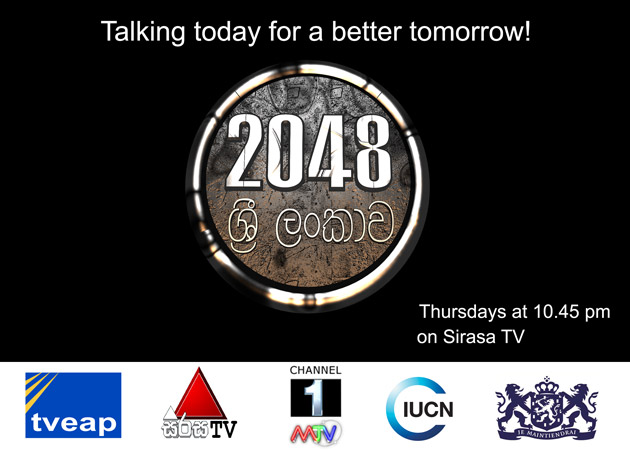
With my team at TVE Asia Pacific, I’m involved in producing a new TV series started airing on May 22 on Sri Lanka’s ratings-leading, privately-owned, most popular channel, Sirasa TV.

Named Sri Lanka 2048, it is an innovative series of one-hour television debates that explore prospects for a sustainable future for Sri Lanka in the Twenty First Century.

Each debate will involves -– as panel and studio audience -– over two dozen Sri Lankans from academic, civil society, corporate and government backgrounds. They are recorded ‘as live’ and broadcast every Thursday at 10.45 pm, which, in Sri Lankan TV viewing patterns, is the favoured time for serious current affairs and political programmes.

The debates are being co-produced by TVE Asia Pacific, the educational media foundation that I head, in partnership with IUCN, the International Union for Conservation of Nature, and MTV Channel (Private) Limited, which runs a bevy of radio and TV channels including Sirasa TV and Channel One MTV.

The editorially independent series will accommodate a broad spectrum of expertise and opinion.
The debates are based on topics such as managing our waste, reducing air pollution, protecting biodiversity on land and in the seas, and buffering communities from disasters. Two debates in English will look at the nexus between business and the environment, and coping with climate change.

Read detailed news story on TVEAP website
Read series line up and broadcast schedule

Sri Lanka 2048 image montage by The Nation newspaper

The series is based on the overall premise that Sri Lanka has abundant land and ocean resources that can be used to build such a future -– but it faces many challenges in taking the right action at the right time. We believe that public discussion and debate on issues, choices and alternatives is an essential part of this process. Read more on why this series.

Why 2048? For one thing, it’s the year Sri Lanka will mark 100 years of political independence. Being 40 years in the future, the year lies slightly more than a generation ahead, allowing ample time and opportunity to resolve deep-rooted problems of balancing development with conservation.

Sri Lanka 2048 follows an informal, talk show format that allows ample interaction between the panel and empowered audience. Although they take place within a clearly defined scope that enables some focus, all debates are unscripted.

Our amiable moderator Kingsly Rathnayaka (centre in the photo montage above), one of the most versatile presenters on Sri Lankan television today, keeps the panel and audience engaged. By design, we ask more questions than we are able to answer in a television hour (48 mins). But then, we don’t expect to resolve these burning issues in that time – all we can hope to do is to stretch the limits of public discussion.

Logistics and studio size limit the number of our audience to a two dozen. We’ve tried hard to ensure a good mix among them, drawn from all walks of life. To bring in additional voices and perspectives, we insert into each debate 2 or 3 short video reports produced in advance. These highlight solutions to environment or development problems that have been tried out by individuals, communities, NGOs, government agencies or private companies. Played at key points during debates, these help steer discussion in a particular direction.

Sri Lanka 2048 by TVE Asia Pacific

We are already receiving favourable media reviews and coverage. Here are some that appeared in English language newspapers (more have come up in Sinhala newspapers, the language in which most of this series is produced and broadcast):
The Morning Leader, 28 May 2008: Timely action to sustain Sri Lanka’s development

The Sunday Times, 18 May 2008: TV Debate series to create a sustainable future
The Nation, 1 June 2008: Pick the best at Sri Lanka 2048

Sri Lanka 2048 is the culmination of months of research, development and pre-production work carried out by TVE Asia Pacific’s production team in collaboration with IUCN Sri Lanka. Our preparatory work involved consultations with dozens of experts, activists, officials, entrepreneurs – and their various organisations or companies. We synthesize and package their information, opinions and experiences with the dynamic and creative production team at MTV Channel (Pvt) Limited.

The inspiration for this series came from my mentor Sir Arthur C Clarke, with whom I wrote an essay 10 years ago that outlined his personal vision for his adopted country in 2048. The celebrated futurist that he was, Sir Arthur often said that there is a range of possible futures, and our actions – and inaction – determine what kind of future actually happens. Desirable futures don’t just happen; they need to be worked on.

Sri Lanka 2048 is an attempt to discuss how Sri Lankans can pursue economic prosperity without trading off their good health, natural wealth and public order. This is not a series preaching narrowly focused green messages to a middle class audience. We want to rise above and beyond the shrill of green activists, and engage in informed, wide ranging discussions on the tight-rope balancing act that emerging economies like Sri Lanka have to perform between short term economic growth and long term health of people and ecosystems.

Contrary to popular perception, ‘sustainable development’ is not some utopian or technical ideal of environmental activists. It’s about creating a liveable society here and today – where everyone has an acceptable quality of life, ample opportunities to learn and earn, and the freedom to pursue their own dreams.

Doing good television takes a good deal of time, effort and money. This TV series is supported under the Raising Environmental Consciousness in Society (RECS) project of IUCN Sri Lanka, which is funded by the Government of the Netherlands. But neither is responsible for editorial content or analysis, which rests on my shoulders as the executive producer of the series.

And I, in turn, stand on the shoulders of dedicated, hard working production teams drawn from TVE Asia Pacific and MTV Channel (Pvt) Limited. Doing good television is all team work.
Sri Lanka 2048 - Fisheries panel at Sirasa Studio - Photo by TVEAP

All photos courtesy TVE Asia Pacific

Amitav Ghosh on Cyclone Nargis: High tech alone can’t save us!

Whenever Burma hits the international news headlines, I think of author Amitav Ghosh. His 2002 historical novel, The Glass Palace, was my introduction to Burma’s recent history. It describes – with historical accuracy and detail – how the British colonised a land of prosperity in 1824 and left it an impoverished nation in 1948.

I was intrigued, therefore, to read an excellent op ed essay by Amitav Ghosh in The New York Times of 10 May 2008. Titled When Death Comes Ashore, it is a commentary on the aftermath of Cyclone Nargis that particularly hit Burma in recent days. Ghosh offers both comfort and worry.

The bad news, as he puts it, is that “for the rapidly growing countries that surround the Bay of Bengal there is an increasing urgency to find a way to protect themselves. They have experienced some of the world’s most devastating storms.”

Courtesy Wikipedia

He makes a strong call for cooperation among the countries who surround the Bay of Bengal, which means Bangladesh, Burma, India, (part of) Indonesia and Thailand.

As he says: “Nation-states tend to see their interests as being confined within their own borders. But the reality is that the people who live around the Bay of Bengal have a vital interest in common that they do not share with their compatriots in the hinterlands: they are joined by the furies (and let it be said also, the blessings) of that body of water.”

To me, the most important point he makes is about disaster preparedness, a topic we covered in some depth and detail in Communicating Disasters: An Asia Pacific Resource Book that I co-edited last year.

“Recent experience has demonstrated in spectacular ways that rich, technologically advanced nations are not invulnerable to extreme weather. What has also been demonstrated, but more quietly, is that a nation need not be wealthy or technologically advanced to be well prepared for natural disasters.”

Ghosh talks about Mauritius, a small Indian Ocean island that meteorologists call a ‘cyclone factory’, which has “evolved a sophisticated system of precautions, combining a network of cyclone shelters with education (including regular drills), a good early warning system and mandatory closings of businesses and schools when a storm threatens.

He adds: Mauritius is a country that has learned, through trial and experience, that early warnings are not enough — preparation also demands public education and political will. In an age when extreme weather events are clearly increasing in frequency, the world would do well to learn from it.”

Let’s hope the Indian Ocean rim countries – especially those that share the Bay of Bengal’s blessings and lashings – would heed the celebrated Indian author’s call. After the 2004 tsunami, we saw a flurry of activity to set up high-tech and high cost early warning systems for future tsunamis. The United Nations and development donors huddled together in various exotic locations of our region to work out the details.

But I wrote in a SciDev.Net opinion piece in December 2005: “Setting up a state-of-the-art, high tech and high cost system is not a solution by itself. Because the most advanced early warning system in the world can only do half the job: alert governments and other centres of power (e.g. military) of an impending disaster. The far bigger challenge is to disseminate that warning to large numbers of people spread across vast areas in the shortest possible time“.

I called it the Long Last Mile (sorry, metric fans, it just doesn’t read right to say the last kilometre!), a phrase that I also used in the book chapter and the short film that I scripted for TVE Asia Pacific in 2007.

LIRNEasia’s National early warning system for Sri Lanka

LIRNEasia’s 2006-2007 project to Evaluate the Last Mile Hazard Information Dissemination

Read the full essay: Death Comes Ashore, By AMITAV GHOSH, in The New York Times, 10 May 2008
(requires free registration to read online)

H R Premaratne: The Lankan artist who built a space station for 2001

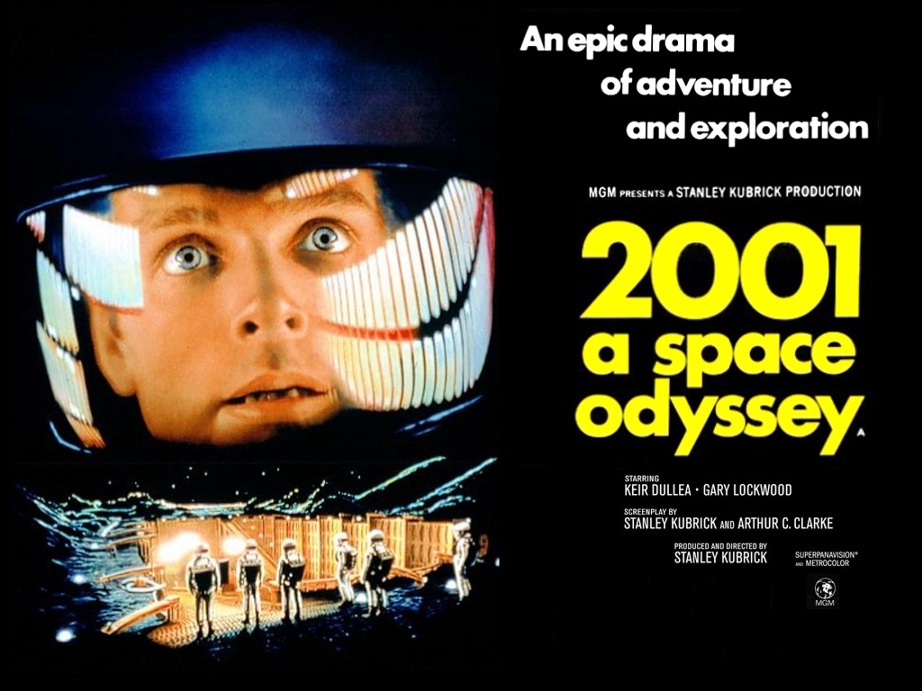
2001 A Space Odyssey movie poster from 1968

The Sunday Observer, Sri Lanka, reproduces this story on 11 May 2008

This month marks the 40th anniversary of the release of classic science fiction movie 2001: A Space Odyssey. The Academy of Motion Picture Arts and Sciences held a commemorative screening last week in Hollywood’s MGM theatre.

In May 1964 director Stanley Kubrick and science fiction author Arthur C Clarke embarked on a creative collaboration: a novel and a screenplay inspired by Clarke’s 1950 short story “The Sentinel.” In December 1965, many ideas, drafts, and titles later, filming commenced on 2001: A Space Odyssey. The futuristic epic, placed in the first year of the new millennium, premiered in the US in April 1968 — and went on to become one of the finest science fiction movies made.

Official MGM trailer for 2001: A Space Odyssey

As the Academy noted on its website: “With its epoch-spanning storyline and its nearly dialogue-free script, 2001: A Space Odyssey combined the production value of Hollywood film-making with the artistic sensibility of European cinema. Its cerebral approach to the genre helped usher in a new, more literate age of science fiction cinema, and its extraordinary imagery – the widescreen 70mm cinematography of Geoffrey Unsworth, the visually dazzling and scrupulously researched production design, and especially the Oscar®-winning special effects – instantly became the benchmark by which all space films would be judged.”

The film’s best known connection to Sri Lanka is that its co-creator Arthur C Clarke had by then settled down there. During the 1964-68 period that he was associated with the production, Clarke would make periodic returns to his Colombo home — first from New York, where he brainstormed with Kubrick for weeks, and then from England, where the movie went into production. Filming of 2001 began in December 1965 in Shepperton Studios, Shepperton, England. Soon, filming was moved to MGM-British Studios in Borehamwood.

The anniversary coverage has triggered my memories of another, much less known Sri Lankan connection with the film. The accomplished Sri Lankan engineer, painter and sculptor H R (Hapugoda Rankothge) Premaratne worked on the movie’s special effects, all of which was hand-made. (Not a single computer was involved in creating the movie, which still awes movie-goers many of who take computer generated imagery, or CGI, completely for granted today.)

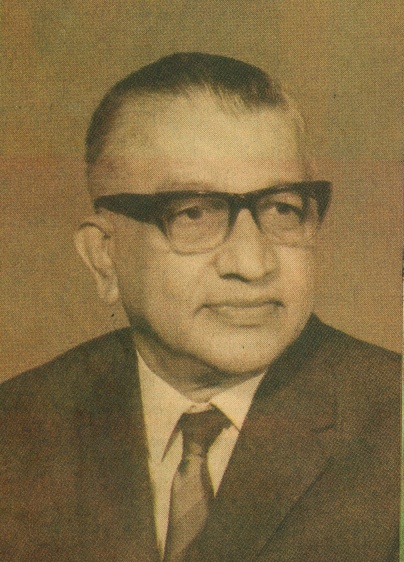
H R Premaratne

I got to know Premaratne (in photo above, affectionately known as Prema) in the late 1980s when he was special assistant to Arthur Clarke, in whose Colombo office I started working as a research assistant in 1987. I have just unearthed, from the depths of my own archives, an illustrated profile I wrote on Prema which appeared in The Island newspaper (Sri Lanka) on 26 January 1991. In a 2,000-word biographical sketch of the man that veteran journalist and biographer D B Dhanapala once called ‘a modern day Viswakarma’, I chronicle how Prema came to be associated with the movie’s production.

Prema had just retired in 1965 as Director of the Department of Public Works – in other words, the Ceylon government’s chief builder. By happy coincidence, 2001 was just entering its production stages around this time, so Clarke put Prema in touch with the Borehamwood Studios where elaborate sets for space scenes were being constructed. There, Prema worked with British and American set designers and special effects specialists.

For his efforts, he was listed as a member of the full production crew – even though he would go uncredited in the movie itself (as did dozens of others). When the Internet Movie Database was created decades later, he would also earn himself an entry there as Hapugoda Premaratne.

Space station in the movie 2001, envisaged in the mid 1960s

Harry Lange, chief designer of Hawke Films Limited who was in charge of production designs, later wrote to Prema: “Not one model could have been brought to the exceptionally high standard required in this production without the skills and imagination of people like yourself.”

Harry Lange recalls the making of 2001

“Prema was a very skilled architect, his best known work being the magnificent Independence Hall,” Clarke recalled years later in his tribute to Prema upon the latter’s death in the early 1990s. “During his stay in England in the mid 1960s, I put him in touch with Stanley Kubrick, who was then making 2001: A Space Odyssey. Prema’s expertise in art and engineering was very valuable in the production of the movie’s special effects, and he assisted in the building of the spectacular space station.”

Excerpt from 2001: Arrival at the space station in Earth orbit

Prema capped his long and illustrious public service as Sri Lanka’s ambassador to Burma, concurrently accredited to Thailand, Laos and Singapore (1974-78). From 1983, he worked as Clarke’s special assistant, while pursuing his own painting, sculpture and design work from his home at Wijerama Mawatha, Colombo — a short walk from Clarke’s own residence at Barnes Place.

I remember visiting Prema at home on several occasions. After his wife passed away and son moved overseas, he lived alone in a large, old house that was teeming with works of art – it was like a private art gallery or museum. All over the garden, there were scaled replicas of famous rock sculptures from places like Anuradhapura and Polonnaruwa. He pioneered a method of creating fibre glass replicas of archaeologically valuable statues and artefacts. These were used to showcase the best of Sri Lanka in major exhibitions in London, Washington DC and other capitals of the world in the 1980s.

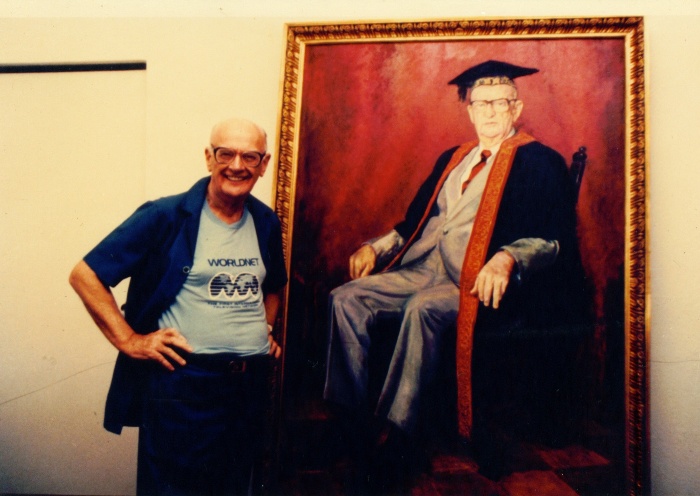
In the late 1980s, Prema also painted a life-size portrait Arthur C Clarke as Chancellor of the University of Moratuwa, which is still on display at the Arthur Clarke Centre there (photo, below).

It’s a bit cliched to say this, but they don’t seem to make renaissance men like H R Premaratne anymore. He straddled the arts and sciences with equal dexterity and with impressive results in both spheres. He not only built bridges in newly independent Ceylon, but was himself a bridge between the Two Cultures of the sciences and humanities.

Just like his friend Arthur C Clarke was…

Sir Arthur Clarke with his Chancellor portrait by H R Premaratne, circa 1990

More information on making 2001: A Space Odyssey is found in the documentary, 2001: The Making of a Myth.

The making of 2001: A Space Odyssey, by Richard Boyle (The Sunday Times, Sri Lanka, November 1998)