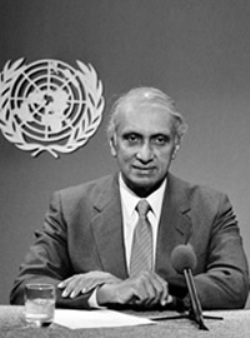
Gamani Corea, Secretary General of UNCTAD (1974-1984)
“I have a rather large nose that dominates my photos,” said Gamani Corea as I asked him to pose for a photo in his spacious garden at Horton Place, in the heart of residential Colombo.
“Then how come your nose isn’t as famous as JR’s?” I asked as I snapped a few photos. That reference was to our first Executive President J R Jayewardene, whose prominent nose was the delight of cartoonists for decades.
Economist, diplomat and international civil servant Dr Gamani Corea (1925-2013), one of the most accomplished Sri Lankans of the 20th century, had just given me an interview.
It was sometime in late 1990. Dr Corea was dividing his time between Colombo and Geneva. I was a young science reporter working for Asia Technology magazine published from Hong Kong
A few weeks earlier, I’d suggested to my editors a story about Dr Corea’s proposal to revamp the Colombo Plan — an inter-governmental organisation to strengthen economic and social development of countries in the Asia Pacific region — with a new focus on science and technology.
He didn’t know me before, but turned out to be both approachable and amiable. He matched my eagerness with energetic and optimistic answers. We chatted for the better part of an hour.
Dr. Corea, who served as Secretary-General of UNCTAD from 1974 to 1984, died on 3 November 2013 aged 87. As UNCTAD website noted, he was known for his vision of a rebalanced international economic order that would provide fairer treatment to developing countries.
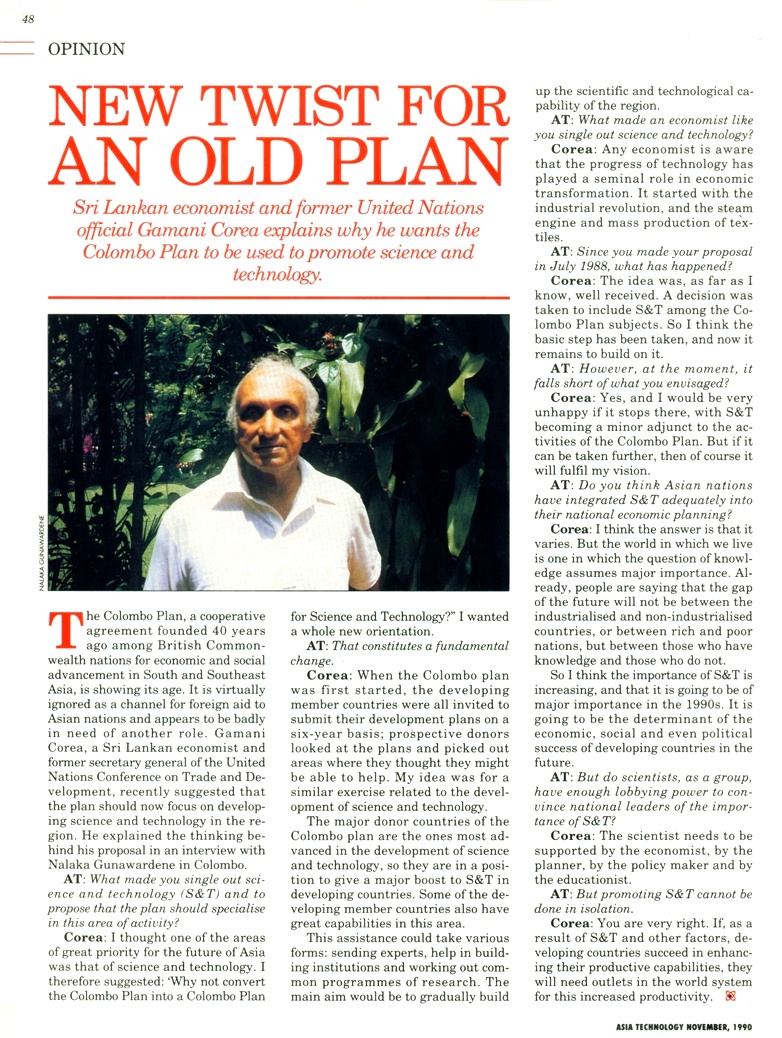
I wrote up that interview for Asia Technology November 1990 issue. Here’s a scan, illustrated by my photo with his not-so-famous nose:
Dr Gamani Corea interviewed by Nalaka Gunawardene – Asia Technology, Nov 1990
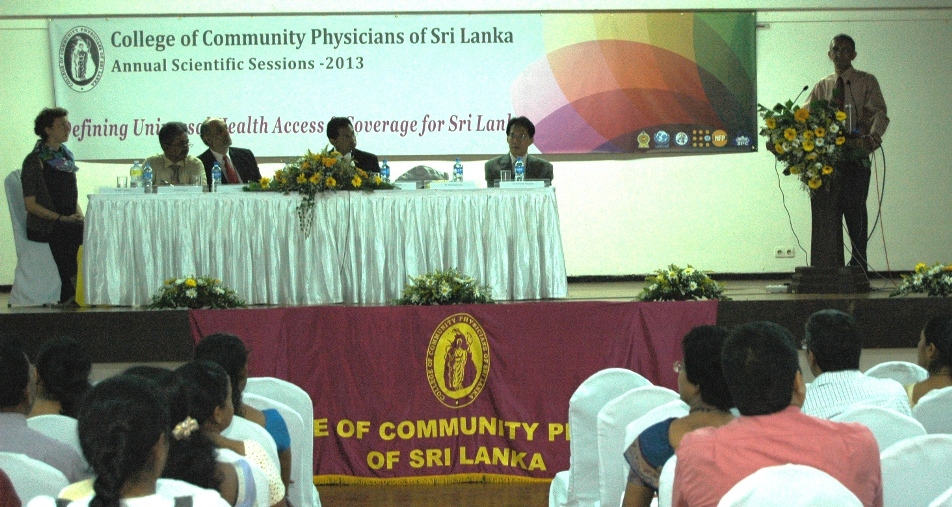
In this week’s Ravaya column (in Sinhala), I explore the nexus between public perceptions and public health – a topic I discussed in a recent talk to the College of Community Physicians Sri Lanka held in Colombo on 23 – 24 September 2013.
Nalaka Gunawardene speaks at Annual Scientific Sessions of College of Community Physicians Sri Lanka, 24 Sep 2013 Colombo – Photo by Janaka Sri Jayalath
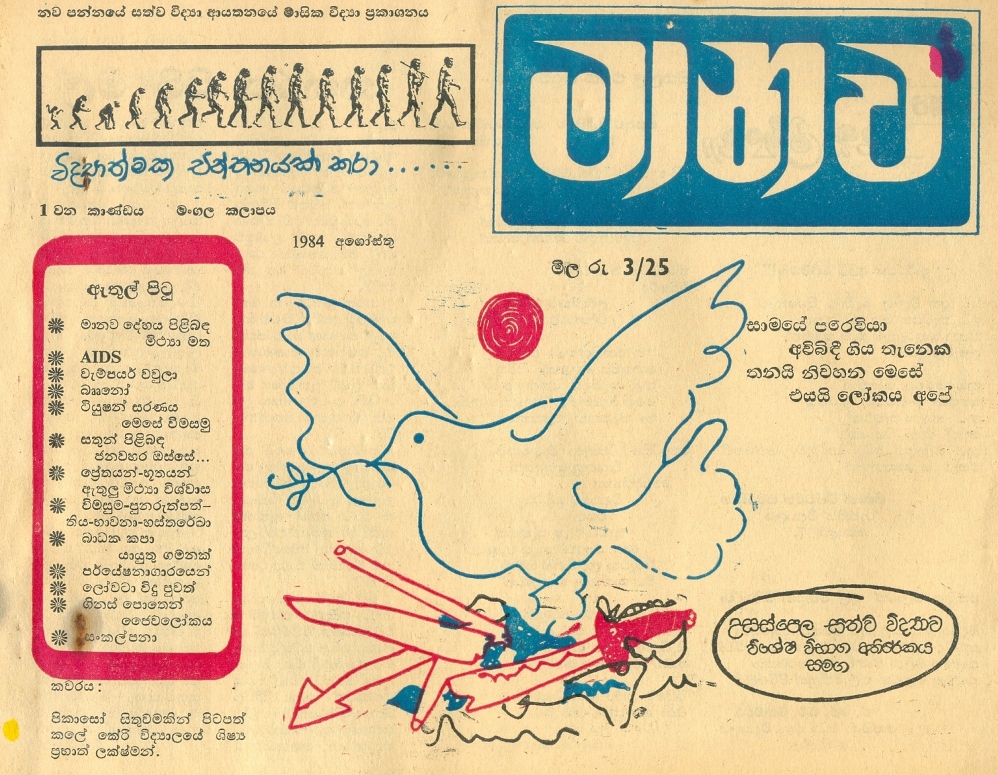
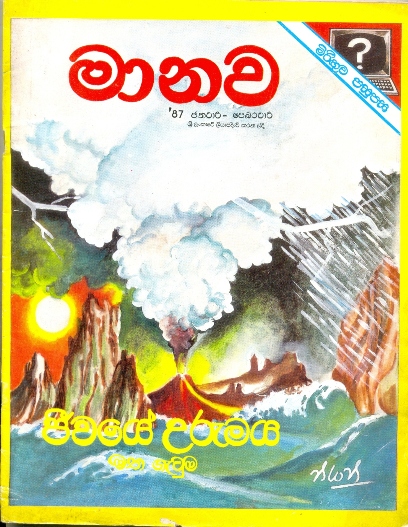
My latest book is dedicated to Asanga Abeysundara who was my zoology teacher 30 years ago, as well as my earliest editor-publisher. For several years in the 1980s, he edited and published (in properly printed form) a progressive science magazine in Sinhala named Maanawa (meaning ‘human’).
This non-profit publication, started in 1978 as a wall newspaper at the University of Colombo by its founder when he was an undergraduate there, evolved into a printed magazine in 1984 with a small circulation and loyal readership.
Maanawa Sinhala science magazine first print issue, Aug 1984
It was a platform for aspiring young writers – many of them in school or university at the time – to write about science, technology and their impact on society. As part of the editorial team, I remember we covered big issues like the origins of life, cost-benefits of space exploration, HIV/AIDS and human evolution.
Maanawa was entirely a labour of love: everybody, including the editor, worked for free. But printers and distributors charged for their services, which the limited sales couldn’t recover. So, despite passion and voluntary editorial inputs, the magazine stopped printing after sometime.
Yet, showing resilience and innovation, Maanawa became the first Sinhala publication to produce an Internet edition in 1996 — the year after commercial connectivity was introduced in Sri Lanka. The web edition, which played a pioneering role, is no longer online.
I have written this week’s Ravaya column (in Sinhala) about Maanawa.
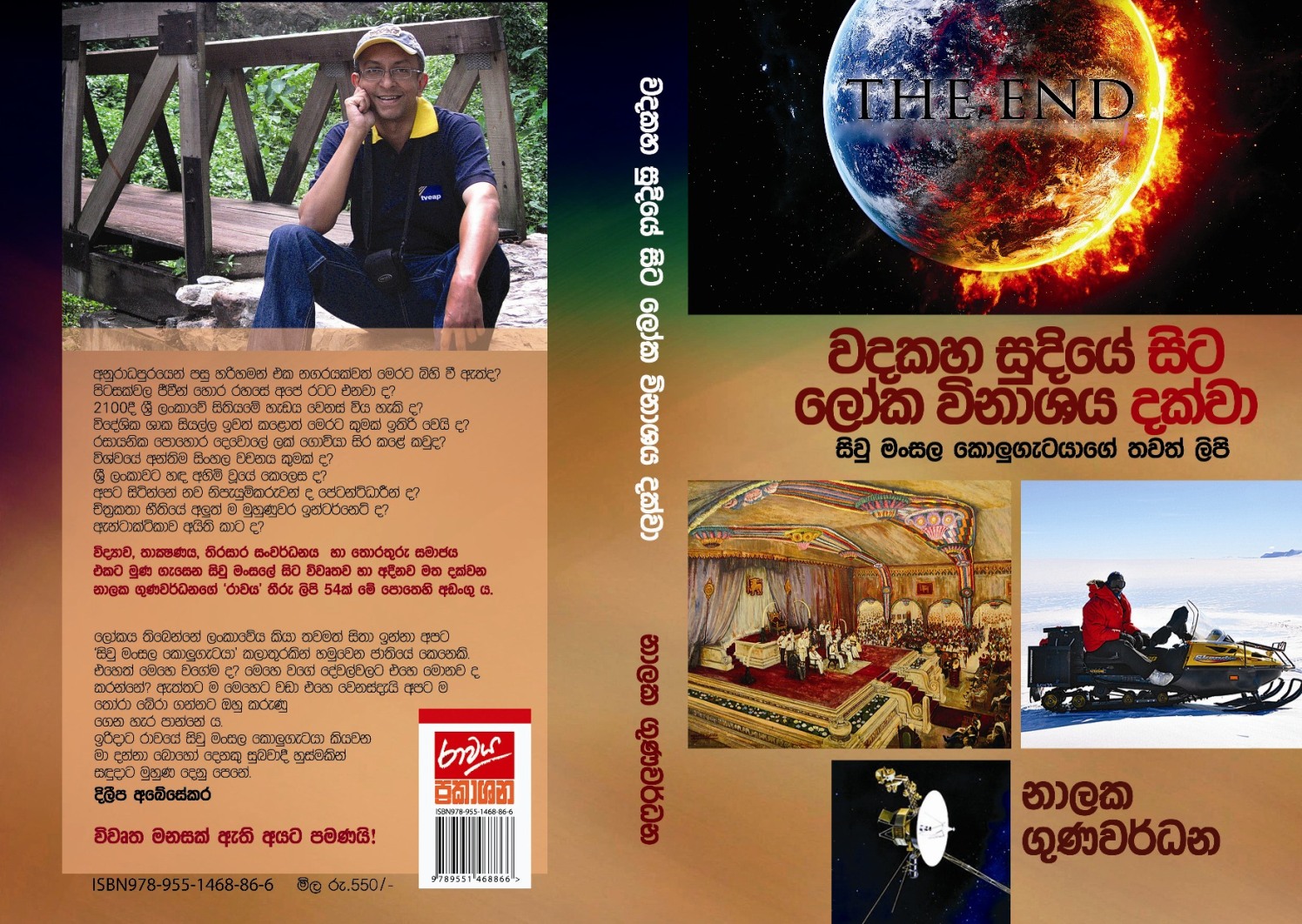
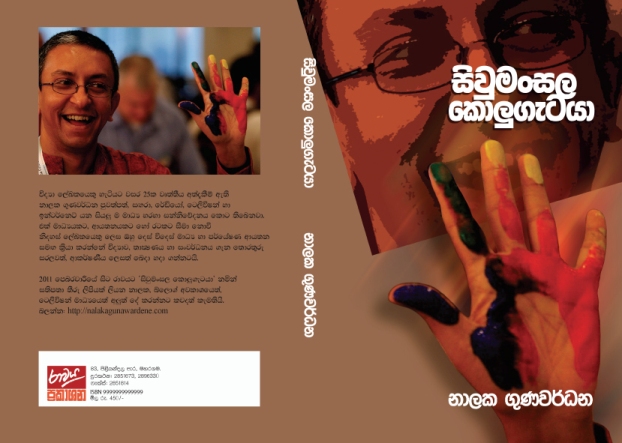
Cover of Sivu Mansala Kolu Getaya Book 2 by Nalaka Gunawardene, pub Sep 2013
PROMO NOTE FOR MY LATEST BOOK:
Science writer Nalaka Gunawardene’s latest Sinhala book, Wada Kaha Sudiye Sita Loka Winashaya Dakwa, will be released at the Colombo International Book Fair that starts on 14 September 2013.
Through 54 columns, the book offers personalised insights and non-technical analysis related many current issues and topics in science, technology, sustainable development and information society in the Lankan context. It is written in an easy, conversational Sinhala style rich in metaphor and analogy.
In particular, this collection probes how and why Lankan society is increasingly prone to peddling conspiracy theories without critical examination or rational discussion. From astrological hype linked to end of the world in 2012 to claims of mass poisoning via agrochemicals, Nalaka seeks to separate facts from hype, conjecture and myth.
The book defies easy categorisation, as it covers topics as diverse as alternative histories, agrochemical misuse, disaster management, Internet censorship, Antarctic exploration, asteroid impacts, cricket history and road safety.
“I seem to have outgrown the neat label of science writer,” says Nalaka. “Indeed, the very title of my column suggests how I sit at the intersection (or confluence) of science, development, mass media and information society. From that point, I explore tensions between modernity and tradition — and ask more questions than I can easily answer!”
In his quest for clarity and reason, Nalaka talks to researchers, activists and officials. He also draws on his many experiences and global travels as a journalist, TV producer and development communicator.
The 340-page book is priced at Rs. 550. It will be available from leading bookstores, and at special discounts from the Ravaya booth during the Colombo Book Fair.
Nalaka Gunawardene receives Vidyodaya Literary Award for Best Column of 2012 from Ms Nayayani Widanapathirana, 2nd year student of University of Sri Jayawardenapura [Photo courtesy J’pura flames/Facebook]
I just received a totally unexpected award from an unlikely source. Vidyodaya Literary Award for best newspaper column in Sinhala during 2012.
The award is one of several presented annually by the University of Sri Jayawardenapura to celebrate creative writing and journalism in Sri Lanka. Each September, the University’s faculty members and students announce their selection of the preceding year’s most outstanding published books in the Sinhala language.
The award ceremony, held on 2 September 2013 at the National Library Services Board auditorium in Colombo, recognized the best Sinhala novel, best short story collection, best poetry collection, best lyrics collection and the best newspaper column of 2012.
A Ravaya Publication, the book comprises a selection of my weekly Sinhala columns by the same name, contributed to the Ravaya Sunday broadsheet newspaper during 2011-12.
Beginning in February 2011, I have sustained the weekly column that touches on many and varied topics related to popular science, human development, mass media and information society. The book compiled 44 of these columns.
The award citation, read by Professor Dammika Ganganath Dissanayeke, Head of the Department of Sinhala and Mass communication at the University, described Sivu Mansala Kolu Getayaas being in a league of its own, engaging twenty first century Lankans.
The citation noted the broad range of the column’s topics and subjects – such as information society, innovation, climate change, disaster management, HIV/AIDs, energy crisis and censorship – and commended the colloquial language in which it is written.
Vidyodaya Literary Award winners for 2012 – L to R – Rathna Shri Wijesinghe, Liyanage Amarakeerthi, Buddhadasa Galappaththi, Mahinda Prasad Mashibula & Nalaka Gunawardene [Photo courtesy: J’pura flames/Facebook]My last awards were nearly two decades ago (and all for my English writing). These days, I’m much more involved in judging and giving awards to others – ranging from global Digital Emmys to national integrity awards.
The columns and the book are a personalised exploration of how Sri Lanka can cope with many challenges of globalisation and modernisation. Or, if you like more lofty words (ugh!), how a low middle income nation of 20 million can define its identity in turbulent times of rapid change.
The title is of my column puzzles some readers. It’s derived from the angle it offers, and a reflection of my own career and interests: I stand at the intersection (or confluence) of science, sustainable development, media and popular culture. From there, I often play the role of that cheeky lad who asked difficult questions, and once pointed out the Emperor(s) had nothing on when all others were either too polite — or too scared — to say so.
I write in conversational Sinhala mostly because that’s the only command of the language I can muster! Having studied the language only in primary and secondary school, I have no particular literary skill and certainly no artistic pretensions. I just write to express, not impress.
It looks as if others appreciate this simplicity. I use plenty of metaphor and analogy, and also draw on my own wide experiences as a journalist, filmmaker and development communicator.
I like to ‘zoom in’ and ‘zoom out’ when discussing diverse topics. I do so with an open mind and sense of wonder. I have no political ideology to promote — and also no sacred cows to protect or defend!
As a journalist, I was trained to look for what’s New, True and Interesting (‘NTI Test’). Early on in my career, I went beyond simply reporting events, and probed the underlying causes and processes. With those insights, I can now offer my readers perspectives and seasoned opinion. These are much needed today as we swim through massive volumes of information, trying to stay afloat and make sense of it all.
As I said when the book was launched: “In a sense, with this column I have come back home. The last time I wrote in Sinhala was in another century, and in what now feels like another country!”
So it’s nice to be recognized — in the very different land and time where I find myself both a native and an immigrant…
Sivu Mansala Kolu Getaya book cover: A Ravaya Publication
In this week’s Ravaya column (in Sinhala), I discuss the recent controversy surrounding food safety of imported milk powder, and how certain medical doctors and scientists conducted themselves.
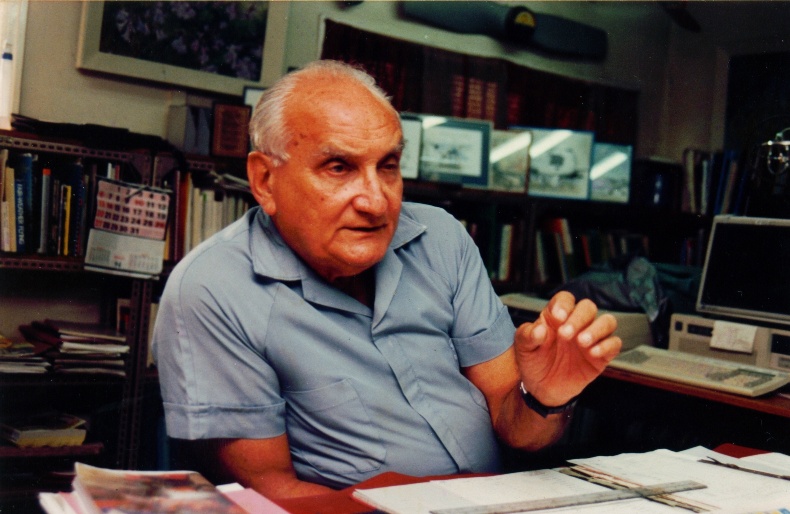
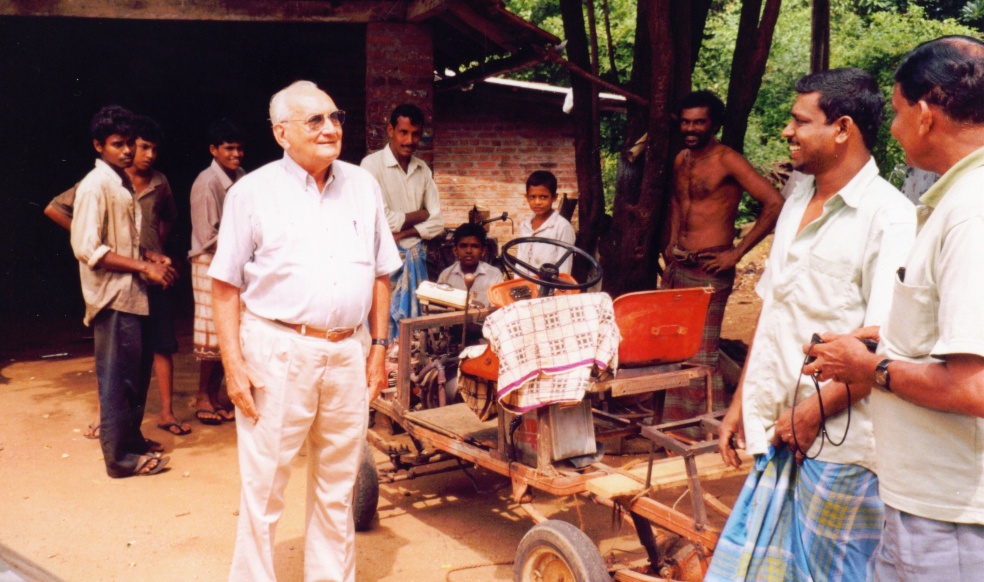
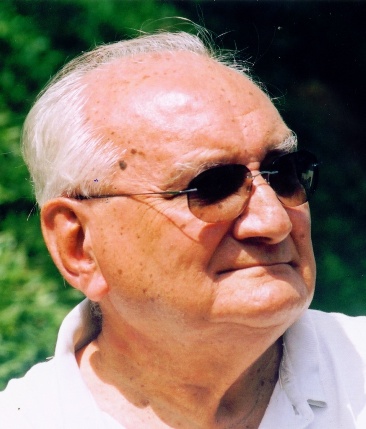
This week, my Ravaya Sunday column (in Sinhala) carries the second part of my long exchange with the late Dr Ray Wijewardene, agro-engineer turned farmer and a leading practitioner in conservation farming in the humid tropics.
Ray Wijewardene (1924 – 2010) was an accomplished engineer, aviator, inventor, Olympian athlete and a public intellectual of the highest calibre. Although educated at Cambridge and further trained at Harvard, he preferred to introduce himself as a farmer and mechanic ‘who got his hands dirty’. His third death anniversary falls on 18 August 2013.
It was among his flying machines that I first met Ray in late 1986 at the Ratmalana Airport, just south of Colombo. One Sunday morning, he took time off to talk to a group of us high school leavers participating in a Science for Youth programme. It exposed us to various (then) modern technologies. Much of that ‘new knowledge’ has long become obsolete; but the inspiration propelled many of us to pursue careers in science.
That inspiration stemmed mostly from the shy and unorthodox Ray Wijewardene. Although he was then in his early 60s, he had the sense of wonder of a 10-year-old. He gave us practical demonstrations about problem solving and innovation in three areas close to his heart: energy, agriculture and transport.
At the time, he was looking for ways to improve the ordinary bicycle, so that riders could go faster with less effort. He also talked about buffaloes, earthworms and growing our food and energy to become truly ‘non-dependent’ on costly imports.
It was his flying machines that fascinated us the most. As a pilot, Ray was licensed to fly all three kinds of flying machines: fixed-wing aircraft, helicopters and autogyros. But this pilot was flying not only factory-fitted, mass-manufactured units: he built and flew his own ultra-light aircraft and helicopters.
I have just unearthed, from the depths of my own archives, an interview I arranged in early 1990 between Ray and science writer Peter Gwynne, who at the time was editor of Asia Technology magazine published from HongKong. I was their Sri Lanka correspondent.
Peter, who held a BA and MA in metallurgy from Oxford and had been a science writer with various publications (including Newsweek) before moving to HongKong, was on a short visit to Colombo. So I took him to meet one of my most colourful and outspoken scientific friends — Ray. Beyond the predictable Oxbridge banter, they talked about many things. I was just a fascinated fly on the wall…
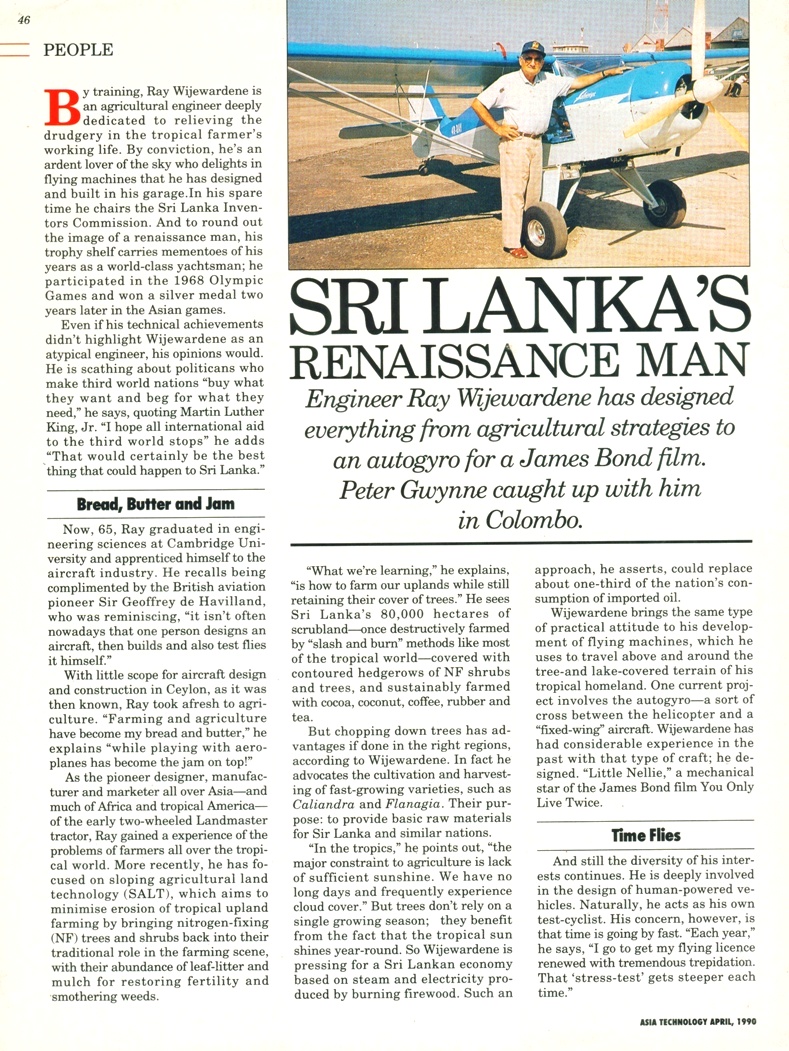
Based on that encounter, Peter wrote a perceptive profile of Ray — and called him Sri Lanka’s Renaissance Man. An apt title, indeed, given that Ray was talented in many pursuits including music and painting, and had a refined sense of aesthetics, probably the basis of his design sense. (It took me 21 years to come up with anything comparable: when creating the Ray Wijewardene website in 2011, I called him ‘A Man for All Elements’).
Here’s the full profile from Asia Technology, April 1990:
Ray Wijewardene profiled in Asia Technology, April 1990
PS: Asia Technology was a bold venture that didn’t last too long (even though it was part of the Dow Jones Company). The full colour, glossy publication was an early chronicler of Asia’s rise in science and technology, but was ahead of its time. It blazed like a supernova for a year and half, and then folded.
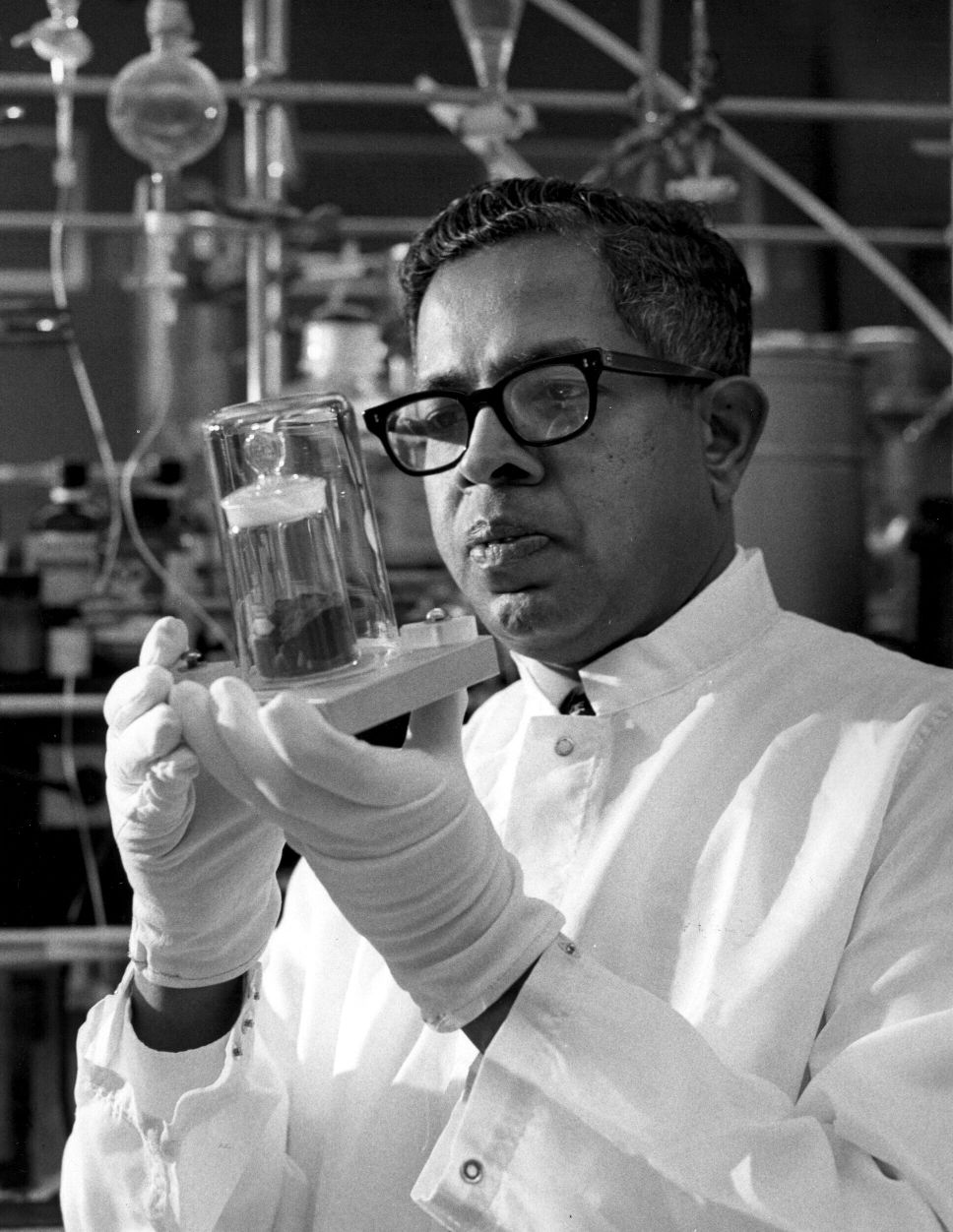
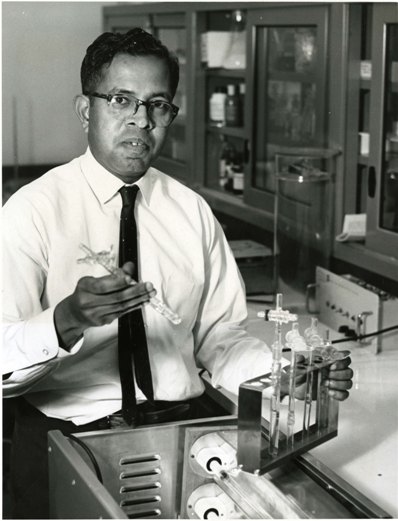
In this week’s Ravaya column, I pay tribute to Dr Cyril Ponnamperuma, Lankan biochemist who was one of the best known and most accomplished scientists produced by Sri Lanka.

![Nalaka Gunawardene receives Vidyodaya Literary Award for Best Column of 2012 from Ms Nayayani Widanapathirana, 2nd year student of University of Sri Jayawardenapura [Photo courtesy J'pura flames/Facebook]](https://nalakagunawardene.com/wp-content/uploads/2013/09/nalaka-gunawardene-receives-vidyodaya-literary-award-for-best-column-of-2012-from-ms-nayayani-widanapathirana-2nd-year-student-of-university-of-sri-jayawardenapura.jpg)
![Vidyodaya Literary Award winners for 2012 - L to R - Rathna Shri Wijesinghe, Liyanage Amarakeerthi, Buddhadasa Galappaththi, Mahinda Prasad Mashibula & Nalaka Gunawardene [Photo courtesy: J'pura flames/Facebook]](https://nalakagunawardene.com/wp-content/uploads/2013/09/vidyodaya-literary-award-winners-for-2012-l-to-r-rathna-shri-wijesinghe-liyanage-amarakeerthi-buddhadasa-galappaththi-mahinda-prasad-mashibula-nalaka-gunawardene.jpg)
 Open Minds!