This is the main thrust of my latest op ed essay, just published by the Science and Development Network (SciDev.Net) anchored in London, UK. It’s titled: Planet before profit for climate change films.
I’m challenging broadcasters to put their money where their mouth is.
Here’s an excerpt:
“Broadcast mandarins routinely support global struggles against poverty, HIV, corruption and climate change by offering free airtime to carry public interest messages. But few let go of their own products on these very subjects for non-broadcast uses.
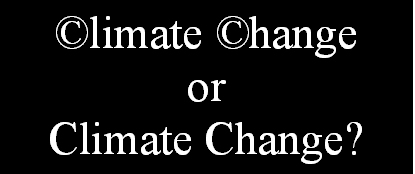
“Making climate change a ‘copyright free zone’ for media products would increase the resource materials available to thousands of educators, social activists and trainers struggling to communicate this complex topic to audiences across the world. Moving images would make their task easier.
“The climate crisis challenges everyone to adopt extraordinary measures. Broadcasters and film-makers need to balance their financial interests with planetary survival.
“What use is intellectual property on a dead planet?”
In September 2006, speaking at the United Nations headquarters (photo below), I called for poverty to be recognised as a copyright free zone. The idea was to have broadcasters and other electronic publishers release copyrights on TV, video and online content relating to poverty and development issues -– at least until (MDG target year of) 2015.
The TV broadcast and film communities have reacted to this proposal with disdain or indifference, but I keep badgering on. If poverty didn’t motivate broadcasters to change business as usual, I hope, the planetary threat posed by climate change would.
Al Gore used to have a reputation as a very smart man who was very stiff and aloof especially in his public speaking.
I didn’t notice this the only time I listened to him in person, at an environmental journalists conference at MIT in Boston, Massachusetts, in the Fall of 1995. Perhaps because he was speaking to a group of over 200 journalists, Gore was especially charming. He delivered a well prepared speech passionately, and then took a dozen questions.
I still remember one incident during question time. A Bangladeshi participant lined up to ask him something and started addressing him as ‘Mr President’. Gore smilingly interjected: ‘Not yet!’. The journalist, not the least shaken by his slip of the tongue, said: ‘Well, I hope you will be one day!’.
All that sounds so long ago, now that Gore has emerged as the world’s best known climate crusader. There are many who feel that he is more effective in his current role than as a politician.
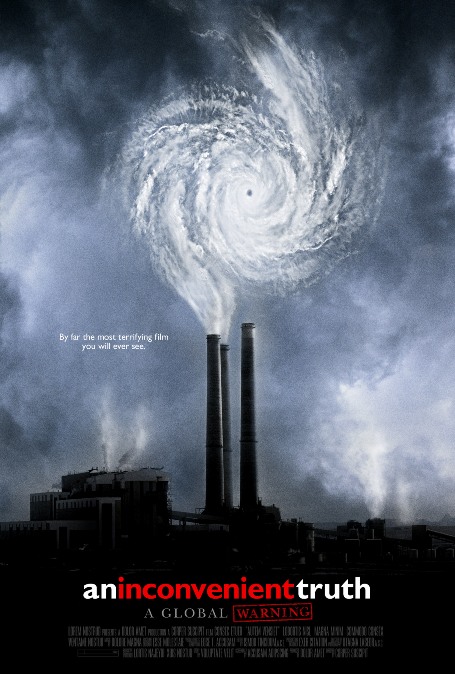
His 2006 film, An Inconvenient Truth, helped move the climate change debate forward in a decisive manner.
Whatever we might think about the film’s artistic and technical merits, I’m glad it has settled one question: can a single film make a difference in tipping public opinion about a matter of global importance?
The answer, where climate change is concerned, is a resounding yes!
For sure, the film arrived at a time when the climate change debate had been going on for nearly two decades. Scientific evidence was mounting for human responsibility for accelerated changes in our climate. Political and business leaders, in denial for years, were finally beginning to take note — perhaps sensing votes or dollars.
Official film posterComing in at the time it did — in the Summer of 2006 –- Al Gore’s film tipped the public opinion to agree that climate change was for real and responses were urgently needed.
“It is now clear that we face a deepening global climate crisis that requires us to act boldly, quickly and wisely,” says the former US Vice President introducing his film.
An Inconvenient Truth focuses on Al Gore and his travels in support of his efforts to educate the public about the severity of the climate crisis. Gore says, “I’ve been trying to tell this story for a long time and I feel as if I’ve failed to get the message across.”
The film closely follows a Keynote presentation (dubbed “the slide show”) that Gore presented throughout the world. It intersperses Gore’s exploration of data and predictions regarding climate change and its potential for disaster with Gore’s life story.
An Inconvenient Truth is not a particularly stunning or dramatic documentary. Some have called it a ‘dramatised PowerPoint presentation’ (although Gore actually uses Apple’s Keynote presentation software). There aren’t cuddly animals, deadly chemicals, forest infernos or gory animal hunts that make environmental films appeal to a mass audience.
In fact, it hangs together — and sustains for nearly an hour and a half — due to the sheer star power of Al Gore. And when we take a closer look, we see how hard Gore and his team at Participant Productions have tried to engage audiences.
The film, made on a budget of around US$1 million (modest by Hollywood standards) went on to earn US$49 million at the box office worldwide. As at late 2008, it ranks as the fourth-highest-grossing documentary film in the United States, after Fahrenheit 9/11, March of the Penguins and Sicko.
I first saw An Inconvenient Truth at a cinema in Virginia, USA, while it was still on its initial theatrical release in the Fall of 2006. I reviewed it in early 2007, and recently returned to discussing the film during a presentation I made to our Asia Pacific regional workshop on changing climate and moving images, held in Tokyo in early October 2008.
My thrust was: now that Al Gore and his film have helped turn the climate debate, how can we continue to use moving images in search of solutions? In other words, how do we stand on the shoulders of Al Gore?
The Great Warming: Another excellent film on climate change
I looked back at Gore’s film and another excellent Canadian film that came out the same year, The Great Warming. Discussing their merits, I noted how both films appeal as much to our emotions as they do to our rational intellect. “Facts, figures and analysis alone cannot engage a diverse, sometimes sceptical or indifferent audience. That’s why they try a different approach: appealing to the emotions.”
Here are some excerpts from my remarks:
We often see environmental documentaries failing to engage audiences because they pack too much information, or worse, preach too heavily and directly. Some film-makers feel strongly that they must ‘inform and educate’ their viewers at all costs.
To engage people, both are neededIt’s story telling that works best with moving images –- and what better stories to tell than the personalised ones of real people dealing with real world problems and challenges?
With ‘moving images, moving people’ as our slogan, we at TVE Asia Pacific believe in the power of well-made films to reach out to people’s hearts and minds.
Our experience shows that moving images can indeed move people, but only when:
• They are used in the right context;
• They form part of a bigger effort or campaign;
• Audio-visual’s strengths are maximised; and
• Audio-visuals limitations are properly recognised.
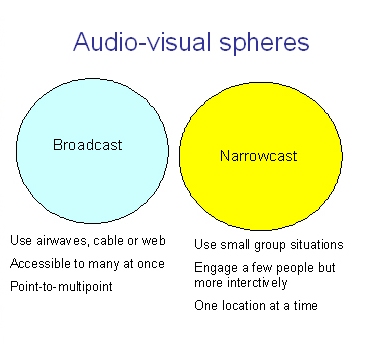
It’s the combination of broadcast and narrowcast spheres that has a better chance of changing people’s attitudes and, ultimately, their behaviour.
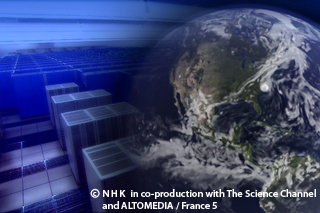
Another was Climate in Crisis, an outstanding global documentary in two parts (2 x 52 mins) co-produced in 2006 by Japan’s public broadcaster NHK together with The Science Channel and ALTOMEDIA/France 5.
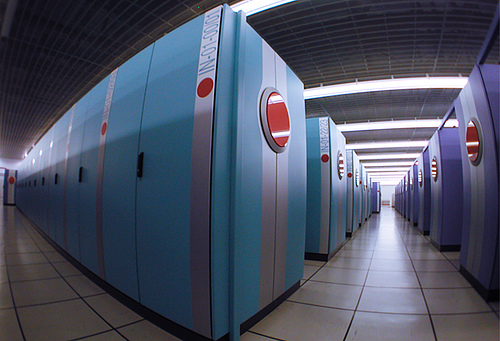
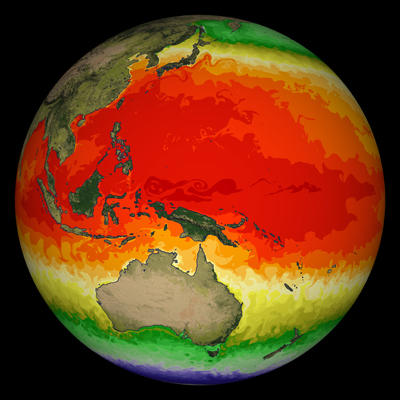
Directed by Fujikawa Masahiro, the film draws heavily on the Earth Simulator — one of the world’s most powerful supercomputers — which Japanese scientists used to project the climatic disasters in next 100 years. The system was developed in 1997 for running global climate models to evaluate the effects of global warming and problems in solid earth geophysics. It has been able to run holistic simulations of global climate in both the atmosphere and the oceans — down to a resolution of 10 km.
NEC Earth Simulator in Japan
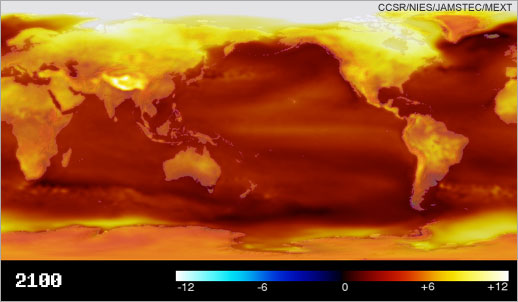
The results, captured in this documentary, are truly mind-boggling. Atmospheric temperatures may rise by as much as 4.2 degrees Celsius, more hurricanes may attack and deserts may spread from Africa to southern Europe, and half of the Amazon rainforest may be gone. Climate in Crisis shows a severe projection on environmental destruction based on rigorous scientific data and considers whether humankind can avoid this.
This film, made in the same year as Al Gore’s Oscar-winning film An Inconvenient Truth, has won several awards including the Earth Vision Award at the 15th Earth Vision Tokyo Global Environmental Film Festival.
I was curious why this excellent film – in my view, better made than Al Gore’s one – hasn’t been more widely seen, talked about and distributed. To be honest, I’d not even heard of this one until my Japan visit — and I try to keep myself informed on what’s new in my field of endeavour.
The reasons soon became apparent: copyright restrictions! The co-producers are keeping the rights so tight that only the highest bidders will be allowed to acquire it on a license fee.
This is a standard broadcast industry practice that didn’t surprise me. But I was taken aback by how jealously the rights are guarded. All other films that were part of our event, including high budget commercial productions like Crude, were screened to the public at the Parthenon in Tama New Town in Tokyo.
Not so with Climate in Crisis, which we – the overseas participants to the workshop – had to watch at a theatre inside NHK’s Tokyo headquarters. No public screening was possible. As we later heard, NHK itself was willing to allow a public screening (after all, it draws a good part of its income from the Japanese public), but their international co-producing partners, especially the Science Channel, would simply not agree to it. Wow.
Twenty centuries ago, emperor Nero fiddled while Rome burned. Today, some people are squabbling over copyrights while the whole planet is in peril.
Earth in 2100 - as seen by Earth Simulator
Our workshop participants came from solid backgrounds in broadcasting or independent film-making, and we are not naive activists asking hard-nosed broadcasters to let go of their precious rights which generates vital income. But we would have expected them to allow films such as Climate in Crisis to circulate a bit more freely in everybody’s interest.
This reminded me of correspondence I had last year with the Canadian producers of another outstanding climate film titled The Great Warming. The initial discussions with its director were promising, but when the distribution people started talking about ‘revenue optimising’, our negotiations stalled.
Many broadcast and production companies in the west don’t realise that TV broadcasters in developing Asia operate on a very different basis. Talking about broadcast ‘pre-sales’ or ‘commissions’ loses meaning when many stations are operating on tiny budgets — or in some cases, no budgets — for factual content. Many are struggling to survive in tough, emerging economies. Is this our future? TVE Asia Pacific operates a regional film distribution service that brings environment and development films within reach of such broadcasters. We operate without getting mired in license fees or royalties.
“Prevailing copyright regimes prevent the sharing and wider use of outstanding TV programmes and video films on climate and development issues. We are deeply concerned that even content developed partly or wholly with public funding (government grants, donor funds or lottery funds) remain unfairly locked into excessive copyright restrictions. Sometimes film-makers and producers themselves are willing but unable to allow their creations to be used for non-commercial purposes by educational, civil society and advocacy groups. We appreciate the media industry’s legitimate needs for intellectual property management and returns on investment. At the same time, the climate crisis challenges us to adopt extraordinary measures, one of which can and should be recognising climate change as a ‘copyright free zone’. Such agreement would encourage media organisations and independent producers to share content across borders, and with entities outside the media industry engaged in climate education, advocacy and activism.”
Here’s the simple question I raised during the workshop, which is worth being posed to all those who hesitate to even discuss this issue:
Can anyone manage their intellectual property rights on a dead planet?
October 8 is the International Day for Disaster Reduction. The United Nations system observes the day ‘to raise the profile of disaster risk reduction, and encourage every citizen and government to take part in building more resilient communities and nations’.
Disaster risk reduction (abbreviated as DRR) is the common term for many and varied techniques that focus on preventing or minimising the effects of disasters. DRR measures either seek to reduce the likelihood of a disaster occurring, or strengthen the people’s ability to respond to it.
DRR is not just another lofty piece of developmentspeak. Unlike many other development measures that are full of cold statistics and/or hot air, this one directly (and quietly) saves lives, jobs and properties.
And it gives people peace of mind – we can’t put a value on that. That was the point I made in a blog post written in December 2007, on the third anniversary of the Indian Ocean Tsunami. Taking the personal example of J A Malani, an ordinary Sri Lankan woman living in Hambantota, on the island’s southern coast, I talked about how she has found peace of mind from a DRR initiative.
Recently, IDRC’s inhouse series ‘Research that Matters’ has published an article about the project. Titled “For Easy Sleep Along the Shore: Making Hazard Warnings More Effective” its blurb reads: “In Sri Lanka, a grassroots pilot study combines advanced communication technologies with local volunteer networks to alert coastal villages to danger coming from the sea.”
TVE Asia Pacific also made a short video film in late 2007. Called The Long Last Mile, it can be viewed on YouTube in two parts:
The Long Last Mile, part 1 of 2:
The Long Last Mile, part 2 of 2:
The recent IDRC article ends with this para: “A related challenge concerns the shortness of any society’s attention span. In the absence of frequent crises and alerts, how can a nation — or even a village — sustain the continuing levels of preparedness essential to ensure that, when the next big wave comes rolling in and the sirens sound, its people will have the motivation and the capacity to act? The follow-up project seeks to address this worry by preparing the hotels and villages to respond to different types of hazards, rather than only to the relatively rare tsunamis.”
In this, I briefly comment on Sir Arthur’s accomplishments in popular science communication and his life-long crusade against pseudo-science — two important facets of the multi-faceted author, science populariser and underwater explorer who died on 19 March 2008.
Excerpts:
“Clarke’s forte was not only extrapolating about humanity’s technological abilities, but also exploring the nexus between science and society. With his death, science has lost an articulate and passionate promoter who challenged scientists to play a greater role in public policy and demanded that political leaders should take science seriously.
“But he was never an uncritical cheerleader for science, and that will be part of his enduring legacy. In an essay in Science, he cautioned, ‘For more than a century science and its occasionally ugly sister technology have been the chief driving forces shaping our world. They decide the kinds of futures that are possible. Human wisdom must decide which are desirable.'”
In my essay, I talk about how Sir Arthur readily took on a formidable array of anti-science beliefs and superstitious practices, from creationism and scientology to astrology and fire-walking. In these endeavours he joined other campaigners against pseudoscience, including scientists Carl Sagan and Stephen Jay Gould and the magician James Randi.
“For a while, Clarke even made a modest living as a professional sceptical enquirer. Beginning with Arthur C Clarke’s Mysterious World (1980), he hosted three television series that probed – and sometimes exposed – numerous mysteries, superstitions and the paranormal.
“Even when Clarke didn’t find full explanations, he invariably demonstrated the value of keeping an open mind and asking the right questions. And instead of ignoring or dismissing popular obsessions, he tried engaging their proponents in rational discussion. That was characteristic of Clarke, a genial moderator who always sought to build bridges — whether between scientists and the public, or across the “two cultures” divide between the arts and the sciences.”
These series had numerous re-runs for years on Discovery and other TV channels all over the world. They are still available on DVD. While some of the content is now dated by more information or insights emerging since their production, the series still inspires critical thinking – not to mention TV emulations that come out with many more frills than was possible in the 1980s.
Watch the opening of the first series, where Sir Arthur offered his own classification of mysteries (9 mins 21 secs):
Sir Arthur filmed all his pieces to camera from different, scenic locations in his adopted home in Sri Lanka. Few Sri Lankans realised at the time that this generated millions of dollars worth of free promotion for the country as a tourist destination.
In fact, I end my editorial by looking at Arthur C Clarke the public intellectual in Sri Lanka, where he lived since 1956. I look at how he won some battles with rational arguments while lost others (e.g. Sri Lankan obsession with astrology). This is clearly a subject I will return to in greater depth and analysis in the coming months.
In the modest cough department, I am immensely proud of how I sign off on this editorial: Arthur C. Clarke mentored Sri Lankan journalist Nalaka Gunawardene and they worked together for 20 years.
SciDev.Net – the Science and Development Network – is a not-for-profit organisation dedicated to providing reliable and authoritative information about science and technology for the developing world. Through http://www.scidev.net, it gives policymakers, researchers, the media and civil society information and a platform to explore how science and technology can reduce poverty, improve health and raise standards of living around the world. SciDev.Net is co-sponsored by the leading journals Nature and Science.
Author and underwater explorer Arthur C Clarke, who died last week aged 90, may not have been a placard-carrying, greener-than-green environmental activist. But in his own unique style, he supported a range of environmental concerns – from the conservation of gorillas, whales and dolphins (among his favourite species) to the search for cleaner energy sources that would enable humanity to kick its addiction to oil.
This interest was sustained to the very end. In his last public speech delivered a month before his demise, he stressed: “There has never been a greater urgency to restore our strained relationship with the Earth.”
In that address, which he had recorded from his sick bed in Colombo, Sri Lanka, in early February, Sir Arthur said:
“The International Year of Planet Earth is being observed at a crucial juncture in our relationship with the planet. There are now clear signs that our growing numbers and our many activities are impacting the Earth’s natural systems, causing planetary stress.”
He added: “We have had local or regional indicators of this stress for decades, and more recently we have confirmed our unmistakable role in climate change. If we’re looking for the smoking gun, we only need to look in the mirror…”
He outlined his wish for the ambitious IYPE, which is led by geoscientists around the world to raise more awareness and inspire action on understanding how our planet works. “I sincerely hope that the Year of Planet Earth would mark a turning point in how we listen to Earth’s distress call — and how we respond to it with knowledge, understanding and imagination.”
The full text of Sir Arthur’s greeting is found as a pdf on IYPE’s official website, which also offers the actual greeting as an audio file – but only in Apple Quicktime. For those who are not part of that limited universe, I reproduce Sir Arthur’s speaking text in full below.
I had the privilege of once again working on this text with Sir Arthur as I did for many years on various other video/audio greetings and essays. This was originally going to be a video greeting, but we decided to just capture it in audio as Sir Arthur was confined to bed with a back injury since early 2008.
Audio greeting by Sir Arthur C Clarke
to the global launch event of International Year of Planet Earth 2008
UNESCO Headquarters, Paris: 12 – 13 February 2008
Hello! This is Arthur Clarke, speaking from my home in Colombo, Sri Lanka.
I’m very happy to join you on this occasion, when the International Year of Planet Earth is being inaugurated at the UNESCO Headquarters in Paris.
I’m sorry that my health does not permit me to join you in person.
I have fond memories of attending major international conferences at UNESCO over the years. I’ve always cherished my close association with the organisation, especially since I received the UNESCO-Kalinga prize for popularisation of science in 1961 – a date that now seems to belong to the Jurassic era!
The International Year of Planet Earth is being observed at a crucial juncture in our relationship with the planet. There are now clear signs that our growing numbers and our many activities are impacting the Earth’s natural systems, causing planetary stress. We’ve had local or regional indicators of this stress for decades, and more recently we’ve confirmed our unmistakable role in climate change. If we’re looking for the smoking gun, we’ve only got to look in the mirror…
So there has never been a greater urgency to restore our strained relationship with the Earth.
In such a conversation, who speaks for the Earth?
Almost 30 years ago, my late friend astronomer Carl Sagan posed this question in his trail-blazing television series Cosmos. And this is how he answered it:
“Our loyalties are to the species and to the planet. We speak for earth. Our obligation to survive and flourish is owed not just to ourselves, but also to that cosmos ancient and vast from which we spring!”
I sincerely hope that the Year of Planet Earth would mark a turning point in how we listen to Earth’s distress call — and how we respond to it with knowledge, understanding and imagination.
My mind goes back to the International Geophysical Year, which was observed in 1957 – 58. Both the former Soviet Union and the United States launched artificial satellites during that period, thus ushering in the Space Age. Going to space was an important evolutionary step for our species – one that distinguishes our period in history from all the preceding ones. For the first time, we could look back on our home planet from a vantage point in space, and that gave us a totally new perspective.
The beautiful images of Earth from space inspired much public interest that led to the Earth Day and the global environmental movement in the 1970s.
Of course, I’ve suggested that ‘Earth’ is a complete misnomer for our planet when three quarters of it is covered by ocean. But I guess it’s a bit too late now to change the name to planet Ocean!
Fifty years after the IGY and the dawn of the Space Age, do we know enough about how our planet operates?
Thanks to advances in earth sciences and space sciences, we have unravelled many mysteries that baffled scientists for generations. We now monitor the land, atmosphere and ocean from ground-based and space-based platforms. Armies of scientists are pouring over tera-bytes of data routinely gathered by our many sentinels keeping watch over our planet.
We don’t yet fully understand certain phenomena, and there are still gaps in how we process and disseminate scientific knowledge. This is why, for example, the Indian Ocean tsunami of December 2004 arrived without public warnings in Sri Lanka and many other coastal regions. Within minutes of the undersea quake off Sumatra, geologists and oceanographers around the world knew what was happening. But they lacked the means of reaching authorities who could evacuate people to safety.
For this reason, I’m very glad to hear that the Year of Planet Earth is placing equal emphasis on creating new knowledge and its public outreach. Today, more than ever, we need the public understanding and engagement of science. As UNESCO has been advocating for 60 years, public engagement is essential for
science to influence policy and improve lives.
In fact, with our planet under stress, we often have to act before we fully understand some natural processes. That is where we have to combine our best judgement and imagination.
We also need to change the way our resources and energy are used. Our modern civilisation depends on energy, but we can’t allow oil and coal to slowly bake all life on our planet. In my 90th birthday reflections a few weeks ago, I listed three wishes I dearly want to see happen. One of them is to kick our current addiction to oil, and instead adopt clean energy sources. For over a decade, I’ve been monitoring various new energy experiments, which have yet to produce commercial scale results. Climate change has now added a new sense of urgency to this quest.
So we face many challenges as we embark on the International Year of Planet Earth. I hope this year’s many activities will help us to better listen to our home planet, and then to act with knowledge and imagination.
This is Arthur Clarke, wishing you every success in this endeavour.
The past few days have been particularly hectic for me as I was Sir Arthur Clarke’s spokesman for the past decade, and remain so for the time being. While handling literally dozens of media queries and requests from all over the world, I somehow managed to find the time to write an op ed essay on Sir Arthur’s life-long crusade against nuclear weapons.
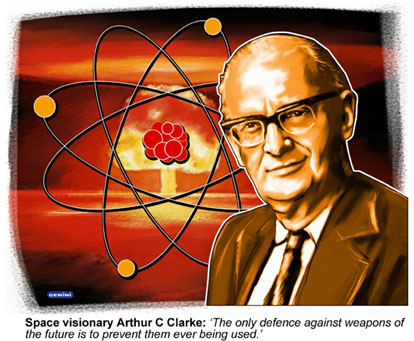
Here’s the 900-word essay in full with the Gemini illustration that accompanied my original article.
Arthur C Clarke: Of Nukes and Impotent Nations by Nalaka Gunawardene
Colombo, Sri Lanka: 22 March 2008
“Do you know about the only man to light a cigarette from a nuclear explosion?” Sir Arthur C Clarke was fond of asking his visitors a few years ago.
Clarke, the celebrated science fiction writer and space visionary who died on March 19 aged 90, loved to ask such baffling questions.
In this instance, the answer was Theodore (Ted) Taylor, a leading American nuclear scientist who designed atomic weapons in the 1950s and 1960s. Apparently he just held up a small parabolic mirror during a nuclear test — the giant fireball was 12 miles away – and turned light into heat.
“The moment I heard this, I wrote to Taylor, saying ‘Don’t you know smoking is bad for your health?'” Clarke added with a chuckle.
In fact, he took an extremely dim view of both smoking and nuclear weapons, and wanted to see them outlawed. But he was aware that both tobacco and nukes formed strong addictions that individuals and nations found hard to kick.
Years ago, Clarke had coined the slogan ‘Guns are the crutches of the impotent’. In later years, he added a corollary: “High tech weapons are the crutches of impotent nations; nukes are just the decorative chromium plating.”
Living in the Sri Lankan capital Colombo, the author of 2001: A Space Odyssey was acutely aware of tensions between neighbouring India and Pakistan – both nuclear weapon states.
British-born and calling himself an “ethnic human”, Clarke offered a unique perspective on nuclear disarmament. His interest in the subject could be traced back to his youth, when he served in the Royal Air Force during Second World War. As a radar officer, he was never engaged in combat, but had a ringside view of Allied action in Europe.
Shortly after the nuclear bombs in Hiroshima and Nagasaki ended the War, he wrote an essay “The Rocket and the Future of Warfare”. In that essay, first published in the RAF Journal in 1946, he said: “The only defence against the weapons of the future is to prevent them ever being used. In other words, the problem is political and not military at all. A country’s armed forces can no longer defend it; the most they can promise is the destruction of the attacker….”
Arthur Clarke’s continued his advocacy against the weapons of mass destruction to the very end. The lure and folly of nuke addiction is a key theme in his last science fiction novel, The Last Theorem, to be published later this year. He completed working on the manuscript, co-written with the American author Frederik Pohl, only three days before his demise.
From his island home for over half a century, Clarke was a keen observer of the subcontinent’s advances in science and technology. He personally knew some of the region’s top scientists – among them Indian space pioneers Vikram Sarabhai and Yash Pal, and Pakistan’s Nobel Laureate Abdus Salam.
When India carried out nuclear weapons test in May 1998, Clarke issued a brief statement saying: “Hindustan should be proud of its scientists – but ashamed of its politicians.”
He chided the mass euphoria that seemed, for a while at least, to sweep across parts of the subcontinent. He signed the statement as “Arthur C Clarke, Vikram Sarabhai Professor, 1980”.
That was a reference to three months he spent at the Physical Research Laboratory (PRL) in Ahmedabd, in western India, lecturing about peaceful uses of outer space. It was the only time he held the title ‘professor’.
Clarke’s direct associations with India went back further. In the early 1970s, he advised the Indian Space Research Organisation on the world’s first use of communications satellites for direct television broadcasting to rural audiences. Preparations for the Satellite Instructional Television Experiment (SITE) Project were underway when India carried out its first “peaceful explosion” of an atom bomb in 1974.
“I can still remember Vikram telling me how Indian politicians pleaded with him to ‘build a teeny weeny (nuclear) bomb’,” Clarke recalled in an interview in 2002.
Cartoon: Indo-Pak nuclear and missile rivalry as seen by Himal Southasian
He returned to the subject when delivering the 13th Nehru Memorial Address in New Delhi in November 1986, which he titled ‘Star Wars and Star Peace’. He critiqued the Strategic Defence Initiative (which President Reagan called ‘Star Wars’) – a nuclear ‘umbrella’ over the United States against missile attacks. Clarke argued that SDI was conceptually and technologically flawed, and that its pursuit could hurt America’s lead in other areas of space exploration.
Prime Minister Rajiv Gandhi rejoined from the chair: “Forty years ago, Dr Clarke said that the only defence against the weapons of the future is to prevent them from being used…. Perhaps we could add to that, we should prevent them from being built. It’s time that we all heed his warning….I just hope people in other world capitals also are listening…”
While campaigning against nuclear weapons, Clarke was equally concerned about all offensive weapons. “Let’s not forget the conventional weapons, which have been perfected over the years to inflict maximum collateral damage,” he said in a video address to the 50th anniversary celebrations of the Pugwash Movement in October 2007. “If you are at the receiving end, it doesn’t matter if such weapons are ‘smart’ or stupid…”
As tributes to Arthur C Clarke from all corners of the planet confirm, he commanded the world’s attention and respect. His rational yet passionate arguments against warfare were heard, though not always heeded in the corridors of power and geopolitics.
For such people, he had the perfect last words from his own hero, H G Wells:“You damn fools – I told you so!”
This is me making an impression at the Global Knowledge 3rd Conference held in Kuala Lumpur, Malaysia, in December 2007. Everyone was asked to dip a hand in a saucer of paint and then press it on a large sheet of paper. In the end it created a montage of hand prints from people all over the world.
The idea was a neatly symbolic one, but as with everything else at the GK3 conference (and with its organiser, the GKP), it didn’t go any further. Good intentions, poor implementation.
Ecological Footprint (EF) as a concept has been around for over 15 years. The term and concept of Ecological Footprint were proposed in 1992 by William Rees, a Canadian professor at the University of British Columbia. In 1995, Rees and coauthor Mathis Wackernagel published Our Ecological Footprint: Reducing Human Impact on the Earth.
EF quantifies our demand on Nature and natural systems. It measures the amount of biologically productive land and water required to meet our demands (for food, timber, shelter), and to absorb the pollution we generate. Using this assessment, it is possible to estimate how many planet Earths it would take to support all of humanity if everybody lived a given lifestyle.
For example, if everyone aspires to European lifestyles, we are going to need three planets. And for American way of life, four.
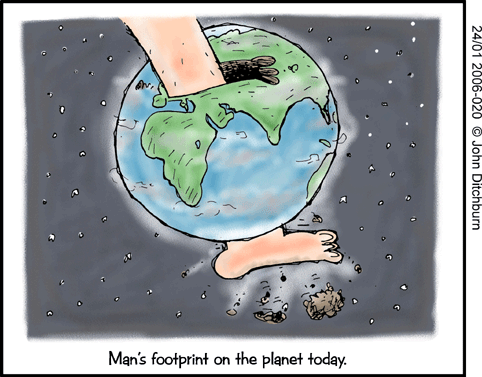
As of now, the Earth is the only naturally habitable planet that we know and have — which drives home the point that we have to contain, and eventually reduce, our ecological footprint. Some, like this cartoonist, fear that it’s already too late…
Ecological footprint is a useful – in fact, revealing – measure of our species living beyond its ecological means. But it’s an inherently negative one. This is what promoted our colleagues at CEE – an internationally acknowledged centre for excellence in education for sustainable development – to come up with the related, but wholly more positive, concept of Handprint.
Whereas footprint measures our impact on the planet and its resources, Handprint will help quantify what we do to tread lightly on Earth — reducing our consumption of energy and resources, and being more considerate about the waste we generate.
As CEE says, there are many drivers of change to lessen the footprint. ESD is one of the important ones. Others include technology, policy, legal measures, systems and financial incentives.
While CEE is taking the concept to a whole new level and to millions who need to know and heed this message, the idea itself has been talked about by others for sometime.
Steffen, who is executive editor of Worldchanging, wrote: “If we can imagine going climate negative, why can’t we imagine shrinking our ecological footprint until we zip past having any negative net ecological impact at all, until the operation of our daily lives heals the planet instead of hurts it? Until we transform, as I’ve said before, our ecological footprints into ecological handprints?”
TVE Asia Pacific‘s Saving the Planet TV series, currently in production, will feature a number of initiatives that will have a positive Handprint on the environment in selected countries in the Asia Pacific.
Clearly, Handprint is an area where interest and action will grow in the coming months and years.
The development community never tires of talking about the value of participatory, two-way communication. Every workshop, report and discussion has a dose of this mantra sprinkled all over.
Yet when it comes to actually practising communication, most development agencies I know are so concerned with complete control – they want to edit endlessly, fine-tune their messages to the last letter and comma, and regulate how and where the message is disseminated.
There’s no harm in being organised and focused. But when communication officers are pushed into becoming publicity agents (or worse, spin doctors!) for their agencies, controlling the message becomes obsessive.
I’ve had more than my fair share of this. One example was when working on a documentary for a leading UN agency in Asia that my organisation, TVE Asia Pacific, was commissioned to produce. Now, films cannot be made by committees, but UN agencies never stop trying. At one point, over-zealous agency officials were tinkering with the post-shooting script so much that they edited even the interview clips included in the draft.
That only stopped when I pointed out that hey, those are transcribed verbatim from interviews we’d already filmed!
So imagine how hard it would be for such organisations to let go of the Complete Control over communications that they’ve aspired to perfect for so long.
And yet, as I told a small meeting convened by UNEP in Bangkok last week to plan their next ozone communication strategy for Asia Pacific, that’s not a choice, but an imperative with today’s new media.
In the four years since we worked on the last ozone communication strategy and action plan for the Asia Pacific, we have seen the emergence of web 2.0 – which is really a catch-all term that covers many second generation, interactive platforms and opportunities that have emerged using the global Internet.
Among these are blogs, wikis, social networking sites (e.g. MySpace, Facebook), social bookmarking (e.g. del.icio.us), video exchange platforms (e.g. YouTube), online games and mobile applications.
These and other new media tools enable development communicators to reach out to, and engage, many people – especially the youth who make up more than half of all Asians.
But that’s part of the challenge, I said, referring to what I call the ‘Other Digital Divide’ – one that separates (most members of) the development community from ‘Digital Natives’, young people who have grown up taking these digital media and tools completely for granted.
Engaging new media is not just setting up a Facebook account, taking a YouTube channel or opening a blog that’s infrequently updated. All that’s useful, for sure, but they represent only the tentative first steps to the wide and varied new media world.
As with the more established print and broadcast media, development organisations need to have a strategy and a plan based on some research, analysis and reflection.
And willing to let go of that control – so cherished by so many development professionals – is an essential part of that adjustment to the new media reality.
We didn’t spend too much time talking about new media at the Bangkok meeting, but I did caution that there is a lot of digital hype out there. I’m no expert on this (is anyone, really?) but my team at TVEAP and I keep trying new ways of doing things with the new media. So here are a few quick insights I offered the UNEP meeting:
• New media lot more interactive, which means they demand a lot of time and effort to engage the audience – which in turn generates huge capacity requirements for any development organisation venturing into such media.
• You can’t always control your messages on new media! This unnerves many development agencies and professionals who are so used to exercising such control – in the new media world, they just have to learn to let go!
• A core value is user-generated content (USG). You need to find creative ways to allow your audiences to generate part of the content. Control lost again!
• Citizen journalists have now established themselves online as text and/or video bloggers. Governments and corporations have acknowledged their presence — serious bloggers have recently been granted media accreditation to the UN. What does this mean for future ozone media training and journalists engagement?
• There are many companies and agencies claiming to have cracked the new media challenge – and don’t believe them! Everyone is learning, some admittedly faster than others, but there’s no substitute to actually doing it.
• And there’s no road map to the new media world, which is being created every day and night by an army of geeks and enthusiasts. There are only a few rough guides and travellers’ tales from some like ourselves who have ventured into this realm.
Note: I am grateful to my colleagues at TVE Asia Pacific who have developed and/or tested out some ideas in this blog post: Manori Wijesekera, Indika Wanniarachchi and Nadeeja Mandawala. I stand on their shoulders, hopefully lightly!
In September 2007, I wrote about Ozzy Ozone, an energetic, cheerful little ozone molecule – part of the ozone layer in the upper atmosphere that prevents the Sun’s harmful ultra-violet rays from coming through and causing skin cancer, cataract and other health problems.
Ozzy Ozone is part of a global public education effort by the UN Environment Programme (UNEP) to tell everyone how harmful UV rays are to our health, and how Ozzy and his fellow ozone molecules are literally protecting life on earth from being zapped out.
Last week, while attending a UNEP meeting in Bangkok to plan the next ozone communication strategy for Asia Pacific, I heard some disturbing news: little Ozzy has become a prisoner of his brand guardians. As a result, he is not as free as he could be to roam the planet, spreading the vital ozone message.
Anne Fenner, Information Officer of UNEP’s OzonAction Programme revealed how she routinely turns down requests to produce toys and other material using the popular character.
“I have had so many requests from companies, but we cannot allow commercial exploitation of this brand,” Anne said.
I was stunned. Here is one of the more popular communication products to emerge from the UN, not generally known for such successful engagement of popular culture. And there we were, brainstorming on ways to get the ozone message to large, scattered (and distracted) audiences.
Ozzy was created by a graphic artist in Barbados, as part of a government-supported campaign to raise public awareness on ozone layer thinning. This cartoon character served as a “mascot” and was very effective in raising awareness in Barbados. The cartoon series was printed in local newspapers. Additionally, promotional items produced for local public awareness and education campaigns using the Ozzy graphic include posters, key rings, rulers, erasers, refrigerator magnets, mouse pads, pens, pencils, stickers, and envelopes.
Ozzy has been a run-away success, giving UNEP a high profile, widely popular character — and a great deal of media coverage and interest. The kind of media engagement that is typically enjoyed by Unicef, the most media-savvy of all UN agencies.
But we now know that Ozzy’s brand guardians don’t allow him to go as far as he could. They may be playing by the rules, but do they realise that huge opportunities are being lost?
There we were, a small group of journalists, communicators, scientists and government officials discussing for three days how to get the biggest bang for our collectively limited buck where ozone messaging is concerned.
It was frustrating to know that the best brand ambassador has been locked up in brand integrity and copyright restrictions.
I suggested to Anne Fenner that protecting the brand integrity need not be so rigidly pursued. For example, careful franchising could be undertaken based on a set of guidelines — and the royalty could go into a trust fund that supports ozone communication work.
Indeed, the challenge for development communicators everywhere is to find the common ground between the public interest and the commercial interest. In this era of globalised media and CSR, the two interests are no longer mutually exclusive. Some might argue they never were.
The long-established copyright regimes themselves are being questioned, challenged and bypassed by a growing number of research, advocacy and activist groups. Many now publish their academic or artistic work under Creative Commons licenses, that enable their creators to be acknowledged and retain some control — and yet allow many types of uses without excessive restriction.
UNEP has some catching up to do. Turning the pages of lavishly illustrated Ozzy Ozone comic story books (of which 3 titles have come out so far), I found that UNEP has the standard copyright restriction. However, they add a line: “This publication may be reproduced in whole or part and in any form for educational or non-profit purposes without special permission from the copyright holder, provided acknowledgement of the source is made.”
That’s encouraging – but not good enough. What happens if a commercially operated media organisation wants to use this content for public interest? Will they qualify under ‘educational or non-profit purposes’?
Probably not. And that’s when the dreaded copyright lawyers could come marching out.
It’s the assorted lawyers and over-cautious officials who are keeping Ozzy Ozone a virtual prisoner.
And sadly, little Ozzy is not alone. Everywhere in the publishing and media world, we can find many examples of how creative works are being held back – usually by over-protective lawyers or accountants. Sometimes that’s the case even if the artistes or media professionals themselves would much rather let go of the rights.
In July 2007, I wrote a blog post called ‘The lawyers who locked up the butterfly tree’ — which revealed how lawyers working for the publicly-funded BBC had systematically blocked a multi-award winning African documentary film from being used for environmental education, awareness and advocacy. All because the BBC had partly funded its production, and therefore had a claim on its copyright.
So here’s our plea to Ozzy’s brand guardians in UNEP: let him roam free, taking the vital message to millions. And while at it, let him make some money (from franchisees) which can suppot the rest of UNEP’s ozone communication work.
And if some spoilsport of a copyright lawyer gets in the way, tell him/her to take a beach vacation — without sunblock.













 Open Minds!