Coping with a warming planet and WikiLeakable world: Common challenges

Time is ticking away...but crises also mean opportunities

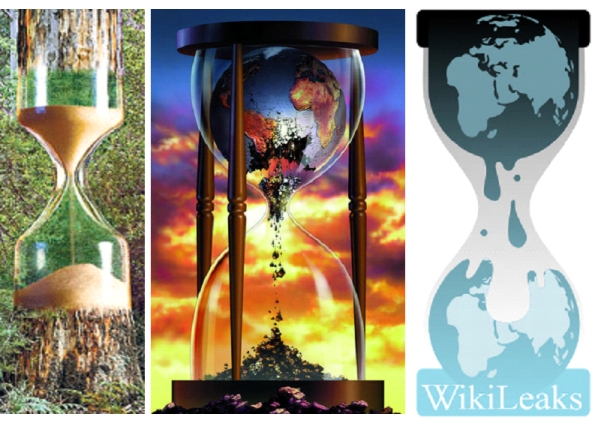
I like to think and speak in metaphors, especially visual metaphors. Sometimes I coin or design new ones. This illustration is the latest example.

Individual elements in this came from very different sources (thanks to them all). I just mixed them together to make two points during a talk I just gave at the Colombo University.

We live in a crisis-ridden world where we have to cope with multiple emergencies unfolding at the same time, impacting us on different fronts. This illustration captures three of them: crisis in biodiversity, man-made climate change, and the new reality of living in a rapidly WikiLeakable world — what I called the Global Glass House.

We don’t get to choose the timing, severity or duration of any challenge. But we do have some choice over how we respond: we can despair and grumble (blaming the Gods or karma if we believe in those); we can become really alarmist (a la Chicken Little); or we can be measured and smart in how we deal with the seemingly overwhelming situations.

Speaking at the Leaders in Environmental Advocacy Forum (LEAF) on Preserving the Past, Securing the Future on 22 January 2011 at the University of Colombo, I advocated this last option. I also pulled together a number of ideas mentioned on this blog over the past four years.

LEAF was a two-day summit held in Colombo, Sri Lanka, hosted by members of the Elon University’s Periclean Scholar Class of 2011, in partnership with the University of Colombo, the United States Embassy in Colombo, the National Science Foundation of Sri Lanka and Rainforest Rescue International.
My illustrated talk was titled “Telling Stories to Save Ourselves: Communicating on a Warming Planet” — I revisited an idea originally featured on this blog in mid 2007 (about Arabian Nights and their modern day relevance) and coupled that with a more recent proposal of mine: consider education and communication the third track of plank in humanity’s response to climate change (alongside climate mitigation and adaptation).

In fact, some challenges of living on a warming planet are comparable to coping with a WikiLeakable world: both demand quick adaptation to a new reality. In both cases, governments and society have to change mindset and practices on the go — business as usual is no longer an option. Denialism, or demonising the messenger, won’t take us forward. We need more measured, sometimes even pragmatic responses.

In that process, all-or-nothing is not a viable approach. Waiting for full knowledge and understanding is not feasible either. As I once described it, responding to the planet’s climate and other ecological crisis with partial scientific understanding is akin to many pages of our planet’s ‘operations manual’ being still completely blank — and yet we have to manage the planet to the best of our knowledge, intuition and common sense.

Many of the same principles apply to living in the modern networked info society, where no secrets can be kept that way for too long. The sooner we come to terms with this new reality and adapt, the better.

I’m delighted to see others are addressing these parallels. In my talk, I mentioned a recent essay titled Could climate science become open source? by Brendan Barrett and Sulayman K. Sowe, published earlier this month on the UN University’s Our World 2.0 website.

In their perceptive piece, the authors ask whether climate science would benefit by being more firmly grounded in the principles of openness, perhaps along the lines of the free and open source software communities and open content movements. “The concept of openness behind free and open source software describes a mode of creative knowledge production and sharing in which individuals and communities freely generate and adapt or remix resources (content or software) without licensing restrictions.”

They add: “Proposing a move to a new model of climate science in no way suggests that climate change is not a real and present threat or that we cannot rely on the integrity of our contemporary climate science institutions and scientists. Rather, the argument here is that learning from the way free and open source software projects and communities work may be an important way forward in engendering more effective global, national and local responses to climate change.”

I have always worn multiple ‘hats’, and dabbled in multiple pursuits rather than follow narrow paths of enquiry. I see myself continuing to oscillate between the ‘geeks’ and greens, and where possible, bridging their worlds. It’s really encouraging to see some others straddling the two spheres.

2011: The Year We Hit 7 Billion…Are we ready?

Coming soon to a planet near you: 7 Billion...and counting

Sometime during 2011, human numbers will add up to 7 billion.

That is 7,000,000,000 living and breathing people — all of who will need to be fed, clothed, sheltered and cared for in many other ways.

During this year, National Geographic magazine will publish a 7-part series examining specific challenges and solutions to the issues we face. The magazine introduces the series with its January cover story “7 Billion,” offering a broad overview of demographic trends that got us to today and will impact us all tomorrow. The first in-depth story will appear in the March issue, focusing on humans’ impact on the planet’s geology. Other stories will follow throughout 2011.

This clever video accompanies the coverage:

Correction added by NatGeo editors: in 2050, 70% of the population will be living in “urban areas,” not “megacities” as stated in an earlier version of this video.

A world party of 7 Billion?
In another short video on National Geographic website, Nigel Holmes imagines how much space we would need to host a world party for 7 billion people in 2011.

I don’t like the word population: it sounds cold, clinical and detached. Zoologists can talk about ant populations or elephant populations, but when demographers (and others, including journalists) refer to our the counting of species as human population, I somehow feel it’s too impersonal. Aren’t we more than mere numbers?

So in my own writing and TV scripts, I use the phrase human numbers.

Can you visualise 7 billion?
Semantics apart, our rising numbers are indeed a cause for concern. We didn’t quite see the ‘population bomb’ go off the way we were warned about – thank the secular Force – but we still face formidable challenges.

In 1987 — the year I entered journalism — human numbers passed five billion. A dozen years later, in 1999, the six billion was reached. By then, I too had added my contribution of one co-produced human being. Soon in 2011, we will be seven billion.

Our planet’s natural systems are over-stretched not only by our sheer numbers, but also by our technologies and consumption. The many signs of planetary stress include accelerated loss of species, fast spreading deserts, and declining air and water quality. To cap it all, scientists now confirm that human activity is changing our climate.

On the New York Times Dot Earth blog, science writer Andrew C. Revkin regularly examines efforts to balance human affairs with the planet’s limits.

Connecting researchers and the media: Easy as A, B and C?

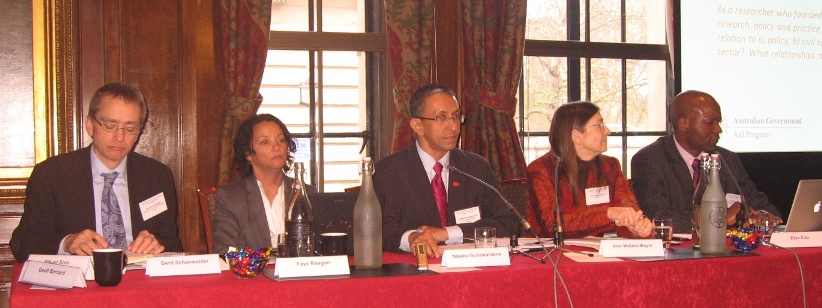
L to R - Gerd Shonwalder (IDRC Canada), Faye Reagon (HSRC South Africa), Nalaka Gunawardene, Ann Waters-Bayer (ETC Netherlands) & Eliya Zulu (AIDP, Kenya)

What needs to be done to improve connections between researchers and the media?

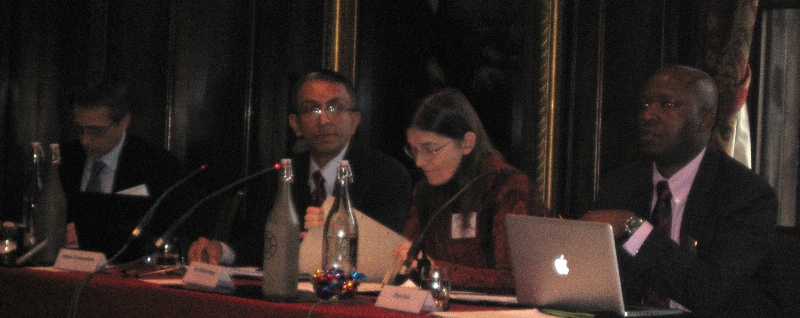
This was the first of three questions posed to me as a panel member during the International workshop on Improving the impact of development research through better communication and uptake, held at the Institute of Civil Engineers, London, UK, on 29 and 30 November 2010.

The workshop, organised by the UK Department for International Development (DFID) and the Australian Government Aid Programme (AusAid), brought together close to 100 research managers, science communicators and development donors from all regions of the world.

As always, I spoke from a practitioner’s perspective. Our panel was asked to discuss ‘different ways of making the links between research, policy and practice’. Each panel member was allowed 5 – 6 minutes of speaking time, with no PowerPoint or other visual aids.

I started off by flagging two fairly self-evident yet important points:
• Media is a PLURAL – there is no single recipe that works for all media because it is such a diverse sector!
• Media is only a SUB-SET of a wider process of communicating for social change.

Within this, there is always room for improvement! As a science journalist, I am a ‘critical cheerleader’ of researchers and their institutes. From that point of view, there are 3 elements that we need more of.
I call them A, B and C.

A is for Access: Today, 24/7 news cycles dominate the media landscape. That means, more often than not, journalists need quick and easy access to researchers, and rapid (or ‘live’) responses to breaking stories. Ideally, journalists want to talk to the researchers themselves, and not PR people or administrators within research institutes or universities.

B is for Bridges: To enable good access, we need strong and reliable links between researchers and the media. That can take many forms. They may be physical or virtual – including events, online platforms, and other activities. I see them as ‘Intersections’ where research, media and policy communities come together. These help share information, but also nurture trust –- that precious and rare virtue!

C is for Credibility: We’ve already heard how critical this element is to all our work as researchers and journalists. Credibility is something hard to earn, easy to lose. We can’t buy it – but good, long-term investments in people can help consolidate it.

I argued that these A, B and C can certainly help improve connections between researchers and the media, and ultimately, with the wider public.

London workshop panel, 29 Nov 2010

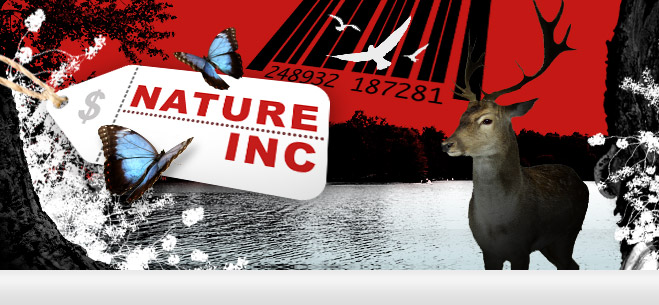
Nature, Inc. TV series: Exploring the planet’s largest ‘enterprise’!

Nature is priceless -- or is i? The answer might save us all!
Nature is priceless — or is it?

If we put a cash price on the economic services that, say, watersheds or insects or coastal mangroves provide, would we value Nature more? Would we be prepared to change our ways of measuring wealth and economic growth? And if we did, would that slow down the extinctions and collapse of ecosystems?

These are some of the issues that are explored in Nature, Inc., a path-breaking TV documentary series that puts a price-tag on environmental services such as forests, wildlife and coral reefs.

First broadcast in 2008 and 2009 on BBC World News, Nature Inc. broke new ground for environmental programming by seeking out a new breed of investor – those who believe they can make money out of saving the planet.

Watch Nature, Inc. series trailer:

Nature Inc. offers new insights into valuing the benefits of natural systems and biodiversity. It takes its lead from economists who have worked out that ecosystem services are worth more than the total of all the world’s national economies.

The first and second series are now available from TVE Asia Pacific (TVEAP). Each series comprises six half-hour episodes, compacting stories filmed in different parts of the world. Broadcast, civil society and educational users across the Asia Pacific may order copies at the cost of duplication and dispatch, and without having to pay a license fee.

The series was produced by One Planet Pictures of the UK, in association with dev.tv of Switzerland.

“There is new green thinking out there and some of it is grappling with pricing renewable assets. As such we felt it was a legitimate new area to take as an organising theme for the new series,” says Robert Lamb, series producer of Nature, Inc. “Perhaps the global recession has made viewers more aware of the ‘eco’ in economics”.

Robert Lamb
The series is based on new research and analysis being done on the subject. Among these new studies is the Economics of Ecosystems and Biodiversity (TEEB), a major international initiative to draw attention to the global economic benefits of biodiversity, to highlight the growing costs of biodiversity loss and ecosystem degradation, and to draw together expertise from the fields of science, economics and policy to enable practical actions moving forward.

But adding a price tag to Nature is not something that pleases all scientists or activists. Robert says the producers received “an overwhelmingly positive reaction” to the first series, but there was also a small minority who wrote in to say they hated the premise of the whole series.

He adds: “That’s good, we want to foster discussion in Nature Inc. which is why we are encouraging viewers to contribute ideas for the next series.”

Read Robert Lamb’s reflections on the Making of Nature, Inc. TV series

Here’s a sample episode from the series, titled Coral Cashpoint. In this, Nature Inc investigates a claim that our coral reefs are worth $30 billion a year. In this fourth episode, we go diving on the Great Barrier Reef, the Maldives and to the bottom of the North Sea to find out how coral reefs supply 500 million of us with food and work. But we are destroying the reefs so quickly, they could vanish entirely in less than a hundred years.

Nature, Inc: Coral Cashpoint – Part 1 of 2

Nature, Inc: Coral Cashpoint – Part 2 of 2

Ray Wijewardene: Passionate voice for small farmers and earthworms

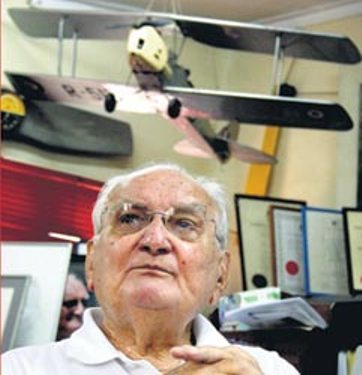
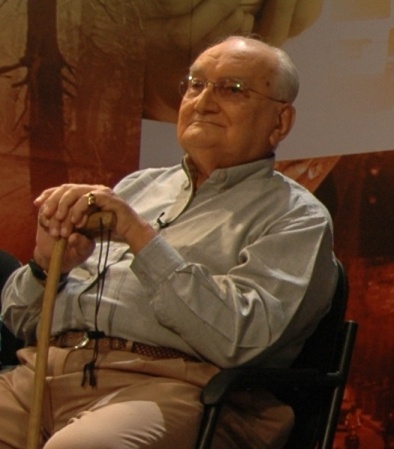
Ray Wijewardene on the set of 'Sri Lanka 2048' TV show, June 2008: Cautiously optimistic about the future...
The small farmers, buffaloes and earthworms all over the world lost a true friend and spokesman this week when Lankan scientist Ray Wijewardene passed away.

Ray packed multiple interests and pursuits into his 86 years of life – including engineering, building and flying light aircraft, and Olympic-level competitive sailing. But he was happiest being a farmer and mechanic, and had strong opinions on the subject. He was vocal about misguided priorities in tropical farming his native Sri Lanka – and across the developing world.

He was especially passionate when speaking about small farmers in the developing world, with whom he worked many years of his international career as an expert on tropical farming systems.

Educated at Cambridge and Harvard universities, and with impeccable technical credentials, he was no stranger to the ways of academia. But he remained a sceptic about the efficacy and benefits of agricultural research — on which hundreds of millions of development funding is invested every year.

The main problem with agricultural research, he used to say, is that those who engaged in such studies and experimentation didn’t have to rely on farming for their sustenance. There was not enough self interest. In contrast, the small farmer had to eke out a meagre existence from whatever land, water and seeds or livestock she had. In her case — and a majority of small farmers around the world today are indeed women — it’s a stark choice of innovate or perish.

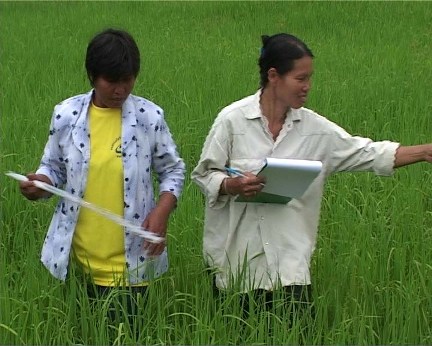
Thai researchers and farmers looking for field solutions (from Living Labs TV series)
The heroic efforts of small farmers were rarely recognised by the rest of humanity who consume their produce — and the farmers themselves are too busy planting crops or raising animals to speak on their own behalf. This is where Ray Wijewardene came in: with his education, exposure and talent, he made an outstanding spokesman for small farmers all over the tropics.

In the 1960s, as the inventor and promoter of the world’s first two-wheeled (Land Master) tractor, Ray travelled all over Asia, Africa and Latin America working with tropical farmers.

For half a century, Ray has championed the lot of the small farmer at national, regional and global levels with UN agencies, academic and research groups, corporate sector and governments. But in later years, he questioned the wisdom of trying to mechanise tropical farming, and considered that phase of his career a ‘big mistake’. He dedicated the rest of his life to researching and promoting ecologically sustainable agriculture, on which he co-wrote an authoritative book in 1984.

Ray had the rare ability to ask piercing questions without antagonizing his audiences. He was an activist in the true sense of the word, but one whose opinions were well informed and grounded in reality, not rhetoric.

This comes through very powerfully in an extensive media interview I did with Ray in 1995, which I released online this week as a tribute to Ray — who has been my mentor and friend for almost 25 years.

At the outset, Ray points out where the Green Revolutionists went astray: “All along in the Green Revolution, its promoters focused on maximizing yields through massive inputs. But they forgot that what the farmer wants is to maximize profits, not necessarily yields!”

We then talked about the particular challenges faced in tropical farming, and the mismatch of temperate farming systems promoted widely in the tropics where climatic and soil conditions are different. One of Ray’s main concerns was agriculture’s profligate use of water – more for weed control than to meet the strict biological needs of crop plants themselves!

Ray, a grandmaster in summing up complex technical issues in colourful terms, said at the time: “Water is rapidly becoming the most expensive herbicide in the world — and freshwater is increasingly scarce!” [A decade later, I would go on to script and executive produce a global TV series called Living Labs on just this issue: how to grow more food with less water, or get more crop per drop.]

Ray wasn’t fundamentally opposed to external, chemical inputs to boost soil fertility but he advocated a mix of natural and synthetic options. In our interview, he asked: “We have multinational companies supporting — directly or indirectly — the extensive use of chemical fertilizers. But who supports cow-dung? Who extols the virtues of the humble earthworm?”

He then added: “For us in Asia, these elements are far more important. Indians have recognized this, but we still haven’t. As long as our agricultural scientists are trained in the western mould of high external input agriculture, this (mindset) won’t change. Cow-dung and earthworms won’t stand a chance – until some western academic suddenly ‘re-discovers’ them…

It was Indian science writer and environmentalist Anil Agarwal who asked me, sometime in mid 1995, to interview Ray for Down to Earth, the science and environmental fortnightly magazine published by his Centre for Science and Environment. As Anil told me, “In Ray, you have not only one of the topmost agricultural experts in the developing world but one of its most original thinkers.”

By this time, I’d known Ray for almost a decade, and been exposed to several of his multiple facets. But each encounter with Ray was enriching for me, so I immediately seized the opportunity. The usually media-shy Ray already knew of and respected Anil, which helped.

Down to Earth is part of Anil Agarwal's legacy
The interview was audio taped over two long sessions, and I remember spending many hours transcribing it. I had to check some references with Ray, who cooperated wonderfully. I’ve been trained to observe the word limit set by editors, but in this instance, I sent in the full length Q&A, for it was so interesting. Down to Earth issue for 31 October 1995 carried a compact version, skillfully distilling the essence of that long exchange between Ray and myself — one of the most memorable interviews among hundreds I’ve done during 25 years of work in print and broadcast media.

How I wish the exchange was also preserved on audio tape! Indeed, it’s a small miracle that the original transcript survived for 15 years. The soft copy was lost in a hard drive crash of 1998, but fortunately I’d taken a full print-out. I’m grateful to a former colleague, Buddhini Ekanayake, for retyping the entire interview in mid 2008 when I considered releasing it in the wake of the global food crisis. That somehow didn’t work out, but the soft copy was ready at hand for me to rush to the editor of Groundviews on the day of Ray’s funeral. All I added was a new, 500-word introduction which tried to sum up the Ray Wijewardene phenomenon.

Read the full length interview with Ray Wijewardene, published for the first time, on Groundviews.org:
Who Speaks for Small Farmers, Earthworms and Cow Dung?

Ray Wijewardene: Finally free to roam the skies forever…

Ray Wijewardene: Freed from gravity, at last!
I went straight from a paddy field, where I was filming much of the morning, to the funeral of my mentor and friend Ray Wijewardene early afternoon at the General Cemetery Colombo.

Ray would have approved: despite being a high flyer in every sense of that phrase, he had his feet firmly on the ground — and sometimes in the mud. He was fond of saying, “Agriculture is my bread and butter, while aviation is the jam on top of it”.

Dr Philip Revatha (Ray) Wijewardene, who passed away on August 18 aged 86, was an accomplished engineer, aviator, inventor, Olympian and a public intellectual of the highest calibre. He was also one of the most practical and down to earth people I’ve known.

He preferred to introduce himself as a farmer and mechanic ‘who still got his hands dirty’. Perhaps that’s how he wanted to be remembered — but each one of us will carry our own vivid memories of this colourful, jovial and altogether remarkable human being.

I’ve already written a quick introduction about Ray for Groundviews.org, which has published a long interview I did with Ray 15 years ago, originally for an Indian science magazine. That exchange is a reminder of the imaginative thinker, life-long experimenter and outspoken scientist that Ray always was.

Read Who Speaks for Small Farmers, Earthworms and Cow Dung? The late Ray Wijewardene in conversation with Nalaka Gunawardene

Story behind the story explained in later blog post: Ray Wijewardene: Passionate voice for small farmers and earthworms

I’ll be writing more about Ray Wijewardene in the coming weeks, exploring his many different facets. I’ve known and walked alongside him for almost a quarter century. For now, I’ll remember him for one facet that I didn’t share despite many offers and invitations: flying.

per ardua ad astra...
Ray just loved to fly. Most humans share this age old dream, but Ray wasn’t contented just being flown around on commercial jets — which to him were merely large, sealed up cylinders. He far preferred the small, propeller-driven aircraft – single or twin seaters that gave their passengers a true sense flying and a real taste of the sky.

Looking back, it was quite apt that I first met Ray at the Ratmalana Airport, just south of Colombo, from where he took off and landed hundreds of times over the decades. One sunny morning in mid 1986, he took time off from his flying to talk to a group of high school leavers who were participating in the first Science for Youth programme. It exposed us to various (then) modern technologies over six consecutive weekends. Much of the knowledge we gained has long been obsolete, but its inspirational value was timeless….and continues to propel me forward.

Much of that inspiration came from Ray Wijewardene, who talked to us – with lots of practical demonstrations – about problem solving and innovations in three areas close to his heart: energy, agriculture and transport. I remember how he was experimenting with improvements to the humble bicycle at the time, so that riders could optimise performance with modest efforts.

He also talked about growing our food and energy. But it was his flying experience that most fascinated us starry-eyed youngsters. As a pilot, Ray was licensed to fly three kinds of flying machines: fixed-wing aircraft, helicopters and autogyros. But this pilot was flying not only factory-fitted, mass-manufactured units. He also experimented with building and flying his own ultra-light aircraft and helicopters – he was particularly interested in building amphibious small planes that could land on, and take off from, Sri Lanka’s numerous inland lakes and reservoirs.

All this and more made Ray a journalist’s dream, but as I soon found out, he wasn’t an easy subject to cover! In 1988, The Island newspaper asked me to interview Ray and write an article about the dream and reality of flying. He happily talked with me for two hours — yet, in the end, didn’t want his name mentioned in print. For all his accomplishments and outspoken views, Ray was completely publicity shy. He didn’t mind his views being reported, but with little or no mention of the source.

It’s the song that matters, not the singer, he said — and I heartily disagreed. I pointed out that we journalists needed to attribute wherever possible for greater credibility of what we write (I didn’t tell him that we also love good news-makers: the more informed and opinionated they are, the better!). This became a running argument that Ray and I had for two decades. Within a few years, he trusted me enough to talk to me on the record. But what he said off the record was always more interesting…

When he was approaching 75, Ray told me how nervous he was when he had to go for renewals of his pilot’s license. In the end, it wasn’t age that ended his flying career: along with everyone else, he was ‘grounded’ when private flying was first restricted and then banned during the latter years of Sri Lanka’s long-drawn war.

During the 1990s, Ray had repeatedly invited me to share a flight on one of his home-built light planes. He assured me they were perfectly safe — among satisfied customers was Prof Cyril Ponnamperuma, one time science advisor to the President of Sri Lanka and an internationally renowned biochemist. (Ray did acknowledge that he’d crash landed his various planes thrice — and each time, he lived to tell the tale. He believed that test flying one’s own aircraft designs quickly eliminated bad designers!)

I kept deferring my own tryst with the open skies and was too preoccupied with earthly matters — and suddenly, it was too late. By the time Sri Lanka’s war ended in May 2009, Ray’s flying days were over (and our skies are not yet fully free for private domestic aviation).

Gravity, bureaucracy and age may have conspired to keep Ray confined to the ground in the last few years of his life — but only just. His spirit soared even when the body wasn’t allowed to: in all my years and encounters with him, I’ve never seen him ‘down’ (concerned and reflective, yes; depressed, no).

A lone spirit, on a long journey....
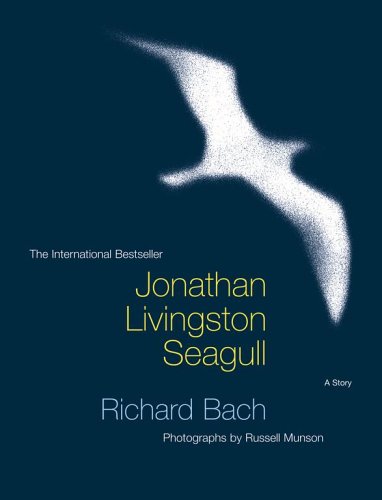
That passion, enthusiasm and spirit of adventure characterised Ray and influenced everything he did, on the ground and in the air. Born in the 1920s and raised as part of the first generation of humans for whom private flying was available, he was infected with the ‘flying bug’ in the same way that American author and aviator Richard Bach was. In fact, Ray knew Bach and was a devoted fan of the latter’s books, especially Jonathan Livingston Seagull.

Perhaps Ray saw himself in Jonathan: a seagull tired of the monotonous life in his clan. He rather experiments with new – always more daring – flying techniques…which means he must fly solo most of the time, and confront the travails of life on his own.

Ray wasn’t a loner (to the contrary, he was very much a team player in everything he did). But sometimes he was racing ahead of us – or just flying at a higher altitude. Although I’ve never heard him say it, perhaps this unattributed quote partly explains the phenomenon: “When once you have tasted flight, you will forever walk the earth with your eyes turned skyward, for there you have been, and there you will always long to return.”

What Ray did quote, frequently, were these words of Robert Browning: “Ah, but a man’s reach should exceed his grasp, or what’s a heaven for?”

It was entirely fitting that a grand daughter would recite the poem ‘High Flight’ by John Gillespie Magee, Jr., a favourite verse among aviators and, more recently, astronauts.

High Flight
by John Gillespie Magee, Jr.

Oh! I have slipped the surly bonds of Earth
And danced the skies on laughter-silvered wings;
Sunward I’ve climbed, and joined the tumbling mirth
of sun-split clouds, — and done a hundred things
You have not dreamed of—wheeled and soared and swung
High in the sunlit silence. Hov’ring there,
I’ve chased the shouting wind along, and flung
My eager craft through footless halls of air….

Up, up the long, delirious, burning blue
I’ve topped the wind-swept heights with easy grace
Where never lark nor even eagle flew—
And, while with silent lifting mind I’ve trod
The high untrespassed sanctity of space,
Put out my hand, and touched the face of God.

On returning from the simple yet moving funeral, I tweeted:
No longer a prisoner of gravity: sky-lover, pilot & light aircraft builder Ray Wijewardene blasted off heavenwards. Farewell, high flyer!


20 Aug 2010: A Lankan pilot’s tribute to his mentor: Happy Landings, Sir! by Suren Ratwatte

Sri Lanka’s Sacred Cows and Orbital Dreams: Asking difficult questions

Holy cow! How does she do it?
Cows have been a part of South Asian cultures, economics and societies for millennia. Many among us are connected to cows in one way or another – some worship them while others feast on them. Even a secular vegetarian in South Asia – like myself – can’t avoid bumping into the occasional cow on our delightfully messy streets…

We probably gave the term ‘sacred cow’ to the English language. It means an object or practice which is considered immune from criticism, especially unreasonably so. As the Wikipedia explains, “The term is based on the popular understanding of the place of cows in Indian religions as objects that have to be treated with respect, no matter how inconvenient.”

Well, some of us beg to differ on modern-day sacred cows. My latest op ed essay, just published on Groundviews.org, is all about sacred cows in rapidly modernising South Asia. It starts with my experience as a young science journalist covering the impending launch of Pakistan’s first digital communications satellite, Badr 1, in early 1990.

At the time, Pakistan had recently returned to civilian rule after many years of dictatorship, and Benazir Bhutto was Prime Minister (in her first term). The political mood was generally upbeat. But I soon found out — from Pakistani journalists and independent scientists — that they weren’t allowed to ask critical questions about the country’s nuclear or space programmes.

In Sacred Cows and Orbital Dreams in Sri Lanka, I write: “The message was clear: democracy or not, some sacred cows always enjoy their privileged status! This has certainly been the case with both the space and nuclear programmes in India and Pakistan: they have been shielded from public and media scrutiny for decades.

What price for having our own?
“For the past few months, it seemed as if we too were following this South Asian tradition. Plans to build Sri Lanka’s own satellites were announced and pursued with little information disclosure and no public debate. The government wanted to launch our very own ‘sacred cows’ into orbit. We the public were to just applaud on cue, and then cough up the money for it…”

The essay is a critique of Sri Lanka’s much hyped plans to build its own satellites. The project was announced in February 2009 and appeared to gain momentum during the year. Going by official statements and media reports, the plan was to launch not one but two satellites.

Suddenly, there seems to be a change of heart. In a interview on 6 June 2010 covering a range of issues, head of the Telecom Regulatory Commission (TRC) disclosed that the government was not going ahead with the much-hyped project. At least not in its originally announced form. The reason: the very high cost, and the need to ‘explore other options such as hiring satellites’ instead of building our own.

Hmmm. Better to be wise later than never. This is the first time in over 15 months that the high costs of this high cost project have been acknowledged.

The satellite is not the only mega-science project being pursued in post-war Sri Lanka. In June 2009, the Ministry of Science and Technology directed the Atomic Energy Authority to set up a national committee to study technical and financial aspects of setting up a nuclear power plant.

Again, this mega project has not been opened up for public discussion and debate, in spite of a few citizens and activists expressing concern, highlighting safety and public health risks, high cost of construction and the unresolved problem of nuclear waste disposal.

I end the essay arguing that as long as public safety and public funds are involved, sacred cows – whether orbital or radioactive – can’t be allowed free range.

Read the full essay on Groundviews: Sacred Cows and Orbital Dreams in Sri Lanka

A compact version appeared in The Sunday Times, 13 June 2010: Sri Lanka’s Satellite: Lost in Space?

Prisoners of Volcano Eyjaffjalljokull: ‘Tectonic Terror’ grounds much of Europe

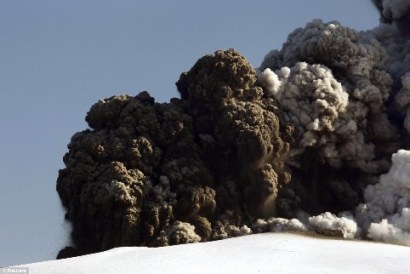
Eyjaffjalljokull erupting away in Iceland
Call it the cough heard around the world.

And boy, what a cough – and with what consequences!

A week ago, most of us had never heard of Eyjaffjalljokull (a glacial volcano in Iceland) — and we’re still struggling to pronounce its name even as it keeps tens of millions of people completely grounded and held ‘hostage’ with its incessant and powerful coughing.

My daughter Dhara and I are currently ‘trapped’ in London: a volcanic ash cloud from Iceland shut down all flights in and over the British Isles on Thursday 15 April 2010. The siege has continued on to the fifth day now, disrupting travel plans of so many people, and causing massive losses to the travel industry. With over 150,000 Britons stranded abroad unable to fly back, the UK is now going into emergency mode to deal with the crisis.

It’s annoying to have an unknown – and unpronounceable! – natural factor crop up and change our carefully laid plans. But things could have been much worse. As I tweeted earlier, as natural disasters go, volcanic ash has been highly disruptive but with no casualties except economic (at least so far).

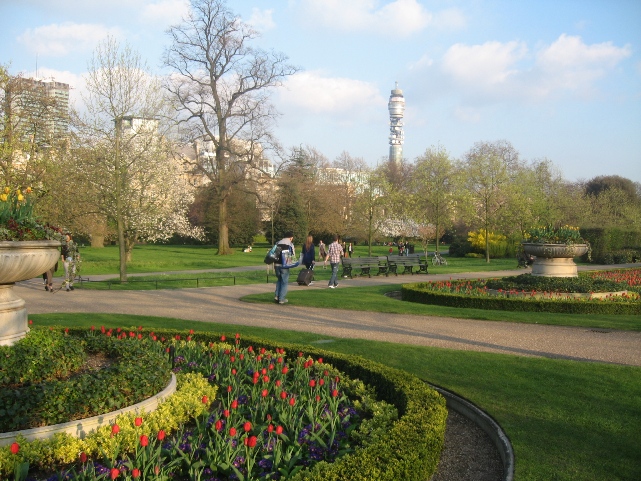
Life goes on in London: Regent's Park, 17 April 2010
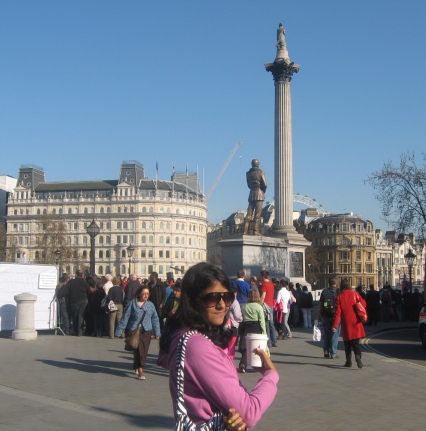
Life in London goes on with no visible signs of concern. Dhara and I walked around absorbing the sights, sounds and smells of London, and people were going about with life – and welcoming Spring. Joggers in Hyde Park and Regent’s Park, babies being strolled around, and weekend revelers at Camden Town and Trafalgar Square.

We mixed into all these crowds – it’s Dhara’s first time, so she’s wondering what the fuss is all about! (If you’ve traveled with an energetic teenager, you know what I’m coping with.) Yes, we are being ‘held hostage’, but by an ever-so-gentle force that’s invisible to the naked eye: as if in compensation, London has rolled out sunny blue skies (long may they last!). On balance, I’d rather be caught in this kind of situation than in a devastating earthquake or tsunami…

The British media are covering the unfolding situation in great detail, but I haven’t yet seen an estimate of the number of visitors to the UK forced to stay on as there is no current escape from these islands, at least by air. But that number must be significant – and each one has his or her story to tell, some more desperate than others.

Take, for example, my friend Nadia El-Awady, who was in London for the same annual board meeting of SciDev.Net (and now grounded with the rest of the Board!). She has four young children waiting for her at home, in Cairo. She’s been blogging and tweeting about her plight, which in many ways mirrors my own.

Nadia is being adventurous (or just taking her chances). She is planning to take train or ferry or any other means to France, and then catch a train to southern Europe whose airspace is not yet affected by volcanic ash. Her determination is admirable – she just won’t allow this remote volcano to keep her hostage (she call it Eyja: “Do not expect me to ever know its full name. What kind of parent names their son Eyjafjallajoekull?”).

Dhara at Trafalgar Square, 18 April 2010
Meanwhile, Dhara and I will hold out for a couple of days more to see if the skies will clear up and the aviation regulators will ease up. As time passes and the flight suspension begins to bite hard, more and more aviation industry professionals are questioning the complete no-fly ban. Some are calling it a regulatory over-reaction.

Richard North, co-author of Scared To Death – From BSE To Global Warming: Why Scares Are Costing Us The Earth, had an excellent piece in The Mail on Sunday this weekend. He wrote: “What we are witnessing here is not a natural law, enshrined since time immemorial but a policy drawn up by the International Civil Aviation Organisation (ICAO) and then interpreted and enforced by the UK’s National Air Traffic Service (NATS). And that interpretation requires some scrutiny.”

He adds: “The blanket ban under clear blue skies and glorious sunshine is making some wonder whether this ‘one-size-fits-all’ regulation is appropriate to a situation that the regulations did not foresee…In the final analysis, despite the scares, no one has actually been killed in a volcano incident – something which cannot be said for the much more hazardous drive to the airport.”

Meanwhile, the journal Science has unearthed (no pun intended) from its archives an article published in November 2004 about an enormous volcanic eruption from Iceland’s past — and what it means for the country’s future. It looks at researchers studying one of the largest and least appreciated eruptions in recorded history: volcano Laki that killed 10,000 Icelanders in 1783, and according to recent studies, its billowing plumes led to extreme weather and extensive illness that may have claimed thousands more lives in Britain and on the European continent.

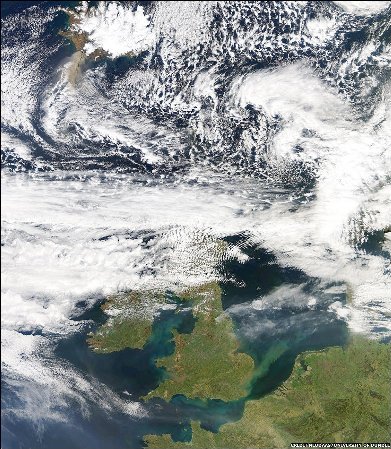
An image made available by NEODAAS/University of Dundee which shows the volcanic ash plume from Iceland, top left, to northern France as pictured by Nasa\'s Terra Satellite on 17 April 2010. Photo courtesy NEODAAS/University of Dundee/AP
It’s not exactly a comforting thought to read how much worse a volcanic eruption could be. The piece was written by science writer Richard Stone (currently their Asia News Editor, and my fellow panelist at the science journalists conference last Summer in London). Interestingly, the headline I gave to that blog post was: Reporting disasters: How to keep a cool head when all hell breaks loose.

Well, easier said than done! It’s challenging for us journalists to keep a level head and report or comment on a mega-disaster for our media. But it’s even harder being caught up and personally affected by forces of Nature (and according Richard North, regulatory over-reaction). I’ve had my house flooded out, and was close enough to ground zero of the 2004 Asian Tsunami. On both occasions, the impact was brutal and immediate.

Eyja’s persistent coughing is different. It’s a distributed, slowly unfolding phenomenon with zero casualties so far, yet affecting millions. At one level, local residents can continue life’s routines with no threat of basic amenities of life being shattered. We travelers can grumble and remain nervous when we can get home, but at the streets of London are nothing like what the doomsday scenario shows in The Children of Men, placed in a near-future London of 2027.

But as Eyja’s strangely gentle yet firm siege continues – succeeding in closing down Britain’s air space in a way that Hitler and Bin Laden couldn’t – we are reminded of who is really in charge.

Asia Pacific Rice Film Award 2008/09 – And the winner is…

Winners of the Asia Pacific Rice Film Award 2008-2009 were announced this week. The award was established ‘to recognise excellence in audio-visual creations on rice-related issues in Asia, where most of the world’s rice is grown and consumed’.

The co-organisers, Pesticide Action Network Asia and the Pacific (PAN AP), TVE Asia Pacific (TVEAP) and Public Media Agency (PMA) of Malaysia, invited innovative film-makers from the Asia Pacific region to submit short creative television, video or cinematic films on rice. I was part of the regional panel of judges.

The film winning the first prize is titled SRI – Challenging Traditions, Transforming Lives (10 mins, 2008). It is directed by Gautam Chintamani in Haryana, India.

I found it a well-focused, positive story compellingly told, with an unhurried script — just enough information, not bombarding the viewer with facts and figures. It’s about a new, more efficient way of growing rice called System of Rice Intensification (SRI).

But this is far from a boring instructional film. It focuses on lives of farmers on and off the field (e.g. SRI’s benefits to women farmers – such as less labour and time intensive). The visual experience is completed by the excellent camera work, sound track and seamless editing – altogether a highly professional production that is also a persuasive advocacy film.

Here’s the official synopsis for the film, taken from Vatavaran 2009 film festival website:
A revolutionary method, System of Rice Intensification (SRI) requires almost no standing water for paddy to grow and is fast transforming the rice cultivation. Developed by a French priest Henri De Launi in the 1980’s in Madagascar, SRI not only uses almost half of the water required but drastically reduces the physical labor associated with rice farming besides increasing the yield by almost one and a half times. For a country like India rice is more than just a mere crop.

There are myths attached to its cultivation. While SRI offers an alternate and a very sustainable method of growing rice it also battles hard with the age-old traditional approach of growing rice. The perils of global warming, the drying up of perennial rivers and the excessive use of fertilizers pose numerous threats to rice cultivation; making life very hard for the humble farmer. SRI offers a workable solution to all problems related to traditional rice cultivation.

SRI- Challenging Tradition, Transforming Lives looks at how SRI is helping the modern farmer cultivate India’s traditional crop without the burden that it had become. In addition the film highlights the transformation in the lives of millions of women who toil the hardest in Indian farmers thanks to SRI reducing the need for manual labor. To its critics the System of Rice Intensification might not be the greatest thing but the fact that SRI significantly reduces the demand for water for rice cultivation makes it worthwhile in the current scenario of the world.

Starting out in 2001-02, Gautam Chintamani worked in the capacity of Associate Producer on India’s first daily news spoof show Khabarein Khabardar. There on he did freelance writing for numerous shows for MTV, Sony and Zee amongst others. He has written and directed an 18 min short film, Alterations. In addition to writing for television Gautam Chintamani regualraly writes for the print and electronic media. He has extensively written for Man’s World, Hard News, Media Trans-Asia and MidDay, rediff.com and Buzz in Town. Gautam also worked in the capacity of Associate Director and Executive Producer of the Hindi feature film, Amavas. Of his television work the law drama, Siddhanth (Star One) was nominated for an Emmy in the International Drama section. Gautam’s episode dealing with an HIV positive college student who fights for her basic right to education was selected as a case study for a Writers workshop conducted by Hero’s Group in Hyderabad & Chennai.

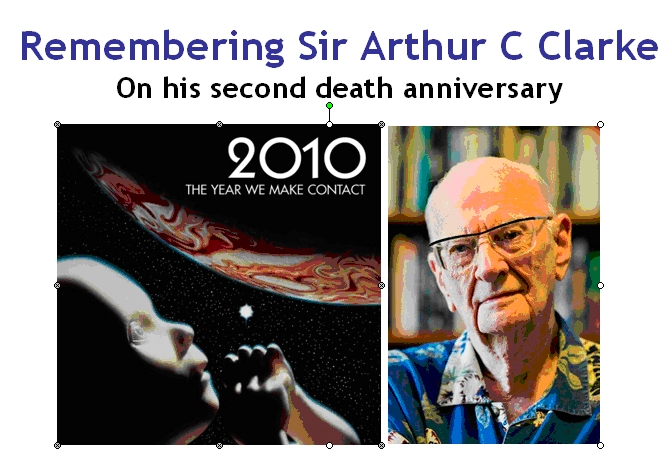
Remembering Sir Arthur Clarke on his second death anniversary

It’s exactly two years since Sir Arthur C Clarke abandoned his 91st orbit around the Sun and headed to the stars. That was on 19 March 2008.

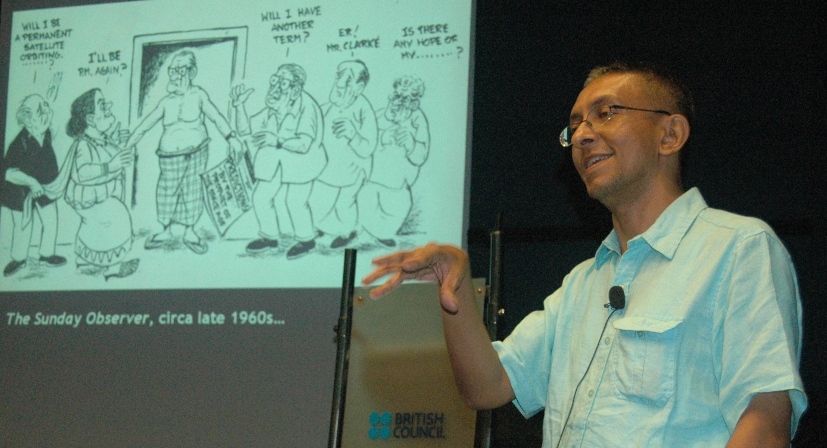
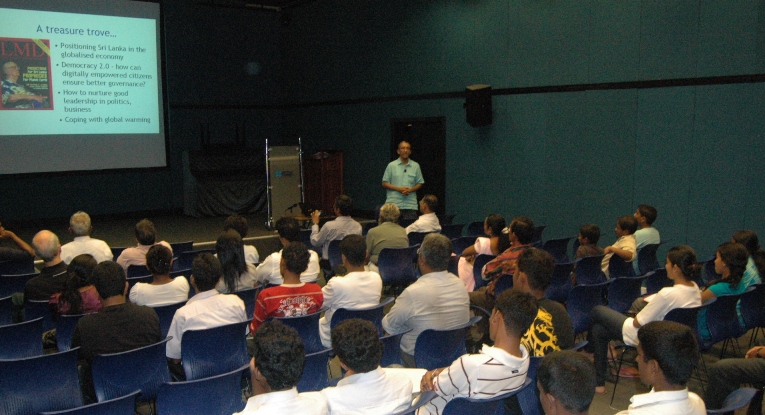
A public meeting to commemorate Sir Arthur was held on 17 March 2010 afternoon at the British Council Colombo. The event was jointly organised by the Sri Lanka Astronomical Association (SLAA) and the Arthur C Clarke Estate in partnership with the British Council.

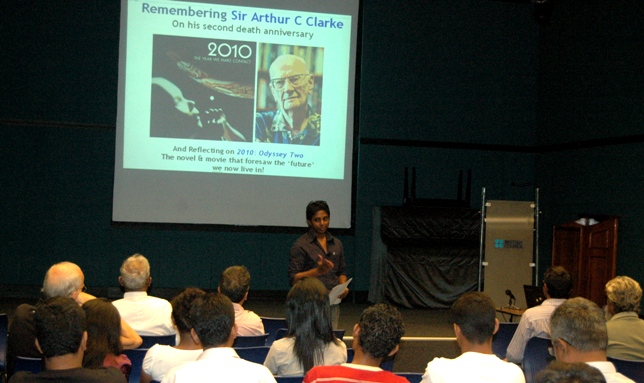
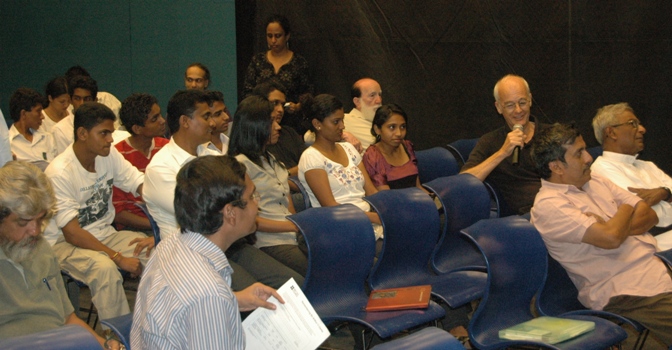
I gave an illustrated talk titled ‘Sir Arthur C Clarke: Man Who Lived in the Future’. We had an eager audience of 65 – 70 persons. Here are some photos from the occasion – a more detailed blog post will follow.

Nalaka Gunawardene giving Sir Arthur C Clarke memorial talk (photos above & below), 17 Marc 2010, British Councl Colombo

Thilina Heeatigala, General Secretary of SLAA, introducing the programme
Michael Snowden asking a question

The talk will be followed by the screening of feature film 2010: The Year We Make Contact (116 mins, 1984). Directed by Peter Hyams on a screenplay co-written by Peter Hyams and Arthur C Clarke, the film starred Roy Scheider, John Lithgow, Helen Mirren and Keir Dullea. This is the movie adaptation of the best selling science fiction novel 2010: Odyssey Two that Arthur C Clarke wrote in 1982.

All photos by Amal Samaraweera, TVE Asia Pacific