Barack Obama: President of the New Media World – and watch out for those citizen journalists!

His own brand...
His own brand...
Inauguration Day is finally here! Today, 20 January 2009, Barack Obama will be sworn in as the 44th President of the United States of America.

Obama campaigned – and won – on the core promise of change. And even before he moved into the White House, he achieved many firsts. Among them was being the first American leader to understand the power of new media and to use it effectively to harness both campaign contributions and, eventually, votes.

On 6 November 2008, soon after the election results were confirmed, we noted how Obama had just been elected ‘President of the New Media world’. I explained: “Obama’s rise has epitomised change in many ways. Among other things, he is the first elected leader of a major democracy who shows understanding and mastery over the New Media World, which is radically different from the old media order.”

Of course, others had different takes on the same outcome. One of the funniest was by The Onion, which proclaimed: Black Man Given Nation’s Worst Job.’ It read, in part: “African-American man Barack Obama, 47, was given the least-desirable job in the entire country Tuesday when he was elected president of the United States of America. In his new high-stress, low-reward position, Obama will be charged with such tasks as completely overhauling the nation’s broken-down economy, repairing the crumbling infrastructure, and generally having to please more than 300 million Americans and cater to their every whim on a daily basis.”

The sheer magnitude of Obama’s challenges has become clearer in the weeks following the historic election. While the economy will certainly dominate his agenda, he will also have to live up to the many expectations of hope that his campaign sparked off in hundreds of millions of people — and not just in the United States.

How will the ‘President of the New Media world’ remain engaged with the millions of conversations taking place 24/7 on the web and through mobile devices? Is this realistically possible given his roles as the chief executive of beleaguered America, Inc., and commander-in-chief of the world’s only superpower?

Already, there is much interest whether security concerns and legal requirements will allow Obama to keep using his BlackBerry, to which he admits being addicted. “I’m still clinging to my BlackBerry,” Obama said only a few days ago in an interview with The New York Times. “They’re going to pry it out of my hands.”
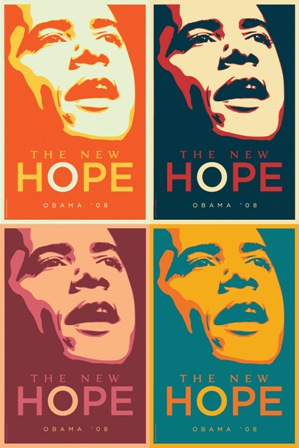
The new face of Hope
More to the point, how long will the mainstream media’s honeymoon with the new President last? And how will citizen journalists, many of who cheerled Obama in his long and arduous campaign, now relate to their man in Washington DC? Can the Obama Administration strike deals with citizen journalists as every administration has done with the mainstream media over the decades? Outside the strict security cocoon of the White House, will this presidency ever be able to have any moments ‘off the record’ with every digitally connected person being a potential citizen journalist?

Remember how his comments about “bitter” small-town Americans clinging to their guns and religion — uttered at a ticket-only and supposedly no-media San Francisco fund-raiser during the campaign — came to be publicised? And that, too, by a pro-Obama blogger writing on the openly pro-Democratic blogger site Huffington Post!

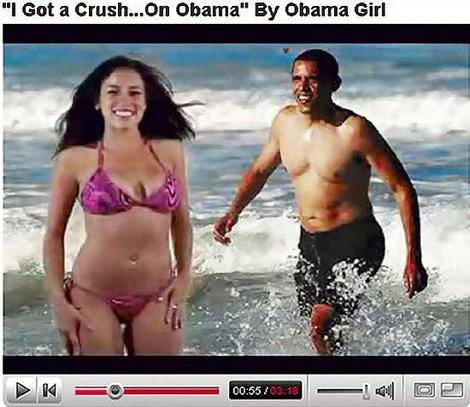
Then there’s the power of moving images moving around online as broadband rolls out across the planet, and speeds improve to support real time video-watching. The day Americans went to the polls to elect Obama, we recalled the hugely popular Obama Girl (‘I got a crush on Obama’) – an internet viral video, first posted on YouTube in June 2007 – and asked Can this little video change history? We had our answer within 24 hours.

While Obama Girl was a well-edited, slick campaign-boosting video released online, the thousands of citizen-filmed videos being posted online are not. And yet, in that no-frills mode, some bring out public interest concerns that have implications for public policy debates and/or law enforcement.

A current example is the sad case of Oscar Grant, a young, unarmed black man who was fatally shot by police officers while laying face-down on a BART subway platform in Oakland, California, on 31 December 2008. Several citizens filmed the incident on their mobile phones. Three separate videos, circulating online at a rapid pace, show various angles and stages of the incident. See one of them here. These have already put the spotlight on police conduct and may influence the judicial process.

President Obama arrives at the White House to lead the executive of a nation that is unlike any his predecessors faced. His inauguration will be the most digitised, but that’s only the beginning. For four or eight years, Obama’s every move, word and gesture will be captured, dissected and debated to exhaustion by admirers and detractors alike. And his administration will be under scrutiny by thousands of citizen journalists who don’t share much except the digital platforms and social networks on which they post their impressions.

Welcome to the New Media Presidency. The hard work – and real fun – begin now!

Watch this cyberspace…
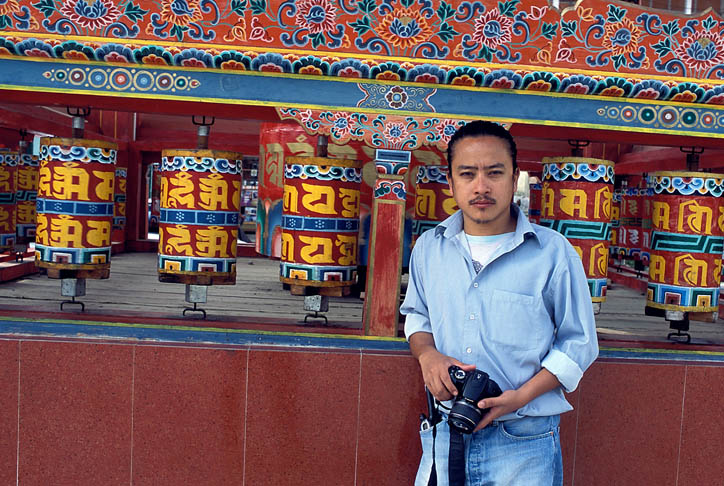
Moji Riba: Capturing oral history in moving images

Moji Riba has been working since 1997 to document Arunachal Pradesh's rich cultural heritage. Image courtesy Rolex Awards

“I like to think of our heritage as an elastic band. I want to stretch this as much into the future generations as we can – till it reaches its edge and snaps. Each day I wake up and hope that this never happens. But that is sadly a finality we have to stare at – unless of course, there is a revolution of some kind!”

That’s how Moji Riba, Indian film-maker and cultural anthropologist, sums up the raison d’etre for his work.

He has reasons to worry. He lives and works in India’s north-eastern Arunachal Pradesh, which an isolated remote and sparsely populated part of the country that is home to 26 major tribal communities,. Each one has its own distinctive dialect, lifestyle, faith, traditional practices and social mores. They live side by side with about 30 smaller communities.

Today, a combination of economic development, improved communications, the exodus of the young and the gradual renunciation of animist beliefs for mainstream religions threatens Arunachal’s colourful traditions. “It is not my place to denounce this change or to counter it,” says Moji. “But, as the older generation holds the last link to the storehouse of indigenous knowledge systems, we are at risk of losing out on an entire value system, and very soon.”

Can anyone capture culture – a dynamic, hugely variable phenomenon – and preserve it in a museum or lab? Not quite. Preserving the communities as a living reservoir of culture is the best method. In addition, modern communication technologies can be used to record the myriad practices and memories – the indigenous knowledge and oral history of a people.

This is just what Moji Riba has been doing for over a decade. He founded and heads the Centre for Cultural Research and Documentation (CCRD) in Naharlagun, Arunachal Pradesh. The non-profit centre, established in 1997, focuses on audio-visual documentation of the folklore, ritual practices and oral histories of the diverse tribes that inhabit the north-eastern states of India and how the indigenous people are adapting to the processes of rapid change.

Moji, who holds a masters degree in mass communication from the prestigious Mass Communication Research Center (MCRC), Jamia Millia Islamia University, New Delhi, could easily have joined the exodus of talent from his state to the metropolitan centres in India. But he chosen to return to his roots with his enhanced skills and expanded worldview.

Over the past decade, he and the centre have made 35 documentaries for television stations and for government and non-governmental agencies. But the centre is more than just an archive or library: it is also a platform offering the tribal people an opportunity to voice their concerns and share experiences.

In 2004, Moji was instrumental in creating the diploma in mass communications at Itanagar’s Rajiv Gandhi University, to augment understanding of cultural values and local customs. He currently divides his time as head of the university’s communications department and running CCRD.

“CCRD has been using documentary films as a tool to document and understand the transitional tribal society and to share that experience through the medium of television,” says Moji. “In these 10 years, we have primarily produced television documentaries on linkages between issues of culture, environment and development and how one cannot be seen in isolation from the other.”

CCRD films have been showcased on Doordarshan, India’s national broadcaster, and various other national and international forums.

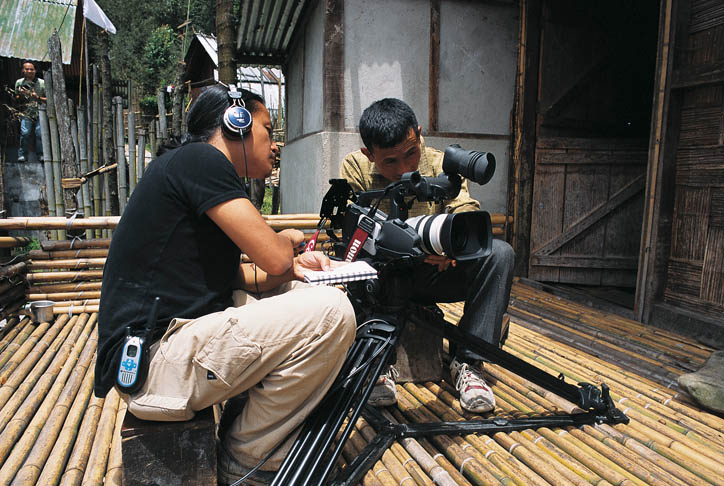
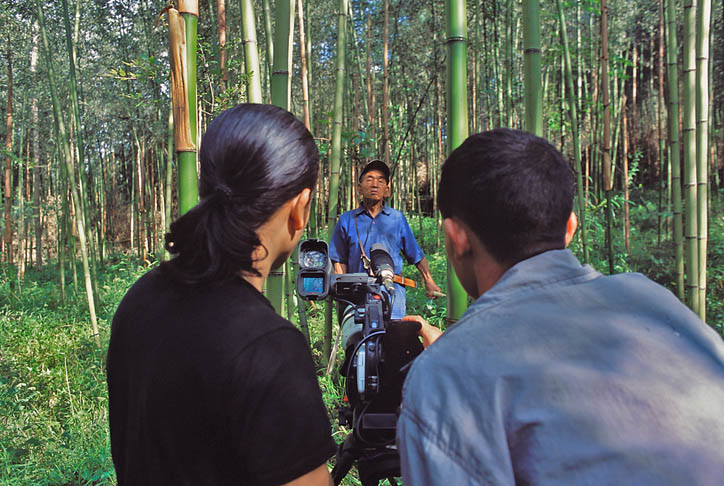
Riba teaches Hage Komo the basic camera skills that will allow the young Apatani to film an interview with his father and an animist priest, thus recording his tribe's oral history (Photo courtesy Rolex Awards)

Years of hard work and quiet persistence are beginning to pay off. Moji has just been selected as an Associate Laureate of Rolex Awards for Enterprise, a prestigious global honour. He is being recognised for ‘helping to preserve and document the rich cultural heritage of India’s Arunachal Pradesh tribes’.

He is among the 10 winners of the 2008 Rolex Awards for Enterprise, which for more than 30 years have supported pioneering work in science and medicine, technology and innovation, exploration and discovery, the environment and cultural heritage.

Read the full profile on Moji and his work on Rolex Awards website

I have known Moji for half a decade, in which time my admiration for him has continued to grow. We first met during a South Asian TV training workshop TVE Asia Pacific organised in Kathmandu in October 2003. Since then, Moji worked with us as a freelance film director and producer. In 2005, he directed Deep Divide, a half-hour, three-country documentary on the state of environmental justice in South Asia. In 2006, he filmed stories for TVEAP series Digita4Change (in Bhutan) and The Greenbelt Reports (in three locations in India).

Moji’s films have drawn the attention of film festivals and reviewers. My friend Darryl D’Monte, one of the most senior journalists in India, wrote in 2006 about one film titled When the Mist is Lifted: “As an insider, he (Moji) is able to draw out the contradiction between old and new lifestyles and practices. In remarks after the screening, he spoke about the difficulties of making films in the northeast, and understandably expressed his reluctance to make another film on Arunachal, which has been his staple over the years.”

rolex-awards-logoWith support from the Rolex Award, Moji and CCRD plan to implement in 2009 the Mountain Eye Project, an unconventional and ambitious initiative that aims to create a cinematic time capsule documenting a year in the life of 15 different ethnic groups. They will select and train young people from each community to do the filming. This gives him access to enough film-makers as well as access to people with an intimate understanding of village life.

According to Moji, the Mountain eye Project is the result of the learnings that have emerged from about a decade’s work on documentation of the folklore and cultural heritage of the tribal groups in northeast India. It seeks to involve local communities in extensively documenting the disappearing cultural practices and traditional knowledge and to build an audio-visual archive of this data.

It also proposes to activate a vast network of outreach activities through museums in order to inculcate in children and youth, an appreciation of traditional heritage and creating respect for cultural diversity.

Watch this space.

Hage Komo gets video instructions from Moji Riba, who is enlisting local young people to capture the oral histories, languages and rituals of their tribes for his project. Komo films his father gathering bamboo in a grove outside Hari Village. (Photo courtesy Rolex Awards)

Michael Crichton (1942-2008): Foresaw the fate of ‘Mediasaurus’

Death has no sense of timing, but it sometimes leaves traces of irony. The day Americans were electing an energetic and articulate senator from Chicago as their next president, one of Chicago’s most celebrated citizens lost his battle with cancer.

Michael Crichton
, who died on 4 November 2008, was trained as a medical doctor but played several roles in the creative arts world. He was a prolific author of science fiction and medical fiction, whose books have sold over 150 million copies worldwide. He also produced and directed techno-thriller movies, and was the creator of the highly successful medical drama series on television, ER (Emergency Room), now in its 15th season.

In the domain of popular culture, Crichton was best known for writing Jurassic Park (1990). This cautionary tale on unrestrained biological tinkering was turned into a blockbuster movie by Steven Spielberg in 1993. It became the highest earning film up until that time.

Before and since, Crichton used his technical training, vivid imagination and mastery of English to spin some of the most enjoyable – and scary – stories that often depicted scientific advancements going awry, resulting in the worst-case scenarios. A notable recurring theme in Crichton’s plots is the pathological failure of complex systems and their safeguards, whether biological (Jurassic Park), military/organizational (The Andromeda Strain), technical (Airframe) or cybernetic (Westworld).

Crichton was also a talented essayist who wrote perceptive pieces of non-fiction about science, society and culture – including the role of media. It is one such essay that I would like to recall in his memory.

The media world was very different when, in 1993, Crichton riled the news business with an essay titled “Mediasaurus“. In this essay, written for the newly launched Wired magazine, he prophesied the death of the mass media — specifically the New York Times and the American commercial TV networks.

“To my mind, it is likely that what we now understand as the mass media will be gone within ten years. Vanished, without a trace,” he wrote.

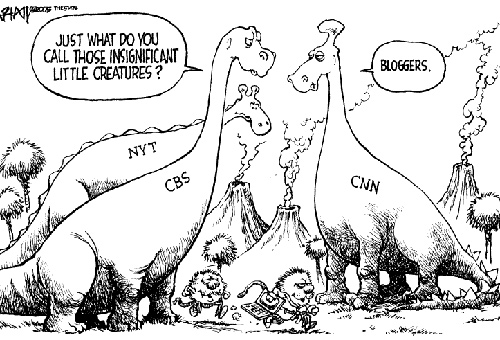
Building on his credentials as the author of a best-seller on dinosaurs, Crichton called this endangered beast ‘mediasaurus’.

Mediasaurus - courtesy Slate
He added: “There has been evidence of impending extinction for a long time. We all know statistics about the decline in newspaper readers and network television viewers. The polls show increasingly negative public attitudes toward the press – and with good reason.”

He talked about technological advances — “artificial intelligence agents roaming the databases, downloading stuff I am interested in, and assembling for me a front page” — that would drive the mediasaurus to their inevitable doom.

Only those nimble, adaptable media products would survive, he said, noting that CNN and C-SPAN were steps in the right direction, giving viewers direct access to events as they happen.

But he had no sympathy for the media. “The media are an industry, and their product is information. And along with many other American industries, the American media produce a product of very poor quality. Its information is not reliable, it has too much chrome and glitz, its doors rattle, it breaks down almost immediately, and it’s sold without warranty. It’s flashy but it’s basically junk. So people have begun to stop buying it.”

Read the full essay: Mediasaurus by Michael Crichton, Wired Oct/Nov 1993

Like most people who dabble in the imperfect art of foreseeing the future, Crichton got the trend right but the timing somewhat wrong. The mainstream media (MSM) were indeed on the decline but not at the dramatic rate that he envisaged.

In February 2002, Jack Shafer wrote a piece in the online magazine Slate titled “Who You Calling Mediasaurus?” Its subtitle was: “The New York Times dodges Michael Crichton’s death sentence”. It asked and tried an answer the question: Where did Crichton go wrong?

Shafer wrote: “Fables of the near future have a way of never materializing, whether they be fevered dreams of nuclear energy too cheap to meter or fossil fuels too expensive to burn. To be fair, Crichton wasn’t the only one to get puking drunk on the new media moonshine. Many of us spent a lost weekend—sometimes months—in a stupor after reading early issues of Wired. But instead of blotting out conventional media, the emerging Infotopia seems only to have made the conventional media more ubiquitous.”

Shafer asked: “Who would have predicted in 1993 that America’s great dailies (minus the Wall Street Journal) and the news networks would dodge both extinction and irrelevance by erecting Web sites overnight and giving their content away? That they would use their Web sites to keep us informed 24-hours-a-day in a way that we take for granted today but that would have astonished us nine years ago?”

In an email interview with Shafer at the time, Crichton acknowledged his own limitations: “I don’t have a lot invested in whether my predictions are right or wrong; I assume that nobody can predict the future well. But in this particular case, I doubt I’m wrong, it’s just too early.”

In that interview, Crichton said he wished he had foreseen “the effect of big media conglomerates combined with the universal decision to make news into entertainment. It’s all headlines and chat now. Factual content is way down, accuracy has vanished (it’s not even a goal any longer), and public confidence in media is at an astonishing low. Not surprisingly, audiences are shrinking.”

Crichton admitted at the time that the personalized ‘infotopia’ he envisioned in 1993 had yet to arrive. He scoffed at the Web for being too slow. “Its page metaphor, too limiting. Design, awful. Excessive hypertexting, too distracting. Noise-to-signal ratio, too high.”

Who succeeds mediasaurus?
Now fast-forward to May 2008. The same Jack Shafer, once again writing in Slate, published a piece titled “Michael Crichton, Vindicated”. It was introduced as: “His 1993 prediction of mass-media extinction now looks on target”.

In this essay, Shafer wrote: “As we pass his prediction’s 15-year anniversary, I’ve got to declare advantage Crichton. Rot afflicts the newspaper industry, which is shedding staff, circulation, and revenues. It’s gotten so bad in newspaperville that some people want Google to buy the Times and run it as a charity! Evening news viewership continues to evaporate, and while the mass media aren’t going extinct tomorrow, Crichton’s original observations about the media future now ring more true than false. Ask any journalist.”

Read Jack Shafer’s full interview with Michael Crichton in Slate, May 2008

the weapon that killed Mediasaurus
Revealed: the weapon that killed Mediasaurus
By this time, Crichton was more positive about the web. He noted that the Web has “made it far easier for the inquisitive to find unmediated information, such as congressional hearings.” It’s much faster than it used to be, and more of its pages are professionally assembled.

Crichton suggested that readers and viewers could more objectively measure the quality of the news they consume by pulling themselves “out of the narcotizing flow of what passes for daily news.” Look at a newspaper from last month or a news broadcast.

“Look at how many stories are unsourced or have unnamed sources. Look at how many stories are about what ‘may’ or ‘might’ or ‘could’ happen,” he said. “Might and could means the story is speculation. Framing as I described means the story is opinion. And opinion is not factual content.”

He summed it up with something we already know: “The biggest change is that contemporary media has shifted from fact to opinion and speculation.”

It was interesting to note how mainstream media outlets paid tributes to Crichton this week. He was remembered for the entertaining story teller he truly was, and some even questioned his mixed legacy, for example being an ardent skeptic of global warming – thus batting for the fossil fuel cartels even if only inadvertently.
But I could find few references to his perceptive critique of the mass media.

Who says media likes to turn the spotlight on itself?

PS: I was intrigued to see The New York Times’ reasonably benign obit on the author who predicted their demise. Here’s a collection of Times commentary on him – and some op eds he wrote for them.

Barack Obama: Just elected President of the New Media world

President Obama and the call at 3 am...

“Congratulations for restoring sanity and intelligence to Washington…and giving the world its first President. Real hard work begins now. Look after him!”

This was my brief message to American friends soon after they elected Barack Obama as the 44th President of the United States of America.

It was entirely appropriate that I sent this message via mobile phone text (SMS). For Obama’s trail-blazing campaign to the White House used the new media innovatively while also using the old media (such as broadcast television) in a complementary manner.

Obama’s rise has epitomised change in many ways. Among other things, he is the first elected leader of a major democracy who shows understanding and mastery over the New Media World, which is radically different from the old media order.

As AFP reported in a story titled ‘Obama surfs the web to the White House‘: “Social networks and Twitter messages may have helped but analysts agree it was the Democrat’s impressive online organization and Internet fund-raising that fueled his victory over Republican John McCain in Tuesday’s election.”

It quoted Julie Germany, director of George Washington University’s Institute for Politics Democracy & the Internet, as saying: “No one’s going to say Obama won the election because of the Internet but he wouldn’t have been able to win without it. From the very beginning the Obama campaign used the Internet as a tool to organize all of its efforts online and offline. It was like the central nervous system of the campaign.”

Both Obama and McCain campaigns had slick websites and TV campaigns. But additionally, Obama inspired thousands of web-savvy volunteers to extend his message way beyond the official outreach. Doing so risked diluting the campaign or losing tight control, but that gamble paid off.

Al Gore, US vice president from 1992 to 2000, also understood the potential of new media, especially the transformative nature of the Internet. But at the time he was in office, the new media tools were not being used by sufficiently large numbers of people for it to make a difference in political campaigning or citizen engagement.

Both the timing and technologies favoured Obama, who successfully tapped into Digital Natives — those relatively younger people who have grown up with digital technology such as computers, the Internet, mobile phones and MP3. (In contrast, Digital Immigrants are those individual who grew up without digital technology and adopted it later.)

But as many commentators are pointing out, the real fight has just begun. It remains to be seen how Obama and his team use New Media tools, platforms and potential to deliver the promise of change.

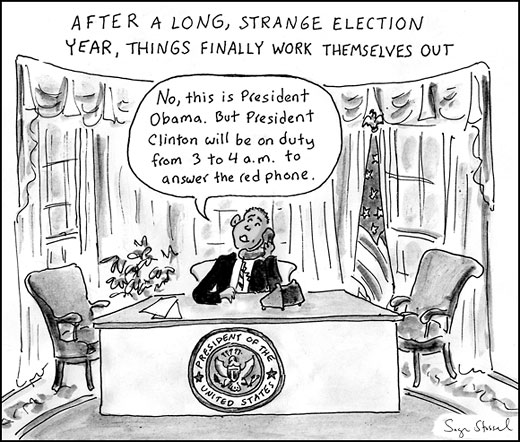
Meanwhile, my own favourite cartoon of Obama election is the one above – and funnily enough, it concerns a piece of old technology: the good old fixed phone. If you recall, in long-drawn campaign for Obama to secure Democratic Party nomination, his rival Hillary Clinton ran this TV commercial which peddled her credentials for being familiar with the corridors of power.

It’s 3 AM and your children are safe and asleep. But there’s a phone in the White House and it’s ringing.
Something’s happening in the world. Your vote will decide who answers that call…


Hillary’s original ad:

Obama’s official response:

There were various unofficial spoofs created by Digital Natives who love to play with new media tools. Just run a search for ‘3 am’ or ‘red phone’ on YouTube and you can watch many of these online!

By the way, isn’t it time that the old-fashioned Red Phone in the White House – the American President’s Hotline to save the world – was replaced with a more modern looking instrument? One more thing for the New Media President Obama…

Obama Girl: Can this little video change history?

Is this the face that launches a revolution?

November 4 is already here in Asia – and the day will dawn a few hours later in the United States. Today is the day Americans go to the polls to choose their next President.

In less than 48 hours, we’ll know who the winner is. All the polls of US voters suggest that it would be Senator Barack Obama. Surveys in different parts of the world also indicate how so many people expect him to win. And I certainly want him to win!

But after what happened with the 2000 US Presidential Election, I hesitate to draw any conclusions.

Whatever the outcome of today’s election, one thing is for sure: a little campaign video by a relatively little known actress and model changed the face of Campaign 2008.

“I Got a Crush… on Obama”
is an internet viral video, first posted on YouTube in June 2007 featuring a young woman seductively singing of her love for Illinois Senator and presidential candidate Barack Obama.

Produced by BarelyPolitical.com, a website for funny political videos, it featured actress and model Amber Lee Ettinger who lip-synched the song which was actually sung by Leah Kauffman (of “My Box in a Box” fame).

This video was named biggest web video of 2007 by People magazine…the AP…Newsweek…and AOL. It certainly helped to project Obama as a cool and hip candidate.

As we wait for democracy to take its course, here’s that history-making viral video, which has been watched on YouTube more than 10 million times…and counting:

These are the principal credits:
Created by: Ben Relles
Starring: Amber Lee Ettinger
Vocals: Leah Kauffman
Music Producer: Rick Friedrich
Directed by: Larry Strong and Kevin Arbouet.

Visit Obama Girl’s blog

And finally, if any of you feel anything at all for the incumbent who is about to be relegated to the dustbin of history, here’s a wicked video from the same creators called: Lil’ Bush Girl…Meet Obama Girl
(Caution: it’s not for the prim and proper, but then readers of this blog aren’t!).

Sleeping easy along the shore: Going the Last Mile with hazard warnings

creating-disaster-resilience-everywhere.jpg

October 8 is the International Day for Disaster Reduction. The United Nations system observes the day ‘to raise the profile of disaster risk reduction, and encourage every citizen and government to take part in building more resilient communities and nations’.

Disaster risk reduction (abbreviated as DRR) is the common term for many and varied techniques that focus on preventing or minimising the effects of disasters. DRR measures either seek to reduce the likelihood of a disaster occurring, or strengthen the people’s ability to respond to it.

DRR is not just another lofty piece of developmentspeak. Unlike many other development measures that are full of cold statistics and/or hot air, this one directly (and quietly) saves lives, jobs and properties.

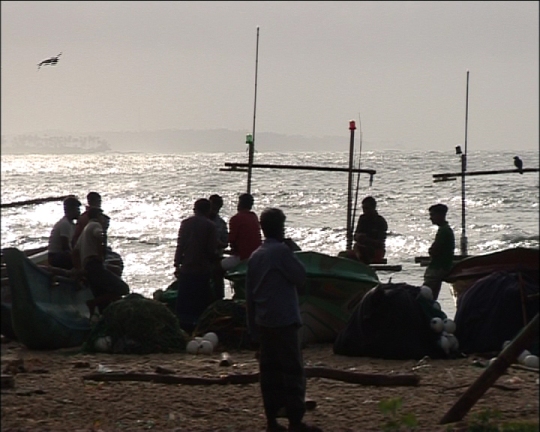
And it gives people peace of mind – we can’t put a value on that. That was the point I made in a blog post written in December 2007, on the third anniversary of the Indian Ocean Tsunami. Taking the personal example of J A Malani, an ordinary Sri Lankan woman living in Hambantota, on the island’s southern coast, I talked about how she has found peace of mind from a DRR initiative.

‘Evaluating Last Mile Hazard Information Dissemination Project’ (HazInfo project for short) was an action research project by LIRNEasia to find out how communication technology and training can be used to safeguard grassroots communities from disasters. It involved Sarvodaya, Sri Lanka’s largest development organisation, and several other partners including my own TVE Asia Pacific. It was supported by International Development Research Center (IDRC) of Canada.

Recently, IDRC’s inhouse series ‘Research that Matters’ has published an article about the project. Titled “For Easy Sleep Along the Shore: Making Hazard Warnings More Effective” its blurb reads: “In Sri Lanka, a grassroots pilot study combines advanced communication technologies with local volunteer networks to alert coastal villages to danger coming from the sea.”

The article has adapted a lot of the information and quotes I originally compiled for a project introductory note in April 2006.

The outcome of the project’s first phase, which ended in mid 2007, is well documented. My own reflective essay on this project is included as a chapter in our book Communicating Disasters: An Asia Pacific Resource Book, published by TVE Asia Pacific and UNDP in December 2007.

TVE Asia Pacific also made a short video film in late 2007. Called The Long Last Mile , it can be viewed on YouTube in two parts:

The Long Last Mile, part 1 of 2:

The Long Last Mile, part 2 of 2:

The recent IDRC article ends with this para: “A related challenge concerns the shortness of any society’s attention span. In the absence of frequent crises and alerts, how can a nation — or even a village — sustain the continuing levels of preparedness essential to ensure that, when the next big wave comes rolling in and the sirens sound, its people will have the motivation and the capacity to act? The follow-up project seeks to address this worry by preparing the hotels and villages to respond to different types of hazards, rather than only to the relatively rare tsunamis.”

Watch this space.

Download pdf of IDRC’s Research That Matters profile on Last Mile Hazard Warning Project

Wanted: Development 2.0 to catch up with web 2.0!

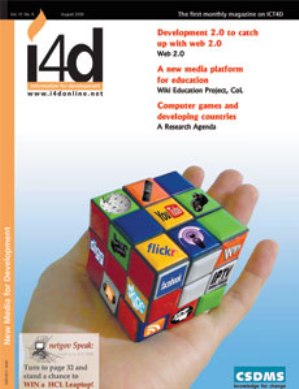
i4d magazine August 2008 issue

Did anybody hear of the senior UN official who finally started blogging? He wrote perceptively and expressively – with some help from his speech writers – but a vital element was missing in his blog: no one could comment on his posts as he completely disabled that function.

Then there is the Red Cross chief who started her own Facebook account but remained completely ‘friendless’ for months – because she didn’t accept anyone seeking to join her social networking effort!

These are just two among many examples I have come across in recent months. They are all symptoms of a major challenge that development and humanitarian communities are grappling with: how to engage the latest wave of Information and Communication Technologies, or ICTs.

With these words, I open my latest essay, titled “Wanted: Development 2.0 to catch up with web 2.0” in the August 2008 issue of i4d magazine, published from New Delhi, India.

My thrust is something regular readers of this blog would be familiar with. In fact, in this essay I consolidate and expand on ideas that were initially discussed in various blog posts over the past many months.

The new wave of Internet, collectively known as Web 2.0, opens up new opportunities for us in the development and humanitarian communities to reach out and engage millions of people – especially the youth who make up the majority in most developing countries of Asia. But it also challenges us as never before.

This time around, it’s much more demanding than simply engaging the original web. It involves crossing what I call the ‘Other Digital Divide‘, one that separates (most members of) the development community from ‘Digital Natives‘- younger people who have grown up taking the digital media and tools completely for granted.

I have identified four key challenges involved in crossing the Other Digital Divide:
– Leave the comfort zone of paper
– Let go of control
– Invest less money but more time
– Recognise information needs and wants

I argue: “There are no authorities on this fast-changing subject: everyone is learning, some faster than others. Neither is there a road map to the new media world. From Rupert Murdoch and Steve Jobs downwards, every media mogul is working on this challenge. For those who get it right, there is potential to make corporate fortunes, and also to serve the public interest in innovative, effective ways.

I end the essay with a challenge to the development community: “To face challenges of web 2.0, we need to come up with development 2.0!”

Read the full essay on i4d magazine website

Mobile phones in Sri Lanka: Everyman’s new trousers?

Mobile phones - social leveller in Sri Lanka

Mobile Phones in Sri Lanka: Everyman’s new trousers?

This is the title of my latest op ed essay, published this week on Groundviews, the leading citizen journalism website in Sri Lanka.

In this, I try to place in a social and cultural context a series of discriminatory laws, regulations and taxes that my native Sri Lanka has introduced – or threatened – in the past few months all aimed at mobile phones, and only mobiles.

This, despite the fact that the proliferation of mobiles has brought telecom services within reach of millions of Sri Lankans in the past decade, helping raise the country’s overall tele-density (mobiles+fixed phones) to 54 telephones per 100 population. With over 11 million SIMs issued, mobiles today outnumber fixed phones by three to one.

In my essay, I cite specific examples, and ask the crucial questions:

Why is this already licensed and regulated technology often targeted for ‘special treatment’ by different arms of government?

Where is this wide-spread suspicion and hostility towards mobiles coming from?

I argue that it is rear-guard action by the traditional elite and bureaucracy who’d rather not allow such digital empowerment to spread. And this has historical parallels.

Here’s the crux of it:

“There is a numerically small (but influential) privileged class that resents information and communication access becoming universal. They might talk glibly in public on using ICTs for social development or poverty reduction. But back inside the corridors of power, they make policies and regulations to undermine the very utility of these tools. This is no accident.

“The mobile phone is the biggest social leveller in Sri Lankan society since the trouser became ubiquitous (initially for men, and belatedly for women). Our elders can probably recall various arguments heard 30 or 40 years ago on who should be allowed to wear the western garb: it was okay for the educated and/or wealthy mahattayas, but not for the rest. Absurd and hilarious as these debates might seem today, they were taken very seriously at the time.

“Make no mistake: the mobile is the trouser of our times –- and thus becomes the lightning rod for class tensions, petty jealousies and accumulated frustrations of an elite that sees the last vestiges of control slipping away.

Read the full essay on Groundviews

Relevant to this discussion is a short film that TVE Asia Pacific produced for LIRNEasia in late 2007, summarising the findings of the latter’s large sample survey on tele-use at the bottom of the pyramid in five emerging markets (which included Sri Lanka).

TVEAP News, Nov 2007: Film highlights telephone revolution in Asia’s emerging markets

Watch the film online:

Teleuse@BOP – Part 1 of 2

Teleuse@BOP – Part 2 of 2

Photo courtesy TVE Asia Pacific

Who’s Afraid of Citizen Journalists 2: Reflections from Asia Media Summit 2008

On World Press Freedom Day 3 May 2008, I wrote a blog post titled Who is Afraid of Citizen Journalists. The answer included the usual suspects: tyrannical governments, corrupt military and business interests, and pretty much everybody else who would like to suppress the free flow of information and public debate.

By end May, I realised that some people in the mainstream media (abbreviated MSM, and less charitably called old media or dinonaur media) are also afraid of citizen journalists. That was one insight I drew from attending Asia Media Summit 2008 in Kuala Lumpur, Malaysia (27-28 May 2008).

Asia Media Summit 2008

The two day event drew 530 broadcast CEOs, managing directors, media experts and senior representatives of development and academic institutions from more than 65 countries in Asia, Europe and the Middle East. Over eight plenary sessions and twice as many pre-summit events, they examined ‘new visions and new strategies broadcasters need to pursue to address the demands of new technologies, stiff competition, media liberalization and globalization’.

As I shared in my first impressions from the Summit, this annual event is still warming up to the new media. That’s understandable considering that most participants are those who work in MSM/OM/DM. Some, like myself, have been flirting or experimenting with new media in recent years, but even my own organisation, TVE Asia Pacific, still works largely with television broadcasters going out on terrestrial, cable or satellite platforms.

While the death of MSM/OM/DM has been greatly hyped, it’s a fact that they face more competition today than ever before. And instead of competing for eyeballs (and other sensory organs) with better content and higher levels of product customisation, some sections of MSM/OM/DM are trying to impose their own, obsolete mindset on the new media.

A session on ‘Regulations and New Media Models’ brought this into sharp focus. The session raised questions such as: Should we apply some principles from traditional media (meaning MSM) to the new media? Should we adopt some minimum rules to allow for sufficient legal space for new media businesses to find their niche in the market and evolve to fit the needs of consumers? What are the policy implications of User-Generated Content (UGC) with regard to copyright infringement, information accuracy and content quality?

The panel comprised three Europeans and one American, all working in MSM or academia (it wasn’t immediately clear if any of them blogged personally). For the most part, they said predictably nice and kind things about new media. It was interesting to see how these professionals or managers – who have had their careers entirely or mostly working in or studying about MSM – were trying to relate to a new and different sector like the new media.

But the panel’s cautious attitude about the new media went overboard on the matter of regulation. This is where matters are highly contentious and hotly debated: while most of us agree that there should be some basic regulation to ensure cyber security and to keep a check on content that is widely deemed as unacceptable – for example, hate speech – there is no consensus on what content should be regulated by whom under which guiding principles.

Ruling unanimously in Reno v. ACLU, the US Supreme Court declared the Internet to be a free speech zone in 1997, saying it deserved at least as much First Amendment protection as that afforded to books, newspapers and magazines. The government, the Court said, can no more restrict a person’s access to words or images on the Internet than it could be allowed to snatch a book out of a reader’s hands in the library, or cover over a statue of a nude in a museum.

It was during question time that the discussion took a cynical – even hostile – attitude on the new media. Some members of the audience engaged Dr Venkat Iyer, a legal academic from University of Ulster in the UK, in a narrowly focused discussion on how and where bloggers may be sued for the opinions expressed on their blogs. The issue of multiple jurisdictions came up, along with other aspects of cyber libel and how those affected by criticism made online by individual bloggers (as opposed to companies or organisations producing online content) may ‘seek justice’.

These discussions were more than academic, especially in view of worrying trends in host Malaysia and neighbouring Singapore where bloggers have been arrested or are being prosecuted in recent weeks.
Asia Media Forum: Restrictions follow critics to cyber space
IHT: Malaysian blogger jailed over article


From the floor, I remarked that I was disturbed by the tone and narrow vision of this discussion, which merely repeated new media bashing by those who failed to understand its dynamics. Acknowledging the need for restraint where decency and public safety were concerned, I argued that it is a big mistake to analyse the new media from the business models or regulatory frameworks that suit the old media.

There are mischief makers and anti-social elements using the new media just as there have always been such people using the old media. Their presence, which is statistically small, does not warrant a knee-jerk reaction to over-regulate or over-legislate all activity online, as some Summit participants were advocating. To do that would be akin to throwing the baby out with the bathwater.

I continued: “This is not a healthy attitude to adopt, especially when we look at the bigger picture. In many countries where freedom of expression and media freedom are threatened or suppressed by intolerant governments and/or other vested interests, new media platforms have become the only available opportunity for citizens to organise, protest and sustain struggles for safeguarding human rights, better governance and cleaner politics. In countries where the mainstream media outlets are either state owned or under pressure from government (or military), and where newspapers, radio and TV have already been intimidated into silence, citizen journalists are the last line of defence…”

I also noted with interest that on this panel was Mogens Schmidt, UNESCO’s Deputy Assistant Director-General for Communication and Information (in charge of freedom of expression), and said that this was not the kind of rolling back of freedoms of expression that UNESCO was publicly advocating. In a brief response immediately afterwards, Schmidt said that he fully agreed with my views, and that this was UNESCO’s position as well.

Another panel member, Dr Jacob van Kokswijk, secretary of the International Telecom User Group in the Netherlands, noted that the new media required a totally new thinking and approach where its content is concerned – the rules that have worked for the old media can’t be applied in the same manner. He added that only 3 to 4 per cent of Internet content could be considered as ‘bad’ (by whatever definition he was using), and that should not blind us to seizing the potential of new media.

Another panel member, Joaquin F Blaya, a Board member of Radio Free Asia (RFA), made a categorical statement saying he was opposed to any and all forms of censorship. He knows what that means – RFA says its mission is ‘to provide accurate and timely news and information to Asian countries whose governments prohibit access to a free press’.

By the end of the session, I was relieved to see a more balanced view on the new media emerging in our discussion, with more moderate voices taking to the floor. No, we didn’t resolve any of the tough issues of new media regulation during the 90 mins of that session, but we at least agreed that the old media mindset of command-and-control was not going to work in the new media world.

From its inception in 2003, the annual Asia Media Summit has been very slow to come to terms with this reality, but this year the event moved a bit closer to that ideal – partly because they invited leading new media activist Danny Schechter to be a speaker.

We just have to wait and see if this momentum can be sustained next year when the Summit is hosted by the Macau Special Administrative Region of China.

I’m going to keep an open mind about this — but won’t bet on it…

3 May 2008: Who’s afraid of citizen journalists? Thoughts on World Press Freedom Day

Message to the UN on World Environment Day: Kick your own CO2 habit!

World Environment Day 2008 logo

The theme for this year’s World Environment Day (WED), being marked on 5 June 2008, is Kick the Habit! Towards a Low Carbon Economy.

Responding to worldwide concerns on climate change, the UN Environment Programme (UNEP) is asking countries, companies and communities to focus on greenhouse gas emissions and how to reduce them. UNEP says it plans to “highlight resources and initiatives that promote low carbon economies and life-styles, such as improved energy efficiency, alternative energy sources, forest conservation and eco-friendly consumption”.

UNEP has suggested 12 steps to help kick the CO2 habit. It also lists a series of examples of how groups or countries have reduced their carbon emissions. This emphasis on Carbon Dioxide is because it’s an important greenhouse gas that traps the Sun’s heat and warms up our planet.

All this is well and good — except that the United Nations does not practise what it preaches. UNEP or any other part of the UN system telling the world to kick the carbon habit is a bit like a heavily drunken person extolling the virtues of staying off liquor. It just doesn’t sound credible.

Let me explain. Having been a UN-watcher and critical cheer-leader of the UN system (though not always of individual agencies), I have personally seen how carbon thrift – or indeed, any kind of thrift – is not a strong point in that system.

Consider these well known facts.

The UN has long been known as a formidable ‘paper factory’ because of the millions of documents it cranks out every year. On an average, it produces over 700 million printed pages every year (2005 figures). The cost of printing documents in its New York and Geneva offices is over 250 million dollars annually.
IPS May 2005 story: World’s celebrated paper factory tries to save forests

And despite recent claims of trying to become carbon neutral, the UN system – including specialised agencies – convene thousands of international meetings every year. Only a few of them produce tangible outputs (some merely agree to meet again!) and even fewer are covered in the public media. But beneath media’s radar and public scrutiny, the UN officials and their buddies (mostly) in governments continue to huddle together in key world cities and some exotic locations.

A random example is Bali, Indonesia, which hosted a massive climate change conference in December 2007 that reportedly attracted over 12,000 participants from all over the world – most of who flew thousands of kilometres to get there. Yes, the meeting’s organisers claimed all their carbon emissions will be offset, and let us presume that they indeed kept their word (even if we question the measurable outcome of the mega-event for long-term climate change coping strategies).

But the mega talk shop in Bali (photo, below) did nothing to restore the UN’s already damaged credibility. How can the UN expect the ordinary people to adopt austere, low-carbon lifestyles when its own operations display such profligacy where resources and energy are concerned?

It would be worth investigating if the number and magnitude of numerous meetings convened by the UN system have shown any marked decrease since climate concerns rose to the top of the public agenda during the past couple of years.

Similarly, with the rise of electronic means of information storage and distribution, it would be interesting to find out if the UN’s endless churning out of paper-based documents has been reduced.

I doubt if either has happened, but we can keep looking for some evidence.

What I have noticed in recent months is the proliferation of meetings – convened or endorsed by the UN system – that address different aspects of climate change. That has become the latest excuse for the development set and its academic friends to have endless physical meetings.

The contradictions and incongruities reach dizzy heights when agencies like the International Telecommunications Union – keeping track of the world’s telecom and ICT developments – convene meeting after meeting to discuss how ICTs can help mitigate climate change.

Our regular readers know we’ve been pushing a simple yet effective slogan for this: Don’t commute; communicate!. Alas, that’s the very message that ITU and the world’s leading telecom/ICT companies managed to miss in Bali last December.

So what is to be done?

On this World Environment Day, let’s turn things around — and ask the United Nations secretariat and its specialised agencies (especially UNEP) to heed their own clarion call. Let change begin with them, and let’s see how (and if) the UN sets an example for the rest of the world.

So here’s a modest proposal that can have far-reaching benefits for the planet. Adopt and strictly observe for a year or two a moratorium on all large UN gatherings (no matter what they are called – Summits, conferences, symposia, meetings, etc.) that involve more than 500 persons. In this day and age of advanced telecommunications, it is possible to consult widely without always bringing people physically together.

It’s not just the carbon emissions of air travel that I’m talking about (aviation accounts for less than 5% of worldwide carbon emissions). Much more important is the message such UN austerity would send out to the world. Practising what you preach has a strong moral persuasive power — even if it goes against addictive habits formed for over 60 years of the UN’s history.

After all, the UN wants everyone on the planet to ‘kick the habit’. So let the ladies and gentlemen of the UN Secretariat and agencies lead by personal and institutional example — kicking their own addiction for meetings, more meetings and more paper.

PS: Don’t be too shy to turn up at Hydrocarbons Anonymous.

March 2007 blog post: Kicking the oil addiction: Miles to go

Declaration of interest: I have attended my share of UN meetings in the past 20 years, but the last mega event I joined was WSSD in Johannesburg in mid 2002. In 2007, I declined three sponsored invitations to go to Bali, and now selectively attend very few small meetings that promise clear focus and output.