Everyone seems to have their own recipe for media development, and that’s part of the media’s huge diversity. Media Helping Media asked a number of people who have benefited from media development projects what they felt needs to change in the year ahead. The replies have so far come from The Russian Federation, Indonesia, Azerbaijan, Sri Lanka, Lebanon, Macedonia, Ukraine, Bhutan and Nepal. They make up a challenging list of tips for those who try to help media in need.
Its introduction says: “You have as much to learn as you have to give. That’s the message to those offering media assistance in transition and post-conflict countries from some of those on the receiving end.”
Here’s my own contribution to this interestingly crowd-sourced distillation. David had asked for three key points, but you can see below why I was never very good in arithmetic…
• Media operate as a business, not charity: All media have a social responsibility, but that must be balanced with commercial viability. This is so with state, corporate or community owned media. Bankrupt media can’t serve any public interest.
• ‘Media’ is a plural: Media is a basket term for entities with enormous diversity and variability. One size does not fit all, no matter how well intended. It’s crucial to understand before engaging any media.
• Follow the eyeballs: If you want the biggest bang for your limited buck, start with the mass market end of media such as FM radio, tabloid newspapers and music TV channels. Leave your broadsheet/classical prejudices out of investment decisions.
• Take it easy: Audiences need entertainment as much as information and education. Supporting quality entertainment in the media is just as important for the public good as nurturing investigative journalism or advocating media freedom.
• Sparks of hope: Real world is not an all-or-nothing game. Find oases of innovation and resilience, and nurture them to survive and grow in turbulent times. Back media underdogs of today who can become fierce watchdogs of tomorrow.
In responding to David’s request last month, I’d added this covering sentence which sums up my thinking: “All this is common sense that is often uncommon. I really wish media development organisations would listen and reflect more, and also step beyond their comfort zones and romanticised little bubbles.”
The entire collection is well worth reading, for it distills decades of ground level experience and insight. This guide will help many well-meaning organisations (UN agencies, philanthropic foundations, CSR arms of media companies and others) to be more focused, sensitive and ultimately more effective in developing the media.
This is no Avatar: It's Real!A few days ago, reviewing the blockbuster movie Avatar, I wrote: “Film critics and social commentators around the world have noticed the many layers of allegory in the film. Interestingly, depending on where you come from, the movie’s underlying ‘message’ can be different: anti-war, pro-environment, anti-Big Oil, anti-mining, pro-indigenous people, and finally, anti-colonial or anti-American. Or All of the Above…”
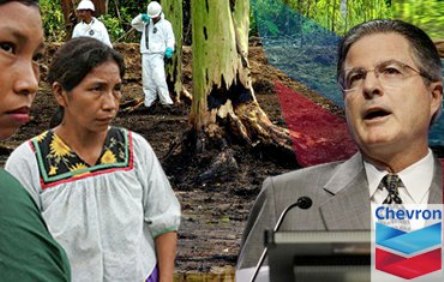
Indeed, an Avatar-like struggle is unfolding in the Amazon forest right now. The online campaigning group Avaaz have called it a ‘Chernobyl in the Amazon’. According to them: “Oil giant Chevron is facing defeat in a lawsuit by the people of the Ecuadorian Amazon, seeking redress for its dumping billions of gallons of poisonous waste in the rainforest.”
From 1964 to 1990, Avaaz claims, Chevron-owned Texaco deliberately dumped billions of gallons of toxic waste from their oil fields in Ecuador’s Amazon — then pulled out without properly cleaning up the pollution they caused.
In their call to action, they go on to say: “But the oil multinational has launched a last-ditch, dirty lobbying effort to derail the people’s case for holding polluters to account. Chevron’s new chief executive John Watson knows his brand is under fire – let’s turn up the global heat.”
Others have been highlighting this real life struggle for many months. Chief among them is the documentary CRUDE: The Real Price of Oil, made by Joe Berlinger.
The award-winning film, which had its World Premiere at the 2009 Sundance Film Festival, chronicles the epic battle to hold oil giant Chevron (formerly Texaco) accountable for its systematic contamination of the Ecuadorian Amazon – an environmental tragedy that experts call “the Rainforest Chernobyl.”
Here’s the official blurb: Three years in the making, this cinéma-vérité feature from acclaimed filmmaker Joe Berlinger is the epic story of one of the largest and most controversial legal cases on the planet. An inside look at the infamous $27 billion Amazon Chernobyl case, CRUDE is a real-life high stakes legal drama set against a backdrop of the environmental movement, global politics, celebrity activism, human rights advocacy, the media, multinational corporate power, and rapidly-disappearing indigenous cultures. Presenting a complex situation from multiple viewpoints, the film subverts the conventions of advocacy filmmaking as it examines a complicated situation from all angles while bringing an important story of environmental peril and human suffering into focus.
Watch the official trailer of Crude: The Real Price of Oil
According to Amazon Watch website: “With key support from Amazon Watch and our Clean Up Ecuador campaign, people are coming together to promote (and see) this incredible film, and then provide ways for viewers to support the struggle highlighted so powerfully by the film.”
They go on to say: “A victory for the Ecuadorian plaintiffs in the lawsuit will send shock waves through corporate boardrooms around the world, invigorating communities fighting against injustice by oil companies. The success of our campaign can change how the oil industry operates by sending a clear signal that they will be held financially liable for their abuses.”
While Avatar‘s story unfolds in imaginary planet Pandora — conjured up by James Cameron’s imagination and created, to a large part, with astonishing special effects, the story of Crude is every bit real and right here on Earth. If one tenth of those who go to see Avatar end up also watching Crude, that should build up much awareness on the equally brutal and reckless conduct of Big Oil companies.
Civilisation's ultimate addiction?
Others have been making the same point. One of them is Erik Assadourian, a Senior Researcher at Worldwatch Institute, whom I met at the Greenaccord Forum in Viterbo, Italy, in November 2009.
He recently blogged: “The Ecuadorians aren’t 10-feet tall or blue, and cannot literally connect with the spirit of the Earth (Pachamama as Ecuadorians call this or Eywa as the Na’vi call the spirit that stems from their planet’s life) but they are as utterly dependent—both culturally and physically—on the forest ecosystem in which they live and are just as exploited by those that see the forest as only being valuable as a container for the resources stored beneath it.”
Erik continues: “Both movies were fantastic reminders of human short-sightedness, one as an epic myth in which one of the invading warriors awakens to his power, becomes champion of the exploited tribe and saves the planet from the oppressors; the other as a less exciting but highly detailed chronicle of the reality of modern battles—organizers, lawyers, and celebrities today have become the warriors, shamans, and chieftains of earlier times.”
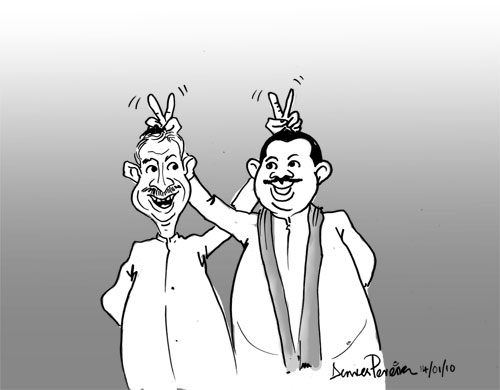
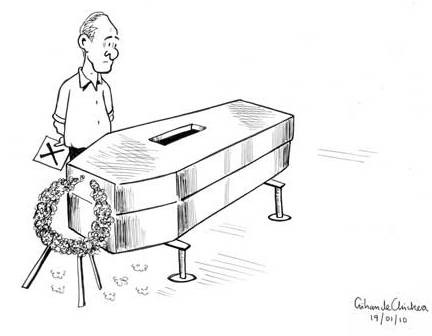
Heads you lose, tails we win...?With over 10 million others, I voted in Sri Lanka’s sixth Presidential Election yesterday. Today, after the votes were counted and tallied, we were informed that the incumbent President Mahinda Rajapaksa has been re-elected for another six year term. He has won 57.9% of the valid votes.
Nearly 11,000 polling stations had been set up for this purpose, mostly at temples or schools. A quarter of a million public servants were mobilised to handle this massive operation, while close to 100,000 policemen and soldiers were tasked to maintain law and order. And the whole business of choosing the next leader is costing the war-impoverished nation several billion rupees.
So do the results — basically, more of the same — justify all this cost and effort? Was there real choice for us the hopeful little men (and women) who walked into little booths with little pencils in hand to make a little cross on a (not so) little bit of paper?
Opinion is highly polarised on that last question. The two main candidates not only tried to outpromise each other without coherence or focus, but also made a mockery out of the whole campaign process.
In fact, as I noted in my essay last week titled Open Moment, Closed Minds: “Party politics has always polarised Lankans, but no other election in recent memory has been as divisive…The two main contenders both claim to hold a mutually exclusive key to a better future for our land and people. Their dizzy campaigns bombard us with lofty claims and counter-claims 24/7 delivered through broadcast, broadband, mobile and other media.”
With pre-election violence escalating, the choice before voters looked like this a week before election day.The election results will be analysed and debated for weeks to come. At first glance, it looks as if the voters used this election to express gratitude to Rajapaksa for having provided the political leadership to end Sri Lanka’s long-drawn civil war.
We can argue whether presidential elections should be turned into referendums on individual performance of candidates – or instead, decided on the vision and policies offered by them. I grant this is a bit more serious than American Idol – or its local variations – where we text our preference for the candidate with the best looks or talent.
In fact, I’m still not convinced whether it’s such a good idea to mix personal gratitude with voting for a head of state.
I’ve voted in four presidential and three general elections (I missed some due to overseas travel). With one exception (1994), all have been ‘protest votes’ – I was voting against an incumbent more than in favour of an aspirant.
But there are more things in heaven and on Earth, dear reader, than are dreamt in our messy politics. Albert Einstein said it so well many decades ago: “Everything that can be counted does not necessarily count; everything that counts cannot necessarily be counted.”
We can only hope that our votes were properly counted — and that they count and matter to the leader whom we have collectively chosen today. That is, if he can see and hear beyond the cacophony of sycophants who surround him 24/7.
And as I tweeted earlier today: As Sri Lanka re-elects the President, we hope ALL 20 million Lankans can share the promise of a Better Future on which he campaigned and won…
In a new op ed essay — titled ‘Open Moment’, Closed Minds! — just published on Groundviews.org, I look back and ask some hard questions.
Here’s an excerpt:
“We all knew the hard-won peace had to be nurtured and consolidated. We also realised just how formidable the challenges of healing and rebuilding were. But could anyone have imagined the dramatic turn of political events since?
“Who would have thought that the victors of the war would soon be engaged in a nasty battle for personal glory and power? Who expected the historical feud between ‘lions’ and ‘tigers’ to be replaced so swiftly by a showdown between self-proclaimed ‘patriots’ and ‘traitors’?”
I raise these questions in the context of a fiercely contested presidential election scheduled for 26 January 2010. I note: “The two main contenders both claim to hold a mutually exclusive key to a better future for our land and people. Their dizzy campaigns bombard us with lofty claims and counter-claims 24/7 delivered through broadcast, broadband, mobile and other media.”
I ask whether either of the leading candidates has the open mind needed to seize the historic ‘open moment’ since the war ended. I recall how we completely missed the last such open moment created by the tsunami of December 2004.
I write: “Having missed the tsunami’s open moment, we cannot afford to bungle again. Rebuilding a nation of lasting peace, pluralism and prosperity will require many sections of society to change their mindset. This is especially and urgently needed in our media, much of which has become uncritical cheerleaders for patriotism and tribalism in recent years.”
Despite the many disappointments of the past 250 days, I still remain cautiously optimistic. But for how long?
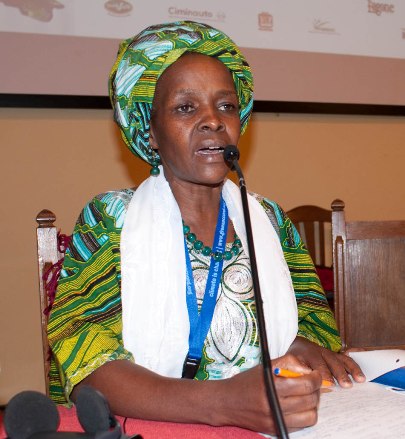
Nelly Damaris Chepkoskei: Voice of HopeMalaria still claims over a million lives every year, most of them in Africa. This is not simply a public health statistic for Nelly Damaris Chepkoskei – she lost a daughter to the ancient scourge that continues to outsmart human attempts to control it.
“It was very sad when my daughter died of malaria at the age of four,” she recalls. What makes it especially tragic is the fact that malaria is a new arrival in her area.
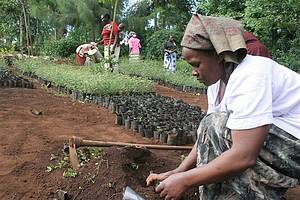
Nelly, 51, is a farmer living in Kenya’s Kericho District. Located high in the mountains, Kericho’s cold weather has kept mosquitoes at bay for centuries. But not any longer: global warming has raised the area’s average temperature, and mosquitoes have appeared in recent years, bringing malaria with them.
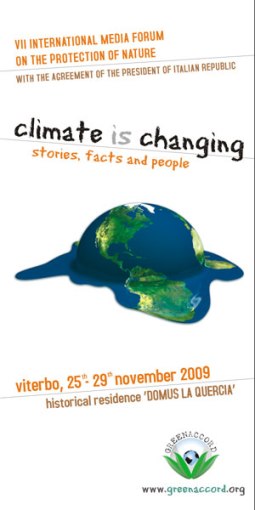
“I had never seen a mosquito until I was 20 years old. But now they are everywhere – people are even dying of malaria, something that was virtually unheard of 20 or 30 years ago,” Nelly told the 7th Greenaccord International Media Forum on the Protection of Nature, being held in Viterbo, Italy, 25 – 29 November 2009.
The theme this year is ‘Climate is changing: stories, facts and people’. Nelly Chepkoskei is one of 10 Climate Witnesses who travelled to the historic city from far corners of the world to share their stories of ground level changes induced by climate change.
Climate Witness is a global programme by WWF International to enable grassroots people to share their story of how climate change affects their lives and what they are doing to maintain a clean and healthy environment. All Climate Witness stories have been authenticated by independent scientists.
Married with five children, Nelly grows maize and tea, and keeps a few cows – the pride and joy of Kenyan farmers. Lacking faith in politicians and government, she is working with women in her community to pursue their own development.
Life was never easy, but climate change is making it even harder.
“Rainfall patterns have changed drastically in recent decades,” she says. “In the Kericho district, we used to have rain throughout the year. I remember clearly that my family celebrated Christmas when it was raining heavily. But today, Christmas is usually dry.”
Unlike 20 years ago, the dry season is now hotter, drying up all the grass. In the past, the grass would remain green throughout the year.
“This means there isn’t enough fodder for my cows, leading to a drop in milk production and my income,” she explains. “The soils are also left bare during the dry season, which means more erosion when rains come in.”
With higher temperatures, more pests have turned up to damage crops. This prompts farmers to use more pesticides, increasing production costs and polluting the environment with hazardous chemicals.
Nelly turned out to be the most outspoken Climate Witness in Viterbo. In a frank exchange with an audience of 130 journalists, activists and scientists drawn from 55 countries, she exclaimed: “Don’t talk to politicians – they are the same everywhere! I can’t understand why journalists always follow politicians and are so keen to talk to them!”
She continued: “There is so many good things happening in Africa, but we don’t see it reported in the local and international media. You only hear about fighting, famine and corruption. So we continue to be seen and known as the Dark Continent.”
In her view, what Africa needs more than anything else is education. She firmly believes that higher levels of literacy and education would reduce the incidence of conflict and plunder.
Nelly herself is a high school drop out, and places a very high value on education to empower all Africans, especially women.
“There is a big gap between Kenyan intellectuals and the ordinary people. Knowledge is not where and how it is needed,” she says.
I asked her what she thought of foreign aid to Kenya and rest of Africa. This elicited a passionate and emphatic response: “If you want to spoil and corrupt Africa more, then keep giving aid to our governments. Aid money mostly ends up in the wrong hands, or buying guns to fight each other.”
She added: “We do need help, but don’t give aid to our governments. Instead, support NGOs who are better in delivering to the grassroots.”
Nelly and her network of women are digitally empowered. They refer the web to find out information on what aid and opportunities are available and then pursue them with all available means. Armed with the latest data, they lobby local and provincial governments to ensure that aid pledged from international donors reach the intended communities.
Nelly may not be Wangari Maathai, the Kenyan environmentalist and women’s right activist, but she admits to being a Wangaari in spirit. And having listened to the first African woman to win the Nobel Peace Prize at a previous Greenaccord forum, I readily agree: women like Nelly are a beacon of hope not just for Africa, but to the entire Majority World.
If only the mosquitoes could spread their passion and concern for the land and people…
Dilrukshi Handunnetti: Making wavesMy good friend Dilrukshi Handunnetti, a leading investigative journalist in Sri Lanka, is currently on a Jefferson Fellowship traveling in the United States. She is one of a dozen journalists from the Asia Pacific who have been competitively chosen to participate in this prestigious programme, which in 2009 is focusing on the theme, The Right Climate for Confronting Climate Change?
I finished my latest climate film, Small Islands – Big Impact, only the day before Dilrukshi left for Hawaii, her first stop in the multi-destination, intensive programme. Given her long standing coverage of the Maldivian political affairs as well as Asian/global environmental issues, I gave her a DVD of the film to take along.
I’m delighted to hear that she has been showing Small Islands – Big Impact in various presentations, often producing a…big impact wherever it was shared. It’s always good to have such feedback — here’s an excerpt from an email she has just sent me from Boulder, Colorado:
“I liked presenting your short film and the response it generated. The film generated a discussion on promoting the concept of (climate) adaptation as a human right – just as I felt it would be such a catch phrase here. I also had the (media coverage of) the underwater Cabinet meeting with me. So Maldives got a lot of attention despite not having a Maldivian here.
“Several wanted to know about the actual risk level of the Maldives and the possibility of the islands being submerged. They also asked about purchasing land elsewhere and whether the Maldives had the financial capability to do that. Others wanted to know about depleting fish catch President Nasheed spoke about as this was a common concern to Indonesia, Southern India and Vietnam.
President Nasheed: Stop pointing fingers, extend a helping hand...“Some queried whether President Nasheed was going to Copenhagen to state his case. Two others asked whether lobby groups were behind his thinking. Several found, including American, Chinese and Indian participants, that President Nasheed’s call to end the blame game should be heeded by all. There was collective agreement that others’ behaviour impacted on the likes of President Nasheed and vulnerable communities.
“Interestingly, everyone found his interview a STORY. Something that they would want to report on in their respective media. We continue to discuss the same on our tours and walkathons from venue to venue for various meetings. In fact, I had the American participant asking our resource persons (IPCC types, no less!) whether they were willing to acknowledge the concept of climate refugees directly in relation to the Maldives.
“I think the movie served a great purpose of awakening the minds of many to the threat level faced by some communities on low lying coastal nations – like the pacific Islands and the Maldives. A senior broadcaster from the Tonga Broadcasting Corporation personally thanked me for wanting to highlight their plight as a small island nation.”
You can watch Small Islands – Big Impact online here:
A journalist for over 17 years, Dilrukshi Handunnetti has extensively covered politics, the environment, culture, and history and gender issues. In her current role, she writes the parliamentary column for the newspaper in addition to writing and editing investigative stories carried in her publication. Dilrukshi has also covered the ethnic conflict from a non-military perspective and written extensively on issues of good governance, graft and corruption. Dilrukshi is the recipient of many national journalism awards in Sri Lanka, including: the Young Reporter of the Year 2001, Best Environment Reporter of the year 2002, Best Environment Reporter of the year 2003, Best English Journalist of the Year 2004 (Merit) Award and D B Dhanapala Award for the Best English Journalist of the Year 2005, all presented by the Editors’ Guild of Sri Lanka.
In this extract from our 2005 film Deep Divide, Dilrukshi talks about Sri Lanka’s coastal resource development challenges before and after the 2004 Asian Tsunami:
President Mohamed Nasheed: Stop pointing fingers!
It had taken many days to set up the interview, but in the end we got only 15 minutes of the promised 30. President Mohamed Nasheed turned up more than an hour late, lagging behind in his day’s schedule. While waiting, his staff had repeatedly asked me to cut down the interview as the President was already late for a state function. I had nodded half-heartedly.
President Nasheed (known among his people as ‘Anni’) walked in, beaming and apologising for keeping us waiting for over a day. We had set up our lights and video camera the previous day, only to find that the President had cancelled all his appointments that day to be with his young daughter hospitalised with the ‘flu. As a father myself, I could fully understand – even if it affected our filming plans.
I introduced myself and crew, and asked how his sick daughter was doing. She is not in any danger, he said, and should be home soon. That was a relief.
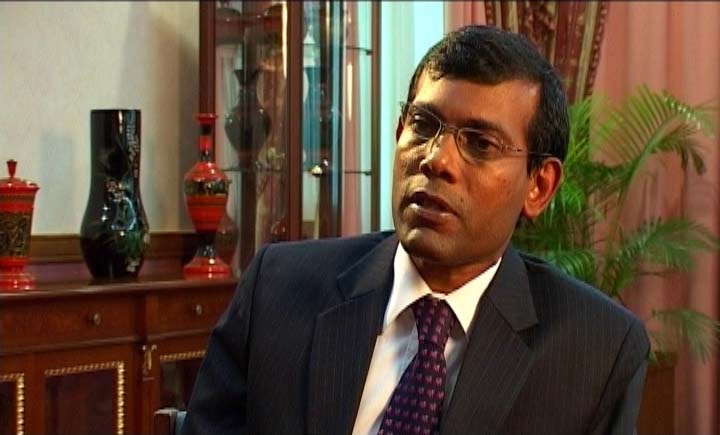
I ushered President Nasheed to the simple chair we’d chosen for him to occupy during our interview, being filmed in the stately room where the President normally receives high level state guests. As the crew pinned up the mic and adjusted the lights, I quickly explained who we were, and what the interview was for – a short film that would be globally distributed highlighting the vulnerability of his island nation to climate change impact.
There was not an air of pomposity around him. He exchanged a few words in Divehi with my Maldivian film crew – Ibrahim Yasir and Hussein Makzoom. As I would soon find out in the interview, he was also very well informed, articulate and passionate. (I remembered interviewing former President Maomoon Abdul Gayoom nearly 20 years ago when I covered the Small States Conference on Sea Level Rise he convened in Nov 1989. Gayoom was expressive in his own way but had an air of scholarly superiority about him.)
In the 15 minutes that we had, I asked a total of 10 questions. I had sent in advance a baker’s dozen questions to his media staff. I don’t know if they briefed him, but clearly President Nasheed was in his element. He didn’t have any notes, and yet answered my questions perceptively, genuinely and always eagerly. The one-time journalist and human rights activist was very media savvy.
He must have been asked some or most of these questions many times before. Yet with each answer, he found his comfort levels with me and by about the fifth minute, we were nicely chatting along. I had to keep reminding myself that I was really talking to one of Asia’s youngest heads of state. At that moment, he sounded every bit a chatty technocrat.
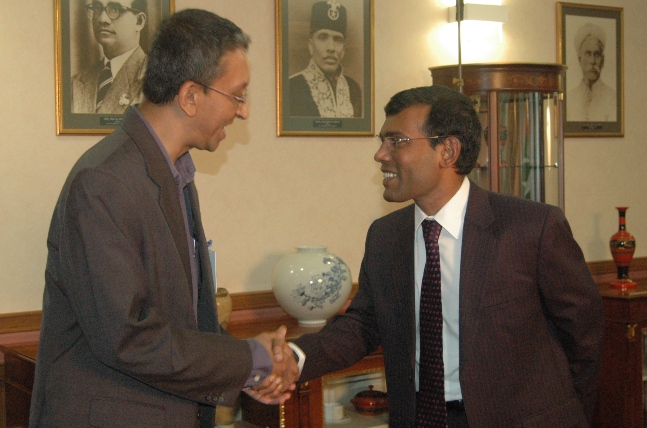
Nalaka Gunawardene (left) with President Mohamed Nasheed of the Maldives
President Nasheed had lot to say, and knew just how to say it. I had prepared for days, reading his recent speeches and op ed essays. I had figured out what to ask to elicit the kind of answers I was hoping for. He didn’t disappoint me. If his staff had not interrupted our interview, we could have easily gone on for half an hour or longer.
But I knew he had already given good ‘soundbites’ that we could excerpt in a short film. For example, how many heads of state would engage in plain talk like this when asked for his core message to the upcoming climate summit in Copenhagen: “In a nutshell, I’d like to say what has already been said: ‘Don’t be stupid!’. Going on and on about who did it is not going to save us. This is the time to realise that the deed is done. So let’s see how we may be able to proceed from here…”
Earlier in the interview, he sounded grave when he outlined the prospects for his nation, the lowest-lying country on the planet, now on the frontline of climate change impact. “We will die if this goes on, and therefore, we have a fundamental right for life. If that is challenged, we have to link it be a human rights issue, and not just an environmental issue.”
The next minute, his tone became more resolute when talking on coping with massive changes already unfolding as a result of global warming. He stressed the value of democracy, good governance and people’s right to information as vital elements in adaptation – the difficult task of living with climate change.
Responding to my questions, President Nasheed talked about plans to make the Maldives carbon-neutral within a decade, and said the ‘sovereign wealth fund’ he announced soon after his election was already saving money “so that we will have something when the going gets very bad….”.
Sinking slowly in the East?We also wanted to film President Nasheed at work, to establish him as an engaged political leader – the first democratically elected President of the Indian Ocean archipelago of 325,000 people. But there was no time. We then hoped to film his daily walk home after work. But the rain and delayed schedule meant he went home by car – and after dark. So we had to rely on stock footage instead.
The mix of democrat and technocrat in President Nasheed makes him an extraordinary personality and the world is taking note. The New York Times Magazine did a full length profile in May 2009 with the title ‘Wanted: A New Home for My Country’. A Hollywood film company is currently tracking the President as he travels the world, calling for urgent climate action that goes beyond mere words. (In fact, with my consent, they filmed me filming the President.)
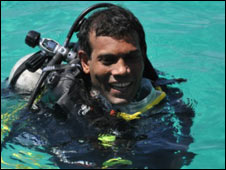
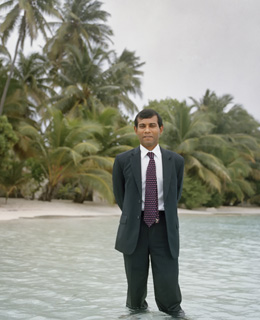
A month after my interview, TIME Magazine named him an Environmental Hero of 2009 – the only serving head of state so honoured this year. I was delighted to see this, but TIME’s chosen photograph made me very jealous. I had dearly wanted to shoot our interview outdoors, but a combination of bad weather and presidential schedule ruled that out. Evidently, TIME photographer Chiara Goia had better luck: President in full business suit standing about a foot deep in the calm, azure waters of the Maldives.
The same waters that he and his team are trying desperately hard to keep at bay, for as long as possible.
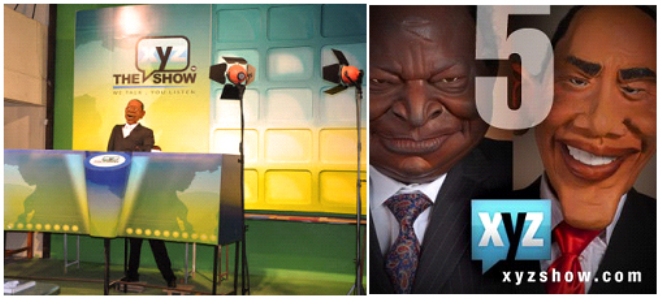
It’s a show called the XYZ Show, broadcast weekly on Kenya’s Citizen TV. Started in mid May 2009, the first season introduced Kenyan viewers to a new form of satire television, with life-sized puppets made to resemble famous persons, mostly politicians.
Now comes the report that the show has riled some Kenyan politicians – surprise, surprise! I have only just come across this Citizen TV news report, broadcast a couple of weeks ago:
Controversy Over The XYZ Show
The satirical puppet show XYZ on Citizen Television every Sunday night, has attracted the attention of non other than the Public Service Minister Dalmas Otieno. The Minister says the caricature show is depicting politicians in bad light. The Director of Communication Ezekiel Mutua avers that, the show is representative of just how free the media is, in Kenya.
Well, what can we say? We thought politicians in general had thicker skins. Perhaps some Kenyan politicians are in danger of forgetting that timeless piece of Swahilian advice: Hakuna matata!
Hakuna matata is a Swahili phrase that is literally translated as “There are no worries”. It is sometimes translated as “no worries”, although is more commonly used similarly to the English phrase “no problem”.
I ended a recent blog post, News wrapped in laughter, with this thought: “There is another dimension to satirising the news in immature democracies as well as in outright autocracies where media freedoms are suppressed or denied. When open dissent is akin to signing your own death warrant, and investigative journalists risk their lives on a daily basis, satire and comedy becomes an important, creative – and often the only – way to comment on matters of public interest. It’s how public-spirited journalists and their courageous publishers get around draconian laws, stifling regulations and trigger-happy goon squads. This is precisely what is happening right now in countries like Kenya and Sri Lanka, and it’s certainly no laughing matter.”
An interesting experiment in political satire on Kenyan television has just ended its first season on 9 August 2009. It’s a show called the XYZ Show, which was broadcast weekly on Kenya’s Citizen TV. Started in mid May 2009, the first season introduced Kenyan viewers to a new form of satire television, with life-sized puppets made to resemble famous persons, mostly politicians.
Gado the CreatorThe XYZ Show was inspired by famous puppet satire series like the British “Spitting Image” and the French “Les Guignols de l’Info” shows. In the XYZ Show, the puppets commented on news and current events from both Kenya and overseas.
The XYZ Show was developed by a team led by Kenyan cartoonist Godfrey Mwampembwa, alias Gado. He is the most widely syndicated cartoonist in East and Central Africa. He publishes a daily cartoon in The Nation, the largest newspaper in Kenya, and his work has been published in Le Monde (France), Washington Times (US), De Standaard (Belgium) and The Japan Times.
According to its creators, the XYZ Show challenged famous figures from Kenyan high society and politics using humour and satire. It aimed to become a new forum for social and political debate, one that provides room for open discussion.
Watch XYZ Show’s first episode trailer, produced one year ago:
Says the Prince Claus Fund of the Netherlands, which supported the show’s production: “Although freedom of the press is a constitutional right in Kenya, it is difficult for many journalists to practice their profession without interference. Gado and his team hope that the XYZ Show will contribute positively to strengthening freedom of the press and increasing political and social awareness among the people of Kenya. The show provides commentary on current social and political developments and aims to use humour and artistry to reinforce freedom of speech in Kenya.”
From what I’ve been able to watch online, on the show’s YouTube channel and elsewhere, the production values are at a high standard, comparable to such shows made in Europe and East Asia. The puppets are attractive, movements convincing and the pace quick and slick.
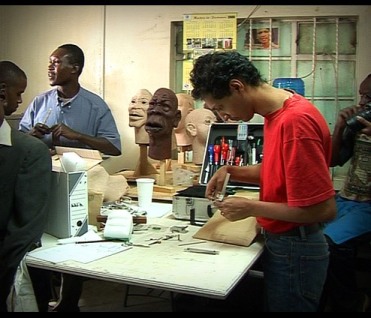
Who pulls his strings?The producers have also tried hard to make XYZ more than just a TV show. The website, in English, shows how the content is being adapted for the web (as webisodes) and mobile phones (as mobisodes). The show’s official blog takes us on to the set and shares with us the story behind the story, and introduces us to the artists and technical geniuses involved. Full marks for trying to engage the audience.
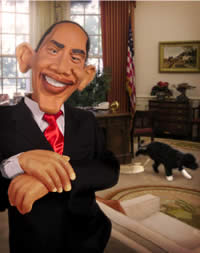
Then there is Barack Obama. Using his Kenyan connections, the show casts him (really, a puppet in his image) in a ‘supporting actor’ role. This has clearly inspired some interest in the show beyond Kenya.
So far, so good. But how does it work with the audience? The show is directed mainly at local audiences, and even if it’s presented in a mix of English and local language, it’s not something a complete outsider like myself can appreciate.
So I ‘crowd-sourced’ by asking a Kenyan reader of my blog, Marion N N, for her opinion. Marion is part of Sojourner, which her blog introduces as “a social enterprise that exists to promote the origination, production and distribution of African viewpoints through visual media. We are passionate about African film-making and seek its viable promotion globally”.
Marion wrote a comment in her blog after watching one episode a few weeks ago. She lives and works in Kenya, and her views are far more valid than my own.
Behind the screen, creators at work...She wrote: “My first off impression was fascination about the quality of the show in terms of animation which is very new to the local TV production scene in Kenya. Once past the fascination of the animation, I found that the content failed to hold my interest, connect with me or engage me as an audience. As a socio-political spoof show, humor ideally should be the hook that captures audience but in this case, humor comes across as mindless, illogical or simply stupid action on the screen. As if in evidence to this fact, at some point my husband in between laughter remarked ‘This show is really stupid’. I would imagine this would be a compliment to the Production becuase it provoked laughter in a viewer. However beyond that moment, it seemed only natural for us to flick over to more substantial entertainment having enjoyed that brief flight of fancy that failed to arouse an appetite for more.”
Marion also wondered what the show’s intended audience was, and highlighted the many challenges in getting the levels and balances right in doing political satire: “That politicians sometimes (nay, most times) behave ridiculously is not new or fresh. But the treatment, underlying themes, ideas communicated to audiences should be. Why do I suggest this? Because political satire by its nature speaks to an audience that is fairly mature, and exposed. To use childish humor that is poorly developed will not hold the audience’s attention. Infact at some point the content may become a tad irritating to watch. Political satire needs to be treated with a peppering of fact, wit, fresh perspective or take -out: The achievement of some underlying objective and not just mindless visual gimmicks that lead to the feeling of ‘stooping to idiocy; by audiences. This seeming insult of intelligence causes us as an audience to switch off.”
In my own view, The XYZ Show had at least three major challenges. Doing any puppet show is hard enough, and these days the on-air competition is neither local nor fair: it comes from global entertainment corporations like MTV and their regional variations, usually with deep pockets. Doing political satire is even harder, especially if the political culture is intolerant or repressive. To get the look, feel and balances right in a country where such a show is being done locally for the first time is a formidable challenge by itself.
But I’ll let Marion have the last word. In spite of the various concerns, she feels that the XYZ Show has ‘room to grow and conquer the airwaves’. But, as she notes, “The production team have their work cut out for them in pre-production. It’s back to the drawing board and ask who is my audience? What appeals to them? How do I connect with them, define an objective for the show and its audiences? Research facts and opinions about national sentiment on issues then develop scripts and sequences…”
The remains of former Philippine president Corazon Aquino passes through the historical EDSA road with some 300,000 supporters waving to pay their last respect. The road is remembered in 1986 as then anonymous Cory and some 2 million people rallied out the streets to fight a 20-year government dictatorship through peaceful people power revolution. Photo by Arwin Doloricon/ Voyage Film
I know this post appears rather late, but I couldn’t let Cory Aquino’s death on 1 August 2009 pass without comment. The original inspiration for People Power that toppled one of the worst tyrants of the 20th Century, she would now turn the Patron Saint of peaceful democratic struggles everywhere.
Last week, I was reduced to tears reading two links that my Filipino friend Ruth Villarama, who runs Voyage Films in Manila, sent me of new comments posted on their website.
In the first post, A housewife, a leader, an angel in yellow (3 August 2009), Joan Rae Ramirez wrote: “Her death at 3 AM on August 1 has stopped a nation from its apathetic works to once again remember what was once fought by this ordinary housewife. It is on these rarest moments where the oligarchs came down from their kingdoms to pay their respect and mingle with the people who truly represent the real state of the Philippine nation.”
Karen Lim, who works with Voyage Films as a producer and project coordinator, wrote a more personalised piece titled The Famous Anonymous.
It opened with these words: “I see her on TV. In some instances I even covered her for a story. Our relationship did not go deeper than the reporter-subject, or the audience and the watched. Yet I feel a certain affinity to the most revered President. And when she died I got sad, a strange feeling of sadness where the source is unknown.”
Karen was too young to have remembered much of those heady days of the People Power Revolution of February 1986 — a series of nonviolent and prayerful mass street demonstrations in the Philippines that eventually toppled the 20-year autocracy of Ferdinand Marcos. Indeed, a whole generation of Filipinos has been born since. But that doesn’t stop them from relating to the monumental events that unfolded at at Epifanio de los Santos Avenue, known more commonly by its acronym EDSA, in Quezon City, Metropolitan Manila and involved over 2 million ordinary Filipinos as well as several political, military and religious figures.
As Karen wrote in her tribute: “Cory’s life became ours too. We watched her, sometimes we joined her. We experienced her highs and lows. We are her “Mga minamahal kong kababayan”(my beloved fellowman). She did what no stranger did in my family – unite us in prayer for the country, unite us in laughter amidst the uncertainties of those times. I had no personal connection to this lady, but I have now every reason to mourn her passing.”
Woman of the Year 1986I can only echo her Karen’s words. As a politically curious 19-year-old, I had followed with much interest the daring gamble and eventual triumph of People Power unfolding thousands of kilometres away from my Colombo home. In the pre-Internet era, and before satellite TV channels provided 24/7 coverage across Asia, my sources were daily newspapers, evening news bulletins on local TV and, once every few weeks, the second-hand copies of Time magazine passed on to me by an uncle. The housewife in yellow ended up becoming Time Woman of the Year for 1986, with Pico Iyer writing a suitably reflective piece.
In the years since the return of democracy – with all its imperfections and idiosyncrasies – I have stood at EDSA more than once, and wondered what it must have been like to mobilise millions of ordinary, concerned people in the days before email, Internet and mobile phones — communication tools that today’s political activists, and indeed everyone else, take for granted. There is a thin line between a non-violent struggle and a passionate yet violent mob that, ultimately, works against their own interests. I am amazed that Cory and her activists didn’t cross the line, despite provocations and 20 years of repression.
Of course, it wasn’t just the human numbers that turned the tide in EDSA. Cory Aquino’s charismatic leadership and moral authority persuaded other centres of power – including the Catholic church and sections of the military – to align with the struggle to restore democracy. It was this combination, and the sudden change of mind by the Americans who had backed Marcos all along, that enabled People Power to triumph.
Elsewhere in Asia, where these elements didn’t align as forcefully and resolutely in the years that followed, the outcome was not as dramatic or positive. We’ve seen that, for example, in places as diverse as Tiananmen Square in China (1989), Burma (2007) and most recently, in the streets of Tehran, Iran. In contrast, it did indeed work and ushered in regime change in places like Nepal, even though it entailed more protracted struggles.
What interests me, in particular, is the role played by information and communication technologies (ICTs) in such People Power movements. Alex Magno, a political analyst and professor of sociology in Manila, sees clear links between new communications technologies and political agitation. Interviewed on the Canadian documentary Seeing Is Believing: Handicams, Human Rights and the News (2002), he said: “In the last two decades or so, most of the political upheavals had some distinct link to communications technology. The (1979) Iranian Revolution was closely linked to the audio cassette. The first EDSA uprising in the Philippines was very closely linked to the photocopying machine and so we called it the ‘Xerox Revolution’. Tiananmen, the uprising that failed in China, was called the ‘Fax Revolution’, because the rest of the world was better informed than the rest of the neighbourhood because of the fax machine. The January (2002) uprising in the Philippines represents a convergence between electronic mail and text messaging. And that gave that uprising its specific characteristics.”
Mobile phones' role in People Power II acknowledged in a Manila mural But it was People Power II in the Philippines that is perhaps the best known example of ICTs fuelling and sustaining a revolution. The ability to send short text messages on cell phones helped spawn that political revolution in early 2001, a full decade and a half after the original wave that swept Cory Aquino into office.
President Estrada was on trial facing charges of bribery, corruption and breach of the public trust. Despite mounting evidence against him, the President was let off the hook. That was the turning point. According to Ramon Isberto, a vice-president at Smart Telecom in the Philippines: “People saw it on television, and a lot of people were revolted. They started text messaging each other, sending each other messages over the Internet, and that thing created a combustion.”
Because of texting and email, within two hours over 200,000 people converged in the main street of Manila demanding the president’s resignation. The vigil lasted for four days and four nights, until President Estrada finally got the message and stepped down. It ended with Gloria Macapagal-Arroyo taking her oath of office in the presence of the crowd at EDSA, becoming the 14th president of the Philippines.
Those events have been documented, analysed and interpreted by many people from various angles. The Cold War had ended and the geopolitical map of the world had been redrawn. By this time, 24/7 satellite television was commonplace in Asia and the mobile phone was already within ordinary people’s reach. Gloria was no Cory, and Estrada wasn’t Marcos. But the forces and elements once again aligned on EDSA, and with history-making results. The role that the humble mobile phone played is acknowledged, among other places, in a mural in Manila.
 Some weeks ago, I wrote a post about How to become a global publisher or broadcaster in just 100 minutes! That was compiled by my British media activist friend David Brewer , who showed how it could be done using free tools that can be downloaded and activated in minutes.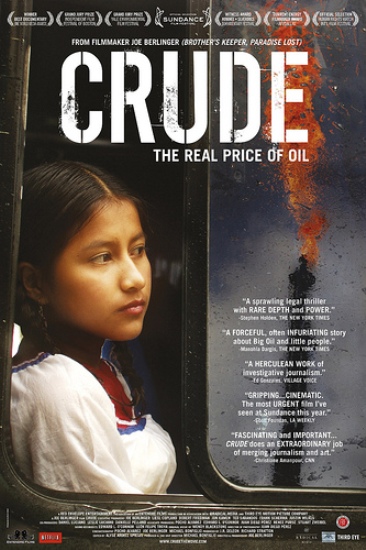







 Open Minds!